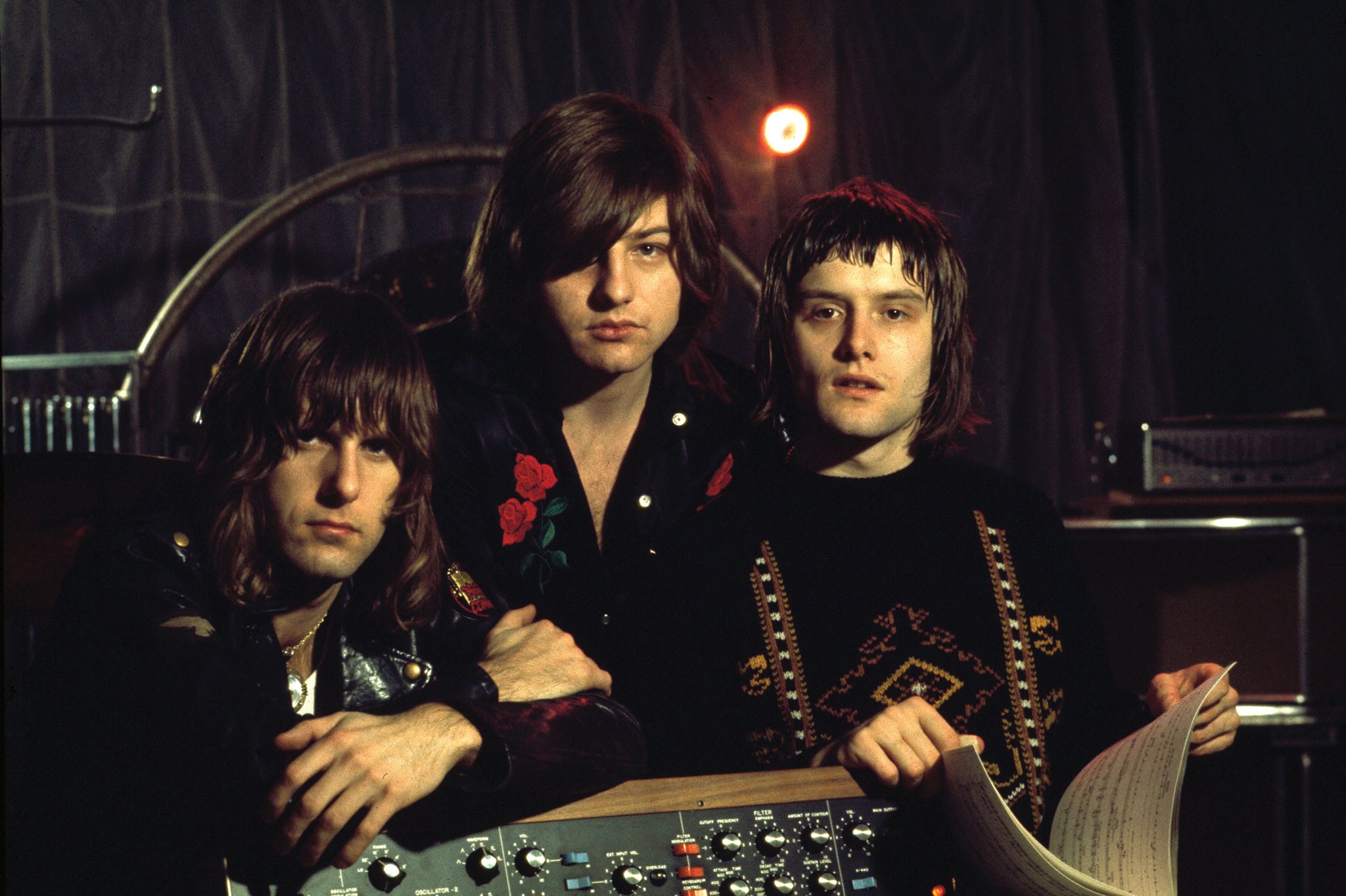
With the release of “Brain Salad Surgery”, Emerson, Lake and Palmer had outgrown any initial perceptions that they were simply a trendy supergroup possessing limited commercial appeal. Instead, they were now finding themselves well positioned on the precipice of mainstream success. To be sure, they were still seen as something of a phenomenon; after all, Keith Emerson’s over-the-top keyboard antics, Greg Lake’s engaging vocals and Carl Palmer’s thundering percussion placed them within a decidedly higher musical pantheon, one that found them capable of attracting audiences of stadium-sized proportions.

Thanks to the success of their preceding live album, “Pictures at an Exhibition”, Emerson, Lake and Palmer had become accredited practitioners of a prototypical prog/classical crossover configuration, one that boded well for continued accreditation. Emerson had initiated that stance with his previous group, the Nice, only to have it further realized with ELP, courtesy of a refined and sophisticated sound accompanied by a solid instrumental undertow. The fact that the three musicians were capable of such an achievement had never been in doubt, but with “Brain Salad Surgery“, that reputation was indelibly entrenched in both pedigree and practice. The group had bought a cinema in Fulham, which they renamed the Manticore Cinema, and they rented it out as storage and rehearsal space to groups. But in the rehearsals for “Brain Salad Surgery“, they left their gear set up on stage and rehearsed it as if playing a live show.

Released on November 19th, 1973, “Brain Salad Surgery” didn’t contain the same variety of instantly accessible music that songs like “Lucky Man” and “Take a Pebble”—both culled from ELP’s eponymous debut—had offered early on. Like the ELP albums that followed in its wake, it bore a sound that was increasingly more complex, built on majestic motifs that were far removed from what most people would have ever identified as an easy listening experience. Their fourth album, 1972’s Trilogy, had reached Number Two in the UK and Number Five the USA, but in rehearsing and arranging the music for “Brain Salad Surgery, ELP made a decision to pursue a quite different approach. “Music technology was really expanding,” Lake explained. “Tape recorders were going from 8-track to 24-track. 

And yet, it did have one singular song in particular—“Still…You Turn Me On,” a wistful ballad that Lake sang with a certain soothing assurance is one of his dreamiest acoustic songs. These had always provided dynamic contrast to ELP’s power play, both live and on record, and here Emerson joins in on harpsichord. Was the idea that the song was addressed to a certain person in the audience?. Given the fact that Palmer played no part in its recording, the idea of releasing the track as a single was nixed entirely. So, too, because at least half the album consisted of elegiac suites (dubbed “Impressions”), part of an extended work titled “Karn Evil 9,” there was very little material that could be considered a possible choice as far as selection as a single. “Benny the Bouncer,” composed by Lake and his one-time King Crimson colleague, lyricist Pete Sinfield, might have been an option, but the hokey theme and fickle approach didn’t really represent the band’s artful approach, their purpose or their prowess, and, as a result, it was never a real contender.

The album opens in a blaze of light, though, with a flamboyant version of William Blake and Hubert Parry’s “Jerusalem“, with Palmer playing gongs and timpani, and executing lavish multiple tom-tom rolls around his stainless steel kit. Emerson garnishes proceedings with exultant Moog clarion calls, while Lake’s magisterial voice holds the middle ground. “Jerusalem” was the consensus pick, but the BBC quickly vetoed that idea due to its refusal to play anything that was perceived to be sacrilegious. Although the album reached the upper tiers of both the British and American charts and sold well enough to be certified gold the lack of a viable single seemed to hinder its overall possibilities. Palmer still laments the fact that “Jerusalem” was stillborn as far as a singles candidate was concerned. “We wanted to put it out as a single,” Palmer saying. “We figured it was worthy of a single…I think there was some apprehension [as] to whether or not we should be playing a hymn and bastardizing it, as they said, or whatever was being called at the time … We thought we’d done it spot-on, and I thought that was very sad…I actually thought the recording and just the general performances from all of us were absolutely wonderful. I couldn’t believe the small-mindedness…It got banned and there was sort of quite a big thing about it. These people just would not play it. They said no, it was a hymn, and we had taken it the wrong way.”

Another portion of the album initially presented a problem as well. “Toccata” was a piece Emerson had first considered for the Nice, but the idea of doing it with ELP hadn’t surfaced until Palmer suggested spicing it up with an extended drum solo. However, its complexity proved to be a handicap due to the fact that Lake didn’t read music and Palmer couldn’t find a musical score that adapted the piano arrangements for drums. Those difficulties were overcome, but the real problem lay in the fact that the publisher of the piece refused to grant the group permission to do an adaptation. That led to Emerson flying to Geneva to personally play the group’s arrangement for the publisher’s representatives, in hopes of persuading them to change their minds. The tack worked, and the publishers, duly impressed with what they heard, eventually allowed ELP to proceed. “Toccata” would eventually coalesce into a spectacular mesh of sound, fury, flash and finesse, a standout selection that ranks as one of the highpoint of the entire LP.

The aforementioned “Karn” suite became notable in its own right, due not only to the trio’s usual over-the-top instrumental antics, but also because the computerized voice featured in its third movement gives Emerson his only vocal credit of the entire ELP lexicon. Likewise, the second section of the first movement boasts the lyric that would become one of the most famous lines in the entire prog rock canon: “Welcome back my friends, to the show that never ends.” It would famously become the title of the band’s epochal three-LP live album a few years later.

“Brain Salad Surgery” is the group at the pinnacle of its powers,” says drummer Carl Palmer of Emerson Lake & Palmer’s fifth album. “It’s very well recorded and it was definitely one of our most creative periods. If I had to choose one of our albums, that would be the one.”

It’s a viewpoint echoed by his erstwhile bandmates. Keyboard player Keith Emerson sees it as a “step forward from the past”, which “represented the camaraderie of the band at the time”. Bass player and vocalist Greg Lake reckons that it was “the last original, unique ELP album”.

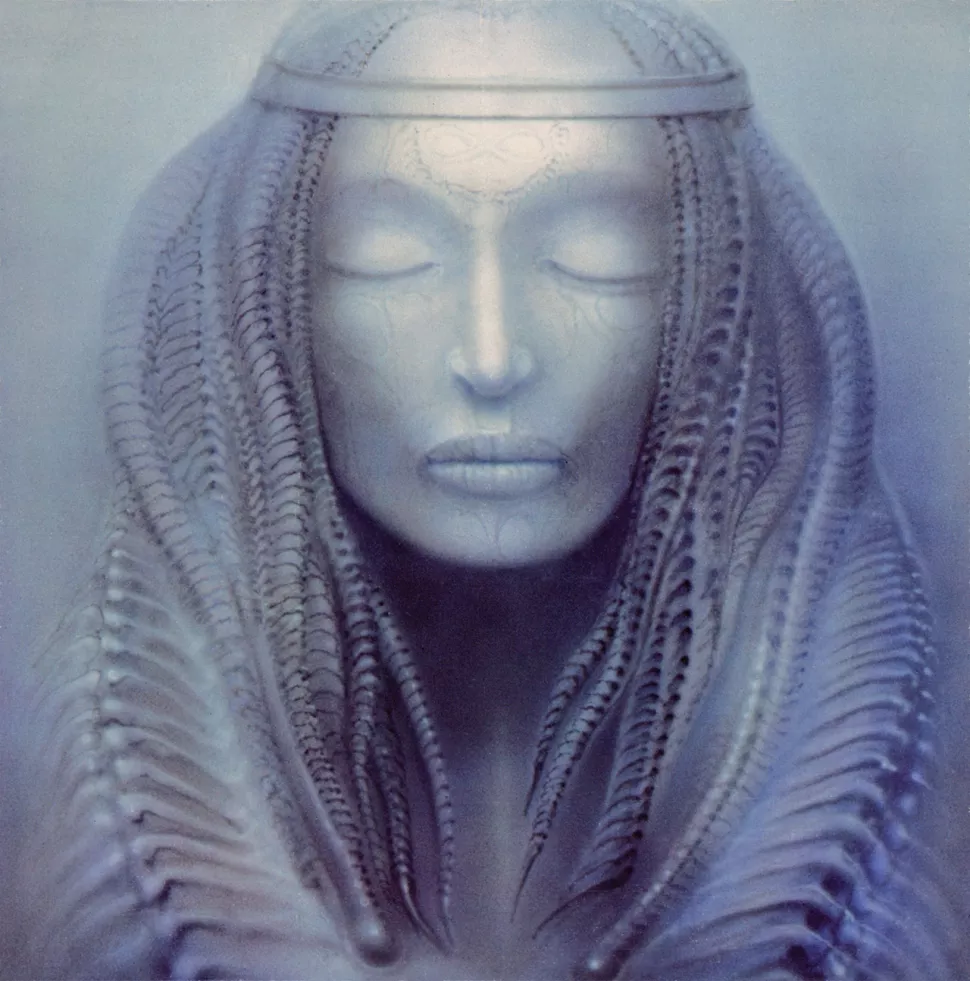
The fold-out cover sleeve, designed by the Swiss artist H.R. Giger, was also notable and, in fact, considered quite innovative as well. Given that the working title of the album had been “Whip Some Skull On Ya“—shorthand slang for fellatio—the skull triptych designs Giger was working on at the time seemed to find a perfect fit, even after the title was changed to Brain Salad Surgery.

The Wave Pictures, industrious and prolific as ever, return on Thursday 18th November with ‘This Heart Of Mine’. Following two albums in 2018, ‘Brushes With Happiness’ and ‘Look Inside Your Heart’, this is the first track to be made available from their new double album ‘When The Purple Emperor Spreads His Wings’, due for 2022 release.

Formed over twenty years ago by Franic Rozycki and David Tattersall in Wymeswold, Leicestershire, and joined by Jonny ‘Hudderfield’ Helm since 2005, The Wave Pictures have released over twenty albums of their own, along with exciting side projects such as garage rock supergroup The Surfing Magazines, several albums with Stanley Brinks, and Dave’s recent guitar contributions to Billy Childish albums, with whom they also collaborated on their 2014 album ‘Great Big Flamingo Burning Moon’. Across these varied releases, accommodating Dave’s free flowing fountain of song writing, The Wave Pictures have shown their deep affection for rock and roll, blues, jazz, classic rock, and of course Dave’s legendary love of good guitar solo.

Releases May 20th, 2022

Young post-punk prodigies Sweeping Promises, creators of one of the best debut albums of 2020, announce their signing to Sub Pop Records  with an irresistibly punchy new mega-jam / actual bop.

Our new single “Pain Without a Touch” is out now via Feel It Records and Sub Pop. Touring the UK/EU in 2022!

“Pain Without a Touch” is the first new music from Sweeping Promises, after the 2020 release of their astonishing, acclaimed debut album “Hunger for a Way Out“, and their first release for Sub Pop Records. Sub Pop and Feel It Records (who released Hunger for a Way Out, and shepherded the LP through its nine pressings to date) are partnering on the urgent new single, out digitally today from Feel It in North America and Sub Pop for the rest of the world.

Sweeping Promises’ debut Hunger for a Way Out, “Sometimes the best pop songs stick to the basics: no muss, no fuss. With the Sweeping Promises, they add some fuzz. The same way the Pixies wrote pop songs with a nasty sheen, this Boston post-punk band dirties up earwormy melodies with a lo-fi charm. You can play spot the influence all over this debut: Young Marble Giants here, Kleenex/LiLiPUT there, some B-52s and Blondie for good measure. Lira Mondal has a voice that leaps and bounds with the enthusiasm of a bedroom performance, hairbrush in hand. But mostly you can hear a band dream out loud, and, as the album title suggests, “Hunger for a Way Out.”
 
NME adds, “At a desolate intersection of post-punk and new wave stands Boston-based revivalists Sweeping Promises, with a debut album custom-built for jangly lo-fi apologists with angular discord and indie-pop fizz. Hunger for a Way Out comes into a world in which Debbie Harry is a style icon for the Stranger Things-generation and once-underground Belarusian punks Molchat Doma are on TikTok. There’s a new cross-appeal for this riff-ready rock with eyes in its back, both lo-fi but searingly tight and well-produced, anthemic and experimental.”

The band, led by Lira Mondal and Caufield Schnug with live touring drummer Spenser Gralia, are also sharing new, European tour dates for 2022 which begin May 18th in Antwerp, BE at Het Bos and currently end June 11th in Mannheim, DE at Maifeld Derby.

Released November 17th, 2021
Written and performed by Lira and Caufield
Drums and Bass recorded at Estuary by Michael Landon

SUN JUNE – ” Somewhere “

Posted: November 18, 2021 in MUSIC
Tags: ,

Austin-based band Sun June have shared a lyric video for their new single “Easy.” They have also announced an expanded version of their latest album, Somewhere. The new edition, “Somewhere +3“, will be out on January 14th, 2022 via Run for Cover Records.

Frontwoman Laura Colwell elaborates on the new song in a press release: “‘Easy’ is a romantic struggle song. It’s about love and partnership and longstanding arguments that are hard to get past. We started working on it after quarantine was lifted. Everyone had been cloistered alone for months, so frustration was easy to tap into. At the same time, it was joyous and cathartic to play together again, so the song came out upbeat and optimistic too. We loved getting to return to Good Danny’s studio to record—it was easy to find the sounds we wanted and get back into the “Somewhere” vibe.”

The five members of Sun June spent their early years spread out across the United States, from the boonies of the Hudson Valley to the sprawling outskirts of LA. Having spent their college years within the gloomy, cold winters of the North East, Laura Colwell and Stephen Salisbury found themselves in the vibrant melting-pot of inspiration that is Austin, Texas. Meeting each other while working on Terrence Malick’s Song to Song, the pair were immediately taken by the city’s bustling small clubs and honky-tonk scene, and the fact that there was always an instrument within reach, always someone to play alongside. Sun June returns with “Somewhere”, a brand new album.

It’s a record that feels distinctly more present than its predecessor. In the time since, Colwell and Salisbury have become a couple, and it’s had a profound effect on their work; if Years was about how loss evolves, “Somewhere” is about how love evolves. “We explore a lot of the same themes across it,” Colwell says, “but I think there’s a lot more love here.” “Somewhere” showcases a gentle but eminently pronounced maturation of Sun June’s sound, a second record full of quiet revelation, eleven songs that bristle with love and longing. It finds a band at the height of their collective potency, a marked stride forward from the band that created that debut record, but also one that once again is able to transport the listener into a fascinating new landscape, one that lies somewhere between the town and the city, between the head and the heart; neither here nor there, but certainly somewhere.

‘Easy’ is a romantic struggle song. It’s about love and partnership and longstanding arguments that are hard to get past,” says Laura Colwell. “We started working on it after quarantine was lifted. Everyone had been cloistered alone for months, so frustration was easy to tap into. At the same time, it was joyous and cathartic to play together again, so the song came out upbeat and optimistic too. We loved getting to return to Good Danny’s studio to record—it was easy to find the sounds we wanted and get back into the “Somewhere” vibe.”

“The Austin, TX-based five-piece make unhurried, expansive indie-rock songs that are delicately, almost psychedelically stretched out; time, for them, is less a constraint as much as it is a new instrument to play with, a form to bend and subvert.”
-THE FADER

“Soft, cloudy pop… Sun June are interested in daydreams as both playground and prison, and about observing what happens when you collide with the borders of your own interiority.”
-Pitchfork

The upcoming expanded version of their critically acclaimed 2021 album “Somewhere. Somewhere +3” is out January 14th.

“Easy” by Sun June, from the album “Somewhere”out via Run For Cover Records.

See the source image

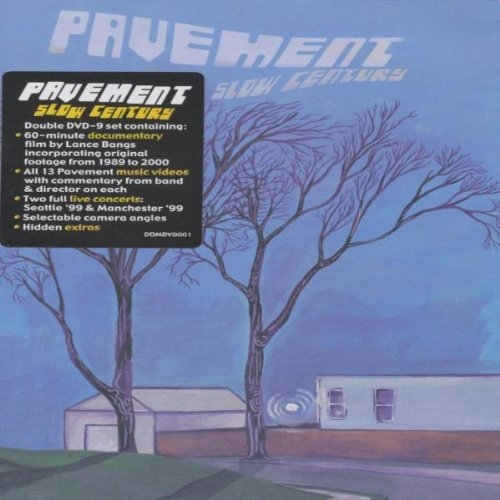
With a Pavement reunion tour going all over the place in 2022, it’s a good time to revisit Lance Bangs’ excellent “Slow Century” documentary. Originally released in 2002, it tracks the band from the scruffy early days as a “special new band” through their, er, slightly less scruffy time as indie rock darlings. Amidst intimate interviews and rehearsals, Bangs makes copious use of both pro and amateur concert footage, and in the process puts to bed the idea that Pavement were no good live. Loose and messy at times? Sure. But Stephen Malkmus and co. almost always delivered an exciting, unpredictable show, eschewing gloomy theatrics for something fresh and fun. 

Documentary tracing the existence of noted rock band Pavement from 1989 to their final performance in late 1999. The DVD also compiles all of their music videos, rare live footage, audio commentary from the band and directors, and two live concerts available with multiple angles.

The complete Lance Bangs documentary/retrospective about Pavement circa 2002.

KILLS BIRDS – ” Married “

Posted: November 18, 2021 in MUSIC
Tags: ,
kills birds band

“How could I let you?” asks Kills Birds frontwoman Nina Ljeti of herself on ‘Rabbit’, the opening track on the Los Angeles rock band’s new album, ‘Married’. She whispers the lyric, as if barely daring to speak it. The trio – completed by guitarist Jacob Loeb and bassist Fielder Thomas, plus studio drummer Bosh Rothman – then roar into life and Ljeti’s full voice returns, tearing alongside the fierce instrumental.

It’s a track on which Ljeti explores the abuse she has suffered at the hands of a “powerful person”. “This is how you talk about me: you made me who I am today,” she sings. “I could have tanked you, ended you / But I’m not like the other girls.” The latter line is a sardonic take on a phrase that is so often used to groom and manipulate women, and a nod to the isolation of abuse. By turning these feelings of shame into powerful catharsis Ljeti tears down those walls, inviting anyone who relates to her lyrics to join Kills Birds on this platform.

She further explores these themes of pain and loneliness on ‘Glisten’, where she asks “Why don’t you want me?”, and ‘Offside’, where manipulation leaves her feeling trapped inside a burning house. The singer then grapples with the broader manifestations of a patriarchal society: on ‘Good Planning’, there’s a sense of dread to the sludgy instrumental as Ljeti depicts the pressure that accompanies others’ expectations to bear children. On ‘PTL’, meanwhile, she satirises religious arrogance by singing: “Give to me, and God will shine on only me.”

Kills Birds’ arrangements are heavy and sharp throughout, swirling together elements of grunge, punk, garage and noise-rock into a murky pool of sound. Volatility is always at the core of this band, and these songs often feel as though they could explode at any second. Take ‘Glisten’, where the riffs veer between gentle murmurs and jagged blasts of noise. Sonically, it’s a potent representation of the turbulence of trauma.

The acoustic heartbreak of the title track provides the record’s only soft moment. “I’m married” are the ballad’s — and the album’s — ambiguous last words, with Ljeti repeating the phrase quieter each time. Yet while she may sound momentarily defeated in the song, Ljeti is in fact rallied by the strong, marital-like bond she shares with her bandmates across ‘Married’. To speak it is to make it true, and now there’s no fear in that.

Released on Royal Mountain Records & KRO Records. “Married” out November 12th, 2021.

kills birds married album
May be an image of 3 people, people standing and nature

Leeds trio Peakes carry the feat off their new album with aplomb. The band’s debut album ‘Peripheral Figures’ introduces Springsteen-esque gutsiness and a clubby sheen to their already expansive electro-pop DNA. 

John Cale once said he and Lou Reed followed a mantra of “don’t bore us, get to the chorus”. It’s clear that Peakes have been adhering to something similar. Their tunes usually hover around the three-minute mark and never outstay their welcome. Like all the best pop, with many of these songs there’s a little intro, the singing starts quickly, in comes the chorus and you’re out in less time than it takes to boil a crap kettle. For all the dreaminess conjured by the hazy washes of synthesizer and thick bass, there’s always an insistent backbeat and a big chorus to regiment the detachment. No messing about.

Weirdly, one thing that struck me about this record was the manner in which Peakes end their songs. There’s a great bit in Joe Thompson’s book ‘Sleevenotes’ where he encourages (“instructs” might actually be a more fitting word) live bands that “when your time is up, please stop”. The songs on ‘Peripheral Figures’ are great because they turn on a dime and end with a bang – no gauzy trails of feedback, no sizzling arpeggios that trail off for thirty seconds. Peakes’ songs stop dead. 

The moments where this album really flies are when Maxwell Shirley, Molly Puckering and Pete Redshaw look to the dancefloor rather than within for inspiration. A few of the tracks – ‘Day and Age’, ‘An Infinite Divide’, ‘Nameless Machines’ – have a real hands-aloft energy to them. ‘Day and Age’ in particular is an exhilarating highlight, with the track featuring a brilliant squealing, distorted synth line that works perfectly with the careening propulsion of the beat. I’m frequently reminded of New Order at their most anthemic.

The production is very well-rendered on ‘Peripheral Figures’. I love the way the bassline (a Roland 303?) in ‘Fascination’ flutters into view before disappearing, ditto the chewy bass in ‘Nameless Machine’ that’s redolent of ‘Silver Eye’-era Goldfrapp. The percussion consists of mostly live drums, a choice which provides a nice, organic counterpoint to the cyborgish electronics and Puckering’s vocals. 

This album sounds like Springsteen! I will explain. Peakes share that heart-on-sleeve chest-thumpingness with The Boss. Lyrics like “I can see my way through this clouded space between us” or “we all left behind, an infinite divide” have that kind of slogan-y, universally-applicable quality which means that they are just made to be belted out. Together with the driving rhythms, it all sounds like The Boss, Steven Van Zandt and the rest of the E Street Band got bang into eye shadow, drum machines and The Human League. 

‘Peripheral Figures’ is a cracking debut from Peakes. It has definable sound, and while ‘Peripheral Figures’ features some of the most boring song titles I’ve seen this year, there are some absolutely brilliant moments where the heady dynamism of the best electronic music is suffused with a wistful yearning.

Jake Ewald may only be 27 years old, but he’s already a musical veteran having co-founded the now-defunct (and highly celebrated) emo band Modern Baseball in 2011, back when he was a teenager. Since 2014, Ewald has also been consistently releasing music as Slaughter Beach, Dog, a solo project that  eventually evolved into a full band that also features bassist Ian Farmer, guitarist Nick Harris (All Dogs), and drummer Zack Robbins (Superheaven). However, due to the ubiquitous quarantine, Ewald went back to his roots for “At the Moonbase“, recording and performing all of the instruments himself alone at home and at his recording studio in Philadelphia with a few friends sending him overdubs of backing vocals and saxophone during the process. The result is an inventive album that sees Ewald stretching out as a songwriter and exploring new sonic territory without any self-imposed limitations. 

We caught up with Ewald to discuss how At the Moonbase came together after four months of hard work, his song writing process, and why the idiosyncratic details of other peoples’ lives can often seem strangely familiar.

We recorded the band at our studio, so we went through basically a month of figuring out how to appropriately mic up fifteen different instruments to all be ready to go at a moment’s notice for an hour-long set, and we brought in our friend Matt [Schimelfenig] who actually mixed “At the Moonbase” to run the session while we were playing and then mix the audio. It was a lot more work than we put into anything in a long time. It was fun to figure out actual human band arrangements for the new songs, and we also dipped into old songs, stuff we’ve been playing for a long time. Above everything else, it just felt so good to play together after not playing together for half a year. We’ve been working very hard on it, and we’re so excited to share it with everybody.

Written and recorded alone at home and at The Metal Shop, Ewald’s East Kensington recording studio, the album tracks an exercise in solitary production not unlike Slaughter Beach, Dog’s 2016 debut Welcome or 2017’s Motorcycle.JPG. On the heels of 2019’s Safe and Also No Fear, Ewald’s latest offering brings expanded arrangements and sharpened storytelling as he taps into salad days over slacker rock (“Do You Understand”), the dark grooves of seedy city life (“Song for Oscars”), and even a barroom-piano-driven “escapade through the great American bedroom” (“A Modern Lay”). “At the Moonbase” arrives on Lame-O Records.

All music written and performed by Jake Ewald except where noted

Wil Schade – Saxophone on 1, 5-8, 10
Lucy Stone – Vocals on 1, 2, 6, 7
Zack Robbins – Additional synthesizers on 1, 4
Jessica Flynn – Vocals on 9
Julie Sponsler – Spiritual guidance

Originally released December 24th, 2020

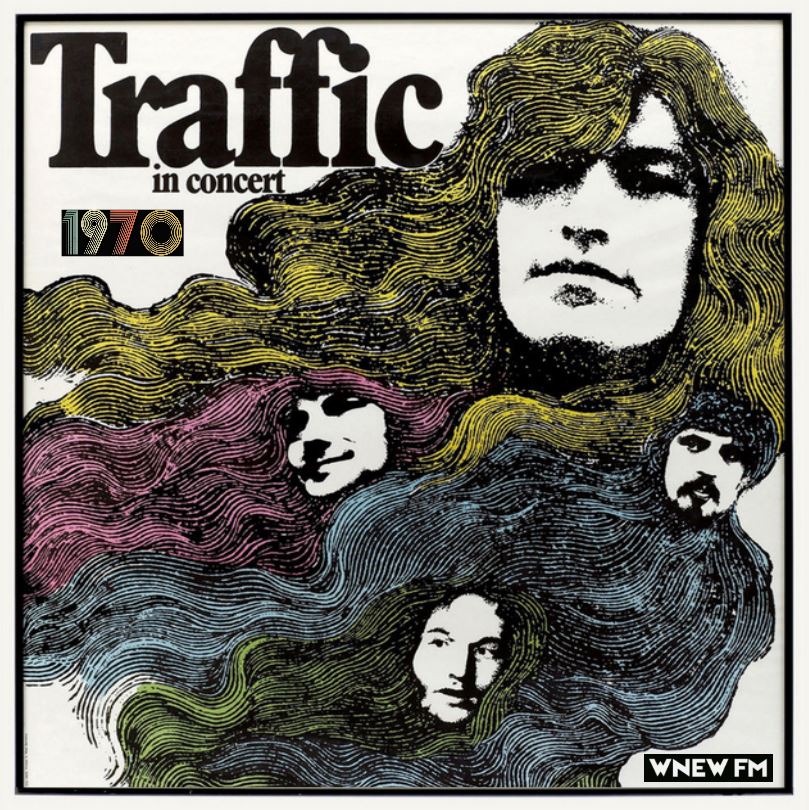
Live performance by Traffic at the Fillmore East on 11/18/1970. This concert was broadcast on WNEW-FM in New York City. Introduction by concert promoter Bill Graham. An ultra rare album cover for the unreleased 1971 album “Live Traffic.” United Artists Records, Traffic’s US label, was planning to release a Traffic live album recorded at the Fillmore East on November 18th and 19th, 1970 (featuring the band’s new bassist, Blind Faith’s Ric Grech.)

Evidently United Artists greatly upset Steve Winwood and band manager Chris Blackwell by releasing a 2 LP Winwood career retrospective without their permission, and so this release was pulled at the last minute, amid rumours that the master tape had been “lost”. This is a fully fabricated album cover for the album; something we’ve never seen before. We acquired it from an industry insider, who got it at the time from UA’s head of publicity. It is in near mint condition, with barely detectable staple holes in the four corners. As far as we know, there were never albums or test pressings of this release–only a very small number of this album cover. This is an extremely rare Traffic artifact from their classic era.

The artwork was created from a 1970 poster promoting Traffic on tour.

Traffic: Steve Winwood – Keyboards, Guitar, Vocals; Chris Woods – Flute, Sax, Organ; Jim Capaldi – Drums, Vocals; Rick Grech – Bass.

Songs recorded at this concert and the next day were planned for a “Live Traffic” album by UA that was never released. 

U2's 'Achtung Baby' on colour vinyl

U2 are celebrating the three-decade landmark of their 1991 album ‘Achtung Baby’ with a 30th Anniversary Edition vinyl release and 50-track digital box set. The critically acclaimed album won a Grammy Award for Best Rock Performance and became one of the standout records of U2’s career.

Happy 30th Anniversary to U2’s seventh studio album “Achtung Baby”, originally released in the UK November 18th, 1991 and in the US November 19th, 1991. The Dublin-bred quartet of Paul “Bono” Hewson, David “The Edge” Evans, Adam Clayton, and Larry Mullen Jr. was an omnipresent and at times omnipotent force within the global music landscape.

Their video for “Sunday Bloody Sunday,” which featured live footage from the band’s June 1983 performance at the majestic, fog-enveloped Red Rocks Amphitheatre located just outside of Denver, Colorado. Admittedly, I was too young to even attempt to grasp the historical weight of the song which referenced the 1972 shooting of 26 Northern Irish protesters, 14 of whom were killed, by British soldiers during the prolonged “Troubles” conflict that raged across Northern Ireland during the latter half of the 20th century. 

Produced by Daniel Lanois and Brian Eno, ‘Achtung Baby’ is the Irish rock giants’ seventh studio album and features blockbuster tracks like ‘The Fly’, ‘Mysterious Ways’, ‘Even Better Than the Real Thing’ and ‘One’.

The 30th Anniversary Edition of U2’s ‘Achtung Baby’ will be released on standard black vinyl and deluxe colour vinyl release on 19th November, with Achtung Baby (2018 Remaster) and Achtung Baby (Unter Remixes) also available digitally that day.

Then on Friday 3rd December 2021, a 50-track digital box set arrives including Uber Remixes, Unter Remixes, and B-Sides with 22 tracks that have never been available to stream digitally before.

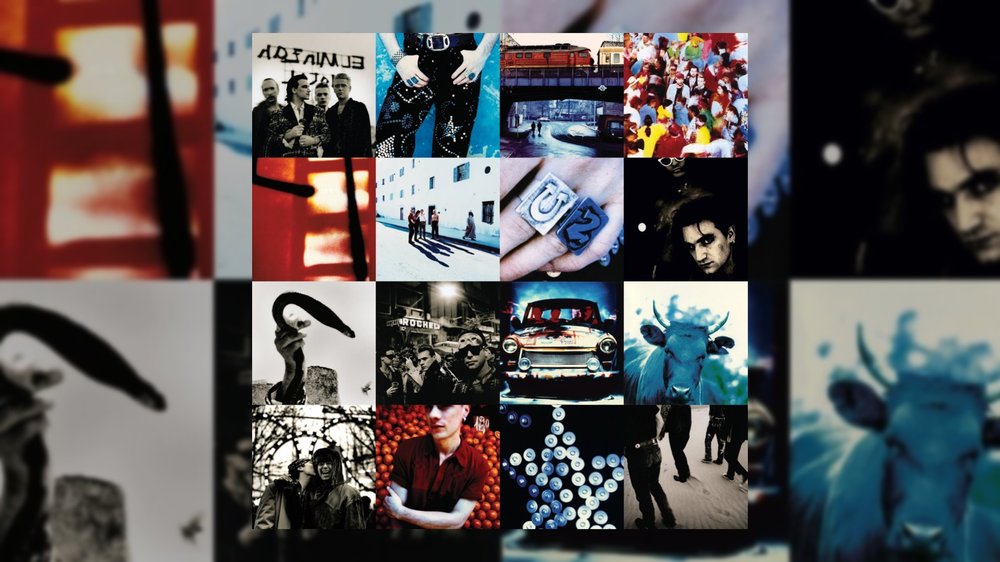
To commemorate the anniversary of ‘Achtung Baby’, U2 have also collaborated with Berlin-based French artist Thierry Noir (the first artist to paint on the Berlin Wall) for a special installation at the legendary Hansa Studios in Kreuzberg from 19th November to the 26th November. Thierry Noir painted an iconic series of Trabant cars which featured on the ‘Achtung Baby’ album artwork, as well as U2’s 1991 Zoo TV Tour. Now, Noir returns with a newly painted Trabant for 2021.

Originally released on 18th November 1991, ‘Achtung Baby’ has sold more than 1.2 million copies in the UK and over 18 million units globally.

Three-and-a-half years later in March 1987, the band released what many critics and fans alike still consider to be their seminal work, The Joshua Tree. A triumph of songcraft, U2’s ambitious fifth studio album is arguably one of the finest, most fully realized long players to surface in the past thirty-five years. It’s certainly one of my favourites of all time and to this day, whenever I hear the familiar melodies of “With or Without You,” “Bullet the Blue Sky,” Where the Streets Have No Name,” “In God’s Country,” or “I Still Haven’t Found What I’m Looking For,” among the other album tracks.

In 1988, U2 followed up The Joshua Tree with “Rattle and Hum“, an album comprised of live recordings, cover versions, and new songs, including collaborations with music luminaries Bob Dylan and B.B. King. Though commercially successful, the album and accompanying film documentary were met with substantially more tempered critical acceptance than its precursor. Some critics perceived the project to be pretentious verging on the sanctimonious, the manifestation of a band attempting to reconcile their newfound superstardom with their inflated sense of their own self-importance.

In the wake of the backlash they incurred as the ‘80s drew to a close, the foursome found themselves stuck at a creative crossroads, questioning the musical identity they had worked so diligently to develop during the previous decade, while simultaneously itching to redefine their sound and aesthetic. “We were the biggest, but we weren’t the best” Mullen explained to Rolling Stone in 1992 during the band’s ambitious, nearly two-year Zoo TV tour, “That was an awful thing to feel—to go onstage in front of 17,000 people and go, ‘Whoopee!’ when we were feeling like shit, that it wasn’t as good as it should be, that we really hadn’t done our homework.”

As an antidote to their creative stagnation, the group went back to the drawing board, so to speak, and into the studio with Daniel Lanois and Brian Eno, who had assumed production duties for The Unforgettable Fire (1984) and The Joshua Tree. Steve Lillywhite, who produced the band’s first four records, also contributed his expertise to the recording sessions which kicked off in October 1990. Craving a change of scenery to help reinvigorate their creative energies, the band selected the famed Hansa Studios in Berlin, not too far from where the infamous Berlin Wall had been demolished less than a year before. Hansa may ring a bell for some, as classic albums by David Bowie (1977’s Low and Heroes), Iggy Pop (1977’s The Idiot and Lust for Life), Depeche Mode (1984’s Some Great Reward and 1986’s Black Celebration), and Pixies (1990’s Bossanova) were recorded either in part or in full there.

The recording sessions for U2’s seventh studio LP were fraught with tension, as while Bono and The Edge were advocating for the band to embrace new directions, Clayton and Mullen allegedly felt threatened by what they initially perceived as an unjustified departure from their signature rock-based approach. But ultimately, through their dogged resolve and their mutual respect for each other, they conquered their conflicts to craft “Achtung Baby”, reinventing and reenergizing themselves in the process.

“Berlin was a baptism of fire,” Clayton suggested in the 2011 documentary film From the Sky Down. “It was something we had to go through to realize what we were trying to get to was not something you could find physically, outside of ourselves, in some other city—that there was not magic to it and that we actually had to put the work in and figure out the ideas and hone those ideas down.”

On Achtung Baby, U2 pushed their sound down paths they had never traversed before while tapping into a variety of stylistic inspirations, including a more noticeable reliance on multi-layered industrial and electronic flourishes. And through Bono’s more intimate lyrics that dissect the fundamental nature of the human condition, spirituality, and love, rather than the various ills of the world at large, the album is a rebellion of sorts against the then-rampant perception that the band took themselves too seriously and were too geo-politically inclined. It was “the sound of four men chopping down ‘The Joshua Tree,’” as Bono once explained it.

While the twelve songs that comprise “Achtung Baby” are noticeably more understated relative to the soaring, grandiose fare that defined “The Joshua Tree”, the album is no less inspired and enthralling. Thematically, the album rivals the emotional heft of the band’s previous efforts, but it’s more introspective overall, less preoccupied with the weight of the world. Moreover, the group seems more liberated, finally embracing the more gratifying dimensions of being one of the most universally beloved bands.

“Rock & Roll is ridiculous,” Bono insisted during the band’s Zoo TV tour. “It’s absurd. In the past, U2 was trying to duck that. Now we’re wrapping our arms around it and giving it a great big kiss. It’s like I say onstage—’Some of this bullshit is pretty cool.’ I think it is the missing scene from Spinal Tap—four guys in a police escort, asking themselves, ‘Should we be enjoying this?’ The answer is, fucking right. It’s a trip. It’s part of the current of rock & roll that just drags you along—and you can feed off it.”

Within the first 45 dissonant seconds of album opener “Zoo Station,” awash with distorted guitar and industrial drum beats, it becomes glaringly obvious that this is not your typical U2 record. The sense of disorientation is exacerbated by Bono’s manipulated vocals which make him sound as if he is submerged underwater, as he declares, “I’m ready / Ready for the laughing gas.”

Nearly half of the album’s songs were released as official singles, though while each is excellent in its own right, they don’t necessarily represent the strongest fare on the album (more on this later). Lead single “The Fly” is the hardest-rocking song on the album, and unquestionably one of the more intriguing compositions. The crunchy, somewhat jarring guitar riffs unexpectedly segue into the sweet melody of the chorus shortly after the one-minute mark. The song encapsulates the incongruous juxtaposition of the abrasive and discordant with the melodic and resonant, which forms the predominant sonic thread heard across the album.

Follow-up single “Mysterious Ways” is the song I suspect most people first remember hearing from the album due to its ubiquitous presence on radio and MTV. Atop the album’s most funk-indebted groove, the song celebrates the exalted power of spiritual love, or romantic love, depending on your interpretation.

The energized, grinding “Even Better Than the Real Thing” is open to various interpretations, but could be about the euphoria of sex, or more broadly, people’s insatiable need for gratification. The dazzling breakup song “Who’s Gonna Ride Your Wild Horses” is an impassioned examination of the volatility of relationships and the hollow void that remains in the heart when love dissolves.

The anthemic “One” is arguably “Achtung Baby’s” most enduring single, largely due to its core message that human beings must strive toward unity, despite or rather because of our differences (“One love, one blood, one life, you got to do what you should / One life with each other: sisters, brothers / One life, but we’re not the same / We get to carry each other, carry each other”). Directly inspired by the reunification of West and East Germany in 1990, it’s a universally salient sentiment that can be applied in various ways, depending on how the listener interprets it. Uniting forces with your partner in love, with your bandmates (in the case of Bono and crew), with your fellow citizens.

“I never saw the song as something hopeful or comforting,” Bono confessed in 1993. “To me, it was a very bitter song. It is a song about coming together, but it’s not the old hippie idea of ‘Let’s all live together.’ It is, in fact, the opposite. It’s saying, ‘We are one, but we’re not the same.’ It’s not saying we even want to get along, but that we have to get along together in this world if it is to survive. It’s a reminder that we have no choice.”

Among the remaining non-singles, the percussive, shimmering “Until the End of the World” imagines a fictional dialogue between Jesus Christ and Judas Iscariot, while the downtempo “So Cruel” explores an elusive, equivocal love and the complications of trying to win her affection. The latter track features some of the most evocative lyrics Bono has ever penned, including, “I gave you everything you ever wanted / It wasn’t what you wanted / The men who love you, you hate the most / They pass right through you like a ghost / They look for you, but your spirit is in the air / Baby, you’re nowhere.”

For me, and contrary to how most front-loaded albums typically play out, “Achtung Baby’s” final four songs are the true gems on offer here. The latter third of the LP begins with the subdued “Tryin’ to Throw Your Arms Around the World,” an ode to trying to connect with your lover, even when she’s unattainable or just beyond reach and you know you’re destined to fall short.

The album’s finest moment surfaces with the propulsive anthem “Ultra Violet (Light My Way),” in which Bono issues his yearning plea to his lover to rescue him from despair, a cry for help accentuated by his screeching vocals and repeated refrain of “Baby, baby, baby, light my way.” The reference to “ultraviolet” light, which cannot be discerned by the human eye, may also be a summoning of spiritual guidance from a higher power.

The contemplative, gorgeous guitar-driven dirge “Acrobat” references the double-standards of expectations we place upon others but cannot adhere to ourselves. The song explores our contradictory nature as human beings, as well as overarching themes of disillusionment and the quest for redemption, fulfillment, and purpose in life.

“Achtung Baby” concludes with the plaintive “Love Is Blindness,” a composition that the band initially considered offering to the legendary Nina Simone, who admittedly could have done wonders with it, considering its sombre, stark tone. Beginning with a haunting organ intro that transitions into Clayton’s vibrating bass lines, it’s a sobering, yet beautifully executed meditation on the destructive power of love, which can strip us of our ability to reason with a clear conscience, blinding us to the threat of inevitable heartache.

Not surprisingly, Achtung Baby garnered extensive commercial and critical acclaim upon its release. It debuted at #1 on the American Billboard 200 chart and topped the charts in a handful of other countries, ultimately selling just shy of 20 million copies to date. Several publications’ ranked the album at or near the top of their year-end best-of lists. At the 1993 GRAMMY Award ceremony, it took home the prize for Best Rock Album by a Duo or Group while Lanois and Eno were named Producers of the Year.

Following the worldwide success of “Achtung Baby” and the ensuing Zoo TV tour, the band expanded their creative horizons and risk-taking even further with subsequent efforts Zooropa (1993) and Pop (1997), both of which are stellar, albeit underappreciated recordings that are frequently and unfairly marginalized, or in some cases dismissed altogether, in discussions of the band’s career discography.

The best U2 albums admittedly ended with 2000’s All That You Can’t Leave Behind. While I’ve enjoyed parts of this album and the four that have followed since (2004’s How to Dismantle an Atomic Bomb, 2009’s No Line on the Horizon, 2014’s much-maligned, debacle Songs of Innocence and 2017’s aptly-titled Songs of Experience), None of their five albums released in the new millennium were of such standard or were as impressive.

No matter though, as despite the band’s more recent creative plateau and marketing missteps, their ‘80s and ‘90s repertoire have more than solidified their deserved status as one of the most prolific and thrilling bands in the history of popular music.