In the grand scheme of things, Drug Church’s “Tawny” EP is not necessarily momentous. Intended as a bridge between 2018’s Cheer and their recently announced full-length that’s due out early 2022, it’s more of a dumping ground for tracks that didn’t fit anywhere else than a full-fledged statement. But that it’s so solid anyway is a testament to how consistently excellent this Albany band is. “Remember to Forget” is just an incredible song. Nice change of pace after the blistering “Bliss Out”.
This band keeps getting better and better. “Tawny” nails it.
These tracks are charming and propulsive, built around snaking guitar lines and crisp choruses that are a whole lot of fun and express a snotty, infectious rage.
Noisy guitar pop with hooks that stick in your head. One amp. One mic. One person. Countless hooks. That’s the Dazy formula. Dazy does it again! After releasing set of perfect singles over the last few months, here’s a longer release and – spoiler alert – It’s so good! Like Automatic-era Jesus and Mary Chain with all the pop melodies turned up to 11, this record exudes sunshine and catchy song writing. If record labels aren’t already clamouring to put out a physical release of all the Dazy material to date, James Goodson: a regular feature in my email inbox and now a regular addition to my playlists. Goodson works as a music publicist, but he also plays in bands and last year he started his own project Dazy, which stemmed from messing around with a drum machine during the doldrums of the pandemic. He’s already built up a formidable collection of fuzzy power-pop gems, the most potent of which is “The Crowded Mind“, an eight-song EP that breezes by in 15 highly enjoyable minutes.
Recorded at home. Mixed and mastered by Justin Pizzoferrato at Sonelab. Released April 2nd, 2021
Beach Bunny traffic in some well-travelled territory (driving ’90s alt-rock) but they do it so, so well. They have a new album on the horizon, and this year’s thoroughly enjoyable Blame Game EP suggests that the young Chicago band’s song writing is only becoming sharper and more precise as they age. The chiming “Good Girls (Don’t Get Used)” and the shimmering, prickly “Love Sick” are hooky and winsome. Lili Trifilio has a knack for lyrics that are painfully specific. Packaged in songs that are as universally likable as this, it’s no wonder that Beach Bunny took off as quickly as they did.
Hard to pick a favourite every song is amazing! The lyrics are intelligent and fit the music tightly. After hearing this I quickly had to devour everything else they have recorded to this point which was equally great!, Beach Bunny is a Chicago act you don’t want to miss.
Free became renowned for their live shows and non‐stop touring. When ‘All Right Now’ became a massive worldwide hit it propelled them into the upper echelon of the rock pantheon. The song helped secure them a place at the Isle of Wight Festival 1970, where they played to 600,000 people. In early 1971 they played a short American tour and were recorded for radio station KUSC in Santa Monica. This album features many songs that went on to become classics, including the afore mentioned ‘All Right Now’.
Free were a miraculous live band in which four young people with an average age of 20 embodied the ideal of blues rock. There are 2 presentations in this work. It is a set of two discs with the super famous recording of “January 22nd 1971 Santa Monica” on Disc 1 and the best audience recording of “January 16th, San Francisco” on Disc 2.
Setlist: 00:00:00 Be My Friend 00:05:43 The Stealer 00:09:58 Woman 00:14:03 Ride On Pony 00:18:33 Don’t Say You Love Me 00:24:31 All Right Now 00:30:10 Fire And Water 00:35:14 Heavy Load 00:40:55 The Highway Song 00:45:49 My Brother Jake 00:49:44 Soon I’ll Be Gone 00:52:54 I’m A Mover 00:56:52 Mr. Big 01:04:14 The Hunter 01:09:24 Rock Me Baby Santa Monica Civic Center, Santa Monica January 22nd 1971 Paul Rodgers / lead vocals, keyboards Paul Kossoff / guitar Andy Fraser / bass Simon Kirke / drums
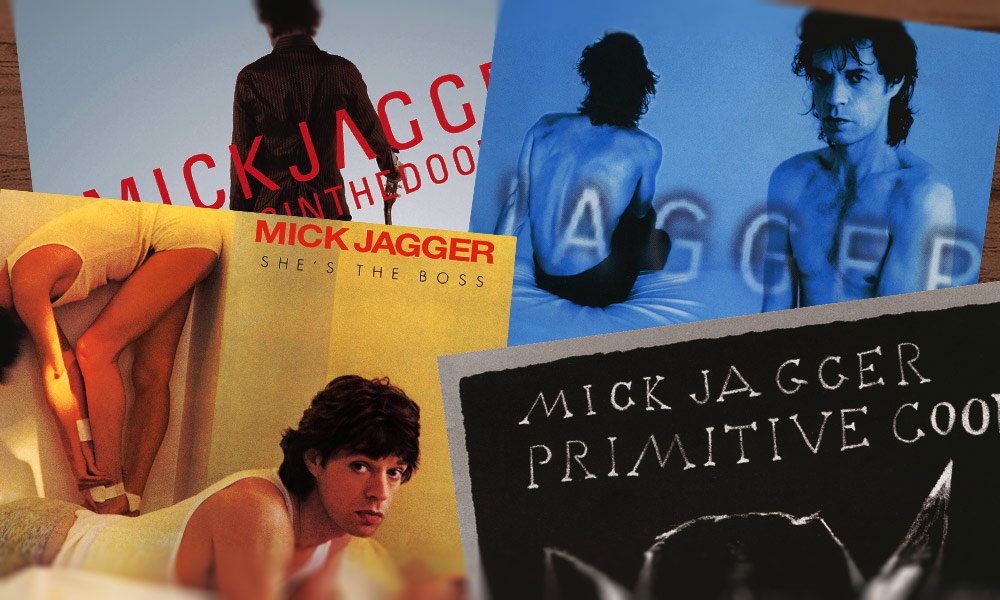
No one could accuse Mick Jagger of rushing into a solo career. From the point of The Rolling Stones’debut single, released in June 1963 “Come On”, it was more than seven years before his own name appeared on an album cover, and almost 15 more before he released his first solo album. But his body of work now four solo albums have just been reissued on heavyweight 180g black vinyl the records are full of delights, detours and surprises.
After “Memo From Turner,” his 1970 song from the movie “Performance”, Jagger’s name appeared on Jamming With Edward, the 1972 collaboration with fellow Stones Charlie Watts and Bill Wyman, as well as Ry Cooder and Nicky Hopkins. In 1978, with reggae star Peter Tosh, there was the one-off single remake of The Temptations’ “Don’t Look Back,” styled as “(You Gotta Walk And) Don’t Look Back.” In 1984, he guested on the Jacksons’ late-period Michael Jackson co-write “State Of Shock.”
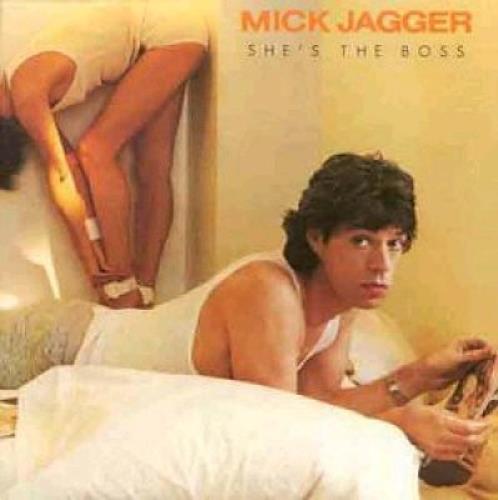
She’s The Boss (1985)
Finally in February 1985 saw Jagger’s first full-length solo adventure in the shape of the album “She’s The Boss”. It was released during what became recognized as a chill in communications with Keith Richards, and at a time when the Stones weren’t recording. Thankfully, they would achieve a rapprochement and a resumption of their working partnership, but 1985 marked the frontman’s opportunity to shine in his own light, and “She’s The Boss” wasted no time in making the Top 10 in both the UK and Australia. It was gold in America by May, and turned platinum just a few weeks later.
“She’s The Boss” was recorded at Compass Point Studios in Nassau and co-produced by Mick with NileRodgers and Bill Laswell. Billboard observed that it was set to confirm Rodgers as the hottest producer in the world, as he had come into the year with the top two singles of the time to his name, Madonna’s “Like A Virgin” and Duran Duran’s “Wild Boys.”
Perhaps ironically, the album began with a lively opening track carrying a Jagger-Richards writing credit, “Lonely At The Top.” Its first single, “Just Another Night,” was a No.1 hit onRock Tracks chart and a No.12 on the Hot 100. Long time compadre Jeff Beck contributed guitar, with Robbie Shapespeare, of reggae bastions Sly and Robbie, on bass and Who sideman John “Rabbit” Bundrick on synthesisers. Billboard said that what made “She’s The Boss” was a great album was that “its rhythms are smooth and rigid, with the long grooves of dance music rather than the spurts and starts of rock‘n’roll.”
For a man who has never done things by halves, it was appropriate that Jagger’s one and only live performance around the album came in front of an estimated television audience of 1.9 billion. He played the Philadelphia leg of Live Aid on July 13th, 1985, in a five-song set that started with ‘Lonely At The Top’ and ‘Just Another Night’ and featured the Stones’ staples “Miss You” and “It’s Only Rock‘n’Roll (But I Like It).”
That short performance also contained a duet version of “State Of Shock,” featuring another old friend, Tina Turner. It wasn’t Jagger’s only Live Aid-related duet; he had, of course, swiftly recorded the flagship single for the epic charity event, remaking Martha Reeves And The Vandellas’ Motown hit ‘Dancing In The Street’ as an unashamedly raucous call to arms with David Bowie.
The version of “Hard Woman” released as a single (with an accompanying video) is radically different from the album version. The single is titled “Hard Woman (New Version)”. The video for “Hard Woman” extensively utilised a Cray X-MPsupercomputer for its animation, making it one of the most expensive music videos made to that point in time.
“She’s The Boss” had a robust rock demeanor, decorated by the synth textures of the day and driven by Jagger’s indefatigable ear for melody and a sharp lyric. “Half A Loaf” was a frustrated depiction of a stolen relationship (“I can’t go on seeing you like this!”) while the superstar’s expertise in bluesy, soulful flavours shone through on the likes of “Turn The Girl Loose” and “Lucky In Love,” the latter released as the album’s second single.
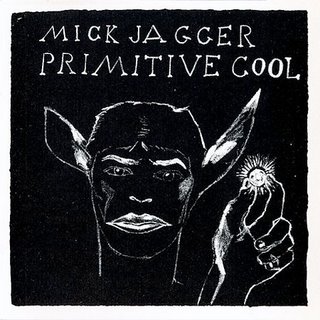
Primitive Cool (1987)
After contributing “Ruthless People” to the 1986 film of the same name, and after the Stones had returned to the studio (but not the road) with “Dirty Work”, Jagger was back in action as early as 1987 when “Primitive Cool” hit the shelves that September. Made in the Netherlands and Barbados, it found him sharing production duties with Keith Diamond and Eurythmics’ David A. Stewart, with Jeff Beck assuming more prominence as the album’s chief guitarist.
Stewart, who in the 00s would become Mick’s bandmate in the one-off project SuperHeavy, co-wrote three “Primitive Cool” songs with him, including the lead single, “Let’s Work.” That became another Top 10 rock radio success from an album of sturdy, guitar-driven pieces such as “Radio Control” and somewhat poppier tracks like “Say You Will.” Of particular interest was the title track, which began in reflective mood before picking up speed, as a younger man muses on the nature of fashion and asks his father about his own salad days.
“Kow Tow” and “Shoot Off Your Mouth,” both among the album’s strongest tracks, may have been fuelled by the stalled relationship with Richards. The “human riff” didn’t hold back in expressing his dissatisfaction that Jagger toured She’s The Boss (albeit only for shows in Japan and Australia) rather than reconvening with the Stones. “The wicked lay stones in my path/And friends who are snakes in the grass” was a particularly noticeable lyric in the former song.
There was later endorsement of the attractively Celtic-inspired “Party Doll” when it was remade by American singer-songwriter Mary Chapin Carpenter; Jagger’s original featured whistle and Uillean pipes by Chieftains leader Paddy Moloney. “Primitive Cool” concluded with “War Baby,” a comment on the arms race of the 80s by a man who was himself a World War II baby (“The war made us poor/Made our future unsure”). In an interview at the time with European trade weekly Music & Media, Jagger said: “I don’t like to be a slave to what’s current, because I don’t really feel that it does me any good.”
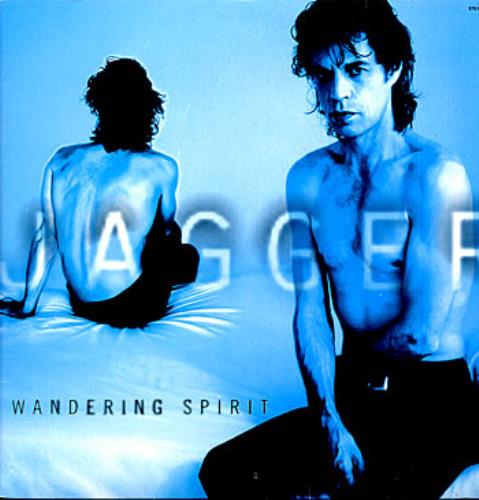
Wandering Spirit (1993)
The Stones’ return to active service, in a period during which they would define the best aspects of stadium and arena rock, meant that Jagger didn’t resume his solo work in earnest until 1993. “Wandering Spirit” was recorded over a seven-month period before the band started making “Voodoo Lounge”. Jagger’s third solo album was co-produced by Rick Rubin, who by now had long since extended his creative reach beyond his Def Jam origins, and had overseen rock releases by the likes of the BlackCrowes, Danzig, Slayer, and Red Hot Chili Peppers.
“Sweet Thing” was the lead single, a Jagger composition with a knowing blend of funk and acoustic elements which he sang in a “Miss You”-style falsetto. It became a Top 10 hit in several European countries and led the way for an album including ten originals among its 14 tracks, of which two were written with New York artist-producer Jimmy Rip.
Three covers on Wandering Spirit laid bare Mick’s love of vintage soul. “Use Me,” his version of the much-covered Bill Withers song, included guest vocals by Lenny Kravitz and admiring the way it “takes on a new life with the venerable rocker at the mic.” There were remakes of Frederick Knight’s 1972 Stax gem “I’ve Been Lonely For So Long” and Lowman Pauling’s “Think” – not the Aretha Franklin song, but the one recorded by The “5” Royales and given a second lease of life by one of Jagger’s favourite artists, James Brown.
All the way around, the album made a broader sweep of the star’s inspirations, with further elements of gospel (“Don’t Tear Me Up”), country (“Evening Gown,” featuring Jay Dee Maness’ pedal steel), rootsy rock‘n’roll (“Wandering Spirit”) and folk (“Handsome Molly”). They sat alongside some straight ahead rockers like “Put Me In The Trash” and “Mother Of A Man,” the latter with Jagger’s nimble harmonica. Longtime sideman Matt Clifford played harpsichord on one of the most affecting pieces, “Angel In My Heart.”
Goddess In The Doorway (2001)
Jagger’s most recent solo studio release was 2001’s “Goddess In The Doorway“, chiefly produced with Clifford and Marti Frederiksen, but also featuring credits for Chris Potter, Wyclef Jean and Jerry Duplessis.Kravitz returned on the rock hit “God Gave Me Everything,” which he co-produced, and there were cameos by Bono, Pete Townshend and Rob Thomas. Dot Music described it as an “energetic, intelligent and fairly modern rock album.”
In 2004, Jagger was back at the movies for the soundtrack of the romantic comedy drama Alfie, teaming with Stewart for a score including “Old Habits Die Hard,” which won the Golden Globe for Best Original Song. The pair were together again in 2011, in the aforementioned, genre-straddling Super Heavy, with Joss Stone, A.R. Rahman and Damian Marley.
The rest of the decade would be dominated by extensive touring with the Stones. But in 2017 Jagger released the double-sided “Gotta Get A Grip”/“England Lost” as another reminder of an artist who, true to his word, remains a wandering spirit with infinitely more to offer than merely being the world’s most famous rock star. He resumed his acting career in the 2020 thriller The Burnt Orange Heresy, and the spring of 2021 brought the surprise collaboration with Dave Grohl, “Eazy Sleazy.” There are doubtless further unpredictable adventures to come.
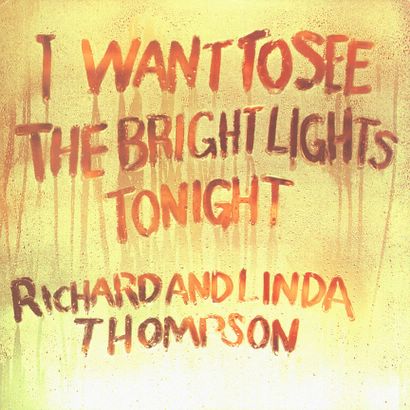
Four decades after Richard and Linda Thompson released 1974’s “I Want to See the Bright LightsTonight”, their beautiful and terrifying first album as a duo—after their music failed to attract significant commercial interest; after the conversion to Sufism, the three kids, the arduous years spent living on a religious commune; after he left her for another woman just as mainstream success seemed within their reach; after she clocked him with a Coke bottle and sped off in a stolen car during their disastrous final tour—after everything, Linda was working on a new song about the foolishness of love. It was a lot like the songs Richard used to write for them in the old days: Despairing, but not hopeless, with a melody that seemed to float forward from some forgotten era, and a narrator who can’t see past the walls of his own fatalism. “Whenever I write something like that I think, ‘Oh, who could play the guitar on that?’” she recalled later. “And then I think, ‘Only Richard, really.’”
On this day (Februart. 6th) in 1971: guitarist RICHARD THOMPSON left critically-acclaimed UK folk-rock band FAIRPORTCONVENTION for a solo career; said Richard, “I left Fairport as a gut reaction & didn’t really know what I was doing, except writing. I was writing stuff & it seemed interesting & I thought it would be fun to make a record”; his 1972 solo debut ‘Henry theHuman Fly’ was not critically well-received at the time, but over the sessions, he worked with singer Linda Peters, whom he then married; the couple would go on to release six highly-regarded albums between 1974-82 as ‘Richard and Linda Thompson,
The Thompsons met in 1969, while Richard was working on “Liege & Lief”, the fourth album by FairportConvention, the pioneering British band he’d co-founded when he was 18. Their reason for starting a musical duo was practical, but also sweetly romantic: They wanted to spend more time together. They began touring the UK’s circuit of folk clubs, humble institutions that mixed socialist idealism with commercial enterprise, often operating in the back rooms of local pubs, where Richard and Linda would share stage time with whatever barflies wanted to belt out “Scarborough Fair” or “John Barleycorn” on any given night. Audiences were receptive, but it was a rugged and unglamorous way to make a career, even compared to the modest success Richard had seen with Fairport Convention. After about a year on the circuit, they were ready to graduate to bigger stages, and to make an album.
These songs feature modern stories and character sketches largely grounded in vernacular and instrumentation of British folk, an approach that gives the listener some comfort by suggesting that the highs and lows of the human experience we experience today are pretty much the same highs and lows experienced by our ancestors. They recorded “I Want to See the Bright Lights Tonight” quickly and cheaply, working from a cache of songs Richard had been assembling since “Henry the Human Fly“. The backing band they recruited combined a rock rhythm section with mustier instruments like hammered dulcimer, accordion, and crumhorn, a Renaissance-era woodwind whose nasal buzz makes bagpipes sound mellow. “I Want to See the Bright Lights Tonight” approaches its instrumentation with eerie holism, sounding neither like a reverent attempt to resurrect bygone traditions, nor a contemporary singer-songwriter album with period flourishes, but something strange and glowing in between.
This orientation is clearly demonstrated on the opening track, “When I Get to the Border.” The first two verses could have been written by an anonymous song-crafter of the 18th Century, but when the narrator reveals the reasons behind his desire to escape to a place beyond the border, there’s no question he’s a 20th Century Man experiencing classic Sunday night dread:
Monday morning, Monday morning Closing in on me I’m packing up and I’m running away To where nobody picks on me
As he describes all the wonderful changes awaiting him once he crosses that border (“My troubles will all turn to sand/When I get to the border”), I hear echoes from the conversations I’ve had recently with friends stuck in the USA, who desperately believe in one of two fairy tales: one, if we get rid of Trump, everything will be all right; and two, if I move to (Europe, Asia, South America, Australia) my life will suddenly become immeasurably better. They forget that running awayfrom a bad situation never works unless you have a place you really, really, really want to run to. Richard Thompson cleverly allows the narrator to feast on this sort of one-sided fantasy for much of the song, a subtle hint that his dreams of reaching the Land of Oz are unlikely to bear fruit. The one thing this gent does have to look forward to is a “Salty girl with yellow hair/Waiting in that rocking chair,” an image that doesn’t give us much hope that she’s the British version of Helen of Troy.
The builds and blends on “When I Come to the Border” are simply fabulous. The song opens with very modest acoustic guitar chords cueing the band to enter with low-key backing. The first verse is voice, acoustic, bass and drums; on the second verse, Richard adds some light electric guitar fills. The first smile on the listener’s face takes place at the start of the bridge, when wham! Linda and Richard harmonize over Richard’s mandolin, suddenly turning black-and-white into full colour. A mandolin-electric guitar duet adds another smile and more colour, creating a new plateau that continues through the end of the verses. The long fade makes the smile permanent as the band takes the piece to an even higher plane, featuring a cornucopia of instruments trading leads and fills—guitar, krummhorn, accordion, concertina, mandolin, tin whistle—that bring to mind the everybody-join-in-the-fun atmosphere of a pub with singing waiters. Rising from its modest beginnings, “When I Get to the Border” turns out to be a welcoming display of the song writing excellence and musical variety that characterize the album.
Many of Linda’s signature songs are candlelit ballads, but she swaggers through the cascading brass lines of the album’s title track like a sailor on shore leave. On the surface, the song’s message is simple: work’s over, time to party. But in Richard’s writing and Linda’s performance, the urge to go out, get hammered, and press up tight against a stranger is nearly feral in its potency. The nihilism and the pleasure of drunkenness and transactional coupling are inseparable. “I Want to See the Bright Lights Tonight” neither moralizes about its subject matter nor attempts to enshrine it, capturing the charge of a messy night out in all its explosive ambiguity. Musically, it has the feeling of a celebration, one that could have been a massive hit had the Thompsons been willing to sacrifice their quixotic musical aspirations for slicker and more streamlined production.
Richard Thompson described “Calvary Cross” as a song “about a muse, or about anything. It’s about a drive that you might not want, but it’s there, and you’re a slave to it.” The woman’s “one green eye” indicates she’s a jealous mistress, seeking nothing less than complete control (“Everything you do/Oh, everything you do/You do for me”). The other half of this fascinating creature exists on a the positive pole, one who will “be your light until doomsday.” The balance is described in the line, “My claw’s in you and my light’s in you,” but she immediately adds, “This is your first day of sorrow.” The artist can never escape the clutches of the muse, and the song’s setting under the calvary cross is meant to convey a life of suffering.
“Down Where the Drunkards Roll” is soft and solemn, refusing to judge its cast of misfits for finding solace at the bar. “Withered and Died” might come across as maudlin with less sympathetic performers, but Linda’s delivery lends quiet nobility to its tale of an abandoned woman at the end of her rope. Richard’s guitar solo arrives like pale sunlight through a tall window, offering a ray of hope out somewhere beyond the desolation of the lyrics.
Most of the buzz about this song has to do with Richard’s guitar work, particularly in the many live versions available on recordings both legitimate and bootleg (you can sample several on YouTube). The primary solo on the studio version album serves as a lengthy introduction to the song, a twisting, tortured barrage of notes that echo bagpipe and sitar. The deluxe version of the album features a version that clocks in at almost ten minutes and in parts feels more like a duet featuring both Richard and drummer Dave Mattacks in roughly equal measure. The live solos vary quite a bit, but most take place in an extended segment following the verses, where Richard goes deep to connect with his muse, depicting the love-hate affair with stunning work that is absolutely entrancing.
Linda takes the lead on “Withered and Died,” and it’s hard for me not to hear this song about crushed dreams through the lens of a present-day inhabitant of the United States:
This cruel country has driven me down Teased me and lied, teased me and lied I’ve only sad stories to tell to this town My dreams have withered and died
Perhaps “Withered and Died” should become the American anti-anthem of our time, as “We Gotta Get Out of This Place” became the anti-anthem for soldiers stuck in the jungles and rice paddies of Vietnam. Great songs often express feelings that listeners transfer to other contexts that have no connection to the songwriter’s intent.
In truth, “Withered and Died” has more to do with the dashed hopes and dreams of a young woman who arrives in a new town full of excitement, and her initial impressions indicate the town threw out the welcome mat for her: “Kind words in my ear, kind faces to see.” Things go sour quickly due to a failed relationship, leaving her with a broken spirit, hungering for freedom from her troubles:
If I was a butterfly, live for a day I could be free just blowing away
While Linda’s vocal is appropriately despairing throughout much of the song, her voice rises to the occasion on that couplet, momentarily floating high above the understated background support to express her one remaining wish. “Withered and Died” is a deeply moving piece, a timeless song about the challenges inherent in the rite of passage from the naive hopes of adolescence to the inevitable disappointments of adulthood.
After two trips to the dark side, something cheerful would be really nice right about now and Linda delivers with her spirited rendition of “I Want to See the Bright Lights Tonight,” receiving suitably brassy support from The CWS (Manchester) Silver Band. The desire to swap regimentation for chaos that drives the working masses to bars and dance floors on weekend nights is vividly depicted in both Linda’s vocal and in the lines given to the character she plays. “I need to spend some money and it just won’t wait,” she explains to her escort, revealing herself as a proud and independent woman of sufficient means to make it through the weekend. In addition to close dancing, she is desperately hungry for the release of manageable madness:
A couple of drunken knights rolling on the floor Is just the kind of mess I’m looking for I’m gonna dream ’till Monday comes in sight I want to see the bright lights tonight
Our heroine obviously doesn’t mind the violent potential of the “big boys . . . spoiling for a fight,” as she views mixing it up as just another form of release unique to the male half of the species. More than just a “let’s party” song, “I Want to See the Bright Lights Tonight” captures the existential motivation that sends millions of people to Vegas every year—the need to let one’s hair down, show some cleavage and do all the naughty things that are socially unacceptable inside the boundaries of nine to five—all within the safe confines of a non-judgmental environment supported by the sacred commandment, “What happens in Vegas stays in Vegas.”
I have a dream . . . that someday the Vegas ethic will become the universal imperative of the human race.
That dream is somewhat tempered by the harsh realities of alcoholism and mental illness described starkly and movingly in “Down Where the Drunkards Roll.” Linda approaches her vocal with sad detachment mellowed by obvious compassion for the victims and a clear sense of the indignity of it all. Accompanied only by Richard’s exquisite work on acoustic guitar and chilling bass-range harmonies, Linda relates stories of the fallen in the first three verses—the young bucks who drink themselves into oblivion, the young man who fails in love and is forced to seek a low-priced hooker, and a woman suffering from unknown trauma who finds some kind of validation in the unreal world of the outcast:
There goes a troubled woman She dreams a troubled dream She lives out on the highway She keeps her money clean Soon she’ll be returning To the place where she’s the queen Down where the drunkards roll (2)
The final verse points out the curious similarities between the non-judgmental ethic of weekend nights and the even looser norms of acceptance among people who have hit rock bottom. Those banished from society for their failures, shortcomings and clinical diagnoses are more likely to find comfort among the fallen:
You can be a gambler Who never drew a hand You can be a sailor Who never left dry land You can be Lord Jesus All the world will understand Down where the drunkards roll (2)
Even at this relatively early stage in his career, Richard Thompson’s insistence on writing songs about those whom society would rather forget is uncompromising, and his gift for language results in songs like this that are searing and unforgettable.
Figuring wisely that we need another break from human inhumanity, Richard offers the very traditional “We Sing Hallelujah.” There are many English folk songs that employ a series of metaphoric riddles to describe the human experience; here Richard adds to the genre with a series of metaphors about men (in the outdated, generic universal use of the word). Unsurprisingly, the metaphors all end in disaster: “a man is like a rusty wheel . . . and then he falls apart,” “a man is like a briar . . . he laughs like a clown when his fortune’s down and his clothes are ragged and torn,” etc. The last riddle paints a particularly gloomy picture of man’s existence:
A man is like his father Wishes he never was born He longs for the time when the clock will chime And he’s dead forevermore
As the music clearly communicates good fun with the return of the krummhorns and a joyous group vocal . . . and the chorus is only partially and ironically dreary . . . I’m going to claim that “We Sing Hallelujah” is about the human tendency to see the worst side of everything in life balanced by the opposing force of the human spirit that picks us up when we’re down. The song certainly accomplishes the mission of restoring listener energy after “Down Where the Drunkards Roll.”
The good fun fades quickly into memory with the heartbreaking “Has He Got a Friend for Me,” a tune about a girl who is “clumsy and shy” who believes she wouldn’t attract notice even if she were “in the gutter, or dangling down from a tree.” The line that breaks my heart with its undeniable truth is “And nobody wants to know anyone lonely like me,” for loneliness is often accompanied by auras of awkwardness or desperation that make potential friends wary of offering their company. Linda navigates the challenging melodic line while maintaining just the right levels of the varying emotions; Richard’s acoustic guitar is tender and empathetic; the tin whistle mirrors the thin fragility of the anti-heroine.
Changing costume in record time, Linda transforms herself from future spinster to saucy sprite in “The Little Beggar Girl.” Marked by a traditional full-throated chorus that bears repeating again and again, the peg-legged little wench balances her dependence on contributions from the elite with a tart tongue, delivering pungent asides as the privileged step down from their lofty perches to make their modest donations:
I’ve been down to London, I’ve been up to Crewe I travel far and wide to do the work that I do ‘Cause I love taking money off a snob like you For I’m only a poor little beggar girl
Linda really gets into the part, varying her tone from sarcastically sweet and accommodating to screw-the-bastards bite. The chorus is an absolute delight, with Richard entering in harmony as a cue for the listener to sing along. It’s almost impossiblenot to join in by the third go-round, and melodic structure gives those participating at home lots of opportunity to contribute harmonies or responsive fills.
You’ll need to save some of the positive energy from “Poor Little Beggar Girl” to get you through the bleakest song of all, “End of the Rainbow.” The song is structured as a dramatic monologue in which a father of a new born leans over the cradle and imparts his wisdom concerning the life journey awaiting his child:
I feel for you, you little horror Safe at your mother’s breast No lucky break for you around the corner ‘Cause your father is a bully And he thinks that you’re a pest And your sister she’s no better than a whore
Life seems so rosy in the cradle But I’ll be a friend I’ll tell you what’s in store There’s nothing at the end of the rainbow There’s nothing to grow up for anymore
The father goes on to tell the kid how capitalists large and small will continually rip him off, how his future adult male companions will put a knife to his throat at the slightest provocation, that everyone competes against everyone else and that most of the people who inhabit the world belong to the walking dead. He offers no hope, no helpful advice and not a single sliver of sunshine. The song has made critics somewhat uneasy, and several have expressed discomfort with the world view Richard Thompson expresses in those unrelentingly dreary lines.
It emerges most clearly on “The Calvary Cross,” whose stately three-chord cycle feels like the album’s centre piece despite being only the second track. After a breath-taking raga-like guitar introduction from Richard, the song unspools as a series of bad omens from a mysterious “pale-faced lady”: a black cat crossing your path, a train that never leaves its station. “The Calvary Cross” is like a shadow that hangs over the rest of the music, suggesting that the characters’ fates are ordained not only by circumstance, but also by forces whose true nature they may never apprehend. The chorus, delivered in the voice of the pale-faced lady, contains the album’s most chilling lines: “Everything you do, you do for me.”
Methinks they’re missing the point here. “End of the Rainbow” has nothing to do with how Richard Thompson views the world. He’s not talking here—the father is. Richard is playing a role, capiche? This is a song about parenting, not how shitty the world is. The question listeners should consider once the song ends is, “How do we allow such losers to become parents?” This is a guy who has already decided that his other kid is a worthless piece of crap, so why have another child? He’s obviously not doing well from a financial perspective, so why add this “little horror” to the balance sheet? And because he’s failed, he views the world through a madly discoloured lens that convinces him that it’s everyone else’s fault but his own. This isn’t about unplannedparenthood, this is about unthinkingparenthood and the traumatic consequences that follow from having a parent who hates a kid from the moment of conception—and the disastrous social consequences that follow.
From a musical perspective, “End of the Rainbow” is a hidden gem without a single superfluous note. The opening passage is an electric-acoustic duet where the acoustic guitar reflects the softly lit environment of a nursery and the electric guitar paints a picture of tense uncertainty with sustained fretboard-initiated vibrato. The chord pattern is relatively straightforward, with all the punctuation found in descending chords that eventually find their way back to the Cm root (adjusted to the Am position with a capo on the third fret).
The chord structure to “The Great Valerio” is more challenging, with the base pattern consisting of altering Bm/Fmdim chords, and an out-of-key shift to C#7 to open the chorus (again, much easier to play with a capo, this time on the second fret). The theme of human fascination with the tightrope walker had been covered a few years before in Jethro Tull’s “For Michael Collins, Jeffrey and Me,” though Ian Anderson focused more on the secret pleasure of “being there” when the tightrope walker slips (“Like the man hung from the trapeze/Whose fall will satisfy”), whereas Richard Thompson uses the opportunity to comment on the nature of life itself and heroic projection. Linda’s vocal is suitably cold and detached, and while Richard’s acoustic guitar is typically excellent, I have a strong preference for June Tabor’s cover that opens her album Aleyn. Not only is June a far more capable singer and a practiced devotee of Richard’s music, but the addition of accordion and strings creates a macabre circus atmosphere in sync with the lyrical content.
And that wraps it up for “I Want to See the Bright Lights Tonight“, a commercial failure dismissed by the critics of the day now considered something of a masterpiece. The album still gets little in the way of tangible respect; according to Richard Thompson’s website, it is “out of print” in the USA. I attribute the lack of public support to the majority’s desire to hear music that makes them happy and avoid music that makes them sad—or, to put it another way, most people want to hear music that validates their fantasies and want nothing to do with music that deals with their unpleasant realities.
Given that unpleasant reality, it turns out that the real hero of the album isn’t “The Great Valerio“, but a courageous artist by the name of Richard Thompson.
Though both Thompsons have made fine albums since the collapse of their romantic and musical relationships in the early 1980s, there is something singular in the blend of her gracefully understated singing and his fiercely expressive playing, a heaven-bound quality that redeems even their heaviest subject matter, which neither can quite reach on their own. As lovers, they could be violently incompatible, but as musicians, they were soul mates. The existence of latter-day collaborations like Linda’s 2013 song “Love’s for Babies and Fools,” one of a handful of recordings they’ve made together since the 2000s, proves the lasting power of a partnership that seemed doomed from the start.
For a guitarist and singer piecing together a living on the folk circuit, music was a holy vocation, but also a grinding job. “I Want to See the Bright Lights Tonight” promoted them from folk clubs to proper venues, but the feeling of success was short-lived. Within a couple of years, according to Richard, “Folk rock was losing ground—not that it had much ground to begin with…we were now playing to an aging audience that consumed less and went out to concerts less.” (It bears repeating that he was in his mid-20s at the time.) Island dropped the Thompsons after Pour Down Like Silver, their third album. They retreated from the music industry and moved into a Sufi commune in London, and then another in rural Norfolk, after having fallen in with a group of worshippers not long after making “Bright Lights“.
Richard devoted himself to Sufism, and quickly quit drinking, hoping to “fill the void in the pit of my stomach, and not with numbness, but with nourishment.” According to Linda, he donated much of their money to fellow members of the London sect. She had her own interest in Sufism, but her experience on the communes—led by “an Englishman who styled himself a sheik,” as a 1985 Rolling Stone profile put it—was more like an intensification of worldly oppression than an escape from it. She gave birth to the Thompsons’ second child there, which she described as “fucking awful: No doctors, no hot water, nothing.” In her telling, the atmosphere was sexist and repressive, with women made to perform domestic tasks like cooking and cleaning, and to avert their eyes when talking to men.
In the late ’70s, they left the commune, released two albums to little fanfare, and got dropped by another label. Then came 1982’s “Shoot Out the Lights“, their biggest critical and commercial success by a wide margin, which happened to be filled with blistering accounts of dissolving relationships. Richard announced he was in love with another woman soon after its release, but Linda decided to accompany him on tour anyway.
Were they doomed from the start? Isn’t everyone? That’s the underlying theme of “I Want to See the BrightLights”. “The End of the Rainbow,” the album’s almost comically morose penultimate song, takes the form of a warning to a new born: “Life seems so rosy in the cradle/But I’ll be a friend, I’ll tell you what’s in store/There’s nothing at the end of rainbow/There’s nothing to grow up for anymore.” In the 1985 Rolling Stone piece, Linda reflected on their honeymoon in Corsica, taken not long before they started work on “Bright Lights“. “It rained the whole time,” she said. “I should have known then.”
But there is a happy ending, for the Thompsons at least, who eventually reconciled as friends, began sporadically collaborating again, even recorded an album together with their children. Judging by their public remarks, they get on pretty well these days. We’re all doomed to hurt each other, and to be hurt in return. The least we can do is forgive.
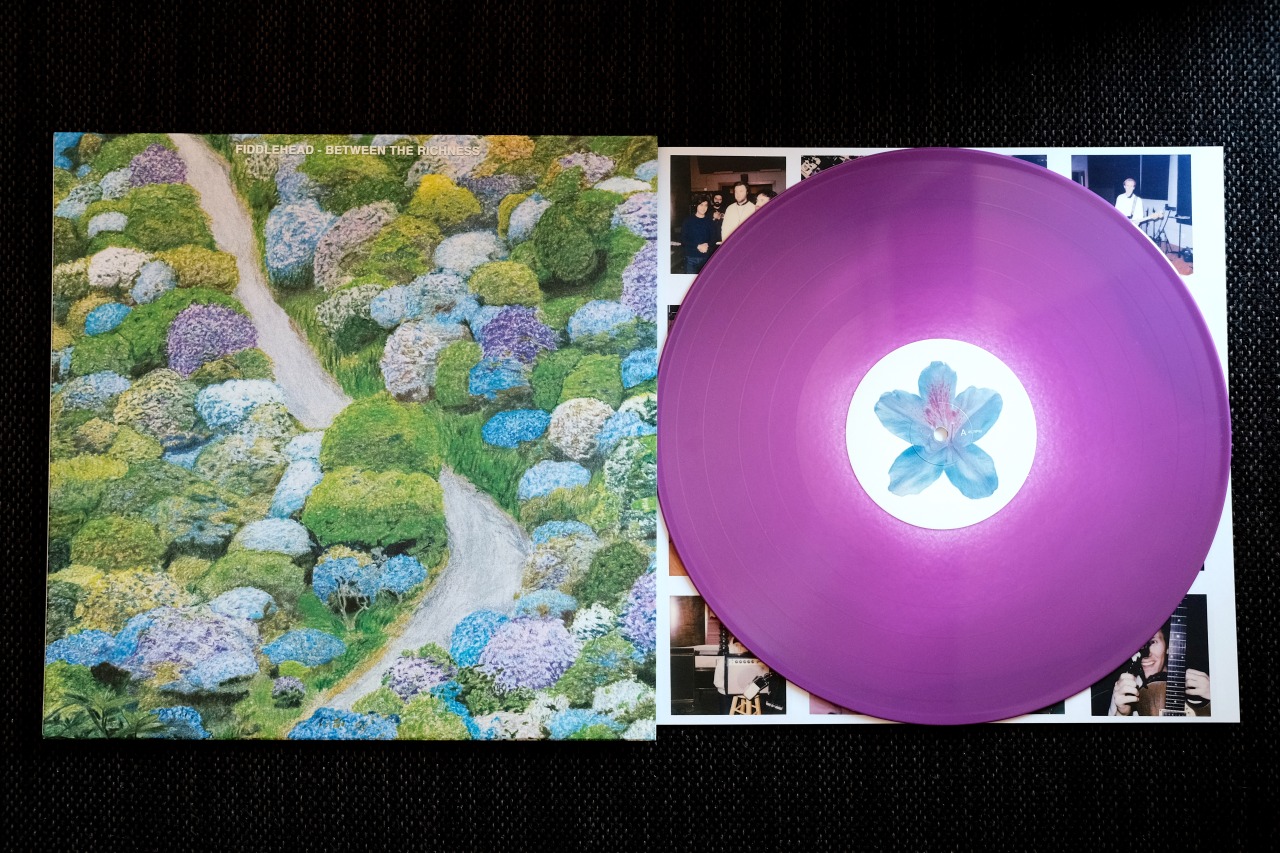
Boston rock quintet Fiddlehead will release their second album “Between The Richness” on May 21st via Run for Cover Records, following their 2018 debut “Springtime and Blind”. Something of a supergroup, featuring members of Have Heart, Basement and more, Fiddlehead blend post-hardcore punch with emo’s openhearted catharsis, all of which comes through in lead “Between The Richness” single “Million Times.” Singer and songwriter Pat Flynn’s full-throated growls emphasize the unending effort and emotional resilience required to hold a romantic relationship together over time (“What’s love if not a war for peace that never ends?”). “Come back for our millionth try / Come back one more million times,” he demands on the track’s hooky, anthemic choruses, with fluidly melodic guitars upholding the song’s battered, yet unbroken sentiment.
On both their records to date—2018’s Springtime and Blind and this year’s Between the Richness—Boston rockers Fiddlehead have delivered a potent combination of anthemic melody, hard-rock muscle and poignant lyricism; the band, “blend post-hardcore punch with emo’s openhearted catharsis,” as we previously wrote in praise of standout single “Million Times.” “Between the Richness” packs hard-won wisdom—vocalist Pat Flynn got married, had a son and marked the 10-year anniversary of his father’s death, all between the band’s two albums—into 25 minutes of explosive, deeply personal rock ‘n’ roll that manages to look back on life’s peaks and valleys without ever taking its foot off the gas
“Million Times” by Fiddlehead from the upcoming album ‘Between The Richness’ out May 21st 2021 via Run For Cover Records.
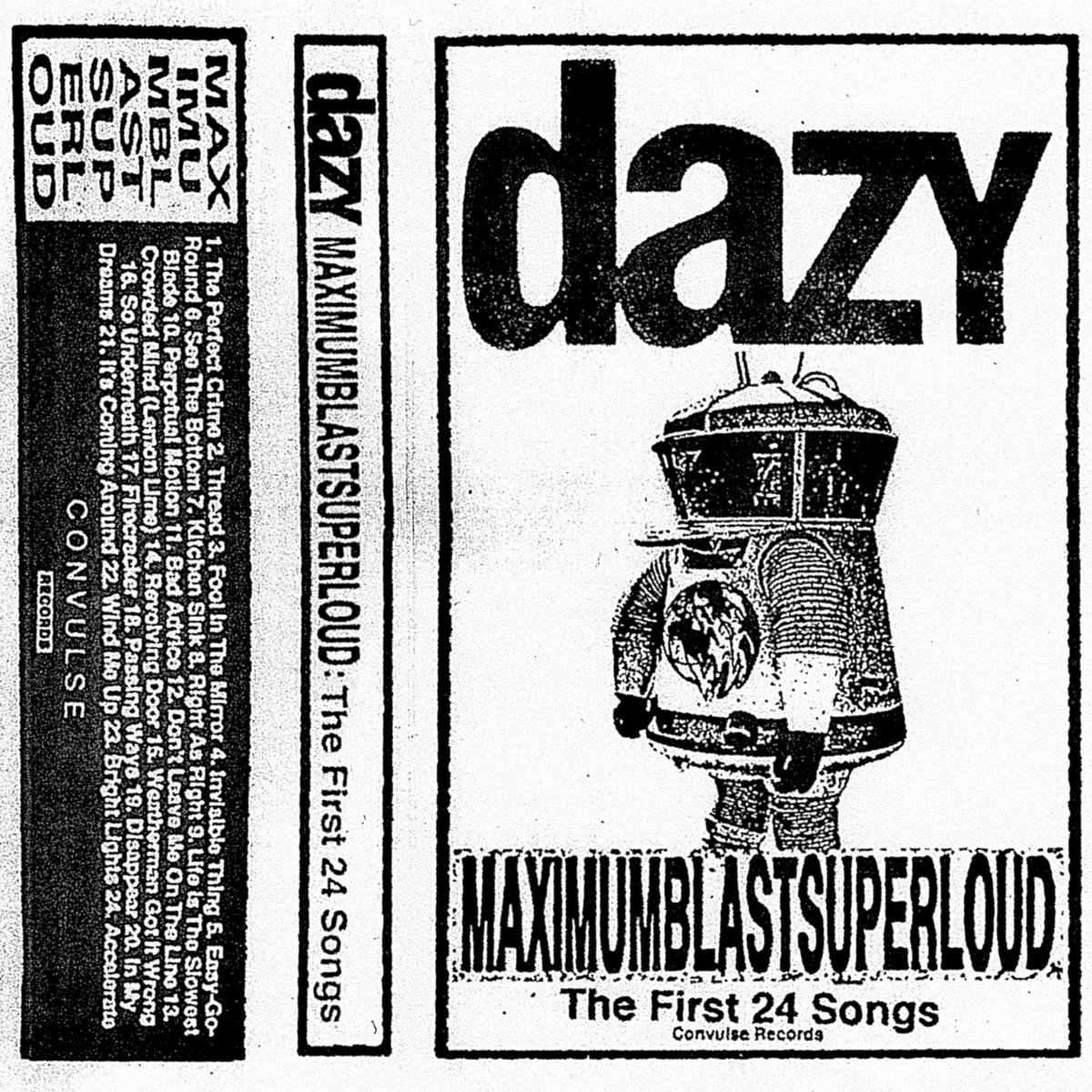
Admittedly, any release with the title “MAXIMUMBLASTSUPERLOUD” would’ve caught my attention, but Dazy’s 2021 compilation proved to be so much more than its eye-catching name. And sure, this release has plenty of thundering girth, but the band pairs it with classic, tuneful pop, which, in my book, is one of the most lethal combinations in all of music. Virginia-based musician James Goodson is the sole mastermind behind Dazy, and this latest release collects everything the band’s put out so far—two EPs plus four singles with accompanying b-sides—along with a handful of previously unreleased songs.
Dazy’s MAXIMUMBLASTSUPERLOUD–a collection of the project’s first 24 songs including five new songs.
“One amp. One mic. One person. Countless hooks. That’s the Dazy formula. Since first releasing the single “Bright Lights b/w Accelerate” in August 2020, Dazy mastermind James Goodson has been writing, recording, and releasing new music like a man on the hunt to find the best pop hook, and he won’t stop until he’s put all of them into his songs. With the release of MAXIMUMBLASTSUPERLOUD: The First 24Songs, Convulse Records collects all of the singles and EPs from Dazy’s first year onto one tape. And because Goodson can’t stop making things, there’s five brand-new songs up top to prove there’s plenty more in the tank.
Showcasing a unique set of influences, Dazy’s sound marries thumping drum machine beats, blasts of feeding back guitar, and sugar-sweet hooks into something that sounds like Godflesh covering Oasis—or maybe the other way around. With lean song writing that recalls Teenage Fanclub but a home-recorded production style better suited for Big Black, Goodson builds a constant churn of abrasive, consuming noise and then makes it catchier than anyone else would ever dare to.
Recorded at home with a lone mic and amp, these songs are loaded with lo-fi rock goodness of the power pop and Britpop varieties, and some of the vocals even have an emo-adjacent charm. Their distorted guitars provide a colossal rumble throughout the whole record, and the sun-drenched melodies made it an absolute must-listen during those dying days of summer. One of my favourite moments is Goodson’s citrus-themed refrain over delectable, modulated guitar squeals on “Crowded Mind (LemonLime),” along with the swagger and meaty force of “See The Bottom.” Just like many authentic pizzerias forbid takeout to preserve the pizza’s integrity, you should crank this album as loud as you can or not at all.
All songs written and recorded by Dazy (James Goodson) at home,
Released August 20th, 2021
“MAXIMUMBLASTSUPERLOUD: The First 24 Songs” – Out Now via Convulse Records
“Things Take Time, Take Time” is a record of contemplation, that damnable, lazy buzzword folks use when art denies them obvious adjectives for describing a deliberately relaxed piece. In Courtney Barnett’s case, contemplation is her immediate aim, though this can be broadened into a larger story about slogging through negativity to find a bit of sunshine. For a record born of introspection, though, ThingsTake Time, Take Time is surprisingly fun. Barnett flirts with lugubriousness, but doesn’t actually commit, because committing to moping isn’t the point. Looking inward and working through depression, exhaustion and other stresses naturally means facing up to a degree of sadness, but Barnett reaches the other side of her emotional processing with newfound optimism. “Tell Me How You Really Feel” didn’t pull punches; that record cut and stung as Barnett meant it to. She kept the music honest. “Things Take Time, Take Time” is vulnerable music, which represents an honesty Barnett tends to stray from in her superb discography.
Courtney Barnett – Before You Gotta Go Taken from the new album ‘Things Take Time, Take Time’ Released 12th Nov 2021
My first full length instrumental album since ‘Fortune’. A journey of 10 new tracks. I found it difficult to choose a ‘feature’ track for Bandcamp as all belong as part of Pearldiving‘ and perhaps lack the context that I have intended with the other tracks however I’ve picked ‘Les Amourettes’ as it’s only fair to hear something when you pre-order. As ever, I play everything …Robin.
The term frenetic is not one you might usually associate with the work of Robin Guthrie the former Cocteau Twin who, since the group’s acrimonious break up in 1997, has released a wealth of material both solo and as a collaborator, at a pace which has matched his atmospheric but normally sedate music.
This has changed now; “Pearldiving” follows the four track Mockingbird Love EP – which preceded it by a month – and Guthrie has confirmed there are further EPs in the works as autumn turns to winter. There are a number of reasons for this sudden uptick in activity; Guthrie is close to 60, a landmark met without the company of his principal working partner of recent years Harold Budd, who passed away earlier in the year.
As well as this, the Scot is now living in France has tired of the industry’s obsession with calendarization and switched his distribution efforts to Bandcamp, a platform onto which he can have a song finished and uploaded for public consumption within a matter of hours.
Whilst the tentacles of the ambient genre – widely believed to have been given shape by Brian Eno in the mid 70s – have now spread into nano-genres well beyond the word count here to begin to catalogue, Guthrie’s powers of synthesis have always been focused around guitar. And if the material that formed a prelude to his first solo album since 2012’s “Fortune” was four different paths in the same cloud, “Pearldiving’s” ten wordless, beatless tracks are more uniform in tone and sound.
Shimmering, lyrical and transcendent. So good to dive into this beautiful new music from Guthrie.
It’s a collection which hails from a different place to those of the recent past. Following Budd’s passing the producer, instead of using different settings in which to find perspective and a sense of closure, instead found himself at home. As an antidote to sombre feelings, he retooled his studio, decluttering mind and surroundings. It’s from this environment that the inspiration for this fresh batch of compositions came from.
At the album’s heart is a triptych of sorts, each one separately evocative but flowing in the same melodic pathway. On “The Trail Of Grace” is as close to a traditional structure as things get, a series of overlapping instruments heading for somewhere amongst the gauzy world of the outside.
Its successor, “Les Amourettes“, relies on more glacial phrasing, but after that Euphemia is a slowing of the wingbeat, a reverb drenched pause for wonder and a time for a reflection with an uncertain outcome.
“Pearldiving” is Robin Guthrie seeing creativity through a new lens, the inertia and prevarication of the past being consigned to a time when the things that once trapped him no longer feature. If his mood is frenetic then this album is not, but its warmth and pan are both facets of an artist newly galvanized by time, intuition and mindfulness.
Released November 12th, 2021
Song from October’s EP by legendary music-crafter and Cocteau Twins icon Robin Guthrie.





:format(jpeg):mode_rgb():quality(90)/discogs-images/R-1335543-1551263666-6390.jpeg.jpg)