Country singer Emmylou Harris had no idea what she was in for the day she arrived at Columbia Studios to sing backup on her first Bob Dylan sessions. Emmylou Harris had just received the lyrics to “Romance in Durango” and was practicing when she realized the tape had already started rolling. “I thought, ‘Oh, I can fix anything that sounds funky or out of tune with the engineer later,'” she says. But there would be no second takes. “That album was like throwing paint on a canvas. And whatever happened was what it was supposed to be. I guess that’s another part of the genius of Dylan: He knew exactly what he was doing.”

Dylan thrived on chaos and chance while making Desire, a process that was a far cry from the heavily labored recording of his prior LP, 1975’s Blood on the Tracks. One night, Dylan was walking around Greenwich Village and was approached by Jacques Levy, a playwright and director who had previously written songs with Roger McGuinn of the Byrds. Dylan invited Levy to hang out that night at the Other End, a long-standing folkie haunt; later on, at Levy’s apartment, they wrote “Isis.” “He said these magic words, ‘I’d like you to write some stuff for me,'” Levy recalled before his death in 2004. They continued work at Dylan’s summer home in the Hamptons, writing songs with a much different flavor than the reflective tone of his last album. “I guess I never intended to keep that going,” Dylan said. “Sometimes you’ll get what you can out of these things, but you can’t stay there.”

The album’s centerpieces were rooted in real-life drama. The album’s opening track and highlight, “Hurricane,” was based on the plight of boxer Rubin Carter, who was charged with three murders in 1966. A decade later, his case was protested by activists, who claimed that racism drove both his arrest and trial. Dylan picked up on Carter’s story and wrote an eight-and-a-half-minute song about him, which was both controversial and eye-opening. (In 1985, Carter was released after a judge found that he didn’t receive a fair trial 20 years earlier.) It also — surprisingly, given its subject matter and length

Instead, these were sprawling narratives of outlaws and wanderers, with clearer storylines than anything Dylan had written in more than a decade. They included the cowboy-on-the-run tale “Isis” and “Joey,” the 11-minute saga of fallen gangster Joey Gallo. “I thought ‘Joey’ was a good song,” Dylan said in 1981. “I know no one said much about it.” Perhaps it was overshadowed by “Hurricane,” the story of former boxer Rubin “Hurricane” Carter, who had been convicted of triple murder in 1966. “I read his book and it really touched me,” said Dylan. “I felt that the man was innocent.” Though Dylan and Levy’s lyrics were riddled with factual errors (as was “Joey”), the song helped turn public attention to Carter’s case; his conviction was overturned in 1985. Cover version of the 1976 classic.
Guitars, Vocals and Bass by Elliott Smith recorded at home in Barnard Castle Co. Durham, England.

The album’s atmosphere was also affected by a trip Dylan had taken to the South of France, where he had gone to a “gypsy festival” on his birthday. The gypsy imagery marked songs like “One More Cup of Coffee” and “Durango.” “I think ‘exotic’ is a good word to put on it,” said Levy. The only personal song on Desire is perhaps his most personal ever: “Sara,” a plea to his then-estranged wife, Sara Lownds, to return to him. According to Levy, Lownds showed up at the studio the night they recorded the song. “You could have heard a pin drop,” said Levy. “She was absolutely stunned by it.” .More than two dozen musicians were initially gathered — a violin player, an accordion and mandolin player, even Eric Clapton at one point — to work on Desire, but by the time it was released on January  16th, 1976, its scale had lessened by quite a bit.

During recording, Dylan kept several studios going at once, filled with musicians (including Dave Mason and Eric Clapton) and non-musicians. Says bassist Rob Stoner, “They had opened up all the adjacent studios to accommodate all these hangers-on and buffet tables. It was just like a huge party. And it wasn’t conducive to getting any work done.”

Eventually, the rooms were cleared and a core group cut the entire album over two long nights. “There was just a level of excitement,” says Stoner. “Sessions were called for 7 p.m., and we only stopped at seven in the morning because that’s when they tow your car on that street. We didn’t want to lose the vibe. No drinking, no drugs, no nothing. It was pure adrenaline.”

Image result

Laughing at the System finds the contemporary Aussie post-punks in a terse—and surprisingly poppy—mood. “Luxury Vacuum” is a jangly new wave jam, and “Future Creme” contains guitar phrases so sweet they could have been plucked from twee fabric. There is no sprawling psychedelic tangle of wires like the great “Black Spring” to be found here, in other words, though “Vote Cops” is an lithe, minimal piece on the more experimental side. This proves to be the right approach for songs that needle elegantly at our present condition—welcome to the increasingly regressive future, where linear historical narratives turn to dust and parody is unnecessary—without getting too didactic; given the album title, one might expect pure polemic. Total Control have always been sharper and more sly than that, though.

http://

However you might try to find the words for it, Total Control’s caustic charm is stunning and oblique. A sensible account of the band typically focuses on its parts—the associated groups, the touring configurations, etc.—as if finding ways by which Total Control is divisible gleans critical information for breaking through their cryptic sheen. With tonic, wry twists, and forever employing aphoristic brevity for the comic/cosmic dynamite that it is best reserved for, the band seems to indulge this with each new release, or tour, or whatever’s put on the counter. The bands European tour tape from 2015 was a sure reminder of this.

Their new 12″, ‘Laughing At The System,’ is a succinct statement, but it feels like the sharpest thing they’ve ever assembled. Written and recorded over the past couple of years in various lounge rooms, bedrooms, and rehearsal studios, across Melbourne, regional Victoria, and Western Australia, Al Montfort, Daniel Stewart, James Vinciguerra, Mikey Young, and Zephyr Pavey are—for the record—all accounted for in the process.

‘Laughing At The System’ is bookended by a title track in two parts. The scattered mania of the opener is an unsettling beginning, with cascading madhouse-riffs somehow finding a ricocheting unison. The closing part has the familiar head-charge of Total Control’s most gnashing moments, with the guitars balancing the equation between running-too-fast and drinking-too-fast in one queasy commitment. With a brilliantly acerbic wit, we’re implored to gather that there’s some equivalences here. And it’s this kind of impulse that’s kept up throughout the 12″.

Drizzled with Vinciguerra’s fraught fills, which have the rare quality of being unmistakably his in both electronic and acoustic form, this punctuation comes in and out of focus between elegiac moments and breezy experimentation, the latter including the elated instrumental ‘Cathie and Marg.’ Throughout, Stewart scripts a tumultuous wake for a flatlining reality, forever nudging the listener to second-guess themselves about the sincerity and intent. Far from cynical, but earnestly neurotic, the potency of the atmosphere that Total Control has mustered across ‘Laughing At The System’ registers as a deeply commanding, though bleak, psychedelicism for the future. 

English singer-songwriter Kerry Devine is slated to release her debut full-length, “Away From Mountains”, later this year.  if its lead single is any indication, the album is poised to be a lush tour de force of brooding, folk-tinged songs.

Devine recently shared the pristine music video for “work you,” the clip’s unsettling plot against a pastoral backdrop the perfect analogue for Devine’s haunting delivery and instrumentation.  sonically, “Work You” is majestic, effortlessly ebbing and flowing from muted synth pads to passages that are more fully in bloom.  it’s an exercise in restraint, one that Devine pulls off with aplomb.

away from mountains is out soon via trapped animal.

Image may contain: one or more people and text

Hailing from somewhere between Washington D.C and Philadelphia, Queue are a four-piece band formed around the songwriting partnership of Olivia Price and Aida Mekonnen. The band have thus far released a handful of well-received singles, the latest of which, “Aimless Kid”, emerged earlier this week.

Recalling acts like Mothers or Wye Oak, Queue’s sound is one of chiming guitar, ethereal, moody vocals and rich, textural percussion. A fine example of Queue’s sound, Aimless Kid is an exploration of body ownership and toxic relationships; Olivia’s words becoming engulfed in a swell of beautiful noise as she repeats the line, “I was just another body, I was just another somebody, you were an aimless kid”. Olivia’s vocal delivery is stunning, even against a wall of noise, despite her naturally delicate tone, she sounds powerful, unwavering in the importance of her words; more songs as good as this and Queue could be one of music’s most vital new acts.

http://

Olivia Price
Guitar / Lead Vocals

Aida Mekonnen
Lead Guitar / Vocals

Steve Vannelli
Drums

Image may contain: text

Although completely new to us, Los Angeles’ The Black Pine actually formed way back in 1999. The band, who released their fifth album Waves in January last year, have this week shared their latest single, And The Sea, featuring Eric Nichelson, best known as a member of Midlake.

And The Sea, finds Emma Katham, usually the band’s drummer, taking lead vocal duties; her easy Cat Power like croon accompanied by warm buzzing organs and entwining acoustic guitar lines. The track drifts by in a warm haze, the sort of music you’d imagine Beach House might make if they’d grown up lazing on a beach in California. Whether this track is a stand-alone offering or the first taster of a new album, well, your guess is as good as ours, but with a huge back catalogue to dig through, The Black Pine are a band well worth looking into.

http://

The Black Pine:

Emma Kathan : Lead Vocals, Guitar
Mitchell Cichocki and James Scott Rubia: Guitar
Eric Nichelson : Electric Guitar, Bass and Synths


Image may contain: 1 person, on stage, playing a musical instrument and indoor

Sleep Club’s debut single’s is a mellow dreampop debut from this Brisbane dreamy pop trio consisting of sonic complexity and soothing ambience. Stemming from similar influences, all members create a unique blend of eclectic vocal harmonies and intricate drum and bass rhythms. Sleep Club is most known around Brisbane for its textural and complex musical development and slowly driven and moving performances.

The band formed as a project in 2016 through mutual band connections such as Death Tourism, Post Dream and Sweater Curse, which this year have began recording their anticipated debut single. As all members are multi-instrumental the band’s writing process is very collaborative and detailed which has led to such a unique collection of pieces.

It’s a bit of a tingly one in its last textural 60 seconds is ‘Cut You’. The three multi-instrumentalist member outfit – Amber Ramsay (Cloud Tangle), Monica Sottile (Sweater Curse), Vanessa Marousopoulos (Keeskea), are an Australian styled Warpaint, with a sonic soothing ambience, and those kind of vocal harmonies to make you feel all warm and fuzzy inside.

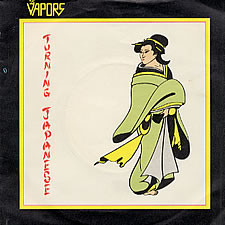
Known as “one-hit-wonders” for their MTV mega-hit “Turning Japanese,” which peaked at in the charts either side of the Atlantic in 1980, The Vapors are perhaps one of the most criminally underrated bands of the “new wave era.” The lyric consists mainly of the singer talking about pictures of his love. It prominently features an Oriental riff played on guitar.

Personally, I love this band so much, Both the New Clear Days album and its excellent follow-up, Magnets are highly original and insanely catchy, hook-laden, power pop masterworks.

“Turning Japanese,” was released as a single from New Clear Days, believed by many to be an anthem to masturbation (a claim denied by songwriter/vocalist David Fenton), Songwriter Fenton explains: “Turning Japanese is all the clichés about angst and youth and turning into something you didn’t expect to.

The track has persisted as one of the iconic new wave singles of the early ‘80s. The Vapors recently reunited in England after a 35-year-hiatus for a series of shows.

TurningJapanese.jpg

A US-based Vapors fan, Evan Blonder from Long Island, recently launched a crowd-funding campaign via GoFundMe to bring the band over to the United States to play three shows in New York City. The band has not played in the States since 1980. Blonder’s campaign hopes to raise $23,000 to cover the cost of performer’s visas, flights, and accommodations to bring the band and their crew over. As of this writing, the campaign is about a third of the way to its goal.

The campaign offers a number of perks for donors, including meet and greet opportunities—though it does not appear that any of the perks are a simple concert ticket.

Following the two fantastic singles that the band has put out in the past, Shelflife and Fastcut Records are incredibly excited to be releasing the debut full-length by Chicago’s Star Tropics. “Lost World” cements the band’s pop songwriting prowess, and its nine tracks all have equal likelihood of ending up ingrained in your brain.

Formed after a chance meeting thanks to an early Smiths b-side, Star Tropics have been playing shows since 2012, including a performance at the 2013 NYC Popfest. Their previously released singles “By My Side” (b/w “Tempest”) and “Summer Rain” (b/w “Swept Away”) have established Star Tropics as a group that fans of dreamy, jangly pop need to keep their eyes on.

Chicago’s Star Tropics blend of indiepop jangle, have come up with one the best Dreampop releases of 2017.
They deliver on the promise set up by its previous BC Singles.
Jangly Guitars, layered female/male vocals over pastoral melodies. Sarah records styled tunes, won’t win them any awards for originality, but the quality of their songs and the atmosphere they create is no rip-off either.


http://

See the source image

The year 1969 has not been a very good one for rock and roll. Outside of “Tommy” and The Band’s decision to go on tour, we had not had that much to get excited about.

Art theorists have hypothesized that artists are usually most inspired in times of crisis, that the forces of history push them to greater personal achievements. Blind Faith could be viewed as an attempt to jar rock out of these doldrums. The group is based on the idea that if you take three of the best soloists around and form them into a single smooth-functioning unit, the result will be one incredible rock band. Ego conflicts must be kept at a minimum; solos are taken not because someone feels like flashing for a while, but because the song calls for a solo.

Comprising guitarist Eric Clapton and drummer Ginger Baker from Cream, bassist Ric Grech from the art-rock Leicester group Family and the multi-talented musician and vocalist Steve Winwood, the erstwhile Little Stevie who had starred in Birmingham’s Spencer Davis Group and then entered the hippy underground with the amazing Traffic in 1967. Ostensibly a low-key adjunct to their other ‘day” jobs Blind Faith had took on a life force of its own. After jamming at Morgan Studios in North West London with Island head honcho Chris Blackwell behind the desk the group began to hit their straps with a vengeance, but for some reason the tape op had not preseds the play button and the sessions, which included guest guitarist Denny Laine from The Moody Blues, were never captured for posterity.

They released the album Blind Faith in August 1969 with producer Jimmy Miller bringing the disparate characters into line on a six track LP that included three Winwood originals, Clapton’s divine “Presence of the Lord” (much influenced by his friendship with George Harrison) and a Ginger jam out on the lengthy “Do What You Like”.  

By far the best song is Presence Of The Lord a track written by Eric Clapton which explains in part how Blind Faith ever came to be. The majesty of the organ even makes it sound like a church song, until Clapton wah-wahs off on a quick solo that’s so good it makes me want to apologize for every snide thing I’ve ever said or thought about him. The first time I heard this song, it brought me out of my listening chair, It still does even now. Never has a guitarist said so much so beautifully in such a short time. The solo is so inspirational it can’t help but make the lyrics that much more believable.

“Had To Cry Today”.   goes through several interesting changes, Clapton always bringing it back to the main theme. The choice of Rick Grech, heretofore almost unknown, as bassist is fully justified by his work on this song. The other highlight “Can’t Find My Way Home”  is a Pleading Stevie Winwood Song featuring highly innovative percussion from Ginger Baker.

“Do What You Like” is a fine five-minute rock song which is destroyed when it is dragged out ten extra minutes by solos for the sake of solos. Baker’s lyrics state the Blind Faith formula (‘Do right use your head/Everybody must be fed/Get together break your bread/Yes together that’s what I said.’), but the music then proceeds to obliterate it. Winwood’s solo is the only one worthy of remaining in the song; he is the most consistent musician on the album. Clapton’s is perfectly competent, but nothing new or exceptional. Baker confuses quantity with quality; his solo starts out nicely enough, but quickly falls apart despite his insistence on continuing. Poor Ginger is bound and determined to someday match the original version of Toad; he is, at this rate, destined to retire a very frustrated drummer. The bass solo is sheer self-indulgence.

I don’t know what the explanation for this cut is, but I could venture a calculated guess. Atlantic President Ahmet Ertegun was recently quoted as saying, ‘If we’d known they were going to do this well (on the American tour), we wouldn’t have rushed the album’. I wouldn’t be surprised if this song falls into the throwaway solo rut because Blind Faith didn’t have enough new material to fill an album in time to meet Atlantic’s deadline, and resolved the problem by extending a song they already did have.

This album is better than any of Cream’s and about as good as any of Traffic’s. On the basis of the potential shown in the best cuts, and writing off “Do What You Like” as a fluke mistake that won’t be repeated.

Blind Faith [VINYL] by Blind Faith

Ahead of UK live dates starting later this month, Portland’s Moon Duo are back with a new limited edition 12″, featuring covers of classic songs by Alan Vega of Suicide and The Stooges. Their new take on Vega’s ‘Jukebox Babe’ is streaming now, and the 12″, which also features The Stooges’ ‘No Fun’, is due for release on January 19th via Sacred Bones.

The covers were conceived during the band’s last UK tour, which saw them play their biggest London show yet at a sold out Heaven, in support of two-part opus Occult Architecture: “We started playing ‘No Fun’ after BBC6 Radio asked us to record an Iggy song for his 70th birthday,” the band explained.

“We added it to our set to work it out for the session and kept playing it every night because everyone loves that song. We worked up a version of ‘Jukebox Babe’ because our sound engineer Larry got it stuck in his head and was singing it all the time. We figured, we may as well play it if we’re going to hear it all the time.

“The Stooges and Iggy, and Suicide/Alan Vega/Martin Rev, are all huge influences on us. But we never want to do faithful covers of great songs, because what’s the point. So we tried to push both of the tracks in less obvious directions, incorporating other influences, like California psych and cosmic disco, giving them more of a summer vibe. We knew Sonic Boom was working outside of Lisbon, so we asked him to produce the tracks, recording them in August for maximal summer heat.”