All Together Now: An Interview with Broken Social Scene's Brendan Canning

There are seventeen people in Broken Social Scene. Each contributed to the band’s fifth and most recent album, Hug of Thunder, and each was on “relatively equal footing” during the album’s writing, recording, and mixing, according to co-founding member Brendan Canning. (He and Kevin Drew started the band in 1999.)

I cannot imagine how this works. I cannot imagine how seventeen people can approach anything that resembles a consensus on a single decision, let alone the staggering number necessary to whittle hours of writing, recording, and mixing into twelve songs.

Canning, it seems, isn’t quite sure either. what must be the messy, contentious, somewhat free-form process that begins with an exchange of musical ideas and ends, miraculously, with a finished album.

“It’s a band that has never-ending debates,” he said , “whether it’s songs, or whether it’s, ‘Where are you going to go for lunch?’ Whatever the thing that is to be decided that day, it’s an unwieldy beast at times because you have these hard opinions. Maybe we’ll have to agree to disagree on this or that; at the end of the day, we all kind of want the same thing. And the roadmaps are just a little bit different, so you’ve got to just do your best and let things evolve the way they’re going to evolve…It’s tough navigating sometimes with this band, just because there’s a lot of people that like to sit in the captain’s chair.”

Even if there is no single method for maintaining order, the end result makes an intuitive sense. Since the band’s second album, 2002’s You Forgot It in People, each album has featured over ten contributors. Music history is littered with great bands who suffered sudden and acrimonious breakups while dealing with fewer than half the personalities that make up Broken Social Scene at any given time. And yet, the band has avoided the public drama that would seem to be the inevitable result of such an arrangement, which involves solo and side projects that have found varying degrees of success (Feist and Metric being the two most prominent), and the perceived hierarchies that follow. There must be something that keeps small frustrations from building into resentment.

That thing, according to Canning, is friendship. This sounds like a cliché, but the reason Canning and his bandmates have not split is because for them, it’s not. Being in a band is hard. It is a series of compromises, frustrations, and the repeated toil that comes with any creative endeavour. Add the fast pace, endless travel, and forced intimacy that comes with touring, and the potential for explosive tension looms. The work of friendship–empathy, communication, loyalty, sacrifice–is what keeps a band together.

“We’re not faking our way through these relationships,” Canning said. “We actually have friendships, and we’re not just toeing some party line and making people believe, ‘Yeah, it’s all about the friendships!’ Because the friendships were already well in place before this band became a band.”

That foundation is what allows everyone to remain grounded through what Canning refers to as “the whole picture of a band,” which involves every step of the creative and promotional process: writing, recording, touring, merchandise, interviews, eating, sleeping. “It’s so many different pieces,” he said. “And is everyone emotionally ready for all of it? You’ve got to hope so because you’ve all got to spend a whole bunch of time together. This band is just a real good lesson in mental and emotional awareness.”

The solo projects help. Between albums, each member works on various projects that function as outlets to exert a greater degree of creative control and lessen the stakes when the band reunites. For his part, Canning has played DJ sets, released solo albums, written film scores, and recorded with other bands since Broken Social Scene took off. The personal and creative space allowed by these projects is invaluable.

“Sometimes you’re just not meant to be living on a tour bus with one another for months on end,” he said. “A lot of the time you just want to escape your role, because you’re tired of playing that role. You just get frustrated. It’s easy to get frustrated and it’s easy to start saying, ‘Well, if we hadn’t done it this way or this way, we’d probably be a lot further ahead!’ And all these stupid things you conjure up in your brain because you wanted your way here or you wanted your way there and you didn’t get it. Or no one’s happy because you’re fighting over stupid shit. Or you’re not coming together as a unit. And that’s really what you have to do as a band. You have to come together as a unit, and if you’re not doing that, you’re going to be in trouble.”

The time apart means the band reunites with intention. This time, it was the shooting at a 2015 Eagles of Death Metal concert in Paris that led to a series of phone conversations which, ultimately, created momentum for a new album.

There was also a producer, Joe Chiccarelli (previous credits include The Shins, The Strokes, My Morning Jacket, and Morrissey), who urged them forward. “[He] kept checking in on us,” Canning said. “Every few months he’d be in Toronto and want to sit down for coffee…Just sort of saying, ‘Okay, so where are we at? Did you work on any of those demos?’ And you have to give him the bad news, ‘Well Joe, we’ve had some good conversations, but we haven’t actually got into the rehearsal space yet, but we’re really working towards it and let’s talk again,’ and the same thing a few months later.”

Eventually, the band began recording in earnest. Some members brought in new ideas, others returned to old ones. As always, it was something of a mess to make sure everyone’s contributions were heard.

“If a part’s going down on this record, hopefully, it’s going to be a part that’s going to get heard,” Canning said. “You don’t want to go over someone’s part. You’ve got to be mindful of all those things. “But it’s a double-edged sword, because you’ve got to serve the song to its best purpose and…maybe one person is going to want to hear something a little bit louder, but at the end of the day, we’re all just trying to write songs that are going stick or be in people’s lives for hopefully a long time.”

Canning found himself both advocating for and questioning songs that would make the final cut. ‘Stay Happy’ was among those Canning fought hardest for. Though the song was popular among the band, Canning saw potential that led him to push for revisions.

“I sort of joke with [guitarist Andrew Whiteman], it’s a nice pat on the back for me when I hear someone compliment that song for a couple of certain things I fought for that maybe not even the whole band knows about…Everyone loved that song, but I, for one, wanted to see that song reach how far I felt it could reach. just take your small little victories. And the things that aren’t quote-unquote ‘victories,’ you just have to ride it out. You’re never going to get everything you want, because what would that even feel like? Maybe it would not be the right thing.”

Though the album is a product of hard-fought consensus, the chaos that shaped its production shows in the final product. During an interview with SiriusXMU recorded in March, Drew claimed, “We don’t really write songs. We write feelings, and then we turn them into songs.” The Broken Social Scene aesthetic reflects the ambiguities, micro-tones, and contradictions which define the human emotional experience. On Hug of Thunder, I hear an anxiety in the diffuse arrangements, impressionistic textures, and obscured melodic lines. Canning is surprised by my interpretation but does not dismiss it. “If that’s what you hear, then that’s what you hear,” he replies before mentioning a writer who heard a more celebratory tone.

This exchange is telling, and speaks to how the band, in its process and product, corresponds with the most fundamental human tensions: a simultaneous impulse toward intimacy and extraversion, clarity and obscurity, celebration and reflection. The album can be something of a Rorschach blot, open to a range of interpretations based on the listener’s perspective.

Canning is less interested in offering specific readings than in hoping the music makes you feel something. “Whatever you’re experiencing, I’d say, it’s right,” he said. “If it makes you feel a certain way, then you’re right because it’s your ears.”

Broken Social Scene’s fifth album, Hug of Thunder, is out now.

Image may contain: one or more people and people on stage

This previous year witnessed an abundance of musical nods to fallen idols David Bowie and Prince, perhaps none more exciting than Low Cut Connie’s cover of the latter’s “Controversy.” Philly’s rollicking rockers turned the funk-pop gem into a piano-pounding, barroom stomper, which is to say they turned a great song into a great Low Cut Connie song.  Music and lyrics by Prince Rogers Nelson “We love u forever, Prince.”

Ride are set to release new EP ‘Tomorrow’s Shore’ on February 16th.

The band returned with new album ‘Weather Diaries’ last year, a splendid, emboldened work that found the shoegaze group exploring new climes. Live shows have been a thrill, with Ride now finding time to piece together a new EP. ‘Tomorrow’s Shore’ arrives on February 16th, available digitally and on limited edition 12 inch via Wichita Records.

New Erol Alkan produced song ‘Catch You Dreaming’ is online now, and – somewhat unusually – it’s a synth odyssey, with Ride steering into Balearic waters. Matching their trademark sound to fresh elements, it’s further sign that this is one re-union not content to simply retread old ground.

Ride’s Andy Bell explains: “Catch You Dreaming” is written from the perspective of being one of the last two people alive, watching as the Universe is ending. The protagonist looks back over the time when humanity existed, realising that we as humans brought about our own inevitable demise. Then the couple look back over their own lives of shared memories and as they are sharing this moment, everything vaporises. It’s a love song about fate, nostalgia, and having no regrets.”

Image may contain: 1 person, close-up

The very wonderful band Nadine have shared a new song, “Pews”, ahead of their forthcoming debut album ‘oh my’. Lead by Nadia Hulett, with nods to the likes of Julia Holter, the trio have one foot standing firm in pop, but ebb and flow with experimentation.

Based out of Minneapolis/New York’s Nadine make melodies that transcend acoustics. their debut album oh my is collection of sophisticated modern pop songs that resonate in the gaps, the space between deadlines and timelines. more akin to poetry set to music, nadine is all about exploring feeling. whilst most poets revel in the personal, Nadine’s process is collaborative whose core is singer Nadia Hulett (part of the loose collective phantom posse) and Julian Fader and Carlos Hernandez (both of ava luna). the trio’s practice is marked by their commitment to playfulness, curiosity, and fluidity.

http://

Nadine’s  polyphonic melodies swing and gambol, instrumental layers take generous flourishes and unexpected turns with an ear to the wondrous and occasionally weird, crafting jazz-tinged lounge-pop all held together by Hulett’s characteristic vocals, strong with a sincerity and gentleness that holds the listener.

Hulett looks at the origin of the songs: “my body is filled with melodies and sonic textures, incubating & looping. my father was a club singer before i came around, and i still sing melodies i explored as a child, the big soul music my parents were into. those tunes just come back and i’ll cut them up and place them with something new. extracted from daydreams past, present & future. my mom says she has memories of me in the back of the car with a marker and paper asking her to spell out word by word lyrics to a song i was scheming up.”

“Carlos and i were given a sandbox to play in but the parameters of the sandbox were defined by Nadia every time. it’s really the ideal way for me to work. anything is possible and fair game. Nadia was the boss though – she had the song and we just filled in the instruments. it was pretty clear when we were going the right direction, and when we weren’t.”

http://

‘oh my’ out 26th January, 2018 on Father/Daughter (North America) and Memphis Industries

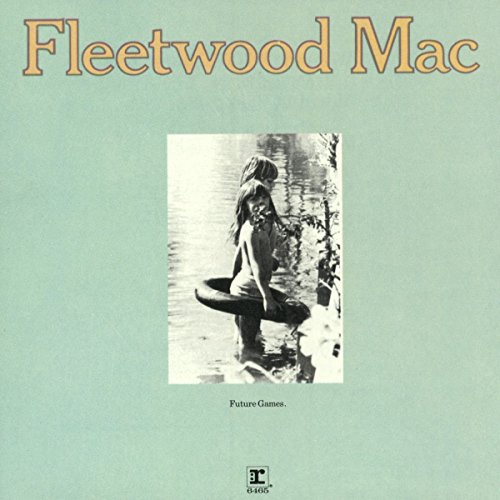
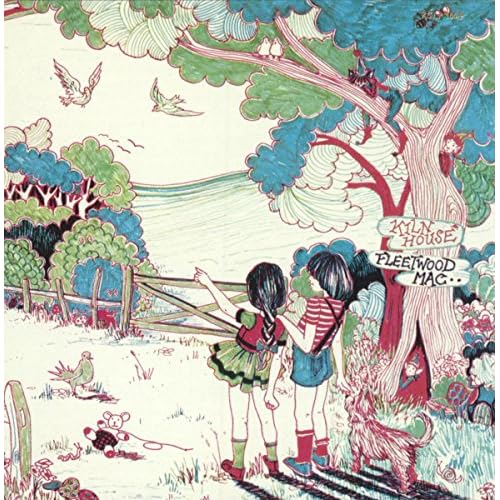
Everyone knows of the trials and tribulations of Fleetwood Mac, they are the mega-selling incarnation fronted by Lindsey Buckingham and Stevie Nicks. And any rock aficionados know the original, blues-rooted version of the band starring Peter Green. But there’s a bridge between those two starry incarnations led by a key figure lost to rock history guitarist vocalist and brilliant songwriter Danny Kirwan. Fleetwood Mac’s two records, Kiln House and Future Games, have between them provided me with perhaps a hundred hours of enjoyment. And that’s the ultimate test of a record’s worth. 

“Danny was a quantum leap ahead of us creatively,” Mick Fleetwood said of Kirwan’s early influence on the group. “He was a hugely important part of the band.”

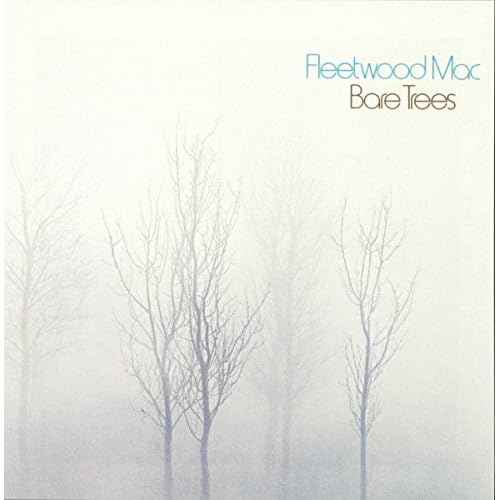
Hired by Fleetwood Mac at the age of just 18, Kirwan utterly transformed the group’s sound, adding both an unusually sweet guitar vibrato and a dreamy songwriting style. His pensive approach dramatically countered the driving blues structures that dominated ’60s British rock. And the contrast paid off: Three years into his tenure, he became Fleetwood Mac’s de facto frontman, buttressed by fellow singer-songwriters Christine McVie and Bob Welch on such under-appreciated, early ’70s albums as “Future Games”  and “Bare Trees” . In the process, he provided the lifeline between the barrelhouse British sound of early Fleetwood Mac and the warm California-pop style that would eventually make the band huge names.

Related image

Unfortunately, Danny Kirwan’s story involves as much tragedy as triumph and both aspects seemed baked into his story.

The outsized talents of this Brixton-born guitarist revealed themselves early. When he was 17, Kirwan’s blues-based trio, Boiler House, secured gigs in London, where he would come to check out his idol: Peter Green. “He used to come hang at the Nags Head in Battersea, which is where we played a lot,” Fleetwood said. “He would always be sitting in the front row, staring.”

The ambitious Kirwan talked up his band to Fleetwood and, while the drummer found his guitar playing “amazing,” he told the young hopeful, “if you want to get anywhere, you need to unload your band.”

Kirwan wasn’t pleased about the advice but, eventually, he took it, inspiring Fleetwood and Green to try to find new sidemen for his protege. As it happened, none proved worthy. Around the same time, Fleetwood Mac’s  second guitarist Jeremy Spencer began diverging from Green’s interests, moving into a more rockabilly sound. The idea arose to hire Kirwan in order to give the band’s top star a more appropriate foil. In the process, Mac earned a rare configuration, boasting three axemen at the front. “Danny filled a hole that allowed Peter to move forward creatively,” Fleetwood said.

Future Games

He also brought new influences to the band, from sources as broad as ragtime and jazz violinist Stephane Grappelli. Kirwan played with an almost scary intensity, according to Mac’s early producer, Mike Vernon. In a vintage interview, Vernon said that Kirwan was so into the music “he cried as he played.”

By the time Kirwan joined The Mac, they already had two albums out, Kirwan’s contribution showed on very his first recording with the band: , The track “Albatross” an instrumental penned by Green in late ’68. The song anchored on two, languid guitar lines, with Kirwan offering a ghostly answer to Green’s lead. The cadence of the melody took influence from the swaying Hawaiian guitars of Santo and Johnny’s hit Sleep Walk.

Years later, Green said he never would have written the song without his protege’s influences. Still, the fluidity, and introspection, of “Albatross” alarmed the band’s early fans. According to Fleetwood, they considered it “schmaltz.” Regardless, it became a No. 1 smash in the U.K. The B-side featured a Kirwan original, Jigsaw Puzzle Blues , which showed his debt to the work of Django Reinhardt, a rare influence in the British blues scene of the day.

Kirwan’s impact extended exponentially on his first full album with Fleetwood Mac, ‘Then Play On’, released in September of ’69. “Peter gave Danny half the album, which was unbelievably generous,”

Fleetwood said. Not only did Kirwan write seven songs for the album, he penned the kick-off track, “Coming Your Way”, fired by a glistening guitar line which teased Mick Fleetwood’s wild tribal drums. Other Kirwan originals included the wan “Although the Sun is Shining,” the blues-hued “Without You”, the weighty psychedelic “One Sunny Day” , and the airy acoustic ballad “When You Say.” Kirwan’s songs balanced tranquility with yearning, suggesting a rich interiority of feeling. Fleetwood said a key inspirer of those compositions was the work of Harry Nilsson.

Kirwan sang his songs in a voice of boyish hurt. His physicality suited the sound. With his fine blonde hair and choir-boy features, Kirwan looked like a fallen angel. As a character, however, he was brooding, and the music reflected it. His instrumental, “My Dream,” showcased the shivering vibrato of his tone, a sound that suggested both preciousness and peril.

“His vibrato was perfect,” Fleetwood said. “Danny had pure, resonant note comprehension. Many guitarists make the vibrato sound like a dying cow or a mosquito in heat. Danny had an unbelievable touch.”

Still, several of his songs were left off the original U.S. version of ‘Then Play On’ to make way for a Green piece that would became a Mac classic: “Oh Well”. A true guitarist’s showcase, the song has became so associated with the band, they performed it right through the Lindsey/Stevie era. In “Part 1”—the better known section—Kirwan took the main solo, displaying a capacity for aural savagery equal to his bent for beauty. Both the U.S and U.K. versions of ‘Then Play On’ featured the only song Kirwan ever wrote with Green, “World In Harmony”, a staple of the band’s live show.

A particularly telling Kirwan original from the era, “Something Inside Of Me”, turned up on Shrine 69, a live album not released until years later. Though his song ostensibly addressed a lost love, it seemed to channel something deeper: a lost soul, with lyrics that spoke of an inner torment the narrator couldn’t shake. At the time, Kirwan suffered from increasing self-consciousness, both socially and as a figure of public focus. “He felt less than perfect in ways you and I can’t even imagine,” Fleetwood commented.

Danny Kirwan wasn’t the only troubled member of the band. After a bad acid trip, Green became mentally unstable and, combined with his already conflicted feelings about fame, he decided to quit the band in May of 1970. Shorn of their star, the band felt adrift. Yet, just four months later, they rallied to record the album “Kiln House”. Fleetwood calls it “a funny little album by a vaguely lost band. But I love it for that reason. It’s pure and sweet.”

An unusual affair, ‘Kiln House’ ping-ponged between Jeremy Spencer’s Buddy Holly/rockabilly salutes and Kirwan’s originals which, this time, took a harder turn. For the album, Kirwan penned one of the hottest guitar tracks in Mac history, “Tell Me All the Things You Do”. The song proved he could idealize a frenzied style as well a ruminative one. Kirwan epitomized the latter mood with his mournful instrumental “Earl Grey.” Another stand out track penned by Kirwan, “Station Man”, attracted the attention of Pete Townshend of The Who told Fleetwood it was one of his favorite songs. “I remember Danny saying, ‘wow, I would have thought he would have fucking hated it,’ the drummer recalled.

To beef up the band in that shaky period, they added a “guest” keyboardist on ‘Kiln House’—Christine Perfect, who had just become Mrs. McVie. Under her maiden name, Mcvie had performed in the blues band Chicken Shack and released a solo album which featured playing, and composing, by Kirwan. Still, she found the young guitarist strange. In a later quote, McVie called him “really, really neurotic and difficult to work with. He was one of those people who would never look you in the eye. To be around him was a very nerve-wracking thing. So he and I never wrote together.”

On his own, however, Danny Kirwan remained prolific. Two songs he wrote for ‘Kiln House’, which didn’t appear on the album, became part of their live show and favorites of arch fans, including the billowing “Dragonfly” and the psychedelic rocker “Purple Dancer”.

Kiln House

As eccentric as Kirwan could be, Spencer upstaged him in the strange department in early 1971. Smack in the middle of a U.S. tour, he bolted the band, announcing he was joining a religious cult known as The Children of God. For those keeping score at home, that makes two guitarists gone off the rails in less than two years. If nothing else, Spencer’s defection precipitated a major shift in both the band’s sound and in their home base which, together, led to a new prominence for Kirwan.

When Spencer left, the band had to re-orient itself somewhat: Kirwan has become the sole focal figure, and this central role has forced him to deal in the visceral as well as the moody areas. But Kirwan had already shown on Kiln House that he was well equipped to handle both. His “Jewel Eyed Judy,” “Tell Me All the Things You Do,” and “Station Man” are among the best examples of the soft-hard rock song, with their lovely, silky vocals and smoking guitars. If Kiln House holds up somewhat better than the gentler Future Games, Kirwan’s dynamic songs are at least as responsible as Spencer’s presence on the former album.

Shaken after losing Spencer, the band decided to anchor themselves in the U.S., soaking up the style, mood and lifestyle of L.A. at its mellow peak. To aid in the transition, they hired their first American member, singer-songwriter Bob Welch. His contemplative sound fit perfectly with Kirwan’s approach. Better, McVie had began to write, together shifting the band’s focus from a triple guitar act to a three-way singer-songwriter collective. The first songs McVie penned leaned towards Kirwan’s mix of the ethereal and the romantic. At the same time, Kirwan forged more adventurous harmonic structures than ever, evident in his hypnotic tracks off the band’s first U.S.-based album, ‘Future Games’. His “Woman Of A Thousand Years” sounded as unusual as a David Crosby song of the era, or like some precursor to the grey and braided sound later minted by Elliot Smith.

Bob Welch, who contributed key songs to the album, greatly admired Kirwan, saying in a later interview that “at twenty four, he played with a surprising maturity and soulfulness.” But he also called him “one of the strangest people I’ve ever met. He didn’t seem to ever be able to distance himself from his work. Danny was the definition of ‘deadly serious.'”

Bare Trees

Despite Kirwan’s growing inner turmoil, he perfected his art the next year. The ‘Bare Trees’ album, released in March of 1972, was a note-perfect work, with five of its nine tracks penned by Kirwan, including the chugging opener “Child Of Mine”, a song which addressed his absent father.

“Bare Trees” falls somewhere between the last two Fleetwood Macs; that is, it hits harder than Future Games, but its concerns are much more introspective than those of Kiln House. Kirwan has written two melancholic, really elegiac songs based on the bittersweet poem of an elderly woman, “Thoughts on a Grey Day,” that closes the album. The first song, “Bare Trees,” its title suggested by a line from old Mrs. Scarrot’s poem, moves along exhilaratingly, even though its lyric is a metaphor of age and approaching death; perhaps it’s the acceptance of the cycle that gives the music a hopeful, almost happy feeling. The second, “Dust,” is a great deal more somber, but it retains Kirwan’s deft melodic touch, manifesting itself in both the sighing vocal and in the guitar lines that sweep softly alongside it. “Dust” sets the stage for the poem, which is similar in effect to the “Voices of Old People” track on Simon & Garfunkel’s Bookends. The group has thoughtfully preceded the poem with about 15 seconds of silence, sufficient time to pick up the tone arm if you’re not in the mood.

The rest of Bare Trees isn’t nearly so melancholy, nor is it structured to conform to the theme Kirwan has developed. Christine McVie’s two songs, “Homeward Bound” and “Spare Me a Little of Your Love” make it clear that she’s become a fine songwriter and a persuasive vocalist–she’s somewhere between Sandy Denny and Dusty Springfield, and there’s no doubt that she could make it on her own.

Though Welch wrote the album’s FM hit, “Sentimental Lady” and though McVie greatly upped her writerly chops—Kirwan’s sound defined the album on songs like the title track  or the wah-wah guitar work-out on “Danny’s Chant”.

As before, it’s Danny Kirwan who made the difference. Maybe there’s nothing on Bare Trees to equal “Station Man” and “Jewel Eyed Judy,” but, aside from “Dust,” Kirwan’s songs here rock much more than his Future Games material did. He really lets loose on “Danny’s Chant,” which features tough-guy electric guitar sounds purely for their own sake. His “Child of Mine” is a lyrically disjointed but musically forthright rock ‘n’ roll song. And Kirwan’s instrumental, “Sunny Side of Heaven,” shows off his unique electric guitar style to good advantage. Like most outstanding guitarists, Kirwan gets a sound that is more plainly human than mechanical. His guitar tone is piercing but tremulous–powerful but at the same time plaintive, especially in the upper ranges.

With his multiple skills, Kirwan could’nt help being the focal point. It is his presence that makes Fleetwood Mac something more than another competent rock group. He gives them a distinctiveness, a sting. He makes you want to hear these songs again.

‘Bare Trees’ also set a template for the band. While they released three albums between that 1972 work and their breakthrough self titled “Fleetwood Mac” disc in ’75 (the one which debuted the Nicks/Buckingham team) there’s a crucial connection between the former, and latter, works. According to Fleetwood, it has to do with cohesion. Both albums found the band sustaining a beguiling mood from start to finish. “Bare Trees’ is the beginning of the band showing a body of work with all the proper connections made,” he said. “It’s a well-rounded album. Like Lindsey, Danny had the chops with layering techniques, and the ability to know what’s right and wrong in the studio.”

‘Bare Trees’ also got the band to focus on harmony, an aspect which would later define the most successful version of the band. To showcase “Bare Trees”, Fleetwood Mac went on tour with Savoy Brown and Long John Baldry during the Spring and Summer of ’72. The tour, billed as “The British are Coming” turned out to be a traumatic affair. On the road, Kirwan “just got more and more intense,” Fleetwood said. “He wouldn’t talk to anyone. He was going inside himself which we put down to an emotional problem that we had no idea about. We thought he was just being awkward. I had no idea he was struggling to that level.”

At one pivotal gig, Kirwan and Welch fought over tuning, to the point where the troubled guitarist refused to go on-stage. “That’s the cardinal thing you just don’t do,” Fleetwood said. “In essence, he had a breakdown.”

Kirwan smashed his guitar, then let the band struggle through their performance without him. Afterwards, he launched into a critique of their playing. “It was the straw that broke the camel’s back,” said Fleetwood. “That particular pain and story needed to stop.”

“Looking back, Danny was not suited to this business,” Fleetwood said. “It was too much pressure. He and Peter were both highly sensitive people, not suited to take the blows.”

Kirwan went on to release a few solo albums for DJM Records. They contained some sweet moments but more pale ones. His mental deterioration led to periods of homelessness in the ’80s and ’90s. In 1998, Kirwan had a potential lift: He was inducted into the Rock ‘n Roll Hall of Fame along with the other key members from Fleetwood Mac’s strange and convoluted history. But he didn’t show up to accept the honor.

In the decades since Kirwan left the band, Fleetwood has had little contact with him, though he remains in touch with his ex-wife Claire. She told him the guitarist “lives a very simple life and is pretty much disconnected from what you, or I, would call any form of reality.”

Despite the sustained pain surrounding the guitarist’s tale, Fleetwood remains committed to stressing his unique talent and his pivotal role in the band. “I cared for Danny a lot and I care for his legacy a lot,” he said. “Lindsey Buckingham also has a huge regard for Danny. He is the lost component. In many ways, Danny is a forgotten hero.”

Peter and David Brewis, playing together in their small riverside studio has been a joyful exorcism. “Open Here” is the last in a run of five albums made at their studio, an unprepossessing unit on a light industrial estate in Sunderland. whilst the brothers weren’t quite tracking while the wrecking balls came, the eviction notice received in early 2017 gave the brothers a sense of urgency in the recording of Open Here.

The studio became a sanctuary away from everything political and personal, a cocoon of creativity. and conversely, making the album became an alternative way to connect to people, with a wide array of musicians invited to leave their mark, notably Sarah Hayes on flute and piccolo, Liz Corney on vocals, Pete Fraser on saxophone, Simon Dennis on trumpet and flugelhorn, a Cornshed Sisters choir and the regular string quartet of Ed Cross, Jo Montgomery, Chrissie Slater and Ele Leckie. the result is a record that is bigger in scale, grander than anything they’ve done before. David explains, “where commontime felt like a distillation of all of the elements that make up Field Music, this feels like an expansion; as if we’re pushing in every direction at once to see how far we can go”.

Album opener, Time in joy, Turns Dark Times into sparkling funk, and might even have earned another acknowledgement from a sadly-departed purple superstar in happier circumstances. Count It Up’s wry critique of privilege bounces along like an upside-down material girl. checking on a message could be on the apocalyptic party playlist the morning after any number of recent voting catastrophes. Peter says the song “is about being too confident that world events will go the way you expect them to. and then getting bad news from a mobile phone”.

wrestling with politics has gone hand in hand with wrestling with parenthood. if we can’t make sense of the world for ourselves, how do we do it for our kids? share a pillow is the eye-rolling, eye-rubbing product of one too many nights playing musical beds, turning the pitter-patter of tiny feet into a bludgeoning baritone stomp. no king no princess is a barbed two-fingered salute to gender stereotypes. David again: “my little boy was born not long before we started making Commontime and my baby girl was born just before we started making Open Here. people tend to ascribe every perceived difference between them to their gender. the ‘princess’ thing is so weird to me – it’s such a passive aspiration. i wanted to write a song for my kids which says you can throw all of those expectations out of the window if you want to.”

On a few tracks, the melancholy finds a way to seep through. front of house says a too-late goodbye to a good friend gone far too soon. daylight saving wistfully laments having the time to be a couple when you’re preoccupied with being parents. and then on the final song, find a way to keep me, an imploring whisper builds to a wild, hurtling clangour, with flute and trumpet and strings diving and trilling around each other. it’s the grandest music the brothers have ever made.


There probably won’t be many other rock records this year, or any year, which feature quite so much flute and flugelhorn (alongside the saxophones, string quartet and junk box percussion). but somehow or other, it comes together. Over thirteen years and six albums, Field Music have managed to carve a niche where all of these sounds can find a place; a place where pop music can be as voracious as it wants to be.

Take a listen to Time in Joy, the second song from our upcoming album Open Here.

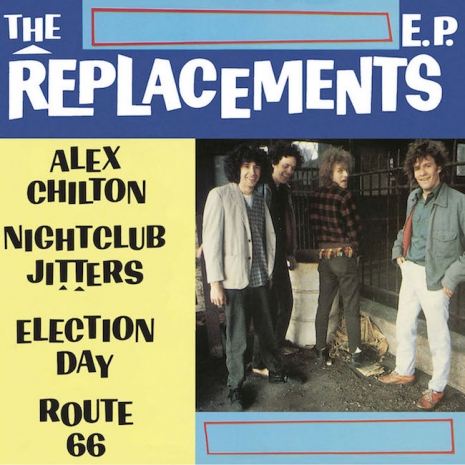
The Replacements

The legendary Replacements embarked on a highly anticipated national tour, fulfilling the wishes of a legion of fans who were either too young or too naive to see them the first go-around. The shows, luckily, were still beautiful fuck-ups. What with Paul Westerberg smoking cigarettes between songs, during songs, even inside a camping tent that was erected on the stage for some reason, and Tommy Stinson leaping around like a kid during “Bastards of Young,” there was little left to be desired. As a message to fans, Westerberg donned a new white shirt each night of the tour, with a spray-painted letter on the front and back. By the end of the tour, the message read, “I have always loved you. Now I must whore my past.” Perhaps that’s enough said.
Record Store Day 2015 Release on 10″ black regular weight vinyl 4 song EP. Originally released in the UK as a 7″. Unlike many of their underground contemporaries, The Replacements played ‘heart-on-the-sleeve’ rock songs that combined Westerberg’s raw-throated adolescent howl with self-deprecating lyrics. They were a notoriously wayward live act, often performing under the influence of alcohol and playing fragments of covers instead of their own material.

This is one of the most beloved songs by the Replacements is “Alex Chilton”. This hook-filled number from their 1987 LP, Pleased To Meet Me,  is a tribute to Memphis musician and fabled cult hero, Alex Chilton (Box Tops, Big Star). It’s been performed during virtually every ‘Mats concert since its release. This includes their 2013-2015 reunion, in which it carried a new weight, as Chilton had passed away in 2010. In 2014, the Replacements appeared on The Tonight Show, and “Alex Chilton” is what they played.

Replacements leader Paul Westerberg first met Alex Chilton at a 1984 gig in New York City. Westerberg, not knowing exactly what to say, blurted out, “I’m in love with that one song of yours—what’s that song?” Chilton would produce the demos for the next Replacements album, Tim   (1985), and sang back-up on their ode to college radio, “Left of the Dial”.

The Replacements recorded Pleased To Meet Me in Memphis at Ardent Studios, the same studio as Big Star. The man behind the board was Jim Dickinson, who produced the storied third   Big Star album. Alex came into the studio a few times while the Replacements were working on the record (and laid down a guitar fill for “Can’t Hardly Wait”), but the band avoided the awkwardness of playing “Alex Chilton” whenever AC was around. Chilton eventually heard the track while on tour with the ‘Mats in April of ’87. He conceded that it was “a pretty good song,” and seemed to appreciate the gesture, which was to both honor him and increase his exposure.

Towards the end of Talking Heads’ career, all four members of the band gathered in the studio with Lou Reed to record the Velvets’ “Femme Fatale.” The result came out on a Tom Tom Club LP (Boom Boom Chi Boom Boom), but the credits sure read like Talking Heads + Lou: Tina Weymouth on bass and keyboard, Chris Frantz on drums, Jerry Harrison on keys, David Byrne on slide and rhythm guitar, and Lou Reed on lead and rhythm guitar. Weymouth sings Nico’s part and everyone else joins in on backup vocals.

Rolling Stone reported news of the NYC supersession in 1987. It provided the happy ending to “Are Four (Talking) Heads Better Than One?,” a profile that suggested the foursome was held together with Scotch tape and chewing gum, and contained some bons mots from Lou:

Back in earlier, calmer days, the band looked to Lou Reed as a sort of patron saint. He doled out advice like “Get some dynamics in your songs” or “David should wear a long-sleeved shirt – his arms are too hairy.” And more profound warnings, which the band still remembers today. Chris: “Lou Reed once told us, ‘Man, I’ve gotta go out on tour again. People want to view the body.’” Tina: “He told us, ‘A band is like a fist of many fingers. Whereas record companies like to ego-massage one finger and break it off.’”

The Byrne/Frantz/Harrison/Reed/Weymouth “Femme Fatale”:

Doors fans will have a belated opportunity to revisit one of the later chapters in the band’s history with singer Jim Morrison in early 2018, with the release of an audio and video package capturing the group’s performance at the Isle of Wight Festival in 1970.

Scheduled for a February. 23rd release , the sensibly titled The Doors: Live at the Isle of Wight 1970 will be available on CD/DVD, CD/Blu-ray or digital format, and offers “completely recut and remixed” footage from what turned out to be the band’s final filmed show with Morrison. Held on August. 30th, 1970, in the midst of Morrison’s obscenity trial, it found the Doors falling back on the music that brought them together at a time when outside factors were on the verge of tearing them apart.

“Our set was subdued but very intense,” recalled organist Ray Manzarek. “We played with a controlled fury and Jim was in fine vocal form. He sang for all he was worth, but moved nary a muscle. Dionysus had been shackled.”

In addition to a new 5.1 Dolby mix supervised by longtime Doors associate Bruce Botnick, The Doors: Live at the Isle of Wight 1970 boasts a new 17-minute documentary, titled This Is the End,

This is the last known unseen performance of The Doors in existence. The show has been completely remixed and recut and restored using the latest technology, from grain-reduction to color-correction techniques from the original footage. The DVD includes a bonus featurette “This Is The End” 17 minutes of interviews conducted by the film’s original director, Academy Award-winning Murray Lerner with Krieger, Densmore, and original Doors manager Bill Siddons. Additional archival interview footage with Manzarek from 2002 is also included in the featurette.

Following on from their acclaimed 2015 debut Down Time (released on Bedroom Suck in Australia, Fire Records in the UK), Her is a shining jewel of an album. Elizabeth Mitchell’s voice is a thing of unearthly beauty, capable of soaring and swooping in shiver-inducing ways. As a songwriter she is equally arresting, addressing desires and dreams with affecting frankness.

In Totally Mild she is joined by guitar magician Zachary Schneider, drummer Ashley Bundang and bassist Lehmann Smith. In the last few years the band have developed a quasi-psychic intensity, surging forward or pulling back in seamless unison. This intensity has been captured in crystalline form by producer and one-time Architecture In Helsinki member James Cecil. Her is polished and spacious, while never losing the feeling of a band in full flight.

After Down Time’s release, Totally Mild toured UK/Europe in 2015, then hit the US in early 2017, playing SXSW and a string of LA/NYC shows. In Australia they have played Meredith Music Festival and shared stages with the likes of Real Estate, Kurt Vile, Best Coast, DIIV and The Chills.

About the new album, Mitchell says “Her is a record of failure and victory, new desire, stale romance, queer domesticity and what comes when the party is over. I was torn between a new domestic life and the impulse to tear it all away with bad choices. I fell in love, but I wrestled for independence. I was always trying to prove that I didn’t need anyone; my wife, my friends, my band. Her is a document of a woman struggling with the idea of potential. We are told that we could be limitless, but we wrestle with unseen personal and structural walls.”

Mood rises and falls expertly throughout the album: Working Like A Crow, originally written for a children’s choir, is simple in its self-sufficiency. From One Another is an eulogy for a toxic relation- ship given the most graceful pop setting. Mitchell’s love for piano balladry is showcased on Lucky Stars, while Today Tonight is kinetic, dynamic guitar pop at its finest.. 

http://

Across their powerful, delicate, luminous second album Her, Totally Mild move through light and shade with silky finesse.

“A shining talisman for the heartbroken” – Pitchfork
“Engorged, engaged, empowered bedroom sulk music” – The Guardian “Sweet, harmony-rich, pointedly concise jangle-pop” – NPR
“Skewed pop gold” – Noisey
“An ethereal voice…lovely songs and just-so jangly arrangements” – BrooklynVegan