Image result for pete townshend tommy demos images

Beginning in the late 1960s, Pete Townshend was on the forefront of the development of home studios. In a world before ProTools and GarageBand, the idea of having a recording studio in your own home was quite extraordinary, but Townshend took to it immediately and started producing amazingly rich demo recordings on which he sang and played every instrument (including drums and bass). For tracks that later found their way onto The Who albums, these demos provided a template for the other members of the Who to flesh out with their individual parts, adding their own flourishes and touches. It’s incredible, however, how fully Townshend had already worked out the arrangements of these future Who classics. In many respects he’d figured everything out ahead of time, and it was just up to the Who to lay it down in a professional studio, bringing to it the animal electricity that only the Who could.

The first album for which Townshend did extensive home demoing was 1969’s Tommy, a perfect example of his arranging genius, as his home recording maps out the song pretty much exactly in line with the Who version that would sweep the world by storm: He heard in these demos exactly what we hear today—that Keith Moon’s manic drumming, John Entwhistle’s muscular bass, and Roger Daltrey’s guttural vocal fury launch these songs to a whole other level.

Of Tommy Pete Townshend said, ” Until we made TOMMY we had largely been our own bosses. Suddenly all that changed – for the first time in our lives we were really successful, really taken over by the audience, and we had to do as we were told. America, the great consumer nation told us, ” There are 50 million kids over here that want to see you perform. What are you going to do about it – stay in Twickenham and work on your next album, or come on over here and perform ? ” So we went on over and got involved in the standing ovations and the interviews, the 19 page Rolling Stone article, the presentations of the gold albums, all that. It took two years to work on anything new. ”

Out of the work from Tommy, I don’t recall this song ever being released. I extended Keith’s opening drum lines and the song, as well. I only know of two other takes that exist, but by far — I love this one the best.

Image may contain: 5 people, indoor

“Must Be Nice,” the first single from Chicago band Varsity’s forthcoming album Parallel Person, has a title that comprises a double meaning. The title phrase is habitually “bandied around sarcastically,” says singer and keyboardist Stephanie Smith. But she says it can also be an ultimatum, as in: “I must be nice in order to be liked/noticed/not be considered a b****.”

The song itself is a catchy slice of indie-pop, the punchiness of which is undercut by Smith’s self-conscious lyrics: “I know I can’t cry in front of them / But if I could,” she trails off anxiously. Smith says the song was conceived of more as “a mood and the idea of repetition rather than a narrative or a complicated structure.” Propulsive bass and drums give the song an urgent feel, while intertwined keyboard and guitar riffs lend a surfy, eerie charm.

The video for “Must Be Nice,” by animator Shane Beam, reflects the song’s mood and cyclical nature. Beam “totally honed in on the repetition, psychedelic imagery and playful tone of this tune,” Smith says. “The resulting video highlighted themes and images that we hadn’t noticed before,” she says, “plus it made us laugh, which is always good in this economy!”

Screaming Females is a three piece rock band from New Brunswick, New Jersey. Who have been writing, recording, and touring with one another for 13 years. AV club puts out a lot of fun covers and these two are no exception. Sure Marissa Paternoster struggles a bit singing ‘If it makes you happy’, but who doesn’t. And a Taylor Swift song is still a Taylor Swift song no matter how much Screamales awesomeness is poured on top of it. But both tracks are very enjoyable! Taylor Swift fans who came here on accident, be prepared to have your brains melted

http://

Wimberley, Texas is about 45 minutes out from Austin by car or truck — far enough to allow a music scene independent of Austin’s own to thrive in that hill country. Alexander Buck Meek grew up in that scene, among the jazz manouche, blues and outlaw country guitarists of the region. Even though Buck Meek’s work with Big Thief has taken him far away from his Texas home, the lead single from his self-titled debut album sounds as if it echoes out from the state’s hill country.

“Cannonball!” is a blast of dry heat — a sly easy-going number led by Meek’s crackling guitar work and his cock-eyed vocals. The song is a thrilling elaboration of all the things that make Meek’s guitar playing so compelling in Big Thief, where he serves as guitarist alongside lead singer and songwriter Adrianne Lenker. His playing in both projects is driven by a love for the sounds that make a guitar distinct — its grumbling string noise; its equal propensity to pop, slide and sigh. When he plays live, he channels the tension of his body into his dynamic playing, which is jumpy and electrifying as an ungrounded wire. Here, he matches that dynamism with his voice’s own odd inflections and a twisted yarn of a story. That carefree, mischievous sound and song title befit Meek’s great gift — the easy exuberance that underlies his every note.

Meek is ably matched by his co-conspirators on the track. Mat Davidson of Twain is an old touring buddy and here spurs the song on with a jaunty bass line. Guitarist Adam Brisbin delivers an at once searing and laconic slide solo at the song’s mid-point. Dylan Meek, Buck’s brother and an accomplished keyboardist, fills out the atmosphere with a Wurlitzer run through a Roland space echo that recalls Garth Hudson and ably complements drummer Austin Vaughn’s Helm-indebted light mid-tempo pocket. All together, the band sounds like a man working out a persistent crick in the neck — a shrugging, loosening groove. In less than three minutes, “Cannonball!” evokes a lifetime of listening at the source of a certain kind of American music, twisted up and then unfurled into a strange new musical world.

http://

Buck Meek’s self-titled debut album comes out on May 18th via Keeled Scales.

The self-titled debut is flecked with a lushness buttressed by Prass’ melancholic instincts for storytelling, rounded out by inventive brass and orchestral gestures, tender and exuberant all at once. The compelling stories behind tracks such as “My Baby Don’t Understand Me,” “Bird Of Prey,” “Your Fool,” “Why Don’t You Believe In Me” and others, reveal Prass’ perseverance in nourishing her menagerie of influences into a unique and visionary first album. Her incredible journey includes a nearly decade-long stint in Nashville, shuttling to her native Virginia in the midst of that stay to create her debut album. Prass, now 29 years-old, currently lives in Richmond, where the album was produced, to be, as she puts it, “where the trees are tall, the buildings old, and friends near.”

Her astounding debut, produced by Prass’ childhood friend and Spacebomb studios founder Matthew E. White and his production partner Trey Pollard, was a painstaking effort that remained on the shelf for another two years before its release in early 2015. This nine track compilation is a testament to how Prass’ grit and pursuit of musical perfection stood her well throughout. “I always kind of laugh when they refer to me as a newcomer,” says Natalie. “I think my story is a case of when the opportunity arrived, I was ready.”

Ironically, White’s own surprise success with his acclaimed debut, Big Inner, contributed to the delay. Intense collaborations between Prass, White, and Pollard preceded it all: “I would drive back and forth between Nashville and Richmond doing the pre-production,” she says. “Matt and I did so much planning. He’s very thorough and so am I. We talked for months while I sent him songs and ideas even before we started. We talked out every last detail before tracking. Matt and Trey wrote the arrangements separately. They would say, ‘You take this song and I’ll take that one.’ We took our time. It was my first opportunity to record a full length album and I wanted to do it right.”

Prass and her collaborators share a mutual appreciation for what she calls classic songwriting. “My writing does have so many influences,” she acknowledges. “I go back to Irving Berlin, Sondheim, Burt Bacharach (many reviews cite Bacharach muse Dionne Warwick as a kindred spirit of Prass, with the artist even thanking her in the liner notes) but it all comes down to the strength of your songwriting and your commitment to that.”

Such dedication started early. Born in Cleveland, Prass moved to Tidewater, VA as a child, where she recalls being the only girl in teenage bands. After magnet school she attended the Berklee School of Music in Boston, but returned to Virginia after only a year. Soon, she would make her trek to Nashville, eventually attending Middle Tennessee State University and enrolling in their intensive songwriting program. She recalls plotting out her own personal repertoire even during her student days. “I used to space out a lot in class and work out melodies,” she says. “I’d sneak out and go to the bathroom and sing melodies and try out songs, even then. I wrote the melody and lyrics for the song ‘Violently’ that way, then I went home and figured it out on guitar.”

Prass’ distinct vocal command enables her to breathlessly glide over ornately arranged offerings like “My Baby Don’t Understand Me” or croon the almost-country bop of “Never Over You.” Rippling crosscurrents blow through the collection of songs as well as soulful wisps of what several critics have likened to Dusty Springfield’s 1969 blue-eyed soul masterwork Dusty In Memphis. Dozens of musicians contributed to the overall sound, but it’s Prass’ subtle conjurations of longing that make her debut such a powerfully intimate statement.

“A lot of times you’ll be working on a song and it surprises you by turning into something else. Like ‘Christy.’ I like how unnerving it is. It turned into an eerie, very personal song. But the one that is probably most personal to me is ‘My Baby Don’t Understand Me.’” She doesn’t expand any further and she doesn’t need to. The lyrics speak for themselves: ‘Our love is a long goodbye,’ she sings in heartbreaking register. The song that Rolling Stone hailed as “a crumbled relationship ballad of cinematic majesty” stands on its own while also seamlessly rounding out the rest of her magnificent debut album.

Kurt Vile and Courtney Barnett have released a new documentary depicting their friendship the creative process around their collaboration that led to the joint album Lotta Sea Lice. The film is directed by Kurt Vincent and Irene Chin and features interview clips with both Vile and and Barnett alongside  live performance clips from the duo’s performance at the Loew’s Jersey Theatre in New Jersey.

The new documentary, called Friends of Wonder,

A lavish New Jersey theater saved by a dedicated group of locals. Rising dramatically from a cluster of discount stores, dive bars and pawn shops, The Landmark Loew’s Jersey Theater is an outlier among its surroundings in Jersey City’s bustling Journal Square.

New Jersey’s second-largest city is a quick train trip from New York City, with a view of the Manhattan skyline from across the Hudson River. It has seen significant redevelopment lately, but still it’s not known for its beauty; mostly, it’s a city focused on industry.

The Loew’s exterior evokes a bygone era of architectural grandeur, with intricate embellishments creeping up the stone walls and a vintage marquee, slightly run-down yet oozing with the glamour of old Hollywood. But it’s the inside of the theater that takes your breath away.

A concert performed by musical soul-mates who live on different sides of the world. A pair of filmmakers telling these two idiosyncratic stories in one documentary. The uplifting tale behind Friends of Wonder.

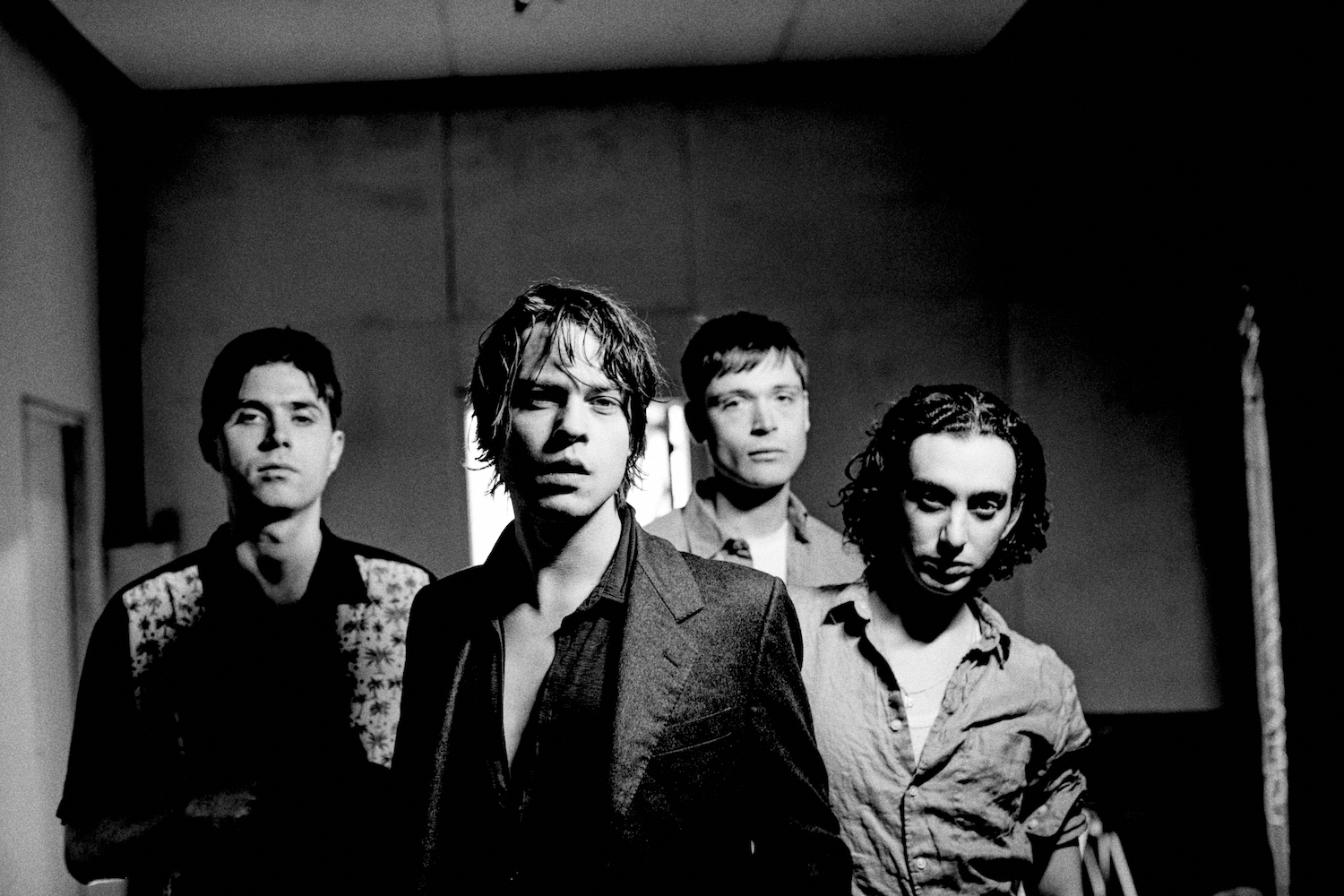
Copenhagen’s Iceage Elias Bender Rønnenfelt (vocals, lyrics), Jakob Tvilling Pless (bass), Dan Kjær Nielsen (drums), and Johan Wieth (guitar) — will release their fourth album, ‘Beyondless’, on May 4th. After returning last month with ‘Catch It’, their first new material since 2013’s ‘Plowing Into The Field of Love’, Iceage now share Beyondless’s “Pain Killer”, featuring Sky Ferreira (the first guest vocalist to ever be featured on an Iceage song). Additionally, the band is announcing March residencies in New York and Los Angeles and dates in Japan in April, with their previously announced European and North American tours to follow in May and June. It was produced by the band and Nis Bysted, recorded by Mattias Glavå at Kungsten Studios Göteberg, and mixed by Randall Dunn at Avast Studios Seattle. The album was played entirely by the band with additional performances by Nils Gröndhal (violin), horns by Kasper Tranberg (trumpet), Lars Greve (saxophones) and Morten Jessen (trombone),

From the new album ‘Beyondless’ out May 4th on Matador Records.

A Love Sleeps Deep’s bones rattle with all the seismic changes of the last five years since the release of The Moondoggies’ Adios I’m a Ghost. While the Washington band got lumped in early on with the woodsy folk-rock/Americana movement that sprung up in the Pacific North- west in the 2000s, the core Moondoggies sound has always been rock in the more classical sense–more groove-based than Woody Guthrie. A Love Sleeps Deep crystalizes that. Perhaps more importantly, A Love Sleeps Deep finds singer/guitarist Kevin Murphy at his most pointed as a songwriter. There’s no lyrical pussyfooting this time around. Lacking the need to prove himself, he opens up and lays bare his feelings.

“Generally, I feel frustrated because there’s a lot of this escapist stuff going on in rock and roll,” says Murphy. “I just didn’t want to not talk about my frustrations with what I was seeing around me. I have two little girls now, and I’m just thinking about where things are going. Love in my life has changed everything.”

While the album on a whole is about love, there’s an unmistakable anger boiling under the surface. Murphy captures the life-altering glory of finding real love on “Sick in Bed” and “Easy Coming,” and speaks to that special unbridled brand of parental love on “Mother.” But the highs exasperate his counterbalancing frustrations. He sings with poetic pointedness about the casual racism his girlfriend has faced on “Cinder” and how we’re all ruining the planet his daughters will inherit on “Underground (A Love Sleeps Deep).” He further lets his political feelings be heard on the distorted (literal) barnburner, “Soviet Barn Fire.”

Cascadian rockers The Moondoggies have offered up another preview of their forthcoming full-length album A Love Sleeps Deep. “Sick in Bed,” it is a pastoral, harmony-rich love song that blossoms into a kaleidoscopic jam-out in the its back half.
Releases April 13th, 2018

“Easy Coming” is the first single from A Love Sleeps Deep, the new album from ,


Recorded in Seattle in the spring of 2017 with production wizard Erik Blood (Shabazz Places, Tacocat, THEE Satisfaciton), A Love Sleeps Deep is also an album of collaboration. The band seemingly threw each tune up in the air to see how it bounced around the room, making sure everyone got their hands on it. From around 30 initial demos, Blood helped select the most jam-heavy numbers. “They had that vibe that made me love the band in the first place, but with a weathered distinction and confidence that moved me,” says Blood.

What has The Moondoggies found inside of themselves in the years they’ve been gone that makes A Love Sleeps Deep stand out? What’s come to the forefront?
“Rawness,” says Blood. “Like a monster singing lullabies.”

With the passage of time, the band feels more comfortable in its own skin. Carl Dahlen’s drums sonically lead the way, crafting a stellar template for everyone else. Dahlen’s rhythm section cohort, bassist Robert Terreberry, further helps lock in the grooves over Caleb Quick’s keys. In addition to lead guitar work, Jon Pontrello taught himself pedal steel since the last record, and it’s intentionally not employed (as a matter of band philosophy) on the more country-leaning tunes, instead adding a more cosmic feel to the heaviest tracks.

Image may contain: night

A Love Sleeps Deep, the new album from The Moondoggies, out April 13th, 2018

Band Members
Kevin Murphy, Caleb Quick, Bobby Terreberry, Carl Dahlen, Jon Pontrello

Image result for bruce springsteen berkeley 1973 images

On March 2nd, 1973, a young, scraggly, a no-name punk from New Jersey landed in Berkeley, California., just weeks after the release of his first studio album, “Greetings from Asbury Park, N.J.”, to record a performance for the King Biscuit Flower Hour radio show. A certain Bruce Springsteen opened the show that night for Blood Sweat and Tears, ravaging his way through a seven-song set, each tune picking at the essential storytelling-songwriting so heavily influenced by Dylan in those early years.

This performance showcases an early iteration of the E Street Band, with bassist Garry Tallent, keyboardist and accordionist Danny Federici, and Springsteen’s essential partner, saxophonist Clarence Clemons. (The world wouldn’t see the full classic lineup, including guitarist Steve Van Zandt, until 1975.) But it’s the Boss himself who steals the night with an unrelenting energy and obvious wealth of ambition. Some tracks, like “Wild Billy’s Circus Story” and “Bishop Danced,” are folkier and more story-driven. (The latter, with its fluttering accordion, has been rarely performed and never appeared on a true studio recording). Others, like “Lost in the Flood,” “Spirit in the Night” and “Blinded By the Light,” have remained constant in Springsteen’s 40-year touring career. He also offers a fun, fast-tempo “Does This Bus Stop at 82nd Street?”—cheekily chiming in, “A song about New York City, 82nd Street bus,” after a near two-minute intro. Springsteen completes the set with “Thundercrack,” an 11-minute epic that allows each member of the band to jam, with some provocative guitar work about halfway through.

You can tell the young Springsteen is having a great time as he performs—something that has never changed. This is quite possibly the very first professional live recording of The Boss to surface, recorded 45 years ago on this date.

The Band

Bruce Springsteen: guitar vocals Clarence Clemons: saxophone Danny Federici: organ Vini Lopez: drums Garry Tallent: bass

What makes this show particularly interesting and historical is that a few weeks earlier, Springsteen had actually been part of the very first King Biscuit Flower Hour, which was broadcast over three decades ago (February 18th, 1973). On that broadcast, Bruce only performed two songs and had to share the bill with Blood, Sweat & Tears and jazz-fusion pioneers, the Mahavishnu Orchestra.


Image may contain: 4 people, people smiling, people sitting

On Thursday Frankie Cosmos revealed another new track from their forthcoming album, Vessel, due out on March 30th via Sub Pop Records. Following the previously released “Jesse” and “Being Alive,” this new track “Apathy” is an intimate slacker-pop break-up tune with songwriter Greta Kline wearing her vulnerabilities and naiveté proudly on her sleeve. It concludes with her reveling in newfound clarity: “You could take me and my apathy / Turn us into clarity.”

Band Members: 
Greta Kline
Alex Bailey
Lauren Martin
Luke Pyenson