To celebrate the 50th anniversary of their debut record, Creedence Clearwater Revival have released their first-ever music video for their hit protest anthem, “Fortunate Son.”
Despite its modern subject matter, the “Fortunate Son” video retains the song’s original, political fervor. It shows men and women of all races and socio-economic statuses proclaiming the chorus “It Ain’t Me.”
“For me, protest right now is just showing pure positivity in the face of division and anger,” director Ben Fee said in an official statement. “I wanted to highlight the community and positivity that everybody shares…I wanted to show what America feels like when you actually hit the road and drive throughout the states.”
According to a press release, this music video is just the first part of the band’s ongoing CCR50 campaign.
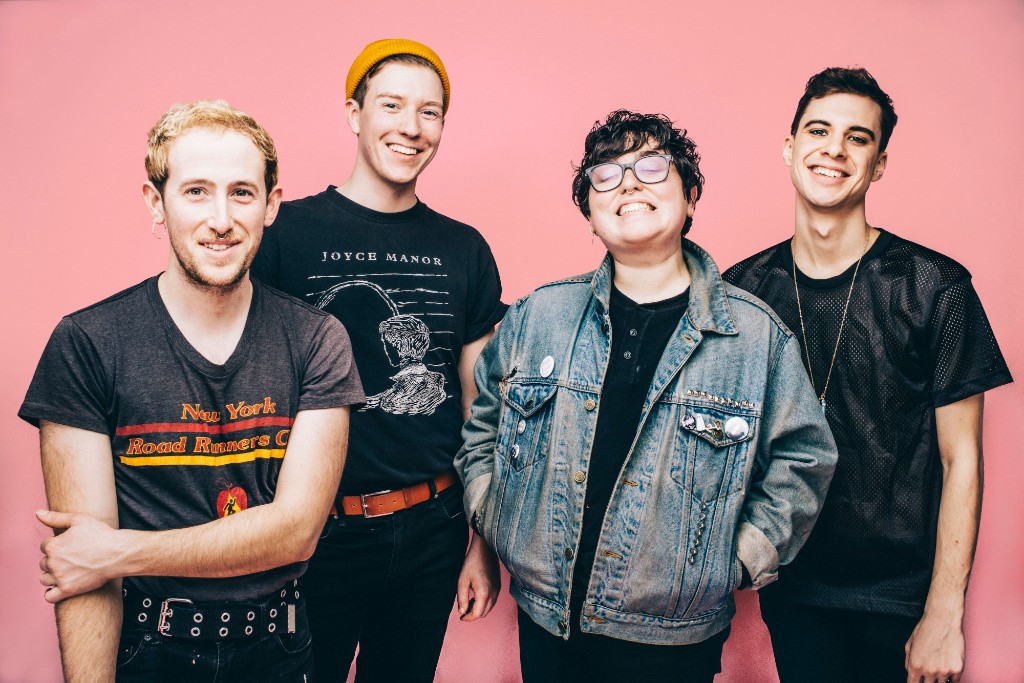
Portland’s Alien Boy Turns Heartbreak and Rejection into Catharsis one track “Somewhere Without Me”
Having some killer post-punk guitar tone and sensational, swirling melodies delivered through Sonia Weber’s exceptional vocals is just the cherry on top of the band’s cathartic sundae. The LP’s first single, “Somewhere Without Me,” might just be one of the best distillations of how the band can turn their sadness into heart-swelling, relatable anthems.
Portland’s Alien Boy may be a new band, but Sonia Weber has long been part of the city’s independent music scene. With Alien Boy, she culls from her self-ascribed influences such as Alkaline Trio, The Wipers, and The Smiths, finding ways to take bits of these disparate sounds and make them her own.
In 1997, Thomas O’Keefe got a call from the management of a rising alt-country band called Whiskeytown, asking if he’d be interested in taking on the job of the group’s tour manager. He was at something of loose ends professionally at the time. And as the bassist for the punk group Antiseen, he’d practically done the job already. So he said yes. But just like a good country song, his tenure – which lasted until the group broke up after a performance in Austin at SXSW in 2000 – was full of drama, erratic personalities, missed opportunities, and no small share of heartbreak along the way.
There were also plenty of musical triumphs, often emanating from Whiskeytown’s singer/guitarist/main songwriter, the incredibly talented but sometimes difficult and troubled Ryan Adams.
O’Keefe has just put down on paper with co-author Joe Oestreich his experiences on the road with the group and Adams in the book Waiting to Derail: Ryan Adams and Whiskeytown, Alt-Country’s Brilliant Wreck.
“Tour managing Whiskeytown was going to be like chaperoning eighth graders on a class trip to D.C.,” he writes. “Eighth graders who drank and smoked pot.” Whether you called it alt-country, cowpunk, or No Depression, in the ‘90s there was a resurgence of interest in new music with a classic country sound among young listeners. It respected the genre’s traditions, but fused it with a certain youth and contemporary attitude. Bands like Wilco, Uncle Tupelo, the Jayhawks, Old 97’s, Jason and the Scorchers, and Son Volt were leading the charge.
Whiskeytown spring from one of the music’s geographical centers was the Raleigh-Durham-Chappell Hill area in North Carolina. And Ryan Adams only in his early 20’s, was seen as a real talent. But he did have an ego, and was an enthusiastic intaker of drugs and drinking.
“I had heard of them, but I wasn’t into that kind of music, I liked KISS and Cheap Trick and the Ramones,” O’Keefe says today. “But when I started working and handing out with Ryan, I thought ‘good God, he’s a freak of nature!’ The way he churned out great songs like there was no tomorrow. It’s like he has antennae and he’s just catching songs that are landing in his lap one after another.”
There’s dissection of the Ryan Adams that O’Keefe saw and who for a time lived in his apartment. But also how his personality changed when he slipped into the “character” of Ryan Adams, surely fertile ground for any psychiatrist. And the band admittedly lost a lot of mojo in doing what O’Keefe refers to as just a lot of “dicking around.”
But while Adams was clearly the leader, O’Keefe also had to work with other members of the group – some who rotated in and out, but always with violinist/singer Caitlin Cary. Her sizable contributions to the band are sometimes overlooked. O’Keefe’s tenure with the band coincided before, during, and after the release of their amazing second album, Strangers Almanac, which many predicted would shoot them into the big leagues.
Interestingly, O’Keefe makes a lot of comparisons between Whiskeytown and alt rockers the Replacements, and indeed there are plenty of similarities between the groups, none more so than in the tendency to self-sabotage. Adams (like the ‘Mats Paul Westerberg) would routinely show up to concerts drunk, deliver half-assed, short shows, blow important gigs and media interviews, and alienate and criticize their own audiences who had come to see them.
“With both bands, from night to night there was no consistency. One day, the show would be the most half-baked, clock-in and clock-out bullshit. And then the next night the show would be so magical, it would renew your faith in rock and roll and humanity,” O’Keefe says.
“And then there would be a show with a lot of punk rock antics and behavior. I loved it, because that’s where I came from. But then as tour manager, I would have to go and clean up the mess and try and collect money from a club owner who would be really pissed and ready to kill me. But the head of the snake leads the snake around, and the show was whatever Ryan wanted to make of it.”
While O’Keefe was often frustrated with Adams, he has no such ill feelings about the young musician’s inherent, scarily good talent. He describes a dismal show that has him down, but when Adams returns to the stage solo with an acoustic guitar to serenade the remaining crowd with his song “Avenues,” he and the audience are mesmerized by the power of the material and the performer.
Whiskeytown was tapped for a possible career-making slot opening an outdoor shed tour for John Fogerty of Creedence Clearwater Revival. But it was clear that the classic rock audience had little interest in Whiskeytown’s hopped up tear-in-my-beer music, simply waiting to hear the CCR classics. Instead of being inspired to the challenge, Adams would openly return the disdain during the band’s performances.
Waiting to Derail (its title taken from a Whiskeytown song) also details the many times O’Keefe would be dispatched to locate Adams or another band member who had not shown up for a hotel lobby call or show, negotiate inter-band squabbles and outer-band romantic relationships, and hide the drugs.
In one incident, the only thing that seemingly saved a complete narcotics bust of the tour bus on the U.S./Canadian border was when band members struck up a conversation with a border agent about their mutual love for the novels of John Steinbeck.
In writing and researching the book, O’Keefe had interviews and reminiscing conversations with all of Whiskeytown’s band members (save a reluctant Adams), record company execs, managers, and crew. But what surprised him was just how little all actually remembered about the touring, so the book is about “95%” of what it would be had he just relied on himself.
Despite having Ryan Adams at a groomsman in his own wedding, O’Keefe has had little contact with the musician since Whiskeytown’s demise. Adams himself has gone on to considerable success both as a solo act and with his backing group the Cardinals. Adams declined to speak with O’Keefe for his book, but the musician who has since cleaned up his act and admitted past transgressions is aware of it.
In the years after his tenure with Whiskeytown, O’Keefe has continued his career as a tour manager with acts like Train (“One of the hardest working band in the music business”), Mandy Moore, and Third Eye Blind. His current job is as the veteran tour manager for Weezer.
Last month, British electronic godheads Underworld teamed with American Garage punk Iggy Pop for a surprise collaborative track, “Bells & Circles.” It was a transfixing composition, Underworld’s charging and pulsating electronic backdrop underpinning a sort of intensifying spoken-word poem from Pop. The tone was also a curious one, with Pop reminiscing about the days where you could smoke on airplanes and hit on flight attendants, things it is quite plausible Pop legitimately misses. And yet, there was something more going on there, like he was doing some kind of performative piss-take on “Those were the days”-type recollections. “Bells & Circles” was more engaging than it needed to be given that the pedigree of the artists involved alone made it interesting.
This was the lead single and opening track of a full EP from Underworld and Pop, titled Teatime Dub Encounters and due out at the end of July. The origins of the project go back to when Underworld were supervising the soundtrack to last year’s Trainspotting sequel.
As you might recall, the first Trainspotting soundtrack was iconic and influential, and the film was bookended by an Iggy Pop classic and Underworld’s soon-to-be-classic “Born Slippy ” they all met up in London to discuss the prospect of writing new music for the second Trainspotting given their shared connection to the original.
Apparently Underworld’s Rick Smith set up basically a whole studio in a hotel room, and they all did a few low-key sessions. Here’s what Pop had to say about the process:
When you are confronted with somebody who has a whole bloody studio there in the hotel room, a Skyped director who has won the Oscar recently, and a fucking microphone in front of you and 30 finished pieces of very polished music, you don’t want to be the wimp that goes “Uh uhhh,” so my mind was racing.
The idea of Iggy Pop of all people being somewhat intimidated is really something! None of the material they worked on there wound up on the T2 Trainspotting soundtrack in the end, But for now that it’s been compiled for Teatime Dub Encounters.
Along with the announcement, they also shared a second song from the EP, “I’ll See Big.” The new single is quite a different beast than “Bells & Circles.” A celestial, ambient composition, “I’ll See Big” provides an impressionistic piece for Pop to once more go into spoken-word meditation mode. This time around, it’s a lot less frantic, and a lot more ruminative, Pop’s age giving him a natural gravity and grit in his voice as he reflects on friendships through the decades, and what a few might think of him when he’s gone. The lyrics were supposedly inspired by a conversation Pop had with Trainspotting director Danny Boyle about the film’s underlying core themes of friendship.
TRACKLIST:
01 “Bells & Circles”
02 “Trapped”
03 “I’ll See Big”
04 “Get Your Shirt”
Underworld & Iggy Pop I’ll See Big From the EP: Teatime Dub Encounters via Caroline International.
Little Ugly Girls, the legendary Hobart riot grrl band, are set to release their first ever album. First formed in the early nineties, Little Ugly Girls are forgotten heroes of Australian punk, a howling tesla coil of energy that left a mark on the genre without ever releasing a full album. The quartet, made up of vocalist Linda Johnston, her brother Dannie Johnston on guitar, Brent Punshon on drums and bassist Mindy Mapp, played with icons throughout the nineties and 2000s like Fugazi, Bikini Kill and The White Stripes, but have never released anything more than a few cassettes and a CD-R.
Chapter Music are to release Little Ugly Girls, debut album that’s been in the works for over two decades. Built from skeletons first recorded in the nineties, the album was finally completed over the past few years. A dirty, raging piece of punk, Little Ugly Girlsis an exhilarating record of crackling guitar and pummelling drums, all built around Linda’s gruff, caustic wail.
Lead single “Tractor”, puts Linda at the fore, her unhinged vocal performance moving from outright screams to a bridge teetering on the edge of spoken word performance. “‘Tractor’ is about a world of injustices perpetrated by misogynistic, homophobic, religious hypocritical lying bullies,” Linda says, “
It’s not often that an artist undergoes a musical reinvention without some kind of personal strife or career epiphany. But in the case of songwriter and producer Caroline Rose and her incredible new album Loner, it wasn’t change just for change’s sake. It was simply a matter of being herself. Rose released her debut album, the somewhat more Americana-leaning I Will Not Be Afraid, a few years ago. Perhaps that title got into her subconscious — Loner finds her abandoning preconceived notions, resulting in a great deal of sonic expansion. On the new album, she adds synths and organ patterns to her rockabilly guitar style, bringing texture and intrigue, and creating a looser feel to the album; it keeps the engagement level high.
Before she began the process of writing the new album, “I felt a bit disillusioned with my music; it didn’t sound like my personality,” Rose later admitted in a press release. By embracing her humorous nature and getting more aggressive and adventurous with her music, she was able to create something that felt more natural. While the album title suggests that Rose may feel like she’s on island on sorts, she’s far from alone. With Loner, she has made herself more accessible and real to her fans, both old and new.
Nathaniel Rateliff & The Night Sweats will return with their latest album Tearing at the Seams this year, setting their sophomore album for a March 9th release on Stax Records. Lead single is an inviting, upbeat anthem that opens with a simple and steady piano line, expanding to encompass a minimalist guitar riff, marching bass and Rateliff’s wonderful warm vocals. “I’m gonna leave it all out there,” he promises, his understated delivery doing nothing to dull the song’s infectious energy. It’s a real pat-on-the-back of a track, a fortifying reminder that, in the face of life’s many obstacles, all we can do is “find a way to cross.”
Tearing at the Seams, Nathaniel Rateliff & the Night Sweats‘ second album, came out in March on StaxRecords. That’s fitting: It’s grounded in the soul music of Otis Redding, the Mar Keys and Booker T and the MGs, where the Hammond B-3 and a tight, expressive horn section are the most important instruments. Rateliff shows his influences proudly — soul, along with the soul-inspired rock of Leon Russell, Van Morrison, the Allman Brothers Band and The Band. But the record is not a period piece — the live, reverb-heavy production by RichardSwift keeps it in the present.
It’s not just groove: Rateliff’s passionate voice and honest songs are the heart of the record. His gospel-style vocals are tucked into the band, but when the lyrics jump out, they offer up little pearls of wisdom. The standout is “Hey Mama,” a tribute and a heartbreaker to a mom who had to tell her boy that life will never be easy: “You ain’t gone far enough to say / At least I tried / You ain’t worked hard enough to say / My legs have failed.” Honest, open-hearted music.
The songs on Brandi Carlile’s By The Way, I Forgive You have a lot of love in them. Carlile isn’t writing silly little love songs, though; these are songs with depth and empathy that unpack weighty topics like the current political climate, immigrant and refugee rights, the opioid epidemic, family dynamics and the idea that forgiveness is inherently radical. What is also radical is the singing, harmonies and emotional depth Carlile — and her longtime bandmates, Phil and Tim Hanseroth achieve on these songs.
A tireless activist, Carlile cares deeply about addressing social injustices and the role art and music play in effecting change. But she’s never overbearing; instead, her songwriting allows you to enjoy the complexities of her narratives. It’s music with a message, and during messed-up, troubled times like these, music with meaning music that has something to say, that inspires, motivates, comforts and provides hope resonates so much more for me. That’s something we could all use more of along with, by the way, forgiveness.
Brandi Carlile is back with her best album since The Story, and maybe her best yet. By the Way, I Forgive You features cover art by one of the Avett brothers, photography by Pete Souza , string arrangements by the late, legendary Paul Buckmaster, and production by Shooter Jennings and country producer du jour Dave Cobb. That Carlile remains the center of gravity in this star-studded universe is a testament to her considerable talents. Here she ably navigates a batch of songs that range from folk, country and blues to symphonic pop and rock pieces that would sound at home on a Broadway stage. No matter the backdrop, Carlile sounds completely in control.
From the album “By The Way, I Forgive You” available now:
For III, the band wanted to expand their sound while building an atmosphere with mainly monochords and reiteration. After recording and mixing the album on their own at their studio at BYM Records, they partnered with German electronic maestro Atom TM to flesh out the album’s synth parts. Most of the sounds he provided were atonal electronic sounds, aiming for concrete frequencies and sampled organic glitches. (The Korg synthesizer Atom TM plays on this record was used by Kraftwerk on tour in the ’80s.)
III is a four-part minimal sound voyage in which you can hear Föllakzoid’s musical language developing into something more upbeat, obscure, and sharp, yet even simpler in terms of elements.
Omnivore Recordings will be releasing never-before-heard music from music legend Gene Clark (The Byrds) on June 15th as the expanded album Gene Clark Sings for You. The record reveals a heretofore unknown collection of Clark’s post-Byrds career.
Clark’s musical legacy includes his work as a singer, songwriter, founding member of The Byrds, and collaborator in bands such as Dillard & Clark, Gene Clark & the Gosdin Brothers, and McGuinn, Clark & Hillman and later as the duet partner of *Carla Olson (The Textones).
Clark is also a Rock and Roll Hall of Fame inductee whose songs have been covered by Tom Petty & the Heartbreakers, Iain Matthews, Robert Plant & Alison Krauss, the Rose Garden, and Chris and Rich Robinson of the Black Crowes, among many others.
According to annotator John Einarson, author of Mr. Tambourine Man: The Life and Legacy of the Byrds’ Gene Clark (Backbeat Books), “For longtime Gene Clark fans and aficionados, the tracks on this remarkable archival CD are the stuff of legend. Since word first spread in the 1980s about the discovery of these 1967 recordings on a rare acetate in Liberty Records’ vaults, fans have come to regard Gene Clark Sings for You as nothing less than the Holy Grail of the singer/songwriter’s extraordinary body of work. Shrouded in mystery and the subject of much speculation and conjecture, few have ever had the opportunity to hear these forgotten gems from one of GeneClark’s most prolifically creative periods. Until now.”
In addition to the eight tracks from the Gene Clark Sings for You acetate, recorded in 1967 after he famously left the Byrds, there are an additional five previously unknown tracks from another 1967 acetate given to the band The Rose Garden for recording consideration. The Rose Garden were big fans of the Byrds. “We wanted to sound like [them],” notes band member John Noreen.
Beautiful harmonies from Clark flow and float through this strummed guitar-driven release. It’s pure singer-songwriter perfection with a burnished patina that, during its few minutes, showcases the melodic heights that Clark is celebrated for.