Jeffery’s first two offerings, especially the majestic “Stripping Cane” I am happy to say that “Ghost Repeater” is also a fine album. Following on from Stripping Cane was always going to be a challenge, but by adding a country twinge to the album whilst still including the crisp poetry and imagery of the previous two he has created an excellent, well balanced collection of songs.
When you set out to carry on a tradition as deep rooted as folk music is, you’ve got to have your story together. You’ve got to study, and have a foundation. Jeffrey Foucault has that foundation and you can hear it in his voice, and feel it in his music. He’s got an understanding that you don’t hear that often.’
Holed up in Iowa City for the coldest week of the year, Jeffrey Foucault teamed with blues guitar player and producer Bo Ramsey (Greg Brown, Lucinda Williams) to create “Ghost Repeater”, a country and blues album at the crossroads between love and lament, exploring the hopefulness of new love and the seasickness of contemporary American living. Ghost Repeaters are empty radio stations scattered around the USA to re-broadcast demographically tailored playlists, endless echoes of American market culture, from thousands of miles away. Epidemic sameness, big-box stores, and the retail news cycle of ghost prisoners and God On Our Side create the context in which the songs on Ghost Repeater unfold a story of love and uncertainty. Against the broadcast echoes of an America long gone,
Foucault lays out the particulars of love in a country contending with its own ghost. In addition to Bo Ramsey’s inimitable sound Foucault has the backing of Rick Cicalo and Steve Hayes (Greg Brown) on rhythm, along with special guest appearances by Iowa legend Dave Moore on harp and accordion, Eric Heywood (Son Volt, Richard Buckner) on pedal steel, and Kris Delmhorst on backing vocals.
The Psychedelic Furs return with their first new studio album in almost 30 years. “Made of Rain”,
The band’s self-titled debut was released in 1980, while follow-up Talk Talk Talk from ’81 featured the classic ‘Pretty in Pink’, which became a top 20 UK hit in 1986 when it was reissued as a single after appearing on the soundtrack to the John Hughes film of the same name.
Five more studio albums followed, but despite reforming and touring constantly since the turn of the millennium, the Stephen Street-produced World Outside from 1991 was their last studio outing.
But all that is about to change with the news thatMade of Rain will be released in early May. The 12-track album was produced by Richard Fortus, and mixed by Tim Palmer and includes the song Don’t Believe,
The album will be available double vinyl with a special 2LP coloured/splatter vinyl edition available via the band’s official store with a SIGNED print (a black 2LP vinyl version is also available if you don’t go in for the coloured option).
The band will also play a special show at London’s Royal Albert Hall on 14th May and the store offers special pre-sale access two days before the general sale. The Psychedelic Furs are: Richard Butler (vocals), Tim Butler (bass), Mars Williams (saxophone), Paul Garisto (drums), Amanda Kramer (keyboards) and Rich Good (guitar).
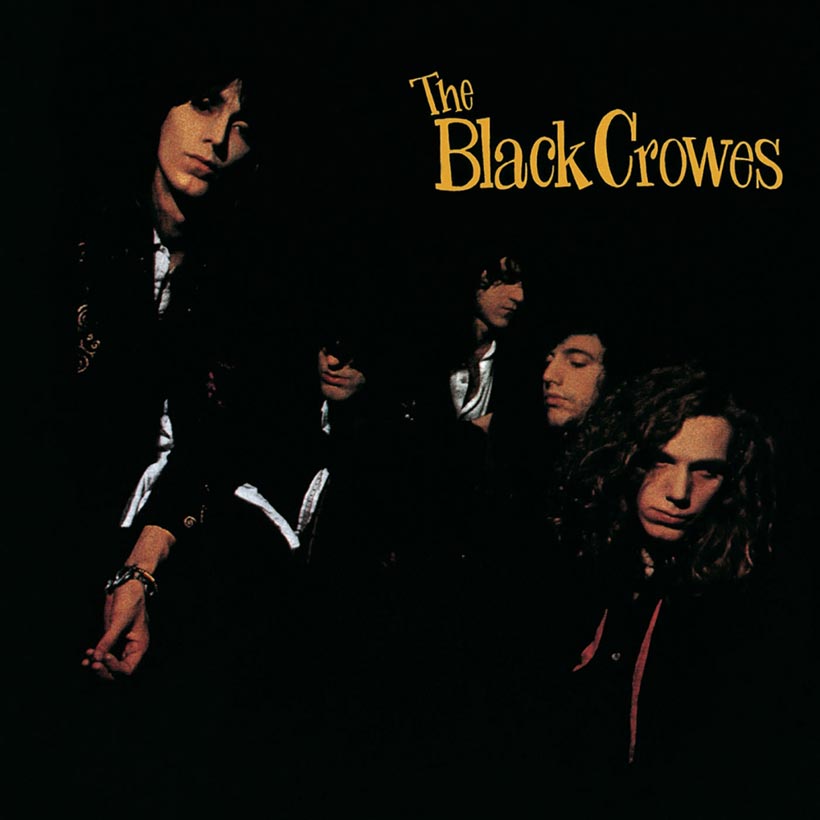
Chris Robinson. Hailing from Georgia,Chris Robinson grew up with the Faces and the Rolling Stones as mentors. With the swagger of Rod Stewart, his band, The Black Crowes, burst onto the scene in 1989 with their debut, “Shake Your Money Maker”. The record was a breath of fresh air as grunge was taking over the airwaves. The stripped down music on the record yielded such classics as “Twice As Hard,” “She Talks to Angels,” “Jealous Again” and the Otis Redding classic, “Hard to Handle.” Robinson’s stage presence was quickly compared to Mick Jagger as he strutted like a rooster. With brother Rich on guitar, the band had a bluesy feel which also drew comparisons to the Stones.
As they emerged on the scene in their paisley-printed tunics and born-again hippie attire, people didn’t know what to make of them at first – as they defiantly claimed to save rock’n’roll. Shake Your Money Maker went on to sell more than 5 million copies, reaching triple platinum status and earning the group the Best New American Band distinction by Rolling Stone readers.
While it seemed like they came out of left field, the success of the Crowes was anything but instant. Chris and Rich Robinson initially formed the band in 1984 while in high school in Marietta, Georgia and went by the unfortunately named Mr Crowe’s Garden.
The brothers went through three drummers and half a dozen bass players between their ’84 debut as Mr Crowe’s and the summer ’89 sessions for Shake Your Money Maker. While they initially dabbled in 60’s psychedelic pop and classic southern rock, they gradually turned to the 70s-era blues-rock that would define the group’s eight studio albums.
Cut to the summer of ’89. With a new sound and new lineup in lead guitarist Jeff Cease, bassist Johnny Colt and drummer Steve Gorman, the band headed into the studio to start sessions on Money Maker. George Drakoulias, a former A&R rep for A&M Records turned producer for Def Jam, not only produced the record but also was responsible for scouting them in the first place and securing the record deal. Having studied at the Mick Jagger school of strutting, Robinson made for quite an charismatic frontman and Drakoulias saw potential.
The Crowes were always conspicuous crate diggers and ardent students of music history. They even named Shake Your Money Maker after a song by legendary blues guitarist Elmore James. One doesn’t have to listen hard to pick up the breadcrumb trail of influences ranging from 60s and 70s groups like Aerosmith, The Rolling Stones, the Allman Brothers, to Faces . In fact, they even recruited Allman Brothers keyboardist Chuck Leavell to play piano and organ on most of Shake Your Money Maker‘s tracks.
Picking up where their predecessors left off, the Crowes were equally adept at blending rock, soul, country and gospel into something that felt new and electric. With swagger to spare, the very first track opens the album as a declaration and a promise to rock ‘Twice As Hard’.
From the screeching sounds of a car crash on ‘Thick N’ Thin’ to Rich Robinson’s wondrous dexterity on ‘Struttin Blues’, the whole album has that lighting in a bottle feeling and the raw energy of a live band who can’t be contained. But the real success of the album relied upon a pair of No.1 mainstream rock singles, ‘She Talks to Angels’ and ‘Hard To Handle’, which reached number one on the Billboard Album Rock Tracks chart and No.26 on the Billboard Hot 100.
The album isn’t all boogie rock and hard rock riffs, there are some quieter moments with the weary and wistful ‘Sister Luck’ and ‘Seeing Things’ which both show off the brothers’ lyricism and Chris Robinson’s whiskey worn vocals. Several of the songs on the album, including ‘Could I’ve Been So Blind’ and the surprisingly affecting ballad ‘She Talks to Angels’, come from the band’s original incarnation when they were just teens.
Unaffected by the critics, Robinson forged on as the band released their sophomore effort, “The Southern Harmony” and Musical Companion, which hit the number one spot on the American charts and spawned the hits “Sting Me” and “Remedy.” The band’s next release, Amorica, was quick to please critics, but with the grunge movement in full swing, the record only sold 500,000 copies. While the group would release three more records, their popularity was in question, and they disbanded in 2002 only to reform in 2005, having released three albums. Now considered classic rock, they have been unable to capture the spark of their earlier work. Whether with the Crowes or as a solo act, Robinson continues to perform to the delight of fans.
In the story cycle of Andy Shauf’s new album “The Neon Skyline”, “Where Are You Judy?” is the inciting incident: Shauf’s lonely barfly discovers his ex-girlfriend is back in town, and gets it in his head that he needs to see her again. You hardly need the other songs on the record to get a complete experience of it – to be honest, given that I like this song more than the others and I prefer not following up on where the character goes from here, I prefer it on its own. Shauf conveys a lot of information with economical language, first sketching out the character’s romantic notion of why his relationship with Judy ended, i.e., that she was enticed away by the possibilities of flashy experiences somewhere else. He fantasizes about her giving him a call, telling him that she got bored of all that, that what she was chasing instead of staying with him was empty. And, by extension, that what they had together…that was fulfilling. The final chorus turns that flash of egocentric optimism inside-out without changing a word.
Instead of wondering where she literally is in the moment, he’s flashing back to her lying in bed with him, her mind a million miles away. “Where are you, Judy?”
Imagine going to a gig in some club, standing in front of the stage as the band kick off, and then their sheer sonic force grabs a fistful of your shirt and slams you against the back wall. That, my friends, is what 1992 live album King Kingby LA band The Red Devils sounds like. No kidding – this is an animal of an album.
This band used to play live in Los Angeles in all these little clubs and Rick Rubin loved them. So he just recorded them live in this club called the King King. The band sound like they’re on fire. You can hear the whole atmosphere of the club. You’re there, you’re with them, you can smell it. As for the band, Lester Butler was just one of the greatest ever harmonica players. He sings into a bullet mic while playing. The guitarist Paul ‘The Kid’ Size was only 21 but he was unbelievable for his age. In fact the whole band were amazing players.
A chug of harp, a slash of rough guitar, a rock solid beat – and The Red Devils are off and running with opening track ‘Automatic’. Then harp guy Lester Butler starts hollering, and with some rock’n’roll piano thrown into the mix their signature sound is laid bare. The following ‘Goin’ To The Church’ ups the tempo and the ante, with Butler testifyin’ away fit to bust in between stabs of harp that duel with lead guitar licks from Paul ‘Kid’ Size.
Willie Dixon’s ‘She’s Dangerous’ is a classic stop-time riff affair in the manner of ‘Mannish Boy’, but sounds like Feelgood at their edgiest best, with Butler telling of a woman who’s “36-24-26, an’ gotta a big ol’ bag o’ tricks”. It sounds like they’re just about keeping themselves in check, but then, just as Butler is letting rip on harp, Size weighs in underneath him with a descending riff, and – BAM, they find another gear. It’s simple, but it’s brilliant.
On Billy Ray Arnold’s ‘I Wish You Would’ they do actually tone it down a tad, though as it actually ratchets the tempo up a notch with a Bo Diddley style beat from drummer Bill Bateman, it’s like keeping a hungry hound on a leash. They manage to keep the beast under control again on Sonny Boy Williamson’s‘Cross Your Heart’, but it still has the fever of some early Zep blues wailing.
On another Willie Dixon number, ‘Tail Dragger’, Size cuts in with a jagged intro while fellow guitarist Dave Lee Bartel lays down the classic riff. Butler adds his own lyrics, bawling his appreciation for his baby, before Size cuts loose again with a solo that’s sweet and decorous in exactly the same way that razor wire isn’t. And that’s just the preamble to the
The group-penned ‘Devil Woman’, which is simply magnificent.Stomping drums from Bateman dig the foundations for a ringing, repetitive guitar riff, leading to another wild guitar solo, and then when Butler takes a turn on harp they end up slamming their way to a finish with a flurry of combination punches.
Butler’s composition ‘No Fightin’’ sets off with a steady, throbbing rhythm, but if you think it’s time for a breather, think again. He takes off on a supercharged harp solo that elicits whoops of delight from the crowd. Size takes over on guitar and tries to outdo him, and then when he’s done – you find that steady rhythm from Bateman and bass player Johnny Ray Bartel has been lurking underneath all along. And not satisfied with that they take on the Wolf’s ‘Mr Highway Man’, and make absolute mincemeat of it. Butler seems to be busting a gut just to make himself heard over the battling guitars and rhythm section, till it grinds to a halt, as if the song itself is exhausted. And maybe they are too, because they tone it down to gale force proportions on ‘I’m Ready’ and Little Walter’s ‘Quarter To Twelve’, the latter a comparatively lazy instrumental in which the harp and guitar sound like a couple of world weary but still stoked and argumentative guys at last orders. And there’s still room for Butler to unleash a tension-filled repetitive harp blast that is entirely bonkers.
The album closes with some boogie in the form of Junior Wells’ ‘Cut It Out’, evidently situated just before a break in their set, and a swinging piece of boogie on which they relax and let their hair hang down rather than attempting to do GBH to the audience. Aptly, Butler offers up a harp solo based on ‘The Last Post’.
A more-fitting sentiment we cannot conjure and is the perfect stage banter quote from Jack White to introduce the triple-LP live recording culling the best of the best from the Raconteurs recent three night stand at the legendary Cain’s Ballroom in Tulsa, Oklahoma from October 2019.
As the Raconteurs are allegedly the first band to ever sell out three consecutive shows at Cain’s Ballroom, it was only fitting to mark the occasion by recording each night, culling only the best of each of those performances, and fusing them together for a career-spanning, masterwork of an album.
Highlighting recent entries in their catalog like the infectious “Help Me Stranger” and the whirling “Bored and Razed” while paying deference to momentous sing-alongs like “Carolina Drama” and “Steady, As She Goes” to absolutely mind-bending, room-levitating blues expression via “Blue Veins” and even then you’re only just scratching the surface.
Captured at the pinnacle of the band’s touring behind their chart topping album Help Us Stranger, the electrifying live performances place a raw, unbound energy behind the entire breadth of the band’s catalog, including gems from their 2008 LP Consolers of the Lonely and their 2006 debut Broken Boy Soldiers.
Housed in a magnificent tri-fold jacket and appropriating the Matthew Jacobson-designed artwork which highlights the Art Deco frieze of the Tulsa Fire Alarm building (which was used for the three Cain’s concert posters) and pressed on vibrant copper, green and black colored vinyl…the whole shebang is truly something to behold.
The fitting companion piece to this explosive 3xLP is the intimate performance of Raconteurs’ dual frontmen Brendan Benson and Jack White performing as a duo on July 9th 2019.
Shot at Third Man Records Cass Corridor storefront on White’s 44th birthday, the jam-packed room still only fitting 300 attendees, Brendan and Jack laid out sparse, explorative takes on not only Raconteurs songs, but other classics from their expansive back catalogs. Performances of Raconteurs faves like “Only Child” and “Now That You’re Gone” sound unlike any other version before or since, while the vibe propelling songs like the White Stripes “SugarNever Tasted So Good” or Benson’s “Metarie” are reminiscent of times back when these two guys would just goof around in Detroit dive bars while a handful of uninterested patrons pretended to not be bothered by their racket.
About that…as a bonus to the mutli-camera, HD, Blu-Ray, 4k, 16-channel audio with super crystal clear capture of the above-mentioned performance, it felt fitting to tack on the ultra lo-fi, camcorder and condenser microphone capture of the first-ever performance of Jack White and Brendan Benson together. Playing for free at the Garden Bowl Lounge in Detroit on March 14th, 1999, the gig shows the two as if without a care in the world, having a blast and rolling through songs of which only TWO had been released by that point. An intimate, charming artifact of a simpler time.
And for the record, Pink Floyd’s “Fearless” was performed at BOTH of these shows, twenty years apart but no less magnificent.
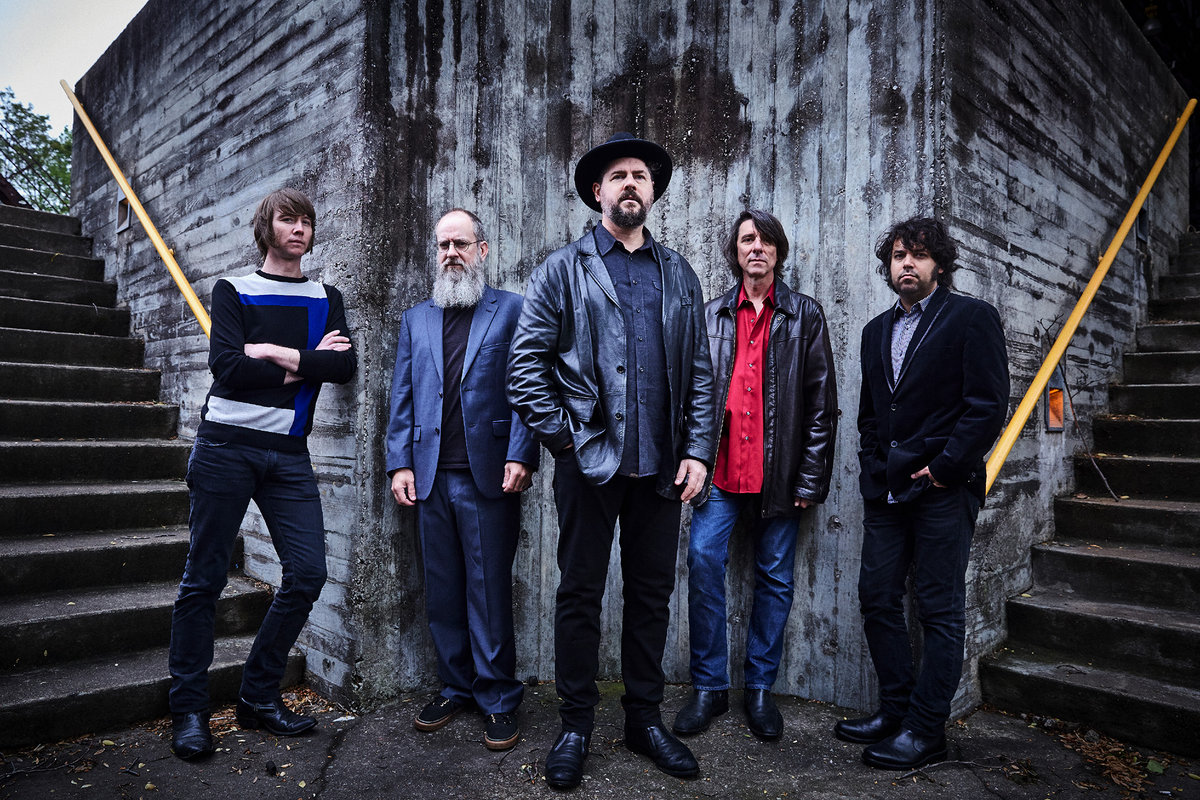
Drive-By Truckers’ 12th studio album and first new LP in more than three years – the longest gap between new Drive by Truckers albums – “The Unraveling” was recorded at the legendary Sam Phillips Recording Service in Memphis, TN by Grammy® Award-winning engineer Matt Ross-Spang (Jason Isbell, Margo Price) and longtime DBT producer David Barbe. Co-founding singer / songwriter / guitarists Mike Cooley and Patterson Hood both spent much of the time prior doing battle with deep pools of writer’s block.
The songs that eventually emerged are among Drive-By Truckers’ most direct and pointedly provocative, tackling the myriad horrors of our new normal through sincere emotion and unbridled heart. Indeed, Armageddon’s Back in Town takes a whirlwind joyride through the whiplash of events we collectively deal with each day while the concluding Awaiting Resurrection dives headfirst into the despair and pain roiled up by these troubled times.
The remarkable songcraft found on The Unraveling receives much of its musical muscle from the sheer strength of the current Drive-By Truckers line-up, with Hood and Cooley joined by bassist Matt Patton, keyboardist / multi-instrumentalist Jay Gonzalez, and drummer Brad Morgan – together, the longest-lasting iteration in the band’s almost 25-year history. The LP also features a number of special guests, including The Shins’ Patti King, violinist/string arranger Kyleen King (Brandi Carlile), and North Mississippi All-Stars’ Cody Dickinson, who contributes electric washboard to the strikingly direct Babies In Cages.
Squirrel Flower’s music is ethereal and warm, brimming over with emotional depth, at the heart of it lives Ella Williams’ haunting voice and melancholic, soulful guitar.
Squirrel Flower – the moniker of Ella O’Connor Williams – announces I Was Born Swimming, her debut album, out January 31st on Full Time Hobby. The album’s title was inspired by Williams’ birth on August 11th 1996 – the hottest day of the year – born still inside a translucent caul sac membrane, surrounded by amniotic fluid. Throughout the 12 songs, landscapes change and relationships shift. The album’s lyrics feel like effortless expressions of exactly the way it feels to change – abstract, determined and hopeful. Squirrel Flower’s music is ethereal and warm, brimming over with emotional depth but with a steely eyed bite and confidence in it’s destination. The band on I Was Born Swimming plays with delicate intention, keeping the arrangements natural and light while Williams‘ lead guitar is often fiercely untethered.
The album was tracked live, with few overdubs, at The Rare Book Room Studio in New York City with producer Gabe Wax (Adrienne Lenker, Palehound, Cass McCombs). The musicians were selected by Wax and folded themselves into the songs effortlessly. At the heart of the album lives Williams’ haunting voice and melancholic, soulful guitar. The sounds expand and contract over diverse moods, cutting loose on the heavier riffs of ‘Red Shoulder’. “‘Red Shoulder’ is a song about destabilisation and dissociation,” explains Williams. “Something soft and tender becomes warped and sinister, turning into sensory overload and confusion. How can something so lovely turn painful and claustrophobic? The song ends with a heavy and visceral guitar solo, attempting to reground what went awry.” Williams comes from a deep-rooted musical family tree. Her grandparents were classical musicians who lived in the Gate Hill Co-op, an artistic cooperative from upstate New York that grew out of Black Mountain College.
Ella’s father, Jesse Williams, spent most of his life as a touring jazz and blues performer and educator, and lends his bass playing to the album. Growing up in a family of hard working musicians fostered a love of music and started Williams down her own musical path. As a child, Williams adopted the alter ego of Squirrel Flower. A couple years later, she began singing with the Boston Children’s Chorus while studying music theory and teaching herself to play the guitar.
As a teen, she discovered the Boston DIY and folk music scenes and began writing, recording, and performing her own songs, now returning to Squirrel Flower as her stage name. Sheer determination and belief quickly saw her make a name for herself in this newly discovered scene. Doing everything from making videos and artwork to the production of her music herself she recorded two EP’s and began touring, appearing on bills with the likes of Moses Sumney, Lucy Dacus, Frankie Cosmos, Jay Som, Julien Baker, Soccer Mommy and Big Thief. During this time the signature artful songcraft heard on I Was Born Swimming was formed.
With its scuzzy guitar and gentle percussion, it’s the dreamy, discombobulating sound of Lana Del Rey cosplaying Pavement.” – The Observer
“SF’s voice is both sweetly pure and possessed of a quiet strength, in the manner of Angel Olsen or Adrienne Lenker.” – Uncut
“There’s something of Springsteen’s Nebraska-era echoing loneliness…Williams truly marks out her ground as one of 2020’s most engaging new artists.” – Q
“Ella Williams’ gorgeous debut, hewn from classic rock and folk.” – MOJO
Sonny Vincent, known as the founding member of New York City punk heroes, The Testors has unearthed a collection of never-before heard recordings from his proto-punk days with this new LP collection. Compiling unreleased tracks from Distance (1969-71), Fury (1972), and Liquid Diamonds (1973-75), as well as one of the earliest Testors demos from 1976, this LP collection shines a light on one of New York City’s darkest corners of punk history.
The Sound were an English post-punk band, formed in South London in 1979 and dissolved in 1988. They were fronted by Adrian Borland, and evolved from his previous band, the Outsiders. While never commercially successful, The Sound have long been championed by critics. The original lineup of the Sound consisted of Adrian Borland (vocals, guitar) and Graham Bailey (bass guitar), both ex-Outsiders, along with Mike Dudley (drums) and Benita “Bi” Marshall (keyboard, saxophone, clarinet). While not a member, ex-Outsider Adrian Janes would contribute ideas and co-write lyrics to the Sound’s music
The Sound made their debut with the EP Physical World in 1979, released on manager Stephen Budd’s Tortch label. It was favourably received by NME and received airplay from DJ John Peel. More of their early recordings were later released as the album Propaganda in 1999.
“Left all alone, I’m with the one I most fear,” Adrian Borland sang on “I Can’t Escape Myself,” the first and best song on The Sound’s 1980 debut album “Jeopardy”, and as conveyed in the 2016 Adrian Borland documentary Walking in the Opposite Direction which just became available to stream on-demand this year that line was more than your typical goth posturing. Adrian was truly his own worst enemy, and he battled serious mental health issues and was in and out of psychiatric hospitals for decades before ultimately taking his own life in 1999. His health issues were at least part of the reason that Adrian never gained the popularity that he truly deserved, but as his father Bob Borland said in Walking in the Opposite Direction, even if The Sound or any of Adrian’s other projects had hit it big, “I’m not sure that Adrian could’ve handled it.”
The documentary traces Adrian’s career from his days fronting the punk band The Outsiders in the late ’70s to fronting the post-punk band The Sound in the ’80s to his solo career in the late ’80s and ’90s, with which he dabbled in jangle pop, folk, alternative rock, psychedelic rock, and more. If you’re a fan of any of Adrian’s bands, I highly recommend watching the documentary and if you’re new to his music, read on for a little primer on Adrian Borland, a natural-born songwriter who really deserves to be better-known.
THE OUTSIDERS Adrian’s first “real” band was The Outsiders (though around that same time, he apparently had a band with the late Tim Smith of Cardiacs that lasted for like two shows), and The Outsiders rivalled just about any of the great early punk bands. Their first album, 1977’s “Calling on Youth” recorded mostly by Adrian’s father in their home and released on their own Raw Edge label — wasn’t quite there yet, but the potential is overwhelming. Rippers like the title track and “Hit and Run” had all the speed and raw energy you’d expect from ’77 punk, and even that early on, you can hear the power and distinctiveness in Adrian’s voice. That’s really one of the major things that would set The Sound apart in the increasingly crowded post-punk genre, and that makes any Adrian Borland song hit you in the gut, even when it’s not his finest work. He just had one of those voices that stops you in your tracks every time he opened his mouth to sing.
The rippers were fine examples of early punk, but Calling On Youth also had stuff like the haunting acoustic jangle of “Start Over” and the ballad “Walking Through A Storm” that hinted at the music Adrian would make much later on in his career. It’s not exactly the most cohesive album, but it’s a solid teaser of the many sides of Adrian Borland’s music that would get perfected later on. The Outsiders‘ second and final album, 1978’s Close Up, was much more cohesive, and also a pretty major leap from the debut. It was done in a real studio, and it’s one of the true classic albums of ’70s punk. Like a lot of punk albums from that era, it opens with its best song — the catchy, anthemic “Vital Hours” — but the rest of the 11-song album wasn’t too shabby either, and it still sounds urgent and timeless today.
The Outsiders broke up in 1979, and Adrian went to form a few other projects. He and Outsiders bassist Graham Bailey formed the gothy minimal synth duo Second Layer, who released one great album (1981’s World of Rubber) and a couple cool EPs/singles during their short run. He also formed the even shorter-lived The Witch Trials, who were fronted by the Dead Kennedys’ JelloBiafra (and also included Morgan Fisher of Mott the Hoople), and who released one four-song EP that finds the middle ground between theatre, horror films, industrial, and political commentary (it’s wild to hear 1981’s “The Tazer” in the context of 2020’s protests against police brutality). And most significantly, he formed The Sound, also including Graham Bailey on bass as well as drummer Michael Dudley and keyboardist Belinda Marshall (who was also dating Adrian at the time). Their debut album, 1980’s “Jeopardy”, is among the finest post-punk records ever recorded, and it’s both confusing and criminal that it’s so overlooked today.
THE SOUND
“Jeopardy”, their debut album, was recorded inexpensively and released in November 1980 to critical acclaim; it received 5-star reviews from three major music publications, NME, Sounds and Melody Maker. Jeopardy is a caustic jolt of a debut that startles and fascinates. With the plaintive intro of the rhythm section, a spidery guitar, and incidental synth wobbles. “I Can’t Escape Myself” begins the album unassumingly enough until reaching the terse, one-line chorus that echoes the title of the song; suddenly, from out of the blue, all the instruments make a quick, violent, collective stab and retreat back into the following verse as singer Adrian Borland catches his breath.
The reverb placed on his voice is heightened at just the right moments to exacerbate the song’s claustrophobic slant. The ecstatic onward rush of “Heartland” forms the back end of a dynamic one-two opening punch, with a charging rhythm and blaring keyboards leading the way. Much later on, near the end, “Unwritten Law” comes along as one of theSound’s best mid-tempo mood pieces – If you’re thinking this sounds like someone’s telling you that you need Jeopardy just as much as you need Kilimanjaro or Unknown Pleasures or Crocodiles, you’re right again.
Following the album, Marshall left the band and was replaced by Colvin “Max” Mayers, previously in The Cardiacs. For their second album, the band worked with producer Hugh Jones.
“From the Lions Mouth” was released in 1981, to further critical acclaim, though their fanbase hadn’t extended beyond a cult following. The Sound went into the studio with talented producer Hugh Jones on board to accentuate the band’s winning atmospherics. As a result, the sound is fuller, less pungent. And speaking of winning, the snake-charming opener “Winning” is like a dash of cold water in the faces of all the bands that were wallowing and withering away at the weeping well: “I was going to drown/Then I started swimming/I was going down/then I started winning.”
This, in a sense, exemplifies the point that the Sound were not mopes. Most of the record has an effortless thrust to it, and only occasionally — for maximum effect — does the Sound whip out the heavy artillery. If “The Fire” sounds too bombastic and pummeling, listen closer. The bass is the lead instrument, the keyboards are just as prominent as the guitars,
Borland also released a collaborative EP that year with Jello Biafra under the name the Witch Trials.
During the early 1980s, The Sound toured throughout Europe, covering the UK and much of the continent. Like their contemporaries the Comsat Angels (whom they toured with in 1981), The Sound recorded several Peel sessions and performed the single “Sense of Purpose” on the TV show Old Grey Whistle Test.
In the same year, The Sound released a live EP titled Live Instinct.
Korova Records pressured Borland and his bandmates to come up with a more commercially successful third album, in addition to shifting the Sound from Korova to WEA proper. In an act of rebellion, they responded with “All Fall Down” in 1982, an album that took them even further away from the mainstream. Drummer Mike Dudley explained:
We thought [the label wasn’t] giving us the support that we were due and that if they really wanted a commercial album, they had got to put plenty of money behind it, which with both “Jeopardy” and “From the Lions Mouth” they hadn’t really done .So when they turned around and said, ‘The solution is for you to write more commercial songs’, we thought, ‘Fuck you’, and went ahead and produced All Fall Down.
“All Fall Down” was panned by critics upon its release. Upon receiving the album, WEA decided not to promote it, and the band and the label parted company. The Sound responded to label demands and simmering internal pressures with a record that challenged devout fans as well. All Fall Down is one of those maligned records where some fans bailed but a select few.
In 1983, The Sound released a joint EP in collaboration with singer Kevin Hewick “This Cover Keeps Reality Unreal”, on Cherry Red Records.
The band were approached by several labels, ultimately signing with independent label Statik in 1984. They released an EP, Shock of Daylight, which received favourable coverage from the music press. This was followed a year later by the full-length Heads and Hearts which finds them riding the wave of optimism — or maybe it would be better to say enthusiasm, that shot through them as they found themselves revitalized after parting ways with a major label. While nothing here is as sparklingly “up” as the Shock of Daylight EP’s “Golden Soldiers,” and while the lyrics don’t exactly deal with the happier elements of romantic relationships, there’s a sweepingly hopeful sensibility apparent through the arrangements and Wally Brill’s bold, crystalline production.
By 1985, Borland had begun to exhibit symptoms of mental illness, perhaps worsened by the frustrations of his career.
Not long after the 1985 release of a live album, “In the Hothouse”, Statik went into bankruptcy. The band produced one more album, “Thunder Up”, on the Belgian label Play It Again Sam.While touring Spain in 1987, they had to cancel several appearances after Borland suffered a complete breakdown. Dudley recalled bringing an incoherent Borland home on a plane.