If any band appeared poised to carry on the mantle of the Beatles at the dawn of the ‘70s, it was Badfinger. Signed to the Beatles’ Apple Records label, the British quartet—Pete Ham, Tom Evans, Joey Molland and Mike Gibbins–had already scored two Top 10 hits by 1971. The first, an irresistible, bubblegum-y tune titled “Come and Get It,” had been written and produced for the band by Paul McCartney. The second, a punchy burst of pop-rock titled “No Matter What,” was penned by Ham, whose extraordinary song writing skills were fast becoming evident.
Such was the backdrop for “Straight Up”, Badfinger’s third LP. Released in the U.S. in December of 1971, the album is rightly considered a landmark in power pop. “That’s what the kind of music we made came to be called,” said Molland, speaking about the “power pop” tag. “We viewed ourselves as continuing in the tradition of the music we grew up with, which was everything up to and including the Beatles. That meant Welsh traditional songs, folk songs, American rock and roll and American vocal bands. We gave the music a hard edge, because we liked rock and roll, but we also made the songs melodic.”
Sessions for Straight Up got underway in January 1971 at Abbey Road Studios, with Beatles engineer Geoff Emerick assisting Ham and Evans with production. Under pressure to work quickly—a two-month spring tour in America loomed—the group completed 12 tracks by March. Powers-that-be at Apple rejected the recordings as “too crude,” however, and George Harrison was brought in to oversee a new round of sessions beginning in late May.
Harrison, an avid Badfinger fan, had already worked extensively with the group, enlisting all four members a year earlier as part of his ensemble on the 1970 opus, All Things Must Pass. “[Of all the Beatles], he was definitely closest to the band,” Molland later told Vintage Rock. Harrison’s overarching plan for Straight Up was to come up with something “more sophisticated.”
“George wanted to smooth things out,” Molland recalled. “He wanted to make more of an Abbey Road-styled album. He took our original version of Straight Up, went through the songs and lyrics, and arranged them very much as he did his own music. And then he had us play those arrangements. It turned out great, although to this day I think some of the original versions are closer to what the band was about.”
Badfinger’s “Day After Day”
Molland went on to praise Harrison as an “extremely pleasant” collaborator. “He didn’t act like a ‘rock star’ or a Beatle,” he said. “It was all very comfortable. He had no qualms about strapping on his guitar and playing a bit with us. In fact, I think he enjoyed doing that, as much as he enjoyed everything else. He worked on lyrics with us, and he got excited about the songs as they went down. He started sensing that it could be a hit record.”
Indeed, the majestic bridge on “Straight Up’s” signature ballad, “Day After Day,” consists of a slide-guitar duet played by Harrison and Ham. “Pete and I were in the studio, working out the parts, and George came in and asked if we minded if he played on it,” Molland remembers. “Of course we said, ‘No, we don’t mind!’ I gave him my guitar, and he just went to work on it.”
All told, Badfinger completed five songs with Harrison—“I’d Die Babe,” “Sweet Tuesday Morning,” “Suitcase,” “Name of the Game” and “Day After Day.” Other personnel involved in the Harrison sessions included Leon Russell, whose piano work figures prominently in “Day After Day,” and Klaus Voormann, who contributed electric piano to “Suitcase.” Russell added guitar parts to the latter song as well.
Unfortunately, the sessions with Harrison screeched to a halt in late June, when the former Beatle flew to Los Angeles to work with Ravi Shankar. While in L.A., Harrison agreed to stage the Concert for Bangladesh, which effectively ended any chance of his resuming production work on “Straight Up”. With Harrison’s blessing, Todd Rundgren was brought in to complete the sessions. Despite (or perhaps due to) ongoing tension between Rundgren and the band, the project was completed in just two weeks. High points from the Rundgren sessions included “Take It All,” a Ham-written meditation on Badfinger’s performance at the Harrison charity concert; and “Baby Blue,” a fuzz-riff-driven masterpiece that’s since become a classic-rock staple.
Molland was pleased with the results, but he was also determined that Badfinger not lose its edge and become a pop lightweight. “We had pop hits, sure, and we were proud of them, but we wanted to be known as a rock band,” he later said. “We didn’t want to be one of these twee groups like Marmalade. We placed a lot of value in having great songs, but when it came time to hit the stage, we played two-hour shows and got into jams, the whole thing. If you went to see Badfinger, you got a rock show; it wasn’t just about seeing this group that had some songs on the charts.”
Straight Up, of course, went on to achieve considerable commercial success—including a 32-week run on America’s Top 200 Album chart. The single “Day After Day” peaked at #4 on the Hot 100 chart, and its follow-up, “Baby Blue,” fared nearly as well. Reviews of the album were generally favourable, and more importantly, the LP’s legacy and far-reaching influence has endured.
All of which makes the overarching Badfinger story all the more sorrowful.
Sadly, what should have been a glorious and lengthy future for Badfinger ultimately became a tragedy of Shakespearean dimension. Victimized by unscrupulous management, the group split up just three years after Straight Up was released. Two of the band’s founding members—Pete Ham and Tom Evans—eventually took their own lives. For their many fans, the sorrow lingers, but nothing can diminish the brilliance of what Badfinger accomplished.
“We were forever striving to do something great,” said Molland. “We paid close attention to what our peers were doing, to what the bands of our era were doing, and we wanted to be as good as any of them. All these years later, the music of a lot of those bands hasn’t stood the test of time, but the Badfinger stuff carries on. I think Pete and Tom would be surprised.
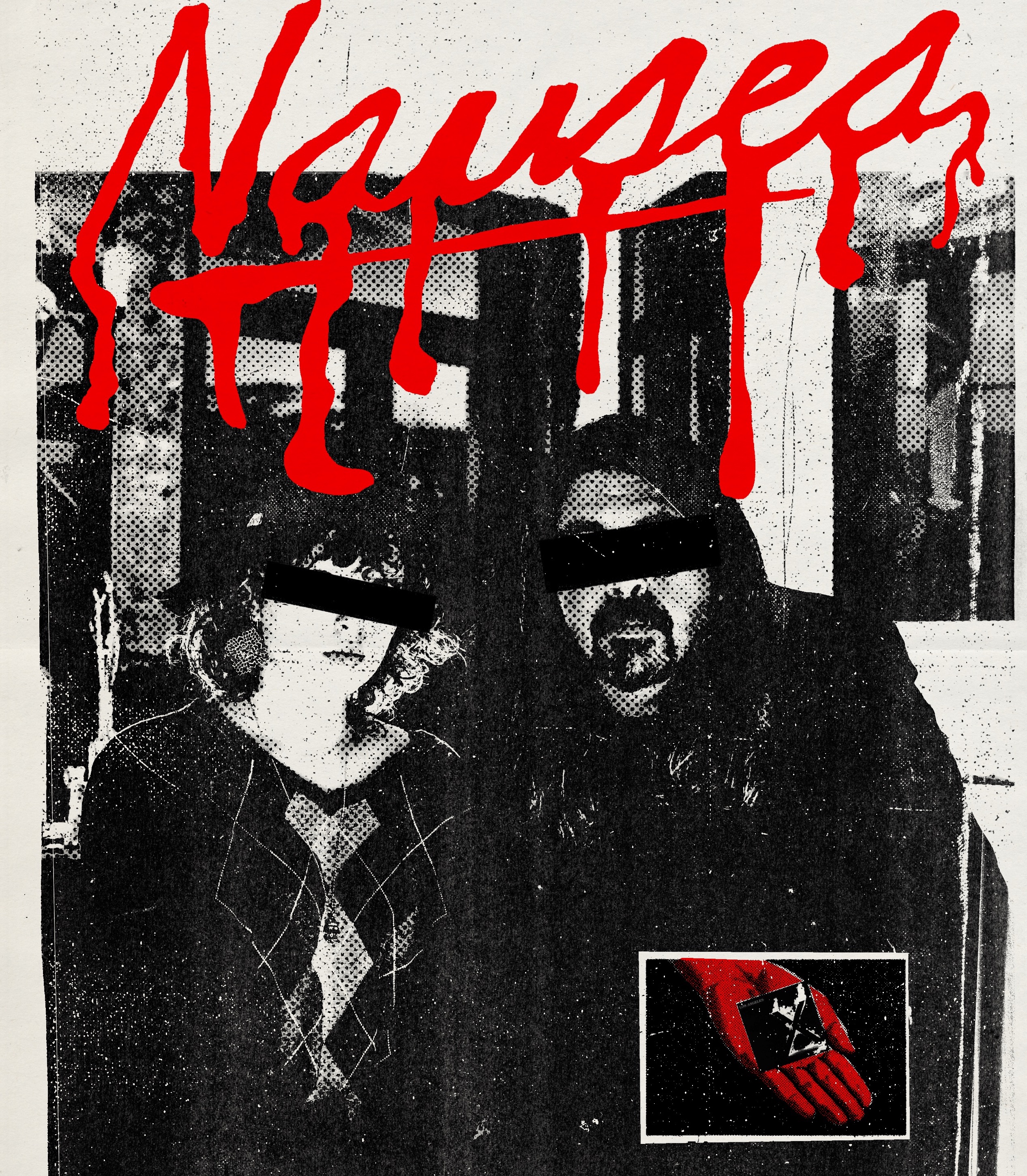
Dave Grohl has released a cover of “Nausea,” originally by Los Angeles punk icons X, that features his daughter Violet on lead vocals. The Foo Fighters leader is including the song in his upcoming documentary, What Drives Us. In a lengthy Instagram post, he explained how the family ties extend beyond that direct connection.
Grohl said he used to return from Nirvana tours and look forward to reading letters from his grandmother. On one occasion, she sent him a newspaper clipping about X, naming drummer D.J. Bonebrake, and wrote: “Dear David, you might be related to this young man!” Since Bonebrake was a family name, the connection was possible. So, Grohl later invited the drummer to a concert, where they compared notes. “Long discussions of distant relatives and our historic family tree ensued, and by the end of the night we parted ways feeling a bit more connected,” Grohl said.
The punk classic is the latest cover from the family pair. In January 2020, Violet joined her dad, the other surviving members of Nirvana – Krist Novoselic and Pat Smear – and Beck and St. Vincent onstage performing “Heart-Shaped Box” at the Art of Elysium’s Heaven gala. The teenager also did some backing vocals on the song “Making a Fire,” from Foo Fighters’ 2021 album, Medicine at Midnight,
From the upcoming What Drives Us documentary, Dave and Violet Grohl release their first collaboration “Nausea” – a tribute to X and the Bonebrake heritage.
NewDad emerged from Galway at the beginning of last year, self-releasing their first string of songs. The Waves EP is their debut EP and features the BBC 6Music A-list singles “I Don’t Recognise You” and “Blue”. The six track EP is available on limited edition clear vinyl on Fair Youth. Our fifth single ‘I Don’t Recognise You’ !!.
NewDad are from Galway, Ireland. Consisting of Julie Dawson, Áindle O’Beirn, Sean O’Dowd, and Fiachra Parslow, NewDad have been making music since their high school days, and have been releasing tracks for the past two years. They all went to the same high school, and formed ultimately because we needed something to do for final exams. Sean was a year above us, and was studying music tech in college, so we made music demos together, and the rest is history. This was our first time recording in a proper studio. We did “Blue”, “I Don’t Recognise You”, and “Slowly” on our own as demos. Then, with those demos and the remaining tracks, we got to use the studio space with pedals, and various other bells and whistles – for “I Don’t Recognise You”, specifically, we even got to use a mellophone!.
The band’s sound is described as feedback-drenched guitars meets incredible pop melodies, and is resonant of Soccer Mommy, Snail Mail, and Sharon Van Etten. “The band oozes personality with cynical but honest lyrics, colourful visual components, and poignant messages about coping with the (albeit painful) formative experiences,” Bloggers have recently wrote in further praising vocalist Julie Dawson “whose spunk can be heard just by the way she breathes.”
It’s really blossoming at the minute. There’s been a lot more attention on music coming out of Ireland with bands like Fontaines D.C.. Even in Galway there’s a really good Punk band called The Turnstiles. Irish people have such a unique perspective being from a tiny island that has remained pretty insular, yet very kind hearted, so it’s really a new sound as well. For so long Irish music focused on outside influences from the US and the UK but now it’s culminated with Irish culture into its own thing. We feel proud to be Irish and considered amongst all these amazing artists, finally able to breakout.
NewDad emerged from Galway at the beginning of last year, self-releasing their first string of songs. The Waves EP is their debut EP and features the BBC 6Music A-list singles “I Don’t Recognise You” and “Blue”.
The six track EP is available on limited edition clear vinyl on Fair Youth.
As Melbourne-via-Tasmania outfit Quivers gear up to release their new album, “Golden Doubt”, in June, the four-piece have released their latest single, with “Hold You Back” arriving yesterday. Following on from “Gutters of Love”, Quivers’ new single is a refreshing piece of cinematic indie rock, with the upbeat nature reminiscent of genre heavyweights The Go-Betweens, R.E.M., or even Australia’s own Dappled Cities.
Pairing a driving backbeat, fuzzy guitar, and intoxicating strings, the group explain that the track is written about standing on the precipice of overwhelming opportunity, and what the future holds. “It is a song about being overwhelmed by someone, and somewhere, but also overwhelmed by the beauty of those strange, new experiences we used to have when travel was possible,” they note.
Having risen through the ranks in recent years, Quivers were set to see 2020 bring them a wave of international attention thanks to a planned 21-date US tour. While COVID quickly saw these dates canned, the group remained undeterred by such an inconvenience, instead focusing on their craft, with Golden Doubt set to arrive on June 11th.
As singer Sam Nicholson explains, the record and its title relates to previous personal tragedies band members have experienced, and the resilient nature it awakens inside of you.
The track also comes accompanied by a charming phone-filmed video for the track, which was shot and edited by the band while “on a 24-hour deadline”, and serves as “a sort of visual powerpoint presentation” for the song.
“Golden, because musically we daydream with the guitars of Teenage Fanclub and The Cure, the singing of The Roches’ sisters, the basslines of Another Sunny Day, and the drums of Lower Dens or Car Seat Headrest,” Nicholson states. “Golden Doubt, because hitting your thirties after losing people knocks you off balance for a while, but no longer caring what the world thinks is always a breakthrough feeling.”
While “Golden Doubt” will be released in June, Quivers are also set to hit the stage in Melbourne on Friday, April 23rd for a launch show in support of their previous single. Supported by Georgia Knight, the group will play two shows, with full details available below.
Quivers’ “Hold You Back” is out now, while the album “Golden Doubt” will be released on June 11th via Spunk Records.
“It was fun building it up from scratch and then letting it all hang loose in the long free-pop/jazz outro,” Juliana Hatfield says of her newly unveiled single “Gorgon” in an official statement. “Recording at home, there’s no one stopping me from indulging in every wacky musical whim that pops into my head.”
The propulsive, percussive track packs an enveloping sonic punch as the second offering lifted from the prolific singer-songwriter-instrumentalist’s forthcoming nineteenth studio album “Blood”, due in stores May 14th via American Laundromat Records as the follow-up to 2019’s pair of releases Weird and Juliana Hatfield Sings The Police.
Listen to “Gorgon” below and revisit the album’s lead single “Mouthful of Blood” And be sure to mark your calendars for Hatfield’s special live stream performance from Q Division Studios on Saturday, May 8th at 4PM ET.
“Blood” released via American Laundromat Records Released on: 22nd April 2021,
The first posthumous archival release from the ’88 touring band focuses on the historic last show Frank Zappa ever played in the U.S., at the Nassau Coliseum in Uniondale, NY, with live concert material taken from that show plus additional performances from Providence, RI and Towson, MD, all newly remixed from the 48-track digital master tapes. It features the first official release of “The Beatles Medley” along with over 25 unreleased performances and liner notes by FZ’s drummer, Chad Wackerman and Vaultmeister, Joe Travers. Available June 18th on stream/download; on 2-CD; or a 4-LP 180-gram black vinyl box set.
As Travers writes in the liner notes, “Start with the fulcrum of the 1981-1984 touring bands (Robert, Scott & Chad), bring back Ike Willis, add the Synclavier digital workstation, a 5-piece horn section with multi-instrumentalist Mike Keneally and you have what FZ famously described as “The Best Band You Never Heard In Your Life.” While saying “never heard” might have been a bit of hyperbole, it wasn’t far off as the short-lived band (four months of rehearsal in 1987/1988, followed by a tour from February through June 1988) only played a few dozen shows on the East Coast and Europe before disbanding. Nonetheless, the shows they did play together were electrifying and a masterclass in musicianship
With Zappa on lead guitar, vocals, and wielding his new obsession the Synclavier, he led the proceedings through a career-spanning set, backed by a stellar cast of veteran band members and newly added members: Mike Keneally (guitar, synth, vocals), Scott Thunes (electric bass, Minimoog), Ike Willis (rhythm guitar, synth, vocals), Chad Wackerman (drums, electronic percussion), Ed Mann (vibes, marimba, electronic percussion), Robert Martin (keyboards, vocals) and the cracking horn section of Walt Fowler (trumpet, flugel horn, synth), Bruce Fowler (trombone), Paul Carman (alto, soprano and baritone sax), Albert Wing (tenor sax) and Kurt McGettrick (baritone and bass sax, contrabass clarinet).
Zappa ’88: The Last U.S. Show includes all of this and many more highlights such as fan favourites, “Peaches In Regalia,” “The Black Page” “Inca Roads,” “Sharleena” “Sofa #1” and “Pound For A Brown.” It also includes a horn-laden cover of The Beatles’ “I Am The Walrus,” and the first official release of the highly sought after “The Beatles Medley,” which features the band performing the music of The Beatles’ “Norwegian Wood,” “Lucy In The Sky With Diamonds” and “Strawberry Fields Forever” with the lyrics completely changed to reflect the then-recent sex scandal of televangelist Jimmy Swaggart. The bawdy lyrics poke fun at the hypocritical minister and was part of Zappa’s agenda to demystify televangelists.
Just how Zappa felt it was important to rail against toxically prude self-appointed culture protectors and whatever hypocrisy or hypocrite rankled him that day, he was also a motivator of positive action, passionate about causes, especially voting rights, making it his mission to get his audiences to register to vote. With a presidential election looming, Zappa offered voter registration on the tour, aided by The League of Women Voters. Fans were encouraged to vote before the show or during a special 20-minute intermission in the middle of the two-hour plus concert, which would start with Zappa triggering the Synclavier to play a piece of music. In Uniondale it was “One Man, One Vote.” Notably, the version here is a different mix than the studio version released on Frank Zappa Meets The Mothers Of Prevention. Zappa 88: The Last U.S. Show kicks off with Zappa extolling the importance of voting and encouraging the unregistered to sign up at the show by registering someone live on stage. It was followed by a representative from Governor Mario Cuomo’s office reading a message congratulating “Mr. Zappa for the important work you are doing encouraging your audiences and others to register and vote.”
“Sadly after the European run was over,” as Travers pens in the liners, “Frank Zappa chose to disband the group and cancel the rest of the tour, reportedly forfeiting $400,000.00 in revenue and depriving additional audiences the opportunity to witness how special this group really was. With all of the time and money spent to prepare and promote the tour, not to mention the potential within the talented band and crew, now in 2021, it’s an even more historic loss considering FZ was to never tour again.”
Fortunately, Zappa’s final U.S. show, like so many others of his, was documented and can now be experienced in its glory more than three decades later.
As great as “The Who Sell Out” turned out to be — setting a standard as one of the first true concept albums as well as becoming viewed as both a pop-art masterpiece and the turning point in The Who’s career — even Pete Townshend thinks it could have been better.
“The songs we recorded in the six months after the album came out were better,” Townshend, the band’s guitarist and principal songwriter says. “If our label — who were also our managers, by the way had just waited, maybe it could have been our greatest album. It’s an interesting thought, isn’t it?”
Ultimately, of course, “The Who Sell Out” came to be seen as a one of the band’s best. Released in the December 1967, it elevated The Who, largely a singles band up to that point, into a league with the Beatles and the Rolling Stones.
“No one who saw The Who at that time could deny that they were the best live band going,” recalls Richard “Barney” Barnes, Whobiographer and Townshend’s art school roommate who also named the group. “Even the biggest Kinks fan, if the Kinks and The Who were both playing in town, would go see The Who over the Kinks. They were a real show when no one else was putting on a show. And that album catapulted them into that rarified company.”
Out now in a hugely expanded, super deluxe box set 112 tracks that include both the mono and stereo mixes of the original album, plus singles and B-sides from the era, as well as the band’s post-Sell Out /pre-Tommy recordings, and Pete Townshend’s demos from the period “The Who Sell Out” is nothing if not a band reinventing itself.
In place of the group’s early, My Generation-era mod leanings are a Swinging London pop-art sensibility, with Townshend’s most fascinating compositions up to that point linked together by advertising jingles and radio announcements paying tribute to mid-’60s England’s all-important pirate radio, all wrapped up in one of the greatest album sleeves from the golden age of rock and roll. In fact, in the context of the new box set, The Who Sell Out can now been seen as the origin story of everything The Who would later become in the aftermath of the huge success ofTommy, the band’s appearance at Woodstock and its Live at Leeds album.
But in 1967, as one of the most in-demand live acts in the world, The Who were running themselves ragged, shoehorning recording sessions in between a relentless schedule of shows, Barnes recalls. “How they accomplished anything is beyond me,” he says.
Meanwhile, Kit Lambert, who co-managed The Who with his partner Chris Stamp, had installed the band’s lead guitarist in an apartment in Knightsbridge, complete with a crude recording studio, where Townshend had begun exploring the art of song writing in just about every manner, if not with an eye toward writing hit singles, or even, necessarily, music for The Who.
“I think I was just writing for myself and hoped that if I wrote maybe 20 or 30 or, on a good run, 40 pieces of music, at least 20 would get recorded and then we could handpick maybe 10 to 12 for an album,” Townshend recalls. “It was like throwing shit at the wall.”
The process had yielded an undeniable classic, but not much else that Townshend deemed worthy of release.
“I would write for myself, to have fun with it, and even ‘I Can See for Miles’ is probably one of those songs that I wrote for me, not for the band,” he says.
The Who’s managers, Lambert and Stamp, also ran Track Records, the band’s label — a conflict of interest between the group’s creative and business sides.
“It wasn’t ethical, of course it wasn’t,” Barnes says. “But Kit and Chris didn’t think it was going to last — none of us did — and they had this great songwriter, and Keith Moon, who was a publicist’s dream, and they were doing what they could to keep things going as long as they could. But they were hugely important, as important as Brian Epstein was to the Beatles or Andrew Loog Oldham was for the Stones, and I think that sometimes gets forgotten.”
“Chris Stamp, our manager, told me, ‘This album is coming out whether you like it or not,’” Townshend recalls. “I said, ‘Well, let’s try to dress it up in some way.’”
Worried that the material wouldn’t hold up against the remarkable albums then new territory for pop bands being released at the time, which included the Beatles’ Sgt. Pepper’s Lonely Hearts Club Band, the Jimi Hendrix Experience’s Are You Experienced? and so many others, Townshend says Stamp’s pre-Christmas deadline led to a brilliant idea, even if it did arise out of near-desperation.
“We were walking into the studio with a) not enough songs for an album, and b) most of them which were songs I had written for fun,” he says. “The only way that I felt that we could save the record was to turn it into a fun exercise, and so the idea of the commercials which came from a brainstorm session between me and Chris Stamp became the way to do that.”
With pirate radio ruling the popular culture in the UK at the time thanks to boats moored off the English coast broadcasting pop music night and day, the album would become an homage to everything the BBC was not.
“I don’t know if Americans can understand how significant pirate radio was, but it was completely driving the culture, at least in London,” Barnes says. “And it was perfect for what The Who was all about: pop art.”
“The BBC wasn’t playing any tunes,” Townshend says flatly at the memory. “Pirate radio was everything. It put us on the map in a big, big way. It helped everybody.”
The radio concept also allowed for outsized creative input from bassist John Entwistle and drummer Keith Moon, who were deputized into creating many of the jingles that linked Townshend’s pop songs and created the unmistakable feel of a live radio broadcast, in turn making The Who Sell Out one of rock’s very first concept albums, if only in spirit.
“The Beatles were in a class to themselves, and the Stones had their blues thing down, so first The Who went the Tamla-Motown route, but they needed to move on and develop,” Barnes recalls. “Kit really encouraged Pete to think in new and incredibly creative ways. His father was Constance Lambert [the British composer], and it was Kit’s idea for Pete to try to write in an operatic way or to tackle concepts bigger than the three-minute pop song, which opened doors none of us even knew existed.”
And so, The Who Sell Out set The Who on a new course. But it was the obvious next step for the band, argues Barnes, who says the band had clearly outgrown the Modernist label that had helped them make a mark on the cut-throat UK music scene of the day.
“The Mod scene had grown out of the Teddy Boy scene before it and had given the band a natural and immediate audience,” Barnes, who wrote what is considered the Mod bible, says. “But they were quickly outgrowing that, and needed to.”
“I think people tend to see us in those days through the lens of the documentaries and the way the history was documented, but The Who were not really part of the Mod movement, the Mod movement was our support system,” adds Townshend. “We were able to observe it and use it and ride on it, and we were supported, as long as we stuck to a fairly straightened set of rules. One was that it was mainly a male audience, so we had to be pretty brutal, and then, there was the fact that we also had to have our hair short and not look scruffy like the Rolling Stones, and not care whether girls screamed at us like they did at the Beatles. And so, for a while, we tried to look like our audience. But then after a while, we realized that it was colourless.”
“I remember I said to them, at least a year before The Who Sell Out, when they were starting to outgrow that scene, ‘Why don’t you do adverts?’” Barnes says. “Because I saw The Who not simply as Mod, but as a pop art, art pop, comic book sort of thing. I thought, that’s the thing they should be doing, and Roger said, ‘That’s a fucking great idea!’ Which was unusual for Roger to support me. But the thing is that Pete was much more articulate than Roger, and then Pete made this joke, and then they went at it. And they did end up doing an advert for Coca-Cola. But you could see they were chaffing at the confines of being labelled Mod, even early on. It gave them an audience, but then they’d become much bigger than the whole Mod movement, which didn’t last long originally, anyway.”
It was also around that time that The Who started to drift away from some of the iconic Mod looks they helped popularize and that are still associated with them to this day.
“Chris Stamp and I, again, started to talk about how we could brighten it up,” Townshend says. “So when we started our residency at the Marquee, we appeared with target t-shirts, Union Jack jackets, Chevrons. This was early, but not so early. We’d already had our incarnation as faux-Mods with [previous manager] Peter Meaden, as the High Numbers. This was when we became leaders of the field, in a fashion sense, because immediately, the people around us on Carnaby Street, who were observing us very closely, like Trisha Locke, who had been working for Mary Quant. She brought Mary and her husband to come and see us, and immediately, they started to cop some of our designs into their designs. I’m not saying they stole from us. It just the way the drift was going. And that’s what made the Carnaby Street/Swinging London theme work and eventually become Austin Powers parody. It was amusing and lighthearted. But the backdrop of it was that when the violence happened, as I wrote about in Quadrophenia — the violence that happened on the streets of the seaside towns in the spring of ’65 — that was the end of Mod.”
“That was not what Mods did,” he continues. “They were too cool to fight. And the way that they were portrayed caused it to just disappear overnight. Pretty soon, we went from wearing Union Jack jackets — which we were wearing a few months before we appeared at Monterey — to me going on stage at the Monterey Pop Festival wearing something like a bed cover.”
That 1967 festival appearance not only introduced The Who to a U.S. audience, it helped set the stage for the band’s next act.
“After the Monterey Pop festival, the Herman’s Hermits tour followed that,” Townshend recalls. It was another gruelling tour, with The Who at the peak of its auto-destructive art phase — smashing guitars and amps and destroying drum kits — opening for one of the poppiest pop acts ever. “But we got to go back to San Francisco a couple of times, and on one of those trips I was introduced to the teachings of Meher Baba, who had taken a stance against the use of psychedelic drugs, and even marijuana, as damaging for someone who is a sincere seeker. And from that day forward, I stopped smoking pot. I wasn’t a huge pot smoker, but I did occasionally smoke it. That made a real change.”
Townshend’s writing shifted dramatically. No longer writing songs from the point of view of an “angry young man,” his songs became imbued with the thoughts of a man on a spiritual journey, as the songs on Disc Four of the new box set, recorded in the months after the release of The Who Sell Out, show. Tommy, “The Seeker,” Who’s Next and, of course, a lifetime of songs about searching for the divine and a greater self followed. But it was the period around The WhoSell Outthat had kicked it all off and set The Who on a new course, away from being a singles band and onto bigger and greater things — growth that, in turn, inspired Townshend to write some of his greatest songs: “Pinball Wizard,”“Pure and Easy,” “Behind Blue Eyes,” and, of course, “Baba O’Riley.
“I was always conscious of the fact that the band — the other members of the band — were hugely talented and hugely vital to me as a vehicle and, also, vital to me as a place where that Pete onstage that I don’t know, recognize, or have any empathy with — to make sure that he has a day job,” he says of the period after The Who Sell Out, which birthed Tommy. “These were real extremes. There’s always been this sense that what The Who could do onstage — and what it could do when it just let rip and riffed — was very different to what I often did in a room as a songwriter. So, did I write for myself or did I write to appease the band? I think the rift was under my skin, under the surface.”
It’s a tug of war that Townshend still wrestles with today, as recently as WHO, the band’s 2019 album, its first in more than a decade and one of only 12 studio albums the band has made in its nearly-60-year existence.
“We just didn’t make very many albums,” he says. “One of the difficulties has always been trying to bridge the gap between what I wanted to do creatively and my songwriting demos, and commissioning for The Who. I’m willing to accept that a few times I’ve written songs for commission for The Who, but it’s very rarely worked out. So, I think, from my position, I just see the whole story as being one of coming up with ideas that might help me to write songs when I’ve been in an exhausted period coming back from touring or whatever it has been, and needing to keep myself creative.
Social Media has been flooded with fans desperate to hear the long time coming Big Colors, the second album in the trilogy from Grammy nominated artist Ryan Adams.
“Big Colors” is the soundtrack to a movie from 1984 that exists only in my soul. It’s a cliché inside a watercolour painting of neon blue smoke rising up off summer streets in the night. It’s the most New York California album I could cut loose from my musical soul, and for me as both a guitar player and songwriter, this is the zenith point dream time. While I won’t be able to match this album for it’s depth and broad colour forms in the future, this is the sound of my soul and a door to a place I’ll be returning to again. The treasures in our past are the shamanic visions of the future when the destination is dream zone 3000. This is that. I’m only dreaming in Big Colors now.”
Big Colors will be released digitally on Friday 11th June, 2021 and “Do Not Disturb”, the lead track from this upcoming album is available for streaming today. Fans can pre-order the CD and extended red-coloured LP, which includes a 7” with two bonus tracks.
Ryan Adams said; “Big Colors was created as a 1980s soundtrack to a movie that never existed. Wednesdays was a study of decline and morality; Big Colors is meant to feel like a daydream. New York, where this album was written, always propels me into new, unexpected creative spaces and this album happened to me, more than I can say I happened to it”.
Ryan Adams’ profound contributions to music have taken many different forms. From his song writing, to his producing, to fronting the rock/alternative country band Whiskeytown, and forming, Ryan Adams & The Cardinals, his ability to connect with audiences across a variety of different mediums is undeniable. Adams’ musical creativity was recognized early on and led to his NME Best Solo Artist win in both 2003 and 2004. In addition to his self-titled, double Grammy-nominated 2014 album, Adams covered Taylor Swift’s 1989 in its entirety with his own interpretation fo the blockbuster album. Adams’ artistry is not limited to his song writing capabilities. In 2009, he published Infinity Blues, a book of free verse poetry, and Hello Sunshine, a collection of poems and short stories. Adams’ passion for writing continues, and he is currently working on his first novel.
Track List: 1. Big Colors 2. Do Not Disturb 3. It’s So Quiet, It’s Loud 4. Fuck The Rain 5. Manchester 6. What Am I 7. Power 8. I Surrender 9. Showtime 10. In It For The Pleasure 11. Middle Of The Line 12. Summer Rain
Praised as one of rock’s most talented songwriters, Adams is a seven-time Grammy nominated artist, a producer for greats such as Willie Nelson, Jesse Malin, and Jenny Lewis, and a lauded collaborator with the likes of Weezer, Fall Out Boy, America, and more.
Ryan Adams – Do Not Disturb Pax Americana Recording Company




 The Fat Angel Sings