Sleater-Kinney have confirmed details of the forthcoming ‘Dig Me Out’ covers album, The cover comes as the first preview the record has been given a title ‘Dig Me In: A Dig Me Out Covers Album’ and release date of October 21st,
The album also featuring Wilco and St. Vincent. The album, a full-length, covers-based recreation of the rock trio’s 1997 album, was first touted earlier this year, with the likes of The Linda Lindas and TV On The Radio’s Tunde Adebimpe confirmed to contribute. We’re excited to share Courtney Barnett’s version of “Words and Guitar.” Thank you to Cristina Daura for creating a fantastic ‘cover’ of the original artwork, and to Kristen Ferguson for animating the lyric video. listen here to Courtney Barnett‘s version of ‘Words And Guitar’
In a statement, Sleater-Kinney said: “The artists who appear on ‘Dig Me In’ have not so much covered the 13 original songs, but reinterpreted and reimagined them.
“Through added layers or the subtraction of guitars and drums, they provide a new way into the songs. Fresh rage, joy, pain, reclamation, slyness, and longing. Other interpretations slow down or stretch out the songs, trading urgency for contemplation, weariness or even a hint of ease.”
Through added layers or the subtraction of guitars and drums, they provide a new way into the songs. Fresh rage, joy, pain, reclamation, slyness, and longing. 25% of net proceeds from the album go to SMYRC (Sexual & Gender Minority Resource Center). We are grateful to everyone who helped with and contributed to this project!
This autumn, METZ will celebrate the 10-year anniversary of their massively acclaimed self-titled Sub Pop Records debut with a series of North American shows where they will play the album in its entirety. Next month, METZ are headed out on a tour to celebrate the 10th anniversary of their self-titled debut album. Today, they’re sharing two tracks: “Come On Down” a brand-new one featuring IDLES frontman Joe Talbot, and “Heaven’s Gate” which was previously only officially available on a radio station in the video game Cyberpunk 2077 under the pseudonym Blood And Ice.
“Come On Down’ was originally recorded during the “Atlas Vending” sessions but never fully finished,” METZ’s Alex Edkins said in a statement. “During the pandemic I really gravitated towards the idea of collaboration as a way to fill the void left by the loss of live music.” He continued: I reached out to friends from far and wide in order to get that feeling of community that gigs provide. Joe Talbot (IDLES) is a long time friend who METZ has shared the stage with many, many times, and this song was a very natural and fun way to catch up with him and do something positive with our time off the road.
Talbot said: “METZ have been a band we’ve looked up to since they came into our lives and made things better. I will never forget the first time I saw them or any of the other times. Allowing me to sing with them is a gift and I hope you like it. I love it and I love them. Long live METZ.”
The sonic trajectory of METZ; Alex Edkins (guitar & vocals), Hayden Menzies (drums), & Chris Slorach (bass), captures the journey of a band shedding influences & digging deeper into their core—steady propulsive drums, chest-thumping bass lines, bloody-fingered riffs, & the howling angst of fading innocence. A Deluxe Edition of their ST album feat. 3 tracks from a BBC session is out now.
This updated, thirteen-track album features the original ten songs along with bonus versions of “Wet Blanket,” “Wasted,” and “Get Off” from a BBC Radio 1 session at Maida Vale Studios which originally aired on Huw Stephens’ show in 2013.
It is thirty-two years since Bill Callahan first emerged with the debut Smog album, “Sewn To The Sky”. While there is barely a bad record in the bunch, listening to Bill’s recent output, we do seem to be living in some boom time, a thick vein of musical gold from an artist at the top of their craft. Both 2019’s “Shepherd in a Sheepskin Vest” and 2020’s “Gold Record” were instant classics, gracing many an album of the year list and drawing almost universally good reviews. Two years on, Bill’s set to share his latest offering in the shape of a new album, “YTI⅃AƎЯ“, out October 14th via Drag City, which Bill premiered this week with a new single, “Coyotes”.
The song was inspired by the time Bill spent living in Coyote Hills, and the inspiration that came from getting to know their titular animal, “the coyotes would start their song at dawn. Dawn and dusk were their main appearance times. Our dog would sleep outside sometimes in the morning and our boy was still bite-size“. As Bill recalls, the coyotes would gradually edge closer to the human world, “predator and prey, blurred. Past and present, blurred”.
Listening to the track, it seems to be a relatively oblique influence, the coyotes sending Bill’s mind whirring into the passing of time, the way love spans lifetimes, the ageing dog that dreams of running wild with her coyote forebears, the humans, “holding hands through many lives”. The song ends with the repeated refrain, “yes I am your loverman”, in lesser hands it could feel almost trite, yet Bill says it with such gentle tenderness, with the idea of being with someone not just for now, or a lifetime, but for eternity, it seems strangely poignant. Bill Callahan paints such vivid lyrical pictures, that his return can feel like catching up with an old friend, let him take you by the hand and invite you into his “YTI⅃AƎЯ” once more, it’s a very special place to spend some time.
Bill Callahan’s new double album “YTI⅃AƎЯ,” out October 14th, 2022 on Drag City.
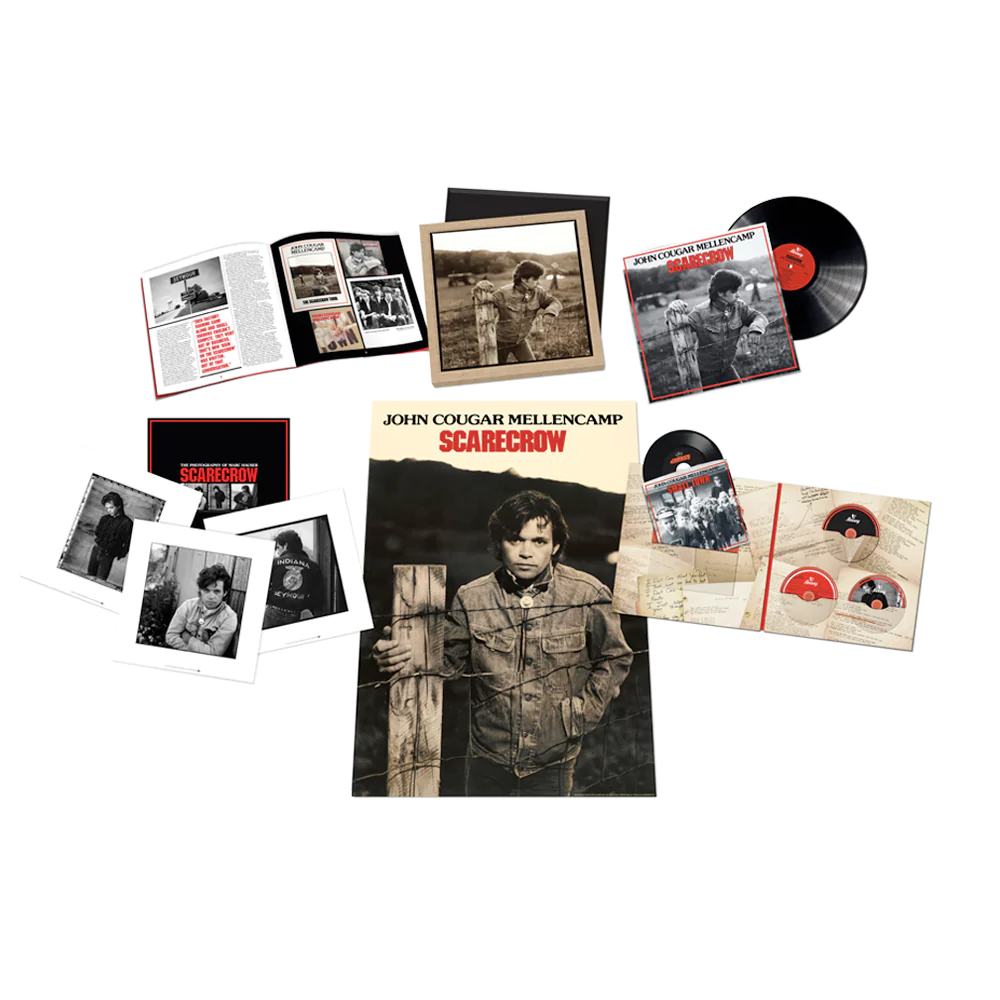
This newly remixed & remastered edition of John Mellencamp’s “Scarecrow” features the original album, a full disc of rare & previously unreleased tracks, ATMOS, and new hi-resolution stereo mix of the album + bonus tracks in hi-resolution stereo on Blu-ray Disc, a 180g half-speed LP, an original picture sleeve of the “Small Town” 7” single, booklet, lithographs, poster and an all-new essay by Anthony DeCurtis. The release includes two previously unreleased versions, “Small Town (Writer’s Demo)” and “Small Town (Acoustic Version)”. The boxset including 2 CDs of newly remixed and remastered songs plus previously unreleased bonus tracks and alternate versions, a booklet full of rare photographs and all new liner notes by acclaimed author and music critic Anthony DeCurtis.
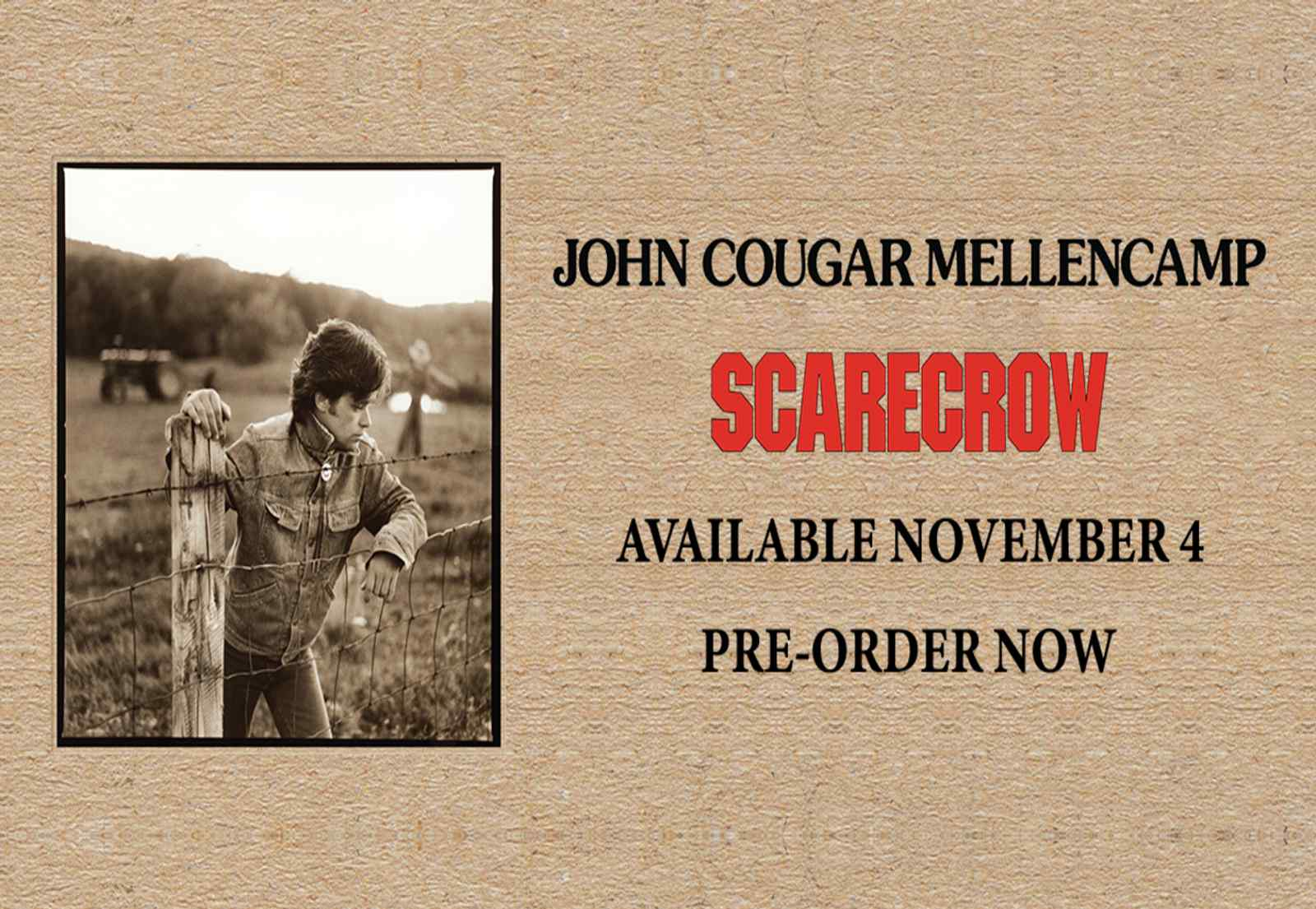
“Scarecrow” is the eighth studio album by John Mellencamp. Released in August 1985, The album contained three Top 10 hits, for Mellencamp : “R.O.C.K. in the U.S.A.”“Lonely Ol’ Night” and “Small Town”. Rolling Stone magazine ranked “Scarecrow” on its list of the 100 greatest albums of the 1980s, saying: “Scarecrow” consolidated the band’s rugged, roots-rock thrash and the ongoing maturation of Mellencamp’s lyrics.
The band spent a month in rehearsals, playing over a hundred rock and roll songs from the 1960s before going into the studio. According to the record’s producer, Don Gehman, the idea was to “learn all these devices from the past and use them in a new way with John’s arrangements.” The album was recorded at Mellencamp’s own “Belmont Mall” studio in Belmont, Indiana.
The overall theme of the album is the fading of the American dream in the face of corporate greed, songs such as “Face of the Nation,” “Minutes to Memories” and “Small Town” have a “bittersweet, reflective tone. The single “Rain on a Scarecrow” that it’s “solid, riveting rock and roll from an American treasure” and represents an “impassioned plea on behalf of America’s small farmers.
“Scarecrow” (through Mercury/Island/UME) on November 4th.
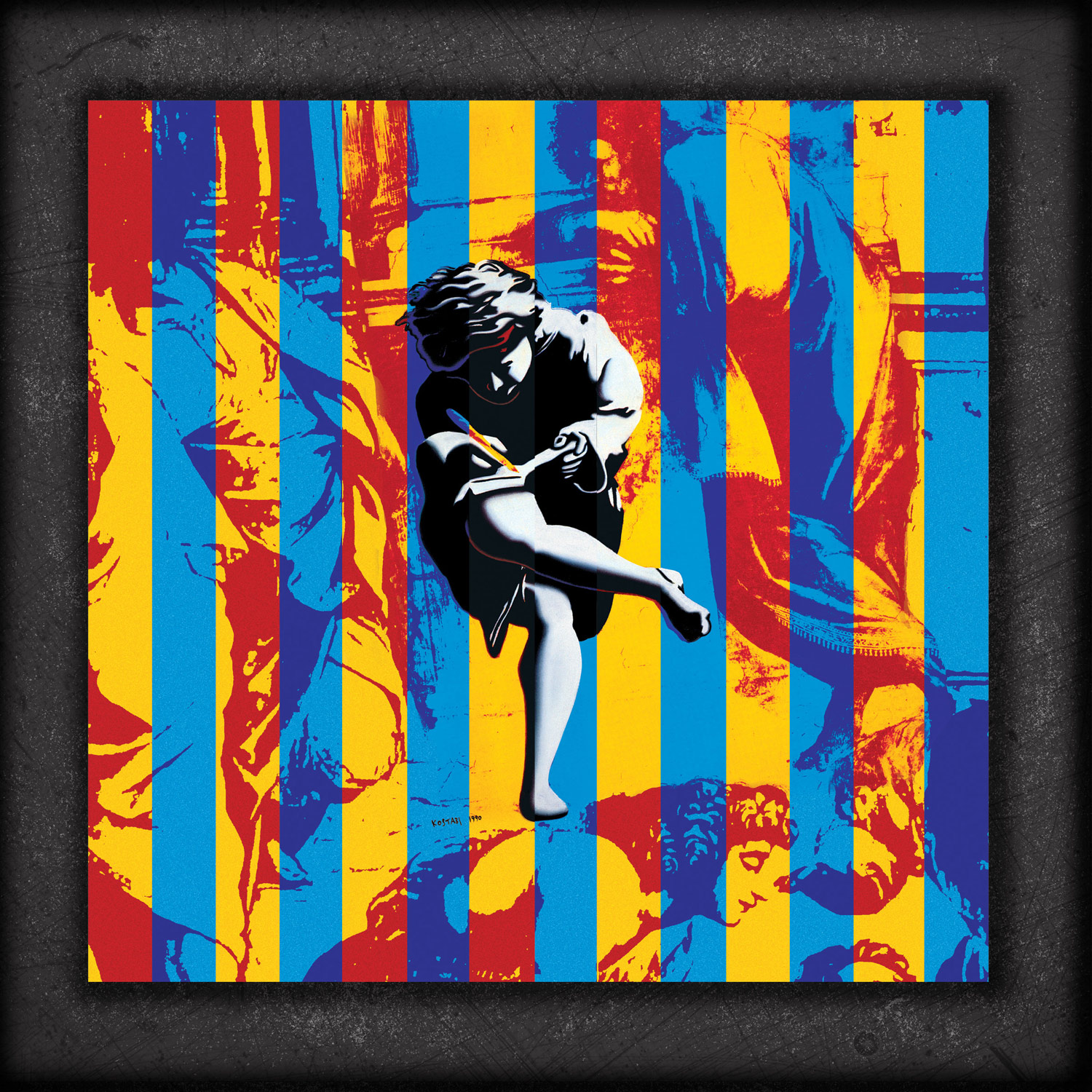
The newly announced Guns N’ Roses ‘Use Your Illusion’ box sets / reissues. There’s 9 different physical formats!. Guns N’ Roses are to reissue their 1991 albums “Use Your Illusion I” & “Use Your Illusion II”across nine different physical formats in November, including 7CD+blu-ray and 12LP vinyl+blu-ray super deluxe editions.
Both albums have been “fully remastered for the first-time ever”, from hi-res 96/24 transfers from the original stereo 1/2-inch analogue masters. “Use Your Illusion I” includes an updated version of the single ‘November Rain’ which features a newly recorded 50-piece orchestra (this has been mixed by Steven Wilson, incidentally).
The 7CD+blu-ray super deluxe features both remastered albums, “Live in New York” (from the RitzTheatre in May ’91) across two CDs, “Live in Las Vegas” (from the Thomas & Mack Center in January ’92) across three CDs. Both have been newly mixed from the multi-track tapes.
The bonus blu-ray video disc features the complete “Live In New York” concert film, “newly transferred from 35mm film prints to 4K UHD”. Boasting of a 4K transfer and then putting it on a standard 1080p HD blu-ray (which is effectively a 2K medium) is confusing and disappointing. A 4K UHD blu-ray and this standard blu-ray should have been included for the price being asked – after all this happens all the time in £25 retail 4K film blu-ray releases and this CD box costs ten times that. The concert soundtrack offers Dolby Atmos, 5.1, and 48/24 stereo.
Talking of Atmos, notable by omission are any spatial audio mixes of the studio albums themselves.No Atmos, 5.1 or even hi-res stereo versions are included on the blu-ray. Also, there is no studio outtakes, demos on any of the formats.
The 12LP black vinyl box set features exactly the same audio content as the 7CD+blu-ray. Both studio albums are 2LP sets and “Live in New York” and “Live in Las Vegas” are both 4LP sets. The blu-ray is included with this vinyl package and is identical to the one in the CD box set.
The super deluxe editions are housed with a 100-page hardcover book and are designed with fancy red & blue ‘reveal sleeves’. These sets come with lots of ‘stuff’ like Conspiracy Inc. replica fan club folder (with membership card!), four Conspiracy Inc. 1991/1992 “Use Your Illusion” era replica fan club newsletters, 10 double-design lithos that reveals one of two unique images when inserted into the red & blue ‘reveal sleeves’, 8” x 10” photo prints (x7), four “Use Your Illusion” tour replica cloth sticky backstage passes (x4), a Ritz Theatre 5/16/1991 replica concert ticket (with the original misprinted date of 5/15/1991) and a 24”x36” band poster.
Despite the 12LP vinyl and 7CD sets costing over £400 and £250 respectively, the much cheaper 2CD editions of each album feature exclusive live audio not included in the bigger boxes. This is in the form of bonus discs with live highlights from the Use Your Illusion 1991 / 1992 tour including dates in Paris, London and Rio de Janeiro. So for example, if you are a CD collector and want ‘everything’ (in terms of audio) you have to buy three products: the 7CD+blu-ray super deluxe and both 2CD deluxe editions! That situation is unlikely to impress fans. The 2CD sets come with 24-page booklets.
Other formats are both albums remastered on 2LP black vinyl, a 4LP vinyl box set (D2C-only) and single CD remasters of Use Your Illusion I & II.
Use Your Illusion I & IIwill be reissued on 11th November 2022, via UMe/Geffen Records.
So far, 2022 has been a relatively eventful year for Jack White. He’s released the albums “Fear Of TheDawn” and “Entering Heaven Alive”, each one with its sound and vibe unique from the other, proposed (and immediately got married) onstage in Detroit to kick off his tour, played over sixty shows across three continents to hundreds of thousands of satiated fans…and he’s not even done yet.
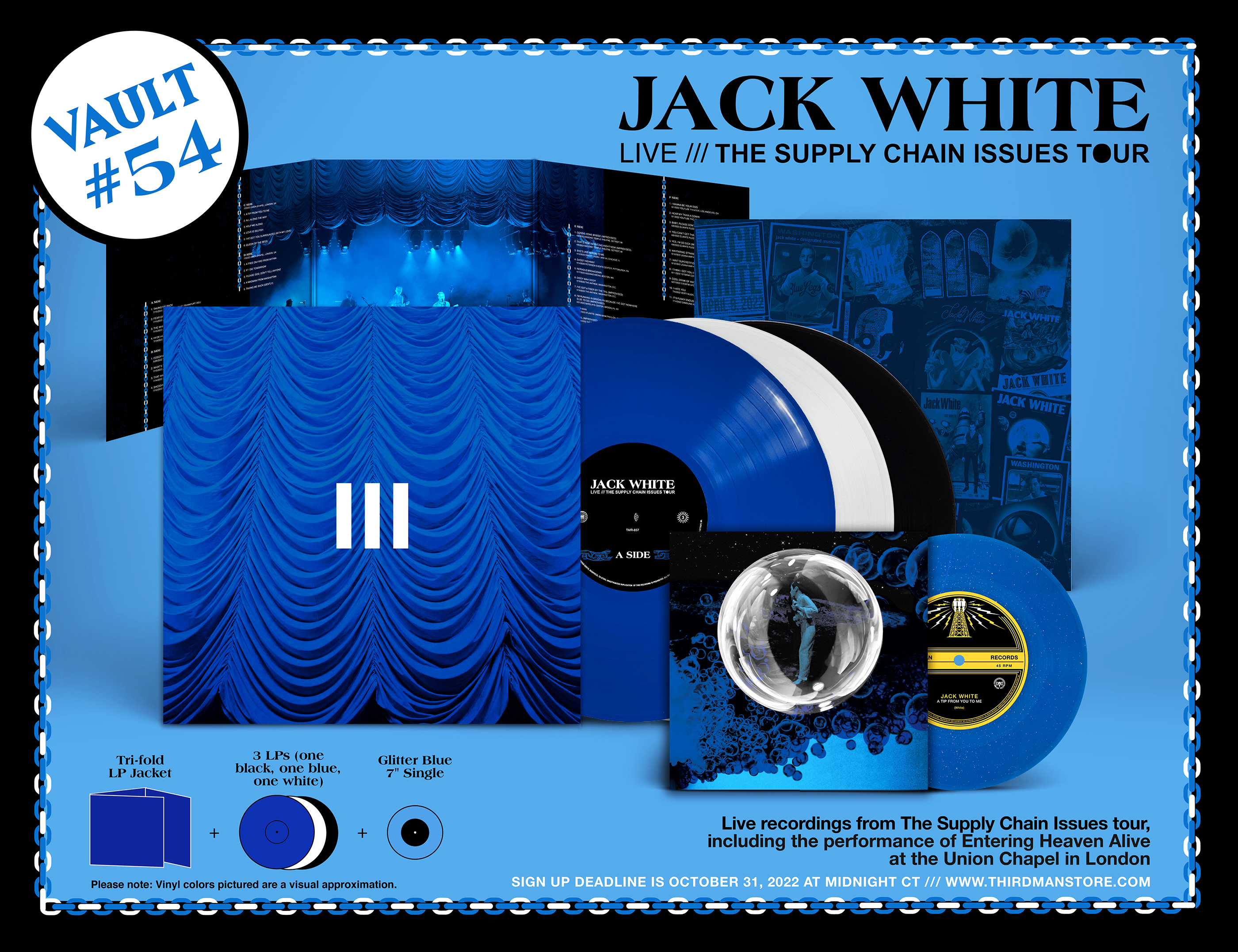
To celebrate the explosive run of shows, having received some of the most rave live reviews Jack has ever seen in his 20+ year career onstage, Third Man Records’ 54th Vault package is dedicated to the best of the best, the 3xLP Selections From The Supply Chain Issues Tour.
Jack White Live: The Supply Chain Issues Tour, includes three coloured LPs — one blue, one black, and one white — featuring live recordings from White’s current tour (including the full set from July’s intimate performance at London’s Union Chapel), as well as a glitter blue 7″ featuring a demo version of “A Tip From You To Me” from this year’s stellar album “Entering Heaven Alive”.
“The Supply Chain Issues Tour” on 3xLP. Disc 1 on blue vinyl includes live recordings from the fiery album “Fear Of The Dawn”. Disc 2 on white vinyl, features Jack’s intimate Union Chapel show in London, and Disc 3 on black vinyl showcases his improvisation of several cover songs and off-the-top-of-his-head compositions. Additionally, a 7” single of “A Tip From You To Me” with the unreleased b-side solo acoustic demo pressed on sparkly blue vinyl will be included in this one of a kind package.
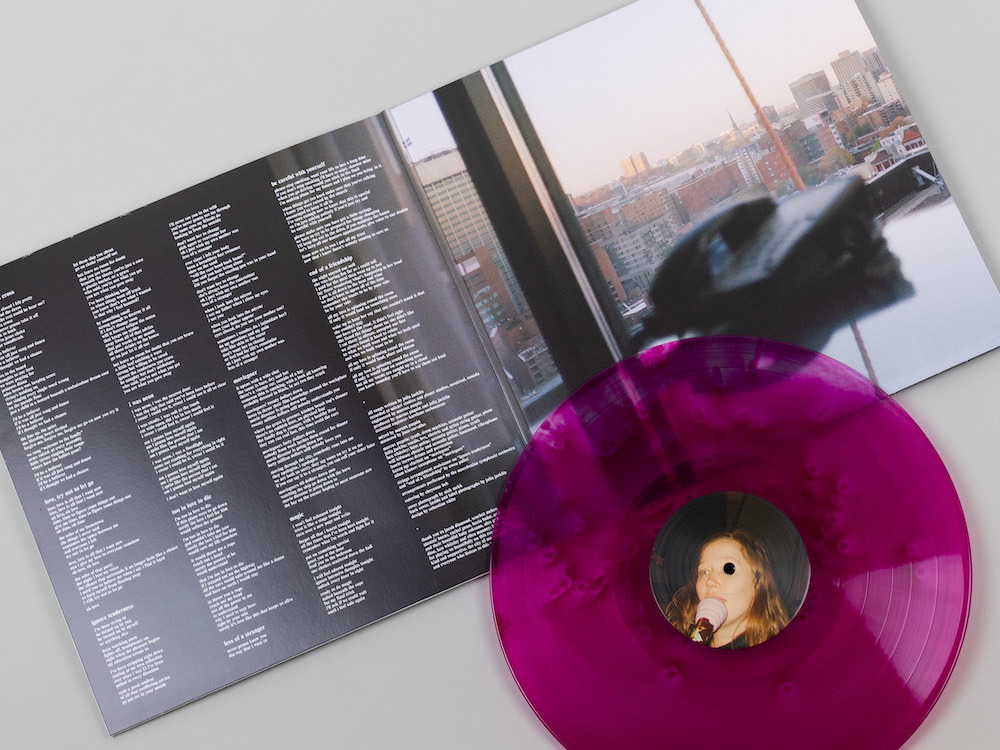
Julia Jacklin’s new album draws to a close with a plea: “Be careful with yourself” she sings in the song of the same name. She begs someone to “please stop smoking” because she “want[s] your life to last a long time,” and later advises them to “make sure you have got a little savings” and “keep all our doctors appointments, give voice to our doubts.”
As an early 30-something, the Australian singer is now, like so many millennials, faced with the realities of adulthood. “There’s nobody coming to save us,” she eventually sighs in the penultimate song of her third LP, “Pre Pleasure”. While Jacklin is probably singing from the perspective of a worried friend or partner, “Be Careful With Yourself” is one of a few songs on the album that contain what sounds like advice from a concerned parent. And when her lyrics don’t lean towards the maternal, Jacklin is a sharp observer of her own internal life, hacking away at the crust of her neuroses and conditions—be they intrusive thoughts or caring too much—until some nugget of meaning is unearthed.
For Jacklin, this involves a combination of revisiting childhood and confronting adulthood, a process that results in some of the Australian artist’s sharpest song writing to date. If Jacklin’s stellar 2019 sophomore LP “Crushing” was an album of breakup ballads and single-girl musings, then “Pre Pleasure” is about what comes after—what it takes to keep everything together. Jacklin nods at the unravelling detailed on “Crushing” in the energetic “Pre Pleasure” single “I Was Neon,” in which she revells a bit in enjoying the person she’s become in the aftermath, only to anxiously ask, “Am I Gonna Lose Myself Again?” The song is a testament to not only Jacklin’s personal growth, but also her evolution as an artist. Full, crunchy guitars, an ace melody, and rich and creamy vocals all contribute to Jacklin’s signature polished indie-rock sound that seemingly gets better with each album. Fellow single and album opener “Lydia Wears a Cross,” too, floats across new sonic ground, melding drum machines with piano while Jacklin successfully tries her hand at unpacking religious disquiet.
While the melodies are delivered with ease, Jacklin is grappling with some serious predicaments throughout “Pre Pleasure” namely her struggle to communicate with loved ones, especially family. In the regretful “Less of a Stranger,” Jacklin charts a mother-daughter relationship that continually falls short. “You’re never gonna see me through the same eyes my friends do,” she sings in a stream-of-consciousness style, adding, “I just wish my own mother was less of a stranger.” And then on “Moviegoer,” which pokes fun at film bros who “[love] to throw their film knowledge around the workplace,” she switches gears to attack the issue of communication again: “If you can say it to a stranger, you can call your sister later,” she reasons.
Jacklin continues to sing from her journal on “Ignore Tenderness,” in which she simultaneously replays past conflict, hints at the demands women feel from an early age to look and act a certain way (“Every since I was 13 I’ve been pulled in every direction”), and cultivates her own sexuality free from scrutiny. She delivers a whole list of cultural expectations that are all too familiar to women: Be “strong but willing to be saved,” “be naughty but don’t misbehave” and “ignore the tenderness you crave.” There’s no way to win.
Jacklin approaches another set of uncomfortable feelings on “Magic”: the urge to always perform (especially in sexual situations) and to always be “on,” perhaps a tendency that developed from past abuses, all while trying to stay present in healthy relationships. “Ready to do magic / Naked beneath the cape / For my final trick / I’ll ask if we could wait / Until I feel safe again,” she sings. The word “confessional” gets thrown around a lot when we talk about indie singer/songwriters, especially women, but it should be saved for songs like this one.
She later sketches out another phenomenon of early adulthood: the friendships that seem to disappear out of thin air. The song in question, fittingly named “End of a Friendship,” grieves a loss while also noting that people change and very often shed relationships that no longer serve them. But there’s still the question of what to do with all the affection that was shared between two buds: “All my love is spinning round the room,” Jacklin sings. “If only it would land, plant and bloom.”
Jacklin displays a newly developed maturity in “Pre Pleasure” 10 near-perfect songs, while maintaining her talent for crafting hooky indie rock that often catches you off guard with its emotional weight. Even as she navigates a series of past traumas and changing tides in her songs, Jacklin never holds back—her words are as frank as ever. And even if those words aren’t always as sunny as the accompanying guitar chords, it’s a delight to bear witness to a musician of Jacklin’s calibre in her absolute artistic prime.
Alvvays Pay Homage to The Go-Go’s’ Belinda Carlisle on “Belinda Says”, The dream pop band also releases cheeky ode to reply guys with new song “Very Online Guy” , With their comeback album“Blue Rev” arriving soon on October 7th, the Canadian quintet Alvvays have released two more singles in anticipation: “Very Online Guy” and “Belinda Says.” The former is a quixotic, guitar-laced love letter to Belinda Carlisle, lead singer of the Go-Go’s, while the latter is lead vocalist Molly Rankin’s cheeky, distorted ode to reply guys.
Both songs come with brand new music videos, each co-directed by Colby Anderson. “Very Online Guy” masquerades like an 8-bit video game quest, while “Belinda Says” features some stunning, abstract visuals from Anderson.
“Two new lambs for the cultural volcano! One more sweet slurp of alcopop dedicated to the girls wiping tables called ‘Belinda Says’ and the dial-up electronic dream ‘Very Online Guy,’” the band said in a statement. “We painted and shot the ‘Belinda Says’ video in our living room. We directed a mosaic-mode vid for ‘V.O.G’. with our video guru friend Colby. This was easily the funnest thing we’ve ever shot. Enjoy our clunky low-bit collage of aliased key clacking and step-dance scramble on your CRTs.”
Two years after dropping his fifth LP “I Love the New Sky”, chameleonic English singer-songwriter Tim Burgess is back with another addictive collection of songs. But this time, he’s widened his scope further than ever, and “Typical Music”is an ambitious, monstrous, 22-track document of storytelling. Throughout its near-hour-and-a-half runtime, Burgess ruminates on parenthood, romance, and personal metamorphosis.
On “I Love the New Sky”, Burgess took shelter in the optimistic, penning upbeat, celebratory tunes that pay homage to his heroes, like The Cure and Comme D’Habitude, and takes pleasure in parading as captivating baroque pop. “Typical Music” builds on that world, throwing nods to the moxie of David Bowie, Dexys Midnight Runners, and Genesis while maintaining Burgess’ typical acoustic grit in the process. The product is a rich, dynamic album, brimming with saxophones, synthesizers, and spoken-word. “Typical Music“out today, Burgess spent some time walking us through the record track by track, providing insight on the songs’ inspirations and giving praise to the musicians who helped him perform them.
1. “Here Comes The Weekend”
It’s about a boy missing a girl that he is trying to connect with. The day-to-day struggles of 4G. A modern-day allegory of an age-old story.
2. “Curiosity”
This was written on a campsite in Norfolk on an acoustic guitar. I was very pleased to be able to squeeze the word “reciprocity” into the song and my improvised French “Definit, pert être, laissez-faire, raison d’être” makes up the chorus.
3. “Time That We Call Time”
Pearl Charles sings this song with me. It’s about all of the nonsense that is going on in the world and how it needs to come to an end. There’s no obvious solution in there, so kind of like real life.
4. “Flamingo”
This was written about my relationships with my dad and my nine-year-old son. I like the line “maybe it’s too late to adjust my fate, decided pre-incarnate.” Quelle Chris likes this song (he said that the beat is dope) and Andy Votel has done a killer remix.
5. “Revenge Through Art”
Written about falling in love outside a football stadium. The song is really about the anger you feel after a breakup and when you make the best art because of conflict. We wanted it to sound like Miami Sound Machine. Not sure we succeeded, but I love it anyway.
6. “Kinetic Connection”
I love Sam Gendel’s saxophone playing on this song. I wrote the song after watching the Aretha documentary Amazing Grace. It’s a song about insecurities coming to the surface. It’s also a song about the power of connection.
7. “Typical Music”
It’s the title track of the album, so I imagine this is the song we thought had all the answers. It’s surf, punk, psych, and a song that you could really enjoy on the bus heading to work dreaming of a brighter world.
8. “Take Me With You”
I played this to my friend Sharon Horgan and she said it sounded like Christmas. This is a song for everyone who wishes it was Christmas every day.
9. “After This”
One of my favorites on the album, it’s really romantic and optimistic, and it mentions Kevin from Dexys Midnight Runners. I love the different sections, and, just when you think it’s finished, there is another section. A bit like (I wish) Genesis’ “Can-Utility and the Coastliners.”
10. “The Centre Of Me [Is a Symphony of You]”
It’s a love song, of course. I really like my wonky acoustic guitar playing and Helen O’Hara’s beautiful violin playing. Also, the speed-up at the end was really fun to do.
11. “When I See You”
Another love song written for the (uncredited) girl/woman who provides the backing vocals at the end of the track. The spoken word took me ages to get right—worth it though, I hope.
2. “Magic Rising”
Another love song. I was thinking of Norma Tanega and Paul McCartney. I love the lyrics and the laughing. It’s a massive song. I am so proud of the performances.
13. “Tender Hooks”
I wanted Uffie to guest on this and sent her the song, but it never worked out. It’s not that she didn’t like it. She loved it, but it wasn’t to be. It was a dream about taking the bus to Hackney and locking someone out of the house. Those things actually happened. And the bit about having a shave.
14. “L.O.S.T. / Would You Take a Look At My Hand Please”
It’s a plea to a friend to make themselves visible. It’s a big world and as the Feargal Sharkey song goes, “A good heart is hard to find.” The “would you take a look at my hand please” section of the song is instrumental, and the name came from a friend of mine taking a chunk out of their hand and needing stitches.
5. “A Bloody Nose”
It’s a song about lucky escapes: one story, in particular, is about the Charlatans’ first trip to Arizona in 1991.
16. “In May”
I wrote this song In 2014 about my little boy (originally called “The Littlest B”). He was a year old and is nine now. It’s the oldest song on the album and very close to my heart. Beautiful mix by Dave Fridmann. Also, ace strings arranged by Daniel O’Sullivan (who produced the album) and played by Echo Collective.
17. “Slacker (Than I’ve Ever Been)”
I love the Bowie-style synth and the chord changes.
18. “View From Above”
I feel like I walk the tightrope a lot of the time and this song is my thoughts on that. My favourite lyrics on the album and Dan’s idea for instrumentation and arrangement really make it stand up for me as one of the best songs I’ve ever been involved in.
19. “A Quarter To Eight”
Another amazing production and arrangement by Daniel O’Sullivan. I like mentioning Roddy Frame and Father Thames. Sandra Marvin sings backing vocals.
20. “Sooner Than Yesterday”
Goth, monochrome surf? A bit like Joe Meek or Kim Fowley, like catching a wave in the rain in North Wales.
21. “Sure Enough”
If I was going through some kind of transformation during the making of this 22-track behemoth (which I was), this is the song that sums it all up. The last song written for the record.
22. “What’s Meant For You, Won’t Pass By You”
This song tells you where I am right now, this minute. I am through the other side. I still have questions, mind. Brilliant performances from Thighpaulsandra and Nitin Sawhney.
“Stumpwork”, the follow-up to 2021’s “New Long Leg”. The South London-based group’s first studio album, recorded in just two weeks with producer John Parish at the iconic Rockfield Studios, became a huge critical and commercial success reaching #4 in the UK Album Charts and featuring in best-of-2021 polls across the board. Buoyed by its success, Nick Buxton (drums), Tom Dowse (guitar), Lewis Maynard (bass) and Florence Shaw (vocals) returned to rural Wales in late 2021, partnering once more with Parish and engineer Joe Jones. Working from a position of trust in the same studio and with the same team, imposter syndrome and anxiety was replaced by a fresh freedom and openness to explore beyond an already rangy sonic palette, a newfound confidence in their creative vision. A longer period in the studio afforded the time to experiment, improvise, play, sharpen their table tennis skills.
“Stumpwork” was inspired by a plethora of events, concepts, and political debacles, be they represented in the icy mess of ambient elements reflecting a certain existential despair, or the surprising warmth in celebrating the lives of loved ones lost through the previous year. Surrealist lyrics are as ever at the forefront – but there is a sensitivity now to the themes of family, money, politics, self-deprecation, and sensuality. Furious alt-rock anthems combine across the record with jangle pop and ambient noise, demonstrating the wealth of influences the band feed off and their deep musicality. With the pressure of their debut album behind them, Dry Cleaning have crafted an ambitious and deeply rewarding new work that marks them out as one of the most intelligent and exciting acts to come out of the UK.
The album and single artwork were conceived and created by multi-disciplinary artists Rottingdean Bazaar and photographer Annie Collinge. James Theseus Buck and Luke Brooks of Rottingdean Bazaar first worked with Dry Cleaning directing the official video for ‘Scratchcard Lanyard’ and as their creative partnership with the band continues to flourish, they have fashioned a brilliantly unique visual identity for “Stumpwork”.
So hyped about this new album … Dry Cleaning is the Smiths of our time. That’s the greatest compliment I could bestow upon this special band.