Archive for the ‘CLASSIC ALBUMS’ Category

The Beach Boys: Pet Sounds: 50th Anniversary Collectors Edition Exclusive Signed Brian Wilson Lithograph Beach Bundle

petPet Sounds 50th Anniversary Reissue

When Capitol Records initially released “Pet Sounds” in the UK the label ran adverts in the music press like the one you can see here. At the time there were some fans who were confused by The Beach Boys’ 11th studio album where were the stripped shirts and the surf -boards? In the intervening 50 years Pet Sounds has been acknowledged as a masterpiece, a record that has topped countless polls of the greatest albums ever made and is revered by musicians and fans as the pinnacle of Brian Wilson’s song writing, production and all round creative genius. Fifty years on it is to be reissued in all its glory with bonus material that will have many drooling with pleasure.

The influence that Pet Sounds has had, began even before it’s release outside the USA. On Monday, 16th May, 1966, Bruce Johnston, who was then the newest Beach Boy, arrived at London’s Heathrow Airport carrying a copy Pet Sounds that had come out in the USA that very day – well in advance of its UK release.

The following day, in his suite at the Waldorf Hotel, Bruce played Pet Sounds, in its entirety,for John Lennon and Paul McCartney – not once but twice. After the two Beatles left the Waldorf they went straight back to Paul’s house and there, inspired by Brian’s incredible music, they worked on the introduction to their song ‘Here, There and Everywhere’ that appeared on Revolver.

“Pet Sounds blew me out of the water. First of all, it was Brian’s writing. I love the album so much. I’ve just bought my kids each a copy of it for their education in life—I figure no one is educated musically ’til they’ve heard this album.” – Paul McCartney

Beach Boys Pet Sounds 1966

Ironically, given the love and respect that exists around the world for this album, the 1966 US release failed to achieve the kind of success that had been anticipated or the level of sales achieved by the band’s earlier albums. Pet Sounds made No.10 in the US. In the UK it fared far better, making No.2 on the album charts, the most successful of the band’s albums to that point.

The 50th anniversary release includes both Brian Wilson’s original mono mix and the later stereo remaster that captures the depth and perfection of Brian’s arrangements. The two ‘session’ CDs give us amazing insight into Brian’s control of the many musicians who play much of the music that underpins the sublime vocal harmonies of The Beach Boys.

Pet Sounds features some of the greatest LA musicians of the period. There are guitarists as varied as, Glen Campbell, Barney Kessel, Tommy Tedesco and Al Casey. On keyboards there’s Larry Knetchel, drummers, Hal Blaine and Jim Gordon along with French Horns, violins, an electric Theremin, and all manner of percussion instruments, including Coca-Cola cans. Listening to Brian encouraging, demanding and cajoling the musicians on the session tapes is like a master class in record production.

And then there are the vocals that include Brian Wilson’s most poignant ever performance on the sublime, ‘Caroline No’, Mike Love on ‘Here Today’, as well as Carl Wilson’s heart-stopping tour de force – ‘God Only Knows’. The fourth CD features a capella versions of the songs on the album and this is where The Beach Boys collectively shine. The soaring harmonies of ‘Wouldn’t It Be Nice’, the beautiful harmonic counterpoint of ‘I Know There’s An Answer’, and ‘I Just Wasn’t Made For These Times’ are all surf-soul music

Following the release of the album, ‘Wouldn’t It Be Nice’, ‘Sloop John B’ and ‘God Only Knows’ all became staples of The Beach Boys live shows and in more recent times, both, Brian and The Beach Boys touring band have featured songs from the album in concert and versions of Pet Sounds’s tracks performed live feature on disc 4  all of these are previously unreleased.

On ‘God Only Knows’ it is just Carl, Brian and Bruce that are singing and on the a capella version, when they finish their vocal, a voice asks, “How was that? Was that cool?” It’s Bruce Johnston asking the question and it is the perfect coda for not just the song, but also the album, because Pet Sounds is arguably the coolest record of all time. This is the kind of record that makes life worth living, reaffirming the notion that pop music is the most admired art form in the world. And make no mistake, Pet Sounds is art.

Beach Boys Prog ad

All editions of the 50th anniversary Pet Sounds will be released on 10th June and we have an exclusive offer in our store for the 4CD Super Deluxe Edition that includes a Beach Ball and Beach Bag, as well as an exclusive slip mat with the stereo and mono vinyl editions of the album.

Pet Sounds (50th Anniversary Edition) will be available in several configurations, including a 4CD/Blu-ray Audio collectors edition presented in a hardbound book, featuring the remastered original album in stereo and mono, plus hi res stereo, mono, instrumental, and 5.1 surround mixes, session outtakes, alternate mixes, and previously unreleased live recordings; a 2CD and digital deluxe edition pairing the remastered album in stereo and mono with highlights from the collectors edition’s additional tracks; and remastered, 180-gram LP editions of the album in mono and stereo with faithfully replicated original artwork.

Track listings for the Pet Sounds 50th anniversary reissues

CD 1
Pet Sounds (Mono)

1. Wouldn’t It Be Nice
2. You Still Believe In Me
3. That’s Not Me
4. Don’t Talk (Put Your Head On My Shoulder)
5. I’m Waiting For The Day
6. Let’s Go Away For Awhile
7. Sloop John B
8. God Only Knows
9. I Know There’s An Answer
10. Here Today
11. I Just Wasn’t Made For These Times
12. Pet Sounds
13. Caroline No
Pet Sounds (Stereo)
14. Wouldn’t It Be Nice
15. You Still Believe In Me
16. That’s Not Me
17. Don’t Talk (Put Your Head On My Shoulder)
18. I’m Waiting For The Day
19. Let’s Go Away For Awhile
20. Sloop John B
21. God Only Knows
22. I Know There’s An Answer
23. Here Today
24. I Just Wasn’t Made For These Times
25. Pet Sounds
26. Caroline No
Additional Material
27. Caroline No (Promotional Spot #2)
28. Don’t Talk. . . (Unused Background Vocals)
29. Hang On To Your Ego (Alternate Mix)
30. Caroline No (Promotional Spot #1)

CD 2
The Pet Sounds Sessions

1. Sloop John B (Highlights from Tracking Date)
2. Sloop John B (Stereo Backing Track)
3. Trombone Dixie (Highlights from Tracking Date)
4. Trombone Dixie (Stereo Backing Track)
5. Pet Sounds (Highlights from Tracking Date)
6. Pet Sounds (Stereo Track Without Guitar Overdub)
7. Let’s Go Away For Awhile (Highlights from Tracking Date)
8. Let’s Go Away For Awhile (Stereo Track Without String Overdub)
9. Wouldn’t It Be Nice (Highlights from Tracking Date)
10. Wouldn’t It Be Nice (Stereo Backing Track)
11. Wouldn’t It Be Nice (Stereo Track with Background Vocals)
12. You Still Believe In Me (Intro – Session)
13. You Still Believe In Me (Intro – Master Take)
14. You Still Believe In Me (Highlights from Tracking Date)
15. You Still Believe In Me (Stereo Backing Track)
16. Caroline No (Highlights from Tracking Date)
17. Caroline No (Stereo Backing Track)
18. Hang On To Your Ego (Highlights from Tracking Date)
19. Hang On To Your Ego (Stereo Backing Track)
20. I Know There’s An Answer (Vocal Session) [previously unreleased]
21. Don’t Talk (Put Your Head On My Shoulder) (Brian’s Instrumental Demo)
22. Don’t Talk (Put Your Head On My Shoulder) (Stereo Backing Track)
23. Don’t Talk (Put Your Head On My Shoulder) (String Overdub)
24. I Just Wasn’t Made For These Times (Highlights from Tracking Date)
25. I Just Wasn’t Made For These Times (Stereo Backing Track)
26. That’s Not Me (Highlights from Tracking Date)
27. That’s Not Me (Stereo Backing Track)

CD 3
The Pet Sounds Sessions (continued)

1. Good Vibrations (Highlights from First Tracking Date)
2. Good Vibrations (Stereo Backing Track)
3. I’m Waiting For The Day (Highlights from Tracking Date)
4. I’m Waiting For The Day (Stereo Backing Track)
5. God Only Knows (Highlights from Tracking Date)
6. God Only Knows (Stereo Backing Track)
7. Here Today (Highlights from Tracking Date)
8. Here Today (Stereo Backing Track)
Alternate Versions
9. Wouldn’t It Be Nice (Mono Alternate Mix 1)
10. You Still Believe In Me (Mono Alternate Mix)
11. I’m Waiting For The Day (Mono Alternate Mix, Mike sings lead)
12. Sloop John B (Mono Alternate Mix, Carl sings first verse)
13. God Only Knows (Mono Alternate Mix, with sax solo)
14. I Know There’s An Answer (Alternate Mix) [previously unreleased]
15. Here Today (Mono Alternate Mix, Brian sings lead)
16. I Just Wasn’t Made For These Times (Mono Alternate Mix)
17. Banana & Louie
18. Caroline No (Original Speed, Stereo Mix)
19. Dog Barking Session
20. God Only Knows (With A Cappella Tag)
21. Wouldn’t It Be Nice (Mono Alternate Mix 2)
22. Sloop John B (Mono Alternate Mix, Brian sings lead throughout)
23. God Only Knows (Mono Alternate Mix, Brian sings lead)
24. Caroline No (Original Speed, Mono Mix)

CD 4
Live Recordings [all previously unreleased]

1. Wouldn’t It Be Nice
2. Sloop John B
3. God Only Knows
Michigan State University, October 22, 1966
4. Good Vibrations
5. God Only Knows
6. Wouldn’t It Be Nice
Daughters of the American Revolution Constitution Hall, Washington DC, November 19, 1967
7. God Only Knows
Carnegie Hall, New York, November 23, 1972 (2nd Show)
8. God Only Knows
Jamaican World Music Festival, Montego Bay, Jamaica, November, 26, 1982
9. Sloop John B
Universal Studios, Universal City, California, May, 23, 1989
10. Caroline No
11. You Still Believe In Me
Paramount Theater, New York City, November 26, 1993
Stack-O-Vocals
12. Wouldn’t It Be Nice
13. You Still Believe In Me
14. That’s Not Me
15. Don’t Talk (Put Your Head On My Shoulder)
16. I’m Waiting For The Day
17. Sloop John B
18. God Only Knows
19. I Know There’s An Answer
20. Here Today
21. I Just Wasn’t Made For These Times
22. Caroline No
Bonus Track
23. Good Vibrations (Master Track with Partial Vocal) (previously unreleased)

Blu-ray Pure Audio Disc
Pet Sounds:
5.1 Surround Sound: 96kHz/24-bit
Mono; Stereo; Stereo Instrumental (new to hi res): 192kHz/24-bit

1. Wouldn’t It Be Nice
2. You Still Believe In Me
3. That’s Not Me
4. Don’t Talk (Put Your Head On My Shoulder)
5. I’m Waiting For The Day
6. Let’s Go Away For Awhile
7. Sloop John B
8. God Only Knows
9. I Know There’s An Answer
10. Here Today
11. I Just Wasn’t Made For These Times
12. Pet Sounds
13. Caroline No
Additional Material in 5.1 Surround and Stereo
14. Unreleased Backgrounds (Unused Intro for “Don’t Talk (Put Your Head On My Shoulder)”)
15. Wouldn’t It Be Nice (Session Highlights)
16. Wouldn’t It Be Nice (Alternative Mix without Lead Vocal)
17. God Only Knows (Session Highlights)
18. God Only Knows (Master Track Mix with A Cappella Tag)
19. Summer Means New Love
__

Pet Sounds (50th Anniversary Deluxe Edition)
2CD

CD 1
Pet Sounds (Mono)
1. Wouldn’t It Be Nice
2. You Still Believe In Me
3. That’s Not Me
4. Don’t Talk (Put Your Head On My Shoulder)
5. I’m Waiting For The Day
6. Let’s Go Away For Awhile
7. Sloop John B
8. God Only Knows
9. I Know There’s An Answer
10. Here Today
11. I Just Wasn’t Made For These Times
12. Pet Sounds
13. Caroline No
Pet Sounds (Stereo)
14. Wouldn’t It Be Nice
15. You Still Believe In Me
16. That’s Not Me
17. Don’t Talk (Put Your Head On My Shoulder)
18. I’m Waiting For The Day
19. Let’s Go Away For Awhile
20. Sloop John B
21. God Only Knows
22. I Know There’s An Answer
23. Here Today
24. I Just Wasn’t Made For These Times
25. Pet Sounds
26. Caroline No

CD 2
Live Recordings [all previously unreleased]

1. Wouldn’t It Be Nice
2. Sloop John B
3. God Only Knows
Michigan State University, October 22, 1966
4. Good Vibrations
5. God Only Knows
6. Wouldn’t It Be Nice
Daughters of the American Revolution Constitution Hall, Washington DC, November 19, 1967
7. God Only Knows
Carnegie Hall, New York, November 23, 1972 (2nd Show)
8. God Only Knows
Jamaican World Music Festival, Montego Bay, Jamaica, November, 26, 1982
9. Sloop John B
Universal Studios, Universal City, California, May, 23, 1989
10. Caroline No
11. You Still Believe In Me
Paramount Theater, New York City, November 26, 1993
Instrumentals
12. Wouldn’t It Be Nice
13. You Still Believe In Me
14. That’s Not Me
15. Don’t Talk (Put Your Head On My Shoulder)
16. I’m Waiting For The Day
17. Let’s Go Away For A While
18. Sloop John B
19. God Only Knows
20. I Know There’s An Answer
21. Here Today
22. I Just Wasn’t Made For These Times
23. Pet Sounds
24. Caroline, No
__

Mono Vinyl Reissue
1LP + download card

180-gram heavyweight black vinyl LP reissue of ‘Pet Sounds’ remastered in Mono. Includes download card for digital redemption of the audio.

Side A
1. Wouldn’t It Be Nice – Mono (2:22)
2. You Still Believe In Me – Mono (2:29)
3. That’s Not Me – Mono (2:27)
4. Don’t Talk (Put Your Head On My Shoulder) – Mono (2:50)
5. I’m Waiting For The Day – Mono (3:03)
6. Let’s Go Away For Awhile – Mono (2:18)
7. Sloop John B – Mono (2:55)
Side B
1. God Only Knows – Mono (2:49)
2. I Know There’s An Answer – Mono (3:07)
3. Here Today – Mono (2:52)
4. I Just Wasn’t Made For These Times – Mono (3:10)
5. Pet Sounds – Mono (2:20)
6. Caroline, No – Mono (2:53)
__

Stereo Vinyl Reissue
1LP + download card

180-gram heavyweight black vinyl LP reissue of ‘Pet Sounds’ remastered in Stereo. Includes download card for digital redemption of the audio.

Side A
1. Wouldn’t It Be Nice – Stereo (2:34)
2. You Still Believe In Me – Stereo (2:34)
3. That’s Not Me – Stereo (2:29)
4. Don’t Talk (Put Your Head On My Shoulder) – Stereo (2:57)
5. I’m Waiting For The Day – Stereo (3:05)
6. Let’s Go Away For Awhile – Stereo (2:25)
7. Sloop John B – Stereo (3:00)
Side B
1. God Only Knows – Stereo (2:56)
2. I Know There’s An Answer – Stereo (3:16)
3. Here Today – Stereo (3:06)
4. I Just Wasn’t Made For These Times – Stereo (3:22)
5. Pet Sounds – Stereo (2:38)
6. Caroline, No – Stereo (2:52)

Pet Sounds 50th


Day of the Dead

On May 20th, 4AD will release “Day of the Dead” – a celebration of the Grateful Dead’s music created and curated by brothers Aaron and Bryce Dessner of The National.

It has been a massive undertaking. The compilation is a wide-ranging tribute to the songwriting and experimentalism of the Grateful Dead, which took four years to record, features over 60 artists from varied musical backgrounds, 59 tracks and is almost 6 hours long.

Day of the Dead will be released digitally, on a 5 X CD, and as a limited edition vinyl boxed set. All profits will help fight for AIDS/ HIV and related health issues around the world through the Red Hot Organisation.

Among the first five songs shared from it today include the first new music from The War on Drugs since 2014’s brilliant Lost In The Dream with their cover of the Dead’s 1987 hit “Touch of Grey”.

Phosphorescent and Jenny Lewis combine with the backing of the in-house band (featuring 4/5 of the National) that contributed to numerous recordings on the compilation, to cover 1971’s “Sugaree”.

Courtney Barnett puts her characteristic slant on New Speedway Boogie,

The National cover Bonnie Dobson’s Morning Dew, a Grateful Dead staple since 1967, one of two songs that they contributed to the compilation.

Black Muddy River’ by Bruce Hornsby and DeYarmond Edison, from ‘Day of the Dead’, a tribute album to the Grateful Dead curated by Aaron and Bryce Dessner of The National, with all profits going to Red Hot Organization.

‘Day of the Dead’ is released on 20th May via 4AD.

After much anticipation and years of work, the massive tribute to the Grateful Dead organized by The National’sAaron and Bryce Dessner has finally been officially announced. Titled Day Of The Dead, the 59-track playlist features over 60 guests, and is split into three parts: “Thunder,” “Lightning,” and “Sunshine.”

The album is full of an incredible listing of special guests, including The War On Drugs, Jim James, Phosphorescent, Jenny Lewis, Courtne Barnett, Wilco, The Lone Bellow, Bruce Hornsby, Charles Bradley, Local Natives, Kurt Vile, The Flaming Lips, Lucinda Williams, Mumford & Sons, Joe Russo, Lucius, Perfume Genius, Stephen Malkmus, Bela Fleck, Tallest Man On Earth, Richard Reed Parry, and more! Bob Weir makes a handful of appearances throughout, including collaborations with Wilco and The National.

ABOUT RED HOT ORGANIZATION:

Red Hot is a not-for-profit, 501(c) 3 organization dedicated to fighting HIV/AIDS through pop culture. Its mission is to raise awareness and money around the AIDS crisis and related health issues. It was started in 1990 by Leigh Blake and John Carlin with the Cole Porter tribute album Red Hot + Blue, which raised millions of dollars, helped reduce the stigma around AIDS at the time and supported organizations and efforts such as ACT UP and T.A.G., which took a stand and made the world pay attention and develop medication that let people with AIDS survive.

Over the past 25 years, over 500 artists, producers and directors have contributed to 20 compilation albums of original music, videos, events and media to keep people thinking about the implications of the AIDS epidemic as well as donate millions to organizations around the world.

Day of the Dead Tracklist:

“Thunder” (Volume One)
Touch of Grey (The War on Drugs)
Sugaree (Phosphorescent, Jenny Lewis & Friends)
Candyman (Jim James & Friends)
Cassidy (Moses Sumney, Jenny Lewis & Friends)
Black Muddy River (Bruce Hornsby and DeYarmond Edison feat. Justin Vernon and Megafaun)
Loser (Ed Droste, Binki Shapiro & Friends)
Peggy-O (The National)
Box of Rain (Kurt Vile and the Violators feat. J Mascis)
Rubin and Cherise (Bonnie “Prince” Billy & Friends)
To Lay Me Down (Perfume Genius, Sharon Van Etten & Friends)
New Speedway Boogie (Courtney Barnett)
Friend of the Devil (Mumford & Sons)
Uncle John’s Band (Lucius)
Me and My Uncle (The Lone Bellow & Friends)
Mountains of the Moon (Lee Ranaldo, Lisa Hannigan & Friends)
Black Peter (Anohni and yMusic)
Garcia Counterpoint (Bryce Dessner)
Terrapin Station (Suite) (Daniel Rossen, Christopher Bear, The National feat. Josh Kaufman, Conrad Doucette, So Percussion and Brooklyn Youth Chorus)
Attics of My Life (Angel Olsen)
St. Stephen (live) (Wilco feat. Bob Weir)

“Lightning” (Volume Two)
If I Had the World to Give (Bonnie “Prince” Billy)
Standing on the Moon (Phosphorescent & Friends)
Cumberland Blues (Charles Bradley and Menahan Street Band)
Ship of Fools (Tallest Man on Earth & Friends)
Bird Song (Bonnie “Prince” Billy & Friends)
Morning Dew (The National)
Truckin’ (Marijuana Deathsquads)
Dark Star (Cass McCombs, Joe Russo & Friends)
Nightfall of Diamonds (Nightfall of Diamonds)
Transitive Refraction Axis for John Oswald (Tim Hecker)
Going Down the Road Feelin’ Bad (Lucinda Williams & Friends)
Playing in the Band (Tunde Adebimpe, Lee Ranaldo & Friends)
Stella Blue (Local Natives)
Eyes of the World (Tal National)
Help On the Way (Bela Fleck)
Franklin’s Tower (Orchestra Baobob)
Till the Morning Comes (Luluc with Xylouris White)
Ripple (The Walkmen)
Brokedown Palace (Richard Reed Parry with Caroline Shaw and Little Scream feat. Garth Hudson)

“Sunshine” (Volume Three)
Here Comes Sunshine (Real Estate)
Shakedown Street (Unknown Mortal Orchestra)
Brown-Eyed Women (Hiss Golden Messenger)
Jack-A-Roe (This is the Kit)
High Time (Daniel Rossen and Christopher Bear)
Dire Wolf (The Lone Bellow & Friends)
Althea (Winston Marshall, Kodiak Blue and Shura)
Clementine Jam (Orchestra Baobob)
China Cat Sunflower > I Know You Rider (Stephen Malkmus and the Jicks)
Easy Wind (Bill Callahan)
Wharf Rat (Ira Kaplan & Friends)
Estimated Prophet (The Rileys)
Drums > Space (Man Forever, So Percussion and Oneida)
Cream Puff War (Fucked Up)
Dark Star (The Flaming Lips)
What’s Become of the Baby (s t a r g a z e)
King Solomon’s Marbles (Vijay Iyer)
Rosemary (Mina Tindle & Friends)
And We Bid You Goodnight (Sam Amidon)
I Know You Rider (live) (The National with Bob Weir)

Various - Day of the Dead - Five New Tracks Released and Pre-Orders Launch

SPECTRES – DEAD
Spectres release their new album, ‘Dead’, on Sonic Cathedral, and it sees the songs from the Bristol band’s hugely acclaimed debut ‘Dying’ nailed to the cross by Mogwai, Factory Floor, Hookworms, Richard Fearless (Death In Vegas), Andy Bell (Ride), Robert Hampson (Loop) and many more. The only instruction was “kill our songs”, and so here are the remains, served up on two mortuary slabs of vinyl (and CD and download) as a stunning, 13-track album that builds on the original’s feeling of claustrophobia and dread, but recasts it across everything from brutal techno (Blood Music’s ‘This Purgatory’) to New Order-meets-Animal Collective euphoria (Andy Bell’s ‘Sea Of Trees’). It’s an occasionally punishing, but always rewarding listen that begins somewhere in the depths of a K-hole, courtesy of Vision Fortune’s ‘Drag’, and ends somewhere rather beautiful, with the celestial synths of Mogwai’s ‘This Purgatory’. (It’s worth noting that Mogwai’s classic ‘Kicking A Dead Pig’ was a big inspiration here.) “We see Spectres as something that can work in a variety of contexts,” says frontman Joe Hatt, as he explains the motivation behind ‘Dead’. “Our musical interests spread out in different angles and we are always thinking of ways for what we do to evolve and mutate. We put together a list of artists who we admired, and thought would deliver a varied and eclectic mix. Some were close friends who are conveniently making some of the best music around, and others were pipe dreams that we thought would never happen. It was both nerve-wracking and fun waiting for each of the artists’ versions to arrive in our inbox, and some definitely surprised us; but none disappointed.” ‘Dead’ serves as an important reminder of what a special band Spectres are, something that can be easy to forget with their anti-industry stance and extra-curricular activities often grabbing the headlines more than their music (“We’ve always been like this, and we won’t cease,” threatens Hatt).

BOB MOULD  – PATCH THE SKY
Bob Mould returns with his next solo album titled ‘Patch the Sky’ via Merge Records. It is both his darkest and catchiest work. While written in solitude, Mould is backed on the record by longtime drummer Jon Wurster (Superchunk, Mountain Goats) and bassist Jason Narducy (Split Single). The first side of the LP is simple and catchy whilst he back-half of the record heavier in spirit and tone.
CD – Digipak (blue foil) plus poster insert.
LP – Standard black vinyl LP in Blue foil sleeve with full album download coupon.
LP+ – Lmited Clear coloured vinyl LP in Blue foil sleeve with full album download coupon.

WHITE DENIM – STIFF
A return to the fiery cauldron of ‘Fits’ for the new look White Denim, stuffed with sprung-steel riffs, quicksilver solos and scudding swamp boogie. Plus a couple of cool R&B interludes from James Petralli’s inner soul man. ‘Stiff’ is White Denim’s sixth record and they teamed up with the legendary Ethan Johns (Paul McCartney, Laura Marling, The Staves) to produce their first truly live record.
LP – 140 Gram Vinyl housed in Gatefold Sleeve with CD Version.
CD – Digipack.

BABEHEAVEN  –  HEAVEN / FRIDAY SKY
Limited 7″ and tipped. West-London five-piece Babeheaven release their beautiful debut single ‘Heaven’ through Handsome Dad / B3SCI. Currently on tour with BBC Sound Poll nominee Loyle Carner, the band have already opened for Liss, supported Formation around the UK and kicked off the year playing DIY’s ‘Hello 2016’ shows at The Old Blue Last. Babeheaven were born out of a long-standing friendship between singer Nancy and guitarist Jamie, who started spending time together in earnest whilst working on the same street in Ladbroke Grove (she in her grandmother’s antique shop, and he in a soul-destroying stint at an organic farm store). Musically, Babeheaven’s tastes were similarly neighbouring: bonding over a love of trip-hop, soul and ethereal electronics (everything from Portishead and James Blake to Stevie Wonder), a typical evening spent hanging out turned into an attempt to write a song together. Their tribute to Domino’s Pizza may never see the light of day, but in finding drummer Harry, keyboard / guitarist Milo and bassist Hugo, the foundations of Babeheaven were formed instead. Debut single ‘Heaven’ is a gentle but insistent introduction, blending hazy guitars, atmospheric synths and flashes of local colour (from the steel pans to nu-soul vocal) into broader emotional resonance. Lyrically, the track was at first inspired by Nancy’s Mum – who passed away when she was young – and the different meanings heaven has for different people: it’s since evolved, say the band, into something “about the front you put up and break down in front of people, and how things might’ve been different with someone else around.”

YUCK – STRANGER THINGS
Since their 2011 self-titled debut LP much has been written about the influence of 1990’s alternative rock on Yuck – the bands Dinosaur Jr. and Sonic Youth have been invoked repeatedly on music sites and in print publications across the world. On their third studio LP, ‘Stranger Things’, the young London based quartet make it clear that they have come into their own. The 11 tracks on ‘Stranger Things’ effortlessly wrap the divergent influences of Fifties Rock n Roll, Sixties Psychedelia, Seventies Supergroup Ballads, and Dark Eighties Pop, in the warm fuzzy blanket of harmonic distortion they are known for – and to masterful effect. ‘Stranger Things’ make the case that Yuck is now operating, not under the influence of, but in the very echelon of these bands of old they have long been noted as being descendants of.
CD – Digipack.
LP – Limited White Vinyl Version with Download.

KIRAN LEONARD – GRAPEFRUIT
20 year old Kiran Leonard releases his debut album, ‘Grapefruit’ on Moshi Moshi “A boy, in his attempt to gain an elusive masculine identification, often comes to define this masculinity largely in negative terms, as that which is not feminine or involved with women. There is an internal and external aspect to this. Internally, the boy tries to reject his mother and deny his attachment to her and the strong dependence upon her that he still feels. He also tries to deny the deep personal identification with her that he has developed during his early years. He does this by repressing whatever he takes to be feminine inside himself, and, importantly, by denigrating and devaluing whatever he considers to be feminine in the outside world.”
2LP – Double LP With Download.

THE COSMIC DEAD – RAINBOWHEAD
The Cosmic Dead return with their first full length album since 2014’s Easterfaust. For the uninitiated The Cosmic Dead are a quartet from Glasgow, Scotland, making some of the best raging freak out psych right now. ‘Rainbowhead’ is a brand new LP, featuring four tracks of spaced out, heavy psych formed from insane chugging bass, trippy synth blasts, krautrock infused metallic guitar riffin’ and furious cascading drum cycles. The band’s constant positive vibes have led to them touring all over the UK and Europe, playing the prestigious Liverpool Psych Fest and the band are due to play Psycho Festival in Las Vegas in August alongside Sleep, Candlemass, Yob, Mudhoney, Death and more. ‘Rainbowhead’ follows records on Cardinal Fuzz, Evil Hoodoo, Who Do You Trust?, Sound of Cobra and some of the best underground labels around.

THE JOY FORMIDABLE – HITCH
The Joy Formidable release their third album, ‘Hitch’. The follow up to 2013’s ‘Wolf’s Law’ is released through the Welsh trio’s own label C’Mon Lets Drift. ‘Hitch’ was self-produced by the band, and mixed by the legendary Alan Moulder. The new release showcases the evolution of the trio’s sound and musicianship. The commanding guitar and lead vocals of Ritzy Bryan coupled with bassist Rhydian Davies and the stalwart stylings of drummer Matt Thomas perfectly align on the band’s latest endeavor. From the atmospheric, Twin Peaks murk of ‘The Gift’ to the woozy rush of ‘Running Hands With the Night’, ‘Hitch’ is an album that fizzes with thrilling self assurance.
CD – Digipack.
2LP – 180 gram LP Set.

SPRING KING  –  RECTIFIER

Limited Red Vinyl 7″. Manchester garage-poppers Spring King release ‘Rectifier’, a brand new single and the band’s first since signing to Island Records. Jumpy and fidgety as ever, it’s a track that sees the group up the ante on that early promise. Pairing shifty atmospherics with their frenetic pace, it’s a promising hint at their debut album.

Kristian Matsson moves further away from his folkier earlier records on much of his fourth album, going for americana type stadium rock in a War on Drugs or Tom Petty vein with backing vocals & big choruses.

The strong melodies and skilled songwriting are still present however,  although the subject matter is often deeper & darker than we’re used to the album is mostly a major key, fun and enjoyable listen. opener ‘Fields Of Our Home’ is a cracking introduction to his widescreen new direction whereas ‘Little Nowhere Towns’ is solely backed by piano, so the mood is nicely broken up by stylistic changes. “choirs, keyboards & drums make well-judged accompaniments to his stark style”

Capricorn

On this day 12th March in 1971: The Allman Brothers Band played the first of two nights at the Fillmore East in New York, that were recorded & released as the group’s landmark, breakthrough, double live album, ‘At Fillmore East’ (Capricorn Records) – widely regarded as one of the best live recordings ever; Rolling Stone ranked it #49 on their list of ‘The 500 Greatest Albums of All Time’; the session was produced by Tom Dowd, who condensed the running time of various songs, occasionally even merging two performances into one track; it was one of 50 recordings chosen in 2004 by the Library of Congress to be added to the National Recording Registry…

At Fillmore East was the first live album by the American rock-blues band the Allman Brothers Band, and their third release overall. Produced by Tom Dowd, the album was released in July 1971 in the United States by Capricorn Records. As the title indicates, the recording took place at the New York City music venue Fillmore East, which was run by concert promoter Bill Graham. The release features the band performing extended jam versions of songs such as “Whipping Post” and “In Memory of Elizabeth Reed.” When first commercially released, it was issued as a double LP with just seven songs comprising four vinyl sides.

At Fillmore East was the band’s artistic and commercial breakthrough, and has been considered by some critics to be one of the greatest live albums in rock music.

At Fillmore East was recorded over two nights — March 12th and 13th, 1971 — for which the band was paid $1250 each show. The shows were typical performances for the band, and regarded as slightly above average by drummer Jai Johanny Johanson. Ads for the shows read: “Bill Graham Presents in New York  Johnny Winter And, Elvin Bishop Group, Extra Added Attraction: Allman Brothers. While Winter was billed as headliner, by the third night the Allman Brothers were closing the show.

Allman Brothers

Tom Dowd produced At Fillmore East; he had previously worked on their second studio album, Idlewild South. He had recently returned from Africa from working on Soul to Soul, and stayed in New York several days to oversee the live recording. “It was a good truck, with a 16-track machine and a great, tough-as-nails staff who took care of business,” recalled Dowd. He gave the staff suggestions and noted the band had two lead guitarists and two drummers, “which was unusual, and it took some foresight to properly capture the dynamics.” Things went smoothly until the band unexpectedly brought out saxophonist Rudolph “Juicy” Carter, an unknown horn player, and Thom Doucette on harmonica. “I was just hoping we could isolate them, so we could wipe them and use the songs, but they started playing and the horns were leaking all over everything, rendering the songs unusable,” said Dowd. He rushed to Duane during the break to tell him to cut the horn players; while Duane loved the players, he put up no fight with Dowd. The final show was delayed because of a bomb scare, and did not end until 6 am.

Each night following the shows, the musicians and Dowd would “grab some beers and sandwiches” and head to Manhattan‘s Atlantic Studios to go over the performances. Set lists for following shows were crafted by listening to the recordings and going over what they could keep and what they would need to capture once more. “We wanted to give ourselves plenty of times to do it because we didn’t want to go back and overdub anything, because then it wouldn’t have been a real live album,” said Gregg Allman, and in the end, the band only edited out Doucette’s harmonica when it didn’t fit. “That was our pinnacle,” said Dickey Betts later. “The Fillmore days are definitely the most cherished memories that I have. If you asked everybody in the band, they would probably say that.”

The Allman Brothers Band finished playing the two-night stand 45 years ago this month, March 12th-13th, that would become their classic album, Live at the Fillmore East. Produced by the great Tom Dowd, the double-LP set cemented the Duane Allman/Dickey Betts and Great Southern tag-team as one of the greatest guitar duos in rock history thanks to their daredevil performances on “Whipping Post,” “Statesboro Blues,” and “You Don’t Love Me”— all still part of the Southern jam/boogie repertoire.

Allman Brothers

'I feel like lockdown is forcing us to solve problems where we would have just skipped on beforehand'

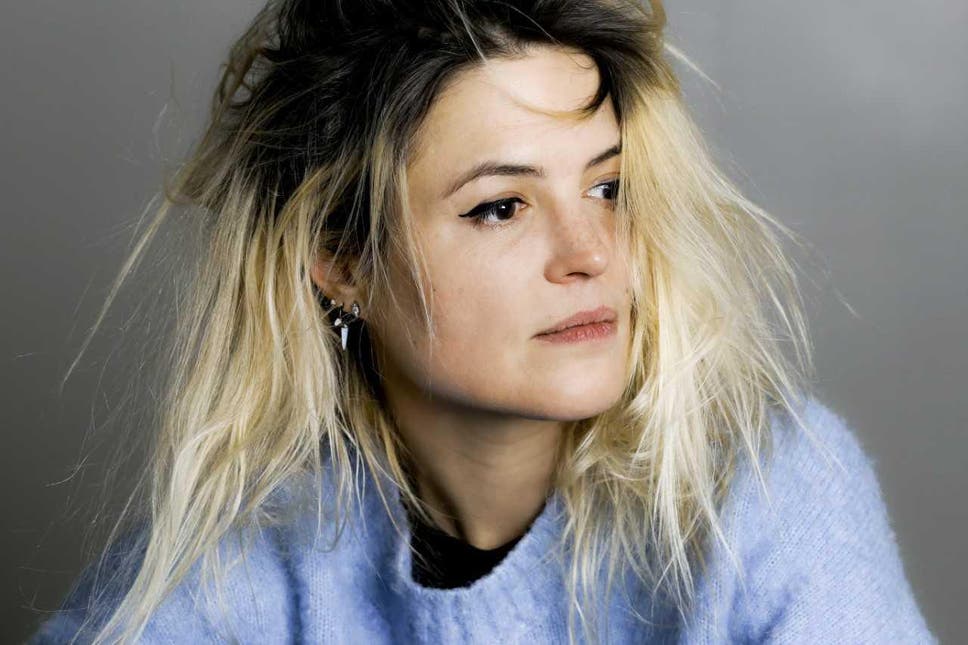
Alison Mosshart one half of The Kills, is back with “It Ain’t Water”, her second solo single and video for “It Ain’t Water,” a more measured and moodier track, visually it’s locked into a still frame of a room with Mosshart dancing and swaying to the slow-churned croon. Self-isolated in her Nashville home, Alison Mosshart is happy she still has her landline phone. She’s not getting rid of it any time soon. During a pandemic, you never know what kind of archaic resources might come in handy. It’s not so much a backup tool for communication, but more a piece of nostalgia as everyone reverts back to their roots. “I’m never letting this go,” she says. “It’s wonderful. It’s really a joy to talk to anybody right now. I love it when my phone rings now. We’re all reverting back to our junior high, teenage selves when we used to sit in our bedrooms on the landline and talk to our girlfriends and love every minute of it.”

Following the Covid-19 lockdown, Mosshart finally has some down time—to talk, think, drink wine (lots of wine), and write. “Normally, I don’t have a minute,” says Mosshart

Alison Mosshart wrote the new song last year with Alain Johannes (Queens of the Stone Age, PJ Harvey). She says of working with Johannes, “Working with Alain on “It Ain’t Water” was a blast. He’s such a talent and such a kind person. His mind is wide open. He understands and sees the beauty in imperfection, magic moments, accidents – the soulful human stuff, and the spirited super-human hard to explain stuff that makes a song great. Working with him was an honour, and also, hot damn he can play any instrument like a champ… like he invented the instrument himself. Alain Johannes Is music. More conceptual and planned out, Mosshart says “It Ain’t Water” was easier to pull together since it has very few edits. In brainstorming the video, Mosshart wanted to get the concept in her head on screen, capturing some kind of mirror image approach. “How was I going make it creepy looking, like I’m watching myself in my window?” she says.

“it Ain’t Water” is Mosshart’s second solo outing, arriving after last month’s debut track “Rise”. The melancholic country ballad arrives with another visual created and edited entirely by Mosshart. Mosshart has had time to dig into an archive of songs she’s been writing throughout the past decade. Always laser focused on The Kills, her work with Jack White and The Dead Weather, and other collaborations, all along her 20-year career, Mosshart has been filing away songs that she’s never recorded as a solo artist. “It Ain’t Water” wrote itself in one sitting. “I love when things just magically fall into your lap like that and you’re just in a perfect mood, and it just happens so easily. I wish I had a moment like that every day.”

“Rise” might have been something extracted from The Kills, but has a different coat of lacquer. First written in London in 2013, when Mosshart says she was “missing someone badly,” she had the essence of the song, but put the finishing touches on it when approached for the series. After sending the track to them, stripped down and acoustic, they had the characters do a version of the song, and then circled back to Mosshart to record the song for the series finale and recorded it at the end of 2019 in Los Angeles with Lawrence Rothman (Kim Gordon, Marissa Nadler).

“I got the opportunity to go into a studio and realize that song in the way that I wanted,” says Mosshart. “I’m so glad I got to do that, because I wouldn’t have recorded it otherwise.”

Locked down, Mosshart also started learning video editing and produced her first music video for “Rise” which she compiled using footage from a lowrider car show from 2019 and her own visage. Mosshart wants to dig deeper into her dossier of songs, but her first love is her first band. She’s always had songs that she never thought fit anywhere, so she kept them filed away. “There’s The Kills world or The Dead Weather world, and then there’s this stuff, says Mosshart. “I would love to do more, and I would love a reason to do more.

Check out the original by The Punks 1973, New music from the HBO series VINYL released each week. Mosshart is working through her creative distractions, alone. This summer she will re-release her book “CAR MA” through White’s Third Man Records. Originally released in limited edition, the book is a love letter to automobiles via her collection of photography, art, and writing, and will have an accompanying spoken word audio. “I asked them if I could do spoken word record, which turned into the most crazy thing,” says Mosshart. “It could be a career ruiner, it’s so bizarre.”

Alison Mosshart’s “It Ain’t Water” single is out now. It’ll be released on 7″ vinyl on 31st July with “Rise”,

Though their previous album, 1988’s Green, can be counted as a commercial success, R.E.M. was still largely dismissed as a college rock band more known by the 120 Minutes set than the mainstream. That would all change with 1991’s Out of Time, and its hit single, “Losing My Religion.”

More than a career-making breakthrough, however, Out of Time helped to define a transitional phase in rock music, leading alternative music to the top of the charts while paving the way for the grunge revolution with its less contemplative lyrics and more severe sound. Eventually, groups like Alice in Chains, Nirvana, and Pearl Jam started to surpass groups like R.E.M. (at least for the moment), allowing Out of Time to take on another meaning, as the possible last gasp of the underground rock era.

On the 25th anniversary of its release today, Out of Time is still an immensely listenable affair and its importance should be celebrated. And so, with that in mind, we decided to rank the 11 songs on this immortal alt-rock classic.

“Belong” is a character study of a woman brought to the brink of a nervous breakdown by an unnamed news event who clutches her child close in an effort to steel herself and regain her composure. Although the song’s melodic wailing chorus from Michael Stipe and Mike Mills is haunting, the song feels oddly disconnected from the rest of the album.

Throughout the 1990s, countless mixtapes wrapped up with this gentle track as warmly as a parting farewell handshake to a friend. Here, Stipe belts out nonsense sing-song words, allowing the track’s lush instrumentation to take center stage. On the cassette version of Out of Time, “Endgame” was the final song on the so-called “Time Side” (with the other being the “Memory Side”). This is brilliant placement, as the tune’s reflective nature offers brief solace from the heavy emotions that dominate the rest of the album.

Given Michael Stipe’s dynamic persona, it’s easy to forget that R.E.M. contained another vocalist. This album afforded Mike Mills the opportunity to really step into the spotlight, with this track being his finest moment. As rustic as the environs from which it took its name, the song — whose melody and lyrics were also created by Mills — spins a yarn about a redemption-seeking man desperate for another shot. “Catch me if I fall,” wails Mills throughout the song, and you can and will be waiting to do just that.

Easily the most divisive song in R.E.M.’s entire catalog, “Shiny Happy People” is, depending on your point of view, the group’s foray into disposable bubblegum pop or a cloying, insidious earworm that was the early ’90s equivalent of Bobby McFerrin’s “Don’t Worry, Be Happy.” Regardless of your opinion on the song’s merits, it’s difficult to not, at least, be charmed by the guest vocals from Kate Pierson of The B-52s, whom R.E.M. knew from the Athens, Georgia music scene.

For this heavy-handed condemnation of Top 40 radio, R.E.M. enlisted the help of Boogie Down Productions’ KRS-One to sing a closing rap verse about how “now our children grow up prisoners/ all their life radio listeners.” This song seems dated to the point of quaintness now that music fans have more options than ever to individualize what they listen to. Then, there’s the delicious irony of this being the fourth single released from Out of Time, issued at a time when R.E.M. owned the airwaves and had become the very thing they are criticizing here.

It’s worth noting that R.E.M. again attempted to incorporate rap into their music — with much greater success — by featuring A Tribe Called Quest’s Q-Tip on “The Outsiders” from their underrated 2004 effort, Around the Sun.

A powerful song of frustration and loss, “Low” is a song whose impact isn’t immediately evident thanks to it being buried in the track-listing behind the juggernaut that is “Losing My Religion.” Michael Stipe’s lyrics here seem more personal — “I skipped the part about love/ it seemed so silly,” he muses — than the usual ambiguousness that he was known for, foreshadowing the heart on the-sleeve nature of the subsequent Automatic for the People LP.

By the time he angrily declares “you and me/ we know about time” just before the sad resignation that closes the track, listeners have discovered “Low” for what it truly is: The album’s secret weapon that exposes how devastating heartache can be.

It’s unclear exactly how much R.E.M. listened to Pet Sounds while crafting this summery slice of pop bliss, but I’m guessing it was a considerable amount. Mike Mills again delivers lead vocals here, marking the first time that an official R.E.M. single was released without Stipe being front and center. Sure, this is a lightweight track compared to the heaviness that will define the rest of this list but that’s more than okay. Sometimes you just want to drive around on a nice day and let music put the nastiness of life far from your mind. And when songs like this one can accomplish such a thing, why that’s near wild heaven, indeed.

“This could be the saddest dusk I have ever seen.” Those words kick off “Half a World Away,” a devastating, if somewhat oblique, focal point from Out of Time. Hinting at a relationship gone wrong due to issues ranging from alcohol to physical and literal distance, Stipe’s mournful vocals are heightened by the happy musical dirge accompanying them. This cacophony of organs, harpsichords, and violins swirl into a stew of acceptance that the protagonist’s dreams will remain forever out of reach on the horizon.

The closing track on Out of Time, “Me In Honey” is a melodic rocker in which yet another one of Michael Stipe’s lovelorn characters attempts to make sense of his life. Yet there seems to be not only hope, but glimpses of recognition, that to be head over heels or caught in honey, as the song would have it, is just as thrilling as it is daunting. The group once again enlisted the help of Kate Pierson to provide background vocals here, with her stirring vocals giving the song an added layer of sexiness.

This was the song that changed everything for R.E.M. In a mere 4 minutes and 28 seconds, the group went from being underground darlings to mainstream rock sensations. Despite some misguided grumblings from longtime fans who felt the group sold out by becoming successful with this track — a complete fallacy given how nontraditional of a pop hit it is — the general consensus was that the group had unveiled a masterpiece.

It helped that the accompanying video was a heavily rotated monster directed by Tarsem Singh that used imagery from Caravaggio and religious texts to convey its otherworldly mood. (Stipe’s frenetic dancing was pretty memorable too). The clip helped R.E.M. dominate the year’s MTV Video Awards, a ceremony at which Michael Stipe’s seemingly unending parade of T-shirts with political messages on them only got the band more attention.

But even with the airplay and marketing push that “Losing My Religion” received, it would have all been for naught if it wasn’t a great song to begin with. Beginning with Peter Buck’s mandolin strains and concluding with Stipe’s final tortured declaration of, “but that was just a dream, dream” the song is an absolute oddity about longing, heartbreak, and obsession that is still as striking as it was 25 years ago.

Twenty-five years ago, R.E.M. released Out of Time, which eventually sold over four million copies in the United States and transformed longtime college radio darlings into a mainstream concern. It was the album’s first single “Losing My Religion” that definitively turned the group to artistic and commercial leaders of the burgeoning alternative rock movement. Up until this point, the group’s singer Michael Stipe had directed their music videos, or had entrusted them to people rooted in the art world like Robert Longo, James Herbert and Jem Cohen. Stipe had also stated publicly that he would never lip sync in a video — a claim he backed up in every video during the band’s first ten years.

h the band and their label sensed that this was their potential crossover moment, they selected Tarsem Singh to direct “Losing my Religion.” Singh (credited as just Tarsem) was finishing up film school at the Art Center College of Design in Pasadena while nearing the age of 30 and selling cars in the summer to afford tuition. He had previously directed only two videos for record labels — for Suzanne Vega and En Vogue — but the young director managed an artistic triumph. “Losing My Religion” would go on to win six MTV Video Music Awards, including Best Video and Best Direction as well as the Grammy for Best Short Form Video.

After “Losing My Religion” Singh would quickly depart from videos to produce commercials and visually stunning films including The Cell and Mirror Mirror. Here Singh tells the story of how the captivating and confounding video for “Losing My Religion” came to be.

Tarsem Singh: I had done a Suzanne Vega video [for “Tired of Sleeping”], I really liked the song and I wanted to do something in the style of the photographer [Josef] Koudelka. The Czech Republic was just opening up. My college professor at the time was from the Czech Republic and I told him, “You want to go there for a week? We can shoot this thing in the countryside. They don’t seem to have a working currency. We can sleep in a bus and do it.” He said, “OK.” That landed with the R.E.M. guys and Stipe was a fan of Koudelka. They approached me to see if I was interested in doing a music video.

The reason I only did [a small number of music videos] was I never really was a very good music video person. I’m quite the opposite from people like Mark Romanek and David Fincher. They always had a team of people and did it correctly. I never wrote [a treatment] for a song, ever. I would just have this idea and I would assume that when the right song comes along, I’ll do the music video. Later it kind of created not-so-friendly situations where bands that I love and adore would know that I liked their music and would send me a song. I would hear it and go, “That’s great.” Then I would spend some time and go, “Oh, it doesn’t fit into any of my ideas.” And everybody would say, “It’s supposed to be the other way around.”

For R.E.M., I had an idea. Then [Warner Bros.] asked me if I’d be writing it down and sending it. I said that was why I hadn’t done any videos since [“Tired of Sleeping”]. They said that [R.E.M.] live in Athens and I could go visit. I called my sister because I hadn’t been to Europe for so long and I was so excited I was going to see my family; then, of course, the day before, I find out it’s Athens, Georgia. But I said, “No problem,” because I’m in college and I’m getting paid to go somewhere.

I went and saw Stipe and the guys for probably a day and a half. All I wanted to see was where he stays, where he lives and what he does. Something was missing from the idea, one little piece. I spent a day with him, in the evening we went clubbing. I saw him dance and I thought, “That’s the missing element!”

He thought that I was procrastinating and not pitching the idea. When I was leaving the next day, he said, “When are you going to…?” I said, “I’m not supposed to tell anybody the idea, but if you want, I’ll try to explain it to you.” I told him there’s a story by Gabriel Marcía Márquez called “A Very Old Man With Wings” in which this freak angel arrives and nobody knows quite what to do with it. So it’s that story, told abstractly through the style of these guys called Pierre et Gilles, who are these iconic gay photographers that take how Indians do their gods and goddesses, then they do that to the Western gods. I said that it would be interesting to have an Indian copying two French guys copying Indian work. That’s the style of one piece [in the video], that’s the heavenly abode. And the place where the angel lands, it would look like Caravaggio, whose lighting I really like. Then there’d be propaganda posters, which is a third group of people who might see this event, but might misinterpret it or come up with a different solution altogether. I said [to Stipe], “I didn’t know how the three will be cut with each other, except I saw you dance, and I think that can be interesting.” And that was my pitch. I’m sure it made no sense.

One of the things that happened at that particular time was that [R.E.M.] were in a bit of a tough situation. They were the darlings of everybody cool. Matt Mahurin had done a couple of videos with them that I adored. The problem was that Stipe had gone around saying that he would never lip sync. The thing that changed him was he saw the Sinead O’Connor video [for “Nothing Compares 2 U”]. It doesn’t have anything to do with what the song is about, you’re looking at a person’s face.

You have to understand my mentality was of an absolute student. You have no money, no nothing. My brother was working as a janitor, my girlfriend at the time was bussing tables. You’re literally doing that and somebody comes along and says, “Here’s 100 grand.” You’re like, “Fucking hell. We are going to change the world!”

We started shooting with the band, and I had a crane and all these things. Nothing was really working. I went to the bathroom and I was throwing up. I came out and I was behind the assistant director and I said, “What’s next?” He didn’t see it was me and he said, “Yeah, I wonder what’s next.” I think the AD was thinking that I was doing drugs. I don’t drink, smoke, never have. I wasn’t mad at him, so I said, “I wonder what’s next, too” I didn’t know what to do. Then I said to everyone, “I know what the problem is. Everything we have shot already is too pretentious.” I said that we should forget everything that we’d already done and just film Stipe dancing.

R.E.M; MTV; Music Awards; 1991

I like either Bollywood and Busby Berkeley or mystic-gone-crazy dancing. I don’t like half-assed choreography. I liked his thing because it was so spastic, it was so internalized, the way he danced. He danced and, in-between takes, I was jumping up with him. I just knew that was it. The next day when he came and saw me shooting all these things that looked so kitsch and so strange, he didn’t say a thing. He said, “All right, you know what you’re doing. Carry on.”

We had no idea what we had. We said we needed ten days for cutting. We cut it from nine in the morning until three [at night] the first day. We looked at it and we said, “It kind of seems to work, let’s come back and look at it tomorrow.” I went downstairs and I remember my car was gone, it was towed away. We were right back in the morning and I had one look at it and I said, “Hmm, I think it’s done.” We only had one day with it. My editor said, “What can we do?” I said, “Let’s call the studio guys and say, ‘Come and take a look at the work in progress.’ And if they go, ‘What the fuck, are you crazy?’ We’ll go, ‘Hey, we got nine days. This is shit, we’ll fix it.'”

So when they came in, they had one look at it and said, “It’s done, isn’t it?” We went, “Yeah! It’s done, it’s perfect.” Then they sent it to the band and the only note we had was there was a guy sitting on a chair and one of the angels looked funny. They said, “Can you change that angel up?” That was literally it. It came out and just caught fire.

[The MTV Video Music Awards] was pretty nuts. I had been selling cars and putting myself through school, suddenly I was doing jobs in Europe. I was loving all of that and in the middle of it, [the awards] came along. I used to work as a busboy at Bombay Palace [in Beverly Hills]. We went out there and were eating dinner before we went to the awards. The cook came out and somebody told him, “Hey, this guy is going to be on TV.” He said, “Never forget where you came from, put this turban on your head.” I’ve never in my life worn a turban, except for my brother’s wedding. It’s 10 times bigger than my head, and I ended up on the show. [After winning the first award] they asked me if I wanted to say something. I said, “Not really.” I can talk until the cows come home, but something like that, I don’t know what to say. We went up there four or five times. The last time, we had won so many awards, I thought maybe I should say something. As soon as I was about to speak, the music came on and just cut me off.

[R.E.M.] sent me [“Everybody Hurts“] which was really a massive hit, too. The only problem was, me being a jerk, I just had no ideas that fit the song. I wanted to shoot in this particular cathedral in San Gimignano that doesn’t have a roof. I went out there, we couldn’t get the permissions in time. The Museum in London, they would let us shoot there because they were building it and it didn’t have a roof, but I didn’t like that idea. Then I couldn’t make the schedule work.

Had we just done Michael Stipe dancing [for “Losing My Religion], that was so strong and powerful in itself. If I left it just Stipe dancing, I think it would’ve had the same amount of success. I remember, four months later, seeing them on Unplugged. I left him a message on his machine saying, “I wish I hadn’t done a thing. I wish you had just danced.” There is no way anybody could’ve stopped that thing from being the phenomenon that it was. If it was just him in that room, it would probably be a lot less dated than it is now. I look at that thing, and it’s the stuff that only the audacity of student-thinking would make. It’s so crappily, horrendously wonderful. All it needed was Stipe in front of a window with a band. He didn’t even need the window in Unplugged. He’s sitting on a bloody stool and he’s playing it and he’s singing and it’s phenomenal. They didn’t need any of this, it was just in the air.

Still the saddest thing that R.E.M. has ever recorded, “Country Feedback” is nothing short of shattering. More than just another somebody done somebody wrong song, this epic is an analysis of how it feels to be empty inside yet still filled with pain, rage, and sorrow. Here Stipe’s delivery alternates from a wounded hush in which he reflects on how everything from the 1970s self-help technique EST to physics were used to try to help resurrect a dead relationship. As all over the place as the lyrics are, what they represent perfectly is the scattered mindset of someone so consumed by loss. So when Stipe eventually and inevitably screams, “I need this,” you can’t help but reflect upon your own experiences with similar pain.

As you can see above, Michael Stipe refers to “Country Feedback” as his favorite song. In terms of real emotion, this one delivers like no other R.E.M. song before or after. So I more than agree with his sentiment.

Even though Out of Time marked the moment the hoi polloi embraced alternative culture, it wasn’t just a socio-cultural phenomenon – it’s a great album too. So even the old-school diehards who stigmatize the album as the beginning of the end of what they loved about R.E.M. couldn’t plausibly deny that it contained tunes every bit as arresting as what had come before. At the same time, countless new converts who had paid only casual attention to the band were drawn into the fold in greater numbers than ever before.

Part of it is thanks to the production, which didn’t differ drastically from that of R.E.M.’s previous album or two (Out of Time co-producer Scott Litt also helmed the board for both Document and 1988’s Green), but Out of Time simply nudged things along to the next logical step. R.E.M.’s sound had been growing bigger and bolder since the mid-’80s, so when tasteful string orchestrations were slapped onto seven of the album’s 11 tracks,

Caught In ’70s Traffic One More Time

As the piano kicked in on ‘Something New’ at the same time as one of the most distinctive voices in rock, Traffic were back in the American album chart on this day 41 years ago with When The Eagle Flies. With Stevie Winwood  vocals and keyboards augmented by the work of Jim Capaldi, Chris Wood and now Rosko Gee (plus the uncredited Rebop Kwaku Baah), they would once again strike gold in the States — but this would be their last chart showing with a new studio record for very nearly 20 years. This ninth album by the British rock pacemakers gathered half a dozen new compositions by Winwood and Capaldi, and another, the equally impressive ‘Dream Gerrard,’ that Steve wrote with inimitable performer-humorist Vivian Stanshall, late of the Bonzo Dog Band. It arrived just over a year and a half after the band’s 1973 entry Shoot Out At The Fantasy Factory, after which they had released the On The Road memento of their concert in Germany that year.


traffic-on-the-roadTraffic-When-The-Eagle


Whereas Traffic’s recent studio endeavours had been produced by Winwood, When The Eagle Flies was overseen, like the live disc, by their Island label boss and confidant, Chris Blackwell. There was a subtle update to their sound, too, with the use of Moog and Mellotron keyboards, and an ever greater advance into a sophisticated jazz-rock style. But, with their status as FM album rock radio staples intact, there was no sign of any reduction in their American popularity.

While their British audience showed less enthusiasm for the new album, granting it only a fleeting top 40 place, Eagle entered the 28 September, 1974 US chart at No. 52 and became the group’s fourth top ten LP in a row there. Billboard called the album “a superb return.”

It reached No. 9 in a 27-week run, going gold by November, but after a promotional tour in the US in the autumn, Traffic called it a day. They were commemorated by two compilations in 1975 but the name was not revived by Winwood and Capaldi until 1994’s Far From Home.

If there is a wandering minstrel for a generation, some would think it would be Stephen Stills. He was a founding member of Buffalo Springfield,Crosby, Stills & Nash, Manassas and has had a great solo career to date.

Stephen Stills is one of the few rock artists who can claim to have grabbed the elusive brass ring of critical and commercial success not just once or even twice, but three times.

The first time was as a group member of Buffalo Springfield and writer of their 1967 hit “For What It’s Worth,” taken from their acclaimed first record. After Buffalo Springfield folded, he formed one-third of supergroup Crosby Stills and Nash, whose definitive performance at Woodstock in 1969 helped rocket their debut album release into multiplatinum orbit. And finally, just to make it perfectly clear he wasn’t simply riding the coat tails of others, in 1970 Stills released his first solo effort, which went to No. 3 on the album charts and spawned a Top 20 single, “Love the One You’re With.”

All milestones for sure, but these three classics have tended to obscure the rest of Stephen Stills’ work. And that’s unfortunate, because in Stills’ canon is an often overlooked gem in many ways the equal of his other projects: an album called Manassas, made by a band of the same name.

This seven-piece aggregation was assembled by combining players from Stephen Stills’ road band with others from the last incarnation of the Flying Burrito Brothers, which included ex-Byrds’ bassist Chris Hillman. So, though Stills was the acknowledged leader, officially Manassas has always correctly been referred to as a band — one with a “benevolent dictator” perhaps, but a band nonetheless.

The musicians’ wide range of experience enabled them to move between various forms of American popular music, integrating rock, pop, country, blues, Latin rhythms and other bits as well. This was very much in evidence on the group’s 1972 self-titled release, an album with so much good material that it came out as a two-record set. Even the names of the songs gave clues as to the variety found in the grooves: “Cuban Bluegrass,” “Colorado,” “The Love Gangster,” “Blues Man.”

One could hear the influences weaving in and out of the mix, courtesy of: Al Perkins’ pedal steel; Joe Lala’s percussion work; the tight-but-loose rhythm section of bassist Calvin Samuels and drummer Dallas Taylor; the stellar presence of keyboard ace Paul Harris; and the tenor harmony voice and rhythm guitar of Chris Hillman.

And let’s not forget Stephen Stills himself, writing and singing the songs, and playing his distinct lead guitar style, tying it all together. Even the first side is cut together as a seamless medley like production, with the other sides thematically arranged for maximum effect. Overall, think the Eagles meets Santana meets Johnny Winter, with bits of the Grateful Dead and Jimi Hendrix’s Band of Gypsies in places.

Still, you have to wonder why this went under so many people’s radar, especially with the gap left by the break up of CSN  (and Young) in 1970. There could be a number of reasons.

First, there might have been some confusion as to what this actually was: a third Stephen Stills album or something else? After all, even the cover sports Stills’ name large above the Manassas logo.

Second, it was released in April of 1972, and shortly thereafter the band went off to tour Europe. Some of the television appearances they made while over there show that when they got warmed up, they were as good as or better than most of their contemporaries. After returning to the U.S., Manassas had to make time to accommodate Chris Hillman’s commitment to prep for a Byrds’ reunion tour starting in October, which might have slowed their momentum. Finally, although Manassas did make the Top 10 in the album charts that year, it contained no successful single. But the Crosby and Nash duo effort released around the same time contained a Top 40 single, “Immigration Man.” Perhaps more significantly, Neil Young’s 1972 best-selling chart topper Harvest featured the singles “Heart of Gold,” which went to No. 1 in the charts, and “Old Man,” which reached the Top 40.

Eventually, various outside factors, including Hillman starting the Souther-Hillman-Furay Band and Stills and  reuniting Crosby Stills Nash and Young for a major world tour in 1974, would cause Manassas to officially call it quits in late 1973.

At least they left behind one great album to document their short existence, and maybe one day Manassas will take its place alongside Stephen Stills’ other, more famous contributions to rock ‘n’ roll.


Stephen has reached  71 on his last birthday. Stephen Stills is able to claim that he played at the 3 most important music festival of the 60’s. Monterey International Pop in 1967, Woodstock in August of 1969 and Altamont in December. of 1969.

On his first solo album “Stephen Stills”, he had both Jimi Hendrix and Eric Clapton play for him. And he’s ‘Still’ playing.

Is there anyone piece of his work that is your very favorite?


Nils Lofgren of the E Street Band Recalls the First Time He Heard The River

Nils Lofgren’s released a superb career history box set late last year. Some of this year’s crop of presidential hopefuls could learn a thing or two about Lofgren’s finesse and economy in conversation; how stays on point about what he needs to plug, shares the spotlight with others, gets in an anecdote or two about his illustrious associates, and still manages to be a regular Joe throughout. He has been on the road for 48 years come this September, rocking, shaking hands, and who knows, probably kissing babies. For the last 20 years that campaign has been a grassroots one with which he has been able to maintain a thriving solo career without involving a phalanx of people.

And of course there is his 30-plus year association with Bruce Springsteen and the E Street Band, Now touring to promote the Boss’ boxed set The Ties That Bind: The River Collection, which celebrates that double album recorded just a few years before Lofgren joined the band in 1984.

On Chasing Amy
“Strangely enough, 35 years ago, I met Amy in Asbury Park [New Jersey] at the Stone Pony. We were both just kids. After a show at the Pony, she didn’t even come to see me. I met her, convinced her to hang out with me, and at 6 a.m. I went to Boston and begged her to come with me. She said no, she had a job and her mom and all this. So I thought I’d see her in a few months. I never saw her again for 15 years. Twenty years ago, we met again. I was passing through Scottsdale at a great club, The Rocking Horse, that burned to the ground not long after. She came up and said ‘Hi, remember me?’ And we were both at the end of divorces, and we’ve been together ever since.”

That’s when Lofgren moved his home and studio base from D.C. to Arizona, a place he hates to leave for long stretches and sounds eager to return to as he is calling in from The River tour in St. Louis.

“This is my 48th year on the road,” he ruminates. “I’ve long tired of leaving home, but that’s a champagne problem, as Amy points out. We were talking about how much I love playing live, it’s kind of like my favorite thing. And the way Amy put it, and it applies to the E Street Band as we started this tour, for musicians that love to perform live, it’s like going to Oz and the audience is Oz and you go there to find you heart, you go there to find your musical brain, you go there to find your courage. And speaking for myself as a 64-year-old and not being very happy about dragging the suitcase out, saying goodbye to Amy, and having my dogs, who I love, giving me dirty looks, and leaving home is rough, it is truly like going to Oz and finding this part of yourself you don’t find anywhere else. There’s a level of heart and courage and your musical brain getting fired up that you don’t get jamming at a local bar, you don’t get in recording in a studio, you don’t get puttering around at home. You only get it in front of an audience.

One of Nils Lofgren's many guitars.

On living in Arizona
Did Lofgren find moving here a tough adjustment after years of living back east? “Well I’ve been traveling the entire country since ’68. I’d been through Phoenix many times. It’s not like you’re playing the Sahara. It’s a town, there are friendly people and great crowds. I always thought the audiences there were really good. I’d go through there regularly, but I never stuck around.

“I got to love the mild climate. Between Chicago and D.C., I’d had decades of winter, ice, slush, freezing — I just tired of that. And even though it’s grown incredibly over the past 20 years, when Amy was there you could ride horses down Scottsdale, and north of Shea there was nothing but desert. When I got there, the 101 wasn’t even open. Even though it’s got a large populace, it’s still a slower pace of life to me than the coasts.”

On The River
Lofgren recalls the first time he heard the album, having bumped into Springsteen while he was out in L.A. mixing the album, the first Springsteen album to incorporate his serious writing style with the kind of pop throwaways he’d previously given to the likes of Southside Johnny, Greg Kihn, or The Pointer Sisters, only to watch the other artists enjoy great chart success.

“Bruce describes the album as a young adult being part of a planet instead of an outsider. I heard it well before it was released, and I was always impressed how they got the sizzle of the live performance into the album so to be out here playing here is a beautiful thing.”

The E Street Band has only played the album in its entirety once in concert, in New York City a few years back. The learning of an entire double album is a drop in the bucket of what a Springsteen sideman has to learn for each tour.

“We’ve been friends since we did an audition night together in 1970 for Bill Graham at the Fillmore West with Steel Mill and Grin. When I first joined I was overwhelmed with just a hundred songs, but on the last tour we played 240 different songs, so you could imagine the scope. You can’t stay on top of the entire catalog so you kind of guess, you communicate, Bruce gives us a heads up and he’ll surprise us with an audible on stage and we use our instincts to make do and make it work. There’s a great boxed set with bonus tracks we’ll probably dig into. We’re starting off with a great bonus track called ‘Meet Me Tonight In the City.'”

“It’s very organic the way the band comes together. I defer to Bruce and Steve all the time. I hear endless parts. I’ll look at what they’re doing and play the third part I hear and it usually always works out. Much more than musicianship, as a band our instincts are spot on because we love Bruce’s songs and that type of music and have an affinity for how to play it.

On Keith Richards
Lofgren classifies himself as an artist with no hits, but he did have a popular radio hit with a song “Keith Don’t Go” that somehow missed the lower regions of the Top 100. Lofgren has told a story about how he finally met his idol, who meant as much to him as Chuck Berry meant to Keith Richards.

I wondered, when he met his idol was it the same experience as when he and Springsteen played in an all-star band backing up Chuck Berry at a Rock and Roll Hall of Fame show? Chuck reportedly kept changing keys on the band, making all the Hall of Famers with onstage sound like rank amateurs.

“I love Keith Richards, and I’m not speaking about the diabolical nature of Chuck but more the positive nature that inspired Keith and many young guitar players of that generation. I’ve met Keith many times; he’s always been kind and gracious. We never discussed the song I wrote for him, ‘Keith Don’t Go.’ I know he knows I wrote it and I have to believe he understands the spirit with which it was intended, which is ‘You share a gift we all need. It’s a beautiful thing you do. Please stick around and keep doing it and hats off to you on behalf of all us fans.’

“After all these years, Steve Jordan, who plays in The Expensive Winos, brought me into a dressing room, and there is Keith. He said hi, he was very friendly, but he’s there sitting in a corner practicing through this little amp. So I’m visiting with Steve on the other end and all the sudden I hear Keith playing the famous Chuck Berry lick. I have to say I’ve played it a thousand times and I’ve heard it 10,000 times, and I’ve never in my life heard it sound like that and I can’t even explain it to you. It’s just three notes put together in a different way. But there was something going on physiologically and spiritually and musically what was going on inside of him and how he heard that riff of Chuck’s. It was a deeper thing. It meant more to Keith than it meant to Chuck even though Chuck who created it.

“And that’s kind of like what the Stones did for Howling Wolf, Chuck Berry, Muddy Waters, and what it became. ‘Honky Tonk Women,’ ‘Jumping Jack Flash.’ It came from them but they made it their own because they had a deeper affinity for it and it meant deeper for them and it became something else.

“Fast forward to a Willie Nelson and Friends TV Special where he would play with a cast of 20 great singers. I was part of a house band, one of four guitar players. I was with Greg Leisz, one of the great lap steel players and Hutch Hutchinson on bass, all this cast of amazing singers coming through and one of the guests was Keith Richards. There was like 20 people onstage and on the other side of the drummer was this giant piano Jerry Lee Lewis was gonna play and in the bell of this piano was Willie Nelson, Merle Haggard, and Keith Richards.

“Now we’re playing so technically now onstage playing with Keith Richards. Now, I’m an old, grizzled veteran myself so I had a sense of humor about it. ‘Hey Keith, I can barely see you there but we’re making music together.’ So Kid Rock comes out … he’s a great showman. We were doing, I can’t even remember. ‘Whole Lotta Shakin,’ maybe. And he’s up there whipping the crowd into frenzy and I understand with monitors and the frenetic sound onstage. He didn’t notice but just as Kid Rock got a buzz to go jump off the piano and run to the audience, you know Jerry Lee tells the band to bring it down. None of us thought it was an intentional slight but he didn’t hear the cue. So what of you do? Part of you wants to acknowledge the frenzy but that other part of you says wait a minute, Jerry Lee says bring it down.

“So we’re all just treading water. I could see a look on Keith’s face, he was feeling the same thing we were feeling but he’s freakin’ Keith Richards, so out of the blue he just explodes out of the little pack of guitar players he’s in, he goes right to the front of the stage, steps in front of Kid Rock and does one of his twirls when he spins on one leg twirls around. He’s still a showman so he’s not going to try to openly bring the show down, with some kind of scary gift that bums everyone out.

“And even better, as soon as he spun around he turned his back on Kid Rock and walked to the other end of the band and he got down with his guitar between his legs and his legs are spreads and he’s looking right in my face and he just sits there rocking out with his back to in our faces with his back to Kid Rock. I can’t tell you what’s going through Keith’s mind but all I can tell you is instead of Keith rocking out 20 feet away, now he’s just rocking out dirty in front of Greg, Hutch, and me. And all three of us are just in heaven. And Keith went and made a statement and rocked out with the band and I was like ‘Hey, there’s a lot of people here besides you.’ I don’t know if that’s what he was saying to him but that’s what he was saying to me.”