Archive for the ‘CLASSIC ALBUMS’ Category

100000x100000 999

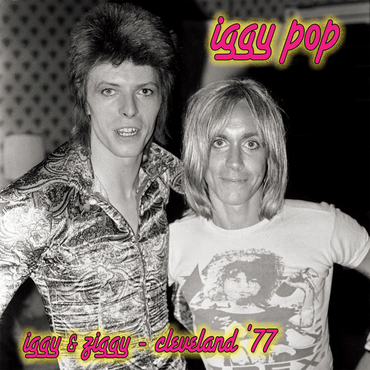
Iggy Pop had hit bottom after the messy breakup of the Stooges and he needed help, and when friend and fan David Bowie offered to lend him a hand, he was smart and grateful enough to accept. Bowie produced Iggy’s first solo album, “The Idiot”, and after Iggy set up a tour to promote the record, Bowie put together the band and tagged along as their keyboard player. Bowie’s presence insured a larger audience than Iggy had attracted during the grim final days of his band, and he was determined to prove he could deliver the goods without making a spectacle of himself or collapsing into a drug-sodden heap on-stage.

Unfortunately, anyone familiar with Iggy’s body of work knows the last thing you want from one of his live shows is a professional-sounding performance without a sense of danger, and unfortunately, that’s what the audience got during this March 21st, 1977 show in Cleveland, Ohio, part of a three-night stand Iggy and the band would perform at the Agora Ballroom. Iggy & Ziggy: Cleveland ’77 finds Iggy in fine voice, and at a time when he had a lot to prove, he leaves no doubt he was a solid musician and showman, singing with a sense of control and dynamics he couldn’t approach with the Raw Power-era Stooges.

However, Iggy also seems clearly afraid to push this material too far, and the caution robs the songs (nine of which are drawn from the Stooges‘ songbook) of much of their life force. Even worse, guitarist Ricky Gardiner doesn’t seem to know what to do with the Stooges material — he’s at least as skillful as Ron Asheton or James Williamson, but his attack is so toothless and polite that he reduces some of the greatest rock songs ever to mush. (Bowie’s keyboards are not nearly as ill-advised but they don’t fit the old material very well, though Hunt Sales and Tony Sales are a great rhythm section who do what they can to give Iggy the energy he needs.) Some of the material from this show also appeared on Iggy’s lamentable live album TV Eye Live.

Cataldo is the recording project of Seattle musician Eric Anderson. His upcoming album is called “Keepers”, and the track we’re premiering today certainly fits the bill. “Person You’d Be Proud Of” is wistful and hopeful and beautiful, a brightly emotive yet understated slow-build that splits the difference between Anderson associate Ben Gibbard’s pensive indie rock stylings and rhythmically complex pop worthy of an ’80s teen movie’s closing credits. Or as Anderson himself explains it: At some point recording this tune my drummer asked “So…are we going full Gabriel?” As you can hear, we super, super did. This is a song about feeling lucky and wanting to somehow earn your own good fortune.

http://

From start to finish each song on Keepers is better than the last. The first time I heard this album I thought it was an indie pop masterpiece. All year long I just love it more and more. The storytelling in these songs is amazing. Songs like “Little Heartbeat” and “Photograph” will make you dance while songs like “Straight Up Western” and “America, Goodnight!” will make you nostalgic for those friends you got into all of that trouble with.

Since releasing his debut album Learning under the name Perfume Genius in 2010, Mike Hadreas and his music have both steadily grown bolder, more daring, more defiant. Over the course of four full-length albums his songs have evolved from intimate piano pieces to grandly orchestrated, stirring pop anthems that often rage against both his inner demons and the social and political injustices Hadreas sees in the world.

Hadreas‘ latest work, “No Shape”, is the singer’s most fearless album to date and perhaps his most personal. To mark its release today (on Matador Records) and to explore its inspirations, Mike Hadreas shares some of the stories behind its creation. He opened up about his battle with Crohn’s disease, gender identity and his conflicted views of religion. He also spoke openly, and frequently, about his deep love for his boyfriend, Alan Wyffels, as well as his lingering doubts and existential dread over growing older while remaining relevant as an artist. You can read Hadreas’ thoughts and stories, Perfume Genius

“When we recorded this song we had the studio set up like a makeshift church. We arranged lines of chairs like pews and had each person sing seated, facing a microphone at the front of the room. Everyone in the studio sang, including some friends of the engineer that were nearby.

“Hymns have always sounded like sung spells to me. I never felt included in the magic of the God songs I heard growing up — I knew I was going to hell before anyone ever told me that I was. People found comfort in this all-knowing source, but I felt frightened and found out. I developed some weird and very dramatic complexes. It took me a long time to not think of the universe as a judgmental debit-credit system. I haven’t completely shaken it, but I no longer think that I am overdrawn with God. Grace is not something you earn, its always there. I find this idea a lot more fun. I guess this song is a collection of little prayers that are helpful to me.”

Slip Away

“My favorite movie is Dogfight, with River Phoenix and Lili Taylor. The ending is kind of bittersweet, but so real and moving and complicated. I tried to see if I could make something similar. It’s about a love that other people tell you is devious or not natural being very pure and true, physical or otherwise. When I was doing press for my last album, everybody kept asking me why I was writing about all this, when gay people can get married and it’s not illegal to suck d*** in Wyoming or wherever — but there are still a lot of really horrible things going on right now. So there’s a joy to this song, but it’s a protest too.”

Just Like Love

“I was scared of the devil starting around age nine. Before that, I was gathering every family member in the living room, slipping a shirt over my robe so the bottom hung like a skirt and performing Gloria Estefan songs with feverish intensity. I was in the spirit. Maybe I could see my republican senator grandma squinting a little sideways at me, but I was in the spirit. I thought I would grow up to be a girl, but was not bothered that I was a boy. I knew that maybe it was strange to want a Barbie, but I wanted a Barbie and that felt very natural and counteracted whatever intangible discomfort I was sensing from family or the world that didn’t have its claws in me yet.

“I saw this Facebook video of a boy, probably around seven, wearing a dress he had fashioned from a blanket, sashaying through his house while his mother applauded and cheered him on. He was so proud. It was such a beautiful thing, but bittersweet because I knew his spirit would change soon, that he’d become self-aware and ashamed, at some level. The song is about how divine he is, then and always — that he was born perfect. I don’t care how cheesy that is. I just wanted a song that celebrated him and told him to hold on for a while, because we will all be waiting for him when he moves to the city. To tap into the joyous and free part of me that was just dancing and wondering what my boobs were gonna be like.”

Go Ahead

“I’m hyping myself up, telling everyone that they can try and come for me, but I’m already gone — that they can pray for me, but I’m already with God. But never by raising my voice. It feels infinitely cooler to be so casual about it. This is one of my favorite songs.”

Valley

“About a year after rehab, I thought I saw a woman — I am not sure it was her — on the street who I had become close with in treatment, but we lost touch. She was pacing around near the payphone all f***** up. I wanted to write a song saying that I understand how she would go back to using. It is what makes the most sense. Being sober is living against your instincts, all the time. It’s not any better morally than being f***** up. I don’t think addicts should be pitied or thought of as lost. Drinking and doing drugs was the only thing that gave me a feeling of peace, of connection and what felt like grace. They saved my life for a while, before they messed me up. I am not against the stuff itself, just the realness it kept me from.”

Wreath

“I am not a big fan of my body and would like to leave it. Not die, but retain all my thoughts and be free of my body. I have Crohn’s disease, which has caused me to not trust my insides. I feel betrayed by it. I am getting older, and that feels like a betrayal on the outside as well. I do not feel strongly connected to being a man or a woman, which was and still can be confusing. It also doesn’t feel attractive. I feel like it would be more attractive or at least easier to comprehend if I picked a side.

“I wrote this song and all the rest without words. I focused on the melody, the structure of it. I made sure it had a chorus and bridge — all things I have never done before because they felt like work. I really felt inspired by the work; it still felt instinctual and cathartic, but ‘adult, like I was taking charge. I sometimes felt like I lucked in to music, that I was an impostor. I am always scared when I sit down to write that nothing will come out. So it was fun to attempt capital ‘M’ Music.”

Every Night

“Sometimes I feel energy — or think I feel energy — whose true shape will not reveal itself. Or that it’s something I am not supposed to know. It’s very dramatic; ghosts, magic, other dimensions, et cetera. Sometimes it’s a dread that feels very real and alive, like its floating near me, or something beyond good or bad that is almost shaping itself but never fully forms. I am not really certain how to explain it, but this song is about asking to be shown. I prefer there to be an alien in the house, and would like to kick it with the alien.”

Choir

“For all this God stuff I have been talking about, there is an equal amount of existential dread. Depends on the day. I also like digging in to it, dramatizing it — I feel like a warlock. As much as ‘Every Night’ is asking to be shown something mystical and intangible, this song is kind of like being shown and realizing that there is nothing there, or that it’s evil and stifling.”

Die 4 You

“This is a love song with a lot of breath-control fetish language, to communicate a willingness to really give yourself to someone completely. I like that the lyrics can also be taken many different ways.”

Sides

“Being tied up in my own thoughts can lead to the neglect of everything real around me. I don’t imagine its very fun sometimes for Alan. I wrote this song as him singing to me, asking me to wake up and look around and to truly be with him. [Weyes Blood’s] Natalie [Mering] wrote the other side to the story, her lyrics and melody. [Producer] Blake [Mills] wrote the music at the end as well. It was really a collaboration between the three of us.”

Braid

“This is a love song as well. Alan and I truly know each other. At least, more than our parents or anyone else in our lives has ever known us. It’s a powerful thing and I wanted to honor it, that I know everything, that you know everything, and its okay. Sort of the opposite of my song ‘Hood.'”

Run Through Me

“Originally, I wanted to write a song about how I am attracted to toxic forms of masculinity. As much as I am mentally opposed to those archetypes, they really do it for me. I wanted to talk about that disconnect, but the song ended up more like a prolonged fantasy that took a dark turn. I am not sure why I am preoccupied with this idea of being annihilated by someone else spiritually and physically, but it certainly comes up a lot. It is kind of an embarrassing song, thematically. But I think that is kind of bodacious. There is also some power in it, because even though the lyrics might paint the picture of me as submissive, it’s sung with strength and power, like I am the director of the whole thing.”

Alan

“Also one of my favorite songs that I somehow have the least to say about, maybe because I said it already in the song I guess.”

In 2016, Triptides continued their momentum as a powerful live act, traveling across The Pond to tour the UK, performing as a headliner at Manchester Psych Fest in addition to shows in London and Brighton. Forging friendships with several of the top psychedelic bands of our time, Triptides joined British sensations Temples in late 2016 on the West Coast leg of their US tour. The ensuing buzz resulted in an invitation to play to a national television and online audience on Last Call with Carson Daly, where the band performed four songs, two of which aired in October 2016 and the other two in February 2017

As the band looks towards the future, Dylan Sizemore has joined the great migration west to Los Angeles, returning to bass, with Shaugnessy Starr bringing his likeminded psychedelic sensibility and style to the drums. The new Triptides record, “Afterglow”, will be dropping this summer on Requiem Pour Un Twister and the band will support the release with a full European tour.

http://

All songs by Brigman / Menashe
Glenn Brigman – Guitars, Vox, Drums, Farfisa, Mellotron, Tambourine
Josh Menashe – Guitars, Bass, Vox, Percussion, Farfisa
Recorded and Mixed by Triptides at the Sun Pavilion in Bloomington, Indiana.

There are numerous quoted studies that have equated a sleepless night with being drunk, as you get the lowered inhibitions, impaired decision making, and depressed functionality, all without any of the buzz. And so Cameron Boucher’s first lyric on Sorority Noise’s third LP explains a lot of what’s to come: “This last week/I’ve slept eight hours total.” From that point forward, “You’re Not As _____ As You Think” tries to rouse itself from that despondency the best way Sorority Noise knows how: towering twin guitar leads, blinding bursts of distortion, instantly quotable lyrics where the vocals jump up an octave. It’s the kind of record that would be called “triumphant” if Boucher was in a position to enjoy any of it.

The title of Sorority Noise’s 2015 breakthrough “Joy Departed” now carries unfortunate foreshadowing. In its wake, Boucher’s friends took their own lives by way of heroin or suicide and they were memorialized on 2016’s “It Kindly Stopped for Me” EP. Sounding like he’d slept eight hours in the past six months, Boucher’s register rarely left a conversational baritone, with offhand lyrics and monologues laid over incidental guitar and piano, almost avant-garde in its unguarded immediacy. Later that year, Boucher’s pre-Sorority Noise outfit Old Gray reformed for the blood-chilling album “Slow Burn” its scalding, minute-long screamo outbursts were the polar opposite of It Kindly Stopped for Me, but it had the same white-knuckled edge to confronting death and addiction, too emotionally drained to be anything less than direct.

“You’re Not As” opener “No Halo” finds the exact midpoint between these two projects and points Sorority Noise in a bold new direction. Boucher has never been more in command of melody while in his lower register or while inhabiting his hardcore roots. But even as the band makes one last surge towards catharsis before collapsing in an exhausted heap, there’s no relief: An organ drone fades out and the next song begins with Boucher muttering, “I’ve been feeling suicidal.” Sorority Noise’s rise in stature has coincided with an increased candor about depression and mental health treatment .  The songs are in part Boucher’s attempt to eliminate the distance between himself and the listeners and show they’re all in this together.

Similar to Modern Baseball’s “Holy Ghost” , You’re Not As rushes headlong through the outside hype and internal strife, streamlining their sound rather than expanding upon it. Joy, Departed was rife with orchestral swells, florid poetry, and obtuse song titles—the sort of things that pop-punk bands typically adopt to tell fans and the world at large know they’re trying to be taken seriously. It was only in a live setting that Sorority Noise discovered their best selves: windmilling on Gibson Explorers, letting the crowd take over during the climactic lyrics of “Using,” creating something close to group therapy.

No automatic alt text available.

The bulk of You’re Not As is designed for that exact purpose. Boucher nicks lyrics from his friends on “A Better Better Sun” and flatly states, “This is the part where I did cocaine to impress every one of my mouth-breathing friends.” And then comes a goddamn pick slide. Meanwhile, the midsection of “Disappeared,” “Car,” and “Where Are You?” eliminate any melody that wouldn’t qualify as a hook. They rush as quickly as possible to the part that might give someone a sense of comfort in tragedy, or at least the understanding of what it might feel like to start losing friends in your early 20s. Boucher repeatedly chooses urgency over artifice: “You say there’s a god/You say you’ve got proof/Well I’ve lost friends to heroin/So what’s your god trying to prove?” It’s a lyric he might’ve been tempted to obscure or reword on Joy, Departed, and while the blunt immediacy of You’re Not As can occasionally come off as awkward, the discomfort of honesty is easier to handle than forced poetry.

http://

You’re Not As might be something closer to emo’s “Tonights The Night” a matter-of-fact, insomniac wake for those who died too young by their own hand. “I’ve got friends who’ve died, but everything’s going to be be alright,” Boucher sings on “Where Are You?” and if he doesn’t actually believe it in the moment, the show must still go on. During another restless night in the van on “Car,” Boucher muses, “It’s not ideal, but I’ve never felt more alive” and the glimmer of hope in those words feels earned. Hearing these lyrics yelled back at him as a show of solidarity might finally allow him to rest easy.

Band Members
Cameron Boucher – guitar/vocals
Ryan McKenna – bass/vocals
Adam Ackerman – guitar/vocals
Charlie Singer- drums

It’s a busy spring for us. We’ll be coming back to Mainland Europe and the United Kingdom as well in May to play new music for the first time since our new album came out.

Image may contain: 2 people

With The Drums’ new Abysmal Thoughts album, band founder Jonny Pierce is making the exact album he’s always held in his heart. Of course, this is The Drums, so that heart is broken—but there’s beauty and even bliss in this kind of heartbreak, as well as that special kind of glorious delirium that comes from taking everything life can throw at you and still walking away triumphant. If Abysmal Thoughts doesn’t sound at all abysmal—really, Pierce has rarely been this irresistibly pop—that’s because this is a story about how to figure out what happiness means once the worst has already happened. “Happiness can be confusing to me,” says Pierce. “It shows up out of nowhere, and before you can even get used to it, it’s vanished. But Abysmal Thoughts? I can rely on them—and with the political chaos that is raining down, who knows when these dark feelings will subside?”

As the last album cycle for the Drums finished and his long-term relationship with his former partner dissolved, Pierce took some time away from music altogether in hopes to reconnect with himself and find future inspiration. Determined to make a change, he ended up leaving his longtime home in New York and found himself isolated in a large empty apartment in Los Angeles, all his plans for life and love suddenly in shambles: “I said I wanted to let life happen?” he says. “Well, the universe listened and life began to fuck me real good! But honestly, I make the worst art when I’m comfortable. The stuff that resonates with me the longest—and that resonates with others—is always the stuff that comes out of my hardships and confusion.”

That hardship and confusion—and the clarity of personality and purpose it inspired—became Abysmal Thoughts, an unflinching autobiography with Pierce back in full control of the band. He’s back to not just writing all the songs by himself but playing every instrument, too, this time realizing exactly his own personal vision for the band. Not coincidentally, it’s some of the most revelatory work he’s ever done. The key was opener “Mirror,” and from there, Thoughts simply flowed: “It very much felt like I was releasing,” Pierce says. “I had this visual of turning a handle and watching steam just pour out of the valve, relieving a lot of my artistic and personal anxiety. I was dealing with so much loss and feeling unsure and scared—and if there’s one thing I can rely on it’s the healing power of being an artist. I’m falling back in love with music. Creating this album on my own was a full-on long-running therapy session.”

“Heart Basel” by The Drums from the album ‘Abysmal Thoughts,’ available June 16th on Antire Records

Across a year and three months of home recording—with the same guitar, synthesizer, drum machine and reverb unit he’s played since the beginning of The Drums—Pierce put together Thoughts, first in that apartment in Los Angeles and then later in his cabin in upstate New York. With help from engineer Jonathan Schenke (Parquet Courts, Mannequin Pussy and more) he gave Thoughts a pop sensibility that added color and contrast to an already vivid self-portrait alive with the hyperdramatic emotional potency of the Smiths, the arch literary pop moves of New Zealanders like the Verlaines and the Clean, and the riotous clatter-punk power of the UK DIY bands of 1979. And this time around he’s introduced an slight influence from early drum and bass as well, drawn from his adoration of Roni Size and other electronic artists from the UK in the 1990s.

Now the highs are higher than ever, and the lows absolutely bottomless, and it’s the last song—the title track—that makes everything clear. The Drums are back, and while there’s a heavy sadness here, Jonny Pierce is stronger for fighting through it. On possibly the loveliest and catchiest song he’s got, Pierce takes his listeners to the edge of the cliff, and then drops everything but his voice, singing “Abysmal, abysmal, abysmal …” Some albums might offer a happy ending—even some albums by The Drums—but here Pierce just offers an ending. Because that’s more honest, isn’t it?
“There’s something in me that mostly prefers a sad ending,” he says. “The other potential title I had was A Blip Of Joy, the opposite of Abysmal Thoughts—if those two things don’t sum up the emotional chaos that I feel every day, then nothing will! But Abysmal Thoughts wins because … doesn’t it always?”

Christopher Paul Stelling - Itinerant Arias

The highly anticipated new album Itinerant Arias by acclaimed singer-songwriter and guitarist Christopher Paul Stelling is released today. While Stelling has spent the last several years traveling with just his guitar, Itinerant Arias finds the virtuosic finger picker backed by a cadre of friends and musicians, lending a rollicking energy to a record inspired by traveling through and observing an undeniably tumultuous world.

A track by track insight into the songs of Itinerant Arias from Stelling himself , Christopher Paul Stelling arrived on the scene in 2013 with a distinctive sound already formed on his debut record Songs of Praise and Scorn. Over the course of four albums, he has continued to refine that sound to his growing vision of our complex world. With Itinerant Arias he takes a bold and successful step forward as a bandleader and master chronicler of our times.”​

If you’ve never found a way to experience the tragedy of traditional British folk music, Now is your chance the stunning new album by Offa Rex, “The Queen Of Hearts” is  the project of English singer Olivia Chaney and The Decemberists.

It’s apparently a record The Decemberists‘ leader Colin Meloy has wanted to make for years, to honor that great British tradition and also the way bands in the ’60s and ’70s, like Fairport Convention and Steeleye Span, rocked it.

Offa Rex’s Olivia Chaney and Colin Meloy, are both artists are well-versed in the folk tradition as easily identified in Colin’s writing with The Decemberists  something he learned as a young lad growing up in Helena, Montana, while Chaney came to it through studying voice and piano in Oxford, England. On The Queen of Hearts, produced by Oregon-based producer Tucker Martine, you’ll hear their unique takes on classic records from such lumineries as Anne Briggs, Martin Carthy, Ewan MacColl, Phoebe Smith, June Tabor and more.

Colin Meloy told me, that he had the idea to make this record “because now I want to see out my fantasy of being in a ’60s psych-folk band from England. And I think Olivia was into the idea too,

The Queen of Hearts is out July 7th on Nonesuch Records.

John Darnielle was a goth kid. Maybe not as regards Siouxsie Sioux levels of cool-goth, but enough to wear a little black eyeliner and sport a gloomy undertaker look. “A bad undertaker, I guess, because a good undertaker doesn’t remind you of death,” he tells laughing.

For Goths, Darnielle and The Mountain Goats don’t so much mine the bleakly romantic sounds of say a Sisters Of Mercy or The Birthday Party, but explore what it means to grow old in goth and, by extension, grow old in any youthful outcast culture.

Joined by members of the Nashville Symphony Chorus, album opener “Rain In Soho” is a pounding barnburner chorale that has more in common with the over-the-top theatrics of ’70s arena-rock than the soul-tinged soft-rock that unexpectedly permeates Goths. When Darnielle sings, “No one knows where the lone wolf sleeps / No one sees the hidden treasure in the castle keep,” the choir responds with a sassy “No, no, no, no,“ like a ’60s girl group. “Rain In Soho” paints a bleak-but-loving picture of a nightclub London goths called home in the ’80s and that goths worldwide sought out in reports from friends and magazines. “You could meet someone who’s lost like you,” Darnielle sings. “Revel in the darkness like a pair of open graves / Fumble through the fog for a season or two.”

Goths wrestles with impermanence and the past with a mixture of humor and empathy for which Darnielle has become known. It’s a different sort of record for The Mountain Goats and is quickly becoming a new favorite of mine.

From the album Goths, out May 19th, 2017 on Merge Records.

My Spirit Sister is officially out in the world. Since its release on April 7th, Prior to its release, NPR, and Rolling Stone reviewed and premiered tracks from the album and, most recently, The Bluegrass Situation wrote a kind review that beautifully summarizes the track “Losin’ Mi Mente.” This reception has lead me to a grateful heart and mind, and thank you’s radiate from my crooked toes to my wandering brain.

Joshua James has over the course of four previous albums and a handful of EPs stretching back to 2004, the Utah-by-way-of-Nebraska troubadour has been digging into his own ,and others’ psyches, aiming to explore the inner workings of the usual singer/songwriter topics of love, religion, humanity and, as implied by this album’s title, spiritual concepts.

While those themes might seem already pretty well played out, James’ whispered voice, incisive lyrics and songs that balance his introspective tendencies with sweet, taut melodies make this a compelling listen. Reverbed, often floating guitars collide with sing-along choruses that creep up on you, sneaking into your head and swirling around. That’s especially the case on “Real Love,” a misleading title since the protagonist sings, “…is there any hope for real love?” before repeating, “tell everybody in my head,” on a song that switches tempos almost halfway through, perhaps indicating the mental instability of the singer.

James might be recounting the story of his early years (or someone else’s) on the ominous “Dark Cloud,” where a love once on fire fizzles out over a 10-year period (“I woke up nine years later to a woman I don’t even see”), leaving him wondering if he has the titular haze over his head. Things don’t improve romantically on the bleak “Pretty Feather” either. Here James muses over his lover seeing another man with “I’m living with the ghost of a woman who doesn’t feel the same.” He’s also torn about having a child, as he sings on “Millie” that, “I’ve got a baby comin’ April, God I don’t know what I should do/ I guess I could let her Mom raise her, put her on a retainer/ leave her singin’ the no daddy blues.” Life doesn’t get much bleaker than that.

The accompanying music, played by a backing three-piece (James isn’t credited with any instruments), is meticulously recorded with understated, effective overdubs that provide a full, colorful palette of sound, enriching even the most melancholy of tunes with a lighter touch. There may be substantial gloom in James’ world but he balances that with a ray of sunlight in the construction of his bittersweet ballads.

Joshua James says ,I wanted to try and celebrate the death of St. Valentine in a different manner than I have in the past. I sat down, after the babes had slipped into their slumber, and wrote this song. I wanted the song to be recorded immediately after I wrote it, and to add things that felt were adding to the song and then let it just be. Let it live as it was in that moment. No laborious process or procedures. Inside of the song you will find mistakes, pitchy notes, bad intonation, but then you will find spirit.

One look at the cover photo of Joshua James hiding behind a skeleton mask is enough to understand that things are not rosy in his world. Regardless, he turns those lemons into the lemonade of a moving work that never feels quite as gloomy as it is.