When Carole King began her career in the late 1950s, Phil Spector had just begun to redefine the sound of pop. Elvis dominated the US charts, rock’n’rock was here to stay – at least. King records her first songs with a certain Paul Simon, marries Gerry Goffin in college a little later and makes music with him. The two had their first hit in 1960 with “Will You Love Me Tomorrow” for the black girl group The Shirelles. For the duo, it’s the beginning of a steep career: The Monkees, Aretha Franklin and Dusty Springfield all have their numbers at Rolodex. But the two separated in 1968, King moved to California and tried to boost her still moderate career as a performer. She collaborates with Joni Mitchell and finds a new composition and studio partner in James Taylor, who also accompanies her on her debut on guitar. This is what she soberly calls “writer”. She can write songs after all, but she doesn’t like the role as a potential pop star.
Originally released on February 10th, 1971. Carole King’s “Tapestry,” surely one of the greatest singer-songwriter albums of all time…abetted by Joni’s wonderful voice, of course….
She will nevertheless be one when “Tapestry” is released in February 1971, on which you can also hear the song co-written with Taylor, which will later shape the “Gilmore Girls”. The album becomes one of the best-selling in history, but the others usually collect the fame. “You’ve Got a Friend” becomes world-famous in his simultaneously released version of Taylor, “(You Make Me Feel) Like a Natural Woman” is still remembered by most as an Aretha Franklin number and even “Where You Lead” celebrated its greatest commercial success in the interpretation by Barbra Streisand. King probably won’t have bothered her any further, because she is also more songwriter than singer on “Tapestry”, interested in the perfect pop formula and what can be expressed in it. That’s a lot about twelve songs precisely because King’s approach is characterized by telling reduction.
This does not mean, however, that “Tapestry” is not exactly the stylistic patchwork promised in the title. Starting with the thunderous blues of “I Feel the Earth Move” or “Smackwater Jack” over the quasi-soul of “It’s Too Late” to the piano-emphasized ballads, King absorbs the essence of this and that genre, integrating it with quite reduced means – piano, sometimes guitar, drums, bass, less often supplemented by other instruments – in songs that do not seem to make much concessions to this or that convention. , but to express their own standards. It’s all about song writing, not individual self-expression. To pop music in its purest form. The arrangements are waterproof, solos are hardly any and if they are, they are short. “Tapestry” is in its own way an album without ego and thus an absolute anomaly of its time and beyond.
This can be seen above all in King’s singing. It’s not expressive, it’s inductive: big gestures, wild phrasings, there’s no such thing on this album. A lot of content in a few words. After all, it is not a question of communicating a singular emotional world in the most impressive way possible, but of finding an expression of the general from the individual. The lyrics deal almost exclusively with absences and the desire for presence, for love, friendship, human bonds and desires. The big pop themes, that is, which in 1971 have already completely overstretched and merged into words. Why King’s lyrics take on almost small-talk character at times and thus circumvent the pathos: “So far away / Doesn’t anybody stay in one place anymore” is the motto at the beginning of “So Far Away”. At first, this reads not for personal sensitivities, but for an all-too-familiar commonplace: a casual, annoyed remark in which much resonates – anger, powerlessness, despair. In “Tapestry” many such phrases are woven in, which in themselves mean nothing and in the context of King’s songs everything. Better, because simpler lyrics were hardly written in pop history.
King was and is a hit supplier who turned others into pop stars with her music and, as if by mistake, became one herself. “Tapestry” is full of songs that, once they’re in it, don’t go away so quickly. However, it is also an outstanding album, which with a lot of modesty transfers big themes into songs that after a long time resemble a coming home. Even if in the meantime they become independent as earworms and eventually begin to annoy. Because that’s really big pop. It was rarely larger than on “Tapestry”
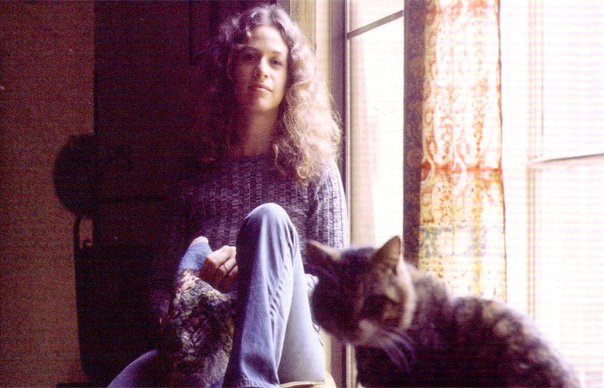
The cover photograph was taken by A&M staff photographer Jim McCrary at King’s Laurel Canyon home. It shows her sitting in a window frame, holding a tapestry she hand-stitched herself, with her cat Telemachus at her feet.
Legendary voice and songwriter born in Brooklyn in 1942. She released 20 albums between 1970 and 2012
In 1968, psychedelia was exploding and even blues-loving avatars of the era like Cream and Jimi Hendrix were increasingly eschewing their roots in favour of paisley pastures. But one band was perfectly positioned to keep the blues on board for the turned-on generation.
Canned Heat are one of the most beloved live bands of all time. They command a following every bit as dedicated as those Dead Heads who live in vans and follow The Grateful Dead from show to show. Also like the Dead, Canned Heat are one of those bands whose live show changes with the wind. One moment they can be tearing into a full-tilt blues boogie, the other they can shred into a drawn out solo. The only constant is that it’s always amazing.
If you went by the status allotted to them these days, you might assume Canned Heat was just another bunch of hippie-era biker boogie merchants. Nothing could be further from the truth. With prodigiously bearded 300 pound singer Bob “The Bear” Hite and gawky guitar virtuoso Alan “Blind Owl” Wilson up front, the unlikely rock stars were both true scholars and raw-boned practitioners of the blues. Turning up the Heat at crucial cultural watersheds like the Woodstock and Monterey Pop festivals, they brought the blues not only to the flower children but to the mainstream, accomplishing what would previously have been regarded as unthinkable by bringing tunes deeply rooted in 1920s blues to the Top 40.
Bob Hite was a Southern California kid born into music; his mother had been a singer with a big band and his father was a trumpeter. He immersed himself in his parents’ record collection from an early age, quickly branching off to explore his burgeoning love of the blues. Hite would roam far and wide in search of old blues 78’s and eventually amassed thousands of them.
By the time he met up with a recently arrived guitar player from Boston named Alan Wilson in 1965, the hefty, garrulous Hite had fully assimilated all those blues records and become a commanding, charismatic singer in the process. Hite ended up jamming with fellow bluesologist Wilson, who brought along another guitar-playing pal, John Fahey. At the time, Fahey who would go on to change the face of acoustic guitar music—was a UCLA student at work on a paper about Charley Patton. But what was initially intended to be an unplugged jug band quickly headed towards plugging in and turning up, and Fahey made an abrupt exit.
By the time they played their first gig, at storied L.A. folk club the Ash Grove, they were calling themselves Canned Heat, after Tommy Johnson’s 1928 delta blues tune “Canned Heat” Blues
In Johnson’s era, “canned heat” was the term for drinking Sterno cooking fluid for a cheap but dangerous high. The line-up for the group’s debut was Hite on vocals, Wilson on guitar and harmonica, Kenny Edwards of Linda Ronstadt & the Stone Poneys on guitar, Ron Holmes on drums, and Stuart Brotman on bass.
Hite earned his ursine nickname for his imposing size, his hirsuteness, and his growl of a singing voice. His buddy Blind Owl, so dubbed for his extreme near-sightedness, was his perfect foil and could not have been more different than Hite. Where The Bear was larger than life in every sense of the term, Wilson was a troubled, bookish introvert who did his best to disappear into the background at every available opportunity. The fact that he was a preternaturally gifted guitarist, singer, and harp blower, however, tended to complicate this compulsion. The personal and musical push and pull between Blind Owl and The Bear was the engine that made Canned Heat move.
By the time they cut an album’s worth of demos for Liberty Records in ’66, Henry “Sunflower” Vestine was Wilson’s six-string sparring partner and Frank Cook was on drums. The sessions were overseen by legendary bandleader and producer Johnny Otis, who was behind classic singles by the likes of Etta James and Big Mama Thornton, as well as scoring a slew of R&B hits himself. Canned Heat mostly recorded straightforward, convincing takes on blues staples by heroes like Muddy Waters, John Lee Hooker, Elmore James, et al.
The demos were released in 1970 as Vintage after Canned Heat’s star had already risen.
Canned Heat (1967)
Canned Heat is the 1967 debut album by Canned Heat. It was released shortly after their appearance at the Monterey Pop Festival and is a blues cover album. Canned Heat is the 1967 debut album . After bringing in new bassist Larry “The Mole” Taylor, who plays in the band to this day, Canned Heat started working on their debut album, but in the midst of the process, they took part in what many consider the Big Bang of ’60s counterculture, 1967’s Monterey Pop festival. The festival itself and the D.A. Pennebaker-directed documentary that arrived the following year weren’t just the warm-up act for Woodstock; they were most people’s first real glimpse of what the Summer of Love and the blossoming hippie movement looked and sounded like.
1967 – Monterey Pop Festival
This was the festival that broke the band on a big scale. Prior to this, Canned Heat had mainly played smaller gigs around the L.A. underground scene – a scene that was bubbling, and threatening to erupt at the time. Monterey was the eruption. This footage was shot by famed director Pennebaker (who directed Dylan’s legendary ‘Don’t Look Back’ film) and a rave review of their set in popular music rag Down Beat gushed: “Technically, Vestine and Wilson are quite possibly the best two-guitar team in the world and Wilson has certainly become our finest white blues harmonica man.”
The twin shot of this performance and a debut album the following month saw the band quickly rise to fame.
Of course, flanked by flower-power figures like The Mamas & The Papas and Jefferson Airplane, the rough ‘n’ ready Heat looked like they’d just stopped off for a jam in between their shift at the gas station and their biker club meeting. But the raw power in The Bear’s voice and Vestine and Wilson’s guitars as they tore into “Rollin’ and Tumblin’ served notice that raw, real, old-school blues were still an undeniable presence in the new Aquarian age. Sure, the similarly inclined Paul Butterfield Blues Band was present at the festival as well, but they didn’t make the film’s final cut. So it was Hite and company who became the new ambassadors of the blues was released just weeks later, the timing couldn’t have been better. The record was produced by Calvin Carter, who had been the house producer for famed Chicago blues hub Vee-Jay Records, and had worked with Jimmy Reed, John Lee Hooker, Elmore James, and more. With Carter in their corner, Canned Heat turned out a tough, unadorned love letter to their influences on the all-covers album, bringing a fierce-but-faithful take on Howlin’ Wolf, Muddy Waters, Sonny Boy Williamson, et al into white middle-class homes across America.
In October, the band was involved in an incident that moulded their destiny in multiple ways. They were staying at a hotel in Denver, where the local authorities at the time were cracking down hard on the quickly rising hippie drug culture. When Canned Heat—who were just as fond of illicit substances as they looked—rolled into town, the cops had it in for them. The authorities allegedly forced a “friend” of the band to plant pot and hash in their room. Next thing the guys knew, they were facing down a 10-year rap. In desperation their manager Skip Taylor made a deal with Liberty to trade the band’s publishing for their $10,000 bail.
The band’s lawyer pleaded the case down to a misdemeanor, but Taylor’s deal basically meant that no matter how well they did, the band would be financially screwed in perpetuity. And the publicity from the incident cemented the heavy-drugging band’s growing reputation as hard-living outlaws, leading to their embrace by the biker community that was fast becoming the dark side of the era’s underground culture.
Boogie with Canned Heat (1968)
In early ’68, Canned Heat released an album that became a touchstone of the era. “Boogie with Canned Heat” contained mostly original tunes, though the sound was still heavily informed by traditional blues, especially the song that helped ensure the band’s immortality. This is a classic! Recorded in 1968 by reinventors of the blues boogie, Canned Heat made a fantastic record, every track a killer! This is the earliest record by the line-up that was its greatest with Alan Wilson, Bob Hite, Henry Vestine, Larry Taylor, and Fito De La Parra. It has great blues, great boogie, great innovation, and some of the greatest playing you will hear either before or after. Alan Wilson’s harmonica is second to none, the rhythm section comprising Larry Taylor on bass and Fito on drums is tight and brilliant, lead singing by Bob Hite is strong, fun, and inviting, while lead guitar by Henry Vestine is both hypnotic and powerful. Such a great sound that sounds fresh on each and every playing. The CD has six bonus tracks that are really interesting too. This band is still really underrated after all these years but they are brilliant exponents of the blues and have combined the blues with an edgy rock that makes a synthesis that after almost 50 years has not been bettered. Brilliant!”
“On the Road Again” was based on the 1953 tune of the same name by Chicago bluesman Floyd Jones (which in turn was an adaptation of the 1928 delta blues song Big Road Blues by Tommy Johnson. Blind Owl turned it into a moody, hypnotic cut that blended deep blues with Indian modality and a trippy, psychedelic feel that somehow meshed organically with the track’s intense earthiness. The Heat’s new drummer, Adolfo “Fito” de la Parra—a Mexican new to L.A. who would be the only mainstay in the line up for the rest of the band’s career added a sensual, almost primal pulse that spoke directly to the body. Wilson’s ghostly vocal embodied the sense of alienation the troubled guitarist suffered from, creating an ethereal vibe that provided a magical contrast with the visceral groove. Ironically, the song was the b-side of the “Boogie Music” single, but somewhere along the line somebody decided to flip the 45 over. “On the Road” ended up exploding across the globe, bringing the band to the upper rungs of the pop charts in America and all over Europe. Canned Heat toured the continent and made appearances on European TV. The boys from L.A. helped give new life to the blues around the world.
Living the Blues (1968)
But the band’s next album contained another Wilson-led track that would raise Canned Heat’s profile even further. Released in autumn of 1968, “Living the Blues” included the sunny-sounding “Goin’ Up the Country” the band’s reboot of the 1920s tune Bull-Doze Blues by Henry Thomas, with new lyrics by Wilson. Not only did the song become an even bigger international hit than “On the Road Again,” it ended up turning the band into countercultural standard-bearers.
“Fantastic set from the Heat. This album shines in the recordings of Canned Heat. Great songs absolutely great musicianship. The star of the set is “Going Up the Country” a song which is in the American lexicon of TV commercials now. But Bob Hite’s song “Sandy’s Blues” is an absolutely stunning tune. “Walking By Myself” is another tune which is super, and one covered by Gary Moore much later. “Parthenogenesis” is a long cut, divided into nine parts highlighted by Alan Wilson’s harmonica and jaw-harp, John Mayall’s great piano and Henry Vestine’s great guitar. This song gives the Heat a chance to get a little psychedelic. Disc two consists of two tracks “Refried Boogie (Part I) and Refried Boogie (Part II)” which allows the Heat to play extended jams, Fito’s drum solo is great. Worth snapping up if you’re a Boogie fan!”
1969 Woodstock
Shortly after replacing Vestine—whose drug problems had become too much even for Canned Heat—with Harvey Mandel, the band played at the Woodstock festival in August of ’69. Though the band’s actual performance wasn’t included in Michael Wadliegh’s landmark 1970 documentary of the epochal event, allegedly on account of record company politics (it turned up years later in the director’s cut and an outtakes collection), the studio version of “Goin’ Up the Country” appeared in the film as the soundtrack to a montage of happy hippie revelers. The placement, dovetailing with the tune’s sprightly flute hook and child-of-nature lyrics, made the grungy bad-boy crew (with Wilson admittedly being the relative naif) unlikely avatars of the hippie era forevermore.
The band’s biggest hit, at the most famous festival of all time. Woodstock is often used as a shorthand to describe the merging of youth culture, drugs, music, sunshine and the optimistic attitude rushing through the late ’60s. Canned Heat’s blistering, narcotic rendition of ‘On The Road Again’ was the perfect soundtrack to an era of wide open roads and limitless possibilities.
“John Lee Hooker and Canned Heat” In the spring of 1970, Mandel and Taylor left the band, and Vestine resumed his old spot. With new bassist Antonio de la Barreda on board, Canned Heat fulfilled their blues-fan dreams by making an album with John Lee Hooker. The Hook, for his part, was quite impressed with the Heat, heaping particular praise on Wilson for his harmonica work. Hooker ‘n Heat, which would be released early the following year, wasn’t the band’s only meeting with their musical heroes.
In 1968 they worked with Chicago blues master Sunnyland Slim on ‘Slim’s Got His Thing Goin’ On’. In 1970 they joined with Memphis Slim on the sessions for what would be released four years later as “Memphis Heat” And in ’73, they worked on Clarence “Gatemouth” Brown’s “Gate’s on the Heat” album. And before he had even moved to L.A., Wilson had already helped aging, tremor-ridden delta blues legend Son House relearn his old repertoire so he could cut his 1965 comeback album, ‘Father of the Folk Blues’, which featured Wilson’s accompaniment on a couple of cuts.
Future Blues (1970)
Canned Heat released a new album of their own in August of 1970. ‘Future Blues’ was recorded with the band’s previous line-up, and would mark their last sessions with Wilson. “Let’s Work Together” a cover of a recent tune by ’50s R&B hero Wilbert Harrison, became the Heat’s third and final U.S. Top 40 hit, but in characteristic fashion, the band held off on the song’s release as a single until after Harrison’s own version had its run.
“Let’s hear it for “Future of the Blues”. This is a fine blues album, probably better than Boogie With Canned Heat; and a little surprising Harvey Mandel did not play (guitar) with the band longer. “Sunflower” Vestine would return for the next Canned Heat album.
The band’s best post-Woodstock studio album,1970’s “Future Blues” also marked a commercial peak of sorts. Their hit single remake of Wilbert Harrison’s Let’s Work Together (a chart hit for him the previous year) drove the original LP’s successful chart run and probably exposed these FM radio stalwarts to a wider audience due to the single’s Top 40 airplay. The album seems more focused and less boogie-fied than prior Canned Heat efforts, and that’s not necessarily a bad thing. This reissue features five most interesting bonus tracks, including the tighter mono single version of Let’s Work Together.
Around this time, the deeply depressive Wilson’s inner struggles deepened to the point where he made a couple of unsuccessful suicide bids. He spent some time convalescing in a mental hospital and re-joined the band when he got out, but the dark cloud following him around did not lighten. In September the band was scheduled to depart for a tour of Europe, but Wilson went missing, which Hite subsequently noted was not unusual for the moody, mysterious guitarist.
This video quality isn’t the best, but this is an important historical document — albeit a bittersweet one — as it is the last known footage of co-founder and singer Alan “Blind Owl” Wilson. He died just over a month after this concert was recorded. Here he sings his great composition, ‘Human Condition’ Live in Kralingen
The rest of the band was forced to fly ahead without him, and on September 3rd, Skip Taylor found Wilson dead of a barbiturate overdose. The consensus was that the incident was intentional. Blind Owl became the first American rock star in the ill-fated “27 Club” of artists who passed unnaturally at that age. Janis Joplin and Jimi Hendrix would join the ill-starred club within weeks, and Jim Morrison the following year.
Live at Montreux 1973 Canned Heat wasn’t taken down by the loss of one of their main creative forces. They continued on with new guitarist Joel Scott Hill and released 1971’s ‘Historical Figures and Ancient Heads’. In the years to come, the band would see a dizzying swirl of personnel changes, though they went on to make some worthy records and remained a vital live unit, as seen on the 1973 Live at Montreux concert video. But on April 5th, 1981, The Bear—who never backed off from his hard-living ways—died after allegedly mistaking a vial of heroin for cocaine. Hite had escaped the “27 Club” but he was still just 38. Some genius has uploaded an entire 1973 Stockholm concert , and the band have adapted well to the shock loss of their vocalist Alan Wilson, adding guns James Shane and Ed Beyer. The band were firing on all cylinders here, sharpened by years on the road.
Ever since Hite’s passing, de la Parra has kept the band going, with a multitude of line-ups that would eventually include a returned Larry Taylor and Harvey Mandel. Canned Heat made several post-Hite albums and toured endlessly; they can still be found out on the road today. Their long time drummer ended up telling much of the band’s tumultuous story in his memoir “Canned Heat: Living the Blues”.
Between Canned Heat’s heady heights and desperate lows, their tale could easily be the stuff of sensationalistic rock biopics. But the important thing to keep in mind, half a decade after some of the band’s biggest accomplishments, is how much they did for the blues. Before British bands like Led Zeppelin began making big coin with their amped-up, chest-beating take on the tradition and shafting some of the originators in the process, Alan Wilson’s spectral, Skip James-like moan and stinging slide guitar and Bob Hite’s Big Joe Turner-on-a-Harley vibe breathed loving new life into America’s musical birthright when it was most in need.
The Who, live from the Tanglewood Music Centre, Lenox, MA on 7th July 1970. The Who toured North America in the summer of 1970 playing 22 dates in medium and major markets to capacity crowds. They had just released their now iconic live album, “Live At Leeds” on May 23, culled from a performance just three months prior. It was a simple affair compared to the complex “Rock Opera” Tommy and would stand as a bench mark for what a live album was, and standard bands still strive for today. The final date on the tour was at the Music Shed at the Tanglewood Music Center in Lenox, MA. The venue had been sporadically used by concert promoter Bill Graham, who was known for his eclectic bills that would blend different musical genres. The bill for this concert was rather straight forward, The Who was the headline act over Jethro Tull and It’s A Beautiful Day. Graham would also video record many of the acts that appeared at his venues, the recording of this performance by The Who is one of the most vivid documents of the band from this era, surprisingly it has never seen a full official release.
The audio portion of this concert is the subject of this new release. The sound is a perfect soundboard recordings, if one did not known you would think it’s an official release. Perfect balance, perfect frequency range, virtually no hiss or signs of over mastering, just incredible sound that’s even better at loud volumes, the one word that sums it up is stunning. There has been one previous release of this material, “Tangled Up In Who” (Hiawatt CE9802/3), being pressed way back in 1998, long out of print. This new release is promoted as being from a better source so an audio upgrade is certain.
A great Bill Graham intro starts the proceedings, “For us it’s always a privilege…on bass Mr. John Entwistle…on vocals Mr. Roger Daltrey…on drums Mr. Keith Moon…on vocals and lead guitar Mr. Peter Townsend, The Who”… Bill, the pleasure is all ours. The set list is standard to this era, Entwistle’s fabulous Heaven And Hell is the opener, with I Can’t Explain, the new (and as of then unreleased) song Water and “Young Man Blues£ are all regulars. “I Don’t Even Know Myself” made its debut June 16th in Berkeley and by this point it’s also a regular, taking the spot previously held by The Seeker.
“Tommy”still makes up a major portion of the set list, the band dropped Sally Simpson from the piece and is the better for it. By this point they had been playing “Thomas” since May 1969 and were very fluent in their delivery. During the intro Pete references playing New York’s Metropolitan Opera House and those concerts being the last performances of “Tommy”, when in fact they had been playing it this entire tour. This concert at Tanglewood would be the last performance in the United States for 19 years. Being the last concert in the states the band turn a very powerful version, quite focused and the “See Me, Feel Me” finale brings down the Shed. Pete gives a nice farewell speech at the “Opera’s” conclusion, telling the audience it’s been “THE most enjoyable tour we’ve done of this country” and then they hammer out a devastating version of “My Generation”, frickin blistering ending to the concert, if this doesn’t get you moving, my friend, nothing will.
The packaging is basic colour inserts with live shots of The Who in action, all very dynamic looking. This is classic Who, Golden haired Daltry, Townsend in his jump suit, Entwistle in his tailored outfits, and a young fit and trim Moonie all over the place. This is an essential Who recording, a very easy listen and a typical 1970 performance, the band were in their stride as a live act cementing this fact for the next decade, and beyond.
Following relentless touring, a triumphant appearance at Woodstock and the release of Live At Leeds, by mid-1970 the Who were widely regarded as the greatest live rock’n’roll band in the world. Originally performed for broadcast on WBCN-FM, the explosive set presented here from Tanglewood Music Centre, Lenox, MA on 7th July 1970, finds them tearing through “Tommy” and other live favourites, and is accompanied by background notes and images.
Alice Cooper celebrated his birthday with the release of a new single “Social Debris” from the forthcoming album “Detroit Stories”. Alice Cooper proves he is still one of the best and most relevant rock artists. In celebration, Alice Cooper is releasing “Social Debris” from his upcoming studio album “Detroit Stories” on Thursday night. The track is released digitally and it is accompanied by an official music video. To celebrate the special occasion in style, Alice Cooper has decided to offer “Social Debris” as free download for 24 hours on the artist´s official website http://www.alicecooper.com.
“The single “Social Debris” is a gift to Detroit, to my fans and to myself”, says Alice Cooper. “The track was written by the original Alice Cooper band. We never thought that we would ever fit in; the Alice Cooper band didn’t fit in with anybody, because we were doing things that no other band did. We didn’t fit in with the folk scene, we didn’t fit in with the metal scene, we really didn’t fit in with anything that was going on at that time. We just always felt like we were outsiders. We felt like we were social debris, we were in our own little world. So “Social Debris” was just the original band writing a song about us, essentially. And it came out sounding like it belonged into 1971. That’s just the original band – you can’t change that, it’s great.”
Listen to the single “Social Debris” here: https://alicecooper.lnk.to/SocialDebris “Detroit Stories,” Alice’s upcoming new album, is a celebration of the sound and spirit of the Golden Era of Detroit rock. “Detroit was Heavy Rock central then,” explains Alice, “You’d play the Eastown and it would be Alice Cooper, Ted Nugent,the Stooges and the Who, for $4! The next weekend at the Grande it was MC5, Brownsville Station and Fleetwood Mac, or Savoy Brown or the Small Faces.
Alice Cooper releases the second single from his upcoming new studio album “Detroit Stories,” which will be released on February 26th 2021 on earMUSIC. The song is accompanied by a lyric video. “Our Love Will Change The World” comes with innocent and hopeful melodies and joyous up-beat tempo and an overall happy atmosphere. But is that really what the lyrics are telling us about? Alice himself explains: “I think “Our Love Will Change The World” is one of the oddest songs I’ve ever done and it was one that came to us by somebody else, another Detroit writer. And it was so strange, because it was happy and what it was saying was anything but happy – it was simply a great juxtaposition. And I got it immediately and said “okay, this is going to be great”. The music saying one thing and the lyrics saying something else, I love that song. It is totally different from anything else on the album.”
“Detroit Stories,”Alice’s upcoming new album, is a celebration of the sound and spirit of the Golden Era of Detroit rock.
You couldn’t be a soft-rock band or you’d get your ass kicked.” “Los Angeles had its sound with The Doors, Love and Buffalo Springfield,” he says, “San Francisco had the Grateful Dead and Jefferson Airplane. New York had The Rascals and The Velvet Underground. But Detroit was the birthplace of angry hard rock. After not fitting in anywhere in the US (musically or image wise) Detroit was the only place that recognized the Alice Cooper guitar driven, hard rock sound and our crazy stage show. Detroit was a haven for the outcasts. And when they found out I was born in East Detroit… we were home.” 50 years later, Alice and Ezrin have united in Detroit with their Detroit friends to record “Detroit Stories,” Cooper’s new album. Pre-Order “Detroit Stories” here: https://alicecooper.lnk.to/DetroitSto…
If 2019’s “Breadcrumbs” EP laid down the trail to the city, “Detroit Stories” drives like a muscle car right down Woodward Ave.
Tracklist 1. Rock & Roll 2. Go Man Go (Album Version) 3. Our Love Will Change The World 4. Social Debris 5. $1000 High Heel Shoes 6. Hail Mary 7. Detroit City 2021 (Album Version) 8. Drunk And In Love 9. Independence Dave 10. I Hate You 11. Wonderful World 12. Sister Anne (Album Version) 13. Hanging On By A Thread (Don’t Give Up) 14. Shut Up And Rock 15. East Side Story (Album Version)
100% of Bandcamp profits from “Pictures of Flowers” will be donated to Harriet’s Apothecary, an intergenerational Brooklyn based healing village led by Black Cis Women, Queer and Trans healers, artists, health professionals, magicians, activists and ancestors. The intention of Harriet’s Apothecary is to continue the rich healing legacy of abolitionist, community nurse and herbalist Harriet Tubman.
Written by Jess Williamson
Performed and recorded by Jess Williamson, Meg Duffy, and Jarvis Taveniere remotely from their homes during quarantine
Recorded in Los Angeles, April 2020Jess Williamson – Acoustic guitar, Vocals Meg Duffy – Electric guitar Jarvis Taveniere – Bass, Drums, Mellotron
We recorded this music five years ago. Then the wheels fell off.
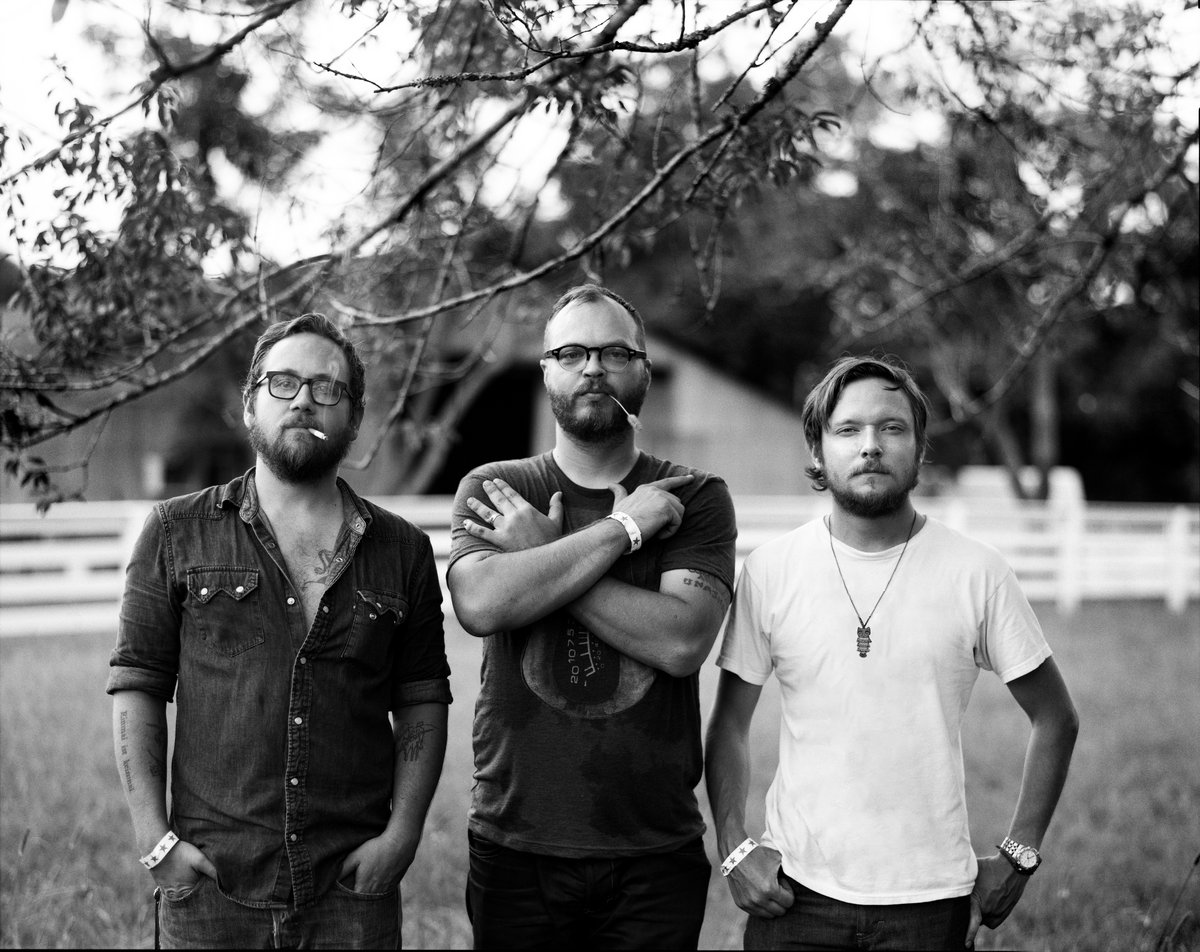
In June of 2015 Andrew Bryant, Grove Randolph Robinson and I rolled up to the Echo Lab in Argyle, Texas. The silver (not grey!) GMC Safari called Barbara Vanwyck, (no AC, but otherwise a damn good vehicle) had made the trip in fine form. In hindsight, though, there were omens; precursors to what was in store for the record. As I write this now, it seems almost poetic. Texas had just been visited by historically torrential rains, and as we wound our way to the studio (which was in the sticks) we discovered that the county road we were following was completely flooded and impassable. I remember we just stopped and got out, unsure of how to proceed, surprised by the small lake where a road should have been. It was early evening, hot, and we’d just driven a long way.
Even though we’d known about the rain bombarding north Texas, it hadn’t really occurred to any of us that we’d get so close to our destination only to be prevented from actually getting there. Looking back, that was pretty much the story of Water Liars—traveling far, working hard, only to come up short. The oldest story in the book, I know. But it was ours, too. That night, we were able to backtrack and eventually find our (much more roundabout) way to the Echo Lab. Over the next ten days we worked harder, spent more time and money than we ever had, by a damn sight, on a record that we hoped would lift us a couple rungs on the ladder of “success”. We had a good time making it, too. For much of my 20s and early 30s I never really felt at home anywhere, but for those ten days in Argyle I can honestly say that those rooms and that porch somehow felt like home to me.
We slept in bunkbeds like brothers, lived on peanut butter and jelly sandwiches and granola bars, shot BB guns at beer cans, kept an eye out for scorpions. We were infinitely fortunate to hang out and work for ten days with Matt Pence, a musical and studio engineering hero to each of us. It was our further good fortune that Matt was in the habit of piling his fine dogs, Hoagie and Rufus, into his van each morning before heading over to the studio. Hoagie was deaf and had to wear a red flashing light on his collar so he could be found if he wandered into the woods at night. I remember sitting on the back porch, listening to the crickets and the whippoorwill that would sing every night and watching Hoagie’s red light, and feeling happy. It was the best of times; it was the worst of times. We worked long hours and we thought we were on the right track.
In the days, weeks and months after we wrapped the session, plagues came, mistakes were made. We left the studio to find our management had suddenly, unceremoniously folded. Still, a Music Business Attorney was “consulted”, the album was “shopped”, time passed, and nothing came of it. The lack of any result, of any positive reception for what we felt was our strongest work yet, made for some deafening mental and emotional silence for us. We’d come through a lot since starting the band, but in the end we simply proved susceptible (how could we ever not have been?) to the inescapable tensions that develop between most people in most places even in the fairest weather. Compounded by Mississippi July and alcohol, those tensions came to a head. Wrong place, wrong time covers all manner of circumstances, so it makes the most sense to leave it at that. The album languished, and so did the band. Honestly, it all seems more silly now than anything else. Life went on, as it is prone to do. In any case, now–in suitably roundabout fashion—we send this music unceremoniously into the world, to sink or swim as it may.
All told, Water Liars spent less than four years as a going concern. We spent that time almost constantly on the road. We managed to release three full length records and a small handful of 7” records and covers. This album, “Roll On”, would have been our fourth record. We were swinging for the fences with what we hoped would be sort of a departure for us–a sharp record, a big record–a rock and roll record. I’d like to think that in some measure we achieved that. But that’s for y’all to decide, please and thank you. If I’d had my druthers, it would have been the one that allowed us to keep making Water Liars records for years to come. That wasn’t the way things worked out but I’m grateful and glad it’s still here now. I hope it finds you well as can be, and I thank you for listening, and for caring. Please turn this one up.
Roll On,
JPKS // Fayetteville, AR // July 2020
Justin Peter Kinkel-Schuster: songs, singing, guitars Grove Randolph Robinson: bass, organ, mellotron, piano, guitars Andrew Bryant: drums, singing, piano, organ, guitars, mellotron
We are pleased to bring you Ty’s full solo performance recorded “Live at Zebulon” in June of 2020.
Under the dead of night, a stoic young gentleman named Ty Segall killed a garage rocker for punk. In the same secrecy, the California-born punk and roll darling slid a pre-order without any promotion, press or flim flam. What we have here is the full set Ty performed “Live at Zebulon back in June for all of us quarantining live music addicts thirsting for a taste of what we once knew. He delivered the goods from across his career. Crowd favorites like “Finger” mixed with new cuts like“Taste” for maximum hooliganry.
We’ve got three coloured variants for 200 whites, 300 pinks and 400 yellows and 600 classic blacks. Don’t dilly dally, folks. Ty has fans from Des Moines to Timbuktu.
Lush, jangly charm is evident throughout “How Come?” — the latest from Stray Fossa. The band has impressed with multiple singles over the years. As such, I’m strongly anticipating the Virginia-based band’s debut full-length album, due in April. “How Come?” is the album’s first single, recorded in a single session at the band’s Charlottesville, Virginia attic studio. Interlocking guitars carry two separate melodies, weaving between each other like two lives meeting. Sometimes they’re in harmony, sometimes they compete for dominance, each telling their own story while influencing the other. The melodic layers of trickling guitar jangles assemble an engrossing intro, percussively accompanied past the 30-second mark as the vocals glide in. Sections heavier on bass and synth emphasis, like 01:40, also play with captivating qualities. “How Come?” is a hypnotic, jangly gem.
Stray Fossa explain more about the upcoming album below:
“The band’s first full-length record was written and recorded entirely in the first half of 2020, a period of time that the world will collectively remember. The songs do not so much play into the zeitgeist as accompany it – weaved in and out of the record are themes of social isolation, anxiety and dissolution; inter-independence; restlessness; nostalgia; and collective memory, the last of which, given the band’s lifetime of friendship, has long underlined their writing process. The songs are personal both to the three songwriters as individuals and to the group as a whole. A shared living room and late night discussions spun the thread that winds through the record from start to finish, while collaborative arrangement and Will Evans’ meticulous production make it seem as if the ten tracks were carved from one sonic medium.”
our debut album “With You For Ever” out April 9th, 2021
A deeply personal album for bandleader Rob Grote – all of the songs were written in his bedroom as a means of coping with struggles he was facing at the time with no intention of them putting them on a record. He wound up with 32 songs during that writing session, of which he and the band chose the 11 featured on the new record. The new album was produced by the band and frequent collaborator Keith Abrams, and mixed by Dave Fridmann (The Flaming Lips, Spoon, MGMT, Tame Impala).
You Know I’m Not Going Anywhere is born into the world . I’m so super proud of this record. It feels like we’ve come full circle in a sense from where we began. We started this thing with ambition, attitude, and no clue what we were doing. It was always just feeling our way through the dark. From being a bunch of young kids thinking we were gonna “make it,” to feeling like we definitely weren’t, to not giving a fuck either way, I’m super lucky to have continued creating waves of sound with my favourite people forever. A depth of understanding and consistently always having each other’s backs has been the through-line of it all. This record is a departure and return, a paradox like the many lives we’re always trying to reconcile as one, and it feels amazing that you can hear it all today. I hope you feel something in it that is yours as much as it is ours. Birthed from the ether of imagination and now in physical form, we present to you, YKINGA! Thank you so much to everyone involved and everyone who’s ever believed in us. I hope it keeps you company through the madness of the world and when it all gets to be too much, you can turn to it and escape.
“Through the Smoke” American High Records Released on: 2021-01-15
The minute we realized that the word Juicebox sounded like the word Jukebox, we knew that volume 3 of our covers series would have something to do with kids. The songs on Busted Juicebox: “Busted Jukebox Vol 3″ are collaborations with friends who are also navigating the unique circumstances of raising children within the structures of a traveling band or within the music world. In many ways diapers and nap schedules replace sex and drugs as the sustaining routines of our touring lives. So many of our friends in the arts have become parents, and it feels comforting to know there is a tribe of artists, nurturing men and women, who are finding their way out there and that we have one another for encouragement and support. These songs on Juicebox were all chosen because of some connection we have to them.
Childhood movie favourite, old lullabies and songs we just understood differently once we became parents ourselves. And considering the circumstances of the last year, and the resulting time we have had with our children, this album has never been more appropriate. We hope you enjoy listening to it.
Special thanks to Sharon Van Etten, M. Ward, T. Hardy Morris, The Secret Sisters, John Paul White, John and Dennis of Deer Tick, Tanya Trotter from The War and Treaty, The Felice Brothers, and the Shrimp Records Family Ant Band.
Have you listened to “In My Room” feat Sharon Van Etten yet? Go forth and do so now! The rest of the joyful and not sad album.