Archive for the ‘CLASSIC ALBUMS’ Category

“All Mirrors” is the type of record Patsy Cline would have made if she had access to synthesizers. It’s a dazzling tour de force, a record that centers on Olsen’s alternately pleading and commanding voice, surrounding it with lush, rococo swells of strings and electronics. That Olsen was always a great singer was not the question, but never has her prowess shone as brightly as it does in these stately, turbulent songs.

Angel Olsen’s second release, Burn Your Fire for No Witness, was a collection of her early work, where the production was dark-folk sparse. But for “All Mirrors”, she returned to the lush tapestry audiences first experienced on 2016’s My Woman, and the resulting recording is a taut, mesmerizing forty-nine minutes of sonic poetry. While there’s a bevy of modern elements at play—Stereolab-style space grooves on “Too Easy,” warm analog synth lines on “New Love Cassette,” a bouncy electronic twang on “What It Is”—the music here shimmers with a timeless patina. These songs are portraits of heartbreak, triumph, and love that could have been penned fifty years ago, yesterday, or a century from now. So despite its electronic flourishes, All Mirrors feels simultaneously of the moment and firmly embedded in the American songbook.

Olsen is a virtuoso vocalist, and across eleven tracks, she whispers as much as she wails, the oscillation of her instrument intoxicating. Opening track “Lark” sets the tone and finds her in the midst of a romantic detonation, offering up lines like, “This  city’s changed, it’s not what it was / Back  when you loved me.” By the wash of the strings on “Tonight,” where Olsen’s voice is husky, tired, and confessing that while her love remains, she’s better off alone, listeners are firmly in her grip. With its Spaghetti-Western guitar strum, “Summer” is another poignant peak, where Olsen radiates the kind of strength you only get from going through hell and coming out the other side. The closer, “Chance,” balances her extraordinary voice along with her silence against a sentiment that every lover knows but hates to hear: “Hard to say forever, love.” It’s a perfect punctuation for the album’s emotional odyssey, and it’ll make you want to experience it all over again.

On the title track she compares a lover’s smile to being “buried alive,” and on the bleak, ghostly “Impasse,” she icily sings, “Go on, on ahead / tell your friends I was wrong / Take it all out on me.” All of the album’s potential energy exploded in the live setting, where it became something else entirely—grand, gothy, doomy, and spectacular. All Mirrors is a tornado in an antique teacup: elegant craftsmanship and detailing, containing a powerful storm.

No photo description available.

“House of Sugar” is the type of album that gets you banned from having access to the aux cord—(Sandy) Alex G’s latest collection of bedroom-ideated folk and pop songs may feel like it would set the perfect mood for a road trip, but in reality it is, for lack of a better term impossible to make heads or tails of upon first encounter. Lead single “Gretel” probably stands as the best candidate for introducing the Orchid Tapes–reared songwriter to the rest of your car, a pristine pop song built upon an inexplicably functional formula of obscure instrumentation, venturing beyond that—through the faux-Southern accent of “Bad Man” and the numerous over-the-top experimental fillers might prove an exercise in defending an acquired taste.

A glitchy abstraction like “Near” may not grab your over caffeinated co-pilots’ attention immediately, but House of Sugar’s appeal ironically isn’t as aggressively sugar-coated as Alex G’s previous earworm singles. Taking his bedroom ideas to a Domino Recordings-signed artist’s bevy of resources, Sugar lucidly displays facets of the songwriter’s personality we’ve yet to see, both sounding the most alien to his previous discography and the most comfortable in terms of taking creative risks.

There’s as much of Alex’s character in the dream-inspired hoedown “Southern Sky” as there is in the shimmering interlude “Taking,” while the live recording of “Sugar House” that closes the album serves less as a bonus track and more as a crossing over from the surrealist House of Sugar universe into a palpable reality. There’s certainly an argument to be made for Sugar being a great record to listen to while drifting across state lines, though it feels more like an album to jam while drifting in and out of conscious states.

“Southern Sky” appears on (Sandy) Alex G’s new album ‘House of Sugar’ – out September 13th, 2019 on Domino Recordings.

Father of the Bride is Vampire Weekend’s fourth album, It’s the long-awaited follow-up to 2013’s Modern Vampires of the City. Since then founding member/producer Rostam Batmanglij left the band as a full-time member.

It’s been almost six years since we last heard from New York’s Ezra Koenig and co. Here they have gone deep into the address book and called upon a wide array of collaborators from Danielle Haim to Hans Zimmer to Mark Ronson. It all comes together thanks to careful indie-pop curation from Koenig.

Previously Vampire Weekend shared two songs from Father of the Bride: “Harmony Hall” and “2021,” as well as a video for “Harmony Hall.” Then they shared two more songs: “Sunflower” (which features Steve Lacy of The Internet and “Big Blue.”Then they shared a video for “Sunflower” directed by actor Jonah Hill and featuring comedy legend Jerry Seinfeld and rapper/visual artist Fab 5 Freddy. Then they shared another two songs: “This Life”and“Unbearably White.”

“This Life,” which features backing vocals from Danielle Haim of the band HAIM, “We Belong Together,” a duet with Haim, .

This year Vampire Weekend released a new album, Father of the Bride, today via Columbia. The band already shared six songs prior to the album’s release, but the album features 18 tracks so there are 12 other songs . Three of those songs are duets with Danielle Haim of HAIM, including album opener “Hold You Now.” Our favorite of the non-singles is probably another duet with Haim, “We Belong Together.” In it the band’s Ezra Koenig and Haim sing about all the ways they belong together, but also admit that it might not be enough to actually keep them together.

There is a simple rule in pop music: if you find yourself with a double album to fill, make a bloody mess out of it. You can eventually locate unity or conceptualism à la The Who or The Kinks—but for god’s sake, have a mad blast either way. For their first album in six years, Vampire Weekend and singer-songwriter Ezra Koenig sailed beyond the alterna-nerd pop Graceland cover act usual. Here, Koenig and VW jump through piano-rich ballads, bachelor pad lounge music, jam sounds, outlaw country, samba, emo, and cinematic atmospheres, making it all sound unified and blissfully cascading in a fashion you’ve never heard from them before. The not-so-haunted proceedings of Father of the Bride are more theatrical and orchestrated—but with just a smidgen less quirk and busywork—than their music of the past. We knew that Vampire Weekend was charmed, but on Bride, they’ve actually become charming.

Father of the Bride feels like Vampire Weekend has grown up emotionally, and their music is richer for it. It’s an ambitious double album, sweeping through the joy, the pain, the success and the failure of young adult life.

The catchy hooks and sing-a-long lyrics are still there in tracks like ‘Harmony Hall’, ‘Bambina’ and ‘This Life’, and there’s some impressive collabs with Danielle Haim, Mark Ronson, and The Internet’s Steve Lacy.

Father of the Bride is the band’s fourth album. The band’s last album was 2013’s Modern Vampires of the City.

This record is an incredible listen , yes. It is also more than that. It is an artistic touchstone. It stands as an example of how great art should make you feel, of the line between accessibility and profundity, A forward-facing album with a focus on the theme of rebirth, it does, at times, look over its shoulder, taking inspiration from classic country.

Father of the Bride released 3rd May 2019:

No photo description available.

Prince Daddy & the Hyena’s ability to transform rock-bottom defeatism into a raucous group activity. “Lauren (Track 2)” was, without a doubt, among the most fun song released in 2019, and the way Prince Daddy carry this energy over to other tracks on the album Cosmic Thrill Seekers, where Kory Gregory opens “Trying Times” by bellowing about how “every day’s been a bad day for so long,” or wails lines like “stupid fucking life, it’s only getting harder” moments before a killer outro on “Klonopin,” signals an optimistic turn for a genre that often invites isolation among its listeners.

Even the softest moments on Cosmic Thrill Seekers such as the acoustic intro to opener “I Lost My Life,” or the mid-track breather on closer “Wacky Misadventures of the Passenger”—are disrupted by Gregory’s yawps before heavy electric guitars hit as hard and unexpectedly as the depression that fueled so much of the record’s lyrics. There’s never really a moment of peace, but such brief periods of seemingly personal anxiety spouted by the vocalist are immediately filled by a massive support system in the form of Gregory’s dense backing band, at times even featuring a full brass section. The cyclical structure of the album—“Passenger” transitions smoothly back into track one—has been widely noted for its analogue to mood cycles, but there’s been little talk about the group-therapeutic nature of the record’s sound.

For plenty of bands of this caliber, an album is just a springboard for hectic live shows. But Cosmic Thrill Seekers offers anyone who feels pretty confident that they’ll die the next time they’re alone in their bedroom an opportunity to thrash in each others’ company.

Image may contain: one or more people, shoes, sky, outdoor, water and nature

No wonder Sasami Ashworth sometimes delivers her stage banter in an alien voice: To listen to the dour, greyscale rock songs of Sasami is to learn what it’s like to live and love as a human on earth. On “Morning Comes,” she alternates quiet, driving verses with sweeping, blood-boiling choruses and implores her former lover to move the fuck on. On “Pacify My Heart,” she treads a sluggish pattern of melancholic guitar plucks toward accepting that she and an ex will never quite be on the same page (plus, “Sometimes I wish I never met you” is the best opening-line burn since last year’s winner in the category, Forth Wanderers’ “Nevermine”). Both tracks end in extended, harrowing guitar outros that wordlessly depict Ashworth’s respective growth and ire and mark two of the album’s most cathartic stretches. Sasami, it turns out, is human after all.

Sasami Ashworth isn’t the first indie rock musician to suffer heartbreak, but her debut album SASAMI is among the sourest, most dissonant breakup records in recent memory. An LP about “everyone I fucked and who fucked me last year,” SASAMI chronicles how touring poses challenges to relationships (“Not the Time”), how unequal desires topple romances (“Pacify My Heart”), and how friendships, too, can fail (“Callous”). Ashworth’s caustic but not overwhelming guitar acrobatics—which she in part credits to her brother JooJoo Ashworth, of fuzz-drenched shoegaze institution Froth—pair with calmly delivered lyrics to propel her bitter dirges beyond the standard indie-rock sound of romantic fallout. The tales she recounts give her plenty to be mad about, but even as her guitar scythes through its surroundings, her music rarely rises to a full-on roar. In restraint, Ashworth finds the power to heal.

Custom etching of Mose Allison on Side D. Features performances by Taj Mahal, Robbie Fulks, Jackson Browne, The Tippo Allstars featuring Fiona Apple, Ben Harper and Charlie Musselwhite, Chrissie Hynde, Iggy Pop, Bonnie Raitt, Loudon Wainwright III, Richard Thompson, Peter Case, Dave Alvin and Phil Alvin, Anything Mose, Frank Black, and Amy Allison with Elvis Costello. Includes Ever Since I Stole The Blues DVD, a Mose Allison documentary by Paul Bernays.

Wainwright remembers, “For many years I made a point of going to see Mose Allison play wherever I could -In London, Chicago, LA, and , of course, in my hometown of New York. I considered his gigs essential listening and going for me was, not to get too highfallutin’ , a pilgrimage. When I nervously would approach to say hello to him after a show I was always thrilled that he seemed happy to see me. Mose’s cover version of my song “I’m Alright” was an unparalleled highlight of my career and I can only hope he would have approved of my stab at “Ever Since The World Ended.”

Mose’s daughter Amy Allison teamed up with musician/producer Don Heffington to honor her father’s rich catalog of songs. “We were talking about my dad’s legacy and thinking about all the musicians who were fans, and how a tribute album featuring some of these artists would be cool, especially if it were to benefit a worthy cause. Don said “Let’s put it together ourselves” and introduced the idea (and me) to his friend producer/engineer /studio owner Sheldon Gomberg. Sheldon ALSO happens to be on the board of Sweet Relief Musician’s Fund, an organization started by Victoria Williams to benefit musicians in need. And so it began…”

Sweet Relief Musicians Fund is a 501(c)3 nonprofit that provides assistance to career musicians who are struggling to make ends meet while facing illness, disability, or age-related problems. Grant recipients include recording artists, club and session musicians, and composers and songwriters from every musical genre. Since its inception, Sweet Relief has helped musicians with medical and living expenses, including insurance premiums, prescriptions, medical treatment and procedures, housing and food costs, utilities, and other basic necessities.

Born in 1927 in the Mississippi Delta, Mose John Allison grew up listening to jazz and blues greats such as Louis Armstrong, Memphis Minnie, Duke Ellington, Louis Jordan and the Nat Cole Trio. He learned to play piano and trumpet as a boy. After a stint in the army and then several years playing in clubs around the South, he moved to New York City to make his career as a pianist, songwriter, and performer fronting his own trio. Allison performed with jazz greats such as Stan Getz, Zoot Sims, and Gerry Mulligan, and developed a distinctive style of playing that fused blues and jazz with succinct and timeless lyrics. Mose Allison became a favorite among his peers and his songs have been covered by other great artists such as Van Morrison, The Who, Bonnie Raitt, Elvis Costello, The Clash and many others. Allison passed away in 2016 at the age of 89.

The Electric Banana, are actually the Pretty Things. And the Pretty Things… ah, but you don’t need Spin Cycle to tell you that. The Pretty Things are one of the greatest bands that ever stalked this earth; purveyors of so much great music that it hurts to think of how many people have never actually heard it; and if you want to know why they changed their name for these sessions, that was down to business and contracts. They could never have realized they were also creating a legend.

The Electric Banana were one of the greatest bands that ever stalked this earth, purveyors of… etc

Three discs and a terrific booklet tell the story, how a beat band of somewhat ill repute was invited to record what was known as library music for one of the companies that specialized in such things, DeWolfe Music.  Intended for use in film, television and similar enterprises that required some appropriate tunes to play beneath the action, it’s an avenue that a lot of musicians recognize, even if they don’t always admit to it.

The Pretties, however, saw the opportunity as something more than that; a chance to experiment on somebody else’s budget, to lay down ideas and thoughts that may or may not go any place else, and even to demo songs that they might want to use on their own LPs. 

Both SF Sorrow and Parachute arguably have their roots in these sessions, and that’s one of the reasons why the original Electric Banana albums (Electric Banana in 1967; More Electric Banana in 1968 and Even More Electric Banana in 1969) have been so highly prized by collectors, since their existence first became well-known. 

But wait, there was more – a return to DeWolfe’s fold in 1973 for Hot Licks, and again in 1978 for The Return of the Electric Banana. In truth, this pair are not as exhilarating as the earlier albums; accurate or otherwise, there’s definitely a sense that the band reconvened more for financial than creative reasons. But still there’s much to be enjoyed as the box plays through, from playing “spot the riff” across discs one and two, to just rocking out on disc three.

Plus, it’s the Pretty Things.  What more do you need?

Frank Zappa typically performed one-of-a-kind Halloween shows starting in the ’70s. In 1974, the concerts found a home in New York City, where they remained until 1984, when Zappa staged the last Halloween show. This 1973 date — one of the few Halloween concerts to be recorded, though the 1977 one was released in 2017 — featured a new band onstage at Chicago’s Auditorium Theater.

The limited-edition box includes previously unreleased performances that total more than four and a half hours, including songs from his most recent album, Over-Nite Sensation, like “Montana,” plus cuts from 1974’s Apostrophe(‘) (“Cosmik Debris”) and older favorites (“Uncle Meat,” “The Idiot Bastard Son”).

The fourth disc includes rehearsals for the shows. There’s also a single-disc version of the set available containing 16 tracks from the box.

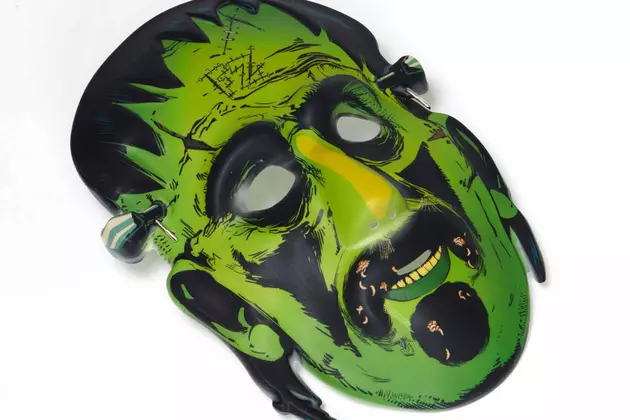
This is our second glimpse into Frank’s Halloween archive and this one, thankfully, does not seal away its goodies on a USB stick. Rather, four CDs and a booklet join the expected seasonal goodies (a Frankenstein mask and a pair of monster gloves) in a similarly sized mega-toy box, and the whole thing is utterly fabulous. Assuming, of course, you agree that 1973 really did mark one of Zappa’s purplest patches.  

Two full shows sprawl across the first three discs, and while there’s definitely some duplication… a little more than half the set list is revisited on both nights…  the performances themselves are utterly unique, and the between song announcements as well. Which itself isn’t as easy as it sounds… how many different ways, after all, can you find to say “thank you Cleveland, you rock.”  Especially when you’re in Chicago.

The repertoire, as usual, wanders across Zappa’s catalog, leaning away from the earliest days of Motherhood (“The Idiot Bastard Son” is the oldest song on display), but hitting most of what period scholars would say are the expected highlights – “Don’t You Ever Wash That Thing,” “Dickie’s Such an Asshole,” “Penguin in Bondage,” and a great “I’m the Slime” towards the end of disc two.

The booklet, meanwhile, stuffs forty pages with photographs, commentary and memory,  with contributions from band members Ruth Underwood and Ralph Humphrey, plus archive master Joe Travers’ customary explanation of how the album came together. A  glorious package then.

Fans can also look forward to another Zappa release before 2019 ends. The Hot Rats Sessions, due on December. 20th, includes six discs documenting one of Zappa’s best and most popular albums.

That box includes unreleased basic tracks from the recording sessions, as well as rare and unedited mixes, work mixes and other songs from Zappa’s vault.

No photo description available.

The latest LP from the Indiana-based songwriter and Hoops member arrives in early 2020 on Bayonet Records (Beach Fossils, Frankie Cosmos). Krauter (who’s been touring with Hovvdy and Caroline Says) tells that the songs find inspiration in his religious upbringing and more recent navigations of self.

Indiana musician Kevin Krauter tackles complicated emotional states and ideas through elliptical songwriting that is at once poetic and truthful. “A lot of the lyrics touch on how I was raised religiously, touch on me understanding my sexuality more and more in recent years,” Krauter says, “just growing up and becoming more confident in myself…that process of looking inward and taking stock of myself.” It’s not especially uncommon for artists to probe deep into their own psyche to uncover what makes them tic, but Krauter’s light touch feels like something all his own.

http://

On the album’s first single, “Pretty Boy,” he sings, “Look ahead, say I see me now / Smiling at what used to stress me out / Cause it won’t be too long, but I’ll take my time with it / It won’t be too long till I come back home.” There’s a palpable sense of joy in Krauter’s acceptance of dire, stressful moments, and a liberation that comes from hearing him realize that the present will eventually be the past, and he’ll be able to look back and find peace.

releases February 28th, 2020

All songs written by Kevin Paul Krauter

Image may contain: 2 people

The Who has one of the greatest rock legacies in music history, they’re one of the all-time great live bands, have sold over 100 million records world including 9 US and 10 UK top ten albums and 14 UK top ten singles in a career spanning six decades. Now Fifty-five years after they made their first recordings, The Who is back with their first new album in thirteen years entitled Who.

Not in a million, trillion years would I have expected to love a new Who record as much as I love “WHO.” Is it “The Who Sell Out?” Of course not. Nothing is, damnit! NOTHING IS! Is it “Who’s Next?” No, not even close. But it is truly wonderful, because of what it isn’t and that is trying too hard. This is a collection of solid Pete Townshend songs, played with mature restraint, and sung by one of the greatest voices in rock and roll, Roger Daltrey. There are just enough elements of The Who you’ve grown to love scattered throughout, and when you notice them, the record gets even better. I am both thrilled and relieved by “WHO.”

The eleven-track album was mostly recorded in London and Los Angeles during Spring and Summer 2019 and was co-produced by Pete Townshend and D. Sardy (who has worked with Noel Gallagher, Oasis, LCD Soundsystem, Gorillaz) with vocal production by Dave Eringa (Manic Street Preachers, Roger Daltrey, Wilko Johnson). Singer Roger Daltrey and guitarist and songwriter Pete Townshend are joined on the album by long-time Who drummer Zak Starkey, bassist Pino Palladino along with contributions from Simon Townshend, Benmont Tench, Carla Azar, Joey Waronker and Gordon Giltrap.

All This Music Must Fade‘ from The Who’s new studio album WHO, released on 6th December 2019.