Hana Elion and JJ Mitchell of Overcoats have always made songs with a decidedly sororal harmony; theirs is music of empowerment through thick and thin. But where the folksy electro of 2017’s “Young” proved to be deft art-pop, The Fight looks to be the moment where the New York born and bred duo unfurls into a full-blown pop sensation. With the help of producers Justin Raisen (Angel Olsen, Kim Gordon) and Yves Rothman (Miya Folick, Freya Ridings), Overcoats have crafted singles like the layered, decadent and choral “The Fool” and the absolutely explosive, guitar-heavy “Keep The Faith.” “We realized the thing to do is not to wait for life to get easier, but to start fighting harder,” the pair said in a release, and I’ll be damned if this maxim isn’t bursting through all of Overcoats’ new material.
Our new album draws on the concept of fighting – whether it’s a fight with a significant other, a fight for rights & representation in politics, or a fight against inner demons. with this album, we want people to feel like things they thought were futile are possible, to feel excited for the future. even in these apocalyptic times, we have to keep trying. in trying, we want people to feel powerful in who they are and what they can achieve.
We have a very special dynamic. It’s give and take – when one of us is feeling stressed, the other acts as the calming force. If one of us is nervous before a show, the other brings the excitement. We switch off roles, but we always try to work as a team. We also get to be good cop, bad cop – which is helpful in sticky situations. The best thing about Overcoats’ partnership is the thing that got us started on this journey – the feeling of singing together. That magic feeling, of feeling like everything is perfect just for a moment, that is what keeps us going. It feels like the world isn’t broken, just for a second.
When the music world lost David McComb in February 1999, Triffids fans felt they’d lost their torch-bearer.
For many, McComb’s lyrics represented a small measure of comfort for the heartbroken, or guidance for those lost in isolated spaces.
McComb’s songwriting was sophisticated and poetic. Buoyed by the love of Leonard Cohen and Bob Dylan but twisting his own post-punk and pop influences, the music he made with The Triffids some thirty years ago continues to inspire, influence and remain relevant, even in the digital age of streaming.
The Triffids steadily built a cult following through the 1980s, with the adored Born Sandy Devotional, a timeless album heavy with nature, remoteness, and foreboding. It contains their classic ‘Wide Open Road’, which reached the UK Top 30 in 1986 and has become even more cherished in the years since. It perennially appears in polls and tastemakers’ lists whenever the Australian sound or significant songs of our era are mentioned.
In England, where they spent much of their time, the band was critically acclaimed by the British music press and they earned a loyal following across Europe.
Triffids guitarist Robert McComb describes his brother’s passing as ‘everyone’s tragedy’, such was the reverberation that shook him and all who loved David.
‘You can grieve but you never get over it,’ he says softly.
Over the past couple of years Robert and a number of close friends have been bringing to life a treasure trove of superb unreleased material. The songs were recorded over a couple of summers by an assemblage of musicians including members of The Triffids, The Blackeyed Susans and people who had shared a stage and other delights with the man himself, along with musicians who knew him and loved him through his music.
Most of the songs were demo’d in the 1990s by David and had been left lying around on cassettes. Trusted long-time friends ‘Evil’ Graham Lee (Triffids) and Phil Kakulus (Blackeyed Susans/Triffids) were also involved.
There is something seductive about the humble audio cassette. The clunk and rattle as it settles into the player; the hiss as the tape winds its way around the heads. For Graham Lee, listening to the captivating audio was a way back to David – back to a snapshot or a moment time.
‘Many of the tapes were rough, with Dave strumming away on the electric guitar and pressing record,’ says Lee. ‘Then, there’d be things like just the strum of a bass line or him just saying random words.’
Sometimes, the din of the late night television could be heard in the background or the occasional dog barking. Many of the tapes had David’s familiar scrawl emblazoned on the outside, indicating ‘new songs’. For Lee, it was clear that the versions David left behind were the ones he was happiest with. He’d recorded over any previous takes.
Truckload of Sky was never intended to be an album. Initially the idea was to garner a keepsake of David’s lost songs. However, it was soon apparent they were too good to keep for a selected few.
Lee assembled a core band of luminaries including Mark Dawson on drums, Phil Kakulus on bass, JP Shilo on guitar as well as David’s older brother Robert on rhythm guitar – their closest collaborators and friends.
‘Most of us have played together for more than thirty years,’ Lee says of his fellow band mates, ‘and we found the songs came together quickly.’
An array of talented vocalists were then chosen to sing. Chosen mainly on the criteria that they were enthusiastic and available, including Rob Snarski, Angie Hart, Romy Vega and Alex Gow. It is clear on first listening to Truckload of Sky, that every singer brings their own elucidation of the late David McComb. The songs are brought to life with passion, emotion and the prose McComb was renowned for; almost reinvigorating his post-Triffid’s career.
Opening track ‘Kneel So Low’ highlights McComb’s way with words through Romy Vega’s haunting vocals.
Childhood friend and former Triffid,Phil Kakulus was a co-producer. It was a task he found both daunting and joyful.
‘I did feel pressure and responsibility to not f**k the songs up,’ he says matter-of-factly of his time in the studio. ‘I know there were occasions when people would say, “What would Dave do?” and I always appreciated that, but we had to adhere to Dave’s own rule that the song always comes first. I’d like to think if we did that, it would have made Dave happy.’
When talking about the work of The Triffids, McComb’s lyrics are generally grounded in the landscape of Western Australia, whilst being universal in their reach.
However, in 1996, three years before his death, McComb underwent a heart transplant after developing cardiomyopathy. Truckload of Sky features a number of songs written after the operation, which head off into a more personal direction and contain a deeper sense of gravitas than his previous work.
Songs like ‘Lucky For Some’ paint a picture of the late McComb helpless in a hospital bed, (I heard your steps on the hospital tiles and the thought of your arms around me kept me warm for a while’) whilst in ‘Look Out for Yourself’, McComb asks “Tell me do you see someone else, and if there’s someone you can turn to now, in your sickness and your health.’
Reproducing David’s work in the studio with the cream of the country’s best and accomplished musicians, (Dan Luscombe, Mark Dawson, Bruce Haymes et al) was fairly organic. ‘Dave was definitely the dedicated songwriter,’ says Graham Lee. ‘He’d fill endless notebooks with words and rhymes and various lyric ideas and spend a long time refining things. Lucky for us, even on the cassettes, most of the forms are good and workable and intact. There’s very little work we had to do in that respect. We just had to dress them really.
Meanwhile, Phil Kakulus felt working on Truckload of Sky brought about a closeness to his childhood friend he’d not experienced before. ‘It wasn’t like he was in the room, but it did feel like we were making music with Dave again through his words and cassettes, which is something I thought was never going to happen.
‘Just being able to work on those songs…it kinda brought him closer to me in a way that I hadn’t felt for quite a while. It was a real honour to be able to do that.’
Kakulus recounts personal stories of mucking about with David when they were kids of 10 or 11 in Perth. Of Sunday afternoon’s eating Mrs McComb’s fantastic roast beef around the kitchen table and of sneaking into clubs with Dave as teenagers to watch Kim Salmon perform in his band the Cheap Nasties. His friend’s death at just 36, had an impact on him.
‘I remember writing the obituary for The Age newspaper with Graham and Rob (Snarski) and thinking it was one of the hardest things I’ve ever had to do.’ Triffids steel pedal player ‘Evil’ Graham Lee, remembers the 17th of February 1999 very clearly. His mate Steve Miller from The Moodists came knocking on his door.
‘Steve had been trying to reach me all day, but I was on my computer. It was back in the days when we had dial-up modems so he couldn’t get through to me.’ When Lee saw Miller on his doorstep holding a six pack of beer, he knew why he was there. ‘He just said, “Dave’s gone.”
Truckload of Sky is an amazing chronicle – a collection of songs with the unmistakable intelligence, literary clout and atmospheric arrangements that fans associate with The Triffids. ‘This is how we remember David,’ says Rob McComb, proud to help preserve his late brother’s legacy. It’s a fitting body of work to add to David McComb’s cannon – and a serendipitous find for those still seeking solace from a talent lost too soon.
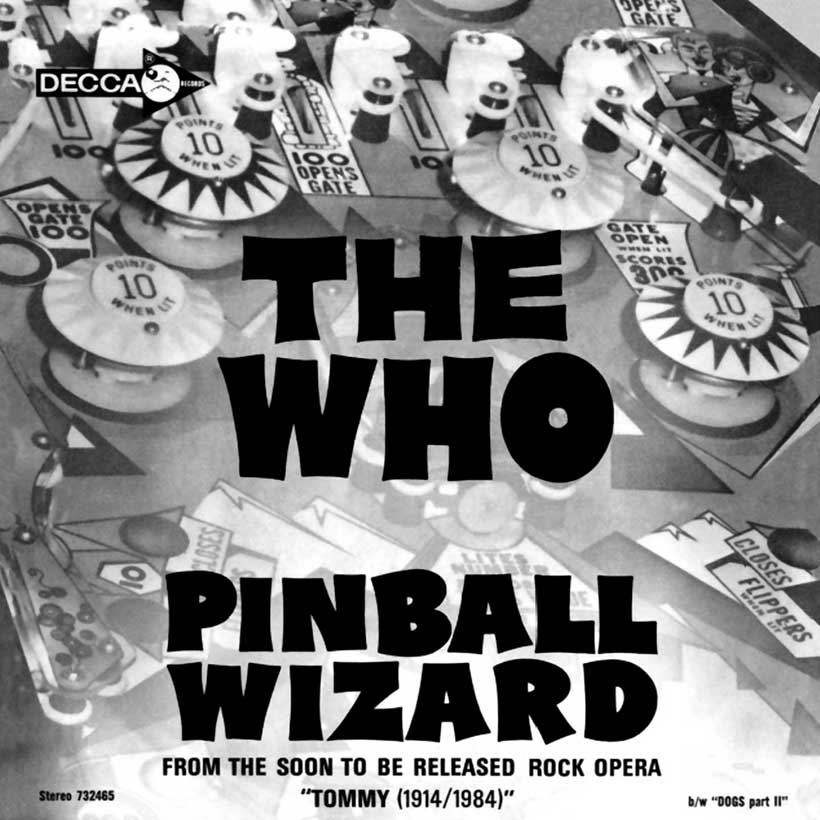
‘Pinball Wizard’ is one of those very special pieces of music, It’s a great rock song, but at the same time a classic song, and yet it was not as big a hit as perhaps we all remember, such is its popularity today, five decades after it was recorded. The song was, of course, part of Pete Townshend magnum opus “Tommy”,which he and the band had begun recording in September 1968, but they had broken off from working on to tour. With much of the album in the can, Pete had played some of it to his friend, the music critic Nik Cohn, who liked it, but thought it only worth four stars, rather than five.
Pete, knowing Cohn to be a massive pinball fan, asked “So, if it had pinball in it, would you give it a decent review?’ He went, ‘Of course I would. Anything with pinball in it’s fantastic.’ And so I wrote ‘Pinball Wizard,’ purely as a scam.”
Written in haste, Pete was unsure of its merit, saying, “It was going to be a complete dud, but I carried on. I attempted the same mock baroque guitar beginning that’s on ‘I’m a Boy’ and then a bit of vigorous kind of flamenco guitar. I was just grabbing at ideas. I knocked a demo together and took it to the studio and everyone loved it.”
On 7th February 1969, The Who went into Morgan Studios, in the High Road, Willesden, far from the most prestigious recording set up in central London, and set about ‘Pinball Wizard’ with Kit Lambert as producer.
Released on Friday 7th March, on Track Records it made the UK chart on the 22nd, climbing to No.4 on 3rd May. The Beatles‘Get Back’ was at No. 1 and fellow Apple Records artist Mary Hopkin at No. 2 with ‘Goodbye,’ with the great Desmond Dekker and the Aces’ ‘The Israelites’ at No. 3. All this despite BBC Radio 1 DJ, Tony Blackburn calling ‘Pinball Wizard’ “distasteful.” Released in the US two weeks after its UK appearance, it made the Hot 100 in early April, eventually peaking too No.19 on the Billboard chart on 24th May.
Tommy was finished in March and released in May to critical and fan acclaim in equal measure, although there were some poor misguided critics who deemed it “sick.” Despite a poor sales start, the double album’s growing mystique eventually pushed Tommy to No. 2 in Britain .
Tommy formed the core of The Who’s set at the Woodstock Festival in the middle weekend of August 1969. While they were playing their “opera” section, Abbie Hoffman infamously stormed on stage just after they had just finished ‘Pinball Wizard’. He grabbed the microphone and started ranting about the imprisonment of John Sinclair, the leader of the White Panther Movement and the MC5’s manager. Townshend was incensed, and hit Hoffman with his guitar while herding him off the stage with a chorus of invective.
For all its controversies, ‘Pinball Wizard’ remains one of The Who’s crowning glories.
It is impossible to talk about modern psychedelic music without mentioning Ripley Johnson. As bandleader of Wooden Shjips and one half of Moon Duo, Johnson has continually charted new cosmic paths that expand on the language of the genre. With Rose City Band, Johnson’s songwriting and beautiful guitar lines take center stage, the veil of psychedelia notably drawn back. While his vocal treatment would be recognizable to any Wooden Shjips fan, the sparseness of the instrumentation lays bare the beauty of his writing. Shimmering guitar lines are free to shine, buoyed by driving rhythms. New to the mix are arrangements and instruments drawn directly from classic country, resulting in songs with more than a hint of twang.
Rose City Band started purely as a recording project, with Johnson’s role mostly obscured for the self-titled debut album. Released with no promotion, in the style of private press records, it was a liberating act, a focus on music without any expectations. Explaining it with a chuckle, Johnson elaborates, “I always would threaten to my friends that I’m gonna start a country rock band so I can retire and just play down at the pub every Thursday night during happy hour. I love being able to tour and travel, but I also like the idea of having a local band … more of a social music experience.” Freedom from expectation and obligation gave Johnson the space to experiment with new instrumentation and arrangements. The introduction of lap steel, mandolin, and jaw harp enhance Johnson’s lean guitar work with radiant overtones, Work on the album began at Johnson’s home studio in Portland during the summer, but, interrupted by touring.
The album is described this way by producer Ripley Johnson: “The band was aiming to capture a timeless, natural sound, not quite of the present, past, or future, but phasing in between the consciousness of now and the stoned dream-state of the eternal. Sort of a back porch jam just as the shrooms are starting to kick in. Handmade and human, but also cosmic and transcendental.
It’s psych rock, and difficult to describe without getting poetic; dreamy and insular, it’s easy to get lost in this album. Produced and recorded by Ripley Johnson (Moon Duo, Wooden Shjips), and mixed by Chris Cohen (Captured Tracks, Deerhoof), the album finds its niche in the hazy sonic landscape of private press country and psych records, and alongside artists like Relatively Clean Rivers, Jim Sullivan, Kenny Knight , and countless other explorers of the pastoral underground.
Buoyant and joyous, this is a captivating listen that leaves the listener yearning for more. The record is an ode to freedom, born of a musician stepping out of all routines and whose own liberation is communicated so completely in his music. in its entirety, is an emphatic statement on the songwriting power of Ripley Johnson. Johnson’s joy in every aspect of this album is delightfully infectious.
London’s Tugboat Captain, who named themselves after a Galaxie 500 song, are more than a little twee, making the kind of cute, shiny, horn-inflected indiepop that politely yells “striped tees and cardigans.” (They describe themselves as a “folk orchestra of ruffians.”) It’s pretty charming stuff and the band independently crowdfunded their trip to the USA only to have SXSW canceled, The impressive rise of Tugboat Captain has already taken them from home recording in their front room to Abbey Road, and is showing no signs of slowing down. The London-based quartet recently decamped to the iconic studios to work on their upcoming third album. With that release in mind the band will soon be heading to the other side of the Atlantic to play at both SXSW and the New York-based New Colossus Festival.
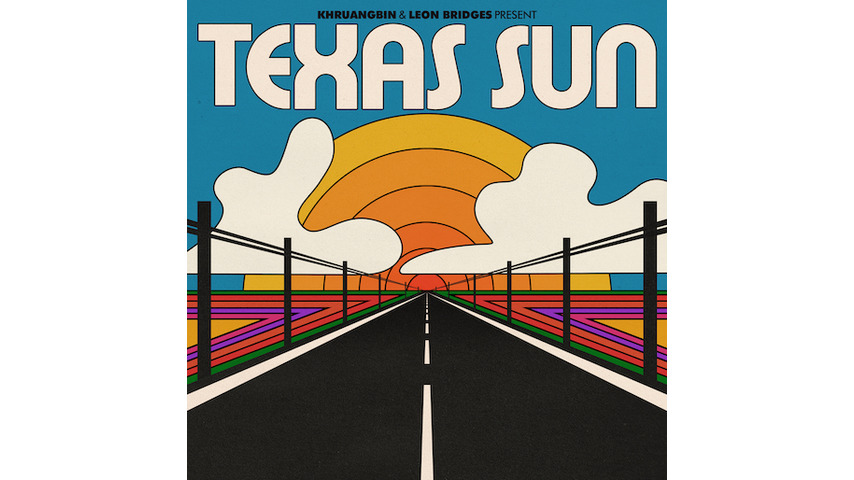
Raw, silken R&B vocalist Leon Bridges and the twisty, turny, psychedelic rock-funk instrumentalists of Khruangbin toured as one package last year, a show of unity between Texan soul makers. Leon Bridges and Khruangbin first crossed paths as the result of a joint tour in 2018, and discovered they had a similar laid-back musical ethos. Texas Sun was the instrumental trio’s first foray into writing with a vocalist, and results on the title track are cozy and seamless. “We try not to have too much of an intention, because it gets in the way of what the music wants to do,” says Khruangbin bassist Laura Lee. “If you just let the music do what it’s supposed to do, it will reveal itself. We tried to take that same approach with Leon. For us, it was opening up our world to have another person in it. But all of it feels like Texas to me.
‘Texas Sun’ from Khruangbin & Leon Bridges collaborative “Texas Sun” EP, out February 7th, 2020 on Dead Oceans, in partnership with Columbia Records and Night Time Stories Ltd.
Back when they released 2017’s GN, Chicago’s Ratboys were regulars of the DIY/indie/punk world but they were injecting a little alt-country into their sound and they seem poised to be one of DIY/indie/punk’s next breakout bands. Now, three years later, their third album Printer’s Devil just might be the one that does it. Ratboys already seem to be getting more praise and hype than ever, and compared to their first two albums, Printer’s Devil sounds big. They’re channelling the soaring, power pop-tinged alternative rock of the ’90s, sounding kind of like a cross between Weezer and the Gin Blossoms but with a distinct delivery from vocalist Julia Steiner that sets them apart from any one band in particular. They also know how to change things up, withPrinter’sDevil finding time for punk speed, folk balladry, atmospheric build-ups, and plenty of the in-between. As ever, Julia’s earworm melodies and the band’s strong vision tie it all together.
Upheaval and change are themes spread throughout the songs on Printer’s Devil, the latest Ratboys LP, released via Topshelf Records. A tangible sonic shift is apparent thanks to a newly-expanded lineup – founding members Julia Steiner and Dave Sagan are now joined by Marcus Nuccio and Sean Neumann on drums and bass. What started as an acoustic duo has finally transformed into a full-scale indie-rock band with a clear identity. Recorded live at Decade Music Studios in Chicago, Printer’s Devil features big-chorus power pop songs like “Alien with a SleepMask On” and “Anj” that sound massive and larger than life, alongside intimate folk songs like “A Vision” and devastating alt-country tracks like “Listening,” showcasing once again the group’s signature versatility. Building off their previous albums Ratboys captures the bombastic, electrified fun of their live show in a bottle on Printer’s Devil and showcases their growing chemistry as a tight-knit group.
The Band:
Guitar, vocals, lyrics – Julia Steiner
Guitar, bass (Tracks 3, 8, 9) – Dave Sagan
Bass – Sean Neumann
Drums, synths – Marcus Nuccio
Drums (Tracks 3, 4, 8, 10), Vibes – Ian Paine-Jesam
Portland band Lithics are back with “Tower of Age”, their first record for Trouble In Mind which will be out June 5th. Excellent first single “Hands” stays tightly coiled for most of it’s existence, though it unleashes some serious noise when you least expect it. After introducing themselves to the world with 2016’s “Borrowed Floors” (Water Wing) and throwing down the gauntlet with 2018’s “Mating Surfaces” on Kill Rock Stars, Lithics make the jump to Trouble In Mind for “Tower of Age”.
“Tower of Age” bristles with invention, wedging lyrical Dadaism into right angles of rhythmic minimalism. This is music in ellipses. A circular communication and a fusion of decades worth of musical insight into a singular refraction of thought & sound. Guitars plunk and scratch, and rhythms pulse and syncopate tightly wound around an imagist’s philosophy to “use absolutely no word that does not contribute to the presentation.” The band’s austere approach to composition and wordplay elevates them above and beyond bands seeking similar sounds; it’s not that they use less; it’s How they use less.
“Love” is the debut LP by Love, released in March 1966 on Elektra Records. . After gigging around the Los Angeles scene for three years, Arthur Lee was ready for something different. Lee had been recording since 1963 with his bands, the LAG’s and Lee’s American Four. He had written and also produced the single “My Diary” for Rosa Lee Brooks in 1964 which featured Jimi Hendrix on guitar. A garage outfit, The Sons Of Adam, which included future Love drummer Michael Stuart, also recorded a Lee composition, “Feathered Fish”.
Inspired by seeing The Byrds live, he decided to merge their folk-rock sound with the driving r&b he had been playing to create a new group, dubbed Love.recruiting guitarists Johnny Echols and ex-Byrds roadie Bryan Maclean, bassist Ken Forssi and drummer Alban “Snoopy” Pfisterer, Love began recording their eponymous debut LP in January 1966. Their first single, Bacharach/David composition “My Little Red Book,” spotlights an insistent, menacing riff that sounds nothing like what their contemporaries were committing to vinyl. Other cuts highlight the writing talents of Lee and the band members.
Nothing like what their contemporaries Who were committing to vinyl. Other cuts highlight the writing talents of Lee and the band members, notably on Lee’s anti-drug essay “Signed, D.C.” and Maclean’s “Softly to Me.” Also included is their version of the rock standard “Hey Joe,” rivaling The Leaves’ hit version for power and sporting some lyric alterations. The group, which lived communally at the time in a house formerly owned by Boris Karloff (they are pictured in the house’s garden on the LP cover), quickly coalesced into one of the West Coast’s most influential and exciting groups; here is where it all began. This was their hardest-rocking early album and their most Byrds-influenced.” Arthur Lee’s songwriting muse hadn’t fully developed at this stage, and in comparison with their second and third efforts, this is the least striking of the LPs featuring their classic line-up, with some similar-sounding folk-rock compositions and stock riffs.
Twelve of the album’s fourteen tracks were recorded at Sunset Sound Recorders in Hollywood on January 24th–27th, 1966. The remaining two tracks (“A Message To Pretty” and “My Flash On You“) come from another session.
Love
Arthur Lee – lead vocals, percussion, harmonica. Also drums on “Can’t Explain”, “No Matter What You Do”, “Gazing”, and “And More”.
Johnny Echols – lead guitar
Bryan MacLean – rhythm guitar, vocals. Lead vocals on “Softly to Me” and “Hey Joe”.
Led by brothers Mez Sanders-Green (vocals) and Mick Sanders (guitar), UK four-piece LIFE make snarling, gleefully hyper punk with a pop sensibility and a heap of attitude. Their second album, “A Picture of Good Health”, was released last fall and is recommended to fans of McLusky, Fontaines DC and IDLES (with whom they’ll be on tour in the UK in April). Known for their fiery live shows, Music video by Life performing “Bum Hour” . Life are at the crest of the current wave of UK guitar music alongside other scene champions . they channel bands such as The Fall, Blur and Parquet Courts. Their focus on community and witty, off-centre social commentary underscores everything they do. The band hail from Hull in England’s North East. Energetic frontman Mez jumps and dances around the stage with a death glare like Jarvis Cocker making love to Frank Sidebottom and the Sultans of Ping.
Life released their second album – A Picture Of Good Health – in September 2019 in partnership with PIAS and recorded with Luke Smith (Foals, Everything Everything, Depeche Mode) and mixed by Claudius Mittendorfer (Parquet Courts, Yak, Weezer). It was BBC 6 Music’s Album Of The Day, BBC Radio 1’s Album Of The Weekend and was one of BBC 6Music’s Albums of The Year; all four singles from the album were play-listed at 6Music.
New music, out now. We are so proud to give you “Switching On” our latest single taken from “A Picture of Good Health”. Watch our Wes Anderson influenced video created by ourselves
The new album is more personal, about mental health and inner turmoil. I think all of us had a breakdown at some point while making it” – Mez, Life.
Hull’s post-punk absurdist polemics LIFE made quite an impact with their DIY debut album. 2017’s Popular Music was championed by BBC 6Music’s Steve Lamacq and won firm fans (and friends) in fellow post-punkers Idles. Most unexpectedly, Popular Music even ended up in BBC Radio 1 Albums Of The Year list, where Life’s gnarly, Humberside riffs and scattergun wordplay kept unlikely – but deserved – company with the likes of Jay-Z, Skepta, the xx and Wolf Alice. Two years on, their eagerly awaited, dryly-titled second album, A Picture Of Good Health, ups the ante musically and lyrically.
Album available through Afghan Moon the album ‘A Picture Of Good Health’, released on the 20th of September 2019,