On the day (October. 17th) in 1973: The Rolling Stones performed two shows at Forest Nationale in Brussels, Belgium, as part of a tour of the UK & Europe; sax player Bobby Keys didn’t show up for the concert, which resulted in him being banned by Mick Jagger from future Rolling Stones tours until 1982, with occasional exceptions; according to legend, Bobby missed the gig due to him filling a hotel bathtub with Dom Perignon champagne & drinking most of it…(Bobby ‘left the building’ for the last time on December. 2nd, 2014…)
October 17, 1973. 1st show: Brown Sugar / Gimme Shelter / Happy / Tumbling Dice / Dancing With Mr D / Angie / You Can’t Always Get What You Want / Midnight Rambler / Honky Tonk Women / All Down The Line / Rip This Joint / Jumping Jack Flash / Street Fighting Man
What an beautiful, elegant blues player Mick Taylor is during this period… using the same old scales that most all that most of us play.His solo on Angie is the most perfect, no wasted notes statement this side of George Harrison, but as w/ the rest of this set played on the sweet verge of feedback.The perfect foil for Keef who also needless to say is at the height of his powers hereand besides what group needs 2 of the same on the guitar front?No offence to R.W. whom I love w/ the Faces but he seems to have stopped practising (or something… ) upon entering the Stones.
YCAGWYW is so beautiful here it damm near had me tearing up, Keith and Mick Taylor can only be described as sublime on this version, they play off one another perfectly…and da sax just knocks it outta the fuckin’ park…never heard a better live effort of this song, its like they sold their souls for this one…
Mick Taylor, what an amazing guitar player ! I think, the Rolling Stones songs bring him up to this level. He also plays great on his solo albums, but its never the magic like with the Stones.Mick Taylor without the Stones is not same. And of course he plays better the Ronnie Wood. But playing fantastic performances makes the band not surviving for so long. It’s Ronnies character and personality who is a part off, that the Stones still play this days… So thanks all of them for such great music they gave and still give to us !
Units made: 173 Limited-Edition Book, numbered and hand-signed by Mick Jagger, Michael Putland and Nick Kent.
Limited-Edition Tour Litho of 173 pieces, hand-signed by Mick Jagger.
Album: 180-gram Triple-Vinyl Set of the Brussels concert.
Watch: ’70s-era “Tongue & Lips” Watch—Japan Seiko movement and stainless steel face with brass dial.
History: In 1973, the government of France banned the Rolling Stones from entering French territory because of various run-ins with the law most of them occurring during summer of 1971, while the band members were in the South of France, recording one of their masterpieces, Exile on Main St. This was a blow to the Stones’ hordes of French fans, who would be shut out from experiencing the Greatest Rock ‘n’ Roll Band In The World on their 1973 European Tour in support of the newly released Goats Head Soup. That October, the band organized a concert across the Belgian border in Brussels, and a local radio station chartered a bus to transport French fans to the now-historic gig.
All the sights and sounds from this historic show and tour have now been amassed for the first time in The BrusselsAffair, the inaugural release from the Stones Archive. The package features an 180-gram triple-vinyl album and rare photographs from the Brussels show by Claude Gassian, as well a book documenting the entire 1973 European tour, with exclusive photographs from Michael Putland and a newly written text by acclaimed NME scribe Nick Kent.
Contributors: Michael Putland, Nick Kent, Claude Gassian
During the Rolling Stones’ 1973 tour of Europe, the band would usually end the show with their 1968 single (and Beggars Banquet album track), “Street Fighting Man.” On occasion, the Stones’ performance of the tune on the ‘73 jaunt could be magical. One such version was professionally recorded—and bootlegged—eventually seeing official release in 2011, before fading back into obscurity.
“Street Fighting Man,” like most of the Rolling Stones’ best stuff from the late ‘60s and early ‘70s, is not only a fucking great song, but the studio version sounds cool.
Believe it or not, what you’re hearing during the opening moments of is Keith Richards’ acoustic guitar, which was recorded using a cheap cassette deck, giving it an overloaded, electric character. Charlie Watts used a 1930s practice drum kit on the intro, also captured with the tape recorder, the thin tone of the kit adding to the lo-fi effect. As the song progresses, Indian instruments are heard, giving the track a psychedelic quality. One of those instruments, the shehnai (essentially an Indian oboe) produces the wailing sound heard towards the end of the song. Mick Jagger’s lyrics—is he calling for revolution?—are open to interpretation. Jagger’s words, and the fact that his vocals are partially buried in the mix, contribute to the mysterious nature of “Street Fighting Man.”
In support of their new record, Goat’s Head Soup, the Stones launched the 1973 European trek on September 1st in Vienna. Though significantly less dramatic than their infamous 1972 U.S. tour, the outing still had its moments. Take this one, in which saxophonist Bobby Keys quits the band right before the first of two scheduled performances that were to take place in Brussels, Belgium, on October 17th. In his autobiography, Life, Richards describes the scene:
No sign of Bobby at the band assembly that day, and finally I was asked if I knew where my buddy was—there had been no reply from his hotel room. So I went to his room and said, Bob, we gotta go, we gotta go right now. He’s got a cigar, bathtub full of champagne and this French chick in [the tub] with him. And he said, fuck off. So be it.
The Rolling Stones had booked the shows in Brussels due to its proximity to France, as they were banned from entering the country after behaving badly while recording Exile on Main St. in Villefranche-sur-Mer. The Brussels gigs took place at the Forest National Arena.
With a live album in mind, the Rolling Stones recorded both Brussels performances. Though the live LP idea was eventually scrapped, the public did eventually get to hear portions of the Belgian recordings via the syndicated radio program, The King Biscuit Flower Hour in both stereo and FM quadraphonic 4-track. Naturally, the KBFH broadcast was subsequently bootlegged.
On the Brussels recordings, the Stones—augmented by keyboardist Billy Preston, as well a horn section—are in fine form, for sure, but the absolute highlight of the tapes is the version of “Street Fighting Man,” the final song played during each of their sets that day. From the get-go, the energy of the band is palpable. Keith, especially, stands out, as he doesn’t seem to be playing his guitar as much as stabbing the thing, but it’s when Mick Taylor steps on his wah-wah pedal (in place of the shehnai) that this rendition starts to become spectacular. As the number continues, Bill Wyman’s bass swoops, the horns squeak and squawk, and the tempo increases and increases until the music ceases to be just that, morphing into a riotous, stunning wave of sound.
In 2011, after decades of praise from fans who heard the Brussels tapes, the Stones finally granted the release of a selection of the recordings. Nicking the title from one of the bootlegs of the Belgium gigs,Brussels Affair (Live 1973)was made available as a download via Google Play and the Rolling Stones’ website, as well as a limited edition box Set .But the box is now out-of-print, and, for some reason, you can’t even buy the download anymore. Currently, the only way you can pick up the release (through official channels, that is) is if you splurge for the japanese set. I bought the download when it came out, and can say that the recordings, given a fresh remix by BobClearmountain, sound stellar (much better than what’s heard above, which is from the bootleg version).
The live footage of “Street Fighting Man” is from the second of two shows the Stones played in Frankfurt on September 30th, 1973. Per usual, it was the closing song of their set.
From the same misty mountaintop tape spool as August’s A Weird Exits, Thee Oh Sees bring the companion album An Odd Entrances.
Delving more towards the contemplative than the faceskinning aspects of its predecessor, this sister album is a cosmic exercise en plein aire with John Dwyer and company double-drum shuffling, lounging with cellos, following a flute around the groove, and spooling a few Grimm-dark lullabies along the way. Lurking in the grass are a snake or two, like the celestial facing instrumental buzz of “Unwrap The Fiend Pt. 1.”…But for the most part this is a relatively hushed affair, a morning rather than evening listen.
The band plans on donating half their profits from the first pressing to Elizabeth House, a local charity in Pasadena that specifically helps homeless women with children get back on their feet.
Public Service Broadcasting are pleased to reveal the release of a double LP/CD live album of their sold-out performance at Brixton Academy from ‘The Race For Space’ Tour, recorded on 29th November 2015. A taster of this release can be viewed here as the band perform their celebration of the moon landings with crowd favourite, ‘Go’ https://youtu.be/y8rNlFYRcgs
“We first talked about the possibility of a live album and DVD a long while before Brixton and I have to confess that I ruled it out almost immediately” says frontman J. Willgoose, Esq. “I was persuaded over a few months, though, by both the reaction on the night – which was overwhelming – and of those who watched the stream as it went out live, that something special had occurred and it truly was worth documenting. Brixton had been a dream of mine ever since seeing the Manics there on their Everything Must Go tour many moons ago. Playing there as PublicService Broadcasting, and selling it out, was something I never even thought of as a possibility. It’s my favourite venue in the world and we wanted to make it a show to remember.”
The show features arena-level production crammed onto the Brixton stage with a 13- piece choir, 5-piece string section, expanded brass section, a longer set list, Smoke Fairies guesting on Valentina, a surprise special guest, dancers, pyrotechnics and more as the London-based band wow a hometown crowd with a very special performance. The release will be accompanied by a DVD filmed on the night along with an audio commentary from the band and bonus features.
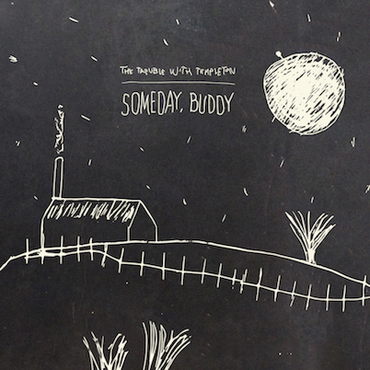
In the two and a half years since the release of their last album Rookie, Brisbane’s The Trouble With Templeton have, says frontman Thomas Calder, been busy “breaking down and re-assembling what it means to make music for us.” On the evidence of the richly confident and clear-sighted Someday, Buddy, released through Bella Union, that time was well spent. The full-bodied songs here can take the emphasis, no trouble. The Trouble With Templeton weren’t slouching on Rookie, where Calder and company wedded vibrant melodies and multifarious alt-rock flavours – epic, jangly, glam – to a core of emotive cogency. On Someday, Buddy, however, their personality emerges sharper and clearer. “Our goal was to make a record that is raw, bare and honest,” says Calder, a claim borne out by the incisive lyrics of the swelling Sailor and lilting Heavy Trouble, where Calder’s falsetto dances over a tender indie folk backdrop. Sometimes fragile, sometimes forceful, Calder’s voice remains a marvel on Bad Mistake, a combination of intricate verses and a huge chorus pitched somewhere between Pavement and Elliott Smith. Someday, Buddy’s recipe is one of slow burn songs harbouring great reserves of potency: the discreet neo glam swagger of Complex Lips, the sunburst chorus of Vernon, the gorgeous ripples of album highlight 1832.
The EP was recorded live in one day at Future-Past Studios, Hudson NY and features new versions of album favourites ‘Aviation’ and ‘The Dream Synopsis’ alongside a selection of cover versions, first heard live during The Last Shadow Puppets’ summer touring. Expanding their trademark rawkous rock sound with a swagger and confidence rarely heard though their short but illustrious career, this is a bold and enthralling expansion of their already venerable sonic palette.
Their first studio album in over a decade. Recorded in just three days in London, England, this is an album full of their passion for the music that has always been at the heart and soul of the band – Blues.
Recorded in three days in December last year at British Grove Studios in West London, just a stone’s throw from Richmond and Eel Pie Island where the Stones started out as a young blues band playing pubs and clubs. The credits say it all, in the way this project was approached to play live in the studio without overdubs. Mick Jagger (vocals & harp), Keith Richards (guitar), Charlie Watts (drums), and Ronnie Wood (guitar), plus their long time touring sidemen Darryl Jones (bass), Chuck Leavell (keyboards) and Matt Clifford (keyboards). For two of the twelve tracks the Stones were also joined by old friend Eric Clapton.
‘Blue & Lonesome’ sees the Rolling Stones tipping their hats to the blues roots with tracks of intense spontaneity. It’s hard to believe that this is a record made by musicians in their sixth decade of recording. In their very early days the Stones played the music of Jimmy Reed, Willie Dixon, Eddie Taylor, Little Walter and Howlin’ Wolf – artists whose songs are featured on this album.
Reverb Conspiracy Vol. 4 is a collection of 12 tracks from some of the best in Europe’s unfathomably fruitful psych scene – offering a plethora of gems of the rock and roll, kraut, shoegaze, folk and garage-rock variety, and just about everything in-between. The highlights of the record include the dark, discordant ‘krautgaze’ of My InvisibleFriend, the mammoth 15 minute spaced-out jam from Giobia, the ominous and mind-altering Ulrika Spacek and the kaleidoscopic splendor of Josefin Ohrn + The Liberation. Volume 4 also boasts immersive cuts from the likes of The Madcaps, Soft Walls, Pretty Lightning, The Oscillation and Fuzz Club’s own otherworldly psych juggernauts TAU, 10000 Russos, The Orange Revival and Throw Down Bones – each and every track is a piece of experimental sonic mastery in its own unique and distinct right.
the Rolling Stones are returning to their roots in another way. This week they release Blue & Lonesome, comprising cover versions of old blues deep cuts, mainly by Chicago artists (four by Little Walter and two by Howlin’ Wolf). Twelve tracks long, it’s the first Rolling Stones album to contain more songs by other people than any since their self-titled debut from 1964, the days when they were essentially a blues covers band (their name itself is taken from a blues song, Rollin’ Stone by Muddy Waters).
The way Keith Richards tells it, the album happened pretty much by accident, when the Stones gathered in British Grove Studios in London last December to work on some new material. The sound wasn’t gelling, so Richards told the band to play Little Walters Blue and Lonesome. “We cut that, we listened to it back and suddenly the sound is there. Mick turns round and says, ‘I wanna do this Howlin’ Wolf song,’ and then he says, ‘And I’d like to do this Lightnin’ Slim,’ and now I’ve got the man on a roll. When you’ve got the lead man calling the shots and saying, “I want to do that, I want to do this,’ keep the tape rolling.” And they do record on tape, Richards says.
The Rolling Stones The Alternate Blue & Lonesome 2016 Full Album.
Tracklist; Below
01. Commit A Crime (Mick Jagger/Jeff Beck in The White House Feb 21 2012)(NEW SONG)
02. I Can’t Turn You Loose/ 03.Miss You (Mick Jagger in The White House Feb 21 2012)
04. I’m Going Down (The Rolling Stones with Jeff Beck live 2012)
05. I Wanna Be Your Man (The Rolling Stones live 2012)
06 .Come Together (The Rolling Stones Desert Trip 2016 Covering The Beatles)(NEW SONG)
07. Just Your Fool (The Rolling Stones Desert Trip 2016) (NEW SONG)
08. Ride Em On Down (The Rolling Stones Desert Trip 2016) (NEW SONG)
09. Jumping Jack Flash (Live In Las Vegas DVD 2016) 09. Pain’t It Black (Live In Las Vegas DVD 2016)
10. Gimme Shelter (Live In Las Vegas DVD 2016)
11. Ride Em On Down (Live In Las Vegas DVD 2016)(NEW SONG)
12. Midnight Rambler (Live In Las Vegas DVD 2016)
13.Little Red Rooster (The Rolling Stones with Eric Clapton Very Rare Footage)
14. Night Time is The Right Time (The Rolling Stones with Buddy Guy)
15. Dust In My Broom (Very Rare 2005 Footage)
16. I’m Going Down (Very Rare 2005 Footage)
17. How Many More Years (Howlin Wolf introduced by The Rolling Stones in 1965)
18. Little Red Rooster (The Rolling Stones with Tom Waits 2014))
19. Country Honk (Acoustic 2016 Version)
20. The Devils Own (Very Rare 2016 Song)
21. ABC News advertisement for forthcoming New Rolling Stones Album on December 02, 2016
If the process of recording blues classics with the Rolling Stones for their upcoming Blue & Lonesome LP felt familiar for Mick Jagger, it wasn’t just because he knew all the songs by heart — he’d also done this kind of thing before. Jagger’s previous attempt with an album of blues standards took place in 1992, while he was working with producer Rick Rubin on a solo LP that ultimately morphed into Wandering Spirit the following year. Rubin was also working with a Los Angeles band called the Red Devils, who he’d signed to his Def American imprint .
Tipped off to the band, Jagger turned up at the King King in May 1992 and sat in for a performance that included Bo Diddley’s “Who Do You Love?” and Little Walter’s take on “Blues With a Feeling.”
For Jagger, who’d been toying with the idea of a blues record since the Stones had finished their Steel Wheels tour, the show was just the spark he needed to actually get down to work. Using Rick Rubin as a middleman, he bought the band to Hollywood’s Ocean Way Recording studios in June, A day of running through some of the singer’s favorite numbers. the RedDevils were paid a flat fee of $750 for the session, which Jagger called to order by plunking down a pile of records.
What they got was a 13-hour blues marathon that produced more than a dozen songs — most of which were tracked in a few takes. Rubin publicly predicted the Red Devils sessions would be released “someday” — though in the meantime, the Devils were left without any real assurances, or even a copy of the tapes.
Even though the Red Devils sessions remain officially unreleased with the exception of the track “Checkin’ Up on My Baby,” which worked its way onto 2007’s The Very Best of Mick Jagger compilation — tapes eventually found their way into circulation.
1) 00:00 Blues With A Feeling
2) 03:17 I Got My Eyes On You
3) 06:24 Still A Fool
4) 10:02 Checkin’ Up On My Baby
5) 13:22 One Way Out
6) 15:34 Talk To Me Baby
7) 18:12 Evil
8) 21:03 Ain’t Your Business
9) 23:14 Shake ‘m On Down
10) 28:46 Somebody Loves Me
11) 31:37 Dream Girl Blues
12) 37:18 40 Days, 40 Nights
Vocals: Mick Jagger
Harp: Lester Butler
Guitar: Paul Size
Bass: Jonny Ray Bartel
Drums: Bill Bateman
The Rolling Stones are working on a blues-themed studio album, and we know for sure that Eric Clapton will be making a guest appearance on the disc.
Clapton “dropped by for a couple of numbers,” Richards told BBC 6 Music, adding that the recording sessions were lke “like old times down in Richmond.”No, he’s not talking about Richmond, Virginia; he means the CrawdaddyClub in Richmond, Surrey, England, where the Stones and Clapton’s old band, the Yardbirds, used to perform in the early to mid-Sixties.
The Rolling Stones confirmed that they were working on a new album at the launch of Exhibitionism, a career retrospective at London’s Saatchi Gallery, earlier this year. The sessions have included new material and several blues covers, including tunes by Howlin’ Wolf and Little Walter. Richards said the album would include “lots of Chicago blues” and would be released sometime “in the autumn.”
The Stones have circled back to the blues, with “Blue & Lonesome”, a (mostly) live-in-the-studio collection of 12 songs originally performed by the likes of Little Walter, Jimmy Reed and, again, Howlin’ Wolf. It’s the first Rolling Stones album to have zero Jagger-Richards originals; even their debut had a couple of attempts at songwriting. Recording Blue & Lonesome was easy – it took all of three days. “It made itself,” says Richards. As Ronnie Wood points out, however, it’s also the product of “a lifetime’s research, really.”
The freakiest thing about “Blue & Lonesome” is the extent to which Jagger and Richards agree on it. both are genuinely excited about the roots revival. The project might, from the outside, seem more like a Richards thing, the kind of retro move he’d favor, while Jagger The frontman says the stereotype isn’t all wrong, but that in this case, “we were all equally into it. I was as into it as anyone.”
“This is the best record Mick Jagger has ever made,” says Richards, always a fan of Jagger’s emotive harmonica playing, which flourishes on the new LP. “It was just watching the guy enjoying doing what he really can do better than anybody else.” He pauses. “And also, the band ain’t too shabby.”
Even after their early flurry of covers subsided, the Stones have never stopped playing old blues tunes, both onstage and, especially, in rehearsals. The 200 hours of Exile on Main Street sessions, for instance, were punctuated by repeated attempts at covers, meant to clear the air between the midwifing of new songs. Two of them Slim Harpo’s “Shake Your Hips” and Robert Johnson’s “Stop Breakin’ Down Blues” – made the 1972 album.
Jagger is finally ready to concede that the Rolling Stones have something to add to this music. “The thing about the blues,” he says, “is it changes in very small increments. People reinterpret what they know – Elmore James reinterpreted Robert Johnson licks, as did Muddy Waters. So I’m not saying we’re making the jumps that they made, but we can’t help but reinterpret these songs.
This past December, the Rolling Stones gathered in Mark Knopfler’s British Grove Studios in West London to begin work on a batch of original songs. Jagger is deliberately vague on the nature of those tunes. “I hope it’s gonna be a very eclectic album,” he says. “I hope some of it’s gonna be recognizable Stones and some of it’s gonna be some Stones you never heard before, maybe.”
Knopfler’s studio is gorgeous, equipped with an ideal mix of vintage and modern equipment, with high ceilings and gleaming blond-wood floors. It was also a totally alien environment for the Stones. says Richards. “I know that recording new music in a room they’re not familiar with, there’s sometimes going to be weeks before the room breaks in.” So Richards told fellow Stones guitarist Ronnie Wood to learn Little Walter’s apocalyptically mournful 1965 B side “Blue and Lonesome” as a potential icebreaker (Wood remembers this suggestion coming in by fax, well before the sessions).
By the second day at British Grove, Richards felt his prediction coming true. “The room is fighting me,” he recalls thinking. “It’s fighting the band. The sound is not coming.” He suggested “Blue and Lonesome,” Jagger dug up a harmonica in the right key, and the band barreled through two quick takes. “Suddenly,” says Richards, “the room is obeying and there’s something happening – a sound is happening and it was so good.”
One of those two takes ended up on the album, and it’s extraordinary, with Wood playing frantic lead; Richards hitting huge, doom-y chords; Watts nailing the original track’s regally restrained drum part; and Jagger digging deep on his harp when he’s not delivering one of the least-mannered vocals of his career. “Baby, please, come back to me,” he pleads. Afterwards, Jagger – who says he had already been pondering a Stones blues album – surprised everyone by calling for more covers. That night, he went to his MP3 collection, returning the next day with more song ideas.
And in keeping with the serendipity of the endeavor, a special guest showed up. On the first day, Eric Clapton happened to be mixing an album of his own at British Grove when he poked his head into the Stones‘ live room. The guitarist, who had seen the RollingStones playing blues gigs when he was still in his teens, was taken aback. “Eric walked in, and he had the same reaction that any fan would have,” says Was. “He was just gobsmacked at being that close to something that iconic and powerful. There was this great look on his face.” They asked Clapton to jam on two songs, and he ended up picking up one of Richards‘ guitars, a semihollow Gibson, instead of the Strats he’s mostly played post-1970 – which helped him reclaim the fat tone of his Bluesbreakers days: You can hear the band applauding him at the end of “I Can’t Quit You Baby.”
It all happened so quickly and naturally that the band never really discussed what it was doing, or even acknowledged it was making an album. “I didn’t even have time to change my guitar,” says Wood. “They were coming so thick and fast. It was like, ‘OK, let’s do it – this one, that one.’ Some of the harder riffs were making my fingers bleed, and Mick was going, ‘Come, let’s do it again, then!’ And we’ll go, ‘Hang on! My fingers!’ It was real hard work, but I love it.”
For Jagger, it was a chance to indulge his blues-harp habit, a subject that arouses an incongruously geeky enthusiasm in him. “If I had known I was gonna have to do this,” he says, “I would have spent a few days practicing, because sometimes I do that, sit at home and play. It’s quite easy, really; I mean, you just put on whatever, a whole bunch of Muddy Waters records.” (Muddy “Mississippi” Waters – Live, a 1979 LP featuring Johnny Winter, is one of Jagger’s favorites for this purpose.)
Jagger’s vocals are also striking in their authority. The camp he once brought to the genre is gone, replaced by something darker and deeper, perhaps reflecting the weight of real-life losses. “You can put yourselves inside the songs as a 70-year-old,” says Was, “in a way that you couldn’t when you were 21, because you hadn’t experienced the stuff.”
“On some of these, I sound quite old,” Jagger counters, “and on some of them, I don’t. Some of it sounds like when I was in my twenties doing this stuff. I didn’t really mean it to sound like that. I was supposed to be more mature!”
In October, as the Stones stepped onto the Desert Trip stage in Indio, California, some thoughts crossed MickJagger’s mind. “It was 30 meters wider than our normal stage,” says Jagger, “which is quite wide, by the way, which I usually run. And I heard that nobody else went out there, apart from me.
Though Jagger blames the dusty field for a recent bout of laryngitis – and he originally questioned the idea of a festival of “old, over-70 white English people playing all the same music” – the band had a good time at Desert Trip, treating it as a sort of boomer-rock class reunion.
The Stones are discussing more shows next year, and they really do intend to work on that album of originals. “There’s about 10 or 12 new songs that Mick actually has been cooking up,” says Wood, “and Keith’s got the odd one, too.” Richards suggests that at least some of the songs might be unfinished compositions that date back 15 years or more. Keith Richards is trying to persuade them to do some recording, which may be a stretch. Jagger is positive they’ll finish that album, “but I don’t know when, because you want it to be really good and everything.”
At 75, Watts is the oldest band member, and also happens to have the most physically demanding job. Understandably, he struggles with back pain, according to Wood. It’s unclear what the Rolling Stones would do without him, and that’s a prospect Richards refuses to contemplate. “Charlie Watts will never die or retire,” Richards says. “I forbid him to.” Richards knows exactly how he’d like to go, and he’s sure that doctors will want to have “a good look at the liver” when he does. “I’d like to croak magnificently,” he says, savoring the prospect. “Onstage.”
Blue & Lonesome sees the Rolling Stones tipping their hats to their early days as a blues band when they played the music of Jimmy Reed, Willie Dixon, Eddie Taylor, Little Walter and Howlin’ Wolf – artists whose songs are featured on this album.
The tracks are – ‘Just Your Fool’, ‘Commit A Crime’, ‘Blue And Lonesome’, ‘All Of Your Love’, ‘I Gotta Go’, ‘Everybody Knows About My Good Thing’, ‘Ride ‘Em On Down’, ‘Hate To See You Go’, ‘Hoo Doo Blues’, ‘Little Rain’, ‘Just Like I Treat You’, ‘I Can’t Quit You Baby’.
Or at least maybe he co-wrote it. maybe he gave the lyrics to Keith. Whatever, I don’t care. Is it Gram’s style of songwriting, we also know the Stones‘ style, both before and after meeting Gram (and musically, Ry Cooder).
Now in the February ’13 issue of Uncut we have Mick’s brother saying it was a Gram Parsons’ composition (“not that he ever got anything for it”). And we have an old quote from Mick himself, “I remember we sat around originally doing this with Gram Parsons…” Etc. Really Mick, you “remember” that much… in ’71? And knowing Gram, I imagine he wasn’t doing anything? Just sitting around, watching?.
No, there’s no proof. Unless you believe in the analysis of art and life as proof.Is it possible that the original lyrics, written by Gram and perhaps modified slightly by the Rolling Stones, were written about/for Gram’s sister Little Avis. Gram Parsons felt tremendous responsibility for Avis after their parents’ death, and overwhelming guilt at times for leaving her. And, no doubt, some guilt over what was happening to him, and that he would also soon be leaving her for good. “Faith has been broken, tears must be cried.” His letters to Avis mirror the thoughts and feelings in the song. The notebook, with the lyrics and chords to Wild Horses wtitten in Grams handwriting that people point to as “evidence” that Gram wrote the song actually points to the opposite conclusion. The lyrics are all written out exactly as they are on the record. When you compose a song you scribble out lines, try new ones and write stuff in the matgins. It looks messy. The version in Gram’s notebook looks more like it was transcribed from another source.
Keith Richards has stated in interviews and in writing that he began writing the song for his son, Marlon, as he was about to leave on tour. He showed the roughed out lyrics to Mick and Mick turned it into a love song. What reason would Keith have to lie about it? He has always gone out of his way to sing Gram’s praises. Mick and Keith are two of the most prolific song writers in the history of popular music history and have more big hits under their belts than you can count. They also have a history of doing lots of covers and giving the writers of those covers their due.
Childhood living is easy to do The things you wanted I bought them for you Graceless lady you know who I am, You know I can’t let you slide through my hands
I watched you suffer a dull aching pain, Now you’ve decided to show me the same No sweeping exits or offstage lines Can make me feel bitter or treat you unkind
I know I dreamed you a sin and a lie, I have my freedom but I don’t have much time Faith has been broken, tears must be cried, Let’s do some living after we die
Wild horses couldn’t drag me away.
Originally published in Gram Parsons InterNational blog, 2013
The Rolling Stones guitarist’s first studio album outside his day job in 23 years opens with the short title fragment: Richards picking and singing a rare acoustic blues. It is rock’s most enduring outlaw evoking the Delta ghosts and early-country spirits that still haunt and inspire his life and band – and a perfect entry into a record that is at once loud, ragged delight, driven by Richards‘ trademark barbed-treble riffs, and shot through with a surprising, reflective urgency. “They laid it on thick/They couldn’t make it stick,” Richards sings with gravelly defiance in “Nothing on Me.” The guitarist also concedes the mounting price of age in “Amnesia,” a song about fading strength and memories. Keith Richards made Crosseyed Heart with reliable old friends including his late-Eighties side crew the X-Pensive Winos, singer Aaron Neville and the Stones’ late saxophonist Bobby Keys, whose robust playing, among his last on record, underscores Richards‘ admission here that there is an end to every ride – and his determination to make every mile count. –


 .
.







 The Fat Angel Sings