Towards the end of Talking Heads’ career, all four members of the band gathered in the studio with Lou Reed to record the Velvets’ “Femme Fatale.” The result came out on a Tom Tom Club LP (Boom Boom Chi Boom Boom), but the credits sure read like Talking Heads + Lou: Tina Weymouth on bass and keyboard, ChrisFrantz on drums, Jerry Harrison on keys, David Byrne on slide and rhythm guitar, and Lou Reed on lead and rhythm guitar. Weymouth sings Nico’s part and everyone else joins in on backup vocals.
Rolling Stone reported news of the NYC supersession in 1987. It provided the happy ending to “Are Four (Talking) Heads Better Than One?,” a profile that suggested the foursome was held together with Scotch tape and chewing gum, and contained some bons mots from Lou:
Back in earlier, calmer days, the band looked to Lou Reed as a sort of patron saint. He doled out advice like “Get some dynamics in your songs” or “David should wear a long-sleeved shirt – his arms are too hairy.” And more profound warnings, which the band still remembers today. Chris: “Lou Reed once told us, ‘Man, I’ve gotta go out on tour again. People want to view the body.’” Tina: “He told us, ‘A band is like a fist of many fingers. Whereas record companies like to ego-massage one finger and break it off.’”
The Byrne/Frantz/Harrison/Reed/Weymouth “Femme Fatale”:
This is the key album in Talking Heads‘ evolution. Their first two albums were leading directly to ‘Fear of Music,’ which, with assistance from producer Brian Eno, manages to sound like the future. David Byrne paints a bleak picture lyrically, but musically the band has never been more inviting. “I Zimbra” and “Life During Wartime” were just the start. ‘Fear of Music”s success allowed them to take their musical exploration even further out the next time around, when they made their masterpiece.
It’s the first step in David Byrne’s assumption of power, moving Talking Heads from a band to his band.
Not uncoincidentally, it was also the first album not drawn from the band’s CBGB repertoire, and the first on which Brian Eno was essentially a member of the band. Pointedly, Byrne and Eno would go to work on their own project, “My Life in the Bush of Ghosts”, before re-joining the the band for the Heads’ next album, “Remain in Light”.
One of the highlights “Life During Wartime” by The Talking Heads is as a sci-fi premise, scenes from a dystopian future that we will never have to encounter. Yet the urgency and immediacy of the band’s performance suggests that we are never very far from having to navigate our way with caution through streets that were once familiar; to reconsider the motivations of even our most familiar acquaintances; to literally run for our lives.
The band’s 1979 album Fear Of Music, the song is credited to all four group members (David Byrne, JerryHarrison, Tina Weymouth and Chris Frantz.) That’s because the relentlessly grooving music came out of a jam session. To match the propulsive instrumental backing, Byrne came up with lyrics inspired by his then-home in the Alphabet City section of Manhattan. His view of urban life was that it did require savvy and survival instincts beyond the norm, even if it hadn’t yet degenerated into complete chaos.
Byrne’s vision of the future, as expressed to NME at the time of the record’s release, was striking in its accuracy: “There will be chronic food shortages and gas shortages and people will live in hovels. Paradoxically, they’ll be surrounded by computers the size of wrist watches. Calculators will be cheap. It’ll be as easy to hookup your computer with a central television bank as it is to get the week’s groceries.”
Even the cover, black matte paper and embossed in the design used on the street-level metal doors that covered the entrances to New York City basements, gave the impression of something coming from underground. And it certainly sounded like nothing else. Hearing it today, the album’s mix of Motorik and Afrobeat sounds inevitable; in 1979 it was dance music that reflected the time: twitchy, nervous, unsure of the next step.
“Fear of Music” is an album full of warnings: In nearly every song, Byrne breaks into the songs to deliver the bad news. “Don’t look so disappointed. It isn’t what you hoped for, is it?” he sings in the Bowie-esque “Memories Can’t Wait.”
“Never listen to electric guitar,” he demands in “Electric Guitar,” it’s “a crime against the state.” Even the most benign subjects are fraught with worry: “Air,” he sings, “can hurt you too,” while not even his own thoughts are safe.
“Life During Wartime” plays like you’ve been dropped into the middle of a thriller where your next move might be your last; it’s thrilling and harrowing all at once. Byrne doesn’t waste any time setting up the stakes, as evidenced by the opening lines: “Heard of a van that is loaded with weapons/ Packed up and ready to go.” Within just the first verse, we find the narrator listening to gunfire and contemplating where to bury the bodies.
The lyrics do an excellent job of expressing how disorienting such a life might be, as the protagonist’s identity and even his physical looks are malleable. The comforts of life are replaced by the necessities: “I got some groceries, some peanut butter/ To last a couple of days/ But I ain’t got no speakers, ain’t got no headphones/ Ain’t got no records to play.” The immortal lines “This ain’t no party, this ain’t no disco/ This ain’t no fooling around” were taken by some as a slam at disposable music, when in actuality it was a reference to how such a future would remove any chance for frivolity in daily existence.
As the song progresses, the protagonist gets more and more frantic, his paranoia and his reality practically inseparable. Yet we learn that he has a cohort in his adventures, and a brief break in the battle materializes: “You make me shiver, I feel so tender/ We make a pretty good team.” It’s short-lived, however, as the chase resumes and the music fades out before Byrne can even finish his tale, suggesting that there will be no more respites from this point forth.
“Life During Wartime” didn’t make much of a dent on the pop charts, but it did further cement the band’s status as one that could fuse innovation with accessibility; here was Armageddon disguised as a dance party. You can call the song ahead of its time, but it might be more accurate to say that the future described always seems to be a moment away from transpiring.
Talking Heads at the Electric Ballroom – London England – December 07th, 1979
This is one of the final concerts from the Fear of Music Tour, and among the last shows as the four-piece band. This is the first of two nights,
Fear of music…. What a fantastic collection of songs. Also a swan song for the worlds number one college band. Their sound at the time so raw musically and Byrnes lyrics so bereft of traditional constraint. At times, More like internal conversations to deal with unresolved issues….. Mind, Cities, Paper And the stand out track. Electric Guitar.
Setlist: 01 tuning 02 Artists Only 03 Stay Hungry 04 Cities 05 Paper 06 Mind 07 Heaven (false start) 08 Heaven 09 Electric Guitar 10 Air 11 Animals 12 Love > Building on Fire 13 Found a Job (beginning cut) 14 Memories Can’t Wait 15 Psycho Killer 16 tuning17 Encore: Life During Wartime
“Remain in Light” is the fourth studio album by the Talking Heads, In January 1980, the members of Talking Heads returned to New York City after the tours in support of their 1979 critically acclaimed third album, Fear ofMusic, and decided to take time off to pursue personal interests. Byrne worked with Eno, the record’s producer, on an experimental collaboration named My Life in the Bush of Ghosts. Jerry Harrison produced an album for soul singer Nona Hendryx at the Sigma Sound Studios branch in New York City; the singer and the location were later used during the recording of Remain in Light on Harrison’s advice. Husband and wife Chris Frantz and Tina Weymouth discussed the possibility of leaving the band after the latter suggested that Byrne’s level of control was excessive. Frantz did not want the ending Talking Heads, and the two decided to take a long vacation in the Caribbean to ponder the state of the band. During the trip, the couple became involved in Haitian Vodou religious ceremonies and practiced with several types of native percussion instruments. In Jamaica, they socialized with the famous reggae rhythm section of Sly and Robbie.
Instead of the band writing music to Byrne’s lyrics, Talking Heads performed instrumental jam sessions without words using the Fear of Music song “I Zimbra” as a starting point.
Talking Heads’ contribution to the avant-punk scene they helped create was their emphasis on rhythm over beat. The Heads’ early songs pulsed, winding their way past jitteriness to achieve the compelling tension that defined a particular moment in rock & roll history such a moment when white rock fans wanted to dance so badly, and yet were so intimidated by the idea, that they started hopping straight up and down for instant relief. By 1978, punk and disco had divided the pop audience. What did Talking Heads do? They recorded Al Green’s “Take Me to the River.”
Despite David Byrne’s vocal restraint and certain puritanical tendencies in his lyrics to value work over pleasure (“Artists Only,” “Don’t Worry about the Government”), Talking Heads never stopped learning from the sensuous music that existed in a world parallel to theirs. On 1979’s Fear of Music, they made a defiant connection with funk and disco in “I Zimbra” and “Life during Wartime,” both of which aid in preparing us for Remain in Light’s startling avant-primitivism.
On Remain in Light, rhythm takes over. Each of the eight compositions adheres to a single guitar-drum riff repeated endlessly, creating what funk musicians commonly refer to as a groove. A series of thin, shifting layers is then added: more jiggly percussion, glancing and contrasting guitar figures, singing by Byrne that represents a sharp and exhilarating break with the neurotic and intentionally wooden vocals that had previously characterized all Talking Heads albums.
Though the tunes take their time (side one has just three cuts), nobody steps out to solo here. There isn’t any elaboration of the initial unifying riff either. Because of this, these songs resemble the African music that the band has taken great pains to acknowledge as Remain in Light’s guiding structure.
In addition to its African influences, Remain in Light also flashes the ecstatic freedom of current American funk, across which any number of complex emotions and topics can roam. In both “Born under Punches(the Heat Goes On)” and “Crosseyed and Painless,” the rhythm lurches about while always moving forward, thrust ahead by the tough, serene beat of the bass and percussion. Throughout, instruments are so tightly meshed that it’s often difficult to pick out what you’re hearing—or even who’s playing. As part of their let’s-rethink-this-music attitude, Talking Heads occasionally play one another’s instruments, and guests as disparate as Robert Palmer and Nona Hendryx are enlisted. Far from being confusing, however, such density contributes greatly to the mesmerizing power exerted by these elaborate dance tunes.
Though you can follow, to some extent, the story lines of, say, “Listening Wind” (in which an Indian stores up weaponry to launch an assault on plundering Americans) and the spoken fable, “Seen and Not Seen,” Remain inLight’s lyrics are more frequently utilized to describe or embody abstract concepts. Thus, beneath the wild dance patterns of “Crosseyed and Painless,” there lurks a dementedly sober disquisition on the nature of facts that culminates in a hilarious, rapidly recited list of characteristics (“Facts are simple and facts are straight/Facts are lazy and facts are late… “) that could go on forever —and probably does, since the song fades out before the singer can finish reading what’s on the lyric sheet. Elsewhere, strings of words convey meaning only through Byrne’s intonation and emphasis: his throaty, conspiratorial murmur in “Houses in Motion” adds implications you can’t extract from lines as flyaway as “I’m walking a line— I’m thinking about empty motion.”
In all of this lies a solution to a problem that was clearly bothering David Byrne on Fear of Music: how to write rock lyrics that don’t yield to easy analysis and yet aren’t pretentious. Talking Heads’ most radical attempt at an answer was the use of da-daist Hugo Ball’s nonsense words as a mock-African chant in “I Zimbra.” The strategy on Remain in Light is much more complicated and risky. In compositions like “Born under Punches” and “Crosseyed and Painless,” phrases are suggested and measured, repeated and turned inside out, in reaction to the spins and spirals of their organizing riff-melodies.
Once in a while, the experiments backfire on the experimenters. Both “The Great Curve” and “The Overload” are droning drags, full of screeching guitar noise that’s more freaked-out than felt. Usually, however, the gambler’s aesthetic operating within Remain in Light yields scary, funny music to which you can dance and think, think and dance, dance and think .
The album featured the new Talking Heads – a multi-personnel band with added percussionists, backing vocalists and guitarist Adrian Belew, who put the wah-wah pedal to its most tasteful use since Jimi Hendrix. The difference was noticeable immediately. Talking Heads songs had always been monologues in the past, but now there were two or three different vocal sections contrasting perspectives on the same issues.
The music was funkier, with more embellishments than before, and ‘Remain in Light’ represented a completely new approach, rather than an alteration of the old one. The album’s most striking track was ‘Once In A Lifetime’ which – with the help of a dramatically simple and effective video – became the band’s first British top 20 single. Talking Heads toured around the world with their extended line-up.
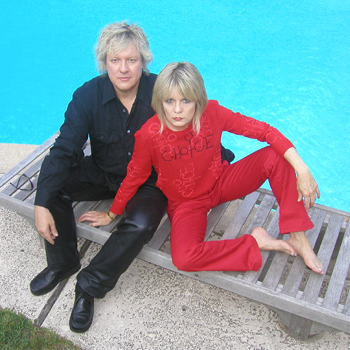
“Who needs to think when your feet just go?” So sings Tina Weymouth on Tom Tom Clubs debut album. And rightly so — this was the sunny break in the islands that the rhythm section of Talking Heads wanted, and they got it, away from the art-school intellectualism that had resulted in the classic but understandably very unsunny “Remain In light”. This album, a collection of funky, sprightly little tunes recorded in Barbados with Weymouths sisters, hubbie and drummer Chris Frantz , and several of the members of the Heads band tour group: Adrian Belew, guitar, and Steven Stanley ,
If you didn’t pick a copy of this one up when it was first released this year, you may be out of luck—only 800 copies of Chris Frantz and Tina Weymouth’s debut album were pressed to translucent green vinyl for this reissue. Recorded in Barbados after Talking Heads “Remain in Light” sessions, Tom Tom Club is a hugely influential, spawning singles like “Genius of Love” and “Wordy Rappinghood” and taking some cues from the growing hip-hop movement of the era. It’s hard to believe this is the first time it’s been reissued since its 1981 release.
There was a grungy dive of a place on the Bowery called CBGB that was home to bikers, neighborhood drunks and the seeds of a musical revolution that changed the future of music.
Chris Frantz, the drummer of the seminal new-wave band Talking Heads, had a front-row seat along with his now-wife, bassist Tina Weymouth, along with guitarist/lead singer David Byrne, and the original Ramones: Joey, Johnny, DeeDee and Tommy, all four of whom died way too early. ChrisFrantz, who still plays and records with Weymouth in their band, Tom Tom Club, shared stories of those crazed early days , when a dozen or fewer fans would show up at Hilly Kristal’s famed club for a gig.
Chris comments “We lived at 195 Chrystie St., 3¹/₂ blocks from CBGB. It was rough, man, No hot water, no shower, the bathroom in the hall we had to share with all these sweaty guys,” said Frantz, who with his band mates was fresh out of the Rhode Island School of Design.
ns
“That first summer there in, ’75, there was a heat wave and also a garbage strike at the same time. So you could imagine what it was like,” he said. “The kids would open the hydrants and you had streams of water going down the street with burning garbage floating on it. “The kids would set the garbage on fire. I thought I was going to lose my mind. Tina took it better than I did.”
But the band practiced every day in its ninth-floor loft with the great view of the Empire State Building way uptown, and before long debuted at CBGB, opening up for the protopunks from Forest Hills themselves.
“Hilly had asked Johnny Ramone if we could open for them, and Johnny said, ‘Sure, they’re gonna suck, so no problem,’ ” Frantz recalled. the Heads all loved the Ramones and even got to like the dictatorial Johnny Ramone, but it took a while.
“That guy was mean as a snake. He was just a pure, unadulterated mean spirit. I’m sure he had good qualities also, but they were not evident,” he said. “He came around toward the end, but for the longest time, he thought that we sucked. But they were crazy. They’d be on stage playing and then they’d just stop and start fighting.”
Their debut together was hardly a roaring success. “There were very few people in the audience, maybe 10 altogether. Five came to see us and five came to see the Ramones. The Ramones’ fans were all girls, presumably their girlfriends,” Frantz remembered.
When they weren’t performing oddball pop like “(Love Goes to) Building on Fire” and “Psycho Killer” onstage, they would drink at the bar and get to know the other bands and hangers-on. One was Legs McNeill, one of the founders of Punk magazine, which chronicled the scene when only the Village Voice and SoHo News were paying any attention.
“Legs somehow positioned himself as an expert on CBGB’s heyday, but most of the time, he was passed out. One time at about 4 a.m., Hilly said, ‘Can you just get that guy out of there?’ ” Frantz said.
“Tina had a car, an old Plymouth Valiant that was a family hand-down. We could fit the whole band in there. We tried to take him home but he was so intoxicated, he couldn’t remember what his address was. We’d drive around and ask him, ‘Does that look like your place, Legs?’ Finally, we found it.”
Some of the musicians, like the poet-turned-singer Patti Smith, Debbie Harry’s Blondie, Television with TomVerlaine, and Willy DeVille’s Mink DeVille, went on to score record deals, tour and become punk and new-wave legends.
Much of the best music from those early days was released on a double album called “Live at CBGB’s.”
Talking Heads signed up for the album but eventually bailed — although their photo remained on the record jacket. “We didn’t think we were good enough yet — that’s why we pulled out. We thought it would ruin our chances to get a real record deal. Hilly was not happy about it, but at least he understood,” Frantz said.
Meanwhile The Ramones released their eponymous first album in the April of 1976 — and things took off from there, with the iconic “Hey, ho, let’s go!” opening lines of the 2-minute and 12-second anthem “Blitzkrieg Bop,” detonating like a gun at the start of a race.
The Ramones’ appearances in London as the opening act for the Flamin’ Groovies came on July 4th, 1976 — and caused a sensation unlike anything they had seen back in the States.
While most of America was celebrating the bicentennial with fireworks, concerts and picnics, the Ramones were inspiring a generation of British punks including The Clash and the Sex Pistols, whose debut single, “Anarchy in the UK,” was released a couple months later.
The next spring, Talking Heads opened up for the Ramones on the bands’ first full European Tour. They still couldn’t afford a luxury coach with sleeping berths, so they traveled on a beat-up tourist bus with Johnny in full dictator mode. “He wanted to decide where everybody sat. If you changed your seat, he’d say, ‘Whaddya sittin’ there for? You weren’t sittin’ there yesterday,’ ” Frantz said.
Frantz, who with Weymouth and family now splits his time between Connecticut and France, remembered the now-shuttered CBGB as the incubator for it all.
“It was just a nascent scene at the time,” he said. “We had the feeling that this was going to be an important place. We had seen Patti Smith, who was bigger than the Ramones at the time. She was wild. She had that intensity that you just don’t run into these days — onstage, but also off the stage. “She was not a relaxed person.”
Also on the scene was this band Television, whose debut “Marquee Moon” is considered one of the best guitar LPs of all time.
“With that combination of bands, you know something’s going on. It just took a while to grow,”
This superb radio broadcast recording captures Talking Heads live at the Saratoga Performing Arts Centerset in the lush environs of Saratoga Spa State Park in New York State during the summer of 1983. At this stage in their career, Talking Heads were at an artistic peak, having progressed from their initial spiky art-punk stance into something much funkier and more ethnically diverse in inspiration.
Crucially, bassist Tina Weymouthand her husband, drummer Chris Frantz, had also formed the successful dance-oriented splinter group, Tom Tom Club, in 1981.
SIDE A
1.Psycho Killer (Live)
2.Heaven (Live)
3.Cities (Live)
SIDE B
4.Big Blue Plymouth (Eyes Wide Open) (Live)
5.Burning Down The House (Live)
6.Life During War Time (Live)
7.Home (This Must Be The Place?) (Live)
SIDE C
8.Once In A Lifetime (Live)
9.Big Business / I Zimbra
10.Houses In Motion
SIDE D
11.Genius Of Love (Live)
12.Girlfriend Is Better (Live)
13.Take Me To The River (Live)
Double 140 Gram Grey Vinyl Set. This superb radio broadcast recording captures Talking Heads live at the Saratoga Springs Performance Center set in the lush environs of Saratoga Spa State Park in New York State during the summer of 1983. At this stage in their career, Talking Heads were at an artistic peak, having progressed from their initial spiky art-punk stance into something much funkier and more ethnically diverse in inspiration.
“Building as Foreign” is available instantly on preorder of the forthcoming album ‘Tiny Rewards’ by the wonderful Glagow based band Admiral Fallow due out May 25th. “This Must Be The Place (Talking Heads Cover)” by Admiral Fallow. Following the release of their third full-length album, Tiny Rewards, Glasgow’s indie-rock quartet Admiral Fallow have put their own spin on Talking Heads‘ classic hit, “This Must Be The Place.”Although the band have a history of writing lofty folk ballads, their cover of “This Must Be The Place” is soft and endearing, while staying true to the original. What begins with a simple guitar riff, slowly evolves into a charming pop song full of quirky synths and fluttering flutes. So, if you’re still wondering whether you should pick up the band’s latest album, this should be reason enough.
This book leapfrogged Talking Heads as David Byrne’s most significant contribution to mankind. It is an encyclopedia and bible in one, all written in Byrne’s easygoing, engaging style. His stories swing from hilarious to inspiring, and his knowledge of music theory is actually comprehensible for a non-musician.
The plot, if there is one, is strung together in a semi-autobiographical narrative: Byrne relates his time as a grungy NYC kid and his steady climb up the industry ladder. He also goes in depth with new technologies and possibilities for independent musicians: one of the best chapters in book breaks down the various types of label deals, his experiences with different types of labels and managers, and in a selfless and bold move, lays out exactly how much money he made on each deal.
This is a must-read for any creative, whether or not music is involved.
The People’s Cosign: I thoroughly enjoyed the way David Byrne explores how music is integral to our existence, how music affects us and how we affect music. It is an interesting study of the music industry and his theories on our relationship with music are thought-provoking. He examines how music influences our cultures and our history from present day dating as far back as Ancient Assyria and Sumer! I am not a musician and I would recommend this book as a must read for anyone who has a passion for music. I have a whole new perspective thanks to David Byrne
Every year, Knitting Factory/City Winery founder Michael Dorf hosts a tribute concert at Carnegie Hall benefiting music-education programs. And the honoree of this year’s 11th annual show was a true New York music legend: David Byrne. Featuring performances from the likes of CeeLo Green, Amanda Palmer, and Billy Gibbons from ZZ Top, it was a night of yelpy singing, jittery dancing, and at least one comically oversize suit. Here’s a rundown of the night’s highs (high high high high hiiiiighs )
David Byrne also crashed his own tribute concert, leading a marching band down the aisle at Carnegie Hall and, eventually, to an onstage dance party to the tune of “Uptown Funk.” Showing up at the end of an annual tribute that benefits music education, an unusual sight since past musicians whose work was celebrated — like Paul Simon and Prince did not perform. David Byrne’s entrance came after CeeLo Greenbrought the tribute to a close by singing “Take Me to the River.”
The former Talking Headsfrontman, dressed in a white shirt with black bracers and black bow tie, sang “God’s Army” with the brass-and-drum Brooklyn United Marching Band, singing to the audience that “everything I did, I did for you.”
The band, joined by red-suited dancers, belted out “Uptown Funk” while most of the artists who performed Byrnes’ work joined them onstage.
The artists led a highly danceable romp through Byrne’s eclectic catalog as a solo artist and bandleader. Soul singer Sharon Jonesbrought the audience to its feet with the first notes of “Psycho Killer” and kept them there.
In an unusual mash-up of 1980s culture, ZZ Top guitarist Billy F. Gibbons spoke-sang Talking Heads’ Afro-funk “Houses in Motion.” Gibbons easily beat singer Steve Earle, who performed the Byrne solo song “A Million Miles Away,” in the longest beard competition. Other highlights included “Once” singer Glen Hansard dueting with Jherek Bischoff on “Girlfriend is Better,” with a piercing fiddle. Joseph Arthur painted a portrait in the midst of his eerie version of “This Must Be the Place (Naive Melody).”The Roots were joined by singer Donn T for “Born Under Punches.”Santigoldbrought fire — and some synchronized dancers — for “Burning Down the House.”
Appropriately enough, the benefit was opened by a group of school-aged youngsters performing “Stay Up Late.” Then, presumably, they went to bed.
Well, this was wonderful: a perfect pairing of performers and song. Clad in all-white everything, the recently reunited Japan-by-way-of-NYC food-pop duo Cibo Matto expertly walked that very Byrne-ian tightrope between artful self-seriousness and goofy, unadulterated joy. During the instrumental part, they did a series of synchronized dance moves that recalled a cross between air-traffic controllers and the backup singers from Stop Making Sense, while Wilco guitarist Nels Cline provided some of his signature avant-noodling. Mostly this performance served as evidence that Miho Hatori is still one of the most stylish people on the planet. Perched on Cibo Matto‘s keyboard was a drawing of a bicycle with a big basket — Byrne’s usual mode of transportation around the city he calls home.
Performer: Jade from (or formerly from?) Edward Sharpe and the Magnetic Zeros Song: “Here Lies Love” (from the Byrne/Fatboy Slim musical Here Lies Love) Jade — best known as the female singer in that one Edward Sharpe song that everyone knows — has a pleasant voice, but her stage presence last night was a little awkward. Dressed as a Disney princess who was loosely based on Janis Joplin, she spent most of the song twirling, swaying, and generally looking deeply uncomfortable as a front person.
Performer: Alexis Krauss from Sleigh Bells Song: “Life During Wartime” Before she came to front the demolition derby/pep rally that is bubblegum-punk duo Sleigh Bells, Alexis Krauss used to be a New York public schoolteacher, in a school so underfunded that it didn’t have a music program. In a touching speech before her song, she told us that she and her father used to provide free after-school music lessons for her “scholars” (that was cute), and she sweetly brought her dad out to sing backup. And then she straight-up ripped the fucking roof off Carnegie Hall. I was not a huge fan of the last Sleigh Bells album, but after Krauss’s exhilarating and overwhelmingly charismatic performance (she even did the rubber-arms dance from Stop Making Sense!), I am anxiously awaiting an inevitable Alexis Krauss solo album. The crowd, rightfully, went nuts for this one. RememberMarch 23rd, 2015 is the day a member of Sleigh Bells got a standing ovation at Carnegie Hall.
Performer: Pete Molinari Song: “Heaven” , The British folk singer Pete Molinari is a human-size Kewpie doll they dressed to look like Bob Dylan. He was the only performer of the night who played without a backing band, and let’s just say this minimalism did not exactly serve him. Molinari “reworked” the melody to “Heaven,”
Performer: Billy Gibbons from ZZ Top The song: “Houses in Motion” Legendary beardo Billy F. Gibbons began by telling us how much he has always admired Talking Heads press photos, because Byrne was always looking off into space instead of at the camera. What was he looking at? Billy wanted to know. None of us could say. “Well,” said Billy, with a gruff pause, “Here’s looking at you, David.” There are maybe three people in the world who can get away with this sort of stage banter, and God bless them, they were all once in ZZ Top. While I will forever dream of what a Billy Gibbons cover of “Swamp” might have sounded like, this really was a perfect song choice, with the enchilada-bluesman finding the southern funk in this gem from Remain in Light’s weird(er) side. His spoken-word delivery was on-point, and (bonus points) he was very nice to the fan I saw ask him for a selfie on the street after the show. .
Performer: Amanda Palmer Song: “Once in a Lifetime” Not liking Amanda Palmer is so easy that it seems villainously lazy, like taking candy from a baby. But then sometimes that baby comes out ahead of her cue on what was otherwise an exceptionally well-oiled show and impatiently demands into the void, “Can I get a spotlight on me?” and then you’re like, “Oh, yeah. That’s why.” So I am really looking deep inside of myself here when I tell you that this performance was not terrible.
I guess it is hard to fuck up one of the most cherished entries in the Great Human Songbook, its strange for a visibly pregnant woman singing a song about existential confusion. The circle of life, am I right?! Her goth-cabaret delivery of the chorus, but I cannot deny she was channeling it from somewhere else during the verse about the water at the bottom of the ocean. We’re cool for now, Palmer.
Performer: O.A.R. Song: “And She Was” This was the most faithful cover of the night, basically a note-for-note rendition by a very good bar band. I am giving them an extra point because even though there was a bongo left onstage from a previous performance, no one from O.A.R. even touched it.
Performer: Sharon Jones Song: “Psycho Killer” The first performance of the night that got everybody on their feet. I mean, this one speaks for itself: Sharon Jones, in sequins, singing the shit out of “Psycho Killer.” Pete Molinari lied! This was Heaven!
Performer: CeeLo Green Song: “Take Me to the River” the entertainer, and pop culture & fashion icon, and professional ladykiller” in his bio?. Fashion icon CeeLo Green was dressed in black slouchy Hammer pants and a shirt inspired by black slouchy Hammer pants, making him look like an evil genie who would fail to read you the fine print about your wishes or something. His performance was fine, but I can think of a thousand singers who would have done this song just as well or better.
Performer: David Byrne and an entire Brooklyn United Marching band Song: “Uptown Funk”?
Yes, for real. The finale of this glorious night was the man of the hour Mr David Byrne — clad in a crisp dress shirt, bow tie, and black bracers walking through the aisle of Carnegie Hall with the Brooklyn United Marching Band behind him. First they played a jaunty version of “God’s Love,” and then, just when it seemed like they might end with one of Byrne’s more well-known hits, the marching band instead launched into … “Uptown Funk.” Byrne did not sing (sadly) but instead danced around angularly and hugged everyone onstage. Which means it was the ultimate David Byrne performance.
Talking Heads – Full Concert Here’s some excellent — and essential — Friday viewing: a complete, 80-minute Talking Heads concert from 1980 that was shot on multiple cameras.
The show was held at the Capitol Theatre in Passiac, New Jersey, one of the few mid-sized concert halls equipped with in house multi-camera video system at the time.
This Rare concert footage of Talking Heads performing during their legendary Remain in Light trek has been unearthed after 35 years. featuring the“Afro-funk orchestra” and guitar god Adrian Belew. Filmed four years before the band’s concert film Stop Making Sense, this 80-minute performance was taped in stark black-and-white at Passiac, New Jersey’s Capitol Theatre on November 4, 1980. The show came less than a month after the quartet released their landmarkRemain in Light, and five of the gig’s 14 songs are culled from that album.
Songs like “Houses In Motion” and “Born Under Punches (The Heat Goes On)” take on a rawer, more frenetic guise on the stage, with the Talking Heads – then at the peak of their powers – aided onstage by King Crimson’s Adrian Belew, who contributes Fripp-ian guitar to the Remain in Light tracks. Parliament-Funkadelic keyboardist Bernie Worrell – who performed with the Talking Heads live throughout the Eighties – also appeared at the Passaic show.
Watch the video below via the Music Vault, a site that has remastered and uploaded thousands of old concert videos.
Setlist:
0:00:00 – Psycho Killer, 0:05:45 – Warning Sign, 0:11:34 – Stay Hungry, 0:15:25 – Cities, 0:20:10 – I Zimbra, 0:24:41 – Drugs
0:29:23 – Once In A Lifetime, 0:35:11 – Animals, 0:39:28 – Houses In Motion, 0:45:56 – Born Under Punches (The Heat Goes On)
0:53:05 – Crosseyed And Painless, 0:59:30 – Life During Wartime, 1:04:56 – Take Me To The River, 1:11:02 – The Great Curve
Recorded Live: 11/4/1980 – Capitol Theatre (Passaic, NJ)
For me, the apex of the Talking Heads’ career was, hands down,Remain in Light and the subsequent tour with the expanded “Afro-funk orchestra” line-up featuring future King Crimson guitar god Adrian Belew wringing all kinds of impossible noises out of his guitar. When the band released their (excellent) Chronology DVD in 2011, it included a clip of an astonishing 1980 performance of “Crosseyed and Painless” taped at the Capitol Theatre in Passaic, NJ, probably one of the few mid-sized concert halls of that era to have installed a multi-camera video system. Where there’s one number, there tends to be, you know, an entire show, as I and many other Talking Heads fans mused upon seeing that tantalizing excerpt and now the whole thing was posted recently at the Talking Heads page at Music Vault.
Setlist:
0:00:00 – Psycho Killer
0:05:45 – Warning Sign
0:11:34 – Stay Hungry
0:15:25 – Cities
0:20:10 – I Zimbra
0:24:41 – Drugs
0:29:23 – Once In A Lifetime
0:35:11 – Animals
0:39:28 – Houses In Motion
0:45:56 – Born Under Punches (The Heat Goes On)
0:53:05 – Crosseyed And Painless
0:59:30 – Life During Wartime
1:04:56 – Take Me To The River
1:11:02 – The Great Curve
Personnel:
David Byrne – lead vocals, guitar
Jerry Harrison – guitar, keyboards, vocals
Tina Weymouth – bass, keyboards, guitar, vocals
Chris Frantz – drums, vocals
Adrian Belew – lead guitar, vocals
Bernie Worrell – keyboards
Busta Cherry Jones – bass
Steve Scales – percussion
Dolette McDonald – vocals
This setlist is as good as any Talking Heads show ever got and the build up to the synapse-burning finale of “TheGreat Curve” makes this my favorite long form Talking Heads show. This is so… fresh and joyful sounding. Timeless. If this doesn’t provide you with some sort of MASSIVE eargasm, you simply don’t like music. Or maybe you fear it?


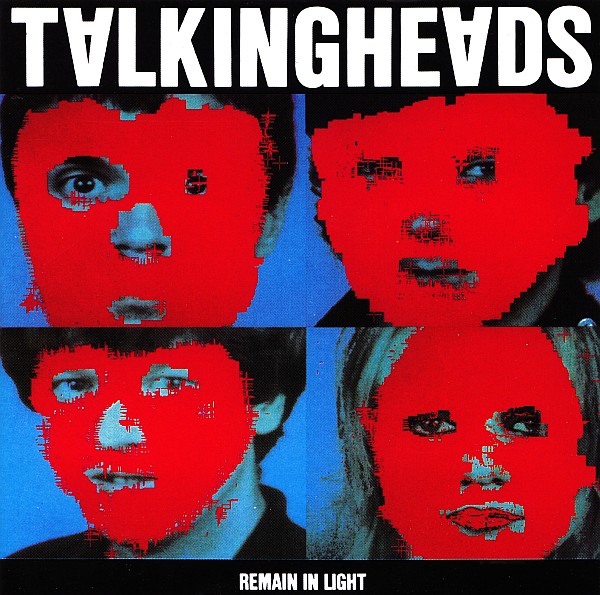


 and the subsequent tour with the expanded “Afro-funk orchestra” line-up featuring future King Crimson guitar god Adrian Belew wringing all kinds of impossible noises out of his guitar. When the band released their (excellent)
  DVD in 2011, it included a clip of an astonishing 1980 performance of “Crosseyed and Painless” taped at the Capitol Theatre in Passaic, NJ, probably one of the few mid-sized concert halls of that era to have installed a multi-camera video system. Where there’s one number, there tends to be, you know, an entire show, as I and many other Talking Heads fans mused upon seeing that tantalizing excerpt and now the whole thing was posted recently at the
  The Fat Angel Sings