Digitally released Hater’s debut EP “Radius” earlier this year to critical acclaim, which is also included for the first time pressed to 7″ vinyl in this Limited Edition Deluxe Package. Only 50 of these packages are available, which also includes the exclusive T-shirt, designed by Caroline, the band’s lead singer. Hater are from Malmö, Sweden.
It takes something very special to get us this psyched about indie pop but in Hater’s case, that is the raw emotional heft of frontwoman Caroline Landahl‘s gorgeous, achingly bittersweet vocals, perpetually swaying between comforting and devastating.
“Lead single “Mental Haven” is awash with chiming guitar chords and shimmering synth embellishments, an old-school rock song shrouded in indie-pop softness. Second single from Hater’s debut LP You Tried, out March 10th via PNKSLM Recordings.
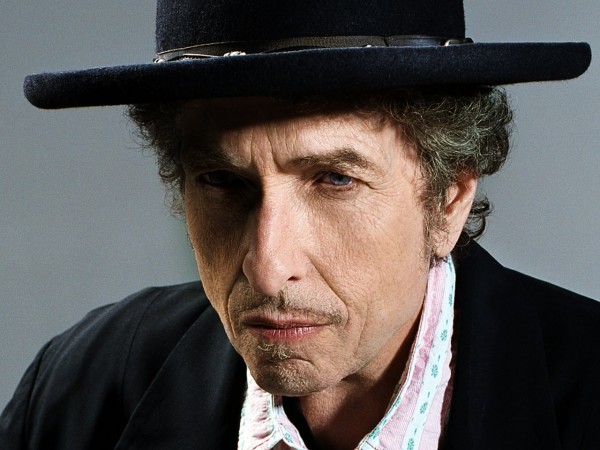
Bob Dylan admitted he was stunned and surprised when he was told he had won a Nobel prize because he had never stopped to consider whether his songs were literature.
Dylan, whose speech was read out by the US ambassador to Sweden at the annual awards dinner, said the prize was “something I never could have imagined or seen coming”.
He said from an early age he had read and absorbed the works of past winners and giants of literature such as Kipling, Shaw, Thomas Mann, Pearl Buck, Albert Camus and Hemingway. But said it was “truly beyond words” that he was joining those names on the winners list. “If someone had ever told me that I had the slightest chance of winning the Nobel prize, I would have to think that I’d have about the same odds as standing on the moon,” he wrote.
The announcement that Dylan had won the literature prize caused controversy with critics arguing his lyrics were not literature. On learning he had been awarded the literature prize Dylan said he thought of Shakespeare. “When he was writing Hamlet, I’m sure he was thinking about a lot of different things: ‘Who’re the right actors for these roles? How should this be staged? Do I really want to set this in Denmark?’
“His creative vision and ambitions were no doubt at the forefront of his mind, but there were also more mundane matters to consider and deal with. ‘Is the financing in place? Are there enough good seats for my patrons? Where am I going to get a human skull?’ I would bet that the farthest thing from Shakespeare’s mind was the question: ‘Is this literature?’
“Like Shakespeare, I too am often occupied with the pursuit of my creative endeavours and dealing with all aspects of life’s mundane matters. ‘Who are the best musicians for these songs? Am I recording in the right studio? Is this song in the right key?’ Some things never change, even in 400 years. Not once have I ever had the time to ask myself ‘are my songs literature?’ So, I do thank the Swedish academy, both for taking the time to consider that very question and ultimately, for providing such a wonderful answer.”
Formally presenting the award Horace Engdahl, a Swedish literary critic and member of the Swedish academy behind the prize, responded to international criticism of the choice of a popular lyricist as recipient. In defence of the decision, Engdahl said that when Dylan’s songs were heard first in the 1960s: “All of a sudden, much of the bookish poetry in our world felt anaemic.” The academy’s choice of Dylan, Engdahl added, speaking in Swedish, “seemed daring only beforehand and already seems obvious”.
And it was an unconventional prize-giving night in more ways than one. Dylan’s failure to attend the august gathering in Stockholm meant that Patti Smith, the American singer famous for her 1975 album Horses and the hit song Because the Night, was attending as his proxy. The occasion proved too much for the singer, 69, who faltered after a few verses.
Forgetting the lyric “I saw a black branch with blood that kept drippin’,” she apologised quietly but profusely to the jewel-bedecked audience and asked if she could start that section of the song again. “I am so nervous,” she explained. Smith was encouraged by applause from the gathered dignitaries and members of the Swedish royal family.
Her performance followed Engdahl’s justificatory speech, which opened with the question: “What brings about the great shifts in the world of literature? Often it is when someone seizes upon a simple, overlooked form, discounted as art in the high sense, and makes it mutate.”
In this way, Engdahl argued, the novel had once emerged from anecdote and letters, while drama had eventually derived from games and performance. “In the distant past, all poetry was sung or tunefully recited,” he said. Dylan had dedicated himself to music played for ordinary people and tried to copy it.
“But when he started to write songs, they came out differently,” Engdahl said. “He panned poetry gold, whether on purpose or by accident is irrelevant … He gave back to poetry its elevated style, lost since the romantics.”
When it was announced that Bob Dylan had won the prize and accepted, In his absence, was I qualified for this task? I chose to sing “A Hard Rain’s A-Gonna Fall,” a song I have loved since I was a teen-ager, and a favorite of my late husband.
From that moment, every spare moment was spent practicing it, making certain that I knew and could convey every line. Having my own blue-eyed son, I sang the words to myself, over and over, in the original key, with pleasure and resolve. I had it in my mind to sing the song exactly as it was written and as well as I was capable of doing. I bought a new suit, I trimmed my hair, and felt that I was ready.
On the morning of the Nobel ceremony, I awoke with some anxiety. It was pouring rain and continued to rain heavily. As I dressed, I went over the song confidently. In the hotel lobby, there was a lovely Japanese woman in formal traditional dress—an embroidered cream-colored floor-length kimono and sandals. Her hair was perfectly coiffed. She told me that she was there to honor her boss, who was receiving the Nobel Prize in Medicine, but the weather was not in her favor. You look beautiful, I told her; no amount of wind and rain could alter that. By the time I reached the concert hall, it was snowing. I had a perfect rehearsal with the orchestra. I had my own dressing room with a piano, and I was brought tea and warm soup. I was aware that people were looking forward to the performance.
I thought of my mother, who bought me my first Dylan album when I was barely sixteen. She found it in the bargain bin at the five-and-dime and bought it with her tip money. “He looked like someone you’d like,” she told me. I played the record over and over, my favorite being “A Hard Rain’s A-Gonna Fall.” It occurred to me then that, although I did not live in the time of Arthur Rimbaud, I existed in the time of Bob Dylan. I also thought of my husband and remembered performing the song together, picturing his hands forming the chords.
And then suddenly it was time. The orchestra was arranged on the balcony overlooking the stage, where the King, the royal family, and the laureates were seated. I sat next to the conductor. The evening’s proceedings went as planned. As I sat there, I imagined laureates of the past walking toward the King to accept their medals. Hermann Hesse, Thomas Mann, Albert Camus. Then Bob Dylan was announced as the Nobel Laureate in Literature, and I felt my heart pounding. After a moving speech dedicated to him was read, I heard my name spoken and I rose. As if in a fairy tale, I stood before the Swedish King and Queen and some of the great minds of the world, armed with a song in which every line encoded the experience and resilience of the poet who penned them.
The opening chords of the song were introduced, and I heard myself singing. The first verse was passable, a bit shaky, but I was certain I would settle. But instead I was struck with a plethora of emotions, avalanching with such intensity that I was unable to negotiate them. From the corner of my eye, I could see the the huge boom stand of the television camera, and all the dignitaries upon the stage and the people beyond. Unaccustomed to such an overwhelming case of nerves, I was unable to continue. I hadn’t forgotten the words that were now a part of me. I was simply unable to draw them out.
This strange phenomenon did not diminish or pass but stayed cruelly with me. I was obliged to stop and ask pardon and then attempt again while in this state and sang with all my being, yet still stumbling. It was not lost on me that the narrative of the song begins with the words “I stumbled alongside of twelve misty mountains,” and ends with the line “And I’ll know my song well before I start singing.” As I took my seat, I felt the humiliating sting of failure, but also the strange realization that I had somehow entered and truly lived the world of the lyrics.
Later, at the Nobel banquet, I sat across from the American Ambassador—a beautiful, articulate Iranian-American. She had the task of reading a letter from Dylan before the banquet’s conclusion. She read flawlessly, and I could not help thinking that he had two strong women in his corner. One who faltered and one who did not, yet both had nothing in mind but to serve his work well.
When I arose the next morning, it was snowing. In the breakfast room, I was greeted by many of the Nobel scientists. They showed appreciation for my very public struggle. They told me I did a good job. I wish I would have done better, I said. No, no, they replied, none of us wish that. For us, your performance seemed a metaphor for our own struggles. Words of kindness continued through the day, and in the end I had to come to terms with the truer nature of my duty. Why do we commit our work? Why do we perform? It is above all for the entertainment and transformation of the people. It is all for them. The song asked for nothing. The creator of the song asked for nothing. So why should I ask for anything?
When my husband, Fred, died, my father told me that time does not heal all wounds but gives us the tools to endure them. I have found this to be true in the greatest and smallest of matters. Looking to the future, I am certain that the hard rain will not cease falling, and that we will all need to be vigilant. The year is coming to an end; on December 30th, I will perform “Horses” with my band, and my son and daughter, in the city where I was born. And all the things I have seen and experienced and remember will be within me, and the remorse I had felt so heavily will joyfully meld with all other moments. Seventy years of moments, seventy years of being human.
Having already been nominated for a Swedish Grammy with their debut EP, Diamond Waves, their debut full-length 2015 on Rocket Recordings, “Horse Dance”, marked out a territory in which beguiling repetition could sashay with sweet pop sounds, melodic flourishes with experimental intensity, and it was summarily rapturously received on arrival, making new fans and earning them appearances at Roskilde Festival and Eindhoven Psych Lab.
This their second full lenth effort “Mirage”, which follows a mere year after its predecessor, sees the band sculpting sprawling, hypnotic jams into elegant nocturnal serenades. “We agree on not remembering very much about how these tracks came about, that all of them were written on the road and that most of them came fully formed” note the band. “Most were really long to begin with, but we found it relieving to break away a bit from the mandatory psych jams a little bit.
We also just realised that none of them were written in daylight, which might be why memory is so elusive.” Indeed, this approach seems to fit well with the primary inspiration for the five-piece band, which centred on ‘the state where dreams, visions and the present are entwined’ .“Mirage” sees the band taking a chic tradition of avant-pop that extends all the way from Serge Gainsbourg and Françoise Hardy to Broadcast and Saint Etienne, and warping it mercilessly to their own darker ends. Whilst the brooding yet sultry ‘Sister Green Eyes’ is no less than a sharp slice of motorik-pop and ‘Looking For You’ reinvents three-chord garage-rock attack with mighty finesse, The Liberation are just as comfortable dealing out the heavy-lidded and electronically-driven ‘In Madrid’ or the dive in the hallucinatory deep end of ‘Circular Motion’, on which they’re aided and abetted by the Lay Llamas’ NicolaGuinta. The seductive splendour of these ten songs å make manifest a parallel world of disorientation and deliverance in which one would be a fool not to want to languish adrift . Fresh excitement for the band lies in wait, courtesy of a UK tour with Goat and an appearance at Liverpool International Festival Of Psychedelia.
Scandinavian songstress Skott is one the artists we’ve highlighted as one to watch this year.
On her latest release Lack of Emotion she shows us a little more of that Swedish Abba-influence, with funk guitar and a disco groove. Lack of Emotion will be available on limited edition vinyl as the B-side to Amelia on 4th November. After the success of her debut single “Porcelain,” the Scandinavian singer/songwriter has been carefully planning her next moves with equally stellar releases. “Wolf” was another example of her charming yet haunting style, and her latest single proves to be just as evocative.
At first, “Amelia” deceptively sounds a lot like a folk song with its plucked guitar strings. But the pitched vocals hint at something a little more sinister, with production that kicks in and sees the song bloom into an eerie, billowing storm cloud.
“You’ve had to fight so hard for this love, but it’s not turning out the way you thought,” Skott says in discussion of her latest song. “Is it worth continuing or is this the end? The song’s about not giving up, fighting to keep that special someone next to you despite the hardest of times. I get a bit nostalgic. ‘Amelia’ reminds me of my first love as a young teenager when I’d dream up crazy plans for the future. They weren’t always realistic but they were honest and dramatic.”
Her debut single “Porcelain” will be appearing on the FIFA 17 soundtrack, which comes out on September 27th.
The Amazing, a Swedish group featuring Dungen guitarist/all-around prog guy Reine Fiske, specializes in a sort of long-winded, gorgeous psychedelia that is so unfashionable it almost becomes fashionable again. The band’s considerable melodic talents produced one of last year’s strongest rock albums, Picture You. Now, barely a year later, comes a more hushed, ambling set called “Ambulance” , which despite its title plays more like a leisurely night drive through some surreal, half-lit city. Ambulance was apparently recorded live in a one-room studio in Stockholm, and the songs, which anchor themselves around Christoffer Gunrup’s ocean-smooth murmur of a voice, are rich in improvisation. All that Ambulance is missing, if anything, are the fiery instrumental passages and taut drama that gave Picture You its edge. Sleepy and settled, these songs are more likely to blend into one another, which is not such a bad thing when the arrangements are so strong
Ullevi stadium, in this industrial port city on Sweden’s west coast, was built as a soccer stadium with a capacity to hold up to 43,000 fans. Last night, as Bruce Springsteen and his E Street Band took the stage here, the large LED screen behind the band blared the number of paid attendees at 63,367.
“Thanks for having us back,” Springsteen said before striking the first chords of “Meet Me in The City,” a track from his 1980 album “The River Collection.” The song, like much of his music of that era, perfectly blends his trademark bar-band rock sound with heartfelt lyrics of loss and redemption. “We’re very happy to be back here in Sweden,” he said.
The show was the band’s third sold-out performance in Gothenburg in a month and caps a European tour that saw Springsteen and his band pack arenas across the Continent.
Nearly 70,000 fans jammed Wembley Stadium in London last month to see Springsteen perform a 33-song set that stretched well past three hours. In Berlin, more than 65,000 fans dodged rain and humid weather in June to see the 66-year Springsteen perform at Olympiastadion, the cavernous sports arena Hitler built for the 1936 Olympics that saw “The Boss” belt out a rousing, sing-along rendition of “Born in the U.S.A.”
In all, Springsteen has sold out more than two dozen arena shows in more than a dozen European countries on this tour, with thousands of die hard fans crisscrossing the continent to see him perform. From Milan to Dublin, Oslo to Rome, many of his shows sold out in minutes of tickets going on sale. Even ardent longtime fans, including many ex-pat Americans living abroad, can’t recall a European tour that attracted more capacity crowds.
Yet despite an enormous and sustained popularity in Europe, Bruce Springsteen — that quintessentially American rocker — appears to draw his tightest connection to the continent here in Sweden.
The Scandinavian country was the first European concert Springsteen played on his first world tour back in 1975. Though that performance — in support of “Born to Run” — drew just over a thousand fans to a concert hall in Stockholm, it has taken on mythic proportion among Swedes.
“It’s one of those events like Woodstock where more people than could possibly have attended claim to have been there,” says Daniel Eriksson, a Swedish music journalist and longtime fan of Springsteen. “After the show Bruce ate at McDonald’s which only existed in Sweden for a couple of years, so it was probably the only thing that reminded him of home at the time.”
Springsteen later admitted to a local Swedish newspaper that he was petrified ahead of that Stockholm show.
“It was one of the first European countries I visited, 1975, and I was actually terrified,” he told the Aftonbladet. “I had never left the States before, barely left New Jersey and had no idea what would happen,” he said. “I’ve always been received well in Sweden ever since.”
Then there’s Clarence Clemons, “The Big Man” to Springsteen fans, who played saxophone for the band until his death in 2011. He was married to a Swede for nearly a decade and spent months at a time touring the country in support of his solo work. Those performances, along with his soulful, out-sized personality, elevated Clemons to cult status in many corners of the country and raised Springsteen’s profile among younger Swedish fans.
In 2012, on his last tour of Europe, Springsteen chose Gothenburg to perform “Jungleland” for the first time since Clemons‘ death. The song, which includes a roaring saxophone solo, was performed with Jake Clemons, a nephew of Clarence who now plays saxophone with the band. “Moments this beautiful can only happen when the artist and audience are as one,” Springsteen’s longtime manager, Jon Landau, said at the time.
That performance was part of a pair of sold-out shows the band played in Gothenburg in 2012 and still rank as a career highlight for Springsteen, Landau says. The shows drew more than 140,000 raucous fans.
“The two shows in Gothenburg were among the very highest moments in Bruce and the Band’s history of performing,” he told the Expressen, Sweden’s largest daily newspaper. “The crowds were among the greatest I have ever seen–for any artist and the audience comes with a great knowledge of Bruce’s work, a depth of feeling for all of it, and a special empathy for his artistry.”
Though he’s always maintained enormous popularity abroad, Springsteen’s current streak of sold-out shows is especially striking given the disdain many Europeans continue to have for U.S. foreign policy in places like Iraq, Syria and Afghanistan. During the invasion of Iraq under George W. Bush – the height of anti-American sentiment in Europe – Bruce continued to sell-out arenas across Europe.
“Springsteen definitely touches a nerve in Europe,” says Erik Kirschbaum, a Berlin-based journalist and author of “Rocking the Wall: The Berlin Concert That Changed the World.” The book details Bruce Springsteen’s concert before some 300,000 fans in East Berlin on July 19th, 1988 and argues that performance – and the speech, in German, Springsteen gave at the show – helped bring down the Berlin Wall.
“I think his eagerness to tackle issues and themes that are important to ordinary people goes down exceptionally well in Europe,” Kirschbaum says. “But also his courage to stand up and be critical of the United States and its government at times is also something that a wide swath of Europeans recognizes and appreciates.”
“It may sound a little bit crazy to an American, but Swedish people can really identify with the lyrics and the simple themes of the songs,” Martin Wallenberg tells me outside Ullevi Stadium. He and his wife drove just over four hours from a Stockholm suburb to see the Gothenburg show. This is his fifth Springsteen concert, the 49-year old says. “I saw him back in the late 1980’s for the first time and it really became clear to me that seeing Bruce in Sweden was something special.”
Like the U.S. leg of his tour, last night’s show in Gothenburg included performing the whole album of “The River.” Released when he was 31-years old, Springsteen acknowledged the subtext of the album during a nearly four hour performance in a port city where the sun stays out well past evening hours in summer.
“Time sometimes feels like it’s slipping away,” he told a crowd of fans that have now had 36-years to absorb his albums. “When you enter the adult world, the clock starts ticking and you’ve got a limited amount of time to do your work, to raise your family, to try and do something good.”
Onstage, Springsteen used personal stories of love, life and lust to connect with the audience between some songs. He also showed-off a playful coziness he still shares with the band: clowning with the guitarist Steve Van Zandt and occasionally sharing the microphone with band members.
He surprised fans standing close to the front rows of the arena by stepping onto a platform where people could reach his legs, take selfies and give high-fives.
Like at many of the shows on this tour, Springsteen used “Hungry Heart,” arguably the most popular song from “The River,” to best connect with the audience. While leading a raucous rendition of the song, he circled the stage and offered up his microphone to fans on the ground level to sing along.
“We ain’t too old to party, people,” he said, upright and back on stage while sharing the microphone with NilsLofgren and embracing his his wife and backup singer, Patti Scialfa. “We aint too old to party.”
On its fourth album, Ambulance, The Amazing has a way of unspooling melodies that don’t grab you so much as slowly burrow under your skin. Playing with an unhurried improvisational spirit, the Swedish band lets ideas amble along and develop naturally; it takes time to explore the nooks of its songs in search of deeper resolution. That lovely, resonant quality conjures a meditative mindset suitable for solitary walks or the melancholic stillness of an early morning. Yet all the haze shrouds everything in mystery, and it appears that Christoffer Gunrup wants it that way.
As The Amazing’s enigmatic singer and songwriter (as well as one of its three guitarists), Gunrup submerges his muted croon just below the surface of the mix, singing so that his phrasing is practically imperceptible and his themes are equally tricky to parse. Gunrup makes a point to refrain from discussing his songs much or making lyrics available in liner notes online — the quirk of a guarded artist who insists the art speak for itself.
Like its previous works, and especially 2015’s Picture You, Ambulance uses mood to tell its stories. Recording live with only a few takes to rehearse the new material, each member — Gunrup, guitarists Reine Fiske (best known for his work with Dungen) and Fredrik Swahn, bassist Alexis Benson and drummer Moussa Fadera — is given space to freely embellish the songs while they’re still fresh. The result emphasizes sinuous melodies, lavish textures and spidery arrangements that forgo verse-chorus pop-song structures. Likewise, The Amazing deploys familiar genre touchstones (lushly orchestrated pop, British folk, pastoral psychedelia, cosmic mid-tempo rockers) as atmosphere-altering shorthand to transport listeners into its contemplative world.
From its first moments, the album-opening title track establishes an instrumental template that carries through nearly every song: Fadera’s militaristic drum roll accompanies stark piano stabs, intertwining guitar arpeggios from Fiske and Swahn, and keyboards that swirl atop glacial orchestration — all while Gunrup sings elusive lines like, “You know sometimes you have to change.” Later, in “Moments Like These” and “Perfect Day For Shrimp,” The Amazing blends fingerpicked acoustic guitar and shimmering synths with a breathy whisper that evokes the crestfallen hymns of Nick Drake or Jose Gonzalez. In “Floating,” twangy pedal steel and warbling synths give the song an almost country-rock flavor.
In “Through City Lights,” Ambulance’s longest and most stirring track, The Amazing conjures the winding story songs of Sun Kil Moon’s Mark Kozelek by unfurling every stanza with dramatic pacing, leaving plenty of room to let the words that stick out hang in the air. In those moments, he’s able to project desperation as gentle strumming and a simple, ghostly guitar motif glide underneath.
While mostly striking a somber tone, “BlairDrager” does provide a change of pace in the form of smoky lounge-jazz and cosmopolitan trip-hop. Built around in-the-pocket break beats, slinky guitar upstrokes and sinister speak-singing, it’s yet another satisfying color in the band’s palette. The Amazing implies its heartbreak and haunted regret without explicitly defining it, and Ambulance succeeds by inviting listeners to interpret the meaning for themselves.
Drakkar Nowhere capture the wind in their sails with a sound that’s boundless, expansive and, perhaps, guided only by the light of the sun and stars.
That Drakkar Nowhere ended up somewhere at all is itself more a result of circumstance than careful course-charting. The history of the album traces back to the summer of 2012, when two members of the New York-based Phenomenal Handclap Band (bandleader/keyboardist/producer Daniel Collás and vocalist/guitarist MorganPhalen) found themselves creating new music in the kitchen of a rented apartment in Stockholm, Sweden. Their new project caught the ears of nearby musicians, including members of Dungen and The Amazing, and before long, this extended family of international musicians were recording the songs that would firmly put them on the path to nowhere – Drakkar Nowhere, that is of course.
It would be a bit much to propose that the album’s origin in a Stockholm kitchen reveals an “everything but the kitchen sink” approach to the music made by Drakkar Nowhere. In fact, the true revelation of the album is that such happenstance can result in an album that sounds so fully realized, so utterly complete – as if by setting no course, by rejecting no ideas, Drakkar Nowhere arrive at a destination of their own creation.
Both Collás and Phalen took inspiration from their Swedish surroundings – in particular, the enchanted forests that surround the neighborhoods of Bagarmossen and Midsommarkransen. And given the talents and histories of the collaborating musicians, it’s no surprise that the ever-evolving shadow of what we might broadly call Swedish psychedelica should perfume the proceedings as well. What is surprising – and what makes the Drakkar Nowhere album one that benefits from repeat listens – is how unobtrusive those influences are on the album’s ultimate sound. Drakkar Nowhere present a combination of influences – cosmic jazz, syrupy soul and mutated prog among them – in such an effortless manner that they don’t really feel like “influences” at all. As a result, Drakkar Nowhere have built an album that may have listeners ears recalling the crystalline harmonies of the Brothers Gibb more often than it does Träd, Gräs and Stenar.
No destination, no influences – just nowhere. And in the hands of Drakkar Nowhere. it’s clearly the place to be.
While most bands are birthed in dingy basements and musty garages, the seeds ofFEWSwere sown on a MySpace page circa 2006. It was on the social networking site that the post-punk outfit’s founding members Fred, a Bay Area native, and David, a Swede, crossed paths and forged a musical kinship despite being thousands of miles apart.
The two bonded over what they described as “outsider” music like Television Personalities and Ian Dury and the Blockheads, as well an obsession with Interpol guitarist Daniel Kessler. After five years of online exchanges, they finally met face to face in Stockholm to drink beers and talk music. Not long after, David delved deep into electronic music and Fred made it a point to fly out and join him on his Berlin club-going excursions. They eventually got a place together in Malmö, a city in southern Sweden just a train ride away from places likes of Copenhagen and Berlin, and recruited two additional musicians to make their ideas officially come to life as FEWS.
As a band, FEWS echo Fred and David’s musical friendship over the years, the times they spent poring over the likes of Antics and Our Love to Admire and sweating the night away at German dance spots. Take for example the band’s latest single “If Things Go On Like This”. Produced by veteran Dan Carey (The Kills, Bat for Lashes), the three-minute cut takes its cue from bleary post-punk, but drives with the contagious pop pulse of a club jam.
Of the song’s backstory,“We’d been working on this on and off for a while, we had so many new songs it almost got forgotten. During the album sessions (producer) Dan remembered it from the first demos he heard and asked where it was so we tried it. On the original recording you can hear everyone at the end saying, ‘Shit! That sounded great!’”
“If Things Go On Like This” is taken from FEWS’ Carey-produced debut album, “MEANS”, due out May 20th via PIAS (Play It Again Sam). For more, check out early singles “The Zoo” and “100 Goosebumps”.
Little Children’s musical language obviously builds on love of music with intense emotional charge, but their expression is entirely their own. Their soundscapes are sometimes desolate and sparce, sometimes impalpable and intangible as air; other moments are hazy with an occasional burst of force of conviction. You want references? Try some Nick Drake and Bon Iver, pour one part Midlake, add the dazed desert dusk anthems of The War On Drugs, Dandy Warhols or Kurt Vile, and you’re still only half way there. Lutti’s personal songwriting, sense of melody and unparalleled voice has a rare cinematic quality that earned the band soundtrack contributions to international TV-series such as Grey’s Anatomy, Bones, Arrow och The Originals.
Travelling Through Darkness, Little Children’s glorious breakout EP, builds on the majesty and melancholy of the band’s musical history, and tells of the leaving and of the longing that connects as much with Smalltown, Sweden as the tribulations of complex affection. Travelling Through Darkness is a cathartic collection of songs which contrasts perfect musical harmony and minor key melodies with stories of doubt, defiance and imperfect relations. Crisp guitars are adorned with ethereal strings and a tapestry of percussion details, making the EP a masterwork of ethereal but jagged beauty. The title track is the perfect example: a duet with legendary Swedish songstress Titiyo which blends intertwined vocals with irrisitable melodies,




 The Fat Angel Sings