Posts Tagged ‘Neil Young’

Neil Young 2017

Julien’s Auctions has announced that PROPERTY FROM THE COLLECTION OF NEIL YOUNG will close the world-record breaking auction house’s 2017 season on December 9th, 2017. Property from the two time inducted Rock and Roll Hall of Fame legend will be presented in a single owner sale, and include his extraordinary personal collection of model trains, classic cars, guitars, recording gear, clothing, memorabilia and more. Over 200 items from Young’s vast Lionel train collection will be presented, featuring dozens of rare and unique items such as prototypes for Lionel production locomotives and rolling stock, many of them from the fabled Lionel archives. Highlights include the Lionel 773 New York Central Hudson Factory Prototype locomotive ($10,000-$20,000), the Lionel Western Pacific “1954” Blue Feather Boxcar Factory Prototype (estimate: $5,000-$10,000); the Lionel Santa Fe “Clear Shell” F-3 locomotive (estimate: $3,000-$5,000) and the HORDE Tour Psychedelic Vanderbilt Hudson locomotive (estimate: $12,000-$15,000) that ran in a layout Young brought to the Horizons of Rock Developing Everywhere Tour.

Neil Young’s classic cars, that served as muses many of his songs are featured including a 1948 Buick Roadmaster Hearse built by Flxible (estimate: $8,000-$10,000) identical to the one used by Young and his band, The Squires, to haul their equipment to gigs in the early 1960’s, decorated with backstage passes and bumper stickers and served as the theme of Young’s song, “Long May You Run;” a 1953 Buick Roadmaster code 76X Skylark Convertible Buick’s 50th anniversary special edition, (total production 1,690) with a steering wheel hub that denotes “customized for Neil Young” (estimate: $100,000-$130,000) and a 1941 Chrysler Series 28 Windsor Highlander 2-Door 3-Person Coupe (estimate: $15,000-$20,000), considered the most prestigious model Chrysler had to offer.

Studio gear, recording equipment and instruments featured include two Studer A800 Mark III Master recorders known as ‘The Twins’ and used together in Young’s studio (estimate: $10,000-$12,000); four Marshall Full Stack Amplifiers (estimates ranging from $2,000-$3,500); a 1935 Martin F-7 acoustic guitar (estimate: $4,000-$4,500); a 1965 Gibson ES-345 left handed electric guitar, with a Varitone, original tailpiece, original pickguard, a strap and a handwritten chord chart (estimate: $3,500-$5,000); a 1999 Gretsch White Falcon SS (estimate: $2,000-$2,500) sixteen Universal Audio 610 preamp console modules (estimate: $9,000-$12,000) and a hurdy gurdy used on Young’s song “Red Sun” from his album Silver and Gold (estimate: $200-$400). Young’s clothing worn on stage and at events will also make an appearance including an Abercrombie & Fitch red and blue plaid flannel shirt worn in a performance with Paul McCartney at a benefit concert for the Bridge School (estimate: $300-$500); a tan and cream striped seersucker J. Crew jacket, worn in a performance at Hard Rock live in Hollywood, Florida (estimate: $400-$600) as well as bolo ties and designer jackets.

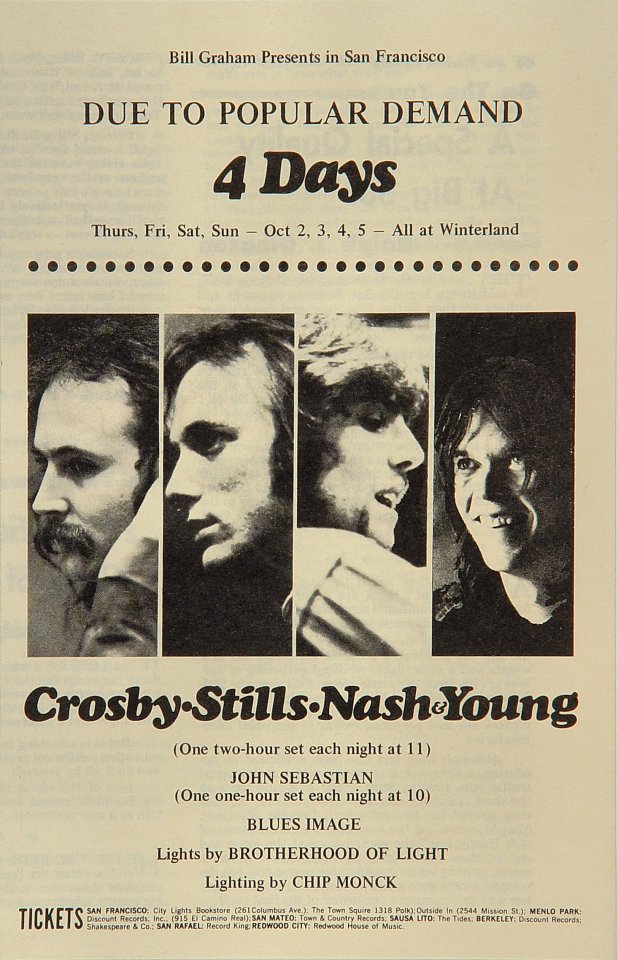
From the preliminary planning stages of Crosby, Stills & Nash, the musicians had always planned to pursue solo projects in conjunction with working together. Following the monumental success of the debut album in 1969 and its follow-up, “Déjà Vu”, in 1970, brought Neil Young into the fold, each of the band members remained quite active on their own. By 1973, a wealth of solo material had been released and each of these musicians had established themselves as individual songwriters and musicians. Crosby, with help from many of the San Francisco elite, had released his first solo album,  “If Only I Could Remember My Name”. likewise for Graham Nash, who released his first solo album “Songs For Beginners”, and was working on a second album. Crosby and Nash also released an impressive duo album during this time. Stephen Stills and Neil Young were even more prolific, with Stills releasing two impressive solo albums as well as a double album with his own band, Manassas, and Neil Young pumping out songs at an amazing rate, including the most popular album of his career, “Harvest”. By 1973, the clamoring for these four musicians to again work together was at an all-time high, but their well-publicized personality clashes made it seem unlikely that this would happen anytime soon.
That same year, Stills took to the road with an outstanding band, Manassas, which also featured ex-Byrd Chris Hillman and several members of The Flying Burrito Brothers. booked to play two gigs at San Francisco’s Winterland on October 4th and 7th. Surprises were in store both nights, but the October 4th gig turned out to be the most delightful. Following a lengthy set by Stills and Manassas, which featured two highly-charged electric sets and a semi-acoustic set in the middle featuring Flying Burrito Brothers classics, the audience was charged up and cheering for more.
When Stephen Stills returned to the stage with David Crosby and Graham Nash in tow, the audience was ecstatic! The trio hadn’t shared a stage since 1970. Strapping on acoustic guitars, they first delight the audience with two staples from their debut album: “Helplessly Hoping” and “Wooden Ships.” The harmonies are ragged and the delivery unrehearsed, but regardless, just having these musicians playing together again, and more importantly, obviously enjoying it, was a cause for celebration. This remarkable acoustic set continues with the trio performing a lovely take of Paul McCartney’s “Blackbird,” after which Stills switches to piano for “As I Come Of Age,” a number he often performed with CSN&Y on the 1970 tour and recorded for his first solo album.
The personality clashes between Stills and Young were the most publicized of all and had been going on since the Buffalo Springfield days, so when Neil Young walks out to join the other three, the crowd goes nuts. The musical chemistry between Stills and Young had always been undeniable, but many believed they’d never see the two on the same stage again, so this was indeed a monumental moment. Young was just about to release his controversial “Time Fades Away” album, but in typically unexpected style proceeds to play nothing from this album, instead performing three new songs, “Roll Another Number,” “Human Highway,” and “New Mama.” The middle song was rumored to be the title song of a potential third CSN&Y project, while the other two would be destined for “Tonight’s The Night”, an album that wouldn’t see the light of day until June of 1975.
Graham Nash next gets the spotlight, and he too debuts new songs, “And So It Goes” and “Prison Song,” both destined for his second solo album, Wild Tales. Crosby follows with a rare acoustic performance of “Long Time Gone” before they close the set with Stills’ “Change Partners,” the single from his second solo album.
These performances are unique and the chemistry between these musicians was obviously still intact. Following these shows, all four members expressed a strong desire to tour together acoustically. It wouldn’t come to pass, but this was likely the spark that ignited the idea of touring together the following year, which is when they would indeed get back together and perform before the largest audiences of their career.

Just two months after their historic appearance at the Woodstock Festival, Crosby, Stills, Nash and Young were scheduled to play their first-ever gigs at Bill Graham’s Fillmore West and Winterland. CSNY was forced to postpone the show, and Janis Joplin and Santana stepped in to replace them, along with the original billing of Blues Image and John Sebastian. The poster, however, had already gone to print.

The posters artists and designer Greg Irons moved to San Francisco in 1967 and roamed around Haight-Ashbury with his sketchbook, creating images he would later use in his posters. As usual, promoter Bill Graham needed a poster in a hurry, and Irons succeeded in producing one overnight. As his talent as a draftsman developed, a distinctive line quality and refined sense of balance set Irons‘ posters apart. His cartoonist inclinations are often evident, and he became one of the seminal figures in underground comics. Greg Irons also found work producing album graphics and book illustration, but it was the art of tattooing that became his passion.

widowspeakneil-1510241029

Widowspeak cover Neil Young’s “Harvest Moon”. Catch them in Europe. Widowspeak released a new album, Expect The Best, earlier this year, and today they’ve shared a cover of Neil Young’s “Harvest Moon” in advance of their European tour. It’s as beautiful and plaintive as you’d expect from the Brooklyn group,

http://


11/14 – Amsterdam, NL – Sugarfactory
11/15 – Utrecht, NL – Db’s
11/17 – Birmingham, UK – Actress & Bishop
11/18 – Glasgow, UK – Nice n Sleazy
11/20 – London, UK – Oslo
11/21 – Brighton, UK – The Hope
11/23 – Rotterdam, NL – Rotown
11/26 – Berlin, DE – Volksbühne
11/27 – Hamburg, DE – Hafenklang
11/28 – Copenhagen, DK – Vega
11/29 – Stockholm, SWE – Obaren
11/30 – Oslo, NO – Revolver
12/01 – Gothenburg, SWE – Oceanen
12/02 – Lund, SWE – Mejeriet

When you’ve got 28 studio albums under your belt – as Neil Young did when he released Chrome Dreams II ten years ago today – you’ve no doubt got a few leftover songs, and the Reprise collection kicks off with three great ones, most notably the 18-plus minute epic “Ordinary People.” And though Young is working here with longtime collaborators including guitarist, keyboardist, and steel guitar extraordinaire Ben Keith, bassist Rick Rosas and Crazy Horse drummer Ralph Molina, The crossing of his two primary rhythm sections is interesting. Crazy Horse fans may miss bassist Billy Talbot, and Horse detractors will long for drummer Chad Cromwell, but the trio has noticeable chemistry, and it is hard to argue with the results. Young himself of course contributes mightily on a multitude of instruments.

This isn’t just a journey through the past; the singer-songwriter also penned strong new material in a variety of styles ranging from country-folk (“Ever After”) to gospel (“Shining Light”) to electric rockers (the Grammy-nominated “No Hidden Path”) is probably the heaviest song, crunchy fuzzed out guitar solo’s are abundant.

While its title references a legendary unreleased album from 1977, All this matters little since Young of course no longer has anything to prove, meaning fans can enjoy the album and others will still not know what they miss. Since the masterwork and two of the better cuts (“Beautiful Bluebird” and “Boxcar”) were written between 20 and 30 years ago,

Chrome Dreams II doesn’t have a stylistic or thematic focus, and that’s kind of the point; it’s an album that revels in driving all over the map.

Born from a stage production of its musical/rock opera, Blitzen Trapper’s new album release Wild & Reckless hones in on a bygone era of the band’s hometown of Portland with a Sci-Fi love story. The title track recalls the energy of youth. Blitzen Trapper mined their lyrical storytelling and Oregonian roots to create a story for the stage that fuses the energy of a rock concert with the imaginative possibility of the theater. Wild and Reckless traces the unforgettable tale of two kids on the run, in a futuristic vision of Portland’s past.

Image may contain: 5 people, people sitting

Blitzen Trapper finished up a tour in support of their most recent album with two shows at their hometown of Portland’s Doug Fir Lounge. During the shows, the alt country outfit played Neil Young’s iconic album ‘Harvest’ in its entirety. Blitzen Trapper will release ‘Live Harvest,’ a limited edition LP documenting that show, for Record Store Day .

“I think we all knew the record before we even tried to play it, [it] came natural,” frontman Eric Earley says. “It’s one of those records that takes us to that place of comfort and nostalgia like the ‘Dukes of Hazzard’ or a Chevy Impala. It just feels good to play.”

http://

Neil Young & Crazy Horse, 'Arc-Weld' (1991)

Neil Young was in the middle of a career renaissance when he hit the road with Crazy Horse in early 1991. Their new album Ragged Glory was hailed as their finest in a decade and the group was playing songs old and new with a stunning level of energy and passion. The live album “Weld” captured the best moments on a two-CD set. The 14-minute rendition of “Like A Hurricane” remains one of the best version of the tune, while concert staples “Cortez The Killer,” “Powderfinger” and “Hey Hey, My My (In The Black)” have never sounded so vital. It’s hard to pinpoint a live peak for Crazy Horse, but this very well might be it. The album originally came packed with Arc, which was a single 35-minute track of various feedback-soaked beginnings and endings of songs. “Now here I am, 45 years old, and this is the essence of what’s happening to my mind,” said Young of the extended noise suite. “I really made Arc for people who ride around in the Jeeps with the big speakers. If you pull up beside somebody on the street and you’re playing that, that makes a fucking statement.


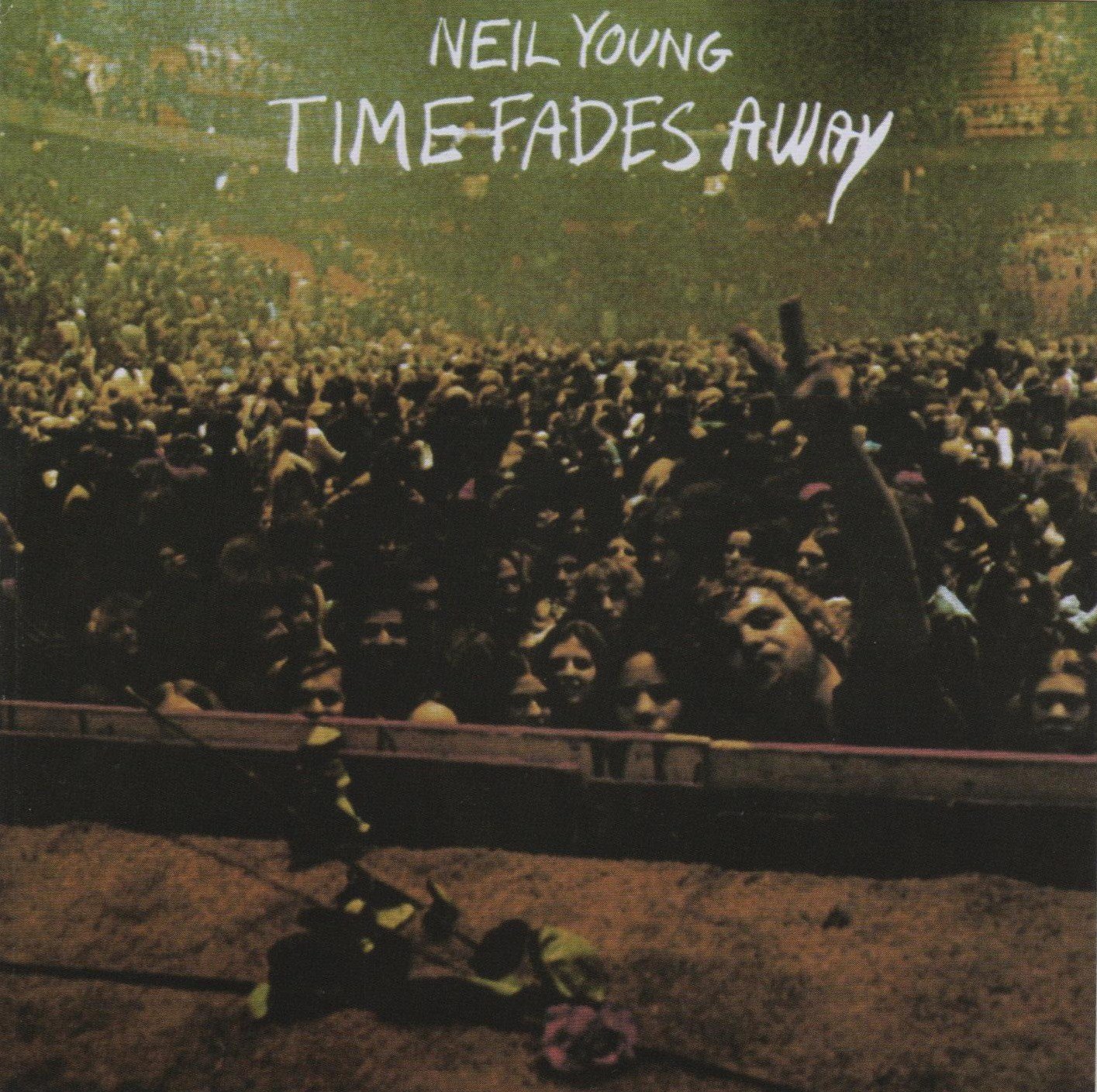
Neil Young should have been on top of the world in 1973. The incredible success of Harvest finally took him out of CSNY’s shadow, “Heart of Gold” had become a Number One hit in 1972, and a 62-date arena tour sold out all over America. But the death of Crazy Horse guitarist Danny Whitten, a painful back disorder and the endless infighting of his backing band turned the tour into an endless slog. He had a ton of hits by this point, but he opted to devote a big chunk of the set to gloomy, brand new tunes like “L.A.,” “Don’t Be Denied” and “Yonder Stands The Sinner.” The new songs were captured on the live LP “Time Fades Away”. But it was greeted by a collective shrug when it came out in 1973 and its also been out of print for decades, but Neil diehards recognize it as an absolute classic and original vinyl copies are highly prized. Unsurprisingly, Young has a wildly different take. “My least favorite record is “Time Fades Away,” he said in 1987.

Neil Young had a rough childhood. His parents went through a nasty divorce and he was raised primarily by his mother, moving from town to town and constantly being the new kid in school. He poured these painful memories into “Don’t Be Denied,” a standout track from 1973’s long out-of-print live LP Time Fades Away. “I wore white bucks on my feet,” he sings. “When I learned the golden rule/The punches came fast and hard/Lying on my back in the school yard.” It ends with the rise of Buffalo Springfield, and the realization that even success wouldn’t make him happy. It’s one of the most personal songs he ever wrote, and he’s only played it three times since 1983.

There are so many albums in Neil Young‘s catalog that most fans wouldn’t miss a stray out-of-print entry or two. But that isn’t the case with his infamous “lost” 1973 live release, Time Fades Away.
Mostly recorded on a disastrous tour that found Young and his band slowly falling apart over 62 shows in early 1973, Time Fades Away should have come at a moment of triumph, since it arrived in the wake of his hugely successful Harvest LP. Platinum sales often bring their own set of problems, however, and for Neil Young, mainstream stardom proved a burden that started chafing almost immediately. “I felt like a product, and I had this band of all-star musicians that couldn’t even look at each other,” Young reflected in a 1987 interview. “It was a total joke.”
Of course, Young being Young, he didn’t exactly make the tour easy on himself, chiefly by opting to perform previously unreleased material for crowds expecting to hear the hits. Going on to call Time Fades Away “my least favorite record” and “the worst record I ever made” in the same 1987 interview, Young explained, “As a documentary of what was happening to me, it was a great record. I was onstage and I was playing all these songs that nobody had heard before, recording them, and I didn’t have the right band. It was just an uncomfortable tour. It was supposed to be this big deal — I just had Harvest out, and they booked me into 90 cities.”
At this point, it’s hard to say who the “right band” would have been for Young, whose mental state grew progressively darker during the tour. All the same, the bloom was probably off the rose from the moment that former Crazy Horse guitarist Danny Whitten, who’d been slated to join Young’s band the Stray Gators for this series of dates, ended up being sent home to sober up  and soon died of a heroin overdose. The bad vibes grew to the point that drummer Kenny Buttrey quit partway through, replaced by the Jefferson Airplane‘s Johnny Barbata, and eventually, Young developed a throat infection that made things even worse.

Once Young and his crew actually started turning the tapes into an album, the problems continued, due to his decision to record using a new and fairly wonky digital mixing board whose idiosyncrasies left the whole thing sounding less than pristine. As a document of the state Young was in at the time, it was probably appropriate, but once it came time to try and remaster it for the CD format, they realized they’d have to go back to the original tapes and remix the shows all over again.
Still, there have been plans to reissue Time Fades Away on CD, most notably in 1995, when Young went so far as to schedule a November street date for the remastered disc. It was pulled before it ever got to stores, although test pressing copies have circulated for years (and ended up on YouTube, as you’ll hear in the video at the top). And in the vaults is apparently where Young intends for it to stay, despite the wishes of a growing number of fans — some of whom have signed a petition clamoring for its release.
In typically idiosyncratic fashion, in fact, it sounds like Young will release a Time Fades Away sequel before he ever sends the original to CD. Discussing his plans for the second volume of his Archives box with Guitar World in 2009, he mused, “One thing I’ll tell you about the next volume of Archives is that Time Fades Away II is in there. And it’s interesting because the whole thing has a different drummer than what was on that album. I switched drummers halfway through the tour — Kenny Buttrey was in there for the first half, and Johnny Barbata came in for the second. It’s a completely different thing, with completely different songs. So that’s interesting. There’s lots of stuff like that that I’m working on right now for the second volume.”

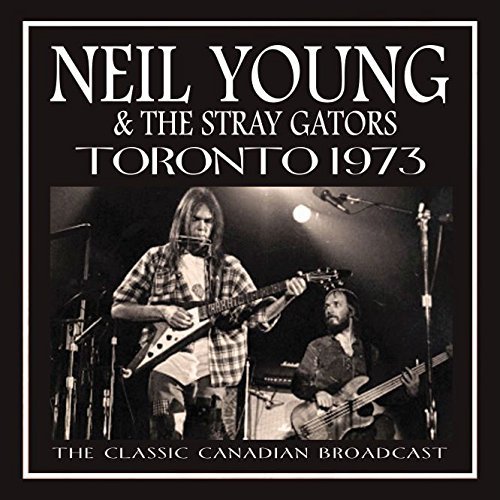
Fascinating Broadcast Recording From The Legendary Time Fades Away Tour Comprising Jack Nitzsche, Ben Keith, Tim Drummond and Kenny Buttrey, The Stray Gators had backed Neil Young on 1972 s Harvest, and would go on to do likewise on the tour during which its follow-up, Times Fade Away, was recorded live. Featuring previously unreleased cuts, until 2017 Time Fades Away remained the only Young album not released on CD, despite critical acclaim from most quarters. What would later become known as the Time Fades Away Tour began on 4th January 73 in Madison, Wisconsin; it was fraught from start to finish. Young would later describe it as one of the unhappiest times of his life and the worst tour of his career.

However, the show performed at Toronto s Maple Leaf Gardens on 15th January, recorded for live FM broadcast and now featured on this CD in its entirety, sounds far from chaotic and forms a fascinating document of a legendary tour from which a full performance has rarely been heard. This CD features a set list that includes five numbers from the Time Fades Away album (albeit in different versions to those included on the record that would appear in the shops in November 73) alongside a handful from Harvest and others from earlier LPs.

Now available through Amazon

Neil Young’s name may have been on this years line up for this year’s Farm Aid, but until he walked onstage at the KeyBank Pavilion in Burgettstown, Pennsylvania it was impossible to know for sure if he’d even make it. Neil Young hasn’t missed a single Farm Aid since the original event back in 1985 and he sits on the board, but this is also the same year he cancelled a festival appearance in Australia, Cancelled a tour of South America and Japan. He also put the Bridge School Benefit on hold, he hadn’t stepped foot on a stage the entire year.

But for Farm Aid 2017 he came roaring onto the stage like a feral beast finally let out of his cage and delivered a 45-minute set of unbelievable passion and energy. Backed by Promise of the Real (who he first met at Farm Aid in 2014 and has used as his primary backing band ever since), “Thanks for coming to Farm Aid,” he said in the only moment of the set where he paused long enough to speak.

He opened up with a blistering “Fuckin’ Up” that lead right into a hypnotic “Cortez The Killer” that stretched out to nearly eleven minutes. He didn’t even sing a note of it until four and a half minutes in as he built up a haunting intro on his battered guitar Old Black, grinned from ear to ear and reveled in the effortless interplay he’s developed with guitarists Lukas and Micah Nelson. Near the end, he seemed to remember he had a ticking clock and he quickly wrapped it up and called out for “Cinnamon Girl,” forcing the band to scramble for the right instruments as he pounded out the opening chords.

Young then strapped on a harmonica and acoustic guitar for singalong renditions of “Human Highway,” “Heart of Gold” and “Comes a Time,” before seeming to again call an audible, this time for “Like a Hurricane.”

It didn’t give Micah enough time to get behind the keyboard for the intro, but once the band locked in it almost felt like Crazy Horse was on the stage too. By this point, the crowd was in a state of complete hysteria, which only got crazier when Young mouthed the words “Rockin’ In The Free World” to the band and they kicked into it Ramones-style, not pausing for even a split second after the abbreviated end to “Like a Hurricane.” They had a bit over four minutes on the clock, not giving them enough time to even get to the third verse, but Young milked what time he had for everything it was worth. Somehow or another, he managed to cram a three-hour Neil Young concert into 45 minutes that will surely go down as one of the greatest sets in Farm Aid history.

For more information about Farm Aid, visit: https://farmaid.org Farm Aid’s performances are donated by the artists in order to raise funds and raise awareness for family farmers. They’ve raised their voices to help — what can you do?

Farm Aid was started by Willie Nelson, Neil Young and John Mellencamp in 1985 to keep family farmers on the land and has worked since then to make sure everyone has access to good food from family farmers. Dave Matthews joined Farm Aid’s board of directors in 2001.

the setlist  Fuckin’ Up , Cortez the Killer,  Cinnamon Girl,  Human Highway, Heart of Gold, Comes a Time , Like a Hurricane, Rockin’ in the Free World.

The annual Farm Aid took place yesterday at KeyBank Pavilion just outside of Pittsburgh as the organization’s board members—Dave Matthews, Neil Young, Willie Nelson and John Mellencamp all performed and welcomed a lineup that also included Sheryl Crow, Jack Johnson, The Avett Brothers and more. There were a number of the highlights on the night.

Johnson embodied the collaborative spirit of the event with a cover of Bob Dylan’s “I Shall Be Released” with Sheryl Crow, Nathaniel Rateliff and Jamey Johnson sitting in. Lukas Nelson later emerged for “Breakdown” and The Avett Brothers helped Johnson close his set with “Mudfootball” and “Better Together.”

Elsewhere on the day, Nelson welcomed Margo Price with his band Promise of the Real for “Find Yourself.” Price later duetted with Sheryl Crow on “Strong Enough,” who also paid tribute to Gregg Allman with a cover of “Midnight Rider” featuring Lukas and Willie Nelson as well as Jack Johnson.

Jamey Johnson made waves with the country artist delivering covers of “Up on Cripple Creek” as well as Little Feat’s “Willin’” and Woody Guthrie’s “This Land is Your Land” before The Avett Brothers came out for their classic brand of folk rock after a few collaborations earlier in the day.

Dave Matthews, along with acoustic partner Tim Reynolds, was the first of the four board members to play, rolling through a brief set highlighted by a new song “The Odds are Against Us.” Mellencamp then rolled through his hits before Young roared with Promise of the Real, playing hits like “Fuckin’ Up,” “Cortez the Killer,” “Cinnamon Girl” and “Heart of Gold,” among others.

As he always does, Willie Nelson closed down the evening, welcoming Jamey Johnson for the Merle Haggard collaboration “It’s All Going to Pot” before Sheryl Crow, Valerie June, Seth and Scott Avett emerged for “Will the Circle Be Unbroken” and “I’ll Fly Away.” Nelson then brought out son Lukas for one of the last songs of the night, an appropriate tribute to Texas with “Texas Flood.” The singalong “I Saw the Light” brought the evening to a close.

Neil Young and Promise of the Real perform “Fuckin’ Up” at Farm Aid 2017 at KeyBank Pavilion in Burgettstown, Pennsylvania, on September 16.