Posts Tagged ‘Hull’

See the source image

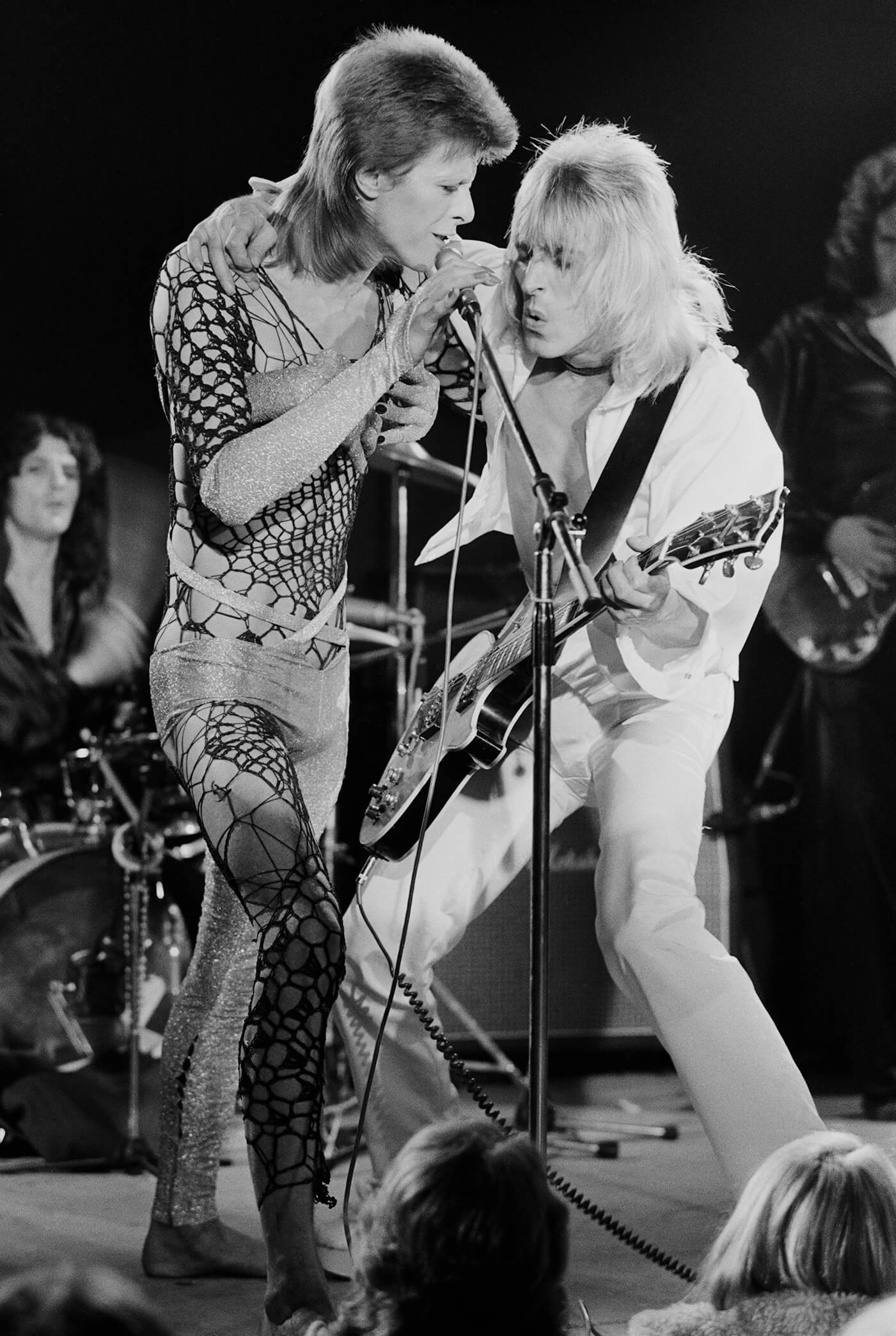
There are two ways of remembering the late Mick Ronson. One is as the immortal guitarist/pianist/arranger for David Bowie, before (or after) sprinkling magic across everyone from Ian Hunter to Bob Dylan, from Elton John to Ellen Foley, and so many more that there’s no room to list them.  And the other is as the purveyor of two of the most amazing albums that the 1970s ever birthed, before he decided he really didn’t want to be the star of his own show, and got back to making other people sound astonishing. In 1970, Mick Ronson changed the career of David Bowie and went on to work with Lou Reed, Bob Dylan, John Mellencamp, Morrissey and more.

Although Ronson’s career was defined by his time with Bowie, there was a significant before and after. In the 1960s he played in various Hull groups, including The Mariners, who were advised by Rolling Stone Bill Wyman to change their name to the King Bees at around the time Bowie was also fronting a group called Davie Jones And The King Bees; and The Rats, whose main claim to fame was a 1967 single called The Rise And Fall Of Bernie Gripplestone.

Benny Marshall was The Rats’ lead singer and a close friend of Ronson. “Mick was the best guitarist in Hull, so when he left to head down south and join Bowie, I was pretty upset,” he says. “John Cambridge, our drummer, had played with Bowie on [the album] Space Oddity. He was the bloke who went back to Hull in January 1970 with the brief to find Ronson and bring him to London. He found Mick marking out the lines on the municipal football pitch.”

Cambridge did as instructed and the pair were introduced at the Marquee club, where Bowie was playing on February 3rd, 1970. Two days later Ronson had learned the riffs and song structures well enough to back Bowie, Cambridge and Tony Visconti for a John Peel Radio 1 show live in concert at the Paris Theatre in Lower Regent Street in London. They did 15 songs, including a new number, Width Of A Circle, and plenty of material from Bowie’s recently released self-titled second album. Reaction was positive. This was better than Bowie’s regular gig at the Three Tuns pub in Beckenham. Ronson moved into Bowie’s Haddon Hall apartment on Southend Road in Beckenham and became part of the family.

Having tired of the hippie collectivism, Bowie wanted to make a hard rock album. As Visconti said later: “We respected groups like Cream, but we didn’t have that in us. We needed someone to be [that] important element, and that somebody was Mick Ronson.” Everyone loved Ronson’s laconic Northern humour too, especially Bowie, whose father and mother came from Yorkshire and Lancashire respectively. He’d send Ronson up and get just as good back.

Before this auspicious occasion, bass player Rick Kemp had also scouted Ronno to play on fellow Yorkshireman Michael Chapman’s second album, Fully Qualified Survivor. “Michael said his producer Gus Dudgeon didn’t want him to play electric guitar,” says Kemp, “and asked me did I know anybody? I mentioned Ronson, which wasn’t a good career move for me, letting this little runt in. Gus told me to find him. I was driving a Morris 1000 with the wings flapping off and I spotted him working, mowing lawns. I put the question: ‘Do you want to play on an album?’ He replied: ‘What do you mean? One that’s in the shops for sale, like? And I get paid?’ I took him down to London, and within minutes of arriving he’d got the runs for glory.”

Tony Visconti insists that Ronson came to Trident Studio in September 1969, when the David Bowie album was being finalised: “Mick came to the mix of Wild-Eyed Boy From Freecloud, and was persuaded to play a little guitar line in the middle part and joined in the handclaps on the same section.”

In April, sessions began for The Man Who Sold The World. It was a brilliant album, but another commercial flop. It was so badly received that Bowie was convinced to ditch the band, and Ronson, Visconti, ex-Rat Woody Woodmansey and Marshall took the collective name Ronno and released a single, 4th Hour Of My Sleep/Powers Of Darkness, a freestyle rock-metal affair that showcases Ronno’s blistering Les Paul playing. It sank without trace, although Vertigo Records later included both sides on their Superheavy Vol 1 and 2 compilations.

Later on, Ronson’s crunching heavy metal attack, allied to arcane Wagnerian, dystopian, mind-fuck lyrics, was hailed as a masterpiece. Certainly Ronson’s contributions to Bowie tracks such as She Shook Me Cold, Running Gun Blues and the epic Width Of A Circle cemented his place, leading Bowie to call him, with a smug smile, “my Jeff Beck”.

Bowie’s 1970 album “The Man Who Sold The World” had not been a commercial breakthrough, but it added to Ronson’s confidence. Visconti and Ronson had masterminded the sound, dashing off arrangements in the Minstrel Gallery or the basement at Hedonism Hall while Bowie canoodled with Angie elsewhere, chucking out lyrical fragments in between romps. She Shook Me Cold, the dirtiest song he ever wrote, was directly about Mrs Bowie, but it was Ronson who provided the Jimi Hendrix-style intro and the power trio setting à la Cream. Later, Angie lamented the fact that Ronson didn’t receive the publishing he deserved: “In terms of kudos and feeling that one is valued, it would have been nice for Mick Ronson to have had publishing credits.”

Ronson had already written a mini-score for four recorders, used in the break in All The Madmen. It was a start. “I thought: ‘Well, if you can do that then so can I.’ I went out for dinner with Dana Gillespie, who had tracks that needed strings, and David said: ‘Oh, Mick’ll do that!’ I never had, but it was great. It was all done in your head and then straight to piano and guitar. David pushed me forward. That was his thing. He made stuff happen.”

Bowie was now heavily reliant on Ronson. On Hunky Dory the guitarist finally got his credit, as the arranger of Changes, Life On Mars?, Kooks, Quicksand and Biff Rose’s Fill Your Heart, virtually copied note for note. In retrospect many have noticed how similar the sound of Hunky Dory is to Michael Chapman’s Fully Qualified Survivor, including Chapman himself.

Ronson wasn’t fazed by his burgeoning role, giving the Royal College Of Music-trained Rick Wakeman instruction for the now iconic piano parts on Life On Mars?. On the Ziggy Stardust epic Five Years, his string section whipped up the hysteria. On Suffragette City, it was Ronno who came up with the funky, lurching ARP synthesiser sound that many mistake for saxophones. All those years studying piano and violin and listening to string quartets in Hull paid off.

After the rise comes the fall. On October 20th,1973, Mick Ronson played with David Bowie on stage for the last time in that decade. Only 200 people saw the appearance in the flesh, shot for NBC’s The Midnight Special.  Dubbed The 1980 Floor Show, it was a strange day. Bowie serenaded supposed transsexual Amanda Lear on Sorrow, and he and Marianne Faithfull duetted on Sonny & Cher’s I Got You Babe. Marianne was wearing a nun’s habit with the back cut out and no knickers, so everyone in the band could see the most sought-after arse of swinging London, although the audience couldn’t.

Bowie hated the end results: “shot abysmally”. This was the night Ziggy Stardust truly left the building, which may explain why a smiling Bowie ended each song with an affectionate pat on Ronson’s white satin-clad back. The two men wouldn’t appear on the same stage together again until 1983, when they reunited for a song at a show in Canada on Bowie’s Serious Moonlight tour. In 1970, Mick Ronson changed the musical fortunes of David Bowie, a struggling singer-songwriter with two novelty hits behind him. Together, and with their band the Spiders From Mars, they reinvented Bowie musically and created some of rock’s best-loved albums: Hunky Dory, The Rise And Fall Of Ziggy Stardust And The Spiders From Mars, Aladdin Sane. Afterwards, Ronson struggled to match that initial success,

If the Ziggy album was a Ronson tour de force, the follow-up, “Aladdin Sane”, was a mixed blessing for him. His contributions were immense, but so were those of recently arrived pianist Mike Garson, whom Ronson had auditioned, later advising him to “make yourself indispensable. That’s what David likes. Don’t just be a session man.”

His work on Lou Reed’s Transformer effectively rescued Reed’s career after his debut solo album had bombed. “It was a good experience for me,” said Ronno. “Lou’s guitar was always out of tune, so I’d kneel in front of him and tune it properly. He didn’t care, cos he was so laid-back.” And without his contribution, Transformer might never have got off the ground. “It came out pretty well,” Ronson said. “Though I didn’t know what the hell [Lou] was talking about half the time. He’d say stuff like: ‘Can you make it sound a bit more grey?’”

Fortunately the album was a roaring success. “Transformer” is easily my best-produced album,” Reed said. “That has a lot to do with Mick Ronson. His influence was stronger than David’s, but together, as a team, they’re terrific.”

In the summer of ’73, having finished his sessions for Bowie’s covers album “Pin Ups”, most of which he’d arranged as usual, Ronson returned to the Château d’Hérouville studios outside Paris and made his solo debut album, “Slaughter On 10th Avenue”Bowie chipped in from a distance, gifting the songs Growing Up And I’m Fine, Pleasure Man/Hey Ma, Get Papa and a rough translation of Lucio Battisti’s ‘Io vorrei, non vorrei, ma se vuoi’, now christened Music Is Lethal. RCA weren’t overjoyed with what they heard, and the album’s release date was put back more than six months to 1974.

https://www.youtube.com/watch?v=_7vsOOKvNUA

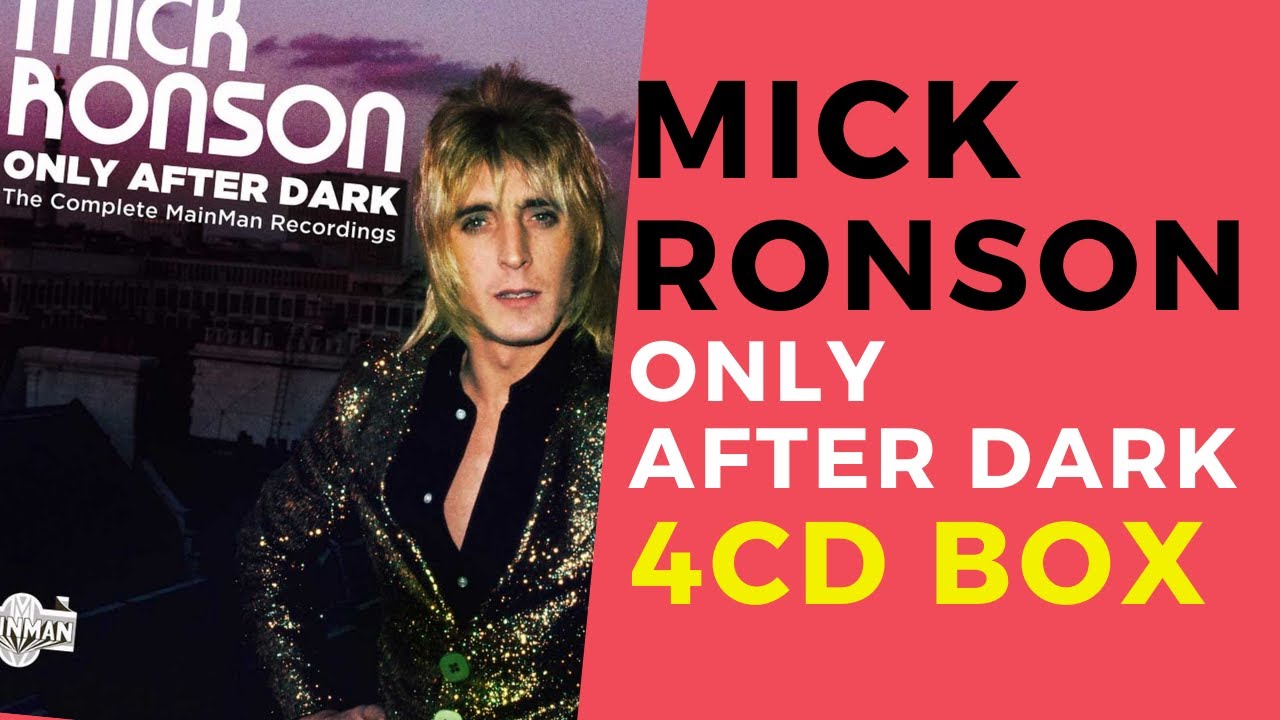
This box set focuses on the latter, rounding up 1974’s “Slaughter on 10th Avenue” and the following year’s “Play Don’t Worry”, and then adding two further discs of sessions, out-takes, and live tracks that trace Ronson through 1976… no longer interested in making a new LP, but curious what it might sound like. A lot of these have leaked out over sundry past collections, and once past the thrill of hearing that voice, that guitar. But the two albums that preceded these tapes, the two that were released  in the wake of his departure from Bowie’s band, at a time when it seemed inevitable that Ronno would be rock’s next stellar superstar… they are a different matter entirely.

Slaughter was especially delicious, a combination of covers (Elvis, Annette Peacock, Richard Rodgers), Bowie originals (“Growing Up and I’m Fine” and the co-penned “Hey Ma, Get Papa”), and Ronson’s own work with former SRC frontman Scott Richardson, it stood – and still stands – as perhaps the ultimate statement on glam rock, a collection of songs that could journey from early rock to modern jazz, from dark Europa to vivid glitter, and make the whole lot hang together.

See the source image

Other bands on the circuit were playing with each of these elements individually… listen to “Hey Ma,” and there’s the blueprint for what Cockney Rebel would do next. “Only After Dark” was scything rock, “Growing Up and I’m Fine” would have suited Roxy Music. 

But the opening “Love Me Tender” and the closing “Slaughter” itself do more than bookend the party. They offer up their own interpretations of what music could be made to do, the first building slowly until the vocal breaks your heart; the last lifting you so high that nothing could bring you down after hearing it. And live, it was even more stirring.

In 1976, at the height of his cocaine addiction, Bowie had washed his hands of the good old days. “I gave them [his band the Spiders From Mars] more life than I intended,” he said. “And I was also getting honestly bored. There’s only so much you can do with that kind of band. I wanted no more to do with that loud thing. Hurt my ears. Wasn’t pleasing my mind too much either. Since then, poor Mick has completely missed his vocation. From his faulty solo career right on down. I’ve been disappointed. He could have been amazing. I just don’t know. Christ, I haven’t spoken properly with him in years.

Evidently Bowie’s cage was rattled by Ronson’s comment: “David needs someone around him to say: ‘Fuck off, you’re stupid.’ He needs one person who won’t bow to him.” Bowie’s reply was: “I’ve got God. Who’s Mick got?”. “There was certainly a time when David relied on Mick,” says singer Dana Gillespie, a fellow MainMan artist and mutual friend, “but he’d drop all communication with you. Mick was badly hurt when David never returned his phone calls.”

In fairness, Bowie became more charitable later. “Mick was the perfect foil for the Ziggy character,” he said. “He was very much a salt-of-the-earth type, the blunt northerner with a defiantly masculine personality, so what you got was the old-fashioned yin and yang thing. As a rock duo I thought we were as good as Mick and Keith.”

Within months Ronson was back in another band, joining Mott The Hoople for what would be their final single, Saturday Gigs. Ronson and frontman Ian Hunter had bonded back when Mick had knocked up a string arrangement for Mott’s Sea Diver, but the other Mott guys resented the arrival of this ‘rock star’ in their midst, with MainMan and RCA sending limos for their boy while Mott travelled together in a bus. Tired of the conflict, Hunter split the band.

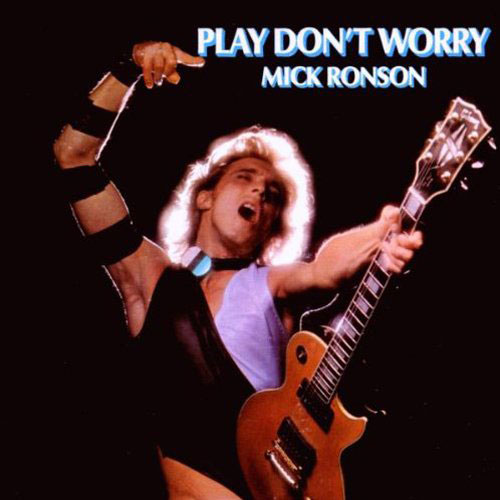
Ronson went back to his solo career. Bowie didn’t take part in follow-up album Play Don’t Worry either, but allowed Ronson to use the backing track from the cover of the Velvet Underground’s White Light White Heat considered for the American attempt at a Pin Ups album but soon discarded.

Play Don’t Worry was excellent in parts. Not a natural songwriter, Ronson did himself proud on the opening Billy Porter, his take on Claudio Baglioni’s ‘Io me ne Andrei’, translated into Empty Bed, and versions of two songs by Pure Prairie League, whose 1972 album Bustin’ Out featured his guitar and strings.
See the source image

“Play Don’t Worry” was a more straightforward collection… the opening “Billy Porter” could have made it onto Slaughter without disturbing that album’s perfect equilibrium, but “Angel #9” looked back to Ronson’s work with the Pure Prairie League in the early Bowie days; “Girl Can’t Help It” was an excuse for him and Ian Hunter to go full-bore Little Richard on our ears; and “White Light White Heat” was an out-take from Bowie’s Pin Ups sessions, with Ronno’s vocal instead of the other guy’s.

It’s still a great album, hanging together with consummate ease, and hitting all the right spots – the solo that dominates “Angel #9” is one of his finest ever, and the self-penned title track shows what  cracking songwriter he was, just as  “This Is For You” illustrates what a great, and expressive, voice he had. Still it’s a shame that one of the finest performances on the session, a gentle piano-led cover of another Annette Peacock number, “Seven Days,” only made it out as a b-side, but it’s also one of nine bonus tracks appended to the album, so that’s alright then. (Eight join Slaughter.)

Ronson returned to the studio with Bowie to create demos for future Diamond Dogs tracks 1984 and Dodo. His work wouldn’t appear on the finished album, a creepy, avant-garde affair, but his trademark guitar style did in the shape of Rebel Rebel, almost a Spiders From Mars pastiche riff, played now by Bowie, Ronno’s platinum-coated spectre was fading into the background.

After Bowie and Lou, where do you go? Ronson produced and played on Ian Hunter’s magnificent debut solo album, with that signature opening flash of epic genius, “Once Bitten Twice Shy”, and Hunter inspiring one of Ronson’s most fearsome solos by showing him a bad review for Play Don’t Worry before he went in to lay down a guitar part on The Truth, The Whole Truth, Nuthin’ But The Truth.

In 1975 Ronson moved to New York, rented a place on Hudson Street near the Meatpacking District and enjoyed the city with his best friend Hunter, who had provided safe haven via Mott The Hoople, Mott and the Hunter Ronson Band.

This is where they met Bob Dylan, who invited Ronson to join his band of gypsies, the Rolling Thunder Revue, after a meet engineered by Dylan’s main fixer, Bob Neuwirth. That evening began at the Bitter End on Bleecker Street. “We weren’t Dylan fans at all,” .“Mick thought he sounded like Yogi Bear. But Ian took us anyway. And Dylan played the Desire album and he was mesmerising, Ronno was soon back with Hunter, appearing on You’re Never Alone With A Schizophrenic and Welcome To The Club. With his solo career on hold, he became a full-time producer. He worked with Van Morrison, John Mellencamp and Roger McGuinn, and there was production work with artists as varied as David Cassidy, Slaughter And The Dogs and the Rich Kids.

See the source image

Again, there’s nothing here that hasn’t seen the light of day before, but having them all in the same place is definitely a bonus, and there are some glorious inclusions, including a cover of Bowie’s “Soul Love” that Ronson retitles “Stone Love,” and decidedly NOT a cover of “Life on Mars,” which is the song he performed during his solo spot on the Rolling Thunder Revue.

A handful of tracks from a projected Ronson live album include another b-side, “Leave My Heart Alone,” which is also another Pure Prairie League track;  there’s some jams and alternate versions, and even an interview recorded for Teen magazine in 1974, and given away free as a flexidisc.  Oddly, and completely out of place, there are also two numbers recorded on the 1979 Hunter-Ronson tour, but both fit in perfectly… a tremendous version “Angel #9,” and the show’s traditional opening number, the Shadows’ “FBI.”

The accompanying booklet tells Ronson’s story well, and pulls some great images from the archive, and with his own seventies catalogue now neatly corralled, maybe we can start to dream about the other box set Ronson deserves, documenting his life as a sideman. Morrissey has the fondest memories. “Everyone who worked with Mick expresses devotional love for him, whereas people who worked with Bowie express admiration. Mick told me that he alone wrote the main guitar hooks for Starman, The Man Who Sold The World and others – not just hooks, really, but grand choruses in themselves.

Ronson played guitar on Your Arsenal but didn’t want a credit. “Again this was Mick’s unaffected Cinderella aspect, which I later saw in Jeff Beck when I worked with him on my Years Of Refusal album,” Morrissey recalls. “Jeff and Mick were identical in the way that they would quietly pick up their guitars without fanfare, and as they sat in the corner they’d plug into the desk and a tingling earthquake would erupt without any discourse. And they both made their guitars sound like grand pianos.”

See the source image

In the late 1980s, Ronson’s health began to cause concern. He was diagnosed with liver cancer, something he neither made a secret of nor chose to acknowledge as a threat. Instead he threw himself into projects such as Morrissey’s Your Arsenal and Bowie’s Black Tie White Noise. He also kicked off a fine version of All The Young Dudes with Bowie and Hunter at the Freddie Mercury Tribute Concert at Wembley Stadium on Easter Monday, 1992, which was the last time his fans saw him on stage.

On Ronson’s posthumously released Heaven And Hull, he wrenched out some of his finest ever work, particularly on Dylan’s Like A Rolling Stone, with Bowie’s astounding vocal inspiring the guitarist to take the song to another planet. And he still had enough time to play on The Wildhearts’ My Baby Is A Headfuck, recorded weeks before his death on April 29th, 1993. He spent his last hours in the company of Hunter, Suzi and sister Maggi at Tony Defries’s house on Hasker Street in West London.
See the source image

Hull / Leeds-based shoegazers bdrmm follow their hugely acclaimed debut album “Bedroom” with “The Bedroom Tapes”, a limited-edition 12” EP that rounds up remixes and lockdown live sessions. The first side features stripped-down versions of “Gush, A Reason To Celebrate” and “Forget The Credits” from the album, plus a version of 2019 single “Question Mark”. Originally recorded at home by the band’s Ryan and Jordan Smith for various radio sessions, these versions feel fragile and expose the feelings that are buried under the noise of Bedroom.

The flip features Andy Bell’s radical reworking of “A Reason To Celebrate” under his GLOK guise, which finds the previously unexplored middle ground between the late Andrew Weatherall and underrated 4AD outfit Ultra Vivid Scene. It is joined by Ditz’s dynamic deconstruction of If.… and International Teachers Of Pop’s almost obscenely cheerful ‘de-mix’ of Happy.

A selection of remixes and live sessions

http://

Releases October 23rd, 2020

Music and words by bdrmm

“‘Gush’ was written back in 2016 at a particularly hard time in my life as I was going through the most significant loss I have endured. I remember coming home from work one day and luckily my brother Jordan (bass) was staying over at mine that evening so we just set the equipment up, which at this time was just a laptop, a DI and my iPhone which I used for vocals. We smashed the demo out in about two hours and that was that, it was just a track, a track I never expected to be our most played to this date.

We had always played it live, but I never thought that it would end up being on the album, simply because of the amount we played it, it was just a filler in the set, well, it felt like that to me anyways. Joe (guitar) always had a soft spot for it. When we went in to record the album, I wouldn’t say reluctantly, but definitely with the least confidence of its place on the album, we decided to include it, and I am so glad we did. It was the track that we finished last, as it always felt something was lacking on it. The last day of recording, I was just playing around over the last minute of the ‘for that mistake i’m sorry’ change in the track, and that’s where the final guitar run came from, it almost fit too perfectly and went from it being the most underrated track on the record, to arguably everybody’s favourite.

I am so glad it’s got the recognition that it has, purely because the more I see people enjoying it, the more it reminds me of the main message of the track: ‘You have to go through shit, to realise it gets better’” – Ryan Smith

bdrmm have shared a brand new short film to accompany their single, ‘Gush’, which is released on all digital platforms today.

“Gush” – A Short Film is available to watch on YouTube and the band’s Instagram TV account now. It was filmed by Sam Joyce at Gorilla Studios in Hull, and features a performance of the single as well as candid interviews with the band about the genesis of the song.

“‘Gush’ is an honest track, so I wanted a video to reflect that by understanding the interpretations of the people who helped create it,” explains singer/guitarist Ryan Smith.

He continues: “It’s a very personal track, probably the most I’ve ever delved into my own life. As much as I would love to share this topic, I feel it’s too much. I shared something very special with somebody which we lost. It was a very upsetting couple of months for us, but we got through it. The track is filled with optimism because things do get better, no matter how bad they get. Be there for your loved ones, always.”

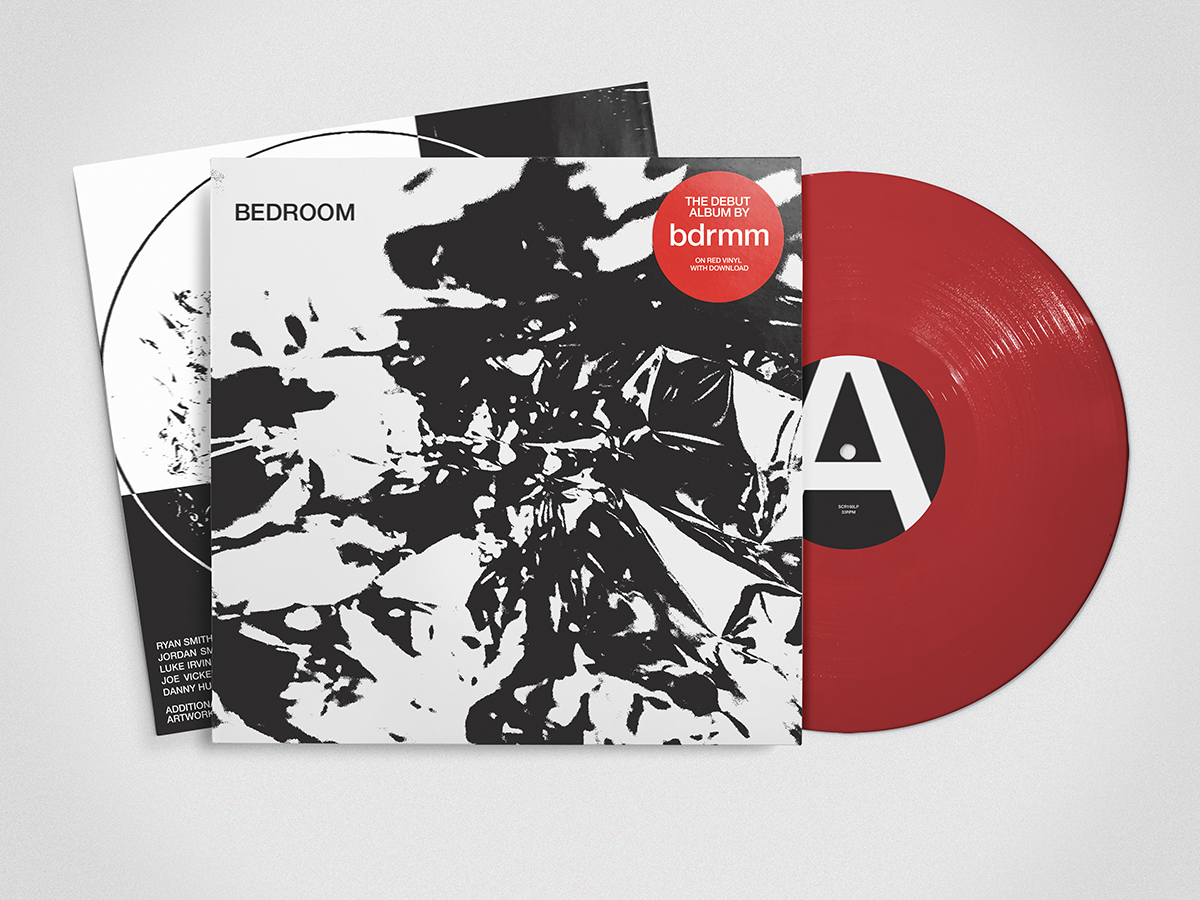
To coincide with the single release, a new limited-edition red vinyl version of the band’s debut album, Bedroom, is available now from selected indie shops: buy a copy now. bdrmm have rearranged their UK tour dates for 2021. Tickets for the original dates remain valid, and further shows will be announced soon.

April 2nd – Nottingham – Chameleon Arts Cafe

bdrmm_by_Sam_Joyce_2.jpg

The freshly released debut album by these Brits isn’t reinventing any wheels. In fact it could have also been released in the early 90s sounding exactly like this and you can take that as a compliment. bdrmm sound like the lost love child of Slowdive and The Cure, mixing mighty shoegaze moments with dark wave spirit. If you love the sound of those classics and also new groups like DIIV then “Bedroom” is the album for you. It’s a record for the hopelessly romantic indie kid in you, one that chooses a certain nostalgic timelessness over state-of-the-art innovation. bdrmm are doing a great job in recreating this very specific sound and personally I don’t need any innovation here as long as the music is as good as on this one.

With an awkward, vowelless name that has to be constantly explained, it is unsurprising that the titling of Hull / Leeds-based quintet bdrmm’s debut album is eponymous. “We have been pronounced as Boredom, Bdum and my old boss actually thought we were a ska band called Bad Riddim. We’re all sarcastic cunts, so Bedroom spelt correctly seemed like the perfect title,” explains frontman Ryan Smith. Widely praised for their innovative approach to shoegaze in their early singles, the group have taken a sonic and lyrical step up from last year’s If Not, When? EP. With named influences such as RIDE, Radiohead, The Cure, Deerhunter, Slowdive, Beach House, Alex G, Björk, John Maus and DIIV, the album spans krautrock, post-punk, proto-shoegaze and their cross-fading of some tracks means the album is an almost seamless listen.

As intimate as the name suggests, the whole album spans the violent ups and downs of being in your early twenties: “mental health, alcohol abuse, unplanned pregnancy, drugs… basically every cliché topic that you could think of,” reveals Smith. “But that doesn’t mean they ever stop being relevant. It’s a fucker growing up, but I’m lucky enough to have been able to project my feelings in the form of this band, surrounded by four of the best people I’ve ever met.” These four include his younger brother and bassist, Jordan, an old bandmate, Joe, synth player Dan, and drummer Luke. Ranging in age from teenagers to their mid-30s, they played incessantly over the last couple of years, supporting the likes of Fat White Family, Her’s and Viagra Boys. They found themselves on the radar of indie label Sonic Cathedral last January, who initially offered them a show at The Social and asked if they’d be up for contributing to the Sonic Cathedral Singles Club series of 7”s. From there, they went on to release debut EP, If Not, When? and it hit a nerve with BBC Radio presenters, critics and their peers from the palpable and universal feeling of “everything being too good, that it’s inevitably going to come to an end” (Smith). 

Four months in and out of the studio resulted in something truly remarkable, at once elating and dark. More than just a genre record, as something stamped with the label ‘shoegaze’ so often is, Bedroom works its way from fuzzy indie-pop to heavier dirges via sound collages and a distorted sample of a Megabus driver. We’ve been sent this exclusive track by track of the album, so delve into bdrmm’s world as you listen:

http://

Momo

‘Momo’ is named after a pretty fucked-up online hoax – a viral game that allegedly got sent to students’ phones that would goad them into violence and suicide. Our manager works in a school and he got really convinced that it was real, and to this day we’ll never let him live it down. It seemed only fitting that it be cemented in history as the first track on an album he helped create. I’ve always been a fan of instrumental openings to albums, I feel they’re like the opening credits, and set the mood of what the listener is in for.

Push/Pull

We really wanted to make an album that flowed seamlessly throughout, so hearing ‘Momo’ going into ‘Push/Pull’ like it does is something special. It’s not an album filled with random tracks, it’s meant to be listened to in full, in order. We spent so much time deciding on the tracklisting, there were so many different combinations. ‘Push/Pull’ is a recollection of the first time you meet somebody. It’s quite dark as it’s not a generic ‘how I met the love of my life’ story. It’s remembering them from the End.

A Reason To Celebrate

A reason to celebrate was actually going to be the name of the album. This is our ode to the genre, I think; we wanted to make a proper shoegaze record. I was sat in my old house about two years ago just messing about on an acoustic guitar with five strings and came up with the chord progression and sent it onto Joe [Vickers, bdrmm guitarist]. We agreed it needed to be something. It’s about proudly, yet stupidly, letting go. It’s the voice in your head giving you all the different reasons why you should. I love this track, it’s a personal favourite. When we play it live, we never want to stop.

Gush

‘Gush’ is a very, very, very old song. It’s a very personal track, too, probably the most I’ve ever delved into my own life with a track. As much as I would love to share this topic, I feel it’s too much. I shared something very special with somebody, which we lost. It was a very upsetting couple of months for us, but we got through it. This track is filled with optimism because things do get better, no matter how bad they get. Be there for your loved ones, always.

Happy

Ahhh, ‘Happy’. This is our song. We have been playing it live, practicing it, working on it since we started playing together. It’s one of the first tracks I ever wrote and has proudly stood the test of time. I actually have a video of the first show we ever played which includes it. This song is all about bitterly yet humbly wishing somebody who has hurt you the best. You’re sick of fighting, you’re tired, you just want to move on, and if that means you have to be the bigger person, so be it. You deserve to be.

(The Silence)

(The Silence)’ was created in the studio. It was a day when it was just me and Alex [Greaves, producer], working on some guitar parts and some extra synth. I think we got a bit carried away in dragging out the ending of ‘Happy’, which can happen when you’re working with a Space Echo. They’re like crack for anybody making this kind of music. Alex added layers and layers of synth, and a beautiful guitar line. Nothing about it is in time, it’s very disjointed, especially when the drums come in. We’re both huge Deerhunter fans, so took a lot of inspiration from them. I went into the vocal booth and it was a proper turn all the lights off moment. The vocals were recorded in pitch darkness. “The silence, you speak, in my ear. Proves that, you can’t, be here”.

It’s literally about somebody having nothing to say. There’s nothing to be heard.

(Un)Happy

We always follow ‘Happy’ with a little jam, which is playing the same chords in half time, kinda just trudging along. It’s very moody. I didn’t expect it to make its way on the album, but I’m so glad it did. It’s a part of ‘Happy’ now. ‘Happy’, ‘(The Silence)’ and ‘(Un)Happy’ are a trilogy. There is a sample underneath at the end which you can hear which is a voice recording I took of the driver of the Megabus from Manchester to Leeds. I’d had the worst night, I had to steal a phone charger from Poundland to book a coach home because I had no money. I was stealing food from Tesco, it was raining and it was a real low point for me. I had a real problem with alcohol and drug abuse, this was the day I realised it needed to sort it out, which I’m definitely on the road with. But when I was on the bus home, the driver was having a conversation on the phone with his mate about meeting up after his final journey. It brightened up what was a very bleak day, I’m glad I stole that charger now.

If….

This track is named after the 1968 Lindsay Anderson film If….. Not because it’s about Malcolm McDowell or school shootings, but because I watched it a lot during the period when I was getting over somebody. Its sheer bleakness made me realise that there are a lot more fucked up things in the world than getting out of a relationship, so stop moping about and do something about it. It’s now become one of my favourite films of all time. I’m a big film enthusiast, so I am indebted to who showed me it. She’s great, too.

Is That What You Wanted To Hear?

This is the first track we completely finished in the studio. It all came together so beautifully; it was a symphony of one-takes. This is another one we love playing live, it’s got all the parts to be a really pretty song, but it’s not. It’s about standing up for yourself. “Fine, you win, I never felt what you felt. Is that what you wanted to hear?”. After constantly reassuring someone that you love them, but they don’t believe it, you just give up. There’s only so much truth telling you can withstand before you start lying to yourself.

Forget The Credits

This was originally just called ‘Forget’. It’s almost like a weight being lifted from your shoulders. The chords drift off into space taking everything that’s just happened with it. It was always meant to be the last song on the album. I remember when I recorded the first demo, it was the first time I played drums for a track. It’s very open ended. It’s the end of a chapter, not the end of the story.

bdrmm release debut full-length album Bedroom on Sonic Cathedral on 3rd July 2020.

BDRMM – ” Question Mark “

Posted: July 6, 2020 in MUSIC
Tags: , ,

Image may contain: nature and text

The West Yorkshire quintet’s long awaited debut lp is an immediately gratifying shot of nocturnal dream-pop and shoegaze that evokes low shutter-speed journeys through infrastructure at midnight.

it’s a hugely accomplished debut and a real step up both sonically and lyrically from their early singles, which were rounded up on 2019’s ‘if not, when’? ep. musically, there are nods to the cure’s Disintegration, Deerhunter and Diiv, while the band reference Ride and Radiohead. there are also echoes of krautrock and post-punk, from the Chameleons to Protomartyr, plus the proto shoegaze of the pale saints’ the comforts of madness, not least in the cross fading of some tracks, meaning the album is an almost seamless listen. “elements of Slowdive, the Cure, Jesus and Mary chain, ride all wrapped up in delicious bitter sweet melancholy of shoegaze and wanderlust, 

http://

released July 4th, 2019
written by bdrmm

Debut album from promising new UK shoegaze band who have clearly studied the classics, Hailing from Hull/Leeds, shoegazers bdrmm are young but they clearly understand the power and allure of distorted, effects-laden guitars and the loud-quiet-loud dynamic. Following a number of singles and EPs, they’ve now released their debut album, Bedroom”(a title that also serves as a pronunciation guide for their voweless name), which is out via Sonic Cathedral, a label that has all but cornered the market on classic-sounding shoegaze.

I don’t think bdrmm have quite figured out their own sound just yet, but they are currently expert borrowers and have studied the classics, from Disintegration,Nowhere and Siamese Dream, to slightly more obscure groups like The Chameleons, Straightjacket Fits and Clearlake. They’ve got a good handle on dynamics, and show it off as they play through a few different sub-styles: mopey and spacious (“Push/Pull”), bright and propulsive (“Happy”), and the towering skyscraper of guitars (“Time to Celebrate,” “If…”).

Lyrics and vocals seem to be beside the point here, mixed low for the most part, if there at all. Opening track “Momo,” one of the album’s most sweeping songs, is an instrumental. That’s fine, as bdrmm are playing to their many strengths with their guitars saying enough for now.

http://

Limited-edition clear and black marble vinyl pressing of the debut album by bdrmm. The first 50 copies were posted out with ‘Creating Bedroom’, a photo zine documenting the recording of the album, plus a bdrmm pin badge.

released July 3rd, 2020

Music and words by bdrmm

Image may contain: 4 people, people standing and suit

Last year, LIFE broke their Humberside confines to become a truly national, if not international, sensation after their second album ‘Picture Of Good Health’ saw them established as a real force to be reckoned with through a marriage of punk anger and post-Britpop appeal. Adapting the left-wing politics of the first LP ‘Popular Music’ and framing them through their own personal everyday experiences with the distinct gritty texture of living in Hull, their second record chimed with British audiences and listeners across the continent as they gigged heavily, hit the European festival circuit and played support on IDLES world tour.

Continuing to develop their sound, Life have once again returned to the studio and returned with new single ‘Switching On’ which embraces greater experimentation and seems to take its quest from such tightly lacerating yet claustrophobic bands as Suicide and Big Black.

“After completing ‘A Picture of Good Health’ I felt like I belonged in the world, lyrically painting over the bone – eating demons, I wanted to express why this was. I wanted to scratch it out like people do on woodland trees or moorland rocks. It was love; I found love. ‘Switching On’ is my lyrical attempt of charting that journey; the initial giddy, nervous and pinch – me moments, the wanting to be accepted, the lust and the incredible feeling of finding that person and falling in love. The band wanted to be open to all aspects of musicality so that the lyrics were given an aural heart. We wanted to be brave, bold and exciting as we evolve our sound and rhythms by bringing in elements of synths, pads, machines and pure bass and guitar experimentation. ‘Switching On’ is a nod to where we want to be and where we are going; the future.” – Mez Green

Accompanying the single is the post punk upstarts answer to Wes Anderson in the form of a promotional video adapting the colour palettes and symmetrical shots for which the acclaimed cult director is famed. The mini movie was made with the help of local filmmaker and long term visual collaborator Josh Moore who have succeeded in capturing the tension of the track, as told through the suffering of plants losing at love and life in a sequence of desperate video dates.

Currently causing chaos in NYC, they return to plagued Europe to tour next month with dates around the UK in April.

Led by brothers Mez Sanders-Green (vocals) and Mick Sanders (guitar),  UK four-piece LIFE make snarling, gleefully hyper punk with a pop sensibility and a heap of attitude. Their second album, “A Picture of Good Health”, was released last fall and is recommended to fans of McLusky, Fontaines DC and IDLES (with whom they’ll be on tour in the UK in April). Known for their fiery live shows, Music video by Life performing “Bum Hour”Life are at the crest of the current wave of UK guitar music alongside other scene champions . they channel bands such as The Fall, Blur and Parquet Courts. Their focus on community and witty, off-centre social commentary underscores everything they do. The band hail from Hull in England’s North East. Energetic frontman Mez jumps and dances around the stage with a death glare like Jarvis Cocker making love to Frank Sidebottom and the Sultans of Ping.

Life released their second album – A Picture Of Good Health – in September 2019 in partnership with PIAS and recorded with Luke Smith (Foals, Everything Everything, Depeche Mode) and mixed by Claudius Mittendorfer (Parquet Courts, Yak, Weezer). It was BBC 6 Music’s Album Of The Day, BBC Radio 1’s Album Of The Weekend and was one of BBC 6Music’s Albums of The Year; all four singles from the album were play-listed at 6Music.

New music, out now. We are so proud to give you “Switching On” our latest single taken from “A Picture of Good Health”. Watch our Wes Anderson influenced video created by ourselves

The new album is more personal, about mental health and inner turmoil. I think all of us had a breakdown at some point while making it” – Mez, Life.

Hull’s post-punk absurdist polemics LIFE made quite an impact with their DIY debut album. 2017’s Popular Music was championed by BBC 6Music’s Steve Lamacq and won firm fans (and friends) in fellow post-punkers Idles. Most unexpectedly, Popular Music even ended up in BBC Radio 1 Albums Of The Year list, where Life’s gnarly, Humberside riffs and scattergun wordplay kept unlikely – but deserved – company with the likes of Jay-Z, Skepta, the xx and Wolf Alice. Two years on, their eagerly awaited, dryly-titled second album, A Picture Of Good Health, ups the ante musically and lyrically.

Album available through Afghan Moon the album ‘A Picture Of Good Health’, released on the 20th of September 2019,

0.jpg

Moral Fibre and Hollow Thing the first two singles taken from the new album are out now! with a further single scheduled from album #2 – produced by Luke Smith (Foals, Everything Everything, Depeche Mode) and mixed by Claudius Mettendorfer (Parquet Courts, Yak, Weezer). A follow-up to LIFE’s successful, self-released debut ‘Popular Music’ which was included in Radio 1’s best albums of 2017.

A Picture Of Good Health’ – will be with you on the 20th of September & released on own label Afghan Moon in partnership with PIAS.

“this record is indispensable” – DIY (4.5/5)
“tightly wound guitars and lyrical zingers combine for maximum ’80s Peel session effect” – MOJO (4/5)
“it’s the album the Hull punks deserve” – Upset (4/5)
“a thunderous reminder of why guitar music is mankind’s greatest creation” – Dork (4/5)
“One of the only saving graces of the omnishambles of a time we live in is the emergence of bands that have something to be genuinely angry about. Few bands better epitomise that than LIFE” – NARC (4.5/5)

Band Members
Mez – Vox
Lydia – Bass
Mick – Guitar
Stew – Drums

Life apogh packshot1

Following the release of excellent recent single “Moral Fibre”, Hull based outfit LIFE have now announced details of their much anticipated second album “A Picture Of Good Health”. Alongside this announcement the band have also shared a new single taken from the record called Hollow Thing.

Whereas the band’s excellent debut album Popular Music was broadly political, the new album takes a more personal approach with some beguilingly honest and brave lyrics that are bold in both sound and feeling, whilst also retaining the core DNA of their previous material. Hollow Thing has the band homing in on a bigger and more focused sound whilst also channelling the lyrical content inwards.

http://

Hollow Thing is about tackling isolation and fixing yourself. It’s about letting go of something in your life, something that’s passed.

‘’Wait for the past to fade, wait for that hollow thing…’’ Hollow Thing is about moving on and overcoming hurt, taking the hits but getting through it.

‘’Wade through a sea of beige, choke on great clods of dirt…’Hollow Thing is embracing your worth.

‘’I look much better than you, I love much deeper too.’’Hollow Thing is littered with lyrics that reference something ending and then something beginning again. It’s a twisted pick me up!

‘Hollow Thing’ is the second single to be taken from LIFE’s new album. Produced by Luke Smith (Foals) and mixed by Claudius Mittendorfer (Parquet Courts), the band home in on a bigger and more focused sound .

Going on to speak about the album Mez says “A Picture of Good Health is not a collage of work but rather a snapshot of time; our time and the time of those around us. It’s political, but in a personal way. It’s a body of work that explores and examines the band’s inner-selves through a precise period; a period that has brought pain, loneliness, blood, guts, single parenthood, depression and the need for survival and love. It is the sense and need for belonging that is the resounding end note!”

New album out on 20TH SEPTEMBER 2019 via Afghan Moon.