Two of the 10 songs from the new album Courtney Marie Andrews “May Your Kindness Remain”, astonishingly beautiful new album, have the word kindness in the title. This is not a coincidence. The idea of kindness of empathy, of giving unto others, of needing the same from others — is as central to Andrews’ music Even when it’s not what she’s singing about, it’s what she’s singing about.
One song on May Your Kindness Remain is about an old, broken-down, permanently messy house and about the couple who used to live there. It’s clear that they’re not still together — “There’s a bed upstairs if you’re ever in town / Or if you need a place to get your feet back on the ground” — but there’s still a fondness, a feeling of togetherness. She sings that the house is their home, that it belongs to both of them, and it feels like a powerful act of generosity, a gift of a song. It’s about how that warmth can outlast the end of a relationship. It’s just lovely.
There are some staggering love songs on May Your Kindness Remain, and there are also songs about needing love, about requiring that sort of empathy. “Lift The Lonely From My Heart” is about depression, about needing someone else’s help to get through it: “Pining, mining for a feeling I’m not finding / Looking to you to tell me what I’m worth.” And then there’s a song like “I’ve Hurt Worse” about knowing that empathy is not coming back to you: “I like you when I have to call you a second time / It keeps me wondering if you are mine / Mother says you love who you think you deserve / But I’ve hurt worse.” Andrews herself calls it a sarcastic song, but I hear a note of longing in there, of self-recrimination. Andrews is working within a country-music tradition that’s long prized a brassy toughness, but even at her hardest, that’s not really what she’s about. And that, in its way, is why a song like that cuts even deeper.
The empathy extends, too, to people beyond Andrews’ relationships, to people she might not know. “Two Cold Nights In Buffalo” is a song about getting stranded in an edge-of-oblivion upstate New York town, taking in all the misery around you, and wondering how shit ever got this bad. It gets a little on-the-nose when Andrews starts wondering how this place ever got this bad — “Is that the American dream dying?” — but it hits hard when she takes in the individual scenes of misery, extrapolating from a glance: “A snowy prison out on Main Street, heaters hang from the cells / A bum searches for shelter, so cold he dreams of hell.” And on “Border Song” she imagines the life of a Mexican immigrant trying to get through the desert, dreaming of a better life that’s still a hell of a lot harder than what most of the people reading this website will ever have to endure: “Stand outside that hardware store / Don’t matter the job they need me for.”
Courtney Marie Andrews’ music isn’t country the way “country” is commonly understood now. It’s country the same way that, for instance, the Black Keys’ music is metal, which is to say that it’s something that could’ve been called country in 1971 even if the tag no longer applies. Her voice has a deep twang, the kind that sticks to you. Her voice is huge, warm, expressive. She’s not a soul singer, but she’s got that soul-singer balance of fire and control, the two elements working together rather than against each other. Occasionally, when she’s really cutting loose, she gets some gospel in her voice. The album has some hazy psychedelic tremolo guitar and some sweaty blues-rock organ. She’s an Americana singer, I guess, but she doesn’t have the sleepy reverence that I (maybe wrongly) tend to associate with Americana singers. Her music is heavy and direct and alive.
Andrews is only 27, but she’s already a veteran. She released her first album when she was a teenager, and she’s been steadily cranking out music for about a decade while moving from Arizona to Seattle to Los Angeles. For a while, she was touring as a keyboardist and a backup singer for Jimmy Eat World. And for a while after that, she was bartending whenever she wasn’t touring. That changed in 2016 with the release of Honest Life, the album that finally got her noticed by the kinds of people who notice really good Americana albums. (I still slept on it.) If Honest Life was Andrews’ break, then May Your Kindness Remain is her big reach.
The new album belongs absolutely to Andrews. She sang and played guitar on every song, and she wrote all of them except for the one she co-wrote with a couple of dudes. She also co-produced it with Mark Howard, a veteran studio type who’s been doing mixing and engineering for people like Bob Dylan and Tom Waits for many years. It’s not a huge leap beyond Honest Life, but it’s got the exact right level of musical lushness. Andrews’ voice dominates, but it doesn’t overpower, and the arrangements shimmer like mirages around her. And for someone like me, someone who’s been shamefully ignorant of all the music that Andrews has been making for all these years, it’s a head-spinning discovery, a warm and gorgeous and fully formed piece of work. The kindness isn’t just in the lyrics. It’s in the way music like this can nourish you, can make your insides glow. An album like this can be a refuge.
May Your Kindness Remain is out on 23rd March on Fat Possum Records/Mama Bird Recordings.
“I was wasting all my time on someone who didn’t know me,” Sophie Allison sings in the first verse of “Blossom (Wasting All My Time).” It’s the kind of thing you can’t remember if you realized in hindsight, or a part of you knew it all along—the subtle production and the warm strums of the acoustic guitar allowing your mind to drift. “Scorpio Rising” starts out sounding like an updated version of Big Star’s “Thirteen,” before taking a sudden turn when Allison’s young Romeo changes his mind and goes for a girl that In “Flaw,” the end is her fault, though she doesn’t want to believe it. “I choose to blame it all on you/’Cause I don’t like the truth,” she sings, her clear and unpolished voice fittingly going slightly flat.
Clean is the Debut album proper from Nashville based 20 year old Sophie Allison who records under the name Soccer Mommy. Following on from the critically acclaimed Collection, released in August. Clean was recorded by Gabe Wax (Deerhunter, War on Drugs, Beirut) in NYC and mixed by Ali Chant (PJ Harvey, Perfume Genius, Aldous Harding). The album is a big step up production wise, and it’s the most grown up Allison has sounded to date. For fans of Liz Phair, Frankie Cosmos, Angel Olsen and Julia Jacklin.
Taken from the album, Clean, available on Fat Possum Records
It’s seldom that anything involving Fat White Family comes with a heartwarming story . Their music springs from a grimy personal world of mental torment and hard drug use. And yet, there is something at least vaguely cheering about the story behind the eponymous album by Insecure Men, a project that really came to life when the band’s chief songwriter, Saul Adamczewski, was asked to leave temporarily after – and this is a very Fat White Family kind of story – refusing to vacate the Paris venue the band were playing on the night of the Bataclan attack because he’d arranged to meet a heroin dealer there later on.
After a fairly harrowing spell in rehab, Adamczewski has emerged not only clean, but eager to make music more tuneful and less unsavoury than the oeuvre of Fat White Family, in the company of his schoolfriend Ben Romans-Hopcraft. The latter is no stranger to unexpected musical transformations: his own band, Childhood, converted themselves from a middling shoegazey alt-rock combo into the makers of last year’s Universal High, a brilliant, unfairly overlooked album rooted more in the tradition of British street soul than in indie music.
Anyone familiar with Adamczewski’s previous work might point out that suggesting an album is more tuneful and less unsavoury than Fat White Family’s work isn’t really saying much, and they would have a point. It is perhaps worth noting that the lyrics on Insecure Men variously deal with Operation Yewtree, Gary Glitter’s post-prison sojourn in south-east Asia, Adamczewski’s brief period as a crack-addicted building site labourer in Penge and the respective deaths of Whitney Houston and her daughter Bobbi, retold from the viewpoint of the latter’s ghost.
Insecure Men is often more unsettling than the last Fat White Family album, because, rather than the wilfully tuneless and grey noise that was Songs for Our Mothers’ stock in trade, its tracks set this stuff to naively pretty melodies, at which Adamczewski is considerably more adept than his past work might lead you to believe: unashamed pop choruses abound, presumably stockpiled while attending to a different musical agenda. The Whitney Houston track features a children’s choir, made up in part of the members of Rough Trade’s young trio Honey Hahs (aged 11-16), singing about a celebrated, mythic cure for reviving a victim of a drug overdose.
Elsewhere, the music carries echoes of glam, the showtune-inflected singer-songwriter stylings of Harry Nilsson, 80s synthpop, and the kind of cheap drum machine and saxophone-assisted lounge music you might once have encountered in the bar of a provincial hotel. Deliberate or not, the preponderance of clangorous, trebly guitars, Adamczewski’s disconsolate, estuary-accented vocals and the way the grimy production drowns everything in reverb recalls the early 80s work of indie pioneers the Television Personalities.
It also avoids the biggest failing of the last Fat White Family album in that the songs never seem to be trying to shock you for the sake of it: set to a fragile, off-key piano, the closing Buried in the Bleak depicts the dysfunctional relationship between Adamczewski and Fat White Family frontman Lias Saoudi far more effectively than the similarly themed tracks from Songs for Our Mothers that dragged Hitler, Goebbels and Ike Turner’s abuse of Tina into the equation. Once you get over your initial queasiness about its subject matter, Whitney Houston and I is desperately and affectingly sad, a portrait of a young woman who never escaped her mother’s shadow even in death, while Mekong Glitter is horrified by its subject’s lack of repentance and by the old pop world’s willingness to turn a blind eye.
It adds up to an album that feels like far more than just a repository for the tunes and musical influences, a slice of darkly skewed pop that’s weightier and much better than the side-project label suggests. Whether it represents a one-off diversion or an ongoing path that runs parallel to Adamczewski’s main musical outlet remains to be seen – there’s apparently a third Fat White Family album due later this year – but Insecure Men is good enough to make you hope it’s the latter.
There’s something beautifully fragile about the latest track from Nashville native Sophie Allison, AKA SoccerMommy. It’s also the newest release of Allison’s upcoming LP Clean, and with it comes the foreshadowing of something truly spellbinding to come.
The latest efforts from Allison have suggested an evolution of musical style. With the harder-hitting ‘Cool’ and ‘Dog’ Soccer Mommy looked to be adding a little grit in to her work. ‘Still Clean’ however is a return to her roots.
Genteel and utterly vulnerable the emotive expression of clean, and all the innocence, susceptibility and youthful connotations it has is plucked and pranged with every string.
“‘Still Clean’ discusses the hopelessness of waiting for someone who’s abandoned you,” explains Allison. “It uses this idea of being ‘clean’ to explain the feeling of being stuck waiting for someone, hoping that they haven’t moved on from you. When you are stuck in this place of waiting you kind of put your world – and you memory of them – on pause. But as the song shows, sometimes people keep moving while you’re standing still, and sometimes you’re the only one who’s left clean.”
The new album, Clean, will be out on March 2nd via Fat Possum, and with every new release it cements it’s inclusion on all the end of year lists, and we’re only in February.
Sophie Allison, is the 20-year-old songwriter who releases lo-fi love songs as Soccer Mommy. Sophie has giant brown eyes, today made up impeccably with bright lavender eyeshadow. Her stick-straight brown hair hangs evenly over a hooded sweatshirt with a heavy-metal-style logo, which she stole from her younger brother, who she just remembered is turning 18 in two days. It’s the tail end of 2017 and we’re at The Bean, a coffee shop near New York University, the school from which she is currently on leave. “Now I don’t wanna go back to school at all,” she says when I ask about her decision to take the year off to tour and make music. “School is so not fun in comparison.”
Sophie has known she wanted to make music since age 6, when she first picked up a guitar. But it wasn’t until several years later, after climbing over a hump of insecurity, that she actually started doing it. In high school she dated a boy in a punk band and hung around the “outskirts” of the Nashville rock scene — but she was nervous to tell anyone she wanted to be a musician herself. “I thought it would be weird for me to say that, out of the blue,” she remembers. “It felt like it would be too big of a deal.” With a little bit of distance, Sophie realizes that her youthful insecurity stemmed, at least partly, from the way the scene operated like a boys’ club: “It was the little things — not being asked to jam, or not being considered for this new band,” she remembers. “Sometimes you have to say, ‘Hey, I’m here and I do this. Check my shit out.’”
The summer before she left for college, Sophie started uploading her own misty and faraway-sounding guitar songs to the internet. Sophie’s compositions are hinged on the kind of angsty, melodic directness. In 2016, Sophie’s album For Young Hearts was released on cassette by Orchid Tapes, the little label behind early projects from other home-recording artists like Ricky Eat Acid, Yohuna, and (Sandy) Alex G. And last year she assembled Collection, an album-length compendium of new songs and re-recorded old ones, something like an understated primer to Soccer Mommy’s bedroom-rock universe.
This March, Sophie will release Clean, a new Soccer Mommy full-length that she says is about yearning to change yourself but ultimately realizing that’s not really how the cookie crumbles. On “Cool,” a power-pop stand-out with a wiggling hook that reminds me of “Teenage Dirtbag,” Sophie admires the moxie of a stoner girl who’ll “break you down and eat you whole.” There’s also a Liz Phair-esque unrequited-love song called “Skin” that nails the experience of irrationally trying to get to know someone’s insides before you’ve come to terms with your own: “I’m clawing at your skin trying to see your bones … I’m just a puzzle piece trying to fit just right.”
And then there’s “Scorpio Rising,” the record’s slow-building centerpiece. “You’re made from the stars / That we watched from your car,” Sophie sings, her voice crescendoing in tandem with her radiant guitars. “I’m just a victim of changing planets / A Scorpio rising and my parents.” It’s a perfect shout-along lyric, one that feels both timeless and extremely of-the-moment. Sophie calls it the most personal track on the record, and I say that makes it the wisest.
Taken from Soccer Mommy’s upcoming debut ‘Clean’, out March 2nd on Fat Possum Records
Plenty of bands through the years have altered their core sound, Sometimes more than once to better fit what was popular at the time. It’s the rare band that manages to pull off the reverse and force the mainstream to come to them. But that’s more or less what The Black Keys accomplished in the mid-aughts, when they went from a niche two-piece playing Junior Kimbrough covers to a rock juggernaut that every beer conglomerate and car dealership wanted soundtracking its TV commercials. The duo began as an independent act, recording music in basements and self-producing their records, before they eventually emerged as one of the most popular garage rock artists during a second wave of the genre’s revival in the 2010s. The band’s raw blues rock sound draws heavily from Auerbach’s blues influences, including Junior Kimbrough, Howlin’ Wolf, and Robert Johnson.
Those lucky enough to have caught guitarist/singer Dan Auerbach and drummer Patrick Carney in about 2003 with maybe 60 people in the room couldn’t have guessed that in five years’ time these two would be headlining Madison Square Garden. Friends since childhood, Auerbach and Carney founded the group after dropping out of college. After signing with indie label Alive, they released their debut album, The Big Come Up (2002), which earned them a new deal with Fat Possum Records. Over the next decade, the Black Keys built an underground fanbase through extensive touring of small clubs, frequent album releases and music festival appearances.
Fourteen years on, Auerbach’s has released a second solo album, the “Waiting on a Song”, The list of great bands that have spawned equally great solo acts is a short one. But Auerbach has had good reviews. His voice and guitar-playing have become almost ubiquitous over the course of the Black Keys albums and a 2009 solo debut of his own. Some of those fans who go back with The Black Keys pine for the days when Auerbach stomped around on tiny beer-soaked stages, his shouts matched by bolts of shrieking feedback and Carney’s outright abuse of his drum kit. Not everyone bought what these white guys from Ohio were selling, but if there was any doubt that TheBlack Keys are the genuine article, it was more or less scuttled when Kimbrough’s widow, Mildred, called them to say they were “the only ones that really, really play like Junior played his records.” The Keys were so proud they included Mildred’s voicemail as a track on their 2006 Kimbrough tribute EP, Chulahoma.
Chulahoma EP,
As it happened, Chulahoma, was the Keys’ last recording for Fat Possum Records, but also it was the fulcrum that put them on the path they’ve since ridden to arena shows, Until I bought this mini LP I’d never come across the name Junior Kimbrough who, according to good old Wikipedia, was an accomplished blues guitarist from Mississippi, and someone whose music only really began to appear in the 1990’s, thanks largely to independent labels such as Fat Possum and Capricorn Records (the former being mainly responsible for popularising the likes of a one Mr R. L. Burnside, amongst others). Messrs Dan Auerbach and Pat Carney’s approach to paying tribute to this obscure bluesman is appropriately low-key (no pun intended I promise) and suits their style to a tee. All lo-fi acoustics and electric guitar played through amps that probably date back to the 1950’s – while mixed by some veteran engineer with a hearing problem. But that’s ultimately part of its charm, and something which no doubt would appeal to many a young hirsute hipster, who just can’t get their head around all that digital rubbish masquerading as art nowadays.
The EP opens with the primitive and hypnotic “Keep Your Hands Off Her”, where Auerbach’s vocals and guitar sound delightfully ancient. It’s difficult to make out what he’s actually singing, but that’s OK, because The Black Keys seem more intent on capturing a certain feel and resonance rather than any detail in particular. Likewise “Have Mercy on Me”, which is another short though mesmerising number that just draws the listener in with Auerbach’s distorted notes and Carney’s caveman drumming. Auerbach wails his lines as if he were born in the wrong century, thus adding an additional authenticity to the proceedings.
The passionate yearning continues on “Work Me” and “Meet Me In the City”, especially the latter with its shimmery guitar and pleading vocals. The prehistoric ruminations continue on “Nobody but You” where Auerbach plays in a style not too dissimilar to guitar extraordinaire Gary Clarke Jr., another musician who knows a thing or two about the blues. “My Mind is Ramblin’”, the last track, plods along in faulty microphone fashion, and while the main riff can get a bit repetitive, the performance itself is no less affecting.
The Black Keys made the right decision in making Chulahoma an EP, because choosing to release a full length album of this material would likely have tested the patience of even the group’s most fanatical of followers. Nonetheless what they managed to produce was a refined and tasteful mark of respect toward an artist whom Auerbach, based on his liner notes, quite clearly holds in the highest esteem.
Tagged at the end, interestingly, and strangely, is a brief phone message made by Mildred, Kimbrough’s widow who, after having been played this record (obviously before it had officially been released), declared that Auerbach and Carney were “about the only ones who really, really played like Junior played his records, and I’m very proud, it makes me feel very proud.” Well, I guess endorsements don’t come any better than that.
Turn Blue
The band’s most recent album takes the top spot for their most ironic title, since they’ve never been less blue—at least as far as the music is concerned. If gut-bucket blues was their original foundation, Turn Blue marks the climax of their tear-down renovation, with expensive, gleaming surfaces in place of the trusty old wood panelling, courtesy of frequent collaborator Brian “Danger Mouse” Burton. The album opens with “Weight of Love,” a sprawling psych gem that promises a layered, moody batch of songs to follow. But the next 10 songs don’t quite get there. The pace feels labored on mid-tempo slinkers like “In Time,” “10 Lovers” and “Waiting on Words,” perfectly good songs that lack that familiar spark or intensity. The Keys at this point have cemented a faux-sleaze formula that cribs relentlessly from basically every single kind of American music, and this batch of tunes struggles to hide it.
Magic Potion
Their fifth album and first for Nonesuch took considerable heat for not shaking up the guitar-and-drums-in-a-basement-with-no-heat format, especially after 2006’s high-point “Rubber Factory” had showcased an expanding sound. And it’s true: Auerbach and Carney seemed almost defiant in jumping to a bigger label and promptly burrowing into their scuzziest impulses. But if you loved The Black Keys when they came up, it’s pretty hard not to at least like this album. That electricity between Auerbach and Carney and their seriously overtaxed amplifiers is right there on “Give Your Heart Away,” “Modern Times” and “Black Door.” The two-man swing of “Just Got to Be” and “Your Touch” is primitive but potent. It’s top-shelf caveman blues, songs written on sandpaper, and if you dig it, you dig it. Plus, Auerbach breaks out his blossoming soul-man voice on “The Flame” and “You’re the One” in a tip-off to where the band would go next, so no big loss for the aesthetes out there.
Attack and Release
After making the austere, shrug-inducing Magic Potion in 2006, it looked like the Black Keys’ well was running dry. All it took to refill it was the producer from Gnarls Barkley and Ike Turner dying. Danger Mouse had wrangled Auerbach and Carney for a collaboration with Turner, and when Turner passed away in late 2007 they were left with a bunch of songs and no singer. Turned out for the best. Attack and Release showed that Auerbach could write and play outside his established zone, as on slower, more emotive songs like the teary “Lies,” and the rueful, organ-powered “Things Ain’t Like They Used to Be.” Touches of banjo (“Psychotic Girl”), flute (“Same Old Thing”) and some arpeggios (“So He Won’t Break”) subtly expanded the sound, drawing the Keys closer to folk and psychedelic music. Burton’s touches, like the backing vocals on “Strange Times” and the funhouse-mirror guitars on the heavier “I Got Mine,” lent the music a funereal sheen. Attack and Release was a tentative first step into a huge period for the band, like they were walking around in a brand new suit.
The Big Come Up
In early 2003, there was already a weird two-piece garage-rock combo from the Midwest who spewed chainsaw feedback and worshipped vintage blues idols. In fact, The White Stripes’ “Elephant,” with its soon-to-be-played-in-football-stadiums-worldwide anthem “Seven Nation Army,” came out two months before The Black Keys’ debut, so it was hard not to approach “The Big Come Up” in that context. Suddenly here was a shock contender in the race for the band most likely to sound like The Flat Duo Jets. And sure, these two guys from Akron were not inventing a single thing. But from the first growling, low-fi bars of “Busted,” it was clear they’d found lightning in a basement, playing like two guys who were more amazed than anyone that they were this good. Craggy blues originals “Run Me Down,” “Countdown” and “Heavy Soul” mixed seamlessly with standards (“Leavin’ Trunk”) and covers of favorites (R.L. Burnside’s “Busted,” “Junior Kimbrough’s “Do the Rump”). Auerbach was an instant star, with his rich, raspy voice (the only real explanation being a Crossroads-style body switch) and his dual-action guitar—both completely untamed and yet in lockstep with Carney, holding down the low end while riffing on top. The Black Keys would make better albums than this one, but you can never quite recapture the “holy shit” of hearing The Big Come Up for the first time.
Brothers The Keys’ most critically acclaimed album, Brothers found them fully embracing the Danger Mouse School of Sonic Advancement they’d begun with Attack and Release, even though Mouse returned for just one song here, the bouncy hit single “Tighten Up” On Brothers, they didn’t tear up the playbook so much as update it with more instruments (organs, drum machines, whistling), more minor chords, and a much more controlled vibe on creeping soul songs like “The Only One” and “Too Afraid to Love You,” with its Addams Family harpsichord. “She’s Long Gone” and “Next Girl” sport vintage Auerbach riffs, but where he and Carney used to bash them out fast, here they pulled way back with lurking drums and humid reverb, slathering it on rather than trampling it to death. Auerbach climbs into his highest falsetto for a faithful cover of Jerry Butler’s “Never Gonna Give You Up.” It all sounds solid enough, if a little stuck in mid-tempo and done-me-wrong lyrics. And of course it’s formulaic—something The Black Keys can’t help but be.
El Camino
With a bonafide hit under their belt (2010’s Brothers), The Black Keys struck while the money was hot and made an album that was basically the soundtrack to the unlikely story of an Ohio blues-rock duo that figures out how to write bonafide hits. In the end, they get to play with all the toys—specifically, bubblegum bells and synths and elastic bass guitars. Opener “Lonely Boy” has a clap-along beat with crystalline keys glazed over top and cheesy backup singers on the chorus just for the shit of it. And it works, same as it does on poppier songs like “Dead and Gone” and the T-Rex stampede of “Gold on the Ceiling.” The Keys just seem less stiff than they did on Brothers, totally at ease with making exactly the album they wanted to make. It’s brash and playful (“Money Maker”), tongue-in-cheek glitzy (“Stop Stop”), with big hooks that are almost guilty pleasures. They go for broke on “Little Black Submarines” and just hijack Tom Petty. The anchor is still Carney, who gets his stomp back after the hard turn to moody on Brothers, keeping the show moving along with force and precision.
Thickfreakness The Keys’ second album throws its first punch right away, with Auerbach’s guitar revving up like a coal furnace and erupting into the title song. “Thickfreakness” remains one of their best songs, a prowling blues with a face-melting rock bridge (especially in concert). It also encompassed the general direction at this point: sticking with faithful (and volcanic) blues covers (Richard Berry’s “Have Love Will Travel,” Junior Kimbrough’s “Everywhere I Go”) and leaning to classic rock (“Thickfreakness,” “Hard Row”). At this point, though, the Keys were happy to be riff monsters, with Auerbach tearing off one after the other on lonely-boy tales like “No Trust,” “Hurt Like Mine” and “If You See Me,” all with the prodigious boogie that set these guys apart from the start. Patrick Carney’s drumming leaps a mile from The Big Come Up, adding a harder-rock dimension to songs like “Set You Free.” The album was recorded in a single 14-hour session in Carney’s basement, and there’s no room for extravagance or decor.
Rubber Factory Rubber Factory is where the Black Keys’ songs started catching up with their phenomenal talent. They had to. By 2004, there were too many other skyrocketing bands—Strokes, Stripes, Libertines, Yeah Yeah Yeahs, Walkmen, et al—carving out corners of a revitalized guitar-rock landscape. Without pulling up the roots (cough Kings of Leon), Auerbach and Carney stretched out, building sturdier structures for their riffs and wringing richer flavors from the same basic ingredients—not an easy feat, as several of those aforementioned bands would attest. Opener “When the Lights Go Out” is a droney blues with a scratchy acoustic guitar out front. “Just Couldn’t Tie Me Down” marches with a second-line shuffle that foreshadowed more Southern-fried horizons for the band. On quieter songs like the aching “The Lengths” and a knockout cover of the Kinks’ “Act Nice and Gentle” (better than the original?), Auerbach mixed in folk and country and found a new gear, a certain sway to suit his more restrained vocals and Carney’s expanding drums. “10 A.M. Automatic” is an indie-rock confection with a closing solo that swallows the song whole. All this, and without giving an inch on the garage-blues crackle that fueled their first two albums—”Keep Me,” “Stack Shot Billy” and the psyched-out “Grown So Ugly” are maybe the duo’s three best blues recordings, all of them infused with the spirits of Fred McDowell, R.L. Burnside and T-Model Ford, ducking and weaving on Auerbach’s nimble guitar before delivering knockout blows.
The Black Keys are; Dan Auerbach, guitars, vocals Patrick Carney, drums
Still in her teens at the time, Nashville singer-songwriter Sophie Allison and her indie rock project SoccerMommy turned some heads in 2016 with her cassette-only release of For Young Hearts, 8 tracks of minimal bedroom pop budding with melancholy chord progressions and refreshingly frank lyrical accompaniment. It was enough to catch Fat Possum’s attention, signing her in 2017 for a collective album . Fans of Waxahatchee, Julien Baker and Phoebe Bridgers will dig this one for sure.
Soccer Mommy is the stage name of Nashville native, 20 year-old Sophie Allison, and today as well as sharing her brand new track ‘Your Dog’ she’s also announced her new album Clean will be out on 2nd March.
We’ve featured Soccer Mommy for a while now and her ability to make relatable and challenging music that hinges on the melodrama of normality has made her one of our ‘ones to watch’ for 2018.
It seems we were right to be keeping an eye on her output as she’s given us a belter of a new track. ‘Your Dog’ has one key line that boils with tension and underlying fury, it’s this “I don’t want to be your fucking dog,” and it sets the tone for the whole track.
The song menaces and meanders across emotions, Allison says “The song comes from a feeling of being paralyzed in a relationship to the point where you feel like you are a pawn in someone else’s world. The song and the video are meant to show someone breaking away and taking action, but at the same time, it’s only a quick burst of motivation. It’s a moment of strength amidst a long period of weakness.”
Speaking of her first full length proper Allison said “I’d never made a full album before, just EPs and random tracks thrown together. I wanted it to be a lot more cohesive than the rest of the stuff that came before,” explains Allison. “I wanted to make something that was a full piece of my life, that addressed similar themes and held together as a whole.”
Sophie Allison – Guitar, vocals, bass
Julian Powell – Lead guitar
Nick Brown – Drums
Gabe Wax – Piano, synth, mellotron, bass, guitar, drum programming, percussion
The result is Clean, an album that presents Soccer Mommy as a singular artist, wise beyond her years, with an emotional authenticity of her own. Clean will be released on March 2nd via Fat Possum She’s also due out on a UK tour in the Spring, the dates of which are below.
But for now, take a moment to enjoy ‘Your Dog’
March
2nd – London, UK – Rough Trade East
3rd – Leeds, UK – Headrow House
4th – Manchester UK, The Castle Hotel
6th – London, UK – Moth Club
7th – Brighton, UK – The Hope
Life out on the lonely road… It’s a tale that many musicians sing about, longing for a day they can actually come home from touring around the world, meeting faceless fans and playing show after show. It can get lonesome on tour, and yet, somehow, they can’t shed their vagabond ways.
But that’s not the case for Courtney Marie Andrews, who had toured in other people’s bands for a decade before taking a break to bartend in a small Washington town these past few years. Pushing pause on non-stop touring allowed her to sit back and re-evaluate, sparking the thesis for the album “Honest Life” via Fat Possum Records, with a pressing of the deluxe edition. At 16, Andrews left her Arizona home to become transient, playing and busking in bars and cafes around the country. She continued on as a session singer and touring musician for nearly 40 artists, from Jimmy Eat World to Damien Jurado.Her work took her all around the world, but at some point, she realized she’d lost touch with reality.“You can start to just stop calling people or stop keeping up with the people that you know and love,” Andrews said, calling from an unseasonably warm Seattle. “All of a sudden it’s been three years and you haven’t seen them.”In Washington, Andrews made connections again, getting to know people at the bar and laying down tracks for Honest Life with a trusted group of musicians. Together, the band sounds like home. Drums chug away at moderate paces, piano glitters organically over top and the guitars are cozy. In the final track, she even added a somber arrangement of strings, gifted by her friend Andrew Joslyn.Over the majority of the album, a pedal steel guitar drifts lazily under the melody, tangling with Andrews’ voice. With her Emmylou Harris-like pipes and the pedal steel, the album is what some people have called “country.”“When I went in to make Honest Life, I didn’t think, ‘Oh, I’m making a country record,’” Andrews said. “It’s more about creating a timeless sound. Something that can be released now or in the ’60s or whenever… I take pleasure in being a songwriter and creating a record that’s hard to place where it’s from.”
Honest Life is technically her sixth album, although she’s kept the first three for herself. It’s her first LP on a label. The album has made several best-of-lists, The accolades couldn’t have come at a better time, she said, when she was wiser about the industry and had gotten some time to grow.
Some people get lucky and their first record is just like a masterpiece fully formed, but that was definitely not me,” Andrews said. “I feel like I’ve really come into my own as a songwriter in the past few years. … I’m glad [the recognition] happened now when I’m a good songwriter, rather than when I was young.”To improve her craft, Andrews studied up on the greats—Neil Young, Bob Dylan, etc.—and in turn, she gained notice from other impressive songwriters, like Ryan Adams and Jurado. With practice and careful observation of legends and her contemporaries, she perfected the “tasteful way of revealing things” in her music.“When I was younger, I would write a song and I would reveal things in every single line, and that was the problem,” Andrews said. “We don’t need to know all that. The listener is overwhelmed. It’s like when you’re at a bar and somebody’s telling you their life story and you’re like, ‘Whoa, calm down.’”
Andrews’ songwriting is more subtle now, but not cryptic. The first track, “Rookie Dreaming,” reflects on her troubadour life and the missteps of what Andrews calls “blind youth.”
“I was moving too fast to see / All the paintings in Paris or sunrise in Barcelona / I was too broke too shallow to dive deep / Too busy carrying the weight of everything,” Andrews sings, her voice rife with mild vibrato, swooping with a twang that’s not Southern, but something unique altogether. She punches syllables that condemn her apathetic lifestyle—“TOO broke, TOO shallow”— while letting other verses flow freely, warm with harmony.
While she criticizes herself in “Rookie Dreaming,” she turns her perspective to address a meek friend in “Irene.” She sings directly to the title character, a pseudonym for the real-life subject, delivering the type of constructive criticism you might not have the guts to give to a friend’s face.
“Gain some confidence, Irene / If you speak let your voice ring out / But keep your grace, Irene / Don’t go falling in love with yourself,” she sings. An organ warbles as Andrews delivers her sermon.
“‘Irene’ was originally written for a friend, but I feel like probably every growing, youthful woman has felt like Irene at one point or the other,” Andrews said. “Every woman who’s amazing but doesn’t really know it yet. We feel like all these magazines and articles that are saying, ‘No, we’re not good enough’ … It’s sort of realizing that that’s total bullshit and you are awesome and you just have to know it.”
Not only did Andrews take care of all the songwriting on Honest Life, but she was the sole producer on the album—essential for keeping control in the studio.
“With this record, I knew so clearly what I wanted that I didn’t want distractions or arguments,” Andrews said. “One person sees it one way, one person sees it another way. Sometimes it makes a great record, but for Honest Life, I just wanted the sort of clear, easy, raw and realness. And that’s what we did.”
As for settling down and slinging drinks, Andrews knew that wouldn’t last forever. She said she’s always going to travel in the name of music. But this time, she’s not going to be singing anyone else’s songs. She’s at center stage now, and she’s ready to brave the lonely road once more.
“A lot of Honest Life was realizing that I didn’t want to tour as a backup singer anymore,” Andrews said. “If was going to be on the road, it was going to be for me, for my songs, for the dreams that I’ve always had as a teenager and as a young adult. Bartending is not my career path. Music is everything.”
At just 16 years old, Courtney Marie Andrews left home in Arizona for her first tour. She traveled up and down the West Coast, busking and playing any bars or cafés that would have her. Soon after, she took a Greyhound bus four nights straight from Phoenix to New York to do the same on the East Coast. For a decade or so since, Courtney’s been a session and backup singer and guitarist for nearly 40 artists, from Jimmy Eat World to Damien Jurado. She never stopped writing her own material, though. Picking up admirers like Jurado and Ryan Adams along the way, she has quietly earned a reputation as a songwriter’s songwriter.
With plans to settle down for a bit and focus on her own songs, Courtney moved to the Northwest in 2011 to record her last full-length record On My Page. However, the record had hardly been released before she was on the road again performing other artists’ songs, eventually leading her overseas to play guitar and sing with Belgian star Milow. At the tour’s end, though, the other session players joined her to record her 2014 EP Leuven Letters in one take.
It was during this time that Courtney also wrote many of the songs on Honest Life. She found herself realizing the impact of growing up on the road and this constant reconciling between her and other’s art and identity. Courtney will take it from there:
While in Belgium for four months, I was going through a major heartbreak. I started growing homesick for America and the comfort of family and friends, and life in the states. That’s where I wrote the first songs for Honest Life. It was a giant hurdle in my life. My first true growing pains as a woman. That’s why in a sense, I feel this record is a coming of age album. A common thread that runs through the songs, is a great desire to fit somewhere, when nowhere fits. And wanting to get back home to the people I know and love. Once I got back to the states, I started to bartend at a small town tavern. I was home for awhile, and needed to post up while rehearsing with the band for the record. At the tavern, I felt I could truly empathize with the stories and lives of the people there. I wrote the other half of the songs about coming home and feeling a sense of belonging again. A lot of the stories at that tavern definitely ran parallel with my own, even though our lives were so different. I was the “musician girl.” They were farmers, construction workers, plumbers, waitresses, and cashiers. But, no matter how different, I felt we were all trying to live our most honest life.
Courtney produced the entire record herself at Litho Studios in Seattle with recording engineer Floyd Reitsma. Honest Life is available now on LP, CD from Mama Bird Recording Co. / Fat Possum Records (USA/World) and Loose Music (Europe).
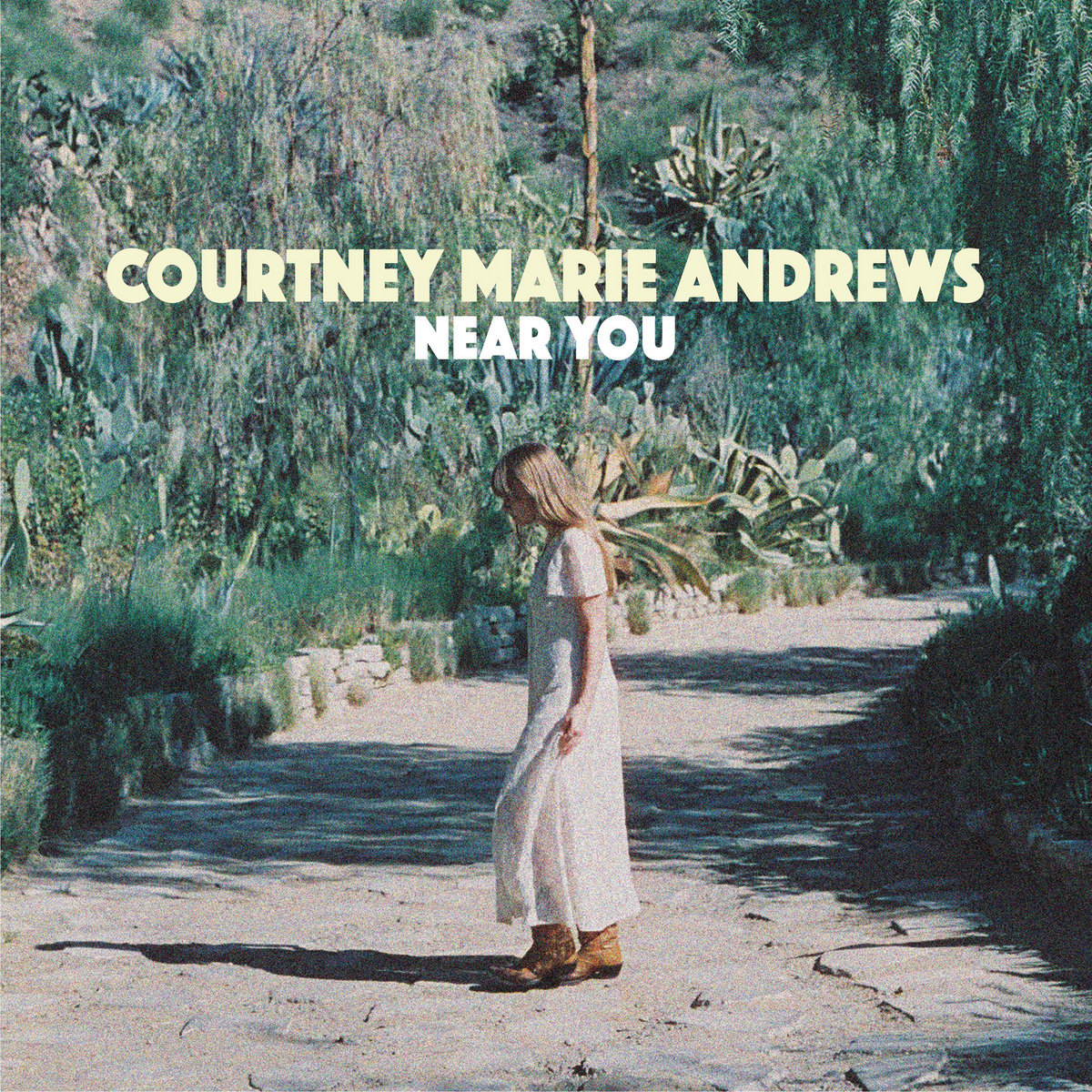
Look for ‘Honest Life’ in independent record stores on September 15th An exclusive colour LP with a bonus 7″ that includes “Near You”.
‘Irene’ from the album Honest Life. Available now from Mama Bird Recording Co. / Fat Possum Records:








 The Fat Angel Sings