The rare and estimable ability to create both catchy, bite size singles that sounded great on the radio, and sophisticated, ambitious album content, That was never better illustrated than in the hands of 10cc. By the time they reached their third long player, ‘The Original Soundtrack,’ that skill had become second nature to these four innovative British musicians. The album is marking the 40th anniversary of its debut, on March 22, 1975.
Produced as usual by 10cc themselves, the record would soon have the calling card of a typically amusing and irreverent hit single, ‘Life Is A Minestrone.’ Within a few weeks of that reaching No. 7 in the UK, clamour for ‘I’m Not In Love’ to be released as a swift follow-up led to that extraordinary ballad racing to No. 1.
The album itself showed 10cc in their most confident and expansive form to date, opening with the episodic Kevin Godley and Lol Crème composition ‘Une Nuit A Paris,’ all eight minutes and 40 seconds of it. For all of the band’s pop sensibilities, ‘The Original Soundtrack’ contained some dark lyrical themes, addressing the pornography trade on Graham Gouldman and Eric Stewart’s ‘Blackmail’ and the drug trafficking industry on their ‘Flying Junk.’
‘Soundtrack’ debuted on the British album survey at No. 6 and spent its first ten weeks inside the top ten, peaking at No. 3 in the ninth of those, in May. It stayed in the top 40 all the way into October, reappearing intermittently until well over a year after its release. The LP’s aggregate of 40 weeks on the bestsellers remained the best tally of 10cc’s career.
The New Musical Express critic Charles Shaar Murray, notoriously ascerbic in much of his writing, was fulsome in his praise, marveling at 10cc’s creative autonomy on ‘The Original Soundtrack.’ “Once they scuttle into Strawberry Studios,” he wrote, “and get stuck into their composing, arranging, producing, engineering, overdubbing, compressing, mixing and so on and so forth, they mess your mind around a treat.”
“Sitting on a park bench…” It’s one of the iconic opening lines in rock music, set against one of its most distinctive riffs, the listener’s introduction to the world of Jethro Tull’s “Aqualung“, released on March 19th, 1971.
Jethro Tull’s, “Aqualung” most famous sound Dun dah-dah, dah DUN DUN, allowed Ian Anderson and company to make an album that was two concepts in one. Side A is about some perv street person and Side B is a rumination on organized religion. This split is also reflective of the accompanying music: one part hard rock and one part British folk. Dun dah-dah, dah DUN DUN. “Aqualung” features Ian Anderson on his distinctive flute, acoustic guitar and vocals; Martin Barre on electric guitar; and Clive Bunker on drums and percussion for what would be his final album with the band. Rounding out the line-up were newer recruits John Evan on keyboards and Jeffrey Hammond,
Jethro Tull had already hit the top spot on the U.K. album charts with their 1969 release, “Stand Up“, Their third album, 1970’s “Benefit”, came close to the U.S. Top 10, but stopped one mark short, landing at No. 11. It wasn’t until the band issued their landmark album “Aqualung” in 1971 mainstream acceptance flung open in a big way. The album, a deft mix of pastoral folk-rock, thundering proto-metal and nascent prog, is generally regarded as Jethro Tull’s undisputed masterpiece. But as Ian Anderson wasn’t initially sure that the record’s broad blend of styles was a slam-dunk.
“We were getting quite esoteric on the album, and I felt that we might have pushed things too far in that regard,” he says. “What gets you noticed in one territory might not have the same appeal elsewhere. The record had a lot of more acoustic singer-songwriter material on it, and Jethro Tull had become thought of as more of a rock band. The riffy rock material had a pretty immediate appeal to live audiences, so I felt reasonably confident and gratified. But you never know until you put it out, and then the record did very well, so it all worked.”
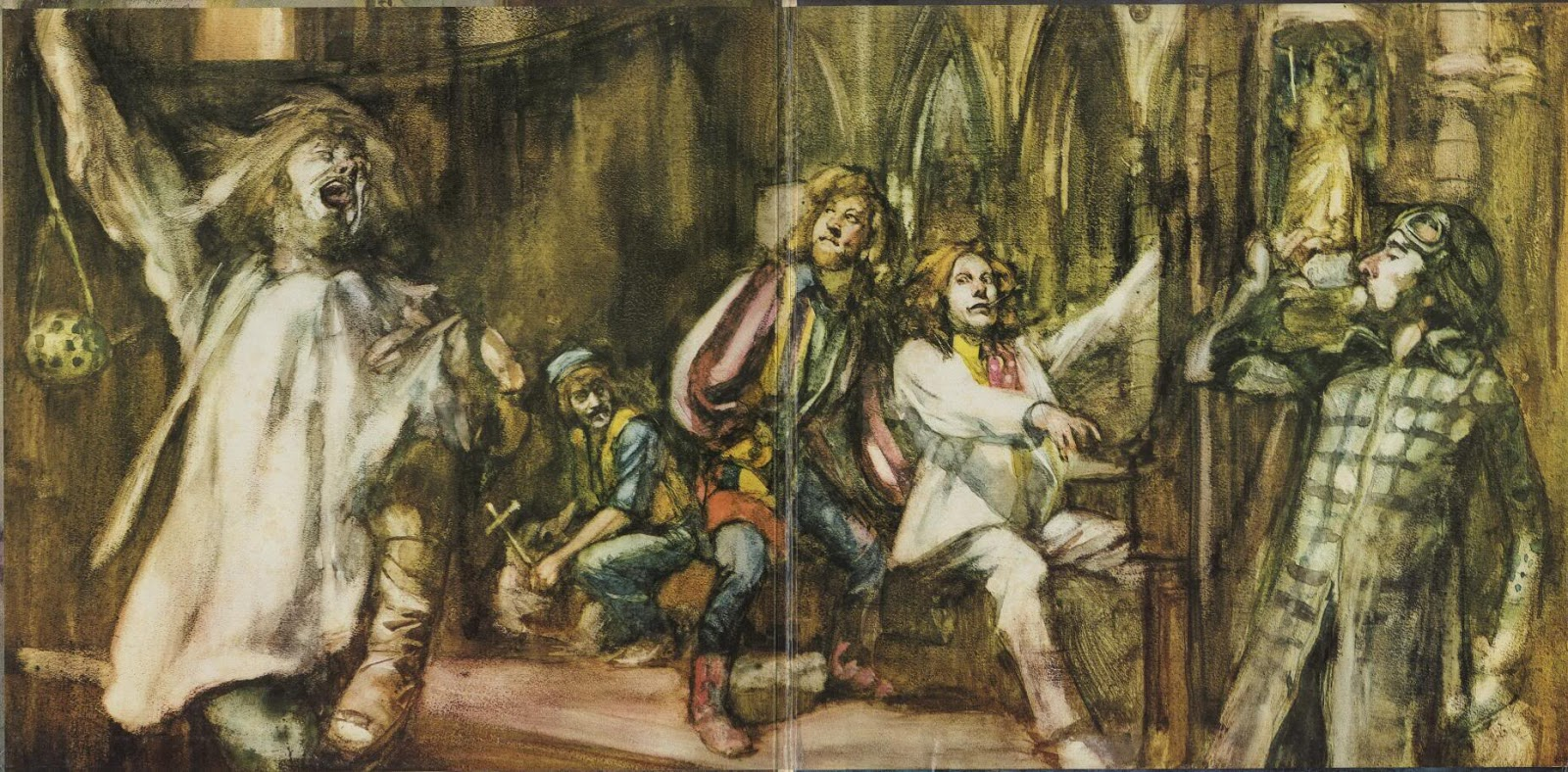
It was never a concept album in my eyes said Anderson. Yes, it certainly set out with the idea that there would be a few songs that kind of hung together, but there were a whole bunch of songs that didn’t have anything to do with the others. When it came to the artwork for the album cover, which I rather left in terms of the pictorial images to our then manager, Terry Ellis, I thought that that would be best illustrated in terms of text by trying to give it some sense of order, by making it hang together a little bit more as a package. I guess that’s what made people think it was a concept album.
There were just a few songs as I say that were in a similar vein and on a general topic of, I suppose, religion and growing up, and I still to this day would not call it a concept album by any means. Of course, speaking to the concept album question, I said, “I’m going to get my comeuppance next time around,” and we did with “Thick as a Brick“, something quite surreal and preposterous—and we got away with it. [Laughs]
‘Aqualung’ has some incredible riffs, like the title track, “Hymn 43″, “Cross-Eyed Mary” and “Locomotive Breath“. They all began very much on the acoustic guitar, and then you try to imagine taking them into the world of large-scale rock rather than hearing them as singer-songwriter acoustic-y things.
This was the first album with keyboardist John Evan as a full-time member, the first with bassist Jeffrey Hammond, and it was the last album with drummer Clive Bunker. Anderson commented It was a rather dark mood, actually, and it was a bit frustrating for me because the recording was being done in the then new Basing Street Studios, which was a converted church that Island Records had bought and turned into a pair of studios. Led Zeppelin were working in the smaller studio downstairs, which is a much nicer acoustic room, much cosier and more like a proper recording studio. Upstairs it was the big, cavernous church hall, which had a rather spooky and threatening atmosphere. It was quite difficult acoustically and technically there were problems and shakedown issues with the equipment and wiring. It was a real struggle.
The contrast between the tramp’s socially unacceptable behaviour and the descriptions of his condition—his “leg hurting bad as he bends to pick a dog-end” and his reliance on the Salvation Army for comfort—is mirrored by the musical complexity. Anderson’s vocals are at once grisly and howling, then delicate and soft. Meanwhile, the band channels heavy rock, with Barre delivering searing riffs and solos. They point to their blues roots, then alternate to folksy intimacy. That’s not to mention the stark contrast between heavy rock instrumentation and Anderson’s flute. As an opener, it’s an introduction to the revitalized Jethro Tull, to their story-based songs, and to the themes that would carry on through the album.
The beginning tells the story of the character “Aqualung”. It’s an unforgettable Jethro Tull song as is “Cross-Eyed Mary”, kicking off the album on a strong note. There are many primarily acoustic tracks like “Cheap Day Return”, “Wand’ring Aloud”, “Slipstream” which are short and sweet and act as “bridges” between the main songs.
Some personal favourites include “Mother Goose” (actually one of my all time favourite Jethro Tull songs), “My God” and the adrenaline releasing “Locomotive Breath”, with their great folky melodies and arrangements.
It’s followed by perhaps the most personal song on the album, a love ballad called “Wond’ring Aloud.” “We are our own saviours as we start both our hearts beating life into each other,” Anderson sings against his acoustic strumming, punctuated by orchestral swells and the occasional weaving piano line. The song was originally recorded as a seven-minute epic, leftover pieces of which can be heard on “Wond’ring Again” on the 1972 compilation album “Living in the Past”. A complete alternate version of the suite turned up as “Wond’ring Aloud, Again” on a 2011 expanded reissue of “Aqualung“.
The side closes with “Up To Me.” It’s a riff-heavy blues-rock burner featuring winding electric guitar leads against Anderson’s gentle acoustic guitar and snaky flute lines, a perfect contrast to the breezier songs that precede it and a primer for the heavier material to come.
All of which makes it more difficult when you’re trying to convey to other musicians what you’re driving at. We had stepped away from the early Jethro Tull sort of music, and Clive Bunker found it sometimes beyond his points of reference. For Jeffrey Hammond, it was his very first album, so he was kind of just being given a list of notes and told how to play them. I was confident he would get it, but it was a little nerve-racking for him. Here, too, it was a little frustrating for me, trying to convey things to the other guys, which is why I just recorded some things on my own and then they came and overdubbed their bits afterwards.
The brief “Cheap Day Return,” clocking in at just over a minute, shows off Jansch-like guitar figures, along with complementary orchestrations by Dee Palmer. “[It’s] about a day I went to visit my father in hospital in Blackpool,” said Anderson in 1971. “I caught a train at nine, spent four hours traveling, four hours with my father, and four hours to get back again. It was a long song mainly concerned with the railway journey, but the section on the record is about visiting my father.
“Locomotive Breath” was a particularly hard song to record because we just couldn’t get a metronomic, solid feel. It just kept being kind of a bit scrappy and whatever, so I went out and played tambourine or something, or maybe I clicked two drumsticks together or something. I played bass drum and hi-hat all the way through the song, and everybody overdubbed their parts to that. I think I played one of the electric guitar parts as well, just to try and get something that would convey the feel of the song to the other guys. Then John went out and recorded the introduction part, which we edited onto the body of the song. But yeah, it wasn’t a great atmosphere. By the end of it, I was quite relieved to get out of there.
When you were working on the record, did members of Zeppelin ever drop by? Did you pop into their sessions at all?. I think I might have popped my head downstairs. Some people quite like it when they get visitors, and they rather enjoy the camaraderie, but I felt like it would be very intrusive to go in while somebody else is doing a session, whether they’re working on a backing track or doing overdubs or whatever.
Once or twice we did manage to get some work done in the studio downstairs when Zeppelin weren’t in. The only time I remember seeing anybody from that band is when Jimmy Page came in when MartinBarre was recording the guitar solo for “Aqualung,” and Jimmy sort of was standing behind me in the control room and waving some support to Martin.
‘Aqualung’ has gone on to be the band’s biggest seller. Are you OK with that, or do you wish that distinction were for a different record? Well, I’m glad it was that album and not some other ones. It was at a time when there was kind of a maturity coming about in terms of my writing and my understanding of music, so for me it was a very important album. It marked my move towards a more dynamic range in music, my understanding of creating more tension between loud and quiet passages, between simple and more complex pieces. Anderson says I’m very happy how successful ‘Aqualung’ has been. It wasn’t a huge hit out of the box, but it was a steady seller over the years, and that continues to this day. It’s clocked up a lot of mileage, which has put it in that sort of top echelon of rock albums from that era. I’m quite happy with how it’s regarded.
The album was inspired by photographs of homeless people on the Thames Embankment taken by singer Ian Anderson’s wife Jennie.
A great classic album. Like Ian Anderson said, this isn’t a concept album (like the follow up was) but just a bunch of songs. What an excellent bunch of songs though! Overall, it’s much more engaging than “Benefit” and although the song writing is just as good, the music has a different feel to it. “Aqualung” is much fresher, more inspiring and heartsome.
“Aqualung” has sold more than 7 million units worldwide according to Anderson, and is thus Jethro Tull’s best selling album. The album was generally well-received critically, and has been included on several music magazine best of lists. The album spawned one single, “Hymn 43”.
“Aqualung” explodes like “Jesus Christ Superstar” sitting on a keg of dynamite, here starring IanAnderson as our self-appointed conscience. The light and dark tones of “Benefit” are put into sharper relief this time by alternating disarming acoustic songs with a theosophical din of diabolical intent. The addition of Jeffery Hammond-Hammond on bass (yes, the very same “JEFFREY” chronicled on their earlier albums) doesn’t change the sound of Tull much, nor does the full-time addition of John Evan, who gets buried in the band’s sonic onslaught most of the time. Ian Anderson the performer and “Aqualung” the character may be alarming to some, but wasn’t it just a natural outcropping of the rock opera movement? Music fans proved they were interested in the persona as much as the player, and Anderson gave them something to think about: a composite sketch of a demigod drawn from Jesus, Loki, and Merlin among others. It’s just that songs like “Aqualung”, “Cross-Eyed Mary, “Hymn #43” and “Locomotive Breath” are such epic clashes of morality and reality that “Aqualung” assumes the scale of a Greek tragedy. The acoustic breaks are sometimes no more than lovely little bits of fluff (“Cheap Day Return”, “Wond’ring Aloud”) and sometimes a mortal analysis of the world around us (“Mother Goose”, “Wind-Up”).
The closing track, “Wind Up,” is the culmination of all the ideas that had run thorough the album so far, but more directly a condemnation of organized religion as a charade and its influence on youth. As Anderson recalled in a February 1971 interview, “[My parents] sent me to Sunday school when I was young but I rebelled after the first visit and I was never forced back. I think my parents are the exception, though, and there is so much religion today forced onto children simply by virtue of their parents’ race or creed—and that in itself is inherently wrong.” Here, he describes religion as an action done to erase sins, something that becomes a performative ritual, but is never truly embraced as a pathway to enlightenment. “To me, religion is something that you grow up to find in your own way,” he said to NME in March 1971. “I am sure that a lot of other people believe in God the same as I do, that faith is a form of goodness around which you relate your life.”
“Aqualung” is a great leap from songwriter to storyteller, though some felt Tull slipped too far into the fabled woods for the inscrutable “Thick As ABrick” and “Passion Play”.
Jethro Tull released their 4th LP titled “Aqualung” on March 18th, 1971. Many people have thought that it was a concept album, but the band strongly disagrees with the thought. The records success marked a turning point in the band’s career, who went on to become a major radio and touring act.
“Aqualung” would be a very memorable addition to your collection. 5 shining stars.
On this day March 10th in 1978 Manchester and UK punk band The Buzzcocks released their debut album, Recorded & mixed at Olympic Studios in London December 1977/January 1978 ‘ Another Music in a Different Kitchen‘, on United Artists Records.
The original UK vinyl is issued with a black cardboard inner sleeve, with color photo on front cover. Subsequent pressings substituted a black and white photo. The initial few thousand copies shipped in a matching silver-grey outer ‘PRODUCT‘ shopping bag. The album was originally conceived with the track “I Need” on side one; but after a test pressing was made, the group felt the song should appear on the second side. A mix-up occurred at the pressing plant, and, as a consequence, some early copies of the album contained no “I Need” at all.
A blue vinyl version was re-released around 1986. The corresponding CD was released in March 1994 on the same record label. An undated songbook was published (VR 8003 2) with sheet music from the album, band photos, brief biographical material, and discography which includes the band’s second release, UAG 30197 “Love Bites”. As such, it would have been released after 22nd September 1978 the release date of “Love Bites”. In keeping with other releases, the line “Agreed Images” appears on the back cover below the stocking number.
It featured the band’s second line-up, with Pete Shelley handling lead vocals following the departure of their original frontman, Howard Devoto; the album included the single “I Don’t Mind”, which would reach UK #55; to promo the LP, Virgin Record Stores in London, Leeds, Liverpool, Manchester & Newcastle each released 500 helium-filled balloons containing coupons for a free copy . The term “perfect pop” is misused to hell, because it’s mostly applied to bands that never went near the charts; but Buzzcocks were pop, in that they consistently had top 20 singles. In Pete Shelley – angelic, sexually ambiguous, eyebrow-raised – they had one of the best songwriters of the time, and in Steve Diggle – loud, mod, a bit barky – they had his perfect foil, and a man also capable of great songwriting. The songs are all brilliant pop tunes in the classic style, but with lyrics whose doomed romanticism would put John Lennon to shame, and the kind of riffs that only a Stooges and T.Rex fan could write. From I Don’t Mind’s woozy declaration that “reality’s a dream” to Sixteen’s stentorian “And I hate modern music! Disco! Boogie! Pop!”, Another Music… was as melodic as pop has ever been and as honest and real as any plaid-faced grunge act.
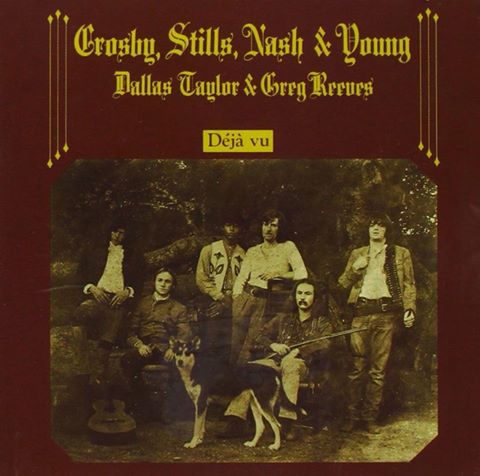
Along with many other people, I had hoped that the addition of Neil Young to Crosby, Stills, and Nash would give their music the guts and substance which the first album lacked. Live performances of the group suggested that this had happened. Neil Young’s voice, guitar, compositions and stage presence added elements of darkness and mystery to songs which had previously dripped a kind of saccharine sweetness. Unfortunately, little of this influence carried over into the recording sessions for Déjà Vu. Despite Young’s formidable job on many of the cuts, the basic sound hasn’t changed a whit. It’s still sweet, too soothing, too perfect, and too good to be true at times.
Take for example all of side two. Here we have a splendid showcase of all the Crosby, Stills, Nash, and Young strong points — precision playing, glittering harmonies, a relaxed but forceful rhythm, and impeccable twelve-string guitars. David Crosby’s “Deja Vu” fails totally to capture the eerie feeling that accompanies a real deja vu experience. “Our House” by Graham Nash is a flyweight ditty with nothing to say and makes this clear through its simpering melody. Steve Stills’ “4+20” conjures up some quiet enigmas, but with such tepid questions at stake, who really cares? Neil Young’s “Country Girl” continues his tradition of massive production numbers which includes the masterful “Broken Arrow” and “Down By The River.” But compared to his earlier work, the piece is sadly undistinguished. In both this song and the next one, “Everybody I Love You,” Young’s voice is absorbed in the major key barbershop harmonizing of the other singers. C, S, N and Y
The heralded leather cover turns out to be nothing more than crimpled cardboard. fake leatherette! The grainy portrait of the “Old West” characters on the cover looks less like Billy the Kid, the James Gang and Buffalo Bill than the waiting room for unemployed extras for Frontier Atmosphere Inc. “Now then, which of you desperados is next?”
There is much on this album of real merit. “Helpless,” “Carry On” and “Teach Your Children” are excellent songs,and really well performed. Crosby, Stills and Nash — plus or minus Neil Young — will probably remain the band that asks the question, “What can we do that would be really heavy?” And then answers, “How about something by Joni Mitchell?”
Déjà vu was greatly anticipated after the popularity of the first CSN album and given the addition of Young to the group. Stills estimates that the album took around 800 hours of studio time to record; this figure may be exaggerated, even though the individual tracks display meticulous attention to detail. The songs, except for “Woodstock”, were recorded as individual sessions by each member, with each contributing whatever was needed that could be agreed upon. Young does not appear on all of the tracks, and drummer Dallas Taylor and bassist Greg Reevesare credited on the cover with their names in slightly smaller typeface. Jerry Garcia played pedal steel on “Teach Your Children” and John Sebastian plays harmonica on the title track.
Four singles were released from the album with all but the last, “Carry On,” charting . The popularity of the album contributed to the success of the four albums released by each of the members in the wake of Déjà vu — NeilYoung’s “After the Gold Rush2, Stephen Stills’ self-titled solo debut, David Crosby’s “If I Could Only Remember My Name“, and Graham Nash’s “Songs for Beginners“.
The album ranked at No14 for the Top 100 Albums of 1970 The album was reissued on compact disc on September 6,th 1994 after being remastered from the original tapes at Ocean View Digital by Joe Gastwirt.
On this day March. 10th in 1973: Pink Floyd released their 8th studio album, ‘The Dark Side Of The Moon’, on Harvest Records; it would remain on the American charts for 741 non-continuous weeks between 1973-88, longer than any other album in history; after moving to the Billboard Top Pop Catalog Chart, the album notched up a further 759 weeks, reaching a total of over 1,500 weeks on the combined charts by May 2006; with an estimated 45 million copies sold, it is the group’s most commercially successful album & one of the best-selling albums worldwide… Originally released in 1973, The Dark Side of The Moon became Pink Floyd’s first number one album in the US, The Dark Side of The Moon also introduced the iconic album cover artwork by Hipgnosis, after a request for a ‘simple and bold’ design. The new Discovery version presents the original studio album, digitally remastered by James Guthrie and reissued with newly designed Digipak and a new 12 page booklet designed by Storm Thorgerson. The band members spent three minutes deciding on the front cover. Designer Storm Thorgerson brought seven designs into the Abbey Road studio where they were still recording. “The band trooped in, swept their gaze across the designs, looked at each other, nodded, and said ‘That one,’ pointing at the prism. Took all of three minutes,” Thorgerson recalled in liner notes for the 2011 deluxe box. In an 2003 interview, the designer elaborated, “No amount of cajoling would get them to consider any other contender, nor endure further explanation of the prism, or how exactly it might look. ‘That’s it,’ they said in unison, ‘we’ve got to get back to real work,’ and returned forthwith to the studio upstairs.”
“Money” was influenced by… Booker T and the MGs? Though the basis of the song is a blues progression written by Waters, Gilmour has said he brought an R&B influence to the song’s instrumental breaks. “I was a big Booker T fan,” said Gilmour. “I had the Green Onions album when I was a teenager. And in my previous band… we played ‘Green Onions’ onstage… It was something I thought we could incorporate into our sound without anyone spotting where the influence had come from. And to me, it worked. The opening “song,” “Speak to Me,” is credited solely to drummer Nick Mason, something Waters has insisted was an act of charity.
“Us and Them” was originally written and submitted three years earlier for the soundtrack of the film Zabriskie Point. Antonioni’s loss was Dark Side’s gain. “We wanted to put it on Zabriskie Point, on the sequence where they’re having the riots and the police beating heads on UCLA campus; the counterpoint between that slow, rather beautiful music and this violence going on was great,” said Gilmour.
“Breathe” emerged from a song of the same name that Waters wrote for the soundtrack of a documentary called The Body, also three years earlier.
Torry’s main direction: sing for several minutes, and don’t sing any words. Waters recalled, “Clare came into the studio one day, and we said, ‘There’s no lyrics. It’s about dying—have a bit of a sing on that, girl.’ I think she only did one take. And we all said, ‘Wow, that’s that done. Here’s your 60 quid.’” (By Torry’s recollection, it was two and a half takes, and 30 quid.) It was engineer Alan Parsons’ idea to bring Torry in for the “Gig” vocal. Parsons claims he heard her singing a cover of “Light My Fire”—although she disputes that, claiming she never sang the Doors’ song in her life. At the time she got the call, the only Pink Floyd song she knew was “See Emily Play,” “and that didn’t really hit the spot with me,” she said. “They weren’t my favorite band. If it had been the Kinks, I’d have been over the moon.”
In 2005, the classic lineup reunited for one mini-set at Live 8. This one-time gig included three songs from “Dark Side (“Speak to Me,” “Breathe,” and “Money”) as well as two later choices (“Comfortably Numb,” “Wish You Were Here”). Shall we say this was a landmark album?
It is one of the best-selling albums of all time. The album has had numerous full-length cover versions.Phish and Dream Theater are among the bands who’ve covered the album in its entirety in concert, and the Flaming Lips released a studio version of their take on the album. There have been bluegrass, a cappella, and string-quartet album versions, not to mention the notorious, reggae-died Dub Side of the Moon.
The clue was in the title. ‘Psychedelic Shack’ was the album that completed The Temptations’ journey into a more experimental sound, heavily influenced by psychedelic rock and by their adventurous producer, Norman Whitfield. It was released by Motown Records 45 years ago precisely, on March 6th in 1970.
That progression had started with the release late in 1968 of the ‘Cloud Nine’ single, a No. 2 R&B hit in the States that was followed by ‘Run Away Child, Running Wild’ early in the new year. Soon after the ‘Cloud Nine’ album appeared in February ‘69, that new single went to the top of the soul chart and showed beyond any doubt that the Temptations were taking their fans with them, on this journey from their traditional Tamla sound into a more modern style reflecting the rock flavours of the day.
That said, the ‘Cloud Nine’ album still had plenty of more old-school Temptations material; it was the ‘Puzzle People’ collaboration with Whitfield later in 1969 that continued the transition, housing the big hits ‘Don’t Let The Joneses Get You Down’ and the huge crossover ‘I Can’t Get Next To You,’ which topped both the R&B and pop surveys.
Then the ‘Psychedelic Shack’ single, written by Whitfield with his regular partner Barrett Strong, showed the group leaving the 1960s in their grooviest form yet. All of the group starred in its vocals, with a notable bass part for Otis Williams and a futuristic feel to both the song and the production.
The album, completely written by Whitfield and Strong, was equally adventurous. With Dennis Edwards and Eddie Kendricks sharing lead vocals, it came out while ‘Shack’ was riding the singles charts. That was its only single, but this was also the album that contained the Tempts’ version of ‘War,’ the song which Berry Gordy famously diverted into the path of Edwin Starr as a single because of its socially aware lyrics. The album also included ‘Take A Stroll Thru Your Mind’ and ‘You Make Your Own Heaven and Hell Right Here On Earth.’
Even if the Temptations missed out on that ‘War’ singles glory, as Starr’s version climbed the charts worldwide, the ‘Psychedelic Shack’ album became another assured hit. By mid-April 1970, it was starting a four-week run atop the R&B chart, and reached No. 9 on the pop survey.
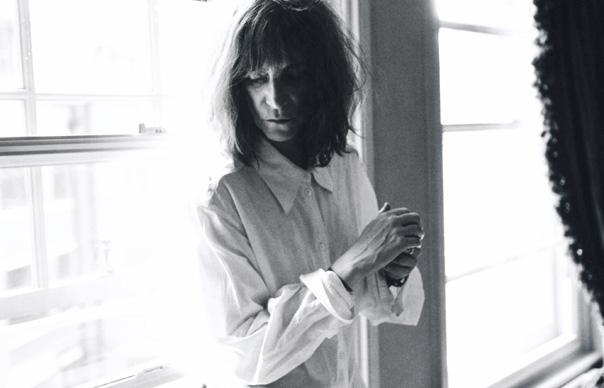
Patti Smith is to celebrate the classic album and her breakthrough debut “Horses” recorded at Electric Lady Studios in New York and also featured Televisions Tom Verlaine and Blue Oyster Cult’s Allen Lanier and released in 1975 . Horses 40th anniversary with a series of Gigs and events in Paris, London and New York, the date is November 10th as its a true milestone recording the original album was due to be released on October 20th the birth date of poet Arthur Rimbaud the 19th century poet, but due to shortages of vinyl at that time the date was put back to November 10th which was the anniversary of Rimbauds death the album that contained the single “Gloria” and also concert staples like “Redondo Beach” and “Free Money” and “Kimberly” the band still features guitarist Lenny Kaye drummer Jay Dee Daughtery both of whom played on “Horses” , when the 30th Legacy edition was re-issued a second live album recorded in the The Royal Festival Hall at the Meltdown Festival in 2005 was include with the same running order. Also Patti is finishing a new book a follow up after the “Just Kids” which profiled her relationship with photographer Robert Mapplethorpe from 2010.
Horses was one of the most important albums for me when I bought it I played it non stop for months, it has a great live feel to it too,
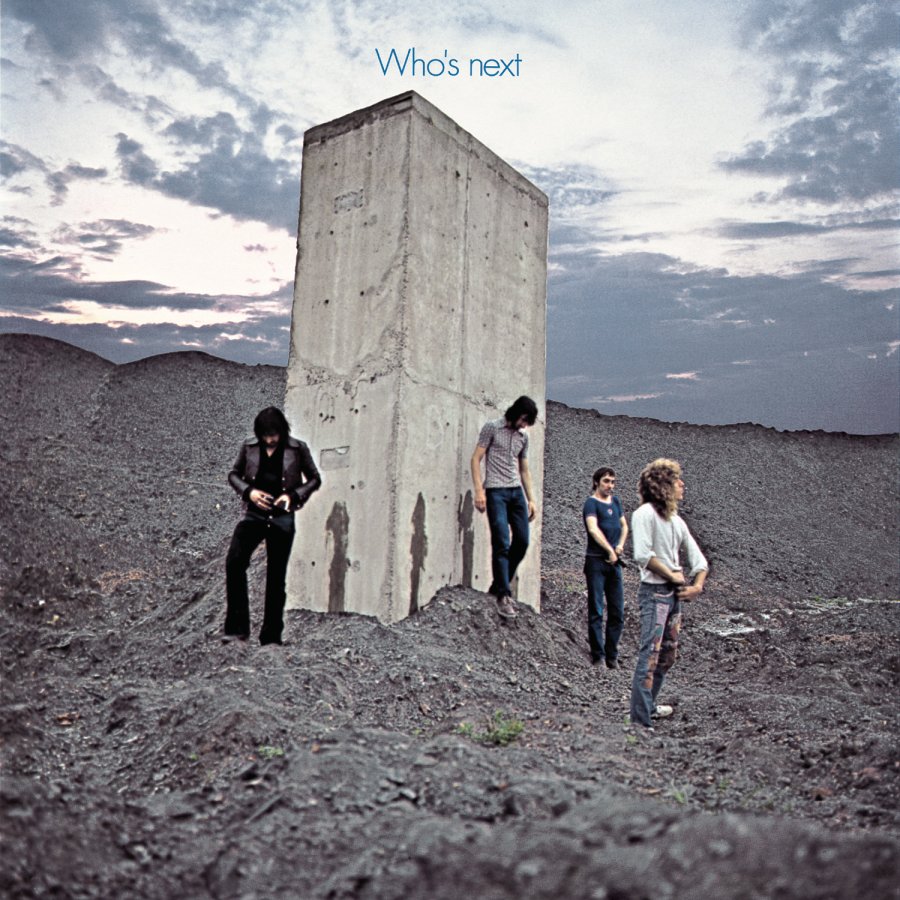
The Who released this album WHO’S NEXT on the 13th August 1971 featuring the classic songs “Won’t Get Fooled Again” and “Baba O’Reilly” both still in their live set, Roger Daltrys incredible vocalon “The Song Is Over” and “Bargain” John Entwhistles song “My Wife” and Pete Townshends ballad “Behind Blue Eyes” . Recorded at London Olympic Studios between March-May 1971 and produced by the Who and Glyn Johns . With parts of the Album coming from Pete’s “Lifehouse” a further sci-fi rock opera project which did’nt come to fruition became the fifth studio album and almost certainally their most instant accesible finest record. the Who’s sound changed with Townshend become infatuated with the fairly devolping sound of the synthesiser during the recording of the album adding texture and amplifying the sound. Named as one of the best rock albums of all time and one of Classic Guitars best ever albums and featured in the VH1 “Classic Albums” series
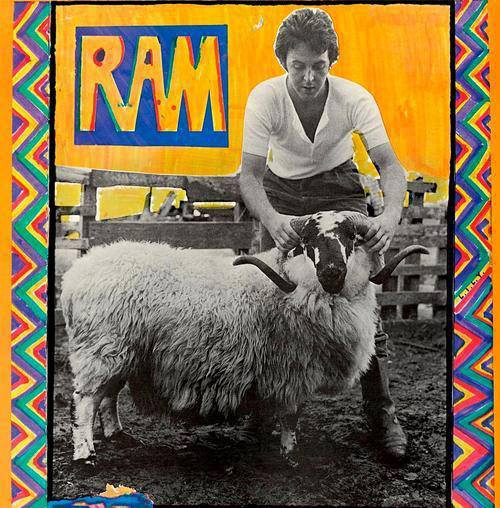
Paul and Linda McCartney released the album RAM, the second solo album from McCartney after the acrimonious Beatles Split and the ongoing issues within the management and legal side and the formation of the band WINGS, recorded between November 1970 and April 1971 at Columbia Studios and AR Studios in New York City.
The song “RAM ON” from the albums first side was reprised on the second side before the final track in a similar vein to the Beatles “Abbey Road” album medley . there were three singles issued “Uncle Albert/Admiral Halsey”, “The Back Seat Of My Car” and the song “Eat At Hope” . Reviews were harsh at the time and Lennon had spoken that it was Muzak to his ears, but decades later the album has received praise for its big melodies and orchestral trippery.
check out music blog site Aquarium Drunkard who released a LA band members cover of the whole album.






 The Fat Angel Sings