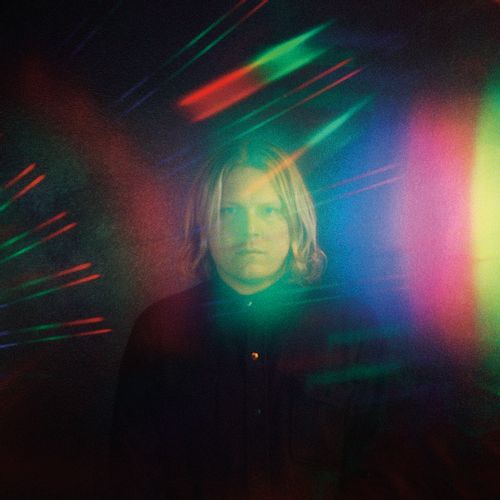
Phoebe Bridgers has recruited Glitch Gum, Bartees Strange, and The Marias different remixes of her song “Kyoto.”
Phoebe Bridgers wrote her first song at age 11, spent her adolescence at open mic nights, and busked through her teenage years at farmers markets in her native Los Angeles. By age 20, she’d caught the ear of Ryan Adams, who listened to her perform her song “Killer” and invited her to record it in his studio the next day. The session grew into the three-song ‘Killer’ EP, and she hasn’t looked back since.
Kyoto” first appeared on Bridgers’ 2020 album “Punisher“. The Glitch Gum version of the song came about after the teen hyperpop producer covered the song last year and his version caught Bridgers’ attention. Bartees Strange and The Marias have more personal connections to the artist, with Strange set to support act on her forthcoming tour
Speaking about their take on the song, The Marias said in a statement: “I remember seeing Phoebe years ago at an open mic here in Los Angeles, and I knew right off the bat that she was really special. Working on this remix was a sort of full circle moment for us. ‘Kyoto’ is an amazing song as-is, so with the remix we were just curious to see what it would sound like with the vocal slowed down and adding some of our favourite synth sounds behind it.”.
Just when it seemed like the US had ceded garage rock – which we invented – to Scandinavia (and Australia), the White Stripes roared to life and proved Detroit still had the goods. After releasing several singles and three albums within the Detroit music scene, the White Stripes rose to prominence in 2002 as part of the garage rock scene.
The White Stripes released their first album in 1999 with their self-titled set. It introduced an eccentric but valid band with bluesy-styled and honest approaches to their original songs. Over time, the duo released six albums, their last being “Icky Thump” in 2007. Last year, the band celebrated the history of The White Stripes with a “Greatest Hits” package released a limited edition collectible vinyl. However, Legacy Recordings will re-release the Third Man RecordsWhite Stripes catalogue to brand the previous WB issues with the Legacy brand. There will be no added extras or anything.
The White Stripes used a low fidelity approach to writing and recording. Their music featured a melding of garage rock and blues influences and a raw simplicity of composition, arrangement, and performance. The duo were also noted for their fashion and design aesthetic which featured a simple colour scheme of red, white, and black—which was used on every album and single cover the band released.
Jack White aka (John Anthony Gillis), who first came to prominence as guitarist-vocalist with Detroit, Michigan garage rock revivalist duo, The Dude’s done so much stuff that it’s hard to keep track. After all, White is a musician, record label owner, sculptor, upholsterer, Raconteur, troubadour, (ill-advised) rapper, graphic designer and Lord knows what else. So like, statistically, he probably invented guitars as well.
But before he got into all that he was half of one of the greatest rock bands of all time. Jack played in The White Stripes alongside Meg White, his now ex-partner (though the rumour for a long time was that they were brother and sister).
Jack is obviously a creative whirlwind capable of doing anything he sets his mind to. This vital energy was ever present throughout The White Stripes’ career, but as his subsequent solo material has shown, creativity which is that unpredictable can benefit from being reigned in and focussed some.
This was where Meg came in. She was often mocked for the supposed simplicity of her drumming, but Meg was the guide rail which ensured that the band maintained their powerful minimalism. It was a drive which ran through six remarkably consistent albums that, even at their least good, still hold up better than Jack’s solo work.
The White Stripes
In 1999, the White Stripes signed with the California-based label Sympathy for the Record Industry. In March 1999, they released the single “The Big Three Killed My Baby”, followed by their debut album, “The White Stripes”, on June 15, 1999.
The self-titled debut was produced by Jack and engineered by Jim Diamond at his Ghetto Recorders studio in Detroit. The album was dedicated to the seminal Mississippi Delta Blues musician, Son House an artist who greatly influenced Jack.
The track “Cannon” from The White Stripes contains part of an acapella version, as performed by House, of the traditional American gospel Blues song “John The Revelator”. The White Stripes also covered House’s song “Death Letter” on their follow-up album “De Stijl.”
Looking back on their debut during a 2003 interview with guitar player, Jack said, “I still feel we’ve never topped our first album. It’s the most raw, the most powerful, and the most Detroit-sounding record we’ve made.
White’s voice is a singular, evocative combination of punk, metal, blues, and American backwoods while his guitar work is grand and banging with just enough lyrical touches of Slide and subtle solo work… Meg White balances out the fretwork and the fretting with methodical, spare, and booming cymbal bass drum, and snare.
De Stijl
While I have a lot of love for the band’s eponymous debut album (1999), it doesn’t quite feel like a proper White Stripes LP. While their debut established the template for the group’s blues/rock/punk hybrid, this was a record made by two musicians very much in the thrall of their influences and less willing to get as weird and varied as they did subsequently.
Second album ‘De Stijl’ (2000) is much more apiece with the rest of their discography. It still has loads of the garage-band bite that made their debut so exciting, but alongside vicious blues numbers such as ‘Hello Operator’ and ‘Jumble, Jumble’ The White Stripes started playing with the softer melodies in songs like ‘Apple Blossom’ and ‘Sister,Do You Know My Name’. Those more naive sounds would become a core part of their style as time went by.
The album ends with a sublime cover of Blind Willie McTell’s ‘Your Southern Can Is Mine’, a tune which is also noteworthy for being the first time you hear Meg singing on a White Stripes track. The band’s vocal dynamics more or less replicate the instrumental balance of power – opposite Jack’s squall, Meg’s controlled singing makes for something of a balm. Meg would sing on a few more songs before her and Jack went their separate ways, and each time she did it made for an album highlight. Only two LPs in, it was already possible to imagine The White Stripes taking over the world.
White Blood Cells
Across sixteen tracks and forty minutes, The White Stripes’ third album masterfully balances the band’s ear for melody with more leftfield impulses. As well as featuring relatively straightforward garage-rock forever-classics like ‘Fell In Love With A Girl’, it’s the weirder moments of ‘White Blood Cells’ that have really got their hooks into me. ‘The Union Forever’, for instance – built on open chords and a droning organ, this track sees Jack essentially reading out lines from ‘Citizen Kane’ verbatim. Or ‘Aluminium’, a cut which is just one ridiculously heavy metal (lol) riff repeated ad nauseum while Jack wails into some sort of effects pedal.
‘White Blood Cells’ has gone platinum in the UK and the USA, a fact which suggests that the listening public have a slightly higher tolerance for self-consciously strange music than they are often given credit for. That said, this was also the last time that The White Stripes would sound like a scrappy garage-rock outfit.
They recorded the whole thing in a single four-day blitz, and while it was the first time they had used a twenty-four-track recording studio Jack pointedly asked the engineer “not to make it sound too good.” It doesn’t, which conversely means that it does.
Elephant
As its name implies, ‘Elephant’ is the big one. I’m not sure I can think of a single other song that is as ubiquitous as this album’s runaway lead single ‘Seven Nation Army’ – it’s sung the world over at sport events and political rallies, and to this day it remains one of the tracks Jack White plays most at his own shows. ‘Seven Nation Army’ might be even more ubiquitous than anything by Queen or the Beatles, and I’m sure there are people who will readily sing it without knowing who made it or where it came from.
True, ‘Seven Nation Army’ is a banger, but don’t let it distract you from the rest of ‘Elephant’. For one thing, this album features some of my favourite guitar solos in rock music – I can sing them all in full. ‘Ball and Biscuit’ presents itself as a pretty standard White Stripes blues groove but stretches itself out across seven-and-a-half minutes by inserting these disgustingly opulent solos in between the verses. While neither the fastest or flashiest shredding you’ll ever hear, the way Jack plays these licks, as though he’s coaxing blood out of a stone, imbues them with this rawness and physicality that feels almost like he’s beating you up.
Part of the reason ‘Elephant’ hits like it does is because the production is that much meatier than on their previous outings. Recorded in the all-analogue (of course) Toe Rag Studios in London, The White Stripes sound stadium-ready here in a way they’d not done before – which is apt, because just two years later they’d be headlining Glastonbury.
Get Behind Me Satan
It wasn’t unheard of for The White Stripes to play a bit of piano on their records – it’s the only instrument on ‘White Blood Cells’ incredibly moving closer ‘This Protector’ for instance – but they were first and foremost a guitar band. It’s this fact that makes the keys-heavy ‘Get Behind Me Satan’ (2005) such an interesting outlier in their discography.
This LP does open with one of The White Stripes’ most straightforwardly thrilling garage-rock tracks in ‘Blue Orchid’, a tune whose killer riff Jack manages to turn completely lurid through the use of effects pedals. However, after this the guitars really do fade. ‘Blue Orchid’ is followed by the marimba-led ‘The Nurse’ and the euphoric single ‘My Doorbell’, a cut where Jack hammers out bold piano chords with the same vigour Meg had always played her drums. It’s a real joy, and while you could have a good go pogoing to their earlier material ‘My Doorbell’ is probably also the band’s first and best dance single.
It’s refreshing to hear a group, who by this point were being venerated as all-time greats, go out of their way to leave their comfort zone. No-one would ever mistake these songs for being made by anyone else, but by moving the instrument that defined them into the background The White Stripes were able to go places they might not have done otherwise – even if one of those places was being weirdly open about having a crush on Rita Hayworth.
Icky Thump
This was just a ridiculous album to go out on. 2007’s ‘Icky Thump’ takes its name from some Lancashire slang, the artwork sees the pair dressed as a pearly king and queen, and on top of guitars and drums the record features chintzy horns, droning bagpipes … and only a bloody synthesizer! Despite seeing the guitar return to the centre of the song writing, ‘Icky Thump’ feels meaningfully different from the rest of the group’s discography and in many ways stands as a warning about what Jack’s solo work would sound like.
From the artwork downwards this album is straight showing off, The White Stripes performing up to and at their very limit. Jack is well and truly on one here, laying down mean guitar solo after mean guitar solo, each as potent as the riffs themselves. And what riffs! So many beautiful, bold and brash riffs. ‘Little Cream Soda’, for example, sees The White Stripes trying out thrash metal to find out they like it very much indeed – the combination of guitar and Meg’s fatal drumming is just obscenely heavy.
But yes, the fact that ‘Icky Thump’ is a little … eccentric suggests Meg’s hold on Jack’s reigns was starting to slip. Fun as it is, ‘Rag and Bone’ is irredeemably cheesy and Meg sounds embarrassed to be contributing to it. It’s really no surprise that this would be their last album, the pair going their separate ways in 2011. Jack has put some of the blame on Meg’s lack of enthusiasm.
The White Stripes the group’s last three albums ‘Elephant’ (2003); ‘Get Behind Me Satan’ (2005) & ‘Icky Thump’ (2007) each won the Grammy award for ‘Best Alternative Music Album’; UK #1 ‘Elephant’ spent 46 weeks on the UK charts; Jack also formed side projects The Raconteurs & Dead Weather; he is one of the most admired guitarists of the early 21st century & head honcho of his own Nashville-based Third Man Records; after announcing the dissolution of The White Stripes in 2011, Jack released his debut solo album ‘Blunderbuss’ in 2012, followed by ‘Lazaretto’ in 2014 & ‘Boarding House Reach’ in 2018; for his various collaborations & solo work, Jack has won regional, national & international awards, including 12 Grammys; Nashville mayor Karl Dean awarded him the title of ‘Nashville Music City Ambassador’ in 2011; in 2016, he joined Nashville’s 45-member Gender Equality Council.
Legacy will re-release the six albums (The White Stripes – 1999, De Stijl – 2000, White Blood Cells – 2001, Elephant – 2003, Get Behind Me Satan – 2005, Icky Thump – 2007). The DD versions have already been re-released in 2020 so this will be a CD re-release campaign only.
Ty Segall has a new album titled “Harmonizer” that he has just foisted upon the world. The album, his first since 2019’s great “First Taste”, was made at Ty’s new Haronizer studios and co-produced by Cooper Crain. Members of Ty’sFreedom Band — Ben Boye, Mikal Cronin, Emmett Kelly, and Charles Moothart — all appear on the album, as does Ty’s wife, Denée Segall, who co-wrote two of the songs and sings lead on “Feel Good.” She also shot the album’s cover
The surprise new album Harmonizer which he has also released via Drag City Records. The album sees Segall’s sound continue to evolve into a new and unexpected territory. The album sees him lean further into synth production as well as bets, keyboard textures as well as of course guitars. It’s the first recording of Ty’s to be released from Ty’s newly-completed Harmonizer Studios . It’s his first album in forever (two years)! ty glides smoothly into a wild area with a synthtasm of production redesign, dialling up a wealth of new guitar and keyboard settings.
Again, Segall does what HE likes to do. This unexpected album just came out of the blue without any marketing promo. It’s a characteristic Segall record. Some Black Sabbath styled drones, some fuzzing and buzzing stompers, some hazy psycherazza and his partner Denée singing a track called ‘Feel Good’ (she also wrote the lyrics). Yep, it’s Ty by numbers, but his numbers are as usual pretty good.
A seething statement of emotional austerity, harmonizer enraptures the ear, while enabling ty to cut through dense undergrowth, making groove moves for the body, mind and soul. ty glides smoothly into unexpected territory, right where he likes to find himself! responding to the challenge his new songs gave him: a synthtastic production redesign, Ty kicks back with bottom-heavy creativity, dialling up a wealth of guitar and keyboard settings to do the deed. “Harmonizer” is a glossy, barely-precedented sound for him, and truth, it enraptures the ear — but in Ty’s hands, the sound is also a tool that allows him to cut through dense undergrowth, making for some of his cleanest songs and starkest ideas to date. Harmonizer’s production model couches tightly-controlled beats in thick keyboard textures, with direct-input guitar signal whining and buzzing purposefully from left to right. the Freedom band appear all over the record, but often one at a time, their contributions leaving a distinctive footprint on the proceedings wherever they appear.
Operating in this airtight environment with an eye towards precision, feel, and explosive mass, Ty’s crafted a formidable listening encounter — and once you get between the lines, the need to know more grows more compelling with every song. the thing about closed doors is they need opening again, no matter what happens. you open them and then you can pass through them. and there’s light on the other side. that’s what this album is about. the first recording to be released from Ty’s just-completed Harmonizer studios, Harmonizer benefits from a collaboration with Cooper Crain, who co-produced the album with Ty. the venn diagram of these guys unites them in diy/punk dyed-in-the-wooldom; Ty’s propers you know, but cooper’s own unique journey in rhythm, minimalism and diy (as heard on his productions with cave, bitchin bajas and jackie lynn) mines the depths around Ty’s peerless vocal attack and aid in the latest chapter of his never-ending search for unfathomably corrosive guitar sounds. spoiler alert: they found some more! bursting with transcendent energy, harmonizer is an extension of the classic style of emotional mugger and sleeper, revisiting the lonely days and loathsome nights of the alienated, grown-up-wrong soul, to make it all right in the end.
Ty Segall will take The Freedom Band on a USA West Coast tour, and has dates with his proto-metal-inspired trio Fuzz in 2022.
At the end of July, www.godisinthetvzine.co.uk celebrated R.E.M.’s fortieth anniversary as a band with a week of coverage, we were thrilled the band’s social media got involved in sharing our content, and the participation from fans was awesome!
To round off the celebrations, on the 20th of August we are releasing a compilation entitled “A Carnival of Sorts: A compilation of R.E.M. covers” by various artists. Featuring talented artists from independent labels, self-releasing, and musicians who are just fans of the band.
The entire album is now available to purchase for a very reasonable £6 on Bandcamp and all profits will go to Help Musicians (www.helpmusicians.org.uk) who have done great work
Especially over the last few years funding musicians when they couldn’t tour due to the pandemic. If you pre-order now you will get four tracks to download instantly, including awesome covers by Desperate Journalist, Taffy, Body in the Thames, and Celestial North.
The eclectic 40 strong tracklist was mostly recorded for this project, featuring artists from across the globe, from Wales, Athens, London, Edinburgh, Sweden, Japan, Australia and beyond – each act taking on R.E.M. in their own distinct styles, affectionately paying tribute to one of the most important alternative rock bands of our era.
I am astounded and really pleased at the outcome, there are superb versions of classic R.E.M. songs here, in really unique styles. It also includes covers by The Darling Buds, Mark Morriss, Bugeye, Ritual Cloak, Bandicoot, I,Doris,Aderyn, Quivers and many more.
We would like to thank each and every act who have specially recorded a version of a R.E.M. track for our compilation album and the producers who lent their time to mix them. Plus the labels such as Libertino, Reckless Yes, Fierce Panda,Bubble Wrap recordings, and Mike Turner at Happy Birthday To Me Records plus Samantha Chamberlaine and Chris from the Waiting Room podcast, who have helped and worked with us and or allowed their artists to appear on the release! Also to artist Kevin Alvir who is a big R.E.M. fan and worked with us to create this beautiful artwork for the release.
Leading up to the release we will feature each participating artist and their reasons why they chose the song they covered. Thank you to all of the acts and labels and of course Stipe, Buck, Berry and Mills for their songs.
R.E.M. endorse this covers compilation: “All of these renditions are noteworthy— enthusiastic thumbs up! So proud that younger groups got what we were goin’ for. Thanks” — Bill Berry
“Tell em its cool. I’m in the studio” — Peter Buck
“I’m listening now, and I’m blown away by the energy and voices that are coming through this project—what an honor!” — Michael Stipe
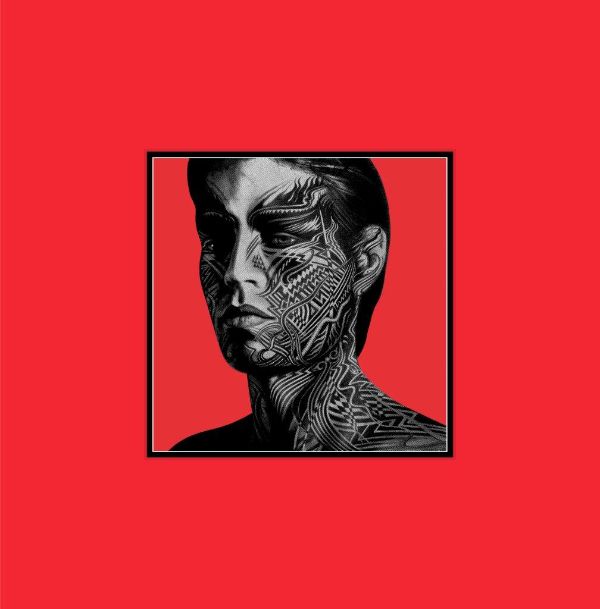
The Rolling Stones 1981 album “Tattoo You” will be reissued in October across six physical formats including a five-disc super deluxe edition. The original album was put together mostly from studio outtakes from the 1970s and features well known singles such as “Waiting On A Friend” and the transatlantic top ten hit “Start Me Up“.
The album has been remastered (by Stephen Marcussen) and selected formats offer Lost & Found: Rarities a nine-track collection of previously unreleased songs from the period of the album’s original release, newly completed with additional vocals and guitar by the band. One of these tracks is called ‘Living In The Heart Of Love’ is a quintessential Stones rock workout with all of the group on top form, complete with urgent guitar licks and fine piano detail. Other highlights of Lost & Found include a killer version of “Shame, Shame, Shame,” first recorded in 1963 by one of the band’s blues heroes, Jimmy Reed; their reading of Dobie Gray’s soul gem “Drift Away”; and a fascinating reggae-tinged version of “Start Me Up.” This bonus disc of rarites comes with the two-CD deluxe, and the 4CD+vinyl LP super deluxe edition. The latter also includes two additional CDs of live performance with “Still Life – Wembley Stadium 1982“, a memento of the band’s London show in June that year from the Tattoo You tour.
The box set features a special lenticular sleeve and comes with a 124-page book featuring over 200 rare photos from the recording sessions and world tour and includes interviews with producer Chris Kimsey & photographer Hubert Kretzscmar. The Rolling Stones are easy to take for granted, but lately they’ve been giving us reminders of just how long they’ve been around. For instance, when drummer Charlie Watts announced he’d be not performingon the bands upcoming tour to recover from a medical procedure, many noted that he hadn’t missed a show since joining the Stones in 1963 — 58 years ago! Now they’re releasing a 40th anniversary reissue of 1981’s “Tattoo You“, widely considered to be their last great album.
Still Life: Wembley Stadium 1982 is an unmissable memento of the band’s London show in June of that year on the “Tattoo You” tour. The mighty 26-track set is packed with Stones mega-hits, including an opening “Under My Thumb” and all-time greats such as “Let’s Spend The Night Together,” “Honky Tonk Women” and “Brown Sugar.” The Wembley show has covers of the Temptations’ “Just My Imagination,” Eddie Cochran’s “Twenty Flight Rock,” the Miracles’ “Going To A Go-Go,” and early rock ‘n’ roller the Big Bopper’s “Chantilly Lace.” It also features early live workouts for tracks from the then-new Tattoo You such as “Start Me Up,” “Neighbours,” “Little T&A,” and “Hang Fire.”
There are no less than three vinyl versions of the Tattoo You reissue: A single LP vinyl remaster, a 2LP vinyl deluxe with the nine bonus tracks and a 5LP vinyl box set which includes the album, bonus tracks and the Wembley gig. Note: the vinyl box also includes the 124-page book and lenticular artwork, just like the CD super deluxe!
“Tattoo You” will be reissued on 22nd October 2021. “TATTOO YOU” — 40TH Anniversary Edition, A whole new experience… 9 new unheard tracks (including ‘Living In The Heart Of Love’ which you can hear now) alongside an all-new 2021 remaster of the classic album & Stones infamous Wembley Stadium ‘82 live show.
Despite its unorthodox construction methods, Tattoo You arrived as a surprisingly cohesive album in August 1981, reaching the top of the charts – just like the previous six Rolling Stones albums, spawning some of the band’s most popular songs. We take a look at these tunes and others in our track-by-track guide to Tattoo You below.
1. “Start Me Up”
“Start Me Up,” Tattoo You’s opening tracks and one of the Stones’ most all-time popular songs, was originally recorded as a reggae-style number called “Never Stop” during the “Some Girls” sessions. Then the band dipped into an earlier version. “That take on Tattoo You was the only take that was a complete rock ‘n’ roll take,” Jagger said in 1995. “And then it went to reggae completely for about 20 takes. And that’s why everyone said, ‘Oh, that’s crap. We don’t want to use that.’ And no one went back to take two, which was the one we used – the rock track.”
2. “Hang on Fire”
Jagger and Richards, not exactly known for their subtlety, get straight to the point on “Hang Fire” — “In the sweet old country where I come from, nobody ever works, yeah, nothing gets done” — taking direct aim at England. “It serves them right for kickin’ us out,” Richards said of the song in 1983, referring to the time the band left the country in 1971 as a result of a massive tax bill owed to the government. “It’s [England] coming to terms with a whole lot of problems that have been brewing for years, and the only thing it needed for these problems to come to a head was for the money to get tight.” Like “Start Me Up,” “Hang Fire” began life during the Some Girls sessions.
3. “Slave”
“Slave” may lack any real lyrical narrative, but it makes up for that with a great lineup of guests. The Who’s Pete Townshend sings backing vocals, while saxophonist Sonny Rollins (who plays on two other album tracks) takes a solo on a song leftover from 1976’s “Black And Blue”. The jazz great later revealed that his wife had had to convince him to accept the gig. “I didn’t relate to them, because I thought they were just derivative of black blues,” he told the New York Times. “I do remember once I was in the supermarket up in Hudson, N.Y., and they were playing Top 40 records. I heard this song and thought, ‘Who’s that guy?’ His playing struck a chord in me. Then I said, “Wait a minute, that’s me!” It was my playing on one of those Rolling Stones records.”
4. “Little T&A”
Kick-started with a classic Richards riff, “Little T&A” – an “Emotional Rescue” cast-off – highlights the guitarist’s innate ability to write a straightforward rock ‘n’ roll song, complete with slap-back delay and gritty lead vocals. “That song’s just about every good time I’ve had with somebody I’d met for a night or two, and never seen again,” Richards said in 1983. “And also about the shit that sometimes goes down when you just sort of bump into people unknowingly and not knowing the scene you’re walking in on, you know? You pick up a chick and end up spending the night in the tank, you know?”
5. “Black Limousine”
“Black Limousine” offers a slightly different, and more sentimental, attitude toward women than the preceding “Little T&A.” The song – also stemming from the Emotional Rescuesessions – is one of the few that guitarist Ron Wood is credited on as a writer. He built the central riff around an old Texas blues style. “‘Black Limousine’ came about from a slide guitar riff that was inspired in part by some Hop Wilson licks from a record that I once owned,” Wood said in the 2003 book “According To The Stones”. “I thought, ‘That’s really good, I’m going to apply that.'”
6. “Neighbours”
Don’t expect to get a good night’s sleep when living next door to a rock guitarist. In 1981, Richards and his wife Patti Hansen were evicted from their New York City apartment following noise complaints filed by fellow building-dwellers. Seemingly inspired by his bandmate’s housing woes, Jagger penned lyrics to “Neighbours,” whose music was workshopped for Emotional Rescue.The accompanying music video shows the band getting the last laugh, jamming in an apartment and singing out the window for all to hear.
7. “Worried About You”
The Stones reached back several albums to Black and Blue to piece together “Worried About You,” a ballad that features a guitar solo by Wayne Perkins, who had once auditioned as a potential replacement for Mick Taylor, and Billy Preston on keyboards. “It was a bit of discovery period for me as well as being discovered,” Perkins recalled. “I was thinking more like a session player, but it was becoming clear to me that these guys were serious and wanted me as their new guitar player. It was a great situation to be thrust into.”
8. “Tops”
Even though he had left the band seven years earlier, Mick Taylor shows up on Tattoo You thanks to “Tops,” a Goats Head Soup–era song that includes his fiery guitar solo. Pianist Nicky Hopkins also appears on the track, as does the band’s old producer Jimmy Miller, who plays percussion. Taylor’s distinct playing style stands out. In Richards’ biography, “Life”, he notes that Taylor has a “melodic touch, a beautiful sustain and a way of reading a song.”
9. “Heaven”
“Heaven” came together in the studio during a midnight session without Richards or Wood present. Jagger, producer Chris Kimsey, Bill Wyman and Charlie Watts recorded the track without the two guitarists. “Mick started playing the chord sequence, and I sat down at the piano and started following along, and next thing I knew, it sounded really good,” Kimsey recalled. “So I told the assistant to roll it, and we put some things on it and it sounded very good.” “Heaven” was originally shaped during 1980’s Emotional Rescue.
10. “No Use in Crying”
“No Use in Crying” is the second of two “Tattoo You” tracks that boasts a Ron Wood song writing credit (and like many of the 1981 LP’s songs, it comes from the recent Emotional Rescue era). As the newest member of the band, he quickly realized that if he wanted a place on a Rolling Stones record, he needed to speak up. “One of the lessons I had to learn was that if you want to get a credit,” he remembered, “it has to happen there and then in the studio, as you’re recording it.”
11. “Waiting on a Friend”
A charming end to a rock-filled record, “Waiting on a Friend” is a love letter from Jagger to his bandmates, originally recorded during the Goats Head Soup sessions in Jamaica. “We all liked it at the time, but it didn’t have any lyrics,” the singer notes in the liner notes to 1993’s Jump Back collection. New overdubs include pianist Nicky Hopkins and sax player Sonny Rollins, along with Santana member Michael Carabello on percussion. “The lyric I added is very gentle and loving, about friendships in the band.”
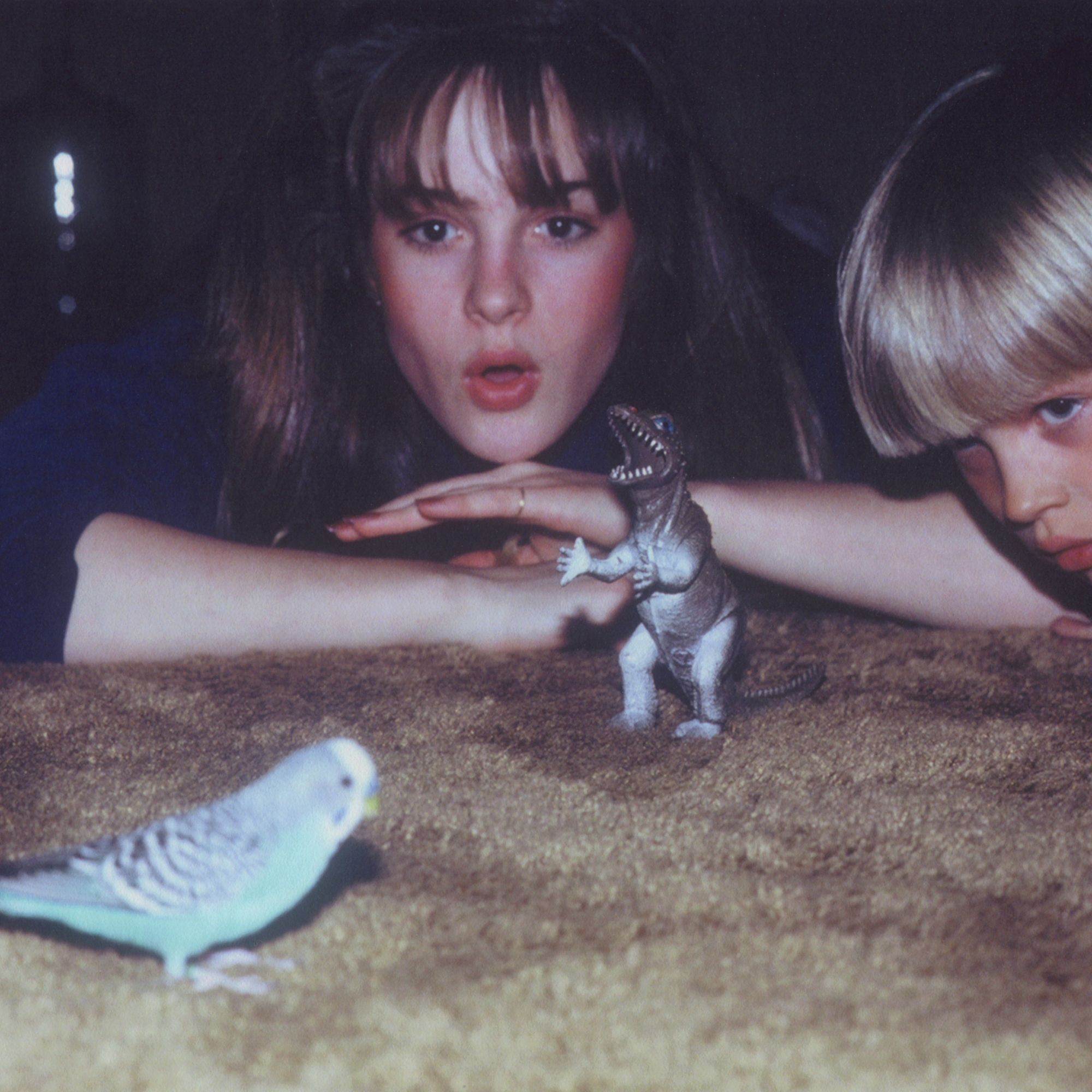
Adrianne Lenker’s enthusiasm remains undimmed. Lenker is the singer, guitarist, and songwriter for Big Thief, the most vital band of 2019. Back in May of that year, Big Thief released one of the best albums of the year with U.F.O.F. Rather than ride the wave of acclaim, they’re making a deeply uncustomary move for almost any band, let alone one who just experienced such a breakthrough: If art proves that power is vulnerability, then Big Thief’s Adrianne Lenker is one of the most powerful voices in music today. This much was clear from the release of breakthrough albums “Masterpiece” and “Capacity” and has since been reaffirmed furthermore by widely acclaimed albums “U.F.O.F.” and “Two Hands” as well as Lenker’s solo work. Big Thief’s music is its own introduction: deeply intimate, unpretentiously queer, seamlessly blending the autobiographical with the narrative to create a sound that is both frank and steeped in dreamy nostalgia. In October that year they released their second great album of the year, “Two Hands”. These two albums are very different, but taken together they demonstrate the range and emotional honesty that have quickly made Big Thief one of the most compelling bands working today. In addition to her musical talent, Lenker is also a skilled visual artist. She mentions that she’s never had lessons, and doesn’t practice as much as she’d like, but she’s thrilled that she gets to do so. She says it’s all about showing up for yourself. Big Thief’s “experiments with sound” began in 2014, when Lenker was just 21. After graduating from the prestigious Berklee School of Music, she moved to New York and met Buck Meek in a neighbourhood convenience store. Bonded by a shared love of classic folk-rock artists like The Band, Neil Young, Joni Mitchell, and Fleetwood Mac, the pair started playing music together, and eventually saved enough money to buy a van to tour in. Lenker and Meek travelled the East Coast as a duo, and recorded an album under the name Adrianne Lenker and Buck Meek, before officially forming Big Thief with Oleartchik and former drummer Jason Berger in 2015. Together, the quartet scraped up enough money and gear to make a record in a friend’s house in upstate New York, which became Big Thief’s arresting 2016 debut, “Masterpiece”. Not long after, Big Thief’s music caught the ear of Luke Temple (Here We Go Magic), who brought them on tour, and connected them to Saddle Creek Records, as well as their first booking agent. Their stunning breakthrough record, 2017’s “Capacity”, followed shortly after. Big Thief’s music can very often achieve a beauty that feels as though it has always existed, speckled with the wisdom and humanity of Nick Drake and Joni Mitchell. In many ways, they seem like a band that could have existed and accrued a fervent fanbase in nearly any era from the ’60s onward, sharing bills with Pete Seeger, R.E.M., or Vashti Bunyan. But fashion-wise, Lenker seems to be taking her cues from the early ’90s goth scene today. Lenker has the sort of backstory that seems ready-made for a biopic. Among her fans, it’s already become somewhat legendary. She was born into what she has called a religious cult in Indianapolis, which her parents left when she was four. For a while, Lenker, her parents, and her two siblings were homeless, either living in a van or with various family acquaintances. Her father was a musician, and she started playing his guitar at the age of six. “And then I came to him with a song written. It was an angry song. I was angry. But the one that I remember even more clearly, was the one that I wrote when I was 10,” she continues. “That’s when I really started getting in a flow of writing, and that one was called ‘So Little Life.’ It was basically what I still write about.” She starts to faintly sing, her voice as fragile as some of the most exposed moments on her albums. “‘So little life to live, so many words to say/ When I stop and try to say them, everything fades away/ When I drift out of this dream world, it’s usually just in time to realize everything will be fine.”
Lenker is, as you have probably surmised by now, an extremely polite person. As such, I get the sense that she is too nice to not at least make an attempt to answer a question even if I can tell she’s not exactly thrilled to be talking about the more headline-ready aspects of her backstory, as she perhaps senses that it could overshadow her already voluminous musical achievements. “Well, I mean, it was strange. That religious group was interesting. But also there was conflict beyond that,” she says. “We all need ways of processing things. I think I was called to music because it was this thing that was always there for me that I could pour my heart into safely.”
She says there’s “not any one religion or faith that I’ve subscribed to, but I value all perspectives, because I think that there’s so much to be gleaned from many different religions and spiritualities. I don’t like it when religions take it to the point where they discredit all other religions, because how could one sector of people have figured it out and know that that’s it? But I do think that there’s so much beauty in a lot of the stories or scriptures. And there’s so much more studying that I want to do.”
When asked if her upbringing turned her off to stricter religious observance, she replies, “I never went through a wave of hating Christianity, even though my parents were born-again Christians, and there were a lot of ideas that were being practiced that I think were misguided. ‘You’re going to hell if you do this or this or this. This is evil. This is sinful, to watch these films or to let the Bible touch the floor or to pray without a head covering or to name your children non-biblical names.’
Her dad started taking her to open mic nights when she was 12, and it was indeed as awkward as you might imagine. “People were always like, ‘Whoa, she’s only this age and she’s doing this?’ I was always the youngest person in any group. I had a band and I didn’t go to high school, all my friends were older than me,” she remembers. “It was pretty cool to have such a focus at that age, but also it alienated me from a lot of people my age. So I felt pretty lonely and I didn’t really have many friends when I was a kid.” She stresses that this was her decision: “It wasn’t imposed on me at all. I wanted it.” Her dad was managing her, and raised money from investors to record a few albums. “Naturally, as I was only 13 or 14, I wasn’t really old enough to have all the tools and mechanisms to realize my own vision, so I was just part of the vision of the producer and my father and the people around me,” she says. “It was basically my schooling because I was always in the studio, but when we finished the project, I was kind of like, ‘Holy hell.’”“Think of how much you grow between 12 and 14 years old,” she continues. “I got into Elliott Smith and Joni Mitchell and Leonard Cohen and I was like, ‘This doesn’t resonate with me. I want to make music on my terms and in a different way and I don’t even know what that is yet, but I think I want to go to school.’” She decided she wasn’t ready for a music career just yet, and instead wanted to learn more about “my craft.” (You can find her teenage album from 2006 if you look hard enough, though she doesn’t consider it part of her official discography.)It was difficult for her to break the news that she wasn’t ready. “I had to separate from my dad because that’s naturally what happens anyway when you’re a teenager, you push away from your parents,” she says. “But I had this added layer of a music career that was tied to him.” After earning her GED, she went to the Berklee College Of Music on a scholarship provided by Susan Tedeschi, singer and guitarist for the Tedeschi Trucks Band. When I ask her if she ever wonders what her life would be like if she had gone ahead and pursued her music career at the age of 14 and perhaps had achieved an ’00s style guitar-pop teen idol career analogous to Michelle Branch or Avril Lavigne, she shoots the idea down as forcefully as I’ve her heard talk in the time I’ve spent with her.“ I just don’t think it would have been possible for me. I’m too stubborn,” she says. “I think I would have been like, ‘This goes against my spirit. No thanks.’ I just don’t think I would have been able to melt into it at all.”***At Berklee, Lenker finally got to have a normal, if quite bohemian, young adult life: learning music, making friends, dumpster diving, skateboarding, and forming a band that had two drummers but no name. (They never settled on one.) During one show, she played with a band fronted by Buck Meek, who had already graduated from Berklee by that point. Meek grew up immersed in music in the small town of Wimberley, Texas. His mother gave him his first guitar lesson when he was “five or six. “My little hometown was this refuge for a lot of the old outlaw songwriters and Austin musicians from the ’60s and ’70s who moved out whenever the tech bloom blew up there,” he recalls. “So Ray Wylie Hubbard and Butch Hancock from the Flatlanders and some of the guys from Bob Wills’ band were out there. And they all took me under their wing, one way or the other. He began playing rhythm guitar for old-school types such as Slim Richey, “who played with Herb Ellis back in the day,” and Django Porter, who’d played guitar with Merle Haggard. He would perform with their bands at roadhouses, barbecues, private parties, funerals, weddings. “But not for money necessarily,” he says. “Just for the love of it.” Though the musicians were all in their 50s and 60s, Meek doesn’t recall anyone thinking it was strange that they had a 13-year-old guitar player in their band. In Texas, I think it’s part of the culture,” he explains. “It’s passed down through the generations like that. The summer after he graduated from Berklee, his ragtime band Mobtet played with Lenker’s unnamed group, which “was just blowing my mind,” he remembers. “And she was so incredible. Everyone was dancing.”
Lenker had already released a solo album, the first one she really counts, called “Hours Were The Birds”. She was considering moving back to Minnesota, where her family had settled, after graduation, but decided to give New York a chance as she’d had a nice time playing Manhattan’s Rockwood Music Hall one afternoon with her band. Meek and Lenker met the first day she moved to New York. “She had just stopped into Mr. Kiwi’s to get a juice on her way to the first apartment,” he remembers. They ran into each other at the grocery store and he offered to show her around the city.
“She’s opened up, I think, more with all this traveling. But at that point, she was pretty reserved. And she had this gaze that would just like cut through you like a snow wolf,” Meek says. “You would be speaking to her and she’d be looking at you so intensely. She’d be listening very deeply but not humouring you with any kind of response.”
They quickly fell into a musical rhythm, “playing old John Prine songs and writing songs together.” “All she wanted to do was play music,” he says. “I think pretty quickly it was clear that we had chemistry, and I think it was mostly rhythmic. Her guitar parts are really intricate, but there’s a lot of asymmetry in the fingerpicking. They’re super rhythmic but they are kind of crooked. The time’s changing a lot but there’s this pulse, and I had been playing rhythm guitar my whole life, so I think I was able to tap into that with her.” They started playing house shows and eventually started touring as a duo, cutting the collaborative A-sides and B-sides EPs together during off-hours at the studio that Andrew Sarlo, Lenker’s friend from Berklee, worked at. And then at some point, Lenker saved up enough to buy an electric guitar. They released two EPs of music they wrote on the road under their original moniker Buck and Anne, which was later released by Saddle Creek Records as one unified album “A-sides and B-sides” featuring a photo of the couple next to their white conversion van which they’d named Bonnie. These songs can be more comfortably categorised as folk in comparison to Big Thief’s output, but they maintain that particular Lenker brilliance: a tender understanding and melancholy that is indicative of someone wise beyond their years. ‘Let me know reasons why we change,’ she sings on Kerina‘Why our bodies are more than just breath and veins.’
“She started writing these heavier, more rock ‘n’ roll songs. And so we figured we needed to build a band around that,” Meek says. They found drummer Jason Burger, and Meek then ran into bassist Max Oleartchik, who he had met years ago when they were roommates at a Berklee Music summer program for teenagers. He didn’t even know his old friend had come back from his native Israel, until they ran into each other on the street in Bushwick. “We needed a bass player and he just walked up to us, basically,” Meek says. “Manifested for the band.”Meek and Lenker named the group Big Thief after an idea they learned in a song writing workshop in Texas about “a trickster or thief that borrows from the collective conscious, and regenerates ideas and integrates them into his or her identity.” The newly formed quartet recorded Masterpiece with Sarlo and engineer James Krivchenia, who took over for Burger when he left the band.
“It marked the beginning of our creation, our creative process together as a band,” Lenker says. Regarding the title: “It was a joke in a way, because if this album is just all of us putting our hearts in and it’s the best we can make, it already is a masterpiece being what it is. They recorded the follow-up, “Capacity” six months later, shortly after signing with Saddle Creek. The next time they hit the recording studio, they would only take five days between albums.
“Capacity” feels like Big Thief’s most autobiographical record to date, although it remains unclear which stories are Lenker’s own and which are picked up from a life on the road. The themes return with weighted preoccupation to motherhood and family. On Mythological Beauty she confesses ‘I have an older brother I don’t know/he could be anywhere.’ This album is particularly striking for its uncensored honesty. Lenker shares details of fraught relationships as an adult next to her memories of being hit on the head by a railroad spike as a child in a freak accident; her mother sitting in the back seat ‘praying, “Don’t let my baby die.” Lenker invites the listener into her most intimate memories, but the abrupt creak and thud of recorded footsteps on a staircase in Pretty Thingsgently reminds us that we are in fact strangers on the outside, looking in.
Though it took a little while for some critics and fans to catch on, “Masterpiece” and “Capacity” released in 2016 and 2017, respectively — showed a band that already had themselves figured out. They alternated between scrappy and hooky indie-rock punchers such as “Real Love” and “Animals,” and ballads such as “Mythological Beauty” and “Great White Shark” that set Lenker’s empathic voice against chords that grew around each other with gentle force.
Everyone quit their job (Lenker was a server in a ramen restaurant, Meek did everything from carpentry to delivering CSA vegetables via bicycle) to tour incessantly. In February of last year, Big Thief decamped to a cabin in Topanga Canyon, where Meek now lives, and set up an eight-track to demo songs. It has been two years, and in that time Adrianne had just written so many songs. She writes a lot. So there were 50 songs that we felt could go on the record,” Meek says. (In case it wasn’t already clear just how prolific Lenker is, this was after already releasing a solo album, “Abysskiss” late last year. By the time “Two Hands” arrives, she will have released three albums within 12 months. For a month we went through every song and built arrangements and hashed them out. It quickly became apparent to the band that they had two albums’ worth of material. But Lenker says, “We didn’t want to make a double album, because we felt it was too dense, especially for these particular songs. We just wanted each to have its own focus, and so pretty early on, we knew that we were going to make two records, and we knew that we wanted them to be very contrasting. Big Thief, Sarlo, and engineer Dom Monks went to Bear Creek Studios in rural western Washington last summer to record “U.F.O.F.”, an entrancing collection of cosmic folk songs that was immediately deemed a classic and one of the year’s best when it was released in May. A few days after they finished work on that album, everyone went down to the Southwestern studio Sonic Ranch in the small town of Tornillo, Texas, about 30 miles away from El Paso, to record Two Hands, the more visceral and earthbound of the pair. If “U.F.O.F.” is the spirit, then “Two Hands” is the body.
“I feel like they’re siblings. They come from the same place, and all the songs were written in the same time span, and they were forming in the womb of all of our spirits. So there’s some connective DNA, but they’re very different beings,” Lenker says in the park, remembering the two albums’ origins.
“U.F.O.F.” is meant to be more focused on the immeasurable, sort of suspended ethereal playing with textures and colours and layering in the production, staring out into the abyss,” she says. “And “Two Hands” is more the micro, zooming into the blood and tissue and guts of being a human, the raw, bare, naked bones, not much layering, capturing just our performances in the room, just very dry, no reverbs, just skin and flesh and human, finite, physical. But I think each of them contains parts of the others.”
“U.F.O.F” was Big Thief’s third album in as many years, in which ‘F’ stands for ‘Friend.’ “Making friends with the unknown.. all my songs are about this,” Lenker has said of the album “If the nature of life is change and impermanence, I’d rather be uncomfortably awake in that truth than lost in denial.” At this point Big Thief had already been living and writing alongside each other for some time; Buck and Lenker had divorced and evolved their relationship into what they now understand as a “deep friendship”; and so when the band arrived at the studio, they not only knew each other but also these songs on a level which allowed them to be their most experimental and spontaneous yet.
The parallelism extends beyond the sound of the two albums and into their subject matter. U.F.O.F. is about being comfortable with the unknown, leaning into the mystery of life, of accepting that life is a moment that will pass, and you can embrace that or not. “You let go of everything you have, of everyone you love and even of your own body throughout the course of this life,” she says. “You could be completely numb to it all, but then you wouldn’t feel the incredible beauty of experiencing all of that as well.”
If U.F.O.F. concerns matters of impermanence and the greater mysteries of the world, then Two Hands is very much about the practical realities of life on Earth. Here, Big Thief show their skill at writing searing, perceptive songs about the ills that never seem to go away. “The Toy” addresses gun violence; “Shoulders,” police brutality; and “Forgotten Eyes,” homelessness and “the unheard voices that exist.” There are also plentiful outcries in the album, such as on “Shoulders” and “The Toy,” concerning humanity’s ongoing destruction of the planet.
“I keep trying to break through the numbness that washes over everything, that keeps people from being awake, where you can feel that rush of clarity that you’re part of the earth and that you feel something that’s connected between all of us,” she says. “I’ve just been trying to find a way to write about things from a place that I know resonates within my core rather than just stuff I agree with. How can we reach people? We’re taking more than we need and depleting and wounding the earth, and we can all feel it.”
Big Thief are a band guided by instinct and feeling. They never like to overthink anything. “I don’t think we should ever play anything more than we should ever have to,” Lenker says. “Once you play a song seven times, you’re going downhill for us, anyway. It’s usually within those first few times of playing it that it’s the best, even if it’s full of imperfections.” When the band thought they were rehearsing the single “Cattails,” a jaunty ode to making peace with feeling infinitesimal that Lenker had finished that morning, Monks secretly began recording them, and that’s what you hear onU.F.O.F. “We walked into the control room and it was captured, that was it,” she says. “We didn’t have to work at it at all.”
In contrast to the wash of spectral bath of its sister album, Two Hands has some of the loudest and most caustic songs that Big Thief have done yet, including the protest anthem “Not.” “We were in Texas and it was like 120 degrees,” Meek says, “And so we just went for it.”
Big Thief released “Two Hands” just five months after “U.F.O.F” and christened it the “earth twin” to its “celestial” sister. All but two songs feature purely live vocal takes which relish the peatey quality of Lenker’s natural voice. Recorded in the dry heat of the desert, “Two Hands”combines the unfiltered intimacy of “Capacity” with the franker musicality of “U.F.O.F” to create some of their most impactful work yet. These are the songs Lenker stated she is the most proud of, “I can imagine myself singing them when I’m old… Musically and lyrically, you can’t break it down much further than this. It’s already bare-bones.”
They all decided to focus on live takes, with few overdubs for the album, giving them even less room to think too much. “There’s got to be some inherent magic that just makes you feel everything, and then you go from that, never building on something in order to fix it or to mask it,” says Lenker. “We would play a song, and we’d hear it back in the studio. That had to be it. We’re not going to add much.”
Ahead of U.F.O.F., Big Thief left Saddle Creek and signed with 4AD, the sort of independent label for whom the term “venerable” is too small; Meek is especially happy to be on the same label as the Breeders and Cocteau Twins. The band knew it was the right fit when Ed Horrox, head of A&R, heard their early demos and started air-drumming along.
Big Thief are, at best, indifferent to the business side of the music industry, and much of their music feels out of time, divorced from any particular current style or movement. (I was surprised to discover the band members all have personal Instagram accounts.) “I don’t really study the trends so much, but I tune into things that make me feel something — and that’s all over the place,” Lenker says. She proudly claims: “We’re song-based, definitely, and record-based, and not just singles on Spotify. We always think of things in terms of how it would translate on vinyl.” The band’s managers and team were largely supportive of the idea to put out two albums in a year, even understanding that the second album might not receive as much attention compared to U.F.O.F. Though Meek says there were some devil’s advocate arguments about whether the band might confuse listeners or flood the market, Big Thief ultimately felt it was best to do what felt best.Big Thief do not bring a lighting person on tour, none of the members wear the in-ear monitors that most musicians use to hear themselves while they play, and Krivchenia does not play on a drum riser, which Meek says tends to annoy the hell out of the stagehands at music festivals. All four of them play together all in a straight line in the centre of the stage, practically on top of each other, the intention being that all of the members can maintain eye contact with each other throughout the entire show.
In 2020, after Big Thief’s March tour was abruptly cut short by the pandemic, Lenker claimed respite in a cabin in the mountains of western Massachusetts. Alone during a year marked by loss both global and personal, Adrienne sat with her thoughts and mourned. In the album’s sleevenotes she writes of this time as one of pain and hurting: “I had a handful of songs that I was planning on recording, but by the time Phil Weinrobe (her chief collaborator on the album) arrived I was on a whole new level of heartsick and the songs were flying through my ears. I was basically lying in the dirt half the time.” Despite this, or because of it, the time she spent in that homemade cabin studio brought forth her most beautiful solo albums to date.
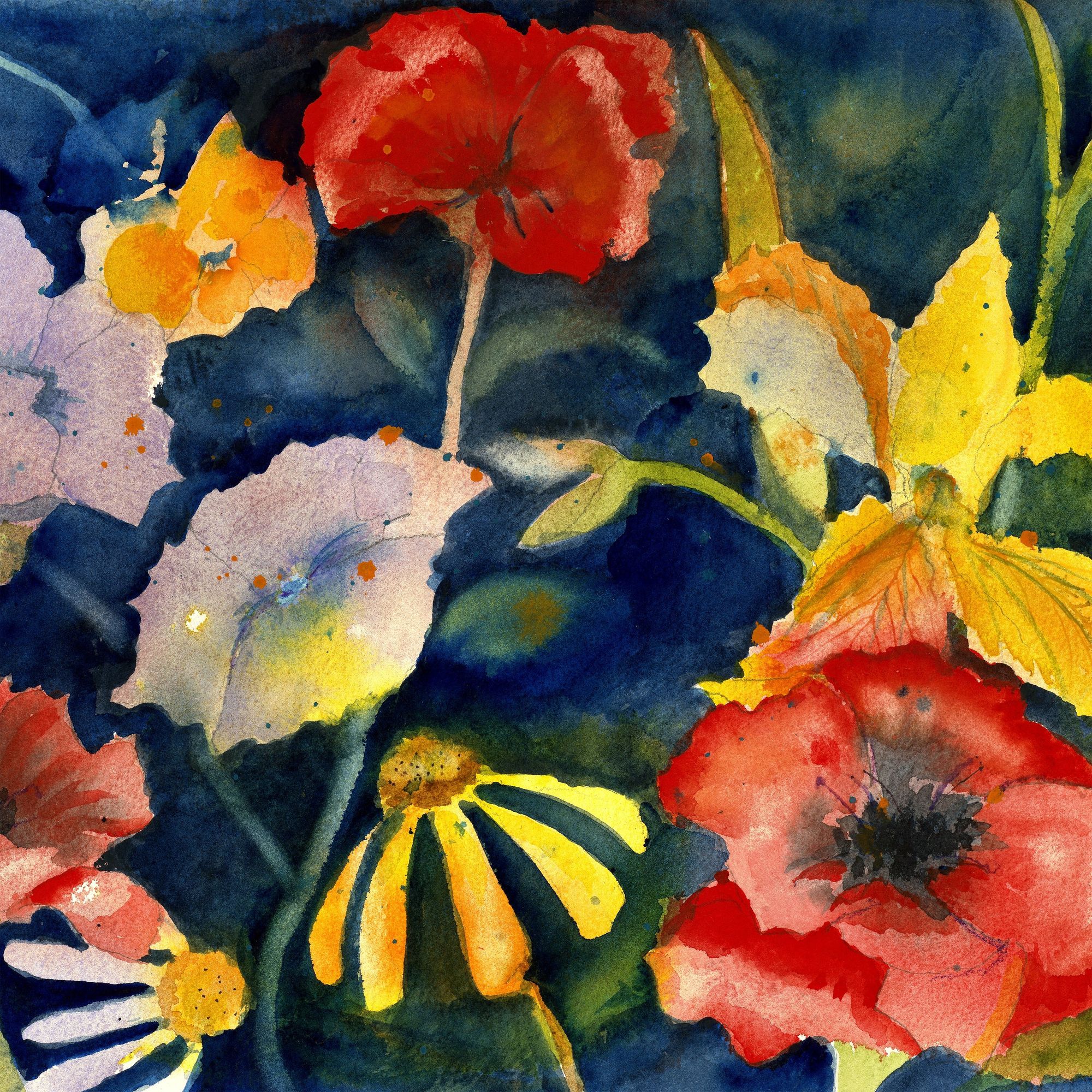
“songs and instrumentals” began as an attempt to capture the particular beauty of the sound of her guitar in that space. The process was arduous, involving three winks of tinkering with a mass of tape machines, a binaural head and a pile of XLR cables. Nine of the songs on the album were written freshly during the recording session. Lenker and sound engineer Philwould start and end each day with an improvised acoustic guitar instrumental which they later collaged into the pieces which make up the first side of theinstrumentalsalbum. The second half is mostly windchimes. The albums are uniquely intimate, offering a breath taking insight into Lenker’s mind and relationship with nature. The artwork was painted by Lenker’s grandmother.
Everyone in Big Thief lives all over the place. Lenker, 28, is technically homeless, though she calls herself “homeful” as she is at home as long as she is near people she cares about. She’s about to sublet a place near her family in Minnesota. Meek, 32, lives in Topanga. Krivchenia, 30, lives in Los Angeles. And Oleartchik, 32, moved back to Israel “between the mountains in Tel Aviv,” Meek says. “It’s this new chapter of taking care of ourselves first instead of sacrificing everything for the music,” he says of the arrangement. The band has check-ins by phone every Monday, which usually include saying no to a lot of business opportunities they find distasteful.
Lenker doesn’t sound too concerned with how to keep her art from getting turned into a commodity. She has much bigger plans that would preclude such an outcome. “I don’t think we just want to be a touring band for the next 20 years and try to get as big as possible,” she says. “I think Big Thief’s going to be really creative in the future.
Everything is democratic in our band, creatively and with business. Everything has to be agreed upon, which is so exhausting, and it takes so much more energy than just Adrianne or me being the bandleader. It was an evolution. At first, me and Adrianne built the band, so we led it together. Pretty quickly it became this unanimous democracy.”
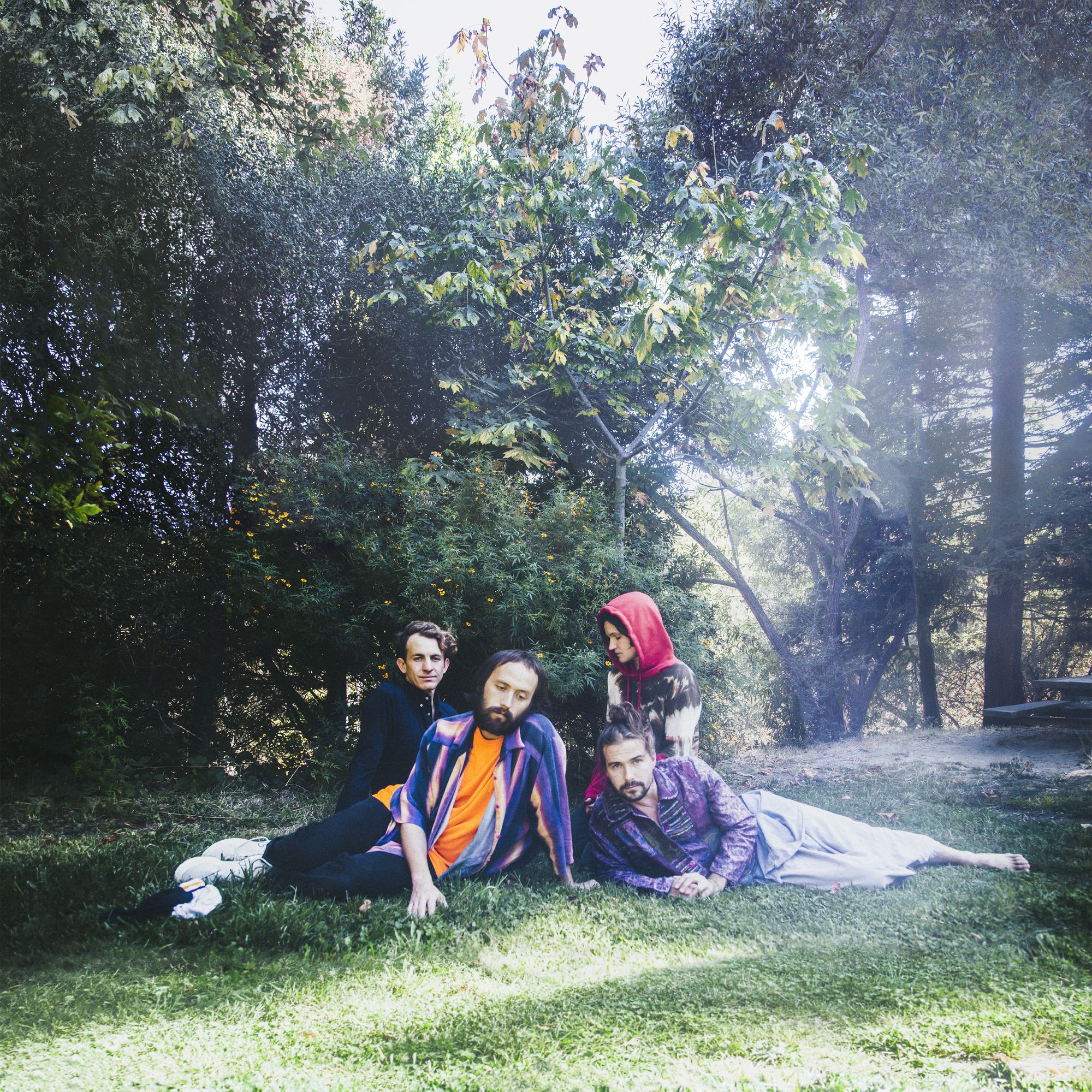
The album covers for U.F.O.F. and Two Hands feature all four band members practically on top of each other, and that’s not a coincidence, that’s a message. “We saw the photos and we decided, ‘This is the simplest, most honest expression of who we are as a group of people,’” Meek says. “We just actually want to be that close together whenever we’re hanging out because we love each other.”
Adrianne Lenker, Buck Meek, James Krivchenia, Max Oleartchik
Unless you support Wolverhampton Wanderers, you might not feel you’ve much in common with Robert Plant, a rock icon from a time when we expected our heroes to be anything but relatable. But what’s immediately apparent from our interview with Plant in the new issue of MOJO is he’s very like a typical MOJO reader: insatiably curious about music; enthusiastic about sharing his latest discoveries; honest enough to understand that while he knows and loves a lot, there’s always something else worth hearing.
MOJO joins Plant in the corner of a 15th century country pub, blasting North African electronica out of his phone. Later, he will talk candidly about how working with Alison Krauss revealed to him an enriching strain of American music that, in spite of his restless spirit of enquiry, he’d never previously explored. On the CD that comes with our new issue, Robert and Alison have chosen some of their favourite songs to illustrate how their contrasting musical worlds have come together in such striking harmony. “I knew nothing about the Louvin Brothers,” Plant admits.
Maybe you already know the Louvins well, and are schooled in some of the other musical worlds we explore this issue. The esoteric frenzies of Faust and Van Der Graaf Generator, say, or the devastating quietude of Low. The passion of Aretha Franklin or the fanatically contoured big music of The War On Drugs. Even the gems hiding in plain sight in Dylan’s much-maligned ‘80s catalogue. But this, in a way, is our mission: to find fresh stories and perspectives on the music that changed your life (if you were at Reading Festival in 1988, you won’t want to miss this MOJO!), and to point you towards a dozen new potential obsessions that might, in some small way, change it again.
Neal Francis’ sophomore album ‘In Plain Sight’ offers up a body of work both enchanting and painfully self-aware, recorded entirely on tape with his bandmates. Mixed by Grammy Award-winner Dave Fridmann (Spoon, Tame Impala, Flaming Lips), the album spotlights Francis’s refined yet free-spirited performance on piano, an instrument he took up at the age of four. The album came to life over the course of a tumultuous year spent living in a possibly haunted church in Chicago. The result: a portrait of profound upheaval and weary resilience, presented in a kaleidoscopic sound that’s endlessly absorbing. ‘In Plain Sight’ ultimately reveals the possibility of redemption and transformation even as your world falls apart.
“When I started the process of writing these songs, I was so emotionally out-of-sorts and really kind of hopeless that I’d be able to come up with anything,” says Francis. “But then I sat down and started working, and embraced whatever inspiration came my way. Sometimes it felt like beating my head against a wall, but I tried to trust that it would lead somewhere. The whole thing was like a weird dream—this very strange time of terrible, wonderful isolation.”
The new visual from Annie Clark features three bedazzled but lackadaisical dancers, a flasher, and Demi Adejuyigbe. Just last week, we got a look at a new project from Annie Clark with the trailer for “Nowhere Inn”, a rock-mockumentary about her life and music as St Vincent with the help of Carrie Brownstein. Today, we get another video, one from the album St. Vincent released a couple months ago called “Daddy’s Home” that’s indebted to the dirt-smudged sparkle of the ’70s. She has shared the video for the title track, which is charmingly bizarre.
As on the recent ‘Down and Out Downtown’ full length concert special streamed globally by Moment House, Daddy’s Home material will be brought to life alongside staples spanning the St. Vincent catalogue on her hotly anticipated U.S. tour.
St. Vincent will do some time on the road beginning September
St. Vincent adds a slow flatbed ride to her breakneck paced fall schedule with the new video for “Daddy’s Home.”
The video features the musician preforming solo on a giant truck that parades her around in a square spanning four blocks. There’s also a trio of bedazzled, lackadaisical dancers. Then, a man in a khaki trench coat comes out and flashes St. Vincent while she’s performing. She screams, but it’s unclear if it’s because of the indecent shock or rock ‘n’ roll catharsis. Oh, I almost forgot the best part: comedian Demi Adejuyigbe makes an appearance a couple times reading comics in an office chair outside (no desk). He appears annoyed as St. Vincent makes her second lap. At the end, she waves to no one.