New York-based singer/songwriter Samia Finnerty’s, 2020 debut album, “The Baby”, was a testament to her impressive vocal might, irresistible tunefulness and vulnerable lyricism, both clever and illuminating in equal measure. Drawing widespread acclaim from the likes of pitchfork, stereogum, npr, nme, the sunday times, and others, the album more than delivered following the promise of early singles like 2018’s “Django” and 2019’s “Ode To Artifice.” Samia spent much of 2020 in self-reflection, and she also made various life changes that left her feeling more earnest and centered. during this time, she wrote a handful of songs that make up “Scout” ep. while “The Baby” leaned more on self-deprecating humour, “Scout” was born out of a need to “honour feeling secure in what [she] had to say.”
The EP is packed with reverence for life’s ups and downs, but more than anything, it’s an ode to loved ones. the compassionate glow of this ep partially stems from her new Nashville surroundings, as well as her recent experiences “feeling genuinely loved, making new friends, and holding onto old friendships.” it’s reminiscent of that reassuring exhale in the mirror after an imperfect yet fulfilling day. as Samia puts it, “Scout” is “the baby’s slightly older sister letting her know that everything is gonna be alright.”
The ep title is a nickname of Samia’s, and it’s a fitting nod to the record’s benevolence. “my partner calls me scout,” she explains. “it’s just a word that implies bravery to me. I always picture a little girl with a sash and badges basking in her autonomy selling samoas.” whether you’re a girl scout trying to gain confidence or an adult who needs reminders of our inability to make everyone happy or the untold power of being there for someone, this ep is an unashamed loving nudge.
12″ vinyl version of Scout. Pressed on translucent white vinyl. Edition of 300. Shipping August 13th, 2021.
When you’re trying to make it through tough times, you need a little light to find your way. That light blazes brightly on the alchemical second album from Penelope Isles, an album forged amid emotional upheaval and band changes. Setting the uncertainties of twentysomething life to alt-rock and psychedelic songs brimming with life, colour and feeling, “Which Way to Happy” emerges as a luminous victory for Jack and Lily Wolter, the siblings whose bond holds the band tight at its core.
Produced by Jack and mixed by US alt-rock legend Dave Fridmann, the result is an intoxicating leap forward for the Brighton-based band, following the calling-card DIY smarts of their 2019 debut, “Until the Tide Creeps In”. Sometimes it swoons, sometimes it soars. Sometimes it says it’s OK to not be OK. And sometimes it says it’s OK to look for the way to happy, too. Pitched between fertile coastal metaphors and winged melodies, intimate confessionals and expansive cosmic pop, deep sorrows and serene soul-pop pick-you-ups, it transforms “difficult second album” clichés into a thing of glorious contrasts: a second-album surge of up-close, heartfelt intimacies and expansive, experimental vision.
“Terrified” is taken from the Penelope Isles album “Which Way To Happy” released 5th November 2021 via Bella Union:
These extremes come into sharp focus on ‘Terrified,’ a reflection on anxiety set to a dreamy sunburst of psychedelic jangle-pop. As Jack explains, “I love that juxtaposition. It reminds me of when you’re feeling a bit delicate or not ready to socialise but you have to go out because you need milk for tea. Then you go to the supermarket and you bump into someone you kind of know and you have to pretend that everything’s OK when, really, you’re dying inside.”
With the album’s almost prog-psych ambitions on fulsome display, ‘Rocking at the Bottom’ taps coastal motifs for a call to embrace open possibility, twinkling with hope over a deep space-rock bass line and a phased Hammond. In an album of fluent dynamism, ‘Play It Cool’ offers a swift tonal about-turn, emerging from Lily’s gloriously in-character vocal as a sweet soul-pop message to the troubled self amid rousing drums, lush glockenspiels, creamy harmonies and wonky guitars. Warm and rippling, ‘Iced Gems’ is a sorrowed lament, played out over the gentlest of fluttery keyboards and experimental electronic sounds – plus, samples of carrot crunches. Written over a couple of years, Lily’s ‘Sailing Still’ charts the life of a relationship to a slow-burn and sorrowed soundscape of dulcitones, cello, violin and more: building in increments to a climax of measured grandeur, it sustains a sense of intimacy in a framework of great scope.
The album swerves into Mercury Rev and MGMT’s cosmic slipstream with ‘Miss Moon,’ a galloping centrepiece with an irresistible call to dream: “Hey, kids – look up!” As Jack says, “We wanted it to seem like lift-off.” After its exclamatory explosion, the psychedelic dream-pop of ‘Sudoku’ offers a mellowed invitation to turn off your mind, relax, float downstream. Steering the album through further contrasts, ‘Have You Heard’ is a feelgood flurry of insistent, pulsing space-rock; ‘Pink Lemonade,’ meanwhile, is a song of sweet, sharp beauty, touching on fading childhood memories and lifted by Fiona Brice’s strings. ‘11 11’ hosts Lily’s most tender vocal yet: recorded in one take through tears, it finds Penelope Isles at their most exposed, with Brice’s strings weeping in sympathy. Finally, ‘In a Cage’ cogitates on confinement yet finds solace in field recordings of happy, high times – a judicious note of meditative reflection after a giddy ride.
More field recordings were made during a stay at a small cottage in Cornwall, where Penelope Isles began work on the album. With romantic heartache already in the air, things swiftly got worse: lockdown began, claustrophobia kicked in and emotions ran high. As Jack puts it, “We were there for about two or three months. It was a tiny cottage with four of us in and we all went a bit bonkers, and we drank far too much, and it spiralled a bit out of control. There were a lot of emotional evenings and realisations, which I think reflects in the songs.”
At different point along the way, Jack Sowton and Becky Redford left the Isles. An old friend, multi-instrumentalist Henry Nicholson, stepped in swiftly – “A godsend after a low time,” says Lily. Another friend, Hannah Feenstra, contributed drum parts; now, Joe Taylor is the band’s drummer. After Cornwall, the band redid many of the rhythm tracks, recorded a little in Brighton, then recorded more in Cornwall at their parents’ house. “It was,” says Jack, “a proper rollercoaster ride.”
The ride continued with Fridmann, whose recent credits include Isles’ favourites Mogwai’s No 1 album, As the Love Continues. As Lily puts it, the process of sending Fridmann a mix, receiving it back in the morning and then having five hours to make decisions on it resulted first in stress, then in something sublime. “I love everything he’s touched – MGMT, Mogwai, Mercury Rev. He would turn our mix into this electric, fiery thing. There were some moments that were initially hard, like on ‘Miss Moon,’ where he took out the bass when it gets to the chorus. But now it’s my favourite bit on the record. He made everything so colourful. It’s an intense-sounding record – a hot record. It was so refreshing to have that blast of energy from Dave – it’s like he framed our pictures.”
Away from the confines of the cottage, the Wolters also opened the door to a collaboration with storied composer Fiona Brice, whose credits include John Grant, Lost Horizons and Placebo. A “big bucket-list tick” for Jack and Lily, the team-up results in glorious arrangements across the album: for Lily, ‘11 11’ stood out. “I was in absolute tears when she sent back the strings for ‘11 11’. It was like, oh my goodness, she’s nailed it.” Flushed with resourceful detail, “Which Way to Happy” adds extra strands to the Isles’ ever-tightening core DNA. Born in Devon and raised on the Isle of Man, the Wolters’ bonds were already strengthened by separation when Jack (six years Lily’s senior) moved away to university at 19. As Lily grew older, they rediscovered their connection and formed a band called Your Gold Teeth. When both moved to Brighton, Penelope Isles came to being, fuelled by a passion for DIY alt-rock and all who sail its seas.
On its release, “Until the Tide Creeps In” received rave reviews from Q, DIY, The Line of Best Fit and many others, while finding champions in Steve Lamacq and Shaun Keaveny. It also become part of a lifeline for music fans during the 2020 lockdown when the band participated in Tim Burgess’s Twitter Listening Party. Meanwhile, extensive touring saw the Isles develop into a formidable live force, with ‘Gnarbone’ emerging as a sure-fire show-stopper. Now, the Isles have 11 more show-stoppers to add to the mix. At the album’s heart, the band’s core traits have never been stronger: the bond between the Wolters, a sensitivity towards complex feelings, a desire to celebrate life in all its facets and an ambitious reach combine to create an album that feels utterly, emphatically present on every front, rich in depth and uplift.
“There’s so much love between me and Jack, we couldn’t do it without each other,” says Lily. “And even in that chaotic, tiny bubble of a cottage that sent us all mad, we had some really funny, stupid, lovely times together. There’s a lot of emotion in the album.” Wherever Penelope Isles go from here, that guiding emotional compass couldn’t be more finely attuned.
Willie Nile is a thoroughly relentless rocker, one who keeps a close personal tie to New York City and, in turn, the role the city’s played in moulding music’s modern trajectory. Like Springsteen and Pete Townsend, both of whom he’s forged ties with over the years, he excels at anthemic outcries that rally the masses with full fist-pumping frenzy. So it was only natural that in the midst of the pandemic, when the city he loves and has heralded for the past four decades should suffer its worth catastrophe since 9/11, he would share songs that affirm its resilience.
Rather than succumb to that pressure and pain, Nile’s emerged with another masterwork, one that fully vets his unrelenting attitude, stark drive, and sheer abject enthusiasm. “The Day the Earth Stood Still,” “Sanctuary,” “Blood OnYour Hands” (a driving duet with his New York neighbour Steve Earle), and the somewhat sardonic twosome “Off My Medication” and “Where There’s a Willie, There’s a Way” rank with the most riveting rockers he’s ever procured, underscored with additional ferocity that came in the face of the lockdown and the crippling effect it had on the city and its citizens. Determined and defiant, Nile makes it clear that his tenacity won’t be deterred.
In that regard, The Day The Earth Stood Still easily measures up to every one of Nile’s preceding efforts—taut, tough, and tenacious, and driven by sheer grit and gravitas, as well as passion and purpose. The music’s motivation is further stirred by the insistent surge of “The Justice Bell,” a song inspired by the late Congressman John Lewis, the decisive stance of “Expect Change,” and the closing three numbers that provide a further source of inspiration—the reflective “I Will Stand,” funk-fueled “Time To Be Great” and the searing, soaring “Way Of the Heart.” The sentiments expressed in the latter offer an apt coda to the resolve shared in the album overall:
Reach out from the darkness /Step into the rising sun / And remember when you’re all alone / You’re not the only one.
Those are thoughts well worth remembering, and they ring with real impact given the darkness and divide wrought by the crisis caused by COVID-19 and the social upheaval that’s impacted all facets of life at the same time. Nile is due thanks for keeping things moving even when the rest of the earth came to its standstill.
Willie Nile “The Day The Earth Stood Still” released on River House Records
Her latest album as Lingua Ignota, Kristin Hayter burrowed deep into the landscape of rural Pennsylvania. Though the exact location of its genesis is not clear, “Sinner Get Ready” is crafted with Appalachian folk instruments and mired in the region’s traditional religious fervour. Interspersed with clips from televangelist sermons, this music examines the duality of blind devotion. Like so much of Hayter’s work, the record is also a text of discomfort; it was created during lockdown, following months of excruciating pain due to a spinal surgery. Even the instruments she worked with presented a unique challenge: The classically trained musician taught herself to play banjo and cello, stoking their sounds to ignite a torrid mythology.
On her previous Lingua Ignota album, 2019’s “Caligua” Hayter invoked Satan himself, commanding him to “fortify” her in a quest for retribution. It was an blistering tribute to oppressed women. For that album, Hayter enlisted members of The Body, Uniform and Full Of Hell, subjecting her operatic melodies to corrosive distortion and electronic manipulation. On “Sinner Get Ready“, Hayter confronts the inverse of Caligula, both formally and thematically. She forgoes digital processing for simpler tools: A menacing organ, an animal-skin drum, penny whistle. Hayter either subverts these instruments or leans into their ecclesiastical implications. The result, as those who’ve encountered the full-tilt of religious fanaticism know, are just as frightening.
The record’s arrangements are as stringent and severe as their environment: this Pennsylvania is a place of harsh isolation, curious history and haunting folklore which, as Hayter sings, spans hermetic cloisters, murderous ironmasters and a hellish mine fire ceaselessly burning underground.
Hayter does not call upon the devil on Sinner Get Ready, but her portrayal of God is ruthless. Like the Jehovah of the Old Testament, or the deities of ancient Greece, he is a vengeful, violent presence. On “Many Hands,” over a dirge of bowed zither and scraped guitar strings, Hayter shifts between the perspective of this severe being and a submissive devotee. “Upon your pale pale body I will put many hands,” she sings, recounting the word of God. “And rough, rough fingers for every hole you have.” The song builds into a percussive clatter, a hailstorm of cymbals and castanets and bells that Hayter sourced from nearby antique stores. The din collides with her multi-tracked vocals, which ebb and rise like the rhythmic call-and-response of a fiery church service. In a lull between vibrant bursts of harmony, Hayter stretches her voice above the creeping drone.
Hayter continues this exploration in “Repent Now Confess Now,” an ambling ballad led by spare piano and surges of cello. She assumes the role of a fire-and-brimstone preacher, reminding congregants that “this body is not your home.” “The surgeon’s precision is nothing,” she sings. “No wound as sharp as the will of God.” But as much as Sinner Get Ready claws at the concept of an all-powerful entity, it also points a sharpened fingernail at the dangerously pious. “The Solitary Brethren of Ephrata” opens with a clip of CNN’s Gary Tuchmanm interviewing Ohio churchgoers about the risks of gathering during the COVID-19 outbreak. When asked if she is concerned about getting sick, one woman responds, “No. I’m covered in Jesus’ blood.”
These spoken segments burble beneath the surface, never overshadowing the music. Instead, they magnify a subtle kind of terror. In “The Sacred Linament of Judgement,” we hear televangelist Jimmy Swaggart apologize to his followers for sexual improprieties. Before he can complete his speech, an audience member shouts “Get off the stage!” with blood-curdling ire. At the beginning of “Man Is Like a Spring Flower,” Hayter places a recording of the sex worker who brought Swaggart’s indiscretions to light. Yet Hayter’s deep respect for devotional music, as performed in “The Solitary Brethren of Ephrata,” recontextualizes her harsh depictions of piety: the grand, major key hymnal is an ode to paradise found. Soaring over braided woodwinds and plucked mandolins, Hayter’s voice attempts to transcend pains of the flesh. She sings of a delusion—but a lovely one. Unlike the spiteful divinity that stalks these songs, Hayter’s music is full of reverence and empathy for our most challenging task: to be human.
This album is the best of 2021. Beautiful, awe-inspiring, and frightening. From the upcoming album “Sinner Get Ready”, out August 6th via Sargent HouseRecords
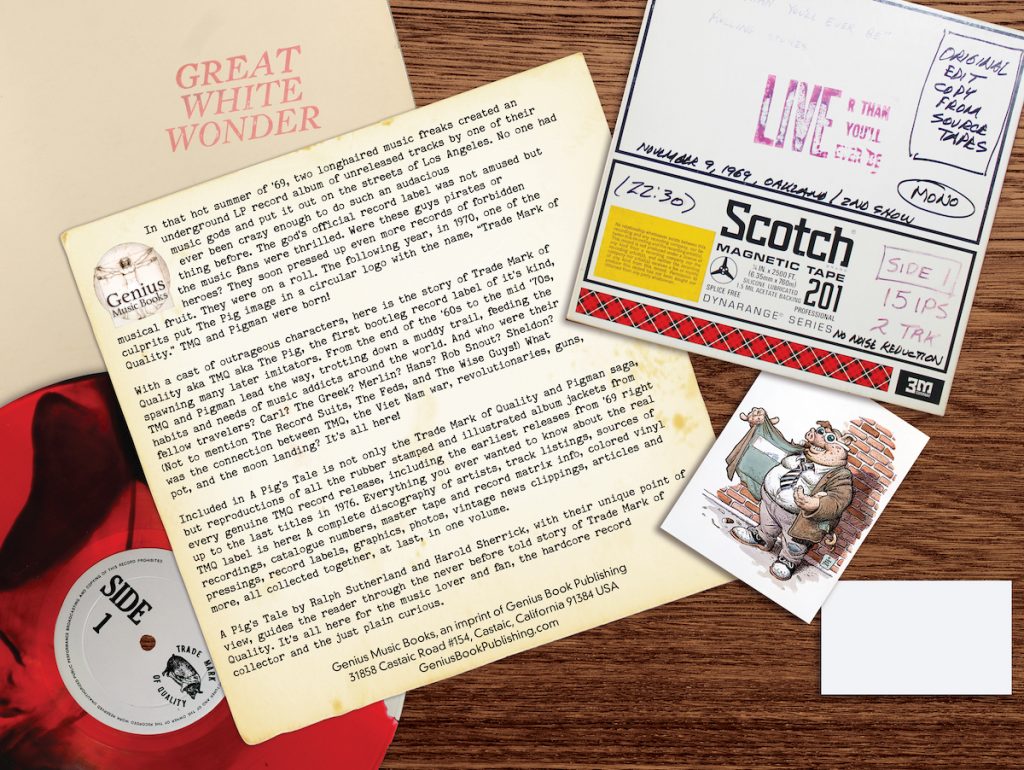
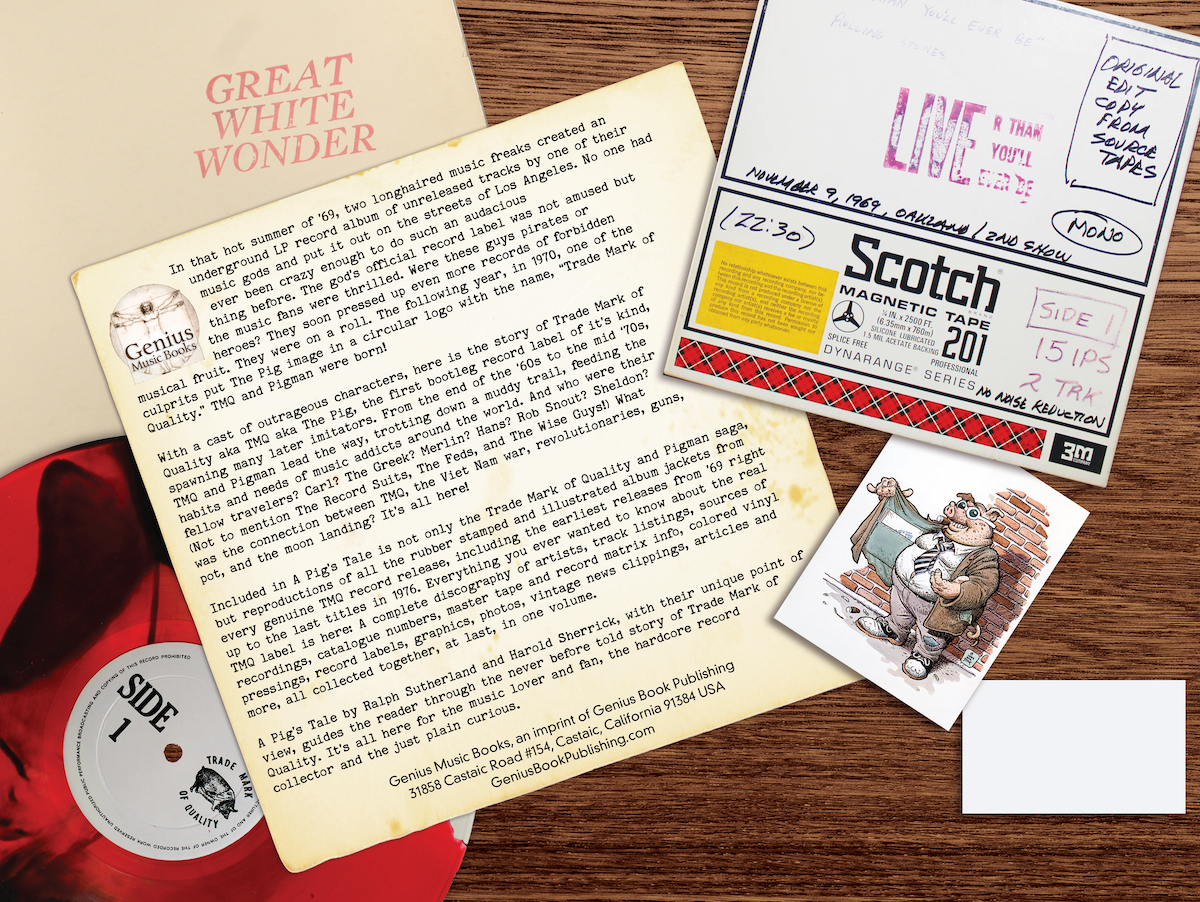
In that summer of ’69 two longhaired music freaks created an underground LP record album of unreleased tracks by one of their music gods. Who were these fellow travellers? Carl? The Greek? Merlin? Hans? Rob Snout? Casper? Sheldon? The Blue Hasslebeast? Ol’ Fred? (Not to mention, The Brooklyn Boys, The Record Suits and The Feds!) What was the connection between Trade Mark of Quality, and the Viet Nam war, revolutionaries, guns, pot and the moon landing?.
A new book, “A Pig’s Tale”, co-written by Ralph Sutherland and Harold Sherrick, tells the story of Trade Mark of Quality, the first bootleg record label of its kind, spawning many later imitators. The 336-page book arrives September. 10th, 2021, by Genius Book Publishing.
According to a press release, “In that hot summer of ’69 two longhaired music freaks created an underground LP record album of unreleased tracks by one of their music gods and put it out on the streets of Los Angeles. No one had ever been crazy enough to do such an audacious thing before. The god’s official record label was not amused but the music fans were thrilled. Were these guys pirates or heroes? It was so much fun the first time, they soon pressed up even more records of forbidden musical fruit. They were on a roll. The following year, in 1970, one of the culprits put The Pig image in a circular logo with the name, Trade Mark of Quality. TMQ and Pigman were born!”
Sutherland and Sherrick, friends of the Pigman during the TMQ era, have now come together to tell the complete, never-before-told story of Trade Mark of Quality. Says the announcement, “Visiting the Pigman in Canada , Sutherland and Sherrick have held the master tapes in their hands and gazed upon the first copy of the first pressing of the first bootleg, “Great White Wonder“. They have sifted through the myth and misinformation about TMQ, and interviewed the Pigman himself about the multitude of albums. Through their extensive worldwide contacts, Sutherland and Sherrick have compiled every known piece of data on the discography of TMQ, enough to discern, in detail, a true TMQ bootleg from one of its inevitable and many copycats.”
“A Pig’s Tale”, the press release continues, “goes beyond the story of TMQ and Pigman. The authors have compiled the complete discography of every TMQ album, including dates, artists, tracks, venues, and methods of identification. The very existence of “A Pig’s Tale” is going to thrill owners of genuine TMQ bootlegs and crush others who possess the imitations.”
Included in A Pig’s Tale is not only the Trade Mark of Quality and Pigman saga, but reproductions of all the rubber stamped and illustrated album jackets from every genuine TMQ record release, including the earliest releases from ’69 right up to the last titles in 1976. Everything you ever wanted to know about the real TMQ label is here: A complete discography of artists and track listings, sources of recordings, catalogue numbers, master tape and record matrix info, coloured vinyl pressings, record labels, graphics, photos, vintage news clippings, articles and more, all collected together, at last, in one volume.
Steven Booth, publisher at Genius Books, said, “This book is going to blow the roof off the underground vinyl community. Where else can you read about music, true crime, history, Bob Dylan the Rolling Stones, the Beatles, Led Zeppelin, Pink Floyd, record manufacturing, and pigs?”
CHVRCHES, who are preparing to release their new album “Screen Violence” at the end of the month, have covered Echo & The Bunnymen’s 1984 classic “The Killing Moon” as an exclusive for Amazon’s playlist. “We all love Echo & The Bunnymen and had wanted to cover ‘The Killing Moon’ for a long time and jumped at the chance when Amazon Music gave us the opportunity,” Lauren Mayberry says. “Screen Violence, the new CHVRCHES album, is very much inspired by movies and ‘Killing Moon’ feels almost synonymous with Donnie Darko which is a film we all love.”
Cleveland duo Suitor (featuring members of Small Wood House) released their debut EP “Communion” last October, and this past month, it was re-released with three new tracks. The EP is filled with twisty, synth-laden indie rock and post-punk, pinging between a tightly wound energy and pleasing pop sounds. Chris Corsi’s nimble guitar and synth riffs intermingle with Emma Shepard’s alluring vocal performances, lending a lingering feeling of mystique that’s enhanced even further by their lyrics. Their writing is poetic and fairly cryptic, utilizing grim imagery like a hellish pit of fire, a slaughtered calf and a dream that leaves you motionless, imbuing the record with a feeling of tense, high-stakes drama. These sentiments are paired with indie-pop tunefulness (“Communion,” “Moth”) and spidery punk (“To Water,”“Suitor”), creating these immersive worlds of tantalizing darkness.
Their three new songs are placed at the tail end of the tracklist, and each one is a bright spot. “How Do I Know You’re There” offers coarse, doomy punk, while “Dagger” packs a saintly sweetness.
The final track “Waitress” may be their best yet, centreing on an intoxicating synth rumble and Shepard’s moody incantations. The planet might be spinning out of control and headed off a metaphorical cliff, but strangely enough, the intensity Suitor captures here will make you feel less crazy.
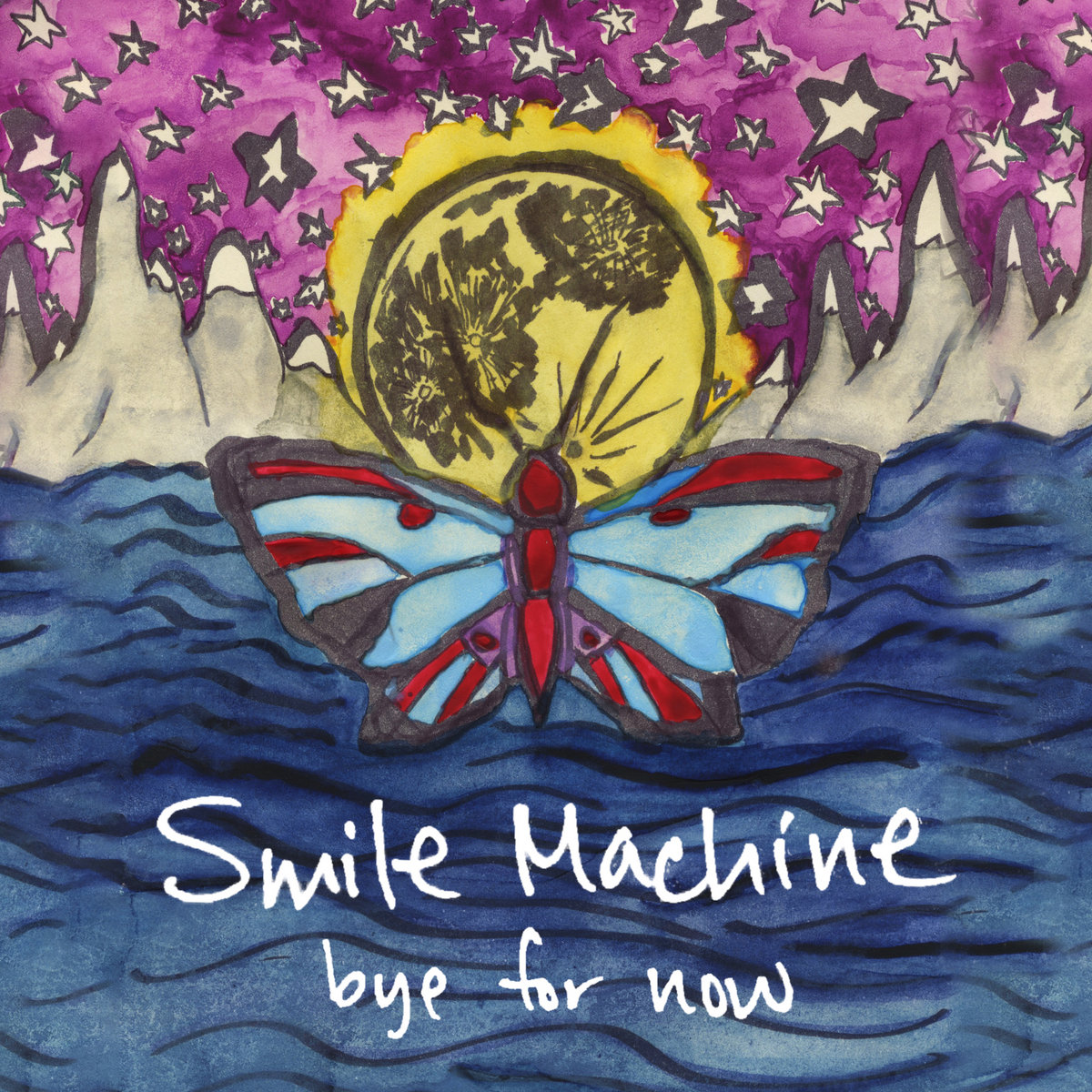
Smile Machine, is the project of Brooklyn musician Jordyn Blakely , Jordyn nails the art of the scratchy pop song. Every song on her five-track EP “Bye for Now” bares its jagged teeth and delicate sweetness. The EP starts with a bang, kicking off with the face-melting shoegaze of “Bone to Pick,” which features heady guitar leads and a shouted poem about an unnerving dream. “Pretty Today,” in contrast, is speedier, with a driving, staticky rock engine, Blakely’s icy vocals and added sparkling synth detour from Isabella Minigione (Peel Dream Magazine, Baked).
While Bye for Nowserves as the first solo release from Jordyn Blakely as Smile Machine, the drummer’s long been an integral part of the Brooklyn DIY scene and Exploding in Sound roster, having been a core member of Stove, Night Manager, and Jackal Onasis , as well as playing in live bands for artists including Maneka and Bartees Strange. If all of the names I just listed mean anything to you, you probably have some idea of the scuzzy, made-for-the-tape-deck, lo-fi grunge contained on Blakely’s new five-track release,
“Pretty Today” by Smile Machine (aka Jordyn Blakely) is the second single from “Bye For Now,” due out July 16th, 2021 on Exploding in Sound Records
While some lo-fi releases leave much to be desired with their tinny soundscapes, Bye for Now is well balanced—you get a real sense of contrast and weight, and her violent cymbal crashes never overshadow the richness of her vocals. “Snail S(h)ell” is a show of pop prowess, with Blakely’s vocals radiating to kaleidoscopic effect, and it also features an appearance from Emma Witmer (gobbinjr) on keys. The EP wraps up on a clamorous note via the gnarled guitars of “Stars” and “Shit Apple,” with the latter’s wailing, curtain-closing riff dealing the satisfying fatal blow.
The crashing/shouted opener “Bone to Pick,” the mid-album low-hum of “Snail S(h)ell,” and the album highlight that is the last 40 seconds of “Stars” (the first hundred secs are good too), plus the two pre-album singles—along with a track-by-track breakdown of the project, spotlighting everyone who helped bring Bye for Nowout now.
1. “Bone to Pick”
The words for this song were written about a year before any of the music, the morning after I had a really weird dream and just wrote down anything I could remember when I woke up. In the dream, I was at a family gathering sitting at a kitchen table with my dad (who had passed away two years prior), but when I tried to talk to him or acknowledge him, it was sort of like that dream sequence in Twin Peaks where when he spoke his voice and words sounded distorted and inaudible. It felt like he couldn’t really see me or realize it was me in the dream also, and just left me with this disturbing, unresolved feeling that hung around for days.
The riff was written about a year later when I was jamming with my friend Sean Spada on synth. Since the form doesn’t repeat, I didn’t think it would really make sense to use as a song and couldn’t figure out a melody that stuck, but I needed more material to play live so tried playing it while screaming the words from the poem over it to kind of emulate that frustration. It actually felt and sounded pretty good so I was like, OK, this could be a song after all, maybe!” I had to track the vocals during quarantine, but they’re insanely loud and probably annoying to listen to, so I did some takes while my roommates were at the grocery store, then edited them all into one version. There are three guitar solos happening throughout the song that I tracked into GarageBand during quarantine, and I love how they’re like a time capsule for that moment in time. I was taking remote guitar lessons with my friend Tom McCaffrey to help me work on soloing and technique. As difficult as lockdown was, it allowed me some time to practice music in a deeper way and become more independent with recording.
2. “Pretty Today”
My friend Isabella Minigione (Baked, Peel Dream Magazine) tracked the synth parts remotely during quarantine and we edited it into the song. Since the intro repeats a few times, her solo in the middle really stands out and elevates everything by offering some hopeful, positive energy to an otherwise pretty dark song conceptually. I love how it feels and sounds like a melody from a video game.
My brother Brant Louck and I directed and shot the video in his backyard in Brooklyn, and it’s the third video we’ve done together (the first being Jackal Onasis’ “Big Deal Party,” the second Stove’s “Duckling Fantasy”). The pink teddy bear is symbolic of the pressure on women to constantly be beautiful, well-groomed, and well-behaved, without giving them a chance to explore or appreciate who they really are outside of their image. As a kid I always thought it was odd and rather gross that girls were advertised baby doll toys; like, why would you enjoy pretending to care for a baby when you’re still a baby yourself? The white dress in the yard is representative of society’s obsession with innocence and the construct of virginity, and the Yoko Ono book nodding toward how culturally despised some women are simply for being themselves, or for being successful—it’s always the woman’s fault.
Working with Brant is really fun because we have a similar sense of humour and he always truly understands my concept and brings it to the next level. It was his idea for me to take a selfie with the bear on the scooter, and to poke a hole in the bear’s mouth so we could put the cigarette inside and have it look like the bear was actually smoking. It was a challenge to work in a public setting as well; the person who lives in that building came outside and asked us to stop smoking on the stoop because he had a new born baby inside, and we definitely got a lot of strange looks while I was walking around literally rambling to a stuffed toy bear in broad daylight.
3. “Snail S(h)ell”
This is one of the earlier songs I’ve written, when I was playing in Jackal Onasis and Stove, so I wasn’t sure if it would end up being used for either of those bands and had it just sitting around.
I asked Emma Witmer (Gobbinjr) to add some synths and texture, also done remotely during quarantine. Emma offered a lot of moral support while I was tracking with Dan Francia at their apartment in New Jersey one weekend shortly before COVID. It was really fun to hang out with them and their cats in between takes!
4. “Stars”
Dan and I tracked nearly everything before the pandemic; we did drums one day one weekend, bass another day the next weekend, then guitars and vocals during one weekend in late February, but didn’t get to keys, lead guitars, or usable vocals for “Bone to Pick.” I have a fingerpicking part for this song that I recorded two different takes of in GarageBand during lockdown. My computer is from 2013 so it’s a little slow, plus there’s this buzzing signal (not the good kind) that bleeds through every take. I added some effects available in the program, and used two full takes to cover that up, as well as any mistakes, so that it sort of blends as one version.
Later in the pandemic I tracked some guitars at Devin McKnight’s apartment (Maneka ,Grass Is Green) and we redid those parts on this song, but I ended up using the old GarageBand takes after all because they were better performed and I felt attached to the way they sounded. I think I had one take with the Chicken Pickin’ amp and the other take had the Echo amp or another more distorted, shoegazey option, with the Heavenly Chorus and Vintage Drive pedals somewhere in there too. I did end up keeping leads that I tracked at Devin’s for “Pretty Today” and the verses and solos of “Shit Apple,” though!
5. “Shit Apple”
I remember I ate a huge burrito right before tracking drums to this song and my stomach hurt during the entire take, but it came out OK I think. I created scratch guitar demos with a click for each song, then tracked the drums to them with headphones on. I tracked most of the lead guitars later in the summer with Devin, but had a different solo initially that I wasn’t totally happy with or proud of. Eventually I redid it with the help of my friend Jim Hill (my computer was really on its last legs at this point) and recorded two takes of it so that the feedback at the end had more shape and melody. I wanted it to just spiral out in chaos and just feel overwhelming and intense during that build up in the end, so I was pretty proud of how it turned out and am really happy I redid it.
Drums, bass, guitars, vocals by Jordyn Blakely
Happy release day to incredible new Smile Machine EP “Bye For Now,” now out everywhere!! It’s an honour to get to release Jordyn’s solo debut and we hope you enjoy it!
“I Am the Car” is the new single from San Francisco-based Fake Fruit, available digitally on Fire Talk imprint Open Tab. Lead vocalist Hannah D’Amato’s acerbic wit is bitingly emphatic, providing a necessary vantage point into the absurdities and emotion of human connection, and Bandcamp christened the trio “our new no-bullshit harbingers of disgruntled punk.” The new single takes the best of the band’s keen ear for melody and flips it into an impossibly catchy anthem that full of melancholic yearning. The band’s “electrifying” (Pitchfork) brand of nervy guitars and call-and-return vocals have made them one of the new names to know in indie rock.
I think it’s pretty safe to say that Fake Fruit’s self titled debut release is one of the better records from earlier this year. Hannah D’Amato’s snarky vocals have a palpable fervour, and their short bursts of post-punk leave their mark instantly. Each song is a sharp-witted distillation of modern-day communication and relationships, and even within their minimal lyricism, they manage to mix in amusing quips about time wasting, men’s rights and social media mutuals. While most of the LP exudes a moody, anxious cool, there was also a faint beauty buried within these songs, most notably on the melancholy “Swing and a Miss.” The Oakland based band brought that sense of longing into full focus on their new one-off single “I Am the Car.” In my mind, not only is it battling it out for the title of my favourite Fake Fruit song (going toe to toe with “No Mutuals”), but also it’s a song of the year contender.
Maybe that sounds dramatic for a track this unassuming, but to view this song as anything but a perfect pop song would be absurd. It’s a departure from their bracing post-punk, and instead sounds like the best C86 song you’ve never heard. Its touching chorus and melodic arc are exceptional, and D’Amato’s sweet, humble vocals absolutely ruined me. D’Amato compares her emotional recalibration to a vehicle tune-up, essentially singing from the perspective of a dependable car, and I’ll be damned if this isn’t the prettiest song ever written from that point of view.
It’s a departure from their bracing post-punk, and instead sounds like the best C86 song you’ve never heard. Its touching chorus and melodic arc are exceptional, and D’Amato’s sweet, humble vocals absolutely ruined me. D’Amato compares her emotional recalibration to a vehicle tune-up, essentially singing from the perspective of a dependable car, and I’ll be damned if this isn’t the prettiest song ever written from that point of view.
The band:
Hannah D’Amato- Vox + Guitars Alex Post- Guitars + Vox Miles MacDiarmid- Drums Martin Miller- Bass
It is a supreme pleasure to introduce the new album, “Leave Love Out Of This”. A moving art pop exploration of humanity in the digital and electronic spaces, Anthonie Tonnon’s third LP ‘Leave Love Out of This’ comes to life with more questions than answers, pressing us to consider the world(s) we live in, our relationship(s) with our surroundings, and beyond. New Zealand singer/songwriter Anthonie Tonnon is fascinated by systems. There’s an infinite number of strings being pulled by powerful entities at any given moment, which means, in some respects, our fate is left to the whims of a few. Tonnon’s understanding of this reality is then filtered through clever balladry—an arena often preserved for tales of love and heartbreak. But in many ways, Tonnon’s songs are still about romance. After all, if you think of global capitalism as a strong ocean current, it makes perfect sense that our emotions would ripple in relative unison.
Released July 16th, 2021 via Nadia Reid’s Slow Time Records & Misra Records, “Leave Love Out of This” is incredibly epic in scope, vision, and scale, while remaining a surprisingly vulnerable, relatable, and accessible record. The follow-up to 2015’s sophomore LP Successorfinds Anthonie Tonnon working with bandmate and long time collaborator Jonathan Pearce (of The Beths) to create a collection of songs that extends well beyond the bounds of whatever player is being used to transmit sound to the ears.
Tonnon’s third and latest album “Leave Love Out of This” perfectly captures this dynamic, but instead of picking the low-hanging fruit of writing love songs about the end of the world, he uses character sketches and historical fiction to illustrate the melodrama of the present mundanity. Once again, Tonnon displays a grasp for the way history actually unfolds. More than likely, we won’t suddenly wake up to the apocalypse—it will be a slow drip towards this scene, so steady, in fact, that it renders the masses virtually unaware of its progress.
Tonnon writes with charm about callous corporations, the way our society devours the sacred altruism of the young, and the shifting sands of optimism and pessimism within each generation. At times, these songs evoke a bucolic, quaint landscape, with Tonnon’s slight lilt and bumpy guitar clangs. Then come the stylish synths and drum machines and affecting strings, bolstering a sense of cosmopolitan chic.
Tonnon’s meticulous compositions are aided by another pop savant, The Beths’ Jonathan Pearce, who helped produce and record the album.
“Two Free hands” Recorded live at A Synthesized Universe, at Stardome Observatory and Planetarium at the Auckland Arts Festival.
Anthonie Tonnon the album Leave Love Out Of This, released July 16th on Slow Time Records, Misra Records and Flippin Yeah Records