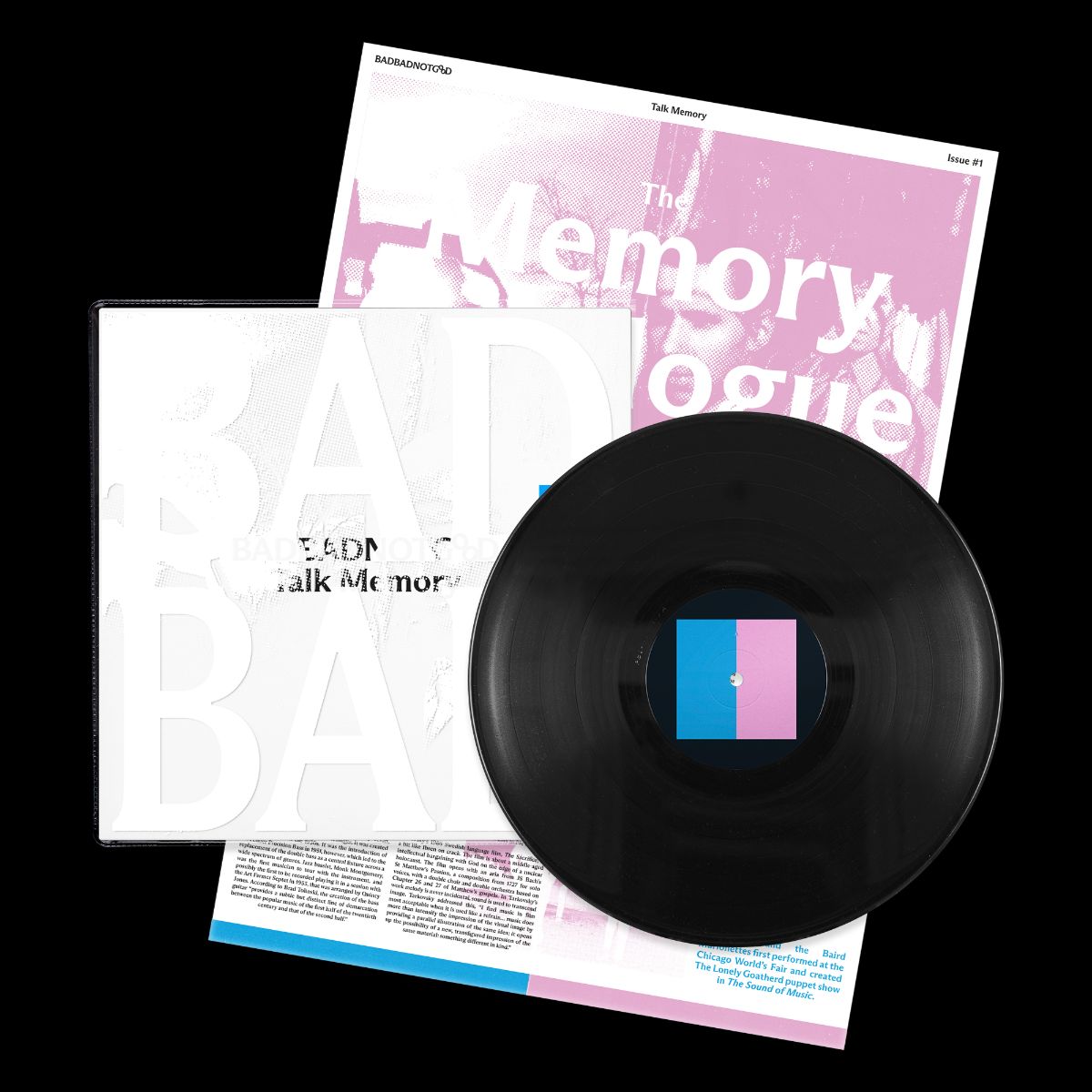
BADBADNOTGOOD have released their highly anticipated psychedelic jazz album “Talk Memory”. Including musical contributions from Arthur Verocai, Karriem Riggins, Terrace Martin, Laraaji and acclaimed harpist Brandee Younger. The album is an evolution focused on collaboration and the magic of improvised live performance.
Virgil Abloh’s design firm Alaska-Alaska created the cover for the LP, CD and cassette, available now. While supplies last, all vinyl orders from the XL store include the first three issues of the Memory Catalogue, a collectible poster-zine documenting the visual, musical, and collaborative world of “TalkMemory“.
The release of the band’s fifth studio album is coupled with an accompanying video for “Love Proceeding,” composed in conjunction with Arthur Verocai. The short film directed by Jamal Burger portrays the bond between two brothers looking after themselves while their mom works late.
“A cacophonous blend of psychedelic jazz, syncopated rhythms, and orchestral bombast.” EntertainmentWeekly “Their most forward-facing jazz record yet, packed with complex, multi-storied compositions you can still dance to.” Mojo
Taken from the album, “Talk Memory”. Out October 8th on XL Recordings and Innovative Leisure.
Fifty years after Jim Morrison’s mysterious death in Paris, enough books on the Doors have been published to fill several shelves at your local bookstore. John Densmore and the late Ray Manzarek wrote their memoirs, numerous biographies are on the market, and a few months ago, a coffee-table volume of Morrison’s lyrics, poetry, and musings arrived. The one band member who’s resisted relaying his version of events is guitarist Robby Krieger, but that silence ends with the publication of “Set the Night on Fire: Living, Dying and Playing Guitar With the Doors”, co-written with Jeff Alulis. The book hits shelves on October 12th.
In the memoir, Krieger unearths his memories on the rise of the band, Morrison’s notorious arrest for public exposure in Miami, the recording of the band’s albums — including the final, “L.A. Woman”Morrison’s death, and how the surviving band members coped. Krieger addresses various myths and legends, including the band’s controversial appearance on The Ed Sullivan Show on September 17th, 1967. At the time, way before MTV and YouTube, Sullivan’s weekly variety show was a major outlet for pop acts looking to reach as many people as possible. But was it the calamitous appearance that legend (and Doors movies) have had it? Read on for an exclusive excerpt from Krieger’s book.
The Ed Sullivan Showwas an American institution — a signpost for entertainers that read, “You Have Arrived.” Or at least that’s what it was when Elvis, the Beatles, and the Rolling Stones made their first appearances. By 1967, Ed seemed corny and out of touch. It was a show your parents watched. But it was still an institution, and still a signpost we wanted to pass.
On the outside, we played it cool, but in the privacy of our dressing room we were giddy. We were in New York City, in the CBS studios, on Broadway, about to be transmitted into millions of living rooms. We had done TV before, but only local channels. This was our first national broadcast. For some reason, I channeled all my pent-up excitement into entertaining my bandmates with my impression of Curly from the Three Stooges. I dropped to the floor and did that thing where Curly makes whooping noises and “runs” in a circle on his side. That’s when Ed Sullivan happened to walk through our dressing room door.
We had done a rehearsal earlier; Ed was stopping by to wish us luck before going on the air. Ed caught the Doors in a rare moment when our guard was down and we were all laughing. Seeing our lighter side inspired him to tell us how good we looked when we smiled, and that we should wear those same big smiles when we went live.
”Live” was what made our Sullivanappearance stand out. Most of our previous TV performances had been lip-synched, which was lame, but it was just how music shows were done back then. And all of them had been recorded ahead of time, which came in handy when Jim didn’t show up to a taping of a short-lived show called Malibu U, hosted by Ricky Nelson. Ray, John, and I were sitting on Leo Carrillo State Beach, surrounded by actors and crew members staring at us and checking their watches. A fire truck had been brought in as a backdrop and all our instruments were set up on it, but we had no lead singer. Being on TV was a big deal for us back. We couldn’t believe Jim had stood us up. After a while we faced the reality that Jim wasn’t coming, so we played “Light My Fire” while my brother Ronny faced away from the camera and did his best impersonation of Jim Morrison’s back. The next day the crew tracked down Jim and filmed him singing while wearing Ronny’s shirt. The whole incident seems more absurd every time I think about it. Can you imagine Mick Jagger not showing up for a TV taping and the Stones filming Keith Richards’s brother from behind instead?
We had also done Dick Clark’s American Bandstand, which, like Sullivan, was struggling to stay hip as the Summer of Love changed the cultural landscape. Dick greeted us in our dressing room before the taping, and he was friendly and welcoming. But he swore like a sailor. He wasn’t angry or bitter; it was his awkward attempt to seem cool. Being on Bandstandwas, overall, a surprisingly forgettable experience. But I’ll always cherish the memory of hearing Dick Clark repeatedly say “fuck.”
Since Clark and Sullivan were the old guard, we were more excited about appearing on The Jonathan Winters Show. Jonathan hadn’t built up a legacy like Sullivanor Bandstand, but we loved his frantic, unpredictable comedic style. Which is maybe why our frantic, unpredictable lead singer launched himself into a piece of scenery and tangled himself in a bunch of rubber webbing at the end of “Light My Fire.” But Jim was out-crazied that night by our host. At the end of the show, Jonathan came out and improvised a monologue for the studio audience. Among other things, he took out a folding carpenter’s ruler and bent it into different shapes like it was a balloon animal, pretending it was a puppy dog or a machine gun. It was cool to see him do some unpolished comedy, but he went on and on, and soon the crowd started to thin out. For over an hour he never let up, even though people kept leaving. We hung out and watched him out of morbid curiosity to see how long he could go. Eventually, the entire audience had disappeared. The cameras were off. He was making jokes to literally no one. I don’t even remember him stopping. As far as I know, he stayed there talking until the next week’s taping.
Our episode of Jonathan Wintersaired later that month when we had a gig at the Winterland Arena in San Francisco. Back then, of course, there was no way to record a show and watch it later. So in the middle of our set, Bill Siddons brought a TV onstage. We stopped playing, put a microphone up to the TV speaker, and sat down to watch ourselves. We thought it would be a treat for the audience, but the screen was only about 19 inches wide. I doubt anyone past the first few rows could see or hear anything, so we just awkwardly watched the show and then awkwardly resumed our set. This was only a couple of weeks after our New Haven show when our fans had learned to expect the unexpected from the Doors. I don’t think any of them expected that!
When we played “Light My Fire” on Sullivan, we didn’t trash the set and we didn’t swear and we didn’t use my brother as a stand-in for Jim, and yet it was the most controversial TV appearance of all. The narrative, according to the supposedly canonical Doors biography No One Here Gets Out Alive,is that a producer told us not to sing the word “higher,” and we all conspired to contravene the order after the producer left the room. According to Oliver Stone’s movie The Doors, Jim mugged for the camera and over-enunciated the word “higher” on-air to protest the attempted censorship. According to Ray’s autobiography, the producer shouted at us after the show and told us we’d never play Sullivan again, and Jim coolly replied, “Hey, man. So what? We just didthe Ed Sullivan Show.”
But in the dressing room, we weren’t offended by the suggestion to change our lyrics: we thought they were joking. “Light My Fire” had been number one for weeks, playing on every major radio station around the country. We had performed it on half a dozen other TV shows. No one cared about the word “higher.” They couldn’t possibly be serious. As for Jim’s delivery, the original footage is out there and you can see for yourself how he hardly moved for most of the song. Jim never moved on TV the way he did at our concerts. The bright lights and the cameras and the artificial atmosphere of a TV studio always made him feel self-conscious. We never conspired about not changing the lyric ahead of time, and we never talked about why he didn’t change it afterward, but my guess is he was just nervous. It was Sullivan. It was national. It was live. He went into autopilot and sang “Light My Fire” the same way he had a million times before. He may not have even been listening when they suggested the change, but if he did do it on purpose, it was probably because he didn’t think it would be a big deal. [Doors Manager] Bill Siddons might’ve gotten scolded by the show’s staff when we weren’t around, but I don’t remember anyone yelling at us or telling us we’d never play Sullivanagain, and I definitely don’t remember Jim’s perfectly scripted badass response to the frazzled, square producer. The way Ray told stories, I’m surprised his version didn’t end with us strutting in slow motion down Broadway while the CBS studios exploded in the background.
The other thing the retelling of the Sullivan Legend always gets wrong is my smirk. After Jim sang “higher,” the camera cut to a shot of me and Ray, and people have since interpreted the look on my face as a sly grin in reaction to Jim’s act of defiance. In truth, I was just the only member of the band who took Ed’s preshow advice to smile. It wasn’t until long after the show aired that I was finally able to see a clip of our performance. Ray, John, and Jim all looked so cool, playing on that historic stage with their serious, stoic faces. And there I was . . . smiling like an idiot.
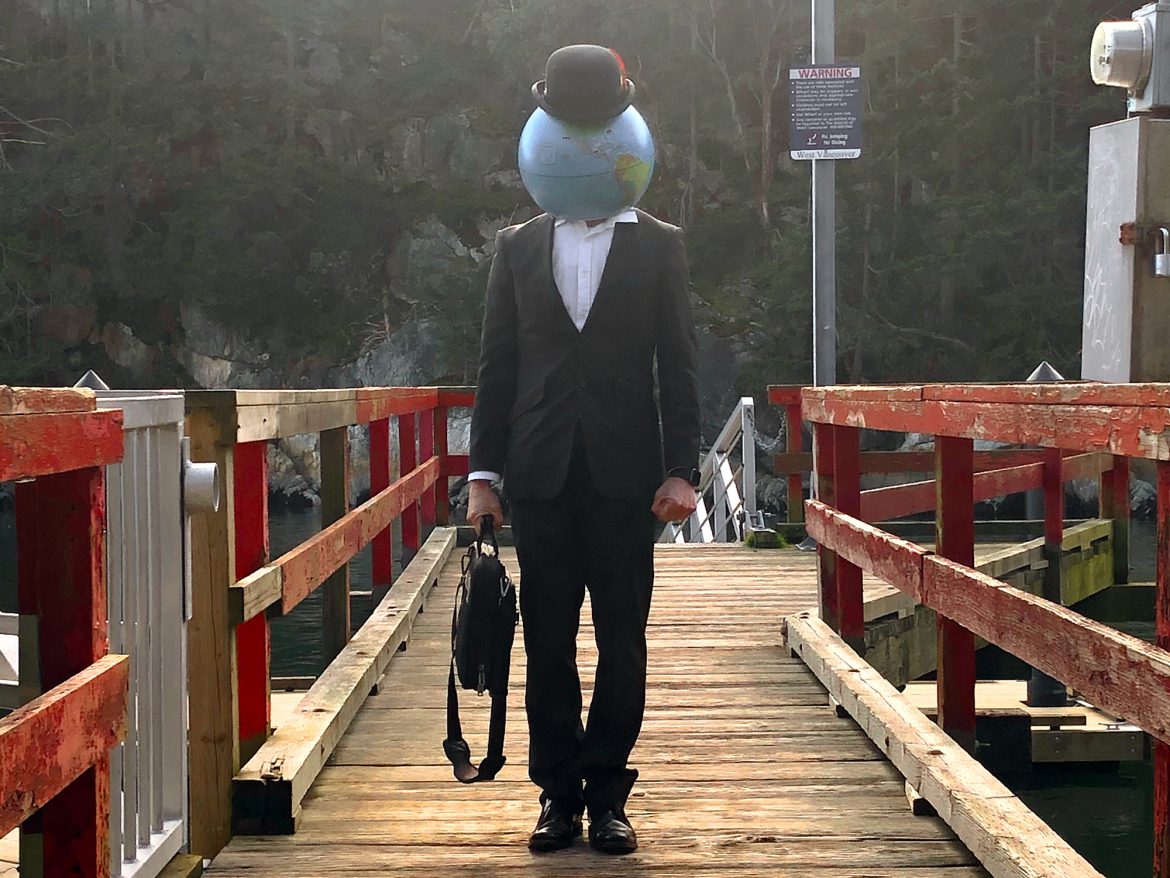
Plain Mister Smith is often lost, perambulating about in space. He makes music with friends to keep him from wondering off….Why be yourself when you can take on the persona of someone or something else? You can get up in the morning and glance at your face and body in the mirror but instead of the conventional you looking back, your imagination takes over. When creating a new identity if in a fresh environment then the possibilities are endless. A backstory can be formed that dreamily shapes your personality, a fun project suddenly turning into a natural way of living as people take interest. Why be yourself? But then what is a real self?.
“The Rat” is about those times when you are feeling empty and small and you begin to fantasize about having another life,” Plain Mister Smith explains “You begin to live in envy of those who seem to lead lives filled with heroics, love, great deeds, extravagance! But underneath these vicarious fantasies and projections of stars and heroes and ‘beautiful people’, you know it’s kind of a lie, and really you’re just a Dirty Rat living your life in the Rat pack.”
“The Rat,” the latest single by Plain Mister Smith featuring singer-songwriter Jordan Klassen. Plain Mister Smith is the alias of Mark Jowett, a musician from Vancouver who has previously been a part of Moev and Cinderpop.
“The Rat” follows the debut single “Strangers Strangers” released in June, a folkier softer track (also featuring the vocals of Jordan Klassen) which explores the hypnotic possibilities of being a dreamer. Both are taken from the up-coming EP to be released in October, a gathering of uncomplicated songs that, with their lyrically absurdity and experimental approach to instrumentation, transports into the odd university of Plain Mister Smith.
Released September 17th, 2021 Music Recorded and written and produced by Plain Mister Smith Vocals by Jordan Klassen Drums by John Raham.
Canberra based band Moaning Lisa has been steadily releasing EPs and singles and collecting praise and prime live supports since 2017. This new single, along with the album “Something Like This But Not This” due out in October, will undoubtedly add to the ever-growing teams of allegiance.
“Inadequacy” is the band in a somewhat measured mode. It’s a trampling rhythmic pulse thickened with muted fuzz and a drum feel whose restraint gives the verses an amiable sort of tension. The melodic structure from the outset is also controlled, allowing the straight meter to affect an adjoining sense of trickling heat. All the while, textures such as vocal harmonies and snippets of liberated guitar signpost what’s to come.
A post-grunge styled riff underpins a chiming melodic line. Its further sweetened by a suite of buoyant vocals and an overall souped-up energy flow. “Inadequacy” has two distinct sound identities. The verses intone a clear-eyed confession, with lines that reinforce this, such as ‘my greatest mistake is one I get to make’*. It then segues into choruses that don’t merely poke around the emotional centre but transmit directly from it.
The balance works. The shade before the avowing light carries the song right up the conclusion’s high harmonies and cloudburst guitar, wrapping up the exposed perspective with a seemingly impromptu edge. Moaning Lisa is composed of Charlie Versegi (singer/guitarist), Hayley Manwaring (singer/bassist) EllenChan (lead guitarist) and Hayden Fritzlaff (drummer). Renowned for creating an atmosphere entirely of their own, the band deftly combines a garage rock, grunge fantasy with ‘one massive, cosy, accepting love-fest’
While the collection of songs on Philadelphia/Michigan musician Rosali’s electrifying third LP, “No Medium”, explores the often dark territory of loss, death, sexuality, self-sabotage, and addiction, there is a surprising lightness to its sonic being.
Backed by members of the David Nance Group, Rosali (Long Hots, Wandering Shade, Monocot) wades through the emotional mire with infectious, earworm melodies led by her luminous voice. With their rich, raw instrumentation, these rock ballads sound like the resilience discovered in facing one’s darkest moments, the assurance of the calm and clarity that comes after the storm. As she sings on the second track, “Bones,” “Through the darkness of the field / I walk through without yielding / To the rest of the feelings / I’m carrying.” With her confident song craft, Rosali illustrates the ability to push through, moving toward something greater without being destroyed by the weight of trauma.
Engineered by James Shroeder and featuring Kevin Donahue (Simon Joyner), James Shroeder (Simon Joyner, DNG, Connor Oberst), David Nance, Noah Sterba,Colin Duckworth, and Daniel Knapp, the album was recorded in ten days and the raw immediacy of the music is palpable across these ten tracks. Added adornment was contributed by Philadelphia’s Robbie Bennett (War on Drugs) on organ and keys, and Matt Barrick (The Walkmen, Jonathan Fire Eater, Muzz) makes a percussion cameo on “Whisper,” which was tracked at Philly’s Silent Partner Studio, where “No Medium” was mixed by Quentin Stoltzfus (Mazarin, Light Heat). The open creative collaboration elevated the songs, resulting in the exciting, vibrant sound of the album.
Rosali wrote the bulk of these songs in January of 2019 while on a self-imposed two week residency in the hills of South Carolina. Alone in an old farmhouse, she experienced supernatural events and faced her own demons in the deepest darkness. Perhaps as a result, there is a boldness that permeates the album, a daring vulnerability in both the lyrical themes and their musical accompaniment. Rosali says, “I approach guitar playing the same intuitive way I sing, which is profoundly spiritual for me. Where words fail, the guitar becomes the conduit for raw feelings, providing a direct connection to them. I’m constantly working on being fearless in my work, which means showing the rough side, the mistakes along with the triumphs.”
While writing “No Medium”, Rosali was inspired by harmonographs—swinging pendulums that create beautiful illustrations of the mathematics of music—considering how the mind, too, creates images through song. She imagined herself as the swinging pendulum—“a body suspended from a fixed point” (Encyclopedia Britannica), governed by the forces surrounding her. She thought about the pendulum’s relationship to time, movement, and even its use in divination practices. The album’s title, lifted from Charlotte Brontë’s, Jane Eyre, resonated with this vision: “I know no medium: I never in my life have known any medium in my dealings with positive, hard characters, antagonistic to my own, between absolute submission and determined revolt. I have always faithfully observed the one, up to the very moment of bursting, sometimes with volcanic vehemence, into the other.” With the multiple meanings of “medium”—as middle ground, a term for psychics, and as the material of artistic expression—No Medium felt like the appropriate name, describing how the self is shaped by the patterns of life .
The influences for the sound of “No Medium” reflect this pairing of assured vulnerability, in the stylistic coherence of Bob Dylan’s Desire, the tender delivery in Iain Matthews’ Journey From Gospel Oak, the strut and swagger of Bowie’s Hunky Dory, the ambition and beauty of Gene Clark’s No Other, and the playful catharsis of Harry Nilsson’s Nilsson Schmilsson. The Richard and Linda Thompson-esque album opener “Mouth,” places Rosali within both a physical and emotional space. “East of the river I was travelling on / watch me lie, undone / rest me in a forest, overgrown / until I am free of all that I’ve known,” she sings. There is movement, both within a cityscape, and in her outlook on love. Speaking of her thought process when writing the song, she says, “I imagine confidently walking away from the past, toward a new approach to love and intimacy to achieve a closer relationship with myself.”
In “Pour Over Ice,” Rosali explores her relationship with alcohol and her former reliance upon it as a social lubricant to quell her social anxiety, an energizer to keep moving, a means to cope and self-medicate, and most addictively, to lure out her wild side as a free flowing, good time girl. While drinking helped her through some shitty times, it eventually got the upper hand and became an insatiable hole within. She says, “The ‘you’ in the song is really me, talking to that component of myself struggling with drinking and self-sabotage, caught up in the cycle, and all the bad choices I made.” She sings, “Maybe I didn’t care enough / or can’t remember / chasing small pleasures / making fire from embers.” Rosali wanted her lead guitar on this track to simultaneously sound like a slow motion car crash propelling her through the day, and the sound of a gnawing hunger for something more.
Rosali’s alliance with the Omaha musicians that orbit David Nance Group (including Nance himself) came about while on a Long Hots / DNG tour in the summer of 2019. Great friendships formed and one night after playing in Detroit, Dave suggested they be her backing band. The pairing was effortless and natural, and in November of the same year, they were recording No Medium in a basement in Omaha.
The spirit of this heartfelt album, comprised of ten emotionally-wrought tracks, is perhaps best encapsulated by the name of its closing track, ‘Tender Heart’. Exposing a real vulnerability and humanity to its creative voice and proving itself a more-than-competent musical endeavour in the process makes us proud to assert its place among the year’s finest.
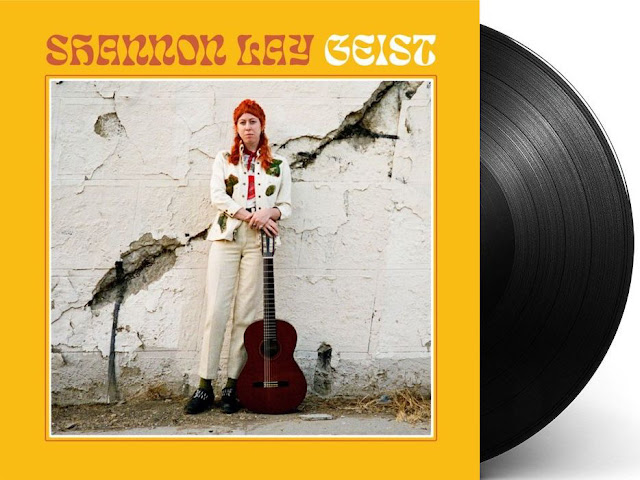
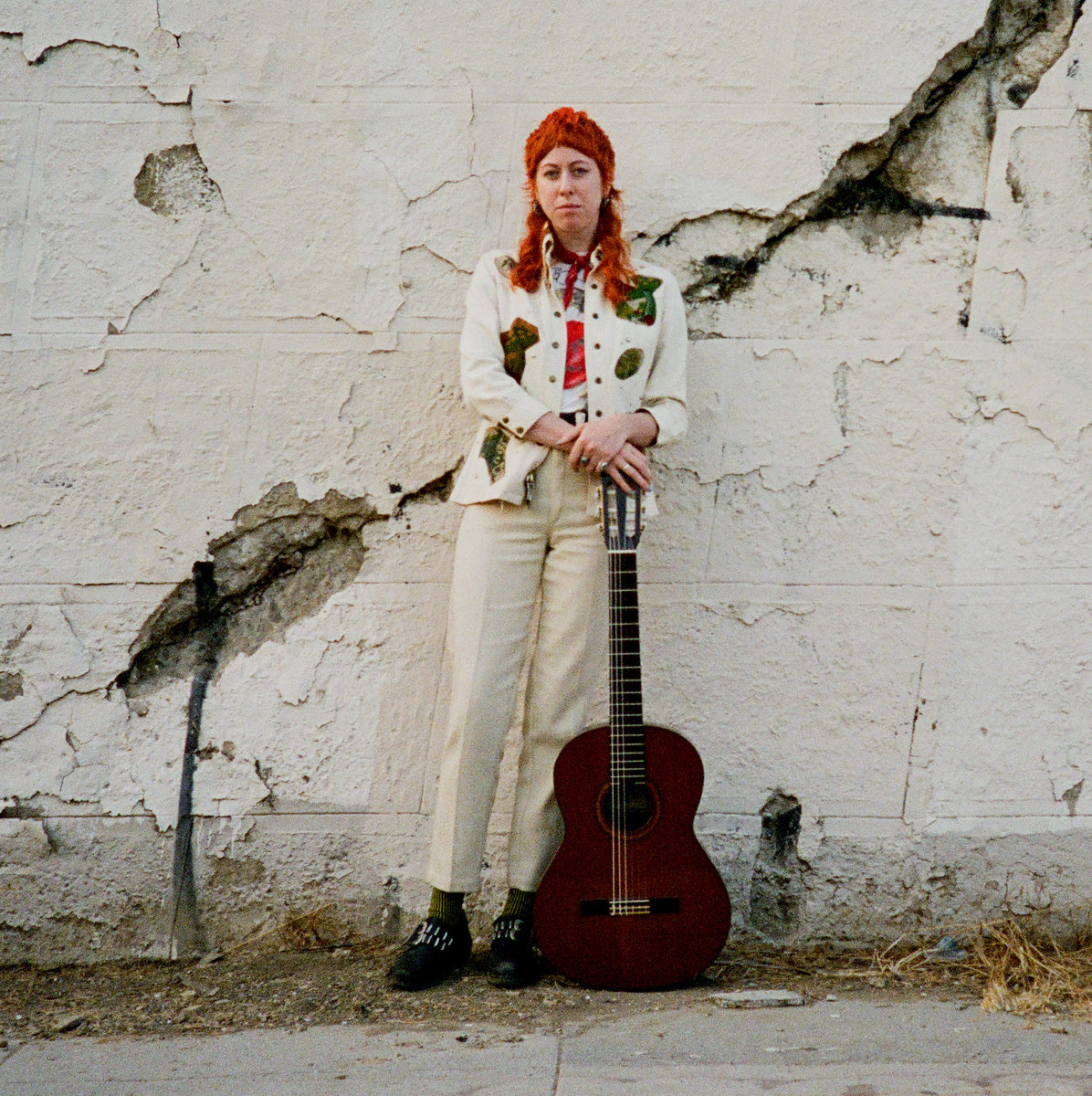
Shannon Lay recorded a sombre folk album during the American lockdown, which was then beautifully coloured by quite a few musicians and that soon surpasses her great previous albums .The American singer-songwriter Shannon Lay already showed on her previous albums that she is not only a great singer, but also an excellent songwriter. You can hear it even more clearly on the “Geist” released this week. It is an album with a sober acoustic basis, which has been coloured in a very tasteful way by a number of guest musicians. It delivers a warm-blooded and timeless sound, which colours beautifully with the beautiful voice of the American musician. “Geist” builds on the previous two albums of the musician from Los Angeles, but makes a bit more of an impression. Annual lists material for lovers of contemporary folk with here and there a longing for the past.
After “All This Life Goin Down” from 2016, “Living Water” from 2017 and August from 2019, “Geist” is already the fourth album by American musician.
The music on “Living Water” that reminded me of illustrious American folk singers from a distant past like Karen Dalton, Linda Perhacs and Judee Sill, but I also heard something from Joni Mitchell. The great thing about Shannon Lay’s music, however, was that one moment she took you back to the distant past, but the next moment she sounded quirky and contemporary.
It is a line that was extended to the August produced by Ty Segall, which at most sounded a bit fuller than its predecessor. “Geist” released this week is again a logical continuation of that album. The musician from Los Angeles, California, started her new album on her own due to the lockdown in the studio of Jarvis Tavinere of the band Woods. The recorded basis of acoustic guitar and the voice of the musician is beautiful, but was eventually further coloured by quite a few musicians, including multi-instrumentalists Ben Boye (Bonnie Prince Billy) and Devin Hoff (Sharon Van Etten), who added strings, among other things. Then some keyboards were added and Ty Segall was allowed to play a guitar solo. Despite all the additions, “Geist” is a pretty sober sounding album, on which the bass played by Shannon Lay still dominates. Also on “Geist”, the music of the American musician still reminds of folk singers from a distant past, but the album sounds a bit more contemporary than its predecessors and occasionally also contains some influences from Celtic music.
The accents that have been applied by the aforementioned musicians are particularly tasteful and also provide the album with a special atmosphere and subcutaneous tension. Just like on her previous album, Shannon Lay draws for beautiful but also adventurous songs, to which she adds an over of Syd Barrett’s Late Night.
The musician from Los Angeles delivered a high-quality album with “August” two years ago, but I personally like “Geist” a little better, especially because the album leans less on the past and sounds completely timeless. Geist is an album that is completely convincing immediately upon first listen, but because of the special accents and twists in the instrumentation and the imaginative songs, it is also an album that becomes even better and more interesting for a long time. It is currently raining five-star reviews for the American musician and there is really nothing to argue with.
“Geist” feels like a window – or a mirror – into possibilities of the self and beyond. Shannon Lay’s new album is tender intensity, placeless and ethereal. It exists in the chasms of the present — a world populated by shadow selves, spiritual awakenings, déjà vu, and past lives.
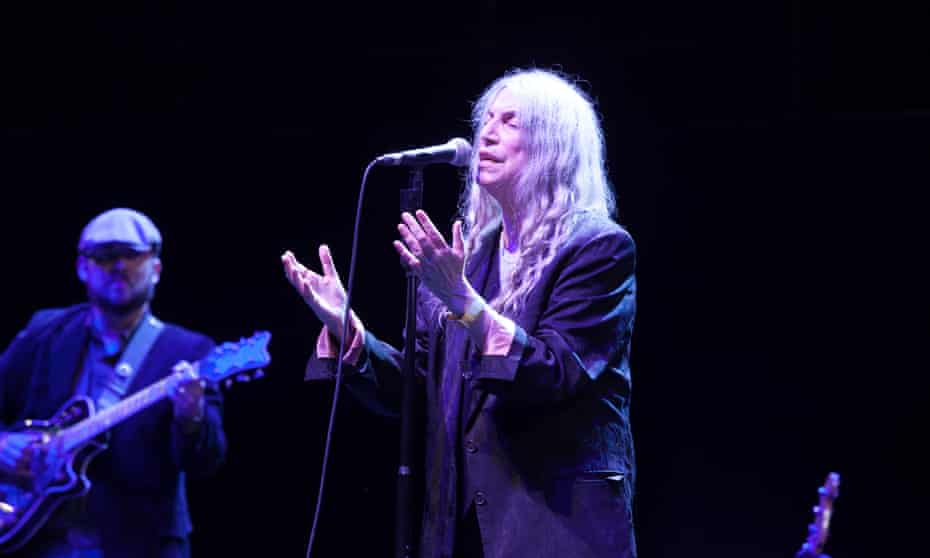
With worn black boot’s on the monitor, her long artist’s hands carving up the air, Patti Smith is a performer who asks for no quarter. Her rakish authority has only been cemented by the passage of time since she started out, her uncompromising poetry accompanied by the lash of proto-punk early 70s electric guitar.
Tonight at the Royal Albert Hall, Smith’s sonorous voice lends itself as easily to a howl on her best-known songs as it does to a tender croon for her cover of Stevie Wonder’s “Blame It on the Sun“. “Free money!” she shouts, both hungry and sneering, channelling the yearning of her mother whose hopes for better hinged on a lottery ticket. “Ain’t It Strange”, a reggae-leaning track from Smith’s 1976 album “Radio Ethiopia”, is intense, foreshadowing Nick Cave with its “hand of God” refrain. “Transcend! Transcend!” she seethes.
Around Smith, a full-strength band rev up to take-off velocity. She often travels with a more pared-down outfit, or as a solo act for poetry readings. But for this first of two gigs at the Albert Hall, her day-one associate Lenny Kaye is on guitar. According to a chapter extracted in Mojo magazine from his forthcoming book, Smith sought out Kaye, then a record store guy compiling a yet-to-be famous garage rock box set, “Nuggets”, at the behest of her friend, the playwright Sam Shepard. Fellow seasoned travellers Jay Dee Daugherty and Tony Shanahan are on drums and keys/bass respectively. Smith’s offspring, Jackson (guitar) and Jesse (keyboards), are players whose roles defy nepotism.
You never quite know which Patti Smith is going to turn up – the poet who collaborated with Soundwalk Collective for a trilogy of spoken-word-with-sound albums across 2019 and 2020 or the author of a series of acclaimed dream-state travelogues – 2019’s Year of the Monkey is her most recent. This, however, is declaiming, seer-mode, rock’n’roll Patti – generous with the Rolling Stones covers (“this one’s for Charlie!”), egging on Kaye’s wiry flurries, prancing and rearing like the horses in the fever dream of Johnny, the protagonist of her 1975 song “Land”.Smith commands the audience to raise their arms and ‘feel your blood’ You get a sense of the road travelled from Smith’s hardscrabble New Jersey beginnings to this imperial cathedral from her riveting rendition of “Piss Factory“, her acclaimed poem about being bullied for doing her industrial piecework too quickly – she quit and sought her artistic fortune in New York City.
After her agent had tried for some time, Smith finally got the go-ahead to play the Albert Hall in 2020, she confides. And then came “an extraordinary time”, when we all made “memories we did not have to have”.
Thankfulness comes in two forms tonight. Smith’s 2000 song “Grateful” soothes the listener: “it will all come out fine”. Mid-set, though, we get the towering achievement from her third decade in the game. The 1996 song “Beneath the Southern Cross” was written after the loss of her husband, Fred “Sonic” Smith of MC5.
The two chiming acoustic guitars set up a simple, recurrent figure, droning and implacable, as Smith’s incantatory words hover in the air. At the track’s peak is a fresh call to life. She commands the audience to raise their arms and “feel your blood”, which has not been “stagnant” but “pulsating” in us throughout 2020. “We are fucking alive,” she bellows at a crowd long since on their feet, baying their agreement and surging towards the foot of the stage, “and we are free!”
During Covid, Smith, also a visual artist and photographer, began documenting her everyday surroundings on Instagram. She also joined the paid-for newsletter provider Substack; her output is called The Melting. She recently told the Los Angeles Times that during lockdown, stir-crazy and struggling to write when not travelling, her local cafe allowed her to move one of its tables and chairs to her apartment.
These rescheduled gigs aren’t pegged to any particular record or publication, but Smith did recently release a seven-track live EP on Spotify as part of its Live at Electric Lady Studios series. Inspired by Jimi Hendrix, who recorded there, Smith laid down her first demos at NYC’s Electric Lady; Kaye reports in his book that Smith’s flatmate, the artist Robert Mapplethorpe, put up the money. Tonight, she plays one of those live tracks, Bob Dylan’s “One Too Many Mornings”, recounting how she used to moon over “the guy that writ it” as a teen.
Naturally, the goosebumps come back out again for “Land” – less a song than an EP in itself that follows Johnny into a fugue state in the aftermath of an assault. Smith has brought Johnny bang up to date. He is “every gender, every race, every persuasion… all things”.
He surveys the world, polluted, full of “debris”, and invokes nature, pledging to sacrifice himself for “every species”. Tonight the song ends with Smith singing singing “Jesus died for somebody’s sins, but not mine”, but it sounds like Johnny is ready to take the hit for all of us.
Indie rock is rarely witty or sexy. So Wet Leg, with their singles about sexy furniture “Chaise Longue” and late-night emissions “Wet Dream”, their Mean Girls quotes and single entendres, are sometimes regarded with suspicion. Unfair. They come to bring joy. Rhian Teasdale and Hester Chambers first met at the Isle of Wight College and made some promising if introspective music together and apart over the following decade. Revelation came when the pair decided to take it a little less seriously while careening around a festival.
Teasdale stopped writing “unlistenable” piano pieces and learned guitar, which Chambers already played. They assembled a band with fellow islanders Josh, Henry and Ellis, booked gigs and self-directed some videos, Teasdale using her experience as wardrobe assistant on Ed Sheeran videos to design their distinctive “serious hat-wearing cottage-core lady” look. A record deal arrived after just two songs, then during lockdown the duo sketched out their debut album. “Our first songs were really crass, about getting abducted by aliens,” recalls Teasdale. “We’ve reined in the crass but kept the fun.”
You could pick out splinters of American new wave and British post-punk from their deadpan vocals and sharp-elbowed songs, but the broad range of acts they’ve been compared to proves they have a swagger of their own. Florence, Iggy Pop and Hayley Williams love them – and so must you.
Wet Leg – “Wet Dream” – out now on DominoRecordings
Although originally from Northern Wisconsin, Pondhopper’s latest material was both written and recorded in the house the trio share in Los Angeles. After emerging back in the spring with their debut single “Sapling“, the band followed up in August with the excellent “So So”. While we’re all still awaiting details of the band’s first longer format release, today they’re premiering their latest single, “Fall Apart”.
We shot this music vid back in November with our good bud Daniel Tyler on a lengthy road trip back to Wisconsin. This ended up being one of the most low key music video shoots we’ve ever done but it’s honesty our favourite one. Huge thanks to Steve (Erik’s dad) for starring in it and letting us rip around on the Yamaha all weekend! And thanks to everyone else who has helped along the way.
Discussing the inspiration behind the track, Pondhopper suggest “Fall Apart” is, “about how certain things like a song can bring up sad memories and how those things seem to present themselves more frequently when they are unwanted”. The song is littered with memories, emotions triggered by seemingly insignificant moments that make your mind run wild, as they sing, “it’s coming up on shuffle far too frequently for the algorithm to be functioning, every time I hear that track I get teary-eyed and I fall apart”.
Musically, the track is a slice of indie-folk, pitched somewhere between the wistful acoustic explorations of Angelo De Augustine and the luxurious West-Coast pop of Whitney. The track begins with a series of muted, chunky acoustic guitar chords before flourishes of tumbling piano notes and the easy vocal melody take the whole thing towards entirely dreamier territory. It’s very early days for pondhopper, yet there’s enough here to suggest they’re onto something that’s going to be well worth keeping an ear on in the weeks and months to come.
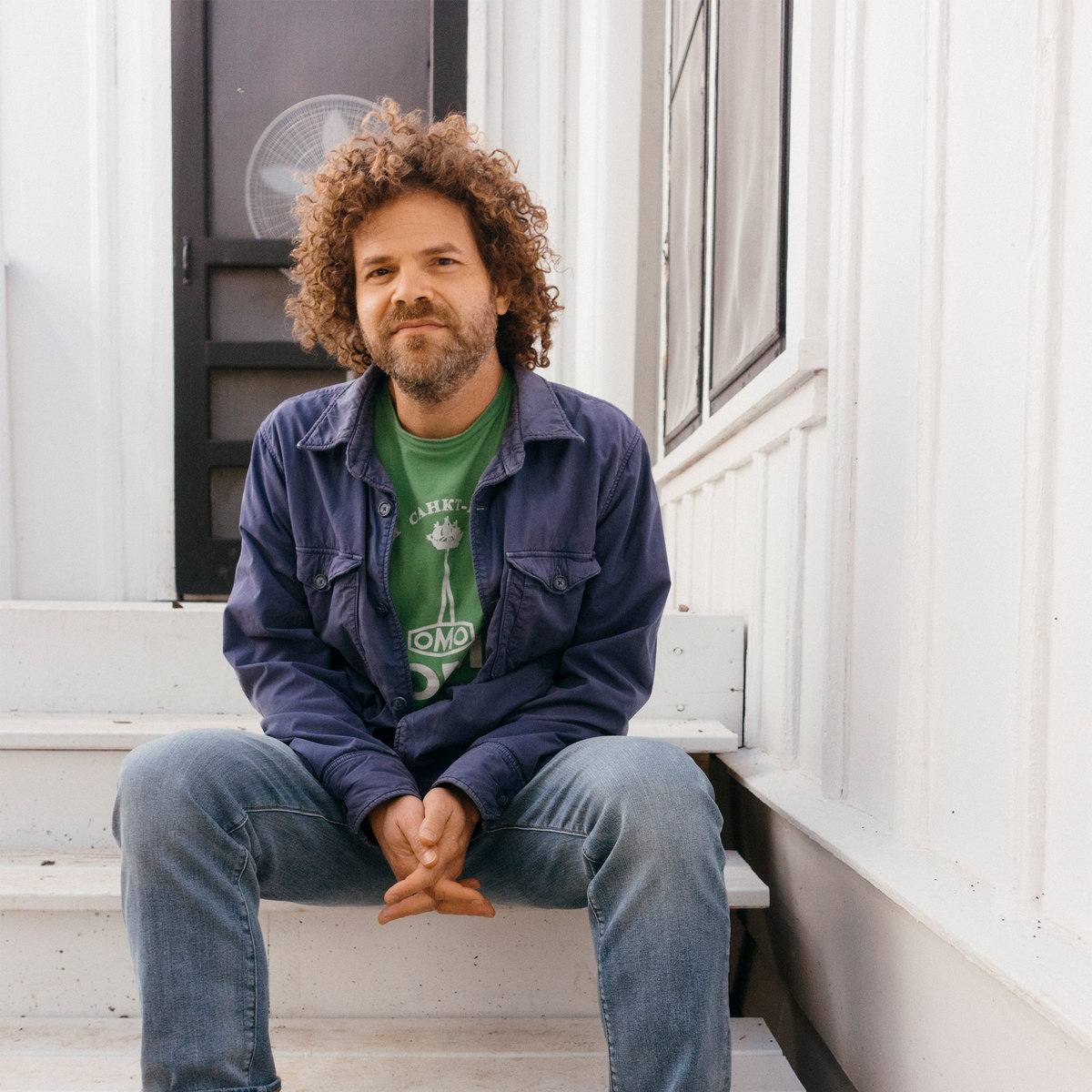
Adam Ostrar is a parent, maybe just like you, that worries about the world his kid is inheriting. He’s anxious about the damaged and ravaged U.S.A. and so are the narrators on his most recent album, “The Worried Coat”. Keeled Scales is proud to bring The Worried Coat back into print on vinyl on October 1st, 2021.
His beautiful rhythmic guitar-pulse and tumbling, lyrical vocal style, His long sold-out, album, “The Worried Coat“, is getting a thoroughly well-deserved re-release.
The album’s title, The Worried Coat, couldn’t be much more fitting, as throughout Adam is confronting his worries. He’s a parent worried about the world his kids are going to inherit, he’s an American worried about the division and damage he sees in the country he lives in, and he’s a musician putting all those concerns directly to tape. The record opens with Kansas City, the downbeat calm of the vocal reminiscent of Kevin Morby, as the steady rhythmic pulse of bass is adorned with layered flourishes of electric guitar. Elsewhere on the delightfully eclectic album, Adam treats us to the Michael Nau-like Bossa Nova shuffle of Bloody Waves and the down-tuned psych-folk of the atmospheric Morning Said, his sound always evolving without ever forgetting its roots in his stunning guitar-work and rich lyrical portraits.
At its heart The Worried Coat is a record that’s wholly human, there are no black-and-white characters, nobody entirely good or entirely broken, just a host of characters trying their best, or at the very least trying to try their best. Adam Ostrar’s characters are anxious and sometimes ignorant, caught up in a game they can’t win, and in their flaws and their triumphs, you see yourself reflected back. We’re all a character in an Adam Ostrar song, whether we care to admit it or not.