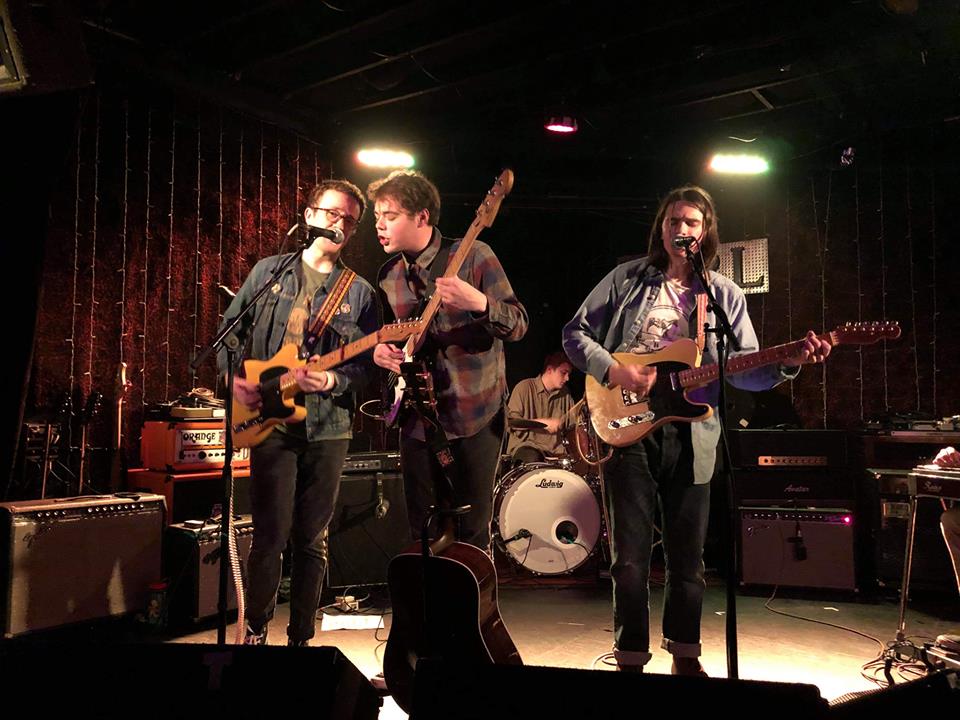
On this day (December 27th) in 1975: In the wake of fall tour dates in North America, The Faces’ split became official…(This photo: my never-before posted shot of Rod performing with Faces on that last ’75 tour at the Ottawa Civic Centre…) Rod Stewart finally severed all connections with the group to work as a solo artist; Ron Wood had already been recording & performing with the Rolling Stones & would soon become a permanent member; Ronnie Lane (who left the band in 1973) had formed the band SlimChance; drummer Kenny Jones would join The Who in 1978 following the death of Keith Moon…
A lovely version of Elton John’s song From an old tape recording of John’s “Top Gear” special with a collection of some of his favourite sessions.
Much slower tempo than the Gasoline Alley version but I still think they beat Elton’s versions hands down. I like the piano, I assume McLagan?
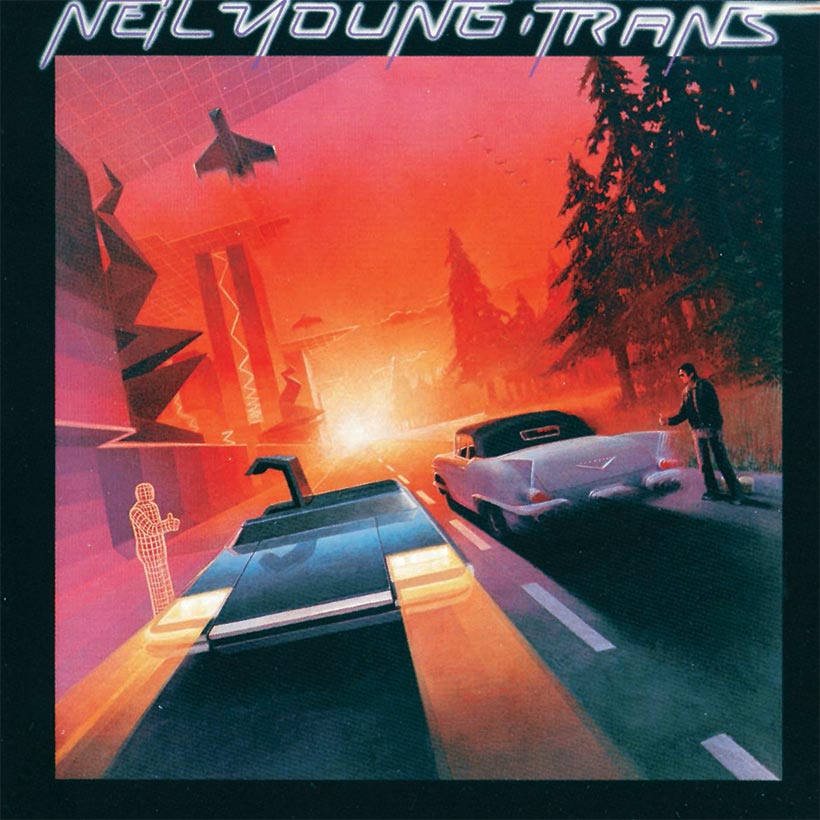
Of all the brilliantly perverse moves Neil Young has made in his career, was the 1982 release of the album “Trans”just may be the most brilliant. Not that the folks at GeffenRecords, his label at the time, necessarily felt that way. They’d just signed him as one of their flagship artists, at a time when Young’s commercial and critical credibility was at an all-time high. No doubt they were expecting another “Crazy Horse” barnstormer, or a return to the sleek country-rock of the “Harvest” era.
Released on December 29th, 1982, “Trans” considered to be Neil Young’s synth-pop album, but that’s not really the case. There are, in fact, few keyboards on it, and if you want a guitar band, it’s got a great one. All of Crazy Horse band members make appearances, including long time utility man Ben Keith and sometime member Nils Lofgren, plus percussionist Joe Lala (from Stephen Stills’ Manassas and the Stills–Young Band) and, for the only time on a Young solo album, ex-Buffalo Springfield bassist Bruce Palmer (“Trans” even features an 80 update of Buffalo Springfield’s 1967 single “Mr Soul”).
What it didn’t have, for the most part, was the recognizable voice of Neil Young. With three exceptions, all the vocals were sung through a vocoder, which twisted his voice into robotic form. This was perfectly fitting for a concept album about how humanity was going to make sense of the computer age, but it immediately threw fans out of their comfort zone, and largely doomed the album’s chances at radio.
Because Young wasn’t doing interviews at the time, he never explained the album’s backstory until many years later, but if he had, many more fans would have probably taken it to heart at the time. They didn’t know that Young’s son Ben was stricken with cerebral palsy and unable to speak, and that Young was using new digital devices to communicate with him. The songs he was writing evinced the frustrations of this process, as well as the actual sounds the machines were making. Ben and his parents couldn’t always understand the words, so neither could listeners. At first Young didn’t even intend to release the songs. His initial submission to Geffen was a much more commercial album, “Island In The Sun”, which had a breezy tropical feel. Geffen turned this down, however, so Young went back to the Crazy Horse recordings, upped the electronic element, and turned the result in as “Trans“.
Three songs from “Island In The Sun” were retained on “Trans“; two of them opened a side each of the original vinyl, and are so sunny and jovial that you have to wonder what they’re even doing there (there would have been an additional “Island” song, “If You Got Love,” but Young yanked it at the very last minute – hence its appearance on “Trans” original cover and lyric sheet). The album’s opener, “Little ThingCalled Love,” marked one of the only times that Young ever delivered a tailor-made hit single. Sure, it’s out of character, with the boozy ambiance and slide guitar, but it’s still got the requisite edge. He notes that “only love brings you the blues”, as if you’re supposed to want them, and it’s so catchy that radio missed out by snubbing it.
From there it’s an immediate awakening as “Computer Age” begins the album proper. That song and “We R In Control” both speak of digital-era dread, with ominous crashing chords and taunting inhuman voices. “Control” is probably the clearest homage Young ever made to Devo, who he’d befriended and admired at the time. There’s plenty of humour here, too: “Computer Cowboy” tells of a digital rounder with a perfect herd, but, of course, he still yodels. “Sample And Hold,” which charges out like the best Crazy Horse rockers, imagines that robots will have to hit the dating scene like the rest of us: “I need a unit to sample and hold/But not the angry one, a new design.”
“Transformer Man” ranks as one of the most emotionally open songs of Young’s back catalogue. Lyrically it sends love and encouragement to Ben, who is the “transformer man” reaching out to the world: “Transformer man/Unlock the secrets/Let us throw off the chains that/Hold you down.” Bits of Young’s natural voice peek through the mix here, but even the vocodered lead has an aching and very human quality.
As it turned out, one of the “Island In The Sun” leftovers gave “Trans” a perfect send-off. On “Like An Inca,” Young gets his voice back, but delivers a vision of a world about to change drastically: “Said the condor to the praying mantis/We’re gonna lose this place, like we lost Atlantis.” You might call this the middle part of a trilogy that began with “Cortez The Killer” and ended a few albums later with “Inca Queen” on “Life“. Musically, however, it’s a one-off for Young: its sound is breezy and foreboding at once. The song ran to just under ten minutes, but was truncated on the original vinyl release.
What happened next is the stuff of Neil Young legend. GeffenRecords demanded a real “rock’n’roll” album. Young snubbed his nose at them with the retro-goofy “Everybody’s Rockin,” and a decade-long battle was on. Young sometimes gets a bad rap for his attitude in that era, but history would have been different if “Trans” has been recognized for the leftfield classic that it was.
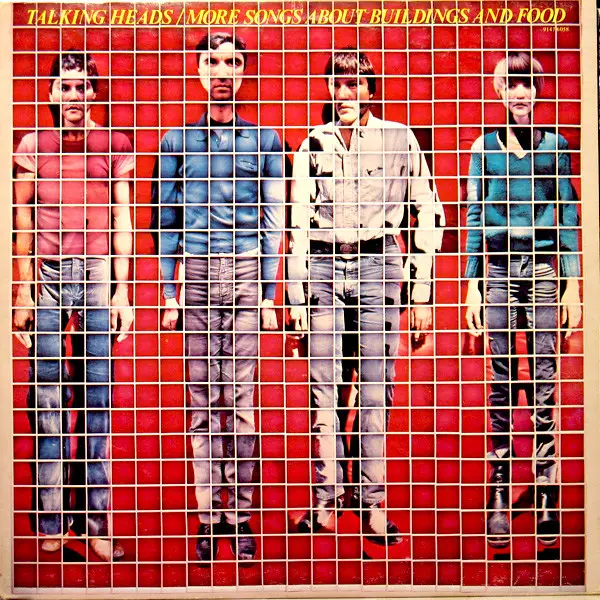
Talking Heads’ second album and the first with Brian Eno, who would steer them in bold new directions than the less rigid than the debut. While they were still an album away from the fluid jams that helped define their style, ‘More Songs About Buildings and Food’ was a giant leap from jagged art rock to a less stiff version of it. They were still working out their sound here, but their offbeat, but somehow appropriate, cover of AlGreen’s “Take Me to the River” hinted at things to come.
Though many tracks on their second album were live staples dating back to 1975, the songs took on a more groove-oriented sound as Talking Heads progressed and played to their strengths.
Toward the end of the tour, Talking Heads played a small solo show in London. Brian Eno, fresh off making “Low” with David Bowie, caught the gig and invited the band to lunch the next day, which turned into listening to records at his flat. The producer put on Fela Kuti’s Afrodisiac and blew their minds. Afrobeat music (particularly West African polyrhythms) would become the next big influence on the members of Talking Heads, culminating in their magnum opus, 1980’s “Remain in Light”. But while that was still percolating, the group made an immediate connection with Eno. By the following spring, TalkingHeads had kicked their original production team of disco pros to the curb and took up recording “More Songs About Buildings and Food” alongside Eno in the Bahamas.
It was Talking Heads’ second LP and first collaboration with producer Brian Eno found the band both expanding their musical vocabulary and bringing their disparate influences into a more cohesive whole. The result was an album that retained the unsettled energy of the NYC punk scene but added some full-bodied funk. This irresistible mix resulted in the band’s first Top 40 hit: a dynamite cover of Al Green’s “Take Me to theRiver” that matched a deep soul groove with needle-nosed guitars and David Byrne’s keening pleas. Although most of the tunes on ‘More Songs About Buildings and Food’ are not as memorable as the ones on the Heads’ debut, the basslines certainly are. Eno’s supervision plus a year of touring – strengthened the band’s playing (especially when it came to the married rhythm section of TinaWeymouth and Chris Frantz). In stark contrast to the Heads’ addled R&B was the glistening album-closer “The Big Country,” which found Byrne looking down his nose, and out the window, at “flyover country.” It turned out that his tales of alienation worked not just in angular funk but also in a country music construct – something the band would explore further on up the road (to nowhere).
You can hear Eno’s “studio as instrument” approach in all sorts of sonic details, like the loudspeaker-style vocals and reverb bouncing off the drums in “Warning Sign,” the curious clicks and dubby echoes punctuating “Stay Hungry,” or the faint twinkling between lines in the chorus of their heady cover of AlGreen’s “Take Me to the River.” But these increasingly intricate aesthetics never threaten to overthrow the music’s pleasure centre an involuntary compulsion to move your body.
“Artists Only” is built from the kind of instrumental interplay that makes you want to dismantle it just so you can understand the source of its magic and mystery; is it the swirling organ melody, the chiming guitar riff, or the chugging bassline that produces this effect? (Like most things Talking Heads, the magic’s in the combinations.)
On “More Songs About Buildingsand Food”, Talking Heads were sorting out how to engage simultaneously with the mind and the soul how to be both art-rock and dance music.
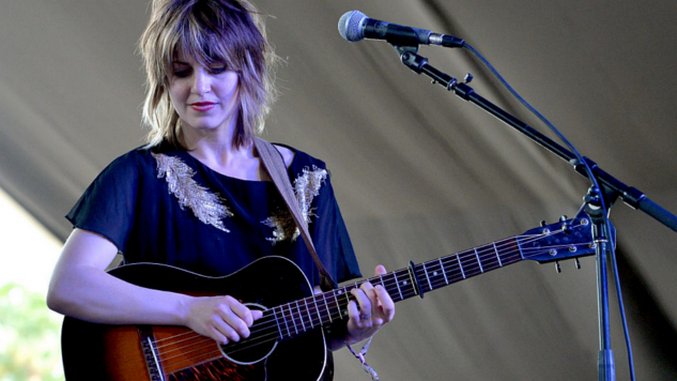
Anaïs Mitchell has been called “the queen of modern folk music.” Her poetic lyrics have been likened to those of Bob Dylan and Leonard Cohen. She wrote an off-Broadway musical about which Lin-Manuel Miranda recently raved. And yet, despite such accolades, she has never quite gotten the attention her music deserves.
Mitchell writes many of her songs about history, politics, folklore, and—self-reflectively—how music can explore those topics to document and shape the world. She is both a wielder of and commentator on music’s potential as a change agent, and this has been true from the title track of her debut album, The Song They Sang… When Rome Fell, to her most artistic work, the musical “Hadestown”, a retelling of the Orpheus myth in Depression-era America. In an interview with The New York Times about the show, she said, “Whether or not you can change the world with a song, […] you still have to try.”
“Brooklyn Bridge” is the opening song and second preview of Mitchell’s album and is accompanied by a live performance video directed by Jay Sansone.
Mitchell says of the new release, “Having left New York, I was able to write a love letter to it in a way I never could when I was living there. It was like, fuck it. This is how I feel. There is nothing more beautiful than riding over one of the New York bridges at night next to someone who inspires you.”
Earnest, observant, and philosophical, Mitchell brings poignancy to the ordinary and meaning to adversity. Looking back at her extraordinary, if too often overlooked career, The new record is produced by Josh Kaufman, who will also feature on the album alongside Michael Lewis, JT Bates, Thomas Bartlett,Aaron Dessner, and Nico Muhlu, who provided string and flute arrangements.
Last year, Mitchell collaborated with Eric D. Johnson and Kaufman on the debut “Bonny LightHorseman” album, and this year she featured on Big Red Machine’sHow Long Do You Think It’s GonnaLast? album in August.
“Brooklyn Bridge” is out now. Anaïs Mitchell’s self-titled album will be released 28th January 2022 via BMG Records,
Following the release of ‘Lots of Nothing’ earlier this year, Spacey Jane have blessed our ears with a new single and video, titled ‘Lunchtime’. This one runs at a speedy tempo and zippy, textured guitar lines. We also love how the vocals of frontman Caleb Harper and bassist Peppa Lane bounce off each other – that’s gonna be a real moment in the live show.
But in classic Spaceys fashion, behind the infectious chorus and tone lies a deeper lyrical anguish.
“I wrote this song while experiencing severe hangover anxiety and feeling extremely hopeless,” frontman Caleb Harper explains. “I’m trying to explain how I feel like I’m just going through the motions with love, career, friends and family. I felt like everything was just happening because it had to and not because I cared about it.”
Take a spin below via the video, where a battered Caleb has a formal dinner with his bandmates. The clip was helmed by long-term collaborator Matt Sav and Juila Jacklin/Stella Donnelly videographer Nick McKinlay. It’s also worth noting the extra production polish on ‘Lunchtime’. The track was recorded in WA with Dave Parkin (who produced Spacey Jane’s debut album) but was mixed by Rich Costey, the Grammy-winning producer who’s sprinkled magic dust on everything from Phoebe Bridgers and The Killers to Blink-182, The Wombats and Kimbra.
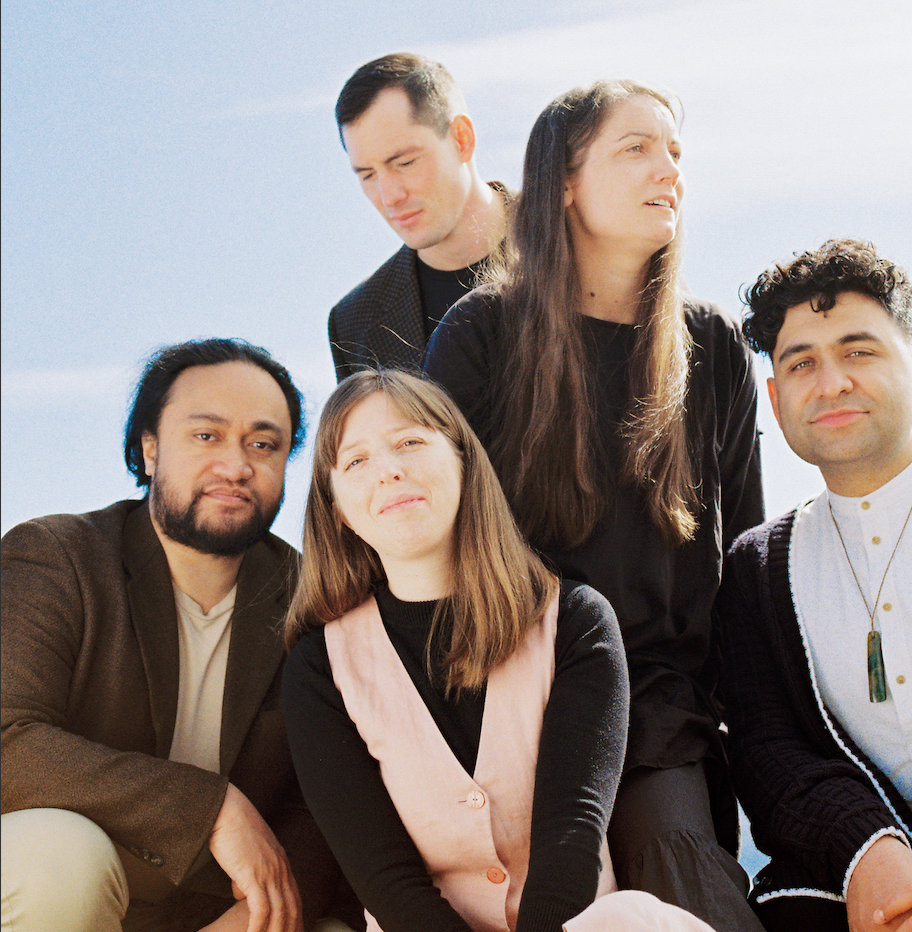
French for Rabbits is the project of New Zealand musician Brooke Singer and band. They formed in 2011, when Singer and guitarist John Fitzgerald began writing and recording lo-fi demos of ambient dream-folk in the small coastal township of Waikuku Beach. Now Wellington-based, they are joined by drummer Hikurangi Schaverien-Kaa (Glass Vaults), and multi-instrumentalists Ben Lemi (Trinity Roots) and Penelope Esplin (Prophet Hens).
Having toured extensively through Europe, opening for Agnes Obel, featuring twice on The Vampire Diaries, French for Rabbits have garnered millions of listens online by kindred music lovers worldwide. Their live shows are a mesmerising experience, punctuated by the sideways charm of their lead vocalist – once described in concert as making a concert hall feel as comfortable as a living room.
Each of their recordings are incredible, and includes the six track EP “Claimed By The Sea” released in 2012 and their album “Spirits” which came out two years later.
“It’s tender and intimate yet ambitious as the sky is wide” – Stereogum
“Evoking both escapist lost weekends on sunlit shores and more melancholy-infused desolate landscapes…” – UK Sunday Star Times
The Pink Stones deliver a full serving of Peach State picked country-rock from Athens, Georgia with the release of their debut album, Introducing… The Pink Stones, via the New West Records imprint Normaltown Records. Mixing elements of classic cosmic country, raucous rock’n’roll and fresh humour and heartaches, The Pink Stones are authoring a new chapter in the annals of Cosmic American Music.
The journey to the Pink Stones debut album began in 2015, when freshman college-student and then punk rocker Hunter Pinkston bought a special single by one of his favourite bands. “It was the song ‘Brass Buttons,’ Pinkston says. “One side was The Lemonheads and the other was Gram Parsons’ original version. I bought it because I was a Lemonheads fan, but I flipped it over and that was the one of the first times I’d heard Gram Parsons. I was like, ‘Oh shit! I didn’t know I liked country until right now.’”
Inspired by his discovery, Pinkston not only began tracking down and listening to Parsons’ catalogue, but took the well-travel music fan path of seeking out similar artists and influences. It was actually a landscape he’d seen before but paid little attention to.
“When I was a kid my mom liked country music but my dad was totally a rocker,” Pinkston says. “They would constantly be switching the radio. I was definitely with my dad and had discounted country forever. Then it caught up with me and I became pretty much obsessed with it.”
Mixing elements of classic cosmic country, raucous rock’n’roll and fresh humour and heartaches, The Pink Stones are authoring a new chapter in the annals of Cosmic American Music.
It is such an album that immediately entertains with particularly pleasant or even irresistibly delicious sounds. It is also an album that is very well made and that impresses both musically and vocally. The fact that I nevertheless did not promote the album earlier this year has everything to do with the fact that I have already released a lot of albums like Introducing… I have the Pink Stones in the closet.
The Pink Stones are a bunch of young dogs from Athens, Georgia, who recruited Drive-By Truckers’ well-known John Neff for some extra experience. All the young members of the band were born long after the death of country rock legend Gram Parsons, but his musical legacy is in good hands with them. On Introducing… The Pink Stones is played with a lot of feeling and especially the more subdued songs, with beautiful pedal steel work by John Neff, are beautiful. The Pink Stones do not limit themselves on their debut to the country rock of the 70s, but also drag in some other influences from American roots music from this decade. Influences from the pioneering days of alt-country, which of course also started with country rock from the 70s, have also been given a place in the music of the American band.
Released April 9th, 2021
The Pink Stones: Hunter Pinkston – Vocals, guitar, bass guitar, harmonica, percussion Will Anderson – Piano, organ, vocals Adam Wayton – Bass guitar Logan Brammer – Guitar, pull-string guitar, vocals John Neff – Pedal steel guitar Jack Colclough – Drums, percussion
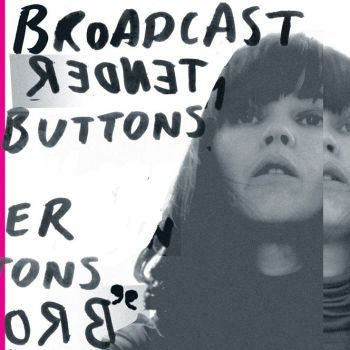
Birmingham birthed 2 of the best space pop bands you’ll ever hear in the late 90’s – one being Pram, and the other being Broadcast. “Tender Buttons” is Broadcast’s best project. Working as a two-piece yielded the best results – culminating in a true encapsulation of what Broadcast and Trish Keenan were all about – discovery (check out Trish Keenan’s Mind Bending Motorway Mix for proof). As a band who were seemingly always pushing their own envelope forwards, “Tender Buttons” feels like the perfect album to close out their main discography with – an experimental, fragile and gorgeous project that is truly close to my heart, and will soon be close to yours.
After a number of EPs and an appearance on the “Austin Powers: International Man of Mystery” soundtrack, Broadcast released their full length debut, 2000’s best album bar none as far as this writer is concerned. Utterly bewitching, “The Noise Made People” still sounds like pop transmitted from another dimension, detached from time and space. Every detail is considered, from the eerie synthesizers (part sci-fi, part Italian horror film), to the snap of the snare, the ambient sounds of electricity that hum lowly in most songs, and the artwork that seems to have been made from old computer punchcards.
Trish Keenan’s beguiling, mysterious voice seals the deal on perfect songs like “Echo’s Answer” and “Come on Let’s Go.”
After being mired in the studio for nearly three years, Broadcast returned with their first proper full-length album, ‘The Noise Made by People’, a collection of more shimmering, weightless pop that is nostalgic for yesterday’s visions of the future but remains on the cutting edge of contemporary music. Where their early singles (collected on 1997’s ‘Work and Non-Work’) painted small, quaint portraits of their retro-futurism, “The Noise Made by People” delivers their sound in widescreen, filmic grandeur.
Richly layered yet airy pieces like the album bookends, ‘Long Was the Year’ and ‘Dead the Long Year,’ seamlessly blend symphonic, electronic, and pop elements into smoky, evocative epics, while synth-based interludes such as ‘Minus One’ and ‘The Tower of Our Tuning’ present Broadcast’s more detached, scientific side. Likewise, Trish Keenan’s air-conditioned vocals sometime suggest a robotized Sandie Shaw or Cilla Black, but her humanity peeks out on ‘Come on Let’s Go’ and ‘Papercuts.’ ‘Echo’s Answer’ and ‘Until Then’ are two of the other highlights from the album, which despite all of its chilly unearthliness, is a noise made by (very talented) people.LP – Vinyl re-press of debut album from Broadcast, originally released on Warp Records in 2000.
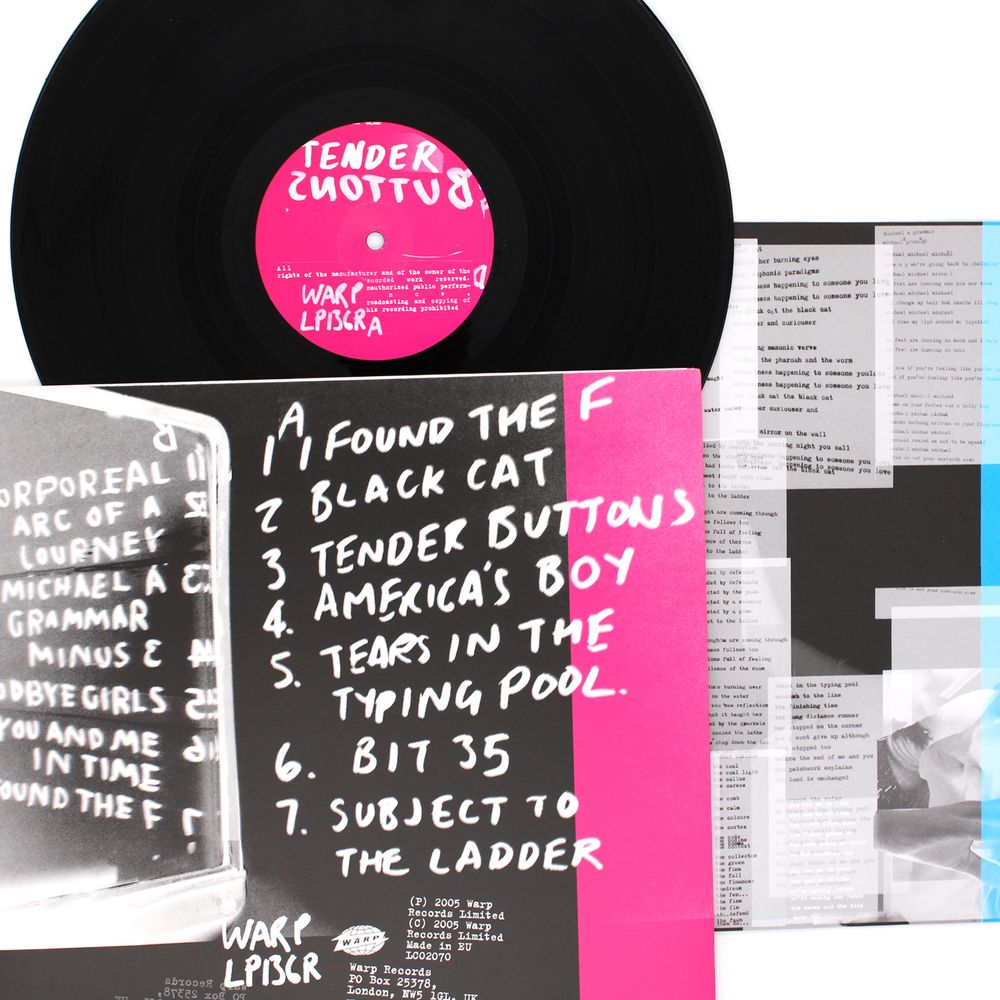
Now a duo following the departure of guitarist Tim Felton, Broadcast have swapped the rich textures and multiple layers of previous records for a much rawer and grittier sound, based on dry electronics, bass, processed guitars and singer Trish Keenans deadpan voice. stripped down to its bare essentials, the music shows broadcast under new lights, bringing Keenans bittersweet and often surrealist lyrics right at the forefront. recorded entirely at Keenan and Cargills home in Birmingham and produced by the band, ‘Tender Buttons’ is a far more intimate record than its predecessor. the recent single, ‘Americas Boy’, hinted at more minimalist soundscapes, and this is confirmed on the album.
Yet, this serves Broadcast rather well. on songs such as the ‘Superb Black Cat’, ‘Goodbye Girls’ or the annoyingly catchy ‘Michael a Grammar’, Keenan and Cargill work around frail distorted electronics and interferences on which they add guitars, bass and linear drum beats. elsewhere, on the more subdued ‘Tears In The Typing Pool’ or ‘You and Me in Time’, they craft delicate backdrops out of guitars and subtle sine waves, evoking in places a space-age velvet underground. if ‘Tender Buttons’ reveals a more purely electronic approach, broadcast are miles apart from the electro glam of goldfrapp. their soundscapes have more in common with that of the radiophonic workshop than that of giorgio moroder.
Broadcast released three studio albums “The Noise Made by People” (2000), “Haha Sound” (2003), and “Tender Buttons” (2005)—as well as several EPs and a collaboration album with the Focus Group titled “Broadcast and The Focus Group Investigate Witch Cults of the Radio Age” (2009). Their most recent release is the soundtrack album Berberian Sound Studio (2013).
Keenan died on 14th January 2011 at the age of 42, following complications with pneumonia, which she suffered from after earlier contracting H1N1. Cargill, the sole remaining member, said in a 2011 interview with Under the Radar that a new Broadcast album was in the works, featuring vocals recorded by Keenan shortly before her death.He later said: “Trish left a lot of tapes, four-tracks and stuff, and I’ve been going through those. It’s difficult, and I’m connected to it at the same time. It’s wonderful, but I’m also feeling a sense of loss. The next thing I release with Trish on it will be more like a monument and a tribute to her rather than this obsessive thing I used to have about making albums.” As of 2021, however, the album has not been released.
Aside from founding members Keenan and Cargill, Broadcast has experienced regular line-up changes. The band has included Roj Stevens (keyboards), Tim Felton (guitar), and Steve Perkins (drums). Keith York, Phil Jenkins, Jeremy Barnes, Neil Bullock and Ash Sheehan have also featured in the band as touring or session drummers. As of 2005, Broadcast consisted only of the founding duo. Following the death of Keenan in 2011, Cargill remained the only member.