I always have a soft spot for post pop punk music especially if the band are from Brooklyn, These guys are an alternative rock band from New England, composed of Andrew Manning and Matt Mendonca.but sometimes it just doesn’t really click. When I first heard Exit I wanted to start jumping and scream-singing with the guys again. The lyrics are – shocker here – about the complications of a broken relationship. He’s forlorn, heartbroken, but it’s just not going to work out. The lyrics are cliche (intentionally), but the energy of the track is absolutely raw and enjoyable. For fans of All-American Rejects.
Ever since his debut album Dolls of Highland was released on Sub Pop in 2016, Kyle Craft has been a critic’s dream. Based in Portland, he serves up all the observational, storytelling talent with none of the attitude that so often comes with male singer-songwriter territory. “I’ve found my place,” he says. “I’m not one of those people that approaches music for anyone other than myself. My favorite part about music is when it’s just me and a notebook.” Speaking of, his second forthcoming album Full Circle Nightmare is entirely autobiographical. Sonically, thematically, lyrically, it’s a huge leap forward from his 2016 release.
The title Full Circle Nightmare refers to a moment where Craft saw his life for what it is and told himself to be satisfied. “But that’s nightmarish to me,” he laughs. He described his debut record as: “like walking down this long hall of bizarre characters and surreal experiences, moving through the spider web of love and loss.” This album is when you get to the end of that hallway, turn around and see all the stuff you’ve been through, then walk through the door, close it and start a new chapter in an even crazier hallway. A straight-up rollicking rock’n’roll album, it traverses all the different nuances of the genre; from the bluegrass twang of ‘Exile Rag,’ to the gothic style of ‘Gold Calf Moan,’ it’s a timeless piece that could exist in any of the past five decades.
In terms of contemporary peers, Craft likes to stay in his own lane. He’s an old soul who sticks to his tried and tested influences. Social media is not his game – it’s just not interesting to him. He’s not fussed about preaching his politics or discussing the status quo either. “I don’t really like writing a time piece. I don’t wanna get trapped in the ‘Donald Trump era of Kyle Craft,’ you know? I’m a very off-the-grid sort of person. As much as I am traveling across this giant place sometimes I just feel so outside of it. Also, I’m not necessarily a stand-up citizen so it’s hard for me to say: here’s Kyle Craft’s America, ladies and gentlemen.”
The ironic thing is that Full Circle Nightmare sounds exactly like Kyle Craft’s America. That is what he’s built for us: the story of one man’s trials and tribulations to find his passion and voice for art and creativity in this vast opportunistic country. Where did he find it? Among the historic riches of America’s most honest sounds.
The idea is simple…We sent this Tascam 4-track cassette recorder to the first artist, they recorded two songs to tape, then mailed the recorder to the next artist to do the same.
Curated by Polyvinyl Records…Just like in 2014 and 2015, we hand-picked 12 artists we love to record their music on our traveling 4-track in 2017. Among the names below, you’ll find a few Polyvinyl artists as well as a number of other incredible musicians who we’ve crossed paths with.
Polyvinyl has announced Singles Series Vol. 3, which follows 2014’s Singles Series Vol. 2. Every month, subscribers to the series will receive a colored 7” vinyl with two songs from each participating artist, some signed to the label, others the label has “crossed paths with.” As with previous years, 12 artists were selected: Beach Slang, Japanese Breakfast, Modern Baseball, Twin Peaks, Joyce Manor, Jay Som, Diet Cig, Mothers, Owen, Ra Ra Riot, Sonny & the Sunsets, and Tim Kasher (Cusive, the Good Life). All songs were recorded on a 4-track cassette recorder.
Modern Baseball are getting heavier with age. It’s just a one-off, but if “The Thrash Principle” is any indication of what their next album will sound like, it’s yet another new direction for the young band. Where most of the tracks on Sports and You’re Gonna Miss It All bounced, this one drags its feet. The band has always been good at balancing dark thoughts with a bit of levity, but they seem to have reached a tipping point, and this is the first time they feel really weighed down. Years of heartbreak and rejection have taken their toll, and relationships start to blur together like memories you’d rather forget. Brandon Lukens’ always sharp lyricism twists and turns dynamically, as he subtly corrects himself as he goes along: “Didn’t watch your ex’s set,” oh, wait, no, “couldn’t watch your ex’s set.” “And I’ve known you forever…” Or is it “yet I’ve loved you forever”? “You suggested I write a song about the first time we met, but I can’t seem to remember…” shit, nope, “I don’t wanna remember there or then.” All of these shifting thoughts provide ammunition for the kicker: “So is this the hook you wanted? Is it stuck inside your head? Can you sing it with your friends, or alone?” The final twist of the lyrical knife leaves the narrator rejected and alone,
Lemolo is the Seattle dream-pop band fronted by songwriter and musician Meagan Grandall. The band’s ethereal sound has garnered comparisons to Cat Power, Feist, Beach House, and Warpaint.
With help from drummer Adrian Centoni, the band has since been named one of the “Best Seattle Bands” by Seattle Magazine, was voted “Best New Band” by City Arts Magazine, and was just named one of the “Top Bands Rocking Seattle” by Seattle Magazine. Lemolo’s Impressive dreamy soundscapes and Heavenly harmonies have released multiple albums independently, and has performed continually sold out shows in Seattle and tours throughout the US and Europe. “Sonically and melodically brilliant”.
A Deer Creek session of Lemolo preforming “Rogue Wave”
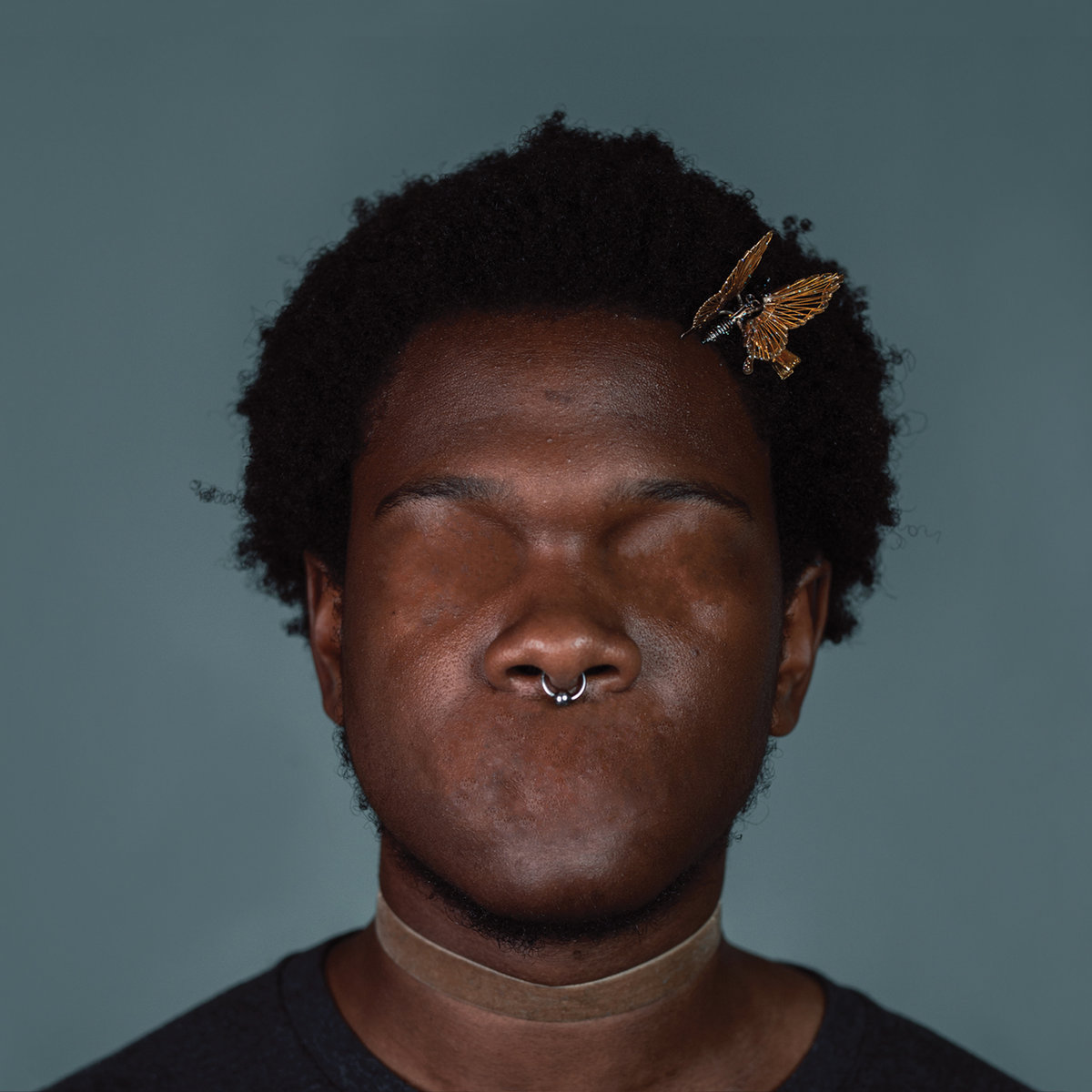
After quickly rising to underground fame with his Northtown EP in 2014, the DIY popstar made a sonic splash with Rachet’s lead single “On The Regular,” a poppy banger and commercial success. But how to follow all that up? Shamir, who came from the dusty dunes of Las Vegas, to Brooklyn’s Silent Barn, to the Philly indie scene (and all over the world inbetween), wanted to go back to what had inspired him from the beginning. Outsider music, country & punk. Raw & vulnerable tunes, stripped down to their emotional core. And what do you do if XL drops you? If you’re Shamir, you put out an album you recorded yourself all in one weekend, whilst questioning the decision to quit music. The record was called Hope and Shamir self-released it via SoundCloud during the spring of 2017, with no promotion or label support. Regardless & naturally, it was a critical hit.
Now, happily joining San Francisco based indie label Father/Daughter Records, Shamir is excited to share his upcoming new album, titled Revelations, out November 3rd, 2017. Recorded May 2017 in his hometown following the release of Hope, Revelations is full of what the titled implies. The new album is stacked with stunning exhalations of emotion, as Shamir continues making music for misfits and those of us who feel so emo sometimes that we get annoyed at how we’re a cliché, but see the beauty in it anyway. Revelations is much more minimal in instrumentation & production compared to Rachet, but is even more full in sound and feeling. In some other timeline, there’s an unknown John Hughes film entirely set to Revelations. It’s the warmth in this apocalyptic neon and pastel future we find ourselves in. It’s the breath we take when we look up from our phones. They’re Shamir’s Revelations, and you should listen up.
This record inhabits a curious zone somewhere between acoustic alt-country and feedback-driven drone — some tracks (like the marvelous “Hey! Mr. Sky,” above) are largely acoustic, whereas others (like the 16-minute epic “Spirits”) drift off into free form explorations of atmospheric sound. As a whole, the record is a study in how effective it can be to combine two disparate sounds, and the contrast creates an atmosphere both distinctive and beautiful. Some three years after their last album, the boys and girls from Oregon are back with another set of long, stoned trawls through the backwaters of American folk, psychedelia and the avant garde.
For their fifth album Flags of the Sacred Harp, the Portland-based collective Jackie-O Motherfucker use the lessons of The Sacred Harp and other traditional blues and gospel sources as a point of disembarkation. On these seven tracks, the group patiently unravel their source material’s tangled threads.
Leeds punks Drahla have smashed us across the face with their new single ‘Form of Luxury’ a massive, bruising new track taken form their debut EP Third Article.
The EP is produced by Hookworms’ MJ and is destined to be a go-to for any punk DJ – do they still exist? A pounding and destructive piece it fills the airwaves with a sense of thoughtful dread normally reserved for horror flicks. The new EP is due out on November 24th which nicely coincides with a huge tour, supporting some quality bands all across the UK.
In the early ’90s, Meg Ryan wasn’t just preventing Tom Hanks from being Sleepless in Seattle. The movie star also was helping R.E.M. avoid getting a “Parental Advisory” sticker stamped on their new album.
At the same time that Ryan was filming the aforementioned romantic comedy in the spring/summer of 1992, R.E.M. were finishing work on the band’s eighth studio album, Automatic for the People, at Bad Animals in Seattle. One of the last tracks to receive a final vocal from Michael Stipe was a lusty, airy love ballad they were planning to call “F–k Me Kitten” after a line that Stipe repeats towards the end of the song.
“Meg Ryan came by and she just loved the song,” said guitarist Peter Buck in 1992. “But she said, ‘You know, when I grew up if the word ‘F–k’ was in the title and it was on the cover, I couldn’t buy it in my town.’ And we thought, ‘That makes sense.’ You want to reach people. You don’t want someone to arbitrarily say, ‘You can’t hear this.’”
So, in a goofy stab at self-censorship, R.E.M. opted to change the obscenity in the title to “Star,” a reference to the asterisks that would stand in for offensive language. It also appeared to be a nod to the Rolling Stones, who had once humorously altered the title of “Starf–ker” to “Star Star.” But, just like the Stones before them, R.E.M. retained the blue language in the recording, simply changing the title to “Star Me Kitten.”
When the song was originally conceived, it carried the less risqué (and less interesting) working title of “HeyLove,” perhaps a gesture to one of the recording’s inspirations, 10cc’s “I’m Not in Love.” Bassist-keyboardist MikeMills wanted to achieve an effect similar to the English group’s ethereal, layered backing vocals on the ’70s hit. He told Scott Litt about his thoughts and the producer came up with the idea of recording Mills as he sang different notes, then playing them back on a mixing board, with each fader controlling a separate note. The musician could then create a weird choral backing by positioning the faders.
“I just played my voice and brought in the notes that needed to be there, very haphazard and random,” Mills said “I could never play it the same way twice.”
For the track, recorded at Bearsville Sound Studios in Woodstock, New York, Mills also laid down a wafting Hammond organ part, the sound of which caused Buck to add tremolo guitar that made him think of David Lynch’s Twin Peaks. The guitarist thought that the Lynchian influence carried over to Stipe’s vocals. Buck called “Star Me Kitten” a “Frank Booth-type love song,” because it reminded him of Dennis Hopper’s character in Blue Velvet.
The frontman hadn’t copped to a filmic influence on for the lyrics, which he gargles in a voice that barely rises above a whisper. Stipe said that at least one of the lines was inspired by the time R.E.M. spent making Automatic in Miami (in between their days in Woodstock and Seattle).
“I remember we worked in Miami a lot on that record,” said Stipe in 2011. “I can still drive down – there’s a boulevard in Miami, off of Miami Beach, that has advertisements for keys and how much it costs and you get three for the price of one. And that, of course, became a lyric…”
It actually became the first line in “Star Me Kitten,” as Stipe initially blocks his lover’s access (he’s got three keys “and you can’t have one”). As the song stumbles along, the singer explores their relationship, questioning what happened and remembering how it once was – “You, me, we used to be on fire” – before revealing a carnal desire.
“It’s a very twisted love song,” Mills said. “And Michael’s just saying, ‘Yeah, relationships are tough and ours may not be the best, but go ahead. What are you waiting for? F–k me!’”
“Star Me Kitten” was one of the last Automatictunes to be completed in Seattle, where Meg Ryan gave her sage advice and Stipe recorded his hushed singing. But those wouldn’t be the only vocals applied to this song. It would get even more twisted when R.E.M. collaborated with beat poet William S. Burroughs, who mostly talked (rather than sang) Stipe’s lines on an alternate version. This take on “Star Me Kitten” was released on 1996’s Songs in the Key of X: Music From and Inspired by the X-Files and has subsequently appeared on R.E.M. rarities compilations.
Despite being a difficult song to replicate, the band performed “Star Me Kitten” almost 30 times on their 1995 world tour in support of Monster, with drummer Bill Berry switching to bass so that Mills could “play” the recordings of his backing vocals. The band never returned to playing the song on subsequent treks. Maybe they would have altered their plans if they knew Meg was coming.
R.E.M. began crafting their follow-up to Out of Time, just as the album was becoming a multi-platinum blockbuster in the spring and summer of 1991. They wanted to do something totally different, from a musical vantage point. Where their seventh full-length studio release has been delicate (mandolins), pastoral (string sections) and often cheery (“Shiny Happy People” anyone?), R.E.M. were planning to come up with a batch of rockers. This next disc would be hard, fast and loud, the sonic successor to the crunchiest material on 1987’s Document and 1988’s Green.
Those songs proved elusive, however, and the sounds uninspiring. So, R.E.M.’s instrumental trio (guitarist PeterBuck, bassist/keyboardist Mike Mills, drummer Bill Berry) gravitated to tracks that were more acoustic-based and shadowy in spirit. Automatic for the People began to discover its brooding sound – and later gained lyrics to match, from singer Michael Stipe.
By the spring of 1992, when R.E.M. were recording the album in a number of studios from Florida and Washington to New York and Louisiana, only one of those battle-hardened rock tracks remained in play. It was the song with the working title of “Howler Monkey,” a surging rock epic partially inspired by Neil Young.
“The song is written in Neil Young’s tuning – not that he owns it,” Buck said in 1992. “But the Es are tuned down to D, like in ‘Cinnamon Girl.’ I admit it; he’s the one I learned that tuning from.”
The muscular, abrasive aesthetic of the instrumental track appeared to provoke Stipe’s thoughts and feelings about the last dozen years of U.S. presidential administrations, including Ronald Reagan and George H.W. Bush. The lyrics that Stipe wrote were, as he later self-effacingly put it, “a barely adult reaction to the Iran-Contra scandal.”
The song was the most biting and specific political critique of R.E.M.’s then-12-year career. Sure, Stipe had already become a spokesman for left-wing causes and had written a few socially conscious songs (including “Welcome to the Occupation,” which was also partly about the Iran-Contra scandal), but nothing had yet approached this: The frontman lambasts the leaders and their followers, lists election years, slams the media and mocks the current president for unceremoniously vomiting at a state dinner (“how to walk in dignity with throw-up on your shoes”). In between calling his least-favorite politicians bastards and yelling “F— you,” Stipe characterizes Reagan’s and Bush’s America as an uncaring “Ignoreland.”
“That’s what ‘Ignoreland’ is – America,” Mills said after Automatic’s release. “It’s people who only get their information from sound bites and television, and who don’t really bother to research the presidential candidates – or ultimately the more important ones, who are your local candidates.”
Over the raging background, Stipe frothed about how politics could be played for sport, chanting “Defense, defense, defense, defense …” like a member of an impassioned football crowd clamoring for more tax dollars to be spent on the military. “Ignoreland” is angry, but it’s amusing and poetic anger, with a surprisingly self-conscious turn at the end. “Michael’s rolling against Republican politics,” Mills noted. “And the last verse is really great – ‘I know that this is vitriol, no solution, spleen-venting / But I feel better having screamed. Don’t you?’ It’s really great.”
Stipe’s vocals were processed through an amplifier “to get that cold anger in his voice that you get with natural distortion,” according to Buck. The effect also helped his voice hang with the titanic chomp of the music, a near-cacophony of instrumentation. Berry pounded hard. Mills thundered on a fuzz bass. Knox Chandler, who played on “Sweetness Follows,” returned to contribute “rock ’n’ roll cello.” Even producer Scott Litt got in on the action, playing Stevie Wonder on a funky clavinet and snarling harmonica.
No one, however, was outdone by Buck as he slathered “Ignoreland” in layers of guitar: electrics, heavily modified acoustics and even one played with an EBow. As the guitarist sustaining notes with his EBow on one overdubbed guitar and bending notes on another, “you’ve got one note held and the other pushing out,” Buck revealed “and it makes the feel really unsettling.”
With all of those elements stacked up, the recording proved tricky to mix (certainly in comparison to the more spare songs on the remainder of Automatic for the People. Although Buck claimed to be satisfied with Litt’s final mix, Mills and Stipe were less impressed. There was a dispute about how loud the fuzz bass should be and, within a couple of years, both of the band’s Michaels felt that “Ignoreland” should have been, ahem, ignored by the band and left off the track list.
But fans, particularly R.E.M.’s more rock-inclined audience, gravitated to the song – a buzzsaw in a land of nail clippers. Even though the band didn’t release “Ignoreland” as a single, the track got picked up by DJs at rock stations . A month after R.E.M. released Automatic for the People in October 1992, Bill Clinton was elected to the U.S. presidency, becoming the first Democrat to be elected during the band’s run. Although R.E.M. didn’t tour to promote the album (which would have forced them to decide if “Ignoreland” was now out of date or still applicable), Stipe appeared at MTV’s Inaugural Ball in 1993, performing with Natalie Merchant and 10,000 Maniacs.
“Ignoreland” wouldn’t make its live debut until 16 years later, when R.E.M. (now without Berry) began playing the song while the George W. Bush administration was in its last throes. On what would be the band’s final tour, Stipe thought that the old chestnut became “more powerful” in its live rendition – in addition to remaining politically relevant. “It just flew up out of nowhere and suddenly mattered again,” Stipe wrote in 2008. “I think we’ve played it every night this tour.”



 Beach Slang
 Diet Cig
 Japanese Breakfast
 Jay Som
 Joyce Manor
 Modern Baseball
 Mothers
 Owen
 Ra Ra Riot
 Sonny & The Sunsets
 Tim Kasher
 Twin Peaks