Under the name ’Slowhand & Van’, musicians Eric Clapton and Van Morrison release their new single “The Rebels” from Bushbranch / Surfdog Records. Written by Van Morrison and performed by Clapton and Morrison. Proceeds from the single will go to The Van Morrison Rhythm & Blues Foundation assisting out-of-work musicians.
Cover art hand-drawn by Julie Clapton, Eric’s daughter,
Pre-order the 12” vinyl now which includes the instrumental version on the b-side
Lightning Bug is the hypnotic shoegaze project led by Brooklyn-based Audrey Kang, The greatest compliment one could give Lightning Bug’s music is that it’s restorative. Since releasing their debut album “Floaters” in 2015, the New York indie rock band has crafted gauzy, intimate songs that muse on life and love. They utilize dream pop and ambience as avenues for productive introspection, and their third album, “A Color Of The Sky”, finds them honing their craft with remarkable precision: The arrangements are more lush, their songs unfurl with a patient grandeur, and their lyrics pose both questions and possibilities about self. That lead singer and songwriter Audrey Kang finds the song writing process so natural is a testament to her ponderous nature; these songs can only be wrought from lived experience and countless hours of reflection.
One of the most alluring qualities of Lightning Bug’s music is Kang’s voice. It’s quiet and calm, but undeniably suffused with lived-in emotion. It’s rarely mixed at a level far above the instrumentation, allowing its gossamer texture to invite listeners to tune in even closer.
“The Return” opens with winding guitars and a sturdy drum beat that find a balance between meditative stillness and difficult soul-searching. It recalls the spiritual resplendence of Talk Talk’s final two records, and while that post-rock band is an admitted influence here, Lightning Bug don’t aim for emulation. In fact, their songs are built from identifying the core emotions and ideas underlying the lyrics. Kang then provides images and colours as signposts for her band members, who flesh out the material into full-fledged songs.
There’s an especially deep bond between Kang and two of Lightning Bug’s other founding members, Kevin Copeland and Logan Miley. They’ve all known each other for nearly a decade, and even lived together at one point. The band added two more members, Dane Hagen and Vincent Puleo, after signing with Fat Possum Records in 2020.
Released June 25th, 2021
Written, Performed, Recorded & Produced by Lightning Bug
The discography of American rock band The Shins consists of five studio albums, one live album, one remix album, three extended plays, two splits, sixteen singles and nineteen music videos. Evolution has been a tremendous theme throughout The Shins career. Whether they’re transforming their bill, sound or approach, the band have never managed to find a comfortable niche to settle down in.
However, instead of letting this constant fidgeting work to the detriment of their music, they’ve turned it into one of their greatest assets, championing a sound that is simultaneously varied and distinct. Despite their many internal conflicts and line-up changes, The Shins are yet to make an underwhelming or poor record and even after five studio albums, it still feels like they have many more facets of their colourful and multi-dimensional sound to flaunt and unveil.
The band was formed by Mercer as a side project to Flake Music, who were active from 1992 to 1999. Flake Music released two 7″ singles and a full-length album “When You Land Here It’s Time To Return” on Omnibus Records and were touring with Modest Mouse following the Shins’ subsequent signing to Sub Pop Records, with the band’s classic line-up consisting of Jesse Sandoval on drums, Marty Crandall on keyboards, and Dave Hernandez on bass (who was temporarily replaced by Neal Langford until rejoining in 2003).
The band’s first two records, “Oh Inverted World” (2001) and “Chutes Too Narrow” (2003) performed well commercially and received critical acclaim. The single “New Slang” brought the band mainstream attention when it was featured in the 2004 film Garden State. Consequently, the band’s third album “Wincing The Night Away” (2007), was a major success for the group.
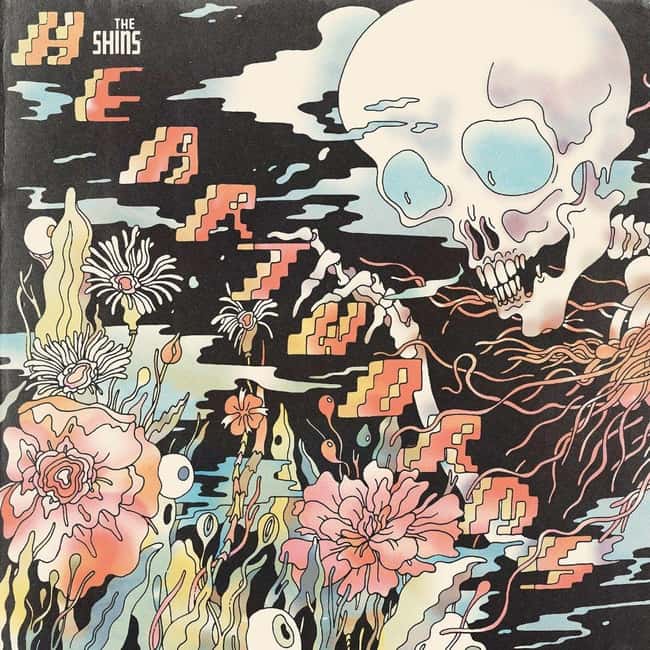
Following this, the Shins signed to Columbia Records and Mercer parted ways with the entire original line up, deeming it “an aesthetic decision.” Following a near five-year hiatus, “Port Of Morrow” the band’s fourth studio album, was released in 2012. Their fifth album, “Heartworms” was released in March 2017.
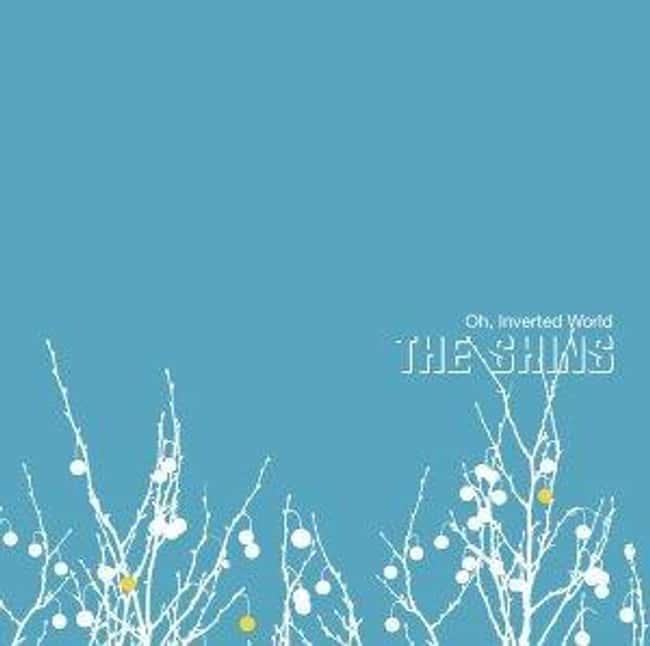
Oh, Inverted World
When a band is constructing a debut album, the unrealistic goal that is perfection should never be something to strive for. Instead, the primary goal of a premiere project should be to tease some of what you have to offer and leave listeners wanting more. The Shins’ first full-length is a definitive indie rock album of the 2000s not just because of its thoughtful, tuneful songs, but also because of the vivid portrait it painted of indie culture. “Oh, Inverted World” is the sound of realizing there’s more to life than being a smart-aleck – but also not being ready to open up completely. Caring might be creepy, but it’s hard to avoid; Oh, Inverted World chronicles this post-ironic vulnerability, wrapping it in jangly guitar pop that echoes the Kinks, Zombies, and Beach Boys.
Sun-bleached pop at its most blinding, choose a ’60s touchstone (the Kinks, the Left Banke) with a gorgeously Byrds-ian bridge, “Girl Inform Me” is one of the more deceptively simple numbers on the band’s debut. What’s so charming about it is just how out of time it sounds — it could’ve been recorded in any era, and its bubblegum lyrics (“Girl inform me/ All my senses warn me/ Your clever eyes could easily disguise some backwards purpose”) render it beguilingly irresistible.
All of Oh, Inverted World’s songs hang together in an immensely satisfying way. Oh, Inverted World is so full of ideas and emotions, and so fully realized, that it’s hard to believe it’s just 33 minutes long. Whether or not the album lives up to the breathless “It’ll change your life!” claims made about it in Garden State, the less ironic direction of 2000s indie begins here.
The Shins’ 2001 debut, “Oh, Inverted World” did just that. The album is one that went on to shape the sounds of many indie rock acts that existed throughout the naughties. Even today you can still hear its timeless, bittersweet jangle ring out in the music of some the most exiting acts of this decade. While flawed and at times, indecisive, it manages to maintain an astounding amount of cohesion and maturity.
Before “New Slang” was etched in pop culture iconography after its appearance in 2004’s Garden State, it was merely the standout track on one of the finest pure pop records to be released in years. Lyrically enigmatic like early R.E.M., it finds Mercer in a poignant mindset, waxing downcast as he pines, “Turn me back into the pet I was when we met/ I was happier then/ I had no mindset.” When the track was initially released as a single, there was a video for the song directed by Lance Bangs, with the band posed in shots referencing classic albums including Slint’s Spiderland, the Replacements’ Let It Be, the Minutemen’s Double Nickels On The Dimes, and Husker Du’s Zen Arcade, suggesting that, in the divine fire they were playing with at the time, they’d somehow always stood in posterity amongst these epochal giants, like Jack Torrence in the final shot at the Overlook Hotel of The Shining.
Taking cues from The Beach Boys and the Beatles, “Oh, Inverted World” makes typical, sunny rock sombre with darker lyrical themes. From beginning to end, the record never lacks in integrity or truth. Everything feels real and exposed and because of that, it’s by far The Shins’ most honest work.
“Oh, Inverted World“, the earth-shattering, indie-rock-redefining 2001 debut album by The Shins, is presented here in its finest form, dressed up all nice for its 20th birthday. The classic tunes get new life by way of a full remastering job under band leader James Mercer’s watchful eye, the art is given a little extra zest via a die-cut jacket and a classy inner sleeve, and the package is rounded off with a big ol’ booklet with vintage photos, handwritten lyrics, and more.
The music, of course, is obviously essential. Aside from a friendly reminder that this is the album with the smash hit “New Slang,” as heard in the hit movie we just need to note that the remastering job truly makes this the album James Mercer always wanted it to be. Never quite satisfied with the sonics of the original, Mercer has took the 20th anniversary of the album as his opportunity to finally set the (literal!) record straight. And the results sound stellar: great for new fans, and well worth the attention of those already on board!
Capturing a sense of suburban ennui as well as any Big Star number, the sprightly melody of “Know Yur Onion!” belies its cloistered sense of dread, knowing that redemption lies far, far away. As Mercer contemptuously spews the opening line “Shut out, pimpled and angry/ I quietly tied all my guts into knots,” over a curdled guitar line, he eventually finds solace in the minutiae of having “lucked out found my favourite records lying in wait at the Birmingham mall,” only to concede that his “body caves to his whims and suddenly struggles to take flight … three thousand miles northeast.”
For old times’ sake, here’s what we had to say about this record back when it came out: Hailing from Albuquerque, NM, The Shins sprung from the ashes of Flake/Flake Music in 1997 (though those previous incarnations date back nearly a decade) – same members, different instruments, different approach. Counterpoint guitars have given way to a single guitar pitted against calculated keyboard passages; swarming indie rock machinations led to pop-based melodic endeavors (who knew?).
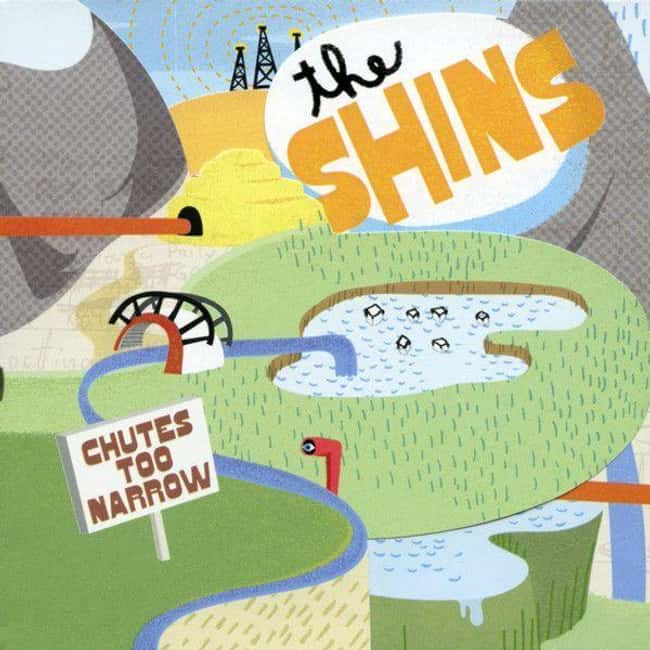
Chutes Too Narrow
The superb follow-up to their universally-adored 2001 debut, Oh, Inverted World. more acoustic than their debut – but it still pops and shakes like the kinks and soars like the Beach Boys. It will make you smile and will make your heart swell. this was one of 2004’s albums of the year.
People don’t fall in love with The Shins because they are this revolutionary, genre-defining band. People fall in love with The Shins because they make the kind of music that you connect with. They make the kind of music that soundtracks a significant time in a person’s life. They make the kind of music that certainly isn’t flawless or smooth but more reflects our state, as deeply imperfect beings.
A pretty slice of melodic grandeur from Chutes Too Narrow, “Saint Simon” has a metronomic cadence that suggests a certain level of catatonia from sheer emotional exhaustion. Mercer sounds bereft as he intones, “I’ll try hard not to pretend/ allow myself no mock defense as I step into the night,” as the song’s lockstep groove gives way to a woozily vertiginous orchestral sway.
Shortly after the release of their 2003 sophomore album, “Chutes Too Narrow“, the band gained a foothold in pop culture via the Zach Braff-directed film Garden State, when Natalie Portman’s character proclaimed that the Shins “would change your life,” before the Inverted World track “New Slang” was played over a particularly maudlin scene in the film. The band had already attained a fairly strong following preceding that shout-out, as the success of Chutes was nearly commensurate with their superb debut. But after that, their profile ballooned, which put an enormous strain on Mercer, who’d had the mantle of life-changer thrust upon him.
“Fighting In A sack” A rollicking number that provides a necessary frenetic yin to the docile yang of the song that precedes it, “Saint Simon,” Mercer’s breathless vocals convey a lucid dream with a certain degree of levity, drifting effortlessly into Neutral Milk Hotel territory. Yet this is sheer vintage Shins, all glistening melodies and opaque lyrics.
“Chutes Too Narrow” is the album that makes you realise exactly why people fall in love with this band. The album is wonderfully versatile, ringing with as much gloom as exuberance. “Kissing The Lipless” rips open the record, setting a precedent for the rest of the album. Pure infectious frivolity on the surfaces, as is one of the band’s trademarks, reveals itself to be “the gray remains of a friendship scarred” once you’ve perused the lyrics. It’s often said that eskimos can identify 50 types of snow, and Mercer can identify at least 100 ways love comes to an end, and this number finds him at his most astute as he ruminates, “You tested your metal of doe’s skin and petals while kissing the lipless who bleed all the sweetness away,” at the track’s plaintive denouement.
Filled with gaudy guitars and intimate, strong vocal performances, the remainder of the record goes onto serve as an outlet for Mercer to express some of his built-up frustration about his heartbreaks and setbacks.
“Chutes Too Narrow” is their most confident effort, each song feeling even more ambitious than the last. It highlights a definite peak in The Shins’ career and serves as a reminder as to why they are such a loved band.
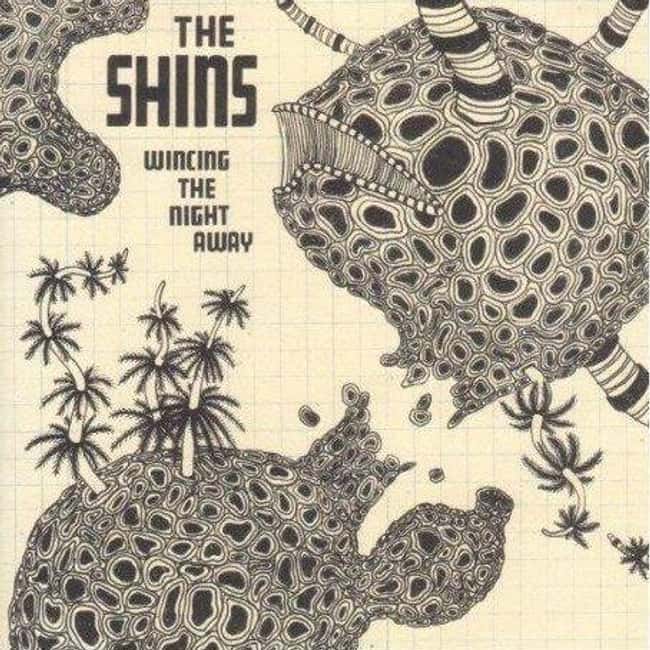
Wincing The Night Away
A protracted delay occurred between “Chutes Too Narrow” and 2007’s “Wincing The Night Away”, due in part to that strain. By backing away momentarily, though, he may have done a service to his craft. Instead of over-thinking the Shins’ third album — as many bands are wont to do when following break-out successes — the songs on Wincing were left with room to breathe. While they may have lacked the visceral punch that imbued the band’s earlier works, the tracks on Wincing were nonetheless melodically stunning, epicurean crafts.
“Wincing The Night Away” is one of The Shins’ greatest masterpieces. The layered, rich and vibrant record was composed in the dark of night and echoes with the tired, hazy attitudes reflective of those times. ‘Under-appreciated’ hardly begins to describe the state of the album. The band pulled off a sound that is polished but still filled with character, creating an amalgamation of the most enticing aspects of their sound.
The Shins had their work cut out for them with the release of the “Wincing the Night Away“. Their previous album, 2004’s Chutes Too Narrow, topped many critics’ Best of the Year lists, and was given a lucky dose of both marketing push and indie credibility by featuring heavily in the film Garden State. It’s good to know that all that success hasn’t gone to their heads. Sure, they’ve managed to bring in heavyweight producer Joe Chiccarelli, who’s worked with both U2 and Beck, but they’re still signed to Sub-Pop Records at this time, crucially, they’re still writing great songs. In fact, Wincing the Night Away is, in some ways, a better album than its predecessor. It’s certainly bigger and more symphonic than Chutes Too Narrow. Album opener “Sleeping Lessons” starts off relatively low-key, with a simple looped keyboard before building to an explosive finish.
First single “Phantom Limb” is their catchiest song yet, packed with reverb-rich vocals and sunny, Beach Boys-inspired harmonies. Throughout, the Shins seem more comfortable and willing to take advantage of their no-doubt bigger recording budget, from the layered, 1960’s-style American pop of “Turn On Me” to the sound loops and samples of “Spilt Needles”. Wincing the Night Away is the sound of theShins spreading their wings, and it positively soars.
A plaintive number with a tasteful dollop of reverb, “Turn On Me” is a high point on an album replete with low-key, ruminative numbers, more subdued yet no less brilliant than the band’s prior two efforts. Its lyrics are dour, expounding upon a relationship far past its expiration date, culminating with a goose bump-inducing middle eight, before Mercer concedes, “The worst part is over, so get back on that horse and ride,” keenly aware that the cycle’s unlikely to cease anytime soon.
The skeletal and exposed instrumentals are ridiculously refreshing compared to some of the more cluttered and involved ones on previous outputs. Cuts like “Black Wave” and “A Comet Appears” have an emptiness and vacancy laced throughout them, exhibiting an intense and heavy side of Mercer’s songwriting.
Even on the record’s bright and rich cuts, everything feels succinct, purposeful and necessary. The album contains some examples of Mercer’s greatest songwriting and plays seamlessly from beginning to end, it’s hollow indie rarely exhausting.
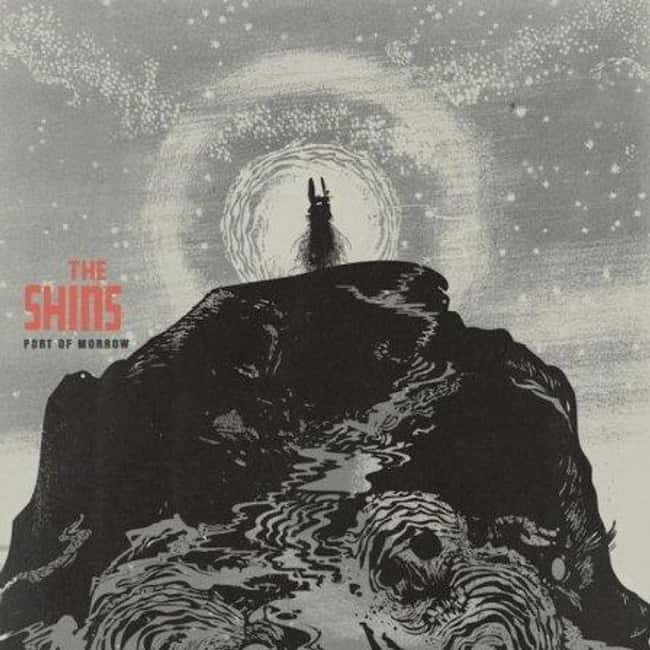
Port Of Morrow
Mercer jettisoned his entire band prior to the recording of 2012’s Port Of Morrow, claiming he had “production ideas that basically required some other people.” And while it wasn’t akin to R.E.M. losing Bill Berry — as Mercer had always been essentially the band’s sole songwriter, one couldn’t help but feel that a certain innate chemistry had been sacrificed. Nonetheless, “Port Of Morrow” is a damn impressive album (it made our list of 2012’s), their first released outside Sub Pop, on Mercer’sAural Apothecary Label. It proves that whomever he surrounds himself with, Mercer is one of his generation’s preeminent songwriters. But even with heavy-hitters enlisted, including Modest Mouse’s Joe Plummer, Ron Lewis from the Fruit Bats, and Janet Weiss, Morrow feels like something of a transitional album for the band, although you still can’t help but to be dazzled by the grandiose arena-ready cadences of “Simple Song”.
The Shins seem to travel in a new direction with every record, it’s no secret they’re unable maintain satisfaction with one, recognisable sound and completely hone it. On 2012’s “Port Of Morrow“, however, the band weren’t just travelling in a different direction, they were untying their boat from it’s dock and sailing into seas that left some fans in a place of discomfort. ‘Port of Morrow’ is The Shins‘ first new material in four years and in a world where the young ‘uns are dabbling in skew-whiff electronica and art funk ‘jams’ with varying results, this glorious record is a timely reminder of how to craft good old, solid indie rock built on smart storytelling and melodies that head straight for the heart. highly unfashionable, yes, and not a huge departure for the band admittedly, but why deviate from a formula that produces music as swoonsome as opener ‘The Rifle’s Spiral’, buzzing riff-tinged ode to existential angst ‘It’s Only Life’, the skittering and sweet ‘Bait and Switch’ and ‘No Way Down’ and thundering drums-led epic ‘Simple Song’? these are love-on-first-listen songs that have made us fall for the Shins all over again.
As epic as the Shins have sounded to date, “Simple Song” has a title that belies its bombastic nature — locomotive drums and a sinewy guitar figure give way to a minor key shift in a deceptively clever accoutrement. For perhaps the first time, the instrumentation trumps the lyricism in a Shins track, thanks to its sheer production acumen, which is something of a mixed bag. If the rest of Port Of Morrrow had been this memorable, it would’ve been in the conversation of the Shins’ best album.
Allowing the record to be more accessible and hold more pop appeal, the band had a more anthemic and cheerful outlook on “Port Of Morrow“. Leaving some of the darkness explored on earlier records behind, the outfit had a new found love for singing guitars, bouncy beats and catchier choruses.
While what came out of Port Of Morrow wasn’t necessarily game-changing, the record was an outlet for them to dispense some of their most explosive and loud material to date (Bait & Switch, No Way Down). However, embedded within the album’s tidy and concentrated production came a lack of personality and heart, integral parts of their previous outputs. They had misplaced something so important and, in turn, made a record that didn’t feel as authentic.
Heartworms and The Worm’s Heart
“Heartworms” is The Shins’ most experimental record to date. Playing around with abrasive electronic sounds that are relatively out of character for the band, they don’t hold anything back. Completely stripping away distortion-tinged guitars, once a vital part of a Shins record, they explore uncharted territory and their sound in more depth on Heartworms.
The Shins released their fifth studio album, “Heartworms”. In contrast to 2012’s Port of Morrow, Heartworms ushers in a return to the handmade. Heartworms is, as always, entirely written by James Mercer, with exception of “So Now What” (produced by band member Richard Swift). Heartworms is the first Shins album to be self-produced by Mercer since Oh, Inverted World in 2001. Heartworms features Mercer’s most diverse lyrical palette to date. The result is a cohesive, yet genre defying album marked by Mercer’s distinct voice and melodic composition. Unified by his singular vision, Mercer creates a sound that is both familiar – a nostalgic nod to the album’s predecessors – and distinctly new. The album’s first single,“Name For You”, is a resounding call for female empowerment inspired by Mercer’s three daughters.
Alike to “Port Of Morrow“, they aim for a more appealing sound with memorable hooks aplenty. However, instead of reaching their hand into the world of indie rock to create peppier feel, they dive into the electro-pop sphere, taking inspiration from bands like The Dirty Projectors. The 80s influence certainly isn’t absent on the record either.
Heartworms is a bright and warm return for The Shins after a five-year break.
When James Mercer was recording his latest Shins LP Heart Worms as a creative exercise he decided to re-record the songs in the opposite way of the originals. Songs that were more rock and uptempo became more acoustic and slow, and songs that were acoustic and slow in tempo became more upbeat. They were flipped. The result of those sessions he calls, The Worms Heart. What began as an exercise in song writing transformed into a commentary on what it means to be a songwriter. After writing the first track for Heartworms (released 10th March 2017), James Mercer decided to recreate each song from scratch. Driven by its malleability, its ability to be foundationally identical, yet aesthetically and sonically utterly new, Mercer continued experimenting until he had two complete albums: one original and one “flipped”. Mercer’s ability to create two totally divergent albums from the same underlying compositions not only highlights his immense capability as a song writer, but also functions as a reminder of what it means to be an artist, how an artist acts as both the master and facilitator of his artistic product.
The Albums;
Oh, Inverted World (2001)
Chutes Too Narrow (2003)
Wincing the Night Away (2007)
Port of Morrow (2012)
Heartworms (2017)
The Worms Heart (2018)
The Shins had a Live Album on the way via Jack White’s Third Man Records label,
A collection of reworking’s from across our two albums. The Blinders have announced a limited run of a new live album entitled “The Lounge Lizard Session”, on which a fresh lick of paint has been given to select tracks from last year’s “Fantasies Of A Stay At Home Psychopath” album.
“When everything went to shit with the Covid pandemic, we realised that if we wanted to continue playing live shows we’d have to drastically change the sound and really roll down the amps,” Thomas Haywood explains.
“We played a few shows at a local hotspot for the modern beatniks of Manchester called the Rose & Monkey Hotel. Musically, it’s the most enjoyment I’ve ever gotten out of playing a collection of songs. The whole thing became a project of ours, and we gradually began increasing the depth of the pieces by bringing in keys and other various parts.”
“These songs, these arrangements, became our way of getting back to our audience and once again revelling in the communion that we feel when we play on stage. This record was recorded in one take at Parr St. Studios in Liverpool, a place we’ve wanted to work out of for some time. Listening back, as far as keepsakes or souvenirs go…it feels pretty special.”
These arrangements became our way of getting back to our audience and once again revelling in the communion that we feel when we play on stage. Recorded in one take at Parr St. Studios, Liverpool.
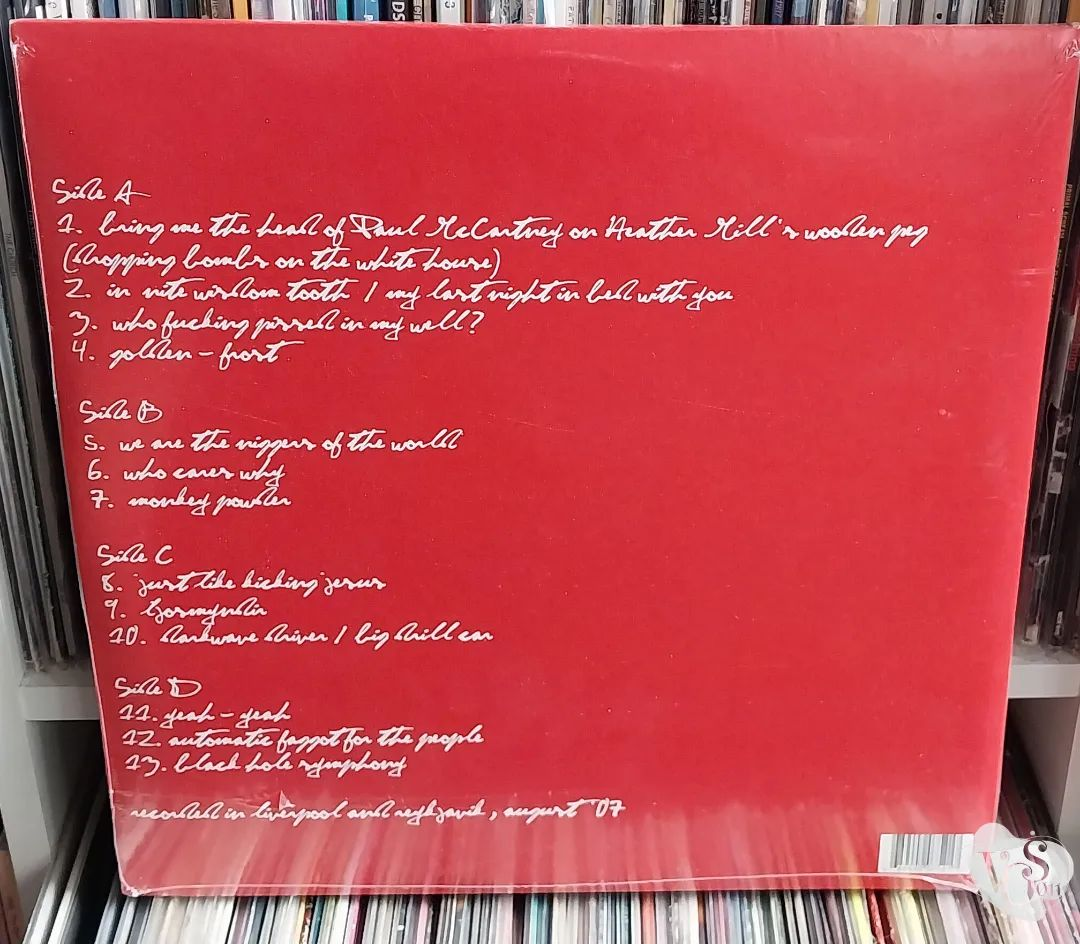
Recorded with select members from the Brian Jonestown Massacre, Icelandic musicians, and Mark Gardener (Ride) After spending time writing and recording in Liverpool, England and Reykjavik, Iceland; “My Bloody Underground” is the thirteenth full length album released by the band, and is released on Anton Newcombe’s own record label A Recordings.
After a four year hiatus (with the exception of a five-song EP released in 2005) and another line-up change, Brian Jonestown Massacre take their sound full circle returning to the shoe gazer roots that prompted the band to make their first album Methodone. My Bloody Underground takes cues from two of the most important and influential bands of their respective eras, My Bloody Valentine and Velvet Underground, just as the title suggests, as well as Julian Cope’s “My Nation Underground”. Noise pop and neo-psychedelia are the most notable sources for AntonNewcombe’s new music, and after eight albums and a handful of EPs, his rekindled interest in bands like The Jesus And Mary Chain keeps his songs from sounding redundant.
Newcombe’s key talent is his ability to take music from the past and project it as music for the future. Despite the fact that his quick mouth and serious ego might persuade you otherwise, he’s not a god or a superhero (too bad, because “Osmosisman” has a nice ring to it), but there’s no arguing that he has a supernatural ability to soak up his record collection and project his favourite elements spot-on, filtered as a unique vision. The first couple songs feel a lot like the Brian Jonestown Massacre we’ve grown to know, love, and fear, with the expected psychedelic ’60s Stones or Kinks throwbacks, charmingly slopped up with a junkyard of instruments and the occasional out of tune guitar. As the album picks up, things get truly warped and a new angle is introduced when ’80s shoegazer aspects and ’70s Krautrock are thrown into the mix. Imitation Kevin Shields guitar drones with slight whammy bends fill the air alongside breathy vocals in “Who Cares Why” and “Just Like Kicking Jesus”, and faux-German Neu vocals and a driving guitar fuzz permeate “Golden Frost.” Running almost 75 minutes long, the album’s as surreal as anything Brian Jonestown Massacre has done, and fans who appreciate their controversial side will appreciate that it is still intact, as evident in song titles like “Bring Me the Head of Paul McCartney on Heather Mill’s Wooden Peg (Dropping Bombs on the White House),” “We Are the Niggers of the World,” and “Automatic Faggot for the People.” Hellbent on pushing the envelope, Newcombe shines as a prolific madman once again and as recycled as the ideas are, My Bloody Underground is a fantastic new direction and a forward thinking album that indicates that however combustible, there is a lot more life left in the Brian Jonestown Massacre in any incarnation.
Stirring visions of sunny Californian communes to New York City bars on the Lower East Side. From Rishikesh to Reykjavik, the entire album provides provocative glimpses into Anton Newcombe’s head, both the darkness and the light, so clearly and so beautifully self produced.
“My Bloody Underground” is the tenth work of The Brian Jonestown Massacre, led by the brilliant, ingenious and fickle Anton Newcombe.
BJM is perhaps the most relevant band of the last 30 and a bit years that remains in continuous activity, always reinventing itself, adding new elements to the band’s famous acidic, psychedelic and meltdown recipe. Experimentalism, kraut, shoegaze, folk, catchy melodies, all serves as fuel for Anton Newcombe and whoever stands by him anyway, never expect the same formation at BJM, shouldn’t be easy to hang with the guy at all, well, geniuses are like that.
The album is a tribute to three of BJM’s biggest influences, Velvet Underground, My Bloody Valentine, the title pun clearly refers to the first two bands and J&MC subtly through the classic “P” bible “My Little Underground” sychocandy”. Soundly, it sounds more experimental than its predecessors, entering the acid psychedelia, notorious band, elements of kraut, avant garde among other sound fronts, starting from there a series of even more torturous albums.
“My Bloody Underground” remains as one of several BJM masterpieces.
John Darnielle has written almost 600 songs now, and some of them are very sad, dealing with hard drugs and tragic ends, hurting yourself and others, sicknesses of both body and brain, off-brand alcohols. They are told in beautiful, unnerving, specific detail because he is a very good writer, and also some of them are just true stories about his own life.
A few month’s ago right around the release of “Getting Into Knives”, John Darnielle rounded up his band the Mountain Goats and documented a pair of amazing concerts on video from Manifold Recording in Pittsboro, North Carolina. Between the two performances, 36 songs were performed across the band’s entire catalogue. They were named “The Jordan Lake Sessions” and the concerts wound up becoming some of NoonChorus’ highest-attended online concerts to date.
In conjunction with Bandcamp’s industry-saving “no revenue share” Fridays, the Mountain Goats have made “The Jordan Lake Session’s Volume 1 and 2” available exclusively on the platform with more digital services to follow on December
The Mountain Goats’ John Darnielle: like a lot of bands, we thought, we have to figure out some way to play together, it is unnatural for us to not be playing together, it feels weird and wrong, and it also feels weird and wrong to not be playing for the people who dig what we do, that is a huge part of who we are, it’s a circuit, you know, an energy transfer, it’s the coolest thing and we’re lucky to have it and then the pandemic came in to remind us just how lucky. And also there’s the I-try-not-to-be-talking-about-this-stuff issue of how playing live is our paycheck, it is how we make ends meet, it’s the gig. So we booked a studio that had cameras, and I put together a couple of set lists, and we played two shows in two days and then we put the shows up on sale; and the Mountain Goats Massive showed up, in truly humbling numbers, and the whole groove felt really emotional for us—and, it seemed to me, for the audience, too. There is an immense loss for me in this time away from the stages and rooms which are, in many ways for us, home. I miss the people who bring our music to life, so much.
And so a lot of people, like a lot, in the chat during the show, and in various @’s across social media, said, Hey buddy, what if there were a live release of some kind, I’d buy that, and I thought, well, cool, I’ll look into it; and we did indeed do that, and here it is, but I wanted to make it “pay what you like” on release day: because you people who already paid to see these shows, you are the people who literally put food in our children’s mouths this year. If you feel like you’re done paying for these shows, then we are cool with that, zero pressure. But!! if you’re in good shape, and your own job has figured out a way to let you report to the workplace in 2020, and you’re in a position to pay for these shows, then we are deeply grateful, it has been pretty harrowing to be banned from all clubs for a whole year. The news on the wire however is that a vaccine is coming which will unban us from clubs around the world, and, friends, when that viral ban is lifted, please know that there will be few places to hide from the Mountain Goats. We will rock them in the steel towns, and in the coastal towns, too; and on the cities of the plains, and in the oases of the desert, lo, we shall rock them, and then rock them even harder, at serious Deep Purple levels of rocking, the head-nodding, hair-flying style, at which many will say, I have been rocked, and indeed I wondered if my time of rocking were past, but it has returned this day with gale force. May that day speed hither with all due haste! Finally, if you are a reclusive Howard Hughes type reading these words, and thinking, What if “pay what you like” means I just throw an absurd amount of money at the Mountain Goats, well, friend, we’re glad to meet you. Please be assured that your gesture will be met by JD with similarly absurd gestures, as for example fulfilling his dream of commissioning a translation of the book Elfriede Jelinek got the Nobel for, but which still hasn’t been published in English twenty years later, for crying out loud.
Anyway that’s the news! Here’s two shows! We’re proud of them! If you wanna pay us for ’em, we won’t complain!We will see you next year! .
It’s difficult to consider any portion of Tom Petty’s catalogue as objectively unappealing. Even his less-celebrated records include some hidden nuggets.
By his own admission, the period that yielded the songs for 1994’s “Wildflowers” and 1996’s “Songs and Music from She’s The One” was his most prolific. And as many songwriters can attest, heartbreak and loss often prompts the best art.
Tom Petty’s estate has chosen to revisit this era again on “Angel Dream”, a remixed, remastered and reimagined album of tracks that originally appeared on the 1996 LP with the Heartbreakers.
By the time the ’90s arrived, Petty was in his mid 40s but seemed to have lived multiple lifetimes. “One of Life’s Little Mysteries,” one of four previously unreleased songs on Angel Dream, features Petty dispensing some laid-back, rocking-chair wisdom: “Go to work in the morning, try and make a buck, do everything you’re told and you’re still out of luck.” Bottom line? Life is just too unpredictable for that kind of prudence. “Get yourself a dog, get yourself a cat, watch them chase each other around the laundromat.”
Fans of Petty’s first band Mudcrutch will find a gem in “Thirteen Days,” a breezy J.J Cale cover that fits right in with the Heartbreakers ethos. (Petty and Cale were once label mates at Shelter Records.) “105 Degrees” offers an opposite turn – thumping rock with an abundance of cymbals and keyboardist Benmont Tench’s distinctive organ. And an extended version of “Supernatural Radio” includes ad-libs producer Ryan Ulyate coaxed out during the remixing process.
“French Disconnection” closes the album with a riff on She’s the One’s “Angel Dream” that merges swiftly into a fuller instrumental take. Even without Petty’s voice, the track is still able to convey the tenderness of the song, which was written for his wife.
Three years after Petty’s death, “Angel Dream”, though less expansive than 2020’s “Wildflowers and All The Rest” , arrives like another piece of buried treasure from his archive. It’s another glimpse into the world of one of rock’s most trusted songwriters.
The music of Bea Kristi is rooted in nostalgia. Ever since her debut single — the TikTok-approved sleeper hit “Coffee” the British musician known as Beabadoobee has paved the way for her Gen Z peers with soaring pop-rock that wouldn’t feel out of place in a ‘90s cult film. She smartly captures the adolescent journey of coming into one’s own: “Got this new blue-haired phase,” she sang on 2019’s “I Wish I Was Stephen Malkmus,” an ode to her personal hero, whose band Pavement broke up before Bea was even born.
But what happens when you’ve just turned 21, you’re well on your way to becoming your own generation’s alt-radio representative, and your sense of self still feels out of reach? Bea attempts to answer this on “Our Extended Play” her new four-track EP (out June 23rd).
Co-written and produced alongside The 1975’s Matty Healy and George Daniel, “Our Extended Play” offers a refreshingly polished take on the resurgence of ‘90s and 2000s trends. Lyrically, it bridges that uncomfortable gap between being a teenager and a full-fledged adult, and the never ending search to pinpoint where you belong in the world. “I wanted to experiment on the sounds and sonics even more and the EP to me has a feeling of togetherness to it,” Bea said in a statement. “We’re all in this joined as one.”
While beabadoobee’s last release, her 2020 debut album “Fake It Flowers”, was more in the vein of Avril Lavigne’s pseudo-grunge, Our Extended Play levels up with an arena-sized sheen that never negates her artistry. Sticky hooks are a tenet of her music, and there’s plenty of those on the EP.
The jangle of “Last Day On Earth” — complete with a cheeky “shoop-do-badoo” — harks back to the golden age of MTV, and “He Gets Me So High” feels like a response to Tal Bachman’s 1999 hit in both sound and subject matter. Meanwhile, the sultry “Cologne” is driven by a staggering guitar riff that echoes early Strokes records, testifying to beabadoobee’s myriad influences and openness to experimentation. For an artist often pegged as the Michelle Branch of the 2020s, these sonic trials are welcome and often work in her favour.
But beyond its sugary exterior, Our Extended Play is beabadoobee at her darkest yet. “Last Day On Earth,” written shortly after the UK’s first COVID lockdown, envisions a universe on the brink of extinction: “You killed someone last night/And burned down a church,” she sings. “If it all goes wrong/And it looks like we’ll soon be gone/Then we should all just get along.” If you’re feeling lost or purposeless, Bea seems to say, you’re not alone — after all, even a coveted Brit Award nomination can’t save you from constantly second-guessing yourself.
One of the EP’s highlights is its sparkling closer, “He Gets Me So High,” which flips the tropes of traditional love songs, instead zeroing in on the negatives of being so enthralled with a partner that reality becomes distorted. What’s one to do when you’re so deliriously in love that you get tunnel vision and lose yourself in the midst of it?
While it’s easy to hear The 1975’s electro-pop touch here (including a vocal feature from Healy), the track also feels undoubtedly Bea, and it cements what she does best: giving trends of the past a clever and useful update. Our Extended Play comes from a place of sincerity, relying on familiar comforts without ever feeling out of date.
Deeper returns on the heels of the “Auto-Pain (Deluxe)”announce to announce a run of shows this November and December which will bring the band to select markets in the United Kingdom and Europe. The band has also shared a glitched out remix of ‘Auto-Pain’ stand out “Lake Song” by London dance punk trio PVA. The remix leans into the “queasy feeling” of the original, turns up the energy and morphs the track into a woozy beatific dance number.
It was late March of 2020 when Deeper released their sophomore album, Auto-Pain, an LP that drew critical acclaim from outlets like VICE, Stereogum, BrooklynVegan, Paste and CLASH who called the album “a majestic step forward” for the quartet. The band was preparing for a full year of touring, coming off of a European run with Twin Peaks and a triumphant NYC release show at Rough Trade, with plans for headlining tours in North America and Europe, but those plans were suddenly derailed when the pandemic began.
These set backs did not dim the enthusiasm generated by Auto-Pain, nor did it dampen the band’s tireless work ethic, and following their successful livestream from the Chicago Cultural Centre in March, Deeper will hit the road on a headline tour UK & Europe in addition to sharing a remix of “Lake Song” by fellow UK rising act PVA. The latter will be included on the upcoming Auto-Pain: Deluxe Editionon Fire Talk Records. The new 2-disc version of the LP reframes the liminal spaces of the Chicago quartet’s searingly-nuanced album about grief and resilience into a densely-layered perspective of emotional maximalism, fearless in its vulnerability, and includes remixes two stripped-back demos and live versions from the band’s Chicago Cultural Center performance, and remixes from fellow ascending artists Working Men’s Club, Fire-Toolz,NNAMDI, and the aforementioned PVA.
This new gift from LucyDacus, her third album, was built on an interrogation of her coming-of-age years in Richmond, VA. Many songs start the way a memoir might—“In the summer of ’07 I was sure I’d go to heaven, but I was hedging my bets at VBS”—and all of them have the compassion, humour, and honesty of the best autobiographical writing. Most importantly and mysteriously, this album displays Dacus’s ability to use the personal as portal into the universal.“
I can’t hide behind generalizations or fiction anymore,” Dacus says, though talking about these songs, she admits, makes her ache. That Home Video arrives at the end of this locked down, fearful era seems as preordained as the messages within. “I don’t necessarily think that I’m supposed to understand the songs just because I made them,” Dacus says, “I feel like there’s this person who has been in me my whole life and I’m doing my best to represent them.” After more than a year of being homebound, in a time when screens and video calls were sometimes our only form of contact, looking backward was a natural habit for many.
Dacus revisits her coming-of-age years in Richmond, Virginia, where she was devoutly Christian with a bit of a self-admitted saviour complex. The record is deeply rooted in the physicality of adolescence: flushed cheeks in a crush’s basement, teenage bodies sprouting like weeds, dancing in the aisle of a five and dime. The memories aren’t always rosy, but Dacus extends kindness to her younger self: “I can’t undo what I’ve done, and I wouldn’t want to,” she sings on “First Time.”
This readiness for self-examination will come as no surprise to longtime listeners: Since her 2016 debut “No Burden”, Dacus has established herself as an empathetic documentarian of a songwriter, surveying the world around her with a keen eye and a tender heart. With “Historian” in 2018, she delved deeper into matters of mortality and the ties that bind, and that same year, she found kinship alongside Phoebe Bridgers and Julien Baker in Boygenius. On the supergroup’s eponymous EP, Dacus’s writerly visions were elevated to vast new expanses.
In the wake of Historian and boygenius, Dacus’s public profile grew in ways that started to invade her privacy ; she needed a change of scenery. After recording Home Video in Nashville in August 2019, she moved from Richmond to Philadelphia, where she now lives with a half-dozen friends and an extensive library. Among her collection of books are a series of journals, which she has kept since she was a child. While writing Home Video, Dacus would occasionally flip through her diaries to see how she perceived formative experiences in real time. “Sometimes I didn’t even write it down, as if I didn’t find it important at the time,” she says. “Or I would lie about events and I don’t remember the feeling of lying, I must’ve done it compulsively.”
“Hot & Heavy”
I thought I was writing this song about a friend of mine who used to be super reserved and is now very lively. We used to be close, but the more friends she made, the less we saw each other. Then I felt like I was writing about myself from the perspective of someone I had dated—like watching myself go through the process of learning about the world and being less closed off. Then I realized I was both characters. I’ve never felt totally comfortable talking about myself in a song because I compulsively don’t want to be selfish. But everyone has to be some degree of selfish to survive. Selfish art is often the most revealing.
“Christine”
I don’t write from a place of motivation. It happens more unexpectedly, as if something in my brain has finally convinced my body to let it come out. But what has motivated me to share the songs is that they might be meaningful beyond me, and I no longer need to hold on to them so hard. I’ve been thinking about hymns a lot and how you often don’t know who wrote them, but they’ve been sung repeatedly for hundreds of years. I’m not saying that I want or expect my songs to be like that, but I like the idea of songs not needing a writer.
“First Time”
I don’t like to set myself up for disappointment, and if you have any part of you that wants to change the past, you will be disappointed because you literally can’t. All you can do is learn and embark upon the future, or even embark upon the present. Fuck the future—just an idea.
“VBS”
I no longer ascribe to any religion. Religions are super interesting, but religious people can be very misguided. For a long time, I thought I would change Christianity by being the type of Christian I wanted to see. Then I was Christian Agnostic, but very slowly, nobody was asking me what I believed, and I stopped talking about it. I stopped introducing myself as a Christian. But I can’t get away from the fact that I was raised Christian, so it feels like a big part of my life. In general, all religions are trying to figure out how to live in a way that is respectful, or rather, trying to figure out how to live and die. That is a good question for anyone to pose to themselves.
“Cartwheel”
“Cartwheel” is one of the most hodge-podge songs on the record. I wrote it on a walk around Nashville when we were recording the 2019 EP. Over time, I realized it was about my friend from middle school. Eventually, my group of friends started to like boys, and I was like, “What are you doing, we’re having fun! Why are we sneaking in boys to our sleepovers? It’s not more fun when they get here, it’s less fun.” I didn’t get it. The day that she told me she had sex for the first time, I felt so betrayed. Not mad, exactly, but mourning something I couldn’t pin down. I wasn’t supportive, which probably wasn’t good of me, but all my friends seemed to want to grow up faster than me.
“Thumbs”
It’s one of the songs I’m most proud of writing. I didn’t want people to hear it for the first time through a phone speaker. I played it live for so long, because I needed to get used to it with zero expectations in front of me. After I wrote “Thumbs,” I started crying and thought I was going to throw up. Early on, I cried a lot playing it. I’d get choked up and have to pause; and because no one knew the song, it couldn’t have been worth recording. At this point, if I cry, fine, anyone can take a video.
When I wrote the song, I was speaking to the friend: “You don’t know him, even if he said you did.” But then I said it back to myself and realized I needed to hear that, too. I don’t have to play any particular role, even if he and his family are expecting that from me. A part of me wants to be able to do that, but it’s just really intense, and it’s not something I’m familiar with. All in due time, it’s OK if the time isn’t right now or ever, but it might be in the future—it’s up to me.
“Going Going Gone”
That one was a little more theoretical. I did have someone in mind when I was writing it, but I wanted to write about the cycle of boy-girl, man-woman, father-daughter, and how protective fathers may be because they know first hand what men are capable of. The cycle of innocence to corruption to fear.
When I wrote this one, I didn’t like it so much because it had that campfire vibe, and I thought it was too twee. For a long time, I’ve tried to establish myself in people’s minds as Not Americana, because people go to such lengths to show girls with guitars as country adjacent. People have called me alt-country… Genre is dead, and yet, I make rock music. But I felt more comfortable doing whatever the song wanted this time around. So if it’s a campfire song, then let’s get people on the refrains, and let’s do it with acoustic guitars and make it super cozy. My favourite moment is the talking at the end. I like that it’s the exact centre of the record because it feels like an intermission.
“Partner in Crime”
When I was a teen, I wanted to be taken seriously. I wanted to have deep conversations so I would go to shows and get hit on and either not tell people my age or lie about it. Even if I did tell them, someone would give me a line like, “Age is just a number.” I ended up seeing this person for a while who was much older than me. So “Partner in Crime” is a bit of a dark double entendre. At the time, I felt prepared for a relationship like that, because I felt like I was confident and could enter spaces on equal footing with people who were older than me. Then it occured to me, “Wait, I’m 17, it’s weird that he’s dating me.” I thought it was more about me and if I was ready for something, and the answer was yes. But what was he not ready for if he was willing to date a high schooler?
I had a vocal injury and had to be silent for one month, and eventually I got to speak for a couple of hours a day. When we recorded, I would only sing between 3 and 5 p.m. We thought we would have to re-track everything, but it turned out fine. For “Partner in Crime,” I wasn’t hitting the notes so we AutoTuned it, and it turned out to be a happy accident. I hadn’t done anything like that before, and it ended up influencing the arrangement and fitting with the meaning about disguising yourself to be more attractive.
“Brando”
“Brando” is about a friend I had in high school who had based a lot of his identity on his tastes and the media he consumed. When we met, he recognized in me a lack of culture because I grew up in a rural, suburban area and I didn’t really come into contact with many movies or music. So he taught me everything that he loved, and that was the bedrock of our friendship. I realized over time that all he wanted from me was to be a receptacle for his tastes, to mirror him. It was like I was his scene partner in life. It occurred to me later that things he said to me that I thought we were so deep were just quotes, not original thoughts. “Here’s looking at you, kid” was actually something that he said. And then I saw Casablanca.
“Please Stay”
If you’ve ever been a friend to someone who doesn’t think they should continue living and you are trying with everything at your disposal to tell them otherwise, everything feels like fair game. Do anything with your life, ruin it, but don’t end it, just stay another day—that kind of thing. I’ve had a lot of friends throughout my life that have contemplated or committed suicide, and I’ve been involved to varying degrees, as someone they can talk to or be physically around. The sense of clarity in situations like that is so profound, like the only thing that matters is that you’re here.
“Triple Dog Dare”
The relationship at the centre of it was my freshman year of high school, though I visualize the characters in the song as younger. We had a super tight friendship, and were probably a little bit in love. But her mom saw what was going on in a way that I didn’t. She was Catholic and a psychic and would tell my friend, “You are in imminent danger if you go over to Lucy’s house.” So our relationship faltered because we were kept from each other. The song focuses on our connection, her mother being very protective, and at the end of the song there’s a fictionalized alternate ending where they steal a boat and run away. It’s left unclear whether they succeed or die at sea. The group vocal at the end is like a search party. In the last verse, the protective mother is grieving, but she’s also relieved that nothing worse can happen. That idea came from a passage in A Little Life by Hanya Yanagihara where a character is talking about how everyone knows about the devastation of loss, but nobody really talks about that feeling of relief.
If we haven’t learned it already, this album is a gorgeous example of the transformative power of vulnerability. Dacus’s voice, both audible and on the page, has a healer’s power to soothe and ground and reckon.




:format(jpeg):mode_rgb():quality(90)/discogs-images/R-4712053-1385640248-2979.jpeg.jpg)






 The Fat Angel Sings