Deeper returns on the heels of the “Auto-Pain (Deluxe)”announce to announce a run of shows this November and December which will bring the band to select markets in the United Kingdom and Europe. The band has also shared a glitched out remix of ‘Auto-Pain’ stand out “Lake Song” by London dance punk trio PVA. The remix leans into the “queasy feeling” of the original, turns up the energy and morphs the track into a woozy beatific dance number.
It was late March of 2020 when Deeper released their sophomore album, Auto-Pain, an LP that drew critical acclaim from outlets like VICE, Stereogum, BrooklynVegan, Paste and CLASH who called the album “a majestic step forward” for the quartet. The band was preparing for a full year of touring, coming off of a European run with Twin Peaks and a triumphant NYC release show at Rough Trade, with plans for headlining tours in North America and Europe, but those plans were suddenly derailed when the pandemic began.
These set backs did not dim the enthusiasm generated by Auto-Pain, nor did it dampen the band’s tireless work ethic, and following their successful livestream from the Chicago Cultural Centre in March, Deeper will hit the road on a headline tour UK & Europe in addition to sharing a remix of “Lake Song” by fellow UK rising act PVA. The latter will be included on the upcoming Auto-Pain: Deluxe Editionon Fire Talk Records. The new 2-disc version of the LP reframes the liminal spaces of the Chicago quartet’s searingly-nuanced album about grief and resilience into a densely-layered perspective of emotional maximalism, fearless in its vulnerability, and includes remixes two stripped-back demos and live versions from the band’s Chicago Cultural Center performance, and remixes from fellow ascending artists Working Men’s Club, Fire-Toolz,NNAMDI, and the aforementioned PVA.
This new gift from LucyDacus, her third album, was built on an interrogation of her coming-of-age years in Richmond, VA. Many songs start the way a memoir might—“In the summer of ’07 I was sure I’d go to heaven, but I was hedging my bets at VBS”—and all of them have the compassion, humour, and honesty of the best autobiographical writing. Most importantly and mysteriously, this album displays Dacus’s ability to use the personal as portal into the universal.“
I can’t hide behind generalizations or fiction anymore,” Dacus says, though talking about these songs, she admits, makes her ache. That Home Video arrives at the end of this locked down, fearful era seems as preordained as the messages within. “I don’t necessarily think that I’m supposed to understand the songs just because I made them,” Dacus says, “I feel like there’s this person who has been in me my whole life and I’m doing my best to represent them.” After more than a year of being homebound, in a time when screens and video calls were sometimes our only form of contact, looking backward was a natural habit for many.
Dacus revisits her coming-of-age years in Richmond, Virginia, where she was devoutly Christian with a bit of a self-admitted saviour complex. The record is deeply rooted in the physicality of adolescence: flushed cheeks in a crush’s basement, teenage bodies sprouting like weeds, dancing in the aisle of a five and dime. The memories aren’t always rosy, but Dacus extends kindness to her younger self: “I can’t undo what I’ve done, and I wouldn’t want to,” she sings on “First Time.”
This readiness for self-examination will come as no surprise to longtime listeners: Since her 2016 debut “No Burden”, Dacus has established herself as an empathetic documentarian of a songwriter, surveying the world around her with a keen eye and a tender heart. With “Historian” in 2018, she delved deeper into matters of mortality and the ties that bind, and that same year, she found kinship alongside Phoebe Bridgers and Julien Baker in Boygenius. On the supergroup’s eponymous EP, Dacus’s writerly visions were elevated to vast new expanses.
In the wake of Historian and boygenius, Dacus’s public profile grew in ways that started to invade her privacy ; she needed a change of scenery. After recording Home Video in Nashville in August 2019, she moved from Richmond to Philadelphia, where she now lives with a half-dozen friends and an extensive library. Among her collection of books are a series of journals, which she has kept since she was a child. While writing Home Video, Dacus would occasionally flip through her diaries to see how she perceived formative experiences in real time. “Sometimes I didn’t even write it down, as if I didn’t find it important at the time,” she says. “Or I would lie about events and I don’t remember the feeling of lying, I must’ve done it compulsively.”
“Hot & Heavy”
I thought I was writing this song about a friend of mine who used to be super reserved and is now very lively. We used to be close, but the more friends she made, the less we saw each other. Then I felt like I was writing about myself from the perspective of someone I had dated—like watching myself go through the process of learning about the world and being less closed off. Then I realized I was both characters. I’ve never felt totally comfortable talking about myself in a song because I compulsively don’t want to be selfish. But everyone has to be some degree of selfish to survive. Selfish art is often the most revealing.
“Christine”
I don’t write from a place of motivation. It happens more unexpectedly, as if something in my brain has finally convinced my body to let it come out. But what has motivated me to share the songs is that they might be meaningful beyond me, and I no longer need to hold on to them so hard. I’ve been thinking about hymns a lot and how you often don’t know who wrote them, but they’ve been sung repeatedly for hundreds of years. I’m not saying that I want or expect my songs to be like that, but I like the idea of songs not needing a writer.
“First Time”
I don’t like to set myself up for disappointment, and if you have any part of you that wants to change the past, you will be disappointed because you literally can’t. All you can do is learn and embark upon the future, or even embark upon the present. Fuck the future—just an idea.
“VBS”
I no longer ascribe to any religion. Religions are super interesting, but religious people can be very misguided. For a long time, I thought I would change Christianity by being the type of Christian I wanted to see. Then I was Christian Agnostic, but very slowly, nobody was asking me what I believed, and I stopped talking about it. I stopped introducing myself as a Christian. But I can’t get away from the fact that I was raised Christian, so it feels like a big part of my life. In general, all religions are trying to figure out how to live in a way that is respectful, or rather, trying to figure out how to live and die. That is a good question for anyone to pose to themselves.
“Cartwheel”
“Cartwheel” is one of the most hodge-podge songs on the record. I wrote it on a walk around Nashville when we were recording the 2019 EP. Over time, I realized it was about my friend from middle school. Eventually, my group of friends started to like boys, and I was like, “What are you doing, we’re having fun! Why are we sneaking in boys to our sleepovers? It’s not more fun when they get here, it’s less fun.” I didn’t get it. The day that she told me she had sex for the first time, I felt so betrayed. Not mad, exactly, but mourning something I couldn’t pin down. I wasn’t supportive, which probably wasn’t good of me, but all my friends seemed to want to grow up faster than me.
“Thumbs”
It’s one of the songs I’m most proud of writing. I didn’t want people to hear it for the first time through a phone speaker. I played it live for so long, because I needed to get used to it with zero expectations in front of me. After I wrote “Thumbs,” I started crying and thought I was going to throw up. Early on, I cried a lot playing it. I’d get choked up and have to pause; and because no one knew the song, it couldn’t have been worth recording. At this point, if I cry, fine, anyone can take a video.
When I wrote the song, I was speaking to the friend: “You don’t know him, even if he said you did.” But then I said it back to myself and realized I needed to hear that, too. I don’t have to play any particular role, even if he and his family are expecting that from me. A part of me wants to be able to do that, but it’s just really intense, and it’s not something I’m familiar with. All in due time, it’s OK if the time isn’t right now or ever, but it might be in the future—it’s up to me.
“Going Going Gone”
That one was a little more theoretical. I did have someone in mind when I was writing it, but I wanted to write about the cycle of boy-girl, man-woman, father-daughter, and how protective fathers may be because they know first hand what men are capable of. The cycle of innocence to corruption to fear.
When I wrote this one, I didn’t like it so much because it had that campfire vibe, and I thought it was too twee. For a long time, I’ve tried to establish myself in people’s minds as Not Americana, because people go to such lengths to show girls with guitars as country adjacent. People have called me alt-country… Genre is dead, and yet, I make rock music. But I felt more comfortable doing whatever the song wanted this time around. So if it’s a campfire song, then let’s get people on the refrains, and let’s do it with acoustic guitars and make it super cozy. My favourite moment is the talking at the end. I like that it’s the exact centre of the record because it feels like an intermission.
“Partner in Crime”
When I was a teen, I wanted to be taken seriously. I wanted to have deep conversations so I would go to shows and get hit on and either not tell people my age or lie about it. Even if I did tell them, someone would give me a line like, “Age is just a number.” I ended up seeing this person for a while who was much older than me. So “Partner in Crime” is a bit of a dark double entendre. At the time, I felt prepared for a relationship like that, because I felt like I was confident and could enter spaces on equal footing with people who were older than me. Then it occured to me, “Wait, I’m 17, it’s weird that he’s dating me.” I thought it was more about me and if I was ready for something, and the answer was yes. But what was he not ready for if he was willing to date a high schooler?
I had a vocal injury and had to be silent for one month, and eventually I got to speak for a couple of hours a day. When we recorded, I would only sing between 3 and 5 p.m. We thought we would have to re-track everything, but it turned out fine. For “Partner in Crime,” I wasn’t hitting the notes so we AutoTuned it, and it turned out to be a happy accident. I hadn’t done anything like that before, and it ended up influencing the arrangement and fitting with the meaning about disguising yourself to be more attractive.
“Brando”
“Brando” is about a friend I had in high school who had based a lot of his identity on his tastes and the media he consumed. When we met, he recognized in me a lack of culture because I grew up in a rural, suburban area and I didn’t really come into contact with many movies or music. So he taught me everything that he loved, and that was the bedrock of our friendship. I realized over time that all he wanted from me was to be a receptacle for his tastes, to mirror him. It was like I was his scene partner in life. It occurred to me later that things he said to me that I thought we were so deep were just quotes, not original thoughts. “Here’s looking at you, kid” was actually something that he said. And then I saw Casablanca.
“Please Stay”
If you’ve ever been a friend to someone who doesn’t think they should continue living and you are trying with everything at your disposal to tell them otherwise, everything feels like fair game. Do anything with your life, ruin it, but don’t end it, just stay another day—that kind of thing. I’ve had a lot of friends throughout my life that have contemplated or committed suicide, and I’ve been involved to varying degrees, as someone they can talk to or be physically around. The sense of clarity in situations like that is so profound, like the only thing that matters is that you’re here.
“Triple Dog Dare”
The relationship at the centre of it was my freshman year of high school, though I visualize the characters in the song as younger. We had a super tight friendship, and were probably a little bit in love. But her mom saw what was going on in a way that I didn’t. She was Catholic and a psychic and would tell my friend, “You are in imminent danger if you go over to Lucy’s house.” So our relationship faltered because we were kept from each other. The song focuses on our connection, her mother being very protective, and at the end of the song there’s a fictionalized alternate ending where they steal a boat and run away. It’s left unclear whether they succeed or die at sea. The group vocal at the end is like a search party. In the last verse, the protective mother is grieving, but she’s also relieved that nothing worse can happen. That idea came from a passage in A Little Life by Hanya Yanagihara where a character is talking about how everyone knows about the devastation of loss, but nobody really talks about that feeling of relief.
If we haven’t learned it already, this album is a gorgeous example of the transformative power of vulnerability. Dacus’s voice, both audible and on the page, has a healer’s power to soothe and ground and reckon.
“Hey What” the astonishing new Low album, will be released worldwide on September 10th, 2021! In anticipation of the new album, the beloved group is sharing “Days Like These,” the first single, and its official video, helmed by their long time friend and director, Karlos Rene Ayala.
“Hey What” is Low’s thirteenth full-length release in twenty-seven years, and their third with producer BJ Burton. The new album finds the group focusing on their craft, staying out of the fray, and holding fast their faith to find new ways to express the discord and delight of being alive, to turn the duality of existence into hymns we can share. These ten pieces—each built around their own instantaneous, undeniable hook—are turbocharged by the vivid textures that surround them.
The ineffable, familiar harmonies of Alan Sparhawk and Mimi Parker break through the chaos like a life raft. Layers of distorted sound accrete with each new verse – building, breaking, colossal then restrained, a solemn vow only whispered. There will be time to unravel and attribute meaning to the music and art of these times, but the creative moment looks forward, with teeth. Happy to announce that our new album ‘HEY WHAT’ will be released on September 10th!
We’re hitting the road in 2022 in support of our new album “HEY WHAT“, and we’re looking forward to finally seeing you all again!
Morly’s creativity seems to encourage a kind of non-lingual communication. Katy Morley is poised to become a major voice in pop and soul. Morly’s newest work will definitely make you feel less alone. In fact, her songs are so intimate and personal, you might feel like she’s seated at a piano right next to you. Her three-song 12” release, “Sleeping In My Own Bed” (out now via Cascine Records, listen below) showcases the singer-songwriter’s stirring voice and gift for stark, emotive arrangements. “I guess I was more interested in classic song writing, is what it comes down to,” she says of the release. “And more organic sounds. I decided to not use [music production software] Ableton for a year and only write songs on piano and guitar. I think it actually ended up really being fruitful. It was a really good learning experience.”
Emotions are transmitted in a silent way, with her ethereal constructions emitting a zen-like sense of calm.
Debut album ‘Til I Start Speaking’ will be released on August 23rd, and it finds Morly baring her soul, laying her experiences out there for the world to see.
New single ‘Dance To You’ is an opaque alt-pop wonder, rooted in that breathy, mellifluous vocal.
Produced by long-time collaborator Christopher Stracey, it finds the Minneapolis-hailing, UK based singer finding space for a soft exhalation.
We’re able to share the video, a collaborative construction with director Lawrence Pumfrey and choreographer Katya Bourviski.
The dream-like shoot places Morly centre-stage, reacting to the room around her and the emotional environment she finds herself in.
Morly comments…
“The video was born of conversations with some very talented friends. We shot the video at the Longfield Hall community center in Camberwell—the way we shot it was very inspired by the room itself, with its peeling green paint and beautiful curved wall of windows opposite the stage. I was somewhat intimidated to join the choreography alongside such incredible professional dancers, but part of the narrative is my struggle to keep up, to find my place amongst it all, so we actually wanted to incorporate a few of my missteps.”
Despite her current focus on music, Katy thinks of herself as a painter first. She has painted all of her album artwork to date, including the Sleeping In My Own Bedcover, which depicts her brother and a friend asleep on a train. Katy painted the image when she was nineteen; it has now taken on a new life. “I didn’t really know why I did that painting back in the day,” she says. “Now I know why.”
One of Morly’s next creative goals is a full-length album. “It’s definitely in the works,” she says. It’s unclear what that album will sound like, but one thing seems clear: it will be about music first – not persona or image or facade. “That’s all it should be is just about music,” she says of her work. “It’s not about me.”
Formed in 1978 and “discovered” by The Jam’s Bruce Foxton and managed by Paul Weller’s Dad John they signed to United Artists in 1979, their second single ‘Turning Japanese’ becoming an enormous international hit reaching number three in the UK and number one in Australia. It was also a major hit in New Zealand, Canada and reached No. 36 in the US single charts.
Their debut LP ‘New Clear Days’ (No.44 – UK albums chart) was released in 1979 and their second album ‘Magnets’ in early 1981. The band never repeated the same degree of commercial success as ‘Turning Japanese’ but developed a global following prior to their split in the early ‘80s.
Some 35 years later The Vapors reformed in 2016 and again in 2020 to release their third album ‘Together’ and continue to regularly play live shows.
Packaged in a deluxe clamshell box, this 4CD set contains their two albums ‘New Clear Days’ and ‘Magnets’ as well as the single versions and B-sides. Researched and mastered from the original master tapes retrieved from the EMI Archives, it also contains two CDs featuring previously unreleased demos, rough mixes, alternative versions plus the bands live set from The Rainbow in December 1979.
• 76 track deluxe 4CD clamshell box set containing the original albums ‘New Clear Days’ and ‘Magnets’ plus B-sides & single versions
• Includes 2CDs of previously unreleased demos, rough mixes, alternative and live versions featuring their performance from The Rainbow on 3rd December 1979.
• Featuring three songs ‘Move’, ‘Secret Noise’ and ‘Caroline’ that have never officially previously been released.
• With a fully illustrated 24-page booklet containing rare and previously unseen photos with a brand new annotation by Ed Piller.
You can catch The Vapors on their New Clear Days 40th anniversary UK tour this October playing the debut album in full plus material from Magnets and Together
After releasing the brilliant “Columbia” in 2018 The Blinders are back with their highly anticipated second album “Fantasies Of A Stay At Home Psychopath”. Not content with waiting to get out live, which is their domain if you’ve witnessed their incendiary live sets, they’ve decided to stage a gig for fans who buy the album. Wayne Carey gets secret access to the whole affair.
This is The Blinders live but not as you know it. They are at home in their secret (or not so) rehearsal space, minus Matty on drums for this one. Tom and Charlie have beefed up the band for this including Thomas Castrey on drums, Callum Chesterman on keyboards, Paris Taylor on backing vocals/percussion and Eoghan Clifford (Cabbage) on guitars. The set up is gothic and ethereal, all 70’s kitsch with the odd curveball thrown in, like the old Hacienda picture adorning the wall in the background, and the world globe drinks cabinet mingling with the old school lampshades. A tasty lockdown scenario.
Tom, Charlie and Eoghan are suited up, looking like The Bad Seeds in style and substance. They kick off with the excellent album opener “Something Wicked This Way Comes” and it’s like listening to the album it’s that pitch perfect in sound. Intense as fuck serious shit with Tom spitting out his sermons like a pro. The new album is played in its entirety with “Forty Days” proper rocking out to the (non) crowd and “Lunatic (With A Loaded Gun)” proper nailed by the newcomers, especially with Eoghan having a dabble on the fuckin’ bongos!
Next up is “Circle Song” which divided opinion when first aired. A Lennonesque tune which I’m loving more with each listen. A different direction for The Blinders yet it all fits in with the dystopian charm of the whole thing. Executed with the skill of a band that are honing their passion with ease. “I Want Gold” is excellent, a brooding, menacing number with the immortal lines “I want gold, I want money, I wanna feel just like Bugs Bunny” I’ve always mentioned in earlier reviews their likeness to The Doors and this tune cements it. Just think of a smoke filled room in The Whisky A Go Go here. Tom and company are just mesmerising.
Tom turns preacher again with Interlude before they bang into “Mule Track”, one of the highlights of the album, proper rocking out, Tom sweating his bollocks off with energy and Charlie commanding that bass like the young Nick Cave he aspires to. Cabbage had better watch out if they want to keep Eoghan as he fits in with The Blinders like he’s been there from day one. I’ve followed both bands for a while now and never realised how fuckin’ good Eoghan is on guitar. He fucks about with the effects pedals and sends a storm of noise and feedback through the room. Tom actually tells it to fuck off at one point!.
A triple whammy of “Columbia” tunes ends the set with “I Can’t Breathe Blues”, “L’etat C’est Mois” and a fuckin’ storming jam session of “Et Tu / Brutus”. Eoghan goes all Pink Floyd on us with his Dave Gilmour slide guitar effects which send a shiver up my spine. Amazing stuff that is gonna stun us all when they hit the proper stage once again. An added arsenal of great songs to join the tried and tested tunes of “Columbia”.
I must mention Thomas Castrey and Paris here too. They are essential to the whole set. Thomas has learnt the drum patterns almost in line with Matty and Paris adds a special touch to the whole sound. The highlight of the album “Black Glass” is aired and sounds immense. I can’t wait to see them do this live when they’re back, a brooding builder that kicks in with a blast of menace. Jesus, how they’ve grown in stature!
“Live From The Bottom Floor” – New album “Fantasies Of A Stay At Home Psychopath” out now.
Setlist 0:00 Something Wicked This Way Comes 3:45 40 Days and 40 Nights 6:52 Lunatic (With a Loaded Gun) 9:12 Circle Song 12:58 I Want Gold 18:15 Interlude 20:55 Mule Track 25:12 Rage At The Dying of The Light 28:40 From Nothing to Abundance 35:08 Black Glass 41:38 I Can’t Breathe Blues 45:01 L’Etat C’est Moi 49:04 Et Tu 51:39 Brutus
The Beatles get a lot of credit for their willingness to experiment with different instrumentation beyond the traditional guitar, bass, and drums rock trifecta, but fellow English rockers Traffic made the Fab Four look positively pedestrian by comparison when it came to infusing different styles of music. Formed in 1967 in Birmingham, Traffic started out as a psychedelic outfit but soon expanded their sound with all sorts of instrumentation, including the Mellotron, harpischord, sitar, as well as brass sections.
The effect of this was the creation of one of the best jazz-rock fusions of the era and it wasn’t just a fad either, as Traffic found a way to bring the two genres together to write catchy hooks and inspired songs. The pinnacle of the band’s experimentation came in their 1970 record “John Barleycorn Must Die” and although they earned the respect of serious music fans, they’ve never been thought of in the same league as other psychedelic groups such as Cream, even though they arguably produced better music.
Meanwhile, on trivia corner: which band’s second album contained the contributions of a member who left, rejoined and left again all within the space of nine months? The answer was Traffic, whose self-titled sophomore release charted exactly 47 years ago, having come together just in time to capture the restless spirit of Dave Mason, during the few months in which he was back in the line-up before departing again (and then rejoining once more, for another short spell a few years later).
Chris Wood, the wonderfully gifted flutist and sax player for Traffic, one of my favourite bands ever. In addition to sax and flute, Wood occasionally played keyboards, bass and added vocals. He also co-wrote several of Traffic’s best-known songs, including “Dear Mr. Fantasy.” Wood introduced the 17th century traditional song “John Barleycorn” to the band after hearing it on The Watersons album Frost and Fire. It became the title song of their 1970 album, “John Barleycorn Must Die.”
Some might argue that Wood was just a supporting player in Winwood’s brilliant orbit, and that there were plenty of others who could have played the same role. But clearly Winwood, who could have had the pick of the litter, chose Wood, and were rewarded by his wonderful flourishes of sound as well as song-writing talents. Wood died in 1983 at age 39.
After the three top ten UK singles of the band’s initial period in 1967 (with ‘Paper Sun,’ ‘Hole In My Shoe’ and ‘Here We Go Round The Mulberry Bush’), Traffic had started their transition to a more mature, album-oriented sound with their first LP at the end of that year, Mr. Fantasy. The new, simply-titled set again had them working with New York producer Jimmy Miller, who was doubling up between these sessions and his initial work with The Rolling Stones, which emerged a few weeks later on the Beggars Banquet album.
Traffic was made during the brief period in which Messrs Winwood, Capaldi and Wood persuaded Mason, who had first left the group early in 1968, to return for these sessions. With his pop sensibilities somewhat at odds with the more jazz-oriented leanings of his bandmates, he was gone again by the time the album started its chart ascent.
Dave left behind four of his own songs, including the enduring ‘Feelin’ Alright,’ and a co-write with Jim Capaldi,‘Vagabond Virgin,’ before departing for the multi-faceted career he had hinted at with his production, that same year, of Family’s first album, “Music In A Doll’s House”.
Traffic entered the UK album chart on 26th October, 1968 at No. 27, but took precisely one more week to become their first top ten LP, jumping to its No. 9 peak. Very surprisingly, it turned out to the band’s only top ten album in their home country.
The follow-up to their critically acclaimed debut album, ‘Columbia’, released in 2018, the album explores existential despair, mental health and society’s ills in a time of planetary crisis, and is both a riposte to, and commentary on, the rise of populist ideology. Delivering a blistering collection of powerful tracks, ‘Fantasies Of A Stay At Home Psychopath’ is imbued with the visceral energy of IDLES, the twisted melodies of solo-era Lennon and the darkness of the Bad Seeds.
A dark blues-waltz underpinned by propulsive bass and evocatively prosaic lyricism, the track straddles the lines between ode and lament while addressing life’s confusing crossroads. The track is accompanied by an arresting video, which cuts between the band performing and wandering the atmospherically bleak landscape of the Peak District.
The track is the first to be taken from their upcoming album, “Fantasies Of A Stay At Home Psychopath”, which was recorded at Manchester’s Eve Studios alongside producer Rob Ellis (PJ Harvey, Anna Calvi), and mixed by Adrian Bushby (Foo Fighters, Muse).
Following the album’s release, the band will head out on a run of intimate dates, with shows in Edinburgh, Hull, London and Southampton, between slots at festivals including Live At Leeds, Sound City, Hit The North and Sonic Wave, with much more to be announced.
In the shadow of Brexit and the climate crisis, The Blinders return with their unique brand of outspoken anthemicism and a sensational album to rouse awareness and inject vital energy into a bleak 2020. Combined with their blistering live energy, get ready for The Blinders to accelerate furiously into the limelight.
We fell hard for the Blinders’ dark blues-waltzes, stomping punk rock and garage swamp on their 2018 debut, ‘Columbia’ and they continue here, what they started there, with true vigour and style.
the album explores existential despair, mental health and society’s ills in a time of planetary crisis, and is both a riposte to, and commentary on, the rise of populist ideology. delivering a blistering collection of powerful tracks, ‘fantasies of a stay at home psychopath’ is imbued with the visceral energy of idles, the twisted melodies of solo-era Lennon and the darkness of the Bad Seeds.
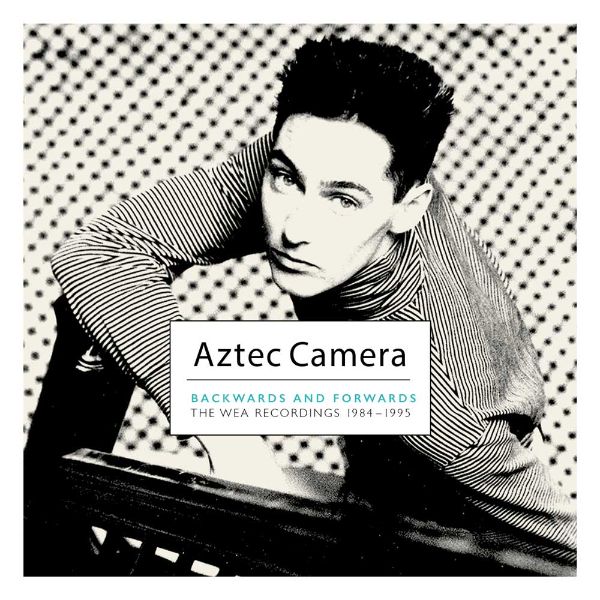
Led by frontman and master songwriter Roddy Frame, Aztec Camera successfully turned indie- darling status into mainstream success when they signed with WEA in 1984. Taking inspiration from his own record collection, Frame set about recording a series of style-hopping albums, collaborating with his personal wish list of musical inspirations and producing a remarkable run of emotive, honest songs to rival any of his contemporaries. Admired and adored in equal measure, Roddy remains one of Scotland’s most gifted musical treasures. There are two ways of looking at this incomplete history of Roddy Frames as Aztec Camera. You can gaze at the contents – everything except for the band’s two Postcard Records singles and then High Land,Hard Rain, the album that established Frame as one of the greatest songwriters of his generation – and come to the conclusion that a career-spanning boxset without High Land, Hard Rain. But, without that record, Backwards & Forwards– The WEA Recordings 1984-1995 tells an equally fascinating tale.
The box set includes all five studio albums issued on WEA: Knife (1984, Love (1987), Stray (1990), Dreamland (1993) and Frestonia (1995). The only other Aztec Camera album – which is not included in this set – is the band’s 1983 debut High Land, Hard Rain (which was released on Rough Trade).
“Backwards and Forwards: The WEA Recordings 1984-1995″ is a forthcoming nine-CD box set that collects the music of Aztec Camera via five studio albums, B-sides, live recordings, remixes and rarities.
Each album on CD comes with bonus tracks, but on top of that are two further discs collecting remixes, B-sides and extra tracks. Additional CDs, In Concert 1984 and Live at Ronnie Scott’s complete this nine-disc collection. There are 112 tracks in total.
Demon Music previously released ‘casebound book’ deluxe editions of all six of the band’s albums back in 2012.
Backwards and Forwards: The WEA Recordings 1984-1995 is being released by Cherry Red. There is no word on remastering. It is out on 27th August 2021.
• DELUXE BOX SET COMPILING FIVE ALBUMS, SINGLES, B-SIDES, LIVE RECORDINGS, REMIXES, COMPILATION APPEARANCES AND VINYL-ONLY RARITIES.
• 112 TRACKS SPANNING THE BAND’S ELEVEN YEAR SPELL WITH WEA, INCLUDING MANY NEVER BEFORE ISSUED ON CD.
• FEATURING THE HITS ‘SOMEWHERE IN MY HEART’, ‘GOOD MORNING BRITAIN’, ‘DEEP & WIDE & TALL’, ‘ALL I NEED IS EVERYTHING’, AND MORE, ALONGSIDE LIVE RENDITIONS OF THE BAND’S PRE-WEA HIGHLIGHTS.
• INCLUDING COLLABORATIONS WITH JOE STRUMMER, EDWYN COLLINS, RYUICHI SAKAMOTO (YELLOW MAGIC ORCHESTRA) AND MARK KNOPFLER.
• INCLUDES PROMOTIONAL RELEASE ONLY MATERIAL, THE ENTIRE LIVE AT RONNIE SCOTT’S RECORDING AND A VINYL ONLY INTERVIEW WITH AZTEC CAMERA FOUNDER AND MAINSTAY RODDY FRAME.





 The Beatles get a lot of credit for their willingness to experiment with different instrumentation beyond the traditional guitar, bass, and drums rock trifecta, but fellow English rockers Traffic made the Fab Four look positively pedestrian by comparison when it came to infusing different styles of music. Formed in 1967 in Birmingham, Traffic started out as a psychedelic outfit but soon expanded their sound with all sorts of instrumentation, including the Mellotron, harpischord, sitar, as well as brass sections.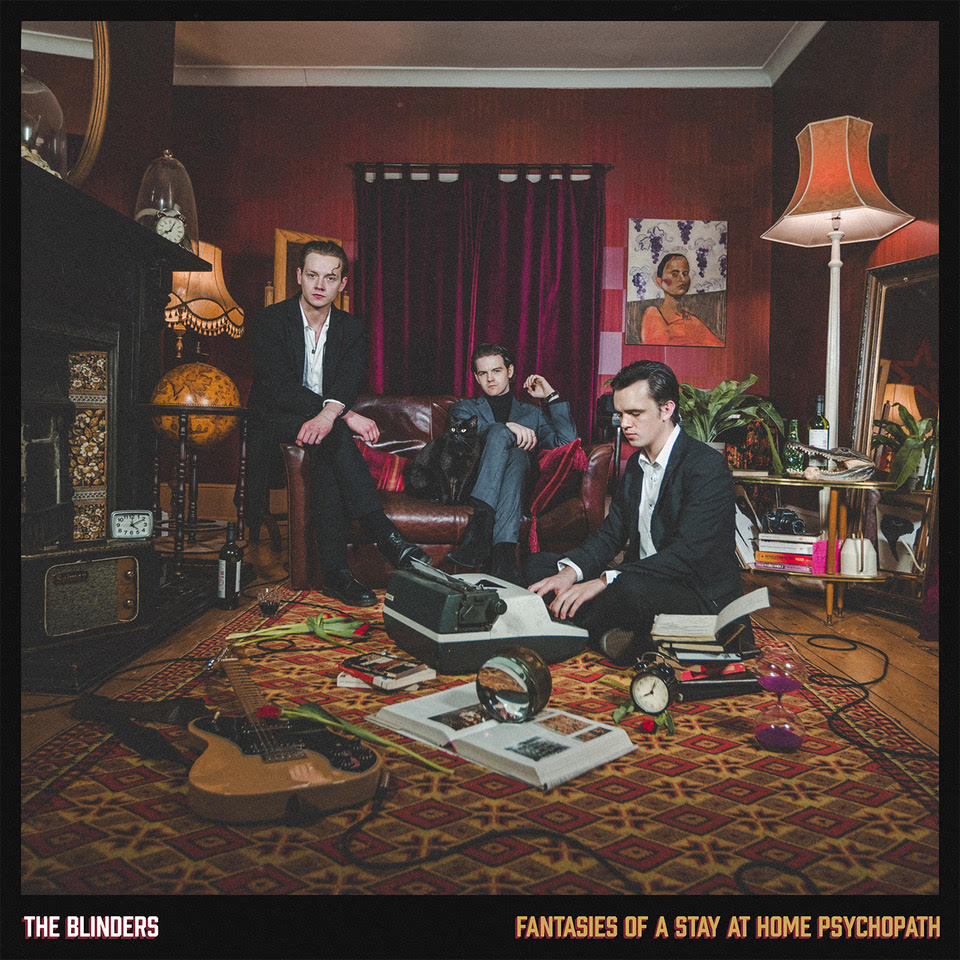
 The Fat Angel Sings