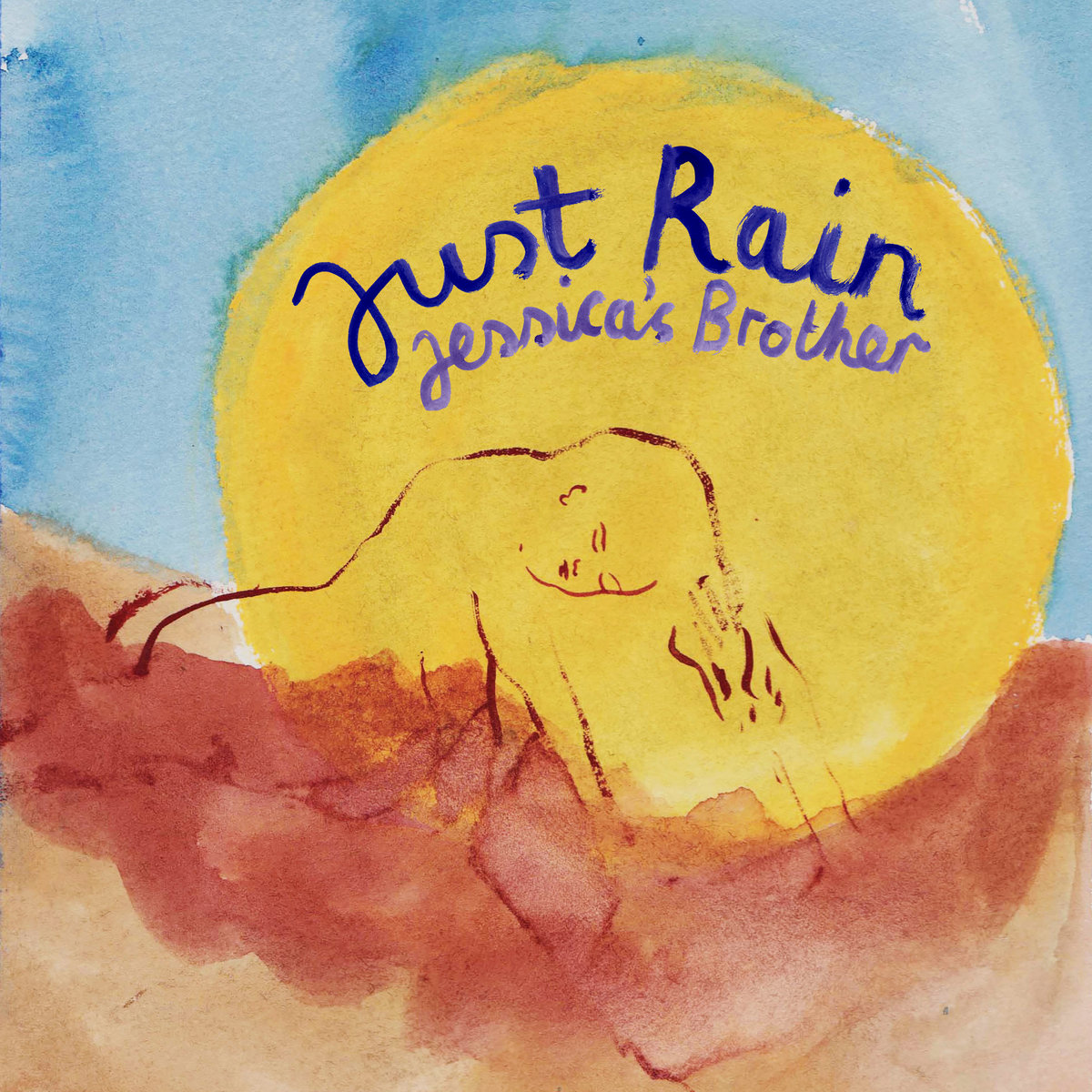
Jessica’s Brother formed back in 2016 when The Wave Pictures’ drummer Jonny Helm and bassist Charlie Higgs were working together in a framing business and realised they shared a similar passion for making music. Fate intervened from there, as the pair met songwriter Tom Charleston, whose sister Jessica lends the band their name. The result was the band’s warmly received eponymous debut album, which came out via Fika Recordings back in 2018.
Now three years on the band are building towards the November release of their second album, “Just Rain“, which was produced and engineered by Shuta Shinoda at Hackney Road Studios during the summer of 2020. The London three piece Jessica’s Brother, comprising songwriter Tom Charleston, The Wave Pictures’ Jonny Helm on drums and Charlie Higgs on bass.
The songs explore a relentless collision of melancholy and resilience alongside themes of comedy, agency, and hope
The title track lays this out with an opening burst of slacker rock as Tom reflects back over a passage of time that feels like persistent unrelenting rain. Vacillating between despair and defiance, we uncover the strength to shrug it off as “just rain”; after all, as the track draws to its conclusion “losing sight can be relieving”.
Ahead of the release this week Jessica’s Brother have shared the record’s opening and title track. Just Rain is a song that deals with the meeting point of melancholy and resilience, as a long-term relationship ends at a time when the world feels in great flux. Musically, it’s something of a departure from their more folk-tinged debut, as distorted guitars come crashing into earshot alongside the pulsing slacker-rock rhythms and Tom’s half-spoken vocal delivery as he sings, “you’ve been trying, I’ve been trying, our heads are holy in silence”. Living up to the song’s title, the music seems to come crashing down from above, like the clouds opening and pouring down upon the band as they question whether to run for shelter or let it all fall down, as the song reaches its lyrical end, “could be death, could be just teething, losing sight can be relieving”. This feels like a step forward for Jessica’s Brother, a band moving on without losing the initial glint in the eye that made them such an exciting prospect in the first place.
“Just Rain” is out November 26th via Fika Recordings.
Gloo’s 2019 debut “A Pathetic Youth” was easily one of the coolest albums of that year — and pretty much any other, when you get down to it. A riff-laced assault of grungy garage-punk and existential angst that doesn’t let up from beginning to end, it zaps you with the kind of lightning that just doesn’t strike twice.
But to their credit, the supremely sardonic Littlehampton, U.K. trio come pretty damn close on the hotly anticipated (at least in my house) followup “How Not To Be Happy“. Along with all the chunky Cobain-style riffs, speeding crash-bash beats and throat-shredding vocals you expect from songs with titles like I Can’t Hear Myself Think, Takes ThePiss andNo One Gives A Fuck, these cuts deliberately display the band’s musical evolution and ambitions, putting a greater emphasis on subversively poppy melodies, crisp performances and subtle arrangements. They might not be happy, but you certainly should be.
The product of their fading seaside-resort hometown of Littlehampton, Gloo speak for the timeless day-to-day toil and angst; a rhapsody to lives gone stale, the band’s pop-laced punk rock is the perfect soundtrack to those in need of a little 21st-century escapism.
Growing up in a place such as Littlehampton on England’s south coast, 20 miles east of Brighton and a world away from London’s bright lights, instils a certain appreciation for life’s simple things. But if we’re not here for a time, we might as well have a time, right? “How Not To Be Happy“, Gloo’s second full-length offering speaks of that in abundance: 10 tracks of escapism that reflect the drudgery of the everyday but seek to shrug it off over the course of a 30-minute blur of power-pop, post-grunge and punk rock. The album. was recorded with Jag Jago (The Maccabees, Jamie T, Max Raptor) across the summer of 2020, in between local lockdowns.”
Guitarists Marisa Anderson and William Tyler distill deeply rooted and varied traditions into distinctive voices all their own. Anderson and Tyler are each unyielding in their desire to extend through those traditions and the confines of “guitar music” to craft music at once intimate and expansive, conversational and transcendent. The duo’s debut collaborative album tethers together their singular voices into unified narratives that glisten, drive, and sway.
The pair initially met at a tribute held in honour of David Berman in January 2020. William then travelled from his hometown in Nashville to Marisa’s hometown of Portland, Oregon to record Lost Futures. Tucker Martine produced the LP at his Flora Recording Studio facility.
William Tyler is a Nashville guitarist and composer. He spent years woodshedding and touring with Nashville groups like Lambchop and Silver Jews before breaking away to focus on his own version of instrumental guitar music.
Guitarists Marisa Anderson and William Tyler distill deeply rooted and varied traditions into distinctive voices all their own. Anderson and Tyler are each unyielding in their desire to extend through those traditions and the confines of “guitar music” to craft music at once intimate and expansive, conversational and transcendent. The duo’s debut collaborative album tethers together their singular voices into unified narratives that glisten, drive, and sway. On Lost Futures, Anderson and Tyler’s guitars dance through lush arrangements and pastoral duets serpentine and reverent.
The kindred musicians first collaborated in the days following a Portland show commemorating the life of the late David Berman. As Anderson tells it, “There was an obvious and immediate affinity musically and personally which led to the feeling that we should try and do something together, but in January of 2020, both of us had pretty full schedules so it was more of a vague idea to do something, someday… then COVID hit.” With tours sidelined and the increasing tensions of isolation, unrest and ecological disaster looming, the duo set to composing and collaborating remotely.
On “Lost Futures”, Anderson and Tyler’s guitars dance through lush arrangements and pastoral duets serpentine and reverent.
Released August 27th, 2021
Written and performed by Marisa Anderson and William Tyler Produced by Marisa Anderson, Tucker Martine, and William Tyler
‘Nocturnal Manoeuvres’ is the third album from John Newton and Johnny Healey, known collectively as JOHN. Boasting the singles ‘Šibensko Powerhouse’ and ‘A Song For Those Who Speed In Built-Up Areas’, the group once again successfully capture their unparalleled live power on record, thanks in part to the production of trusted friend Wayne Adams.
Nocturnal Manoeuvres – the new album from JOHN – finds the duo expanding upon their celebrated idiosyncrasies once more. It sees them returning to their trusted producer Wayne Adams (who was behind the boards for both of their previous albums) knowing his success in capturing their presence as a live band. Realising the expansive quality of the resulting recordings, they then enlisted mastering engineer Sarah Register (Protomartyr, Future Islands, Chastity Belt) in order to deliver the sense of space that the varied track-list deserved.
The result is a towering, titanic body of work – one that moves easily between cinematic post-rock, elastic post-hardcore and pummelling noise rock. The new record is the follow-up to their second LP, 2019’s Out Here On The Fringes, which catapulted them into the Top 40 of the UK Independent Vinyl Chart, was featured as an Album of the Day on BBC 6Music with three successive playlisted singles, and saw the band hit the road with the likes of Idles, Metz and Mclusky.
Having established an international presence with a blistering KEXP live session and a month-long journey through Europe in support of Out Here On The Fringes, JOHN return to the live stage in 2021 with a mammoth run of UK and Irish dates throughout the autumn of this. As venues continue to reopen, it offers a captivating chance to catch a band who’ve built a devoted following through the sheer energy of their live show: a celebration of the primal intensity of the guitar-drums duo as a format and a monument to idiosyncrasy, which is exactly the sort of manifesto you could attach to “Nocturnal Manoeuvres” as a whole.
“Stadium Of No” continues the riot of clever hardcore that bludgeons the senses into submission with a mental shredding of sheer noise that thrills and ends abruptly with a bang. Newton says of the track: “In parallel to the recurring motif of twenty-four hour work that runs throughout the album’s track listing, stadiums appear as hopelessly redundant monuments when they’re empty – only activated by the bodies that inhabit them. The song’s a nod to the often-overwhelming conditions of our present: a stadium-like crowd of opinions trying to shout on top of one another.” There’s no getting out of here now.
UK garage punks JOHN land on Dinked with their exclusive record getting loaded up with a signed photo book and the first instalment of their new 7’’ record series.
JOHN their forthcoming album ‘Nocturnal Manoeuvres’ to be released on the 8th October 2021 in collaboration between Brace Yourself Records & Pets Care Records.
Melbourne lo-fi rock duo Good Morning have built quite an impressive resume for themselves despite flying largely under the radar for much of their career. Melbourne’s slacker jangle pop outfit Good Morning join the Dinked series with their latest landing on exclusive wax with a poster insert.
The two high school friends have been making bright and breezy tunes together for almost a decade now, and ‘Barnyard’ hears them at their most melodic and attentive to the outside world. The pair recorded the album at Wilco’s Loft studio following a US tour, and is set for release in October.
They’ve had a consistent output of short albums, EPs and singles over the years, their song “Warned You” has become a veritable indie hit, and A$AP Rocky even sampled their song “Don’t Come Home Today” on his last album Testing. The duo’s new album “The Option” is largely devoid of the hazy psych trappings of their past, but it’s also their most sprawling and fully realized record to date.
‘Barnyard’ sees Australian lo-fi slacker-indie duo Good Morning firmly settling into the laidback sound they brought us on 2019’s ‘Basketball Breakups’. This is an LP of off-kilter, gently strummed melodies and jangling lead guitar lines. Their influences come from the likes of Smog, Sebadoh, Pavement and the Flying Nun roster.
“The Option” includes 8 new rock songs by the band Good Morning. Good Morning are played this time by Stefan Blair, John Considine, James Macleod & Liam Parsons.
released April 5th, 2019
based off the short film ‘cornerstone’ (2009) by Richard Ayoade taken from the album ‘The Option’ out now
On Tuesday British sibling duo Penelope Isles (Lily and Jack Wolter) announced a new album “Which Way To Happy”, and shared a new song from it, “Iced Gems” via a video for the single. Which Way to Happyis due out November 5th via Bella UnionRecords.
Which Way to Happyis the band’s sophomore album and follows their debut album, “Until The Tide Creeps In”, released in 2019 also via Bella Union. Jack produced the album, which was mixed by Dave Fridmann. New backing band members Henry Nicholson, Joe Taylor, and Hannah Feenstra all contributed to the recording of Which Way to Happy, as did composer Fiona Brice.
As the pandemic took hold, Jack and Lily decamped to a cottage in Cornwall to begin writing and recording the album.
“We were there for about two or three months,” says Jack in a press release. “It was a tiny cottage and we all went a bit bonkers, and we drank far too much, and it spiralled a bit out of control. There were a lot of emotional evenings and realizations, which I think reflects in the songs. Writing and recording new music was a huge part of the recovery process for all of us.”
When you’re trying to make it through tough times, you need a little light to find your way. That light blazes brightly on the alchemical second album from Penelope Isles, an album forged amid emotional upheaval and band changes. Setting the uncertainties of twentysomething life to alt-rock and psychedelic songs brimming with life, colour and feeling, Which Way to Happy emerges as a luminous victory for Jack and Lily Wolter, the siblings whose bond holds the band tight at its core. Produced by Jack and mixed by US alt-rock legend Dave Fridmann, the result is an intoxicating leap forward for the Brighton-based band, following the calling-card DIY smarts of their 2019 debut, Until the Tide Creeps In. Sometimes it swoons, sometimes it soars. Sometimes it says it’s OK to not be OK. And sometimes it says it’s OK to look for the way to happy, too. Pitched between fertile coastal metaphors and winged melodies, intimate confessionals and expansive cosmic pop, deep sorrows and serene soul-pop pick-you-ups, it transforms “difficult second album” clichés into a thing of glorious contrasts: a second-album surge of up-close, heartfelt intimacies and expansive, experimental vision.
The album includes the song “Sailing Still” a new song the band shared in July via a video directed by Jack and starring Lily. “Sailing Still” .
Earlier this year Lily (under her alter-ego KookieLou) sang guest vocals on the Lost Horizons song “Heart Of A Hummingbird”. “Iced Gems” is taken from the Penelope Isles album “Which Way To Happy” released 5th November 2021 via Bella Union:
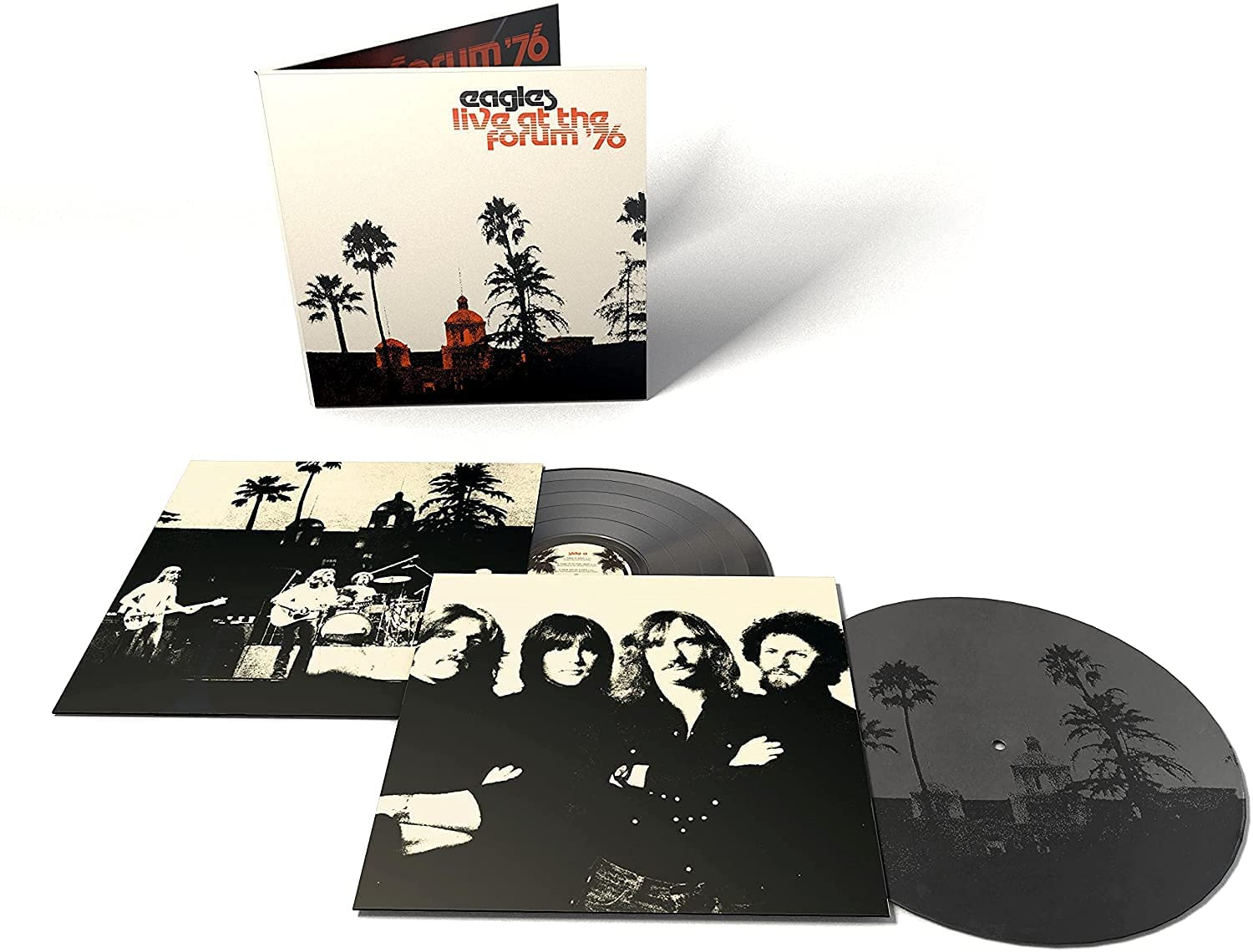
The only official peak period Eagles“Live” album was so overdubbed to within an inch of its life. This newly released album from the Forum will give a more accurate portrayal of the band at their peak!!. Eagles will release “Live at the Forum ‘76”, featuring 10 songs recorded just prior to the release of “HotelCalifornia”.
In celebration of the Eagles 2021 tour, we’re releasing “Live At The Forum ’76”, featuring 10 songs recorded in the Fall of 1976, just prior to the release of “Hotel California“. “Live At The Forum ’76” released November 12th as a 2-LP set on 180-gram vinyl. The tracks will be making their vinyl debut, as they were previously only available on CD and digitally as part of 2017’s “40th Anniversary Edition” of Hotel California. The live music takes up three LP sides while the final one features an exclusive etching of the artwork.
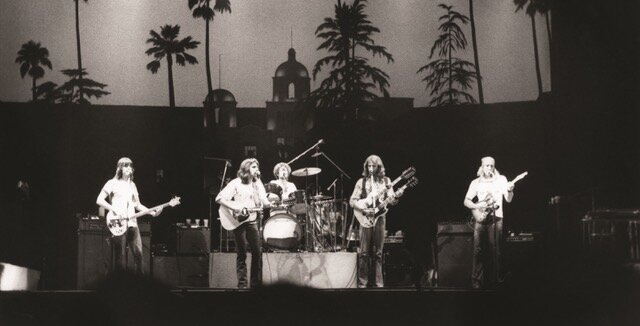
“Live At The Forum ’76” was recorded during the band’s three-night run at the Los Angeles Forum in October 1976. The show took place as the group was putting the finishing touches on “Hotel California“, which would be released that December. The concert recording captures some of the very first live performances of “Hotel California” and “New Kid In Town.”
During the show, the band also play hits from earlier albums with “Take It Easy” from the band’s 1972 self-titled debut; “Already Gone” from 1974’s “On the Border”; and the #1 title track from 1975’s “One of These Nights“. The concert also includes a raucous performance of “Funk #49,” a song originally recorded by JoeWalsh’s James Gang.
“The Forum” concert presents a snapshot of the band right before “Hotel California” became a critical and commercial phenomenon. After its release, the album topped the charts for eight weeks in the U.S., featured two #1 singles (“New Kid In Town” and “Hotel California”), and won two GRAMMY Awards. Today, Hotel California has been certified 26x platinum by the RIAA and is the third best-selling U.S. album in history and one of the best-selling albums of all time.
This was recorded on the “Hotel California” tour and was Joe Walsh’s first tour with the band!!!
In today’s fractured rock landscape, the Eagles retain an appeal that transcends both generation and genre, cementing the band’s role as enduring musical icons. As the best-selling American band of the ’70s, and one of the top-selling acts of all time, the Eagles have sold more than 150 million albums worldwide, scored six #1 albums and topped the singles charts five times. The band has won six Grammy Awards, were inducted into the Rock & Roll Hall of Fame in 1998 (in their first year of eligibility) and received the Kennedy Center Honours in 2016.
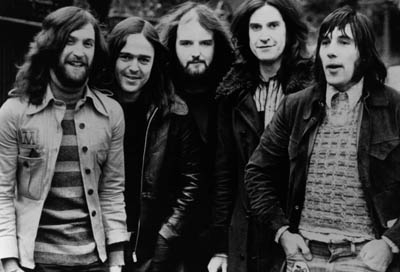
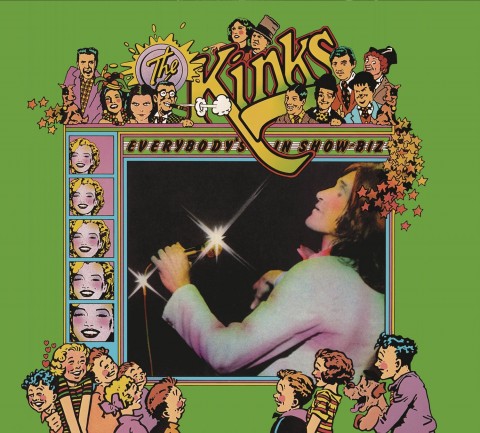
The Kinks had brought proto-Americana to old London Town on 1971’s Muswell Hillbilliesafter Ray Davies had defined what it meant to be oh so veddy British in song and spirit with crystalline clarity and beauty on such delightful albums as “The Kinks Are the Village Green Preservation Society” (1968) and “Arthur (Or the Decline and Fall of the British Empire)” (1969). Then in 1972 they returned to America after a four-year touring ban by the American Federation of Musicians (for reasons that still remain unclear).
New day indeed. Davies turned his sharp songwriting pen to the United States here and there on this album. The Kinks would follow “Everybody’s in Show-Biz” with concept albums like “Preservation Act 1” and “Act 2” and “SoapOpera“. By the 1980s they became a U.S. arena rock band as befitted their iconic British Invasion status.
The original Show-Bizfound The Kinks in a period of transition when it was released on August 25th, 1972, and combined studio cuts with live tracks from their tour earlier in that year. Organist John Gosling, whose Hammond B3 trills open the album, had already started filling out the band’s sound on the Lola Versus Powerman on the Moneygoround Vol. 1album in 1970. A horn section was added to the touring group. The original release served as a delightful Kinks Kompendium for us Yanks who would happily be hearing much more from the Brothers Davies & Co. here in The Colonies in the years to follow.
There are many reasons to own and treasure this album, both its first incarnation and now expanded version. First and foremost among them is the title song, “Celluloid Heroes,” one of the glittering gems from the treasure chest that is the Ray Davies song catalogue. It’s an eloquent, touching and at times witty while also bittersweet rumination on fame, something Davies has always expressed mixed feelings about. It melds melancholia with nostalgia as it also serves as a backhanded tribute and at the same time offers a cautionary tale. It’s a song I can listen to forever and never grow tired of, and always be affected by.
“Sitting in My Hotel” – a minor Davies masterpiece – expresses similar feelings within one subdominant theme (among a number) of this collection: Life on the road as The Kinks return to America.
“Maximum Consumption” makes a horn-punctuated commentary on American food consumerism as fuel for touring (with subtle yet shimmering Dave Davies slide guitar), and “Motorway” (food is the worst in the world) bears a British title yet applies Stateside as it clips along like tires rolling on the pavement. Ray’s food fetish also was found on the original album’s studio tracks on “Hot Potatoes,” where the connection between edibles and love is explored.
The traveler’s loneliness and alienation gets its brief from both Ray (on his melancholic “Sitting in My Hotel”) and Dave (who penned the more upbeat “You Don’t Know My Name,” laced with more slide guitars and not one just but two flute solos).
Souls in motion float through an imaginary outer space on “Supersonic Rocket Ship,” buoyed by lilting steel drums that reflect a Kinks Kalypso phase that was also part of this album and era for the band.
The Caribbean also washes up on the first disc’s concert tracks with a short snippet of the huge Harry Belafonte hit “Banana Boat Song,” which would become a regular goofball feature of Kinks shows in the years to follow. Food gets served up again on “Skin And Bone,” one of five live tracks drawn from Muswell Hillbillies, implying that The Kinks were not averse to plugging their most recent releases, also with numbers from Lola (the wry “Top of the Pops”) and ’69’s Arthur (the searing “Brainwashed’). Ray also gets all show-bizzy and taps his English Music Hall roots on the pre-rock pop standards “Mr. Wonderful” and “Baby Face.”
The first CD now ends as the second vinyl disc did back when with a 1:42 tease of just the chorus of “Lola,” the fourth (at #9) of the only five U.S. Top 10 hits by the Kinks. (Ray would also toy with concert audiences in much the same way by playing bits of “You Really Got Me,” which one might say is missing from the live numbers here if what is played weren’t so largely wonderful.)
The 17 tracks added for the 2015 Legacy Edition round out and enhance the profile of the Kinks circa 1973. We get another Ray Davies gem in a verdant live rendition of “Get Back in Line,” one which many missed when it came out on Lola…. It’s Ray’s song for the common and labouring man, a la Lennon’s “Working Class Hero,” but rather than a mordant sharpen-the-razor-blades-and-pour-a-warm-bath rumination it’s a stirring call to do as the title advises and trudge on through life.
We also get full and rich in-concert renditions of past high points cum hits with “‘Til the End of the Day” and the always delicious “Sunny Afternoon.” Plus not redundant alternate live takes of “Muswell Hillbilly,” “Alcohol,” “Acute Paranoid Schizophrenic Blues” and “Holiday” from the Muswellalbum (plus that release’s “Have a Cuppa Tea” and “Complicated Life”), even better than the other ones on disc one, good as they are, and different, reminding us of the glory days of rock concerts when the way the songs were delivered and the experience could change from night to night (rather than today’s rote set lists).
There’s also a wonderful never-before-released Ray Davies studio number “History,” brother Dave doing his “Long Tall Shorty” thing live, and alternate takes on “Supersonic Rocket Ship” and “Unreal Reality.” The expanded set wraps up with a lyric-less backing track titled “Sophisticated Lady” that would later be fleshed out as “Money Talks” on “Preservation Act 2″.
All told, the significance of this collection can be found in how it becomes more than the sum of its parts, while at the same time so many of its parts are notable – like, say, Dave’s searing guitar work on the live take of “You’re LookingFine” (from 66’s Face to Face), which proves him one of classic rock’s sadly unsung six-string heroes – ironically, as he did come up with perhaps the quintessential rock riff on “You Really Got Me.” The oft-battling Ray and Dave were even getting along – at one point the former introduces the later in a slight mock Italian accent as “a real good-a-friend of mine” – and this album is certainly a showcase for their also underrated brotherly harmonies.
“Everybody’s in Show-Biz” may have caught The Kinks in transition, but it also captures the band in one of its primes. And this expanded reissue does what such releases are supposed to do: reiterate and double-down on an act’s greatness, bringing greater glory to the legacy of a band who, from the British Invasion on right up to their final 1994 release – the also largely (must I say it yet again?) unheralded live collection To The Bone, one of the favourite albums of this near-lifelong Kinks Konvert. Rock music would have been so much less without them, and not nearly as fun or deeply touching or…. God Save The Kinks!.
The Beach Boys will undoubtedly be most remembered for the first two chapters of their career. In the first, which ran from 1961 into 1965, they produced a long list of irresistible harmonic numbers about surfing, cars and young love—songs like “California Girls,” “Surfin’ Safari,” “Help Me, Rhonda” and “Don’t Worry, Baby,” to name a few. Then in 1966 and 1967 came the period when group leader Brian Wilson moved into uncharted territory with dazzling results on inventive albums like “Pet Sounds” and the long-unreleased “Smile”.
In the 1960s, the Beach Boys staked their claim as the US’s most popular band, as their dazzling, harmony-drenched songs about surfing, cars and California Girls epitomised the American dream. So, at the end of the decade, when leader and principal songwriter Brian Wilson – who had recently spent several months in a psychiatric hospital – suggested that the band were on the verge of bankruptcy, everyone thought it was a joke.
“We arrived in London for a tour on the day that hit the headlines,” co-founder Al Jardine says over the phone from California. “The IRS [US tax collection agency] had closed our studio and our offices in Hollywood. The hotels wouldn’t accept our corporate credit cards. In the end, I had to use my personal American Express card to pay for our rooms.”
By 1969, the Beach Boys were still huge in Europe but without a label after a costly royalties dispute with Capitol. Their previous two albums had tanked in the US, too: 1968’s Friends limped to No 126. More darkly, they had been tainted by an association with The Manson Family, who befriended drummer Dennis Wilson in the months before the Manson Family’s 1969 Tate-LaBianca murders. “I met him once and I didn’t want to meet him any more,” Jardine, now 78, shudders. “He was very hypnotic. He came over to use our studio. He played me a song he’d written and I started getting dizzy. I couldn’t wait to get out of there, but for some reason he cast a spell on other people.” There’s a moment’s silence as he reflects on how close they came. “He crashed one of Dennis’s cars. To be honest, I don’t know how Dennis got out alive.”
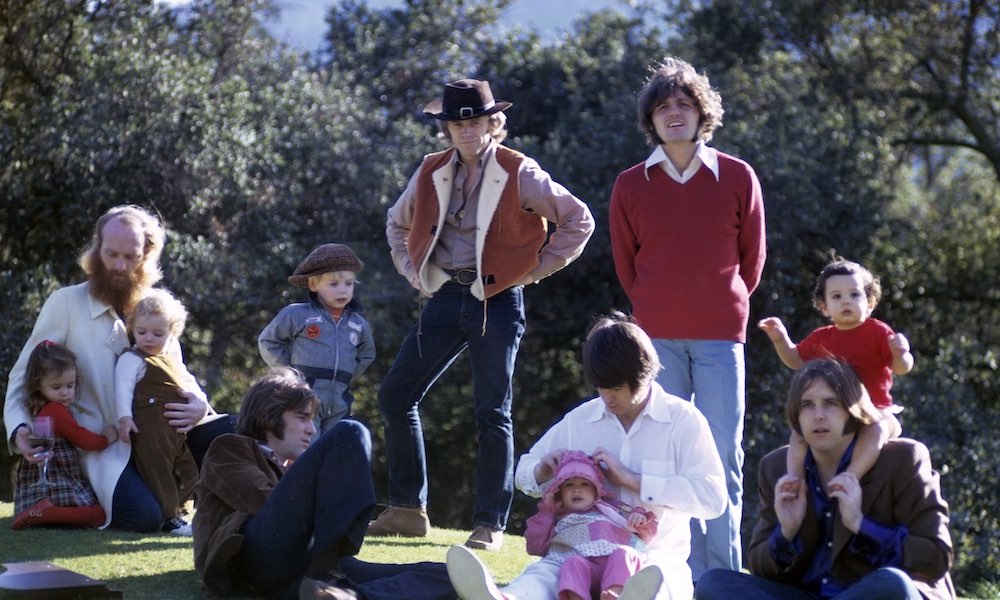
The Beach Boys’ greatness didn’t end with that era, however. True, their later work is not as consistently outstanding, but it contains more than a few high points and garners less attention than it deserves. For evidence of that, look no further than “Feel Flows: The Sunflower & Surf’s Up Sessions 1969–1971“. This 2021 collection, which features five CDs housed in a 48-page hardcover book, showcases the band’s resilience and resourcefulness at a time when its CapitolRecords contract was ending on not-so-great terms and Brian was partially sidelined by his mental health issues. One reason for the strength of the Beach Boys’ material during this period is that all six members of the group stepped up to the plate to contribute memorable songs and lead vocals.
“Music was our way of healing,” says Bruce Johnston (keyboards/vocals), a genial 79-year-old, who joined in 1965 and is speaking from Missouri. Jardine has similarly happy memories: “We were all friends. Brian was coming back.”
Wilson, who had a first nervous breakdown in 1964, had been crushed by the pressure for hit songs. “When I joined the band [over the next 11] months, I toured and made three albums,” Johnston observes. “Thats incredible, isn’t it? It was just: what’s next? We were too young to protest.”
Johnston attended the listening party for the Beatles’ Rubber Soul – along with various other members of the BeachBoys, the Mamas and the Papas and Doris Day – which inspired Pet Sounds. “Rubber Soul was obviously a leap forward,” he says, “so Brian started to think, ‘Maybe I should make an album of completely connected songs, that’s just scarily incredible’.” Capitol Records didn’t understand Wilson’s melancholy paeans to youthful innocence on “Pet Sounds”. “He makes this gorgeous album and they go ‘Have you got any hits?’” sighs Johnston of an album that contained God Only Knows and Wouldn’t It Be Nice, and is often named the greatest LP of all time. “So he pushed himself too hard on Smile.” In 1967, Wilson abandoned this projected follow-up, by which time his initially creative use of LSD was damaging his mind. “And people would try to steal Brian. They’d go, ‘You don’t need the Beach Boys, man. Take this pill.’ I just remember that when I started working with him he was dressed great – hip, cool, happening, y’know? Then he went backwards, all the way to wearing his pyjamas.”
As the “Sunflower” sessions began, Wilson stopped turning up to studios, so the band relocated to a 16-track facility in his living room in Bel Air, the idea being (as well as saving money) that the studio might be more tempting if it was two floors below his bedroom.
“The studio was our man-cave,” Johnston remembers, cheerily. “It was the happiest time. I was 29. I had my Porsche, a great girlfriend, no responsibilities. I’d go surfing in the evening and record during the day.”
Jardine describes the daily ritual: “Go to the house, raid the refrigerator, then get to work.” Because of Wilson’s fragility, Sunflower became their first group effort, with members showcasing their blossoming talents as lead singers or songwriters, such as Dennis with the extraordinary “Forever”.
The original “Sunflower” and “Surf’s Up” which first appeared in 1970 and 1971, respectively—do incorporate the occasional loser. “Student Demonstration Time,” which weds words by Mike Love to the music from Jerry Leiber and Mike Stoller’s “Riot in Cell Block 9,” is much closer to pretentious than profound, for example, and the nods to environmentalism, “Don’t Go Near the Water” and “A Day in the Life of a Tree,” also feature banal lyrics.
But you’ll find lots of standouts on these records. Bruce Johnston contributes the sweetly nostalgic “Disney Girls,” for instance, and Carl Wilson adds “Long Promised Road” and “Feel Flows” (the latter with flute by jazz artist Charles Lloyd). And like George Harrison in the Beatles, Dennis Wilson emerges as an underused asset with ballads like “Forever.”
The best tracks, though, feature Brian as writer or co-writer, including the poignant “Til I Die” and such bright, upbeat numbers as “Cool, Cool Water,” “Add Some Music to Your Day” and “This Whole World.”
“Brian was retreating from the commercial world and we began to make more personal music,” Jardine says. “We all supported each other, so you’d work on your own thing or someone else’s. We all listened to each other, which was a wonderful feeling. Every so often, Brian would hear something coming up through the floor and come hurtling down.” Usually in his bathrobe. In the “Feel Flows” box liner notes, engineer Stephen Desper recalls how Wilson’s creativity was so spontaneous that he had to “chase him around the studio with microphones” to capture what he was doing.
Johnston twitters like a sparrow on Jardine’s “At My Window”. Wilson and singer/cousin Mike Love’s hazy “All I Wanna Do” virtually invents a shoegaze sound, 20 years before its time. “We were a little ahead in that we were experimenting with technology,” Jardine recalls. “We borrowed these big synthesisers from Robert Moog and stuffed them into the control room. I remember playing “Cool, Cool Water” for [new label] Reprise on huge loudspeakers in the dark. This single note came out of the synthesiser and shook the room. Everyone was blown away.”
Although Reprise subsequently rejected an initial version, “Sunflower” is now generally viewed as one of their greatest albums. “There’s a real warmth to these records, compared to the thinner sounding ones they’d made earlier,” Coombes says. “That sun-soaked California vibe just pours out of the music, but then there are these sudden chord changes, weird edits or left turns. As a young sort-of songwriter who was getting into bands, finding out about the dynamics in the Beach Boys was fascinating, and a big influence.”
At the time, though, despite rave reviews, it reached a disastrous No 151 in the US, shifting fewer copies than 1968’s Friends. “We weren’t hip,” Johnston says. “The radio wouldn’t play us.” What he calls their “scrubbed clean image” of matching suits and surfboards didn’t square with the prevailing counterculture or newer, heavier artists such as Jimi Hendrix or the Doors, which wasn’t entirely fair. “Half the band’s behaviour was hardly squeaky clean. Don’t forget we had the Vietnam war going on, but people probably didn’t realise Carl was a conscientious objector [who refused the draft]. It felt like the music world was heading in the opposite direction.”
Touring the old hits abroad helped financially and the Beach Boys got with the programme: their new manager JackRieley insisted those suits had to go. The subsequent “Surf’s Up” album isn’t the first “ecological album” (that’s probably Pete Seeger’s 1966 God Bless the Grass) but certainly seems prescient today.
“It was a different kind of pollution then,” Jardine muses. “Don’t Go Near the Water” was about how phosphates in our soaps had got into the water. Now it’s lead in the pipes. If we’ve helped bring awareness to any of this stuff I’ll be very happy.” Love and Johnston remain involved with beach campaigners the Surfrider Foundation, the latter having become environmentally aware as a schoolboy, when domestic incinerator smog meant “we’d have to go inside during physical education because we were all coughing”.
Although Carl’s beatifically hazy Feel Flows could fit on Primal Scream’s Screamadelica, Surf’s Up captures the zeitgeist of its times. “We’d grown up with Disney,” says Johnston, “but suddenly there was all this horrible stuff.” Love’s “Student Demonstration Time” referenced the 1970 Kent State shootings while Johnston’s own sublime “Disney Girls” pined for more innocent times. “These young high-school girls showed us they could inhale pot,” says Johnston, still the archetypal clean-living Beach Boy. “I thought, that’s not where I was at your age.”
By now, Carl had taken the reins as his brother remained troubled. Brian wrote the eco anthem A Day in the Life of a Tree, then insisted that Rieley sing it. “That was highly creative,” Johnston says, chuckling. “He did sound like a gnarled old tree.” The stellar title track was rescued from Smile tapes that were “lying around” the house. “I said to Carl, ‘We need to finish this,’” Jardine recalls, “so Carl, Bruce and I took over the production. Carl finished some of the vocals and we worked from sunset to sunrise just on the final mix.
Meanwhile, reports of its troubled composer’s behaviour ranged from having his own grave dug in his backyard to attempting to drive off a cliff. “I don’t remember anything like that,” says Jardine, but he does recall Brian’s cheery excitement as he announced new song ’Til I Die. “I was hoping for something a little more … optimistic,” he laughs. “You know, another hit! Instead it was all these morbid thoughts, but it turned into one of the most beautiful selections on the album. ‘I’m a cork on the ocean …’ Wow: that’s deep.”
Then there’s “Surf’s Up’s” title track, a number originally intended for “Smile” that weds a typically abstruse Van Dyke Parks lyric to one of Brian’s more adventurous melodies.
Remastered versions of the two albums that contain all these songs are just a starting point for Feel Flows, which features more than six-and-a-half hours of music. Assembled by Mark Linett and Alan Boyd, who put together the Grammy-winning Smile Sessions, the box incorporates live recordings, demos, radio promos and more. Amazingly, given the huge amount of archival Beach Boys material that has appeared over the years, only 25 previously issued tracks—including the 22 numbers from the original LPs—are among the 133 selections. (A promo video for the box erroneously promises 135.)
Released – again – to rapturous reviews, with an amusing advert (“It’s now safe to listen to the Beach Boys”), Surf’s Up became their highest-charting album since 1967. Engineer Alan Boyd, who assembled the new box set with Mark Linett, remembers his mother taking him to see the Beach Boys touring the album at San Francisco Winterland when he was nine. “They did the new songs and the oldies like Surfin’ USA, and I Get Around,” he smiles over Zoom. “The balcony was shaking.” Linett says: “They had to find their audience again, but once they did, everyone realised that the old songs were still fantastic.”
The home studio was dismantled in 1972, Dennis drowned in 1983 and Carl died of cancer in 1998. Since then, Love successfully fought Jardine in court for the use of the band name; a 50th anniversary reunion tour ended sourly, while Jardine now tours with Brian. In 2020 the pair urged fans to boycott the Love-Johnston touring Beach Boys after they were booked to play a hunting group event which had Donald Trump Jr as a speaker. Johnston insists that Love never took the stage. When I ask Jardine what he thinks about Love’s tours he suddenly loses phone signal, finally offering, “Um, I don’t have a whole lot to say about that.”
Lately, though, communication for the box set seems to have rekindled some healing. Jardine, Johnston and Love appear on a newly recorded version of “Add Some Music To Your Day” (a Wilson/Love song on Sunflower) for charity and there have been hints at a 60th anniversary reunion. Johnston is more enthusiastic about his work with Skrillex than the idea of recording any new Beach Boys music, but says, “I would expect a televised event.”
Jardine is more optimistic. “We’re hoping to put together 10 or so concerts, worldwide, maybe something for charity,” he says, “while we still have our voices. It would be the appropriate time to come back together and do some great things.”
If this seems unlikely, Boyd explains: “They started out as kids, rehearsing in living rooms and garages. To this day, if you get them together in a room without anyone else, that’s what they go back to. They really are the ultimate garage band.”
Like many similarly sized boxed sets, this one does include some content that seems likely to interest only the most fanatical fans, such as instrumental backing tracks and versions and mixes that differ only slightly from the well-known recordings, Still, you’ll find lots of fascinating obscurities in the package’s long list of bonus materials. It includes spirited concert versions of six tracks from Sunflower and five from Surf’s Up, for example, as well as an extended rendition of “Til I Die” with alternate lyrics.
Also here are an instrumental snippet from Lennon and McCartney’s “You Never Give Me Your Money” and a reading of “Seasons in the Sun,” the 1974 worldwide chart-topper by Terry Jacks, who worked with the Beach Boys on Surf’s Up. There are notable, previously unheard renditions of songs such as Al Jardine’s “Susie Cincinnati,” a number that would appear on “15 Big Ones” in 1976, and “Good Time,” which Jardine wrote with Brian for 1977’s The Beach Boys “Love You”. Another standout is Mike Love’s “Big Sur,” a song that has never previously been released in any version, though it sounds related to his “California Saga/Big Sur” composition on 1973’s “Holland”.
For this performance, The Beach Boys band was augmented with a full horn section and the brass gives “Susie Cincinnati” a whole new edge.
The band’s excellence didn’t end with the years covered by the Feel Flows box: still to come were such gems as the aforementioned The Beach Boys “Love You” , which ranks with Brian’s most endearing work. But this box alone should be enough to convince many listeners that the group’s latter days were under-appreciated.
The newly-remastered versions of the SunflowerandSurf’s Up albums in a 135-track set that includes 108 previously unreleased tracks. The 5CD and digital set will focus on an influential and transitional period in the group’s history. It will add live recordings, radio promos, alternate versions and mixes, isolated backing tracks, and a capella versions, taken from the sessions for the two LPs.
The first clip in the Feel Flows series is Chapter 1: I See Love, and is described as “a visual exploration of this metamorphic and highly influential 1969-1971 period of the band’s legendary career.” It emphasizes the changes that the Beach Boys were going through by this time, their work far removed from the surfing and car-themed hits of their early years.
The featurette includes period footage and photographs of the band in the studio and elsewhere, beginning with the words “So you think you know the Beach Boys? By 1970, the Beach Boys had changed. What happens when the sound of a generation grows up?”
Across just under five minutes, the film also includes a short video clip of Bruce Johnston, who is also featured in audio, as are Brian and Carl Wilson, Mike Love, and Al Jardine. They discuss the making of “The Sunflower” album and how the Beach Boys became more democratic in that era, taking in contributions from all of the group. The result was a record that was undervalued on its initial release in August 1970, reaching only No.151 on the US charts, but has become one of their most important and critically lauded records.
Feel Flows – The Sunflower and Surf’s Up Sessions 1969-1971.
King Gizzard & The Lizard Wizard have shared a new video for “Ya Love”, one of the tracks off the Australian psych-shapeshifters’ latest album, “Butterfly 3000”.
“Butterfly 3000″ marks yet another stylistic shift for King Gizzard & The Lizard Wizard. Derived from arpeggiated loops composed on modular synthesizers, the sounds were fashioned into optimistic “dream-pop” songs by the sextet. Butterfly 3000 sounds like nothing King Gizzard has released before, but it remains unmistakably their own—a testament to the limitless imagination and fluidity of this unicorn band.
While “Butterfly 3000‘s” sound is a far cry from the band’s offerings on 2020’s K.G.and its early-2021 follow-up, L.W. it was created in a similar, remote fashion. Members of the band recorded their respective parts from their own homes, their studio and rehearsal space remaining out of bounds.
Singer/multi-instrumentalist Stu Mackenzie described the process of making the album as a “group challenge.” In addition to writing this new material on unfamiliar equipment, King Gizzard & The Lizard Wizard committed to writing each of the songs in a major key, forcing them toward sunnier sonics. “We were trying to make upbeat dance music, in our own way, and we’d never gone there before,” says Mackenzie.
“Butterfly 3000″ also abandoned another old Gizzard method, what Mackenzie describes as “throwing a lot of shit at the wall and finding that magic take, or building something with 20 tracks of guitar overdub.” Instead, the new album was a process of refinement, paring tracks back to their elements and pushing the melodies to the foreground.
The result, Mackenzie says, is “weird, odd, off-kilter polymetric arpeggios in strange time signatures, but with proper grooves you can stomp along to. At heart it’s avant garde, but a six-year-old could enjoy it.”
“Ya Love” is the latest Butterfly 3000 track to get the “mind-expanding video” treatment following “Black Hot Soup”, “Catching Smoke”, “Interior People” , “Blue Morpho” , “Yours”, “Dreams” and “Shanghai”. As of now, the only remaining song from the album without an official video is its title track, which closes the record.
In the new visuals for “Ya Love”, we find the computer-animated band in colourful spacesuits on a foreign planet and watch as a small, literal “lizard wizard” unleashes a glowing yellow butterfly that collapses reality and sends viewers down a rabbit hole of psychedelic imagery… and that’s just the first verse.
The entire video is a rollercoaster of sensory overload and surreal imagery worthy of the Mellotron- and synthesizer-heavy vamp. There’s probably plenty of symbolism to unpack in the multi-dimensional “Ya Love” video, but what it asks of viewers is stated more simply by the song’s lyrics: “Ya love is like a dream inside a dream / Relax, close your eyes and be with me.”
The Video created by Jason Galea, Amby: Percussion, Vocals Cavs: Drums Cookie: Mellotron, Bass Guitar, Synthesiser Stu: Vocals, Drums, Synthesiser, Acoustic Guitar, Bass Guitar.




 The Fat Angel Sings