Former The Verve frontman Richard Ashcroft is releasing an album of acoustic versions of his songs, and he’s just shared this track which was originally released as part of his RPA & The United Nations of Sound side project. “Acoustic Hymns Vol. 1″ is out October 29th. The new cut is taken from the former Verve frontman’s upcoming acoustic greatest hits collection, ‘Acoustic Hymns Vol. 1’.
The original featured hip-hop star No I.D. and was released as part of Richard’s‘RPA & The UnitedNations Of Sound’ album.
A new music video for the track has also been shared alongside the anthemic song about overcoming challenges and includes archive footage of the 50-year-old rocker as a youngster. The upcoming LP boasts stripped-back renditions of Richard’s most popular songs from his revered solo career and his time in The Verve.
‘This Thing Called Life’ follows the release of a new version of ‘Bitter Sweet Symphony’.
Upon working on the new cut in 2019, Richard regained the rights to the Verve classic, which features a four-second sample of an Andrew Loog Oldham orchestral cover of The Rolling Stones song ‘The Last Time’. While permission for the recording was obtained, permission for use of the song was not, and so at the time of its release in 1997, Richard was forced to give up all the rights to the iconic track, including the total lyrical content.
However, he has since been able to earn royalties again after his team appealed to Sir Mick Jagger and Keith Richards directly. The 12-track LP also includes Richard’s close pal, Liam Gallagher, on ‘C’mon People (We’re Making It Now)’, which dates back to the late 90s, as he played the song to the 49-year-old former Oasis frontman in Majorca in 1998.
The record is co-produced by Richard and Chris Potter and features his live band, plus string arrangements led by Will Malone recorded at the legendary Abbey Road Studios in London, with the addition of Chuck Leavell on piano, Roddy Bloomfield leading the brass section, and Steve Wyreman on acoustic guitar and backing vocal arrangements.
‘Acoustic Hymns Vol. 1’ is released on October 29th .
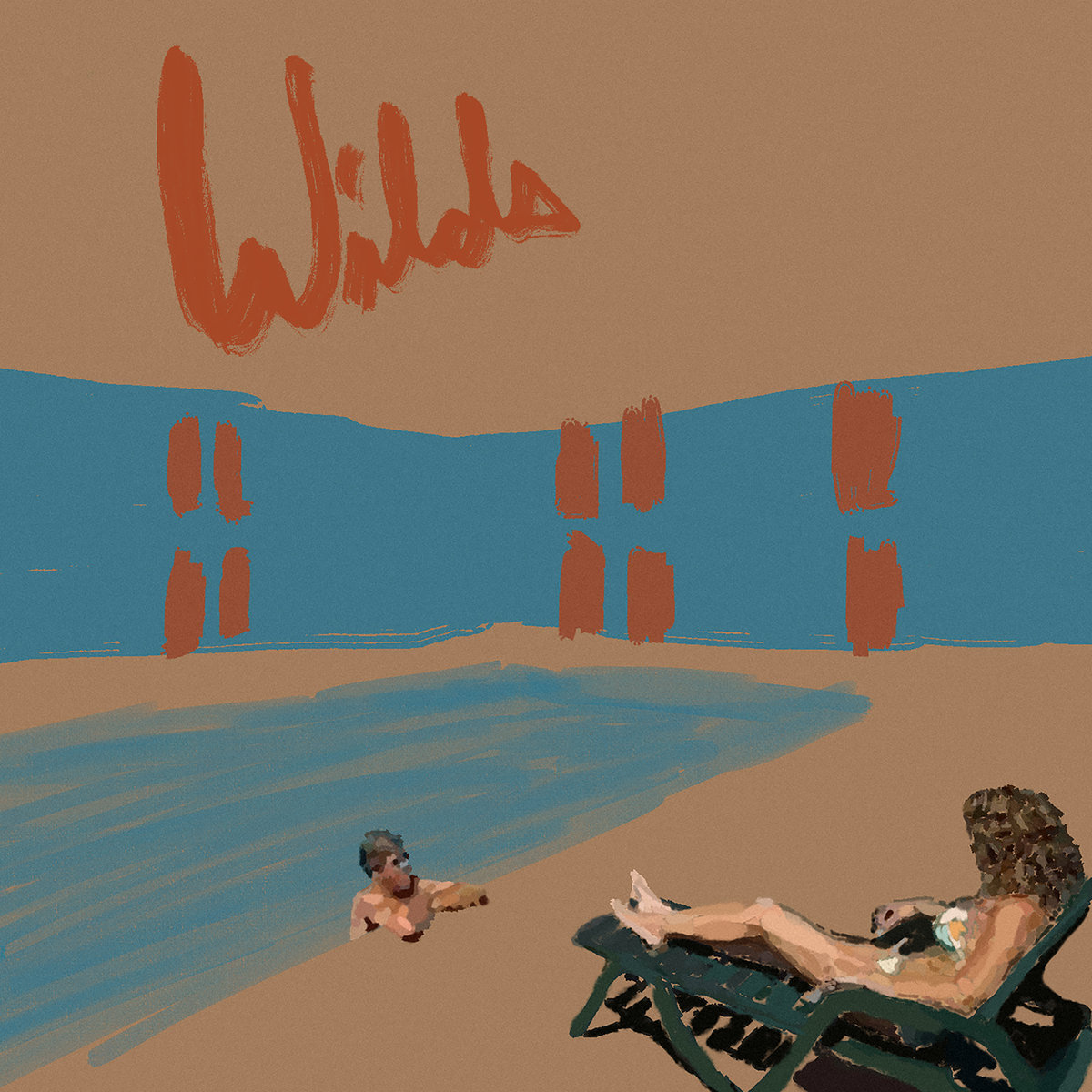
Singer Songwriter Andy Shauf recently released a new single, “Spanish On The Beach” a few weeks ago and now he’s announced that it’s part of new album “Wilds”, which will be out this Friday, September 24th via ANTI-Records. Its nine songs were all from the same sessions that gave us last year’s brilliant “The Neon Skyline”, though Wilds is less polished. Shauf played all the instruments on the album, came up with the arrangements “on the fly,” and laid it all down on “a little tape machine” in his Toronto studio. A collection of 9 songs written and recorded by Andy Shauf between March and May of 2018.
“Jaywalker” from the album ‘Wilds’, available September 24th
A comfortable and familiar aura surrounds Ovlov’s fuzzy, shoegaze-tinged indie rock, like meeting someone for the first time and feeling like you’ve known them your whole life. This sense of security is a bit ironic, considering the Connecticut crew led by Steve Harlett is known for constantly breaking up and getting back together. “Land of Steve-O,” the first single from the group’s forthcoming record “Buds”, marks the group’s return; the title alone invokes the aforementioned divine déjà vu with the reintroduction of the endearing character Steve-O, who last appeared in 2017’s Greatest Hits, Vol. II with “Strand of Steve-O.”
“Land of Steve-O” utilizes one of the band’s usual song formulas: steady verses followed by an explosive chorus with staticky riffs and Harlett’s inviting intone: “Don’t feel crazy / When you walk around your town / Just call your friend Steve-O,” he sings. Intensifying at the end, the track transcends into an unhinged, euphoric catharsis before fading and forcing us back into reality.
Connecticut indie rockers Ovlov have announced their third album, “Buds”.
Releases November 19th, 2021
Ovlov is Morgan Luzzi, Steve Hartlett, Theo Hartlett, and Jon Hartlett
“Land of Steve-O” is the first single from Ovlov’s new album “Buds” out November 19th, 2021 on Exploding in Sound Records.
Bruce Springsteen was laying relatively low in 1979 following the protracted sessions and career-defining tour that marked the preceding year’s “Darkness on the Edge of Town”. These benefit performances from Madison Square Garden feature an electric set of old favourites (“Born to Run”), covers (“Quarter to Three”) and new songs (“The River”) from Springsteen and the E Street Band’s peak live period. A Blu-ray provides the sights to the great sound on the two CDs.
The Legendary 1979 “No Nukes Concert” from Bruce Springsteen and the E Street Band were recorded at the September 1979 MUSE (Musicians United for Safe Energy) benefit concerts at Madison Square Garden in New York City. The performances have been newly remixed and remastered for pristine sound and HD resolution. During the early days of the E Street Band, Springsteen resisted nearly every opportunity to capture the magic of their live show on film. “I had some voodoo thing about that,” he says. “Film and television were relatively cool mediums, and we were a hot band. I said, ‘If you want to feel that heat, you need to be at that show.’”
He made a rare exception to that rule in September 1979, when he agreed to perform at two “No Nukes” benefit concerts at Madison Square Garden alongside Jackson Browne, Tom Petty & The Heartbreakers, Crosby, Stills & Nash, Bonnie Raitt, The Doobie Brothers, and Carly Simon. “They were filming it,” Springsteen says. “They said, ‘You’ll have a choice of whether you’re in the movie or not.’ That meant I didn’t have to think about the cameras since I knew I could throw it away if I wanted to.” He ultimately let the event organizers use his performances of “The River,” “Thunder Road,” and “Quarter to Three” as the climax of the 1980 concert movie “No Nukes”, but the vast majority of the three hours of E Street music that was filmed over two nights ended up stuffed into a vault and not seen by the public for the next four decades. Springsteen’s new movie, That will change on November 16th, when The Legendary 1979 No Nukes Concerts, is released for purchase on all digital film outlets.
Featuring the best moments from both of Springsteen’s No Nukes performances, including explosive renditions of “Born to Run,” “Rosalita (Come Out Tonight),” “Badlands,” “Prove It All Night,” and “The Detroit Medley.” Without question, it is the best representation of a Seventies Springsteen concert ever captured on film.
“The energy of the band that comes across in this film is just incredible,” says Zimny. “You can read about it or hear sonic recordings, but when you see this footage it’s as exciting as seeing the Clash in this same time. This is a band that was exploding onscreen.”
At the time of the shows, Springsteen had been off the road for nine months and was hard at work on “The River”, whose release was still a year away. He’d attached to his name to virtually no political causes at this point, but Jackson Browne, Graham Nash, Bonnie Raitt, John Hall, and activist Harvey Wasserman came together as MUSE (Musicians United for Safe Energy) in the wake of the Three Mile Island nuclear accident, and they asked Springsteen to help guarantee that Madison Square Garden would be packed for the final two shows of the five-night stand.
“That was a critical moment,” says Springsteen. “My friend Jackson Browne was very involved. He’s an activist and I was sort of a hired gun. But I was curious to see where else I could take my music, and where it would be helpful. We had enough success where I felt like I should be doing something with it, and that was where I was at that moment.”
Springsteen says he paid almost no attention to the camera operators assembled all around Madison Square Garden at both shows, but they were an ace crew led by cinematographer Haskell Wexler, best known for his work on In The Heat of the Night, The Thomas Crown Affair, and American Graffiti. “These guys were filmmakers and cinematographers at the top of their game, and they were in sync with the band,” says Zimny. “The cameramen are at the foot of the stage, and they’re literally side-by-side with audience members. This is not a language of MTV and this is not a language of multi-cam cranes and swooping angles and quick cuts. It’s pure documentary.”
Sony Music Entertainment present a new film and concert album by Bruce Springsteen & The E Street Band at the end of 2021: “The Legendary 1979 No Nukes Concerts” is a compilation of two performances recorded during the Musicians United for Safe Energy concerts, a series of benefit concerts popularly known as “No Nukes” concerts at New York’s Madison Square Garden in 1979. The MUSE gigs were founded by a group of musicians as a protest against nuclear power. In addition to Springsteen, stars such as Tom Petty, Crosby, Stills & Nash and James Taylor also performed.
The new film gives fans an interesting look at the early career of the band, who were inducted into the Rock and Roll Hall of Fame in 2014. With little footage of Bruce Springsteen & The E Street Band from this period, “The Legendary 1979 No Nukes Concerts” offers a rare opportunity to see the band perform explosively just seven years after their formation. “The Legendary 1979 No Nukes Concerts” is available as either a double LP or a double CD including a DVD, or a double CD with a Blu-ray disc.
On the first night, Springsteen debuted his new song “The River,” which wouldn’t see release until the following fall. It was inspired by the struggles of his sister Virginia, who’d had a baby at 17 with her husband, Mickey Shave.
“That song was a real turn in my songwriting,” says Springsteen. “I felt like I had broken through to a narrative type of song writing that I previously hadn’t quite [figured out],” he says. “That turned into Nebraska and The Ghost of Tom Joad, Devils and Dust, and so many other things. That one song birthed so many other incarnations and so much other music. It was a really critical song in my development and I knew it when I wrote it.”
Virginia Springsteen was in the audience of Madison Square Garden when he first played it, having no idea he’d written her story into a song. “She inspired it with my brother in-law, so it was nice to play it for them out of the box,” Springsteen says. “She came backstage and all she said was, ‘That was my life.’”
In 2012, Virginia Springsteen told biographer Peter Ames Carlin that she was initially uncomfortable with “The River.” “It was wonderful that he wrote that and all, but every bit of it was true,” she said. “And here I am [in the audience], completely exposed. I didn’t like it at first — though now it’s my favourite song.”
Near the end of both sets, Springsteen welcomed Jackson Browne and backup singer Rosemary Butler onto the stage for “Stay.” Tom Petty joined them on the second night, marking one of the few occasions in his entire career that he performed with Springsteen. “Rosemary Butler is phenomenal there,” says Springsteen manager Jon Landau. “She doesn’t get enough screen time, because I don’t think the [camera] coverage was there, but musically, she’s in there, really helping to make that great version of that song.”
“Stay” goes directly into “The Detroit Medley,” a mashup of “Devil With the Blue Dress,” “Good Golly Miss Molly,” “C.C. Rider,” and “Jenny Jenny” that had been a staple of Springsteen shows since the “Born to Run” tour in 1975. It’s featured on the No Nukes soundtrack, but the complete footage has never been seen until now.
“At one hour and seven minutes, which is the start of ‘The Detroit Medley,’ this thing goes to an energy level that has rarely been seen,” says Landau.”Bruce transports himself to a space where the endorphins have been completely released. He’s floating on pure energy. He’s absolutely floating. It’s spectacular.”
The film ends with a nine-minute version of the 1961 Gary U.S. Bonds classic “Quarter to Three,” complete with false stops and Bruce collapsing on the stage James Brown-style and getting revived by Clarence Clemons and a towel-waving Steve Van Zandt. What’s not seen is an infamous moment during the performance where Springsteen noticed photographer Lynn Goldsmith, who happened to be his ex-girlfriend, snapping photos from the floor. He pulled her onto the stage. “Ladies and gentlemen!” he roared to the crowd. “This is my ex-girlfriend!” He then escorted her to the side of the stage and demanded she be removed from the house.
This moment was edited out of “Quarter to Three” in the original No Nukes movie, and it doesn’t appear here. “I had no interest in exploring that,” says Zimny. “It’s not a musical moment. Even if you wanted it, it’s not really even documented since it was such a chaotic moment and the cameramen didn’t know what was happening.” (Springsteen and Goldsmith made peace decades ago, and she told Carlin they laughed about the incident when they bumped into each other at the Sunset Marquis in 1980.)
The Lynn Goldsmith incident and all the other No Nukes footage were tucked away in a film vault and half-forgotten until Zimny started going through those archives while assembling the 2020 movie Bruce Springsteen’s Letter To You. “Bruce noticed this wonderful shot we used to show Danny [Federici] and Clarence,” says Zimny. “In that was a composition and a beauty and a clarity of the E Street Band in that era that we had never really seen before. It was something that immediately struck us as the next project to explore, and also Bruce was real into the idea of remixing the soundtrack of that concert and finding a way to piece together everything we had from those shows.”
The multi-track recordings of the show were given to Bob Clearmountain, a recording engineer, mixer, and producer who has been working with Springsteen since theBorn in the USA days. “Bob Clearmountain is a giant,” says Landau. “We’ve worked with a variety of terrific mixers, but we always come back to Bob. He’s so creative and always takes the work to some unexpected sonic level. It’s a fact that, when it comes to mixing, Bob is a genius, pure and simple.
pringsteen didn’t see the film until it was practically finished, and it hit him on a deep emotional level. “It’s very intense to see the young Clarence and Danny,” he says. “But Clarence particularly, since he was in front and so athletic and so youthful, and he just looked so damn great. It’s a wonderful moment in Clarence’s performing experience, and mine with him.”
It also made him realize once again that he erred in not allowing the band to be filmed on many other occasions back then. “I wish we had filmed all the time,” he says. “It was a mistake. It was just a young, youthful, insecure, mistake at the time. I wish we’d filmed at least every tour we’d done once. That would have been really nice. There was a pretty decent bootleg from [Houston] 1978 that ended up on our [Darkness] box set. We have 1975 from the Odeon [in London]. We have a little taste of 1973 from the Ahmanson Theatre [in Los Angeles]. What’s funny thing is the one thing I don’t know we do have is anything from Born in the USA. There was a lot of video shot, but no film.”
“I’m just glad [No Nukes] is there,” he continues. “Looking back, I had my reasons. They worked for me well psychologically at that time and kept me stable. I just didn’t have the flexibility as a young man to sort of delve into that side of my work life. Looking back, of course I wish I had.”
Looking ahead, Springsteen hopes he can return to the road next year to finally support 2020’s “Letter To You” with a tour. “I’m hoping,” he says. “Like a lot of people. Everyone’s hoping. We’re just trying to figure out how to do that, like everyone else. If we can, if it’s possible, we will be [touring]. If it’s just not safe or not practical, we’ll be waiting it out like everyone else. We’re waiting and doing our best to see.”
Jon Landau feels the same way. “The only thing I can say about this is that we approach things very cautiously,” he says. “The safety of everyone, the audience, the artist, the band, the crew, and the people who work at the various facilities…We need to feel that everyone is as safe as possible in order to move ahead with what we hope will eventually be a great tour.”
The vinyl version features 13 songs performed over two nights, remixed and remastered for the release. Packaged in a gatefold cover, the double LP is complemented by a 24-page book with rare photos and memorabilia, an essay and a poster (33″ x 19″).The double-CD and DVD/Blu-ray sets include the 13 songs plus a concert film re-edited from the original 16mm film, restored and mixed in HD by Thom Zimny, a longtime Springsteen collaborator.
In addition, a 24-page book of rare photos and memorabilia, an essay, a vintage ticket cover, a ticket reproduction and a sticker also await.
Tracklist: CD1 Prove It All Night, Badlands, The Promised Land, The River, Sherry Darling, Thunder Road. Jungleland
Tracklist: CD 2 Rosalita (Come Out Tonight). Born To Run , Stay. Detroit Medley. Quarter To Three, Rave On
DVD / Blu-ray tracklisting Prove It All Night. Badlands. The Promised Land, The River, Sherry Darling, Thunder Road, Jungleland, Rosalita (Come Out Tonight)Born To Run, Stay, Detroit Medley, Quarter To Three, Rave On.
Available on November 19th as a 2LP, 2CD/DVD or 2CD/Blu-ray set and available globally in HD for digital download on November 16 and digital rental on November 23
Blondie didn’t just leap with 1978’s “Parallel Lines”; they went into hyperdrive. As one of the early progenitors of the highly influential NYC punk scene, singer Debbie Harry and guitarist Chris Stein ditched the grime and grit and embraced what would become their own signature brand of glossy power pop and disco-tinged new wave — you know, the stuff that wound up shaping the next decade. “Heart of Glass”, the album’s state-of-the-art third single, was a total game-changer for the outfit, welding European electronica with Harry’s natural falsetto.
When Blondie went into New York’s famed Record Plant studios in June 1978 they were allocated 6 months to record their third studio album. Six weeks later, producer Mike Chapman deemed the job done and Parallel Lines was born.
Following on from their punk-meets-new-wave sound, Parallel Lines was a more focused and deliberate effort than their previous two albums, despite the band’s best efforts to achieve otherwise. With the central focus of Chapman behind the boards, he led the band to push themselves musically and at times beyond their own musical abilities. The result was an album that came to define pure post-punk pop. And Blondie’s days as a charmed underground group out of New York were numbered, as a larger world would open up to them on the heels of its release.
When Blondie started work on their third album, Parallel Lines, in the summer of 1978, they were an under-the-radar New Wave band with a nostalgic bent toward the girl-group sounds of the ’60s. They were in an entirely different position when they began recording their next album, “Eat to the Beat, less than a year later. Kicking off with the rocking stalking anthem of “Hanging on the Telephone” (a Jack Lee cover) Debbie Harry delivers her strongest vocals to date, inhabiting the song with a sweet yet dangerous delivery.
Harry’s persona grows with the uber catchy “One Way or Another” with its signature guitar hook and sweet boppy beat that underscores the threat and menace on display in the lyrics. the obsessed jilted lover, Harry was taunting and preening with jealousy like a pro. With every line, Harry grows in strength and showcases the power needed to front an all-male band in the late ‘70s (and be taken seriously). Completing the opening trio of pop perfection, the band shifts gears with the lovelorn promise of “Picture This.” Amidst swirling guitar riffs and a classic backbeat by drummer Clem Burke, the song mixes early rock nostalgia with a burning sexuality and does so while still remaining sugary sweet.
After its release in fall 1978, Parallel Lines shot up the charts, reaching No. 1 in the U.K. and the Top 10 in the U.S. thanks to the powerhouse appeal of the single “Heart of Glass,” which went to No. 1 across the planet, including the U.S. The song added another influence to the band’s range of musical styles. So, when the six-member Blondie, led by singer Debbie Harry, entered the studio in their hometown of New York City as spring turned to summer in 1979, they pretty much followed the template of the record that rocketed them to stardom the previous year. That meant some New Wave, a little pop, a throwback or two to their punk roots and, of course, more disco. And then they took it even further.
Harry, who co-wrote eight of the new album’s songs, was thrust into the spotlight following “Parallel Lines” success. She became the focal point of the group and was often characterized by unknowing Top 40 fans as a solo artist named Blondie. Even though their publicity department stressed the issue — going as far as declaring “Blondie is a band” in press releases — getting casual music fans who knew them from only “Heart of Glass” to acknowledge there were five other people making the music was often an uphill battle.
This musical growth is evident on the modern torch song of “Fade Away and Radiate,” the pulsing driven beat of “I Know But I Don’t Know” with its borderline psychedelic melody, and the urgent rock swing of “11:59.”
Even the album’s filler songs such as “Just Go Away” and “Will Anything Happen” rival the hits on other band’s albums of the era. And then there’s the bouncy pop of “I’m Gonna Love You Too” and “Sunday Girl” that present a softer, more playful side to Blondie’s sound, But the game changer of the album, and for the band, was the soon to be disco anthem “Heart of Glass.” To a bubbling drum machine and strutting open hi-hat beat, the production on “Heart of Glass” is flawless. From the soft and subtle (at first) blipping synth line and slow sweeps, Blondie boldly stepped from the grimy stages of New York’s clubs to the dance floors of thriving discos.
Loved, and also hated, for producing a “disco” song, Blondie held fast to their belief of writing a great song befitting of the pop and r&b influences that appeared—perhaps less obviously—in their earlier recordings. Parallel Lines is the album of a band (somewhat reluctantly) finding its sound. It became the album that sprang them forward and launched them onto the world stage, and would form the blueprint for their subsequent efforts. It remains a perfect encapsulation of Blondie in their prime, focused on superior songcraft and musicianship. Whilst producer Chapman may have pushed them to beyond their creative breaking point, the result ensured an album that stands the test of time.
When they reconvened in the studio to make Eat to the Beat, Blondie were still working hard on that band dynamic. All six members contributed songs to the album in one form or another and, along with returning producer Mike Chapman, were determined to not rest on Parallel Lines’ laurels. Eat to the Beat sounds like a follow-up, but not a sequel. And that’s no small achievement.
From the start, Blondie didn’t quite fit in with the punk groups they were often associated with. They were poppier and more melodic. And they didn’t seem like they wanted to save the world — or burn it down, for that matter. So the disco explosion that was “Heart of Glass” sounded natural, an effortless offshoot from their downtown art-punk roots. A small step, but an integral part of Blondie’s story. As producer Chapman noted in the album’s 2001 reissue, tensions were high during the recording, stemming from increased drug use among various members. But Harry also began to assume more control, outlining a vision for the album that included the usual mix of pop, punk, disco, New Wave and even R&B-inflected songs.
The latest single from Boy Scouts’ new album “Wayfinder” which is due out October 1st via ANTI-Records, is “A Lot to Ask.” “I’ve always been pretty uncomfortable with conflict and generally avoid it at all costs,” Taylor Vick says. “Until recent years, this also meant not acknowledging or wanting to look at any issues of my own. That meant a lot of feeling bad and unequipped to deal with those feelings, feeling like a burden, and obsessing over the question of ‘why am I this way!’ Instead of understanding that people can change, the issues we face can be our greatest teachers, and that vulnerability is not synonymous with weakness!”
The latest single from Boy Scouts’ new album “Wayfinder“, which is out October 1st via ANTI-Records, is “A Lot to Ask.” “I’ve always been pretty uncomfortable with conflict and generally avoid it at all costs,” Taylor Vick says. “Until recent years, this also meant not acknowledging or wanting to look at any issues of my own. That meant a lot of feeling bad and unequipped to deal with those feelings, feeling like a burden, and obsessing over the question of ‘why am I this way!’ Instead of understanding that people can change, the issues we face can be our greatest teachers, and that vulnerability is not synonymous with weakness!”
“A Lot To Ask” from the album ‘Wayfinder’, available October 1st
Penelope Isles, the project of UK-born and bred siblings, co-songwriters and co-vocalists Lily and Jack Wolter, Penelope Isles’ sophomore album “Which Way To Happy” is due out November 5th via Bella UnionRecords, It’s the follow-up to their 2018 debut “Until The Tide Creeps In“. “Which Way To Happy” which was produced by Jack, mixed by Dave Fridmann, and the latest single is the dreamy, melancholy “Sudoku,” the band shares another incredible record teaser with the psychedelic dream-pop single which Jack Wolter says “is probably the oldest song on the album. We used to play it in our old band, Your Gold Teeth, back on the Isle of Man when Lily and I first started making music. Dad loves a sudoku puzzle whilst he’s sat on the loo. So this one is for him! It’s a special song for us and we wanted to bring it back and play it with Penelope Isles.”
Jack and Lily spent much of 2019 driving through Europe and America with their bandmates, and, like many, felt everything was falling apart when COVID-19 put their upcoming plans to a halt. The duo, dealing with their own respective romantic heartaches, and coping with the loss of two band members who were replaced with Henry Nicholson, Joe Taylor, and Hannah Feenstra who contributed during recording, (“A godsend after a low time,” says Lily) were staying in a small cottage in Cornwall to start work on the new album when lockdown began. Claustrophobia kicked in, existential anxiety over the pandemic permeated everything, and emotions ran high. “We were there for about two or three months, ultimately,” says Jack. “It was a tiny cottage and we all went a bit bonkers, and we drank far too much, and it spiralled a bit out of control. There were a lot of emotional evenings and realisations, which I think reflects in the songs. Writing and recording new music was a huge part of the recovery process for all of us.
”The result is an intoxicating leap forward for the Brighton-based band, following the calling-card DIY smarts of their 2019 debut, Until the Tide Creeps In. Sometimes it swoons, sometimes it soars. Sometimes it says it’s OK to not be OK. Pitched between fertile coastal metaphors and winged melodies, intimate confessions and expansive cosmic pop, it transforms “difficult second album” clichés into a thing of glorious contrasts: a second-album surge of up-close, heartfelt intimacies and expansive, experimental vision.
“Sudoku” is taken from the Penelope Isles album “Which Way To Happy” released 5th November 2021 via Bella Union Records:
Public Service Broadcasting’s new album, “Bright Magic” is out this week and is, their own words, “an album about moving to Berlin to write an album about people who move to Berlin to write an album.” They tapped a hometown hero, Blixa Bargeld of industrial icons Einsturzende Neubauten, to provide vocal on “Der Rhythmus Der Maschinen.”
Public Service Broadcasting release their fourth album,“Bright Magic“, via Play It Again Sam. An album in three parts (Building A City / Building A Myth / Bright Magic), it is their most ambitious undertaking yet, bringing you to Europe’s heart and de facto capital, the cultural and political metropolis that is the ‘Haupstadt’ of the Federal Republic of Germany – Berlin.
Though PSB’s use of electronics and surging guitar rock remain familiar, “Bright Magic” uses samples, and the English language, sparingly. It differs from their previous albums in other ways: less linear and narrative, instead it’s an impressionistic portrait of a city from the ground up. A Eureka moment of sorts came in November 2018 when Willgoose heard Walter Ruttman’s radical Berlin tape-artwork Wochenende (or Weekend), which is sampled on three of Bright Magic’s tracks. Created in 1928, the piece collaged speech, field recordings and music into a sonic evocation of the city. Resolving to integrate these long-gone fragments with new manipulated sound sources, he set about making his own Wochenende, a narrative drama for the ears which decodes and realises the dreams of Berlin he’d constructed in his mind. J.Willgoose, Esq moved to Berlin from April 2019 to January 2020. Combining sound archaeology and the flâneuring of the psychogeographer, one street-level pursuit of the city’s energy involved Willgoose walking the Leipzigerstrasse, site of the city’s first electric streetlight, using a wide-band electromagnetic receiver from Moscow’s Soma Laboratories.
He wrote and recorded in Kreuzberg’s famous Hansa Tonstudio recording complex. This brought closer several inescapable musical touchstones: Depeche Mode’s classic eighties triumvirate, U2’s Achtung Baby and, crucially, Bowie’s Heroes and Low. Indeed, the Warszawa-evoking “The Visitor” – whose designated colour is the particular Orange of that album’s sleeve – was initially intended to feature a sample of Bowie reflecting. As well as EERA, the album’s other guest voices include Blixa Bargeld, veteran of The Bad Seeds and Einstürzende Neubauten, who becomes the voice of Berlin’s industry on the robo-teknik “Der Rhythmus der Maschinen”. Andreya Casablanca of Berlin garageistes Gurr stands in for Marlene Dietrich in “My Blue Heaven”, an anthem of proud self-determination. A very pro-European record, Bright Magic is ultimately not just about one city, but all centres of human interaction and community which allow the free exchange and cross-pollination of ideas.
Der Rhythmus Der Maschinen [ft. Blixa Bargeld] Test Card Recordings Released under exclusive license by Play It Again Sam “Der Rhythmus der Maschinen” is taken from the upcoming new album, “Bright Magic”, released September 24th 2021.
Pandemic lockdown has delivered a lot of unexpected records, but Beach Fossils recording an album of jazz piano renditions of their songs is still a surprise. The record was inspired by former drummer Tommy Gardner who would play them on tour. “I was astounded by the amount of musical talent that he possessed,” says Payseur. “On tour, whenever we were in a green room with a piano, Gardner would sit down and start improvising Beach Fossils songs in a jazzy style. He would be playing the melodies for the guitars, bass and vocals all together. It’s not like he rehearsed it, it would be the first time he’d ever attempted to play these songs, and it was always beautiful. For years I had the idea of turning these piano versions of Beach Fossils songs into an album, and in 2020 when touring came to a sudden halt due to Covid, I reached out to Gardner and asked if he wanted to finally make this album.” Check out the piano version of “This Year” (from 2017’s Somersault) and the album, The Other Side of Life: Piano Ballads, is out November 19th via Bayonet.
Brooklyn band Geese will release their debut album “Projector” on October 29th via Partisan Records and they’ve just shared the title track. “Projector” is moody and anthemic, with a fair amount of atmospheric drama injected into it. “The opening riff on ‘Projector’ was the first thing we ever wrote for the record,” says frontman Cameron. “When the song was finished, it became a jumping off point for the rest of the album. We liked it because it was something decidedly different from the music we had been writing up to that point. Though we didn’t know it then, it’s fitting that ‘Projector’ became the title track on the record; it’s the song that ushered in the album’s sound.”
This is a big month for buzzy Brooklyn rockers Geese, who will play their first-ever festival set at Shaky Knees on Saturday afternoon, just days before the October. 29th release of their debut album, “Projector“, via Partisan/Play It Again Sam. The band—singer and lead songwriter Cameron Winter, guitarist Gus Green, guitarist Foster Hudson, bassist Dom DiGesu and drummer Max Bassin, the oldest of whom just turned 19 (!) this spring channeling a kaleidoscopic set of influences (including everyone from Pink Floyd to the aforementioned black midi) into their unpredictable torrents of post-punk, dance-rock, psychedelia and so on. You’re going to want to get ahead of the curve on Geese, and this is a golden opportunity to do it.
Written and produced by Geese Mixed by Dan Carey Mastered by Bernie Grundman Released by Partisan Records and Play It Again Sam




 The Fat Angel Sings