Liverpool duo King Hannah are gearing up to release the follow-up to last year’s excellent debut album, “Tell Me Your Mind And I’ll Tell You Mine”. While a new album hasn’t been officially announced yet, they have just shared an excellent new single, “A Well-Made Woman.” Hannah Merrick and Craig Whittle are skillful builders of mood, and here craft layers of smoky atmosphere with simmering guitar lines, clattering drums and Hannah’s low-key, smouldering vocals. “A Well-Made Woman” slinks along familiar path tread by PJ Harvey, Mazzy Star, Portishead, and others — but King Hannah bring their own flair and command of dynamics. It’s a slow-burn stunner.
If you need more fire/heat metaphors, the video for “A Well-Made Woman,” directed by Whittle,
Our brand new single, “A Well-Made Woman,” is OUT NOW!! We’re SO excited for you all to hear what we’ve been working on, and hope you love listening to it as much as we love playing it!!.
King Hannah – 2021 Tour Dates October 16 – Liverpool, UK @ District October 20 – Manchester @ YES (Pink Room) October 21 – Leeds @ Hyde Park Book Club October 22 – Glasgow @ Broadcast October 23 – Newcastle @ The Cluny October 24 – Leicester @ The Cookie October 25 – Oxford @ Jericho Tavern October 26 – Birmingham @ Hare & Hounds October 27 – London @ The Lexington October 28 – Brighton @ Hope & Ruin October 29 – Bristol @ The Louisiana
Julz Sale, cofounder and vocalist/guitarist for post punk band Delta 5, died on Wednesday. No cause of death has been shared. The news was confirmed by Rough Trade Records, the label who put out the band’s 1980 single “Mind Your Own Business,” and for whom Julz once worked, sharing a quote from “Mind Your Own Business.” Kill Rock Stars, who put out Delta 5 compilation “Singles & Sessions 1979 – 81“, wrote, Julz Sale’s contribution to punk, post-punk and music at large will be felt forever. we are gutted by the news of her passing. she was a delight to know and will be missed immensely. we encourage each of you to listen to Delta 5 for the remainder of the week and/or month.”
The 16 track album that features the band’s Rough Trade singles, together with John Peel and Richard Skinner radio sessions. Formed in 1979, Championed by John Peel, and enjoying success on both sides of the atlantic, Delta 5’s unique two-bass rhythm section, angular guitars and conversational female vocals set them apart from their peers.
Can you hear those people behind me? Looking at your feelings inside me Listen to the distance between us Why don’t you mind your own business?.
Delta 5 formed at Leeds University in 1979 and were part of the same scene that birthed Gang of Four and Mekons. With a two-bass line-up and highly politicized, feminist lyrics (delivered with icy attitude by Sale), the band hit on a unique sound quickly. They only put out few singles — “Try” and “You” was also a classic and one album before breaking up in 1981, but Delta 5 remain influential. “Mind Your Own Business” has remained the band’s most enduring song, having been covered by R Stevie Moore, Pigface, Dum Dum Girls and the song was featured in episode 5 of the series “Sex Education” in January 2019, The song also had a bit of a resurgence this year thanks to “Mind Your Own Business” being used on Apple advertisement.
The original members of Delta 5, Julz Sale (vocals/guitar), Ros Allen (bass) and Bethan Peters (bass), formed the band “on a lark”, but soon became a part of the thriving Leeds post-punk scene, and later added Kelvin Knight on drums and Alan Riggs on guitar, both of whom also played in Dead Beats.
The members of Delta 5 were important figures in the “Rock Against Racism” movement and were the subject of a highly publicised assault at the hands of a right-wing group affiliated with rival movement Rock Against Communism”.
After the release of second single “You”, the band went on a successful tour of the United States, and soon thereafter moved from Rough Trade to Charisma Records imprint Pre. They recorded their debut album “See the Whirl”, which suffered from overly clean production and received low marks both critically and commercially. Due to the commercial disappointment of the album, the group disbanded.
Delta 5’s recorded output was finding a posthumous fan base internationally. The band Shonen Knife recorded a cover version of “You”. . Much of the group’s output remained hard to come by until the “Singles and Sessions” compilation was released by Kill Rock Stars in 2006.
Australian trio The Goon Sax have made a video for “Temples,” one of the highlights of their third album, “Mirror II”. “‘Temples’ is an offering in song that I wanted to be overwhelmingly pretty and a bit nostalgic,” says the band’s James Harrison. “It sort of reminds me of an epic biopic or a scripted love letter. When writing the lyrics, I was trying to surmise a romance in its entirety rather than as a self-contained moment. That’s why I think the romanticism is a bit unbelievable. And why I felt like I was in a dream state when I wrote it.”
The new video for my song “Temples” from “Mirror II” is up now on our YouTube. It’s an offering in song that I wanted to be overwhelmingly pretty and a bit nostalgic. It sort of reminds me of an epic biopic or a scripted love letter.
As for the video, James says, “The lyrics are referential to The Wind and The Willows as well as Tim Buckley. The video takes inspiration from Joanna Newsom’s clip for ‘Divers’ as well as a scene from the 2000’s Kanye West clip “’ll Falls Down.’ Director James Caswell and band mates Louis and Riley helped me bring this song and video to life.”
From the album ‘Mirror II,’ out on Matador Records (world ex Aus/NZ) and Chapter Music (Aus/NZ).
This past June marked the 25th anniversary of Placebo’s blistering debut album, introducing the world to the seductive darkness and bruised androgyny of Brian Molko, and an arsenal of interpersonal glam-infused ultra-sexed alt-rock songs (“Nancy Boy,” “36 Degrees”) that didn’t exactly mesh with the glossy Cool Britannia sensation that was permeating their native England at the time. Placebo always stood out from the pack over what has unfolded as a remarkable and underrated career, The Band return with a glowing new track in “Beautiful James” that takes us back to their turn-of-the-century Black Market Music era. And that’s a pretty welcome turn, like seeing an old lover from afar as a wave of emotions come flooding back.
“Beautiful James,” Placebo’s first new music in five long years, is billed as a statement of defiance that “seeks to normalize and celebrate non-heteronormative relationships in song,” according to the press release, and shines inward like the band’s classic material. Though Molko is his usually elusive and detached self in pulling back the sonic scab any further.
“If the song serves to irritate the squares and the uptight, so gleefully be it,” Molko says. “But it remains imperative for me that each listener discovers their own personal story within it — I really don’t want to tell you how to feel.”
And yet Molko has still been giving us reasons to feel all these years later. Alongside co-founder and bassist Stefan Olsdal, there feels like a bit of a rebirth here, as “Beautiful James” exudes a brazen confidence and inner glow that suggests the start of an exciting new chapter. We all may be too old to be poking eye holes in a paper bag or dousing ourselves in cheap perfume, but a dazzling new Placebo tune is enough to make us feel a bit timeless, even if the eyeliner isn’t quite applied the way it used to be.
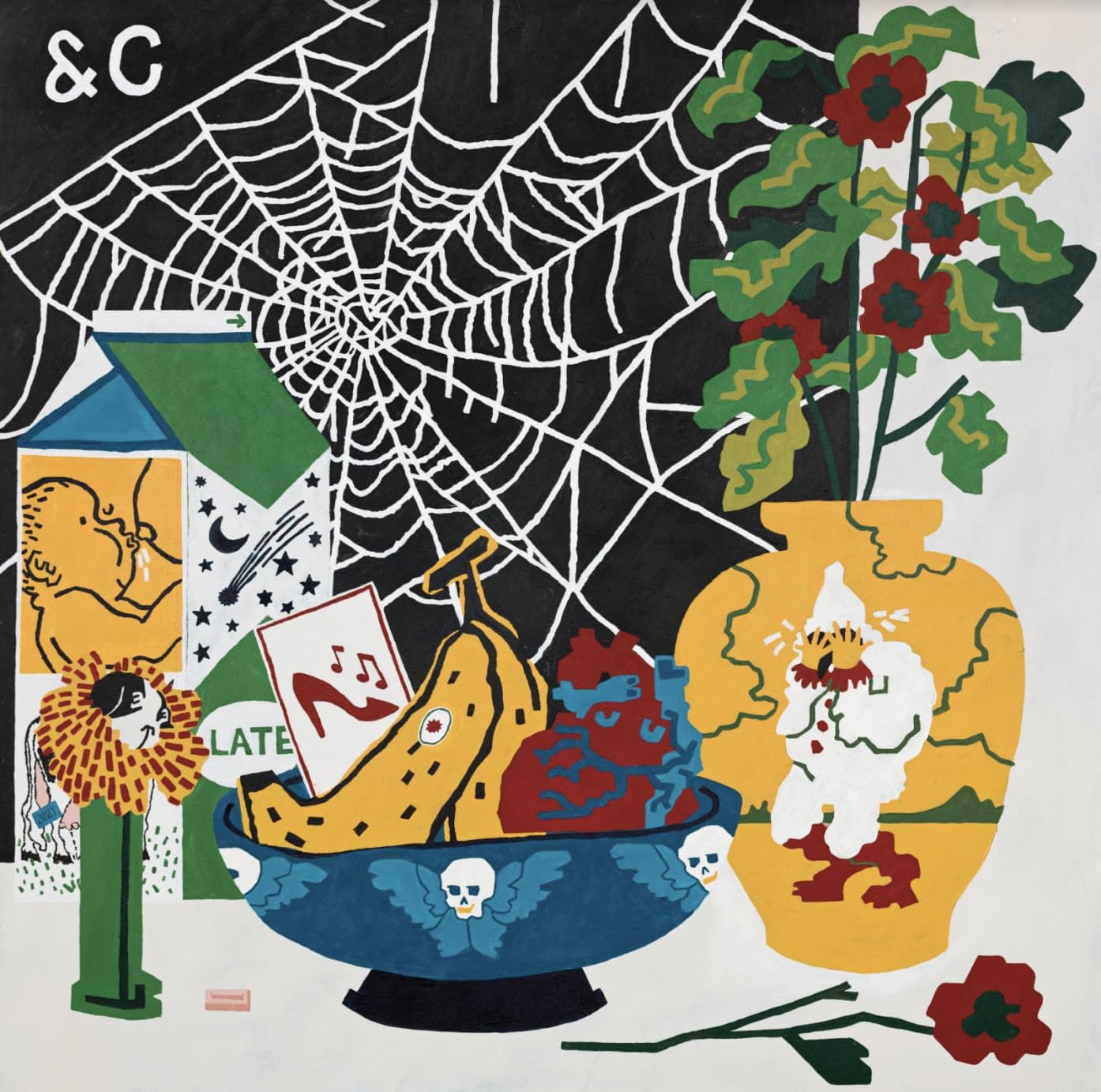
Parquet Courts have shared a music video for their new song “Black Widow Spider.” It’s the latest single from their forthcoming album “Sympathy For Life”. They’ve also annonuced U.K. tour dates for 2022 with additional dates in North America and Europe. The track is the latest preview of the New York band’s new album ‘Sympathy For Life’, which will come out on October 22nd via Rough Trade Records.
So far, the band have shared lead single ‘Walking At A Downtown Pace’ and a physical-only single of the album track ‘Plant Life’. Check out the video for “Black Widow Spider” and the full list of tour dates below. The video for “Black Widow Spider” was directed and animated by Shayne Ehman. Of the track, Andrew Savage said in a statement:
I told [producer] Rodaidh McDonald that I wanted to find a sound that was equal parts Can, Canned Heat and This Heat. He was really into that and probably took some glee in having such a bizarre challenge.
Parquet Courts’ most recent album came in 2018 with ‘Wide Awake!’.Parquet Courts are a magical band that make you feel everything all at once: youth, nostalgia, happiness, desolation, flying high, running low. The record’s last line, then, is fitting, Savage calling for “the fix of a little tenderness”. But where would the thrill be in that?”
Earlier this year, Parquet Courts reissued their 2011 debut album “American Specialties”.
As always, Parquet Courts is back in town! Only this time the town is the world and over the next few weeks, there will be 11 surprise events taking place across the world. An event for every song on the forthcoming album! Some you will be able to attend, some you won’t, but all of which you’ll be able to learn more about here. There will be exciting new limited edition merch commemorating every one of these things and it will all be very fun because that’s the way it goes, damn it! and we’ll see you out there.
JUNE 2022 8 – Brighton, Chalk 9 – London, Brixton Academy 11 – Dublin, Helix 12 – Manchester, Albert Hall 13 – Leeds, Stylus 15 – Glasgow, Barrowland 16 – Birmingham, O2 Institute
The Tiny Desk is working from home for the foreseeable future. Introducing NPR Music’s Tiny Desk (home) concerts, bringing you performances from across the country and the world. It’s the same spirit — stripped-down sets, an intimate setting — just a different space.
Anna B Savage’s present new home these days is the west coast of Ireland near Mullaghmore, where this striking video was shot. Moss clings to a shoreline cove where seagulls circle in air so moist you could slice right through it.
Savage’s songs, too, are thick with unfiltered feelings, self-interrogation and wry humour, raising the bar for any Joni-inspired confessional song writing. The three songs she performs here are pulled from different moments in her career and personal life but cohere around the theme of struggling in the darkness of a toxic relationship before emerging into self-confident sunshine. The songs might be self-referential, but like Mitchell’s they speak in customized messages with a voice that whispers intimacies one moment and soars with operatic glory the next.
In “Corncrakes,” Savage’s beloved birds trigger mixed feelings for a lover, climaxing in the repeated line that itself could have been our collective mantra over the past year: “I don’t know if this is even real. I don’t feel things as keenly as I used to.”
“Since We Broke Up,” a new song premiered here, finds Savage rising from personal struggles to once again enjoy her own company, while the astounding “One,” from her 2015 breakthrough EP, paints a painful bedroom scene of self-doubt and embarrassment that ultimately leads to an explosive epiphany.
Enamored of her new environs, Savage told NPR she chose the locale to “showcase some of my new, completely wild and amazing landscape.” But what she truly offers here is the terrain inside the mind of one of today’s most distinctive cartographers of human temperament.
The first time I saw shame singer Charlie Steen, he was stripped down to nothing but his Racing Green brand underwear(which he had wedged up his behind), as guitar, bass and drums punctuated his emphatic vocals. In this “Tiny Desk (home) Concert”, we find Charlie in a full suit, tie and hat, sitting in a living room atmosphere backed not only by the rest of Shame (also seated), but a compendium of violins, horns and more.
All the songs here are from the band’s 2021 album, “Drunk Tank Pink”. It’s the sound of this South London post-punk band challenging not only their listeners, but themselves. What a thrill.
We heard you, we listened. And, yes, your prayers have been answered with 3 orchestrated songs off Drunk Tank Pink for NPR Tiny Desk. Thank you so much to Bob Boilen for having us, the Rising Sun for hosting us, and to all the incredible musicians and crew.
The Tiny Desk is working from home for the foreseeable future. Introducing NPR Music’s Tiny Desk (home) concerts, bringing you performances from across the country and the world. It’s the same spirit — stripped-down sets, an intimate setting — just a different space.
Our new EP “Shimmer” draws on and collects experiences from our favourite musical styles and influences, with a modern freshness for added appeal. Sparkling melodies with soaring guitars and vocals set against a driving rhythm section, telling stories with cinematographic splendor.
The opening track “Shimmer” tells the story of a small group of people (are they friends…are they couples?) rushing out to see their favourite band, to chase some shiny and shimmering guitar pop. The excitement builds until they’re set, standing in front of the band, letting the jangle chords wash over them, when the mood and the moment has them soaring and astral travelling, “…falling into the galaxies of stars.” Along the way there’s some reminiscing and a cheeky reference to Australia’s famous “Big Day Out” concert series – one of the fans is eavesdropping on a hopped up lead singer talking about how high he is, just minutes before they were due to take the stage! “Shimmer” was written to be a classic guitar pop song, and Marty Wilson Piper’s soaring lead guitar and alluring vocals helps the listener go where the fans end up – astral travelling into the galaxies of stars.
“Promises We Made” takes the emotions to another level, and speaks of love, betrayal and trust…core issues that we all deal with. Starting with the “blank page” of youth the song follows the singer’s reminiscences of classic summers of love spent on long beach holidays, without a care in the world. Suddenly reality intrudes as the chorus tells us that the love is gone…promises long made are broken…the pressures of modernity have taken their toll and the song moves into the steaming boredom of dormitory suburban life, where those rolling days of endless waves are just a memory. All is well in the end though, as Marty’s groovy guitar marries with Olivia’s “Jane Birken’esque” vocals to bring the song full circle, to its inevitable conclusion of newly found harmony and a peaceful ease.
“Hombre” started life as our tribute to the cowboy guitar work of The Shadows, further inspired by Glenn Campbell’s “twanging guitar” on songs like “Wichita Lineman”…more recently updated and repurposed by bands like “Brian Jonestown Massacre” and Australia’s own “Morning After Girls.” Inspired by Marty’s muse’s suggestion to develop it as an instrumental, “Hombre” is our tribute to the great surf instrumentals of the 60’s, and more recent stand outs like “Wedding Cake Island” by Midnight Oil. After you hear “Hombre,” we’re sure you’ll dust off Morricone’s “Good, Bad, & the Ugly” and re-live those amazing mariachi guitar sounds of yesteryear.
“Misty Shores” is a little different. Written and played in Open G tuning – a la Keith Richards and Jimmy Page – it’s a ditty that moves between the meanderings of a psychedelic dream and a Tolkien like quest to solve a pressing puzzle. Keyboards set the mood, quickly enhanced by the baroque beauty of Marty’s driving arpeggio’s. A bit of light-hearted fun and humour to close the EP.
We hope you enjoy our EP “Shimmer” as much as we did when we wrote, arranged, recorded and mixed it!
It starts with the kind of lyric you might expect near a song’s end, a revelation so devastating that many songwriters would feel obliged to spend several minutes earning it first: “I have a mandolin / I play it all night long / It makes me want to kill myself.” But this is where The Magnetic Fields’“100,000 Fireflies” begins, and its casual, matter-of-fact delivery of bad news does not relent. The music is skeletal, just a drum machine and some synthesized scaffolding, and it makes an icy bed for the beautiful, solitary voice guiding the listener through “the worst night I ever had.” On this night, we learn, she has captured those titular light-up insects to keep her company, only to be reminded of the “starry eyes” of someone no longer there. This is a song about a life-threatening fear of being alone, and boy does it sound like it.
Susan Anway, the remarkable vocalist on this recording, died this month from complications related to Parkinson’s disease. “We met Susan in the ’80s in Boston, when she was the singer of a local band,” the group said in its announcement on September 9th. “She sang lead vocals on the first two Magnetic Fields albums, “The Wayward Bus” and “Distant Plastic Trees”. She was a lovely person and will be missed by all of us.”
Released in 1991 as the penultimate track on Distant Plastic Trees and the band’s debut single, “100,000 Fireflies” was never a chart presence. It did not become famous by way of a movie or TV appearance, nor is it even among The Magnetic Fields’ most played tracks on Spotify. But in the emotional outpouring that greeted the news on social media, it was the song fans invoked most frequently and passionately. Anway performed her role in “one of the greatest love songs of all time with one of the best opening lines of all time.”
It is impossible to explain the depths to which Susan’s voice in ‘100,000 Fireflies’ [has] been baked into my neurology.” I revisited the song myself and instantly teared up, remembering how comforting I’d found it in my early 20s, like a dear friend on a bad night.
So what is it about this song that has fostered such deep and personal attachments over the last 30 years? The answer may have something to do with all the things the song is not.
Stephin Merritt, the songwriter and central member of The Magnetic Fields, didn’t know Anway well when he enlisted her for his debut. “Susan was very mysterious,” he explains via email, “and we were almost never in contact.” Her previous band, V; (the semicolon is part of the name), had a sensibility closer to punk, and songs like the slow-burning, spill-your-guts anthem “1926” showcased a volatile voice, brimming with range and expression. But Merritt had a more minimal vision in mind for his own band one that banked on an audience so familiar with the tropes of famous 20th century love songs that he only needed to evoke their essence, and listeners would mentally fill in the rest.
He approached that mission with an appropriately small toolkit. “The instruments on “Distant PlasticTrees” are a Roland S-50 sampler, a Korg Poly-800 digital synthesizer, and a Yamaha RX21 drum machine, all controlled by a Macintosh 512K computer running sequences,” he explains. Some tracks feature an ARP Odyssey synth played by hand; just one, “Plant White Roses,” adds an acoustic guitar. Merritt added humanizing touches to that landscape by leaning on Digital Performer, a piece of music software he favoured “specifically because it had sophisticated quantization that could make sequences sound honest-to-God hand-played, because I did and do find strict clocks cheesy.”
But when it came to the vocals, Merritt’s guidance for Anway was the opposite of what he’d given his machines. “I sent her demo tracks with me singing over them and strict instructions not to emote,” he says, “and let the lyrics convey the feeling.”
That poker-faced delivery has the effect of making Anway sound stunned by recent events — like someone in a dissociative state, blankly staring out the window, repeating the phrase, “I’m afraid of the dark without you close to me.” And it works. One could argue that by the strictest pop standards, “100,000 Fireflies” is more like a suggestion of a song than a complete composition yet it’s that negative space that draws you close, that allows you to relate to the song so intimately. If the bombastic, maximalist arrangement of something like The Righteous Brothers “You’ve Lost That Lovin Feeling” suggests that a song belongs to everyone, the translucent veneer of “Fireflies” signals that this is for you and you alone.
Anway’s performance, as familiar as it is distant, makes the perfect center piece for a song built out of contradictions. The melody is undeniably catchy, even though every section (apart from the “afraid of the dark” chorus, which gets one repeat) is compositionally unique: “Including the solo, it’s A-B-C-B-D-E,” Merritt says of the structure. The imagery is often childlike (Who is usually afraid of the dark? Who usually catches fireflies? Is that a toy piano we hear?), yet it addresses pain and loss at a stark, extremely adult level. Those opening lines, which read like a conclusion, are balanced by closing lines that read like an opening argument: “Why do we keep shrieking when we mean soft things? / We should be whispering all the time.” It’s just the kind of light cognitive dissonance that can interrupt a person listening on autopilot and make them wonder, What is going on here?.
No matter how much one parses its details, there is something about “100,000 Fireflies” that remains impenetrably mysterious, just like its singer. “I would happily have known Susan better — she was fun,” Merritt says. “But she was quite firm about not wanting to be known, which was mysterious enough to be part of the fun.” Thirty years later, that mystery is both the beginning and end of their story. It’s hard to believe, but Merritt says he has no idea what Anway thought of the two Magnetic Fields albums on which she served as lead vocalist, or if she ever heard them at all: The songwriter and the singer that launched The Magnetic Fields’ discography together, he says, had not spoken since then.
As for the song’s narrator and their estranged love, we’re left to wonder about that, too. The song’s final moments sound like the bargaining stage of grief playing out in real time: “You won’t be happy with me / But give me one more chance / You won’t be happy anyway.” Perhaps when things are going well in our own lives, we can picture them working it out, approximating some level of content coexistence, even if true happiness is out of the question. During darker moments, we might imagine them spiraling into an extended shared misery, or cutting their losses and never speaking again. No matter how we come to it, Anway’s vocal delivery is a waiting vessel, ready for us to pour our own emotional history into the outline she has sketched. It’s a true collaboration between artist and audience.
In moments of peak despair, it is such a comfort — some would say a lifesaver — to have beautiful things to turn to that make you feel less alone. She had all those fireflies. We have this song.
On their self-titled fourth album, La Luz launch themselves into a new realm of emotional intimacy for a collection of songs steeped in the mysteries of the natural world and the magic of human chemistry that has found manifestation in the musical ESP between guitarist and songwriter Shana Cleveland, bassist Lena Simon, and keyboardist Alice Sandahl.
To help shape La Luz, the band found a kindred spirit in producer Adrian Younge. Though primarily known for his work with hip-hop, soul, and jazz acts, Younge saw in La Luz a shared vision that transcended genre. “We both create music with the same attitude, and that’s what I love about them,” he says. “They are never afraid to be risky and their style is captivating. It was an honour to work with them.”
The result is an album that is both the most naturalistic and psychedelic of the band’s career. All the elements of classic La Luz are still present—the lush harmonies, the impeccable musicianship, the gorgeous melodies—but it’s a richer, earthier iteration, replete with inorganic sounds that mimic the surreality of nature—the humming of invisible bugs, the atmospheric sizzle of a hot day. After spending the last few years living in rural northern California, Cleveland’s lyrics have become more grounded, less interested in traveling to other dimensions than in peeking behind the curtain of this one.
La Luz shimmers into existence with a tender strumming of electric guitar on the ghostly “In the Country.” The record then charges ahead with the dynamic “The Pines,” propelled by Simon’s thunderous bassline and punctuated by eerie vibrating keys while Cleveland’s voice hovers high and sweet overhead—no reverb, no fooling. Sandahl leads the way with a soulful Hammond organ on the dreamy, funky “Watching Cartoons,” while the women’s voices weave in and around each other, coming together in a cascade of “ba ba ba ba’s” in the chorus.
Later, the band cranks up the atmospherics on madcap stomper “Metal Man” with a frenzy of ultra-fuzzed out guitar, blaring galactic synths, and epic clanging bells. The record’s themes coalesce on breezy 70s folk-tinged pop song “I Won’t Hesitate,” an ode to finding intimacy in a weird world, and the languid ballad “Lazy Eyes and Dune,” which features lovely Mellotron work from Simon. La Luz is an album that celebrates love—of music, of friendship, of life in all its forms.






 The Fat Angel Sings