Lunar Vacation’s Gears takes the band in a darker direction – while still bringing their classic and recognisable silky vocals along for the ride.
There is a consistent, plaintive questioning quality to Lunar Vacation’s lyrics, and Gears is no different – with its charming meta references. Though the bridge is reminiscent of early Lunar Vacation (think Blue Honey or The Basement), Gears’ synthesizer sounds a bit more like Roses by ABRA than Lunar Vacation’s other hits, as the sharp percussion and bass transition gives a welcome edge. We’re grateful, of course, for Grace Repasky’s vocals – the consistent thread throughout their career thus far.
The singles that have been released are a cohesive mesh of references (we see you Wilco!), delicious bass hooks and bouncing synth lines. It’s an understatement to say Lunar Vacation does indie pop in the best way. We find ourselves relating to the lyrics, while the instrumental never fails to make us dance and shake our heads – an ode to youth, change and welcomed complications.
Produced by Daniel Gleason of Grouplove, Lunar Vacation’s debut full-length “Inside Every Fig is a DeadWasp” is a vibrant offering of melodious guitars, propulsive rhythm, and fitful, gripping vocals that take on the contemporary strain of coming of age. The album boasts a celebratory sound, a reckless sense of ecstasy specific to fluid youth, and rock solid-friendship. Drawing from early influences like Rilo Kiley and Tame Impala, and landing a little closer to contemporary favourites like Alvvays and Slow Pulp, Lunar Vacation make bright music replete with bliss. Grace Repasky (songwriter / vocalist / guitarist) and Maggie Geeslin (songwriter / vocalist/ guitarist) met in the eighth grade and immediately began sharing their own music. By the time they were old enough to drive, Lunar Vacation was born. The pair forged demo after demo, took to as many stages as Atlanta could offer them, and added Matteo DeLurgio (synth) and Connor Dowd (drums) to sonically match their songs’ increasingly vibrant spirit. Shortly after graduating high school, Lunar Vacation self-released two EPs — “Swell” and “Artificial Flavors” — which landed them quick critical attention, millions of organic streams.
“Gears” by Lunar Vacation From their debut album ‘Inside Every Fig is a Dead Wasp’ via Keeled ScalesRecords.
“P.N.E. Garden Auditorium, Vancouver, British Columbia, Canada 7/29/66 marks Grateful Dead’s debut performance outside of the United States. Their complete July 29th, 1966 performance is being released in a limited edition, 2-LP, 180 gram vinyl-set, with four bonus tracks from the ensuing 7/30 performance at the same venue.”
In an interview, Grateful Dead archivist David Lemieux said that he had wanted to release this concert as an album, but it was too short for the Dave’s Picks series. He said that since the concert was an early one, from before the time of CDs, that made it seem like a good choice for an LP. He added, “As a vinyl release it works extremely well where you get three or four songs per side and they’re all really short songs – anywhere from three to five minutes.”
This is a great recording. Its interesting to see how they mixed these older sets. This was (obviously) a huge growth period and they were really pushing the envelope as for as what they could do electronically. Interesting how they distribute the different tracks to right and left speakers
The Dead go through much of their standard repetoire for this time but do it very well. Bob may be low in the mix, but the other guys, especially Pigpen and Jerry are tearing it up. Pig’s early organ playing is a delight, he was really good and with Jerry is the main instrumental voice in the band. The real surprise here though are two songs I’m not that familiar with: “You Don’t Have To Ask” and “Cardboard Cowboy”. Both are excellently played examples of mid sixties psychedelic rock. I think “Cardboard Cowboy” may have been played at one other show. The crowd are either lame or not miked as they’re barely audible and it sounds like there may be 10 people in attendance. For example the band do a great ripping version of “You Don’t Have To Ask” that stops on a dime after a great Jerry solo and there’s… silence,
Original cover art by Canadian poster artist, Bob Masse. The iconic 60’s poster artist has designed original works for artists such as Jefferson Airplane, Janis Joplin, Jimi Hendrix, Doors, David Bowie, Fleetwood Mac, Steve Miller Band, No Doubt, Fiona Apple & Smashing Pumpkins to name a few. The show was mastered from the original audio recordings by GRAMMY winning sound engineer Jeffrey Norman at Mockingbird Mastering in Petaluma, CA. This audio was first made available in January, 2016 as the bonus disc in the 2-CD The Grateful Dead (50th Anniversary Deluxe Edition) as it features most of the tracks that would make their way on to the first official Grateful Dead album. It was previously unreleased before this year and is only available as a stand-alone show in this limited edition vinyl set.
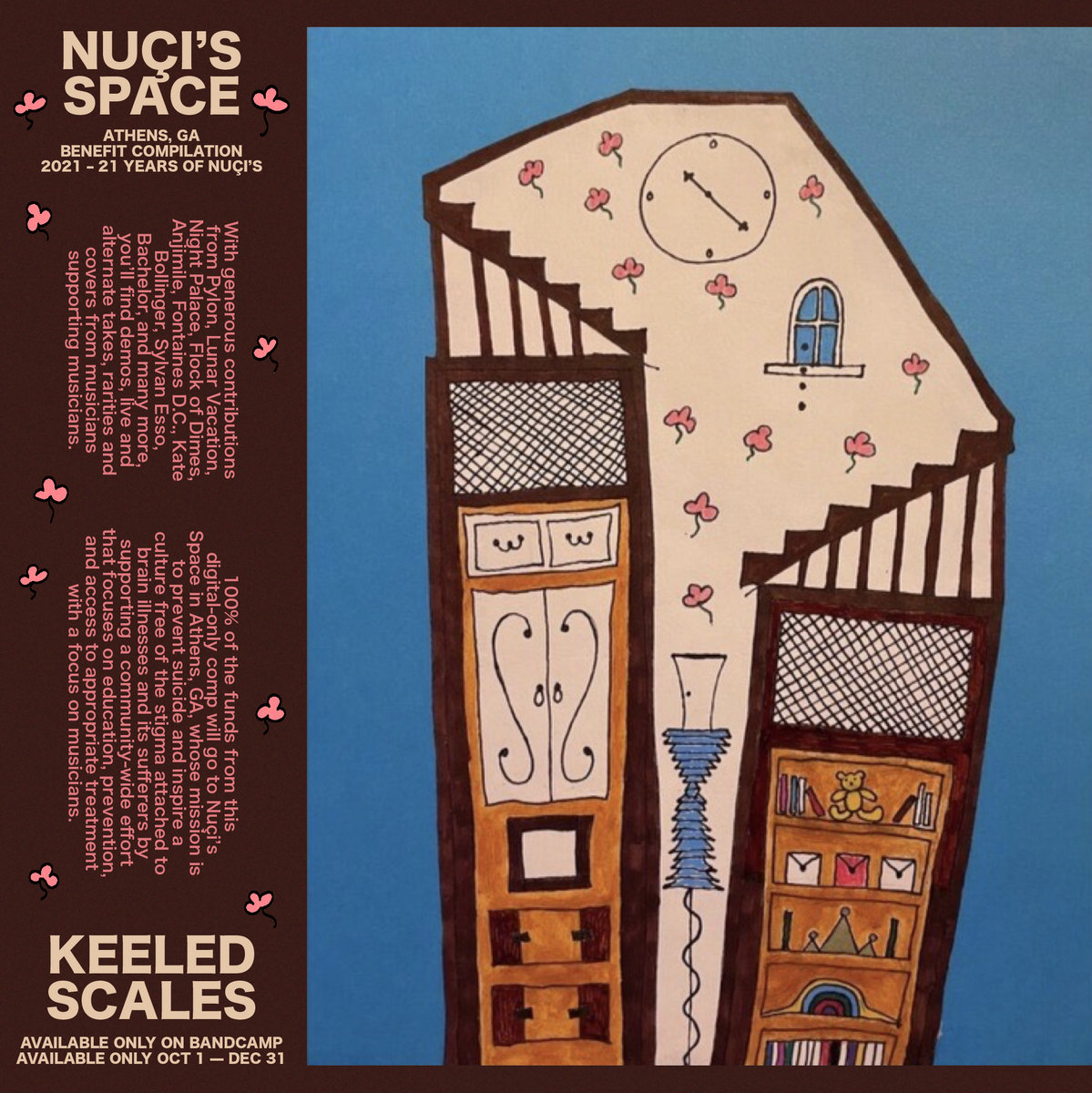
Released via Keeled Scales Records a small record label deep in the heart of Texas named after a type of snake scale: Nuçi’s Space holds a special place in my heart — I called Athens, Ga., home for 5 years, and that venue not only hosted some of my most beloved concert memories but also still provides mental/physical health services for musicians.
100% of the funds from this digital-only Bandcamp compilation, available for a limited time from October 1st through December 31st, 2021, will go directly to Nuçi’s Space, a nonprofit organization in Athens, GA, whose mission is to prevent suicide. Nuçi’s Space operates a musician and mental health resource centre which provides low-cost practice space, gear rentals, etc., and offers subsidized mental and physical health care for musicians and artists in the Athens area.
They’re celebrating their 21st anniversary of pivotal work in the music community. You can read more about what Nuçi’s space is doing for mental health advocacy and suicide prevention here:
This undertaking would not be possible without the kind donations of the artists, managers, labels, designers, and musicians that went out of their way to support mental health advocacy in music.
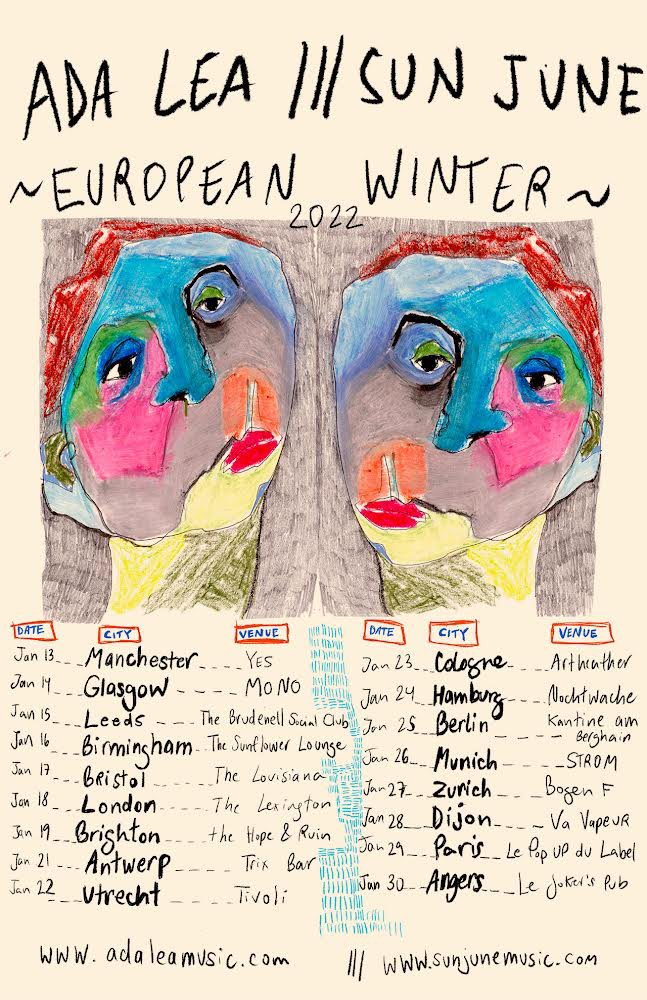
2021 has been something of a break-out year for the Austin, Texas quintet, Sun June. Back in February they teamed up with Keeled Scales and Run For Cover, for the release of their latest album, “Somewhere“. With a hectic touring schedule on both sides of the Atlantic, including UK dates with AdaLea, this week the band have announced details of an expanded edition of the record, “Somewhere + 3“, fittingly including three new tracks. Ahead of the record’s release in January, the band have also shared the first of those tracks with the world, in the shape of their new single, “Easy”.
‘Everything I had, I want it back,’ Sun June’s Laura Colwell sings on the Austin band’s latest single – certainly a relatable refrain for these times. It’s also a fittingly wistful sentiment for a band that playfully describes its sound as “regret pop,” blending the melodic flutter of Colwell’s voice with dreamy tempos that invite contemplation.”
“‘Easy’ is a romantic struggle song. It’s about love and partnership and longstanding arguments that are hard to get past,” says Laura Colwell. “We started working on it after quarantine was lifted. Everyone had been cloistered alone for months, so frustration was easy to tap into. At the same time, it was joyous and cathartic to play together again, so the song came out upbeat and optimistic too. We loved getting to return to Good Danny’s studio to record—it was easy to find the sounds we wanted and get back into the Somewhere vibe.”
Is there that much difference between love and loss? Austin band Sun June, who jokingly refer to their 2018 debut recording as ‘regret pop’, found themselves in different circumstances when the time came to record their new album, “Somewhere” via Keeled Scales. Collaborators Stephen Salisbury and Laura Colwell are now a couple, and that became the foundation for new material. “I guess the biggest difference,” vocalist Colwell considers, “is how we are looking at our relationship together, and at grief in a more present way. We aren’t looking too far in the rear view – rather we are exploring who we are to each other now. We’ve also been going through a few life changes together and that snuck its way into our songs. Time is weird and, while we try to do our best to not repeat past mistakes, sorrow still seeps in.”
Life never holds fast to one emotion for very long, highs and lows find their way in, and this is true for the carefully considered and arranged material on “Somewhere“. Sunny optimism can be displaced by dark clouds. “I am always skating between total chaos like ‘Bad Girl’ and relaxed optimism like ‘Finding Out’ or ‘Real Thing’,” says Colwell. “I recently made a choice to return to an old job, and I’m living alone for the first time ever. So I’m very much in a weird state of mind like on ‘Everything I Had’. We’re a pretty mixed bag of personalities, to be honest, so I feel like even though we all can relate to the songs on the record, the entire band all jumbled together is very much like a mix of ‘Everywhere’, ‘Bad with Time’ and ‘Karen O’ – we exist in polar opposite emotional realms simultaneously.”
“Somewhere” is a big step up for the five members of Sun June, and the dichotomy of the songs makes for fascinating listening. It all seems to fit in with our uncertain times. “We really stretched out our time in the studio over weekends and random days” Colwell recalls. “Our very last day in the studio was the day Austin went on lockdown, so we lucked out with the timing, quite honestly. We ended up pushing the release by several months, which felt right. We still got to work on several music videos, and shooting/planning those during a pandemic was tricky. Releasing singles in 2020 felt strange, but we felt like a long, drawn-out release was right up our alley. We are all feeling grateful and lucky — the pandemic has hit others a lot harder. We hope to be on the other side of this soon and look forward to touring again when that happens.
“Somewhere” + 3 is out January 14th via Run For Cover Records.
Up until this month, King Crimson were among the final streaming-service holdouts from the classic rock era. And it made sense. Robert Fripp has famously stated that his pioneering prog outfit isn’t simply a band but also a “way of doing things.” Often, that way of doing things involves resisting the obvious path sometimes at the expense of the band’s stability. The past 50 years of Fripp and King Crimson have been defined by restlessness, thanks to an ever-changing line-up and a sound that’s always searching (typically in odd tunings and time signatures). In one song, they’re a gnarly rock trio with tritone riffs; in another, they’re a gorgeous folk outfit with flutes and fantastical lyrics. Combine that tendency with their myriad spin-off projects (referred to as ProjeKcts), collaborative releases, and elaborate box sets, and you have one of the more intimidating bodies of work in rock history. But now that the majority of their catalogue has finally arrived on Spotify, Apple Music, and others, it’s never been easier to join the Court of King Crimson.
Start with these six albums, and explore the rest at your own pace.
In the Court of the Crimson King (1969)
King Crimson’s debut album presents their most recognizable face. It’s there on the cover—the iconic painting by Bary Godber—but it’s also in the restless, symphonic music. Songs like “21st Century SchizoidMan” and “The Court of the Crimson King” have lost none of their paranoid energy, and ballads like “I Talk to the Wind” and “Moonchild” remain among their most memorable deep cuts.
The defining sounds of the record Ian McDonald’s Mellotron and the passionate vocals of Greg Lake would soon be phased out, as Fripp began experimenting more. But it would take years for the rest of the world to catch up to the vision of In the Court of the Crimson King.
If you like this, consider listening to: King Crimson’s 1970 follow-up, In the Wake of Poseidon. It essentially recreates the formula of this album, to varying degrees of success.
Islands (1971)
The title is fitting: These jazzy, string-accompanied tracks are somewhat disconnected from King Crimson’s larger body of work, but they’re worth a visit. Their final album to feature the lyrics of Peter Sinfield, Islands is a transitional work, showing a band on the way to a tighter, bolder sound. While this exercise in jazz fusion was a brief phase, it was also an essential one.
The album’s gorgeous story-songs, like the title track, and psychedelic saxophone parts courtesy of Mel Collins show the band at its most escapist. A minor work for King Crimson, Islands would have been the highlight of many other acts’ discographies. If you like this, consider listening to: the “Sailors Tales” box set, from 2017. It collects every existing live show from this era, building a completist shrine out of what may have seemed like a curio.
Larks’ Tongues in Aspic (1973)
This marked the beginning of King Crimson’s most consistent line-up of the ’70s. With the assistance of bassist/vocalist John Wetton and virtuosic drummer Bill Bruford, along with violinist David Cross and percussionist Jamie Muir, Fripp was able to conjure a deeper, darker sound. “Larks’ Tongues in Aspic” spans relatively straightforward highlights like “Easy Money,” to classical-influenced set pieces like the two-part title track. With it came a period of King Crimson’s career in which composition and live improvisation shared equal billing.
Essentially, Larks’ Tongues in Aspic is the sound of a band figuring out how to incorporate the chaos around them into the songs themselves. Consider listening to: the live recordings from this era. They are just as essential and there’s no shortage of them to choose from. From the half-live follow-up album “Starless and Bible Black” to massive box sets like The Road to Red, you can hear King Crimson evolving with every performance.
Red (1974)
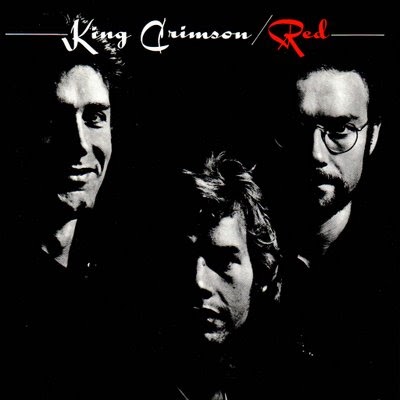
For an act often defined by its uncontainable adventurousness, “Red” is a window into the sleeker side of King Crimson. At this point, the band was essentially a trio Robert Fripp on guitar, Bill Bruford on drums, and John Wetton on bass and vocals and its songs were newly direct, both musically and lyrically. The title track is an instrumental proto-metal megalith, and the imagistic ballad “Starless” though 12 minutes long aims straight for the heart, with Wetton’s poignant vocal delivery and Fripp’s slow-building guitar solo. While most King Crimson albums are notable for signalling rebirths, Red is alone in feeling like a grand finale: the gripping conclusion to a half-decade of work, with not a note wasted. It’s one of King Crimson’s undeniable masterpieces.
If you like this, Fripp’s other work outside of Crimson. From his collaborative ambient masterpieces with Brian Eno (1973’s (No Pussyfooting) and 1975’s Evening Star), to the daring art-pop album he produced for Daryl Hall (1980’s Sacred Songs), Fripp’s ambition kept him busy outside of the prog world he inspired.
Discipline (1981)
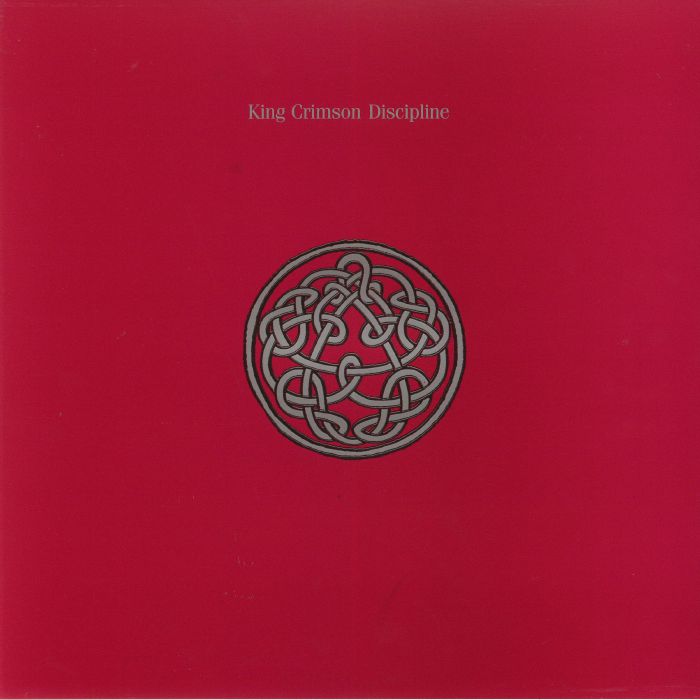
After a seven-year hiatus during the second half of the ’70s, the eighth studio album by English progressive rockband King Crimson, released on September 22nd, 1981 by E.G. Records .King Crimson marked their return with a new line-up, a new sound, and, if Fripp had had his way, a new name. “Discipline” was slated to be the moniker for this endeavor, featuring new recruits Adrian Belew on guitar and vocals and Tony Levin on bass and Chapman Stick. But after an early rehearsal, it became clear that this was no mere side project it was the future of King Crimson, with a knotty, new wave sound that imagined if Talking Heads had met at music school instead of art school.
“Discipline” was the first in a trio of releases that found the band flirting, however hermetically, with the pop world in the form of music videos and dance remixes. Centered on the inventive guitar interplay between Fripp and Belew, the ever-cerebral material proved that King Crimson’s DNA could sustain even the most dramatic reinvention. Check out “Absent Lovers: Live in Montreal”. The ’80s incarnation of Crimson did their best work in concert, and this retrospective release captures their final show of the decade, held in 1984.
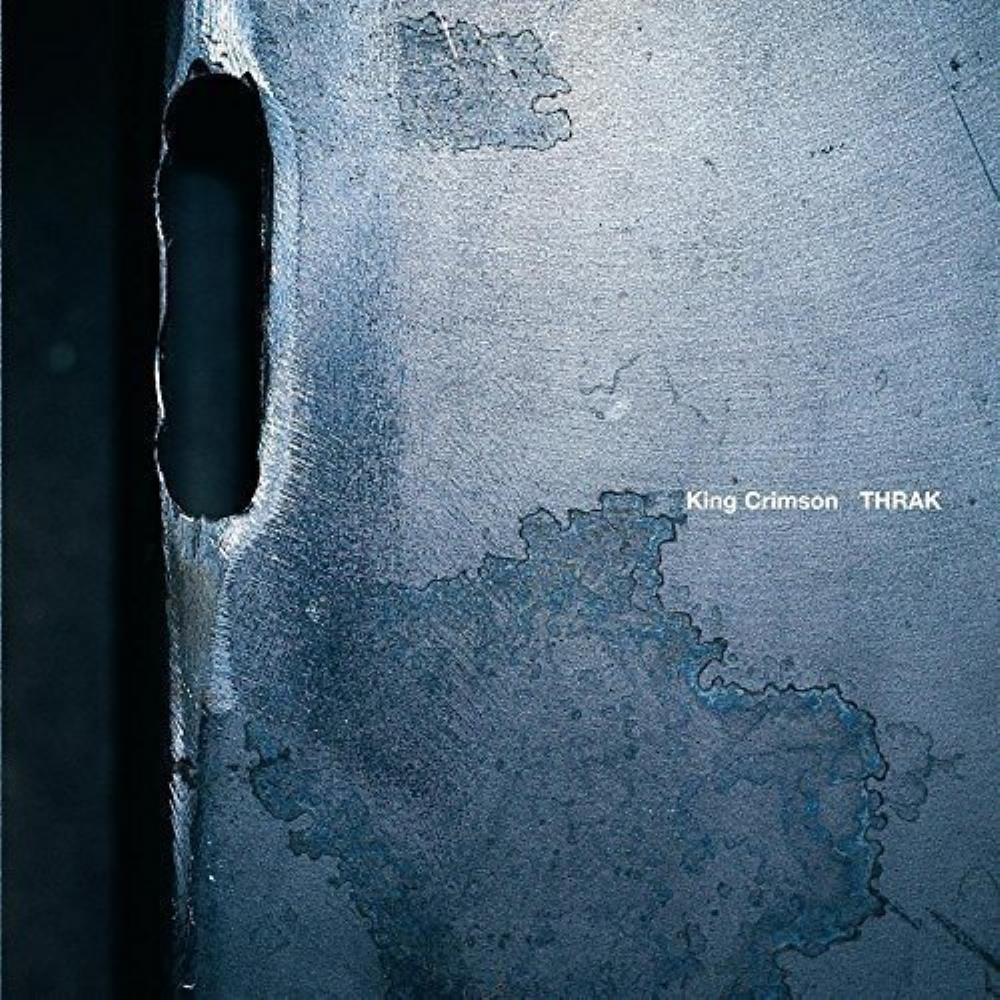
THRAK (1995)
“Thrak” (stylised in all caps) isthe eleventh studio album by the band King Crimson released in 1995 through Virgin Records. It was preceded by the mini-album Vrooom in 1994. It is their first full-length studio album since Three of a Perfect Pair eleven years earlier, and the only full album to feature the 1994-1997 line-up of Robert Fripp, Adrian Belew, Tony Levin, Trey Gunn, Bill Bruford and Pat Mastelotto.
THRAK succeeds by doing exactly what you don’t expect a King Crimson album to do: sound like KingCrimson. Their sole studio full-length from the ’90s is their most self-referential work (“Dinosaur” quotes the riff from 1970’s “Cirkus,” while “VROOM” calls back to the title track of Red). It’s also among their most accessible. Adrian Belew is an unabashed Beatles fan, and these songs showcase the pop craftsmanship lurking beneath King Crimson’s best work, from the quietly psychedelic “Walking on Air” to the jumpy, philosophical “People.”
Recorded at Peter Gabriel’s Real World Studios in Box, Wiltshire, U.K. The recording presents the group in a series of unique ways. With the band consisting of two guitarists, two bassists and two drummers, the opening track begins with all six musicians in the centre of the audio mix. As the album progresses, they are split into two trios, with one guitarist, bassist and drummer heard in the left channel and the other guitarist, bassist and drummer heard coming from the right channel.
THRAK was also a structural reinvention, introducing the “double trio” formation of the group, with two of each instrument. Bigger in both sound and scope, it’s the ideal late-career prog album. Listen to: 2003’s The Power to Believe, which remains King Crimson’s most recent album of new material. It continues in THRAK’s path, led by Belew’s nervy vocal style and familiar motifs from throughout the band’s discography.
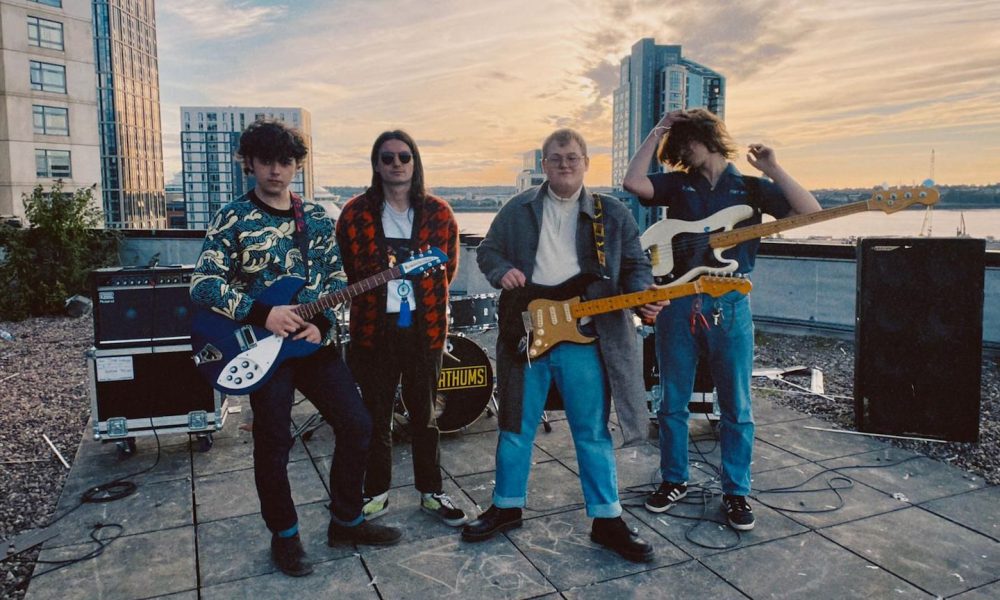
Up-and-coming UK indie quartet The Lathums has scored its first UK No.1 album with its debut album “How Beautiful Life Can Be“. The Lathums’ frontman Alex Moore told OfficialCharts.com: “We’re four friends from Wigan who just love making music and are at No.1 with our debut album – it’ll take a while for this one to sink in. It proves what’s possible for young, British artists with a pure-at-heart ambition to reach people with songs like ours, making friends every step along the way, and finding that dreams can come true.
“How Beautiful Life Can Be” is about seeing the good in things, holding on, and coming through difficult times with a smile at the end. Today our smiles couldn’t be any wider. Thank you.”
The band released its debut album last week (September 24th) via Island Records. It was recorded at Liverpool’s Parr Street Studios and was produced by The Coral’s James Skelly and Chris Taylor.
The record contains songs like “Oh My Love”, which were inspired by Moore’s past experiences of “pain and uncertainty” and the title track, which aims to “appreciate all of the things, big and small, that we’ve missed the most” in life.
How Beautiful Life Can Be is The Lathums’ debut album. How Beautiful Life Can Be, recorded at Parr Street Studios, Liverpool. In the company of producers, James Skelly and Chris Taylor, pushes The Lathums’ remarkable story into the next, even more exciting phase. The Great Escape, having been previously self-released by the young band, emerges from the album sessions in sparkling, new form, whilst retaining the melodic stardust that caused the first rumblings of the social-media led stampede to their early gigs. Kick-started by growing pains and life’s unlucky twists, fuelled by the simple salvation of six guitar strings and supercharged by the fans that found them slogging their gear into the north of England’s pubs and small venues, The Lathums story may turn out to be the perfect not-all-nice-guys-finish-last tale.
It was only in the summer 2019 that the band’s fuse was lit by Tim Burgess, who offering them a late slot at Kendal Calling where, inside 24 hours, social media chatter caused their audience to spill into the field beyond their tent. A year later they had achieved their first UK Album Chart Top 20 for vinyl-only EP compilation, The Memories We Make, recorded their debut appearance for Later… With Jools Holland and joined the BBC Sound Poll 2021 list of tipped acts at the end of a year that skidded on the black ice of a global pandemic but, somehow, left the band on their feet. For a band whose singing songwriter had never been to a gig before playing his own, yet incomprehensibly carried a trunk load of sensitively-crafted, empathetic, sing-a-long anthems straight into their first rehearsal, The Lathums have flown at nosebleed speed to where they are now.
Hailing from Wigan on the overlooked fringes of Greater Manchester, The Lathums are Alex Moore, casting a new outline of the modern frontman, singing alongside student of the Marr-esque jangle guitar, Scott Concepcion, rapid-fire, wise-cracking bassist, Jonny Cunliffe (aka: Bass Mon Jon) and the steady, rhythmic, wise head, Ryan Durrans on drums. Pithily described by those closest as ‘like The Inbetweeners in a Shane Meadows film’, they are four bright, wild flowers growing between grey paving stones.
The Lathums will hit the road in the UK for a rescheduled, expanded, and upgraded tour this autumn and winter, including shows at Manchester’s O2 Victoria Warehouse and London’s O2 Forum Kentish Town.
At the start of this year, the band was named on the BBC’s Sound of 2021 longlist, alongside the likes of Bree Runway, Greentea Peng, and winner Pa Salieu. The Lathums was also included on NME’s list of 100 emerging stars to look out for in 2021.
Toronto’s Ducks ltd will release their debut ep, “Get Bleak” originally released May 21st, 2021 via Carpark Records.
Comprised of friends Evan Lewis, on lead guitar, and Tom McGreevy, on vocals and rhythm guitar, the band built a reputation in their hometown for their bright, sinewy, guitar sound while sharing bills with artists like Rolling Blackouts Coastal Fever, Weyes Blood, the Goon Sax . They have earned accolades from pitchfork who praised the band’s “lilting, throwback jangle pop,” and acclaim from outlets like npr, paste, nme, apple music, and more. the opening track, “Get Bleak” sets a thematic tone for the ep, one of cultural self-awareness and satiric critiques of society’s pressures and the often ridiculous demands – and prices we pay – to exist. chiming with breezy indie guitar sounds akin to those of flying nun and sarah records acts, the track, that features a contribution from Laura Hermiston of Twist, pokes fun at the idea that moving from city to city will fix the problems in your life. following suit is “Gleaming Spires”, a track that zeroes in on the cities we live in and the push-pull relationships that we so often share with them. “Anhedonia”, via it’s tightly-wound rhythm and nostalgia-inked guitars, shifts focus to the times when one is unable to wring any joy out of the things that they find important in life. bringing the band’s characteristic restless bounce, thoughtful lyricism and penchant for orchestration, The tracks explore topics like troubled friendships (“It’s Easy”), self-destructive desires (“Oblivion”), and living with decline (“As Big As All Outside”) while maintaining the balance of earnest self-reflection and humour that endeared audiences to the original release. full of the unbridled radiance of jangle-pop, the debut ep from Ducks ltd.’s get bleak celebrates their strengths while expanding their thematic and compositional horizons, and providing an intriguing glimpse of what’s to come.
released May 21, 2021
Get Bleak: Lead vocal, rhythm guitar, acoustic guitar – Tom Mcgreevy Lead guitar, drum programming, bass – Evan David Lewis Additional drums – Mike Duffield Backing vocals – Laura Hermiston String arrangement – Paul Erlichman
Gleaming Spires: Lead vocal, rhythm guitar, acoustic guitar – Tom Mcgreevy Lead guitar, drum programming – Evan David Lewis Bass – Mike Searle String arrangement – Paul Erlichman
Annie Forever: Lead vocal, rhythm guitar, acoustic guitar – Tom Mcgreevy Lead guitar, drum programming – Evan David Lewis Bass – Paul Erlichman Drums – Mike Duffield Backing vocals – Laura Hermiston
Anhedonia: Lead vocal, rhythm guitar, acoustic guitar – Tom Mcgreevy Lead guitar, drum programming, bass – Evan David Lewis Additional drums – Mike Duffield Backing vocals – Laura Hermiston String arrangement – Paul Erlichman
Oblivion Lead vocal, rhythm guitar, keyboards, bass – Tom Mcgreevy Lead guitar, drum programming, acoustic guitars – Evan David Lewis
As Big As All Outside: Lead vocal, rhythm guitar, keyboards, bass – Tom Mcgreevy Lead guitar, drum programming, acoustic guitars – Evan David Lewis Drum tracking – Kurtis Marcoux String arrangement – Paul Erlichman
It’s Easy Lead vocal, rhythm guitar, keyboards, bass – Tom Mcgreevy Lead guitar, drum programming, acoustic guitars – Evan David Lewis
All songs written by Tom Mcgreevy & Evan David Lewis
All songs produced by Evan David Lewis & Ducks Ltd.
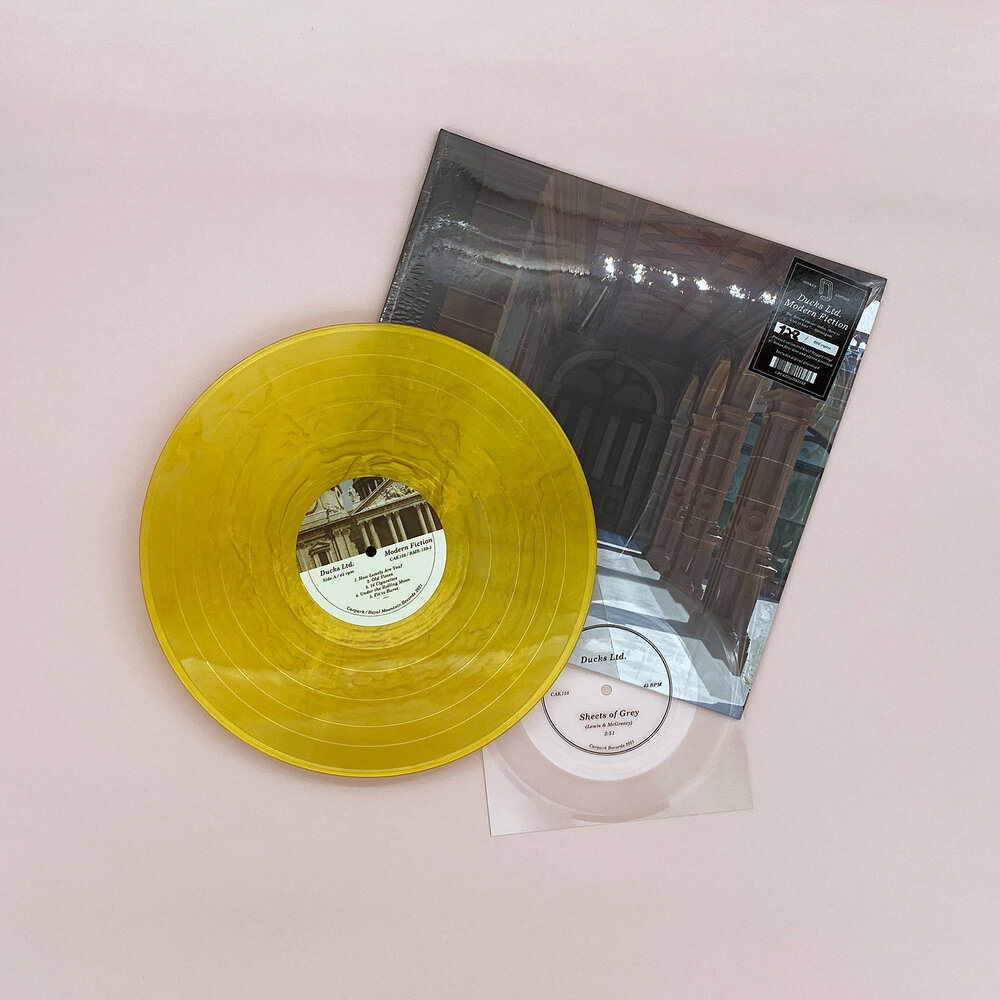
Toronto’s Ducks Ltd. (formerly Ducks Unlimited), the bright jangle-pop duo of Tom McGreevy (lead vocal, guitar, bass, keyboards) and Evan Lewis (guitar, bass, drum programming), accomplish the impossible. The pair craft songs that play to very specific inspirations without drowning underneath them immediately evidenced on their critically acclaimed EP, Get Bleak, and sharpened on “Modern Fiction”, their debut LP. “The Servants, The Clean, The Chills, The Bats, Television Personalities, Felt,” Evan rattles off. “Look Blue Go Purple” is one I reference a lot with our production.” Echoes of ‘80s indiepop abound, but they never overwhelm. This is not a nostalgic record, after all, nor is it a derivative one. Instead, across 10 cheery-sounding songs, Ducks Ltd. explore contemporary society in decline, examining large scale human disaster through personal turmoil (hence the title, taken from a university course called Gnosticism and Nihilism in Modern Fiction, influenced by Graham Greene novels. Bookish indie fans, look no further.)
We made an album! It’s called “Modern Fiction” and it’ll be out on Carpark Records and Royal MountainRecords on October 1st. The first single is called “18 Cigarettes”,
Writing the album was intimate. Tom drafted the nucleus of a song on an unplugged electric guitar and brought it over to Evan’s apartment, where the pair sat in his bedroom, placing percussive beats from a drum machine under nascent melodies, passing a bass back and forth, adding organs and bridges where necessary. “It’s computer music trying extremely hard not to sound like computer music,” Tom jokes. Fearful that limited and expensive studio time would kneecap the project creatively, eroding their charming naivete, the pair re-recorded the album in a storage space owned by Evan’s boss.
Ornamentation through collaboration followed: there’s Aaron Goldstein on Pedal Steel in the Go-Betweens’ “Cattle and Cane”-channelling interlude “Patience Wearing Thin,” Eliza Niemi on cello (“18 Cigarettes,” a song loosely inspired by a 1997 Oasis performance of “Don’t Go Away”), and backing harmonies from Carpark labelmates The Beths (on an ode to friendship at a distance, “How Lonely Are You?,” “Always There,” and on the sped-up Syd Barrett stylings of “Under The Rolling Moon.”) While in his native Australia due to covid-19, Evan worked closely with producer James Cecil (The Goon Sax, Architecture in Helsinki) on Modern Fiction’s finishing touches—at one point, in the mountains of the Macedon Ranges in Victoria, recorded a string quartet (featured on “Fit to Burst,” “Always There,” “Sullen Leering Hope,” “‘Twere Ever Thus,” “Grand Final Day.”)
It’s danceable, depressive fun, with some relief: in “Always There” and “Sullen Leering Hope,” ModernFiction’s faithful heart. “There’s a tendency in my writing, because of my world view, to be very bleak.” Tom explains. “A quality I don’t always see in myself and really appreciate in others is the courage to go on.” And yet, the record manages resiliency—enough for pop fans to fall in love with.
Released October 1st, 2021
Ducks Ltd. Tom Mcgreevy Evan Lewis
All tracks written, performed & produced by Lewis & Mcgreevy
Phoebe Bridgers wrote her first song at age 11, spent her adolescence at open mic nights, and busked through her teenage years at farmers markets in her native Los Angeles. By age 20, she’d caught the ear of Ryan Adams, who listened to her perform her song “Killer” and invited her to record it in his studio the next day. The session grew into the three-song ‘Killer’ EP, and she hasn’t looked back since.
Phoebe Bridgers started touring again last month and at a lot of her shows she’s been performing a cover of Bo Burnham’s “That Funny Feeling,” which appeared in the comedian’s Netflix special Inside. Today, Bridgers has released her version “That Funny Feeling” cover on Bandcamp for the latest Bandcamp Friday, with all proceeds from the song going to a wide variety of Texas abortion funds. In a statement, Bridgers had a message for the Texas governor: “This one’s for Greg Abbott.”
The Band Of Musicians: Phoebe Bridgers : Guitar, Vocal Ethan Gruska : Keys, Cacophony Harrison Whitford : Guitars Rob Moose : Violin Sebastian Steinberg : Bass Marshall Vore : Drums Nate Walcott : Trumpet Maria Taylor : Vocals
San Francisco four-piece band , Cindy is a vehicle for the song writing talents of Karina Gill. Karina has spoken of spending her life sat on the musical sidelines, watching as ex-partners and friends, “made their stabs at it”. A chance encounter with a Squire Strat in a basement, “mummified in electrical tape”, became a catalyst for experimentation and led to the self-release of the debut Cindy album. That record was followed in the Summer of 2020 by the band’s second record, “Free Advice”, which went from a limited edition cassette on the local Paisley Shirt label, to vinyl pressings on both sides of the Atlantic, including a UK release via Tough Love Records. Wasting no time, the band are set to return with their third album, 1:2, this October, and today they’re premiering the latest track from it, “Party Store“.
Discussing the inspiration behind “Party Store” Karina has suggested it is a song, “about repetition – generation to generation and within a life”. The song seems to exist in the corner store, places that sometimes feel like time has forgotten to move on, amid, “lucky charms” and “ancient advertisements”. The title comes not from a fancy dress or Balloon Animal emporium, but from the Midwestern American word for a corner shop, “party store”, in their eyes a much better name for a song than Corner Store or Bodega, and one which, “we figured we could get away with it as Aaron (Diko – keyboardist) is from Indiana”.
It’s not just the title that Aaron Diko provides to the track, as the meandering Casio-like keyboard line is a delight throughout, bring a certain Jeffrey Lewis-like lo-fi antifolk feel to proceedings. The keyboard is a perfect foil to Karin’s vocals, a sort of sing-speak delivery, bringing to mind the bedroom-pop perfection of Oh Peas or early Frankie Cosmos. Despite the warm musicality on show, the lyrics seem to hint at a certain melancholic indifference, “sometimes I say are you feeling small, you plan all day for your funeral”. In a way the song seems to hint about the ease in avoiding difficult situations, contrasting the interactions with a check-out clerk, “it’s late at night and I’m not going to ask about the tiny affairs behind the plexiglass”, with an interaction with someone much closer to home, “it’s late at night, but you want me toask about your mothers love and your sordid past”.
If the song reaches any conclusion, it’s that obsessing over the past, be it your own or someone else’s, isn’t going to help, “I’m not a fool who wants to turn back time, erase that jagged line, there was no time before you, there was just you the time before”. The music of Cindy sounds on first listen so serene and charming, it would be easy to miss the depth lurking within. Cindy’s music is the uneasy calm in the eye of the storm, the comforting arm around your shoulders as you face up to the apocalypse, undeniably charming and equally unsettling sure: you won’t be able to tear your ears away.


:format(jpeg):mode_rgb():quality(90)/discogs-images/R-10174824-1508399449-1226.jpeg.jpg)








 The Fat Angel Sings