We’re gearing up for Pip Blom’s new record, ‘Welcome Break’ due for release next month! We can’t wait.
Check out a brand new track ‘Different Tune’ ahead of the release. A softer, quieter track that is slow-building as well as intimate. Talking about the track Pip said:
“Different Tune really is the sentimental track on the record. The verses are pretty empty, and mostly revolve around the singing. So when the chorus hits the impact is even more. The trombone that’s slightly out of key in the chorus really strikes a chord for me. The bridge feels a bit like there’s a break through happening. As if there’s finally some sun after weeks of dark and rainy weather I hope this song can turn into an anthem. One can dream …”
“Different Tune” is taken from Pip Blom’s sophomore album “Welcome Break”.
“The Weekender”, our annual trip to London, is one of the best times of the year for The Hold Steady. These are always incredible shows in a place that is very special to us. And while we enjoyed the necessary virtual version in 2021, we are thrilled to announce the live and in person Weekender 2022. As always we will start with two nights at The Electric Ballroom, followed by a Sunday appearance at Moth Club.
The Soundcheck / Happy Hour will be happening for each Electric Ballroom show, we’ll be doing a pub quiz the afternoon of the Moth Club show, and a special The Hold Steady beer is brewing for the weekend.
We can’t wait to celebrate with you, and we hope you will join us!
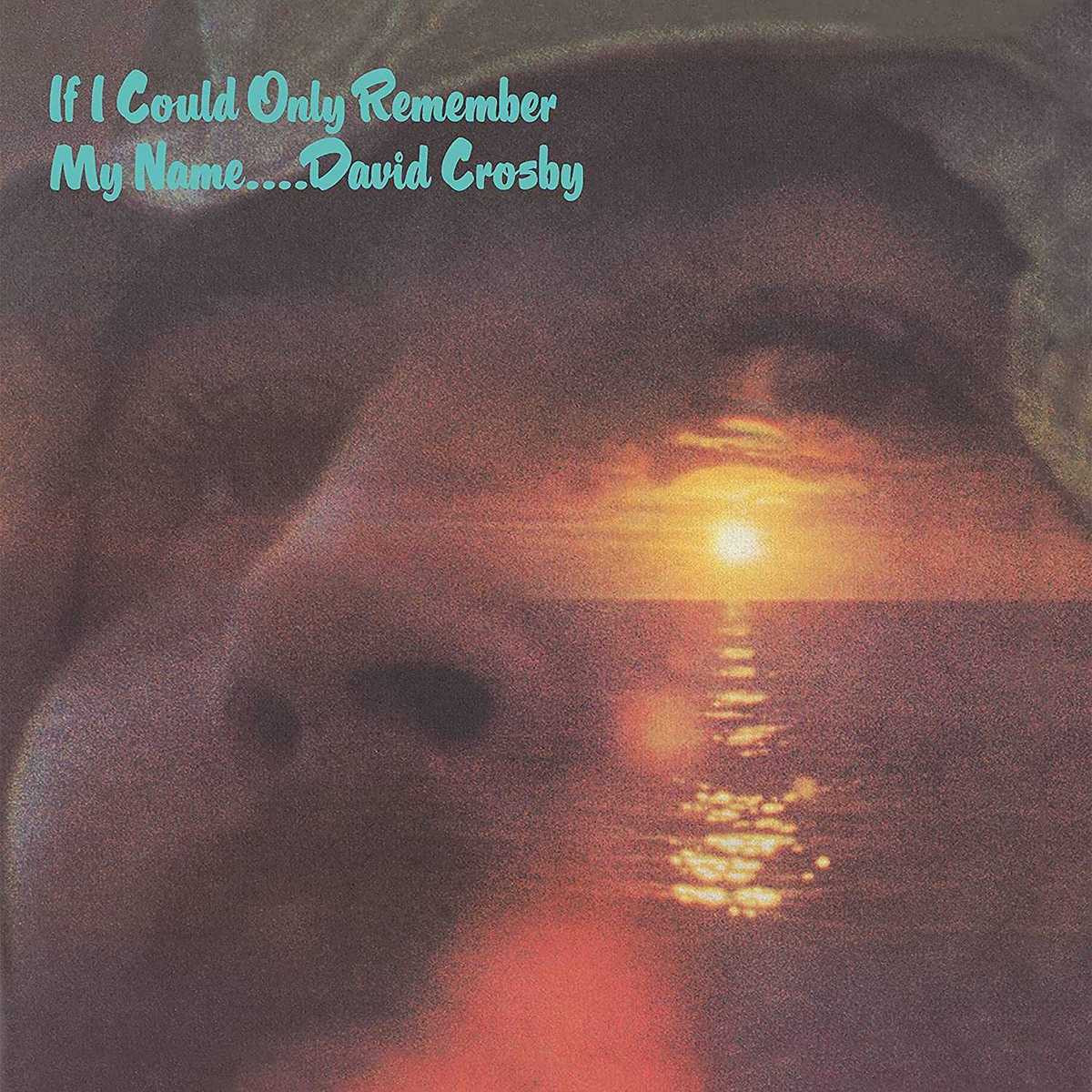
Singer-songwriter David Crosby’s solo debut, “If I Could Only Remember My Name”, was dismissed by critics when it came out in 1971. Over the years, however, appreciation has grown for the album’s adventurous aesthetic, stacked harmonies and haunting lyrics about loss and confusion. Billed as Crosby’s solo debut, the album was anything but a one-man project. Instead, it was one of his most collaborative efforts, featuring an all-star cast of players that included members of the Grateful Dead, Jefferson Airplane, and Santana, along with Graham Nash, Joni Mitchell, Neil Young, and others.
“If I Could Only Remember My Name” has turned 50 years old earlier this year and Rhino Records is celebrating with a 2CD set that includes the album lovingly remastered from the original analogue tapes, accompanied by a bonus disc that features a dozen unreleased demos, outtakes, and alternative versions. The new remaster was overseen by original album engineer Stephen Barncard with restoration and speed correction using Plangent Processes. The liner notes that accompany the collection were written by Steve Silberman, co-author of Skeleton Key: A Dictionary for Deadheads.
Many believe that the best art emerges from times of psychological struggle and/or philosophical unrest. That was the case in late 1970, when David Crosby recorded his first solo album, “If I Could Only Remember My Name”.
Crosby should have been riding high, mainly due to the enormous success of CSNY’s “Déjà Vu”album, which was released in March that year. Instead, he remained tormented by the sudden death of his girlfriend Christine Hinton, who was killed in a freak car accident on December.30th 1969.
His personal grief, alongside the unsettled feeling that fills you when a loved one passes before their time, became a key ingredient in the often amorphous, even eerie nature of the 1971 record.
The original nine songs (a 10th was added for the 2006 reissue and is also included here) reflected the pensive, melancholy mindset of Crosby at the time. These tracks were recorded at San Francisco’s famous Wally Heider studios, which was also the home to music created by most of the West Coast’s biggest acts.
Members of Santana, the Grateful Dead and Jefferson Airplane, along with friends Neil Young and Graham Nash, all contributed to the music; creating a loose all-star line-up that changed for each tune. Jerry Garcia, who swung by nightly, was a dependable presence; his distinctive, snaking guitar lines contribute deeply to the sessions’ overall dreamy vibe. “There’d be that grin, and then that look in the eyes, and this fascination with the music,” Crosby recalls. “Easy, not forced, graceful, fun, ever-present. It was a kindness, I’m pretty sure. Jerry never said that, never even implied it. Just, ‘Hey, I heard you were doing something. What are you doing? Let’s do something.”
From the opening ‘Music Is Love’, which emerged out of a jam and was later moulded into a song by Young and Nash, to the wordless, floating melody of the closing eight minutes of ‘I’d Swear There Was Somebody Here’, the disc sets a contemplative tone.
The latter track, which Crosby has said “It felt like Christine was there. I could feel her”, shifts from a ghostly moan to a lengthy and subtle improvisation, enhanced both by Garcia’s acoustic and electric playing.
Only the appropriately titled ‘Cowboy Movie’ shifts the proceedings into tougher territory.
It describes the dissolution of a gang of Old West thieves, narrated and often shouted by Crosby in a hoarse howl (he later explained it was about the tensions of his CSNY group), as Garcia’s stinging guitar and Phil Lesh’s rubbery bass craft an intensity that only ramps up over the song’s length.
The slowly surging electric beat, somewhat like the rhythm of ‘Almost Cut My Hair’, is the album’s longest and most propulsive moment.
Other lyric-free inclusions are ‘Tamalpais High (At About 3)’ and the self-explanatory ‘Song with No Words (Tree With NoLeaves)’, which punctuate other meditative, largely wistful fare, such as the lovely ‘Laughing’ and the elegant, heavenly autoharp that enhances ‘Traction in the Rain’. Crosby’s voice is never less than moving – always emotionally invested in the loosely structured, fluid material.
Initially dismissed by critics (Robert Christgau gave it a D- in a particularly scathing review), the singer/songwriter’s only solo stab for decades (his next came 19 drug-infested years later, of which he largely spent in prison) has gradually been elevated as a sort of freak-folk forerunner.
The reflective, mostly nebulous, even hazy approach is certainly not for everyone. But the meticulously remastered sound here emphasizes the music’s subtleties and the sense of camaraderie among the high-profile supporting musicians, all intent on helping Crosby craft music through this trying period.
Crosby followed up If I… with a series of generally well-regarded duo projects, working alongside and co-credited to GrahamNash. Their music was more structured but with less atmosphere and mystery, due to Nash’s pop-oriented compositions.
The 50th Anniversary Edition follows the established blueprint for many of these similarly lengthened packages. Like the expansive Déjà Vu from earlier this year, it adds mostly interesting demos and alternate takes.
Some, like the 10-minute ‘Cowboy Movie’ featuring Neil Young’s scorching guitar solo, have already been available, specifically on 2006’s lavish, expertly compiled three-disc Voyages. Others, such as an early acoustic, lyric-less ‘Dancer’ and ‘The Wall Song’, appeared on later Crosby-Nash releases.
A few, exemplified by the sweet, acoustic rumination ‘Coast Road’, would have made reasonable additions to the original, while the opening guitar and vocal of ‘Riff 1’ is a good example of Crosby searching for a melody as he hums along.
It’s pleasant but generally for hardcore fans. Unfortunately, at under an hour, the compilers had room but chose not to include any live versions. Also, 2006’s now out of print, expertly constructed 5.1 DVD audio remix, is MIA and would have been a logical inclusion.
David Crosby’s recent creative surge finds him rediscovering a muse some thought might have been lost forever, in a haze of drug and firearm legal issues throughout the decades since “If I Could Only Remember My Name” hit the shelves.
This reissue goes a long way to completing Crosby’s life and creative cycle that, now at 80 year of age, remains vibrant and shows no sign of slowing down soon.
Tracklist:
1. Music Is Love 2. Cowboy Movie 3. Tamalpais High (At About 3) 4. Laughing 5. What Are Their Names 6. Traction In The Rain 7. Song With No Words (Tree With No Leaves) 8. Orleans 9. I’d Swear There Was Somebody Here
Bonus Track 10. Kids And Dogs
CD Two: Bonus Tracks
Demos 1. Riff 1 – Demo * 2. Tamalpais High (At About 3) – Demo * 3. Kids And Dogs – Demo * 4. The Wall Song – Demo * 5. Games – Demo * 6. Laughing – Demo * 7. Song With No Words (Tree With No Leaves) – Demo 8. Where Will I Be – Demo *
Sessions 9. Cowboy Movie – Alternate Version * 10. Bach Mode – Pre-Critical Mass * 11. Coast Road * 12. Dancer * 13. Fugue *
Once a singer whose emphasis focused on pure pop of a decidedly whimsical variety, Harry Nilsson’s image became at least temporarily tainted after palling around with a bad boy Beatle. It’s not that Nilsson hadn’t shifted direction before. Ever since establishing himself with a pair of bona fide hits—“Everybody’s Talkin’” from the film Midnight Cowboy and his chart-topping remake of Badfinger’s “Without You”his career had seemed like it was on an upward roll.
Following 1970’s “Nilsson Sings Newman” a timely tribute to then-emerging singer/songwriter Randy Newman and his contributions to the soundtrack for The Point!, a cartoon short that attracted a cult adult following, he re-emerged with a series of albums that brought him a new, hipper following. “
Nilsson Schmilsson” and“Son of Schmilsson”showed considerable promise and gained airplay on FM radio, before being derailed by the decidedly schmaltzy“A Little Touch of Schmilsson in the Night” and the ill-advised attempt to reboot the horror movie genre with Ringo Starr’s film vehicle, Son of Dracula.
By 1974, Nilsson’s once-promising career was floundering and it would clearly take something significant to get him back on track. That need seemed to be filled when he began hanging with members of the new Hollywood rat pack, a group of boozing buddies affectionately referred to as the Hollywood Vampires and whose membership included John Lennon, Keith Moon, Ringo Starr, Alice Cooper and other assorted members of L.A.’s rock star elite. Lennon was a particularly strong presence; having temporarily parted with wife Yoko Ono and transplanting himself to the Left Coast, he began acting out his frustrations with new pal Nilsson in tow. The two did have a history; once asked to name their favourite American singer, the Beatles had given Nilsson that nod.
Produced by John Lennon during his infamous “Lost Weekend” period in 1974, “Pussy Cats” is often regarded as one of Nilsson’s weaker albums due to the fact that he lost his voice halfway through the recording of it. Keeping the news from Lennon out of fear he’d abandon the project, Nilsson forged ahead, recording a slew of rock n’ roll classics and engaging in revelry with a huge cast of backing musicians.
It felt only fitting, then, that Lennon would find a fit as the producer of Nilsson’s next album, originally titled Strange Pussies in a nod to their outlaw image, but later changed to Pussy Cats at the insistence of Nilsson’s record label, RCA, for its August 19th, 1974 release. Not surprisingly, the sessions attracted an eager cast of characters, among them guitarists Danny Kortchmar and Jesse Ed Davis, pedal steel player Sneaky Pete Kleinow, longtime Beatles associate Klaus Voormann on bass, Stones sax man Bobby Keys, drummers Starr, Moon and Jim Keltner, and any number of other studio insiders as well. The second night of recording brought two other big-name visitors, Paul McCartney and Stevie Wonder, and a belated bootleg of mostly inconsequential jamming later emerged, aptly titled “A Toot and a Snore in ’74″.
Nilsson and company barely concealed the presence of drink and drugs the album cover alludes to the substance abuse by picturing children’s blocks showing the letters D and S precisely situated on either side of a rug, the word “drugs” being the operative implication. Somehow though, the formal recording sessions coalesced into a decent album, one that was half covers, half original songs, including one mellow ditty co-composed by Lennon and Nilsson in tandem, “Mucho Mungo/Mt. Elga,” a song with a mellow drift that prefigures Lennon’s “# 9 Dream,” which would appear on Lennon’s “Walls and Bridges” album later that same year.
While some of the Nilsson originals showed his promise as a newly liberated songwriter, particularly a cluster of songs on side one—“Don’t Forget Me,” “All My Life” and “Old Forgotten Soldier” as always, his true talent was realized in the efforts that found him interpreting the work of others. That’s especially true of his stirring version of the Jimmy Cliff classic “Many Rivers to Cross,” which finds him wailing with unfettered emotion and intensity.
So, too, Bob Dylan’s “Subterranean Homesick Blues” becomes a wild, unhinged ramble of a recording. To the contrary, the classic “Save the Last Dance for Me” is shared with a sentiment and sincerity that’s clearly illuminated throughout. What’s not immediately apparent is that the singer had ruptured his vocal cords, a fact he kept secret from Lennon so as not to force the project off the rails. The strain is evident on the pair of oldies the pair opted to include toward the end of the album, the raucous “Loop De Loop” and “Rock Around the Clock,” the latter of which finds Ringo, Moon and Keltner bashing away in tandem with ricochet rhythms.
Ultimately, Pussy Cats marks the final peak in Nilsson’s career. He continued making records, but never again would he make an album that boasted such notoriety. When he died of heart failure on January 15th, 1994, at the age of 52, his magnificent voice was sadly stilled forever.
His first album in forever (two years)! Ty glides smoothly into a wild area with a synthtasm of production redesign, dialling up a wealth of new guitar and keyboard settings. A seething statement of emotional austerity, “Harmonizer” enraptures the ear, while enabling Ty to cut through dense undergrowth, making groove moves for the body, mind and soul.
“Harmonizer.” It is out now digitally everywhere. Vinyl coming in October. It was recorded and co-produced by my friend Cooper Crain and features contributions by the Freedom Band and vocals and album art by my lovely wife Denée Segall.
“Feel Good” is from “Harmonizer,” released digitally on August 3, 2021 by Drag City. LP, CD,
Since the breakup of the legendary underground cult duo Prince Rama, former frontwoman Taraka started recording songs that sound like the vivid visions of the disturbed daughter of Kate Bush and Johnny Rotten who drank ayahuasca at the gates of Warped Tour ’02, merging bastard elements of outsider-psych, post-edenic grunge, kaleidoscopic punk and post-adolescent angst.
Previously performing as part of the outfit Prince Rama with her sister Nimai Larson and Michael Collins, Taraka Larson has released her debut single, the psychedelic rock and punk inspired “Psychocastle”. Following the split of the group back in 2019, Taraka has spent the time allowing herself to explore the genres of her teenage life, delving back into her past in order to move forward.
Where Prince Rama’s sound was one of off-kilter, 80’s infused dance pop, Taraka is a project fuelled by punk, rock and something alternative that sits adjacent to mainstream pop. “Psychocastle” gives us the first taste of this rebellious spirit, one that’s unafraid to let itself get slightly unhinged. Rooted around a scuzzy refrain and Taraka’s jerky and spitting vocals, “Psychocastle” feels liberating in its unashamed and brazen ability to let loose. The slightly manic energy that the track possesses is infectious and is hopefully telling of what her debut album “Welcome to Paradise Lost” will hold.
Of the inspiration and meaning behind “Psychocastle”, Taraka said: “Ever try to escape your bedroom, but feel like you’re still asleep? Ever try to wake up, but find yourself back in the dream? Ever try to take off your mask, but another one pops up beneath it? Ever try to consult your inner self, but inside your skin is merely a rotting corpse? Ever feel like every path you take is just another mobius strip leading you back to where you first began? Congratulations, welcome to the “Psychocastle.”
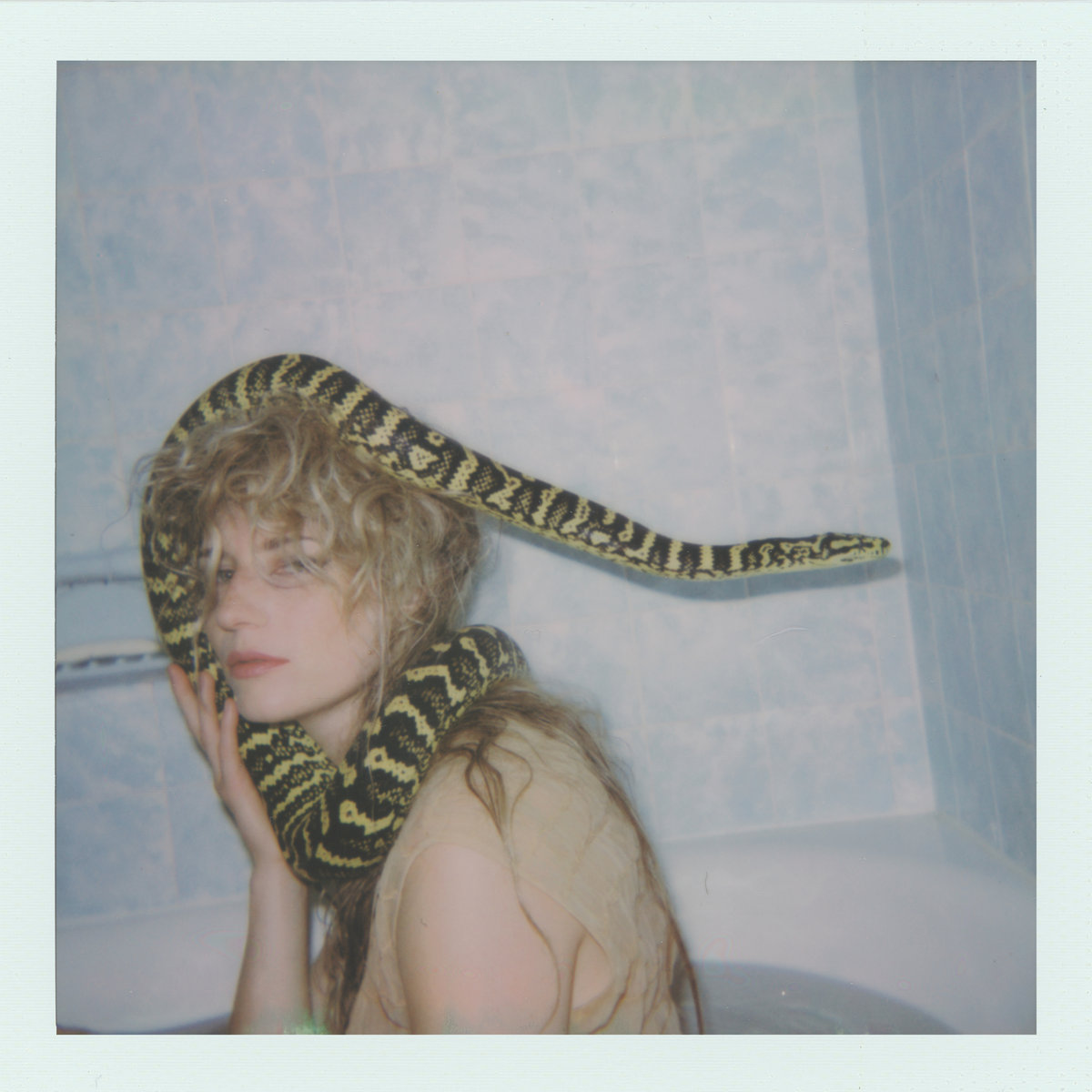
The video accompaniment directed by Matthew Hoffman was filmed in upstate New York and was shot on super 8 film giving it that delightfully grainy, jolting finish. We follow Taraka through an abandoned mental institution, reenacting a sort of unhinged imagining of the garden of Eden, with snakes, flower crowns, grapes and a filter bed frame. Strange? Yes. Delightful? .
Taraka Larson formerly of Prince Rama branches out on her own with debut solo single “Psychocastle” with her debut album “Welcome to Paradise Lost” confirmed for release October 8th via Rage Peace.
“Psychocastle” by Taraka. Directed by Matthew Hoffman and Taraka and shot on Super 8mm film in upstate NY.
Over the course of the decade, Meatbodies’ Chad Ubovich has been a perennial candidate for MVP of West Coast’s fertile rock scene. The LA native could be seen peeling off guitar solos in Mikal Cronin’s backing band, supplying the Sabbath-sized low end for Ty Segall and Charlie Moothart as the bassist for Fuzz, and, of course, fronting his own band Meatbodies. Today the recently dormant experimental noise/freak-rock outfit has announced their return with “333″ –– A corrosive stew of guitar scuzz, raw acoustic rave-ups, and primitive electronics that charts Ubovich’s journey from drug-induced darkness to clear-eyed sobriety.
“333″ simultaneously reflects on how the world he re-entered was still pretty messed up-if not more so. “These lyrics are dark, but I think these are things that a lot of people are feeling and going through” he says. “Here in America, we’re watching the fall of U.S. capitalism, and 333 is a cartoonish representation of that decline.”
That psychic tug-of-war plays out on opening track and lead single, “Reach for the Sunn” which is available today along with an accompanying video directed by Josh Erkman. On “Reach For The Sunn”Ubovich realizes that he’s not so much singing about his own path, but something much greater than himself as its distorted slow-motion creep leads to a chorus both celebratory and dispiriting: “Reach for the stars/reach for the sun/reach for the trigger/reach for the gun.”
Indie-rock talent Paisley Black has decided she has had enough and that is very evident in her new self-assured single, “Way I feel.” Detailing her frustration with a one-sided partnership, she fiercely takes back her power by walking away. With strong, passionate vocals skating atop gritty guitars and pounding percussion, she is bringing so much bold attitude and we are definitely here for it. Most of us know what it is like to feel unfulfilled in a relationship, making this rowdy rock track highly relatable.
This is crazy! My song “Way I Feel” is featured in Hyundai’s latest car ad for the all-new Santa Cruz. …..promoting awesome girls and WOMEN living their best life and going on the coolest journeys!!!.
The Texas native describes her eccentric sound as “60s garage soul”. Influenced by musical legends like Linda Ronstadt and The Doors, her music possesses a nostalgic, retro vibe while also maintaining modern sensibilities. Exuding an Amy Winehouse-esque style, her offerings burst with so much raspy soul. Unapologetic and in your face, with “Way I feel” she has made it clear exactly where she stands. That charged intensity is felt both lyrically and sonically.
Paisley Black’s new single is now available, “Way I feel” is the first single off her upcoming EP, “Show You Mine”.
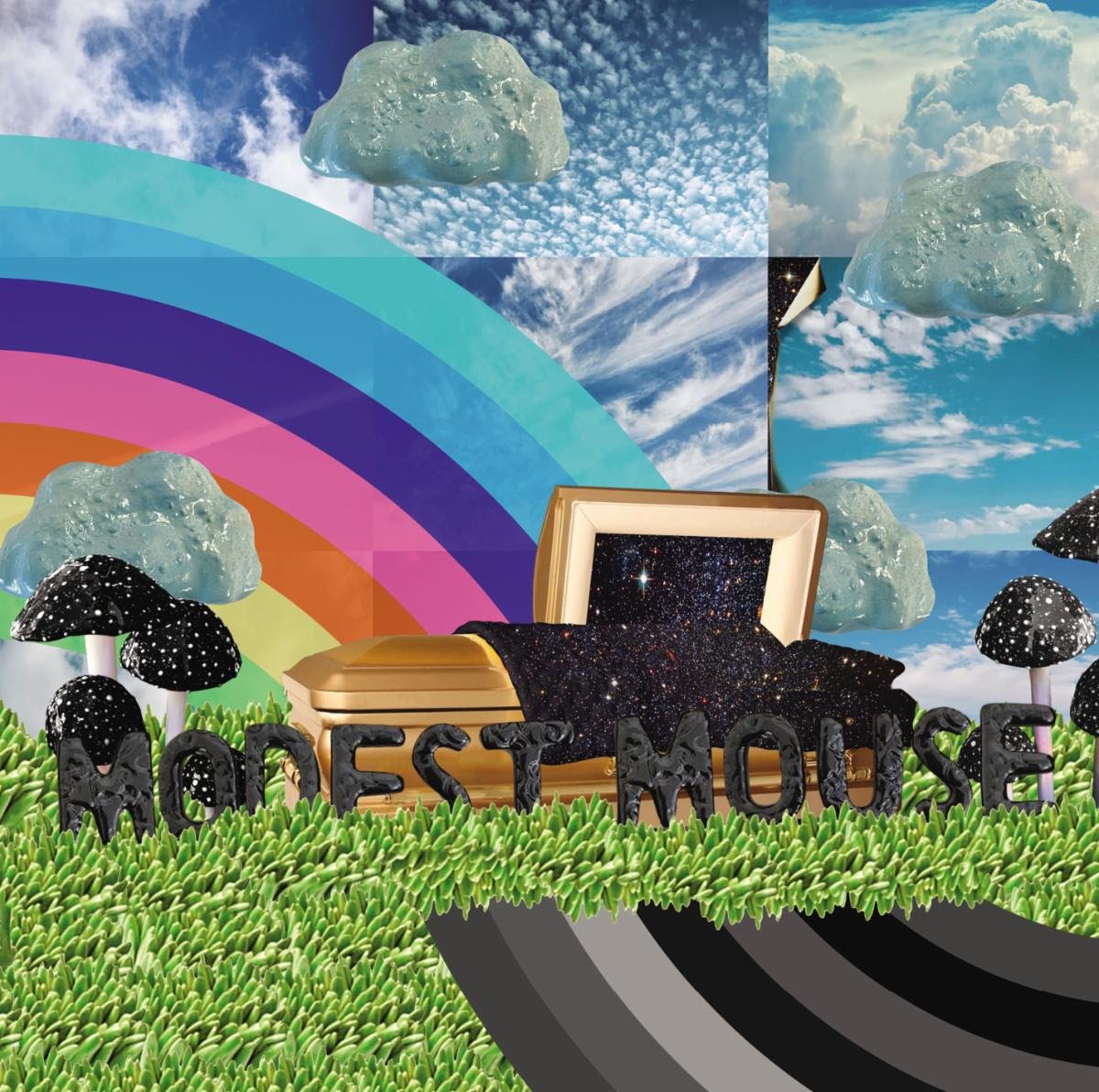
Returning with their first new album in six years, Modest Mouse present their anxiously awaited seventh full-length, “The Golden Casket“, via Epic Records.
The Golden Casket heralds another new chapter in the band’s unpredictable evolution. Produced with Dave Sardy and Jacknife Lee in Los Angeles and in Modest Mouse’s studio in Portland, the album hovers in the liminal space between raw punk power and experimental studio science, frontman Isaac Brock explores themes ranging from the degradation of our psychic landscapes and invisible technology, to fatherhood. The twelve tracks behave like amorphous organisms, undergoing dramatic mutations and mood swings that speak to the chronic tug-of-war between hope and despair that plays out in Brock’s head.
Modest Mouse still has a quirkiness to them here that pops up in both song titles (see “Never Fuck ASpider On A Fly” and “Fuck Your Acid Trip”) and instrument additions that includes mouth percussion from singer Isaac Brock on “Walking And Running” and lap steel and electric piano by Tom Peloso during “Transmitting Receiving.” All of these components has helped Modest Mouse build a growing fan base over the years but The Golden Casket does keep their edge tucked in a little tighter.
There are no stand out singles on The Golden Casket which makes the album more of a slow burner but compared to 2015’s Strangers To Ourselves, the album feels and sounds more complete, rewarding and what the band should sound like in 2021. I like that the group didn’t just try and make stadium rockers or charting singles without reason but opted their energy for an album that engages and challenges you around every corner. Even though I don’t feel that one track stands much taller than others, there are plenty of great moments like the harmonizing chorus that ends “We Are Between” or the horns that blare during “We’re Lucky.” There are also plenty of foot tapping songs that have a dynamic texture and Modest Mouse bounce to them that make the tracks jump out of your speakers. At times, the band is able to swirl clangs and shaking object bangs into the mix that gives off an unique surround sound.
With so many miles down the road since their late 90’s and early 00’s albums, I think as a fan you should be able to meet Modest Mouse where they have landed in “The Golden Casket” and recognizing they have a different fire burning today. The album flows well and with repeat listens you are reminded of the showman Brock has always been behind the mic. There are plenty pieces that jump out at you here and if it takes another six years to get an album from Modest Mouse, “The Golden Casket” will hold up very well to the test of time and keep you satisfied.
Key Tracks: “We Are Between” / “Japanese Trees” / “The Sun Hasn’t Left”








 The Fat Angel Sings