A closer look at the next title in the Esoteric RecordingsBe Bop Deluxe reissue series: Modern Music, 4CD/1DVD Deluxe Boxset Edition, released December 6th! . For an artist registered and branded as one of guitar heroism’s most innovative players, Bill Nelson is not one to be stuck in the past or focused on the present. Always inventing, always evolving, and always looking to the next thing (and the thing after that) the Yorkshire, U.K.-based guitarist and songwriter made himself and his legendary first ensemble Be-Bop Deluxe into an anomaly from their first record. With 1974’s glam-era debut Axe Victim,Be BopDeluxe added a progressive complexity and a daring density to the glittery genre, a dynamic previously unheard within Britpop’s most pomp and circumstantial sound. Nelson’s razor-sharp and soaring eletro-induced solos were a large part of that experimental esprit. Then and now, Nelson’s guitar scrawl sounds like no other. Increasingly catchy and chancy as time went on, 1976’s opulent Sunburst Finish and 1978’s Drastic Plastic are very much at one with their titles.
For all of its studio wizardry (produced by Nelson with John Leckie, eventually known for his work with Magazine and PiL), 1977’s Live! In the Air Age is Be-Bop Deluxe’s art-rock masterpiece: an elegant, sprawling mix of then-new, previously unrecorded and past work splayed across the dirtball nihilism of Brit-punk’s origin story. Recorded live on BBD’s 1977 tour just months before its release, “Live!” is fiery and hot wired for freshness. After they pressed their audacious 1977 concert LP, BBD stuck around for one more album (the aforementioned Drastic Plastic) before disappearing with Nelson moving forward and focusing on Cocteau-inspired solo work, another band (Red Noise), collaborations with fellow travellers in experimental electronic music (Yellow Magic Orchestra, David Sylvian, Roger Eno, Cabaret Voltaire), and an ongoing series of homemade ambient albums, previously unreleased epics, and other sonic explorations—all hung on a moon of fierce independence as an artist and as a releasing agent.
Nelson never looked back, until 2018’s four-album exploration of Sunburst Finish. That recently opened the door, thankfully, to a similarly sized four-LP “Axe Victim”, and now a whopping 15-CD/one DVD expansion of “Live! In the Air Age” to include every gig on that 1977 tour, along with freshly remixed and vividly remastered sound. Though an active blogging presence, Nelson doesn’t do many interviews, so our rare opportunity to speak with him is particularly choice.
Recorded in June and July 1976 at Abbey Road Studio Three, ” Modern Music” was the fourth album by Be Bop Deluxe and the second to feature the line-up of Bill Nelson (vocals, guitars, keyboards), Charles Tumahai (bass, vocals) ,Andy Clark (keyboards) and Simon Fox (drums). Following on from the success and critical praise for the band’s previous album Sunburst Finish, the album was once more co-produced by Bill Nelson and John Leckie.
Much of the material appearing on the album was conceived by Bill Nelson whilst Be Bop Deluxe were undertaking their first tour of the USA in March 1976. The wonderful and expansive Modern Music “suite” which dominated the album was inspired by Bill’s experiences of America, the disillusionment with the US music business and a longing for home. Beside the fine achievement of the suite, MODERN MUSIC also featured other fine songs such as Orphans of Babylon, Kiss of Light, The BirdCharmers Destiny and the epic Down on Terminal Street, all of which ensured that the album was a hit in both the UK and the USA.
This expanded reissue has been newly re-mastered from the original master tapes and features an additional 55 bonus tracks drawn from a stunning new 5.1 surround sound & stereo mixes from the original multi-track tapes by award winning engineer Stephen W. Tayler, previously unreleased out-takes from the album sessions, a BBC Radio “In Concert” performance from October 1976, along with a bonus CD of a previously unreleased “official bootleg” of a performance at The Riviera Theater in Chicago in March 1976 recorded for FM Radio on Be Bop Deluxe’s first US tour which features a rare jam entitled Bill’s Blues. The set also includes visual material taken from a session for BBC TV’s “Old Grey Whistle Test” show broadcast in November 1976.
Another highlight of this limited-edition boxed set is the lavishly illustrated 68-page book with many previously unseen photographs and an essay of recollections by Bill Nelson. Additionally, the set includes postcards and a replica poster. This special deluxe limited-edition boxed set of MODERN MUSIC is a fitting tribute to a fine band and the creative vision of Bill Nelson.
Re-mastered from the original master tapes with 55 bonus tracks drawn from stunning new 5.1 surround sound & stereo mixes, previously unreleased out-takes, BBC In Concert sessions, live performances & more!
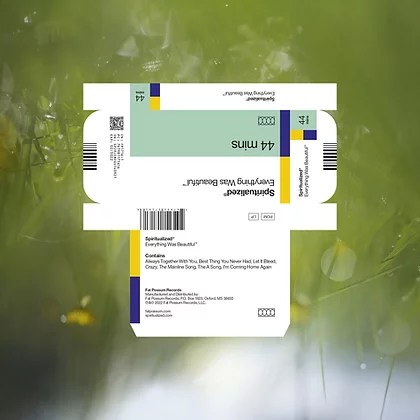
During lockdown last year, J Spaceman would walk through an empty “Roman London” where the world was “full of birdsong and strangeness”, trying to make sense of all the music playing in his head at the time. The mixers and mixes of his new record weren’t working out yet. Spaceman plays 16 different instruments on Everything Was Beautiful which was put down at 11 different studios, as well as at his home. He also employed more than 30 musicians and singers including his daughter Poppy, long-time collaborator and friend John Coxon, string and brass sections, choirs and finger bells and chimes from the Whitechapel Bell Foundry. Eventually the mixes got there and “Everything Was Beautiful” was achieved. The result is some of the most “live” sounding recordings that Spiritualized have released since the Live At The Albert Hall record of 1998, around the time of Ladies & Gentlemen, We Are Floating In Space.
Following this year’s acclaimed reissue of their classic first four albums, Spiritualized today announce news of their new studio album, Everything Was Beautiful, released 25th February 2022 via Bella Union Records .
One of the many eye-opening aspects of the pandemic, which we’re still in, has been understanding our relationships with solitude. Some people were comfortable staying inside for months, while others truly lost their shit. I mean, we all kind of lost our shit, and are still losing our shit, but what I’m trying to say is that some people lost their shit less, because they can adapt to isolation well. One of those people who seemed to cope alright was Spiritualized‘s J Spaceman. “I felt like I’d been in training for this my whole life,” Spaceman said in regard to this insane past year and a half years. Today the project has announced its latest album Everything Was Beautiful—seemingly the prequel to 2018’s Slaughterhouse-Five referencing And Nothing Hurt—which was finalized with Spaceman’s “solemn birdsong walks” at the pandemic’s beginning.
To mark the occasion the band have shared a visually striking and timely video for lead track and album opener, “Always Together With You”, directed by J Spaceman – and announced news of an extensive international tour running from March – May 2022 which includes a headline performance at London’s Roundhouse.
Spiritualized (aka Jason Pierce and backing band) released a new album, “Everything Was Beautiful”, via Fat Possum . Now that the album is out, we can share one of its album tracks that we love and wasn’t previously released as a single. We were torn between the album’s last two songs, both epic and long, but went with seven-minute penultimate track “The A Song (Laid In Your Arms)” over 10-minute album closer “I’m Coming Home Again” .
When the new album was announced in November, Spiritualized shared the song “Always Together WithYou,” . Then they shared its second single, “Crazy,” via a video for it. The album’s third single, “The Mainline Song,” was shared via a self-directed video.
“Everything Was Beautiful” has Pierce playing 16 different instruments, with more than 30 musicians and singers backing him up. His daughter, Poppy, is one of those musicians.
Pierce had this to say about the album in a previous press release: “There was so much information on it that the slightest move would unbalance it, but going around in circles is important to me. Not like you’re spiralling out of control but you’re going around and around and on each revolution you hold onto the good each time. Sure, you get mistakes as well, but you hold on to some of those too and that’s how you kind of…achieve. Well, you get there.”
Spiritualized are an English space rock band formed in 1990 in Rugby, Warwickshire by Jason Pierce (who often goes by the alias J. Spaceman) after the demise of his previous outfit, space-rockers Spacemen 3. The membership of Spiritualized has changed from album to album, with Pierce — who writes, composes and sings all of the band’s material — being the only constant member
Black Country, New Road only just released their debut album “For the First Time”earlier this year, and they’re not wasting any time with its follow-up, scheduling their sophomore LP for release early next year. It’s called “Ants From Up There”, and they’ve already shared the lead single, “Chaos Space Marine.” The experimental seven-piece have returned today with a simmering, guitar-based second track called “Bread Song,” which boasts a couple near-climaxes throughout its compelling six minutes. “We wanted to do the first chorus with no time signature,” vocalist Isaac Wood revealed in a statement. “I went to see Steve Reich do Music for 18 Musicians and there’s a piece where a bar length is determined by the breath of the clarinet player, they just play until they run out of breath. I wanted to try that with the whole band, where we don’t look at each other, we don’t make too many cues, we just try and play without time—but together.”
Isaac Wood (vocalist): “We wanted to do the first chorus with no time signature. I went to see Steve Reich do ‘Music For 18 Musicians’ and there’s a piece where a bar length is determined by the breath of the clarinet player, they just play until they run out of breath. I wanted to try that with the whole band, where we don’t look at each other, we don’t make too many cues, we just try and play without time, but together.”
Another notable performance from the most fascinating new band of 2021. Wood’s feverish and woeful vox leads a sort of slow-moving death march growing in tenseness along the way before just fading out. Magnetic stuff!
Experimental 7-piece from London producing a hypnotic mix of prog and math rock, jazz, post-psych-punk, and other musical roads.
In February of this year, they impressed big time with their debut full length For The First Time entering indie land by the big gates. New album: ANTS FROM UP THERE. Out: 22nd February 2022
Taken from the album ‘Ants From Up There’, released 04th February 2022 on Ninja Tune Records:
Los Angeles singer-songwriter Christian Lee Hutson has shared his first new music of the year with a new track called “Strawberry Lemonade” with a lovely Waley Wang–directed video that takes place in Washington Square Park in NYC. The track was produced with Phoebe Bridgers and Conor Oberst, featuring vocals from the latter and Sharon Silva. Hand Habits’ Meg Duffy also added electric guitar, and Bright Eyes’ Nate Walcott plays some piano and trumpet. It’s quite a nice family affair!
One of Hutson’s most brilliant tracks to date, the single follows his 2020 album “Beginners”. It starts with him detailing a dream. “A series of vignettes about memory, letting go and holding on,” he explained in a press release. “I remember talking to a friend, around the time that I wrote it, about the relentless repackaging of 1960s culture; so some of that ended up in there. The laugh at the beginning of the song is my friend Harry who plays bass on the song.” After all the compelling imagery, Hutson slips in unforgettable sage words. My favourite: “Pain is a way you can move through time / And visit people who are gone in your mind.”
“I want people to feel like it’s okay: we’re all here fucking up all the time; we’re all just learning and living, and it’s going to be all right,” Hutson added. “I don’t even know if I fully believe that, but it’s the voice I always wished I had in my life.”
On his major label debut, Hutson is anything but a beginner. His intricate guitar work, evocative sense of melody and harmony, along with production by Phoebe Bridgers brings about a first record that exceeds expectations. Three traces have led me here. First, Nathaniel Walcott, who wrote the awesome string arrangements for five of the tracks. He is the keyboardist in the band “Bright Eyes”, led by Conor Oberst. Second, the backing vocals sung by Phoebe Bridgers, who is co-founder of a duo named “Better Oblivion Community Center” – with Conor Oberst. Third, who contributed the harmonica? Well, Conor Oberst. So on the bottom line.
All songs written by Christian Lee Hutson except “Single For The Summer” written by Christian Lee Hutson and SharonSilva.
While the Lily’s haven’t released a new record in over a decade formed in Washington, D.C in 1988., bandleader Kurt Heasley has reignited the flame in recent years, reissuing their first two albums and putting together a new line-up of the group for live shows. There is more archive digging on the way: earlier this month, they announced that Lilys’ great, ’60s pop-inspired 1999 album, “The 3-Way”, would be getting its first-ever vinyl pressing via Sundazed Records.
An ever-morphing vehicle for songwriter and sole consistent member Kurt Heasley, Lilys have swung wildly between genre and sound in different phases of their career. Moving rapidly through bandmembers, home bases, and musical fixations, Heasley took the Lilys through adventurously overdriven shoegaze on their 1992 debut “In the Presence of Nothing” before taking a sharp turn toward Kinks-indebted mod pop on 1996’s “Better Can’t Make Your Life Better”. Later releases like 2006’s “Everything Wrong IsImaginary” forged new ground while calling on shoegaze elements from the band’s early days.
And now comes word that their 1994 EP, “A Brief History of Amazing Letdowns”, is also being reissued, this one by FrontierRecords who also reissued The Lilys’ “Escame the Photon Band” and “In the Presence of Nothing” a few years ago.
Lilys’ etheric second full-length album, “Eccsame The Photon Band“, has become a shoegaze collector’s favourite. Out of print for twenty years, the highly sought-after, rare first-edition vinyl is nearly impossible to come by. This 21st anniversary re-release includes original artwork and has an enhanced dynamic range with the re-ordering of songs. “The Hermit Crab” has been moved and now begins side two, allowing for a deeper cut of side one and therefore increased audio fidelity, creating a more exciting listening experience than previously available. “Eccsame The Photon Band” has been described as “one of the Lilys‘ best,” “a hallucinatory revelation” and “a masterpiece of mood, atmosphere and production.” Originally released 1994.
The Lilys are a very underrated band that sit right next to MBV in shoegaze conversations. Their second album is near perfect and a great follow-up to their excellent debut.
Heasley relocated to Boston and Lilys took their first dramatic turn with Better Can’t Make Your Life Better. The album completely abandoned the dreamy shoegaze sounds the band had just a few years earlier, opting instead for songs strongly influenced by the Kinks, the Small Faces, and other British mod pop bands from the mid-’60s. This phase of the band’s style took them through the next few years and resulted in two EPs and their 1999 album “The 3 Way“, which received critical praise and was their sole release on major-label Sire.
“Amazing Letdowns” contains one of their best-known songs, “Ginger” (which appeared in a ’90s CK One commercial and a ’00s Cadillac ad), It was among the list of Best Shoegaze EPs of the Early ’90s, and has been woefully out of print pretty much since it was released, and hasn’t been on streaming services either. This new reissue will be out February 12th and comes in expanded form, taking five of the six songs from the original EP and replaces the sixth track (which was “Glosseder” on the vinyl and “Evel Knievel” on the CD) with previously unreleased song “G. Cobalt Franklin.” Additionally, the reissue adds four songs (recorded in 1994) that were on their 2000 split EP with Aspera Ad Astra.
These will not be the last Lilys reissues we’re likely to see, either. Three more albums — 1996’s “Better Can’t Make Your LifeBetter” (which contains their UK Top 20 hit “A Nanny in Manhattan”), 2003’s “Precollection” and 2006’s “Everything WrongIs Imaginary” — have yet to get the reissue treatment, and there are dozens of unreleased (in some cases, unfinished) tracks from the last 12 years that have yet to see the light of day, too. One of those unfinished tracks ended up being completed and realeased as “Unheard Of Curiosities” for the “Lodge 49” soundtrack, and was the first new Lilys song in ages.
Kurt talk’s about the reissues, “Lodge 49“, getting songs placed in TV commercials, playing Top of the Pops, the possibilities of future tours once COVID is out of the way, and a whole lot more. A hyper-intelligent, hyper-literate and very funny person, Healy talks at lightning speed, free-associating and swerving through tangents.
Lilys have been reissuing much of their ’90s catalogue on vinyl. We got “In The Presence Of Nothing” and “Eccsame the PhotonBand” a few years ago, and this year saw “A Brief History Of Amazing Letdowns” and “The 3-Way” get repressed. To complete the collection,1996’s “Better Can’t Make Your Life Better“, is also getting a vinyl reissue via Sundazed Records.
Trailer for the as-yet-unreleased documentary film on Heasley and his remarkable music. Kurt was asked about this film in an online interview and this is what was said: Q-Do you know if the film about Lilys, “Everything Wrong is Imaginary”, will be released? It seems pretty fascinating from the trailer.
The television series “Lodge 49” used some of our songs, and awoke the current incarnation of Warner Music. [Both Better Can’tMake Your Life Better and The 3-Way came out via Warner imprints/subsidiaries Che/Sire, respectively.] This was the third Warner Bros. Records owner since ’99. Like the guy who owned Warner Bros sold it to Edgar Bronfman Jr a couple of years after we were done on the label. Then Len Blavatnik bought it from Bronfman, Jr. And when you have that level of top down reorganizing, there’s nothing organizationally left. So I basically flew out to LA and I was like, “Hey, I don’t mean to be a total douche, but that Kurt Heasley, that’s me. I’m Kurt, that guy from this television show,” They realized after six months of not taking any payment, “Oh wait, this is one of ours.” And a couple of days after Business Affairs got wind that Che/Sire was “one of theirs,” they took the check. A few days after that, [those albums] went up on iTunes.
We’ve just been in contact like, “Okay. Hi, like I said, I’m Kurt.” And so basically all year was attempting to discover our current relationship — Lilys current relationship — with the Warner Bros. products. That’s what I have to refer to them as, they’re no longer records. They’re these things in a database, in a filing system probably in Ohio. Something really just dark. Not Ohio. Ohio’s great. I’m talking about Warner Bros’ filing cabinets. As we were leaving LA, Sundazed reached out to Rhino Records’ Jason Jones who said, “Oh, this is amazing. Sundazed wants to do a [reissue].” I was like, “Wow, that’s really incredible.
My first Beau Brummels record was a Sundazed pressing. So I’m like, “Okay well, there we go.” Beau Brummels were so hot back in ’91, you had to buy a reissue. [laughs] Introducing the Beau Brummels, listen to that shit. That is Love Rock 101. I’m like, “Oh, it’s true, man. Wait a minute. Did Sly Stone produce this? What the fuck was going on in San Francisco?” [Laughs] .
“Better Can’t Make Your Life Better” was originally released via Elektra Records subsidiary Primary Recordings and found The Lilys shifting from the sludgy/shoegazy sound of their indie label albums into more of a jangly ’60s psych-pop / British Invasion vibe akin to The Kinks, The Monkees and The Creation. The album also gave Lilys a belated UK Top 20 hit with “Nanny in Manhattan,” after the song was used in a Roman Coppola-directed Levis ad in 1998. More recently, a couple of the album’s songs made it onto the soundtrack of AMC series Lodge 49.
2012 saw The Lily’s re-imerge with the Bowie-flavoured song “Well Travelled Is Protest” on a split-7″ with Big Troubles. By the 2020s, the band’s earliest albums had become increasingly rare collectors’ items, and various reissue campaigns were launched.
This is the first vinyl pressing of the album since its initial release, and has been remastered for vinyl by Joe Lizzi and cut and pressed at Third Man in Detroit. It also features restored artwork. You can preorder Better Can’t Make Your Life Better in the BV shop, and listen to the album –watch the “Nanny in Manhattan” video .If you haven’t heard the “Eccsame the Photon Band” album, give it a listen.
Heasley has collaborated with other acts such as Nobody, appearing on the band’s 2005 single “Fancy”, a cover of the Kinks song, and The Brian Jonestown Massacre, singing “Tschuss” on their 2003 album “And This Is Our Music”. He also contributed “effects” to Poole’s “Snowcicle” on the band’s Alaska Days album, and performed on Apples In Stereo’s 1995 album “Fun Trick Noisemaker“, and with Neko Case’s 2009 album Middle Cyclone.
Albums:
In the Presence of Nothing (1992),
A Brief History of Amazing Letdowns (1994) (10″ mini album),
Eccsame the Photon Band (1994), SpinART, reissued in (2015),
Better Can’t Make Your Life Better (1996),
The 3 Way (1999),
Zero Population Growth: Bliss Out Volume 15 (1999),
Precollection (2003), Manifesto, reissued in Europe with 3 bonus tracks as The Lilys (2004), Rainbow Quartz
Everything Wrong Is Imaginary (2006),
He has also produced recordings by other artists including The Asteroid#4 (Apple Street: A Classic Tale Of Love And Hate, King Richard’s Collectibles), The Ladybug Transistor,
It’s been way too long since the Table Turned on the first album from The Dentists. Originally released in 1985 by the record label Spruck. The title is a reference to the famous BBC TV commentary made during the closing moments of the 1966 FIFA World Cup Final. What a spectacularly amazing album this is, with solid song writing and just the right amount of 60’s influence on the 80’s indie jangle rock sound. The song “Strawberries Are Growing in My Garden (And It’s Wintertime)” was also released as a single; years later it was still the group’s best-known song.
As I recall, I have my old friend Gary Todd to thank for introducing me to The Dentists, as a Belgian friend of his had sent him a copy of their debut 7″ EP back in the mid-80’s and he played it for me while visiting him in his downtown LA loft as he was teaching me about these new fangled home computers that everyone was getting into. One listen was all it took for me to search out anything I could find from the band, and “Some People Are On The Pitch…” fulfilled every promise made by that 7″.
Sounding like they time-travelled in from 1966 or so, picked up a couple of tips from the Smiths, and were let loose in the studio with the legendary Joe Meek behind the board, the Dentists’ first record, “Some People Are on the Pitch They Think It’s All OverIt Is Now”, was released on tiny indie label Spruck in 1985. It is an assured and exciting record informed by the sounds of the ’60s garage, folk, and psychedelic scenes (the raw sound and pounding beats, jangling 12- and six-string guitars, whimsical lyrics, and fuzzy edges, respectively), but thoroughly modern too (the Medway-inspired raw guitar sound, the at times fey and melancholic vocal stylings of Michael Murphy, the almost punk attack that the whole record has). The band plays with fire and fervor throughout, Bob Collins‘ guitar is like a live wire chiming sweetly one minute, drawing blood the next, the rhythm section is tight and tough, the vocal harmonies are spot on, and Murphy balances his moments of introspection with lots of light hearted and nearly jaunty warbling.
All of which would mean nothing without songs, and the group delivers there too. The up-tempo songs (“Flowers Around Me,” “I’m Not the Devil,” “I Had an Excellent Dream,” “Tangerine,” “Tony Bastable v John Noakes”) sound like the Byrds if they had formed in the wake of the punk explosion of the ’70s, hooky and exciting with the rough edges left on and the guitars bubbling and slashing all around. These songs belie the image of being quirky psych-fops that the band somehow ended up being saddled with. The ballads and mid-tempo songs are just as good; tunes like “Kinder Still,” “Mary Won’t Come out to Play,” and “Everything in Our Garden” have haunting melodies and Murphy does melancholy very well, some would say even better than a certain other ’80s singer whose last name begins with M. Indeed, place Some People up against the debuts of any ’80s guitar pop band and the match would end up knotted at least, the opponents trounced in most cases.
Against the best album of any ’80s guitar pop band even, because this is the best album the Dentists made. The blend of inspired songcraft performance and sound (and the fact that not too many people heard it) make the record a lost guitar pop classic. [Much of the album was reissued on Homestead’s excellent 1992 comp Dressed. Only “Everything in Our Garden” and “Back to the Grave” are missing.]
Every song is a gem, and if you like this sound and don’t have this album I suggest you search out a copy post-haste, though prepare to spend a few shekels in the process. Rev-Ola released it on CD in 2005 with the three 7″ tracks added as a bonus and I really should have grabbed a copy when it came out as it’s now an expensive out of print disc. According to Discogs the Trouble InMind label in the US did a vinyl re-issue in 2013, but those are also out of print and even more expensive.
So, it would seem it might be time for another re-issue of this brilliant LP.
LOVE with Johnny Echols make a return visit to the UK after their sell-out tour of 2019 to celebrate the 55th anniversary of the release of “Forever Changes“.
Johnny Echols says “We had planned that the 2019 UK tour would be our last overseas tour. None of us are spring chickens but this crazy time in lock down has made us realise what’s important and what we are here to do. We have missed playing for our fans, especially the UK fans, so how could we turn down the opportunity to come back and do it again?”
LOVE with Johnny Echols sees Arthur Lee’s longest serving band, Baby Lemonade, return to the UK in June and July 2022 to perform classic songs from the LOVE catalogue and to celebrate 55 years of the seminal album, LOVE with Johnny Echols make a return visit to the UK after their sell-out tour of 2019 to celebrate the 55th anniversary of the release of “Forever Changes“.
This tour features special 3-night residences in Liverpool and London where LOVE, will perform “Da Capo” and “Love” with Johnny Echols make a return visit to the UK after their sell-out tour of 2019 to celebrate the 55th anniversary of the release of “Forever Changes“. will be played in their entireties. All other shows will feature “Forever Changes“, hits and deep cuts from the Love catalogue.
From 1993 until Arthur Lee’s death in 2006, the band Baby Lemonade were an essential part of the renaissance of LOVE’s music. This iteration of LOVE saw many sold-out tours, two sell-outs at the Royal Festival Hall as well as back-to-back Glastonbury performances and an appearance on Later with Jools Holland.
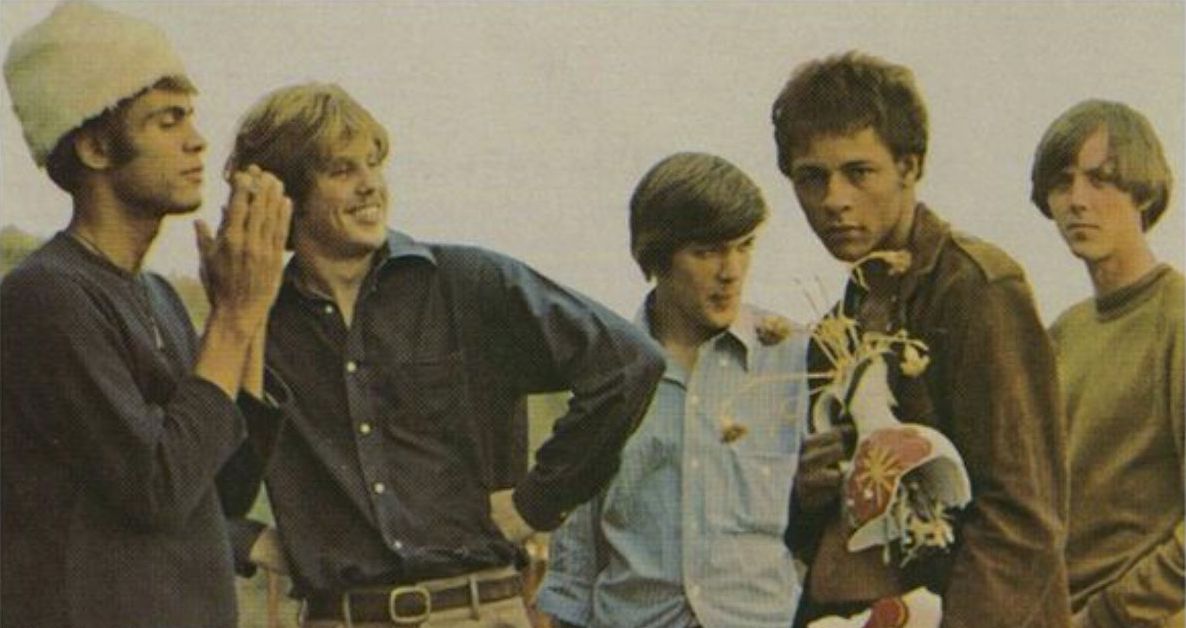
Johnny Echols and Arthur Lee were childhood friends whose families both moved from Memphis to Los Angeles. The teenage Johnny & Arthur teamed up to form the groups Arthur Lee & The LAG’s and the American Four before they formed LOVE in 1965. The classic LOVE line up featuring Johnny disbanded in 1968. Johnny reunited with Arthur Lee in 2005 to perform with LOVE once more.
Baby Lemonade formed in 1992 by Rusty Squeezebox, Mike Randle and David “Daddy-O” Green. In 1993 the band landed the gig of a lifetime opening up for LOVE. That show was the last for that incarnation of LOVE as Arthur replaced them with Baby Lemonade. Baby Lemonade released records on Sympathy for the Record Industry, Munster and Big Deal between 1993 and 2001.
In 2005 the LOVE line up once again featured Arthur’s childhood friend and founding member Johnny Echols on lead guitar who returned after a 37-year absence. In July of 2005, Arthur was diagnosed with Leukaemia and after a brave battle he passed away one year later. Arthur’s last show was with Baby Lemonade and Johnny Echols on June 23rd at San Francisco’s Cafe Du Nord. The world had lost a true music legend.
In 2022 The LOVE band featuring Johnny Echols will return to the UK to celebrate the music of Arthur Lee & LOVE.
From the release of Love’s March 1966 debut single, “My Little Red Book” b/w “A Message to Pretty,” it was clear the Los Angeles Group was a breed apart from its contemporaries. The group, led by Arthur Lee, built much of its music upon a snarling, sneering proto-punk aesthetic not completely removed from the style of bands like the Seeds. But just under the surface, there lurked a deeper complexity and nuance.
There had been multi-racial bands before Love: though they never achieved any kind of commercial success, the short-lived Rising Sons were led by Taj Mahal and Ry Cooder. But Love had a black man as its primary writer and front man, and enjoyed the higher profile and accompanying marketing boost that came with having signed to Elektra Records, home of (among others) the Doors.
Still, Love would manage only one Top 40 single in its time together, 1966’s “7 and & Is,” a track off of the band’s second album, Da Capo. That album also displayed Love and Lee’s musical ambitions: a side-long track, “Revelation,” ran nearly 19 minutes. This was a full 18 months before Iron Butterfly released its own opus, “In-a-Gadda-Da-Vida.”
As a piece of music, “Revelation” wasn’t especially noteworthy or ground breaking, but it did show that Lee and his band mates had artistic/creative inclinations beyond the three-minute pop single. And the band’s third full-length, “Forever Changes”, released in November 1967, would represent the apex of those ambitions.
[Note: A 4-CD/DVD/LP 50th Anniversary edition was released in 2018. The set features a few firsts for the album, including the CD debut of a remastered version made by its original co-producer and engineer Bruce Botnick, as well as the first-ever release of the mono version on CD. Also included are alternate mixes of the album, as well as a selection of rare and unreleased singles and studio outtakes.
The album opens with Bryan MacLean’s “Alone Again Or.” The track features a Spanish-flavoured guitar figure played by the band’s Johnny Echols. Subdued percussion and a trilling string section join to support Lee’s gentle vocal, one that has more in common with Johnny Mathis than Mick Jagger. As the song reaches the end of its first verse, bursts of brass reinforce the south-of-the-border ambience. In fact the horns sound like nothing so much as A&M Records’ flagship act, Herb Alpert and the Tijuana Brass. Yet somehow, the non-rock elements combine in a way that makes “Alone Again Or” a sort of sophisticated, baroque take on rock music. The song’s arrangement makes effective use of dynamics, with instruments added and subtracted from the mix in ways that highlight the song’s virtues. And in a significant departure from the rock mindset, the solo break in “Alone Again Or” features not a guitar but instead a stirring trumpet solo, backed by strings.
“A House is Not a Motel” continues with the use of acoustic guitar as a central instrument. An insistent drum pattern and a subtle yet busy bass line part support Lee, who once again begins singing in a lilting manner. But as the song progresses, he builds in intensity, eventually reaching a rock ’n’ roll roar. Against an emphatic series of chords, Echols takes a pair of lean, sinewy electric guitar solos. For most of its first two minutes, the overall feel of “A House is Not A Motel” is one of restraint. But after a propulsive drum fill from Michael Stuart, multiple overdubbed distorted lead guitars explode into the mix; amid whoops and hollers from the band, those solos take the song to its fadeout.
The melancholy “Andmoreagain” plays up the album’s baroque character. Strings and acoustic guitars are the central instruments, and Lee’s vocal channels Mathis more overtly than anywhere else on the record. “The Daily Planet” is built around a vigorously strummed acoustic guitar, with deft stabs of chiming guitar and a beefy bass line. The mid-tempo rocker has a feel closer to the Byrds; though he’s not credited on the album, Buffalo Springfield guitarist Neil Young oversaw the track’s arrangement.
But on both “Andmoreagain” and “The Daily Planet,” it’s not really Love; instead Lee is backed by session musicians. Co-producer Bruce Botnick brought in Wrecking Crew players when he found the band unable to play what was required. Apparently, the shock of being sidelined would eventually lead the band members to get their collective act together; the remaining tracks on “Forever Changes” would feature the band (plus the string and brass players as needed).
That said, the band members take a back seat on the subtle “Old Man.” Cellos and violins are at the centre of the fragile arrangement, based upon an idiosyncratic melody from Lee. Brass and tinkling piano are added to the mix in the song’s second half. And “The Red Telephone” is almost a continuation “Old Man.” With a similar arrangement and a (different) odd melody, it features a stronger beat and an insistent harpsichord part. The seamless interplay between acoustic guitar leads and the string players underscores the fact that the fiddles and cellos were part of Lee’s arrangement ideas from the beginning of the project. Lee’s spoken lines at the song’s end give “The Red Telephone” a vaguely psychedelic feel, but that is punctured by Lee’s “All o’ god’s chillen gots to have their freedom,” delivered in a kind of self-parody of black American dialect.
Near unanimous in their praise for Forever Changes, critics often point to MacLean’s “Alone Again Or” as the strongest track on the record. But a strong case can be made that Arthur Lee’s “Maybe the People Would Be the Times or Between Clark and Hilldale” deserves consideration as well. The brass arrangement in particular fits the song perfectly, helping provide an air of mystery and suspense. It helps, too, that for this track Lee had written a more straightforward melody. The instrumental break features a series of musical dialogues, first between acoustic guitar and the brass, then between electric guitar and the horns, and finally between Lee’s vocalizing and the auxiliary players.
The baroque arrangement that opens “Live and Let Live” is jarring when set against Lee’s lyrics about snot on his pants and threatening a bluebird with a gun. The song soon segues into a harder, rock-flavoured feel; throughout its five-plus minutes, “Live and Let Live” shifts between the two styles; the bridges rock even harder, and toward the song’s end, stinging lead electric guitar makes one of its rare appearances on Forever Changes. By the hard-charging final moment of the tune, its bears no resemblance to the manner in which it began.
As effective as those rocking moments may be, it’s on the album’s gentler tracks where Love truly shines. “The Good Humor Man He Sees Everything Like This” is a case in point. The tune sports another odd melody from Lee; his vocals twist and turn amid an intricate pizzicato string and brass arrangement that rivals “Alone Again Or” in its understated brilliance.
“Bummer in the Summer” is Forever Changes’ outlier track; Lee adopts a sneering, spitting vocal demeanor that’s closer in style and character to “7 and 7 Is” and “My Little Red Book” than it is to anything else on the album. The arrangement is similar to the Leaves’ reading of “Hey Joe” mixed with a bit of Buddy Holly’s “Not Fade Away.” Other than session player Don Randi’s piano, the track doesn’t feature any auxiliary musicians.
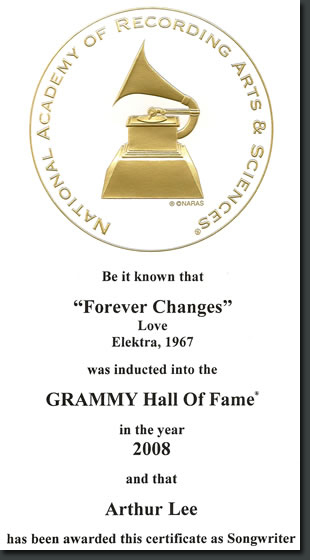
Forever Changes was inducted into the Grammy Hall of Fame in 2008
Forever Changes concludes with “You Set the Scene,” a track built upon crystalline acoustic guitar picking, an insistent bass line and some sawing cellos. Lee’s double-tracked harmony lead vocal is among his best work on the record. In the place customarily occupied by a guitar solo, a soaring string ensemble arrangement, punctuated by brass, provides a stirring conclusion to the album. As the song winds toward its end, the majestic brass and string parts build to a crescendo, and then fade to silence.
Over a decade into their existence, Chastity Belt remains true to itself. It’s a joke told in a college town that became a living, breathing rock band. It’s a quartet of four friends–Julia Shapiro, Lydia Lund, Gretchen Grimm, and Annie Truscott–in dialogue with each other and the world. Across four albums to dazzling effect, their work stands as a deeply moving extended meditation on parties, relationships, power dynamics, sincerity, and aging–all delivered without even a hint of heavy-handedness.
Chastity Belt is a real band formed in Walla Walla, WA by Julia Shapiro (guitar, vocals), Lydia Lund (guitar), Annie Truscott (bass), and Gretchen Grimm (drums), now residing in Seattle, WA and Los Angeles, CA.
“Fake” / “Fear” the band’s new single, picks up where their self-titled fourth album left off. “Fear” snarling riff, soaring chorus, and Moby-Dick imagery came to singer and guitarist Lydia Lund after she dreamt of what she described as “gut-wrenching fear” caused by a “neverending series of unknowns.”
After recording instrumentals with engineer Samur Khouja, Lund tracked her vocals while visiting her parents, repeating the chorus, “It’s just the fear,” over and over with increasing, soaring intensity.
In her words: “My mom knocked on the door and asked, ‘Is there anything you want to talk to me about? Is there something you’re afraid of?’ At that point, I realized she thought I was doing some kind of primal scream therapy. In a way, I guess I am…honestly, feels pretty good!”
Like “Fear,” a mantra sits at the heart of “Fake,” on which Julia Shapiro examines her inability to be vulnerable. “I’m a fake,” she sings repeatedly, as she takes stock of a situation in which all language broke down and communication failed. “The song is about not being able to be honest with someone and say what you mean,” she explains. “I wrote it because I couldn’t express in words how I was feeling.”
These two songs emphasize the dual nature of Chastity Belt: interior and exterior, catharsis and introspection, play and hesitation. Yet more than anything else, they are the work of four friends with the unique ability to render heady emotional territory lighter than air and the power to make that feeling universal.
“Island Family” is the fifth album from Isle-of-Eigg dwelling electro-acoustic psych-pop wonder Pictish Trail, AKA Johnny Lynch. A strange, unpredictable, sardonic and yet deeply personal record inspired by all from Fever Ray to The Flaming Lips, Liars, Mercury Rev and Beck, “Island Family” is Pictish Trail’s contrarian view of arcadia; a search for the euphoric in the bucolic, bound up in sometimes conflicting ideas and feelings around nature and environment, sincerity and artifice, escapism and belonging. It’s an album about how no man can remain an island, however hard he might try.
Released by Fire Records, with support from Johnny’s own label Lost Map, and produced by long-term collaborator Rob Jones (The Voluntary Butler Scheme, The Gene Dudley Group), ‘Island Family’ opens with its title track, a song of death, ghosts and the ties that bind, fusing abrasive electronic beats with a tongue-in-cheek fireside folk refrain and the haunted ice cream van melody of a digitally reincarnated traditional Scottish jig. A purgative surrender to nature’s whim driven by a clattering machine drumbeat rolled in a puddle of filthy dirty fuzz, ‘Natural Successor’ is five-and-a-half-minutes of cathartic churning bass.
‘In The Land of The Dead’ is an eight-bit glitch-core reflection on island party excesses spasming into existential dread and regret, suitably accompanied by a funereal mariachi band. It’s followed by the epic ‘It Came Back’, the understated verses and arms-aloft falsetto chorus of which are accompanied by a tense, foreboding bass-driven electro hip hop instrumental with (spoiler) a brain-shattering industrial-metal meltdown. ’Melody Something’ is the album’s purest moment, a cautiously uplifting solar-powered-ballad about losing track of time in the cycle of the seasons, and the gap between memory and reality. Shapeshifting closer ‘Remote Control’ is a channel hopping cabin-fever-dream flipping from warped boyband ballad to deep-fried fuzz pop.
“One of my favourite artists” Lauren Laverne, BBC 6 Music
Slow Pulp are a great band. I recently thought, “Huh, we don’t talk about Slow Pulp’s 2020 album “Moveys” enough.” That record found the Chicago rockers combining playful melodies with unexpected lush arrangements, all while maintaining their love of noise. Today, they’ve returned with another single that we also shouldn’t sleep on called “Shadow,” and it continues that distortion-underlining cheer that the group does so well. There’s a bit of flutage going on, and Emily Massey’s vocals soar, collide, and double in size like an unending echo.
“Shadow was written on the tail end of recording Moveys in the Spring of 2020,” the band explained about the new single. “This song is about feeling like you’re out of control, like there’s a certain part of you that doesn’t seem to want to work with the rest.”
Check out their upcoming tour dates and listen to “Shadow” Written by Slow Pulp Performed by Henry Stoehr, Theodore Mathews, Alexander Leeds, Emily Massey






 The Fat Angel Sings