The David Bowie Estate announced today that a series of releases from David Bowie’s back catalogue have been remixed and reimagined in 360 Reality Audio–a new music experience driven by Sony’s spatial sound– and will be released on 360 Reality Audio-supported streaming platforms The remixed LPs include Bowie’s LP Space Oddity, which is already out with 360 Reality Audio.
The audio mixes to be released include “Heathen”, “Reality”, “A Reality Tour (Live)”, “The Next Day”,and★ (pronounced “Blackstar”) along with “Space Oddity”. The albums were all mixed by long time Bowie producer Tony Visconti. They will be available to stream in 360 Reality Audio starting January 21st on Amazon Music Unlimited, Deezer and TIDAL.
The announcement comes in conjunction with Bowie 75, the extended celebration of the late artist’s 75 birthday on January 8th, 2022, which features two pop-up locations in London and New York fully equipped with 360 Reality Audio listening experiences, which makes it possible to listen to the songs “in a lifelike music experience” according to a press release.
Additionally, the Bowie Estate and Sony are making four archival live performance recordings that have also been mixed in 360 Reality Audio. The four songs come from Bowie’s “A Reality Tour” and feature live video – they’ll be livestreamed today, January 6th via David Bowie’s Youtube channel.
“The fan response to Bowie 75 has been nothing short of amazing,” said Lawrence Peryer, Producer of Bowie 75. “David was always on the cutting edge of the latest developments in technology, so it was a natural fit to collaborate with Sony’s 360 Reality Audio team to bring fans a whole new way to experience his music. The reimagining of David’s music, which can be experienced at the pop-ups or via streaming, has given his lifelong fans and new listeners alike a reason to celebrate.”
The Bowie 75 pop-up locations are at 150 Wooster Street, N.Y., just a few steps away from Bowie’s long time downtown New York City neighbourhood, and 14 Heddon Street, the London location where the cover of “The Rise and Fall of Ziggy Stardust and the Spiders from Mars” were shot.
Siouxsie and The Banshees weren’t exactly a band that rose from the embers of punk, as many would believe, more a group forged by the roaring fires of the genre’s first incendiary moments. Taking the stage with a rag-tag band that included Steve Severin on bass and Sid Vicious on drums, the first iteration of Siouxsie Sioux’s band The Banshees took the stage at the first-ever punk festival at The 100 Club in 1976. Ever since that show, a performance which largely consisted of heavy notes and the Lord’s Prayer being yelled at a searingly high volume, the band has been the foreword in avant-garde rock.
A part of the Bromley Contingent, a group of punks who had a rather large hand in the formation of the movement, Siouxsie was always destined to be a star. As well as showing up as part of the Sex Pistols entourage for their iconic four-letter-laden appearance on Bill Grundy’s “Today” show, Siouxsie has always found ways to cut herself apart from the rest. She has, both with and without her band, been a consistent and continual pursuer of artistic freedom and spreading her message. Transformed and validated when David Bowie’sZiggy Stardust album came along in 1972, SusanBallion of Chislehurst, got her first taste of night life when accompanying her go-go dancer sister to work, flaunting provocative fetish images – self-described “armour” – as she found sanctuary in London’s underground gay clubs. She met like-minded misfit Steven Bailey from Bromley at a Roxy Music gig, and the pair started going to early Sex Pistols shows with fellow local malcontents, who were dubbed ‘the Bromley contingent’ by press. Siouxsie was gaining popularity and appearing on magazine front covers, but the Banshees couldn’t get a suitable record deal, receiving only insulting offers and rejections from A&R men. After their John Peel session in December became the most requested in the show’s history, the DJ even suggested releasing the Banshees on BBC Records. Fans sprayed ‘SIGN THE BANSHEES’ on record company doors, gigs sold out, and their self-promoted event at Alexandra Palace was well-attended.
Eventually Polydor Records’ Chris Parry secured their signatures by promising them control over packaging, promotion and track choices. Meeting the band in Soho Square, an ebullient Sioux seemed almost shocked.
If you’re unsure of where to start with Siouxsie and The Banshees eleven album strong discography, then let us guide you. Fearlessly experimental but boasting an uncanny pop sensibility, their 20-year reign would see them invent goth while regularly enlivening the charts with edgy, classic singles.
In truth, The Banshees have had such a varied career and sonic journey that chances are every one of the band’s fans will have a different favourite. And they’ve got a lot of fans too. As a foundational artist for not only post-punk (the industrialised sister of punk) but goth rock (the melodramatic cousin of post-punk) too, The Banshees have become cult favourites and outsider heroes.
Even nearly 45 years after they first became active, Siouxsie and The Banshees are still accruing fans as they continue to appeal to the disaffected youth just as they had done before. Providing some anthems, the band have transcended any genre classification or stylistic categorisation and now operate within a broad Banshees spectrum. Toying with the ferocity of punk, the theatrics of goth and the brute force of post-punk all while managing to skirt the mainstream can be regarded as one of rock music’s miracles.
Across eleven studio albums Siouxsie and The Banshees have proven time and again to be serial creators and musical agitators. Below, we get down to the nitty gritty of confirming which of those classic albums is the best. Siouxsie And The Banshees made incredible music and gave rock a true icon.
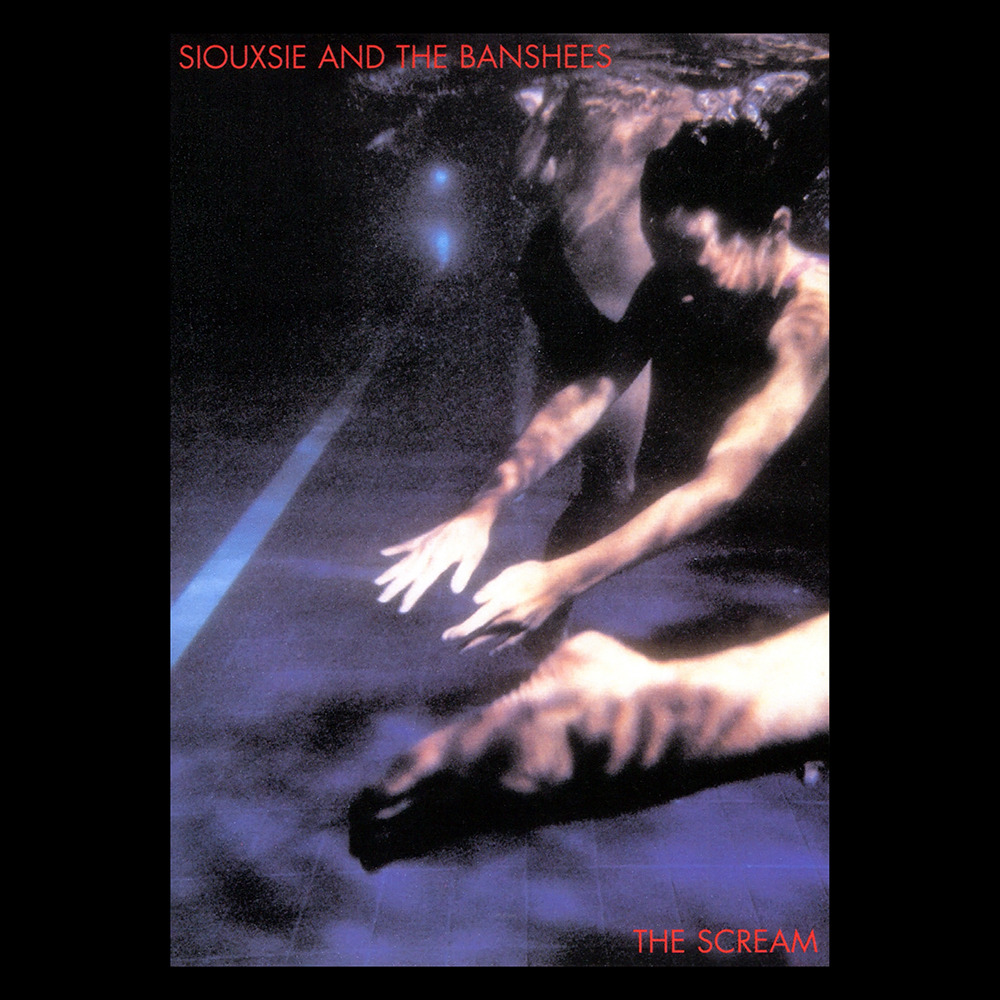
The Scream (1978)
Released in August 1978, “Hong Kong Garden“, with its infectious xylophone fanfare, reached No.7 as a glorious post-punk pop single. Its lyrics were inspired by a Chislehurst Chinese restaurant suffering racist skinhead attacks (‘harmful elements in the air’). This song was Siouxsie and the Banshees’ debut single, released in 1978, one year after the group started touring, and it’s hard not to think of it as their best.
The Scream, produced by Steve Lillywhite, is one of the era’s great debut albums. Dark, dramatic and utterly new, it redefined traditional voice-guitar-bass-drums line-ups. McKay’s guitar sparked malevolent thunder clouds over Severin’s pulsing bass, while Sioux was a regal, animated presence on Jigsaw Feeling’s monolithic surge, the desolate “Overground” and “Suburban Relapse’s” harrowing, JG Ballard-influenced nightmare.
After they’d savaged The Beatles’ “Helter Skelter”, the epic “Switch” busted punk’s three-minute barrier as Sioux highlighted the grim consequences of a scientist, a doctor and a vicar swapping identities. Greeted with effervescent reviews, “The Scream” shot to No.12 in the UK album chart.
Released to rave reviews, the Banshees’ 1978 debut, “The Scream”, remains one of the stone tablets of post-punk. Journalist Paul Morley – frothing about the album’s inversion of musical cliches, dark colours and naked moods – declared it “unlike anything in rock”, and its influence is still audibly present in the work of current bands such as Florence and the Machine, and Savages. The Scream is packed with killer tracks – “Pure”, “Jigsaw Feeling”, “Mirage” and the rest – but “Switch”, the closing track, sums up just how far the band had travelled from punk in such a relatively short time.
Their debut album, 1978’s The Scream, ‘Switch’ is one of those tracks that can sometimes fly under the radar when considering The Banshees. It’s so easy to be drawn into their goth aesthetic and numerous stylistic changes that one can forget their fire-breathing introduction to the world. Perhaps the finest reflection of post-punk music there ever was. It’s not the only great song on the album; in fact, much of the track-list is tucked neatly in spots after number ten in our collective consciousness. But the album’s closer showed that Siouxsie and The Banshees were one of the most progressive acts around. They had seen the devolution of punk coming from a mile off and quickly demonstrated how to get away from the sound, the style and the now-unwelcomed moniker of ‘punk’.
‘Switch’ proved that The Banshees has not only grown up from punk but had now left it so behind, You only get one shot at a good first impression and for Siouxsie Sioux and The Banshees, they delivered that impression like a straight jab to the jaw. Buoyed by the brutishness of punk, The Banshees had already to add an arthouse mystique to their sound which elevated their role within the scene. With The Scream, they became leading figures overnight.
While punk had been built on the back of buzzsaw riffs, The Banshees with Steve Severin on bass, used his skills to provide a deep rhythm that no other group was attempting. It would undoubtedly become one of post-punk’s first moments on record and preceded many of the genre’s other greats. Influential and inspirational to this day.
Join Hands (1979)
The sophomore record for any band is a difficult one but The Banshees showed real promise when they not only delivered a top-quality follow up to their debut but packed it full of a clearer vision of their pathway forward. The band’s sonics had moved from the frenetic into the measured and deliberate, it was a tour de force. With two commanding singles later – the sinister waltz of “The Staircase (Mystery)” and the flanged-up onslaught of “Playground Twist” The second album “Join Hands” was underscored by the isolation that Sioux still felt occasionally.
The album took inspiration from World War One’s carnage for its memorial cover and ominous “PoppyDay” intro. The juggernaut grandeur of “Regal Zone, Icon” and a spine-freezing “Premature Burial” was offset by a softly disturbing “Mother”, which found Sioux singing sweetly over a music box playing “OhMein Papa” (before cataclysmic closer “The Lord’s Prayer”
“Join Hands” tour warm-ups in Bournemouth and Friars Aylesbury were marked by the rift opening between Sioux-Severin and McKay-Morris that started at rehearsal. When Sioux, Severin and crew indulged their (little-reported) sense of humour, the other two tut-tutted like Victorian grumblers.
The group were watching reports of repression and curfews in Iran and saw, for the first time, video of people being shot and killed in real life. In England too, the world was tough according to Siouxsie, it was “a real time, everything in flux and uncertain but also festering underneath, and because this stuff from the past that was just left there rotting there and it needed to be acknowledged and then cleaned up, not just swept away still rotting”
The sophomore record for any band is a difficult one, but The Banshees showed real promise when they not only delivered a top-quality follow up to their debut but packed it full of a clearer vision of their pathway forward. The band’s sonics had moved from the frenetic into the measured and deliberate; it was a tour de force. One song on the album shines particularly brightly, ‘Icon’.
Sioux and Severin seized the shake-up as a chance to move forward, nicking drummer Budgie from the Slits while Robert Smith played guitar with the Banshees after his Cure set. It sounded amazing even at rehearsal. A rescheduled tour opening night in Leicester saw the rejuvenated Banshees driven by Dunkirk spirit and a bright new buzz, with Sioux strutting, skipping, dancing, working herself into a frenzy on “Suburban Relapse“. Drummer Budgie was a polyrhythmic powerhouse, while Smith weaved in ethereal subtleties. Afterwards he said: “I was blown away by how powerful I felt playing that kind of music. It was so different to what we were doing with The Cure.” His Banshees experience catalysed his new look and The Cure’s next phase.
It motivated the band to depict the atrocities of war with a new sound and used the Great War as their further inspiration. It’s harrowing and marvellous at the same time.
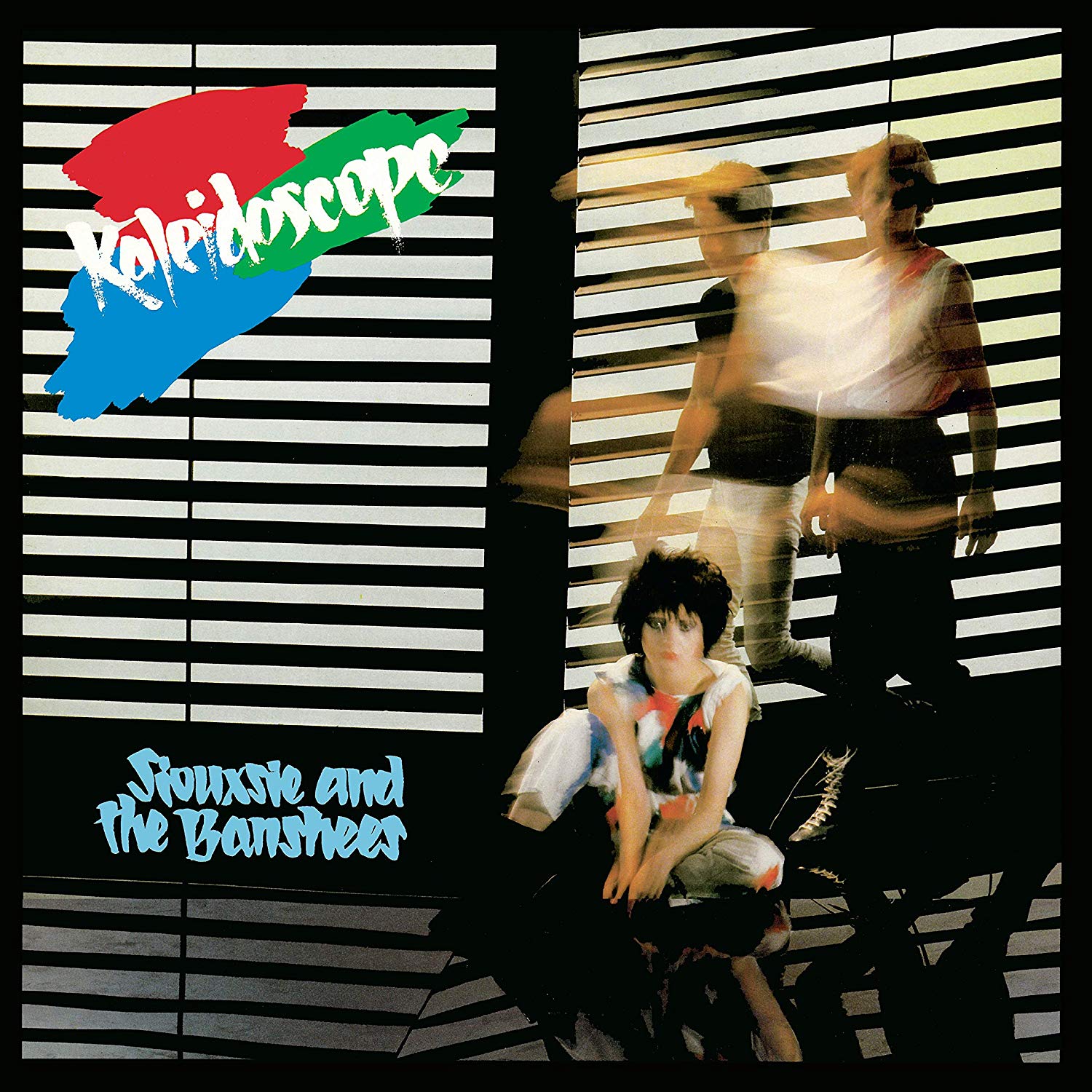
Kaleidoscope (1980)
After auditioning vainly for a new guitarist, the Banshees enticed John McGeoch from Magazine. Completed with the newly rejigged line-up, their catchily insane single “Happy House” brought the Banshees a brilliant Top 20 return in March 1980.
When Budgie, the influential drummer, arrives to join the band you know something is going right. “It was almost a different band,” said Siouxsie, reflecting on both Budgie and John McGeogh’s appointments. The album itself was, as the name suggests, a whirlwind spin of different themes, fragments of styles and a holistic view of creation. Designed to be somewhat unquantifiable, it remains the band’s most successful LP in Britain, charting at number 5. While recording at Polydor’s studio, Sioux glowed with delight as she told me: “It’s given me and Steve a good kick up the arse to just do things. In the end we’ve got to thank John and Kenny for leaving. It’s turned out for the better that they left. I feel very jolly lately. It’s almost like starting again, which is how we wanted it.
Another song by Siouxsie and the Banshees, ‘Happy House’, was initially released as a single in June 1980 and then later added to the band’s third album, “Kaleidoscope” . Around this time, two new members had joined the group with Slits drummer Budgie and Magazine guitarist John McGeoch, thereby incorporating greater musicality.
‘Happy House’ is basically a song where Siouxsie mocks the pretentious nature of the so-called happy family in a society that is designed to suck all the happiness out of people’s lives. As the song goes, “We’ve come to scream in the happy house / We’re in a dream in the happy house / We’re all quite sane.” Siouxsie commented on the song saying, “It is sarcastic. In a way, like television, all the media, it is like adverts, the perfect family, whereas it is more common that husbands beat their wives.”
“We’re all really excited by anything that’s unpredictable. Some sort of pressure, so you drive yourself rather than have someone to make you do something. It’s down to yourself to get out of your mess. The new album’s called “Kaleidoscope” because of the nature of the situation we’re in. It’s fragmented, but every fragment is strong, bright and positive.”
With Sioux writing on her new synthesiser and Severin his drum machine, new songs “Christine” and “EveWhite, Eve Black” were inspired by The Three Faces Of Eve, a book (and subsequently a 1957 film) about Christine Sizemore, who hosted 22 different personalities. “They all had different names, which was a really good source for the lyrics,” Severin explained: The diversity of the album was something that would go on to shape their band’s entire legacy. Never keen to sit still for too long, the two singles from the LP ‘Happy House’ and ‘Christine’ proved that the group could hit either end of the spectrum should they wish to. With the band’s imagination running will on this album, they provided iron-clad proof of their upcoming notoriety. The Banshees’ third album, “Kaleidoscope“, was their most commercially successful yet, beaming to No.5. It was followed by the atmospheric Israel, which welcomed the liberation of 12-inch singles.
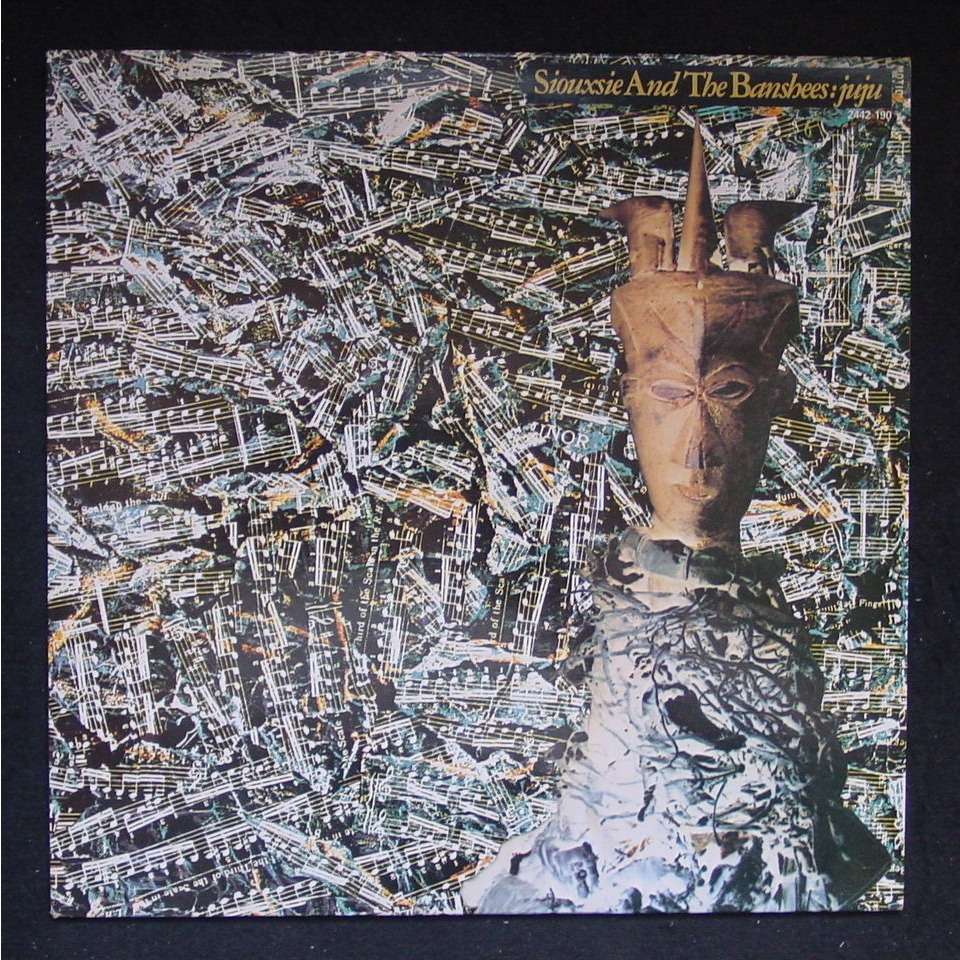
Juju (1981)
Having become one of the pivotal figures in punk rock during the late seventies, by the early part of the next decade, Siouxsie and her band were beginning to find their own feet and creating a brand new sound of their own. After touring the US for the first time, they descended on co-producer Nigel Gray’s Surrey Sound studio to record “Juju”. For many, this is regarded as their best album.
May ’81 single “Spellbound” made an evocatively dynamic trailer, with blazing pyrotechnics from McGeoch and thunderous dynamics from Budgie. The album itself displayed Sioux and Severin’s creative muse on stunning form, with “Arabian Knights”, “Voodoo Dolly” and “Nightshift” (about a serial killer) imbued with cinematic depth.
This could have been the band’s live peak, gloriously Gothic (in the original sense), raising the bar for mesmerising rock theatre. Drapes parted to reveal clouds moving behind four stark silhouettes on the custom-built perspex stage striking up “Israel”. Different settings were used for each song: dusky moonlit evening for “Arabian Knights”; blood-red inferno for “Sin In My Heart“; lightning striking the stained glass window in “Nightshift”. Afterwards the band signed autographs while we sold T-shirts; worlds away from the aloof beings presented by the press.
The fifth song on the LP, ‘Monitor,’ is another masterclass in marrying dark tones with jovial melodies. Though the song is rich in the creepy credence that would elevate the group into the position of Goth Overlords, it also has a habit of gaining some heavy boots on the dancefloor. The band had already begun to gather up imitators, which may have been behind Sioxusie’s exclamation “sit back and enjoy the real McCoy”, but, in truth, she was ascending to her rightful role.
Siouxsie really announced herself as a legend. Only a comparatively short time into her career,
Following Monitor on the album after only a second’s pause, “Night Shift” is the third track from “Juju” here, but exerts such a powerful grip it is impossible to ignore. From the eerie, vulnerable intro (“I see you in darkness, I feel you …”) to the fracturing guitar, to the drums, which sound like they were recorded in a tomb, this is arguably the band’s most successful exercise in creeping tension, which finds intoxicating release in raw power and a brilliant hook line. It wasn’t immediately known at the time that the song was based on the crimes of Peter Sutcliffe, aka the Yorkshire Ripper, and it presents a chillingly realistic portrait of a killer at large.
Arising from sound-check jamming, Sioux and Budgie’s voice-drum duet “But Not Them” was a “Juju” outtake that swelled into their spin-off project The Creatures. They released the double-EP “WildThings”, which included “Mad-Eyed Screamer” and their take on The Troggs’ 1966 classic “Wild Thing“. Meanwhile, Severin produced tour support Altered Images, including No.2 hit “Happy Birthday“.
In 1981 they released the brilliant “Juju” and it signified a big change, not only in The Banshees’ sound but in the culture of Britain entirely. The brazen and bratty side of punk had resided and now there was something more artistic awaiting the group. With Steve Severin’s basslines and Siouxsie’s theatrical vocals, the move into something new was always likely to be a touch darker.
Few albums have been as influential as 1981’s “Juju”. The record is one of the seminal moments in the band’s career and should rightly be considered one of the decade’s best records. Within the album was this gem, ‘Spellbound’ that perfectly described the state of the band at the time. They were dark, magical and utterly captivating.
There are hits all over the LP too. ‘Spellbound’ and ‘Arabian Knights’ are obvious bangers while a similarly dark territory is explored on ‘Voodoo Dolly’ and ‘Night Shift’, as two fine pieces of goth-pop gone right. While the album was just a stepping stone for the band towards their neo-psyche-pop stardom, the LP is a clear cultural touchpoint for any fledgeling goth.
A Kiss in the Dreamhouse (1982)
1982’s “A Kiss in the Dreamhouse” is a foundational moment in the band’s legacy. The first time the group ditched guitars for strings proved that The Banshees weren’t just another new wave band looking to piggyback on the posturing of punk. No, this was a group who had artistic intent and musical integrity.
1982’s singles “Fireworks” and “Slowdive” preceded the swamp visions and pyramids of fifth album “A Kiss InThe Dreamhouse“, on which their love of psychedelic Beatles charged experiments such as having backwards strings on Circle. At a sneak preview at Camden’s Playground studios, Sioux explained that the “Dreamhouse” was a 1930s Hollywood whorehouse, and “Juju” “like closing an era. That’s why we waited a long time before recording a new LP, so we could work out of that.”
‘Peek-a-Boo’, surprising as it may sound, came out via a glorious mistake. Mike Hedges, their producer, had accidentally played a track backwards, resulting in a sound loop that inspired Siouxsie to write a song. Released in 1988 as the first single of the Banshees’ fifth album, ‘Peek-a-Boo’ became their fifth top 20 UK hit, peaking at number 16. It’s a piece of pop that defies expectation and settles itself firmly in the future.
A critical and commercial success upon its release, the album’s prestige has only gained extra weight during the last decades. A feat of imagination that had scarcely been achieved before, the album was a breath taking release in 1982 and left those who had predicted The Banshees demise ripping up their betting slips.
It would seem strange to feature covers in a list of an artist’s finest song but to ignore the power TheBanshees brought to this and plenty other original songs is to ignore a key part of the group’s intrigue. They were so unique they could even make The Beatles sound fresh and get commercial success too. “It was a surprise, but it didn’t really sink in until we’d finished the touring and we were back home for the winter,” Siouxsie remembered. “Then we thought, ‘Blimey! We got to number three!’ ‘Dear Prudence’ got played a lot on the radio, and of course, we did the Christmas/New Year Top Of The Pops. I don’t remember much about doing it except for I was wearing a new leather dress that a friend had made for me, and stripy tights.”
After the enveloping darkness of Juju, fifth album “A Kiss in the Dreamhouse” unexpectedly throws open the curtains to let in the light. This final track (and 1982 single), which later gave shoegazers Slowdive their name, sounds like the lid being slowly released on a pressure cooker, as the band emerge from the black and flit from suspense to sensuality. They change course again musically, too, switching from brooding rock to psychedelic pop, and here a violin/percussion dance groove so hypnotic it made perfect sense for LCD Soundsystem to cover it years later.
The changes taking place were compounded by a heavy-drinking McGeoch suffering a nervous breakdown and departing (he joined PiL, and died in his sleep in 2004). The Banshees decided to tour less and do solo projects. Severin played with Lydia Lunch and had a blast making psychedelic whoopee with Robert Smith as The Glove. With Smith returning briefly, their baroque-psych version of The Beatles’ “Dear Prudence” reached No.3, and their triumphant gig at London’s Royal Albert Hall in 1983 gig was captured on their live record “Nocturne”.
The Creatures replaced goth shackles with jungle-fever loincloths on their 1983 album “Feast”.
Hyaena (1984)
The Banshees took such peaks as licence to experiment on their hallucinogenic album “Hyaena“, notable for (among other things) the Camden Palace dancefloor-friendly gallop of “Dazzle”. Orchestral arrangements of old Banshees songs were captured on “The Thorn” EP, introducing new guitarist John Carruthers, previously with Clock DVA (after he passed his initiation playing a gig at a lunatic asylum in Milan), along with keyboard player/ cellist Martin McCarrick.
It was on this record that the music world finally accepted Siouxsie Sioux as not just a musical agitator but a sublime vocalist. The song ‘Dazzle’ had confirmed that her range was as formidable as anybody and on the rest of the album, the group delivered a choral-like rendition of why they were such an important group.
Now seen as the moment the band hit some kind of mainstream success, “Hyaena” is also notable for containing perhaps one of the finest Beatles covers of all time with their fearsome version of ‘Dear Prudence’.
Tinderbox (1986)
Released in 1986, the band’s seventh studio album would prove to be one of their finest as they welcomed new band member John Carruthers and began to assert themselves on a grander stage. Beloved for its lead single ‘Cities in Dust’ the album was a refreshing sound still drenched in the style of the group that provided it.
When the Banshees toured in autumn 1985 (while recording seventh album “Tinderbox“), Sioux’s leg was in plaster after she cracked her knee at their Hammersmith Odeon show. The show I saw at Nottingham’s Royal Concert Hall, she might have been perched on a stool, but she still berated crowd-bashing bouncers before Severin dropped his bass and steamed in. In typical fashion, the fracas ignited a killer set, the Banshees powering like a juggernaut dervish. New song “Candy Man” was one of the blackest in their black catalogue, emotionally sung from experience by Sioux, who told me it was “against the perpetrators of incest or child-molesting, using a sickly-sweet person as the theme”.
Sioux and Severin were almost 10-year veterans by then, and still refusing to sell their souls or become self-parodies. “We’re lucky we’re not so big that we’re untouchable,” said Severin. “It still matters that when we go on stage we have to be good and live up to our reputation. We’ve never slogged up and down the motorway for no reason other than to get famous. We’ve had an advantage in a way, because we’re so arrogant and stroppy about what we do it keeps us sane. “We still have interest and time to breathe around everything. That’s the only way you can carry on and still be good. A big reason we’ve kept going is because it hasn’t been the same format and personnel.
“All mistakes somehow seem swayed in our favour, mishaps or bad luck turned to our advantage,” added Sioux. “That’s all; you cannot bemoan it or feel sorry for yourself. I think being really good friends is important. So many groups hate each other, don’t socialise or even work well together.
While the aforementioned song is rightly seen as the standout moment on the album tracks like ‘Candyman,’ Cannons’ and ‘Parties Fall’ are all rich piece of the band’s iconography previewing their bittersweet perspective on the world and the dark twists those views usual take. Listen to this one with headphones and listen loud, you’re about to get lost in the world of The Banshees.
Through the Looking Glass (1987)
It’s not often a covers album can be as well-received as 1987’s “Through the Looking Glass“. Positively packed with notable songs like The Doors’ ‘You’re Lost Little Girl’ and The Modern Lovers’ ‘She Cracked’, it was proof that The Banshees knew what good music was and, more importantly, how to make it.
Originally taken from Iggy Pop’s LP Lust For Life, ‘The Passenger’ is a song that will likely outlive us all. So deeply entrenched with the gloom of city living, it’s hard to imagine a world without the track. It may seem like an over-estimation, but the song is a tribute to the mercurial genius of Iggy Pop and, perhaps most importantly, his relationship with David Bowie. When the song was put in the hands of post-punk royalty Siouxsie and The Banshees, things kicked up a notch.
Released on the band’s 1987 album “Through The Looking Glass”, Siouxsie’s vocal, as imposing and impressive as ever, leads the song into a brand new direction. Now far more haunting and with a whiff of cobwebs in the air, the song’s long-standing imagery is rendered in a fine gloom before being punctuated with a swinging beat and the brassy breath of modernity that now feels inextricable from the original song.
It may be difficult to think that a band can be incredibly creative with a cover song but the startling thing about this album was how they managed to turn so many different songs into what sounded like an original Banshee creation. Of course, the best cover of the bunch is their version of Iggy Pop’s classic ‘The Passenger’.
Peepshow (1988)
1988’s “Peepshow” introduced Specimen guitarist Jon Klein, before Sioux and Budgie took another Creatures detour with 1989’s “Boomerang” (Jeff Buckley later covered the song Killing Time). They also got married and relocated to south-west France.
To assimilate one’s love for this album just be revisiting the single ‘The Killing Jar’ is all well and good—it’s a damn fine single. But to ignore the ginormous variety offered on this record, the wild creativity and the employment of some many production techniques would be to ignore exactly why The Banshees are still so beloved today.
The unpredictable orchestrations within the LP highlighted the band as avant-garde heroes of rock. Not content with hitting the same old patterns, the group instead used the notions of jazz and classical music to push the boundaries of the modern palette. By doing so, the band create a visionary album that not only paves the way of the future but painted one of the group’s most vivid sonic landscapes.
A swirling circus of an album, this is one to enjoy alone as the rivets of industrialised punk and the smell of disturbed pop take over.
Superstition (1991)
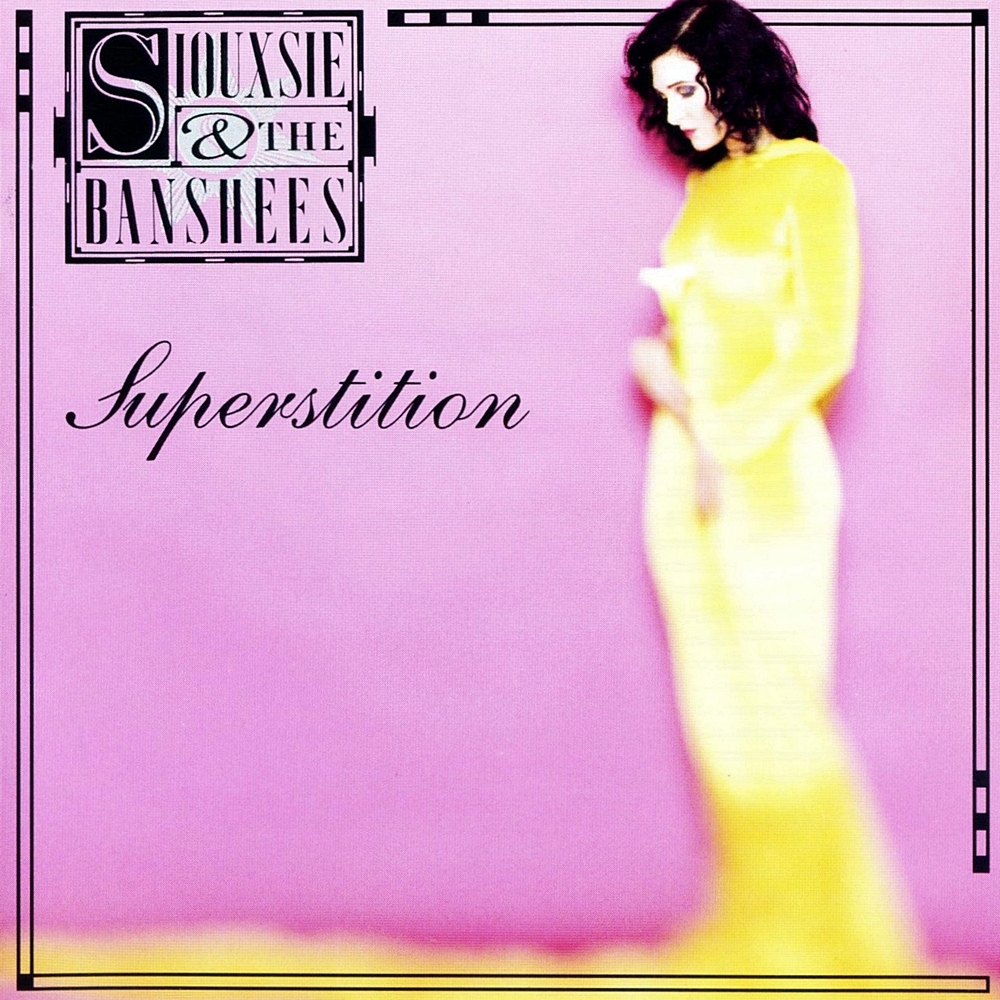
The Banshees returned with 1991’s “Superstition“, with producer Stephen Hague stoking Sioux’s disdain for studio computers. It’s hard to call any of these albums the ‘worst’ but if there’s one record where you could argue the group were lacking a bit of zip, it is this one. The record does arrive with some luscious string arrangements and a classic single in ‘Kiss Them For Me’ but otherwise, in comparison to the rest of the canon, “Superstition” falls flat.
Dealing with themes such as obsession, phobia and emotional damage is all par for the course and there are some classic doom-laden tracks for the Banshees pursuit to enjoy.
The Rapture (1995)
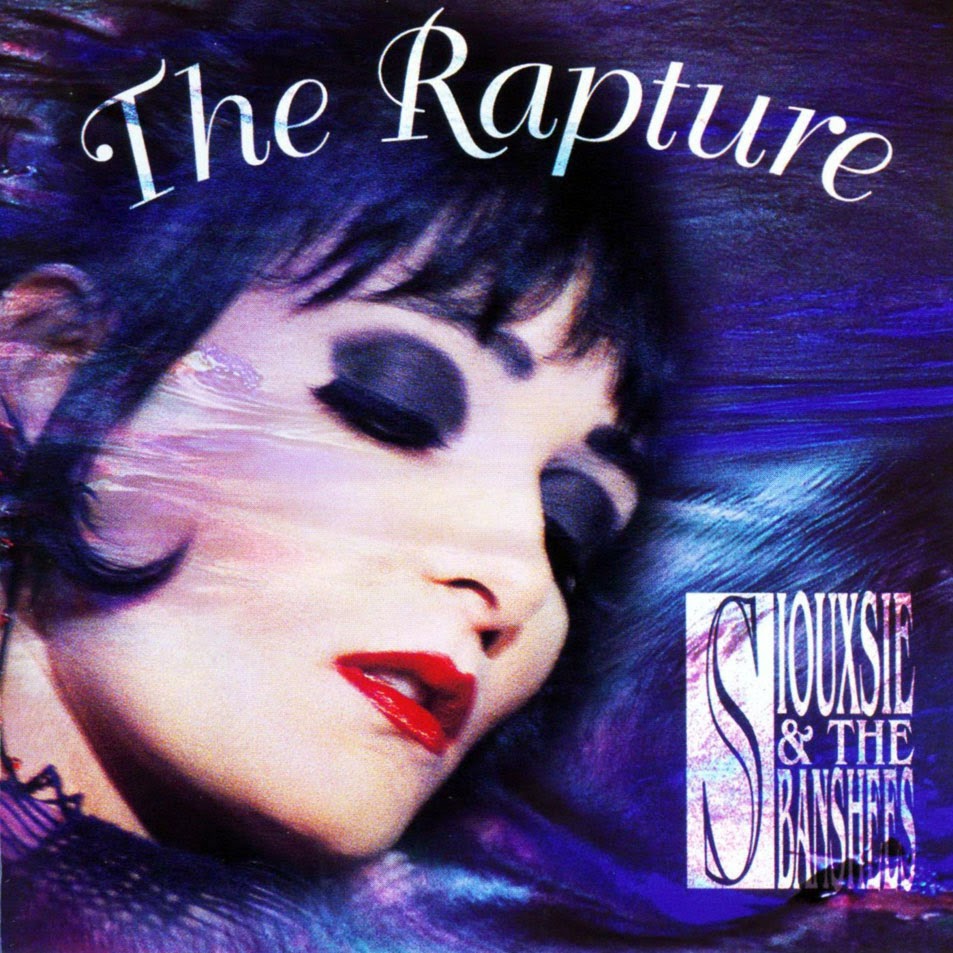
For a band like Siouxsie and The Banshees, a fiery drive is an essential asset for making an album. One could argue that by the time they came to making 1995’s “The Rapture”, that fire had begun to burn out. An album split in two parts, the first recorded near Siouxsie and Budgie’s home, 1995’s The Rapture, part-produced by John Cale, became the Banshees’ swansong. Naturally using a cello as a primary instrument will do that but there was still a certain something that was missing from the LP.
In 1984, asked if he would know when it was time to finish the Banshees, Severin said: “I hope so, and I believe we would know. The understanding between Sioux and I wouldn’t allow us to carry on if that feeling wasn’t there. It’s instinctive and I trust it.” That moment came in 1996, as nostalgia raged for punk’s twentieth anniversary with a Sex Pistols reunion. Sioux stated: “I just think it’s the most dignified thing to do for the idea of the band and the spirit in which it started. We’ve had a fantastic journey.”
Siouxsie and Budgie continued as the Creatures before splitting around 2004. Siouxsie’s next release was 2007’s Mantaray, her robustly diverse solo debut. They reunited once, a core trio joined by guitarist Knox Chandler, for 2002’s “Seven Year Itch” tour, from which came the following year’s live album of the same name. The set-list for the tour favoured early album tracks rather than their greatest hits, typifying a band whose influence had burned into rock’s fabric.
The massively influential records the Banshees released between 1978 and 1995 stand among the most timelessly evocative, provocative and compelling of their era, with songs tackling schizophrenia, childhood trauma, fatal compulsion, lacerated love and serial killers.
On January 7th, the day before David Bowie’s birthday, Toywill receive its long-awaited official standalone release in Toy:Box, making the legendary unreleased album available on three CDs or six 10” vinyl records. Toy was recorded following David’s triumphant set at Glastonbury 2000 performance. Bowie entered the studio with his band — Mark Plati, Sterling Campbell, Gail Ann Dorsey, Earl Slick, Mike Garson, Holly Palmer and Emm Gryner — to record new interpretations of songs he’d first recorded from 1964-1971. David planned to record the album old school with the band playing live, choose the best takes and then release it as soon as humanly possible in a remarkably prescient manner. Unfortunately, in 2001 the concept of the surprise album release and the technology to support it were still quite a few years off, making it impossible to release Toy, as the album was now named, out to fans as instantly as David wanted. In the interim, David did what he did best; he moved on to something new, which began with a handful of new songs from the same sessions and ultimately became the album Heathen, released in 2002 and now acknowledged as one of his finest moments.
Pianist Mike Garson recalls David Bowie being “pissed off” after his “Toy” album was scrapped by his label Virgin/EMI back in 2001. Garson wasn’t too happy about the turn of events either.
The album was recorded by Bowie and his band in 2000, following a tour that culminated in a landmark performance at the Glastonbury Festival. The studio sessions featured some new material but also re-recordings of songs from the early part of Bowie’s career — including Davy/Davie Jones singles such as 1965’s “You’ve Got a Habit of Leaving” and “I Dig Everything,” which came out a year later. Some of the songs appeared on subsequent albums and compilations — “Uncle Floyd” as “Slip Away” and “Afraid” on 2002’s “Heathen”, for instance — but “Toy” itself has languished in the vaults until it was included as part of the “Brilliant Adventure” (1992-2001) box set in November and in the “Toy:Box” set, which arrives on Friday.
You don’t pass on a David Bowie album,” Garson, who’s hosting the virtual A Bowie Celebration on Jan. 8, tells UCR. “[Bowie] was upset, but within months [the songs] were all online. I’ve been hearing those songs for 20 years. People get ahold of everything, one way or another. But I’m so glad it’s coming out now.”
Toy, produced by Bowie and band member Mark Plati, features one of the singer’s most potent backing bands, including long time members Garson and guitarist Earl Slick, bassist Gail Ann Dorsey and drummer Sterling Campbell. Gerry Leonard also played guitar during the sessions, while frequent Bowie collaborator Tony Visconti created string arrangements. Plati recalled the sessions as “a moment in time … the sound of people happy to be playing music,” which was Garson’s takeaway as well.
“It was very free-flowing, playing live together in the space [Sear Sound in New York City],” he remembers. “We’d just come off a tour, so we were in good shape. The camaraderie was great. David was in good spirits, healthy, joyful. Everything was just the way you’d want it to be.” That said, Garson acknowledges some mixed emotions about Bowie’s desire to revisit his early material.
“I liked the fact that he was being respectful to his earlier catalogue, but I wasn’t a big fan of some of those older songs,” Garson confesses. “I love ‘Conversation Piece’ and ‘Shadow Man,’ but I didn’t like the songs. But I figured we’re a good band, we’ve been on the road for months and months, let’s make it better than when he was a kid writing them. And I think we did. They’re not ‘Life on Mars?’ or ‘Space Oddity,’ but they’re good. They’re fun.”
Now 20 years after its planned release, co-producer Mark Plati says, “Toy” is like a moment in time captured in an amber of joy, fire and energy. It’s the sound of people happy to be playing music. David revisited and re-examined his work from decades prior through prisms of experience and fresh perspective — a parallel not lost on me as I now revisit it 20 years later. From time to time, he used to say ‘Mark, this is our album’ — I think because he knew I was so deeply in the trenches with him on that journey. I’m happy to finally be able to say it now belongs to all of us”.
The seeds of Toy were first sown in 1999 during the making of an episode of VH-1 Storytellers. David wanted to perform something from his pre-Space Oddity career, so he reached back to 1966 and dusted off Can’t Help Thinking About Me for the first time in 30 years. The song remained in the setlist for the short promotional tour for the hours… album, and in early 2000 David and Plati compiled a list of some of Bowie’s earliest songs to re-record. Included in Toy:Box is a CD of alternative mixes and versions including proposed B-sides, later mixes by Tony Visconti and more. The third CD features Unplugged & Somewhat Slightly Electric mixes of 13 tracks. Says Plati: “While we were recording the basic tracks Earl Slick suggested that he and I overdub acoustic guitars on all the songs. He said this was a Keith Richards trick — sometimes these guitars would be a featured part of the track, and at other times they’d be more subliminal. Later while mixing, David heard one of the songs broken down to just vocals and acoustic guitars; this gave him the idea that we ought to do some stripped-down mixes like that and that maybe one day they’d be useful. Once we put a couple of other elements in the pot, it felt like it could be a completely different record. I was only too happy to finish that thought some two decades after the fact.”
“Toy” was recorded following David’s triumphant Glastonbury 2000 performance. Bowie entered the studio with his band, Mark Plati, Sterling Campbell, Gail Ann Dorsey, Earl Slick, Mike Garson, Holly Palmer and Emm Gryner, to record new interpretations of songs he’d first recorded from 1964-1971. Included in the box is a second set of 10”s of alternative mixes and versions including proposed B- Sides (versions of David’s debut single ‘Liza Jane’ and 1967’s ‘In The Heat Of The Morning’), later mixes by Tony Visconti and the ‘Tibet Version’ of ‘Silly Boy Blue’ recorded at The Looking Glass Studio time at the of the 2001 Tibet House show in New York featuring Philip Glass on piano and Moby on guitar. The third CD/set of 10”s features Unplugged; Somewhat Slightly Electric’ mixes of thirteen Toy tracks.
When XTC’s Colin Moulding released his solo single ‘The Hardest Battle’, he did so on his own terms, citing the biggest challenge for us all to just be ourselves “in a world which is doing its best, night and day, to make you like everybody else” (E.E. Cummins). Colin says, “Perhaps ‘The Hardest Battle’ we humans have faced externally, as well as the one we fight internally everyday”.
This 3-song CD offers a tantalizing glimpse into the creative process of one of the UK’s finest songwriters, showcasing Colin’s English pop vision with XTC’s trademark qualities of melody, rhythm, variety, and idiosyncratic subject matter, mixed in with nostalgia and a degree of pensiveness.
Containing two songs and an ‘exploratory demo’, “The Hardest Battle” represents XTC founding member Colin Moulding‘s first ever solo release. Music legend and XTC co-frontman Colin Moulding is back with new music, this time as a solo artist, presenting his new single ‘The Hardest Battle’, released as a CD single in 4-panel digisleeve via Burning Shed. Containing two songs – ‘The Hardest Battle’, ‘Say It (original version)’, and an exploratory demo of the title track, The Hardest Battle represents XTC founding member Colin Moulding‘s first-ever fully solo release.
In celebration of this release, Colin Moulding also presents the video for the title track, directed and filmed by Henry Meredith at St Mary’s Uffington (interior) and Salisbury Cathedral (exterior). Featuring Tomas Silberberg as George IV, the costume was provided courtesy of the Royal Shakespeare Company.
This mini-EP offers a tantalizing glimpse into the creative process of one of the UK’s finest songwriters, showcasing Colin’s English pop vision with XTC’s trademark qualities of melody, rhythm, variety, and idiosyncratic subject matter, mixed in with nostalgia and a degree of pensiveness.
Following two releases withoriginal XTC drummer Terry Chambers under the TC&I moniker – the ‘Great Aspirations’ EP and the album ‘Naked Flames: Live at Swindon Arts Centre’, ‘The Hardest Battle’ is the first new material from Moulding in many years.
“To be nobody but yourself – in a world which is doing its best, night and day, to make you like everybody else – means to fight the hardest battle any human being can fight”… I saw these lines in a book I picked up in a secondhand bookshop and thought…maybe there’s a song there …I think it’s by the poet EE Cummins,” says Colin Moulding.
“And there it was. All I had to do was come up with some music to marry to this notion. I do think most people aren’t themselves really, or become themselves eventually. And that struggle isn’t easy. I recorded this pretty much in isolation as most people have been this past year or so. One crazy year for all of us. Perhaps ‘The Hardest Battle’ we humans have faced externally, as well as the one we fight internally everyday,”
Founded in 1972, XTC only had their first UK charting single in 1979. Moulding wrote the first three charting singles (‘Life Begins at the Hop’, ‘Making Plans for Nigel’ and ‘Generals and Majors’). Moulding continued with frontman Andy Partridge through the group’s dissolution in 2006. In 1984, they also, along with XTC bandmate Dave Gregory and Ian Gregory, formed The Dukes of Stratosphear, anticipating and celebrated by retro-minded movements such as the Paisley Underground.
“About ‘Say It’, I just felt this track deserved a better fate than it got really. I wrote it for the XTC album that never was . But it ended up on a promo disk amongst XTC’s ‘Last Days of Rome’ This version feels much more akin to my original song mindset compared to the expedient I agreed to at the time,” says Colin Moulding.
Regarding ‘The Hardest Battle (First Exploratory Demo)’, Moulding adds, “I think demos are much more of a demonstration to ones self than for other people. You have to find out what works and what doesn’t. Therefore, you shoot from the hip and just fire it out, and see what sticks. Larkin always said that he didn’t know what his poems were about initially until he got some way into them ;- that’s what this is;- I’m just ‘Larkin’ around until it presents itself. Then the crossword puzzle can begin.”
Released on July 2nd, ‘The Hardest Battle’ is available on CD single exclusively via Burning Shed
A tantalising glimpse into the creative process of one of the UK’s finest songwriters.
Warmduscher have today announced details of their fourth album, “At The Hot Spot”, their first for indie label Bella UnionRecords, which is released on Friday April 1st 2022. Having previously released “Wild Flowers”, Warmduscher have today also shared “Fatso”, the latest track to be taken from the album. Talking about “Fatso”, Clams Baker of the band said…
“A song dedicated to taking the time to slow down and sniff the roses, turn off the computer and take in the sunshine, and embrace the battle of a sleepless day at the office from a night of beautiful carnage that you’ll always dream about.
Written over a period of over a year in lockdown, “At the Hotspot,“produced by Joe Goddard and Al Doyle of Hot Chip, takes the raucous energy Warmduscher solidified on their critically acclaimed 2019 release “Tainted Lunch”, and injects it with a slightly more polished, ‘80s funk sound, kind of like stumbling home to your squatted loft after a drunken night at the local disco. It’s crunchy on the outside, smooth on the inside, and might be the most immediately enjoyable music Warmduscher have ever graced us with.
“There was a lot of partying,” says Clams, laughing about the gestation of the album. “We were like, Aaarrggghh. We were just happy to be doing something and seeing each other. It was that weird energy, where you’re fed up and you’re kind of angry, but in a good way. We would spend like two nights a week writing, maybe once or twice a month, sometimes less.” This went on for about a year, with all the members bringing in their contributions, until it came time to record—which, in typical punk rock fashion, had its own set of obstacles to overcome.
The bulk of Warmduscher’s discography – the aforementioned “Tainted Lunch“, as well as 2018’s “Whale City” and 2016’s “Khaki Tears” – were produced by London stalwart Dan Carey, who was instrumental in helping the band hone their fuzzed out sound. Unfortunately, at the beginning of “At the Hotspot’s” recording process, Dan caught COVID, and the band found themselves having to leave their comfort zone and find a new producer fast. Luckily, they found two, under serendipitous circumstances. “I was in the studio with Joe and Al of Hot Chip, doing an electronic project with Igor Cavallera of Sepultura and his wife, artist/musician Laima,” explains Clams. “When I got the message saying Dan couldn’t do the album, I was like, ‘Aw, fuck!’ Then Joe and Al were simply like, ‘We’ll do it!’ It was this really weird, happy accident.”
While “At the Hotspot” is still very much a Warmduscher album, with all its cracks and crevices oozing garage rock bravado, the production values buff out those jagged edges in a way only these two virtuoso producers could have pulled off. “We’re just really psyched to play this whole thing live now,” states Clams matter-of-factly. “And it’s a whole revamp—new label, new producers, new logo—new everything.”
The band also head out on the road in spring of this year on a run of UK and European dates, including some already sold out rearranged shows and their biggest London show to date at The Forum.
from their upcoming album “Live at the Hotspot” out April 1st on Bella Union Records,
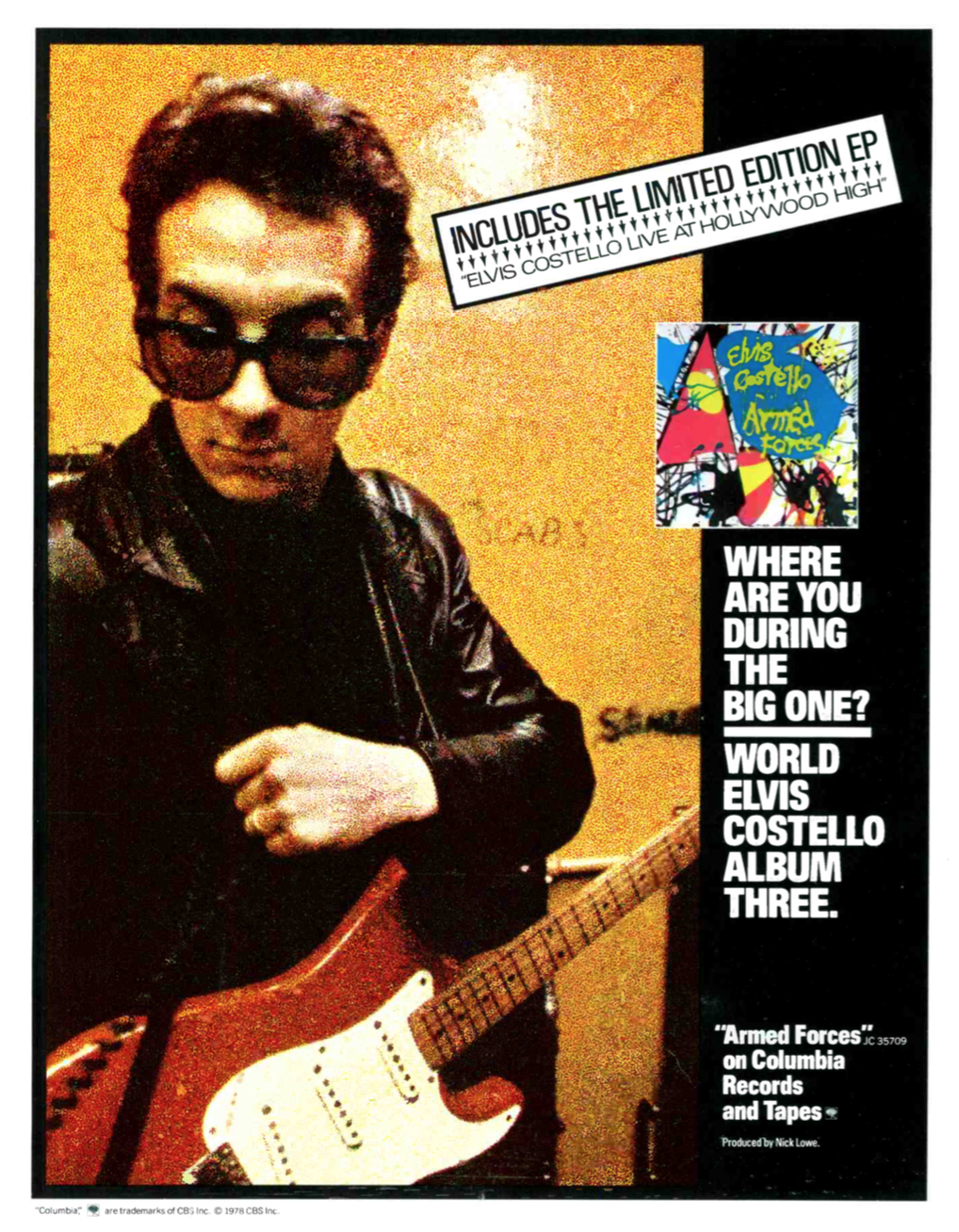
What a difference an ocean makes. In the U.K. and Europe, Elvis Costello’s third album, “Armed Forces”, could be heard as a leap forward in songcraft and sonic ambition, a song cycle weaving the personal and political into a survey of “emotional fascism” in a showcase for the elegant interplay of Costello’s band, the Attractions, accorded far more studio polish than its full-length predecessor. Released on January 5th, 1979, the LP also marked the first time the band enjoyed co-billing with its leader.
For many North American fans, the album’s legacy has been eclipsed by a last-minute swap that replaced a Costello original with a one-off cover of a Brinsley Schwarz song written by former front man and Costello producer Nick Lowe, the now anthemic “(What’s So Funny ’Bout) Peace, Love and Understanding.” As a warmup for their own album, Costello and the Attractions bashed out a fast and furious cover of the Lowe song, pumping up the original’s rhythm guitar riffs into a virtual barrage against Costello’s howled vocals.
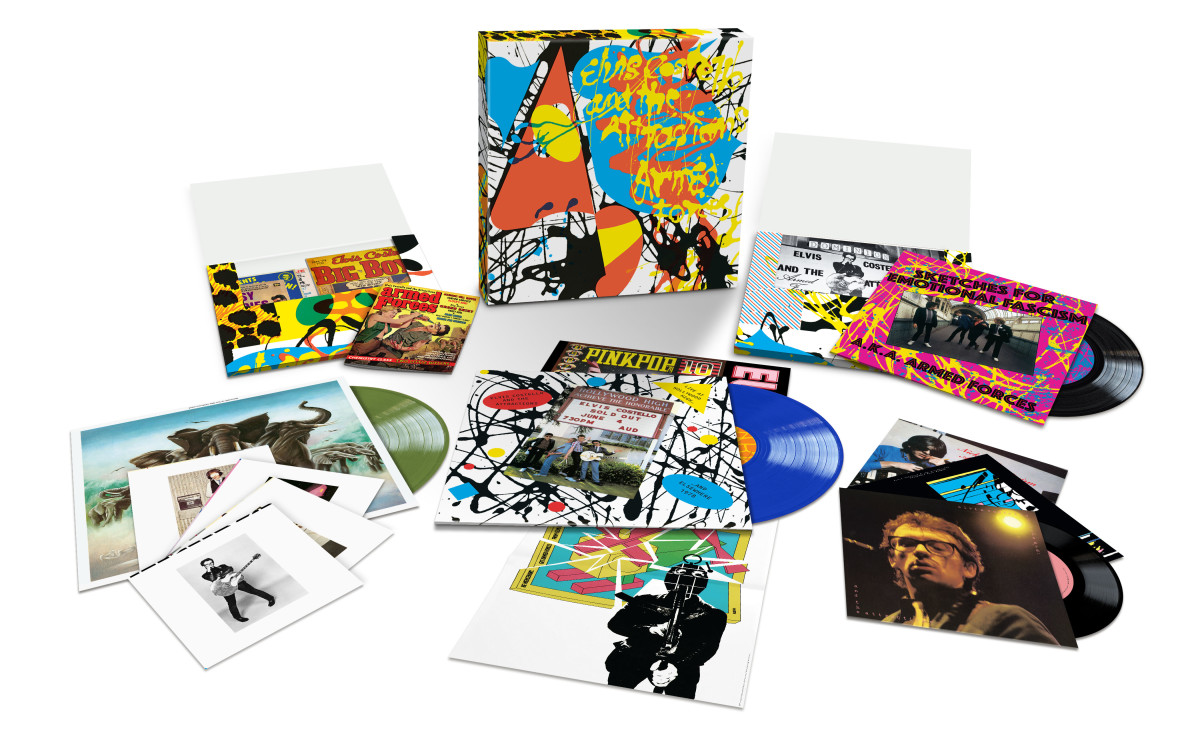
Curated and annotated by Elvis Costello, the mammoth “Armed Forces”vinyl box is the definitive look at Costello’s ground breaking 1979 LP: it includes the original album (remastered) along with B-sides, demos and a whopping 23 previously unreleased live recordings. All told, the lavishly packaged set includes 9 pieces of vinyl—three full-length LPs, three 10-inch EPs and three 7-inch singles—postcards, a promotional poster, and seven unique and highly entertaining illustrated booklets with lyrics, photos, notes, Costello’s original song sketches for the album (whose working title was “Emotional Fascism“), and more. The performance is undeniably powerful—and conspicuously out of place in the sonic landscape and thematic context of the Costello album. But Columbia Records, his U.S. label, was anxious to seed radio airplay, and had already set precedent with its revised track sequences for both of Costello’s prior albums. In his superb memoir, Unfaithful Music & Disappearing Ink, Costello asserts executives were worried that some of the material was “too English” in its lyric references and cultural perspective. Thus, “Sunday’s Best,” a sardonic waltz echoing English music hall tropes and explicit homeland allusions, was jettisoned and “(What’s So Funny)…” was added as the LP’s last song.
Like Costello’s prior studio work, the song was recorded live with minimal overdubs. Billed as Nick Lowe and His Sound, the track was cut as B-side to the pending single of Lowe’s “American Squirm,” stripping away Lowe’s tongue-in-cheek earnestness and power pop bloom to transform the song into a authentic, pissed-off rage.
The music is the star of the show, of course, but the booklets are rather stunning in their presentation of the album’s backstory: they are designed as pulp novels and comic books of various sizes with the booklet titles mirroring many of the LP’s song titles (“Goon Squad,” “Busy Bodies,” “Oliver’s Army,” etc.). The seven booklets contain more than 200 total pages of material and feature plenty of Costello’s classic, quick-witted ruminations.
“Oh, I just don’t know where to begin,” sings Costello before the Attractions kick into gear, a line that signals the singer’s frustration while offering a sly bit of misdirection. Apart from beginning the album, the statement belies the meticulous detail and verbal ingenuity heard throughout the dozen originals on the U.K. version. However angry Costello’s image may have seemed, the songs convey the musical imagination of a wide-ranging pop magpie as well as word-drunk verbal acuity.
The remastered album proper sounds better than ever and remains fortified by some of Costello’s finest tunes: “Accidents Will Happen,” “Oliver’s Army” (Costello’s highest charting UK single to date at No2), and his enduring, definitive cover of Nick Lowe’s “(What’s So Funny ‘Bout) Peace, Love and Understanding?)” “Armed Forces” found Lowe adopting a production style that differed from other Costello releases before or since: dense, textured, sometimes ornate and often nearly Spectorian (check “Goon Squad” and “What’s So Funny…”) yet still radio-friendly and commercial. (It was Costello’s only top 10 US album.) Quirky ditties such as the keyboard and drum-focused “Green Shirt” and the strangely hooky “Two Little Hitlers” have also aged well.
The power heard in the Attractions’ tough, sinewy playing on the second album meanwhile deepened; the band’s frequent touring had accelerated a learning curve. That enabled Costello and his bandmates to work out more intricate arrangements in which keyboard player Steve Nieve, bassist Bruce Thomas and drummer Pete Thomas (no relation) created interlocking parts. The thin, reedy signature of Nieve’s Vox Continental organ was now cushioned by lusher synthesizers and grand piano to sculpt a wide, orchestral space decorated with Bruce Thomas’ contrapuntal bass figures.
The pop instincts lurking beneath Costello’s aggression surface repeatedly across the albums, most explicitly on “Oliver’s Army,” a scathing and, yes, very English broadside against militarism and the class warfare underlying its history in Britain. With its name-check of Oliver Cromwell, its shout-out to the cannon fodder of “the boys from the Mersey and the Thames and the Tyne,” and a snapshot of British soldiers in Northern Ireland, the track is stridently political, only heightening the irony of the music: Costello’s crooned vocals are set against a widescreen arrangement punctuated by Nieve’s exuberant piano flourishes, a touch Costello himself cheerfully cites as influenced outright by ABBA’s “Dancing Queen.”
Add Costello’s soulful vocal tag on the fade, a note-for-note salute to Ronnie Spector’s ecstatic coda on Phil Spector’s Ronettes classic, “Be My Baby,” and it’s clear that Costello delighted in lifting ideas from a wider swatch of styles than new wave fashionistas might have bargained for, such as the dense chromatic vocal harmonies overdubbed on the title refrain in “Moods for Moderns.” At the same time, the material’s Anglocentric imagery and recurrent conflation of romantic and sexual encounters with British politics provide context for both the final album title and the “emotional fascism” initially considered and then relegated to an inner sleeve copy line. The concept is evoked precisely on “Green Shirt,” a song in which seduction and indoctrination mingle ominously.
Musically, “Green Shirt” typifies the band’s nearly telepathic agility. Pete Thomas’ drumming is rooted in economy, subtracting elements in the service of skeletal riffs that push and pull against Nieve’s lean keyboard figures to provide a coiled tension the track. The lyrics’ title garment serves both as a totem of sexual desire and a play on the infamous “brown shirts” of Germany’s Nazi Party. Elsewhere, Costello invokes thug threats in “Goon Squad” and leans into a “final solution” as a provocative metaphor in “Chemistry Class.” And in the track that closes Radar’s British version of “Armed Forces“, the political and personal equation is spelled out in “Two Little Hitlers.” With Margaret Thatcher’s election as British Prime Minister in the months after “Armed Forces’ release, Costello’s ominous preoccupations seemed prescient.
While critics were nearly unanimous in hailing the musical growth heard on “Armed Forces“, there was less agreement about the material’s dark thematic heart, a pessimism verging on nihilism that Costello would himself later characterize as steeped in “paranoia.” That makes the bruised idealism of Lowe’s“(What’s So Funny ‘Bout) Peace, Love and Understanding” stand out even more boldly. The track became the U.S. album’s most recognizable moment,
The 23 newly released live recordings from 1978 and 1979 showcase Costello and the Attractions at the top of their game, a powerhouse four piece tearing through tracks from Costello’s first three records as well as previews of cuts that would find their way onto 1980’s “Get Happy!!”The 13-track “Live at Pinkpop” collection included here finds Costello and company test driving the yet-to-be-released “B-Movie,” “Opportunity” and “High Fidelity” with arrangements substantially different from their “Get Happy!!” Iterations. (In the notes, Costello references the “new wave arrangements” of the first two numbers and cites the David Bowie influence of the live reading of “High Fidelity.”)
Those particular tunes come off as relatively reserved in comparison to the near-manic, white-hot thrust of most of the live material, with Costello and cohorts Bruce Thomas, Steve Nieve and Pete Thomas all in peak form throughout: in particular, bash-ups of “You Belong to Me,” “This Year’s Girl” and “Pump it Up” (from the “Riot at the Regent – Live in Sydney ’78 EP) all smoulder with a near-punk intensity and splashes of Nieve’s roller rink organ.
An eight-song EP titled “Sketches for Emotional Fascism A.K.A. Armed Forces” contains an alternate version of “Big Boys,” a demo of “Green Shirt,” Costello’s version of “My Funny Valentine,” and four tunes that were originally released in the US as part of 1980’s “Taking Liberties” compilation. (In his notes, Costello describes one of these tunes originally slated for “Armed Forces”, “Clean Money,” as being influenced by Cheap Trick.)
Available in 180-gram black vinyl and limited edition 180-gram multi-color opaque vinyl editions, “Armed Forces” is an absolutely beautiful package that celebrates Elvis Costello’s most commercially successful album in style.
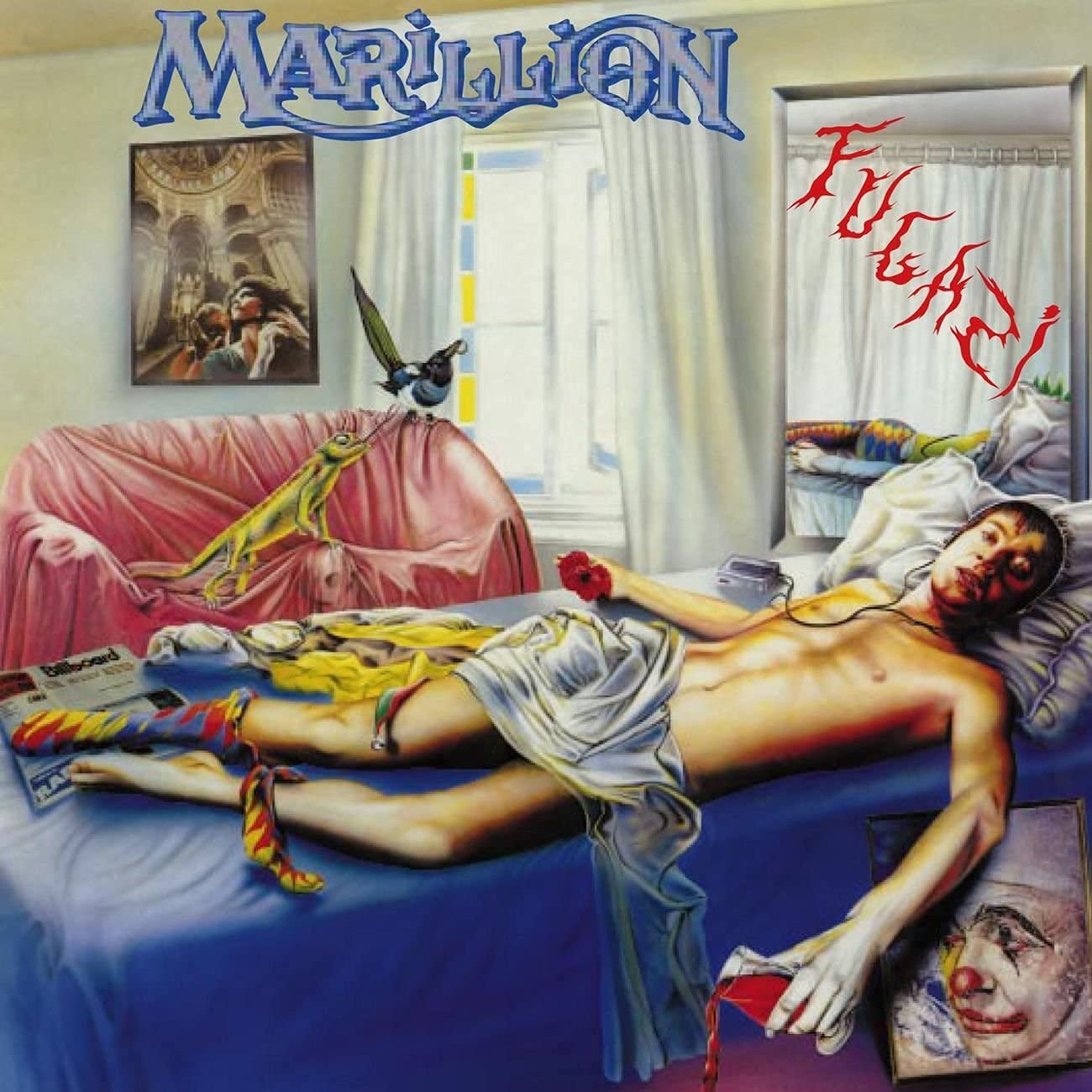
Marillion’s second album, “Fugazi” usually trails a distant last in rankings of the four studio albums they made with original singer Fish. But while it lacks the spiky rush of its predecessor “Script For A Jester’s Tear” and the bulletproof commerciality of follow-up “Misplaced Childhood”, “Fugazi” is better than its reputation would have it. Finally the jigsaw from vocalist Fish years with the band ‘Marillion’ is complete with the release of the remaster of the 1984 ‘Fugazi’ album on 10th September. In March 1984, Marillion released their second studio album “Fugazi”, which went on to be certified Gold and reach number 5 in the UK albums charts. The classic album spawned two singles “Assassin” and Punch & Judy, both reaching #22 and #29 on the UK singles charts respectively. “Fugazi” is the second studio album by the British progressive rock band Marillion, released in 1984. Produced by Nick Tauber, it was recorded between November 1983 and February 1984 at various studios “Fugazi” celebrated in two versions as a 4LP boxset and as a 3CD/Blu- ray book, released on 10th September. The music also available digitally and for streaming on the same day. “Fugazi” was the first Marillion album to feature Ian Mosley on drums and percussion, replacing Mick Pointer after the highly successful “Script For A Jester’s Tear”. It also included Fish, Steve Rothery, Pete Trewavas and Mark Kelly.
Both sets open with brand-new 2021 remixed stereo versions by Andy Bradfield and Avril Mackintosh, who also remixed the deluxe editions of “Script For A Jester’s Tear” and “Clutching At Straws”. They also include a show from The Spectrum, Montreal, Canada recorded in 1984. The performance includes fan favourites from both “Fugazi” and their debut album “Script For A Jester’s Tear” in the form of tracks such as “Jigsaw”, “Incubus”, “He Knows You Know”, “Chelsea Monday” and much more. It also features a performance of the B-side “Charting The Single“.
Following their first album and its support tour, Marillion found themselves behind schedule, under pressure from EMI Records to deliver a second album. Producer Nick Tauber worked the band hard, having them stop into various rehearsal and recording studios to write songs, and to find a replacement drummer for Mick Pointer, who had been fired. American drummer Jonathan Mover auditioned in London in September 1983, and two days later was performing with Marillion in Germany.
Marillion settled into the infamous Rockfield Studios in Wales to compose some songs. According to an interview with Mover, the various band members had been working separately on songs when the band’s front man, Fish, asked whether they agreed with his new idea that it should be a concept album like Floyd’s The Wall. The more veteran band members said “maybe,” but new drummer Mover said it was a bad idea, that the current crop of songs was not connected by any theme, and would have to be scrapped. According to Mover, Fish took this as a challenge to his authority and he was fired from the band. Fish said later, “Jonathan Mover left me cold, but the musicians loved him because he was super-technical. I felt I was being railroaded. All he could talk about was drums, and he didn’t fit in to the band’s social element.” Mover received a writing credit for the single “Punch and Judy”.
“Fugazi” proved just as diverse, ambitious, even preposterous (in the best possible prog-rock sense) as “Script”. They matched epic, complex musicianship with oblique wordplay to perfection on the likes of “Assassing”, “Jigsaw”, “Incubus”, and the title track – all of which would become perennial concert favourites for years to come. If anything, the new album was, at once, more polished (in terms of both production standards and song arrangements) and a tad less consistent than its predecessor, unquestionably falling short of heightened expectations on the somewhat less-than-stellar “Emerald Lies” and certainly the subpar “She Chameleon”
The production schedule ran so late that Marillion had to begin their album support tour before the album was ready
The Blu-ray features 96k/24-bit versions of both the new “Fugazi” stereo remix and the Live at The Spectrum, Montreal,Canada concert and contains a 5.1 surround sound version of the new 2021 stereo remix of “Fugazi”.
The Blu-ray also contains a compelling look at the fascinating story behind “Fugazi” in a new documentary, entitled The Performance Has Just Begun, which features all the band members talking about how the album came to fruition. This is followed by the band giving an insightful track-by-track commentary of the album, as well as the music video of “Assassin” with both the original and remix audio.
Frontman Fish told us I’ve been unable to announce anything until now but all I can say is that I think you’ll find this well worth the wait. The gold here for Marillion aficionados comes with the lengthy and illuminating documentary on the Blu-ray disc, detailing the album’s turbulent gestation, plus footage from a stellar appearance on Swiss TV and a recording of a gig at Montreal’s Spectrum Club in June 1984 (a handful of tracks from which appeared on that year’s “Real To Reel” live album).
It’s the live material that best represents Marillion at this stage in their career – a prog band with a punk band’s energy, something they’d never truly capture again despite all the successes that followed.
The vinyl box set is £49.99 ex vat and the deluxe CD/Blu-ray is £24.99 ex vat. Those prices do not include postage and packaging which are calculated and added at checkout..
All ‘Fugazi’ albums, both deluxe CD/Blu-ray and vinyl box versions purchased from here will be signed by yours truly.
The album is a pre order purchase for delivery after September 10th. Nothing will be sent out from here before that date. The ‘Fugazi’ titles can only be ordered as stand alone purchases and cannot be mixed with other orders/items. This ensures a smooth mail out once ‘Fugazi’ stock arrives here at the Studio.
Marillion;
Fish – vocals; cover concept
Steve Rothery – guitars; photography (1998 remastered edition)
Mark Kelly – keyboards
Pete Trewavas – bass
Ian Mosley – drums
Thanks for all your support with this, especially during these difficult times for us all, it’s sincerely appreciated.
This year, PJ Harvey has announced several reissues of her music on vinyl, including 2000’s “Stories From the City, Stories From the Sea“, 2004’s “Uh Huh Her“, and 2007’s “White Chalk“. Today, she’s announced another with the reissue of 2011’s “Let England Shake“. Her eighth studio album will be released on CD, vinyl, and digitally with unreleased demos. Along with the announcement today, she’s shared the demo of the title track.
PJ Harvey followed her ghostly collection of ballads, “White Chalk“, with “Let England Shake”, an album strikingly different from what came before it except in its Englishness. “White Chalk’s” haunted piano ballads seemed to emanate from an isolated manse on a moor, but here Harvey chronicles her relationship with her homeland through songs revolving around war. Throughout the album, she subverts the concept of the anthem — a love song to one’s country — exploring the forces that shape nations and people. This isn’t the first time Harvey has been inspired by a place, or even by England: she sang the praises of New York City and her home county of Dorset on “Stories from the City, Stories from theSea”. Harvey recorded this album in Dorset, so the setting couldn’t be more personal, or more English. Yet she and her long time collaborators John Parish, Mick Harvey, and Flood travel to the Turkish battleground of Gallipoli for several of “Let England Shake’s” songs, touching on the disastrous World War I naval strike that left more than 30,000 English soldiers dead.
Her musical allusions are just as fascinating and pointed: the title track sets seemingly cavalier lyrics like “Let’s head out to the fountain of death and splash about” to a xylophone melody borrowed from the Four Lads’ “Istanbul (Not Constantinople),” a mischievous echo of the questions of national identity Harvey explores on the rest of the album (that she debuted the song by performing it on the BBC’s The Andrew Marr Show for then-Prime Minister Gordon Brown just adds to its mischief). “The Words That Maketh Murder” culminates its grisly playground/battleground chant with a nod to Eddie Cochran’s anthem for disenfranchised ’50s teens “Summertime Blues,” while “Written on the Forehead” samples Niney’s “Blood and Fire” to equally sorrowful and joyful effect.
As conceptually and contextually bold as “Let England Shake” is, it features some of Harvey’s softest-sounding music. She continues to sing in the upper register that made “White Chalk” so divisive for her fans, but it’s tempered by airy production and eclectic arrangements — fittingly for an album revolving around war, brass is a major motif — that sometimes disguise how angry and mournful many of these songs are. “The Last Living Rose” recalls Harvey’s “Dry” era sound in its simplicity and finds weary beauty even in her homeland’s “grey, damp filthiness of ages,” but on “England,” she wails, “You leave a taste/A bitter one.” In its own way, Let England Shake may be even more singular and unsettling than “White Chalk” was, and its complexities make it one of Harvey’s most powerful works.
“Let England Shake” was written over two and a half years and recorded in five weeks, between April and May 2010, at a church in Dorset. Harvey cited “Harold Pinter, Francisco de Goya, the First World War poets, Ari Folman, and The Doors as influences for the album, as well as researching the history of conflict and searching for modern-day testimonies from civilians and soldiers in Iraq and Afghanistan,” reads the press release.
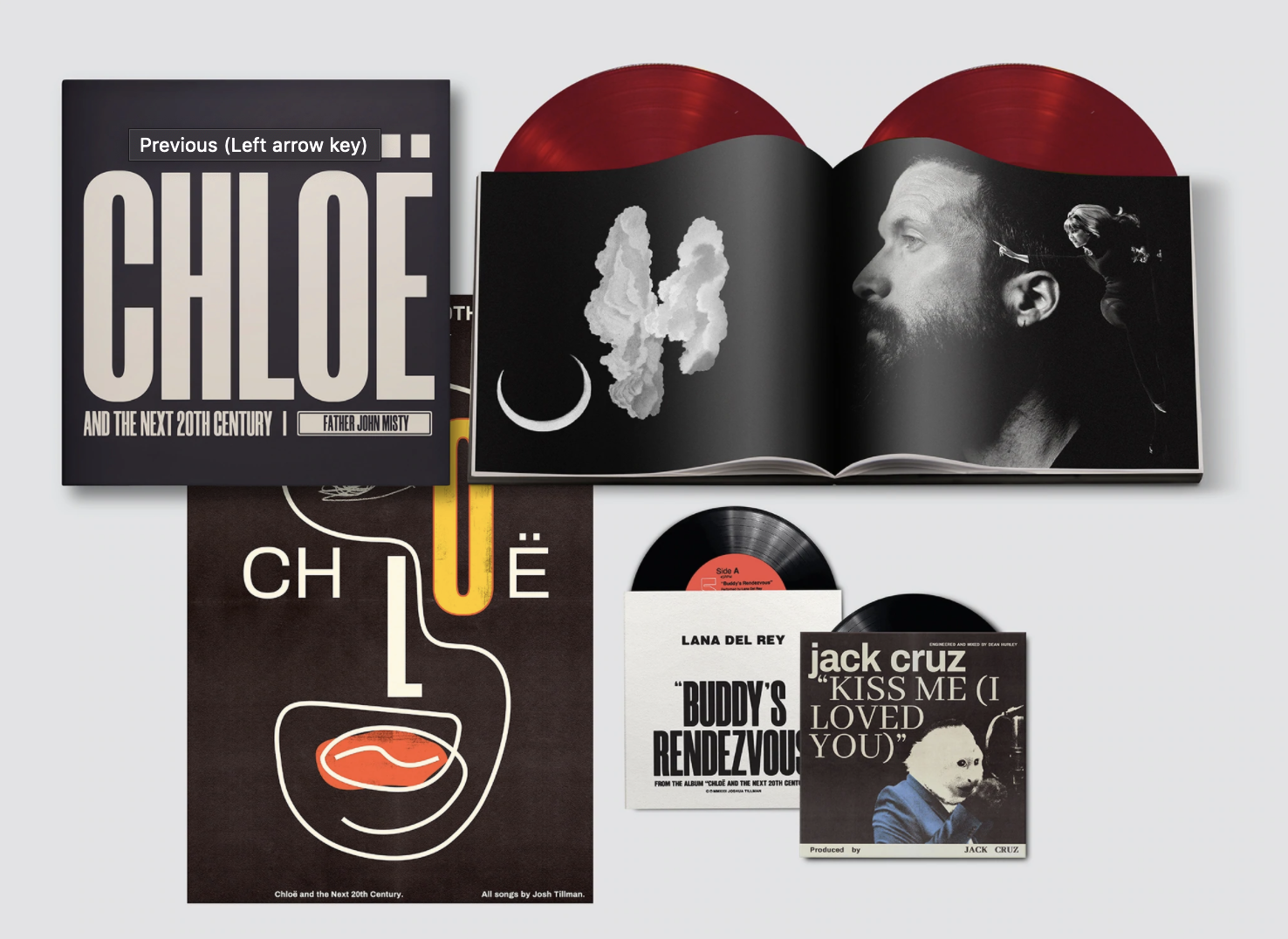
Father John Misty (aka Josh Tillman) has announced the release of a new album via a spoken word flexi disc record sent to a select handful of fans on his mailing list. The new album, entitled “Chloe And TheNext 20th Century”, will be out on April 8th, 2022 via Sub Pop/Bella Union. One recipient of the flexi disc uploaded a video of the record being played on Reddit.
When the bells toll and 2021 turns to 2022 in a few weeks, it will mark four calendar years since the last time the world got a new album out of Father John Misty. This would have been an unthinkably long time to wait during the run that gave us not one but three album cycles full of mordant folk-rock philosophizing and off-the-wall interviews between 2015 and 2018, but a lot has happened in the world since then, and anyway, papa’s vacation appears to be ending soon.
“Available April 8th, 2022 on Sub Pop and Bella Union. Father John Misty’s new album: “Chloe And The Next 20th Century.” Get it on vinyl, CD, the other one, uh, cassette. And in beautiful deluxe hardback edition with expanded artwork and much more. This is the album. Eleven new tracks produced by Jonathan Wilson and Josh Tillman. “Chloe And The Next 20th Century”. It’s technically new.”
The album’s limited deluxe edition comes in a hardcover book featuring bonus 7″ singles. One includes Lana Del Rey’s cover of the album track “Buddy’s Rendezvous,” and the other features Jack Cruz’s version of “Kiss Me (I Loved You).”
Father John Misty’s last album, “God’s Favorite Customer”, was released in 2018 via Sub PopRecords,
Cheval Sombre releases his third album, “Time Waits for No One“. It is his first solo release for more than eight years, following 2018’s critically acclaimed collaboration with Galaxie 500 and Luna frontman Dean Wareham, and the first of two new albums scheduled for 2021, both of which have been produced by Sonic Boom. Cheval Sombre is the nome d’arte of Chris Porpora, a poet from upstate New York whose otherworldly psychedelic lullabies on his self-titled album from 2009 and its follow-up, “Mad Love” (2012), won him a cult following. “Time Waits for No One” ushers in his most prolific period, and serendipitously the world has finally slowed down to his pace. This is no lockdown record, but ChevalSombre’s reclusive, reflective music is its perfect soundtrack.
“Time Waits for No One” is his finest and most fully realised body of work to date and, appropriately enough for a record that has taken so many years to come to fruition, across eight original songs, an instrumental and a closing cover of Townes Van Zandt’s ‘No Place to Fall’, its overarching theme is time itself; what it is and what role it inevitably plays in all of our lives. But the record is also timeless, contrasting the musical simplicity of Cheval Sombre’s open-tuned acoustic guitar curlicues with the beautiful, sweeping and ornate arrangements of Sonic Boom’s keyboards and Gillian Rivers’ and Yuiko Kamakari’s strings. The end result is something akin to Daniel Johnston backed by the Mercury Rev of Deserter’s Songs. Elemental and earthbound, but simultaneously and very subtly shooting for the stratosphere.
One of two Cheval Sombre albums to come out this year, “Time Waits For No One” was a strong collection of reflective psychedelic folk. Sonic Boom (him again!) served as the album’s producer, and really there’s nobody out there who understands this kind of dreamy narco rock better (think Spacemen 3’s “Transparent Radiation”).
Cheval Sombre under exclusive licence to Sonic Cathedral Released on: 2021-02-26





:format(jpeg):mode_rgb():quality(90)/discogs-images/R-436041-1465506377-6757.jpeg.jpg)







 The Fat Angel Sings