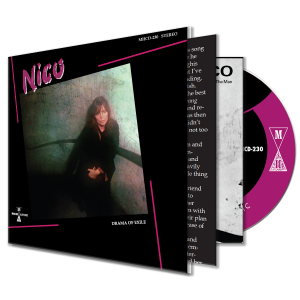
A very limited repress of Nico’s atmospheric Post-Punk marvel (which is back in print for the first time in almost 20 years).
Includes seven haunting originals and two fascinating covers (TheVelvet Underground’s I’m Waiting For TheMan and David Bowie’s Heroes).
“Drama of Exile” is the sixth studio album by German musician Nico. This version was initially released in 1981, and a second release followed in 1983 which was a re-recording of the first one done in May 1981. The album featured a Middle Eastern rhythm section and was produced by Corsican bassist Philippe Quilichini. This was Nico’s only album not to feature John Cale.
In Paris in the seven year gap between the recording of “The End” and the release of “Drama Of Exile”, Nico appeared to be doing little more than feeding a heavy heroin habit. When she met Aura Records founder Aaron Sixx after a gig there she told him that she was eager to start recording again. He told her to contact him when she was next in London. When she arrived it was with a new harmonium in tow – claiming the previous one had been stolen and that its replacement was a gift from Patti Smith.
She also brought with her the Corsican record producer Philippe Quilichini and his girlfriend – a half French half Vietnamese creature who Nico would introduce as her new manager, though really she was little more than her pusher. She and Quilichini had already finished the demos of the seven new songs and two cover versions that eventually they would record for the album. Quilichini’s production on the album and in particular Mahamad Hadi’s guitar parts emphasised the eastern promise of the numbers and provided a stirring counterpoint to Nico’s heavily accented teutonic vocals which gave the whole thing a stark beauty.
“The real surprises on “Drama” are the covers. Lou Reed’s ‘Waiting For The Man,’ one tune she didn’t sing on that first Velvets album, is invested with a deadened user’s authenticity that Reed’s self-conscious streetcool sneer couldn’t deliver, while Bowie’s ‘Heroes’ has an unexpectedly flexible vocal (Nico gayly intoning ‘I, I will be King’), exuberant playing and a radio-active disco pop arrangement that could even see our lady in the charts after all these exiled years. Still crazy, still smart.” – Sandy Robertson (Sounds Magazine, 1981)
There are Bonus tracks on the CD: 10.Genghis Khan (Alternate Mix) 11. One More Chance (Alternate Mix) 12. Henry Hudson (Alternate Mix) 13. Waiting For The Man (Alternate Mix) 14. Sixty Forty (Alternate Mix) 15. The Sphinx (Alternate Mix) 16. Orly Flight (Alternate Mix) 17. Heroes (Alternate Mix)
The cover to Joy Division’s Unknown Pleasures is both immediately familiar and entirely mysterious — much like the music within. The only album from the band to be released during frontman Ian Curtis’ lifetime, he undeniably drives their debut, whether with an aggressive isolation or a hand reaching out hopefully. But that’s not to say this is a one-man show. The rest of Joy Division do their fair share of heavy lifting, producing cavernous, eerie sets to surround his tortured mental explorations. A touchstone for post-punk, new wave, electronic music, and indie as a whole, Unknown Pleasures feels like listening to the deep breaths and mumbled self-analysis of an astronaut as he drifts out into space.
There’s a reason 1979’s ‘Unknown Pleasures’ is the altar at which so many worship. This is the calling card of the gesamtkunstwerk that is/was Joy Division, those four spindly young dudes studiously engaged in pushing the post-punk envelope further than it had gone before.
‘Unknown Pleasures’ is known for being gloomy or even depressing. While you can definitely make the case for this, the words that more readily spring to mind are “elegance” or “grandeur”. The rhythms here are propulsive but never excessive; guitars and bass wind tightly around the song structures; the vocals are too dynamic to venture into true melancholy as they do with an Elliott Smith or Grouper.
You have to remember that Joy Division were forged in punk. Famously, the band’s members were among the crowd at the The Sex Pistols’ Lesser Free Trade Hall gig – Morrissey, Mark E Smith, Factory Records’ head honcho Tony Wilson and Buzzcocks were also there. Joy Division’s scratchy punk energy, best captured on the ‘Ideal For Living’ EP, was tempered by Martin Hannett’s experimental recording and production techniques to create something completely distinctive-sounding for this debut LP. From the indie-disco pump and thrust of opener ‘Disorder’ to the stentorian ‘Day Of The Lords’, the energetic ‘She’s Lost Control’ to the faded elegance of closer ‘I Remember Nothing’ – if ‘Unknown Pleasures’ isn’t iconic, then nothing is.
Beach House are releasing their new album, “Once Twice Melody“, in monthly four-song chapters, culminating with the physical release of the whole album on February 18th. We got the first four songs, including the title track, back in November, and now here are the next four: “Runaway,” “ESP,” “New Romance” and “Over and Over.”
“Once Twice Melody” is being released in four distinct “chapters.” “Chapter 2” has now arrived. Following the first four songs of the 18-track album (including its title track), the second installment features four new ones: “Runaway,” “ESP,” “New Romance,” and “Over and Over.” The next two parts of the follow-up to 2018’s “7″ will arrive in the beginning of 2022. “Chapter 3” is out January 19th; and the full album release arrives on February 18th.
Tracklist: 5. Runaway Directed by Ethan Fedele 6. ESP Directed by Jennifer Juniper Stratford 7. New Romance Directed by Zach Lieberman 8. Over and Over Directed by Nicholas Law
“Once Twice Melody” is the 8th studio album by Beach House. It is a double album, featuring 18 songs presented in 4 chapters. Across these songs, many types of style and song structures can be heard. Songs without drums, songs centered around acoustic guitar, mostly electronic songs with no guitar, wandering and repetitive melodies, songs built around the string sections. In addition to new sounds, many of the drum machines, organs, keyboards and tones that listeners may associate with previous Beach House records remain present throughout many of the compositions.
Beach House is Victoria Legrand, lead singer and multi-instrumentalist, and Alex Scally, guitarist and multi-instrumentalist. They write all of their songs together. “Once Twice Melody” is the first album produced entirely by the band. The live drums are by James Barone (same as their 2018 album, 7), and were recorded at Pachyderm studio in Minnesota and United Studio in Los Angeles. For the first time, a live string ensemble was used. Strings were arranged by David Campbell.
The writing and recording of “Once Twice Melody” began in 2018 and was completed in July of 2021. Most of the songs were created during this time, though a few date back over the previous 10 years. Most of the recording was done at Apple Orchard Studio in Baltimore. “Once Twice Melody” was mixed largely by Alan Moulder but a few tracks were also mixed by Caesar Edmunds, Trevor Spencer, and Dave Fridmann.
The album will be available in the following formats:
Vinyl Box Set: Gold and clear vinyl LPs in separate jackets with custom dust sleeves, two posters, book, all enclosed in a hinged box.
2xLP: Black LPs in a wide-spine jacket with poster and custom dust sleeves.
2xCD: Includes wide-spine jacket with poster and custom dust sleeves.
“Once Twice Melody” Release Sscehule Chapter One: November 10th, 2021 Chapter Two: December 8th, 2021 Chapter Three: January 19th, 2022 Chapter Four: February 18th, 2022
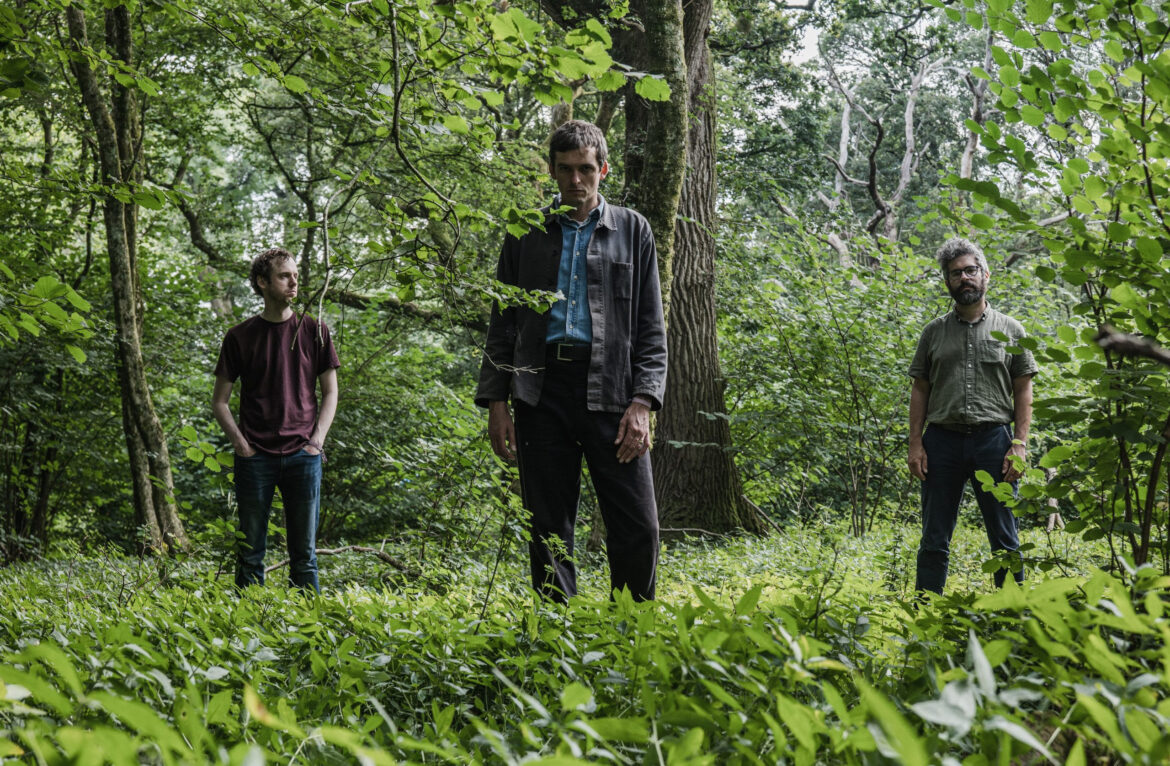
Since the demise of his previous band Ultimate Painting, Jack Cooper – under his Modern Nature guise – has never stopped looking ahead, exploring and reaching for something further. Since 2019, he’s released an EP, last year’s mini album “Annual”, one full length LP, one 7” and three live cassettes – in the process mapping out astonishing new terrain. “Island Of Noise” presents an obvious new peak in his discography. Over the last 12 months, Cooper has constructed a beautiful, free-flowing box set’s worth of material featuring a new album, a separate and equally engaging instrumental interpretation of the album and an accompanying book featuring the work of wide-ranging, non-musical artists (including Booker-nominated poet Robin Robertson, mycologist Merlin Sheldrake, illustrator Sophy Hollington, and writer Richard King) that reinterpret, deconstruct or take inspiration from the 10 tracks on the record. Island Of Noise represents an absolute career highlight, combining Cooper’s celebrated song writing and compositional skills with a free flowing expansiveness coloured by British free music luminaries such as saxophonist Evan Parker, pianist Alexander Hawkins, bassist John Edwards and violinist Alison Cotton, as well as long term collaborators Jeff Tobias and Jim Wallis.
Jack Cooper‘s band Modern Nature pursue an exploratory, free flowing path both on record and off, since their conception three or so years ago. Debut album ‘How To Live’ in 2019 provided us a route map of sorts, and found ways to do precisely as the title suggests; last year’s ‘Annual’ explored the seasons. “Island of Noise” drops us off to an island, albeit a metaphorical one. The new record might be more compositional in nature than earlier works but it does not sit in isolation; jazz-inspired arrangements and whispered vocals, fragile and as a dry leaf, ready to crumble, are familiar to those Cooper brings along to accompany him on his creative travels. Although his indie roots are still present – despite himself, maybe he’s followed his heart and sharpened instincts, creating not only a concept album of depth and imagination, but building a strange yet still familiar world. Jack has moved literally in real life too, leaving behind the grit and pace of London to the green and clean of the Essex countryside. ‘Island of Noise‘ bridges those two geographical worlds, his past and present, in its very creation. The bare bones written at his former home in Leytonstone and developed and fleshed out and recorded in new rural surroundings, is a mirroring of his own movements, if you like. ‘Yeah, I’m not sure why,’ he says of his propensity for journeying, in his musical output anyway. ‘A lot of the time the reason why I make these records is a way of processing my own worldview, or the way I want to live. It’s difficult to put this stuff into words. So for me to say, “oh, it’s about it’s a record about someone arriving in a new place” would be a way of explaining it, but to me it feels like the scope of it is far wider than that.’
“Island of Noise’s” beginnings start at Jack’s rediscovery of Shakespeare’s play ‘The Tempest’, the scene where strangers land on a mysterious island, one alive with supernatural sounds and movements. They are assured by an uncharacteristically poetic and gentle Caliban that “be not afeard, the isle is full of noises”. The typically aggressive character warns to not be alarmed at what they may hear, the sounds will not hurt but instead gift pleasure.
‘I think that the island as an analogy is useful, but I think of it as being any sort of unknown space you find yourself in. Whether that is a trying to try and empathise with someone who’s been forced to seek refuge here. But, it can be sort of any situation where you find yourself overwhelmed with the unknown,’ explains Jack.
The record seeks to show the story of the island told as viewed through the eyes of outsiders newly arrived. That feeling of disassociation is something we all feel, in these strange times, these complicated times, these curious times, or indeed these typical times. ‘It could be something as simple as when you go on the underground in London, and it’s like six in the morning, but there are hundreds of people in the carriage with you,’ he suggests. ‘If you actually look at the situation, it’s incredibly dangerous. And no one’s talking to each other. If you weren’t so used to it and conditioned to think it was reasonable you would say it’s a completely insane situation.’
Reading The Tempest, Cooper was struck that the themes explored by Shakespeare hundreds of years ago scarily applicable to contemporary times. Xenophobia being one; as I’m writing this, 26 asylum seekers perished attempting to cross the English Channel in effort to reach the relative safety of our shores, the ‘send them back’ response from government jarring with that of our French neighbours, leading to a stalemate.
‘More than that (the play) seemed to coincide with how I started thinking about our general political discourse and how polarised everything is nowadays,’ Jack says. ‘From my own point of view for us to move on from this point we need to accept that there’s a lot more grey areas and a lot more nuance to most to most political disagreements. I think of myself as really quite far to the left, a socialist and but I think we’ve got to a point where everyone is very, very blinkered.’
This ties in with the unfolding and fallout of Brexit, how there is comfort real or imagined in looking at the past in a nostalgic way. As Jack points out, it’s safe to be human in our society in contemporary times despite COVID and a climate change disaster looming. No wars affect us, we live longer lives in relative comfort; in Shakespeare’s day humans did well to live past the 30 years of suffering.
On Island of Noise, he imagines a changing and evolving landscape on the island, its own journey through time. But also how any new arrivals unfamiliar with its contours and customs and terrain might navigate it physically and emotionally, react and adapt to its ways and inhabitants, navigating inequalities and divisiveness. Finding order within chaos, he talks of finding goodness and positivity around us, not always easy to do during the overwhelming shit thrown at us so much of the time. ‘Finding compassionate people and finding connections with people, I suppose. And I do feel that you can find compassion and connection with people across the majority of the political and social spectrum. I still really, truly believe that. You know, people are nice.’ And connections of like minded souls formed the record itself; long-term collaborators Jeff Tobias and Jim Wallis plus saxophonist Evan Parker, pianist Alexander Hawkins, bassist John Edwards and violinist Alison Cotton. The ensemble created the record through improvisation, vocal melodies and guitar written by Jack early on. That would be the basis of what long term drummer Jim Wallace, and John Edwards on bass worked on and built a framework, representing the landscape’s shifts and changes. The inhabitants, foliage, forests and valleys imagined by improvisation and classical musicians. ‘I had some set ideas and set orchestration scored out, but we would basically make a canvas for the other people to kind of elaborate on and shape the record I suppose. So the idea really was for them to sort of take these melodies and themes and elaborate on, take them to where they think we should go and we kind of from the how we sort of edited it all down from the from the sort of hours and hours of improvisation. Everyone had the space to improvise.’
I love the concept of recording the album as a sanctuary of sorts, Cooper finding his own order within the mess of last year. Island of Noise recorded with nice people, coming together to create, in a brief respite from the hardness and isolation of lockdowns. ‘For a long time I was in groups and had a career within music to some extent but it’s got to a point especially since Modern Nature began that I had a realisation this is this is my vocation. I’ve got to a point where I realised, well, this is what I do now. With that has come a certain sense of applying myself a lot more and an acceptance of my personal ambitions for the music. To spend a year or something writing and figuring out how to notate and working on it every day. And all that happening within what was going on last year with the lockdowns, it felt like actually getting in the studio was, “this is this is where I’m meant to be”.’
The Modern Nature adventure so far has been quite a ride. Jack refutes suggestion he is especially prolific, despite an impressively regular series of releases. Instead, he prefers to view it as a keener dedication to his own personal creativity. More space and reflection on the records as they progress, Cooper’s pleasure in pushing forward is clear. “Island of Noise” is accompanies by “Island of Silence”, instrumental reworkings of the songs.
‘I’m becoming more of the mind that music is a is a far more interesting and far more successful medium to express yourself or communicating with people. I think it’s miles above the written word or language. I think that there’s something in music that is so so important. I generally just feel like I’m moving away from writing words because it doesn’t feel it doesn’t feel like I’m communicating as well as I do when it’s the words on there. So it isn’t necessarily I think this music’s better without the words. I don’t feel like music’s necessarily better without words but I think it’s just as interesting, arguably more interesting.’
We’re to expect more movement from Modern Nature, then. More change. More exploring. We’d expect nothing less.
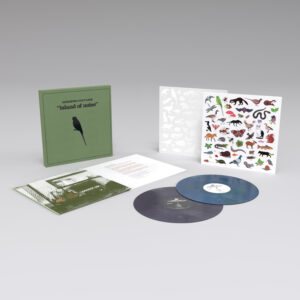
Island of Noise is released 3rd December via Bella Union, as a deluxe vinyl box set with accompanying book featuring Booker-nominated poet Robin Robertson, mycologist Merlin Sheldrake, illustrator SophyHollington, polymath Eugene Chadbourne and The Lark Ascending author Richard King.
“Island of Noise” – pressed on 180g recycled vinyl plus Island of Silence (Expanded Instrumental Version of the Album) – also pressed on 180g recycled vinyl plus 36pg Perfect Bound Booklet with 10 contributions from artists / writers in conjunction with, and inspired by, a song on the album.
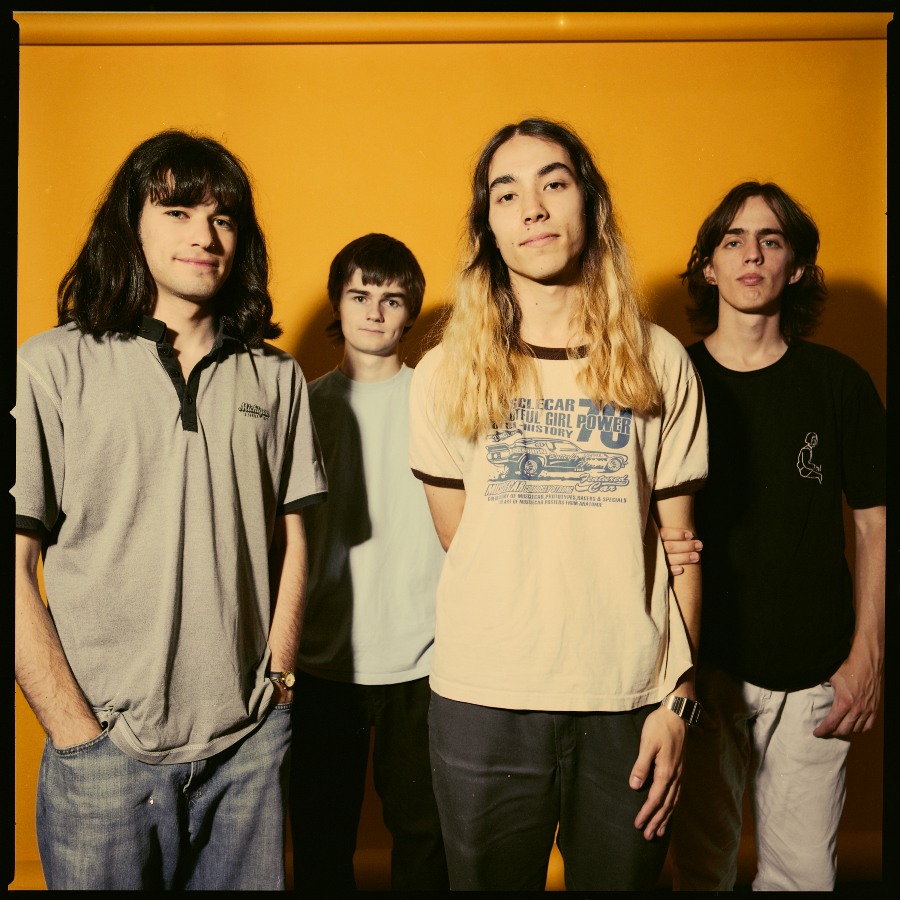
The Lazy Eyes are a four-piece psychedelic rock band based in Sydney, Australia. The band are Harvey Geraghty (vocals, guitar, keyboard), Itay Sasha (vocals, guitar), Leon Karagic (bass) and Noah Martin (drums).
Early Tame Impala and King Gizzard & The Lizard Wizard are clear sonic references for The Lazy Eyes. While the four-piece Australian band says that it’s hard to not wear your influences on your sleeve, tracks like “Fuzz Jam” have many of us excited to hear where the group takes psych rock on its full-length debut, out later this year.
The Lazy Eyes, is a world unto itself. It’s all journey and all destination, a decidedly modern marvel of psych-rock that’s unpretentious in construction but precious where it counts.
Harvey Geraghty, Itay Shachar and Noah Martin met in their early years at Sydney’s Newtown High School of the Performing Arts. They became fast friends and began to busk around Sydney, their burgeoning band bound together by long hours carting their instruments around the city. Around 2015 The Lazy Eyes decided to formalise the band as a unit, a decision that coincided neatly with their meeting of Leon Karagic, who provided much-needed bass to their ensemble.
Off the back of their first two EPs, released in 2020 and 2021, The Lazy Eyes have sold out numerous shows along Australia’s east coast, including their own music festival, Lazyfest; garnered praise from outlets including KCRW, FBi Radio, triple j Unearthed, BBC 6 Music andRadio 1, and NME. Their reputation continues to grow despite the fact that jaunts at SXSW and The Great Escape were cancelled in light of the pandemic.
“SongBook” is evidence of an edifice slowly being formed, a trepidatious first footstep by the band into the wider world. The dynamic “Fuzz Jam”, the latest taste from “SongBook”, sees the band at the height of their powers, deftly slipping from one mode to another in seconds. Combining the piquant feel of classic 60s psych with sharp Gen Z wit, it’s magnanimous and effusive, a vivid insight.
If you like unforgettable riffs, you’ll love Momma. If you like real hooks, you’ll love the N.Y.-based indie rock duo. Elements of Sonic Youth, The Breeders, Veruca Salt and Smashing Pumpkins shine through in Momma’s music. While there’s a clear nod to the past, Momma focuses on the here and now.
Los Angles Momma, a four-piece led by co-singers/guitarists/songwriters Etta Friedman and AllegraWeingarten, records to be released on Danger Collective Records. Momma recently played their first ever NYC show supporting Empath and are confirmed to make their SXSW Music Festival debut this March; more shows will soon be announced.
As a band, Momma has always relied on Friedman (21) and Weingarten’s (22) symbiotic writing style and creative intuition. It references that feeling and encapsulates how we write together: a form of communication, where we’ll constantly switch off who is playing lead and who is playing rhythm guitar in the same song.” Inspired by songwriters like Kim Deal, Liz Phair, and Elliott Smith, the two developed a knack for dynamic song structure and gripping lyrics fused by a dulcet pop sensibility.
Although the pair now live far from home and each other while finishing college in New York and New Orleans, Friedman and Weingarten have continued to write the same way they always have. For the past two years, during breaks between semesters, the two would assemble DIY west coast tours, open LA dates for bands like Gang of Four and Ian Sweet, and workshop new songs together at home. The band’s debut album “Interloper” and 2018’s Apollo 7”capture Friedman and Weingarten hitting a stride at the end of their adolescence, while establishing a sound and vision that they continue to expand upon via the more focused and detailed world.
“Medicine” is the new digital single from Momma, available everywhere now on Polyvinyl Records and Lucky Number.
Released November 17th, 2021
Momma is: Allegra Weingarten, Etta Friedman, Zach CapittiFenton, and Aron Kobayashi Ritch
Casii Stephan sings with all the fervour of somebody who has gotten through to the other side of something and is dying to share her slice of hope with the world.
Whether singer-songwriter Casii Stephan is singing about pain, love, loss or social justice, her gorgeously emotive voice inspires comparisons to alt-pop artists like Florence Welch and Fiona Apple with a writing style reminiscent of Carole King. Casii Stephan has a voice that you won’t soon forget. With comparisons to Florence Welch, Fiona Apple and Carole King, her voice will envelop your soul like a “warm blanket”
Her forthcoming single, “Already Gone,” is an anthem against domestic violence; “I wanted to write a song where, as a woman, you realize your worth isn’t tied up in another person’s affection. As a person you are worthy without having to prove your love to somebody,” she says.
COVID-19 permitting, Stephan plans to take her songs on the road with some regional and national dates in 2022.
This week, Tori Amos’s debut album turns 30 years old. It was on January 6th 1992 that one of pop’s most original singer-songwriters unleashed the seminal “Little Earthquakes” into the hands of the world. Things have never been quite the same for the singer – or her legion of fans – ever since. The album contains what would become the classics of not only her own career, but of the wider musical landscape of its time.
It’s hard to believe that the vibrant and virtuosic pianist hit the popular music scene all those years ago; the passage of time appears to move swiftly in the world of entertainment. Yet as long ago as it was, “Little Earthquakes” has proven to be an album that easily stands the test of time.
Amos is still releasing powerful music to this day (in October of 2021, she released the critically acclaimed “Ocean To Ocean“). In truth, it’s hard to comprehend Amos expressing herself so fully in any other medium; her music, literally, seems to be her language. Her musical journey might not have begun with “Little Earthquakes” (the singer had previously released an album with band “Y Kant Tori Read“, and had been composing music since she was a young child), but it certainly launched the artist’s solo career in a way no one could have imagined.
“Little Earthquakes” is an album of honesty and introspection. Amos’s upbringing certainly seems to have provided her with the ingredients she needed to flavour the release. There is something of Amos’s early years that appear to bring a very dominant influence to her creative table at this time. In “Little Earthquakes” – as with many of her later releases – her early familial ties strongly season her song writing. Her mother an academic, avid lover of books and a deeply spiritual person – appears to be hugely inspirational to Amos. Coupling this with her father’s towering influence – he was a Methodist Minister – it is easy to see how the scene was set early on for an immensely charged and creative awakening for ToriAmos. The seeds for “Little Earthquakes” were planted long before Amos probably ever placed her fingers to the piano to begin composing it.
Released via Atlantic Records, Tori Amos worked with her then-partner, producer Eric Rosse. Recorded between 1990-1991, the 12 track album appeared to serve as a confessional for the singer. Dark, honest, brooding and at times explicit, in “Little Earthquakes”, Amos clearly wanted to pull back the veneer of what it meant to be a woman in a world constantly asking her to compromise who she was, as a person and an artist (if the two could ever be divided).
It seems evident in the listening that “Little Earthquakes” was moulded and stitched together from Amos’s own life and experiences, making it a remarkably emotional affair. In the opening track, Crucify, fans hear the singer breaking free from many of the constraints and chains that religion has placed upon her. It’s a defiant song, certainly empowering for those imprisoned by their own beliefs and struggling to break the hold they have.
“Me and a Gun” was the first single be lifted from “Little Earthquakes“, and it certainly made a mark. A track that soon became a live staple on her world tours, the composition was almost shocking in its open exploration of a deeply upsetting and traumatic memory. “Me and a Gun” rapidly became the talking point of her early career: here we had this exquisite artist who traded as a pianist and yet she left her instrument behind to perform acapella. In this moment, Amos seemed to need no accompaniment. Everything else was stripped away – her voice, her words and her experience carried everything. The subject that Amos sings about makes the listener sit up and pay attention; in live shows, the audience could hear a pin drop, such was the reverence to the track. “Me and a Gun” is an example of how brave Amos was as an artist – to share that experience with the world highlighted her fearlessness as a composer. More than this, it helped pave the way for future generations – to help victims of abuse to find their voice, and to tell their story.
In the infectiously memorable track “Girl”, Amos sings of an inner fight – of trying to reclaim yourself from the deep-rooted need for other people’s approval. To finally be able to belong to yourself, in self-belief, without compromise, without worrying about the judgement of others. It’s a track that breaks down the shackles of ownership.
In the enchanting and almost fairytale-like track “Winter”, Amos sings smoothly about the innocence of childhood, and of looking back at years gone by. She sings of a relationship with an older patriarch and lands her listeners firmly into a dreamlike state with her vocal delivery and the delicately haunting piano which shrouds it.
In “Silent All These Years”, Amos sings of reclaiming one’s own voice back after years of being silenced. It’s a song of recovery, of pulling back everything that has been stolen. As in the track “Girl”, this song feels like a tribute to ownership, and of taking that which has been stolen and hijacked by others. “Silent All These Years” is more relevant than ever, especially in light of the MeToo movement where so many are encouraged to find their voice and speak up about their experiences. Seen in this light, it is clear how far ahead of the curve Amos was as an artist even back then.
For “Happy Phantom”, Amos worked with composer and musician John Philip Shenale, her long-time collaborator. A tale of death, “Happy Phantom” is a quirky, uptempo track that unveils Amos’s vibrant humour and wit.
One of the undeniable diamonds of the album is the epic track “Precious Things”. Amos’s impassioned vocals bring this 5 minute gem to life, with the song’s majestic riff dragging the listener in and refusing to let go. It’s a remarkably dark and edgy track. “He said you’re really an ugly girl, but I like the way you play…” In this song perhaps more than any other on the album, Amos showcases the depth of her unfiltered song writing, with a cutting brutality which set her apart from her contemporaries of the time.
When “Little Earthquakes” arrived in 1992, the landscape of the alternative music scene was almost exclusively dominated by male voices. With the grunge movement finally penetrating into the mainstream and bands like Nirvana and Pearl Jam becoming household names, Amos was a lone female voice in a sea of masculinity. Perhaps the reason why her debut resonated so deeply at the time was due to the fact that the singer/songwriter was brave and bold enough to share her own lived experiences with the world, ones which a man simply couldn’t have written.
Whilst a song like “Precious Things” shatters the peace, the title-track itself is an ocean of quieter reflection. “These little earthquakes, here we go again…doesn’t take much to rip us into pieces,” Amos sings in the album finale. The album closes the doors with this introspective 7 minute epic which is a deliciously melancholic affair. In the latter section, Amos punches in with her dramatic, spine-tingling soprano vocals as she repeatedly sings, “I can’t reach you, I can’t reach you..” It’s the perfect end to the album.
It’s easy to see why Rolling Stones voted “Little Earthquakes” amongst their “Greatest Albums of All Time.” Most fans would agree it is a masterful release. It contains so much of what listeners love about this unique artist. Philosophical, spiritual, heartbreakingly honest and vulnerable, it is an album that serves as an anthem for those who seek to reclaim all that has been lost. Nothing, “Little Earthquakes” seems to sing, is ever truly out of reach.
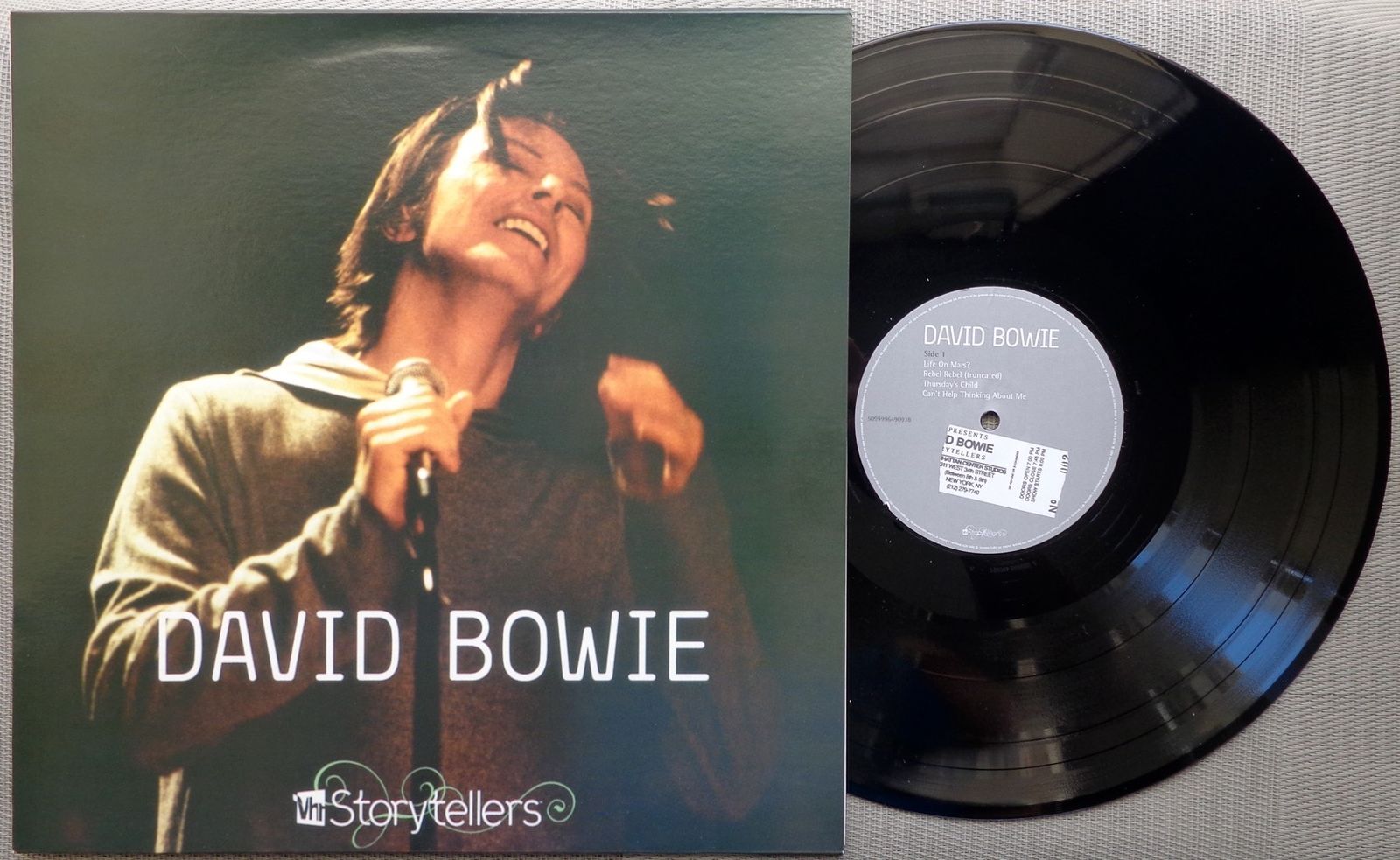
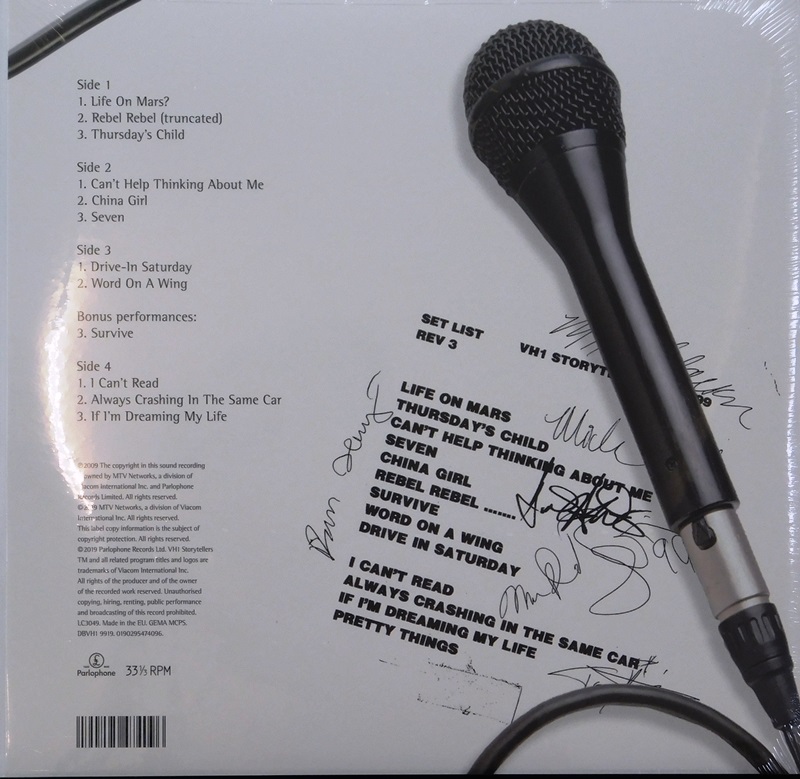
On the 23rd of August 1999, David Bowie played an intimate set for invited guests at The ManhattanCentre’s Grand Ballroom in New York for the VH1 Storytellers series. The set has long been regarded as one of the most memorable, with David delving deep in to his catalogue to perform tracks such as ‘Can’t Help Thinking About Me’ for the first time in 33 years, Aladdin Sane’s ‘Drive-In Saturday’ which he had not performed since 1974 and ‘Word On A Wing’ which received its first outing in 23 years.
Bill Flanagan, Executive Producer of the VH1 Storytellers “We were used to dealing with legendary musicians. Still, landing David Bowie was more than a big booking. There’s no way to say this without being corny: it was an honour. Bowie has a unique place in rock & roll. He is not only one of the most influential musicians of the era, he does nothing unless he is fully committed.
“VH1 Storytellers” is the last performance with collaborator and guitarist Reeves Gabrels, whom Bowie had met in 1987 and worked with since, including in the band Tin Machine. Gabrels quit the band 4 days after the show was recorded, leaving Bowie to scramble to find a lead guitarist for his upcoming “Hours” Tour.
When he appeared on the show on August 23rd, 1999, he was a few months away from releasing “Hours..” an album where he comfortably came to terms with his past, so it fits that he’s looking back fondly here, telling stories about the Mannish Boys and Iggy Pop, sliding the new tunes “Thursday’sChild” and “Seven” in between “Life on Mars?” and “Drive-In Saturday,” plus “Can’t Help Thinking AboutMe,” a single he released with the Lower Third in 1965. These are all good, relaxed, unplugged readings, but the chief attraction of VH1 Storytellers is, appropriately enough, those stories Bowie tells, as they not only offer a glimpse into the creation of these songs.
1999 TV Show offers priceless insights and powerful renditions. One can’t imagine many stars of his stature spinning self deprecating anecdotes, but the storytellers song-and-chat format was made for Bowie’s uniquely thespian charm. Here he recalls seeking a toilet, dressed in full Ziggy regalia, and protesting to the promoter. “My dear man, I can’t piss in the sink.” The promoter grumbled, “Son, if it’s good enough for Shirley Bassey, it’s good enough for you.” He also mentions drunkenly shaving his eyebrows off when Mott The Hoople rejected “Drive In Saturday” (“that taught them a lesson”). He also reveals his vote for “the worst two lines I’ve ever written.” Yet when the music kicks in he’s suddenly the airborne trouper again, offering brilliant versions of “Life On Mars?”, “China Girl” and “My Cry for Help”, “Word On A Wing”. The accompanying DVD adds a teased-out “Always Crashing in the Same Car”-









 The Fat Angel Sings