This is definitely Shearwater’s biggest and loudest record—it’s easy to imagine these songs roaring from the stage—but it’s also their most detailed and intricate one. Front man Jonathan Meiburg and producer/engineer Reisch (who also recorded 2012’s Animal Joy and the off-the-cuff collaborations of 2014’s Fellow Travelers) spent two years crafting Jet Plane and Oxbow with help from drummer Cully Symington, longtime Shearwater associates Howard Draper and Lucas Oswald, and tourmates Jesca Hoop, Abram Shook, and Jenn Wasner.
But their secret weapon this time is film composer and percussionist Brian Reitzell, whose soundtracks include The Virgin Suicides, Lost in Translation, The Bling Ring, and 30 Days of Night. Reitzell’s arsenal of strange instruments emphasizes Jet Plane and Oxbow’s cinematic depth and scope, and reflects the band’s choice to anchor the record in the era when digital technology was just beginning to transform the world of recorded music. In Shearwater’s hands this doesn’t feel like nostalgia; the racing synths and hammered dulcimers of heart-pounding opener “Prime” or the addled motorik of “Radio Silence” sound more like a metaphor for our own bewildering moment.
There were singer-songwriters before Joni Mitchell , but with her 1971 masterpiece Blue, she pretty much set the template for almost everything that came after it.
Leading up to the album’s release on June 22nd, Joni Mitchell had released three albums, each an improvement — commercially and creatively — over its predecessor. Her 1968 debut, Song to a Seagull, barely cracked the charts and was short on any signature song. But by the following year’s Clouds, she was in the Top 40 and writing and recording numbers like “Chelsea Morning” and “Both Sides Now,” two of her earliest classics.
With 1970’s Ladies of the Canyon she cracked the Top 30 for the first time and scored three more of her most enduring numbers, “The Circle Game,” “Woodstock” (which Mitchell’s ex, Graham Nash, took to the Top 15 with his groupCrosby, Stills, Nash & Young and “Big Yellow Taxi,” which gave Mitchell her first sorta big single with its influence over the years looms way larger.
But Blue was something different, a hyper-personal collection of songs that sounded like they were ripped straight from Mitchell’s diary. The spare performances — most times it’s just Mitchell and her guitar or piano — add to the album’s intimacy, sparking a revealing listen that at times comes off like something maybe you shouldn’t be hearing. There are confessions, slipped-out secrets and the sense that the heart on display here was temporarily caught off guard.
When she first started recording the album in Los Angeles (with famous friend Stephen Stills and then current boyfriend James Taylor helping out on a handful of songs, along with pedal steel player Sneaky PeteKleinow and drummer Russ Kunkel), Mitchell was unsure which direction her fourth album was heading.
Songs were recorded and later cut from the album, replaced by newer numbers that better reflected her state of mind at the time. Blue is as much about her breakup with Nash as it is her relationship with other men of the period, including Taylor, even though the couple was history by the time the album came out. The pieces come together like a fractured heart trying to mend itself.
Joni Mitchell didn’t try to hide any of this. The hurt you hear in some of the songs came from a very real place, as did the joy found in others. In songs like “Carey,” “California,” “River,” “A Case of You” and the title track, Mitchell paints a portrait of a life in shambles, in heartbreak, in excitement and in love. (Many of the joyous pieces were written about a man Mitchell had met during a quick retreat to Greece in 1970 after her breakup with Nash.)
But there was more to Blue than just veiled accounts of Mitchell’s flings. There were songs about the daughter she gave up for adoption in 1965 (“Little Green”), homesickness (“California”) and her early marriage (“The Last Time I Saw Richard”). Nobody ever opened up so much on record before. Not even Carole King, whose equally game-shifting singer-songwriter album Tapestry was released just four months earlier, and certainly not any of her male contemporaries.
Blue became Mitchell’s highest-charting album at the time, “Carey” and “California” were both released as singles, with only the former charting, But its influence was almost immediately felt. Her friends and peers celebrated her openness, her complex guitar tunings and her willingness to take music into a bold new direction.
With the charts dominated by macho braggarts like the Rolling Stones‘ Sticky Fingers and Rod Stewart‘s Every Picture Tells a Story, both of which sandwiched Tapestry in the No. 1 spot in 1971, Blue not only revealed rare vulnerability, it was willing to take responsibility for its creator’s f—-ups. Nobody else was doing that. All these years later, singer-songwriters of all sorts (sensitive, insensitive, confessional, regretful) can be traced back to Mitchell’s masterpiece.
About two minutes into “Dull Times/The Moon,” the slow-burning epic that opens Band of Horses’ fifth album Why Are You OK, a speaking voice emerges. Buried under washes of shimmering electric guitar is a recording of auteur director Robert Altman, who is being interviewed about the cyclical nature of Hollywood. Following the disastrous reception to 1980’s Popeye, which crashed critically and commercially despite the star power of Robin Williams, the music of Harry Nilsson, and the guiding hand of Altman, the director is in a reflective mood.
“I think I just keep doing the same thing,” Altman says of his work. “And occasionally what I do crosses with the general attitude of the public, and it becomes very successful. And then I am a failure and a has-been, and then I cross back again. But I am going straight—to me, I am going in a straight line.”
The sample fades, and eventually so do the crystalline chords and the steady drum click, before a riff appears, gangly and thick with distortion. From there, the Pink Floyd vibes feather off, and Band of Horses engage in some unabashed rock moves, all crashing cymbals and pounding drums, like Crazy Horse playing post-rock. It’s no coincidence this grandiose, dreamy song begins the group’s first record in four years.
The Altman quote lingers. Over the last decade, Band of Horses have enjoyed consistent popularity, but they’ve also earned their share of critical scorn. With the quote, songwriter Ben Bridwell draws a straight line from the band’s debut, 2006’s Everything All the Time, back to the present, where everything’s changed for Bridwell, except for all the things that haven’t.
Bridwell used to have a sort of method for making records, which included packing up and heading to a beach house or a cabin somewhere far away from everyone, where he’d listen to records and read and claw into the solitude for inspiration. But around the time he was writing the material that would end up on 2012’s Mirage Rock, he recognized the formula wasn’t working like it used to.
“I remember leaving the damn cabin early on the last record, being like, ‘I’m not doing shit out here,’” Bridwell says, his voice draped in South Carolinian twang. “I was just kind of pacing around, listening to anything but my own music—or reading a book, not even to relax, just looking for some kind of spark. I wasn’t getting a whole lot of action from that. That’s pretty depressing, man, when you’ve left your home, you’re putting stress on your family, and you’re not getting good work from it.”
The songs on Why Are You OK, which were recorded in California and Upstate New York, weren’t written in seclusion. Instead, Bridwell wrote them at home in Charleston, in the company of his four children and wife Elizabeth. He jokes that he was “scared” to ask Elizabeth to leave town to write anyway. “Some of that is a direct result of having a small village here at the house now,” he laughs.
Bridwell jokes a lot, and he’s exceedingly easy to talk to. He gripes sympathetically about his frustrations with the local government of his native state, and he peppers his sentences with unnecessary “damn”s, calling me “friend” as he explains, with near constant self-deprecation, how the songs bloomed slowly for the album. While the writing didn’t come any easier than it had before, the four years between this record and the last provided him something he hasn’t always had when making records: time to reflect.
“I didn’t think of it like that when I started the process for this [one]. I just knew I didn’t want to have that conversation anymore of, ‘Hey, can I go to some damn cabin and be held unaccountable for whatever I do to myself?’” Bridwell says. “I’ll just adapt. There’s a common theme of that in my life now, I guess.”
“I’ll just adapt. There’s a common theme of that in my life now, I guess.”
Bridwell’s ease into domesticity isn’t all that uncommon for a thirty-eight-year-old guy, but when Band of Horses broke back in 2006, the narrative surrounding his music didn’t suggest a settled future. He left South Carolina in his teens, moving to Tucson, Arizona, where he founded indie rock outfit Carissa’s Wierd with MattBrooke and Jenn Ghetto. The band relocated to Olympia, Washington, and from there Bridwell moved on to Seattle, where he was briefly homeless. Somewhere along the line, he heard the music of Grandaddy , led by songwriter Jason Lytle.
“I must have been nineteen or twenty when I first heard‘Ghost of 1672’ and I was smitten from the get,” Bridwell says. “From then on, I was a lifelong fan.”
Bridwell eventually met Lytle in 2008 after the songwriter attended a Band of Horses gig in Montana, where Lytle had moved after the initial dissolution of Grandaddy. They kept in touch, collaborating off and on. “We did a Townes Van Zandt cover [together] because I was in an Italian hotel room and I couldn’t get a damn football game so I said, ‘I’m just going to cover this,’” Bridwell says. He recorded his half and sent it to Lytle, who finished it up.
“We definitely share some common ground as far as our mode of operation,” Bridwell says. That led to finally asking him, “Will you please help me with this damn record?”
With Lytle on board as producer, Bridwell and the band—drummer Creighton Barrett, bassist Bill Reynolds, guitarist Tyler Ramsey, and keyboardist Ryan Monroe—began experimenting. The result is Why Are You Okay, their first album for Rick Rubin’s American Recordings via Interscope. It’s also the most varied Band of Horses release. There are familiar vibes, like the charging “Solemn Oath” and the widescreen whopper “Hag,” which feels cut from the same cloth as Everything All the Time’s “The Great Salt Lake,” but there are weird, augmented touches on even the most straightforward of jams—a buzzing synth or echoing vocal, breaking up the staid pattern that made Infinite Arms and Mirage Rock feel less engaging than what the band is capable of.
“There are a lot of textual things and peculiarities in the arrangements that were absolutely [from Lytle’s] psyche; his stamp’s all over the damn thing,” Bridwell says. “I guess we match up well like that: we both get excited for those weird little asides in songs.
“He makes our shit seem a lot more sophisticated than we are,” he adds, laughing.
Recorded over several sessions, the record came slow and steady, and there was room for detours: the band cut a live record, Acoustic at the Ryman; Bridwell toured solo; and he teamed up with his old buddy Sam Beam of Iron and Wine for a collection of covers. “I wanted to have the benefit of digestion,” Bridwell says. “I wanted to be able to take breaks in between the sessions and have time to know I was comfortable with what we’re going to put out there. The last one was a bit of a shotgun wedding—I wanted that benefit of time to make sure it represented where we were in our lives.”
“There is a common link between all the Band of Horses songs,” Bridwell explains with a chuckle. “Which is usually me complaining about something.”
He’s talking about “Casual Party,” a song that feels “definitely close to the bone.” It’s about a dinner party—one that really happened—where Bridwell felt stifled by the conversation about television and hobbies. The band recently performed it on The Late Show with Stephen Colbert, packing three guitars while surrounded by weirdo Muppet-looking creatures. “Awful conversation at the casual party,” Bridwell sang, chewing up the words. “It never stops.”
But the record goes deeper than just an uncomfortable guy chafing against conventions. Gone are the political slogans of Mirage Rock’s “Dumpster World,” replaced by songs in which Bridwell incisively questions the institutions around him. On “Hag,” he expresses hesitant devotion, but also shares his deep fears: “Are we really in love, completely in love?” The question comes up again, on “In a Drawer,” with the singer Sera Cahoone adding in falsetto, “Do you love me, baby?”
“There is that balance between this music-life thing that we do [and] being a dad and a husband, [and] that balance is a bit fragile at times,” Bridwell says. “It feels like we’re always making up for lost time.”
The record offers no easy answers. “Even Still” closes things with a foreboding line: “I could just leave.” But conversation with Bridwell often circles back to family, both the one he has at his happy home and the one he’s found in his bandmates. And there is some ambiguity, he admits, left in the songs for the listener to decide exactly how the story turns out.
“I also don’t want to put all my cards on the table and be like, ‘This is about me, here’s what happened in my day.’ Like, fuck off, dude,” Bridwell says. “That can be boring as well. You want to give the listener a chance to make it their own.”
Garage rock four-piece Spring King have just released their anticipated debut album ‘Tell Me If You Like To’, . The UK outfit have toured with Courtney Barnett, FIDLAR and Slaves, and have proved exactly why they’re grabbing everyone’s attention by dropping one hell of an album.
Singer Tarek Musa, bassist James Green and guitarist Peter Darlington have run us through each track, giving us a pretty good insight into what makes them tick. Earlier in the year, they also told us all about the gear that went into making this album. CITY Tarek: ’City’ was recorded at my house early last year when we were recording the They’re Coming After You EP. It was originally half the speed when I did the demo of it on my iPhone. I wanted it to be really simple and kinda like a White Stripes song, very stripped-back and raw. When it came down to recording it I decided to try it double the tempo and it just felt a lot more exciting. I tracked it in the house using an SM57, an SE2200A and a C1000 mic, as well as a really cheap drum mic pack which consisted of three microphones for toms and kick drum. The whole song was recorded that day but took a couple of days to mix.
DETROIT Tarek: I wrote the chorus to ‘Detroit’ a while ago, maybe around February 2015. It was sitting on my iPhone for a long time, but every time I played guitar at home I’d always end up playing that chorus, which for me meant I should try and approach it as a song at some point. We recorded this one at Chapel Studios, multi-tracked and just like ‘City’, very quickly. The drums were done in the main live room (I asked the studio for an external monitor and keyboard so I could edit right next to the kit) with me on producing and engineering duties. We didn’t have any external engineers, except for a cool assistant Jonny Swailes who probably thought I was a bit nuts taking it all on myself. All of Pete’s guitars on this track (and the album for that matter) were recorded upstairs in one of the studio bedrooms; we felt a lot more at home up there, a lot more like how we’d do things back in the house.
WHO ARE YOU? Tarek: ’Who Are You?’ was done over at my house too, and was an earlier single that we self released. When it came to putting it on the album, I remixed it a little so that it fit in nicely with the rest of the tracks sonically. I’m always challenging myself as a mixer, and getting this track to fit was tricky at first as there wasn’t such a nice room to record in back home. The bass on this was DI’d and the guitars too, but going through my Golden Age Pre 73 super hot. I love the preamp, it does the job well.
IT’S SO DARK Tarek: ’It’s So Dark’ came about in 2012. It was one of the first songs I wrote for Spring King and I remember writing it on my Yamaha Electone Organ. It was meant to be the kind of thing someone would say to a friend in need, but spoken bluntly and honestly
James: I’ve been itching to play this live for such a long time, I remember tracking the backing vocals in the chorus in the studio absolutely losing our minds. The majority of the time I spent in the studio I had that chorus stuck in my head.
TAKE ME AWAY Tarek: Pete played the drums on this song which was funny at the time but it worked! I was in the control room doing some edits and I could hear him playing that beat. We recorded it to a click track pretty quickly – I think I might have already had the rough guide guitar parts in a session for playback. It’s a bit surf at times in terms of guitar tones, and I love the way James plays bass on this one, super palm-muted and plucked. James actually plays some piano on this track too.
James: This song was such a nice change up to a lot of the other tracks on the album, with a lot of scope for more dynamic playing and quite a sparse arrangement. The piano parts were so much fun, if a bit Elton John at times!
DEMONS Pete: ‘Demons’ is an old one for us – it originally came out on our first EP of the same name. When it came to deciding what tracks would make the album, we kept returning to it as lyrically and sonically it fit the feel we wanted to create. I’ve also always felt that it never quite receeved the attention it deserved. The guitar solo after the first chorus is one of my favourite passages of music we’ve ever released.
RECTIFIER Pete: Weirdly this song started life on the piano. Tarek played what would become the main riff a few times but then kind of left it there. It stuck in my head so I worked it out on a guitar and played it over and over again. When Tarek came back in, he started jamming along on the drums. I think at that point we both realised that it had potential. I had no idea it would be the first single though!
TELL ME IF YOU LIKE TO Tarek: I love playing this song live. Pete’s guitars for this whole album were done using my cousin’s Gibson SG and I can really hear it on this track. We did try many other guitars first but always came back to the SG for his rhythm parts. This one was written in the studio when me and Pete were jamming. He was on the drums while we had a break from recording and I picked up his guitar, and that’s how the rhythmic guitar stop and starts came about.
THE SUMMER Tarek: The chorus for this song was written so long ago, I’d say 2012/2013 at some point. In the past we’d rehearsed various versions of this song but never got it down so we left it to one side. When the album was coming round we decided to revisit it, and try to rewrite it. It was always heavily inspired by the songwriting of Brian Wilson, as well as some Springsteen tunes.
HEAVEN James: This is another personal favourite from those recording sessions. Pete’s absolutely nailed this; from the chugging guitar lines to the anthemic vocals in the chorus and middle eight, it seemed like a perfect way to round off the album.
Pete: I wrote the chorus for this song while I was living in New York about five years ago. At the time I was living in Queens with friends and sleeping on a mattress on the floor. Every night before I fell asleep I would write a little journal entry… sometimes I would just draw something, other times I would write pages and pages of stuff. This one night I came home drunk and wrote ‘Heaven is when you know yourself’. I woke up to it the next day and it’s stuck with me ever since.
Robert Pollard has recently announced that Guided By Voices were reforming with a largely new line-up, only drummer Kevin March having been in a previous incarnation. That announcement was accompanied by news that the new Guided By Voices album would be a totally solo affair by Pollard. He then springs a new solo album upon us that is the first for over a decade to not be recorded with Todd Tobias on instrument and production duties. In his place, handling all instruments and the recording desk, is Nick Mitchell, his Ricked Wicky side-man and newly announced guitarist in the live GBV line-up.
As typically muddled as this may be it is good news. Mitchell has proved to be a great foil for Pollard on the Ricked Wicky albums and is clearly a first-rate guitarist. It is also true that a degree of saminess had crept in to the albums that Pollard and Tobias were producing – these were good records but you knew largely what they would sound like.
What Mitchell immediately brings to the party is a harder rock edge, and this is immediately brought out on the opening track ‘My Daughter Yes She Knows’ which is riff heavy and unafraid of classic rock cliché. He brings more to the album than guitars though and the arrangements on this album are as adventurous as anything Pollard has produced with strings, horns and keyboards having a noticeable presence on a number of tracks.
Pollard has always been at his best when working with a like-minded instrumentalist and much like Tobin Sprout,Doug Gillard and Chris Slusarenko it looks like Mitchell is bringing the best out of Pollard’s song-writing as well as offering up his guitar skills. The songs on the album are all of a surprisingly high standard for someone who releases so many and there is a good mixture of styles on show across the 12 tracks. There is a slight bias towards the more rocking guitar songs but there is time for some sweet ballads and hook filled pop tunes as well.
The real thing that makes this album work so well though is the variety of arrangement, not just between but within the songs. Listen to the horns on ‘Little Pigs’ or the Love-esque horns/strings/guitar burst in ‘I Can Illustrate’ and you can imagine how much fun was had bringing these songs together.
Best of all is the album closer, and title track, which demonstrates Pollard’s unmistakable gift for crafting tunes that could have been recorded any time in the last five decades.
This is Pollard’s 22nd solo album and he shows no signs of slowing down any time soon. Expect number 23 to be announced any day. thanks for the review from Neonfiller,
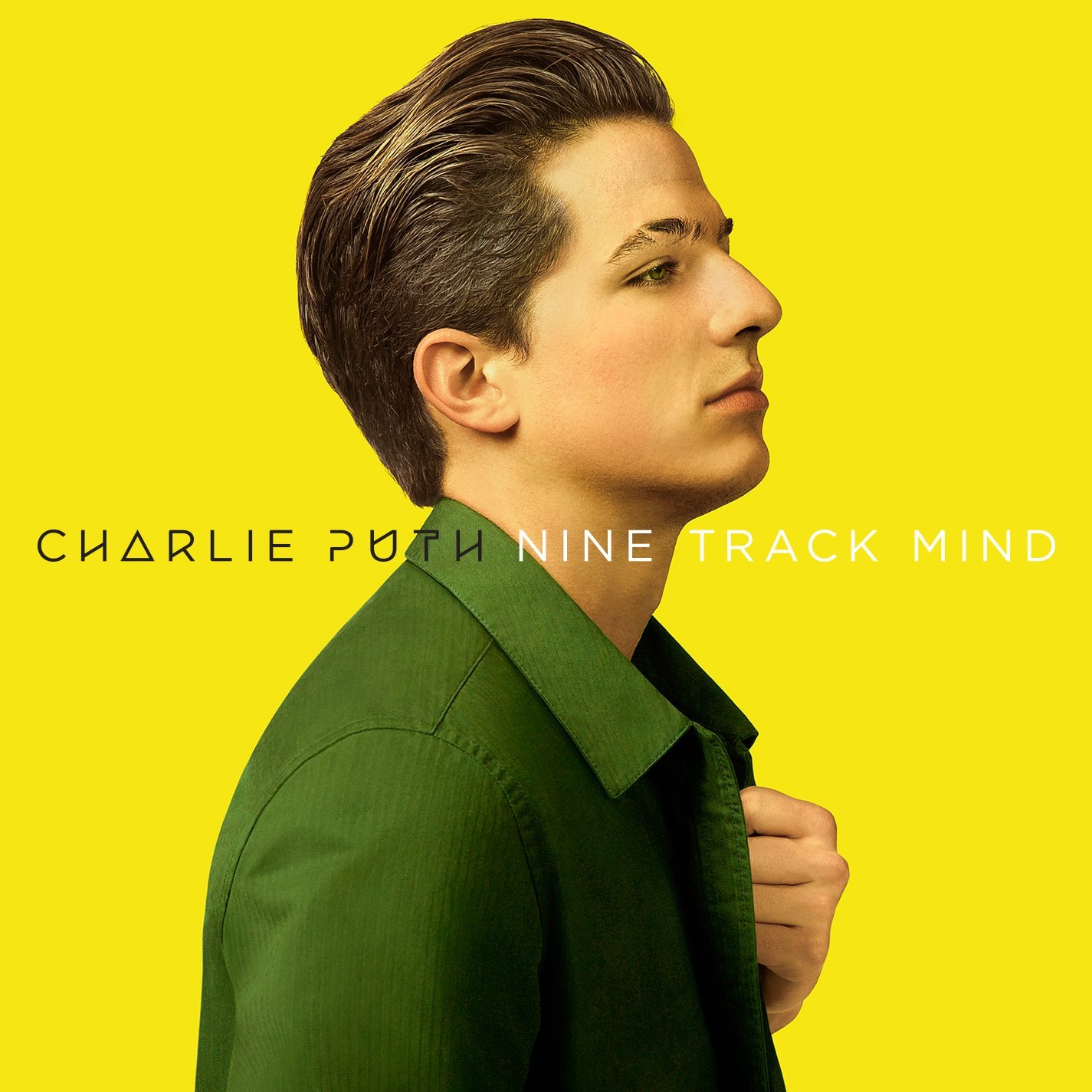
I’m never gonna say that Charlie Puth’s debut Nine Track Mind is an album that should be discovered. It mostly deserves its distinction by critics as a repulsive piece of pop except for one song: “We Don’t Talk Anymore.” The soft-guitar licks and Skrillex-esque flute loops while Puth and featured guest, Selena Gomez—who recorded her vocals in a closet—craft an infectious hook around Family Channel yearning and despair. It is a song that demands to be played repeatedly and overwhelms any compulsion I have to listen to another album. In fact, tripling the listening time I’ve spent with other projects this year. Perhaps, this is the rare phenomenon of a song being so good it becomes on some level, the album. I know this to be puth after recommending Nine Track Mind to a friend, only to realize my glowing recommendation was birthed from subconsciously replacing the entire 12-track listing with “We Don’tTalk Anymore.” I won’t defend the rest of the album but—actually I will, because all 41 minutes and four seconds of “We Don’t Talk Anymore” are heaven
Chuck Cleaver and Lisa Walker are the best songwriters in America. They have been for over a decade, too. Hell, go back to Cleaver’s work with Ass Ponys and you’ll find its embryo whittled out of that sweet, melodic Americana. But that was all a while back now and Wussy are a different animal, Look to 2014’s Attica! for the signs of progression, though. The feedback of intro “Dropping Houses,” the songs at first sound tied down, never quite able to float away, centering around straight riffs rather than gentle inflections. But, a few listens in, they’re just as beautiful, and that awkward, lovely grace is at the front again, even if Cleaver’s voice starts out as singed as the accordion chords it unfurls with. Eventually there is a clarity and it’s Walker’s high harmonies that draw it out. The fact that it’s a worthy inclusion into Wussy’s catalog.
Formed on a dare in 2001, Cincinnati’s Wussy is at the forefront of New Midwestern Psychedelia. Following the release of their cult classic debut in 2005, “to certain fans of Lucinda Williams, Crazy Horse, Mekons and R.E.M., Wussy became the best band in America almost instantaneously with…Funeral Dress” (SPIN). Heralded by critics for both their songwriting and varied sonic palette,
This compilation is a love letter to the community of Orlando, FL. Following the tragic events at Pulse Nightclub on June 12th, we wanted to show our support and love for our LGBT community the best way we knew how; through music.
The tracks on this album were all individually contributed by the bands and artists themselves; artists from Orlando, New York, California, England, and all over the globe.
All proceeds from this compilation will be donated to support the victims of the Pulse shooting as part of the OneOrlando Fund (www.oneorlando.org) as a symbol of solidarity as our city rebuilds.
The price of this album is whatever amount you would like to donate to this cause.
Is it time for a Saddle Creek revival? Pinegrove thinks so. If you like your indie rock with a hint of twang, emo vocal-cord abuse, and Conor Oberst-worthy histrionics, this New Jersey group has the ideal record to quietly sob into your drink with. Songs like “Old Friends,” “Aphasia,” and “Waveform” tear at your heart with bleary-eyed tales of loss, betrayal, and regret. Play it for a friend who only listens to Wilco.
Pinegrove gave us something singular yet familiar, an album that breathes or, more accurately, sighs — as if it’s the most natural progression in the world. On Cardinal, Evan Stephens Hall applies basement DIY’s detail-oriented logorrhea to melancholy roots rock, artfully dissecting his quarter-life neuroses against a backdrop of banjo, pedal steel, and shimmering waves of electric guitar. The music expertly surges and soars in service of Hall’s every word, lending powerful emotional weight to his reflections on the value of personal connection. His complicated turns of phrase work surprisingly well as barroom sing-alongs, but moments of simple profundity like “I should call my parents when I think of them/ I should tell my friends when I love them” are what continually send tingles down the spine
“I’ve been blessed with shit luck/ There are some things that’ll never change,” Stefan Babcock shouts in his trademark full-blooded howl on the track “Can’t Win,” one of 10 barnburners on their album “The Dream Is Over”. That defeatist attitude is the crux of PUP’s formidable sophomore album, but this Canadian band turns self-doubt into brash defiance, self-loathing into something worth celebrating about. It’s a record plagued by hyper-aggressive machismo and a selfishly egotistical streak — see the noxious “Old Wounds” or “DVP”‘s dizzying tailspin — and the only reason it works as magnificently as it does is because you can tell Babcock doesn’t believe in any of his own bullshit.
He’s already given up on himself as much, if not more so, than everyone else has given up on him, and The Dream Is Over is the sound of him pummeling himself into submission. But throughout, PUP never lose their sense of humor or fun. As a result, they’ve made the summer soundtrack to sweat-filled days, beer-soaked nights, and the regretful, wheezing feeling you get the morning after chain-smoking too many cigarettes. you’ve gotta love a rock album that opens with a tongue-in-cheek band-mate-related death threat. “If This Tour Doesn’t Kill You, I Will” is the perfect introduction to the Toronto four piece’s particular brand of pop punk.
PUP’s The Dream Is Over is full of this unrelenting fatalism and , balanced out by hooky and happy melodies, scream-sung choruses and drums kept so high up in the mix that the percussion practically become a second frontman
The DreamIs Over pulls off a thrilling balancing act between rising from the ashes and falling apart, and that makes it one of the best, punk records released in a long while.




 “I’ve been blessed with shit luck/ There are some things that’ll never change,” Stefan Babcock shouts in his trademark full-blooded howl on the track “Can’t Win,” one of 10 barnburners on their album “The Dream Is Over”. That defeatist attitude is the crux of PUP’s formidable sophomore album, but this Canadian band turns self-doubt into brash defiance, self-loathing into something worth celebrating about. It’s a record plagued by hyper-aggressive machismo and a selfishly egotistical streak — see the noxious “Old Wounds” or “DVP”‘s dizzying tailspin — and the only reason it works as magnificently as it does is because you can tell Babcock doesn’t believe in any of his own bullshit.

