Archive for the ‘CLASSIC ALBUMS’ Category

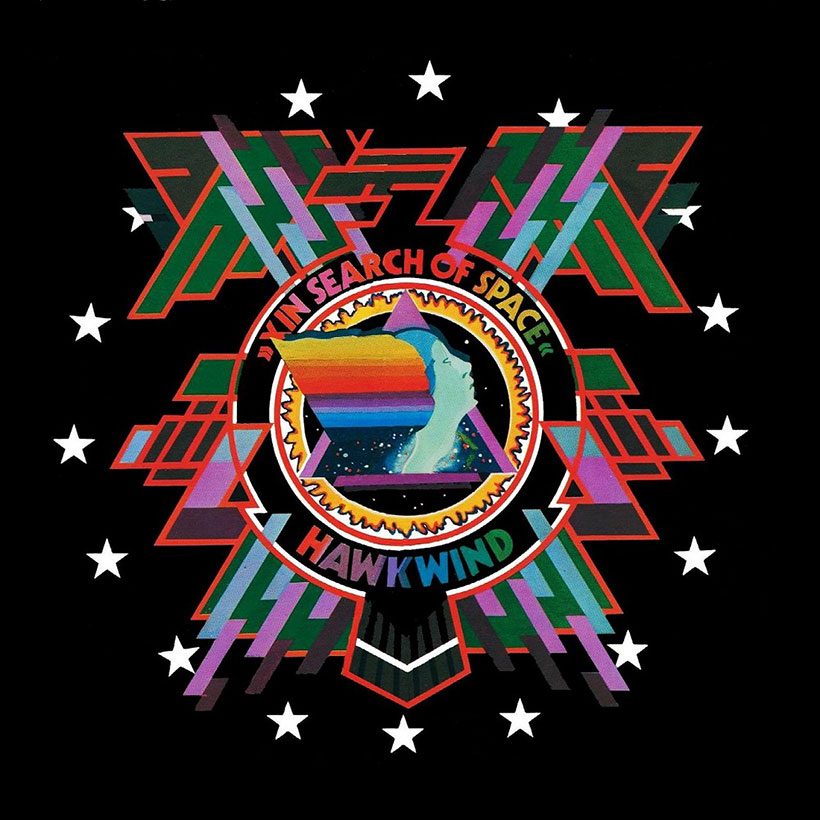
Hawkwind In Search Of Space album cover web optimised 820

Happy 50th anniversary to “In Search of Space”, the first masterpiece of Hawkwind originally released on 8th October 1971. Hawkwind’s debut album is one of the first full length “Space Rock” albums, but they mastered that art by the time of this sophomore album. The band went on to release the classics like Doremi Fasol Latido (1972), Space Ritual (1973), Hall of the Mountain Grill (1974)

A bold step forward for Hawkwind, their second album, ‘In Search Of Space” laid the groundwork for the landmark track ‘Silver Machine.’ It’s hard to imagine the world of rock’n’roll without Hawkwind’s presence. The pioneering London space-rockers have now endured for five decades, and have a string of classic albums under their belt, among them “In Search Of Space” and “Warrior On The Edge Of Time“. While guitarist/vocalist Dave Brock has remained the only constant, legendary figures such as Ginger Baker, sci-fi/fantasy writer Michael Moorcock and Motörhead founder Lemmy have all passed through its ranks.

Even now, the band’s detractors still dismiss them as merely a “hippie” aberration, but while this seemingly invincible outfit will forever be associated with the UK’s free-festival circuit, in reality their music has embraced everything from prog-rock to psychedelia and heavy metal. Later LPs, such as 1992’s Electric Teepee, even flirted with genres as disparate as ambient and techno.

To date, Hawkwind has recorded almost 30 studio LPs for both major labels (Charisma, Bronze, Active/RCA) and independent imprints (Flicknife, EBS). Yet while the band remains a going concern, most long-term supporters would argue that their career-defining discs emerged from their fruitful tenure with their initial sponsors, Liberty/United Artists, between 1970 and 1975.

Released in August 1970 and co-produced by former Pretty Things guitarist Dick Taylor, Hawkwind’s eponymous debut was book-ended by two folk-flavoured tracks, “Hurry On Sundown” and “Hall Of Mirrors,” but it was dominated by a lengthy free-form, psych-prog jam which was edited down, in Can-like fashion, into shorter individual selections.

Hawkwind was a volatile outfit at the best of times and their initial line-up disintegrated soon after their debut. The original nucleus of Brock, sax/flute maestro Nik Turner, drummer Terry Ollis and synth player Dik Mik remained, but guitarist Hugh Lloyd Langton quit; ex-Amon Düül II bassist Dave Anderson replaced Thomas Crimble, and the band’s soundman, Del Dettmar, stepped in as an additional synth/electronics manipulator.

This line-up recorded the band’s celebrated sophomore release, In Search Of Space. First issued in October ’71 and compiled from sessions overseen by former Jimi Hendrix/Small Faces engineer George Chkiantz at London’s Olympic Studios, the album was a bold step forward from Hawkwind’s debut. Arguably,  The album opens with the mind-numbing galactic haze of “You Shouldn’t Do That,” a spooky little 15-minute excursion that warps, throbs, and swirls with Dik Mik’s “audio generator” and the steady drum pace of Terry Ollis. Then comes the ominous whispering of the title, set to the pulsating waves of Dave Brock’s guitar and Turner’s alto sax, with Dettmar’s synth work laying the foundation. Wonderfully setting the tone, “You Shouldn’t Do That” improvisational looseness and rhythmic fusion smoothly open up the album into the realm of Hawkwind. The peculiarity never ceases, as but Brock and Co. also excelled on the intergalactic blues-rock of “You Know You’re Only Dreaming” and “We Took the Wrong Steps Years Ago” delves even deeper into obscurity, sometimes emanating with the familiar jangle of the guitar which then has its acquaintance overshadowed by the waft of the keyboard. Just as laced the succinct, acid-addled “Master Of The Universe’ with Nuggets-esque proto-punk energy, chugs and rolls with a foreboding rhythm, “Adjust Me” retaliates with its moaning verse and tonal fluctuations fading into oblivion. The ground breaking sound which Hawkwind achieved on “In Search of Space” helped to open up a whole new avenue of progressive rock. The track “You Shouldn’t Do That,” wherein the band locked into a super-hypnotic motorik groove.

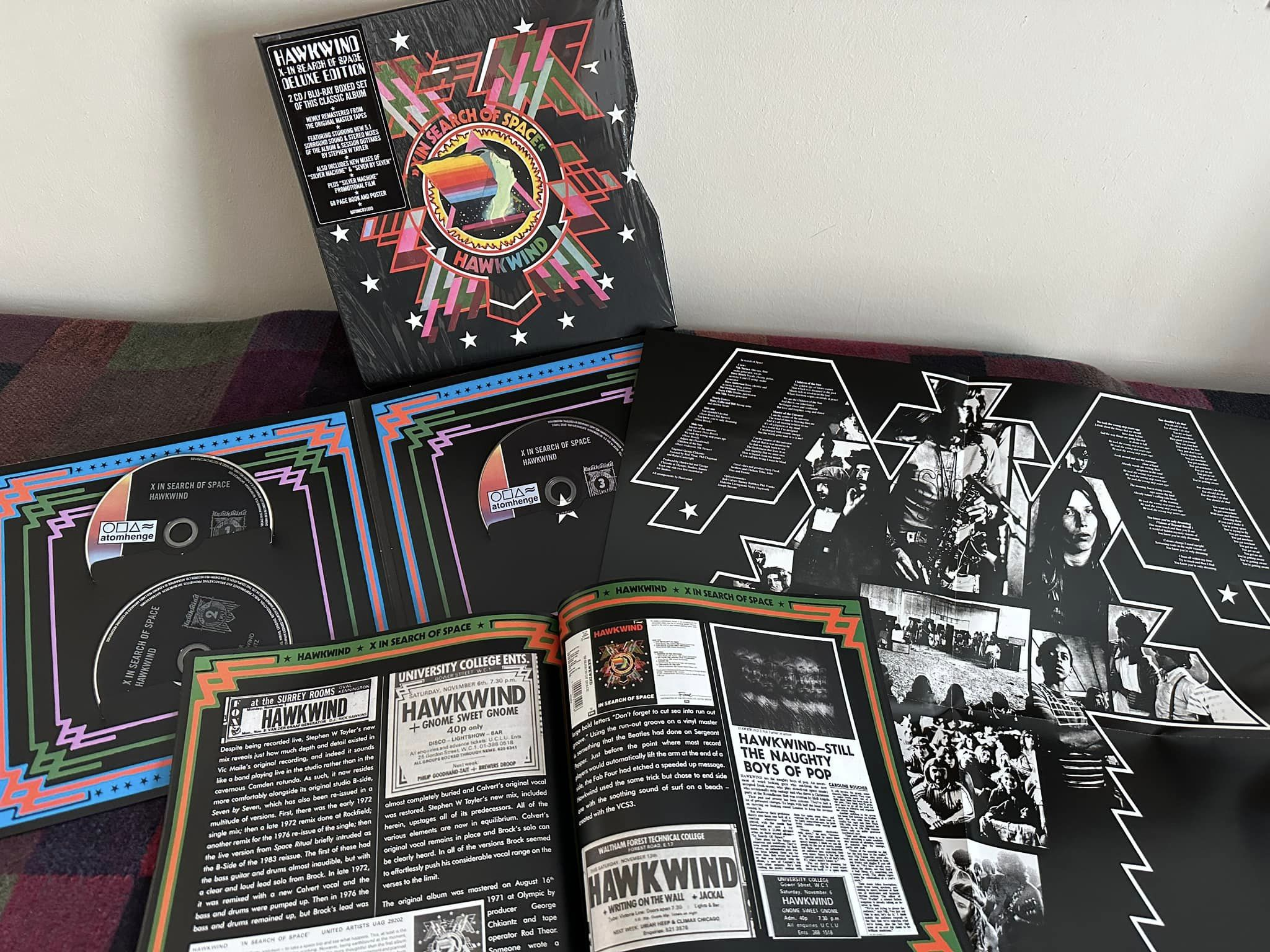
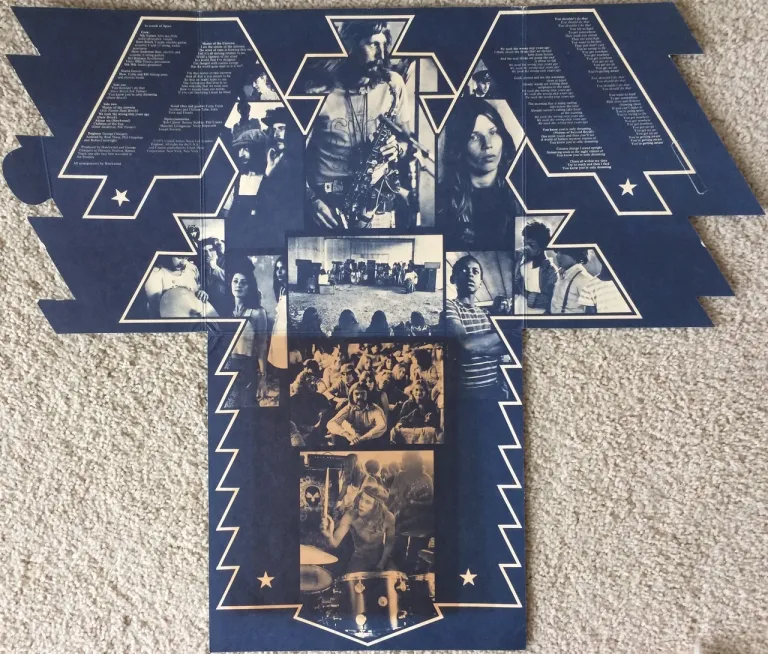
Designed by future Stiff Records/Elvis Costello artist Barney Bubbles, “In Search Of Space” came housed in a spectacular interlocking die-cut sleeve which unfolded into the shape of a hawk, and came accompanied by a 24-page book, the sci-fi-flavored The Hawkwind Log, conceived by the band’s long-term associate, poet Robert Calvert. Successfully feeding the era’s discerning heads, the LP climbed to No.18 in the UK, it won Hawkwind a gold disc, and laid the groundwork for their UK Top 10 hit, June ’72’s “Silver Machine,” which featured a commanding vocal from new recruit Lemmy.

“P.N.E. Garden Auditorium, Vancouver, British Columbia, Canada 7/29/66 marks Grateful Dead’s debut performance outside of the United States. Their complete July 29th, 1966 performance is being released in a limited edition, 2-LP, 180 gram vinyl-set, with four bonus tracks from the ensuing 7/30 performance at the same venue.”

In an interview, Grateful Dead archivist David Lemieux said that he had wanted to release this concert as an album, but it was too short for the Dave’s Picks series. He said that since the concert was an early one, from before the time of CDs, that made it seem like a good choice for an LP. He added, “As a vinyl release it works extremely well where you get three or four songs per side and they’re all really short songs – anywhere from three to five minutes.”

This is a great recording. Its interesting to see how they mixed these older sets. This was (obviously) a huge growth period and they were really pushing the envelope as for as what they could do electronically. Interesting how they distribute the different tracks to right and left speakers

The Dead go through much of their standard repetoire for this time but do it very well. Bob may be low in the mix, but the other guys, especially Pigpen and Jerry are tearing it up. Pig’s early organ playing is a delight, he was really good and with Jerry is the main instrumental voice in the band. The real surprise here though are two songs I’m not that familiar with: “You Don’t Have To Ask” and “Cardboard Cowboy”. Both are excellently played examples of mid sixties psychedelic rock. I think “Cardboard Cowboy” may have been played at one other show. The crowd are either lame or not miked as they’re barely audible and it sounds like there may be 10 people in attendance. For example the band do a great ripping version of “You Don’t Have To Ask” that stops on a dime after a great Jerry solo and there’s… silence,

Original cover art by Canadian poster artist, Bob Masse. The iconic 60’s poster artist has designed original works for artists such as Jefferson Airplane, Janis Joplin, Jimi Hendrix, Doors, David Bowie, Fleetwood Mac, Steve Miller Band, No Doubt, Fiona Apple & Smashing Pumpkins to name a few. The show was mastered from the original audio recordings by GRAMMY winning sound engineer Jeffrey Norman at Mockingbird Mastering in Petaluma, CA. This audio was first made available in January, 2016 as the bonus disc in the 2-CD The Grateful Dead (50th Anniversary Deluxe Edition) as it features most of the tracks that would make their way on to the first official Grateful Dead album. It was previously unreleased before this year and is only available as a stand-alone show in this limited edition vinyl set.

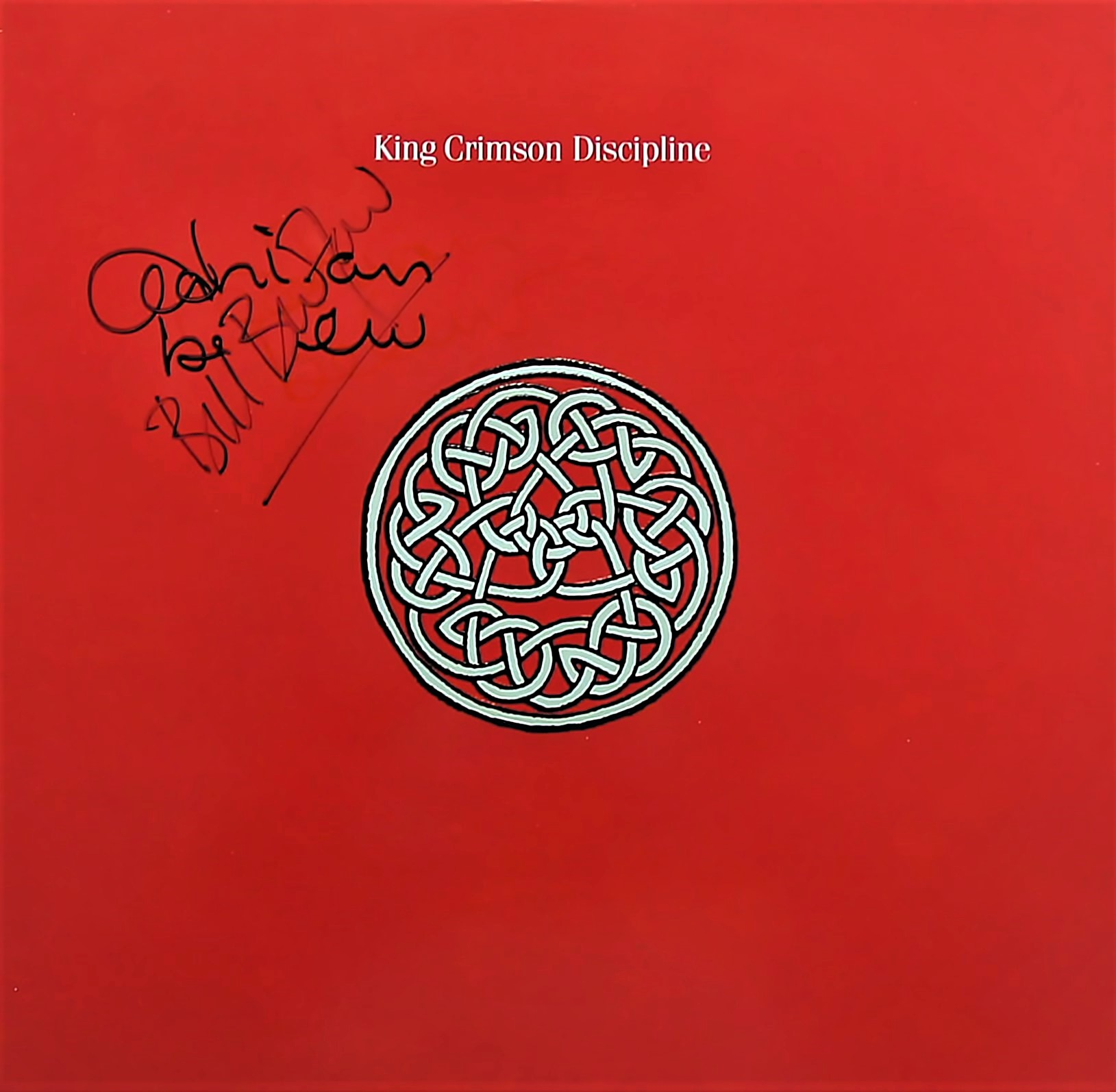
King Crimson’s “Discipline” is an adventurous, experimental and ground-breaking collection from one of rock’s truly singular bands, By the dawn of the 80s, punk had rock music to its foundations. So much so that even one-time prog rockers were streamlining their sound/approach. King Crimson were one such band, as evidenced by 1981’s exceptional “Discipline”. 

When leader/guitarist Robert Fripp decided to form a ‘new Crimson’ band, overindulgences were trimmed and replaced with a sound heavy on rhythm and experimentation. A chance meeting would shape the rest of the line-up. 

“I met Robert Fripp one night in New York, at a club called the Bottom Line,” remembers singer/ guitarist Adrian Belew. “I was playing with David Bowie at the time [1979/1980] and [we] went to see Steve Reich. When the lights came up, Robert was at the table next to us. So I went over, and he wrote his hotel number on my arm. We had coffee, and got to know each other. 

“In nineteen-eighty I started with the Talking Heads, and when they arrived in England I got a call from Robert saying: ‘I’m starting a new band with [drummer] Bill Bruford and myself. Would you like to be a part of it?’ I jumped at the chance.” 

After an extended hiatus and just as prog’s first decade ended, Fripp got behind the wheel for another series of remarkable efforts. Retaining Bruford and recruiting agile bassist Tony Levin, it was the audacious decision to employ a second guitarist (Adrian Belew, who also handled vocal duties) that gives this collective its characteristic sound. Fripp’s exposure to new wave, complemented by an increasingly globe-ranging palette, alongside Belew’s supple support, results in material that is challenging yet concise. On songs like “The Sheltering Sky” Fripp incorporates virtually every trick in his arsenal, creating something that integrates multiple source-points (African, Indian, and Western). The title track is like a business card for the new decade: Fripp asked a lot of his audience, but he’s always asked more of himself.

“I don’t think any of us knew we were creating something so unusual,” Belew says. “But now that I look back, it’s easy to see – every one of us had new technology. I was the first to have a guitar synthesiser, and Robert was probably the second. Tony had the Chapman Stick, which no one had used before, and Bill was fooling with electronic drums. So you had these four monkeys in a cage together with new toys. Something was bound to happen.”  Something did indeed happen. With funky workout “Elephant Talk”, ambient soundscapes (Sheltering Sky), tranquil moments (Matte Kudasai) and controlled freak-outs (Thela Hun Ginjeet, Indiscipline), 1981’s Discipline sounded like nothing before it. 

An interesting occurrence developed during sessions for Thela Hun Ginjeet. Belew remembers it vividly: “John Lennon had been killed, and he was my hero. So I tried to write a lyric about being molested with a gun on the streets of a city. I tried to think of phrases, as though it was an interview on the street after the occurrence. 

“We were in a part of London that was a dangerous area, but I didn’t know that. I had a tape recorder, and Robert said: ‘If you want to get realistic sounds, why don’t you walk around on the street and say your lines?’

“I walked down one of the streets, and there was illegal gambling going on by a group of Rastafarian guys – pretty tough-looking. And they’d gathered around me. They thought I was an undercover policeman. They were about to kill me! At one point the ‘leader’ grabbed my tape recorder and played back what I had just been saying: ‘He had a gun!’ [laughs] The guy freaked out. ‘What gun?!’ They finally let me go, I’m not sure why. 

“I went back to the studio. I was so shook up, and I ran into the control room and was telling Robert the story. Meanwhile, he had whispered to the engineer to record it, and that’s what you hear on the record.” 

Although Discipline wasn’t a big hit, it re-established King Crimson, and touched a legion of young musicians. Says Belew: “It certainly wasn’t a record that your average person would know, but it had an affect on Primus, Tool, Trent Reznor and so many people. That record affected the way they saw music. And for me, that’s even better than saying we had a big hit record.”

The album released (September 22nd) in 1981: UK progressive rock band King Crimson released their 8th studio album, ‘Discipline’, on E.G. Records (UK)/Warner Bros. (US) – their first following a 7-year hiatus; only founder Robert Fripp & later addition Bill Bruford remained from previous incarnations, joined by Adrian Belew (guitar, lead vocals) & Tony Levin (bass guitar, Chapman Stick, backing vocals); displaying a more updated ’80s new wave-oriented sound, the album reached #41 on the UK charts; Pitchfork later ranked it #56 on their list of ‘The Top 100 Albums of the 1980s’.

Albumism_Blondie_ParallelLines_MainImage.jpg

Blondie didn’t just leap with 1978’s “Parallel Lines”; they went into hyperdrive. As one of the early progenitors of the highly influential NYC punk scene, singer Debbie Harry and guitarist Chris Stein ditched the grime and grit and embraced what would become their own signature brand of glossy power pop and disco-tinged new wave — you know, the stuff that wound up shaping the next decade. “Heart of Glass”, the album’s state-of-the-art third single, was a total game-changer for the outfit, welding European electronica with Harry’s natural falsetto.

When Blondie went into New York’s famed Record Plant studios in June 1978 they were allocated 6 months to record their third studio album. Six weeks later, producer Mike Chapman deemed the job done and Parallel Lines was born.

Following on from their punk-meets-new-wave sound, Parallel Lines was a more focused and deliberate effort than their previous two albums, despite the band’s best efforts to achieve otherwise. With the central focus of Chapman behind the boards, he led the band to push themselves musically and at times beyond their own musical abilities. The result was an album that came to define pure post-punk pop. And Blondie’s days as a charmed underground group out of New York were numbered, as a larger world would open up to them on the heels of its release.

When Blondie started work on their third album, Parallel Lines, in the summer of 1978, they were an under-the-radar New Wave band with a nostalgic bent toward the girl-group sounds of the ’60s. They were in an entirely different position when they began recording their next album, “Eat to the Beat, less than a year later.  Kicking off with the rocking stalking anthem of “Hanging on the Telephone” (a Jack Lee cover) Debbie Harry delivers her strongest vocals to date, inhabiting the song with a sweet yet dangerous delivery.

Harry’s persona grows with the uber catchy “One Way or Another” with its signature guitar hook and sweet boppy beat that underscores the threat and menace on display in the lyrics. the obsessed jilted lover, Harry was taunting and preening with jealousy like a pro. With every line, Harry grows in strength and showcases the power needed to front an all-male band in the late ‘70s (and be taken seriously). Completing the opening trio of pop perfection, the band shifts gears with the lovelorn promise of “Picture This.” Amidst swirling guitar riffs and a classic backbeat by drummer Clem Burke, the song mixes early rock nostalgia with a burning sexuality and does so while still remaining sugary sweet.

After its release in fall 1978, Parallel Lines shot up the charts, reaching No. 1 in the U.K. and the Top 10 in the U.S. thanks to the powerhouse appeal of the single “Heart of Glass,” which went to No. 1 across the planet, including the U.S. The song added another influence to the band’s range of musical styles. So, when the six-member Blondie, led by singer Debbie Harry, entered the studio in their hometown of New York City as spring turned to summer in 1979, they pretty much followed the template of the record that rocketed them to stardom the previous year. That meant some New Wave, a little pop, a throwback or two to their punk roots and, of course, more disco. And then they took it even further.

Harry, who co-wrote eight of the new album’s songs, was thrust into the spotlight following “Parallel Lines” success. She became the focal point of the group and was often characterized by unknowing Top 40 fans as a solo artist named Blondie. Even though their publicity department stressed the issue — going as far as declaring “Blondie is a band” in press releases — getting casual music fans who knew them from only “Heart of Glass” to acknowledge there were five other people making the music was often an uphill battle.

This musical growth is evident on the modern torch song of “Fade Away and Radiate,” the pulsing driven beat of “I Know But I Don’t Know” with its borderline psychedelic melody, and the urgent rock swing of “11:59.”

Even the album’s filler songs such as “Just Go Away” and “Will Anything Happen” rival the hits on other band’s albums of the era. And then there’s the bouncy pop of “I’m Gonna Love You Too” and “Sunday Girl” that present a softer, more playful side to Blondie’s sound, But the game changer of the album, and for the band, was the soon to be disco anthem “Heart of Glass.” To a bubbling drum machine and strutting open hi-hat beat, the production on “Heart of Glass” is flawless. From the soft and subtle (at first) blipping synth line and slow sweeps, Blondie boldly stepped from the grimy stages of New York’s clubs to the dance floors of thriving discos.

Loved, and also hated, for producing a “disco” song, Blondie held fast to their belief of writing a great song befitting of the pop and r&b influences that appeared—perhaps less obviously—in their earlier recordings. Parallel Lines is the album of a band (somewhat reluctantly) finding its sound. It became the album that sprang them forward and launched them onto the world stage, and would form the blueprint for their subsequent efforts. It remains a perfect encapsulation of Blondie in their prime, focused on superior songcraft and musicianship. Whilst producer Chapman may have pushed them to beyond their creative breaking point, the result ensured an album that stands the test of time.

When they reconvened in the studio to make Eat to the Beat, Blondie were still working hard on that band dynamic. All six members contributed songs to the album in one form or another and, along with returning producer Mike Chapman, were determined to not rest on Parallel Lines’ laurels. Eat to the Beat sounds like a follow-up, but not a sequel. And that’s no small achievement.

From the start, Blondie didn’t quite fit in with the punk groups they were often associated with. They were poppier and more melodic. And they didn’t seem like they wanted to save the world — or burn it down, for that matter. So the disco explosion that was “Heart of Glass” sounded natural, an effortless offshoot from their downtown art-punk roots. A small step, but an integral part of Blondie’s story. As producer Chapman noted in the album’s 2001 reissue, tensions were high during the recording, stemming from increased drug use among various members. But Harry also began to assume more control, outlining a vision for the album that included the usual mix of pop, punk, disco, New Wave and even R&B-inflected songs.

See the source image

When you listen to the love songs of LA-based Bedouine, you will be reminded of Karen Dalton’s world-wise voice or the breathy seduction of Minnie Riperton’s vocals, the easy cool of French ye-ye singers, and the poetry of Joan Baez. Her folk is nomadic, wandering across time and space, and on the likes of new song Dizzy meander into danceable jams. On first discovery you may ask whether they’re dated to 2019, or whether you’ve uncovered some forgotten classic. It makes sense that singer-songwriter Azniv Korkejian’s arrival – both musically and personally – on her second record has been influenced by her own wanderlust, displacement, and curiosity.

The music is the farthest from curmudgeonly or depressive as could be. It’s a soundtrack to Spring blossom, to warm air on skin, to the concept of possibility. Amazingly, despite the successes since her debut release, “Bird Songs of a Killjoy” rejects any pressures to be some kind of grand evolution from before. When her self-titled debut came out in the summer of 2017, Azniv was entirely unknown, and wasn’t necessarily looking to change that. The album she wrote in her free time while dealing with some emotional trauma and locking herself away in her house, was an exercise in diarizing, in expression without expectations. Some of the songs on this sophomore effort were from that same time period of fruitful creativity. She continued her creative partnership with Gus Seyffert (Beck, Norah Jones) who produced them in his studio.

If I could play a song as many times as I wanted, over and over and over again and sing it at the top of my lungs without a care in the world.  This would be my vocal lesson song, my affirmation. Singing it gives me so much joy. “He” in this song is “spirit” or “God” and sometimes I changed it to “She” depending on who I was calling in that day (angels, guides, guardian wise). I love this song so much- it’s grounding and permission giving and loving.

“When You’re Gone” continues the Aleppo-born, Saudi Arabia- and America-raised musician’s collaborative partnership with Gus Seyffert (Beck, Norah Jones, Michael Kiwanuka), who produced the single in his Los Angeles studio. “Drag my finger round the rim / drag around a phantom limb when you’re gone,” Bedouine sings, her delicate vocals and fingerpicked guitar flurries accompanied by orchestral flourishes that lend them a gentle grandeur befitting the video’s breath taking natural imagery. “When I started ‘When You’re Gone,’ I was just messing around with pretty chords. Then the lyrics spontaneously came to me much later when I read something on Instagram, which is kind of hilarious. It triggered a line that eventually rolled out the entire song,” Bedouine explains. “In retrospect I think it reflects on the time since I’ve released my first record; in nondescript hotel rooms alone or getting dropped off a cliff after tour is over, not exactly sure what to do with myself. It also touches on what that can mean when it comes to the people you’re closest to.”

Bedouine “When You’re Gone” out now on Spacebomb Records

Alex Chilton - Boogie Shoes LP Bundle

In the summer of 1966, an 18-year-old Laura Nyro auditioned for Milt Okun, one of the most respected music producers of the day, and Artie Mogull, a noted A&R man. After the session, these eventual music business legends, were so blown away that Mogull became her manager, and Okun signed on to produce her debut record, “Go Find The Moon: The Audition Tape” puts the listener in the room at the very beginning of Nyro’s legendary career. 

“Go Find the Moon: The Audition Tape” captures the summer 1966 performance of 18-year-old singer songwriter Laura Nyro auditioning for Milt Okun and Artie Mogull.  The audition on which Nyro accompanied herself on piano, went so well that Mogull signed the young artist and budding songwriter to a management contract and Okun promptly booked studio time with arranger Herb Bernstein to record her debut album, More Than a New Discovery

It’s not hard to realize why: Laura Nyro heard music differently than everyone else – and her songs reflected that.  At the audition session, she performed a pair of the remarkable songs that would soon appear on that LP, the precociously mature “And When I Die” and “Lazy Susan.”  She also previewed an embryonic “Luckie,” the final version of which would be included on her even more acclaimed sophomore album, “Eli and the Thirteenth Confession“.  The ballad “Enough of You,” brief “In and Out,” and deliciously swooning “Go Find the Moon” were never released in studio form, making their appearances here all the more welcome. 

The audition tape is rounded out with fragments of “When Sunny Gets Blue,” “Kansas City,” and “I Only Want to Be with You.”  While Nyro was prompted to sing them when it was asked if she could perform something she hadn’t written, they hint at the stylistic diversity that informed her passionate song writing and performing.  In just 18-1/2 fly-on-the-wall minutes, this is the sound of an incandescent talent.  Omnivore’s first-time release is annotated by Jim Farber and mastered by Michael Graves. 

Available on CD, LP, and digital formats

MUNA – ” Silk Chiffon “

Posted: September 9, 2021 in CLASSIC ALBUMS, MUSIC
Tags: ,

We wanted this video to be a depiction of the fact that acknowledging the humanity of your enemy can be the most powerful battle tactic of all. Lay down your weapon. Get Muna’s new album ‘About U’ featuring “I Know A Place” available now:

Specificity is the marker of killer pop (the matches in Pet Shop Boys’ So Hard, the shoelaces in Robyn’s Be Mine), a trope that the LA Trio Muna wield to intense effect on their second album of gothic synthpop. Saves the World is an unsparing emotional confrontation that drags you right into the bedroom bathed in pink light, the dorm room with the blunt scissors, not to mention singer Katie Gavin’s torrid self-examinations.

“Silk Chiffon feature’s Phoebe Bridgers is finally out and it feels so good. a massive thank you to every single person who helped us bring this song to life. also, to everybody who worked on this video…we’re so grateful. director Ally Pankiw who busted her ass to make this happen, Moira Morel, our fave Amber Dreadon, stylist Olivia Khoury who *hand dyed* all the Dickies we wore, Taylor James, Jake Schwartz, Christian Zollenkopf, all our sweet and patient friends in the cast who showed up and showed out for us….we love you guys. now….go fall in love with someone

MUNA signed to Phoebe Bridgers Saddest Factory Records label back in May, and now they’ve shared their first new music in over a year, a poppy track that producer and guitarist Naomi McPherson calls “a song for kids to have their first gay kiss to.” Phoebe also appears in the video, and on vocals in the song.

Saddest Factory signees Muna takes another step toward world domination with the dazzling “What I Want.” The latest single to be unveiled from their recent self-titled third album, “What I Want” is a maximalist ode to unapologetically living your truth. “I want the full effects/I want to hit it hard/I want to dance in the middle of a gay bar,” sings Muna’s Katie Gavin on the cut. With its blend of cathartic vocals and pulsating synths, “What I Want” is a sparkling anthem arriving just in time for the end of Pride Month.

The Byrds: Sweetheart of the Rodeo - Legacy Edition Vinyl 4LP (Record Store Day)

By the time “Sweetheart Of The Rodeo” was released in 1968, The Byrds had already changed the sound of rock music twice; from jangling folk-rock to experimental acid-rock, they constantly sought to push the boundaries of what rock music could be. The 1967 departure of David Crosby left a creative void filled quickly by country music-loving Gram Parsons, whose addition led Roger McGuinn, Chris Hillman and company to record an album comprised mostly of authentic country material in Nashville, with the aid of local session aces (including future Byrd Clarence White).

For the first time on vinyl—and on the heels of a 50th anniversary tour of the album by original members McGuinn and Hillman—this Legacy Edition of Sweetheart Of The Rodeo showcases this country-rock masterpiece alongside 28 bonus tracks, including demos, outtakes, rehearsal versions and tracks by Parsons’ pre-Byrds outfit, The International Submarine Band.

Fifty years after its creation, Sweetheart of the Rodeo looms as a cornerstone of country-rock and point source for alt-country and Americana, The Byrds’ most consequential stylistic stroke since the band’s pioneering folk-rock debut three years earlier. Yet when planning for the album began during the first months of 1968, the group was struggling against commercial headwinds and crippled by personnel changes, reduced to co-founder and lead guitarist Roger McGuinn and bassist Chris Hillman.

The duo was licking its wounds at the disappointing reception to the band’s fifth and most ambitious album, The Notorious Byrd Brothers, which found them stretching to meet the high bar set by Sgt. Pepper. With its aggressive electronic edge and topical material reflecting political and cultural unrest, Notorious had earned them some of the best reviews of their career. By the time of its completion, however, internal dysfunction had boiled over, with McGuinn and Hillman firing David Crosby and drummer Michael Clarke. That album’s lead-in single, a wistful version of Gerry Goffin and Carole King’s “Goin’ Back,” had stalled after its October ’67 release.

By February, the two surviving members had drafted Hillman’s cousin, Kevin Kelley, as drummer and embarked on a trio tour that exposed their lack of firepower. With McGuinn and Hillman as the only signatories to a new Columbia Records contract, the plan was to proceed with hired sidemen. McGuinn, meanwhile, envisioned an even more ambitious full-length that would double down on Notorious’ scale by attempting a pan-generic survey of 20th century music.

Enter Gram Parsons. The Florida-born, Georgia-raised Parsons was a new kid in town seeking success with the International Submarine Band, whose debut album was weeks from release. Invited by Hillman to audition for the Byrds on piano, Parsons’ voice, guitar and original songs quickly established him as more versatile—and ambitious. Not content to be a mere hired hand, the charismatic Parsons lobbied for a shift away from McGuinn’s grand concept. Instead, Parsons pushed for a narrower focus highlighting the country elements he was already exploring with the ISB.

Not that the Byrds were strangers to country, especially Chris Hillman. As a teenager, he’d established himself as a mandolin player with Southern California bluegrass bands. As a Byrd, he had persuaded his bandmates to cover Porter Wagoner’s 1955 hit, “A Satisfied Mind,” and his Byrds debut as lead singer and songwriter came with “Time Between,” a brisk country shuffle on 1967’s Younger Than Yesterday. In Hillman, Parsons gained a crucial ally and future collaborator, and together they closed ranks with McGuinn around Sweetheart’s focal concept. With producer Gary Usher, they headed for Nashville and a week of March sessions reinforced by seasoned country session musicians. Subsequent Los Angeles sessions would follow in April and May.

Sweetheart’s opening track underlined the Byrds’ pivot from Hollywood to Music Row vividly. “You Ain’t Goin’ Nowhere” found them turning yet again to Bob Dylan for material, this time tapping into the bucolic spirit of the as-yet-unreleased Basement Tapes. In place of McGuinn’s signature Rickenbacker 12-string, the arrangement spotlighted Lloyd Green’s giddy pedal steel filigree, dancing between the vocals above a loping country beat. The album would close with another Basement Tapes gem, “Nothing Was Delivered,” but the set list otherwise leaned on country and folk material, plus a recent R&B ballad, William Bell’s “You Don’t Miss Your Water.”

Bell’s soulful weeper was tied to Parsons’ no-longer-hidden agenda in his Sweetheart input, a second draft for what he deemed “cosmic American music”—a junction of Southern idioms that prized both white country and black rhythm ’n’ blues. Vocal harmonies, pedal steel (by Jay Dee Maness) and honky-tonk piano (by Earl P. Ball) were anchored in Nashville, while Bell’s lyrics were pure Memphis, but Parsons’ original vocal ran afoul of protest from Lee Hazlewood and LHI Records, to which the International Submarine Band was signed. McGuinn tracked a new vocal lead in a compromise intended to quell the dispute.

The same fate befell several other Sweetheart tracks, most notably “The Christian Life,” an Ira and Charlie Louvin classic celebrating faith despite the loss of less devout friends. Parsons may have been a wealthy trust-fund kid and practicing libertine, but his reverent vocal featured here honoured the Louvins’ sincerity, nodding toward the axis of sin and soul shared by country and R&B. As heard on the finished album, McGuinn’s sarcastic drawl betrays his ambivalence, if not contempt, for the Louvins’ fervour.

The legal détente with Hazlewood and LHI over Parsons’ ISB obligations didn’t entirely erase him from the tracks. Most crucially, Parsons landed two original songs on the album. “Hickory Wind,” written with former ISB member Bob Buchanan, was a homesick reverie, a country waltz set against sighing fiddles and graced with gorgeous vocal harmonies. Parsons’ aching lead vocal projected weary vulnerability, alluding to worldly “riches and pleasures” that prove powerless against loneliness.

Parsons was less fortunate, however, with his second Sweetheart original, “One Hundred Years From Now,” another concession to LHI. Once more, McGuinn was pressed into service for the lead vocal, providing one of the set’s two mid-tempo rockers alongside “Nothing Was Delivered.”

Parsons’ lead vocals were retained for covers of Merle Haggard’s penitent “Life in Prison” and Luke McDaniels’ barroom lament, “You’re Still on My Mind,” clinching the newest Byrd’s prominence on Sweetheart.

Elsewhere on the album, McGuinn turned to Woody Guthrie for “Pretty Boy Floyd,” which cast the ’30s gangster as a Depression-era Robin Hood. Hillman, meanwhile, contributed the album’s other nod to country gospel, “I Am a Pilgrim,” and took the lead vocal on Cindy Walker’s “Blue Canadian Rockies.”

By the time “Sweetheart of the Rodeo” was released on August 30th, 1968, Parsons had left the group after refusing to play dates in South Africa. Hillman would soon follow him to join forces in the Flying Burrito Brothers, building on the “cosmic American” blueprint that would be further refined with Parsons’ solo albums with protégé Emmylou Harris.

Although other bands, including the Beatles, Lovin’ Spoonful, Buffalo Springfield and Monkees had nodded affectionately toward country, the Byrds had leaned into country too far, too soon, for Sweetheart, notching the lowest sales of any Byrds album to date: however, the project’s legacy would slowly reveal itself in a rising tide of country-rock full-lengths from the Burritos, Poco, ex-Byrd Gene Clark and, yes, the Byrds themselves, in a line-up now featuring Clarence White, whose nimble country guitar leads had been featured on the band’s studio albums since 1967.

See the source image

Kristian Matsson, aka The Tallest Man On Earth, is a Dylan successor if there ever was one. In fact, some music writers and fans may even feel his voice is a little too reminiscent of Dylan’s. His tendency to write music that’s more raw and stripped-down paired with his strained, gruff vocals make the comparison almost too obvious. But, then again, Matsson’s music is still something singular. Across five LPs and three EPs, the Swedish singer/songwriter and fingerpicker extraordinaire has charmed his way through folk circles and indie rock strongholds alike, positioning himself as one of the finest roots musicians working. Last year, he veered away from the strictly rustic style of his first four LPs in exchange for a more elaborate setup on I Love You. It’s A Fever Dream.: horn sections, electronic blips, atmospheric effects. But at the core of all his music is Matsson’s introspective song-writing sensibilities and his banjo (or guitar, depending on the song). In honour of one of the best artists in the world of indie folk, Matsson has a broad fanbase, but The Wild Hunt in particular has steadily acquired new fans and has aged especially gracefully over the last decade. Here are 10 of our favourite songs from his catalogue.

“Sagres”

While 2015’s Dark Bird Is Home is by and large a bit of a dark spot on Matsson’s otherwise untarnished discography, there are a few moments of reprieve within it. One of those is “Sagres,” a jangly folk-pop number that pays respect to Cape Sagres, a headland in the southwest of Portugal that’s nicknamed the “end of the road.” In the song, however, Matsson toils in the end of a relationship and starts to question everything, lamenting “It’s just all this fucking doubt,” at one exasperated point in the song.

“It Will Follow The Rain”

Matsson leans fully into his folklorist side on this cut from his self-titled debut EP. Mentioning mountains, valleys and lightning strikes, this song was just the tip of iceberg when it comes to The Tallest Man On Earth’s obsession with the natural world. Some of his best work references our Mother Earth, and this song in particular contains a hopeful, pastoral energy as Matsson compares life to the fleeting nature of a rainstorm.

“Little River”

His 2010 EP Sometimes The Blues Is Just A Passing Bird contains some of Matsson’s best work, not least among it being “Little River.” If it weren’t for a rolling, quickened under-beat and a rather morose conclusion (“You just sing about your own death in your closet / You stumble out into the pitch-black hallway,” he sings at one point), it’d make the perfect lullaby.

“1904”

“1904” is undoubtedly one of the jammier songs across Matsson’s eight projects, benefitting greatly from an electric guitar groove. Apparently the song references a devastating earthquake that rocked Sweden and Norway in the titular year, but you needn’t have any knowledge of natural disasters to make sense of this pleasant folk-rock tune.

“Shallow Grave”

In all honesty, there isn’t much dispute among fans about which of the Tallest Man On Earth’s albums are best: 2008’s Shallow Grave and the proceeding The Wild Hunt (2010) are almost always going to come out on top. The title track from the former contains all the elements that make this pair of albums so interesting and listenable: a relentless banjo lick, existential ramblings and Matsson’s inimitable scratchy-throated cry. The narrator here is down-on-his-luck, and Matsson finds the most lyrically beautiful ways to convey this unrest: “I found the darkness in my neighbour / I found the fire in the frost / I found the season once claimed healthy / Oh, I need the guidance of the lost.” Following his debut album Shallow Grave in 2008, Matsson was invited to tour with indie-folk lord Bon Iver.

“Troubles Will Be Gone”

The human condition is one of constant searching and exhaustion. We have no assurance that things will be “OK,” as friends and family so often try to convince us. But, at the same time, their dedication to helping us believe everything will turn out alright is in itself proof that no matter what happens, life goes on, because we have loved ones around to see us through it. Matsson infuses a near-perfect banjo melody with this promise on “Troubles Will Be Gone”: “Well the day is never done / But there’s a light on where you’re sleeping / So I hope somewhere that troubles will be gone.” The Wild Hunt, his sophomore LP released on April 13th, 2010, Matsson makes the acoustic guitar sound like an orchestra on “You’re Going Back” and the banjo like a full-throttled band on “Troubles Will Be Gone,” a song about goodwill written in the verbal style of Robert Frost. The entire album is full of these tiny orchestras and miniature choirs—a sound few of Matsson’s contemporaries were able to recreate. But many folk artists who’ve arrived in years after The Wild Hunt have seemingly been taking notes. The like-minded Joan Shelley treats her acoustic guitar with a similar reverence, instrumental artist and former Silver Jews musician William Tyler probably learned a thing or two about pacing and rhythm from Matsson and Hiss Golden Messenger’s M.C. Taylor carries on the legacy of curving his sultry, lilting vocals into a style resembling Dylan, as do Kevin Morby and Waxahatchee, who share that same distinct vocal formula. The Wild Hunt gave proceeding indie-folk artists something to aspire to in terms of both authenticity and craft.

“I Won’t Be Found”

This is, technically speaking, a lovely display of Matsson’s talents. The cascade of banjo is enough to convince anyone to be on his side. But the lyrics, too, help you root for Matsson, as he projects plans for the future before realizing that, if he’s not focusing on the present, he might as well be asleep. “Well if I ever get that slumber / I’ll be that mole deep in the ground,” he sings. “And I won’t be found.”

“Burden of Tomorrow”

Who among us hasn’t fretted over what tomorrow will bring? Here, Matsson promises a partner he’ll be one less thing to worry about, while also acknowledging that while we can think about the future all we want, we truly have no clue what it will bring. We just have to meet it when it comes: “Oh but hell I’m just a blind man on the plains,” he sings over pristine guitar. “I drink my water when it rains / And live by chance among the lightning strikes.” Stylistically, The Wild Hunt isn’t all that different from the mystical, lean and perhaps even more lyrically forthright Shallow Grave. The Wild Hunt is only four minutes longer than Shallow Grave’s half-hour runtime, and like its predecessor, it only features a handful of instruments—never drums—and little to no production effects. Where Bon Iver may flirt with the occasional droning feedback and Marcus Mumford a thundering electric guitar solo, Matsson was strictly acoustic and, usually, strictly analogue. While he has a knack for layered wordplay in the vein of Dylan, rusticity was—and remains—his greatest strength. Kristian Matsson injected light and love into a form of music-making that was half-a-century old at this point, and he made it into something new, singular and sustainable. The Wild Hunt remains an aspirational album in that regard—few roots artists have managed to finesse such an act since.

“Love Is All”

“Love Is All” is The Tallest Man On Earth’s “hit”—and for good reason. It’s the perfect entry point into his catalogue and a damn good folk song in its own right. He recounts the dreadful end of a relationship, and, from the point of the listener, it sounds like he’s brusied beyond repair (“Love is all, from what I’ve heard, but my heart’s learned to kill”). But instead of dwelling on the lost “future” of this couplehood, he releases his regret: “Here come the tears / But like always, I let them go / Just let them go.” Further perfecting his tilted, Dylan-esque vocal delivery, Matsson (who, miraculously, learned English as his second language) spends the bulk of The Wild Hunt spitting out sturdy metaphors and basking in a pastoral wonderland. The album’s high points—including the back-to-back pair “King of Spain” and “Love is All,” easily two of his most popular singles to date—are the closest things you’ll ever hear to pop songs in The Tallest Man On Earth’s catalogue. The former expresses desire to pack up and start life over at a lover’s side on Spanish shores, while the latter is a kind of all-encompassing epic poem about the beauties and dangers of love. That may sound like a grandiose description, but Matsson has a way of making even the shortest folk song into something almost biblical. “Like a house made from spider webs and the clouds rolling in / I bet this mighty river’s both my saviour and my sin,” he sings on the spritely “Love is All.”

“The Gardener”

The Tallest Man on Earth’s “The Gardener” is a metaphorical story of hiding one’s ugliness to better be the apple of a lover’s eye. The verses are patterned a certain way, each a distinct scene recounting a figurative body buried, with the sort of subtle variations that keep you grasping always for the next lyric, imagining the garden you have made.

header@2x

Goats Head Soup” emerged from a period of deep uncertainty for the Rolling Stones. After their successful tour for Exile on Main Street, they’d splintered across the world; a few months later, in late 1972, they reconvened in Kingston, Jamaica, to cut a set of dark grooves that sounded like nothing they’d ever released. There were drony experiments (“Can You Hear the Music?”), strung-out ballads (“Coming Down Again”), and snarling rockers (“Dancing With Mr. D”).

Critics didn’t enjoy the change of direction. Atlantic Records disapproved of their choice for a lead single, wanting another ‘Brown Sugar’ instead of a ballad. It was the first in a series of misunderstandings that makes rediscovering GHS such a joy; ‘Angie’ sounds better than it ever has before in the 2020 remaster, as does everything else.

Did you know there were actually 3 different album designs proposed for Goats Head Soup – a (stuffed) goat’s head in soup (deemed too uncomfortable for some but used as an insert), the band depicted as centaurs: half-man, half-horse (mock up below – ended up being rejected) and finally the one you see today – the band enveloped in chiffon veils of various colours shot by David Bailey. Pink for Mick Jagger, black for Keith Richards, white for Charlie Watts, green for Bill Wyman and red for Mick Taylor.

The Rolling Stones have created a video for “All the Rage,” the third and final previously unavailable song from the newly released Goats Head Soup reissue.

Recorded in late 1972 during sessions in Kingston, Jamaica, “All the Rage,” embedded below, has shown up on bootlegs as “You Should Have Seen Her Ass.” But as Mick Jagger told UDiscoverMusic, he decided to pen some new words to get it ready for its first official airing.

“That’s like a very Rolling Stones rock track,” he said. “That wasn’t finished, it didn’t have a finished vocal or many lyrics, [so] I had to finish that one. But the guitar parts, I think, were all done. Might have added percussion, but that’s what you would have done anyway – [added] a bit more maracas and stuff afterwards.”

“[I]t’s in that mold,” Keith Richards added when informed of its similarity to “Brown Sugar.” “Certain songs seem to be either closely related, or cousins of one another. I’d forgotten about it until I heard it again, but yeah, it does come off to me, now you mention it, [as being] in the ‘Brown Sugar’ mold.”

The other two unearthed tracks on the Goats Head Soup reissue are “Criss Cross” and the Jimmy Page-fuelled “Scarlet.” Earlier in the week, Jagger revealed that, when the idea of including them was posed to him, he thought, “’They’re all terrible!’ That’s always my initial reaction, ‘They’re all useless!’ I mean, actually, I always liked the songs, but they weren’t finished.”

By the time he heard them cleaned up, however, the singer realized that “these three songs are all up there with the rest of the songs on this record.”

For the penultimate stop on the Rolling Stones’ 1973 European tour, they staged a pair of loose, swaggering sets in Brussels. They’d already played around 40 dates — but as showcased on Brussels Affair, a rare live album bundled in the new deluxe edition of Goats Head Soup, their energy was still at a peak.

“Toward the end of [listening to] it, I wondered what the rest of the band were on because things were really starting to rock at a ferocious pace,” guitarist Keith Richards recalled in a 2011 interview. “What’s interesting about these bootlegs is the band don’t know they’re being recorded, so they don’t give a shit, and they’re playing what they’re playing and you get a natural feel, you know?”

The LP documents the band at its scrappiest: Richards sounds like he’s on the verge of blowing out his voice during Exile on Main St.’s “Happy,” and frontman Mick Jagger is seemingly gasping for air on a brassy version of “Brown Sugar.” Throughout, including then-recently issued songs like “Angie” and “Dancing With Mr. D,” the Stones push forward with the relentless of a teenage garage band.

“We were hitting some very fast tempos,” Richards noted in the 2011 interview. “Mick was doing an incredible job. It didn’t faze him.”

It’s far from the Rolling Stones at their smoothest or most pristine, but the backing band — including keyboardist Billy Preston and a full horn section — offers a cinematic wrinkle to tracks like “Star Star” and “Street Fighting Man.”

With the “Goats Head Soup” reissue, the show is finally available in a (somewhat) more accessible physical format. The album was first released digitally in 2011 through Google Play Music and the Rolling Stones Archive website, followed in 2012 by limited-edition vinyl box sets (which cost at least $750) and a 2015 Japanese CD.

Brussels Affair” is included on Goats Head Soup’s four-disc CD and vinyl box sets, along with rarities and alternate mixes. And if you trust Richards, the live set is essential listening. “I was impressed very much with the Brussels [show],” he said in 2011. “I’ve rarely heard the Stones that early on playing live and that well recorded.”

Goats Head Soup 2020 released Friday September 4th.