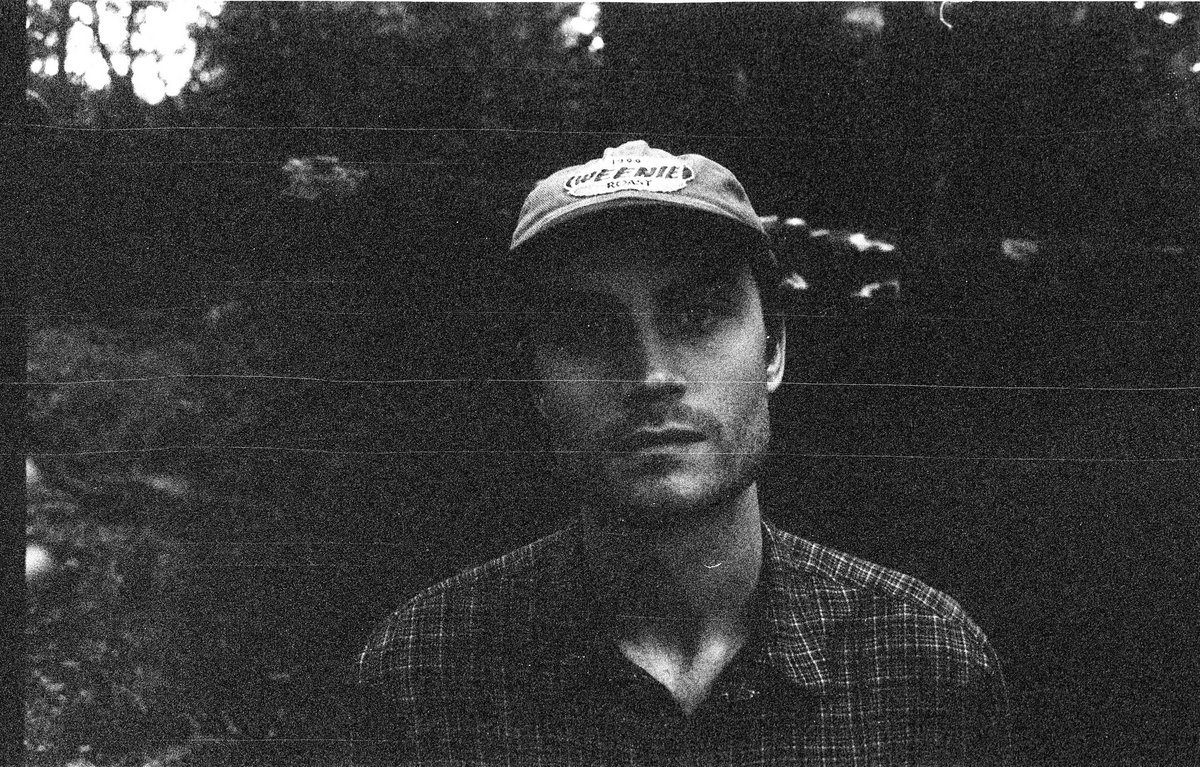
How do you process emotion?, How do you come to terms with past and present self, while trying to remain optimistic for the future? How do you know who you are? These are questions that JJ Posway asks on “Completed Songs,” the debut album from his new project Sloping.
Although some might recognize Posway as the lead songwriter for the band Scooterbabe, Sloping emerges as the next evolution of Posway’s lineage. Similar to how an anthology is a collection of series writings, “Completed Songs” serves as the next chapter to a history being written (and self-consciously re-written) by Posway himself. “Completed Songs” explores more organic sounds through a mysterious potion of twangy layers, sampling and silence, resulting in a beautifully natural chamber of reflection.
The album progresses from acoustic ruminations to synthesized memoirs, showing technique, patience and practice. Each track serves as a window, giving you a direct view into a moment of time, using decidedly ambiguous language to capture the feeling in a way that sheds through each verse. Practice makes perfect, and no one knows that better than Posway himself. If Sloping serves as an escapist diary, then “Completed Songs” is the voyeur’s journey – complete with twists and turns, a changing narrative with moral ambiguities, and an endless amount of heart.
Taylor Chicoine – drum recording, Zach Spires – drums on Fir and Trail, Anna Staddon – vocals on Treading, Fir – (Posway, Spires), Trail – (Posway, Spires, Chicoine)
Written, performed, recorded and mixed by JJ Posway except where noted.
Released February 26th, 2021
Taylor Chicoine – drum recording, Zach Spires – drums on Fir and Trail, Anna Staddon – vocals on Treading, Fir – (Posway, Spires), Trail – (Posway, Spires, Chicoine)
Written, performed, recorded and mixed by JJ Posway except where noted.
Intervention Records is proud to announce the latest LP in its (Re)Discover Series, The Church’s 1988 smash “Starfish” (IR Catalog IR-027/UPC 707129301567).
The Church’s Starfish is a dreamy, atmospheric masterpiece, guitar-driven alt-rock before alt-rock was a term. It includes the timeless smash hit “Under the Milky Way,” and “Reptile,” both First Wave staples. Intervention’s 2X 180-Gram LP, Artist-Approved Expanded Edition is 18-tracks total, including 8 amazing bonus tracks not on the original LP. These bonus tracks kick off with wonderful acoustic versions of “Under the Milky Way” and “Antenna.” The other tracks are so strong it’s very apparent that “Starfish” could have been a potent double LP. “Starfish” is 100% Analog Mastered from The Original Master Tapes by Ryan K. Smith at Sterling Sound.
Intervention’s cut expands the original 10-song repertoire to three vinyl sides opening up the already massive soundstage and presenting this amazing recording with full bass extension and dynamic power. All of the 8 bonus tracks are 100% Analog Mastered from tapes assembled by Ryan K. Smith.
The 180-gram LPs are ultra-quiet, pressed at boutique press, RTI in Camarillo, CA. Intervention replaces its stampers every 500 copies so every pressing is is a hot stamper.
Starfish’s album art was lovingly restored by Intervention’s Art Director Tom Vadakan, and the original inner sleeve here is printed as the interior of a gorgeous gatefold jacket. The jacket is an “Old Style” gatefold made by wizards at Stoughton printing in LA. It’s printed on heavy stock and film-laminated for superior color depth, beauty and durability. The centre labels are printed by Dorado.
“Under the Milky Way,” still one of the most haunting and elegant songs ever to make the Top 40.” – AllMusic
Artist-Approved Expanded Edition Double LP8 with amazing bonus tracks!. 100% Analog Mastering From The Original Master Tapes by Ryan K. Smith at Sterling Sound
Peter Gabriel’s last show as Genesis’ lead singer was May 22nd, 1975, in Besançon, France. His bandmates had known for months he was quitting the group, but they kept the news out of the press, and completed their world tour supporting the ambitious double-album “The Lamb Lies Down on Broadway”. The next steps for drummer Phil Collins, bassist/guitarist Michael Rutherford, keyboardist Tony Banks and guitarist Steve Hackett were unclear. Would the band stay together or not?. “A Trick of the Tail” is the seventh studio album by English progressive rock band Genesis. It was released in January 1976 on Charisma Records and was the first album to feature drummer Phil Collins as lead vocalist following the departure of Peter Gabriel.
Hackett went into Kingsway Recorders in London almost immediately to record a solo album (Voyage of the Acolyte, released in October of that year). With Genesis in limbo, Rutherford and Collins were there to help out. When Genesis at last convened at London’s Trident Studios in the autumn, they were toying with the idea of becoming a completely instrumental band. Their co-producer David Hentschel, who’d worked with them as tape operator and engineer for years, was supportive of whatever they wanted to do.
A Melody Maker advertisement announcing auditions for a “Genesis-type group” had drawn a large number of applicants, but few seemed suitable to replace Gabriel, whose theatrical panache and flexible voice had become, in the words of Banks, “our logo.” Working vocalists like Colin Blunstone (The Zombies) and Mick Rogers (Manfred Mann’s Earth Band) were briefly considered, as was, according to one unsubstantiated account, Nick Lowe of Brinsley Schwarz.
The singer Mick Strickland made the initial cut, and was invited to Trident to assay the new song “Squonk,” but it wasn’t in a comfortable key for him, and he was quickly rejected as well. A collective frustration led to Collins, who had done some light singing in the band already, and as a teenager had played the Artful Dodger in a production of Oliver!, to attempt the lead vocal on “Squonk” himself. He did well enough that the sessions continued with Collins singing whatever lyrics were proffered, while he mostly held down his post at the drumkit. Collins later said that he figured they’d find a real lead singer by the time they hit the road again.
Tony Banks was focused on making the new music equal to that made with Gabriel, who remained a good friend. “If it isn’t, we won’t play again,” he told a journalist just before entering TridentStudios. “If it’s not as good, there’s no point in playing. Peter left and life goes on. We were all sort of sad. We spent some time trying to make him change his mind, but when he didn’t, we just carried on. We’ve always had confidence in our own abilities, but we’re apprehensive about whether audiences will accept us without Peter.”
Released in February 1976, A Trick Of The Tail proved that far from being over, Genesis was set to achieve commercial and artistic successes beyond what they’d accomplished during the Gabriel years. The opening track, “Dance on a Volcano,” immediately announced that strong melodies, dramatic dynamics, majestic classical flourishes and intimate vocals were still in full force. “Holy mother of God/You’ve got to go faster than that to get to the top,” sings a double-tracked Collins at the start.
Time signatures ricochet, multiple keyboards (including synthesizers and mellotron) and 6- and 12-string guitars interweave. Chunky bass and muscular drumming negotiate some spectacular rhythm accents. It’s a kaleidoscopic, virtuosic group performance, developed out of a jam session in the studio at the start of sessions. You can hear the confidence driving the band to believe it could write the bulk of a crucial album on the fly.
The composition of “Entangled” began with Hackett’s 3/4-time guitar figure, to which Banks added a chorus section, Hackett’s lyrics carried upward magnificently by Collins: “Well, if we can help you we will/You’re looking tired and ill/As I count backwards/Your eyes become heavier still.” Some delicate chiming percussion is added to Banks’ harpsichord-like keyboard, and he also adds an ethereal, theremin-like synth solo that fills the final minute. The mellotron, imitating a human vocal chorus, joins for a dramatic conclusion. Banks often identifies “Entangled” as his favourite track on the album.
“Squonk,” credited to Rutherford/Banks, has been described by Collins as “our Led Zeppelin moment.” Taking off from “Kashmir” and “When The Levee Breaks,” it sounds unlike either, but Collins is clearly thinking of John Bonham in his booming rhythm. Banks’ keyboards harken back to the band’s solid prog-rock days of “Watcher of the Skies” and “Supper’s Ready,” and the Rutherford/Hackett interaction is again a master class in arranging. Every inch of its 6:30 length contains something interesting, and when Banks’ organ launches yet another gorgeous melody in the last moments, the fade feels too soon. The lyrics refer to the mythical animal that dissolves into a pool of tears when captured. “Squonk” is one of the tracks that suggested to the Hipgnosis album cover design crew that a “storybook” theme would be a way to convey the feel of the album.
Banks’ solo composition “Mad Man Moon” is the most overlooked track on “A Trick of the Tail”, maybe because in many ways it’s the most conventional performance on the disc, and a bit too unfocused. Banks says he wanted it to sound “unusual but not weird,” and it certainly gives him a showcase, with a full display of mellotron, synth and piano expertise. Collins gets to add some xylophone, and he sings it perfectly, but there’s something unconvincing about the upbeat, dramatic section about five minutes in that starts “Hey man/I’m the Sandman.” As the second-longest track on the album, it drags too much, and brings side one of the LP to a close.
The rousing “Robbery, Assault and Battery” launches side two with Collins in Artful Dodger mode for a tale he devised with Banks. Using a put-on Cockney accent (he was born in Chiswick, not the East End, of London), Collins shows the wit that allowed him to truly become a “front man” when Genesis toured A Trick of the Tail in ’76, with Bill Bruford drumming whenever Collins needed to be at the microphone. Again, the whole band contributes backgrounds of spectacular coloration and invention.
“Ripples,” credited to Rutherford and Banks, is over eight minutes long, and justifies every second, from the delicate baroque opening, through the soaring chorus of “Sail away, away/Ripples never come back,” to the mid-point switch to an instrumental cinematic landscape. Hackett’s backward-sounding guitar, Banks’ trumpeting synth, and the solid drum/bass lock-in eventually winds back to another chorus, this time underpinned by every emotional hook in the Genesis repertoire. No wonder “Ripples” remained in Genesis’ live sets for decades.
The album’s title track is a jaunty Banks-penned piece, which Collins again superbly acts out. The vocal arrangement is outstanding, unlike anything else on the album: listen to what happens around the first iteration of the lyrics “Am I wrong to believe in a city of gold/That lies in the deep distance.” This is the song that points to hit singles in the band’s future, like “Follow You, Follow Me,” “Misunderstanding” and “That’s All.” “A Trick of the Tail” was released as the B-side to the album’s only 45rpm single, “Entangled,” but neither scored any pop radio success at the time.
The instrumental “Los Endos,” inspired by Santana’s “Promise of a Fisherman,” ends the album, and manages to reference “Squonk” and “Dance on a Volcano” for a nice circular conclusion to the disc. Collins even sings a couple of lines from “Supper’s Ready” in a nod to Gabriel before it’s over. It’s a full-band composition, and shows what Genesis would have sounded like had they dumped the whole idea of having a singer—still damn good. “Los Endos” meshes with the “classic” Gabriel-era Genesis perfectly, and serves as a message to their fans that they’re not going to jettison anything that made them previously beloved, but rather add to their legacy and keep moving forward. It’s been a highlight of their live performances ever since.
Music critics and the public loved the album, and it got solid FM airplay in the U.S. and U.K. Three promotional films were made, for “Robbery, Assault and Battery,” “Ripples” and the title track, which helped spread the word. A Trick of the Tail sold well, The subsequent North American tour started with Collins nervous at first and triumphant after—he’d proven himself capable of being out front.
“The visual show has always been the trimmings,” he told a journalist during the tour. “That’s the least important aspect of what we’re about. Recording good music and the playing of the music is the most important thing. The presentation was the icing on the cake. A Trick of the Tail is a typical Genesis album but the major change is that it has a much stronger appeal than any other.”
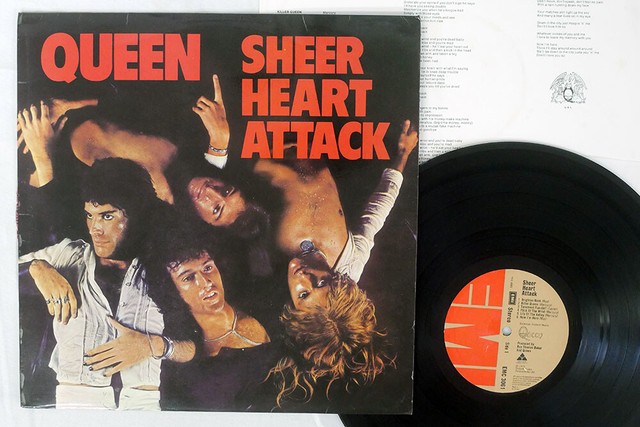
“Sheer Heart Attack” is the third studio album by the rock band Queen, released in November 1974 by EMI Records in the United Kingdom and by Elektra Records in the United States. Digressing from the prog rock themes featured on their first two albums, the album featured more pop-centric and conventional rock tracks and marked a step towards the “classic” Queen sound. It was produced by the band and Roy Thomas Baker and launched Queen to mainstream popularity in the UK and throughout the world. In the May of 1974, having completed their third concert at the Uris Theatre in New York City as support band for Mott the Hoople, Queen should have been moving on to the next of 20 additional dates booked on their first tour of the United States. But their guitarist Brian May had been diagnosed with hepatitis two weeks earlier, and his health was failing. (He possibly contracted the disease from a contaminated needle when he received mandatory vaccinations before traveling for Queen’s one-off Australian festival date in January.) The American tour in support of their “Queen II” LP had been a rousing success, but all momentum had now ground to a halt.
Brian May say’s: “When I was in the hospital, I found plenty of time to read the press cuttings that some of friends of mine had been keeping for me, and that really depressed me,” he later told journalist Rosemary Horide. “It was about that time I began wondering whether it was worth going on with music and the group. The thing about hepatitis is that it takes away all your drive and I was left feeling as if I didn’t have anything to contribute, as if it just wasn’t worth it.”
Without May, singer/keyboardist Freddie Mercury, drummer Roger Taylor and bassist John Deacon prepared new songs for a third Queen album, with rehearsals and initial recording sessions at Trident Studios in London. Mercury told Melody Maker’s Caroline Coon about his grace under pressure, with a two-week deadline: “Well, ‘Killer Queen’ I wrote in one night. I’m not being conceited or anything, but it just fell into place. Certain songs do. Now, ‘March of the Black Queen’ [from Queen II], that took ages. I had to give it everything, to be self-indulgent or whatever. But with ‘Killer Queen,’ I scribbled down the words in the dark one Saturday night and the next morning I got them all together and I worked all day Sunday and that was it. I’d got it. Certain things just come together, but other things you have to work for.”
In July, May was feeling well enough to join them at Rockfield Studios in Wales, The band would record ten backing tracks at Rockfield Studios, finishing on 28th July, completing most of the tracks with producer Roy Thomas Baker and engineer Mike Stone. But when they moved to Wessex Sound Studios in London, May was hospitalized again and required surgery, for yet another serious ailment: “When they found out I had a duodenal ulcer, I really thought that was the final straw. You see, instead of getting better after the hepatitis I just got sicker and sicker, and eventually they found out what was wrong. I was very down then.” But he came back to the group more committed than ever.
The resulting album “Sheet Heart Attack”, released November. 8th, 1974, by Elektra in the U.S. and EMI worldwide, was Queen’s commercial breakthrough. “Killer Queen” became a hit single. Wildly theatrical, straddling the worlds of hard rock, pop, prog and Broadway, the album was an eclectic triumph. May later said it was the first album on which Queen sounded like a true band rather than four individuals; he felt the experience gained on tour in America made the whole sound gel. He hadn’t been able to write as much as usual for the sessions, but that didn’t matter, because, as he said in a 1975 interview, “I play my best guitar on other people’s songs.”
The opener “Brighton Rock” had been written by May during the Queen IIsessions. It opens with the sounds of the holiday pier in Brighton before the band enters at a frantic pace, and Mercury at the top of his range screams the lyrics: “Happy little day, Jimmy went away/Met his little Jenny on a public holiday/A happy pair they made, so decorously laid/’Neath the gay illuminations all along the promenade.” Mercury then does an impressive sweep down to a lower octave, a trick he returns to several times during the track. A section of stacked vocals looks forward to “Bohemian Rhapsody” before May leads Deacon and Taylor into a swirling collage of metal-like chord slams and psychedelic ambiance. (How Baker and Stone captured the detailed sonic mayhem of Queen throughout their years of work with the band is amazing.)
At 2:40 of “Brighton Rock,” one of the greatest guitar solos ever recorded begins. May’s use of Echoplex delay and his alteration of light and heavy touch is jaw-dropping, and sets the template for every hard rock guitarist to come (listen to Eddie Van Halen’s “Eruption” for Exhibit A). When Mercury re-enters for the concluding verse, May sings with him, and the guitar pyrotechnics end it all with a thunderclap.
“Brighton Rock” was written by Brian May during the Queen II sessions, but was not recorded at that time as the group felt it would not fit with the rest of the album. Lyrically, it tells the story of two young lovers named Jenny and Jimmy meeting in Brighton on a public holiday. Mods travelling to Brighton on bank holidays was a popular narrative at the time, such as The Who’s Quadrophenia. Jenny cannot linger because she is afraid her mother will find out “how I spent my holiday”, but afterwards “writes a letter every day”; Jimmy, eager on the day, is not so happy with her “nothing can my love erase”: now he is the one afraid of discovery by “my lady”.
The song includes an unaccompanied guitar solo interlude, which makes extensive use of delay to build up guitar harmony and contrapuntal melodic lines. It grew out of May’s experimentation with an Echoplex unit, as he had been attempting to recreate his guitar orchestrations during live performances of “Son and Daughter”. He had made modifications to the original unit so that he could change the delay times, as he felt that it wasn’t the length he needed, and ran each echo through a separate amplifier to avoid interference. The studio version only contains one “main” guitar and one “echoed” guitar for a short section, but live, May would usually split his guitar signal into “main” and two “echoed”, with each going to a separate bank of amplifiers.
The guitar solo on this song has been performed live at most concerts by Queen or May, either as part of this song, in a medley with another, or as a standalone piece. May also performed some of the solo at the closing ceremony of the 2012 Summer Olympics in London. It is considered to be one of Brian May’s finest solos,
The song was notably used in the 2017 film Baby Driver, being one of the favourite songs of the main character Baby and played during the film’s final action scene.
A bigger contrast to the next track, “Killer Queen,” can hardly be imagined. Finger-snapping and tack piano begin, with a stately mid-range Mercury vocal that owes its hybrid sangfroid to the British music hall and French chanson traditions. Expertly designed backing vocals swoop, “caviar and cigarettes/well-versed in etiquette/extraordinarily nice” is done in falsetto, and then the super-catchy chorus arrives.
Mercury revels in his tale of a high-priced prostitute who is “dynamite with a laser beam,” throwing in fancy words that rarely make it into pop lyrics: insatiable, gelatine, baroness. There are occasional phasing effects on the vocals, and May tries out a half dozen different guitar tones, with a middle overdubbed section that is a marvel. This is where Mercury’s fascination with the “spirit of extravagance” that is “camp” blossoms. It is one of the few songs by him for which he wrote the lyrics first, which are about a high class prostitute.
Another change of pace is Taylor’s folky “Tenement Funster,” which he sings very much in the style of Mott the Hoople’s Ian Hunter. Deacon played the acoustic guitars in May’s absence, but May added electric parts later. It segues into Mercury’s “Flick of the Wrist,” which perhaps echoes Alice Cooper in its opening bars, and has a wonderfully unhinged middle section where frenetic drumming, multiple guitars and stacked vocals collide.
The joyful over-the-top antics yield to the third part of the medley, “Lily of the Valley,” a short, tender Mercury ballad that he sings the hell out of. This is another example of Baker’s production expertise: listen how the “sound of the room” caresses May’s guitar lines and keeps Mercury’s piano in front of your ears. (Queen albums, like Pink Floyd’s, pay dividends with good headphones.)
May closes out the first LP side with the massive “Now I’m Here,” which he wrote in the hospital. His chunky guitar riff is worthy of Led Zeppelin, even if it yields to a chugging feel that owes something (again) to Mott the Hoople. Mercury really sells it, and at 3:15 Deacon, Taylor and May give a master class in how to lock in a groove and wail. As it ends, May goes into a fervid Chuck Berry-style solo, which Mercury verifies by singing “go, go, go little Queenie” before the fade.
The second side of Sheer Heart Attack is a mixed bag with some real clunkers. “In the Lap of the Gods” starts it off with an operatic scream, stacked guitars and heaps of harmony vocals (by Taylor and Mercury) sputtering in the mix before a very arch, highly-processed Mercury lead vocal emerges. He absolutely revels in the nuttiness, while May again pulls out a wide variety of sonic colours and combinations.
“Stone Cold Crazy” was one of the earliest tracks that Queen performed live, and had several different arrangements before being recorded for “Sheer Heart Attack”. No band member was able to remember who had written the lyrics when the album was released, hence they shared writing credit, the first of their songs to do so. The lyrics themselves deal with gangsters, making a reference to Al Capone. The track has a fast tempo and heavy distortion, presaging speed metal. Music magazine Q described “Stone Cold Crazy” as “thrash metal even before the term was invented”. The song was played live at almost every Queen concert between 1974 and 1978
The two-minute blast of “Stone Cold Crazy” is next, sounding like the bastard child of Deep Purple’s “Highway Star” and Golden Earring’s “Radar Love.” The song had been kicking around the band for years, in various arrangements, and nobody could remember who wrote the lyrics by the time they tried it again for Sheer Heart Attack, It was also the first album in which all four band members contributed songs; “Stone Cold Crazy” was the first song in which all four band members would receive a writing credit. It’s magnificently goofy. (A cover by Metallica won a Grammy Award for Best Metal Performance in 1991.)
May’s short ballad “Dear Friends” is beautifully sung by Mercury and leads into Deacon’s only solo writing credit, “Misfire,” which seems to have escaped from a Doobie Brothers album, “Misfire” was John Deacon’s first individual composition for the band, and featured him playing most guitars.
“Bring Back That Leroy Brown” had 70 vocal tracks and had to the mixed down to accommodate with the 24-track mixer. Deacon’s on double bass and May strums a banjo-ukulele, an instrument popular in the 1920s that fits Mercury’s retro lyrics and rhythm. In concert, the tune was most often treated as a throwaway instrumental; maybe it ultimately exceeded Mercury’s quotient for silliness.
“Bring Back That Leroy Brown” is a Charleston that was written by Mercury and features him playing grand piano and jangle piano, as well as multiple vocal overdubs. May played a short section on ukulele-banjo and Deacon played a line on the double bass. DRUM! Magazine commends Taylor’s drum work, calling it a good example of his versatility. “It really shows off Taylor’s versatility. He nails dozens of kicks throughout this fast and tricky song and proves that he could’ve been a big band drummer or ably fit into any theatrical pit band if Queen hadn’t worked out so well for him. Honky-tonk piano, upright bass, ukulele-banjo, and a smokin’ drummer all add up to a rollicking good time.” The song’s title alludes to the then-recent hit “Bad Bad Leroy Brown” by American singer-songwriter Jim Croce who had died in a plane crash the previous year. The song was played live in an arrangement that shortened the song and was, except for the very end and one other line, purely instrumental. May’s ukulele-banjo was brought onstage especially for this song. An a cappella version was released as part of the 2011 remaster of the album.
“She Makes Me (Stormtrooper in Stilettos)” is written and sung by May, with Deacon on acoustic guitar along with him. There are echoes of the Who, the Association and the Eagles, and not a lot of Queen. There’s not much of interest here; the tempo drags, and the track really overstays its welcome at 4:08. There are some “New York nightmare” sounds, sirens and heavy breathing, that are just weird. Thankfully, “In the Lap of the Gods…Revisited” concludes the album in high style, a fantastic showcase for Mercury and May. It was Mercury’s first try at writing a melody line that audiences would enthusiastically sing along to, and he placed it as a show closer for many gigs in the next three years. Its role as a sing-along eventually was supplanted by a little ditty called “We Are the Champions.”
“Sheer Heart Attack” established Queen as a major force in most parts of the world and Mercury as one of rock’s most flamboyant frontmen. They did a world tour of 77 dates, and audiences loved them, from Manchester to Munich, Trenton to Tokyo. Most critics praised the album’s recording dynamics and the audacity of the conception, and admitted no matter how pretentious or bombastic, Queen were consummate entertainers. The triumphs of A Day at the Races and A Night at the Opera were still to come, but they have their roots in Sheer Heart Attack’s total bravado.
NME wrote, ‘A feast. No duffers, and four songs that will just run and run: “Killer Queen”, “Flick of the Wrist”, “Now I’m Here”, and “In the Lap of the Gods…Revisited”. The Winnipeg Free Press commended ‘Brian May’s multi-tracked guitar, Freddie Mercury’s stunning vocalising and Roy Thomas Baker’s dynamic production work’, calling the album ‘a no-holds barred, full-scale attack on the senses’. Circus Magazine referred to the album as ‘perhaps the heaviest, rocking-est assault on these shores we’ve enjoyed in some time’. Rolling Stone wrote, ‘If it’s hard to love, it’s hard not to admire: this band is skilled, after all, and it dares.’ As 1974 drew to a close, the album was ranked by Disc as the third best album of the year.
From 30th October 1974 to 1st May 1975, the album was promoted on tour. The tour consisted of three legs and 77 individual shows, and was the band’s first world tour.
Guitarist Marc Ribler, musical director for Little Steven and the Disciples of Soul, steps into the spotlight with the release of “Shattered,” a driving East Coast heartbreak rocker oozing West Coast Laurel Canyon style. The song, the lead single from his upcoming full-length “The Whole World Awaits You” (co-produced and arranged by Steve Van Zandt), “Shattered” chimes with a jangly 12-string Rickenbacker, crunchy open G riffs, punchy slide guitar, a bed of pristinely layered acoustic guitar tracks and Ribler’s plaintive, near-broken but head still held high vocals. If you miss Tom Petty and the classic sound of world-class musicians playing together for the song, you’re sure to be smiling and singing along to “Shattered.”
Its accompanying B-side “Hand Me Down,” with its minor key vibe and tabla percussion is an equally impressive modern-day take on the exploratory sounds of the ‘60s, spiced with a Hollies feel and a blistering guitar and violin solo call-and-response section.
“I grew up on that music,” Ribler says “Steven jokes, ‘you’re going to make me love the Eagles!’ That’s not really his thing. He’s more of a Byrds fan. The rest of the record has that Americana California sound as well.”
Ribler has spent the last seven years as Steve Van Zandt’s right-hand man, serving as musical director for the 15-piece R&B-influenced Disciples of Soul band. Van Zandt keeps the band busy, whether it’s recording or near non-stop touring. Needless to say, with that much responsibility, and his dedication to making sure the music is the best it can be, Ribler’s attempts to release a new record were put to the back burner until now.
“Shattered” has its origins as a country song, written years ago with songwriter Christina Aldendifer to pitch for other artists to record. As is the case, the song sat in limbo until Ribler began compiling a track list of potential songs to record for a new release.
“Christina and I wrote it in 2010. It’s one of those songs that just felt good,” Ribler said. “I had been going down to Nashville a lot at the time to co-write. It was the first time I had written with Christina and we wrote it on the first afternoon.”
“That song was written to get a cut placed in Nashville,” he explains. Both Ribler and Aldenifer count themselves as strong lyricists who were able to easily bounce off each other’s creative input. They wound up writing the bulk of the song that day and then finished it via email. “It’s nice when there are two lyricists. When we made the demo, I liked the way it sounded, which doesn’t always happen for me.” Ribler reveals the song was originally written as a much mellower country song. When he resurrected the song, he experimented with a few different ideas. “It really found its voice and it became this other thing when I started the open G Keith Richards sounding guitar part and added slide guitar.”
The Brooklyn-born Ribler moved to New Jersey at a young age, growing up in rural Jackson, a few miles from the famed seaside beach town of Asbury Park. A phenomenal guitarist, he released two solo records, found a niche in the New York City scene and supported several artists as guitarist and producer. A mutual friend introduced him to Van Zandt, who quickly recruited him into a re-tooled Disciples of Soul project.
In 2017 as the Disciples Soulfire tour was wrapping up, Ribler re-focused his efforts on putting together his own album. He brought in Disciples band mates Rich Mercurio (drums), Andy Burton (organ, keys), and Jack Daley (bass) and recorded fifteen songs at New Jersey’s Shorefire Studios in three days, with engineering by Joe DeMaio.
“Steve would send me notes about the show that night, what songs we might add from his repertoire.” The band would also add songs on the spot with little rehearsal, such as when Chuck Berry, Tom Petty and Malcolm Young passed away, and the band wanted to pay tribute to their heroes. “Eddie Manion (sax and horn section leader) and I would scramble and make sure everyone had the music. We’d get to the hotel, learn the song and then rehearse at the venue. There’s very little time for anything else.”
After the last tour, Ribler was on the phone with Van Zandt and told him he was mixing his own record, which piqued the Rock and Roll Hall of Famer’s ear. “He said he would love to hear it. I sent it to him and he loved it. We worked on some arrangements together virtually and over email. And he said he wanted to put it out on his label, Wicked Cool Records.”
Funny enough, Ribler adds, it wasn’t the first time he had sent this music to his boss. “Charley Dayton, who played drums on our first tour with the Disciples, suggested I send my initial rough mixes to Steven, which I did back on an earlier tour. I sent him a Dropbox link. Obviously the timing wasn’t right, in the craziness of the tour schedule. So, I try and keep things compartmentalized and separate my work from my role as his music director. Steve’s got a lot going on. I can’t imagine being him and having the energy to do anything else.”
Ribler credits Van Zandt for making invaluable contributions to the material on The Whole World Awaits You.
“He’s really good about cutting to the chase. I’m better at doing that when I’m producing other people’s songs. But when it’s your own material, you become married to things you shouldn’t be married to- you’re going to divorce them eventually! It was so vital having Steven’s decades of hit making experience as a sounding board for feedback in making this record.”
“Shattered” is available for pre-order now at Wicked Cool Records. Marc Ribler’s full-length upcoming release The Whole World Awaits You will be released on July 9th on Wicked Cool Records.
A New Collaboration Featuring Jeremy Earl of Woods & Glenn Donaldson of Skygreen Leopards, (The Reds, Pinks & Purples) met sometime in the mid-aughts and bonded over a love of tambourines and DIY sounds. They have shared many stages since, and their first serious collaboration was on the 2011 Woods album Sun & Shade. Around 2018, Earl was restless in upstate NY and accepted an invite to record in Donaldson’s studio in an undisclosed rural coastal town in Northern California.
In a week they emerged with nearly an album’s worth of hazy folk-rock and psych-pop with touches of more outré lo-fi noise. Jeff Moller (The Papercuts) added bass, and they put the finishing touches on during quarantine. Heaven and Holy ebbs and flows like coastal fog between songs and dreamy instrumentals splitting the difference between The Clean’s Unknown Country and The Byrds’ Fifth Dimension. Today the duo shares the album’s wistful first single “Gone”
Jeremy Earl & Glenn Donaldson met sometime in the mid-oughts and bonded over a love of tambourines and DIY sounds. They shared many stages since, and their first serious collaboration was on the 2011 Woods album Sun & Shade. Around 2018, Earl was restless in upstate NY and accepted an invite to record in Donaldson’s studio in an undisclosed rural coastal town in Northern California. In a week they emerged with nearly an album’s worth of hazy folk-rock and psych-pop with touches of more outré lo-fi noise. Jeff Moller (The Papercuts) added bass, and they put the finishing touches on during quarantine. “Heaven and Holy” ebbs and flows like coastal fog between songs and dreamy instrumentals splitting the difference between The Clean’s Unknown Country and The Byrds Fifth Dimension.
Painted Shrines are : Jeremy Earl: Guitars, Vocals, Drums, Percussion, Mellotron, Casio Glenn Donaldson: Guitars, Organ, Casio, Backing Vocals Jeff Moller: Bass, Electric Piano on track 11
New Album “Heaven and Holy” Out March 5th on Woodsist Records releases March 5th, 2021
Flock Of Dimes (the solo project of Wye Oak’sJenn Wasner) will release her new album “Head of Roses”, on April 2nd via Sub Pop Records. Here’s the first single. Her most recent solo project as Flock of Dimes was the EPLike So Much Desire, which also came out last year on Sub Pop. The video for her new single “Two.” The release coincides with an announcement by Wasner that her forthcoming album Head of Roses . Check out the Lola B. Pierson and Cricket Arrison-directed video for “Two,”.
Directors Pierson and Arrison speak about the “Two” video in a press release: “The world of the video shows two humans during three consecutive days. One human lives her life from morning to night, the other from night to morning. In the middle of the day they meet and the next day begins. By exploring dichotomies (natural/artificial, day/night, everyday/majestic) the work points to the pain caused by categorization and the joy of unification.”
Wasner adds: “‘Two’ is about trying to find a kind of balance between independence and interdependence, and the multitudes within ourselves. It’s about trying to reconcile the desire to maintain a sense of personal autonomy and freedom with the need to connect deeply with others. And it’s about struggling to feel at home in a body, and learning how to accept that the projection of self that you show to others will always be incomplete. I made this video with an incredible team of generous and talented people, including some very dear old friends. I think what we made captures the spirit of the song perfectly—the sense of delight and wonder at the absurd beauty of everyday life, and the true moments of spontaneous joy that can erupt in those rare moments when you catch a glimpse of yourself the way others see you.”
Head of Roses was produced by Nick Sanborn (Sylvan Esso) and Wasner. which comes out on April 2nd via Sub Pop.
Palehound (Ellen Kempner) and Jay Som (Melina Duterte) have joined forces for a new project, Bachelor, and shared their first single together via Polyvinyl, “Anything At All.” According to a press release, the two musicians began writing and recording together in pre-quarantine 2020, and they wrote, performed, and produced their new single entirely on their own.
“Anything At All” begins with sticky bass lines and steady cymbal hits, met with sparse moments of synth and clever lyrical imagery comparing a menacing adversary to a spider. Later, the track transitions into a swelling moment of head-bobbing instrumentation (in addition to a powerful guitar solo) while its infectious chorus rings out. The duo state in a press release: “We’re so excited to finally share this song with y’all and announce our new band! We’ve been dear friends and huge fans of each other for years and were lucky enough to get to work together in January 2020 before quarantine. We feel that ‘Anything At All’ is an even blend of our tastes and writing styles and to release it feels very hopeful and joyous to us.”
In related news, Palehound has a livestream event, a concert to commemorate the one-year anniversary of their cancelled US tour supporting Black Friday,
The last show Palehound played was at Cafe du Nord in San Francisco on March 11th 2020, halfway through a tour that felt like a blissful dream. Though news of the pandemic shone through our phones and the venue provided hand washing instructions to the lyrics of our songs, we had no idea that night would be the last time we’d play that setlist live. Since returning from tour, Ellen moved to upstate NY and started to work at a recording studio in Stanfordville NY called the Chicken Shack, owned and operated by Nick Kinsey. Back in October, we decided to make a video of us performing the set and decided to do it at the studio so we’d get a great recording of it. We’ve been sitting on it for a minute but it seems right to release it now around the year anniversary of our tour being cancelled. We really miss playing with each other and playing like for y’all and this feels like the closest we can get to that for now.
“Anything At All” is the debut single from Jay Som & Palehound’s new joint project, Bachelor, out now on Polyvinyl Records, Lucky Number, and Milk! Records.
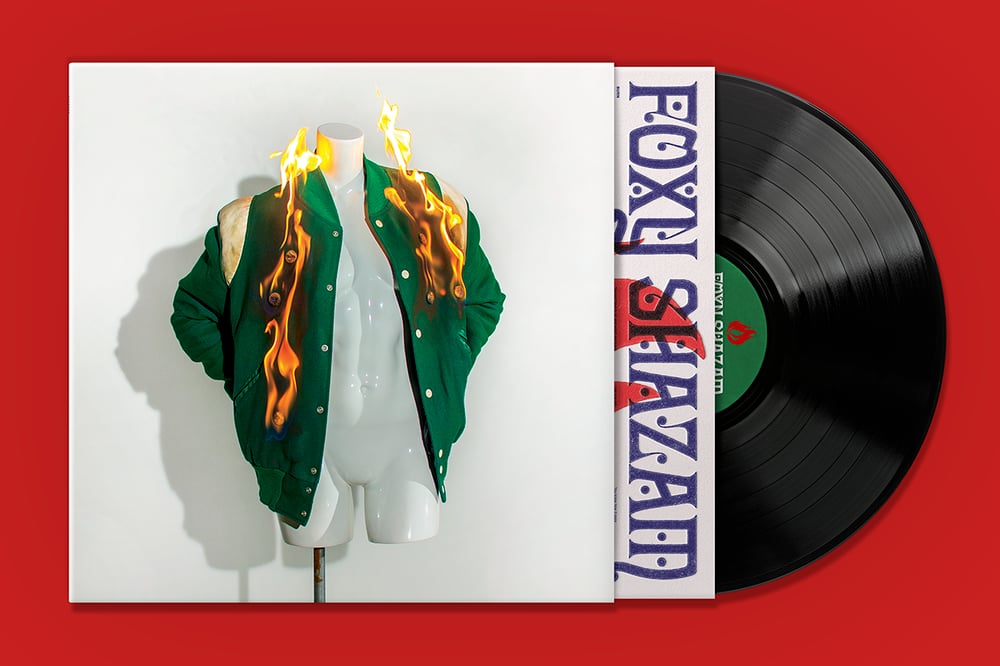
Foxy Shazam are self-releasing their sixth album, “Burn”, via their new label EEE OOO AH, released last December. The distant and remote collaboration between the five-piece is an attempt to further evolve the band’s sound. Overall, Foxy Shazam is always a nice, modern addition to glam, hair rock, but Burn as a whole will not be a standout in Foxy Shazam’s discography. The album’s focus on psychedelic, wizardry metal is overused vs. a fun novelty. The album is bookended with the high notes of “Burn,” and “Dreamer,” at the start, and ending with “Suffering” and “The Rose.”
Full of promise, the Ohio classic rock outfit were expected to come back with a bang. Yet, sadly, in keeping with the tone of 2020, the band’s first album through their own label, Eee Ooo Ah, turns out to be underwhelming at best.
As the opening notes of title-track introduce the album, there’s a tingling of excitement in the air. The album revs up with undeniable potential as we sit and wait impatiently for a tidal wave of colossal riffs and unabashed rock ‘n’ roll energy to smack them in the face and then, finally… well, nothing. It’s hard to put a finger on it, but there’s something missing. The track, and subsequently the rest of the album, falls flat, and it’s a real shame. To give the album its due, it’s not without its moments. There are flashes of brilliance, such as the fun, funky ‘Doomed’ with its rolling drums and impressively fast-paced vocals, and the playful brass section in ‘In My Mind’. But, on the whole, ‘Burn’ feels like a tongue-in-cheek caricature of 80s glam rock and is more like something you’d hear on the ‘This Is Spinal Tap’ soundtrack than an album release in 2020.
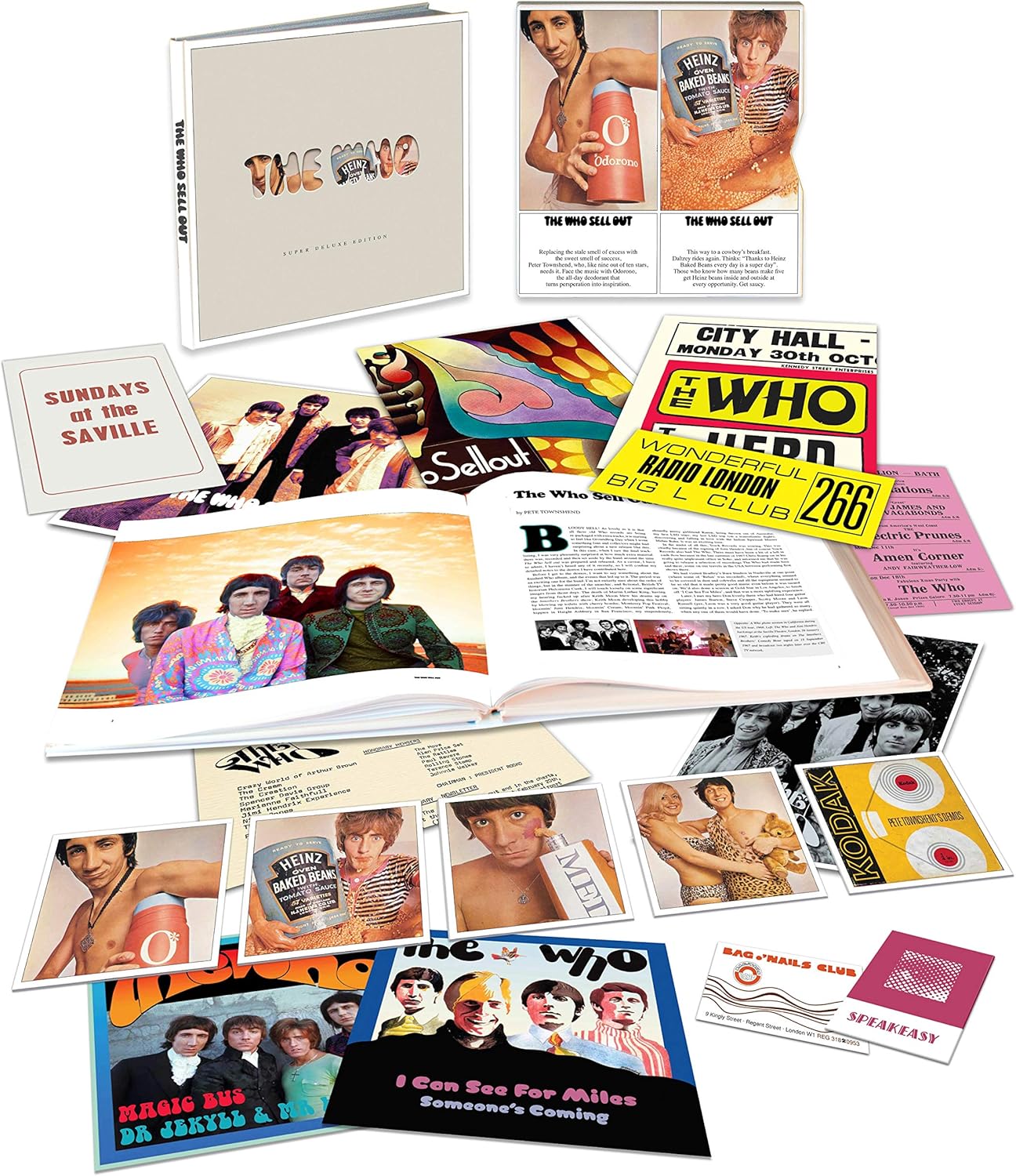
The Who have announced expanded editions of their 1967 album, The Who Sell Out. The new releases include 2-CD and 2-LP sets, as well as a 7-disc Super Deluxe Edition composed of 5 CDs and two 7-inch singles. The latter features the album in both mono and stereo plus previously unheard Pete Townshend demos, studio sessions, outtakes, unheard jingles and more. All arrive April 23rd, 2021, via Geffen/UMe.
The box set also features nine posters*, replica ephemera, and an 80-page hardbound book with rare photos and new liner notes by Townshend. There are 112 tracks in all, 46 of which are previously unreleased. It also includes nine posters & inserts, including replicas of the 20″ x 30″ original Adrian George album poster, a gig poster from The City Hall, Newcastle, a SavilleTheatre show 8-page program, a business card for the Bag o’ Nails club, Kingly Street, a Who fan club photo of group, a flyer for Bath Pavilion concerts including The Who, a crack-back bumper sticker for Wonderful Radio London, Keith Moon’s Speakeasy Club membership card and a Who Fan Club newsletter.
From the February 26th announcement: The Who Sell Out was originally planned by Townshend and the band’s managers Kit Lambert and Chris Stamp, as a loose concept album including jingles and commercials linking the songs stylized as a pirate radio broadcast. This concept was born out of necessity as their label and management wanted a new album and Townshend felt that he didn’t have enough songs.
The ground breaking original plan for Sell Out was to sell advertising space on the album but instead the band opted for writing their own jingles paying tribute to pirate radio stations and to parody an increasingly consumerist society. Pete Townshend demos of “Pictures of Lily,” “Kids! Do You Want Kids” and “Odorono” .
The homage to pop-art is evident in both the advertising jingles and the iconic sleeve design created by David King who was the art director at the Sunday Times, and Roger Law, who invented the Spitting Image TV show. The sleeve features four advertising images, taken by the renowned photographer David Montgomery, of each band member: Odorono deodorant (Pete Townshend), Medac spot cream (Keith Moon), Charles Atlas (John Entwistle) and Roger Daltrey and Heinz baked beans. The story goes that Daltrey caught pneumonia from sitting in the cold beans for too long.
“We were hoping to get free Jaguars,” said Townshend last year. “We got 50 free tins of baked beans!”
The Who‘s third album followed 1965’s My Generation (released in 1966 as The Who Sings My Generation in the U.S.) and 1966’s A Quick One (released in 1967 as Happy Jack in the U.S.). Those first two achieved top 5 sales in the U.K. Despite the band’s success on the singles chart, with five top 5 U.K. hits under their belts, The Who Sell Out peaked at just #13 there. It reached just #48 in America. The album’s “I Can See For Miles” made it to #10 in England and #9 in the U.S. It remains their biggest American pop hit.
The homage to pop-art is evident in both the advertising jingles and the iconic sleeve design created by David King who was the art director at the Sunday Times, and Roger Law, who invented the Spitting Image TV show. The sleeve features four advertising images, taken by the renowned photographer David Montgomery, of each band member: Odorono deodorant (Pete Townshend), Medac spot cream (Keith Moon), Charles Atlas (John Entwistle) and Roger Daltrey and Heinz baked beans. The story goes that Daltrey caught pneumonia from sitting in the cold beans for too long.
Those lackluster sales would change in May 1969 with the release of the rock opera, Tommy, a 2-LP set which reached #2 in the U.K. and #4 in the U.S.
A deluxe edition of The Who Sell Out was previously released in 2009




:format(jpeg):mode_rgb():quality(90)/discogs-images/R-5959548-1407421509-9392.jpeg.jpg)
:format(jpeg):mode_rgb():quality(40)/discogs-images/R-2678197-1529034183-1160.jpeg.jpg)



 The Fat Angel Sings