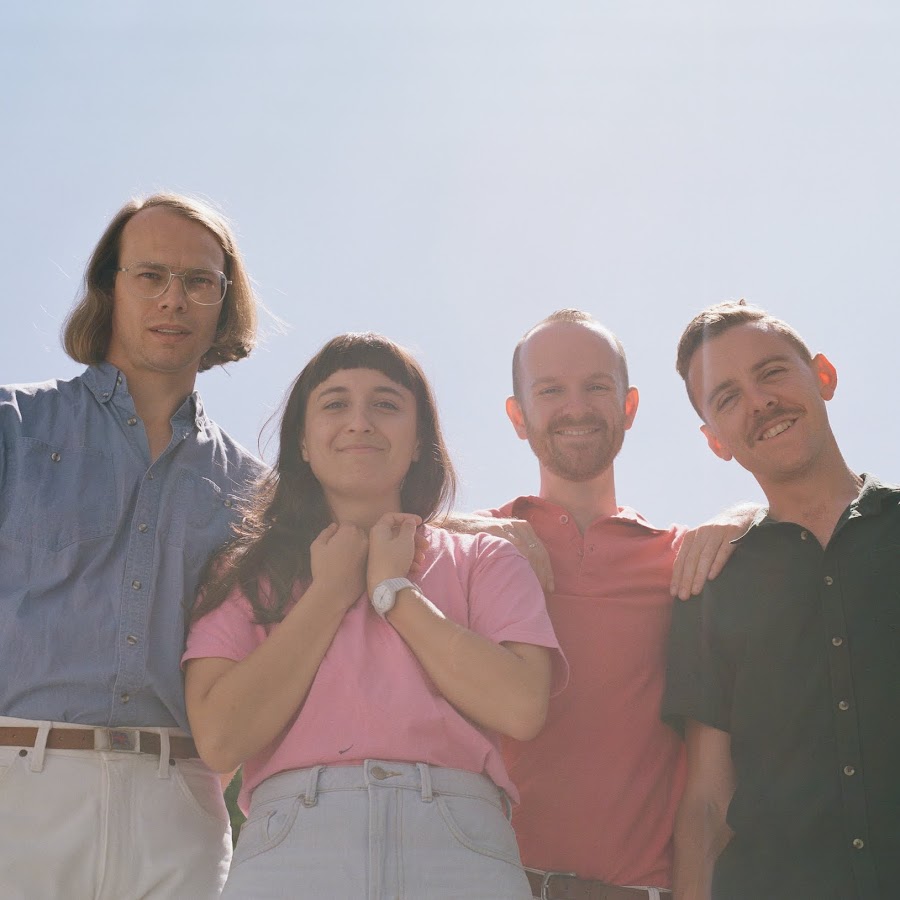
By all conventional wisdom, The Beths should have arrived in 2018 just to say “hello!” and then never be heard from again. After all, their debut album ‘Future Me Hates Me’ saw the Auckland quartet serve up fuzzy, gently ironic power pop that in lesser hands would be indistinguishable from the garage band next door.
The Beths stood out, however, not just because their songs were catchy as hell but because they were rendered with palpable exuberance. The guitars sounded wonderfully brash, the drums teetered on the edge of chaos and, most notably, chatty vocal harmonies from guitarist Jonathan Pearce kept jolting out of nowhere as if he couldn’t help himself from piping up and sending these songs over the top. The album’s sonic delights were as entrancing as the songs themselves — this was music that dared you not to like it.
The Beths have now returned with ‘Jump Rope Gazers’, a second album that adopts a decidedly different approach: not so much leaping out of their songs as inviting its listener in. The lyrics are denser, the music moodier and every sound is more studied and measured. While ‘Future Me Hates Me’ was a mostly chipper affair — its title track expressing regret and self-loathing through a kind of droll, winking meme-speak. On the title track they veer into full-on balladeering, a direction the first record never even approaches, with the whistle-clean and unabashedly wistful end product sounding like it could be a long-lost Cranberries outtake. With genre, performance and production, the band are trying new things here — and that alone is worth something.
The Beths are: Elizabeth Stokes, Jonathan Pearce, Benjamin Sinclair, Tristan Deck
“Jump Rope Gazers” features on The Beths’ sophomore album “Jump Rope Gazers”, out now via Carpark Records.
While Wolf Alice are away, Coach Party will play. Signed to the illustrious Chess Club – where the former also started their career – and displaying a certain enthusiasm for a glitter-speckled rock-pop breakdown, the comparisons between the Isle Of Wight four-piece and their London forebearers has been something of an inevitability, even encouraged by the band themselves.
While the sonic similarities between the two groups are keenly apparent, there’s a lightness and playfulness to Coach Party that feels more inherently their own. Drawn together after one too many chance meetings in the same small gig venues and rehearsal spaces on their native isle, their union channels the escapist energy of their residence, using their relative isolation to nail their sound down early doors. Every small-town upbringing has its perks, and theirs is incubation – an audible perk to life outside of the industry bubble.
As a result, ‘Party Food’ offers a great introductory buffet of ideas, a debut EP that demonstrates suitable ambition. ‘Bleach’s sing-song, Big-Moon-style melody will resonate with anyone who knows the frustrations of growing up in a small town, or indeed anyone whose lockdown home seems to be growing smaller by the day. “I think about dying/ By myself/ I’m not suicidal/Just a little underwhelmed” deadpans singer Jess, detailing her desire to sack off her day job (at a farm park, if you’re asking) to drive into the sun.
The following tracks aren’t bad cop either – ’Space’ explores the butting of heads in a splintering relationship with fun animalistic metaphor. ‘Puke’ provides the comedic intel on said idiot partner, while ‘Breakdown’ spirals into a track that’d fit nicely on The Maccabees debut,. It’s a hard task to keep that level of buoyant momentum up, and their closing stab at slower tempo, ‘Red Jumper Boy’, is the first to gently fumble the bag. Strongly signalling its status as the EP’s closer, the meandering melody sweeps the floors of the disco while the people are still dancing, and by the time it finally reaches it’s revved up crescendo, the house lights have been beaming down for some time. It’s a shame, but it’s clear that their time is far from up.
Life might not quite be exactly where she’d like it to be, but next to the cherry-bomb, battle-of-the-bands energy of ‘Oh Lola’, it’s a one-two of tracks that highlights the best of the bands melodic deftness, knowing exactly where to balance a heavier lyric against a dose of ‘60s surf or ‘90s riot grrrl. They may cite the grunge influences of Nirvana and Sonic Youth, but there’s a solid pop sensibility throughout, suggesting promising things for their crossover appeal.
2020 might not quite be the breakout festival year they were hoping for, but ‘Party Food’ more than sets the direction for Coach Party’s eventual ferry crossing to the mainland.
There’s a loveable charm about Sydney psych outfit The Lazy Eyes. In a video documenting their debut EP, vocalist Itay Shacar anxiously floats an idea over the phone, “Hi Mum, think I’m gonna buy a bass on Saturday… and it’s $2000”. These Aussie teens are blazing a fresh path for psych-pop with a mesmeric throwback sound – and as that dialogue might suggest, they’re not cutting any corners.
Despite having only dropped their first single ‘Cheesy Love Song’ earlier this year, the high school formed band have quickly established themselves as one of Australia’s most promising names. Their blend of vintage instrumentation and explorative feel-good rhythms has lead to comparisons in Tame Impala and King Gizzard. Sure, these names are flung at every new group in their field, The Lazy Eyes debut EP does encapsulate the magic of such heavyweights, packing all signs of another psych giant.
A vast amount of ground is covered in this swirling and sharp three-track release. Opener ‘Tangerine’ brings an instant summer vibrancy with off-kilter pacey basslines and snappy abstract lyricism in lines like, “Tangerine quarantine / My breakfast club’s waiting for me / They’ll do it without me / Marmalade Kool-Aid grade” – you wonder what they’ve been taking and how quickly they can get you some. At the half-way mark, the track breaks down with slowing drums and lurches deep into sludgy stoner-rock territory. It’s an elegant gear shift from dazed-out pop into gritty old school rock’n’roll.
‘The Seaside’ prefers a more reclined groove. There’s cosmic traits and deep production at play here – be it the distant sound of waves crashing against the shore or silky guitar effects. At six-minutes-long, the track lends itself nicely to a meandering and delicate jam, with a crunchy guitar squall to liven things up.
‘Cheesy Love Song’ – fittingly titled – closes as a bells-and-whistles piano ballad. The song flits between pastiche and sincerity, building on the outlandish playfulness of seventies revivalists The Lemon Twigs. Such dizzying romance also bears stark similarity to the sweetened Lennon imitations of Tobias Jesso Jr – it’s all in the execution though. There’s a maturity that suggests this band have been working hard on building on those influences, not solely depending on them.
Dusting off such well-loved old-school sounds can be risky for any band but The Lazy Eyes don’t dwell on imitating the past for too long at any point here. Perhaps it’s their youthful drive – but with an array of psychedelic soundscapes, they seamlessly find fresh joy in old methods. This vibrant introduction easily lives up to some of those heroes they’ve been compared to against – though they’re rightfully too busy having good time to worry about such expectations.
The Lazy Eyes are a 4 piece psychedelic rock band based in Sydney.
The band are Harvey Geraghty (vocals, guitar, keyboard), Itay Shachar (vocals, guitar), Noah Martin (drum kit) and Blake Wise (bass guitar).
Buzzard Buzzard Buzzard began as a bedroom studio project for Cardiff-based Rees, before eventually spreading his wings alongside bassist brother Eddie Rees, guitarist Zac White and drummer Ethan Hurst.
The band aired their debut single Double Denim Hop in 2018 to widespread acclaim from the likes of The Guardian “Thin Lizzy or T-Rex in the back room of a pub, riffs and tunes intact but with an endearing slacker attitude”- who included them in their 2019 list of artists to watch out for. A BBC Radio 6 Music spin for Double Denim Hop from none other than Iggy Pop, and a session for Huw Stephens on the same station followed at the beginning of 2019.
Todays the day we release our debut EP, can’t wait to share it with you all it feels like a very poignant moment not because it’s a ‘debut’ or anything A&R-ey like that but because it marks a wild moment for us that we wouldn’t have been able to achieve without all of you, which to me is more exciting than any 10 track EP filled back to back with T. Rex ripoffs.
Subsequent singles Late Night City and Love Forever drew airplay from BBC Radio 1’s Annie Mac, Jack Saunders and Huw Stephens, and BBC Radio 6 Music. The band also landed a slot at Glastonbury courtesy of BBC Introducing.
Now comes this 10 track mini LP featuring Double Denim Hop, Late Night City and 8 other nuggets.
Those in glass houses shouldn’t throw stones, but The Cool Greenhouse are about to shatter glass ceilings with their self-titled debut LP. Having caused a stir on the underground DIY label circuit with their inimitable, infectious brand of lo-fi post-punk in 2019, The Cool Greenhouse’s debut album shows off a newly developed, fuller sound, taking their signature style to previously unexplored heights while doubling down on their tried and tested formula of angular motoric riffs and no holds barred biting social commentary. The muffled 16-bit drum loops have been replaced with a full kit, the nonchalant vocal delivery has found a new edge and the sparse instrumentation has been augmented by the band’s finally agreeing to leave their bedrooms and enter the studio, yielding a fully-realised vision with fresh clarity and depth that makes their earlier recordings seem like mere blueprints.
A large part of what makes this a winning formula is frontman Tom Greenhouse’s way with words. Frequently topical and clearly political in some sense, Greenhouse’s lyrics side-step the on-the-nose delivery of traditional yawn-inducing political rock in favour of a strange idiosyncratic blend of pop culture snippets, patchwork narratives and oblique literary references. Bursting with humour and irony, the album deftly meanders from Rotary Club jumble sales to Margaret Thatcher’s living room to futuristic voyages into musical VR, taking aim at the gammon classes, rural conservatism and a host of other late-capitalist absurdities with razor-sharp wit along the way.
Blissfully instinctive, Tom’s lexicon flies across the album with the agitation of an internal monologue that won’t quit. From pop culture to cautionary tales, anything deemed too musically extravagant was swiftly removed before being mastered by Mikey Young (Bodega, Amyl and the Sniffers); “we added a tympani and clarinet but ended up taking it all off again”
The Sticks is the first single from The Cool Greenhouse’s self-titled debut album, which is now on limited edition transparent green vinyl (300 copies only!) from Melodic Records:
The second release from the debut, following ‘The Sticks’, ‘Life Advice’ is yet another wobbly gem of a track from the group, with leader Tom Greenhouse’s witty wordplay taking the piss of useless self-help books and ‘Live, Laugh, Love’ mentalities over the band’s unique post-punk backing.
At times the Truman Show-trappings of Trojan Horse or ‘Gum’s unsettling cowbell hint at the motoric. For now, whatever it is that gets you going, let’s just call it The Cool Greenhouse effect.
The Rolling Stones – Goat’s Head Soup & It’s Only Rock ‘n Roll Outtakes ft. Mick Taylor Rare Solo Tracks Full Album (2019) In November 1972 The Rolling Stones relocated to Kingston, Jamaica’s Dynamic Sound Studios. Keith Richards said in year 2002: “Jamaica was one of the few places that would let us all in! By that time about the only country that I was allowed to exist in was Switzerland, which was damn boring for me, at least for the first year, because I didn’t like to ski… Nine countries kicked me out, thank you very much, so it was a matter of how to keep this thing together..
Of the recording process, Marshall Chess, the president of Rolling Stones Records at the time, said in 2002, “We used to book studios for a month, 24 hours a day, so that the band could keep the same set-up and develop their songs in their free-form way, starting with a few lyrics and rhythms, jamming and rehearsing while we fixed the sound. It amazed me, as an old-time record guy, that the Stones might not have played together for six or eight months, but within an hour of jamming, the synergy that is their strength would come into play and they would lock it together as one…” Jagger said of their approach to recording at the time, “Song-writing and playing is a mood. Like the last album we did (Exile on Main St.) was basically recorded in short concentrated periods. Two weeks here, two weeks there – then another two weeks. And, similarly, all the writing was concentrated so that you get the feel of one particular period of time. Three months later it’s all very different and we won’t be writing the same kind of material as Goats Head Soup.”
On the sessions and influence of the island, Richards said, “The album itself didn’t take that long, but we recorded an awful lot of tracks. There were not only Jamaicans involved, but also percussion players who came from places like Guyana, a travelling pool of guys who worked in the studios. It was interesting to be playing in this totally different atmosphere. Mikey Chung, the engineer at Dynamic, for example, was a Chinese man — you realise how much Jamaica is a multi-ethnic environment.”
The first track for Goat’s Head Soup that was recorded at Dynamic called “Winter”, which Mick Taylor said started with “just Mick (Jagger) strumming on a guitar in the studio, and everything falling together from there.” The album’s lead single, called “Angie”, was an unpopular choice as lead single with Atlantic Records which, according to Chess, “wanted another ‘Brown Sugar’ rather than a ballad.” Although the song was rumoured to be about David Bowie’s first wife Angela, both Jagger and Richards have consistently denied this.
In 1993, Richards, in the liner notes to the compilation album Jump Back: The Best of The Rolling Stones, said that the title was inspired by his baby daughter, Dandelion Angela. However, in his 2010 memoir Life,Richards denied this, saying that he had chosen the name for the song before he knew the sex of his expected baby: “I just went, ‘Angie, Angie.’ It was not about any particular person; it was a name, like ‘ohhh, Diana.’ I didn’t know Angela was going to be called Angela when I wrote ‘Angie’. In those days you didn’t know what sex the thing was going to be until it popped out. In fact, Anita named her Dandelion. She was only given the added name Angela because she was born in a Catholic hospital where they insisted that a ‘proper’ name be added.” According to NME, the lyrics written by Jagger were inspired by Jagger’s breakup with Marianne Faithfull. This was the last Rolling Stones album produced by Jimmy Miller, who’d worked with the band since 1968’s Beggars Banquet sessions. Unfortunately, Miller had developed a debilitating drug habit during the course of his years spent with the Stones.
Aside from the official band members, other musicians appearing on Goats Head Soup include keyboard players Billy Preston, Nicky Hopkins, and Ian Stewart. Recording was completed in January 1973 in Los Angeles and May 1973 at London’s Island Recording Studios. The song “Silver Train” was a leftover from 1970s recordings at Olympic Sound. Goats Head Soup was also the band’s first album without any cover songs since Their Satanic Majesties Request in 1967.
The album It’s Only Rock ‘n Roll was at first developed as a half-live, half-studio production with one side of the album featuring live performances from the Stones‘ European tour while the other side was to be composed of newly recorded cover versions of the band’s favourite R&B songs. Covers recorded included a take of Dobie Gray’s “Drift Away”, Jimmy Reed’s “Shame Shame Shame,” and The Temptations’ “Ain’t Too Proud to Beg.” Soon the band began working off riffs by Richards and new ideas by Mick Jagger and the original concept was scrapped in favour of an album with all-new material. The cover of “Ain’t Too Proud to Beg” was the only recording to make the cut, while the “Drift Away” cover is a popular bootleg. It’s Only Rock ‘n Roll marked the Stones‘ first effort in the producer’s chair since Their Satanic Majesties Request, and the first for Jagger and Richards under their pseudonym “The Glimmer Twins.”
On the choice to produce, Richards said at the time: “I think we’d come to a point with Jimmy (Miller) where the contribution level had dropped because it’d got to be a habit, a way of life, for Jimmy to do one Stones album a year. He’d got over the initial sort of excitement which you can feel on Beggars Banquet and Let It Bleed. Also, Mick and I felt that we wanted to try and do it ourselves because we really felt we knew much more about techniques and recording and had our own ideas of how we wanted things to go. Goats Head Soup hadn’t turned out as we wanted to – not blaming Jimmy or anything like that… But it was obvious that it was time for a change in that particular part of the process of making records.”
Starting with this release, all future Rolling Stones albums would either be produced by themselves or in collaboration with an outside producer. Most of the album’s backing tracks were recorded first at Musicland; solo vocals were recorded later by Jagger, about whom Richards would say, “he often comes up with his best stuff alone in the studio with just an engineer.” The song “Luxury” showed the band’s growing interest in reggae music, while “Till the Next Goodbye” and “If You Really Want to Be My Friend” continued their immersion in ballads.
Seven of the album’s 10 songs crack the four-minute mark, a feature that would come to be disparaged during the rising punk rock scene of the late 1970s. Ronnie Wood, a long-time acquaintance of the band, began to get closer to the Rolling Stones during these sessions after he invited Mick Taylor to play on his debut album, I’ve Got My Own Album to Do. Taylor spent some time recording and hanging out at Wood’s house The Wick. By chance, Richards was asked one night by Wood’s wife at the time, Krissy, to join them at the guitarist’s home. While there, Richards recorded some tracks with Wood and quickly developed a close friendship, with Richards going as far as moving into Wood’s guest room. Jagger soon entered the mix and it was here that the album’s lead single and title track, “It’s Only Rock ‘n Roll (But I Like It)”, was first recorded. Wood worked closely on the track with Jagger, who subsequently took the song and title for their album.
The released version of this song features Wood on 12-string acoustic guitar. It’s Only Rock ‘n Roll was Mick Taylor’s last album with the Rolling Stones, and he played on just seven of the 10 tracks (he did not play on tracks 2, 3 or 6). Due to Taylor’s absence, Richards is responsible for the brief lead guitar break on “Ain’t Too Proud to Beg,” the distorted electric guitar on the title track (which includes the solo), and played both rhythm and lead guitar tracks on “Luxury.” However, on the occasional live performances of “Luxury” during the Tour of the Americas 1975, lead guitar was provided by Ron Wood. Even though Taylor is present on “Short and Curlies,” his slide guitar playing panned onto the right channel/speaker is mostly buried underneath Richards’ own lead guitar throughout most of the track, which is panned to the left channel/speaker. Similar to receiving no writing credits on the Stones‘ previous album, Goats Head Soup, Taylor reportedly had made song writing contributions to “Till the Next Goodbye” and “Time Waits for No One,” but on the album jacket, all original songs were credited to Jagger/Richards. Taylor said in 1997: “I did have a falling out with Mick Jagger over some songs I felt I should have been credited with co-writing on It’s Only Rock ‘n Roll. We were quite close friends and co-operated quite closely on getting that album made. By that time Mick and Keith weren’t really working together as a team so I’d spend a lot of time in the studio.”Taylor’s statement contradicts Jagger’s earlier comment concerning the album. Jagger stated in a 1995 Rolling Stone interview about “Time Waits for No One” that Taylor “maybe threw in a couple of chords.” Alongside the usual outside contributors, namely Billy Preston, Nicky Hopkins and unofficial member Ian Stewart, Elton John sideman Ray Cooper acted as percussionist for the album. Several songs were finished songs and overdubs and mixing were performed at Jagger’s home, Stargroves, in the early summer of 1974.
Last week, the Rolling Stones announced plans for a super-deluxe edition of their 1973 LP Goats Head Soup. It features a remastered version of the original album along with alternate mixes, rarities, instrumental tracks, a complete 1973 show taped in Brussels, and three previously unreleased songs from the era.
The original Goats Head Soup tour was confined entirely to Europe and lasted just seven weeks. Four songs from the album (“Coming Down Again,” “Hide Your Love,” ‘Winter,” and “Can You Hear the Music”) were never played at any point, while “100 Years Ago” and “Silver Train” were dropped after just one week into the run. By the time the tour wrapped, the only Goats Head Soup songs still in rotation were “Angie,” “Star Star,” ‘Dancing With Mr. D,” and “Doo Doo Doo Doo Doo (Heartbreaker).”
As the years went on, only “Angie,” “Star Star,” and “Doo Doo Doo Doo Doo” stayed in their live repertoire. It wasn’t until 2014 that they decided to resurrect some of the lesser-known tunes. Here’s video of “Silver Train” from a November 18th, 2014, show at the Brisbane Entertainment Centre in Brisbane, Australia. They’re joined by Mick Taylor, who plays on the original. As you can hear, the song is about a man’s encounter with a prostitute. “And I did not know her name,” Jagger sings. “But I sure love the way/That she laughed and took my money.” They haven’t done the song since that night, but in 2017 they brought back “Dancing With Mr. D” and played it at five shows. We’re still waiting to hear “Coming Down Again,” “Hide Your Love,” ‘Winter,” and “Can You Hear the Music.
Another prized jewel gets a special release in the Rolling Stones‘ unmatched catalogue, restored to its full glory and more, multi-format release of their 1973 classic “Goats Head Soup”. The album will be available in multiple configurations, including four-disc cd and vinyl box set editions, with a treasure trove of unreleased studio and live material. The reissue follows the huge success and acclaim for the Stones latest track “Living In a Ghost Town” single and their universally-admired recent lockdown performance of “You Can’t Always Get What You Want” in a global citizen’s april special One World: Together at Home.
The box set and deluxe cd and vinyl editions of “Goats Head Soup” will all feature ten bonus tracks, which include alternate versions, outtakes and no fewer than three previously unheard tracks. the first of these to be unveiled, “Criss Cross”, Stones devotees worldwide will be thrilled by the inclusion, on the box set and deluxe editions, of the previously unheard “Scarlet”, featuring guitar by Jimmy Page, and a third newly unveiled song, “All The Rage”. The layered guitar textures of “scarlet” make for a track that’s as infectious and raunchy as anything the band cut in this hallowed era. as well as jimmy Page guesting alongside Mick & Keith on the track it also features on bass Rick Grech of Blind Faith fame.
“all the rage” has a wild, post – “brown sugar” strut and the percussive “criss cross” rocks and swaggers as only the stones can. the bonus disc of unreleased material also sheds new light on tracks such as “100 years ago” and “hide your love”, with further unissued mixes by stones insider and acclaimed producer glyn johns.
Box set editions of Goats Head Soup will also include the infamous Brussels Affair, the 15-track live album recorded in a memorable show in Belgium, on the autumn 1973 tour that followed the album’s late august release. this much-sought-after disc, mixed by Bob Clearmountain, was previously available only in the Rolling Stones’ “Official Bootleg” series of live recordings in 2012.
The Brussels show features the already-classic “Tumbling Dice”, “Midnight Rambler”, “Jumping Jack Flash” and many others, and includes a sequence of tracks from the then-new album. “Star Star” is followed by “Dancing With Mr. D”, “Doo doo doo doo doo (Heartbreaker)” and “Angie”. Additionally, the cd and vinyl box sets offer the original ten-track album in 5.1 surround sound, dolby atmos and hi-res mixes, along with the videos for “Dancing with Mr. D”, “Silver Train” and “Angie”. an exclusive 100-page book will feature a remarkable array of photographs, essays by writers Ian Mccann, Nick Kent and Daryl Easlea and faithful reproductions of three tour posters from 1973.
As Mccann writes: “Goats Head Soup” was released with plenty of fanfare. despite what you may read today, the kids weren’t entirely absorbed by glam rock, metal, prog and philly soul back in 1973, and they bought the album in their thousands, sending it to no. 1 in the USA and in the Uk, their fifth consecutive british chart-topper.”
It was The Rolling Stones 11th studio album, recorded in Jamaica, Los Angeles and London as their last collaboration with producer Jimmy Miller, Goats Head Soup came in the wake of the Stones’ landmark 1972 double album Exile On Main St. the new set was introduced by the single that became one of their most exalted ballads, the endlessly elegant single “Angie”, completed by Mick Jagger and Keith Richards during a song-writing sojourn in Switzerland. The timeless love song, showcasing Jagger’s yearning lead vocal and Nicky Hopkins‘ beautiful piano motif, topped the charts in the us, where it was certified platinum, and went to no. 1 across europe, australia and beyond. “we decided to do something different, and it worked,” said Richardsof “Angie”. “maybe a lot of people bought it that would never buy a Stones album.” interestingly in a recent interview with the New York Times, Bob Dylan chose “Angie” as one of three Rolling Stones songs he wished he had written.
Goats Head Soup, with its famous photographer David Bailey shot sleeve, featured the Rolling Stones’ vintage 1969-1974 line-up of Jagger, Richards, Mick Taylor, Bill Wyman and Charlie Watts, with the addition of some essential collaborators. on an album on which their trademark rocking sound was often augmented by more low-key, reflective material, there were no fewer than four featured keyboard players: Hopkins, Billy Preston, Ian ‘Stu’ Stewart and Jagger himself.
“Angie” was the only single to be released from the lp in the uk, where it spent two weeks at no. 5 in September. in the us, the exhilaratingly funky, horn-filled “Doo doo doo doo doo (Heartbreaker)”, featuring Mick Taylor’s wah-wah lead guitar, followed it into the top 20 in february 1974.
Many other highlights of the album included the majestically brooding opener “Dancing with Mr. D”, the lithely strutting “100 Years Ago” and “Star Star” and the graceful “Winter”. Richards’ rueful lead vocal on “Coming Down Again” featured another Stones stalwart, saxophonist Bobby Keys. “Silver Train”, the b-side of “Angie”, would be revived after a gap of some 40 years, during the Rolling Stones’ 14 On Fire tour of 2014, when Mick Taylor reprised his original guitar part in shows in Tokyo and Brisbane.
When the album was first released, reviewers lined up to sing its praises. “this is music which could only come from good musicians who know each other really well,” ruled the late and esteemed writer-broadcaster Charlie Gillett in let it rock. “the Stones succeed because they rarely forget their purpose — the creation of rock & roll drama,” said Bud Scoppa in Rolling Stone magazine. “it’s deepening and unfolding over the coming months will no doubt rate as one of the year’s richest musical experiences.”
The 4 Lp Set Deluxe clothbound expected release: 4th September 2020
Holy Wave is an experimental dream-pop band originally from El Paso, Texas. After seeing a life-altering performance by My Bloody Valentine in 2008, the band moved to Austin to pursue their own vision of Texas psych, their sweet melodies dyed in carefully constructed noise. Over the course of four albums, the band have cemented themselves as a staple force in the international indie scene, with key performances at Levitation, Desert Daze, and nearly every psych gathering on the planet. They’ve toured the world, and shared the stage with heroes such as Slowdive, Spiritualized, Hope Sandoval and The Black Angels. Their body of work has received critical acclaim from Pitchfork, Consequence of Sound, Paste Magazine and countless others, and in 2020 they are prepared to release their latest body of work.
Hello, thank you for your support of Holy Wave! This is a band we have championed for years, and we have two announcements to share with you: The band just released their excellent new LP “Interloper”, and the band would sure love to be back on the road & playing these new songs on tour. 2020 had other plans, so Levitation is going to be bringing Holy Wave’s live show to you, via our Levitation Sessions series, Tune into Levitation Sessions at 5pm CT on July 25th to catch Holy Wave celebrating the release of their new album with a full live set, filmed and recorded at Mosaic Sound Collective. The show features tracks from their new album Interloper + choice cuts from their discography, and visuals by Drip Cuts!
Interloper sees the band adding new layers to their lush and mesmerizing songwriting style. Written about the duality between life at home and life on the road, it sees the band expanding on their most esoteric and thought-provoking themes.
“I’m Not Living in the Past Anymore” is a mantra about breaking the cycle of the mundane, “Escapism” is a dream-like meditation. “Interloper” serves as the centerpiece for this self-expanding record, asking, what happens when the world beneath your feet changes so much that you feel like a stranger in your own shoes? The band turns inward, to blissed-out moments on album opener “Schmetterling”, the saccharine haze of “R&B”, and the freak-out catharsis of live favorite “Buddhist Pete”.
Interlopersees the band adding new layers to their lush and mesmerizing songwriting style. Written about the duality between life at home and life on the road, it sees the band expanding on their most esoteric and thought-provoking themes. I’m Not Living in the Past Anymore is a mantra about breaking the cycle of the mundane, Escapism is a dream-like meditation.Interloper serves as the centerpiece for this self-expanding record, asking, what happens when the world beneath your feet changes so much that you feel like a stranger in your own shoes? .
The band turns inward, to blissed-out moments on album opener Schmetterling, the saccharine haze of R&B, and the freak-out catharsis of live favourite Buddhist Pete. With Interloper Holy Wave weaves together a contemplative tapestry that can serve as a road map for the diffident, a soundtrack to self-realization, or simply an invitation to escape.
Released on the Label The Reverberation Appreciation Society Released 03/07/20
Marisa Anderson channels the history of the guitar and stretches the boundaries of tradition. Her playing is fluid, emotional, and masterful, featuring compositions and improvisations that re-imagine the landscape of American music. Her work applies elements of minimalism, electronic music, drone and 20th century classical music to compositions based on blues, jazz, gospel and country music.
The challenge of covering an Elliott Smith song is daunting. When the words are stripped away what is revealed at the core of The White Lady Loves You More is delicate and mysterious. After building it up and tearing it down several times, I arrived at a deconstructive approach, following the vocals as closely as I could, treating my guitar as an acapella voice.
British four-piece Glass Animals are releasing a new album, Dreamland, on August 7th via Republic. This week they shared another song from it, “Heat Waves,” via a video partially filmed on phones by neighbours of frontman Dave Bayley during the pandemic lockdown. Colin Reed directed the video and it features Bayley walking down an East London street pulling a wagon featuring AV equipment, while being filmed by neighbours from inside their homes.
Bayley had this to say about the video in a press release: “The ‘Heat Waves’ video is a love letter to live music and the culture and togetherness surrounding it. It was filmed at the peak of the lockdown in my neighbourhood in East London by the lovely people who live around me, just using their phones. These are people who are usually out at shows, in galleries, going to cinemas, etc. These venues are left empty now, and many of them will not survive. The song is about loss and longing, and ultimately realizing you are unable to save something…and this video is about that but for art, being together and human contact. Huge love and thank you’s to everyone who got involved and helped out. When everyone was leaning out of their windows filming, I felt that same sense of togetherness and spine-tingling energy that happened at live shows. It made the coldness of performing to an empty room with the band stuck on screens feel even more heart-breaking.”
Previously the band shared the album’s first single, title track “Dreamland,” via a video made by Bayley while under quarantine via instructions from director Colin Read. The album also includes “Your Love (Déjà vu),” a new song the band shared in February.
Dreamland is the follow-up to 2016’s How to Be a Human Being. It’s the band’s first album since drummer Joe Seaward was hit by a truck while cycling in Dublin in 2018, forcing them to cancel their remaining tour dates that year. The band also features guitarist/keyboardist Drew MacFarlane and bassist/keyboardist Ed Irwin-Singer.