Archive for the ‘CLASSIC ALBUMS’ Category

Eric Clapton performs on stage during Music For The Marsden 2020 at The O2 Arena on March 03, 2020 in London, England.

Eric Clapton has released his performance of “Badge” from the release of his “Crossroads Guitar Festival 2019”. (The title is coming in a variety of formats.) Following a six-year hiatus, the event once again summoned a classic rock all-star team for his fifth such festival, which was held at the American Airlines Center in Dallas, Texas, over two days on September 20-21. Among the highlights from the package include Jeff Beck’s cover of the Beach Boys’ “Caroline, No,” Clapton and Peter Frampton’s “While My Guitar Gently Weeps” tribute to George Harrison

The festival was also the launchpad for the global ‘Turn Up For Recovery’ movement, which is helping bring awareness of abstinence-based recovery and raise funds to provide treatment at Crossroads for those in need.

The 2019 concert event raised funds for the Crossroads Centre based in Antigua, the chemical dependency treatment and education facility that Clapton founded in 1998.

The two concerts featured performances by Clapton, Jeff Beck, Doyle Bramhall II, Gary Clark Jr., Robert Cray, Sheryl Crow, Andy Fairweather Low, Peter Frampton, Vince Gill, Buddy Guy, Los Lobos, John Mayer, Keb’ Mo’, Bonnie Raitt, Tedeschi Trucks Band, Jimmie Vaughan and more. Eric Clapton’s Crossroads Guitar Festival 2019 will be available on November 20th in several configurations: 3-CD, 6-LP, 2-DVD and 2-Blu-rays.

Throughout the show, Clapton shared the stage with others to perform some of his best-known songs, including “Layla” with John Mayer, plus acoustic versions of “Wonderful Tonight” and “Lay Down Sally” with Andy Fairweather Low. Clapton also paid tribute to his late friend George Harrison with a rendition of “While My Guitar Gently Weeps” with Peter Frampton

Watch Clapton perform “Badge,” The on-stage collaborations provided some of the most compelling moments. Highlights include a cover of The Stooges’ “I Wanna Be Your Dog” by Doyle Bramhall II, Susan Tedeschi, Derek Trucks, Jim Keltner and actor Bill Murray (the festival’s M.C.); Buddy Guy and Johnny Lang ripping through Guy’s classic “Cognac”; and a version of the Merle Haggard hit “Tonight The Bottle Let Me Down” by Vince Gill, Albert Lee, Bradley Walker, and dobro master Jerry Douglas. For the encore, Clapton returned to the stage to lead ensemble performances of Prince’s “Purple Rain” and Joe Cocker’s “High Time We Went.”

The first Crossroads Benefit Concert took place in 1999 at Madison Square Garden in New York City. The Crossroads Guitar Festival made its debut in 2004 at the Cotton Bowl in Dallas. That sold-out show was chronicled in a two-disc DVD that has since gone on to become one of the world’s top-selling music DVDs, achieving the 10x platinum mark in the U.S. The 2007 collection was certified 6x platinum; the 2010 set was certified 3x platinum; and the 2013 set was certified platinum. Since 2004, the Crossroads Guitar Festival has been held every three years except in 2016.

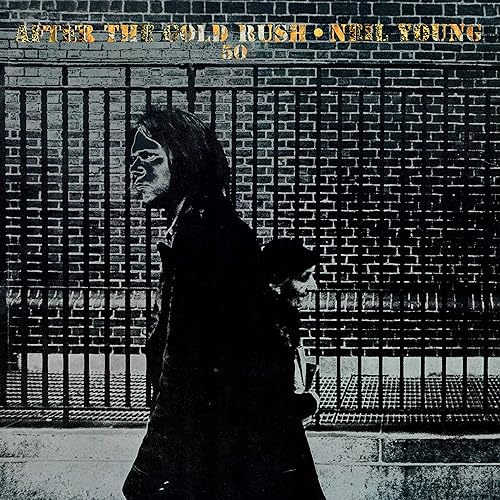
After The Gold Rush (50th Anniversary)

Neil Young continues to celebrate his vast catalogue of recordings. Less than two weeks after he announced a limited edition of Neil Young Archives II: 1972-1976, the legend has formally announced a 50th anniversary edition of his 1970 studio album, “After the Gold Rush”. The original, which includes such Young classics as “Southern Man,” “Don’t Let it Bring You Down,” and “Only Love Can Break Your Heart,” is being modestly expanded.

The title is being released on December 11th on CD and can be pre-ordered via the links below. A deluxe vinyl box edition is coming March 19th, 2021.

On October 30th, the day of the announcement, Young shared the previously unreleased original take of “Wonderin’,” recorded with Crazy Horse. The vinyl box set features a variant of the artwork, originally created by Young’s long-time art director, Gary Burden, made in collaboration with artist Jenice Heo, of a solarized image by photographer Joel Bernstein of Young walking in New York against a brick backdrop.

The vinyl set includes a 7″ single in a picture sleeve with two versions of album outtake “Wonderin’.” Side A, originally included in Vol. 1 of his Archives box set, was recorded in Topanga, Calif., in March 1970. The previously released Side B was recorded at Sunset Sound in Hollywood in August 1969. The vinyl edition also includes an exclusive litho print of the album’s front cover. 

After the Gold Rush, originally released on September 19th, 1970, and its follow-up, 1972’s Harvest, were the two most commercially successful albums of Young’s early career. Gold Rush was Young’s third studio album and it arrived amidst a burst of creative activity. Young’s bandmates in Crosby, Stills, Nash & Young would each soon follow with a studio LP of their own, after the March 1970 release of the quartet’s Déjà Vu. Young was signed to Warner Bros. Records’ Reprise label; the others were all with Atlantic.

[The latter is also expected to be receiving an expanded 50th anniversary edition later this year.]

After the Gold Rush 50th Anniversary Edition Tracklist:

Tell Me Why
After the Gold Rush
Only Love Can Break Your Heart
Southern Man
Till the Morning Comes
Oh, Lonesome Me
Don’t Let It Bring You Down
Birds
When You Dance I Can Really Love
I Believe in You
Cripple Creek Ferry
[Break]
Wonderin’
Wonderin’ (prev. unreleased version)

The new issue of Rolling Stone magazine in Germany comes with an exclusive Neil Young seven-inch single.

The publication (which is in German, obviously) will come with a cover-mounted vinyl single which features the classic ‘After The Goldrush’ on the A-side and on the B-side ‘Homegrown’, from the Homegrown album (that was finally issued in June). This new issue of the magazine comes out on 29th October 2020.

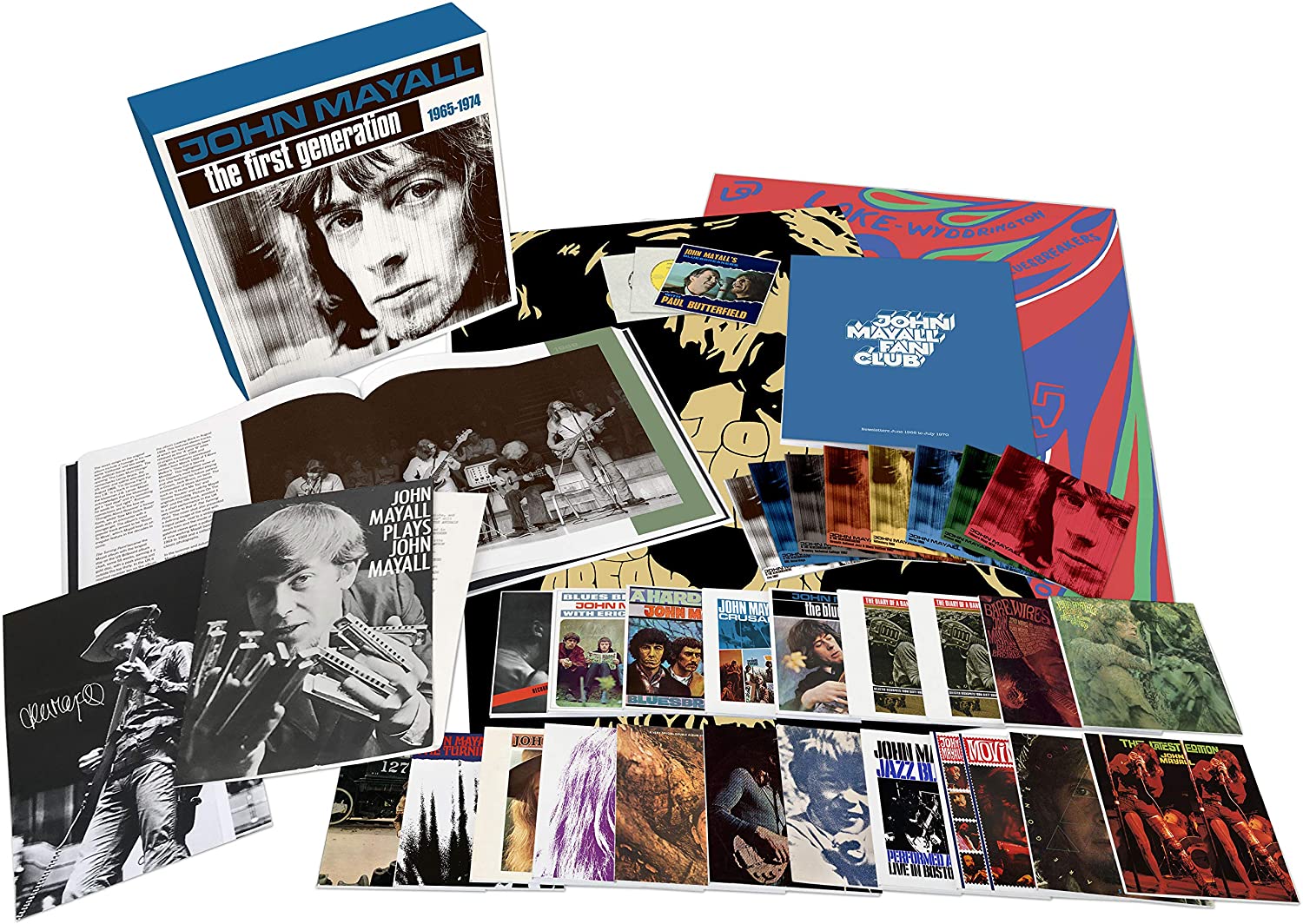
John Mayall’s The First Generation 1965-1974 is an enormous 35CD box set that documents the early career of ‘The Godfather of British Blues’ with remastered studio albums, unreleased BBC recordings, previously unheard live gigs and more.

Featuring Eric ClaptonPeter GreenMick TaylorHarvey Mandel, Blue Mitchell, Jon Mark and many more outstanding musicians, the 35 discs in this mammoth package include three CD singles and eight previously unreleased discs, alongside newly remastered versions of the original Decca & Polydor albums.

Not for nothing did John Mayall earn the moniker ‘The Godfather of British Blues’. For a short but compelling time in the ‘60s and ‘70s he recognised raw talent when he saw it, he took it in, he nurtured it, and everyone thrived and benefitted as the result. Many of the best musicians of the period passed through the hallowed ranks of John Mayall’s Bluesbreakers, and all are on show here in a stunning set crammed with musical highlights.

For a short but compelling time in the ’60s and ’70s John Mayall recognised raw talent, took it in, nurtured it, and everyone thrived and benefitted as a result. Many of the best musicians of the period passed through the hallowed ranks of John Mayall’s Bluesbreakers. All are on show here in a stunning set crammed with musical highlights.

The unreleased concerts include Windsor 1967, Gothenburg 1968, Berlin 1969 and San Francisco 1970 and the 28 unreleased BBC tracks feature none other than Eric ClaptonPeter Green and Mick Taylor!

Strictly limited to 5,000 copies worldwide this set comes with a 168-page hardcover book with many rare photos and images of memorabilia and a full gig listing for the era, a fan club book of letters and correspondence, two replica posters (Ten Years Are Gone and 1968 tour poster), a replica press pack for John Mayall Plays John Mayall and a photograph  individually signed by John Mayall himself (who is thankfully still with us at the ripe old age of 86). The First Generation 1965-1974 is available to pre-order only via two retailers in the UK and the SDE shop is one of them.

There are box sets and then there are BOX SETS. John Mayall’s ‘The First Generation 1965-1974 set sits firmly in the latter category, being substantial both in the artefacts contained within and the superb music it encompasses.

It will be released on 29 January 2021 on the Madfish

Casper Clausen, You may also know me from bands like Efterklang and frontman of Efterklang and adjacent project Liima, has announced details of his first ever solo record. ‘Better Way’ will be released on January 9th via City Slang Records and today he shares a first taste with the juddering, krautrock-tinged, 9-minute opening jam “Used To Think”.

“Used to Think” was one of the first songs I wrote for “Better Way” a couple of years ago” Clausen comments. “I had a run of some small shows around Portugal testing the new songs I was working on at the time, and this one became one of my favourites, I really like the energy of it. It was also the song that made me reach out to the producer Sonic Boom. He ended up mixing / co-producing the entire album. There is some inspiration from his band Spacemen 3 luring around in there and he lives in Sintra, very close to Lisbon where I’ve been the past couple of years, so it all made sense.”

“To me “Used to Think” is like a Kaleidoscope with interchangeable lenses, each section of the song, a different pallet of colours and shapes. Before I stopped thinking I thought, open up, share more and think less.” We get a taste of the juddering, krautrock-tinged, 9-minute opening jam “Used To Think”!⁠“To me “Used to Think” is like a Kaleidoscope with interchangeable lenses, each section of the song, a different pallet of colours and shapes. Before I stopped thinking I thought, open up, share more and think less.

The video for Casper Clausen – Efterklang’s ‘Used to Think’ is out today and you can watch in full below!⁠. Words from Casper on the video – “It was filmed on a magical island in the middle of the ocean, and we developed and edited the whole thing over the past month on sketchy wifi connections across mother earth.”⁠⁠The video is a homage to this planet. There is a link at the end of the video to donate to Amazon Frontlines.

I’ve spent a long time putting it together, mixed it with Sonic Boom and I’m very excited to get to share these songs with you. I am also using this time to premiere the video for the first single “Used To Think.” I made it with my friends Melanie Matthieu & Andrew de Freitas + more on a magical island.

Casper Clausen – “Used to Think” from the album “Better Way” out January 9th 2021 via City Slang Records.

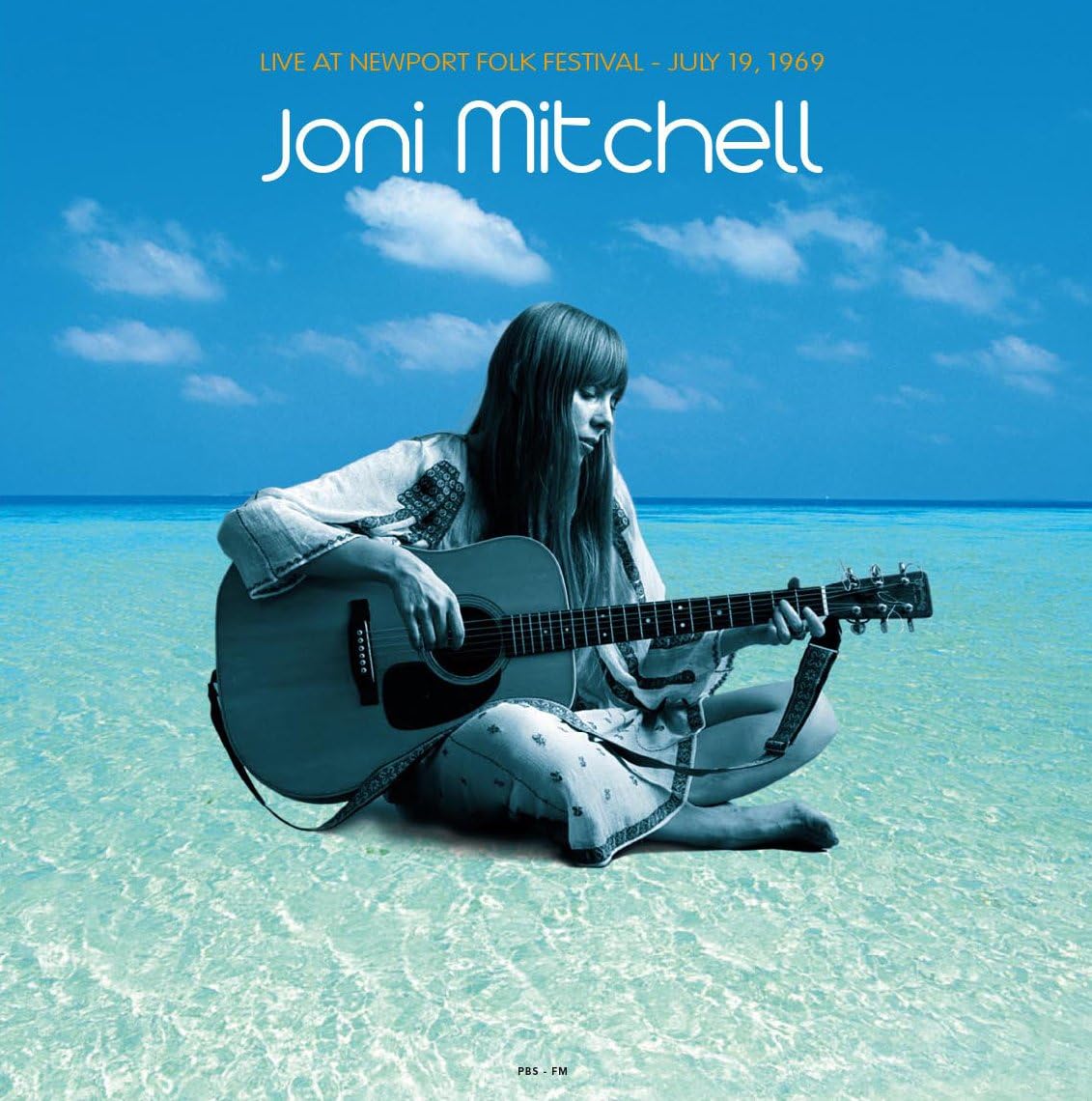
This beautifully captured performance was recorded live at the 1969 Newport Folk Festival and would cap off her evening performance. A month prior to Woodstock and within a week of the first moon landing, this was a fascinating time in American history. Along with James Taylor, who Mitchell first met at a songwriters workshop on this very same day, the two would become leading lights of the forthcoming singer-songwriter movement, proving that introspective, intelligent lyrics could indeed sell records, and both would inspire countless others in the years to follow. Along with “Urge For Going” and “Both Sides Now,” “The Circle Game” would be covered by many artists, establishing Mitchell as a songwriter of note to other musicians long before the general public caught on to her talent.

Broadcast by PBS as “The Sound Of Summer” that November, it captures, Mitchell on the cusp of becoming one of the biggest stars in the emerging singer-songwriter movement. Spanning early classics such as Chelsea Morning and the lesser-known album tracks and the rare Cactus Tree, it culminates with Dino Valenti’s anthemic Get Together, and is essential listening for the legion of fans.

Unlike a couple of other live records of Joni Mitchell recently released, this one is quite short in respect to duration: She is singing beautifully in what is a relatively short set just 31 minutes. Still, it’s the quality, not the quantity, and this is particularly interesting for its being a record of Joni Mitchell’s early set in her career, although Yellow Curtains beats it on that score too, being a pre- Song To A Seagull release, whereas by Newport Festival that record was out and Clouds was in preparation.

Probably given time was of the essence, there’s very little chatter between songs, and these are delivered with feeling, especially The Fiddle And The Drum. Technically the concert is largely well recorded despite its age, with only the opening “Chelsea Morning” sounding like there were a few initial miking issues, with Mitchell sounding distant. It’s a pleasant concert and evokes the era well. Of particular note is “The Fiddle and the Drum”, performed a cappella and showing Mitchell’s early, voice off beautifully.

This, Chelsea Morning and Both Sides Now, would appear on Clouds, so this is a little bit of a preview for the audience, but three of the songs, For Free, Willy and The Circle Game would not appear on a Mitchell record until the following year on Ladies Of The Canyon. Predating the eponymous festival by a month, Woodstock had still yet to be conceived. Although Joni Mitchell didn’t get around to releasing her own version of “The Circle Game” until her third album, Ladies of the Canyon in 1970, the song had long become a fixture on the folk music scene, thanks in big part to it becoming the title song of Tom Rush’s popular album in 1968. Written in direct response to her friend Neil Young’s song “Sugar Mountain,” Mitchell’s lyric also focused on themes of growing older, lost innocence, and the inability to slow down the hands of time.

The set finishes off with a version of Get Together. Mitchell’s attempts on this to get a singalong going fall pretty flat, the crowd possibly intimidated by her soprano and melismas, which would be difficult for most ordinary mortals to emulate.

From Johnny Thunders’ personal tape archive, this recording is among hundreds of live, studio and writing session tapes he stored away for safe keeping in a box simply labelled ‘Thunders Tapes’. Cleaned up and mastered, our attempt is to reveal the recordings Johnny felt worthy of keeping and to release only the best audio quality and performances that live up to his musical legacy. In the debut release, we hear Johnny and his band performing at a Swiss radio station in 1985.

http://

The digital version includes extra songs not on the vinyl. Spectacular sound. Great set. Production note: The producers have endeavored to attribute and credit all work contained in these recordings. Any omissions brought to their attention shall be corrected in future releases.

Released October 2th8, 2020

Lambchop - Trip

Recorded December 2nd–7th, 2019, at Battletapes in Nashville, TN, and produced, engineered, and mixed by Jeremy Ferguson (with the exception of ‘Reservations’ which was ;mixed by Ferguson and Matthew McCaughan, “Trip” sounds like a culmination of the band’s older catalogue fused with recent work. There’s a looseness and freedom that recalls their older sound mixed with a group sophistication and innovation derived through the process of playing together for so long.

The title Trip refers to the circumstances surrounding its creation and the endeavour of “touring” itself. “It also seems to describe a life in music and the situations we created in our life as a band over the years,” Wagner adds. “It’s been a trip…”

For Lambchop’s special Trip LP (out November 13 via City Slang Records), each member of the band assembled over the last two albums was tasked with choosing one song for the band to cover and leading the recording session. Lambchop head honcho Kurt Wagner says, “My idea was to see what might happen if I removed myself from the process as much as possible. In doing so, what surfaced would be elements that have always been there but maybe got overshadowed by my song writing and approach.”

Lambchop’s drummer and saxophonist Andy Stack (also of Wye Oak and Joyero) looked to the Stevie Wonder catalogue and brought ‘Golden Lady’ off 1973’s Innervisionsto the table. The result is delightfully woozy, coating the composition in skittering hi-hats and electronic flourishes, and extending it to nearly seven minutes. The track follows the previously shared cover of Wilco’s ‘Reservations’. Trip, the new record,⁠ will be released November 13th, 2020

Taken from Trip, out November 13th, 2020 on Merge and City Slang records.

The hopes, misgivings, wariness and vulnerability of a new romance all play out together in Helena Deland’s “Comfort, Edge.” The first seconds of the song take their time coming into focus, with whispers and muffled, low-fi instruments. Then the tempo drags its feet, but the grungy guitar chords push forward; the harmonies climb, but Deland’s vocal maintains its cool, with hints of the melody from John Lennon’s “Jealous Guy.” She sets out her requirements — “You’ll never make a fool of me” is the first — but she doesn’t necessarily expect them to be met. 

Montréal’s Helena Deland opened for Connan Mockasin at the 2019 Montréal Jazz Festival, where Deland’s deft lyricism and sonic edge left a lasting mark. For her debut album, she’s signed to Chris Cantallini’s (of timeless indie blog Gorilla vs. Bear) Luminelle Records, and her dreamy sound slots nicely next to labelmates like Anemone, Hana Vu and Jackie Mendoza. On songs like “Someone New” and the spectacular “Truth Nugget,” Deland expands on themes of interpersonal dynamics and identity in powerful ways. She is undoubtedly one of the best new talents to emerge from the robust Montréal indie scene.

‘Comfort, Edge’, from Helena Deland’s debut album ‘Someone New’ out now.

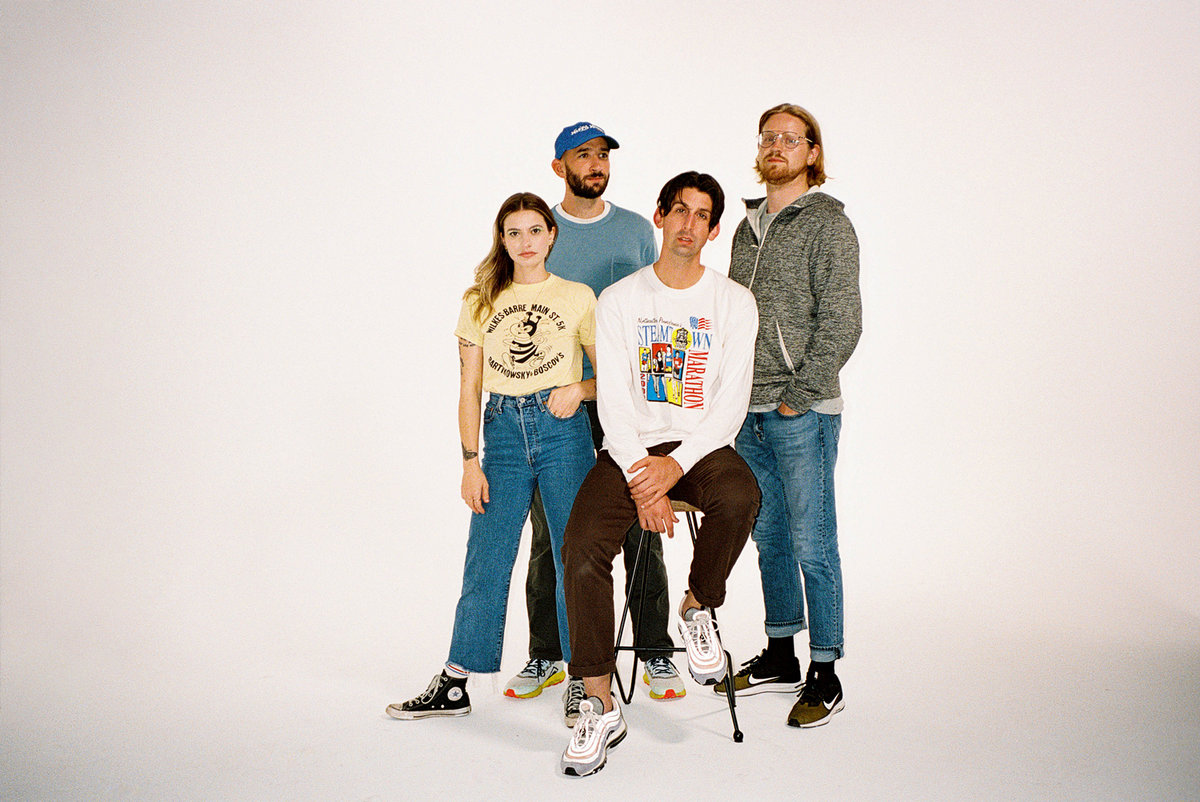
We recorded this album in 2019 in what feels like a different world, but the sentiments remain the same. It’s about confidence at war with doubt, living in the moment, learning from the past, and taking stock of what’s truly important. We are pleased to share our first single Cat’s Cradle, along with a real cool music video directed by Lauren Adams and Drew Horen of Polar Bear Productions now available on YouTube and all streaming platforms. . Play it loud, share it with a friend, or add it to your favourite playlist. The history of the Pennsylvania indie band Tigers Jaw is often divided into two distinct phases: before and after the 2013 departure of three of the band’s five founding members, one of whom, Adam McIlwee (who now records as Wicca Phase Springs Eternal), went on to found the influential emo rap collective Gothboiclique. Ben Walsh and Brianna Collins stuck around, though, and reshaped the band’s sound into something a bit softer and more introspective than the band’s brash emo roots. Its previous album, 2017’s “Spin,” felt a bit transitional, but “Cat’s Cradle,” the first single from the forthcoming “I Won’t Care How You Remember Me” (out early next year) is a confident step out of the shadow of the past and into the band’s future. Driven by chugging guitars and prismatic keys, it’s a refreshing blast of bouncy power-pop, tinged bittersweet by Collins’ lilting lead vocals.

Releases March 5th, 2021

2021, 2021 Hopeless Records, Inc.

“We deeply care, and are deeply invested, but only in our own rules,” Holland said.

A decade ago, for a certain kind of in-the-know music fan to have an opinion on Salem, and it wasn’t likely to be a neutral one. The Midwestern trio of Jack Donoghue, John Holland and Heather Marlatt had been anointed the godparents of a heady strain of nihilistic electronic music that seemed to alienate as many listeners as it bewitched.

The group mixed the sounds of sludgy Southern rap with dizzy shoegaze, deconsecrated church music and recordings of terrible accidents, all with a reckless abandon that made some critics wonder whether they were being punked. And then, after just a handful of releases — the 2010 album “King Night” was its only full-length — Salem was gone, slipping out the back door of a party it had crashed.

“I think when we got attention from anyone back in the day, it was novel,” Donoghue, 32, said on a video call from an empty-looking room in the Chicago neighbourhood where he grew up, a woodsman’s beard shrouding his once-boyish features. “Then the novelty wore off.” Holland, 35, nodded solemnly hunched in the dimly lit bedroom of his Traverse City, Mich., home. A blurry tattoo was scrawled across one of his cheekbones that, upon closer study, spelled “CRYME.”

It was just over a week before the release of “Fires in Heaven,” Salem’s second album, a record so long in the works, even Holland and Donoghue sometimes doubted that it would materialize. (The group is now a duo.) And it was less than 24 hours until Holland was due to report to the Grand Traverse County Correctional Facility to serve a 30-day sentence for charges he’d rather not discuss. “It’s unfortunate,” he said softly. “But whatever.” The duo has grown used to this type of mythically bad timing throughout the creation of the new album, though it’s quick to own up to its role in the chaos. “Literally, it’s all a war with ourselves over here,” Donoghue said as Holland dragged from an occasional cigarette.

Pieced together from five years of writing and recording sessions in Michigan, Los Angeles and Louisiana’s Gulf Coast, the songs on “Fires in Heaven” do not drastically depart from the sound Salem pioneered in the late 2000s. It was an era marked by lingering unease from the 2008 financial crisis, when newly available production software and seemingly limitless sample material led to a boom in bedroom recording. Still, Salem’s music stood out. It was billed as scary but more often felt unspeakably sad, even if you couldn’t make out the lyrics. “I think a huge part of their magic and their enduring appeal is just how real it is,” said Travis Salem are unapologetically Salem.

Musically and otherwise, the band pushed things to the edge — which could mean mangled covers of trance hits, infamously sketchy live performances, interviews in which members admitted to addiction and prostitution, or a tendency for Donoghue to rap in a voice slowed down and warped like a DJ Screw mix, a choice that earned the band criticism for appropriating hip-hop tropes.

Donoghue’s raps are the first vocals on “Fires in Heaven,” growling, “Ask me what I’m doing with my life, ain’t [expletive] to tell ya” over a lurching sample from a Russian ballet. “We deeply care, and are deeply invested, but only in our own rules,” Holland said.

Donoghue picked up where he trailed off: “And if there’s no one that wants to listen to it, we’ll still make music together. I mean, we made music for 10 years without sharing it.” The band sound tracked Paris runway shows and cranked out remixes for Charli XCX and Britney Spears. In 2013, Donoghue contributed to the production on Kanye West’s “Yeezus,” an album with an industrial grit that could be called Salem-inspired. (“I still haven’t been paid for that,” Donoghue said with a laugh. “So, yeah.”)

By 2016, Donoghue had moved to Montegut, La. — a fishing town with a population of just over 2,000 — with plans to work on an oil rig, though jobs almost immediately dried up as gas prices plummeted. When Holland hit him up, explaining that he’d just lost someone in Michigan and things weren’t going great, Donoghue suggested his bandmate head south.

The pair moved into an old fishing camp, where they wrote most of the songs on “Fires in Heaven” and got into some trouble. Holland and Donoghue packed up a U-Haul and drove to Los Angeles, but attempts to finish the album weren’t successful. Holland returned to Michigan, and Donoghue got a job installing windows. But with the help of Henry Laufer, better known as the electronic musician Shlohmo, the record was coaxed into completion. Laufer said the music had been scattered across locations and lost files, “but the songs were undoubtedly amazing, even just as demos.” The duo spent weeks at a time in Laufer’s home studio, working obsessively, as Laufer became part cheerleader, part “spiritual guru.” “In a time of such garbage, this was all I wanted and needed to hear,” he said.

Though it took 10 years, the punishing wall-of-sound collages and echoing melodies of “Fires in Heaven” sound right on time. This time, it’s easier to hear the beauty in the darkness, from the swirling synths of the first single “Starfall” to the funeral march of “Red River,” with a half-sung chorus that pleads, “Angels with burning wings, watch over me.”