Posts Tagged ‘The Who’

Image result for the who my generation record sleeve images

The Who have long held a reputation for being a ferocious live band, but a performance on The Smothers Brothers Comedy Hour back in the ’60s resulted in one of the most memorable performances of all time. See, drummer Keith Moon always had a penchant for the extreme, but it was during this performance that he decided the band needed to end their live show with a bang… literally.

Bribing a stage hand to fill his drum kit with explosives, Keith Moon was set to make his drum kit explode at the end of the song. However, unbeknownst to almost everyone, the stagehand filled the drum kit with more than ten times the amount of explosives required. The resulting detonation was enough to almost destroy the stage, and to give guitarist Pete Townshend permanent hearing loss in one ear.

Along with tracks like ‘You Really Got Me’ by The Kinks, ‘My Generation’ was instrumental in forging the foundation for garage and punk rock. The dirty production, garagey arrangement, and defiant lyrics make this slice of proto-punk one of modern music’s most enduring youth anthems.

My Generation” by the English rock band The Who, which became a hit and one of their most recognisable songs. The song was named the 11th greatest song and among 100 greatest songs of all time. 

The song has been said to have “encapsulated the angst of being a teenager,” and has been characterized as a “nod to the mod counterculture” Originally released as a single on 29th October 1965, reaching No. 2 in the UK, The Who’s highest charting single in their home country,  “My Generation” also appeared on The Who’s 1965 debut titled album, My Generation  and The Who Sings My Generation in the United States , and in greatly extended form on their live album Live at Leeds (1970). The Who re-recorded the song for the Ready Steady Who! EP in 1966, but it was not included on the EP, and this version was released only in 1995 on the remastered version of the A Quick One album. The main difference between this version and the original is that instead of the hail of feedback which ends the original, the band play a chaotic rendition of Edward Elgar’s “Land of Hope and Glory.” In the album’s liner notes the song is credited to both Townshend and Elgar.

But when guitarist and songwriter Pete Townsend was first penning the classic tune, it sounded more akin to later hit ‘Magic Bus’, consisting of shuffling acoustic guitar and a reverb-laden call-and-response section. Townshend reportedly wrote the song on a train and is said to have been inspired by the Queen Mother who is alleged to have had Townshend’s 1935 Packard hearse towed off a street in Belgravia because she was offended by the sight of it during her daily drive through the neighbourhood. Townshend has also credited Mose Allison’s “Young Man Blues” as the inspiration for the song, saying “Without Mose I wouldn’t have written ‘My Generation’.”  Townshend  said that “‘My Generation’ was very much about trying to find a place in society.

An aspect of The Who’s “My Generation” is Daltrey’s delivery: an angry and frustrated stutter. Various stories exist as to the reason for this distinct delivery. One is that the song began as a slow talking blues number without the stutter (in the 1970s it was sometimes performed as such, but with the stutter, as “My Generation Blues” , but after being inspired by John Lee Hooker’s “Stuttering Blues,” Townshend reworked the song into its present form. Another reason is that it was suggested to Daltrey that he stutter to sound like a British mod on speed. It is also proposed, albeit less frequently, that the stutter was introduced to give the group a framework for implying an expletive in the lyrics: “Why don’t you all fff… fade away!” However, producer Shel Talmy insisted it was simply “one of those happy accidents” that he thought they should keep. Roger Daltrey has also commented that he had not rehearsed the song prior to the recording, was nervous, and he was unable to hear his own voice through the monitors. The stutter came about as he tried to fit the lyrics to the music as best he could, and the band decided it worked well enough to keep. The BBC initially refused to play “My Generation” because it did not want to offend people who stutter, but it reversed its decision after the song became more popular.

The instrumentation of the song duly reflects the lyrics: fast and aggressive. Significantly, “My Generation” also featured one of the first bass solos in rock history. This was played by Entwistle on his Fender Jazz Bass, rather than the Danelectro bass he wanted to use; after buying three Danelectros with rare thin strings that kept breaking easily (and were not available separately), a frustrated Entwistle used his Fender strung with nylon tapewound strings and was forced to simplify the solo. The song’s coda features drumming from Keith Moon, as well, whereupon the song breaks down in spurts of guitar feedback from Townshend’s Rickenbacker, rather than fading out or ending cleanly on the tonic. There are two guitar parts. The basic instrumental track (as reflected on the instrumental version on the My Generation Deluxe edition) followed by Townshend’s overdubs including the furious feedback on the outro.

The Who
  • Roger Daltrey – lead vocals
  • Pete Townshend – guitar, backing vocals
  • John Entwistle – bass, backing vocals
  • Keith Moon – drums

Image result for the who roger daltrey 1973 images

The final night of the North American tour, was when The Who took to the stage of the Capital Center in Largo, Maryland before another sold-out house. This show, like the preceding show in Philadelphia two nights prior, was recorded by the King Biscuit Flower Hour. These historical recordings have been the source of collector confusion and the subject of debate for nearly 35 years. While PA system issues are apparent and the band is struggling with problems both on and off the stage, here for the first time ever, are the nearly complete direct recordings from this final night of The North American tour, including all the Quadrophenia songs performed that evening. Much like the Philadelphia gig two nights prior, this performance kicks off with a double dose of primal Who, first with the opener “I Can’t Explain” followed by a ferocious “Summertime Blues” to warm things up. Next up is another enjoyably expanded version of John Entwhistle’s “My Wife,” before they cap off this initial segment with the signature song, “My Generation.” Both feature impressive instrumental exchanges between Townshend, Entwhistle and Moon, with the latter taken at a furious tempo and pummeling in its delivery.

The next hour is devoted exclusively to Quadrophenia or as Daltrey jokingly mentions in his introduction, “what’s left of it.” The band had been trimming it down since the tour began and the opening “I Am The Sea” tape sequences had been problematic. On this final night in America, they forego it completely and instead launch directly into “The Real Me” to kick it off, followed by “The Punk And The Godfather.” As the storyline progresses, the crowd continues to surge toward the stage, which doesn’t go unnoticed by the band. Several times during Quadrophenia both Daltrey and Townshend implore the audience to relax and move back as fans were being crushed against the stage. After addressing this, Townshend continues with his introduction to “I’m One.” Similar in structure to “Behind Blue Eyes,” this begins as a solo vehicle for Townshend’s voice and guitar alone, before the entire group kicks in to dramatic effect. The remainder of the Quadrophenia material features plenty of great ensemble playing, but the problems continue in front of the stage and one can sense the band is distracted. The performance of “5:15” is quite good and a marathon take of “Drowned” never loses its energy. “Bell Boy,” again features Keith Moon altering his lyrics to recall the hotel room destroyed in Montreal earlier that week. Despite the technical limitations of the equipment, which are more prominent during this latter part of the Quadrophenia presentation, the band concludes with a fine performance of “Dr. Jimmy” followed by a majestic “Love, Reign O’er Me” that has Daltrey’s raw vocals echoing throughout the mammoth hall. It’s a strong finale to a difficult performance. As the audience roars, Daltrey addresses them in regards to this being their last night in America. He mentions the ups and downs of this tour and makes a point to debunk then prominent press rumors that this would be The Who’s last tour. As if to hammer this message home, they launch into a powerful “Won’t Get Fooled Again.” As icing on the cake, they cap it all off with two classic tracks from Townshend’s earlier magnum opus, Tommy. First by way of a frenetic rendition of “Pinball Wizard,” followed by a wild finale of “See Me Feel Me” to end the night and the 1973 North American tour.

King Biscuit Introduction

Setlist:

I Can’t Explain Summertime Blues My Wife My Generation Quadrophenia Introduction The Real Me I’m One Sea And Sand Drowned Bell Boy Doctor Jimmy Won’t Get Fooled Again Pinball Wizard See Me Feel Me

Roger Daltrey – vocals, harmonica; John Entwistle – vocals, bass; Keith Moon – vocals, drums; Pete Townshend – vocals, guitar

Image result for pete townshend tommy demos images

Beginning in the late 1960s, Pete Townshend was on the forefront of the development of home studios. In a world before ProTools and GarageBand, the idea of having a recording studio in your own home was quite extraordinary, but Townshend took to it immediately and started producing amazingly rich demo recordings on which he sang and played every instrument (including drums and bass). For tracks that later found their way onto The Who albums, these demos provided a template for the other members of the Who to flesh out with their individual parts, adding their own flourishes and touches. It’s incredible, however, how fully Townshend had already worked out the arrangements of these future Who classics. In many respects he’d figured everything out ahead of time, and it was just up to the Who to lay it down in a professional studio, bringing to it the animal electricity that only the Who could.

The first album for which Townshend did extensive home demoing was 1969’s Tommy, a perfect example of his arranging genius, as his home recording maps out the song pretty much exactly in line with the Who version that would sweep the world by storm: He heard in these demos exactly what we hear today—that Keith Moon’s manic drumming, John Entwhistle’s muscular bass, and Roger Daltrey’s guttural vocal fury launch these songs to a whole other level.

Of Tommy Pete Townshend said, ” Until we made TOMMY we had largely been our own bosses. Suddenly all that changed – for the first time in our lives we were really successful, really taken over by the audience, and we had to do as we were told. America, the great consumer nation told us, ” There are 50 million kids over here that want to see you perform. What are you going to do about it – stay in Twickenham and work on your next album, or come on over here and perform ? ” So we went on over and got involved in the standing ovations and the interviews, the 19 page Rolling Stone article, the presentations of the gold albums, all that. It took two years to work on anything new. ”

Out of the work from Tommy, I don’t recall this song ever being released. I extended Keith’s opening drum lines and the song, as well. I only know of two other takes that exist, but by far — I love this one the best.

Universal Music will issue The Who “Live at the Fillmore East 1968” in April, a set of unreleased recordings from the second of two nights played at Bill Graham’s legendary, but short-lived, venue in the Lower East Side of Manhattan. An oft-bootleg concert by the Who will soon gets its first official release. Live at the Fillmore East 1968, which documents the last show of a two-night stand at the New York venue.

The two-disc, three-LP set, whose track listing is below, focuses largely on material from their two previous records, The Who Sell Out and A Quick One. But there are also three Eddie Cochran covers — “Summertime Blues,” “C’mon Everybody” and “My Way” plus takes on Benny Spellman’s Allen Toussaint-penned “Fortune Teller” and Johnny Kidd and the Pirates’ “Shakin’ All Over,” and a lengthy version of “My Generation.”.
The Who’s manager Kit Lambert had recorded both the 5th and 6th of April shows of ’68 with a view to issuing as The Who’s fourth album after “The Who Sell Out”That never happened, but 50 years later sound engineer Bob Pridden (who was there in 1968) has restored and mixed songs from the 6 April show for this new archival release.

The Who headlined the Fillmore East with Free Spirits and Buddy Guy opening.

The second night of The Who’s first run ever playing at the Fillmore East is an unbelievably great document of the band in its early prime, still full of the punk attitude that they would initially define while beginning to venture off into more artistic and experimental territory. Every minute of this performance is fascinating and much of this material has never been released, This set captures the entire band fully engaged in their music. Although many songs were still short and concise during this stage of their career, the intensity level is undeniable. Opening the show with Eddie Cochran’s “Summertime Blues,” they immediately set a bar that most other bands could never even approach.

Their second song of this set is the Stones‘ cover of the Allen Toussaint penned “Fortune Teller” which they had just performed for the first time ever the previous night.

They continue with “I Can’t Explain,” one of the few songs American audiences were familiar with at the time, but with a new level of aggression that wasn’t apparent on that early single. Next up is their current single at the time, “Happy Jack,” a tune that found them exploring new directions and beginning to experiment with dynamic changes. Extremely rare live performances of “Relax” and “My Way” follow and continue to explore and expand on the boundaries within the band’s music. “Relax” surprisingly turns out to be one of the heavier numbers on this set and the band takes flight into some inspired jamming following the verses. Unfortunately, the jam fades out and is incomplete.

John Entwistle then steps up for his defining song, “Boris The Spider,” lending his dark sense of humor to the proceedings. At this point, the band launches into “My Generation” and this version is amazing. The improvisational section following the verses is a great early example of the band letting the music propel itself. Although at times it seems like they are on the verge of being out of control, they never are, and early signs of Townshend developing themes within a jam are also surfacing. The approach to their instruments and the sound they create as a unit is utterly unique and unlike any other band at that time. The reels were changed during this jam, so a small part of it is missing on this recording.

This surely must have left the audience breathless, so while they were recovering, the band embarks on their most experimental composition yet, “A Quick One While He’s Away,” which is incomplete and begins in the middle of the song. This adventurous suite of songs, loosely tied together, is a hint at Townshend’s future aspirations that would eventually be realized in his first full-blown rock opera, Tommy. This is a fascinating performance for its entire eight minutes.

They close their set this night with another propulsive jam on “Shakin’ All Over,” again letting the music propel the band through several pulverizing jams, including spontaneous flailing of riffs familiar from other songs. Again, the raw energy is astounding. This and the previous night’s performance must have gone a long way towards cementing their reputation in New York City. This should be required listening for anyone interested in that era of rock music and especially for anyone interested in The Who this is absolutely essential.

Pete Townshend – guitar, vocals; Roger Daltrey – vocals; John Entwistle – bass; Keith Moon – drums
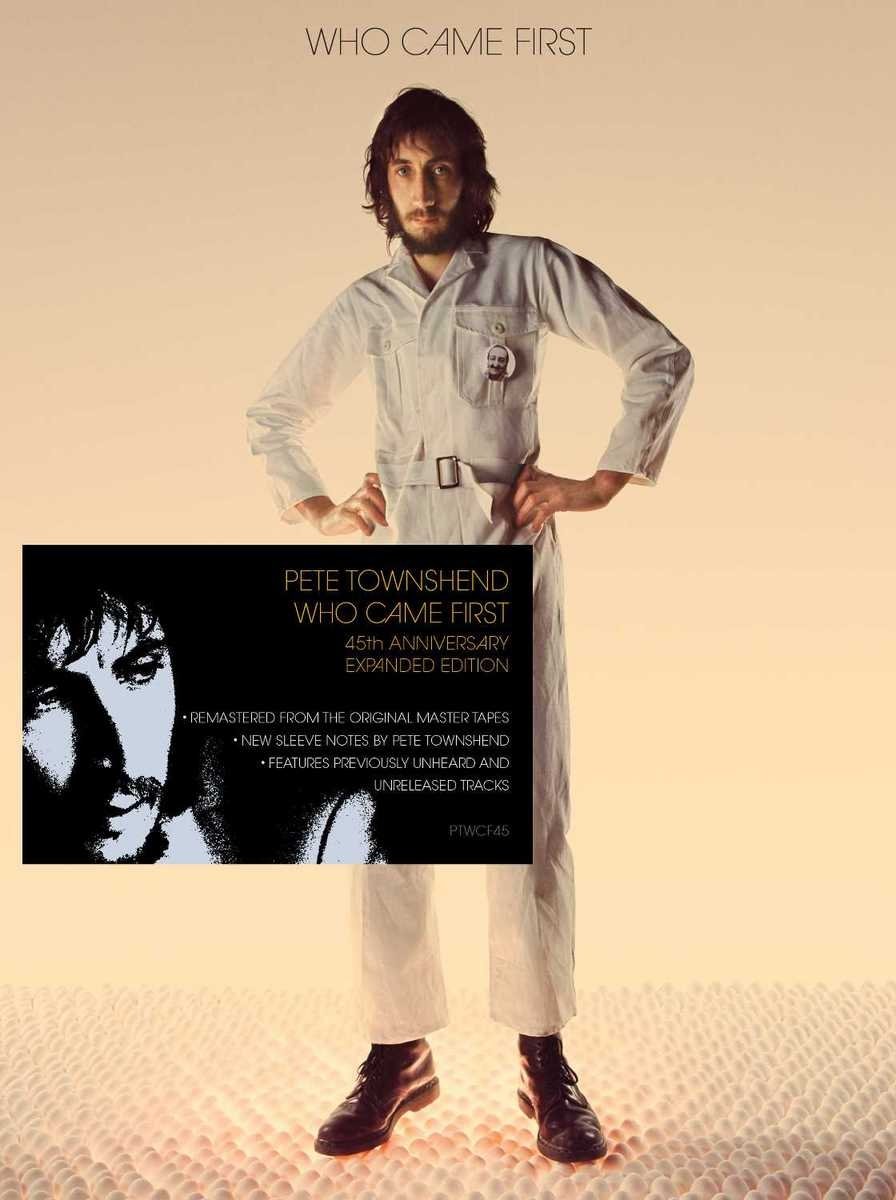
The Who Live at Fillmore East 1968 will be released on 20th April 2018. Amazon UK have a remarkably cheap pre-order price for the 2CD edition. Who fans should also note that an expanded 2CD deluxe edition of Pete Townshend‘s solo album “Who Came First” will be issued a week earlier on 13th April.


Pete Townshend’s first solo album will mark its 45th anniversary by returning to stores with a second disc of bonus material that includes previously unreleased tracks. the pending plans to reissue Townshend’s “Who Came First” LP. Originally released in October 1972, the album marked the Who guitarist and songwriter’s official solo debut, and collected an assortment of recordings that included demos for the band’s aborted Lifehouse project.

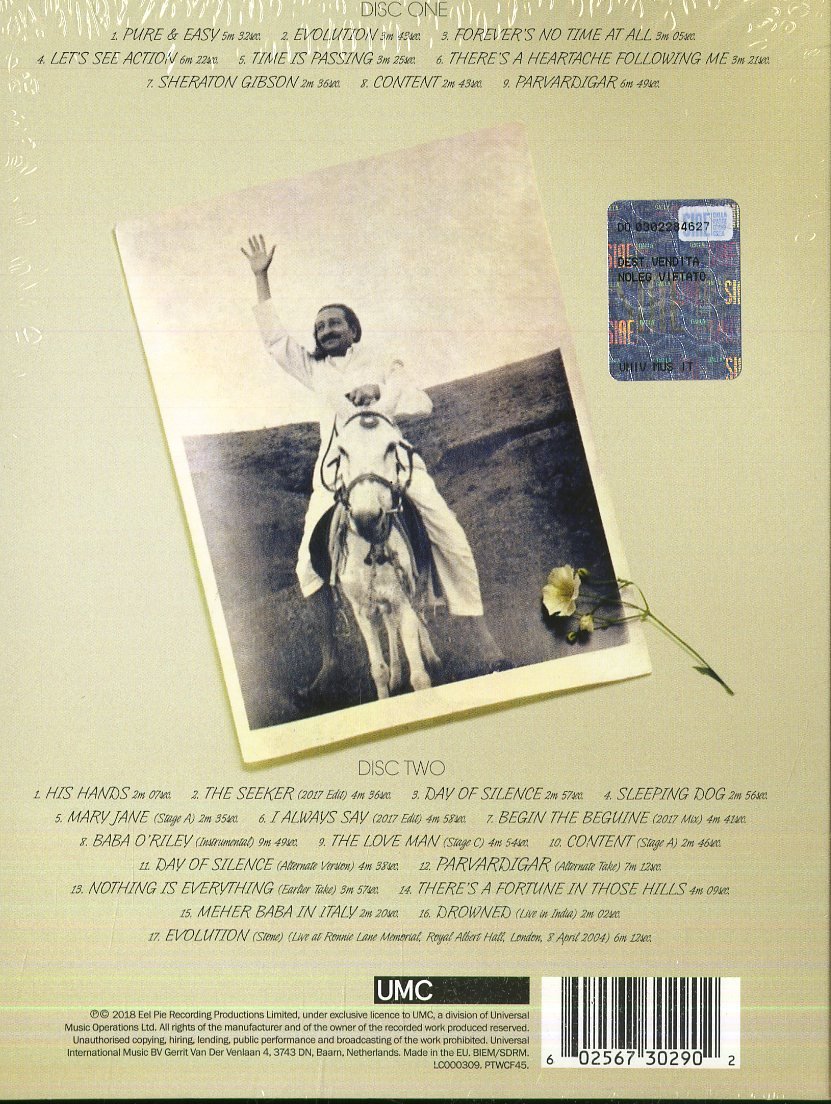
According to the label, the 45th anniversary Who Came First reissue, which is scheduled for an April 13th arrival, will add “eight previously unreleased tracks, new edits, alternative versions and live performances,” as well as restored and expanded packaging that includes new liner notes from Townshend, the poster included in the original release and a 24-page booklet containing rare photos from the period that produced the album.

The track listing hasn’t been made available for this edition, but as fans are likely well aware, this isn’t the first time Who Came First has been given the reissue treatment. Rykodisc brought the album to CD with bonus tracks in the early ’90s, and it was subsequently expanded further in 2006, after Universal took over the catalog. Between those two editions, nine extra cuts have already been added to the original track listing, so if nothing else, it should be interesting to see what else has been unearthed for this latest expansion.

This 1972 album gets off to a cracking start with a superb song which fans of The Who will know well – Pure and Easy . While I really like The Who’s dynamic version I prefer this because it sounds more personal, more precise, more…at peace with itself. Yes. For this is indeed a great album and something of a personal and spiritual odyssey for Townshend. The Who’s main composer is in reflective mood here, heavily influenced by the spiritual leader Meher Baba. If you are expecting trademark power chords you’ve come to the wrong album, this is a quiet set of songs compared to his band at their exuberant best. It is something of a tour de force as Townshend sings and plays all the instruments, recording his songs in his home studio. No surprise then that acoustic guitar is very much in evidence and some songs have an almost folky/country feel – one thing that is unmistakeable is the catchy tunes and singalong hooks that Pete seems to produce with ease. If you want an insight into the creative processes and intuitive craft of a classic songwriter this intimate album is probably a good place to start. Townsend’s voice gives more sensitive treatment of his own lyrics compared to Daltrey’s mighty lungs.

It would seem churlish to go through the album track by track, this is one collection which is meant to be heard as a whole and very much proves that the sum is greater etc. Special mentions though for the beautiful Evolution and Heartache, the addictive Sheraton Gibson and a song which again would be recorded by The Who, Let’s See Action. The bonus tracks on this deluxe edition are all worthwhile although none are essential.

The instrumental His Hands starts like the quiet beginning of Pinball Wizard but you’ll wait in vain for those power chords. Another version of a Who song “The Seeker” seems appropriate in some ways but is also ill at ease in the company of the other songs. The Who version you will remember is a classic song of despair and fruitless searching. Somehow, in context, the lyrics “I won’t get to get what I’m after till the day I die” take on a different meaning. Among the other songs, Mary Jane is perhaps not just about a girl (!)and is a wry song (of the same ilk as Pictures Of Lily, Dogs or Tattoo but not as good) and Begin The Beguine is not a cover you would expect from this guitarist. Sleeping Dog is a touching love song to Baba, while The Love Man could conceivably have made a good Who album track, I Always Say is a McCartneyish blues number and the piano is very much to the fore in instrumental Lantern Cabin.

Meanwhile, his contributions to the new Who Came First booklet notwithstanding, Townshend is in the midst of a quiet spell. As he announced late last year, he’s enjoying a yearlong sabbatical following his marriage to longtime partner Rachel Fuller.

A ’60s-era rock star finding spirituality in an Indian mystic and adopting the teaching philosophy of said mystic is almost a stereotype. However, Townshend has never wavered in his admiration of Meher Baba (The Baba in ‘Baba O’Riley’). While Townshend’s drug use was at odds with Baba’s views, he never tossed out his beliefs throughout the decades. Indeed, his more overtly religious songs were usually tempered with narratives that involved child abuse and salvation (‘Tommy’), Mod culture (‘Quadrophenia’), or an early version of the Internet as connecting people to more authentic experiences (‘Lifehouse’ and ‘Psychoderelict’). However, one song members of the Who were most likely never exposed to during band meetings was ‘Parvardigar’ — a prayer Baba asked his devotees to say every day. Townshend set the prayer to music, and the result is this rather heartfelt and beautiful song.

This early, classic image was designed by legendary artist Gary Grimshaw. This show was promoted by Russ Gibb, the man behind the Grande Ballroom, who was considered the Midwest’s greatest rock concert promoter. This poster features a great photo of The Who circa 1965.

Title: – The Who, CNE Auditorium, Bands/Bill- The Who, Troggs, and MC5  , Venue- CNE Coliseum , City – Toronto, Canada , Date – 4/7/1968

Image result

“This is for them….. ”
Buffalo 1979. The first show after the Cincinnati tragedy.

The Who concert disaster occurred on December 3, 1979 when British rock band The Who performed at the Riverfront Coliseum in Cincinnati Ohio, and a stampede of concert-goers outside the coliseum’s entry doors resulted in the deaths of eleven people. The concert was a sellout, with 18,348 tickets sold. The majority of these, 14,770, were unassigned general admission tickets that were first come first in. A few hours before the show, a sizeable crowd had already gathered at the front of the arena. Entry to the arena was through a series of individual doors all along the front of the arena, as well as a few doors at each side. The crowd focused at each of the doors. The doors were not opened at the scheduled time, causing the crowd to become increasingly agitated and impatient. During this period, the Who undertook a late soundcheck. Some members of the crowd heard this and mistakenly believed that the concert was starting. The concert went on as planned, with the band members not told of the tragedy until after their performance . The incident was the subject of a book, Are The Kids All Right? The Rock Generation And Its Hidden Death Wish, as well as a second-season episode of WKRP Radio in Cincinnati called “In Concert”.

The Who, by all accounts, were devastated: “There’s no words to say what I feel,” Daltrey told Cincinnati rock station WEBN. “I’m a parent as well. I’ve got a boy of 15, and two little girls. All I can say is: I’m sorry for what’s happened.” Townshend added, “For us, it’s deeply, deeply painful, because we live off these kids. They’re our bread and butter.”

Quadrophenia (album).jpg

Evolving from Pete Townshend’s idea for a musical autobiography of The Who, the second of the group’s two full-scale rock operas, Quadrophenia, eventually developed into a social, musical and psychological exploration of the mid-1960s mod scene in England. Written from the perspective of a British teenager, Jimmy, the band member’s role in the storyline became symbolic via Jimmy’s four personalities. Like much of Townshend’s work, Quadrophenia examined the universal themes of rejection, rebellion, and the search for identity. Released in October of 1973, the resulting double album, Townshend’s last magnum opus within the context of The Who was greeted with acclaim and featured some of the most majestic music the band ever recorded.

This week in 1973: The Who’s double-LP ‘Quadrophenia’ released on Track/Polydor Records entered the UK albums chart, peaking at numer 2 (it was held out of the top spot by David Bowie’s ‘Pin Ups’, which contained cover versions of the Who songs “I Can’t Explain” & “Anyway, Anyhow, Anywhere”); The Who’s 6th studio album was their second full-scale rock opera (following on from 1969’s ‘Tommy’); the 1979 film “Quadrophenia” based on the story starred Phil Daniels, Toyah Willcox, Ray Winstone, Michael Elphick & Sting.

The second-to-last night of this tour, when the band took to the stage of the Spectrum in Philadelphia before a sold-out house. Excerpts of this show, recorded for broadcast by the King Biscuit Flower Hour, have been the primary source of high quality recordings from this tour. The KBFH recordings from this night and the final tour stop in Largo, Maryland, have also been the source of collector confusion and the subject of debate for nearly 35 years. Ubiquitously bootlegged ever since the initial broadcasts in 1974, only those excerpts of this night’s recordings have ever circulated. Here for the first time ever is the vast majority of The Spectrum performance, from the original King Biscuit masters and sounding sonically superior to all other versions of this material in existence. Not only does this include all but one of the songs from this legendary night, but the final reel included the entirety of the encore, previously unknown to have been recorded.

Setlist:

00:01:00 “I Can’t Explain” 00:03:29 “Summertime Blues” (Eddie Cochran, Jerry Capehar) 00:07:32 “My Wife” (John Entwistle) 00:14:50 “My Generation/My Generation Blues” 00:21:46 Pete Introduces Quadrophenia 00:23:00 “I Am the Sea” 00:24:52 “The Real Me” 00:30:42 “The Punk and the Godfather” 00:36:47 “I’m One” 00:39:355:1500:46:28 “Sea and Sand” 00:53:35 “Drowned” 01:03:43 “Bell Boy” 01:09:05 “Doctor Jimmy” 01:17:43 “Won’t Get Fooled Again” 01:26:36 “Pinball Wizard” 01:29:32 “See Me, Feel Me/Listening to You” 01:43:14 Encore 01:43:33 “Naked Eye”

All songs written by Pete Townshend unless otherwise noted.

Image may contain: text

The Who performed their 1969 album Tommy in full during their gig at this year’s Teenage Cancer Trust.

The gig took place at London’s Royal Albert Hall on March 30th, where as well as the likes of “Pinball Wizard”, “We’re Not Gonna Take It” and “I’m Free”, the band also played some rarely-performed tracks from the album like “Welcome”, “Miracle Cure” and “Underture”.

The Who performing Won’t Get Fooled Again live at the Teenage Cancer Trust Concert at the Royal Albert Hall, London on 1st April 2017.

landmark show was kicked off by Noel Gallagher, who played hits including Supersonic, Half The World Away and Wonderwall.

The Who then took to the stage, giving an unforgettable performance of Pete Townshend’s opera ‘Tommy’ as well as other classic Who songs. Check out the setlist below!

We celebrated our 100th show at the Royal Albert Hall with an incredible performance by The Who, supported by very special guest Noel Gallagher.


Plant 480x480

Robert Plant  –  Carry Fire

Robert Plant releases Carry Fire, his 11th solo album on Nonesuch Records. The self-produced album is Plant’s first since since 2014’s Lullaby and…The Ceaseless Roar. As with that record, Robert is accompanied here by The Sensational Space Shifters, along with some guests, such as Chrissie Hyde and Seth Lakeman.

CD – The CD packaging is deluxe thick card with a beautiful satin finish and is accompanied with a 12-page booklet featuring lyrics.

2LP – Double 140 Gram Vinyl with side four etched. The vinyl packaging is thick card Gatefold with a beautiful satin finish and is accompanied with a 4-page booklet featuring lyrics.

Sketch

King Gizzard and the Lizard Wizzard – Sketches Of Brunswick East

Sketches Of Brunswick East is King Gizzard and the Lizard Wizard 3rd album of five in 2017 and a collaboration with LA’s Mild High Club. Just when you think you have King Gizzard and The Lizard Wizard sussed they throw a curveball – in the wake of two albums released in 2017 already, including most recently the dystopian end-times concept album Murder Of The Universe, which tackled in no uncertain terms the rise of robots and the downfall of mankind, comes Sketches Of Brunswick Eastan entirely altered beast. Australia’s finest and most productive rock band have done this before, of course: while the world was still reeling from their 2014 breakthrough psych-punk masterpiece I’m In Your Mind Fuzz (2014) they casually released 2015’s expectation-confounding Paper Mache Dream Balloon (2015), a pastoral, sun-drenched acid-folk album. Sketches Of Brunswick East is a collaboration between King Gizzard and Mild High Club, the Los Angeles based tripster troupe signed to Stones Throw Records and led by Alex Brettin – the two bands formed a strong friendship touring together throughout the USA, Europe, and Australia. Recorded at the band’s own Flightless HQ in East Brunswick, Melbourne Australia earlier this year and mixed at Stones Throw studios in L.A. it’s the third of five projected albums to be released in 2017.

The barr brothers queens of the breakers album cover 4000x4000

The Barr Brothers  –  Queens of The Breakers

All versions come with a bonus 5 Track CD of demos. Queens of the Breakers is The Barr Brothers’ finest work yet, a collection of 11 hypnotically fluid songs that speak to the raw, elemental power of reflection, forgiveness, loss, and growing up. The record finds the band, featuring brothers Brad (guitar) and Andrew Barr (drums), and Sarah Pagé (harp), further on their thrilling path of exploring the outer limits of folk, blues, rock and Americana made north of the American border.

LP – Black Vinyl with Download.

LP+ – Gatefold Jacket with embossed titles with 2 pockets open. Translucent Light Blue Single Vinyl hosted in dust sleeves. Limited Edition including 12’’x24’’ Exclusive Folded Poster. MP3 download included.

313u4df5qhl. sy450

Lomelda  –  Thx

Hannah Read has written and performed as Lomelda for most of her musical life. The project has been her outlet from the slow, shaggy days in her east Texas hometown of Silsbee, through moves to Waco and Austin, and into her wandering present. Her music is textural and spacious. Her words are suggestive snapshots of loosely knitted observations, depicting quiet moments between friends and lovers and half-remembered celestial occurrences. In her songs, the memory of the past and glimpses of future stretch out on either side of you, and the present is unsteady and always shifting.

Cbkv packshot fin%283000x3000%29

Courtney Barnett and Kurt Vile  –  Lotta Sea Lice

A conversation between friends, documented in raw, unvarnished song form, brimming with personal history, crackling with energy and shot through with humour – this is the collaborative album of Courtney Barnett and Kurt Vile.Two of the most acclaimed and gifted song writers of our generation Lotta Sea Lice also sees them roping in friends such as Dirty Three, Stella from Warpaint and Mick Harvey to create a body of work that sounds organic and candid. Their shared chemistry is immediately apparent in the breathtaking jam of opener and first single Over Everything, while Continental Breakfast showcases a more melodic side as the two harmonise over finger-picked acoustic guitars. The two pay homage to 90’s cult heroes Belly with a gorgeous cover of their classic Untogether and even celebrate their mutual respect by covering each other’s music later in the album. This is an intimate glimpse into the shared musical world of Courtney Barnett and Kurt Vile.

20000000001165

HMLTD  –  Satan, Luella and I / Kinkaku-ji

HMLTD have emerged over the last twelve months and established themselves as the most thrilling and vital new band in years. Music, fashion and art collide to create an assault on the senses, their highly-individual pop a whirlwind of creativity and ideas. Satan, Luella and I is the latest instalment, following the singles To The Door and Stained. It’s a six minute kaleidoscopic, rapturous musical joyride. Flamboyant and freewheeling, the band’s imaginations have created a musical world that envelops the listener. The track is backed by live favourite Kinkaku-ji. Natural born performers, their live shows are already a vital experience as they turn each room they play into their own, blurring the lines between concert and exhibition, and between performers and audience.

Image001

Josienne Clarke and Ben Walker The Birds EP

Rough Trade Records release The Birds EP as a very limited edition 12” – 650 copies worldwide. The Birds is a suite of six songs that explore the themes of migration and departure. These are songs of autumn and shorter days, of flying south and the first feelings of early winter. It is deliberately dark and melancholic and ever so slightly sinister in places. In contrast to the full band-sound so exquisitely captured on their 2016 album Overnight, Josienne and Ben chose to record in a minimalist way using only instruments that they could play in Ben’s basement home studio. It also allowed Ben the opportunity to experiment with Moog and drum machine rendering the songs with a subtle electronic text.

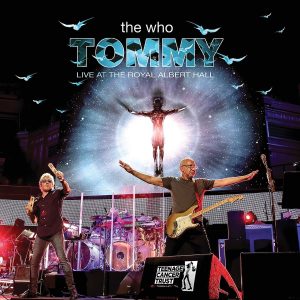
The Who, Tommy  – Live at the Royal Albert Hall

In spring 2017, in support of the Teenage Cancer Trust, The Who played the classic Tommy in full, plus an encore set of seven greatest hits at London’s historic Royal Albert Hall.  This release includes every song from the 24-track studio album performed live, including Side Four’s “Welcome”.  Available in a variety of physical formats plus digital video and audio.

0633367788320 25617.1506000815.1280.1280

King Crimson – Official Bootleg: Live in Chicago, June 28th, 2017

Two CD set, taken from the band’s most recent US tour. Media-book presentation with 24 pages booklet featuring photography by Tony Levin & David Singleton. Sleeve Notes by Robert Fripp & David Singleton. Featuring many iconic King Crimson pieces performed live by this line-up for the first time – some being played live for the first time ever, including: Islands, The Lizard Suite, The Errors, Fallen Angel, Cirkus & more.. “If we are looking for a KC live (show); Chicago was exceptional” – Robert Fripp “One of our best” – Tony Levi.

The replacements liveatmaxwells

The Replacements –  For Sale – Live at Maxwell’s 1986

Super limited copies with promo stuff – Postcards, Matches, Cut out figures and posters. In February 1986, The Replacements performed a classic live show at Maxwell’s in Hoboken, NJ. Until now, that pristine recording of the legendary performance has only been available in low-quality bootleg form. Even so, Pitchfork has called the show “a fiery, focused set that would make a true believer out of any skeptic.” For Sale: Live At Maxwell’s 1986 finally make its commercial debut as a double-LP. This marks the first live album by the band to see an official release on this format. The show at Maxwell’s would prove to be one of the last great performances by the four original members of the Replacements, a much beloved line-up including Bob Stinson on guitar, before his departure from the band in 1986. The songs they played spanned the band’s entire history while giving prominence to new material from Tim, including Bastards Of Young, Left Of The Dial and Kiss Me On The Bus. Mixed in were favourites like I Will Dare from Let It Be (1984) and Color Me Impressed from Hootenanny (1983). The original 24-track master tapes of the show sat in the Warner Music vaults until being given a proper mix in 2007, but it would still be another decade before the concert would get its official release. Mehr writes in the album’s liner notes: “Now, a decade later, and more than 30 years after the original concert, Replacements For Sale finally offers high-fidelity proof of the peculiar alchemy and unadulterated majesty of one of rock and roll’s greatest bands.”

2CD – Gatefold Softpack with Booklet.

2LP – Double 140 Gram Vinyl housed in Gatefold Sleeve.

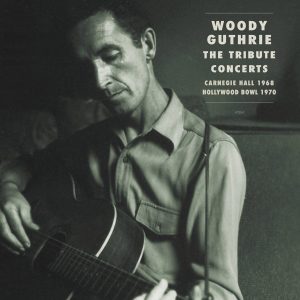
Various Artists  – Woody Guthrie, The Tribute Concerts

There’s no shortage of celebrations for the legendary folk troubadour, but few as star-studded as the landmark concerts held in 1968 at New York’s Carnegie Hall and then in 1970 at the Hollywood Bowl.  These remarkable affairs saw Guthrie collectively saluted by such luminaries as The Band, Bob Dylan, Odetta, Joan Baez, Jack Elliott, Arlo Guthrie, Country Joe McDonald, Richie Havens, Tom Paxton, and Pete Seeger.  Bear Family has boxed up these amazing pieces of history as a lavish 3-CD box set that’s not to be missed!