Posts Tagged ‘singer songwriter’

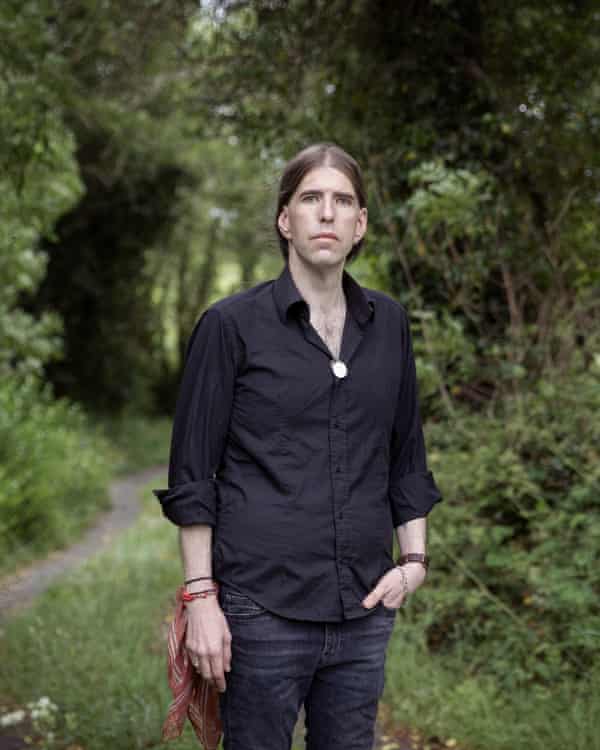
‘Look how beautiful the world is’ … John Murry in County Longford, Ireland.
‘Look how beautiful the world is’ … John Murry in County Longford, Ireland. Photograph: Johnny Savage/The Guardian

If you’re after cheery crowd pleasers, John Murry is not your man. Murry is 41, barely known, and has never come close to denting the charts. Yet he has been compared to the great existential pop poets Nick Cave, Leonard Cohen and Scott Walker. And with good reason – he has a rich baritone, writes gorgeous ballads and is half in love with death. The titles of his first two albums, The Graceless Age and A Short History of Decay, reflect the melancholy at the heart of his work. The title of his third, The Stars Are God’s Bullet Holes, is equally bleak. Yet, it turns out that Murry has a surprise in store.

The singer-songwriter is related to the Nobel-prize winning American novelist William Faulkner. Like Faulkner, he paddles along his stream of consciousness – sometimes ferociously. You get a sense of what his songs are about, but seldom know for sure. Take the new album’s opener, Oscar Wilde (Came Here to Make Fun of You). We get the references to terrorist attacks and the images of foreboding, but the meaning is left to us.

He shares many of Faulkner’s obsessions: dysfunctional families in the American south, slavery and its consequences, fallen aristocracy, addiction, violence and, of course, death. Faulkner’s most famous novel is “The Sound And The Fury”, a story of family tragedy told four times from different perspectives with no linear sense of time. Murry often refers to Faulkner’s work, and particularly this book. He says his parents tried to turn him into one of its characters, while he relates closely to another

Murry was adopted by his parents before he even came into the world. He believes an agreement was struck between his Cherokee schoolgirl biological mother and his parents, who thought they couldn’t have children. (As it happened, his adoptive mother gave birth to his brother a year later.) He grew up in Tupelo, Mississippi. His relationship with his parents was troubled, and he was raised by his grandmother, the first cousin of Faulkner but more like a sister to him. His grandparents were related to the Faulkners on both sides. Mississippi is that kind of place, he says.

Despite having lived in Ireland for the past eight years,, Murry still has a strong southern accent. Slurred words bleed into each other. If he is ever stopped by a police officer, he says, they assume he is drunk. Murry was fascinated by Faulkner, who died 15 years before he was born. His grandmother and Faulkner had been inseparable, and his grandfather was a pallbearer at his funeral. When Murry was growing up, his beloved grandmother told him that, despite the lack of blood lineage, he was “obnoxious” and “more like Bill than any of us”. Obnoxious was the ultimate compliment, he says – it meant he challenged authority and called out cant. Meanwhile, he is convinced that his parents wanted him to be like Quentin Compson, a character in The Sound and The Fury who went to Harvard University. According to Murry, they gave little thought to the fact that Quentin takes his own life.

The character he really relates to is Quentin’s brother Benjy, labelled an “idiot” in the novel though today he might be diagnosed as autistic, like Murry was at the age of 32. Murry is phenomenally well read: rarely does he make a point without quoting an authority. At times, he is in control of all the stuff going on in his head; at others, paralysed by it. His stories frequently get kicked into touch by competing thoughts “I have an eidetic memory,” he tells me. “I can remember conversations verbatim. I can hear multiple conversations at once too.” He’s not boasting. Many of these memories torture him. “I don’t want to remember these things,” he says.

Murry says his childhood was violent, but he is thankful for one thing: the shelf-full of books his lawyer father gave him. “I was 10 years old, and he puts books out there for me to read like The Communist Manifesto and the Autobiography of Malcolm X – books he didn’t agree with.”

Although his parents were set on him going to Harvard, he had other ideas. “I saw a Tom Petty gig when I’d just turned 16, and got a guitar. It was that simple.” That same year, his parents discovered he had smoked a few spliffs and drunk a little alcohol. They sent him to a fundamentalist Christian rehabilitation centre in a different state (he grew up Protestant and converted to Catholicism). The centre, which has since closed, used to place the boys with “host families” – the families of other children attending the centre. Not surprisingly, many were dysfunctional. Murry says he spent three weeks in one home where he was repeatedly raped by three older boys. He says they discussed killing Murry in front of him. There was a time I was certain I wouldn’t make it. I still feel that way sometimes

“There was this pretence it wasn’t happening, even though I know the boys’ mother could hear the screaming. I fought them every night till I realised fighting wasn’t going to stop them doing what they were doing. They would hold me down and rape me.” Later on, the boys were told to apologise to Murry for what his family was told had been “horseplay”.

It took Murry many years to get to the stage where he could even admit what happened to him, let alone begin to recover from it. “I want people to know if something like that happens to you, that violence is not something you bring upon yourself, just as I didn’t bring it upon myself. I was the victim of it.” He stops. “It was my first sexual experience.” It’s not a sexual experience, I say. “No,” he says quietly. “Gang-rape is not much of a sexual experience.” He pauses: “I’ve dealt with the experience. I think Nietzsche was right when he said that which doesn’t kill us makes us stronger. It’s given me a lot of compassion, for the people who did it as well.”
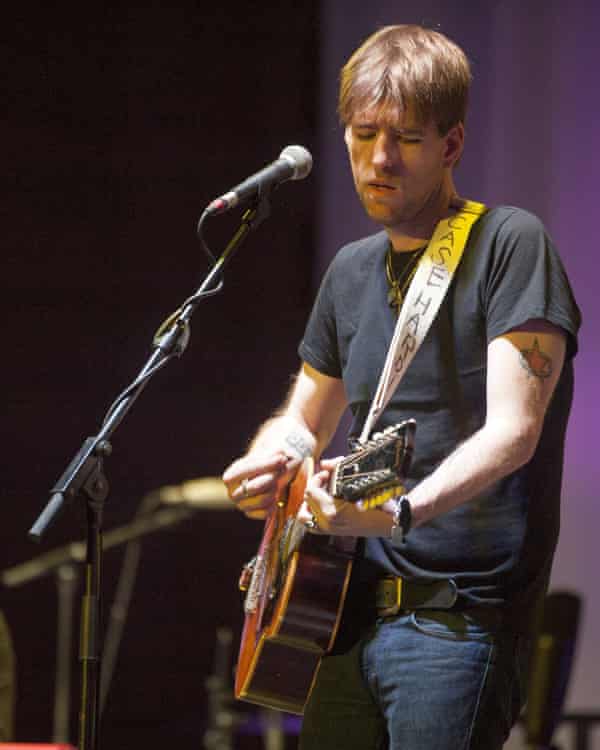
Murry in 2013.
‘I

After 18 months at the centre, he met a girl and walked away – from the centre and from his parents. He did any number of jobs (short-order cook, bouncer, stained-glass frame maker, antiques hustler and caseworker for children with severe emotional difficulties) played in bands, married, and had a daughter Evie who is now 17 and hopes to be the next Stevie Nicks. He adores her and can’t stop telling me stories about her. “When she was seven she insisted on calling me Ike and would only respond to Tina. That’s not comfortable when you’re in a convenience store. Then she’d just shout: ‘What’s love got to do with it, Ike?’ That got uproarious laughter from everyone.”

He might not have had an addiction when he was sent to rehab, but he developed one. In his mid-20s, after he and his wife separated, Murry discovered heroin. He lost the second half of his 20s – and very nearly his life. His best-known song, the wonderful Little Coloured Balloons, is a nine-minute meditation on the time he overdosed and almost died. It’s as full of yearning as it is anguish, capturing both the woozy serenity of fading away and his desperate fight for life.

Ultimately, he puts his addiction down to the time he spent in rehab as a youngster. “I think the thing that led to heroin was having to repeat again and again, ‘I am powerless over drugs and alcohol, and only Jesus Christ can save me from that.’” He says he knew so many young people who entered clean, became junkies and went on to kill themselves. Did he think he would? “There was a time I was certain I wouldn’t make it. I still feel that way sometimes.”

But, fired by music and his studies, he pulled through. He went to university and did a degree in continental philosophy and psychoanalytic theory. He then did a masters, with the intention of doing a PhD. By now he’d released the 2006 album of murder ballads, World Without End, with Bob Frank, the singer-songwriter who died in 2019. His professor came to the album’s release show and afterwards asked him, bewildered and slightly frustrated, why he was still at school. Murry says that felt as if he finally had permission to dedicate himself to music.

May be an image of indoor

As is his way, Murry did everything in his own good time. Six years later, his first solo album was released, produced by American Music Club’s Tim Mooney. The Graceless Age chronicled his struggle with drugs. In No Te Da Ganas de Reir, Senor Malverde?, he sings: “What keeps me alive is going to kill me in the end.” Today Murry maintains that, without heroin, he would have killed himself. The album was described in Uncut magazine as a masterpiece and named one of the 10 best albums of 2012, while Michael Hann in the Guardian said he didn’t “expect to hear a better album this year”.

But Murry’s path was never going to be smooth. Soon after its release, his mentor Mooney died suddenly. It was another five years before his follow-up, A Short History of Decay, was released, produced by Michael Timmins of the Cowboy Junkies. This album examined the breakup of his marriage, and again received rave reviews. No subject was too bleak for Murry.

Now he’s picking up the pace. We’ve only had to wait four years for The Stars Are God’s Bullet Holes, produced by John Parish, best known for his collaborations with PJ Harvey. As well as an extraordinarily tender cover of Duran Duran’s Ordinary World, there are the familiar themes of decay, literature, guns and death. But there is one change: this album – and his fuzzy guitar – really rocks. There are even nods to ZZ Top on the title track. In its own desolate way, this is Murry’s feelgood album.

In Ireland, he has felt as close as possible to optimistic. His current home is in County Longford and he takes his phone outside to show me a gorgeous stretch of fields and mountains. “Look how beautiful the world is,” he says. Sure, he doesn’t always feel like this, but when he does nothing can beat it.

Giving up drugs and leaving America changed everything for Murry. “Camus said the first thing a person has to do in life is to decide whether or not to take their own life and once they’ve done that they can choose to live. I don’t want to die – I know that now. I slowly realised my perspective on things has changed. I’ve changed.”

All the bad stuff has just made him appreciate what he has now. “Without those things, what would I have to feel grateful for?” Last December, he met his girlfriend, Sarah Leahy, a project coordinator for a medical humanitarian organisation in Afghanistan. Sarah, Evie, and his music are reasons for hope.

“There’s one thing I really want you to do for me,” he says. “I want you to help me with a marriage proposal.” “In this article?” I ask, my voice squeaking with surprise. He nods. Has he asked her himself? “I basically have, but I can do it properly here. I just want to know if Sarah Leahy will marry me. Her father’s name is Desmond. He used to be a boxer and is still boxing a bit. I just want to say, ‘Can I marry your daughter? I love her and will take care of her.’” His face and tone are unchanged post-proposal, but he seems relieved. Happy almost.

Murry’s answers can be tortuous, but they can also be beautifully succinct. I ask him if he thinks music has been his salvation and for once a single word suffices. “Yes!” he says ecstatically.

See the source image

“Big Colors” was all done two years ago. When Ryan Adams announced his new album with the song of the day named “Fuck The Rain” and the circulating messages that two more records were also already recorded. Then with accusations of sexual misconduct towards the female sex by, among others, Phoebe Bridgers and his ex-wife Mandy Moore prevented the release of the albums. After a letter of apology and councilling the first part of the planned album trilogy was first published in digital at the end of 2020, and in March of this year also haptically with the release of “Wednesdays”.

Emerging from the depths of the 2019 #MeToo scandal, Ryan Adams is back and ready to rock. While his most recent record, “Wednesdays,” was a lesson in acoustic soul-baring, “Big Colors” goes in a completely different direction with it’s 80s rock vibes.

it is his 18th studio album and is a striking change of direction from the last, an upbeat record rich in drums and synth encapsulating the 1980’s vibe spectacularly and produced with Don Was and Beatriz Artola. The now 46-year-old American has never disappointed. Adams has released seventeen albums since 2000, a bad one wasn’t included, but some great ones like “Heartbreaker”, “Gold”, “Love Is Hell” and “Cold Roses”. His 18th album “Big Colors” has mostly the better songs than the original predecessor “Prisoner”, released in 2017 and tested by us. The relaxed, mentioned at the beginning “Fuck The Rain” is certainly one of them, but is surpassed by the subsequent “Manchester”, which once again shows what swarming rock music Ryan Adams is capable of. Even more smouldering is the stringed “It’s So Quiet, It’s Loud”, a not even insanely spectacular song, but with its catchiness and its dreamy euphoria suitable as a potential single.

There are many standout tracks on this album. “It’s so Quiet, it’s Loud” echoes back to Easy Tiger/ Cardinology era with its jangly guitars and soaring vocals at the end of the song. With “What am I?”, Adams is showing us that he still knows how to croon with his beautiful acoustic accompaniment and stop me in my tracks. “I Surrender” and “Middle of the Line” are classic Adams rockers and the ones I keep replaying. But we have to talk about “Power.” From its first 80s electric guitar line and Adams’ raspy voice, It’s not a new vibe, but Adams does it well. The 80s are a good look for him and he described the whole record as “the soundtrack to a movie from 1984 that only exists in my soul.” While he had dipped his toes in the water for his reimagined version of Taylor Swift’s “1989” record, now Adams has jumped all the way in.

With the title track as an opener as well as “What Am I” and “In It For The Pleasure”, Adams proves his art in restrained and subtle song writing, while the “I Surrender”, equipped with clanking and radiant guitar riffs, pushes into anthemic Springsteen areas. And if you want to hear a noble and elegant pop-rock song again, you can enjoy “Showtime” to the fullest. Musically, Ryan Adams does everything right again. “Big Colors” belongs in the front third of his best albums.

“I’m just dreaming in big colors now, loading my brushes with this love I found, so where do we go from here?” Well Ryan, we go on whatever journey you take us on next. It’s been bumpy, but I’m hanging on for the ride.

This item is a pre-order and has an expected ship date of August 18th, 2021

Molly Burch - Romantic Images [Texas Edition Bone & Magenta Swirl colored vinyl]

“Romantic Images”, Molly Burch’s third album, marks a distinct evolution for Burch, both emotionally and sonically.

My new album, Romantic Images, is out July 23rd on Captured Tracks, The first single “Control” out now!

Recorded in Denver with Tennis’ member Alaina Moore and pat riley producing, the collection celebrates the timeless delights of a well-crafted pop song, flirting with Blondie, Madonna, and even Mariah Carey as it forges a joyful soundtrack to liberation and self-discovery. Burch deliberately worked with more women collaborators than ever before on the album, and the results are transcendent, revelling in the passion and the power of the divine feminine. the collection prioritizes ecstasy and escape, and Burch’s commitment to collective catharsis in her lifted, airy delivery manages to exude both thoughtful introspection and carefree abandon all at once. the shadow still lurks on the album, to be sure, but the light ultimately wins, and the result is an intoxicating collection all about coming into our truest selves.

My second single Heart of Gold is out now! Please listen ideally in a convertible with the top down and then look in the mirror and tell yourself you have a heart of gold.

Official video for “Heart of Gold” by Molly Burch off new album ‘Romantic Images’ out July 23rd, 2021.

Official video for “Control” by Molly Burch off new album ‘Romantic Images’ out July 23rd, 2021.

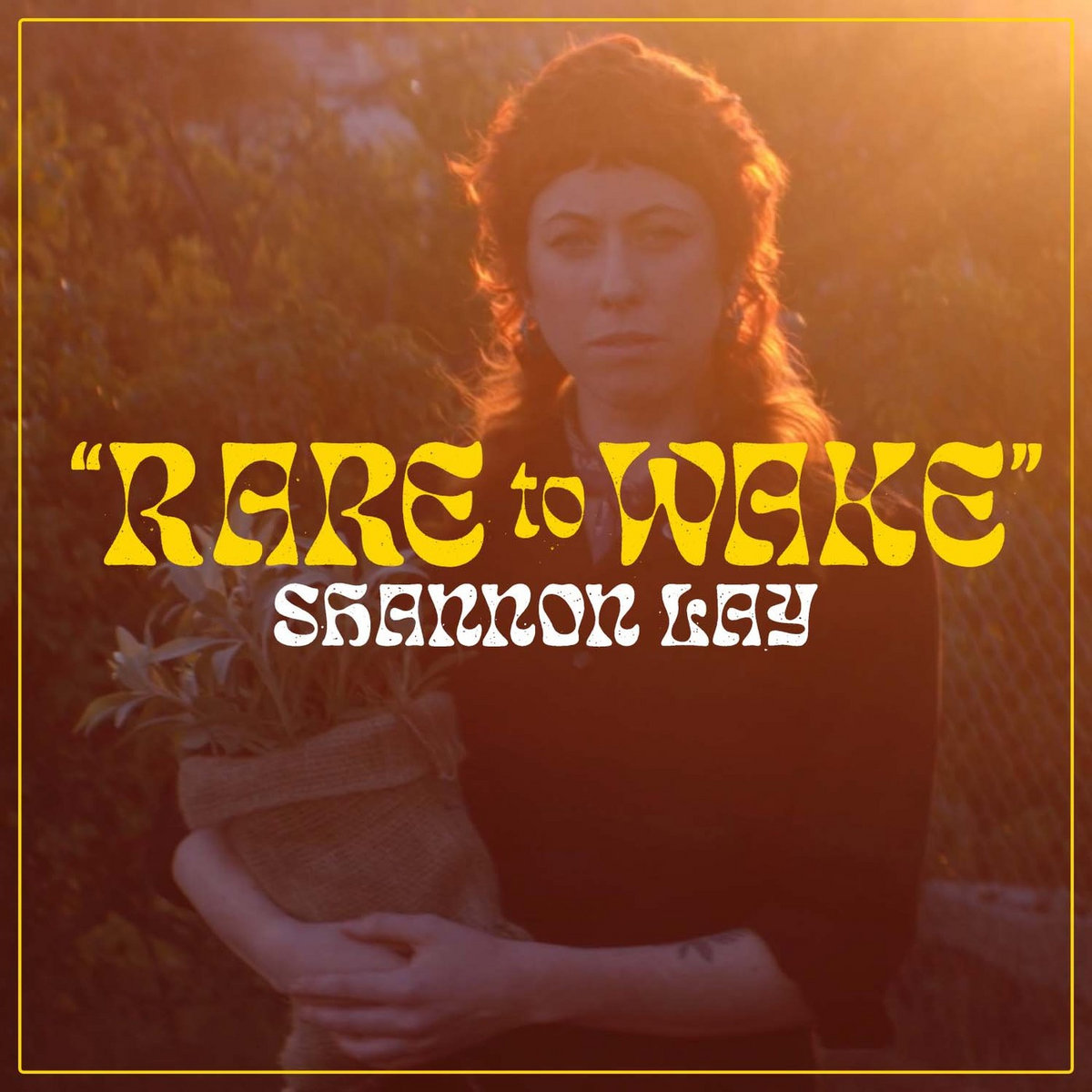
May 11th, 2021, marks the return of Shannon Lay with the official video for “Rare To Wake” a gorgeous new single which is now available at all DSPs, and first material since the release of her acclaimed 2019 label debut “August”.
 
Shannon says of “Rare to Wake”: “Change is a constant in every aspect of our experience yet sometimes it is difficult to accept. Without change we cannot become who we are meant to be and with change comes the upheaval and transformation of who we were. There is an inevitable discomfort that comes with challenging the environments, roles and identities we embody throughout our lives. Trust that part of yourself that knows you’re on the right track, even when it’s challenging. That trust and love helps to guide and reassure us as we explore new realms.
 
Wherever you are in your adventures let this song be a reminder to never be afraid to receive and accept the changes that beckon you to grow and evolve. Allow yourself to awaken and embrace your many destinies.  When your heart feels heavy ask yourself what needs to be cleared out.  That new found space will be occupied by something better, something brighter, something that lifts you up; make way.” You can watch the new video for “Rare to Wake” which was directed by Kai MacKnight 

Today marks the return of Shannon Lay with the official video for “Rare to Wake,” which serves as “a reminder to never be afraid to receive and accept the changes that beckon you to grow and evolve.”

“Rare to Wake” by Shannon Lay (Release Date: May 11th, 2021)

See the source image

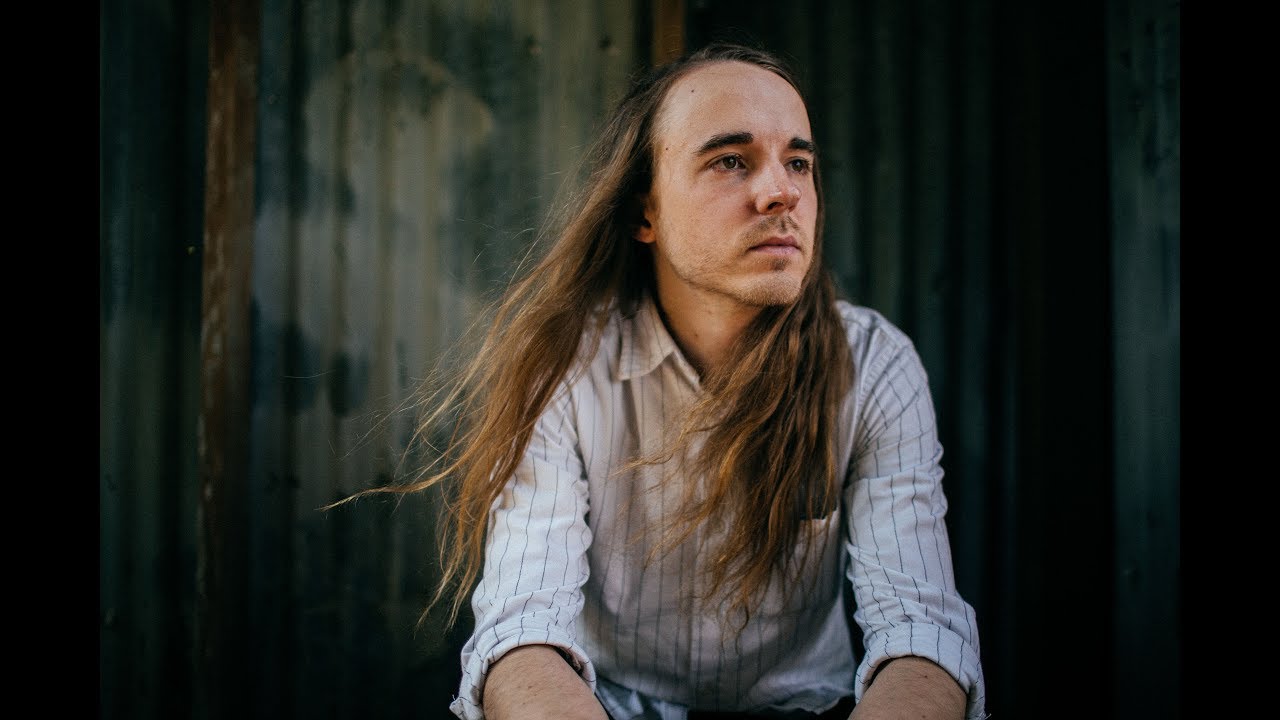
A man walks into a bar, and his best friend tells him that his ex-girlfriend is back in town; the man considers the highs and lows of their relationship until she wanders in and he sees her again. Canadian singer-songwriter Andy Shauf’s transfixing latest album is constructed around this narrative, but The Neon Skyline is also about the everyday details that we hold onto, that help define us, and which help us move on from loss. Fans of Sufjan Stevens and Jose Gonzalez should stumble into Shauf’s gorgeously rendered folk-pop storytelling with little hesitation

For nearly ten years, La Blogotheque has changed the way people experience music. We film beautiful, rare and intimate sessions with your favorite artists, and the ones you are soon to fall in love with. Come, stay a while, and be taken away.

All singer-songwriters are storytellers of a sort, but neither term does justice to what Andy Shauf accomplishes on The Neon Skyline Each of its 11 tracks are chapters from the same narrative, vignettes that cohere into something like a novel or an indie film. The arc is simple: guy runs into his ex at the bar, flashes back on falling in and out of love, awkwardly flirts for a while, and heads home. But Shauf ties those scenes together with emotional insight and an artful touch, sound tracked by luscious retro pop-rock arrangements that make the story feel timeless despite its meticulous sense of place.

Andy Shauf released one of 2020’s most highly praised albums, Neon Skyline.

Having spent the better part of her adult life on a fairly continuous tour, American singer-songwriter Marissa Nadler found a small silver lining peeking through the darkness of this ongoing era. During this unexpected time she had the opportunity to record a collection of covers to serve as a salve of serenity and comfort.

The feelings of homesickness and loss, detachment and displacement, of loneliness and sorrow- they are omnipotent right now. These are the themes explored in this collection.

Townes Van Zandt’s My Proud Mountain, Simon and Garfunkel’s Old Friends / Bookends, as well Bob Dylan’s beautiful deep cut I Was Young When I Left Home speak of a desire to return to a place of comfort. America’s Lonely People serves as a beautiful anthem to the lonely. The Santo and Johnny’s classic, Sleep Walk, has long been a favourite and so the vocal version, popularized by Betsy Brye in 1959, which is here reinvented with a evocatively modern twist. This sense of sleepwalking feels like a very current pervasive sentiment, a longing to drift away into a dream world, which is also prevalent in the King Crimson’s song Moonchild.

“Instead of Dreaming” has been recorded and produced by Marissa Nadler with an added touch of beautiful layering by multi-instrumentalist Milky Burgess.

Released May 7th, 2021

Albumism_LucyRose_NoWordsLeft_MainImage.jpg

Nearly one year ago to this day, Lucy Rose graced the stage of Manhattan’s (Le) Poisson Rouge and with her signature, self-deprecating humility and wry humor, she addressed the audience assembled there. “I don’t know how you have found out about my music. I don’t know what’s wrong with you to want to spend an evening listening to my sad songs,” she joked. “But I can’t tell you how much it warms my heart that you guys have all come out this evening to support us in this way.” She then launched into an acoustic, goosebump-inducing rendering of “Shiver,” the final single released from her 2012 debut album “Like I Used To”.

Listening to her sad songs, and it was a thrill to bear witness to a musician so intimately connected to—and in control of—her craft. Her words dislodged something in the deeper recesses of my heart and mind that made me reflect more lucidly on things in my own life—the highs, the lows and everything in between. I sipped my beer faster, in the hopes of relieving the lump in my throat and calming the flutters in my gut, to no avail.

As I and my fellow spectators experienced first hand the power to make you feel something when you hear them is inherent within Lucy Rose’s songs. And it should come as no surprise, as she has suffused her songs with uncompromisingly raw and vulnerable emotion since the earliest days of her career.

Her superb third album Something’s Changing (2017) exemplifies her penchant for the confessional strains of song writing, albeit with a balance of the sombre and sanguine underpinning its compositions. Less than two years on from its precursor’s release, Rose’s Tim Bidwell-produced fourth album “No Words Left” finds her baring the conflicts of her soul with an even more pronounced clarity and self-awareness. Her crystalline voice is noticeably prominent atop the stark yet sublimely melodic arrangements of acoustic guitar and piano, punctuated by strings that heighten the emotional tension of her musings.   

“In every way I’ve approached writing, recording and now releasing music, it’s been different,” Rose said of the album when she officially announced it back in January. “I’ve lost all consciousness in caring and it’s been liberating. It is what it is. It’s a feeling, it’s a song, it’s a sound, it’s a part of me which I can’t decipher whether it’s good or bad, but it’s sincere.”

Indeed, the eleven songs that comprise No Words Left are refreshingly devoid of pretense and calculation. Instead, they illuminate Rose’s troubled inner monologue and feelings of detachment, as she wrestles with her self-worth as an artist, a woman, and a lover. This is arguably most clearly manifest on the album-concluding “Song After Song,” in which she grapples with self-doubt, reflecting, “Help me, I’m living out my dream / Or so it seems / When I see that look in your eyes / I know that I’m telling myself a lie / Oh, a lie / Maybe I’m not as good as the girl I hear next door / I hear her now / Ooh, she’s playing her guitar / Through a bedroom wall.”

Her confidence is—at least temporarily—revived, however, on the piano-driven, saxophone-enhanced “Solo(w),” inspired by her decision to exit last year’s tour supporting fellow UK singer-songwriter Passenger. “I realised that I’d rather play to 20 people who cared, rather than 1000 people who didn’t,” she confided to The Line of Best Fit in a recent interview. “I’m not saying that all of them didn’t, but you can’t hear the ones that care.”

“Treat Me Like a Woman” is a cathartic meditation on gender dynamics, inspired by Rose’s perceptions of how others view and engage with her as a woman. “You treat me like a fool / Or do you treat me like a girl? / Treat me like a fool / Or do you treat me like his wife?” she inquires in the opening verse, before admitting, “I’m afraid and I’m scared and I’m terrified / That this is how it will be for all of my life.” Informed by her personal experiences, her words surely resonate with most—if not all—of her female listeners who harbour the same feelings of marginalization.

The album’s lead single “Conversation” is a stirring rumination on the challenges of sustaining love, beyond the initial flush of newfound romance (“If you look at what we once had / Well it feels many moons away”). An intimate confession directed toward her partner, “The Confines Of This World” finds her striving to hold it together for him, confiding, “’Cause all I ever wanted was for you to feel proud / And everybody’s telling me I’m losing my mind / And all I ever wanted was for you to feel calm / Now everybody’s worried that I’m losing my faith.” Her hope is later restored on the plaintive piano ballad “Nobody Comes Round Here,” as she wistfully declares, “When I’m dreaming you’re still with me / And then I open up my eyes / They open up wide.”

Contrary to the album’s title, and as if her growing legion of devotees ever doubted it for a second, it’s more evident than ever before that Ms. Rose has plenty of words left to share with the world and a whole lifetime of songs to sing ahead of her.

No photo description available.

Singer Songwriter Folk guitarist Gregory Alan Isakov has taken time away from working on his follow-up to 2018’s Evening Machines to record and share a new live video for “She Always Takes It Back”. The soft-sounding original ballad was the final track on Isakov’s 2013 studio album, The Weatherman.

Set in a darkened studio setting, Isakov and his solo acoustic guitar guide viewers on a gentle ride through the 2013 original with the use of his fingerpicking style and trademark melodies. Isakov has made a career out of those subtle but heartwrenching melodies, and he shows he hasn’t lost any of his abilities even with all this time away from performing.

Isakov was scheduled to embark on a run of spring and summer tour dates last year, in addition to dates supporting the Zak Brown Band, but those shows never ended up taking place with the arrival of COVID-19.

May be a closeup

The 22-year-old singer/songwriter from Montclair New Jersey, Annie Blackman first started making and releasing music when she was still in school. Her debut album, “Blue Green“, released back in 2016, served as a soundtrack to her school days. Now five years on, having opened for the likes of Soccer Mommy and Field Medic, Annie is set to release a string of singles through the wonderful Father/Daughter Records, the first of which, “Why We Met”, came out this week.  A compulsive archivist, Blackman draws inspiration from her own diaries, schoolwork marginalia, and the hallowed grounds of the Notes App on her iPhone. Loving, liking, and longing inform Blackman’s lore. With measured vocals and hypnotic production, Blackman faithfully leads us through her world of faded dorm room furniture and pensive walks-home.

Blackman’s upcoming set of singles, to be released by Father/Daughter Records, chronicles her later college years, and subsequent foray into post-grad life. She has teamed up with friend and producer Evan Rasch (Skullcrusher, Runnner, Harvey Trisdale), who outfits the songs with plush slide guitar and shadowy ambiance to help realize her evolving vision.

Why We Met was recorded with friend and producer, Evan Rasch, whose production style melds perfectly into the evolution of Annie’s song writing, as she shifts from youth into young adulthood. The track seems to build around the rhythmic quality of Annie’s guitar-playing, which is slowly enveloped in waves of luxurious slide-guitar and a cornucopia of ambient sounds, bringing to mind the likes of Skullcrusher .

Blackman’s latest single, “Why We Met,” is a study in slow motion. As she watches the song’s subject nurse a beer, Blackman takes us inside her gaze, wading through a mundane moment of asymmetrical beauty. “You’re looking up and I’m looking at your neck/ tilted back/ Clock the curvature,/ the bottle starts to sweat,” she sings. “You’re scared of leaving/ and I wonder why we met.” Despite lush, intently searching guitar, glowing through Blackman’s hazy lilt, the question of how to love aptly goes unanswered. As with all of Blackman’s music, her new project promises sincerity, scope, and the capacity to make her listeners feel known.

Lyrically, this feels like a deeply human study on the idea of connection; Annie repeatedly nothing, “I don’t know how to love you”, as eyes meet with a certain uneasy sense of parting, “you’re scared of leaving, and I’m wondering why we met”. Throughout, the track fizzes with an emotional intensity, the images may be hazy, the details blurred by an overwhelming sense of an ending, yet the feeling remains. This is an open-hearted piece of song writing, beautiful, bruised and ready to make a real impression on anyone willing to give it their time.

thanks fortherabbits

“Why We Met” is out now via Father/Daughter Records