

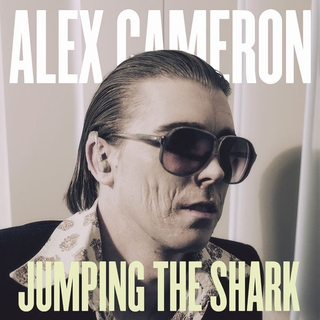
If in a parallel, time, Bruce Springsteen, instead of selling out arenas, ended up singing resentful songs in a dark Las Vegas bar. In our reality, this same person lives in the body of Alex Cameron. We see him in a smart suit with slicked back blond hair, sometimes his cheeks are wrinkled, as is an older version of himself possessed his figure unexpectedly. He is almost kneeling on stage while holding on to his microphone; It’s impossible to foresee if he’s about to burst into tears or into a fit of rage. But nothing happens, the song ends, the action stops. He’s still there, on the empty stage, in the empty room, and you can’t help but keep thinking of his words, his voice, his hopelessness.
“And I’ve sat here thinking, I hate my god damn life/ I used to be the number one entertainer, now I’m bumpkin with a knife/ I’ll never get my show back.” he sings, in one of his tracks, titled “The Comeback.” Oddly enough, despite what you might think, “The Comeback” isn’t the opening song on Cameron’s debut album: the first place in his record titled “Jumping the Shark” is, indeed, for a song named “Happy Ending.” It’s as if we are taken backwards in the life and the career of this unfathomable music business man from a timeless place. the fact that the record in question, “Jumping The Shark”, was actually sneakily released by Cameron way back in 2013, and merely saw a wider U.S. release last year, with the record getting a proper release this year from new label Secretly Canadian and producing some of the best video clips this year, Alex, who knocked it out of the park this year with a aforementioned string of brilliant videos taken from the record,
“I’ve got, everything I need/ It’s a strong connection, that’s high-speed/ Got two modems, and a fax machine/ I got receptionists, they keep my office clean/ I’ve got, a master plan/ I’m my own boss, I’m the man/ I got business cards, you can find me;” .
His narrative is evil and repulsive, yet we can’t help but listen carefully to the stories he sings, fascinated by this corruption and determined to save his poor, self-destructive soul, always concerned to find out that its us he’s talking about. The electronic arrangement, made of straight synths and guitars, remind of the new-wave, post-punk era – vintage or out-of-date, it’s difficult to tell. But the result is an album that sticks in the listener’s mind, persistent in the thoughts, coming back when least expected; impossible to give up on, just like a crushing addiction.


 The Fat Angel Sings