Posse’s “Kismet” as the inaugural release in their Document series! ,
Taking inspiration from the original concept behind the founding of the label’s attempt to document our home city of Omaha through music and art, each release featured in the Document series will comprise of an exclusive 7-inch record featuring unreleased music from various artists outside of the label’s roster and a specially curated zine highlighting the artist’s hometown / music scene. This Seattle indie rock band had a poet laureate, Posse would since 2010, across two previous albums, the trio chronicled the banality and disappointments of life in their Northwest city with wit and sadness and hilarity. The sound they crafted to accompany their stories were beautifully spartan; just two guitars and a drum chugging along in a haze. Check out the bands EP “Horse Blanket” it is the band’s final record having decided to call it time up. I really hope we hear somethinhg soon from its members.
“Saddle Creek started up as a way to spotlight and document what was happening in the music and art community of Omaha, NE. We know there are a lot of great music scenes all around the world that don’t have the spotlight they deserve, so with that in mind we thought creating this series would be a cool and unique way to reference our past while at the same time reaching out to bands that we aren’t currently working with and allowing them to shine a light on the art and music of their own communities. It’s our way to try to capture a band and a city in a specific place at a specific time.”
This came out at the very end of last year, this is an assured, maybe twee but formidable, colloquial but eloquent, sad but self-aware, Emma Lee Toyoda’s debut LP is a study in the kinds of contrast that cast light on the emotions the songs evoke. The melodies, harmonies, and instrumental arrangements are ambitious and surprising, and the words rest in unfussy service to the sounds that surround them. Above all, this record sounds young and serious in the best way—which is to say not self-serious. These songs still know how to swoon. Seattle-based semi-nocturnal sadgirlrock backed by Adelyn Westerholm (violin), Veronica Johanson (harmonies), Khyre Matthews (bass) and Zeke Bender (drums)
all songs written, composed, co-mixed & anxiously nitpicked by Emma
all drum parts composed by Zeke “No Nonsense” Bender *
violin part on Seasick composed mostly (against her will) by Adelyn Westerholm
Early in 2017 Great Grandpa’s “Can Opener“ EP was released.I heard during an interview with vocalist, Alex, that their new album would be more expansive and varied than the EP, From my first listen of Plastic Cough, I knew this was exactly the type of band I like . Each track ricochets through tempo changes and angular riffs, while the vocals cut through and then collect for scream-along choruses. Great Grandpa’s lyrics leave you raging at the sky or collapsed on the floor in a puddle from track to track. The sheer variety of emotional energy leaves your mind reeling. As the guitars build a wave of warm fuzz. The album ends with a track about escaping zombies when you’re high, grab a listen to Plastic Cough
“’90s slacker-rock chord progressions; growing into moments of grungy noise; unraveling into poppy, palm-muted riffs; building and faltering; exploding and nearing silence with surprising precision.” -NPR
“Catchy, emotional rock… sound[s] like the best of Weezer. Only cooler.” – The FADER
“Plastic Cough echoes with loose meandering, jangly/angular guitar and ragged vocal harmonies, but upholding it all is attention to craft and accessibility. You can hear it clearly in the album’s quieter moments, which are many. These are skilled musicians making music that’s blatantly fun but also surprisingly subtle.” – City Arts Magazine
“[Teen Challenge is] a definitive example of everything that Great Grandpa does best: savvy, self-aware, and full of surprising musical moments that will keep listeners guessing throughout.” – KEXP (SONG OF THE DAY)
” …the Seattle quintet’s most compelling moment to..
released July 7th, 2017
Songs by Pat Goodwin, lyrics by Alex Menne, arrangements by Great Grandpa *
Sad news from the city of Seattle the band Posse decided to add to the ash pile and call it quits. The trio gifted to the world their final album Horse Blanket
If Seattle indie rock had a poet laureates, Posse would surely lay claim to the title. Since 2010, across two previous albums, the trio chronicled the banality and disappointments of life in their Northwest city with wit and sadness and hilarity. The sound they crafted to accompany their stories of bad dates at terrible Seattle rap shows (“A bald white guy/With a mumu onstage” one lyric went) and workplace frustration was beautifully spartan; just two guitars and a drum chugging along in a haze. Horse Blanket is the band’s final record, an EP of six songs about the things they know best: “boredom and loss, miscommunication and regret.”
On opener “Dream Sequence” vocalist Sacha Maxim gently shoves a listener into Posse’s disaffected, overcast world: “I was sick/I was tired/I was standing in the rain” she sings with a frown. The lyric is without frills or metaphor. Instead, Posse find poetry in blunt and dead-simple observations. This reflects in their arrangements, which are without ornamentation or glitz, just Maxim and Paul Wittmann-Todd’s depressive guitar strums accompanied by Jon Salzman’s quiet drumming.
While their sound could almost be described as rudimentary, it’s never boring. The deliberate nature of their music, the almost shuffling sleepwalking stupor of their voices and each instrument trudging forward, create a sense of pace and place that is so real it can be hallucinatory. Like on “Shiver” when Wittmann-Todd slurs, “I feel cold/Or maybe something like that,” the frigid trickle of guitar notes perfectly mimics the loneliness of his line. Something the band does so amazingly well, They recreate an entire universe of subtle, painful interactions, “funny little rituals,” and personal landmarks. Wittmann-Todd takes you through a detailed tour of a break-up that travels between cold beaches and the interiors of shitty Volvos. The pain is self-lacerating: “I told myself I’d differ, but I never really change,” he sings.
Lemolo is the Seattle dream-pop band fronted by songwriter and musician Meagan Grandall. The band’s ethereal sound has garnered comparisons to Cat Power, Feist, Beach House, and Warpaint.
With help from drummer Adrian Centoni, the band has since been named one of the “Best Seattle Bands” by Seattle Magazine, was voted “Best New Band” by City Arts Magazine, and was just named one of the “Top Bands Rocking Seattle” by Seattle Magazine. Lemolo’s Impressive dreamy soundscapes and Heavenly harmonies have released multiple albums independently, and has performed continually sold out shows in Seattle and tours throughout the US and Europe. “Sonically and melodically brilliant”.
A Deer Creek session of Lemolo preforming “Rogue Wave”
This ain’t your great grandpa’s Great Grandpa. Despite the name, Great Grandpa are planted firmly in their 20s, with all of the attendant disaffection, indecision, and general ennui that that entails. But, like a few other famous musicians from Seattle, they’ve turned the gray fog of youth into searing, lopsided guitar music, with the capacious depths of Alex Menne’s voice sounding just at home over the fiery squalls of “No Hair” as it does on the tender balladry of “All Things Must Behave.” Oh, and also, there are zombies.
When Nirvana’s album “Bleach” hit record stores 28 years ago today, not a single person in the industry saw it as the debut effort by a band that would change the world. The top album in the country that week was The Raw & The Cooked by Fine Young Cannibals, followed by the Beaches soundtrack at #2. Metal bands like Poison and Mötley Crüe were packing arenas, Tiffany and Debbie Gibson were ascendent and the last thing on anyone’s mind was this grunge trio from Seattle.
Bleach is the debut studio album by the American rock band Nirvana, released on June 15th, 1989 by Sub Pop. It was recorded for a mere $606.17 at Reciprocal Recording in Seattle. Local guitarist Jason Everman cut the check for the sessions, so they listed him as a member of the group even though he didn’t actually play on the album. “We still owe him the $600,” said Kurt Cobain “Maybe I should send him off a check.” It was packed with songs they’d been playing live for months, including “Floyd The Barber” (essentially an ultra-violent piece of Andy Griffith fan fiction), “Love Buzz” (a Shocking Blue cover) and “About A Girl,” a poppy song that showed the group’s impressive range.
“Even to put ‘About a Girl’ on Bleach was a risk,” Cobain has said, “I was heavily into pop, I really liked R.E.M., and I was into all kinds of old ’60s stuff. But there was a lot of pressure within that social scene, the underground-like the kind of thing you get in high school. And to put a jangly R.E.M. type of pop song on a grunge record, in that scene, was risky.”
The album failed to dent the charts when it came out, but it did impress many critics, earning public praise from Sonic Youth and eventually move 35,000 units despite very little mainstream press. It was enough to get the attention of David Geffen’s DGC, which bought the group out of their Sup Pop contract. Going onto a major was a controversial move for any band from the punk rock world, but Cobain rationalized it was the best way to expose the masses to their movement.
“That’s pretty much my excuse for not feeling guilty about why I’m on a major label,” Cobain told Rolling Stone in 1992. “I should feel really guilty about it; I should be living out the old punk-rock threat and denying everything commercial and sticking in my own little world and not really making an impact on anyone other than the people who are already aware of what I’m complaining about. It’s preaching to the converted.”
Bleach’s follow up LP “Nevermind” would convert more people to Nirvana than he could have possibly imagined when he signed with DGC. Here’s a complete show they played at Chicago’s Cabaret Metro on September 30th, 1989 packed with Bleach tunes – back when they were just one of many grunge bands struggling to gain a profile away from the tiny Seattle rock scene.
One of Seattle’s hardest working live bands, Versing synthesize their musical influences —”a sprinkle of Pavement here, a pinch of Sonic Youth there,” says AdHoc—into something fresh. Their debut full-length, Nirvana, is out next week. Versing craft a more spacious, shoegaze-informed guitar sound, coming across like an amalgam of Flying Nun Records-y melodic post-punk, loud-soft Swirlies-inspired gaze-pop, and Pavement-esque collegiate nonchalance.”
Seattle band Versing makes woozy and crackling power pop, ever so slightly askew. The group’s members—Daniel Salas, Graham Baker, Kirby Lochner, and Max Keyes met and collaborated at the University of Puget Sound’s KUPS radio station, and you can hear the world of college radio in Versing’s sundry songs. Together, the band synthesizes the breadth of their musical influences—a sprinkle of Pavement here, a pinch of Sonic Youth thereinto something fresh and exciting.
Their new single, “Call Me Out,” off the upcoming album Nirvana, exemplifies the band’s laid-back playfulness, along with the thoughtfulness and complexity of Salas’s songwriting. The track starts off with a rush of guitars and rolling drums, before settling into an octave-bouncing riff. It distorts as it hurtles toward its end, like a Weezer (or, more aptly Nirvana) song that, instead of trading off between soft and loud, just keeps getting louder. Lyrically, the song is a stitched-together patchwork of philosophical musings, with Salas singing, “Distal thoughts at last awoken,” like the too-cool guy at the back of the night-time college class, holding a guitar.
An all-woman quartet birthed in 2014 from Seattle’s foggy depths, Thunderpussyisn’t just a girl band, but a rock band, snarling and jumping and pulsing with timeless leather bravado.
Just as Elvis as Iggy, as classic rock as it is Delta blues, Thunderpussy sucks up all of rock music’s most romantic iterations and spits out a blood-tinged sex potion. All four of these women are lifelong musicians, and it shows. Drummer Ruby Dunphy’s loose, effortless fills betray her Cornish jazz training, while guitarist Whitney Petty will make you reconsider having used the word “shred” to describe any other guitar player—and the span of bassist Leah Julius‘ vocabulary is evidenced by her as playing for Seattle soul-punk outfit Sundries.
Then, of course, there’s Molly Sides.
The frontwoman is most often seen folded back in half on the floor with a microphone gathering her sweat and breath. Though Thunderpussy’s fierce, label-averse independence has prevented them from starting work on a debut LP until this past September, the band’s live shows have built a cult following. Everywhere Thunderpussy plays turns into a dank, sweaty basement—whether it’s actually a basement or a sunny stage at Sasquatch.
“To see live performance is to be reminded that we are alive,” says Sides. “We stand, breathe, laugh, drink, scream, fall over, get up, move on. Life performance is a path to enlightenment.”
Onstage, Sides ironically finds zen within pure, muscular expression—which is, itself, something of a manifesto to the virtues of rock and roll. Sides writhes sexily in all sequins, ducks underneath Petty’s legs and howls, stage dives, and generally loses her mind, inviting the audience to do the same— it’s like if KISS had sex with FIDLAR and their child was born covered in gold glitter.
Yes, Thunderpussy is indebted to several obvious spirit guides, with Sleater-Kinney the most obvious among them, but to reduce them to SK’s PNW glam rock revivalist heir is too easy. They aren’t just the next thing; they’re the new thing.
Here is your new rock ‘n’ roll order, one united in worship of the Divine Feminine. Leave the fate of rock and roll in these four humans’ hands; like Sides sings in the band’s first single, “No Heaven,” “You don’t have to worry ’bout heaven no more.”
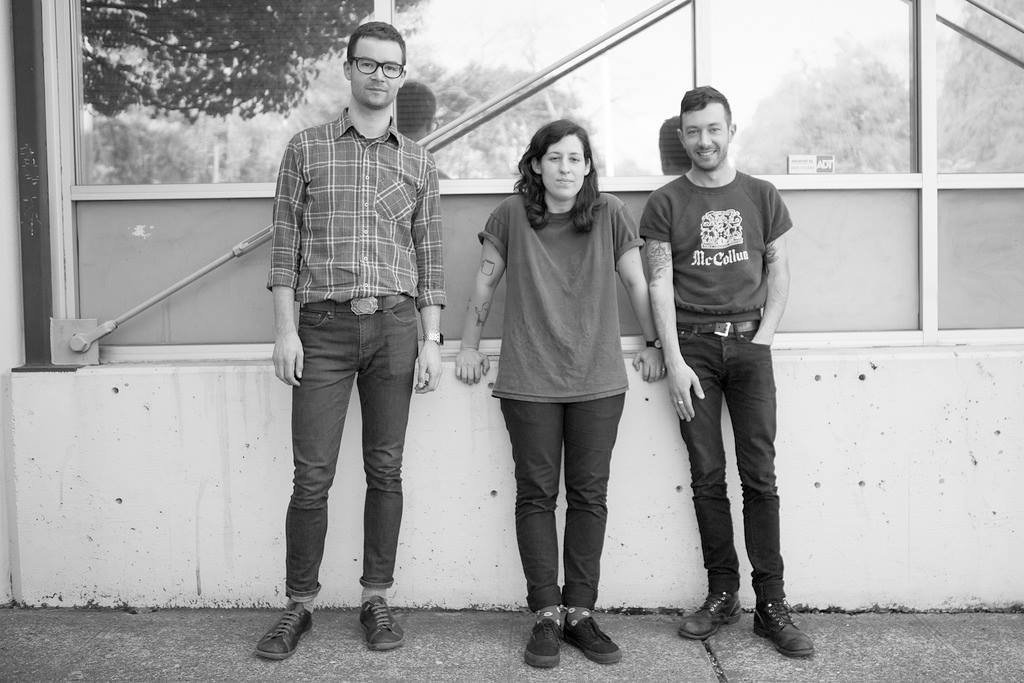
Every band begins with a mission. Some yearn for fame, others for fortune; many are just looking for a way to pay the bills, and a few want to make art for art’s sake. The Seattle band Chastity Belt also grew from a shared purpose; the quartet came together when they were sophomores at Whitman College, in neighboring Walla Walla. The catalyst? An intense desire, fueled largely by pure boredom, to troll Beta Theta Pi, one of four fraternities on campus.
It was 2010, bandleader Julia Shapiro tells me over the phone, and the brothers’ annual “Battle of the Bands”—a bacchanal dominated by Axe, weed, and body odor—was fast approaching. As such, the ladies Shapiro (guitar, vocals), Lydia Lund (guitar), Annie Truscott (bass), and Gretchen Grimm (drums) decided to contest the event.
A short while later, Chastity Belt hit the stage for their first-ever performance, dressed as punks, faces smeared with garish makeup (“I was wearing so much red eyeliner it looked like my eyes were bleeding,” Shapiro recalls). They performed a single song: “Surrender,” a five-minute ode to angst, youth, “stealing your mom’s cigarettes, and wearing dark eyeliner.” To the band’s surprise, the mass of friends gathered to watch the set significantly outnumbered the Betas. Not that Chastity Belt needed to sway anyone; according to Shapiro, some of the group’s friends stole the voting slips intended for partygoers and stuffed the ballot boxes, rigging the competition in the band’s favor. “We didn’t really win anything,” Shapiro says, her deadpan voice dripping with mock disappointment.
Chastity Belt had, in fact, won several things: a serious confidence boost, validation from their peers, and the realization that, beneath all their jangly tomfoolery as underclassmen, there was a rock band waiting to emerge. “When we moved to Seattle,” Shapiro says, “we were like ‘Oh, we can really do this’—and once we felt that, it was kind of like ‘Well, let’s make music that we actually want to make, that’s not just this funny, humorous thing.”.
The foursome weren’t ready to grow up just yet, of course, so when it came time to record and promote 2013’s No Regerts and its 2015 follow-up Time to Go Home, they kept things light-hearted, preaching self-love and sex-positive feminism with smirks on their faces on songs like “Nip Slip,” “Giant (Vagina),” and “Cool Slut.”
Between their nonstop buoyant hooks to garner a reputation as Hardly Art’s goofball darlings, spreading smiles and giggles wherever they went. But eventually, the chortles started to seem like a crutch—especially in the wake of sought-after opening spots for tours with Courtney Barnett and Death Cab For Cutie. “It kind of felt like we were hiding behind humor, in a way,” Truscott says. “It takes a lot more to write genuine songs. It’s just harder.”
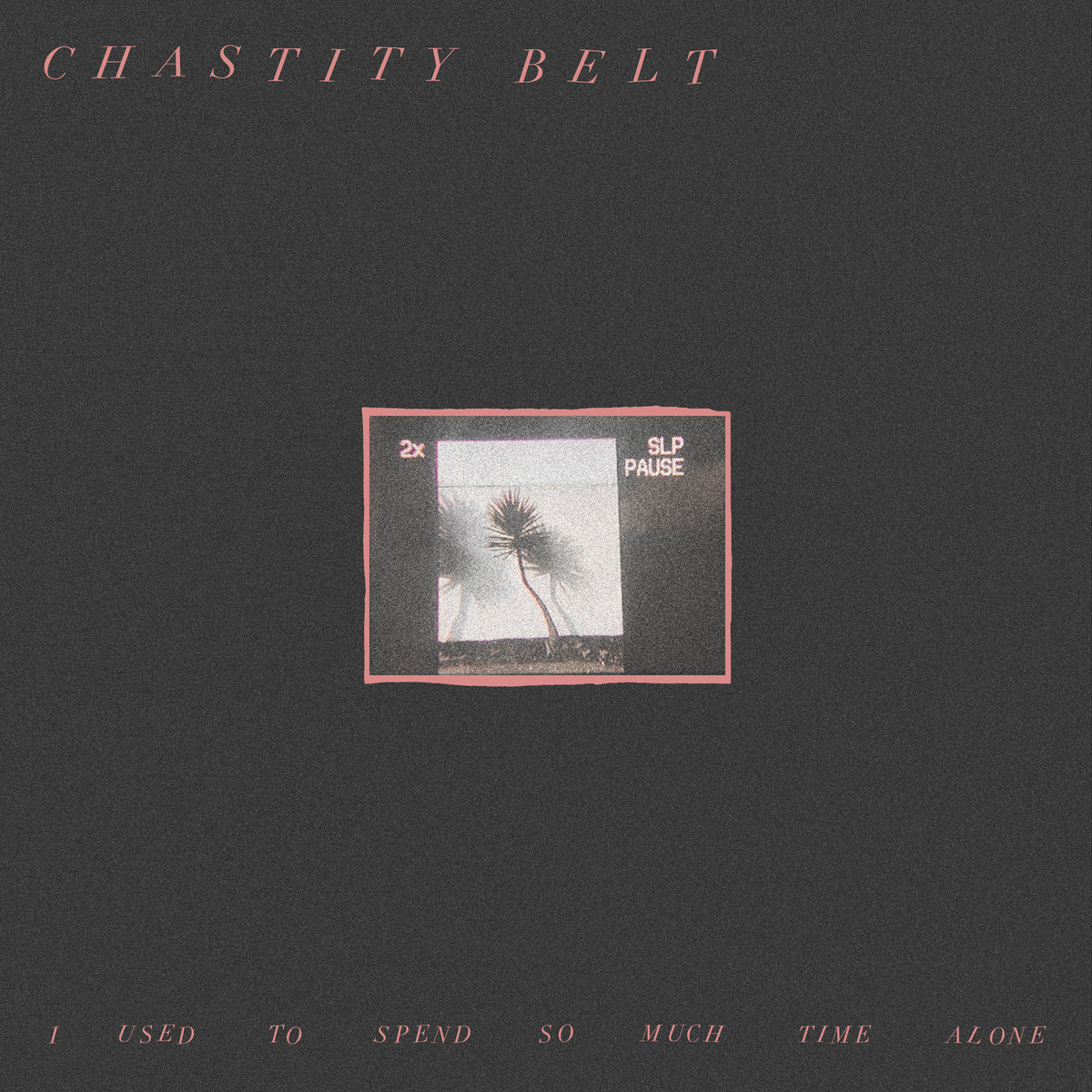
With their third album I Used To Spend So Much Time Alone, Chastity Belt are taking off the jester’s mask and buckling down, subjecting their jangle-pop to a heretofore unseen level of discipline. Where the first two albums derived their momentum from fleeting, flippant bursts of energy, I Used To Spend So Much Time Alone sees the band taking a protracted approach to dynamics, venturing through the reverb-laden fog with tentative, well-measured strides. Its songs deal with depression and heartbreak. On “5am,” Shapiro mulls over the existential consequences of a long night out, seething over the realization that in all those hours of empty, inebriated conversations she and her friends have said absolutely nothing. “It’s 5am, and I’m full of hate,” she grumbles, before getting to the root cause in the slinky chorus (“Immediate urge to get everything all straight / Need to express it but it’s not the time or place”).
This is a real-life observation for Shapiro, whose beer buzzes typically manifest as a crushing dose of ennui. “I’m trying to have meaningful conversations with people, or make something happen so that it feels worthwhile that I’m out of my house,” Shapiro sighs. “Sometimes, it’ll end with me going to bed around 5am”—she drops the deadpan for an exaggerated, anguished whisper, poking fun at her own melodrama—”just because I know there’s more, there’s got to be more.”
Nowhere is Chastity Belt’s chemistry more tangible, or their emotional honesty so profound, as on the late-album slow-burner “Something Else,” an ode to the seasonal depression that’s a hallmark of life in the Pacific Northwest. Along with the album’s lead single “Different Now,” the song represents a deviation from the band’s fragmented approach to composition (which typically casts Shapiro’s parts as cornerstones, over which the other members add theirs). Instead, its slack, melancholy arrangement came together organically during a jam session. “It ended up being a train of thought that I was having which I feel like a lot of people, especially in Seattle, can relate to during the winter,” she says, reflecting on the band’s shared headspace. “You’re kind of stuck in a downward spiral of negative thoughts until you leave the house and go for a walk to clear your head, but it’s hard to get out there when the weather’s so shitty.”
They may be more world-weary than they were two years ago, but Shapiro and company haven’t gone full Debbie Downer yet, nor do they intend to. At the end of the day, they just want to be honest. Asked if the band’s sobered sound was a conscious effort, she shrugs, “It’s got more to do with the natural progression of our music, and what kind of music we want to be making at this point. Songs like ‘Giant (Vagina)’ and ‘Pussy Weed Beer’ were written in college, when we weren’t really thinking this band was going anywhere. At the time of writing them, we didn’t have any intention of recording them, or continuing to play music.”






 The Fat Angel Sings