Posts Tagged ‘Rory Gallagher’

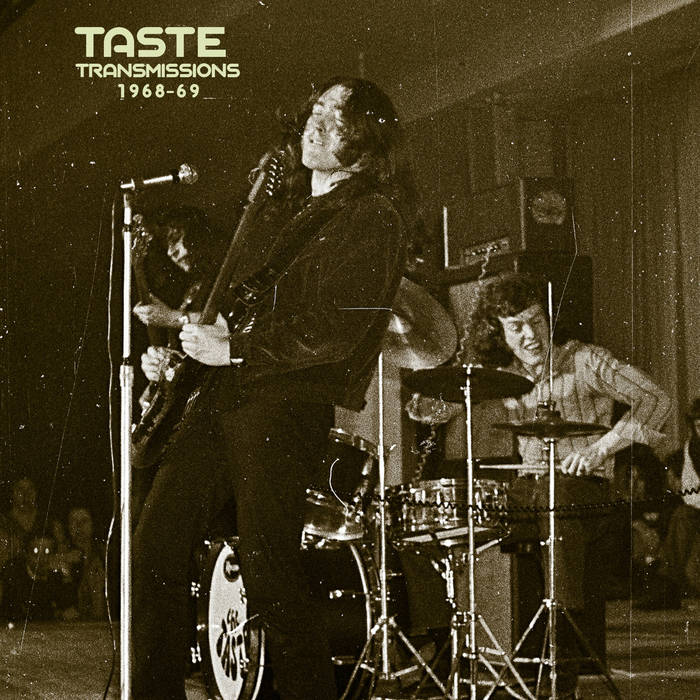
Image may contain: 3 people

July, 1967, and Taste are settling into their residency at Belfast’s Club Rado in The Maritime Hotel. Already the Cork trio have picked up a loyal local following, and the ballroom is packed with students, sailors, working girls, local bands and music fans from across Northern Ireland. Some are merely curious, wanting to check the hot new ‘southern’ guitar-slinger in town; other are already converts and spreading the gospel that proclaims: “Taste are the best Irish band since Them!” The Rado’s atmosphere is thick with cigarette smoke and excitement as youths pack themselves against the stage, spilling beer as they cheer on the band.

The three teenagers who make up Taste are enjoying themselves immensely. They play a dynamic mixture of blues covers and original songs, sounding raw and dynamic. Their 19-year-old guitarist and vocalist Rory Gallagher blazes up front, his T-shirt soaked in sweat while he caresses great rips of sound from his beloved Fender Stratocaster. Taste slow things for Catfish. Youths punch the air as Gallagher channels feedback into his solo, while sailors whoop with joy and hug the ladies they call “shore relief”.

When “Catfish” finishes, Gallagher announces, “This one’s a new one I just wrote called “Blister On The Moon.” He then plays a stinging riff and sings, ‘Everybody is saying what to do and what to think/and when to ask permission when you feel you want to blink.’ Right now, after years spent in showbands, being told what to play and how to behave, Gallagher is revelling in the freedom of making his music, his way. And Belfast loves him for his freedom and defiance.

Admittedly, not all of Belfast does. Later that evening, after Taste finish their first set, Gallagher steps outside the Rado, wanting some fresh air and quiet. Suddenly, a group of youths surround him, and they aren’t ones he recognises from the venue. “Got a cigarette?” one asks. “Sorry, I don’t smoke,” replies Gallagher. Suddenly he’s set upon. Not for his lack of tobacco, but because his accent gives him away: he’s from the south and on the wrong side of town. Gallagher stumbles, almost falls, but manages to regain his balance as fists and feet rain upon him. He runs for his life and within minutes is inside Club Rado. Everyone notices Gallagher’s terrified expression and battered features. They don’t have to ask what happened. Instead, the Rado faithful empty onto the street, and suddenly the gloating gang are fleeing as music lovers teach the bigots a lesson. An unspoken rule at the Rado involves leaving religion, politics, whatever else, outside. Here Belfast gathers to celebrate the gospel of great blues and jazz and rock’n’roll. And throughout his life, Rory Gallagher always embodied such unity.

If Taste took beautiful shape in Belfast across the summer of 1967 – a summer, locals noted, not marked by love – they would cease to exist in this same city some three and a half years later in the depths of winter. Taste’s final performance took place at Queen’s University, Belfast, on New Year’s Eve, 1970. As the band waited to go on stage for a final time, car bombs exploded across the city. On a wet, windswept, bomb-scarred Belfast night, Taste ended in an atmosphere as bitter as the city’s climate.

Taste’s brief timeline runs like this: formed in Cork in late 1966, they quickly established themselves in Belfast in 1967, then began to win wider recognition with their regular forays at London’s Marquee. As their UK status rose, manager Eddie Kennedy insisted on changing the band’s rhythm section before they released their eponymous debut album in April 1969. This album achieved immediate continental success.

The band were championed by fellow musicians – the likes of John Lennon and Eric Clapton publicly praised Taste before they even had a record deal – and they played support at Cream’s Royal Albert Hall farewell concerts, as well as touring the US opening for Blind Faith. Their On The Boards album (released January 1st, 1970) won wide critical acclaim and chart success. Taste provided a standout performance at 1970’s Isle Of Wight Festival yet split acrimoniously at the end of that year. Rory Gallagher immediately set off on his solo career while the rhythm section formed Stud, a band as forgettable as their name is vulgar. A flurry of Taste live albums and a collection of 1967 Belfast demos were released across the 1970s, none with Gallagher’s permission or approval.

Those who love Taste’s music must wonder why this band, who shone so brightly and so briefly, appear to have been banished. Gallagher refused to include Taste material in his live sets for the rest of his life: that he felt such enmity towards what he experienced in the band that took him from the showband circuit to international stardom suggests severe trauma. Yet the music contained on Taste’s two studio albums is superb: their eponymous debut is dynamic late-1960s blues rock, while On The Boards is a striking blend of blues, jazz, rock and pastoral psychedelia. Taste were both critically acclaimed and commercially successful, yet in the decades since they split up, their legacy has been marginalised.

This is finally about to change. A Taste box set, I’ll Remember, is being released alongside a DVD containing the band’s Isle Of Wight performance. These releases are due to the diligence and care of the Gallagher estate, who have worked tirelessly to ensure that Rory’s legacy is properly handled. “For me, Taste has always been a passion,” says Donal Gallagher, Rory’s only sibling, “but this has been a walk through a nettle field.”

on paper, Taste epitomised the Aquarian ideals of the British counterculture. Combining youth and talent, a willingness to experiment and improvise, a dedication to playing for the people and an ability to bring Northern and southern Irish music fans together, Taste embodied the best principles of that era. And Rory Gallagher, in his humility and honest passion, stood for all that’s good in rock’n’roll. But a duplicitous manager would ensure that Taste emerged from the 1960s as burnt and bitter as The Beatles. Perhaps even more so, because few tales of industry machinations are quite as sour as that of Taste.
Rory was proud of the two albums Taste made,” explains Donal, “but we were never even told by Polydor that they were going to release live Taste albums. And the Belfast demos were never supposed to be issued. The whole situation was a mess and Rory just preferred to avoid dealing with it. We have wanted to see Taste’s recordings handled properly for a long time but my feeling, initially, was that anything to do with Taste becomes a nightmare.”

Donal pauses then adds, “Due to various legalities and personalities involved.”

Nightmare number one was Taste’s manager, the late Eddie Kennedy. Kennedy, a Northern Irish music promoter, caught Taste’s first Belfast performance at Sammy Houston’s Jazz Club. Sensing talent and scenting money, Kennedy signed Taste to both a residency at the Maritime Hotel and a management deal. Seventeen-year-old William Rory Gallagher had gained a musical education way beyond his years in, firstly, The Fontana Showband and then The Impact Showband as they toured Ireland, the UK, Spain and Germany, playing pubs, dance halls and US military bases. Time in London playing the city’s Irish ballrooms had allowed Gallagher to check out that city’s many gifted musicians. He saw Davey Graham in folk clubs and John Mayall’s Bluesbreakers (with Peter Green) in pubs, and it made him determined to lead a stripped-down R&B band. His last showband engagement, at Hamburg’s Big Apple club, found him leading The Impact Showband as a trio. When the Big Apple club’s manager asked where the missing showband members were, Gallagher swore they were all stuck in London with food poisoning. After a week, the manager surmised that he’d been told a fib but Gallagher played with such passion and skill, he let the 16-year-old continue his residency.

Back in Cork, Gallagher retired The Impact Showband and set about forming his ideal band, poaching Norman Damery and Eric Kitteringham from The Axills (Cork’s “answer to The Beatles” at the time). With Dublin being a soul music town, Taste found Belfast more responsive to their blues-drenched sound, and with Eddie Kennedy making promises, the trio settled there in 1967, initially living in the Maritime’s tiny, cell-like rooms (it was built as a residence for sailors between ships).

Van Morrison’s Them had made their name playing at the Maritime Hotel and were now internationally famous, and Kennedy saw in Taste a band who could follow in Them’s footsteps. As Kennedy regularly booked English bands to come and play at the Maritime, Taste mastered their craft opening for the likes of Cream, Fleetwood Mac and Chris Farlowe’s Thunderbirds.

“Those bands would come out to play four or five nights,” says Donal, “and so Taste really got to know them and Rory got to play with a lot of great musicians. The Belfast Taste/Fleetwood Mac gigs were amazing. There was a real purity to both bands and how they played blues. Chris Farlowe had Albert Lee on guitar – he was a brilliant picker right back then! And when Cream came over, Eric [Clapton] was so impressed by Rory that he offered him his Marshall stack to play through. Rory tried it but couldn’t get the sound he wanted so reverted to playing through his Vox amp.”Kennedy’s connections with Robert Stigwood (manager of Cream and the Bee Gees) meant he could get Taste – or The Taste as he initially insisted they were billed – gigs at London’s celebrated Marquee Club. In late 1967, Taste visited London, living out of their van and opening for anyone and everyone. Word spread about the beautifully raw Belfast band and when they returned to settle in London in early 1968, they were soon headlining nights at The Marquee.

“The Marquee was huge back then,” recalls Donal. “This was before they put a bar in so you could pack about 1,500 people in. There was no such thing as health and safety and as it wasn’t licensed, no one ever checked on it. The Marquee was also a place where promoters from across Europe would come to check the new talent.

“After one of Taste’s first London gigs in 1967, this guy from Nottingham, who booked The Boat House, offered us a fiver to come up and support Captain Beefheart. We leapt at it. The fiver probably covered the petrol! I remember we stayed at the worst dosshouse in Nottingham, along with about 30 lorry drivers! But the gig was great and Rory was very impressed by Captain Beefheart and his band as they had strong blues and jazz influences.

“After the show was over, Rory was chatting with Beefheart, and Beefheart said, ‘I hit all the bum notes I can.’ That was new to Rory. He had come up in the showbands where every note had to be perfect. So playing with different bands got Rory thinking about music in different ways.”
Taste then got booked to play at the Woburn Abbey Festival on July 7th, 1968. Woburn Abbey was one of the first British rock festivals and the bill featured the likes of Jimi Hendrix and Donovan. Taste were still unsigned at the time but they produced such a dynamic performance that John Peel, the former pirate radio DJ whose Perfumed Garden show on Radio 1 featured rising stars of the rock underground, told Gallagher that he would make sure Taste got a BBC session. Peel had already begun playing Taste’s debut 45 “Blister On The Moon”. This had been released on Belfast label Major Minor without the band’s consent. The two songs were taken from a demo and it’s likely Eddie Kennedy allowed the single to come out to generate major label interest.

Taste were now rising stars of the British rock scene – John Lennon had attended a Marquee performance and subsequently told a New Musical Express writer: “I heard Taste for the first time the other day and that bloke is going places” – and Polydor expressed interest in signing the band. Kennedy then insisted that the rhythm section be sacked. He told Gallagher that this was at Polydor’s insistence, the label deeming the rhythm section not good enough (listening to the Woburn Abbey concert proves the lie in this). Gallagher said he was having none of this and they would have to find another label. But – and Donal is unsure why – he then backed down, and Damery and Kitteringham were sent back to Cork while Ulster musicians John Wilson and Richard McCracken were drafted in on drums and bass. Wilson-McCracken had recently played in Cheese, a Belfast band Kennedy had managed. The new duo were both gifted, experienced musicians – Wilson had been a member of Them and played on their second album, “Them Again” – and they quickly clicked with Gallagher.

No photo description available.

Taste’s new line-up signed with Polydor, with Kennedy promising the band that the label would allow them the kind of independence The Who and Cream were then enjoying. What he didn’t tell them was that as they were minors – the legal age for contracts back then was 21 – it was Kennedy who was signed to Polydor, while the members of Taste were individually under contract to him as employees. Not that the band paid any attention to the intricacies of contracts, preferring to concentrate on taking their music to the people.

Taste played every gig they could get, every place, building a following,” says Donal who, having started as his brother’s roadie, was now the tour manager. “The crowd would be packed up against the stage and cheering the band on. This was the fuel Rory worked on – Taste would combust on stage, just catch fire with the excitement of the audience and take the music places they didn’t know it could go. I’ve found pictures of them on stage on a winter’s night and they are boiling!”.

Taste settled into two Earls Court bedsits with Rory and Donal sharing one – “two singles beds, a closet, a cooker, a washbasin” – and Wilson and McCracken in the other. The band toured in an old Ford Transit van, playing wherever they were booked.
“Our diary was always quite full because we didn’t mind going up to Inverness one night and Plymouth the next, both for low money,” Gallagher told ZigZag magazine when asked about his early days with Taste. “It was the only way to establish ourselves as far as we were concerned, because people soon forget what they read in a paper but they rarely forget a gig… so we just gradually worked our way up.”

So rooted in playing a highly personal form of blues rock were Taste that Eric Clapton, frustrated by Cream’s inter-member acrimony, insisted they play at the Royal Albert Hall as part of Cream’s farewell concerts. Taste, still without an album out, were thus anointed as Cream’s heirs.

Cream performed two shows in one evening at the Royal Albert Hall,” recalls Donal, “and that was a pity as it meant everything was rushed. Apparently it was because they could only book the Royal Albert Hall for one night and so they squeezed the two shows in. Also, Tony Palmer was filming the shows and I think he liked the idea of shooting both of them on one day. Yes were also on the bill so for the first show Taste opened, and then for the second show Yes opened.

“To my mind, Taste sounded better on the second show and Rory’s guitar sounded great – he was still playing through his Vox amp. He didn’t use any effects pedals beyond a treble booster to get greater sustain. There were lots of well-known musicians backstage – David Crosby and some of the Bee Gees, among others.”

While the Royal Albert Hall concerts turned the spotlight on Taste, it also brought about a degree of derision: as Cream and Jimi Hendrix had pioneered the power trio format, Taste were dismissed by certain London scenesters as mere Irish copycats.

Rory had formed Taste in 1966 with no intention of copying anyone,” says Donal. “He was friendly with Jack Bruce, having met him in his Hamburg days, and loved the early Yardbirds – their raw, raunchy blues – but he never aimed for Taste to be like Cream. Obviously Cream had been trailblazers in America so they paved the way for Taste. But if you listen to the Taste albums, they sound nothing like Cream.

“When Cream finally split [following their 1969 US farewell tour], Rory was approached by Eddie Kennedy with the suggestion he join Jack and Ginger [Baker] in a new version of Cream. Eddie was working closely with Robert Stigwood’s agency and it must have been mooted that a version of Cream could continue with Rory in Eric’s place. Rory wouldn’t have a bar of it.”
Image result for taste rory gallagher images

As Taste’s live reputation continued to grow, Polydor determined to get them into the studio and hired Tony Colton, a highly-touted British singer-songwriter who was, at that time, fronting Heads Hands & Feet as producer. Taste’s self-titled debut album was recorded at De Lane Lea Studios, a facility in the centre of Soho, in one day. The next day was devoted to mixing the album.

Released in April 1969, Taste’s debut album is, essentially, their live show. It opens with Gallagher’s anthem “Blister On The Moon”, He bemoans life spent up and down Britain’s then-primitive motorway network with Dual Carriageway Pain, which is followed by a handful of unremarkable Gallagher originals, “I’m Movin’ On”. This gets played in a remarkably straightforward manner, harking back to Gallagher’s 1950s childhood in Ballyshannon where he was taught the song by his Uncle Jimmy, who returned to Northern Ireland after having worked in Detroit’s car plants.

Image result for taste rory gallagher images

Taste’s self-titled debut provided a broader showcase for Rory Gallagher, though the guitarist was already well on his way to becoming a national folk hero among his fellow Irishmen. Taste, which arrived on arrived on April 1st, 1969, succeeded on its own terms thanks to stunning heavy rockers like “Blister on the Moon,” “Same Old Story,” and the timeless “Born on the Wrong Side of Time,” as well as a wealth of accomplished blues numbers, both covered (Huddie Ledbetter’s “Leavin’ Blues” and Howlin’ Wolf’s “Sugar Mama”) and original (“Hail,” which particularly highlights Gallagher’s talents; and “Catfish,” where he “out-Gods” Eric Clapton). Before they were done, Taste even found time to visit ‘50s rock via “Dual Carriageway Pain”; and American country music, with an acoustic and slide guitar-infused rendition of Hank Snow’s “I’m Moving On.”

Still, his first sighting alongside the other men in Taste cannot be overlooked, since it stands as Gallagher’s first major step toward immortality as perhaps the ultimate working-class guitar hero.

Taste received largely positive reviews – Gallagher noted that it was “raw and honest” – and sold strongly in northern Europe. The band stayed on the road and went on to break The Marquee’s attendance record (previously held by Jimi Hendrix), but they remained on the same tiny salary Eddie Kennedy paid them. They may have now been internationally celebrated recording artists but they continued to live in grimy Earls Court bedsits.

“Earls Court was dubbed ‘Kangaroo Valley’ back then due to the huge number of Aussies living there,” says Donal. “The bedsit was very cramped and you had to feed the gas meter with an endless supply of coins to be able to cook or get heat. I would always be going off to the local laundry to do the band’s washing – Rory would just sweat through everything on stage – and the lady who owned the bedsit saw me doing this and installed coin-operated washing machines in the basement of our building. In winter, the laundry basement was the warmest room in the building so we would huddle down there, and Rory found it was a place where he could practice guitar and saxophone without annoying the other people living in the building.

“We lived in a crescent and met many other bands living there, including Brian May’s Smile. Brian would come and see Taste all the time. He would hang around after the gig finished to talk guitar with Rory, and Rory would explain to him how he got certain sounds.”

Eric Clapton’s enthusiasm for Taste remained strong and saw that the band were invited to support Blind Faith on their US tour across July and August 1969. While Taste played well, Blind Faith were imploding and, Donal recalls, the tour was poorly organised.

“It had always been a dream of Rory’s to play music in America. But once we got to America, the Blind Faith tour was a shambles. It was very badly managed, chaotic. They didn’t have enough material ready so Eric and Ginger ended up having to do Cream numbers – which is what the audience wanted, but not what Eric and Stevie [Winwood] had formed Blind Faith to do. Everything about that tour was a mess – it really felt cobbled-together – and due to Blind Faith’s controversial album cover [featuring a young topless girl], their record release had been delayed so the audiences weren’t familiar with the new songs. Rory was unhappy with Eddie and disliked playing stadiums, preferring clubs, and animosity was building in the band. Eric worked out something was wrong with Taste and asked me one time: ‘What’s wrong with the guys?’ He could feel the vibes. Rory took on an air of depression on that tour. ”

Taste were well received by US audiences and their debut album on Atco (Atlantic) entered the Billboard and Cashbox charts, but Eddie Kennedy had done little for the band there and, at the tour’s end, they found no further US dates booked. Back in London, Polydor requested that Taste re-enter the studio with Tony Colton to record album number two. This time they were given almost a week to get things done. And Gallagher, emboldened by success and determined to pursue his musical vision, stretched out on what would become known as “On The Boards”.

Gallagher composed all 10 tunes and demonstrated a versatility few could have imagined. Alongside driving blues rockers were acoustic ballads and experimental jazz-blues fusions, with Gallagher playing alto saxophone. No one else in contemporary rock music was creating anything comparable and when “On The Boards” was issued on January 1st, 1970, it entered the charts across Europe and attracted hugely complimentary reviews. Yet when Polydor issued opening track What’s Going On as a single in Germany – it was a Top 5 hit there – Gallagher was furious. Just like Led Zeppelin, he refused to allow singles to be issued from albums.

“I’m not sure where that came from,” says Donal, “as we grew up loving listening to 45s by The Everly Brothers and Chuck Berry. I think Rory saw his albums as akin to what jazz musicians were doing, so didn’t want them chopped up. At that time he had jammed with Larry Coryell and was in awe of Ornette Coleman, so the idea of being a pop star just did not appeal.”

As for Gallagher’s skill on the alto saxophone, which would never feature prominently on his albums again, Donal recalls his brother teaching himself in their bedsit.

Rory taught himself to play alto sax in one week. He did it in our bedsit in Earls Court. It was a frigging nightmare! He ended up playing into our closet, using it as a sound booth. It got so many complaints from other residents in the building!”

Taste were in the charts and on the road, playing to ever larger audiences, yet remained on the same poverty wages that Kennedy had begun paying them in 1967. “Eddie kept Taste on a meagre weekly salary,” notes Donal. “Rory got an extra fiver a week as he had to buy so many guitar strings. But the band were still playing through the meagre PA Rory had inherited from his showband days and travelling in a very basic Ford Transit with no proper heating. Here Taste were headlining festivals, setting attendance records at The Marquee and topping the charts across Europe, and they were just as poor as when they were an unknown band. It simply wasn’t good enough.”

By the time Taste came to play the Isle Of Wight Festival on August 28th, 1970, the band were on the verge of splitting. Rory and Donal both knew that Kennedy was looting Taste, yet Wilson and McCracken sided with their manager. Just as Noel Redding had resented the attention Jimi Hendrix received, Taste’s rhythm section spoke bitterly of how the focus on the band appeared to be all “Rory, Rory, Rory”.

Image result for taste rory gallagher images

“Things weren’t looking great for Isle Of Wight,” recalls Donal. “The van was broken into the night before and some of the drum pedals were stolen. This just added to the tension as Rory had been on to Eddie about getting a better van. At the Isle Of Wight, you had a band imploding on itself – Rory was very upset that John and Richard had decided to take the manager’s side. John believed all the promises that Eddie made – how he was going to make them all millionaires and pay a mortgage on John’s house – while Rory felt that Eddie had done what was necessary: he had got them from Belfast to London and had now run his course. And Eddie held on to all the money Taste generated. Also, there was the issue of jealousy: John and Richard resented Rory getting all the limelight but he was the bandleader, the guitarist, the singer, the songwriter.”

Donal sighs wearily as he recalls this difficult time. Taste were a band at the top of their game, widely loved and achieving great things, but they were poor and miserable. “We didn’t even have enough wages to eat properly. It turned out that John and Richard had signed separate contracts with Eddie and that Taste were not signed to Polydor so much as Eddie Kennedy was. All this came to a head two days before the Isle Of Wight. By the time they played the festival, Rory and I knew that Taste were over, that he was going to break up the band and go solo.”

Yet the Isle Of Wight ignited around Taste. Murray Lerner, who was shooting a film of the festival, had planned on only shooting one or two songs of Taste’s set, but they were so exciting and the audience response so strong that he kept the cameras rolling for much of the band’s performance. It’s this footage that features on the Taste Live At The Isle Of Wight DVD.

Gallagher wanted to end Taste after the festival but found out that Polydor had booked a major European tour for the band. Gallagher agreed to do it but insisted that he got paid directly by Polydor. Kennedy continued to treat the band poorly and during this tour, a backstage visitor asked Donal, ‘Where’s the beers? Where’s the food?’ I said, ‘This band don’t get any. What’s it to you?’ He replied, ‘I’m Peter Grant and I manage bands and Taste should be treated better than this.’ We got to talking and Peter would help us get out of Polydor’s clutches – they wanted to hold on to Rory as a solo artist.”

Once the European tour was over, Gallagher made it clear that Taste also were. Gentle as he may have been, he knew he had been robbed by Kennedy and was furious at his bandmates’ disloyalty. He agreed only that the band should play a farewell concert in the city that launched them: Belfast. Finishing on New Year’s Eve appeared suitably symbolic.

“The band performed two shows on the same day,” says Donal. “I guess it was because everyone was trying to earn their last crust. I recall their performance had an eerie feeling to it as they were playing beautifully, playing great music, but very soon it was to be no more. The second concert was at Queen’s University and as it came up to midnight, 11 car bombs had gone off across Belfast. And everyone was saying that the 12th car bomb would go off as it hit midnight. So we were all waiting for this ominous moment.

“In London people were counting down the seconds until Big Ben chimed midnight and in Belfast we were counting them down until the 12th car bomb went off. And you know what? It never exploded. I don’t know if this was due to a fault in the bomb or what, but that is my abiding memory of Taste’s final concert – the band breaking up and Belfast being torn apart by car bombs.”

Gallagher quickly moved on, establishing himself as a hugely successful solo artist. Peter Grant saw off Eddie Kennedy – who initially claimed to “own” the frontman – but Gallagher never saw any of the funds Taste had earned across their four-year existence. As Donal got more involved in managing Rory, he determined to resolve the Taste conundrum.

“I got more and more angry at how he was being ripped off over the Taste material and Eddie was still holding on to some of Rory’s publishing. Then, in the mid-1970s, we had just signed a new contract with Chrysalis and suddenly this album of the Taste Belfast demos came out in the US under Rory’s name and with a photo of him on the cover, as if it was a new album by Rory! I hired lawyers and went after the label and they declared bankruptcy rather than pay up. It cost us a fortune! I then took Eddie Kennedy to court and Rory was very nervous about it. He told me that he doubted he could get in the witness box and testify against Eddie, but Eddie capitulated before it reached court. He then signed over the Taste royalties, although he claimed to have no money so Rory never saw any of the money generated from Taste’s album sales up until then.”
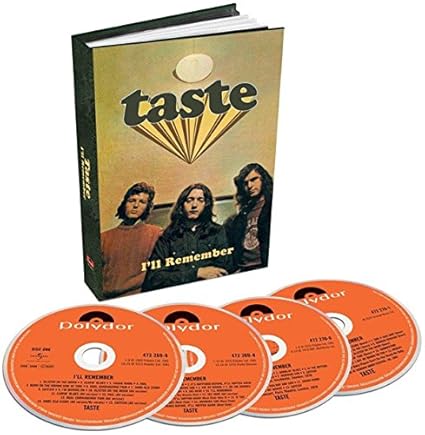
Image result for taste rory gallagher images


In the early 1990s, the most unlikely of events almost happened: a Taste reunion. “Rory and John Wilson got friendly again after John turned up for a few of Rory’s Belfast concerts. We were considering a Taste reunion being held in Belfast’s Titanic dry dock as part of the Northern Ireland peace process, but then Rory got sick. Anyway, by now we were all talking again and I explained to John and Richard that we had gone after Eddie for the Taste royalties. At around the same time, Polydor announced it was reissuing the Taste albums on CD and I pointed out to them that they did not own the digital rights. We sorted this out and an agreement regarding Taste was finally signed by all parties in 1999. Better late than never.”

Then, in 2000, Wilson and McCracken revived the Taste name (with Sam Davidson doing Gallagher’s guitar and vocals) and went out on the road. If the Gallaghers and the rhythm section had put their differences behind them in the 1990s, this ‘reunion’ again proved divisive.

“It upset me that Richard and John went out on the road again as Taste,” says Donal. “That was an abysmal decision and not in the spirit of the agreement. When I heard about it, I said to them, ‘Why don’t you go out as Stud?’” Donal shakes his head in quiet disbelief, then says, “The synergy of Taste was great. Rory loved playing with the band, the way Richard understood jazz really worked for him. But Taste without Rory… it’s not right.”

What Donal has done is get Taste right. The “I’ll Remember” box set and Live At The Isle Of Wight DVD (“I contacted director Murray Lerner and said, ‘I don’t want my descendants talking to your descendants so let’s get this done’”) capture one of the most remarkable bands of their era. They only existed for a few brief years but the music they created then touched many. And now, treated with the respect Taste deserve, it will continue to do so.

_“I’ll Remember” is out on August 28 via Universal. See http://www.rorygallagher.com for more information.

Image result for taste rory gallagher images

LESTER BANGS ON TASTE…world’s most famous rock hack was a huge Rory fan

Lester Bangs (1948-1982) was the greatest American rock critic ever to pick up a pen and the only one to be immortalised in a Hollywood film (by Philip Seymour Hoffman in Almost Famous). He was starting out as a freelance writer for Rolling Stone in 1970 when the magazine asked him to review On The Boards. The 21-year-old Bangs gave the album one of his most fulsome reviews ever, noting: “Taste is from the new wave of British blues bands, breaking through the slavish rote of their predecessors into a new form that can only be called progressive blues. In other words, they use black American music as the starting point from which to forge their own songforms and embark on subtle improvisational forays.

“From the first notes of What’s Going On, the tightness and precision of this band’s instrumentalists is evident – the bass always complements the lead perfectly, never resorting to Jack Bruce fidgetings. And the crackling power of the guitar solo is made doubly heady by Rory Gallagher’s unerring sense of restraint… But Taste is evolving into much more than just another heavy voltmeter trio, as It’s Happened Before, It’ll Happen Again makes clear. After two angular, uptempo vocal choruses – like scat singing with words added – Gallagher takes off on a long whirlwind of a solo flight, first on guitar and then alto sax, that is jazz and rock and neither precisely.

“You can hear distant echoes in his guitar solo of Gábor Szabó, Wes Montgomery and probably The Tony Williams Lifetime’s John McLaughlin, but Gallagher has digested his mentors, be they blues bards, jazzmen or The Rolling Stones. He is his own man all the way, even on sax, where his statements are doubly refreshing by their piercing clear tone and the coherence of the ideas – we have needed a rock saxist with the inspiration and facility to blow something besides garbled ‘free’ shit.

“It may seem unfair to concentrate almost exclusively on Gallagher, but the group is really his own vehicle in every way – besides playing lead guitar and sax and harmonica, he also sings lead and wrote all the songs. His voice is crisp and personal and blessedly free of strained mannerisms. Gallagher is no shouter when he doesn’t need to be – he treats his voice just like his other instruments, with an artist’s sense of ease and care for their delicacy…

“It seems a shame to even suggest that Taste be classed in any way with that great puddle of British blues bands. Everybody else is just woodshedding – Taste have arrived.”

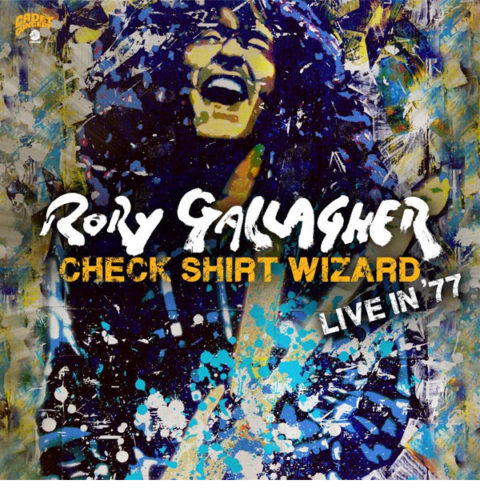
Previously unreleased live performances • Newly mixed, A new live set from the late Irish blues guitarist and songwriter Rory Gallagher is on the way in March. “Check Shirt Wizard: Live in ’77” is culled from four shows (London, Brighton, Sheffield and Newcastle) and features 20 previously unreleased live performances. 1977 was a great period for hearing Gallagher’s music on Radio 1, with 2 In Concert shows including a Sight ‘n’ Sound simulcast. Both were truly brilliant performances.

Rory Gallagher was on tour in support of his latest album “Calling Card” and the the performances feature live versions of tracks from that album as well as 1975’s “Against The Grain” and others. The original performances were recorded to multi-track tape allowing this release to be newly mixed and mastered at Abbey Road Studios.

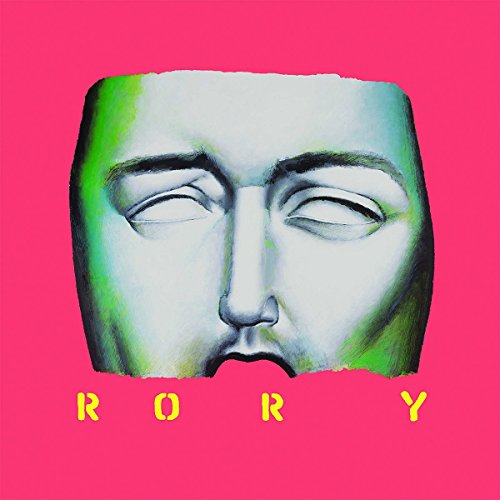
The distinctive cover painting used for the cover of Check Shirt Wizard is by a young Irish graffiti artist Vincent Zara who has stencilled Rory’s image across his home country. This is being released as a 2CD set or a well-priced triple vinyl package.

Check Shirt Wizard: Live in ’77 will be released on 6th March 2020.

Check Shirt Wizard - Live In '77 [VINYL]

Taste were an Irish rock and blues band formed in 1966. They were founded by songwriter and guitarist Rory Gallagher who left the band in 1970. Formed in Cork, Ireland, in August 1966 as a trio consisting of Rory Gallagher on guitars and vocals, Eric Kitteringham on bass, and Norman Damery on drums. In their early years Taste toured in Hamburg and Ireland before becoming regulars at Maritime Hotel, an R&B club in Belfast, Northern Ireland.

In 1968 Taste began performing in the UK where the original lineup split up. The new lineup formed with Richard McCracken on bass and John Wilson on drums.The new Taste moved permanently to London where they signed with the record label Polydor. In November 1968, the band, along with Yes, opened for Cream at Cream’s farewell concerts.

http://

Blister On The Moon / Dual Carriageway Pain / Norman Invasion / Born On The Wrong Side of Time (first broadcast 27 October 1968)
Same Old Story / Dual Carriageway Pain (First broadcast: 30 October 1968.
I’m Movin’ On / Sugar Mama / Leaving Blues / Wee Wee Baby (first broadcast 20 April 1969)
releases March 1, 2020

“Who’s that Coming?” — from Irish Tour ’74. Can anyone resist tapping their foot to this?

Irish Tour ’74 is such a good record, it’s the sound of a real live record, there’s nothing processed here. It’s a great example of the electric guitar player as band leader. All the band members are glued around him, the music isn’t being driven by the drums. His band are really really good, his bassist, Gerry McAvoy, is perfect. This is the sound of a band playing together every night, it’s powerful without being really loud and really distorted. He was a fan of The Byrds and Love and you can hear a couple of poppy hooks in there. He wasn’t musically blinkered. He saw merit in everything. It was liberating.”

Any time fans or critics are asked to pick the most influential and innovative guitarists in rock history, iconic names such as Eric Clapton and Queen’s Brian May invariably crop up. But if you asked those legends which guitar god they themselves respect the most, chances are they’ll cite Rory Gallagher.

Clapton once told the BBC that Gallagher should be credited with “getting me back into the blues”, while in the film What’s Going On: Taste At The Isle Of Wight, Brian May says, “I bought this little AC30 amp and Rangemaster Treble Booster, just like Rory’s set up, and plugged in my own home-made guitar with it. It gave me what I wanted, it made the guitar speak, so it was Rory that gave me my sound.”

May and Clapton are just two of numerous luminaries who have keenly expressed their admiration for the trailblazing Irish guitarist, bandleader and singer-songwriter. He died aged just 47, in 1995, but Rory Gallagher’s music continues to cast a long shadow over rock’n’roll, with fretboard wizards from successive generations.

With his entire solo catalogue about to be reissued on CD and vinyl, fans old and new have an ideal opportunity to re-evaluate Rory Gallagher’s illustrious body of work, yet the much-missed Cork man deserves respect on so many levels, for what he achieved was simply unprecedented.

The young, idealistic, blues-loving Gallagher broke that mould, with his work ethic, self-penned material and incendiary live shows building his band’s reputation from the Shandon Boat Club, in Cork, to London’s famous Marquee, and eventually brokering a deal with Polydor. This dedication led to hit albums such as On The Boards and prestigious shows with Cream at London’s Royal Albert Hall, and at the 1970 Isle Of Wight Festival alongside The WhoJimi HendrixThe Doors and Free.

That Rory Gallagher was the first credible Irish rock musician to make such things possible was acknowledged by Hot Press journalist Dermot Stokes in Marcus Connaughton’s biography, Rory Gallagher: His Life And Times.

“I think that the hugely important thing that Rory did early on in his career was to establish that an Irish band could form, play original material – could do it in Ireland first of all, then could take it to London, then Europe and around the world,” he said. “Taste first of all, then Rory, were the first bands to do that from this country. That’s the fundamental example that they set.”

Other elements of Gallagher’s DNA that set him apart from his contemporaries were his inherent professionalism, discipline and commitment to his craft: essential qualities he exuded throughout his entire career. Rarely happier than when he was on the road, Gallagher toured incessantly during the 70s and 80s, and his best work was often captured on timeless in-concert recordings such as Live In Europe and the live double-album and concert film Irish Tour ’74.

“The great instrumental soloists such as Rory, they were people whose skill I was just in awe of, and that was coupled with considerable musicianship every night,” Irish Tour ’74 director Tony Palmer told Marcus Connaughton. “I think I was the first person ever to film Jimi Hendrix and I’m often asked why. It was because I’d never heard anybody play the guitar like that before! That was why I wanted to make Irish Tour ’74, because Rory’s talent was for a long time underestimated, I felt. He was a wonderful musician and I also liked the fact there was absolutely no bulls__t about him and absolute tunnel vision – very professional, minded very much that we reflected that in the film.”

“He never got above himself,” Rory’s brother and manager Donal Gallagher said in a recent Irish Examiner article marking what would have been the guitarist’s 70th birthday, on 2nd March 2018. “He was very much the man in the street. He lived to be on stage. When he was off-stage, everything was about getting from A to B, getting to the stage or to write. That’s what he was about.”

Of course, with album sales numbering upward of 30 million copies, we should also remember Rory Gallagher’s recordings also yielded considerable commercial success. Yet, chart positions and the trappings of fame were never the driving force for this unassuming figure, whose high-octane live shows contrasted with his shy off-stage demeanour. One of rock’s master craftsmen, Gallagher really cared about his art. He was – and remains – a role model for aspiring young guitarists, and his body of work will inspire generations still to come.

The irreplaceable Irish blues-rock guitar virtuoso Rory Gallagher was a cruelly young 47 when he died after complications from a liver transplant on 14th June 1995.

Order the Rory Gallagher reissues . A limited edition box set of 300 copies, housing all 15 of the albums.

Remembering The Great Rory Gallagher

Legendary Irish guitarist Rory Gallagher died at the age of 47, as a result of a chest infection he picked up following a liver transplant. Gallagher sold over 30 million records and once auditioned for the Rolling Stones when Mick Taylor left the band in 1972.

The irreplaceable Irish blues-rock guitar virtuoso Rory Gallagher was a cruelly young 47 when he died after complications from a liver transplant on 14th June 1995. Rory Gallagher was born in Ballyshannon in County Donegal and raised in Cork. He began to whip up a storm with his guitar sorcery when he co-founded the trio Taste in 1966, when he was a mere 18. When they started to go international, a couple of years later, they won admiring glances from fans of Cream (for whose famed farewell Royal Albert Hall concert they opened) and Blind Faith, the short-lived supergroup on whose North American dates they also guested. Taste were celebrated with the release in August 2015 of the four-CD I’ll Remember box set.

I'll Remember

Taste only lasted until 1970 themselves, but by then they had played at that year’s Isle of Wight Festival and made two studio albums. The second, On The Boards, was a top 20 success in the UK, and when Gallagher swiftly started recording in his own name under a new solo deal with Atlantic Records, he made the top 40 with his self-titled debut and a swift follow-up, Deuce, both in 1971.

They were the first in a long line of releases to win either silver or gold certification, and it’s appropriate that the sole Gallagher album to make the UK top ten was one on which his celebrated, his blistering style as a live performer was commemorated, on 1972’s Live In Europe. That also enjoyed by far his longest chart run, at 15 weeks. The next year, Blueprint gave Rory his initial US album chart appearance.

Never one to court fame for its own sake, Gallagher continued to enhance his awesome reputation with his prolific recording and touring for the rest of his life. His last studio album, his 11th, was 1990’s Fresh Evidence. He had plans to tour the record, release an EP and more besides, at the time of his death.

But it was always all about the music for Rory Gallagher. “Regardless of fashions there are still blues and rockabilly fans,” he told Chris Welch in Metal Hammer in one of his last interviews. “Certainly for a while, the press overlooked rootsy music [which] they thought was old fashioned and irrelevant.

“But what I’m trying to do,” he continued, “is create music that respects the roots, but is based on new material as opposed to just me doing old blues, acid rock standards all the time. That’s the key really, to update the music itself by hitting it on the head, and coming up with new chord changes and tunes.”

In the later years of his life Gallagher developed a phobia of flying. To overcome this he received a prescription for a powerful sedative. This medication, combined with his alcohol use resulted in severe liver damage. Despite this he continued touring. By the time of his final performance on 10th January 1995 in the Netherlands, he was visibly ill and the tour had to be cancelled. Gallagher was admitted to King’s College Hospital in London in March 1995, and it was only then that the extent of his ill-health became apparent: his liver was failing and the doctors determined that in spite of his young age a liver transplant was the only possible course of action. After 13 weeks in intensive care, while waiting to be transferred to a convalescent home, his health suddenly worsened when he contracted a staphylococcal (MRSA) infection, and he died on 14th June 1995, at the age of 47.

Having acquired the rights to Rory Gallagher‘s solo catalogue last year, Universal Music will reissue remastered versions of every album on CD and vinyl LP next month.
The influential Irish guitarist and singer-songwriter formed Taste in 1966, and after the band broke up at the end of that decade Gallagher would concentrate on his solo career, releasing his eponymous debut in 1971.

This is a massive reissue campaign with all the studio albums, the live releases and posthumous releases (like Notes From San Francisco and Wheels Within Wheels) reissued. Everything is available on CD and 180g vinyl, with the exception of BBC Sessions which is two-CD only (the Wheels Within Wheels vinyl pre-order is ‘coming soon’).

After releasing two critically acclaimed albums with his first band, Taste, and playing the Isle of Wight in 1970, Rory left the band to pursue a solo career. His eponymous debut solo album was released in 23rd May 1971. Gallagher auditioned some of the best musicians available at the time including Noel Redding and Mitch Mitchell the bassist and drummer for the Jimi Hendrix Experience. He decided on two Belfast musicians; drummer Wilgar Campbell, and bass guitarist Gerry McAvoy to be the core of his new power trio band. The album was recorded at Advision Studios. Standout tracks include “Laundromat”, “I Fall Apart” and “Sinner Boy”. On this album, as well as an on many albums to come, he’s accompanied by Gerry McAvoy (bass) and Wilgar Campbell (drums). Supported by these two, Gallagher invites the audience on a ride through his heart and soul, and it’s a enjoyable ride indeed. Right off the bat the album starts out great, with the fast and catchy riff on „Laundromat“ being one of the most memorable ones on the entire album, and Rory delivering as a vocal performer as well. „Laundromat“ gives the listener a very good outlook at the way Gallagher plays guitar.

Like his more famous peers Clapton and Page, he obviously drew heavy influence from black blues guitarists like Chuck Berry and B.B. King. And while he’s an outstanding technician on the guitar, his playstyle does not focus on crisp and clean play (unlike let’s say progressive rock ala David Gilmour or Steve Hackett), but instead it’s rather impulsive and heartfelt, which is a perfect fit, because bluesrock is all about delivering personal emotions. On his debut, Gallagher manages to do just that, through his often times wild, very emotive guitar playing. In more than one instance (“Sinner boy“ and “Can’t believe it’s You“ come to mind) you get the impression that Gallagher is just going crazy on his stratocaster without any restrain what so ever, but it always works.

This 2012 remaster used the original vinyl artwork and 1/4″ master tapes so that they look and sound exactly as Rory intended.

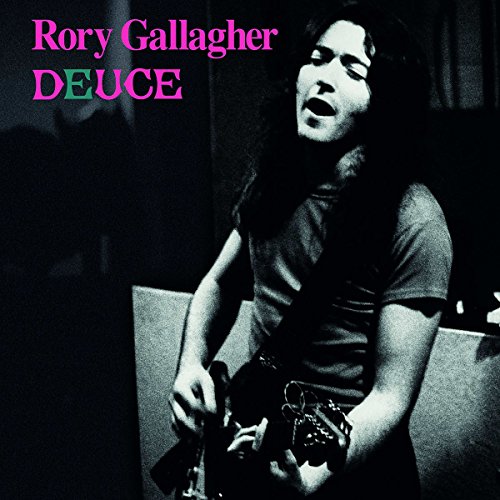
“Deuce” would make it Rory’s third fully self-penned album in a row, having written all of Taste’s second album “On The Boards” as well as the debut solo album “Rory Gallagher”. “Deuce” was released 28th November 1971 and recorded at Tangerine Studios in Dalston, East London, which had been built by the legendary British record producer Joe Meek. In contrast with his previous album, Rory Gallagher, where Gallagher tried for a precise, organised sound, Deuce was his first of many attempts to capture the energy of a live performance in the studio.

Gallagher’s sophomore album was released a short six months after his self-titled debut but shows an incredible amount of artistic growth and maturity. Featuring eleven original songs, with Deuce Gallagher wrote the blueprint that he would follow through much of the rest of the decade, mixing up rambunctious, guitar-driven blues-rock with scraps of acoustic country blues, intricate roots-rock, and heartfelt R&B. His guitar tone and phrasing is excellent throughout, and his songwriting skills were developing at an amazing pace.

While Deuce placed only one song – the rowdy “Crest Of A Wave” – into Gallagher’s canon, there’s literally not a bad track on the album.

“Live! In Europe” was Rory’s first official live album, and was recorded throughout Europe during February and March 1972. Released 14th May 1972. The album was Rory’s first major commercial success and provided his first solo top ten album. In the same year of 1972 he was Melody Maker’s Guitarist/Musician of the Year, winning out over Eric Clapton and Jimmy Page. “Live! In Europe” has served as a massive influence on budding musicians. U2’s Adam Clayton and The Edge both cite the album as the recording that made them want to pick up the guitar and play in a rock’n’roll band.

Released a mere year into the Irish blues guitarist’s fledgling solo career, Live! In Europe captures a young stallion prancing and preening across the stage, getting his legs beneath him and developing his dynamic live show on which a large part of his reputation is based. Long on interpretations of traditional and standard blues songs like “Messin’ With The Kid” and “Hoodoo Man,” and short on original material, Live! In Europe captures the reckless energy and youthful enthusiasm of the guitarist at the first stages of a career that would stretch across three decades.

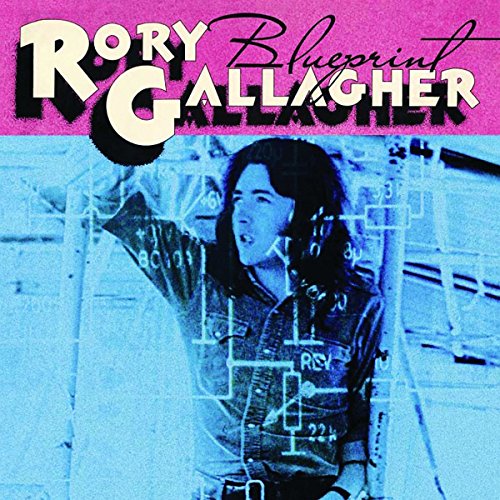
After six years working as a trio (guitar, bass, drums), Rory embellished his sound by adding keyboards into the band. The line-up of Rory Gallagher (vocals, guitars), Gerry McAvoy (bass), Lou Martin (keyboards) and Rod De’Ath (drums, percussion), remained together from 1973-78, and would record five albums. “Blueprint was the first”.

Gallagher’s pair of 1973 album releases would showcase the guitarist at the top of his form, and yielded a number of songs that would become fan favorites, performed by Gallagher for the next decade.

Blueprint was the first of the pair, and if it’s often overlooked in favor of the admittedly superior Tattoo, it’s a solid collection of material nonetheless, highlights including the raver “Walk On Hot Coals,” the sultry “Daughter Of The Everglades,” and the extended jam that was “Seventh Son Of The Seventh Son.” A lively cover of Big Bill Broonzy’s “Banker’s Blues” is another good ‘un, showcasing Gallagher’s acoustic blues skills.

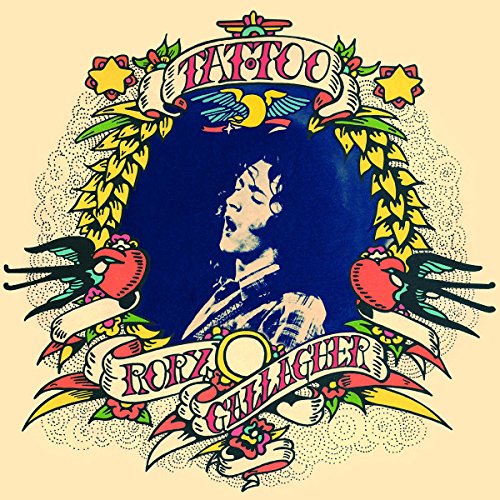
Tattoo is the forth studio album released by Rory Gallagher. It was released on 11th November 1973 and was recorded at Polydor Records studio. It demonstrated Gallagher’s eclectic range of musical influences starting with the blues and adding elements from jazz, folk, and country. Signature tracks include “Tattoo’d Lady”, “Cradle Rock” and “A Million Miles Away.

Tattoo represented an amazing accomplishment, as Gallagher found the inspiration to pen nine new tunes while touring heavily in support of his Blueprint album, released mere months earlier. The muse was obviously hitting the guitarist hard, as Tattoo includes some of the best, and most popular songs of the artist’s lengthy and prolific career, songs like “Tattoo’d Lady,” “A Million Miles Away,” and “Cradle Rock” staples of Gallagher live show for years, while tunes like the Delta-inspired folk-blues of “20/20 Vision” or the Chicago blues-styled “Who’s That Coming,” with some tasty slide guitar, display the other side of the guitarist’s musical ambition.

“Considered by blues rock guitarist, Joe Bonamassa, to be one of the most influential live albums of all time, “Irish Tour ’74” was recorded at Belfast Ulster Hall, Dublin Carlton Cinema and Cork City Hall during the height of ‘The Troubles’. Released 21st July 1974. Irish Tour ’74 has sold in excess of two million copies worldwide. Classic Rock Magazine hailed it as “easily among the best 10 live albums in the history of rock.” This 2012 remaster used the original vinyl artwork and 1/4″ tapes so that they look and sound exactly as Rory intended. The reissue CD liner notes capture the excitement of the Belfast concert; “Two thousand people were overjoyed as Gallagher – a native of Cork, Southern Ireland – took to the Ulster Hall just 24 hours after the city had witnessed its biggest bomb blast during a night of at least 10 explosions.”

Two years after the release of Live! In Europe, Gallagher returned home to Ireland for a series of nine shows that showcased a confident, seasoned veteran guitarist with a handful of studio recordings under his belt and an expanded musical palette that he applied to a larger catalog of songs. Irish Tour 1974 features musical highlights of the tour and serves as a companion to the documentary film of the same name shot by director Tony Palmer. The album offers an inspired mix of original songs like “Tattoo’d Lady,” “Walk On Hot Coals,” and “A Million Miles Away” as well as choice covers .

JB Hutto’s “Too Much Alcohol” and Muddy Waters’ “I Wonder Who,” standing as one of the best live blues-rock recordings of the era.

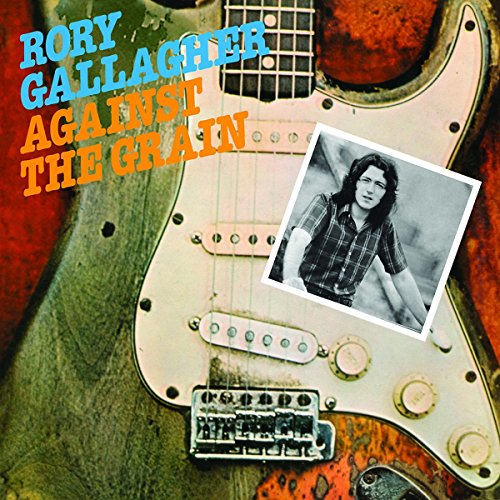
Against the Grain is the seventh album by Irish musician Rory Gallagher, Released 1st October 1975 and recorded at Wessex Studios, London. The album is mostly new songs written by Gallagher as well as some classic blues and R&B numbers. This 2012 remaster used the original vinyl artwork and 1/4″ master tapes so that they look and sound exactly as Rory intended. The reissue features original release album review written by Cameron Crowe for Rolling Stone.

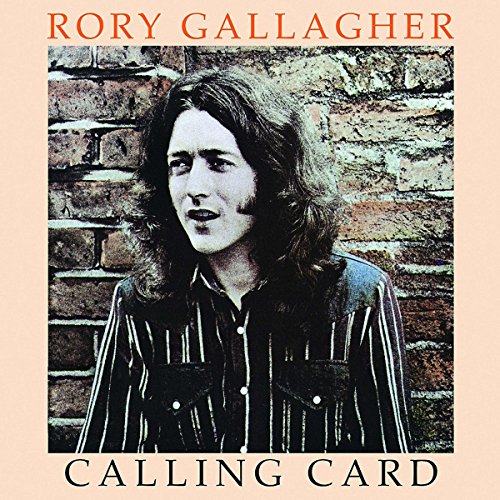
Calling Card is the eighth album by Irish singer/guitarist Rory Gallagher, Released on 24th October 1976 and recorded at Musicland Studios, Munich. Deep Purple/Rainbow bass guitarist Roger Glover co-produced with Gallagher: it was the first time that Gallagher worked with a “name” producer. This 2012 remaster used the original vinyl artwork and 1/4″ master tapes so that they look and sound exactly as Rory intended.

Produced with a steady hand by former Deep Purple bassist Roger Glover, Gallagher’s Calling Card found the guitarist stretching his sound out a bit beyond the confines of blues-rock to include soul, jazz, and even pop in what would prove to be one of his strongest sets of original material. While hook-laden rockers like “Country Mile” and the title track would become fan favorites on the live stage, melodic tracks like “Edged In Blue” and “I’ll Admit You’re Gone” display a different dimension to Gallagher’s talents.

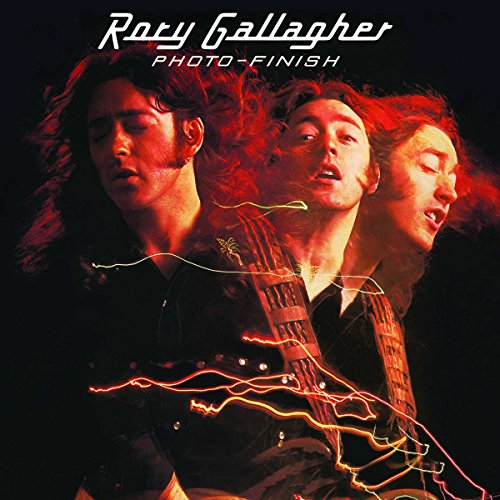
Photo-Finish is the ninth album by Irish musician Rory Gallagher, released 1st October 1978 and recorded at Dierks Studios, Cologne, Germany. Some of the songs on Photo-Finish were initially recorded on what was to be an earlier album in San Francisco but Gallagher was unhappy with the recordings. He fired the drummer and keyboardist from the current band and replaced only the drummer changing the band to a power trio as his original bands had been. The reissue features original release album review written by Cameron Crowe for Rolling Stone.

After the disastrous 1977 sessions that would (much) later result in the long-lost Notes From San Francisco album, Gallagher broke up his band of five years. Stripping down to a power trio, retaining only bassist Gerry McAvoy and adding drummer Ted McKenna, Gallagher re-recorded a handful of songs from the previous session for Photo-Finish, adding a few new tunes and pursuing a harder-edged blues-rock sound. While not the best album in the Gallagher milieu, Photo-Finish still includes hard-hitting fan favorites like “Shinkicker,” “Mississippi Sheiks,” and “Last Of The Independents” as well as overlooked gems like the twangy “Juke Box Annie.”

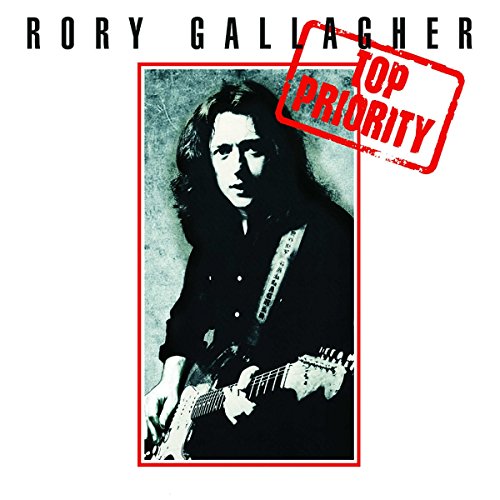
Top Priority is Rory Gallagher’s tenth album. This was released on 16th September 1979 and recorded at Dierks Studios, Cologne, Germany. Like the previous album Photo-Finish, Top Priority is a return to hard rock. The acoustic and folk influences that were seen on albums such as Calling Card are replaced by more straight ahead powerful blues rock like fan favourites such as ‘Bad Penny’, ‘Philby’ and album opener ‘Follow Me’.

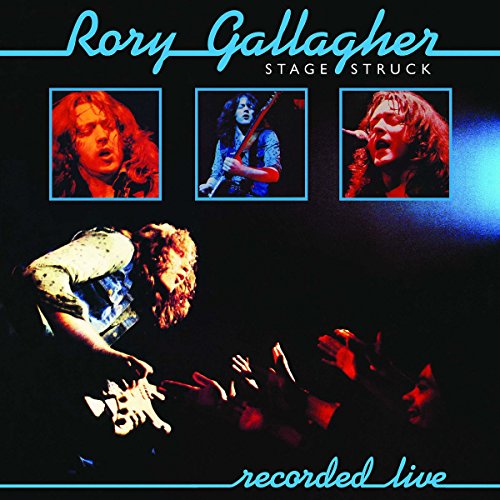
Stage Struck is the eleventh album and the third live album by Irish singer/guitarist Rory Gallagher. Recorded between November 1979–July 1980 and Released 2nd November 1980. The album documents Gallagher’s world tour in support of his 1979 album Top Priority. Accordingly, it features many songs from that album as well as hard-driving, almost metal, rock versions of songs from his ‘Calling Card’ and ‘Photo Finish albums, Glenn Tipton from Judas Priest “I was just stunned by his use of an old battered Stratocaster, a Vox AC-30 [amp], and a Rangemaster treble booster. The guitar had so much energy that I think he’s the guy, really, that made me pick up the guitar.” This 2012 remaster used the original vinyl artwork and 1/4″ tapes so that they look and sound exactly as Rory intended.

Culled from Gallagher’s 1979/1980 world tour, a tired song selection isn’t helped any by the guitarist’s lackluster performances. Lacking the immediacy and playfulness of the live set captured by Notes From San Francisco, Stage Struck displays little of Gallagher’s natural onstage charisma and energy. After a decade of constant touring, however, and the writing and recording of nine studio albums in as many years, it could be that the man was just dog tired rather than inspired.

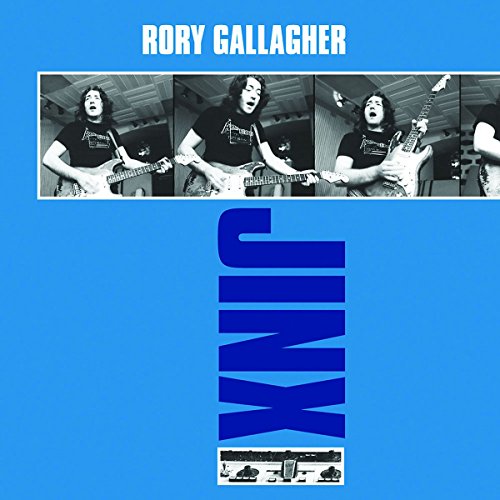
Jinx is the twelfth album and the ninth studio album by the Irish musician Rory Gallagher and was originally released in 1982. The reissue boasts a review of the album originally published in Melody Maker.

There isn’t a weak track on Jinx and at its best, it’s superb. In particular ‘Big Guns’, working off a stop-start riff which is within a stone’s throw of Clash territory, zaps you straight between the eyes.

In a direct line from ‘Philby’, though without the latter’s resonances on the question of identity, the song finds Rory working out his passion for crime thrillers. “It’s a long way from the pool hall/to the rackets and the petty crime/thought you were a tough one/but you’ve bitten off too much this time,” he admonishes before sketching in the dramatic detail, over a pumping rhythm that palpably delivers the sense of urgency laced with terror felt by the song’s hapless protagonist, his back against the wall: “Now you’re runnin’ scared/got no place to run/Caught between the law and the/Big Guns!”

Short, sharp and devastating, like a friendly visit from your local hit squad, ‘Big Guns’ leaves you in no fit condition to assess the damages inflicted by Gallagher’s magnum sharp-shooting and the merciless backup work of Gerry McAvoy on double-barrel shotgun and Brendan O’Neill on Armalite.

If ‘Big Gun’ is about trying to stay one step ahead of an inevitably bloody come-uppance, that same sense of Nemesis is internalised on ‘Bourbon’. In fact much of Gallagher’s material from ‘Goin’ To My Hometown’ to ‘Philby’ is concerned with transit and the feeling – more or less real in different instances but too often a sad illusion – of freedom it conveys. There’s no two ways about its implication in this account of the ravages suffered by a fading rock’n’roller, as he watches the arc of his optimism fall into impossible decline: “Drinkin’ down the bourbon like it was soda pop/trying to kill a feeling he knows will never stop/Head held high but his heart is on his knees…”

These highlights are closely followed by ‘Signals’, with its enticing melodic colourings and interesting guitar textures, shadings of the Edge-country in there somewhere; ‘Easy Come, Easy Go’, a slow minor blues on which Gallagher opts for a fat, mellow, lyrical tone similar to Peter Green’s on early Fleetwood Mac material and evokes a warm, still, healing sense of reassurance and calm in the face of a troubled world; ‘Jinx’ with its voodoo rhythms and mournful harp; ‘Double vision’, highlighted by a fat and succulent slide part; ‘The Devil Made Me Do it’, a frantic and humorous variation on the ‘Too Much Alcohol’ theme: “What did I do that was so bad/To go and get myself arrested/just in town to have some fun/and I end up in the trash can”, ‘Ride On Red, Ride On’, the one non-Gallagher original and a paean to the swashbuckling character of the rock’n’roader; and ‘Loose Talk’, another song of re-assurance and fortitude in which the Gallagher ethos is most aptly summed up: rejecting the lure to play the game the uptown way, he offers the consoling advice: “Play the game the way your heat says/Keep on pushin’, you’ll get there yet”.

It’s a mark of Gallagher’s authenticity that he has always played the game the way his heart says. And if that has led him into a narrow interpretation of his own sense of integrity, sometimes to the detriment of his career potential, then so be it. The net result is that there isn’t the remotest taint of pose or slumming it when he delivers an album of raw blood ‘n’ guts rock ’n’ roll ’n’ rhythm ’n’ blues like Jinx.

This is just one mark of its strength within the chosen Gallagher framework. Indeed a measure of its quality-count in the context of his fifteen-odd years’ worth of album-recording is the fact that there is very little on Jinx which will not amount to a real addiction to the Gallagher live canon.

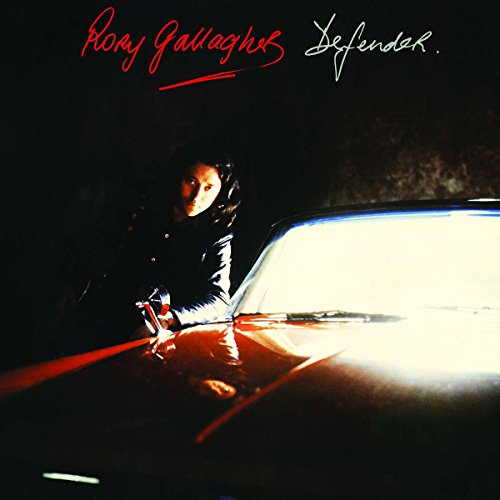
Defender is the thirteenth album and the tenth studio album by Irish musician Rory Gallagher. It was originally released on 1st July 1987 and was recorded at The Point, Olympic, West Three, Music Works and Redan Studios. Rory said of the album “The tone and mood of the new album is blues and angry, but there’s a couple of rockers, and a couple that don’t fit any category; but it is really a modern blues album.”

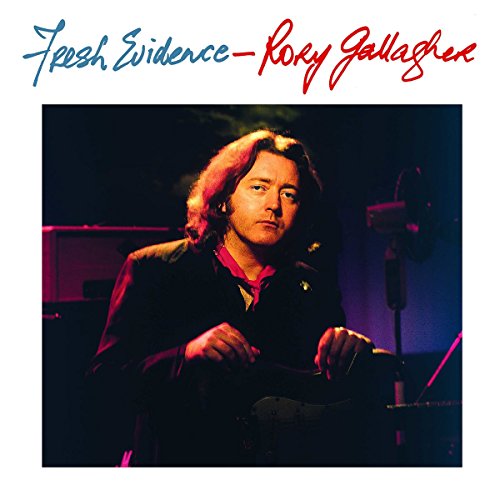
Fresh Evidence is Rory Gallagher’s eleventh and last studio album, his fourteenth album overall. The album was originally released on 1st May 1990 and was recorded at Maison Rouge, Redan Recorders, Music Station and Audio One. This 2012 remaster used the original vinyl artwork and 1/4″ tapes so that they look and sound exactly as Rory intended. “Perhaps the most important achievement of “Fresh Evidence” is in re-establishing Rory as something more than an electric guitar virtuoso. Here is the proof that the man is a master, someone with a supreme feel for the instrument and the song, whatever its mood”.

Gallagher’s last studio album is a mixed bag of blues styles and performances, the guitarist trying his hand at interpretations of zydeco, Chicago, and Delta blues, and jazz along with his typical dirty blues and British-styled blues-rock.

While not a bad album by any means – Fresh Evidence includes several inspired performances, including a cover of Delta blues legend Son House’s “Empire State Express” – it nonetheless doesn’t meet the lofty standards established by Gallagher during his incredible string of solid 1970s-era albums.

Wheels Within Wheels is a posthumous folk and blues acoustic album by Rory Gallagher. Featuring a range of acoustic styles including flamenco, skiffle and traditional Irish music, the album was compiled from lost recordings and outtakes by Gallagher’s brother. A number of notable musicians appeared on the album such as Bert Jansch, Martin Carthy, The Dubliners and Lonnie Donegan. The songs were recorded in various locations all over the world between 1974 and 1994. The album cover was painted by renowned artist David Oxtoby.

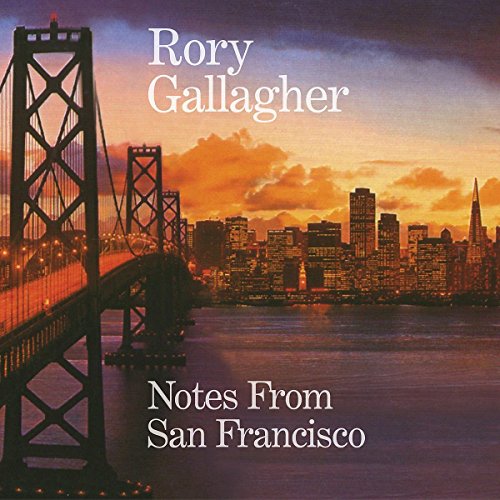
In November 1977, after completing a 6 month world tour, Rory Gallagher and his band flew straight from their last show in Japan to San Francisco to begin working on a new album, with famed American producer Elliot Mazer (Neil Young – ‘Harvest’, Janis Joplin – ‘Cheap Thrills’, The Band – ‘The Last Waltz’). Mazer recalls that the sessions grew “tense”, as Gallagher wasn’t happy with the mixing process, describing them as “too complicated”, and by the end of January 1978 he shelved the whole record and broke up his band of the past 5 years. This lost album from 1977 was remixed and mastered in 2010 by Rory’s nephew who added a live album from 1978 at San Francisco’s The Old Waldorf, highlighting the sound Rory had been looking for. LP version will not feature the live content, this will only be for the CD.

This long-anticipated “lost” album, recorded by Gallagher and his four-piece band in San Francisco in 1977, was finally released in 2011 and proved to be well worth the wait. Featuring nine original songs, some of which would be re-recorded a year later for Photo-Finish, as well as a couple of “bonus tracks,” Notes From San Francisco shows the artist straining at the confines of the blues-rock form and trying to expand his sound. The two-disc set includes a rock solid live performance from 1979 that puts the album  Stage Struck to shame.

These are straight album reissues, so no bonus tracks, but Universal “will be working closely with the Rory Gallagher estate on new physical and streaming products.”

All of the reissues will be released on 16th March 2018.

I can’t imagine one single person without a happy face when leaving the hall after being at this show. Even so, this recording has one big problem: it is too short!
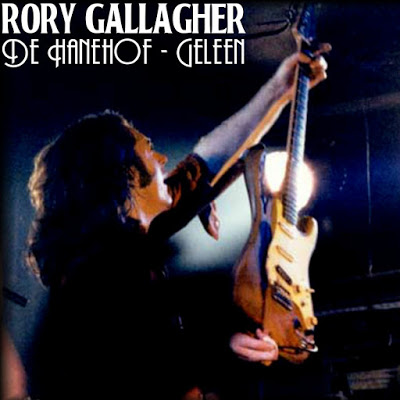
So, here’s about 51 minutes of Rory Gallagher at De Hanenhof, Geleen, Holland on the 12th of November 1987 and beware, this is the kind of show that turns you addicted to Rory’s music!

Rory Gallagher -Live set from De Hanehof, Geleen, Holland 12th November 1987

Setlist:

1 Walkin Blues 2 Pistol Slapper Blues 3 Messin With The Kid 4 Out On The Western Plain 5 Don’t Start Me Talkin 6 When My Baby She Left Me 7 Bullfrog Blues 8 All Around Man 9 Nadine

The Band:

Rory Gallagher – Guitars, Vocals
Gerry McAvoy – Bass
Brendan O’Neil – Drums
Mark Feltham – harmonica

Rory Gallagher.PNG

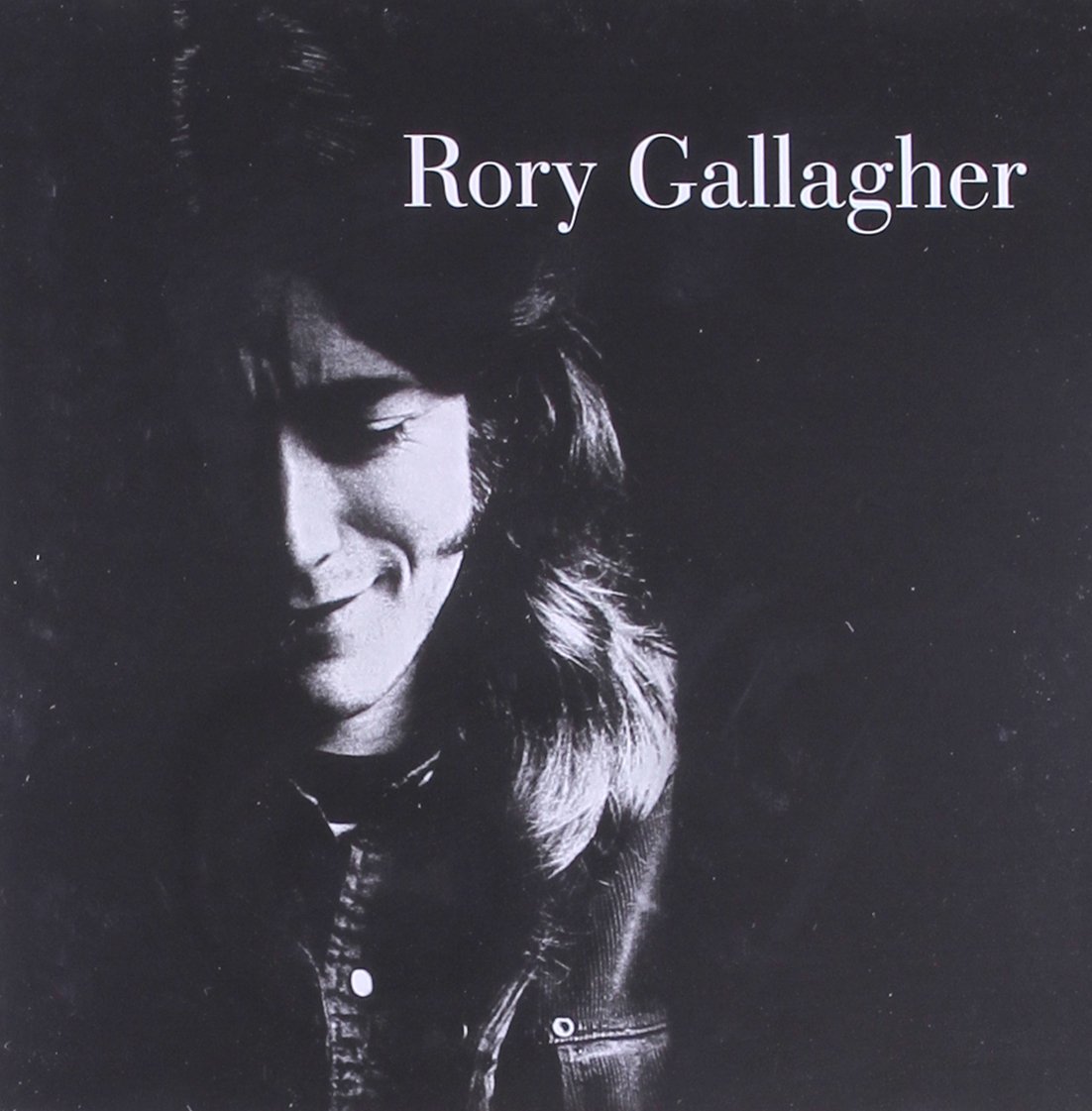
Rory Gallagher is the first solo album by Irish blues rock musician Rory Gallagher, released in 1971. It marked his departure from his previous band Taste. After disbanding Taste, Gallagher auditioned some of the best musicians available at the time including Noel Redding and Mitch Mitchell the bassist and drummer for the Jimi Hendrix Experience. He decided on two Belfast musicians; drummer Wilgar Campbell, and bass guitarist Gerry McAvoy to be the core of his new power trio band.

After practicing with Jimi Hendrix’s band Noel Redding, Mitch Mitchell and Belfast musicians Gerry McAvoy and Wilgar Campbell at a practice room in Fulham Road, the newly formed band with McAvoy and Campbell got underway with recording in Advision Studios.

With his first solo album Gallagher continued in the eclectic style that had exemplified his first band Taste. This album entered the UK album charts at number 32, an excellent beginning for a solo career. It contains 10 tracks, all of which are Rory compositions and clearly show the continued blues rock direction that he began with Taste. A trademark of Rory’s music is his inclusion into the fusion, jazz and folk instruments like alto sax and mandolin. “I’m Not Surprised” stands out on this album with it’s mellow “unplugged” feel and loosely based Blues structure.


The album begins with “Laundromat” which was to become a regular number in his live set. A blues rock song with a classic Gallagher riff, the song was inspired by the public laundromat located in the basement of his flat where he lived at the time in Earls Court. The next song, “Just the Smile”, is an acoustic number that was inspired by the British folk revival. It shows the influence of some of Gallagher’s favorite English folk musicians such as Richard Thompson, Davy Graham, and Bert Jansch. (Gallagher would later go on to record with Jansch.) “I Fall Apart” has a jazz feel to it and features a guitar solo that starts slow and introspective and builds to a powerful climax. The next two songs, “Hands Up” and “Sinner Boy”, were again blues rock and would also become standard numbers for his live show. “Wave Myself Goodbye” is another acoustic number, a talking blues song featuring New Orleans style piano provided by Vincent Crane from the band Atomic Rooster (Rory’s brother Donal had been acting as tour manager for them). Gallagher plays the saxophone in the next song, a jazz number called “Can’t Believe It’s True”. Also recorded at the time were two blues classics, Muddy Waters’ “Gypsy Woman” and “It Takes Time” by Chicago blues legend Otis Rush.

Rory Gallagher – ‘Rory Gallagher’ 180g vinyl LP remastered reissue. Originally released on the 23rd May 1971 This reissue LP is released on Friday 2nd March 2018.

Tracklisting

A1. Laundromat
A2. Just The Smile
A3. I Fall Apart
A4. Wave Myself Goodbye
A5. Hands Up
B1. Sinner Boy
B2. For the Last Time
B3. It’s You
B4. I’m Not Surprised
B5. Can’t Believe It’s True

rory brum ticket


Image may contain: one or more people

On July 8th, 1972, Melody Maker’s Mark Plummer joined Rory Gallagher on the road in Kent and London. As this classic feature shows, Rory Gallagher’s reputation as a perfect bar buddy was well-deserved. Rory Gallagher changes out of his striped T-shirt, folds it neatly and places it in his zipper case, exchanging it for an equally familiar lumberjack shirt.

Two seats away, his drummer Rod de’Ath looks embarrassed, ducking behind a couple of  guitar cases as he changes from one pair of leather-patched Levi’s into another sweaty pair of jeans. His skinny arms are covered in an orange T-shirt and they look like they’re never going to be able to keep the beat going during tonight’s show.

Two hours earlier, Rory had been sitting in the same Maidstone technical college dressing room re-stringing his Fender guitar from a pile of crumpled guitar string packets, while the guitarist from one of the support bands had sat tuning and gently playing to himself through a small practice amp.

Now that same guitarist offers Rory the use of the amp, as he stands up against tile wall tuning his battered old Fender and blowing in a harp. Rory declines, with thanks, explaining that he’s been doing it that way since he came to Britain from Ireland a few years back to launch Taste, and he’s not going to change his ways now. It’s the same old Rory. Affable, easy-going, the one rock’n’roller in Britain with a right to be called the people’s guitarist.

In a nearby pub, people are tucking away pints while the little support band blows away. Many make their way over to Rory, offer him the customary pint of Guinness, perhaps ask him to play one of their favourite numbers. Some hand him scruffy pieces of paper for his autograph.

Back in the dressing room, Rory is ready to go on; guitars in tune, Gerry McAvoy slicked up in green trews, t-shirt and patch leather waistcoat, his bass slung over his shoulder with an old leather belt. A great cheer breaks the air as Gerry and Rod dart through the doors and scramble their way through the packed hall towards the makeshift stage. Rory follows on behind, gets up on stage, quickly retunes to make up for the intense heat that has altered pitching, and lurches into Used To Be.

Rory Gallagher and his band work hard on an audience, playing blues in the tradition of the music as entertainment rather than an art form. Rory is not much interested in being flash and showy, but just in laying it down the line and turning people on; playing his Fender guitar to the best of his ability. His stage strength is that he knows he can play as well as the best, and the people know it too. They don’t go along to watch the speed he plays the notes, and they certainly don’t go along to see him because of his stage gear.

“This is a working band,” says Rory. You just know exactly what he means, watching him standing on stage, sweating and playing, hardly taking a break from song to song unless it is to get the guitar back into tune as the heat stretches the strings.

The showstopper in the act is definitely the mandolin stomper “Going To My Home Town”, a number which is stabbed home by Gerry and Rod beating one hell of a rhythm. But although Polydor in Germany have asked him to release it as a single, he is adamant and won’t do it.

Later in the car on the way home, he explained that although a hit single would bring him a whole new audience, having to compete to get into the singles charts with all the other three-minute ditties is not really his scene. Anyway, he doesn’t need a hit single to make him more popular, for he and promoters know that Rory is always going to sell out a hall by pure hard graft.

The following night in one of the bars in the beer-orientated entertainment complex at Dagenham’s Village Roundhouse, Rory stands at the bar explaining what he means by port wine to the barmaid while he signs autographs and declines numerous pints of Guinness.

Gallagher’s music is mostly blues-based but, he says, “I’ve never pigeon-holed myself into blues. I don’t consider all my material is blues. Let’s say I’m a blend of blues, rock and folk music. The blues has its influence on me: some nights I’ll feel more of a jazz thing. For the last few months I’ve been into blues. Blues is simple music but complex soul-wise. I like a lot of the old rock’n’roll things, but while Cochran is simple, it doesn’t have that same complexity in the feeling.

“I’ve done things that might get me classified as a folk singer. It doesn’t really worry me what I’m playing, it’s just the emotional hold the blues has. Then I can get the same thing off a white folk singer like Jack Elliott.”

What about the set structures of the blues. Maybe he found limitations in the music?

“Occasionally, if I happen to be listening to something that uses orchestras, it’s only very occasionally I get that feeling, but there would be something wrong with me if trying something with an orchestra had never occurred to me,” he says. “I used to listen to people like Fats Domino and people with small groups; occasionally they came up with things with orchestras for the commercial market. At the time I resented them doing it. I think it was The Beatles who were the first people to do things that I enjoyed with strings.

“I wouldn’t mind experimenting with things like that on the next album, perhaps some brass or strings.”

It’s been said that Rory picked Gerry and drummer Rod de’Ath, because they were not that good as musicians, so Rory’s own talent would shine through. But after watching them on numerous occasions it obvious they both compliment Rory’s playing perfectly. But how much, say, do they have in the band’s musical policy, and how replaceable are they to him?

“They’re definitely indispensable,” he says. “They’re very important. How can I confirm that? Just listen to the way they affect my playing. I don’t play acoustic guitar on my own throughout the set so the musicians affect on me. If they’re enjoying themselves I can feel it. People are always saying to me that I could have any sidemen, but Buddy Holly needed the Crickets more than anybody.  Gallagher is probably of the few artists in Britain at the top of the pile who continues working all the time, going back to the little Village Roundhouse rather than concentrating on concert halls.

He says he wouldn’t be satisfied with just playing a few concerts every so often or doing two British tours a year. His music needs smoky rooms and poky little dressing rooms to get over that working man’s feel that is so important.

“Sometimes I feel like taking a break for a while, maybe just stopping and taking it easy for a couple of months. Sometimes l feel like I just have to stay in bed the next day, but I think in my whole career there have only been a couple of gigs I haven’t turned up for.

“I just like working a lot. Obviously you can’t always keep going like a machine. But the thing is, if you’re sitting at home you pick up an acoustic guitar, if you pick up an electric one it doesn’t mean anything without musicians and people around you.

“Some people seem to think I work 365 days a year, I suppose,” he continues. ‘”Come to think of it, I do work a lot more than some of the other artists in the charts. Perhaps working so much helps to sell my albums. If I wasn’t working and I’m not making singles to keep my name around. I wouldn’t be selling so much.”

Always chewing the fat with people about anything that they happen to want to talk about, it’s rare to pin Gallagher down and get him talking about himself. He’s aware of his image of being a friendly sort of fellow who usually dresses kind of rough.

“I suppose that’s a big obsession with people,” he says. “I wouldn’t really enjoy doing a gig if I was rushed from the car straight into the dressing room. I don’t think it hurts your image to sit at the bar and have a drink. Some people would say that it makes you more of a human.

“Mostly people come up and shake your hand and ask you if you would play a song for them. It means you have an idea of how people are reacting to certain songs. If you hear how things are going down first hand it’s better than having a manager telling you how you’re going to go down in Dagenham.”

Back in the dressing room, gig over, Rory, Gerry and especially Rod look completely wasted. Outside in the hall the last of the people are slowly going home, talking about the set. They’re dripping with sweat, too, from dancing and clapping. They know every word, every chord, right to the way he phrases it. Rory notices that too, little batches of people standing by the stage singing every word with him, and then throwing themselves completely when he changes the way he sings a word.

Tonight it’s hot, even hotter than the night before. Rod sits in the corner saying that he’s certain he’s lost two stone, wringing his T-shirt until the sweat drips off it onto the floor. The tap doesn’t work and everybody could do with a good wash down. Never mind, the next night they’re off again and playing in France.