Posts Tagged ‘Robert Smith’

Image result for robert smith

Cure frontman Robert Smith turned 60 years old (April 21st) fans have been sending their best wishes to Smith as well as sharing photographs of Smith through the ages.

One fan said “Happy 60th Birthday…without your music I’d be lost.” Another said “Happy 60th birthday to this legend” before sharing pictures of Smith at gigs she’d been to from The Cure’s beginnings to the current day. So we thought I would check out some of their best videos.

It all began in 1976, when schoolmates Robert Smith, Michael Dempsey, Lol Tolhurst and Porl Thompson formed Easy Cure in Crawley, West Sussex. By 1978, both “Easy” and Thompson were dropped from the band, and The Cure signed to Fiction Records, releasing their debut album, “Three Imaginary Boys”, in May 1979. It was the start of a career both musically and visually mysterious, and Cure videos combined both to unforgettable effect.

‘A Forest’ (1980)

The band’s first promo video, ‘A Forest’ sees a very different Robert Smith to the one most fans picture when they think of Cure videos. The Cure were allegedly very anti-image to begin with, until the day Robert Smith daubed himself in hairspray and lipstick, and knew his face would never be the same again. “We had to get away from that anti-image thing, which we didn’t even create in the first place,” he later said. “And it seemed like we were trying to be more obscure. We just didn’t like the standard rock thing.”

‘The Hanging Garden’ (1982)

“Pornography” was The Cure’s fourth studio album, and was followed by the Fourteen Explicit Moments tour, during which the band finally shook off their anti-image look, teasing out their hair and adorning black clothes and smudged makeup. The video for the only single to be lifted from Pornography, Smith said, “For ‘The Hanging Garden’ video we got two people who did Madness videos, but it was a really awful video. They wanted to make us look serious and we wanted them to make us look like Madness.”

‘Let’s Go To Bed’ (1982)

A landmark among Cure videos, ‘Let’s Go To Bed’ marked their first collaboration with director Tim Pope, who went on to direct many videos for the band. Three years later, during an interview on the set of the ‘In Between Days’ video (also directed by Pope), Robert Smith recalled meeting the director for the first time: “As soon as he walked through the door, I thought, Brilliant, because he had on a really horrible shirt and a really horrible, ill-fitting pair of trousers. One eye was going up there and one eye was going down there and I thought, This man must be a brilliant video director to get away with it. We’ve been with him ever since.” ‘Let’s Go To Bed’ also marks the only instance where the band’s line-up consisted of only two members, Robert Smith and Lol Tolhurt.

‘Close To Me’ (1985)

Probably one of the most famous Cure videos, ‘Close To Me’ is set inside a wardrobe on the edge of a cliff. Another Tim Pope creation, the director said that he wanted to shoot the video in a confined space, in order to mirror the claustrophobic feeling of the song. Interestingly, his treatment actually ended up influencing the song, as The Cure remixed ‘Close To Me’ for the video, making it sound even denser.

Smith later claimed it was the most unpleasant video experience he’d had, as the band spent six hours shoved inside a wardrobe with freezing cold water. “It was a bizarre endurance test to see who was going to crack first,” he later recalled. “I absolutely hated this day.” The scene where the wardrobe fell off the cliff also proved difficult, with Smith recalling how “they only had one shot to do it because I don’t think they had permission, so they turned up with this wardrobe, threw it over the cliff, then drove off”.

‘Boys Don’t Cry’ (1986)

Another Tim Pope creation, the ‘Boys Don’t Cry’ music video featured three boys miming along to the song, with shadows of The Cure projected onto the background. As the younger version of the band were filmed live in front of a blank screen, Pope couldn’t see if their actions were even matching up. Speaking about the video on TV documentary series Video Killed The Radio Star, Pope revealed that the three boys from the video still collectively attend various Cure gigs and meet up with Robert.

‘Why Can’t I Be You’ (1987)

The first single from Kiss Me, Kiss Me, Kiss Me, ‘Why Can’t I Be You’’ video stood out for its radical overhaul of what people had come to expect from Cure videos – though some aspects have dated less well than others. Featuring the band as a variety of characters, the dance routine was choreographed in a single night at the Westbury Hotel bar in Dublin. Robert Smith later said it was mostly about not taking themselves too seriously: “It took five days to teach us 30 seconds of dancing. This is probably as far out as it got for us; as far away from what I thought The Cure was all about. A lot of die-hard Cure fans were actually really, really upset about this video. We got a lot of disgruntled murmurings from people saying, ‘Why are you doing this? You’re ruining what the band means.’ But I always felt if we couldn’t take the piss out of ourselves at the same time as taking the piss out of other people, then there was very little point in making a video.”

‘Catch’ (1987)

Also from Kiss Me, Kiss Me, Kiss Me, the ‘Catch’ video was shot at the home of Lady Kildare in Cap Camarat, France. “The whole location in Nice, France, stank of dog shit,” Tim Pope later recalled. “Tortoises were everywhere, cooking in the sun like boil-in-a-bag crustaceans, and we found another room that was just like something Miss Havisham would have lived in. It was filled with rotting ballerinas’ dresses and rag dolls with maggots in. The elderly lady who owned the joint came down the spiral staircase, like Gloria Swanson in Sunset Boulevard.”

Smith, meanwhile, said he liked the video, apart from one scene: “Lol [Tolhurst] ruined it. We made this beautiful video and this old bastard in coal miner’s jeans wanders down the spiral staircase not even bothering to pretend he’s playing the violin.”

‘Just Like Heaven’ (1987)

Filmed in Pinewood Studios, ‘Just Like Heaven’ was yet another Tim Pope creation set on a cliff. Robert Smith said the song was about “something that happened to me a long time ago” and directed fans towards the video for more.

In it, Smith’s wife, Mary Poole, appears dressed in white and dances with the singer. Revealing that she was the girl he was singing about, Smith said, “I wanted a girl to be in it [the video] and I didn’t want someone I’d feel uncomfortable with, and I can’t imagine grabbing hold of anyone but Mary.” Tim Pope later added that she “can honestly lay claim to being the only featured female in any Cure video, ever”.

‘Hot, Hot, Hot!!!’ (1987)

The fourth and final single taken from Kiss Me, Kiss Me, Kiss Me, ‘Hot, Hot, Hot!!!’ was typically unpredictable. Filmed in black-and-white, it features The Cure disguised as dwarves in 50s clothing. Robert Smith later described how his ideas for the video got somewhat lost in translation: “I told Tim Pope I wanted us to look like a lowdown funky soul band. He translated ‘lowdown’ as ‘dwarf’ and ‘soul band’ as ‘black-and-white’. Polydor said it wouldn’t get shown. It didn’t.”

‘Friday I’m In Love’ (1987)

It would be impossible to list the Cure videos without including what Robert Smith himself said was the best one they ever made. In homage to silent filmmaker Georges Méliès, ‘Friday I’m In Love’ features the band performing on a soundstage in front of various backdrops, with a variety of props and costumes. There are several cameos, including director Tim Pope, who is seen riding a rocking horse and shouting stage directions, as well as producer Dave M Allen, who can be seen holding props in the background. A particular quirk is the logo on Boris Williams’ kick drum, which reads “The Cures”. Filmed in just under three hours, the video went on to win MTV Europe viewers’ vote for Best Video Of The Year.



The Cure has announced four concert dates in Australia to celebrate the 30th anniversary of the legendary album, “Disintegration”. They will be playing at the Sydney Opera House on May 24-25, 27-28. This is considered to be the “world premier” of the 30th anniversary shows, leading us to believe that they be doing more of these shows in the future.

Also in 2019, expect The Cure to perform at quite a few festival shows, release their first album in over 10 years, and get inducted into the Rock And Roll hall of fame. It could be quite a busy year.

In the meantime, enjoy this video of one of their new songs that they have been playing at recent shows. It’s called “It Can Never Be The Same” and it already has the makings to be one of their best songs.

The song is a perfect balance of long guitars loops, effective keys and drums, and the bass line feels like a classical Cure trademark. The result is that intimate and powerful mix of bitterness and sadness that probably only this band is capable to produce.

The lyrics could easily indicate the loss of a person (and the animated image of a candle used as a background during the live performance reinforces this supposition), and if that is the case, at this point we don’t know if it’s about a real loss in Robert’s life, or an hypothetical one, the fruit of his imaginary work. The subtle crescendo toward the end is very touching, with a little note of rage that fades into despair.

This is one of those songs that just get stuck inside and don’t let you off the hook for a while, because once you are taken into that emotional state.

It Can Never Be The Same live from The Cure North American Tour 2016 during the 3 shows @ Madison Square Garden on 18th, 19th and 20th June.

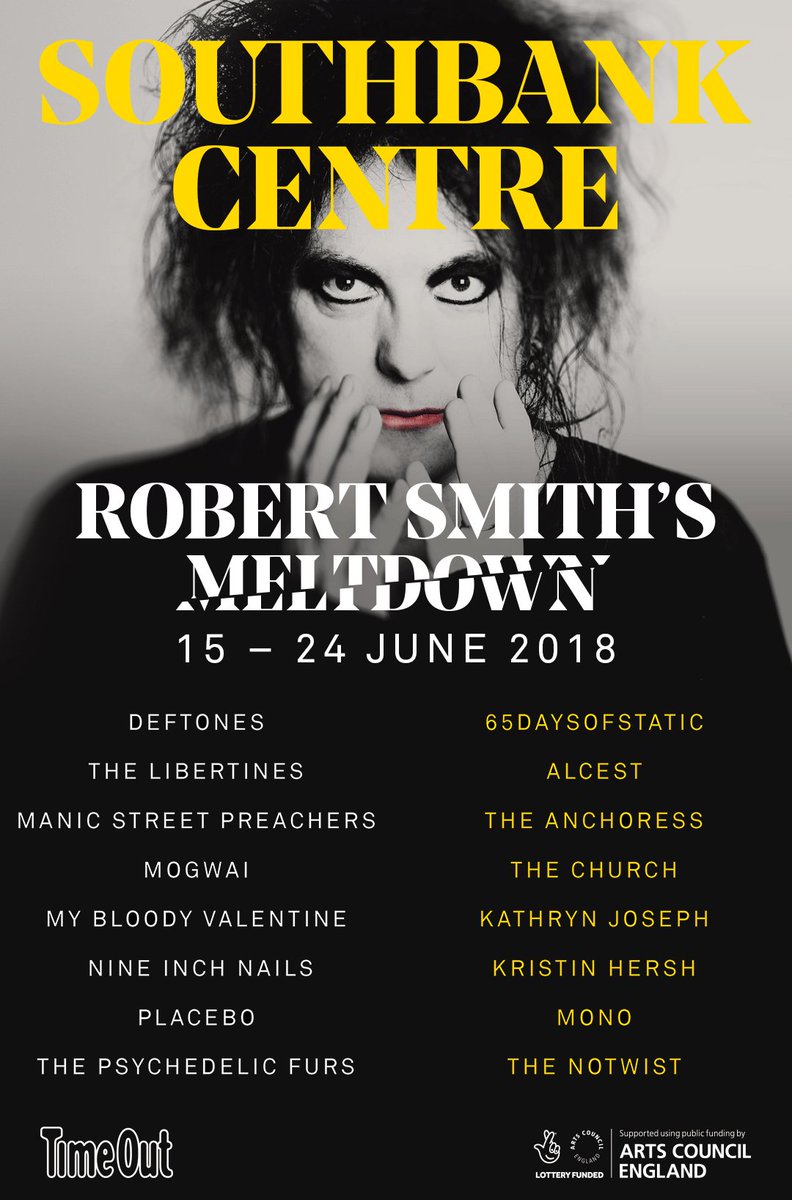
The wait is over. After a month of speculation, anticipation and rumour, we can now announce the first acts of what’s shaping up to be a legendary Meltdown festival line-up. We’re delighted to confirm that Deftones, The Libertines, Manic Street Preachers, Mogwai, My Bloody Valentine, Nine Inch Nails, Placebo, The Psychedelic Furs, 65daysofstatic, Alcest, The Anchoress, Kristin Hersh, Kathryn Joseph, MONO, and The Notwist will all be appearing at the 25th edition of our iconic music festival, curated by Robert Smith – the first of many more acts to be announced.

Meltdown is famed for bringing to life the world of its director here on the banks of the River Thames. And this jubilee year will be no different, with Robert Smith scouring the globe to hand-pick some of his favourite bands, bringing together trailblazers and pioneers from the worlds of indie, pop, glam, industrial, shoegaze, post-rock, electro, metal and beyond. Seminal alternative rock group The Psychedelic Furs will open Smith’s Meltdown, delivering an opening night performance on Friday 15th June, with Placebo (Saturday 16th June) and The Libertines (Sunday 17th June) also appearing on the Royal Festival Hall stage on the festival’s first weekend.

Influential welsh rock band Manic Street Preachers return to Southbank Centre for the first time since 2008 on Tuesday 19 June, whilst Deftones fly in for their only UK show the following night. Glasgow rock stalwarts Mogwai also play a one-off Royal Festival Hall gig on Thursday 21st June, with Nine Inch Nails making their debut on the same stage a day later. And on Saturday 23rd June shoegaze pioneers My Bloody Valentine return to the Royal Festival Hall stage for their first UK show in five years.

Robert Smith’s Meltdown festival takes place across Southbank Centre from 15th-24th June 2018, with performances in our 2,500 capacity Royal Festival Hall, and in our newly refurbished Queen Elizabeth Hall and Purcell Room. More acts and dates will be confirmed in the coming weeks and months, so do stay tuned for further announcements.

In August of 1985 The Cure released their 6th studio album “The Head On The Door”, and album that takes its title from the single Close to Me. this day in 1985

This record marks the return of bassist Simon Gallup who had departed after touring for the band’s 4th album Pornography . The album also saw Porl Thompson officially rejoin the band, as he had played guitar during the Malice and Easy Cure days. Also added to the lineup was drummer Boris Williams who had previously worked with the Thompson Twins, The album also included The hit singles  “Close To Me” and “In Between Days” With its variety of styles, it allowed the group to reach a wider audience in both Europe and North America. In the United Kingdom, it quickly became their most successful album to date.

The album was the first to to be released by singer/songwriter/guitarist Robert Smith after he had left Siouxsie and the Banshees in May of 1984 Smith has stated that the Banshees album “Kaleidoscope” was a strong influence of the wide variety of tracks on The Head On the Door: be it Kyoto Song’s Japanese flavor or  The Blood’s Spanish style played in a Flamenco style. The piano tune in the track Six Different Ways was evolved from from the single Swimming Horses. The last song of the album, “Sinking”, was reminiscent of the band’s Faith era, while Close To Me was described as a disco type thing”

The Head on the Door is the first Cure album where all the songs were composed solely by singer and guitarist Robert Smith.

Following the ill informed controversy between The Cure’s The Walk, and New Order’s Blue Monday, is the even stronger similarity between The Cure’s single from this record “In Between Days to New order’s “Dreams Never End” Regardless of what you believe from the rivalry above, the video only single A Night Like This admittedly reuses previous material by reworking the original melody from the early Easy Cure track Plastic Passion.

‘A Night Like This’  “I’m coming to find you, if it takes me all night / A witch hunt for another girl / For always and ever is always for you / Your trust, the most gorgeously stupid thing I ever cut in the world.”

One of Robert Smith’s greatest breakup songs, ‘A Night Like This’ (from 1985’s ‘The Head on the Door’) is filled with regret, sadness and a looming hopelessness that’s bound to repeat itself over and over again. The sax solo drives it home.

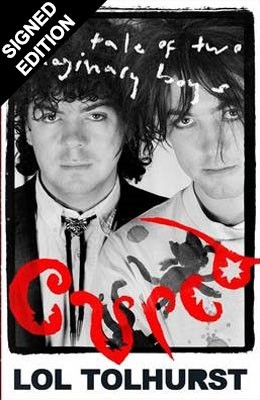
Here included is the full “Les Enfants du Rock” program from 1985 where The Cure are promoting “The Head On The Door”. Note that at 6 minutes and 45 seconds, Robert half jokingly derides founding member and keyboardist Lol Tolhurst for his alcoholism a subject that is addressed at length in Lol’s book “Cured The Story Of Two Imaginary Boys.

In 2006, the album was re-released by Fiction Records/Polydor Records labels, digitally remastered with various demos and live tracks from the era. Included were demos of the four B-Sides from the era (“The Exploding Boy”, “A Few Hours After This”, “A Man Inside My Mouth” and “Stop Dead”) and four previously unreleased songs. The remaining tracks included demos or live versions of all 10 songs from the first disc. One of the four new songs, “Mansolidgone”, is similar both musically and lyrically to another demo, “A Hand Inside My Mouth” (not to be confused with “A Man Inside My Mouth”) which appeared on “The Top”Deluxe Edition. Both songs, and the uncovered demo “Lime Time”, contain lyrics which would be later used in the songs “In Between Days” and “Six Different Ways.”

Tracklist:

1. In Between Days
2. Kyoto Song
3. The Blood
4. Six Different Ways
6. The Baby Screams
7. Close to Me
8. A Night Like This
9. Screw
10. Sinking

thanks to post.punk.com

The Cure were arresting enough as a band to land its first album “Three Imaginary Boys” into the U.K. charts in 1979. A year later, with their sophomore effort “Seventeen Seconds” ready to be released in April, the band arranged for a brief tour of the of the United States, the first time they had “jumped the pond” after having played entirely British gigs up to that point, with the exception of a handful of dates in Europein places like Netherlands, Belgium, and France.

The Cure’s first-ever show on the North American continent was not in New York City. It was in scenic Cherry Hill, New Jersey, at the Emerald City Lounge, on April 10 or 12, 1980. Actually, a local fanzine review of that show in Cherry Hill by Frank Chmielewski show survives, and it’s interesting to note how unusual the Cure seemed to the writer.

So original, this Cure, it is really hard to expalin it. It is not a dance band, yet it is very rhythmic, and has a textured sound. … The Cure’s music is brain-stroking, maybe.

Remarkably, according to Chmielewski one of the openers for the Cure at that show was The Dickies.

Anyway, the Cure then headed to D.C. for a show at the Bayou and then traveled to NYC for a three-show stint at Hurrah on West 62nd Street on April 15th, 16th, and 17th. Some of you might recall that Hurrah was the club where in December 1978 Sid Vicious got into a fight with Todd Smith (the brother of Patti Smith) during a gig, which incident led to the incarceration of Sid Vicious in Rikers Island. It was also where “Divine” starred in the play The Neon Woman. These three Cure gigs took place towards the end of Hurrah’s existence, as it was defunct by 1981.

It’s not entirely clear which show of the three this footage comes from. The Cure was taped by Charles Libin and Paul Cameron, who took video footage of many bands in New York during that era. For any band playing multiple gigs in New York, their whole M.O. was to watch the first one(s) as prep for the final show, where they would do the actual taping. So it’s likely this show took place on April 17th, 1980.

We presented a portion of this footage early last year, but only two songs were available then. Fortunately for us “new shit has come to light,” as a certain fictitious stoner once said. In this clip we have an actual majority of one of the shows, with eleven songs represented from a set that probably would have had somewhere shy of twenty.

Of the Hurrah dates, Robert Smith said that “we’d obtained cult status … but we only played New York, Philly, Washington and Boston. We played three nights … at Hurrah in New York and it was packed.” Simon Gallup noted one of the key differences of playing in the United States, that “instead of having cans of beer backstage, we’d have shots of Southern Comfort!”

This is not a “complete” show, as already mentioned, and indeed it’s not even continuous, there are breaks between the songs. Libin and Cameron knew what they were doing for sure, which makes this footage very enjoyable to apprehend.

Thanks to Dangerous Minds

https://www.youtube.com/watch?v=szQjujMwaw8

Setlist :

1. Three Imaginary Boys – 0:00
2. Fire In Cairo – 2:54
3. In Your House – 5:50
4. M – 9:35
5. 10.15 Saturday Night – 10:32
6. At Night – 16:06
7. Boys Don’t Cry – 21:26
8. Jumping Someone Else’s Train – 24:00
9. Another Journey By Train – 26:25
10. A Forest – 29:46
11. Secrets – 35:53

Cured: Signed Edition - The Tale of Two Imaginary Boys (Hardback)

Coming of age in Thatcher’s Britain in the late 70s and early 80s was really tough, especially if you lived in Crawley. But against the grinding austerity, social unrest and suburban boredom, the spark of rebellion that was punk set alight three young men who would become one of the most revered and successful bands of their generation.

The Cure. Cured is a memoir by Lol Tolhurst, one of the founding imaginary boys, who met Robert Smith when they were five. Lol threads the genesis of The Cure through his schoolboy years with Smith, the iconic leader of the group, and the band’s most successful era in the 1980s. He takes us up to the present day, a riveting forty years since the band’s inception. The band’s journey to worldwide success is woven into a story not only of great highs and lows but also of love, friendship, pain, forgiveness and, ultimately, redemption on a beach in Hawaii. Cured highlights those parts of the creative journey that are not normally revealed to fans, incorporating many first-hand recollections around Lol’s personal odyssey. From suburban London to the Mojave desert, Cured brings an acute eye for the times to bear on a lifelong friendship, with tales of addiction and despair along the way. Cured is the story of a timeless band and a life truly lived.

Some of you reading this may have already had the good fortune to have seen this vintage footage of The Cure performing at the breathtaking Roman-esque theatre in Orange, Vaucluse, France known as Theatre Antique d’Orange back in 1986. I also have no doubt that some of you might even possess copies of the show (known as The Cure in Orange) on VHS. If you fall into neither of these categories, then you are in for a treat as the show recently popped up on Vimeo. Shot over the course of two nights by longtime Cure collaborator director Tim Pope, the out-of-print footage contains a staggering 23 songs from The Cure’s mid-80s catalog (like The Head on the Door) as well as 1980’s Boys Don’t Cry and 1993’s Show and other assorted gems. It was also the apparently the first time Smith debuted his new short haircut much to the dismay of his gothy followers.

Though Smith himself has promised that The Cure in Orange would be released to DVD sometime in 2010, that never happened—though you can find bootlegged copies of the show for sale out there on various music-loving Internet sites as well as copies of the original VHS tape. As in the past when this extraordinary footage has made its way online it will likely once again quickly disappear so stop what you’re doing now and watch it before it vanishes.

https://vimeo.com/177796032

Tracks: “Introduction”, Recording of “Relax”, from the album Blue Sunshine by “The Glove”
“Shake Dog Shake”
“Piggy in the Mirror”
“Play for Today”
“A Strange Day”
“Primary”
“Kyoto Song”
“Charlotte Sometimes”
“Inbetween Days”
“The Walk”
“A Night Like This”
“Push”
“One Hundred Years”
“A Forest”
“Sinking”
“Close to Me”
“Let’s Go to Bed”
“Six Different Ways”
“Three Imaginary Boys”
“Boys Don’t Cry”
“Faith”
“Give Me It”
“10:15 Saturday Night”
“Killing an Arab”

The Cure

Anticipation for The Cure’s current North American Tour has been nothing short of fiendish, especially as it’s progressed and word of the band’s extraordinary, rarity- and multi-encore-packed set lists have hit the blogosphere. But Robert Smith and his band have always made their live shows major events actually worthy of the word “epic.”

Exhaustive, thoughtful and unpredictable, filled with both melancholy moments and raucous freakouts, The Cure’s live shows proved long ago that these pioneers are far more than gothy groovers on a nostalgia trip. Quite possibly, they’re in their prime right now when it comes to playing live.

The band’s penchant for protracted performances meant their Hollywood Bowl set Sunday (the first of three sold-out gigs there in a row) had to start early due to a sound curfew. They went on around 7:35 p.m. while it was still light out, which gave the show’s start a surreal festival feel that slowly melted into the dusk, and into something more profound.

The moody melodies of 1989’s Disintegration opened the show with the first three tracks, “Plainsong,” “Pictures of You” and “Closedown.” Then they gave fans of the older gem, 1985’s Head on the Door, a tempestuous trifecta: “A Night Like This,” “Push” and “In Between Days,” only to return back to Disintegration with “Last Dance,” “Lullaby” and “Fascination Street,” adding one later-era track “The End of the World” before the wistful “Lovesong.” They’d revisit Disintegration again a few songs later with “2 Late” in the middle of the set and the album’s title track as closer.

It was a to-die-for set for fans of Disintegration, obviously. But dissecting a Cure set list beyond the immediately apparent can be tricky. On paper, it can seem pretty all over the place, but you get the feeling that Smith really ponders the experience he’s presenting in a way that maybe other artists don’t. In Sunday’s case, it seemed to be about evoking a time and a feel for a lot of us (the late ’80s) when we bought records and played them in their entirety, but ultimately became attached to certain tracks, skipping straight to them to sing along over and over again, wistfully reliving the emotions they evoked.

A mix of early material from Pornography, Seventeen Seconds, The Top and Kiss Me, Kiss Me, Kiss Me really brought that feeling home. Mixed with two formidable new numbers, “”Step Into the Light” and “It Can Never Be the Same,” the set proved to be as nuanced as one would expect from a band known for gloomily poetic music, but vigorous as well. The final encore was hit-packed perfection, starting off with the playful pounce of “Love Cats,” and keeping its vim with “Hot Hot Hot!!!”, “Close to Me,” “Why Can’t I Be You” and definitive closer “Boys Don’t Cry.”

The Cure's Robert Smith

The lighting, backdrop imagery and set design was one of the most immersive and gorgeous I’ve ever seen within the shell of the Bowl, with intense hues of purple, red, green and blue drenching throughout, flashing white lights during the jammy segments and paneled screens that illustrated related visuals for almost every number (a fluorescent, Blair Witch-ish tree scene for “A Forest,” a sinister red and black spider web for “Lullaby”). Perhaps the band didn’t want any close-ups, because the only cameras were placed near the bottom edges of the stage, making the giant screens flanking the stage a parade of constant crotch shots and lots of leg action by the band’s bassist, Simon Gallup.

Still, production on the whole complimented what was happening on stage, especially when the band rocked their graying heads off. Don’t let the 57-year-old Smith’s omnipresent red lipstick and guy-liner fool you; he can be a monster on the guitar and his riffs still rage.

Save for a few languid parts, this was a high-energy rock show of the highest order. Smith’s band these days features David Bowie’s long time guitarist Reeves Gabrels, and his dense and potent playing elevated the classic renditions Sunday (most of which were faithful to the original recordings, though some veered off slightly). Mostly it was Smith’s vocals that changed things up, in subtle cadence or tempo. But however he chose to sing, his whiny croon remained as wondrously emotive as ever. No one will ever sound like Robert Smith, and it’s a gift to hear him still do it.

The Cure have not waned in skill or showmanship one bit since I saw them bring L.A. audiences to tears at the Pantages in 2011 and inspire an a cappella sing-along (after they broke curfew and their sound was cut) at Coachella in 2009. Whether focusing on the gloomy early days or the giddy later ones, they are one of the best live bands still doing it today. We got 32 songs last night, but this tour has been averaging about 40. You get your money’s worth with the iconic band, that’s for sure. And whatever the next set list looks like, or however many encores they decide to do the next two nights in L.A. or rest of the tour, it will be as passionate as it is powerful ’til the bittersweet end.

Set List

Plainsong
Pictures of You
Closedown
A Night Like This
Push
In Between Days
Last Dance
Lullaby
Fascination Street
The End of the World
Lovesong
Just Like Heaven
2 Late
Trust
Want
One Hundred Years
Disintegration

Encore:
It Can Never Be the Same
A Forest

Encore 2:
Shake Dog Shake
Piggy in the Mirror
All I Want
Give Me It

Encore 3:
Step Into the Light
Never Enough
Burn
Wrong Number

Encore 4:
The Lovecats
Hot Hot Hot!!!
Close to Me
Why Can’t I Be You?
Boys Don’t Cry

The Cure’s “A Few Hours After This” originally appeared as a b-side on the “In Between Days” single.

The band re-recorded the track for the British TV Show Luther (which stars Idris Elba) as a request of the show’s creator. Neil Cross said, “I have been an obsessive fan of The Cure since I was 13. After we had finished shooting the second episode of this special, I phoned the producer and said there is this really obscure Cure track – an extra track on a 12-inch single called ‘A Few Hours After This’ – which I have always loved and think it would really go.”

Cross added, “Long story short, we contacted Robert Smith and he re-recorded the song. That was one of those moments where I wanted to hijack the Tardis and go back and see my teenage self and say, ‘One day…’”

B-sides often fall onto the obscure side of a band’s repertoire, the kind of tracks that only the most ardent fans know and love. Such was the case with The Cure’s “A Few Hours After This”, the reverse of the The Head on the Door classic “In Between Days”. Thirty years after it was initially released, the cult favorite song has been revived and re-recorded for the Christmas episode of BBC’s Luther.
Ultimately, the band not only were willing to give Cross permission to use the song, they went ahead and recorded a brand new version specifically for the show. “Long story short,” Cross explained, “we contacted Robert Smith and he re-recorded the song.

The original version of “A Few Hours After This” was an ornate, orchestral beast of a track, full of floating strings and staccato drums and keys. For the update, Smith went quite the opposite route, turning the song into a menacing haze of synths and ghostly reverberating vocals. The old rhythms come in towards the end, with pounding piano replacing those old punctuated moments.

http://

The Twilight Sad have been trying their best to work with Robert Smith for over three years. It began when fellow Scottish prog-rocker Mogwai’s Stuart Braithwaite sent the band an email from The Cure frontman professing his fandom. They initially tried to have him remix a track for their remix release of No One Can Ever Know, but Robert Smith was occupied with the Cure on the road. Then, after releasing their 2014 album Nobody Wants to be Here and Nobody Wants to Leave, they took another shot and emailed Smith to see if he’d want to cover a song for a double A-side for the final single, “It Never Was the Same”.

“I couldn’t believe it when he replied, saying he’d like to cover ‘There’s a Girl in the Corner’,recalled Twilight Sad guitarist Andy MacFarlane. “He sent it over when we were playing San Francisco in March, and we listened to it over and over in the van, driving out after the gig. Hearing someone that we’ve all looked up to for so long sing and play one of our songs is definitely one of the most surreal moments we’ve ever had.” Take a listen here now .