Posts Tagged ‘Pink Floyd’

Pink Floyd The Early Years 1965-1972

The definitive Early Years box set, released 11th November 2016

27 DISC COLLECTION ON CD/DVD/BLU-RAY INCLUDES:

+ Many hours of rare and unreleased music & video
+ 14 Hours of video includes restored footage
+ original 4.0 Quad mixes / BBC sessions/live recordings
+ rare tracks including more than 20 previously unreleased
+ historic TV performances, live concerts and 3 feature films
+ Remixed 5.1 audio for ‘Live At Pompeii’ footage
+ collectable memorabilia
+100+ photos, most previously unseen
+ early singles + B sides on CD & vinyl

* 7 book-style packages, each with multiple discs. 6 are dedicated to a specific period and include related memorabilia and many unseen photos.

* Box bonus package includes collector’s audio and video. Box includes bonus larger replica memorabilia (posters, flyers, etc.) plus 5 x reissued replica 7″ singles, mastered from the original analogue tapes.

* The 6 year-specific packages will be made available in early 2017. The bonus package and larger memorabilia is exclusive to this box set.

The definitive Early Years box set, released 11th November 2016

A0659032060 16

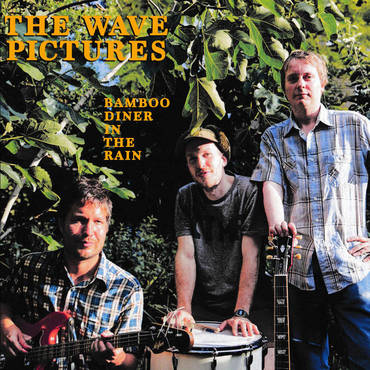
London based trio The Wave Pictures – Jonny Helm (drums), Dave Tattersall (guitar & vocals) and Franic Rozycki (bass) – return with their brand new album ‘Bamboo Diner In The Rain’ on Moshi Moshi Records.

Following on from last year’s Billy Childish collaboration ‘Great Big Flamingo Burning Moon’ and their recent acoustic record ‘A Season In Hull’, ‘Bamboo Diner In The Rain’ sees The Wave Pictures battling against the robot music apocalypse.

The new album is a bluesy, boozy love letter to the guitar, filled with American Primitive instrumentals, John Lee Hooker chugs and Link Wray style minor-key surf music. As songwriter and guitarist Dave Tattersall explains, “This album is set in the Bamboo Diner of my dreams, with rain beating on the windows and a jukebox stocked with blues. This is the most personal album I’ve made so far. In fact, that’s the whole idea of the band, to become more and more authentically ourselves on record. To grow inwards. Like everything on this dark and strange little album. It’s not robot music.”
106801

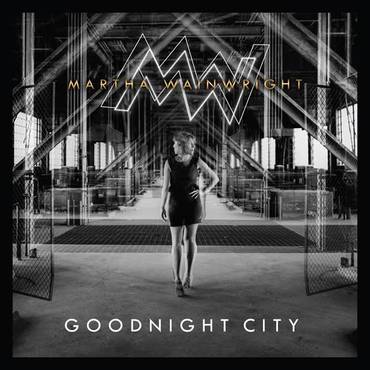
Martha Wainwright releases a wonderful new studio album, ‘Goodnight City’, on [PIAS]. It’s the follow up to her acclaimed 2012 release ‘Come Home To Mama’.

‘Goodnight City’ features 12 brand new songs produced by Thomas Bartlett (Surfjan Stevens, Glen Hansard) and longtime producer Brad Albetta. It recalls the emotional rawness of her debut album, much of it encapsulated by the captivating lead track ‘Around The Bend’ and her extraordinary voice.

“Making ‘Goodnight City’ was the most fun I’ve had in a long time,” Martha admits. “Thomas (keys), Brad (electric / bass), Phil Melanson (drums) and I would sit in a circle and work out arrangements for these vividly different songs. Recording them live with very few overdubs the focus remains on the integrity of the song and our ability to play together as a band.”

Martha wrote half the songs on the album while the other half were written by friends and relatives: Beth Orton, Glen Hansard, Rufus, Wainwright, Michael Ondaatje and Merrill Garbus of tUnE-yArDs.

“Because these writers know me and because I was able to personalise these songs by changing things here and there, I made them feel as if I wrote them myself,” Martha explains. “Somehow they wonderfully reflect my life and I am so thankful to the other artists for writing them.”

‘Goodnight City’ was recorded in Montreal. Last year Martha and Lucy Wainwright Roche released ‘Songs In The Dark’ as the Wainwright Sisters.

The Early Years 1965-1972

As massive and hefty as a cinder block, Pink Floyd‘s The Early Years 1965-1972 is no conventional box set. It is an archive in miniature, offering 28 discs — 11 CDs with the remaining discs being DVDs and Blu-Rays that offer duplicates of the same audio/visual material — alongside replicas of original poster art, fliers, press releases, 7″ singles and ticket stubs, all here to offer a deep, multi-tiered portrait of the years when Pink Floyd were fumbling around trying to find their voice. This isn’t precisely uncovered territory — during the eight years covered on this box set, Floyd released eight studio albums, and their early singles have been compiled on several collections, including 1971’s Relics — but what’s available on this box is almost entirely rare, with much of it being unheard and unbootleged. This isn’t limited to the audio tracks, either. The DVDs and Blu-Rays offer a cornucopia of stunning films, ranging from promo clips and BBC performances to interviews between Syd Barrett and Dick Clark, full live sets, documentaries, a version of “Interstellar Overdrive” with Frank Zappa from 1969, a ballet from 1972, rejected animations, and the entirety of More and Obscured by Clouds, two feature films Pink Floyd scored.

Sleigh Bells, Derek Miller and Alexis Krauss, have announced their first new album in three years. Entitled Jessica Rabbit, the album was produced by the band and mixed by Andrew Dawson (Kanye West, Tyler, the Creator); and for the first time ever they brought someone outside of the band into the creative process, working with Mike Elizondo (Dr. Dre, Fiona Apple) to shape five of the band’s favourite tracks on the album.

The result is an album that does not sound like anything Sleigh Bells has ever done – or anyone has ever done, for that matter. It is the sonic equivalent of firing synapses, with melodies zigzagging in different directions in a beautiful and ever-modulating controlled chaos. It is playful but darkly so; flirtatious but caustic; ebullient but downright sinister. It is a record that is wholly unique in sound and purpose, an unabashed and unafraid statement from a band that has made offending rote conceptions of pop music their signature and greatest strength.

Released as a companion to Robbie Robertson‘s 2016 memoir of the same name, Testimony is the singer/songwriter’s own take on his musical history — an 18-track compilation that samples from every era of his career, from his time supporting Ronnie Hawkins to his stabs at moody trip-hop. While the book ends when the Band disbands, Testimony finds space for selections from his solo career — five songs total, with 1991’s Storyville earning the largest play and the electronica aspects of 1998’s Contract from the Underworld of Red Boy and 2011’s How to Become Clairvoyant diminished. Still, the Band naturally figures heavily into the equation here, but Robertson avoids his biggest hits along with some of his best-known songs. Instead, he culls heavily from the Band‘s Live at the Academy of Music 1971 performance — it’s better known as the 1972 LP Rock of Ages — and the 2005 Band box A Musical History, which is where all the early cuts from Levon Helm & the Hawks and the Robertson-sung “Twilight (Song Sketch)” were first released. If Testimony is light on rarities, what matters is context. By piecing together all these elements of his career — including his time backing Hawkins(“Come Love”) and Bob Dylan (“Rainy Day Women #12 & 35” from Before the Flood) — he paints a fairly rich portrait of his musical achievements, so Testimony does indeed wind up being a musical memoir.

Wolf People – This London-birthed four-piece have long been hailed as a band with the alchemical charge to transform psychedelic, folk and riff-rock spirits into something both timeless and vibrant, avoiding the lure of retro pastiche. ‘Ruins’ however is unquestionably their greatest achievement to date, reinventing the earthy roar of ampstacks and a quintessentially English pastoral sensibility, and finding transformational ways to draw the cosmic dots between 1971 and 2016. The theme of this album may be a world in which nature has overcome the end of humanity, but the post-apocalyptic landscape has never sounded peachier.

Arriving on the heels of her 2015 road memoir Don’t Suck, Don’t Die: Giving Up Vic Chesnutt, which focused on Kristin Hersh’s long friendship with the late singer/songwriter, Wyatt at the Coyote Palace delivers another audio-visual experience via a 24-track LP and an accompanying hardback book stocked with lyrics, notes, essays, and photographs. Published through her own co-founded nonprofit organization CASH Music, the double album is a purely Hersh-oriented affair, with the alt-rock hero handling all of the parts. Having that kind of freedom can be a creative death knell for some artists, but Hersh has always operated in another realm, both sonically and lyrically, and she takes to the open-ended format with gusto. Opener “Bright” starts off on familiar ground, with Hersh fingerpicking one of her signature spectral melodies. However, things begin to shift gears quickly, with wild swaths of dissonance rolling in like downed wires. Hersh’s voice remains electric, if not a bit rawer than usual, and her knack for pairing big, circular pop hooks with dreamlike lyrics and rhythmic left turns remains intact. When all of those pistons start to pump, as is the case on standout cuts “Hemingway’s Tell,” “Diving Bell,” and “Between Piety and Desire,” the results can be hair-raising, but at just over 80 minutes of material, there’s a lot to digest here. It’s easy to stand on the sidelines and say that a more streamlined, ten- to 12-track version of the album would suffice, but one of the many things that’s helped to make Hersh such a singular talent over the years is her unwillingness to compromise, and on that front, the punishing and beautiful Wyatt at the Coyote Palace doesn’t disappoint.

Pink Floyd at Oakland Coliseum 5/9-10/77 by Randy Tuten & William Bostedt

The 1970’s saw a run of albums released by Pink Floyd  containing songs whose invention, ambition and creativity continues to dazzle and resonate with a global audience by even today standards. The passage of time has done little to diminish the quality of these songs’ and their capacity to astonish, move and enthral.

As one of rock music’s most successful acts, Pink Floyd have sold more than 200 million albums worldwide. “Dark Side of the Moon” is third on the list of most albums ever sold, with more than 45 million copies; The Wall sold another 30 million to date—both hit Number 1 on the charts. In all, Pink Floyd have released 14 studio albums, three live albums, three box sets, 26 singles, and 10 music videos. Pink Floyd was inducted into the Rock and Roll Hall of Fame in 1996, the UK Music Hall of Fame in 2005, and awarded a Grammy in 1995.

Atom Heart Mother Suite (1970) Atom Heart Mother 
Though collaborations between rock bands and orchestras were nothing even in 1970, Floyd’s willfully experimental and typically idiosyncratic approach put them in a field of their own. The title track for their fifth studio album finds Ron Geesin’s bold score for brass, strings and chorus enhancing the surreal and often dream-like quality that so characteristic of this side-long extravaganza.

Echoes (1971) Meddle
With their desire in developing long-form writing well established by 1971, Echoes showcases their refined, consummate grasp of textural detail. From the very first ‘sonar’ ping through to the exultant, radiant climax, via strange alien hinterlands, the piece ripples steadily outwards; a sustained masterclass in controlled tension and triumphant release.

One Of These Days (1971) Meddle
What might otherwise be a nondescript riff is collectively transformed into an elemental howl of rage on this opening track from Meddle. Transposing music concrete techniques onto an unstoppable head-shaking force, torrents of echo-enhanced bass, snarling guitar, propulsive beats and slashing keyboards coalesce into one of most formidable moments in the Pink Floyd canon.

Time (1973) Dark Side Of The Moon
As impressive a piece of musical engineering as the inner workings of the massed clocks which open it. This Dark Side Of The Moon staple sees Gilmour’s impassioned guitar effortlessly falling in slow motion slo-mo into a plangent bed of backing vocals, though it’s Rick Wright’s diffident and unvarnished vocal – ‘hanging on in quiet desperation’ – which deftly steals the show.

Money (1973) Dark Side Of The Moon
Floyd’s affection for experimentation pays off as it seamlessly merges found-sound tape loops with quirky time signatures to fashion this unlikely hit. Dick Parry’s shrill, klaxon-like tenor sax adds another surprising dimension to their palette, but it’s Waters‘ barbed lyric and Gilmour’s exquisitely structured soloing that really hits the jackpot.

Shine On You Crazy Diamond Parts 1 – 5 (1975) Wish You Were Here
Pink Floyd frequently prove dramatic music needn’t be all about fiery grandstanding, and never more so on this emotive two-part epic that bookends Wish You Were Here. Unfolding at a glacial pace, Waters’ meditative lamentation of Syd Barrett’s tragic arc from brilliance to illness smoulders with a fierce, heartfelt intensity. The emotional weight of the tolling four-note motif ushers in one of Gilmour’s more thoughtful excursions.

Wish You Were Here (1975) Wish You Were Here
Pink Floyd’s intimate vulnerability remains startling, even at the height of their fame. On the title track of 1975’s Wish You Were, melancholic recognition that something and someone has been irrevocably lost is tempered by the acceptance that time has moved on. Neatly avoiding any showiness, sentimentality or self-pity, this is undoubtedly Pink Floyd at their most poignant.

Sheep (1977) Animals
Emerging from the cosseted glow of Wright’s electric piano, Pink Floyd go for the jugular with their most caustic cut from Animals. Underpinned by Waters‘ glowering bass, Gilmour’s strafing chords graze and bite through Mason’s driving pulse. As the pensive atmosphere bleeds out into the grotesque, distorted psalm, it’s genuinely chilling.

Comfortably Numb (1979) The Wall
Though Waters’ sombre account of an individual’s slide into personal dislocation and isolation is grim and unflinching, Gilmour’s anthemic solo magically transcends the bleak subject matter. Taking on a life of its own in concert, its sonorous tones rally the spirits, articulating the human need to connect with one another.

Waiting For The Worms (1979) The Wall
The unhinged fascistic whine of Roger Waters’ histrionic demagogue brings 1979’s The Wall hurtling towards its chaotic climax. More unsettling however, are the emollient tones voiced by Gilmour – reasonable on the surface, but beneath their respectable veneer just as vile. Juxtaposing sunny harmonies against darker, grinding riffs, Floyd’s brutal, uncompromising psychodrama remains ominously disconcerting.

See Pink Floyd's Atmospheric New Video for 1969's 'Green Is the Colour'

Pink Floyd have dug deep into their vaults for The Early Years 1965-1972, a massive upcoming box set that unearths audio and video from their earliest days with frontman Syd Barrett through right before their commercial breakthrough with Dark Side of the Moon. One of the many interesting eras documented in the box set is the period directly after they parted ways with Barrett, around when they recorded the soundtrack to the art-house flick More.

A new music video for More’s slow-building, psychedelic cut “Green Is the Colour” is premiering above. The live footage comes from a concert the band performed in Saint-Tropez, France, at the Pop Deux Festival on August 8th, 1970; the video component of the box set contains more songs from the festival. As with the “Grantchester Meadows”  video Pink Floyd released this summer, Hipgnosis’ Aubrey Powell served as creative director on the “Green” video and Nick Edwards shot the new footage interspersed throughout.

The More album was Pink Floyd’s follow up to A Saucerful of Secrets, the LP the group made as Barrett was leaving and David Gilmour was joining the band , and it showed that they could move on without their founding frontman. The band performed songs from More on tour in 1969 as part of two suites – The Man and The Journey – for which they retitled “Green Is the Colour” as “The Beginning” when it was played as the opening track of the latter piece. Even after they moved on from the suites, they kept the tune in their set lists through 1971.

The creative process behind scoring More was unique for the band. “[More filmmaker Barbet Schroeder] didn’t want a soundtrack to go behind the music,” Roger Waters once said, according to author Mark Blake’s band bio Comfortably Numb. “He wanted it literally. So if the radio was switched on in the car for example, he wanted something to come out of the car. He wanted it to relate to exactly what was happening in the movie. I was sitting at the side of the studio writing lyrics while we were putting down the backing tracks. It was just a question of writing eight or nine instrumentals.”

Roger was the big creative force,” Schroeder said. “I remember this incredibly hectic two weeks. The sound engineer couldn’t believe the speed and creativity of the enterprise.”

The Early Years contains 27 discs, spanning CDs, DVDs, Blu-rays and seven-inch vinyl, grouped by year. It includes several renditions of “Green Is the Colour” as well as the whole More film and reproductions of memorabilia from around the time. The group has also made a pared-down, two-disc version,The Early Years 1967 – 1972: Cre/ation. Both will come out on November 11th.

roger-waters-trump

Those in attendance at Desert Trip may have missed last night’s presidential debate, but Donald J. Trump’s ominous presence was felt throughout Waters’ headlining set. As he performed “Pigs”, the Pink Floyd member flashed several anti-Trump images. One depicted Trump making a Nazi salute, another had him wearing a KKK hood. There was also an image of the Republican presidential candidate holding a dildo as a rifle and one in which he was was butt naked with his micro-penis in full view. When Waters sang, “ha ha, charade you are,” the word “Charade” appeared overtop Trump’s face.

A number of Trump’s own racist, bigoted, or factually inaccurate messages were also displayed on the video screens, and during his performance of “Another Brick in the Wall, Pt. 2″, Waters brought out a choir of children wearing t-shirts that said “tear down the wall” in Spanish.

Even Pink Floyd’s iconic inflatable pig was repurposed to mock Trump with a message reading, “Fuck Trump and fuck his wall.”

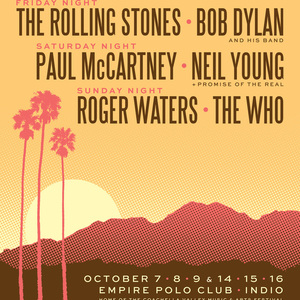
“It’s rare that someone like me gets a platform like this, and I’m going to use it,” declared Roger Waters to thousands gathered in Indio, California, for the final night of Desert Trip’s opening weekend on Sunday. He was the last of the six major acts to perform, all of whom date back to the 1960s and the era of rebellion songs. Before the night was over, he made vivid connections between his work with Pink Floyd and the political crises of the moment.

So there was a truck-sized inflatable pig floating above the crowd during the song “Pigs,” with a map of the U.S. painted on one side with the words: “Together we stand, divided we fall.” On the other side was the face of Donald Trump and the words “ignorant,” “lying,” “racist,” “sexist” and “Fuck Trump and his wall.”
Waters was more aggressive in messaging as he weaved politics as an essential element of his performance of Pink Floyd classics. He read a poem of rage and protest called “Why Cannot the Good Prevail” that he wrote on the eve of George W. Bush’s second term and expressed ongoing support for Palestinians in the multi-decade conflict with Israel.

Desert Trip 2016
But the music of Waters did not become overtly political until late in his career, beginning with his final album with Pink Floyd, 1983’s The Final Cut. Before that, his concerns were largely with madness and the dehumanizing of the personal. Sunday’s set eased into focus with classic Floyd imagery, with a vast moonscape on the stage’s super-wide screen, as familiar sound effects from Pink Floyd recordings slowly emerged from the venue’s various speaker towers, like something on an old quad stereo from the Sixties or Seventies.


The music began with “Speak to Me” and “Breathe,” the opening songs from 1973’s The Dark Side of the Moon, which remains one of the best-selling albums in history. From the same album was “Time,” lush and forward looking but classically melodic amid the dark messages: “Short of breath … one day closer to death.”
From The Wall, Waters strummed an acoustic guitar and sang “Mother,” with the words “Mother should I run for president?” drawing cheers from fans, then a bigger response for “Mother, should I trust the government?” The gifted singing duo Lucius were recruited as vocalists, and performed the the voice of “mother,” sweet, soulful and smothering.

Roger Waters

Set list
“Speak to Me”
“Breathe”
“Set the Controls for the Heart of the Sun”
“One of These Days”
“Time”
“Breathe (Reprise)”
“The Great Gig in the Sky”
“Money”
“Us and Them:
“Fearless”
“You’ll Never Walk Alone”
“Shine On You Crazy Diamond (Parts I-V)”
“Welcome to the Machine”
“Have a Cigar”
“Wish You Were Here”
“Pigs on the Wing 1”
“Pigs on the Wing 2”
“Dogs”
“Pigs (Three Different Ones)”
“The Happiest Days of Our Lives”
“Another Brick in the Wall (Part 2)”
“Mother”
“Brain Damage”
“Eclipse”
“Why Cannot the Good Prevail”
“Vera”
“Bring the Boys Back Home”
“Comfortably Numb”

Ahead of the release of their much-anticipated box set The Early Years 1965 – 1972, Pink Floyd have shared a video for “Grantchester Meadows,” a fingerpicked ode to the English countryside as penned by Roger Waters for the 1969 album Ummagummaa. Pairing old performance footage with contemporary pastoral scenes, the picturesque visual is the definition of bucolic bliss, not to mention the most perfect start to a misty morning.

This special group performance, taped for the BBC, with acoustic guitars and vocals from Roger Waters and David Gilmour, plus additional piano from Richard Wright and taped songbirds, successfully evokes a summer’s day in Grantchester, a small village close to Cambridge, England. Grantchester’s famous former residents include the Edwardian poet Rupert Brooke, who moved there and subsequently wrote a poem of homesickness entitled ‘The Old Vicarage, Grantchester’. Taken from ‘The Early Years 1965 – 1972’.

The definitive Early Years box set, released 11th November 2016
27 DISC COLLECTION ON CD/DVD/BLU-RAY INCLUDES:

+ Many hours of rare and unreleased music & video
+ 14 Hours of video includes restored footage
+ original 4.0 Quad mixes / BBC sessions/live recordings
+ rare tracks including more than 20 previously unreleased
+ historic TV performances, live concerts and 3 feature films
+ Remixed 5.1 audio for ‘Live At Pompeii’ footage
+ collectable memorabilia
+100+ photos, most previously unseen
+ early singles + B sides on CD & vinyl

* 7 book-style packages, each with multiple discs. 6 are dedicated to a specific period and include related memorabilia and many unseen photos.

* Box bonus package includes collector’s audio and video. Box includes bonus larger replica memorabilia (posters, flyers, etc.) plus 5 x reissued replica 7″ singles, mastered from the original analogue tapes.

ALSO AVAILABLE ON 11TH NOVEMBER 2016:
+ 2-CD/Download/Streaming set – ‘The Early Years – CRE/ATION 1967-1972’

* The 6 year-specific packages will be made available in early 2017. The bonus package and larger memorabilia is exclusive to this box se

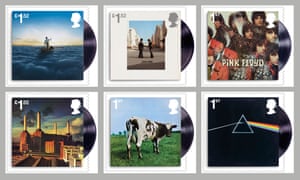
Pink Floyd stamps

A set of stamps celebrating 50 years of British rock group Pink Floyd have been unveiled by Royal Mail.
Ten stamps will be on sale on 7th July, marking five decades since the band turned professional.
The collection include the band’s most famous album covers as well as live performance shots.
Pink Floyd became known for its innovative album covers, which were made in collaboration with leading graphic designers and photographers.

The album covers that have been made into stamps include The Piper At The Gates Of Dawn, Atom Heart Mother, The Dark Side Of The Moon, Wish You Were Here, Animals and The Endless River.

Composite of stamps

The stamps mark half-century since group turned professional, with albums and live performances represented

This new set of stamps is being issued to honour Pink Floyd, featuring some of the band’s best known album covers.

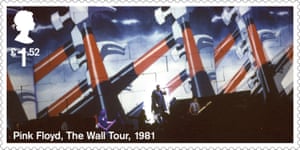
Some of the stamps will celebrate the band’s live performances, which broke new ground with extensive use of lights and film projections. The images will portray Pink Floyd’s psychedelic light shows and the staging of their The Wall album.

“Few bands in the history of rock have managed to carve out a career as rich and expansive as that of Pink Floyd,” said Royal Mail.

The stamp set can be pre-ordered from Thursday and will be on sale at post offices from 7th July.

Collage of Pink Floyd products

We’re celebrating Pink Floyd, one of the most influential and successful British bands of all time, with a superb range of stamps, limited edition souvenirs and gifts.

Renowned for creating some of rock music’s most acclaimed albums and iconic imagery, Pink Floyd are also lauded for their ground-breaking live performances. Royal Mail has worked closely with Pink Floyd to bring you this exceptional collection.

• Save 10% with one of three Pink Floyd Bundles
• Order a First Day Cover with the name and address of your choice – available until 7 July 2016
• Own The Dark Side of the Moon Maxi Sheet – numbered, limited edition

Available for pre-order. These items will be released on 7 July 2016.

The Wall tour stamp

A further four stamps show the band performing live on tour, including one photograph from a concert at London’s UFO Club in 1966.

Pink Floyd were among the first groups to make extensive use of light shows and projection of films for their live concerts, which increased in ambition over the decades.

The band was formed in 1965 by Roger Waters, drummer Nick Mason and keyboardist Rick Wright, later joined by guitarist Syd Barrett. In 1968, guitarist David Gilmour joined the band shortly before Barrett’s departure.

The stamps are available to pre-order on the Post Office website and will be physically available in 8,000 post offices from 7th July 2016.

Pink Floyd stamps

pink-floyd-first4reissues-433

PINK FLOYD’S Albums are set to be repressed onto vinyl for the first time in two decades. All the band’s albums are being repressed for the first time in 20 years as part of a new reissue campaign.

The reissuing of the band’s records as 180 gram editions will begin on June 3rd with “The Piper At The Gates Of Dawn”, “A Saucerful Of Secrets” , the soundtrack for the film “More” and the double album “Ummagumma”.

Further records will be repressed and released at regular intervals throughout the year.

All the new editions are being released on Pink Floyd Records while the band insist special care will be taken to “replicate the original packaging”, while the albums will be remastered for the heavyweight vinyl format.

For full details visit www.pinkfloyd.com.

pinkfloyd-67-highres-770

Pink Floyd - Syd Barrett

Pink Floyd with Syd Barrett, in the last of two rare sessions for John Peel, recorded on December 20, 1967. There are a lot of people (myself included) who felt that Pink Floyd changed radically after Syd Barrett left. That the new Pink Floyd, post-Saucerful of Secrets needed some getting used to. The story has been told and retold a million times, and doesn’t need repeating here. Syd Barrett was the true driving force behind Pink Floyd in the early days – he did, if nothing else, take Psychedelia several steps higher and expanded the sheer creative horizon of the genre. Coupled with the fact that Barrett was a tremendous writer, with a vision and wit few matched.

That it all fell apart due to emotional instability fueled by just a little too much acid has become the stuff of legend. That his solo work later was fleeting, and that he was already too far gone to connect with an audience who didn’t want to let him go made the whole story that much more tragic.

And even during the period of this session, things were dicey. The previous Peel session was marred by a freak-out, and getting this one on tape was probably a miracle in retrospect.

I have never been able to figure out why Vegetable Man and Scream Thy Last Scream weren’t officially released or included as part of the myriad retrospective packages put out over the years. They have become legendary “lost” tracks, which have gone on to be highly influential and even covered in the late 70s by The Soft Boys (their version of Vegetable Man is almost note-perfect). The original sessions have been bootlegged and passed around to collectors and cherished as priceless evidence for a few decades now.

Syd Barrett, even now some 10 years after his death, has only gained in stature and mystery – the sadly little of what he left behind has been thoroughly dissected and analyzed over the years. And new fans have discovered and are enthralled by this figure, who came and went in a flash, but left an enormous impression on an era.

If, for some reason, you aren’t familiar with Syd Barrett, or haven’t heard this Peel session, have a listen and go on a search and see what else you can find. There’s precious little, but what there is will amaze.

Play loud. thanks so much to the pastdaily.com

Pink Floyd released their historic LP “Dark Side Of The Moon” on March 10th, 1973. It would go on to become the 3rd biggest album ever with over 45 millions sold to date.

In 2013, The Dark Side of the Moon was selected for preservation in the United States National Recording Registry by the Library of Congress for being deemed “culturally, historically, or aesthetically significant”.

It set new standards for recorded music. Happy 43rd Birthday to . It was the Pink Floyd’s eighth studio album The Dark Side of The Moon It remained in the US charts for 741 discontinuous weeks from 1973 to 1988, longer than any other album in history. With an estimated 45 million copies sold, it is Pink Floyd’s most commercially successful album and one of the best-selling albums worldwide.

No-one in March 1973 could have imagined that an album released in that month would still be thrilling listeners 43 years later, but it’s true.

Pink Floyd, in conjunction with EMI, have undertaken an overhaul of their catalogue, and for the first time, allowed us to see part of their creative process, by compiling a 6-disc box set of ‘Dark Side’ including various multi-channel mixes, much memorabilia and restored screen films from their live show, but, most importantly, a newly-mixed live concert from 1974 and a disc of alternative versions and outtakes.

Generally regarded as Pink Floyd’s masterwork, the qualities of The Dark Side Of The Moon have perhaps been taken for granted in recent years, but a return to it with fresh ears reminds the listener of its strengths. Part of its enduring appeal is the quality of the material, there simply isn’t a bad track on it, with a listening experience greater even than the sum of the parts.

As to its subject matter, Roger Waters said in 2003 that it was “An expression of political, philosophical, humanitarian empathy that was desperate to get out.” He said it was about “all the pressures and difficulties and questions that crop up in one’s life and create anxiety, and the potential you have to solve them or choose the path that you?re going to walk.”

The band initially convened in December 1971 and January 1972 at Decca’s West Hampstead Studios in Broadhurst Gardens, London and then at a warehouse owned by The Rolling Stones at 47 Bermondsey Street, South London. One of the musical elements, to become “Us And Them”, already existed, having begun life as a rejected musical sequence by Richard Wright for Antonioni’s Zabriskie Point. Another, to become Brain Damage, was a piece of Roger Waters‘, created in the writing sessions of the Meddle album in January of that year.

In the pre-Internet age, it wasn’t too commercially suicidal to preview new material before its release, so Floyd were able to knock the album into shape over several months of road work. The first full-length performance was at the Guildhall in Portsmouth, England, on January 21st, 1972, after which almost the entire year was spent with the band performing Dark Side live, interspersed with visits to Abbey Road studios from May onwards to work on individual songs.

With Alan Parsons engineering, the first version of the Dark Side album was mixed in December 1972. On the box set, check out the first mix on CD 6 of The Dark Side Of The Moon, which is quite revealing about the gestation of the final version. Speak To Me as a track was a late addition, the album originally starting only with a backwards piano chord leading straight into Breathe (In The Air). The most obvious change is to The Great Gig In The Sky, which, before the addition of Clare Torry’s vocal performance in January 1973, was comprised mainly of Richard Wright’s organ accompanied by, in concert, taped religious incantations and in the first mix, voices of the Apollo 17 space mission. At the time, it was known as The Mortality Sequence or The Religious Sequence. It shows that all the band’s subsequent decisions on the album were creatively correct, including even the completely redone Travel Sequence, which was replaced by On The Run.

As much of a revelation as the newly-released material and the works in progress is the 1974 live album, compiled from performances at London’s Wembley Empire Pool in November 1974. As opposed to the then-live radio broadcast, mixed by the BBC in real time with an unflattering balance, this sourced the original multitrack tapes and, as mixed by Floyd engineers Andy Jackson and Damon Iddins, shows Floyd at the top of their game, rhythmic, swinging, emotive and punchy. If you can’t afford the box, it’s available as a 2-CD Experience edition alongside the remastered original album.

Perhaps you don’t need a reminder that the album is one of the biggest-selling albums of all time, but it’s not too late to rediscover it. I think you’ll agree that it’s also one of the best.