Posts Tagged ‘Paul mcCartney’

47 Years Ago: The Beatles End An Era With Final Rooftop Concert | Society Of Rock Videos

January 30th 1969 Marks The Event’s 47th Anniversary

The Beatles Rooftop Concert took place on January 30th, 1969, at infamous Abbey Road Studios, George Harrison was several weeks shy of his 26th birthday on February 25th. The rooftop concert was performed at the end of January 1969 at Apple Studios, Saville Row, London. Abbey Road Studios, located in the fashionable London district of St. John’s Wood is where the Beatles recorded most of their albums, as well as the final one, “Abbey Road”. It is here where the iconic album cover pictures the Beatles crossing the street outside o the studio.

It’s hard to believe that it’s 47 years since The Beatles said goodbye with their final – albeit explosive – public appearance, perched on top of the Apple headquarters in London.

On this day in 30th January 1969 The Beatles delivered what was to be their final public performance; they’d planned on doing a live show during their Get Back sessions but it wasn’t until days before the actual event took place that the idea of performing on the roof of Apple headquarters really came together.

Written by John Lennon as an expression of his love for Yoko Ono, the song is heartfelt and passionate. As John told Rolling Stone magazine in 1970, “When it gets down to it, when you’re drowning, you don’t say, ‘I would be incredibly pleased if someone would have the foresight to notice me drowning and come and help me,’ you just scream.”

During filming on the roof of Apple, two days after the recording of the track, the band played ‘Don’t Let Me Down’ right after doing two versions of ‘Get Back’ and it led straight into ‘I’ve Got A Feeling’. Michael Lindsay-Hogg was once again directing a Beatles’ shoot. He and Paul met regularly at the tail end of 1968, while Hogg was directing The Rolling Stones Rock and Roll Circus, to discuss the filming of The Beatles’ session in January. By the time that fateful Thursday came around, the penultimate day of January would be the last time The Beatles ever played together in front of any kind of audience.

This is not the version of ‘Don’t Let Me Down’ heard on the single but the version from the Let It Be… Naked album – a composite of both versions that were performed on the roof of Apple in Savile Row

Late Beatle George Harrison explained in the liner notes for The Beatles’ Anthology,

“We went on the roof in order to resolve the live concert idea, because it was much simpler than going anywhere else; also nobody had ever done that, so it would be interesting to see what happened when we started playing up there. It was a nice little social study.

With a 5-song set list that included “Get Back” and “Don’t Let Me Down,” The Beatles did a total of 9 takes live from the rooftop before London’s Metropolitan Police Service was dispatched to break up the concert, citing “noise complaints” from tenants on the same block.

The concert effectively signaled the end of an era for both the band and their fans; despite Abbey Road’s release in September of that year the band had unofficially disbanded, never to reunite as a 4-piece again. While there’s a slight note of sadness to The Beatles’ final public appearance, there’s a note of something electric, too. In a way, they left us the same way they found us; in absolute chaos and unable to make heads or tails of our emotions and somehow, we wouldn’t have it any other way.


At last, we can say, say, say it’s true: the next two volumes of the Paul McCartney Archive Collection are on their way for October 2nd release in a variety of formats. Macca’s second and third albums of the 1980s, the platinum sellers Tug of War and Pipes of Peace, will arrive from Concord Records and MPL with the expected array of bonus material, highlighted by a complete 2015 remix of Tug of War.

1982’s Tug of War marked McCartney’s first album following the breakup of his band Wings. It followed 1980’s McCartney II in his discography, which had been recorded while the future of the band was in question. Reuniting the artist with producer George Martin, Tug of War was also a pronounced departure from the homemade sound of McCartney II. Paul’s gamble paid off when the LP went to No. 1 in nine countries including the U.S. and the U.K., received five Grammy nominations, and yielded the U.K. and U.S. No. 1 duet with Stevie Wonder, “Ebony and Ivory.” Paul was supported on the album by friends and colleagues including Denny Laine, Ringo Starr, Eric Stewart, Steve Gadd and Stanley Clarke, while Wonder and Carl Perkins were featured guests. Single “Take It Away” also went U.S. Top 10 Pop; the heartfelt “Here Today,” written for John Lennon, remains a Macca concert favorite today.

Pipes of Peace, Paul’s fourth solo album, arrived on the heels of Tug of War in 1983. Once again helmed by George Martin and featuring much of the same personnel including Starr and Laine, it was anchored by another international hit duet: U.S. No. 1 /U.K. No. 2 “Say Say Say” with King of Pop Michael Jackson. It wasn’t the only hit single. In the United States, “So Bad” reached No. 23 on the Hot 100, with title track “Pipes of Peace” on the flipside. The single was reversed in the U.K., with “Pipes” reaching the No. 1 spot. The album itself made No. 4 in the U.K. and No. 15 stateside.

For its Archive Collection release, Tug of War will be issued as a 2-CD Special Edition featuring a new 2015 remix of the entire album, plus a second 11-track disc of bonus audio featuring eight previously unreleased demos of both album tracks and outtakes “Stop, You Don’t Know Where She Came From” and “Something That Didn’t Happen,” as well as demo and solo versions of “Ebony and Ivory” and more. The Tug Of War 3-CD/1-DVD Deluxe Edition adds the original 1982 album mix and a DVD featuring the music videos for the album’s singles and the new 18-minute documentary “Fly TIA–Behind The Scenes on Take It Away.” The Tug Of War Deluxe Edition includes a lavish 112-page book of essays and 64-page scrapbook, while a limited run of 1,000 Super Deluxe boxes will arrive in a limited edition acrylic slipcase with five hand numbered prints of images from the Linda McCartney archive.

Pipes of Peace – Deluxe
Buy Now from amazon.com
The Pipes of Peace 2-CD Special Edition consists of the original album plus a 9-track bonus disc including Spike Stent’s new 2015 remix of “Say Say Say,” demos of three album tracks, outtakes “It’s Not On” and “Simple As That,” the previously unreleased “Christian Bop” and more. The 2-CD/1-DVD Pipes of Peace Deluxe Edition features a bonus DVD with the original promo clips for all three of the album’s singles, plus previously unreleased footage from the McCartney archives. The Deluxe configuration also boasts a 112-page essay book and 64-page book going behind the scenes on the “Pipes of Peace” video shoot.

In addition, both albums and their companion bonus audio discs will also be released as 2-LP 180-gram audiophile vinyl editions with gatefold sleeves and download cards. The newly remixed and mastered Tug of War and remastered Pipes of Peace will also be available on standard and high-resolution digital platforms featuring all bonus audio.

Paul McCartney’s Tug of War and Pipes of Peace arrive from MPL and Concord on October 2. You can peruse the track listings below! Proper pre-order links are not yet in place at Amazon U.S. and Amazon U.K.; watch this space!

Paul McCartney, Tug of War (Parlophone PCTC 259/Columbia 37462, 1982)

3-CD/1-DVD Deluxe Edition: Amazon U.S. / Amazon U.K. TBD
2-CD Special Edition: Amazon U.S. / Amazon U.K. TBD
2-LP Vinyl Edition: Amazon U.S. / Amazon U.K. TBD

CD 1: Remixed Album
1.Tug of War (Remixed 2015)
2.Take It Away (Remixed 2015)
3.Somebody Who Cares (Remixed 2015)
4.What’s That You’re Doing? (Remixed 2015)
5.Here Today (Remixed 2015)
6.Ballroom Dancing (Remixed 2015)
7.The Pound Is Sinking (Remixed 2015)
8.Wanderlust (Remixed 2015)
9.Get It (Remixed 2015)
10.Be What You See (Link) (Remixed 2015)
11.Dress Me Up As a Robber (Remixed 2015)
12.Ebony and Ivory (Remixed 2015)

CD 2: Original Album
1.Tug of War
2.Take It Away
3.Somebody Who Cares
4.What’s That You’re Doing?
5.Here Today
6.Ballroom Dancing
7.The Pound Is Sinking
8.Wanderlust
9.Get It
10.Be What You See (Link)
11.Dress Me Up As a Robber
12.Ebony and Ivory

CD 3: Bonus Audio
1.Stop, You Don’t Know Where She Came From [Demo] (previously unreleased)
2.Wanderlust [Demo] (previously unreleased)
3.Ballroom Dancing [Demo] (previously unreleased)
4.Take It Away [Demo] (previously unreleased)
5.The Pound Is Sinking [Demo] (2015 Remaster)
6.Something That Didn’t Happen [Demo] (previously unreleased)
7.Ebony and Ivory [Demo] (previously unreleased)
8.Dress Me Up As a Robber/Robber Riff [Demo] (previously unreleased)
9.Ebony and Ivory [Solo Version] (B-side of “Ebony and Ivory” 12-inch single)
10.Rainclouds (B-side of “Ebony and Ivory” 7-inch single)
11.I’ll Give You a Ring (B-side of “Take It Away” single)

DVD – Bonus Film
1.Tug of War Music Video (Version 1)
2.Tug of War Music Video (Version 2)
3.Take It Away Music Video
4.Ebony and Ivory Music Video
5.Fly TIA – Behind The Scenes on Take It Away (new 18 minute documentary using previously unreleased archive footage)

Paul McCartney, Pipes of Peace (Parlophone PCTC 1652301/Columbia 39149, 1983)

2-CD/1-DVD Deluxe Edition: Amazon U.S. / Amazon U.K. TBD
2-CD Special Edition: Amazon U.S. / Amazon U.K. TBD
2-LP Vinyl Edition: Amazon U.S. / Amazon U.K. TBD

CD 1: Remastered Album (Stereo)
1.Pipes of Peace
2.Say Say Say
3.The Other Me
4.Keep Under Cover
5.So Bad
6.The Man
7.Sweetest Little Show
8.Average Person
9.Hey Hey
10.Tug of Peace
11.Through Our Love

CD 2: Bonus Audio
1.Average Person [Demo] (previously unreleased)
2.Keep Under Cover [Demo] (previously unreleased)
3.Sweetest Little Show [Demo] (previously unreleased)
4.It’s Not On [Demo] (previously unreleased)
5.Simple As That [Demo] (previously unreleased)
6.Say Say Say [2015 Remix] (previously unreleased)
7.Ode to a Koala Bear (B-side of ‘Say Say Say’ single)
8.Twice in a Lifetime (bonus track from 1993
9.Christian Bop (previously unreleased)

DVD
1.Pipes of Peace Music Video
2.So Bad Music Video
3.Say Say Say Music Video
4.Hey Hey in Montserrat (previously unreleased home movie footage, 3 mins)
5.Behind the Scenes at AIR Studios (previously unreleased 6 min edit)
6.The Man (previously unreleased home movie footage, 4 mins)

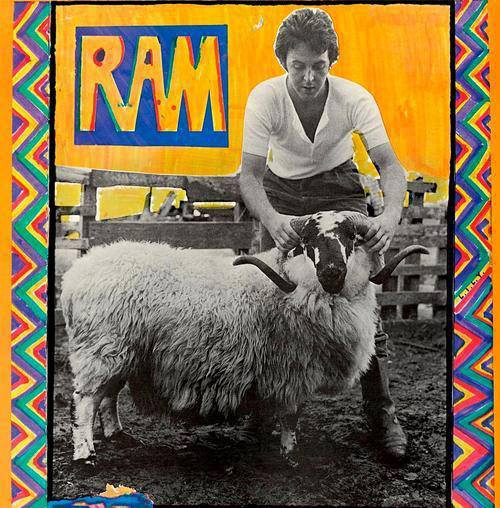
Ram is a studio album by recording artists Paul and Linda McCartney, released 17th May 1971 on Apple Records.The album was recorded amid Paul McCartney’s legal action in Britain’s High Court to dissolvethe Beatles‘ partnership, following their break-up the year before. The only album credited to the couple, Ram was the second of two albums that McCartney released between quitting the Beatles and forming his own band, Wings. He and Linda recorded it in New York with guitarists David Spinozza and Hugh McCracken, and future Wings drummer Denny Seiwell. Its release coincided with a period of bitter acrimony between McCartney and his former bandmate John Lennon, who perceived verbal slights in the lyrics to songs such as “Too Many People“.

On release, the album was received negatively by the majority of music critics, although opinion has become more favourable in subsequent decades. A commercial success nonetheless, Ram topped the national albums charts in Britain, the Netherlands and Canada. Three singles were issued from Ram: “Uncle Albert/Admiral Halsey“, which became McCartney’s first number 1 hit in America, The Back Seat of My Car and Eat at Home. The album was reissued in May 2012.

“Uncle Albert/Admiral Halsey” is a fun song McCartney wrote about his real uncle Albert. The nonsensical lyrics pertain to the happy, sort of crazy things people do when they are in the company of their families. The song is actually relatable to all people who have had enjoyable times with their families – uncles, aunts, cousins, brothers, sisters, grandparents, etc. The joyous feel to “Uncle Albert/Admiral Halsey” struck a chord with people overseas in America. The song quickly reached #1 on the billboard charts very shortly after it was released.

Paul McCartney and his family flew to New York City in October 1970 to begin working on the follow-up to McCartney.

While McCartney had featured him on every instrument, for Ram Paul decided to hold auditions for musicians, bringing some in under the guise of a session to record a commercial jingle. Auditions were held in an attic on 45th Street for three days,[where David Spinozza was tapped for guitar duties, after being asked by Linda, before auditions moved to a basement, where Denny Seiwell was recruited on drums. McCartney later claimed to have found Seiwell “lying on a mattress one day in The Bronx“. Midway through the sessions, Spinozza was replaced by Hugh McCracken when Spinozza became unavailable.

The basic tracks for the album were taped at Columbia’s Studio B from 12th October to 20th November 1970 before the McCartneys returned to their Scottish farm for the Christmas holidays. Work continued at Studio B and A&R Recording Studios, New York, from the second week of January 1971 through to February. Playing guitar or piano and singing at the same time, Paul chose to overdub his bass later on. Although it was a collaborative project, Linda’s vocal duties were mostly limited to singing harmonies and backing Paul, who sang almost all of the lead parts; however, Linda sang co-lead vocals on Long Haired Lady. The New York Philharmonic was brought in by McCartney to play on Uncle Albert/Admiral Halsey“, “Long Haired Lady andThe Back Seat of My Car“, as well as the McCartneys’ forthcoming, non-album single Another Day“. Paul and Linda’s daughter, Heather, sang backing vocals on “Monkberry Moon Delight“.

In July 1971, Northern Songs and Maclen Music sued Paul and Linda McCartney for violating an exclusive rights agreement by collaborating on the song Another Day“, released three months before Ram. Although six of the eleven songs on Ram were also co-written with Linda, both parties agreed the issue of royalties for the album could be decided at a later date.The lyrics to Paul McCartney & Wings’ classic “Another Day” which was originally released as a single in 1971, but never appeared on original copies of any album. Re-releases of the album Ram include “Another Day,” but it is also featured on their greatest hits albums. This particular recording came from Wingspan: Hits and History Disc 1

https://www.youtube.com/watch?v=vH6v9JS26xc

In June 1972, ATV announced that “all differences between them have been amicably settled” and Paul and Linda signed a new seven-year co-publishing contract between ATV and McCartney Music. The sessions also produced songs such as “Dear Friend”, released on Wings debut album, Wild Life (1971), and  Little Woman Love“, as well as tracks featured on Wings’ 1973 album Red Rose Speedway: “Get on the Right Thing“, “Little Lamb Dragonfly” and Big Barn Bed“. It has recently surfaced that “I Lie Around”, issued as the B-side to Wings’ 1973 single “Live and Let Die”, was taped during the sessions. Also recorded was the first incarnation of Seaside Woman“.

https://www.youtube.com/watch?v=ZzU-iqRHubM

The album was mixed at Sound Recorders in Los Angeles. By early 1971, the project was completed, along with “Another Day” and its B-side,Oh Woman, Oh Why“. In addition to the songs released on Ram and the first two Wings albums, McCartney recorded the following tracks during these sessions: “Hey Diddle”, “A Love for You”, “Great Cock and Seagull Race”, “Now Hear This Song of Mine”, “Rode All Night”, “Sunshine Sometime” and “When the Wind Is Blowing”.

In 2009, two tribute albums featuring all of the songs from the album were made available for digital download:

https://www.youtube.com/watch?v=3_qPXv_bQhI

The Beatles released the single “Let It Be” on March 11, 1970 in the US. At the time, it had the highest debut on the Billboard charts, coming in at Number 6 in its first week. It was written and sung by Paul McCartney. It was their final single before Paul McCartney announced his departure from the band. Both the “Let It Be” album and the US single “The Long and Winding Road” were released after McCartney’s announced departure from and subsequent break-up of the Beatles as a group.

The alternate mix on their album “Let It Be” features an altered guitar solo and some minor differences in the orchestral sections.

letitbe

“Let It Be” holds the number-one spot on “The Fans’ Top 10” poll included in The 100 Best Beatles Songs: An Informed Fan’s Guide by Stephen J. Spignesi and Michael Lewis. The song is number three in the 100 Best Beatles Songs list, only behind “Strawberry Fields Forever” and “A Day in the Life”, which is number one. Would you put “Let It Be” in your list of your top 3 Beatles songs? Happy 45th US Birthday to the Beatles single “Let It Be”!!!

https://www.youtube.com/watch?v=4Iwok7XHIYs

Paul McCartney said he had the idea of “Let It Be” after he had a dream about his mother during the tense period surrounding the sessions for The Beatles (the “White Album”). According to McCartney, the song’s reference to “Mother Mary” was not a biblical reference. The phrase has at times been used as a reference to the Virgin Mary, the mother of Jesus Christ  in fact, the words “let it be” are direct quote from the Prayer of the Annunciation, Mary’s response to the Angel Gabriel in Luke 1.38. Nevertheless, McCartney explained that his mother who died of cancer when Paul was just fourteen 

The first rehearsal of “Let It Be” took place at Twickenham Film Studios on 3 January 1969, where the group had, the previous day, begun what would become the Let It Be film. During this stage of the film they were only recording on the mono decks used for syncing to the film cameras, and were not making multi-track recordings for release. A single take was recorded, with just McCartney on piano and vocals. The first attempt with the other Beatles was made on 8th January. Work continued on the song throughout the month with  Multi-track recordings 

The master take was recorded on 31st January 1969, as part of the ‘Apple studio performance’ for the project. McCartney played Blüthner piano, Lennon played six-string electric bass, Billy Preston played organ, and George Harrison and Ringo Starr assumed their conventional roles on guitar and drums. This was one of two performances of the song that day. The first version, designated take 27-A, would serve as the basis for all officially released versions of the song. The other version, take 27-B, was performed as part of the ‘live studio performance’, along with “Two of Us” and “The Long and Winding Road“. This performance, in which Lennon and Harrison harmonised with McCartney’s lead vocal and Harrison contributed a subdued guitar solo, can be seen in the film Let It Be.

https://www.youtube.com/watch?v=QcBwoUXCuBI

The film performance of “Let It Be” has never been officially released as an audio recording. The lyrics in the two versions differ a little in the last verse. The studio version hasmother Mary comes to me…there will be an answer whereas the film version has mother Mary comes to me…there will be no sorrow. In addition, Paul McCartney’s vocal performance is noticeably different in both versions: in the film version, it sounds quite a bit rough in certain moments since he’s not using anti-pop on his mic; there are also a couple of falsetto vocals performed by Paul (extending the vocal ‘e’ on the word ‘be’), for instance in the ‘let it be’ line that precedes the second chorus. Still another version of the song appeared on the Let It Be… Naked album in 2003. This version contains a different piano track than the one on the studio and single version; it can be noted that in the intro, Paul plays an extra A bass note during the A minor chord (very similar to the way he plays the intro in the film version) and also plays a standard A minor chord in the piano at the first beat of measure two in the last verse (on the lyric ‘mother’, also like in the film version), while the other versions have a different piano harmonisation.

Unreleased Wings Tracks Now Available To Stream & Download

Paul McCartney has made three previously unreleased tracks by Wings available to stream on Soundcloud and to download, for free, from his website.

The tracks are an alternative, six-minute version of ‘Rock Show,’ a stripped-down and spontaneous rendition without the harmony vocals from the track featured on Wings;’Venus and Mars’ album of 1975; ‘Love My Baby,’ featured in the ‘One Hand Clapping’ TV special; and an extended version of ‘Letting Go,’ the single from ‘Venus and Mars.’

You can listen to the tracks via Soundcloud, and download them, with email registration, at McCartney’s website.

McCartney and his band will resume their ‘Out There’ tour with a set of dates in Japan in the spring. They’ll play in Osaka on April 21, Tokyo (23, 25 and 27), before moving on to Seoul on May 2. They’re also booked to play at the Firefly Music Festival in Dover, Delaware, on June 19.

Paul recently discussed the subject of whether he will ever write his autobiography. “My feeling is that there have been enough books on me done already,” he said. “But from time to time I do think of certain little memories that are not published in any books so, who knows. If I ever find the time it could possibly happen. But I think you can guess from my answer that I’m not in any hurry to be doing it…!”

Wings ‘Love My Baby’ [From ‘One Hand Clapping’] – MP3

PaulMcCartney.com has teamed up with Buzzfeed to premiere an exclusive Wings download taken from the film ‘One Hand Clapping’

Wings ‘Letting Go [Extended Version]’ – MP3

An exclusive extended and remastered version of ‘Letting Go’ to download in association with BBC Radio’s Lauren Laverne and 6Music

Wings ‘Rock Show [New Version]’ – MP3

An exclusive remastered version of ‘Rock Show’ to download in association with Absolute Radio’s Geoff Lloyd


Back in July Paul McCartney issued a video for the track “Early Days” feauring two aspiring musicians in the American deep south of the 1950’s, which led to a massive impromptu Blues-jamming Session in Los Angeles with Paul, Johnny Depp and other local musicians Al Williams, Roy Gaines, Dale Atkins, Henree Harris, Lil Poochie and Misha Lindes strumming through a number of Blues Classics including “Goin Away Blues” and “Matchbox”. The film will be made available with a Deluxe Edition of “New” later this year.

See the source image

Paul McCartney and Wings“Listen to What the Man Said” presents as a breezy romp, but sessions for the smash single were actually a painstaking drag. That is, until a key contributor came in and nailed his part on the very first try. “It was one of the songs we’d gone in with high hopes for,” McCartney said in 1975. “Whenever I would play it on the piano, people would say ‘Oh, I like that one.’ But when we did the backing track, we thought we didn’t really get it together at all.”

“Mainly we’re coming here to make our own album,” McCartney told local reporters back then. “I don’t like to come to a place and use too much of the local talent, because you get people saying, ‘Oh, they’re taking our style.” But New Orleans worked its way into the proceedings anyway.

Wings stayed at the Le Richelieu Hotel in the French Quarter, right in the middle of the annual Carnival festivities. During a break from recording, Paul and Linda dressed as a pair of clowns then actually waded into the crowds on February 1975, as revelers celebrated Mardi Gras. Wings went back the next day to complete a raucous future b-side called “My Carnival,” before returning to the still-unfinished “Listen What the Man Said.”

Dave Mason of Traffic fame happened to be in town on tour, so a frustrated McCartney brought him in. “A couple of the guys from Wings came by to the see the show, and we had a day off the next day,” said  Mason “They said: ‘Why don’t you come down to the studio? I’m sure Paul would love to see you.’ So, I just stopped by, and they happened to be cutting ‘Listen to What the Man Said.’ Paul was, like: ‘Hey, c’mon, you should sit in with us.'”

McCartney still remained dissatisfied. At this point, a song that ended up as the gold-selling lead single from Venus and Mars seemed to be going absolutely nowhere. Mulling it over, McCartney hit upon another idea: “We thought it would be great to have a very technical musician come in and do a great lyrical solo,” That’s when someone in the studio mentioned that Tom Scott, the well-known jazz saxophonist, lived nearby. “We said, ‘Yeah, give him a ring, see if he turns up,’ and he turned up within half an hour!” McCartney said. “There he was with his sax, and he sat down in the studio playing through. The engineer [Alan O’Duffy] was recording it. We kept all the notes he was playing casually. [Scott] came in and I said ‘I think that’s it.’ He said ‘Did you record that?’ I said yes, and we listened to it back.”

The instrumental track for “Listen to What the Man Said” was finally complete. “No one could believe it, so [Scott] went out and tried a few more,” McCartney told Gambaccini, “but they weren’t as good. He’d had all the feel on this early take, the first take.”

As McCartney completed the vocal, O’Duffy added a barely heard Easter egg, positioned right after Paul sings “soldier boy kisses girl.” “I do remember exactly that it was lovely Linda who did the kiss on a microphone during one of the vocal takes,” O’Duffy said in Luca Perasi’s Paul McCartney: Recordings Sessions. “I made a point of making sure it was audible in the mix later at Wally Heider Studios.”

Issued on May 16, 1975, “Listen to What the Man Said” became Paul McCartney and Wings‘ eighth consecutive and the fourth of their seven total No. 1 singles.

Mason and Scott became part of a group of outside collaborators on Venus and Mars. Toussaint played piano on “Rock Show.” Local legends George Porter Jr. and Benny Spellman appeared on “My Carnival.” O’Duffy also hired trombonist and arranger Tony Dorsey, an area native; Dorsey then brought in some college buddies to complete the horn section.

In a final nod to his Big Easy surroundings, McCartney attached a pre-song sentence to “Listen What the Man Said”: “Alright, okay, very good to see you down in New Orleans, man – yeah reet, yeah yeah,” he mumbled, impersonating Meters guitarist Leo Nocentelli. McCartney later invited the Meters to play at the release party for Venus and Mars, held aboard the Queen Mary out of Long Beach, Calif.

As a further addition to the Paul McCartney Collection of Re-issues the two Wings albums VENUS AND MARS and WINGS AT THE SPEED OF SOUND were issued at the end of September 2014, originally recorded in 1975 and 1976 they were made available as a standard 2CD set and a deluxe 2CD 1 DVD and Book with 135 pages of photos and memorabilia, all included unreleased tracks and demos. these releases are following the superb sets of BAND ON THE RUN, McCARTNEY and McCARTNEY II and the live set WINGS OVER AMERICA,

ram

Paul and Linda McCartney released the album RAM, the second solo album from McCartney after the acrimonious Beatles Split and the ongoing issues within the management and legal side and the formation of the band WINGS, recorded between November 1970 and April 1971 at Columbia Studios and AR Studios in New York City.
The song “RAM ON” from the albums first side was reprised on the second side before the final track in a similar vein to the Beatles “Abbey Road” album medley . there were three singles issued “Uncle Albert/Admiral Halsey”, “The Back Seat Of My Car” and the song “Eat At Hope” . Reviews were harsh at the time and Lennon had spoken that it was Muzak to his ears, but decades later the album has received praise for its big melodies and orchestral trippery.
check out music blog site Aquarium Drunkard who released a LA band members cover of the whole album.

http://

Jonathan Rado the mainman from FOXYGEN covers the whole of the debut Paul McCartney Album