Posts Tagged ‘Nuggets’

May be an image of 5 people, people standing and indoor

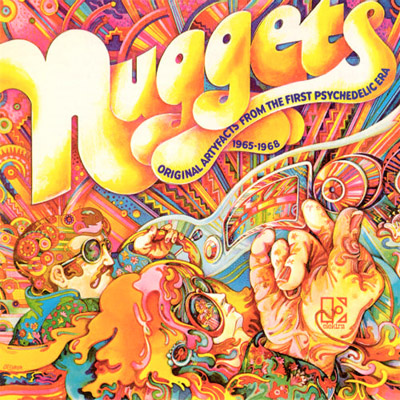
Before he became Patti Smith’s bass player, Lenny Kaye compiled the 2 album set, “Nuggets: Original Artyfacts from the First Psychedelic Era”. Released in 1972, the two-LP set covered American garage rock and psychedelia from the years from 1965-1968, and was a major influence on punk rock. Rhino Records reissued an expanded version of the set in 1998, with 118 tracks in total. I’m profiling and rating each of these 118 tracks, working backwards.

Iowa teenager Craig Moore formed a high school band, The Pagans. The band’s bassist, he initially learned two songs – ‘Last Night’ by The Mar-Keys and ‘Steppin’ Out’ by Paul Revere and The Raiders. He added a third song to his repertoire -‘Gloria’ by Them – but inadvertently spent the first six months playing the three note riff backwards. Nicking some members from another local band, The Rogues, The Pagans changed their name to GONN. Why? Guitarist Rex Garrett’s mother didn’t approve of the name The Pagans.

As with many bands featured on Nuggets, the compilation features their signature song. The title was inspired by a 1942 mystery thriller by J. B. Priestley, The Blackout At Gretley. There’s a thrilling opening – Moore intones “The universe is permeated with the odor of kerosene” over creepy organ. The rest of the song doesn’t quite match the introduction, but it’s an enjoyable bluesy riff-rocker that recalls the mid-1960s Rolling Stones. The shaggy dog story of the lyrics is a nice touch.

GONN seemed destined to land in obscurity – a second single, ‘Doin’ Me In’, wasn’t released. They courted controversy by playing in front on a large Nazi flag, didn’t progress far beyond playing Iowa state fairs, and they broke up in 1969.

‘Blackout of Gretely’ belatedly gained a following, especially after it was featured on the CD reissue of Pebbles, Volume 1 in 1992. By the mid-1990s copies of the original single were selling for US$1,000. The band reunited in the 1990s, and recorded their only studio album, Gonn With the Wind, in 1996.

See the source image

The Underdogs were early adopters in the Michigan rock and roll scene, a bunch of high school students led by bassist and vocalist Dave Whitehouse. An American garage rock band from Grosse Pointe, Michigan who were active in the 1960s. They became a regular attraction at the Hideout, teen dance club that was an early venue for acts such as Bob Seger, Glenn Frey, and The Pleasure Seekers, featuring Suzi Quatro, and it also served as the home to the Hideout record label, which released several of the Underdogs’ singles. The group enjoyed success in the region and came close to breaking nationally with two records released though a joint deal on Reprise Records

The band only released four singles, of which ‘Love’s Gone Bad’ was the last. Their earlier singles were released on the Hideout club’s own record label, and distributed by Reprise, but ‘Love’s Gone Bad’ was released by Motown. This song IMMEDIATELY transports us to the Hideout and the pandemonium when the Underdogs came on stage!. They were reportedly the first white band to sign to Reprise, and they were given ‘Love’s Gone Bad’, a Holland-Dozier-Holland song that had previously been recorded by another white Motown act, soul vocalist Chris Clark.

I read about the passing of The Underdogs drummer Michael Morgan in 2008. Not many times in rock and roll does a blue-eyed version of a Holland Dozier Holland outshine a soul version, but in this case I have to say it’s awfully good. RIP Michael!

Before he became Patti Smith’s bass player, Lenny Kaye compiled the 2 album set, Nuggets: Original Artyfacts from the First Psychedelic Era. Released in 1972, the two-LP set covered American garage rock and psychedelia from the years from 1965-1968, and was a major influence on punk rock. Rhino Records reissued an expanded version of the set in 1998, with 118 tracks in total. 

Love’s Gone Bad by The Underdogs
Release Date: 1967

thanks so much to a wonderful site Aphoristic 

No photo description available.

Based in San Francisco, and active in the mid-to-late 1960s. The band gained interest after one of the Nuggets Vol 12, compilations in the 1980s, Their music was strongly influenced by Yardbirds and Rolling Stones. The Other Half were at their peak when the music scene was at its height in San Francisco and the Flower Power movement in full swing in Haight Ashbury. Their style changed from an earlier vocal based garage band, to the loudest big stage band sound of the time, taken in that direction by former Sons of Adam guitarist Randy Holden. Their sound has been compared to The Yardbirds, and contained elements of blues, hard rock, and Eastern melodic influences

‘Famous’ for their now legendary garage punk killer 45 ‘Mr. Pharmacist’,  later covered by The Fall, this album came a couple of years later in ’68 and shows the move towards psychedelia. Recorded ‘live’ in the studio to sound like a gig, the album showcases some tasty guitarwork from Randy Holden, soon to join heavy duty rockers Blue Cheer.
Also interesting on this mainly self-written album is their lone cover, namely ‘Feathered Fish’, written by Love kingpin Arthur Lee but rather bizarrely credited to Country Joe McDonald!

A collection of their recordings, titled Mr. Pharmacist was issued in 1982. This included their entire 1968 album and several tracks from singles.Two songs, “Bad Day” and “Oz Lee Eaves Drops” appear in the 1968 pilot episode of The Mod Squad.

Image may contain: 5 people

The Electric Prunes came together in Southern California during 1966 and soon became regarded as one of the seminal US psychedelic groups, thanks to the hit singles ‘I Had Too Much (To Dream Last Night)’ and ‘Get Me To The World On Time’.

Through their various incarnations, the Prunes recorded five albums for the Reprise label between 1967 and 1969 with legendary producer Dave Hassinger helping to create their unique and distinctive psychedelic sound.

Under the direction of composer and arranger David Axelrod, the Prunes helped pioneer the Religious Rock genre with the “Mass In F Minor” and “Release Of An Oath” LPs. This collection brings together their entire output for the very first time, including stereo and mono versions of their first three albums.

As the opening track on the compilation NUGGETS, “I Had Too Much To Dream (Last Night)” introduced many to garage rock; a few years before that seminal compilation, it helped introduce The Electric Prunes as the title track to their debut album The title is a pun on having “too much (alcohol) to drink”: its lyrics describe how the singer has woken from dreaming about an ex-lover. The 1967 Reprise collection also included the Seattle-to-Los Angeles transplants’ other Top 40 hit, “Get Me To The World On Time,” along with material by pro songwriters Annette Tucker and Nancy Mantz that showed the quintet were game for ballads (“Onie”) and novelties (“Tunerville Trolley”) as well as tough rockers. A half-century on, I Had Too Much To Dream (Last Night) still remains electrifying to this day.

At the time, the Electric Prunes comprised singer James Lowe, lead guitarist Ken Williams, rhythm guitarist James “Weasel” Spagnola, bassist Mark Tulin, and drummer Preston Ritter. The oscillating, reversed guitar which opens the song originated from the rehearsals at Leon Russell’s house, where Williams recorded with a 1958 Gibson Les Paul guitar with a Bigsby vibrato unit. According to Lowe,

“We were recording on a four-track, and just flipping the tape over and re-recording when we got to the end. Dave cued up a tape and didn’t hit ‘record,’ and the playback in the studio was way up: ear-shattering vibrating jet guitar. Ken had been shaking his Bigsby wiggle stick with some fuzztone and tremolo at the end of the tape. Forward it was cool. Backward it was amazing. I ran into the control room and said, ‘What was that?’ They didn’t have the monitors on so they hadn’t heard it.

nuggets

The granddaddy of ’em all! There’s no way to overstate the importance of this collection for not only the tracklisting and the bands and artists it contains, but the impetus derived from it for bands starting out in the “garage revival” of the ’70s and ’80s. The original edition contained 27 tracks (later expanded into a 4-CD box set,) highlighting the hits, the misses, the should-have-beens and the what-the-hells? of those first heady days when American bands fought to reclaim the music post-British Invasion.